A research text dump on Darren Allen’s philosophy
2018–2023
Technology as Mode of Revealing
Technology as Utilitarian Hierarchy
Technology as Fearful Dominion
Anarchism at the End of the World by Darren Allen
Objection 1. Anarchism is Inhuman
Objection 2: Anarchism is Chaos
Objection 3. Anarchism is Violent
Objection 4: Anarchism is Parochial
Objection 5: Anarchism is Uncivilised
Objection 6: Anarchism is Unrealistic
Objection 7: Anarchism is Insane
Introduction
Self vs. Un-Self
Subtitle: The Ancient Origin of Technological Thinking
Author: Bryan Turley
Source: <www.academia.edu>
Introduction
In his essay The Question Concerning Technology, Martin Heidegger identifies the essence of modern technology not as anything obviously technological, but rather as the way reality has revealed itself to humanity throughout the modern era. He dubs this revealing “Enframing”, and it contains within it the demand that humanity ever more efficiently order and reorder a universe of mere resource. Anarcho-primitivist writer Darren Allen reconsiders the utilitarian relationship between humanity and the rest of existence we see in Heidegger’s concept of Enframing as one defined more fundamentally by fear, which allows him to date the inception of technological thinking not to the dawn of modernity but to the dawn of civilization. In doing so, he identifies a deeper source of the danger Heidegger believes modern technology poses to humanity and makes the means by which Heidegger believes we might transcend that danger even more explicit.
Technology as Mode of Revealing
In The Question Concerning Technology, Martin Heidegger argues that the essence of modern technology, what truly differentiates it from the tools that preceded it, is not some attribute that can be glimpsed in the objects to which we might give that name; that is, “modern technology” is not a genus defined by what it contains. Rather, Heidegger claims, it is the result of a particular way that reality reveals itself to humanity, and it is that mode of revealing, which he terms “Enframing”, that has defined our reality throughout the modern era. Heidegger acknowledges[1]that this claim might seem counterintuitive since, chronologically, the sophisticated technology we’ve used to understand our universe as quantifiable would seem necessarily to precede that understanding. However, it is not that we have successfully quantified our universe due to the sophistication of our technology, but the reverse: our technology has been designed in such a way because we believe our universe to be quantifiable. Certainly, the information that we have gleaned about our universe by means of our technology is by no means wrong; rather, it is merely correct, “but precisely through these successes the danger can remain that in the midst of all that is correct the true will withdraw.” For Heidegger, the fact that reality now[2] only appears to us as orderable and quantifiable is the supreme danger to our understanding of existence and our place in it.[3]
Technology as Utilitarian Hierarchy
The threat that Enframing poses to our experience of truth lies in its imperceptibility, and it is an imperceptibility that cannot be overcome with a sharper lens, because Enframing is the lens. Heidegger’s metaphor for our experience of reality is a clearing in the woods: everything we can identify as a component of our reality must enter that clearing before we can gain the slightest awareness of it, even enough to know that we know nothing about it. We will never find[4]Enframing within the clearing because it is the clearing, just as the modes of revealing that preceded Enframing constituted their own clearings within which humanity stood at earlier historical epochs. In this sense, there has always been some mediation between humanity and our experience of reality, some way that it was destined to appear to us. But Enframing is[5]unique; rather than revealing a universe of objects that either bloom forth into our experience of them, as in the case of the natural world, or that we ourselves bring into being by means of art or handicraft, we are made to see all of existence as a uniform resource to be endlessly extracted, ordered, and rearranged, what Heidegger calls “standing-reserve”. Heidegger[6]anticipates our skepticism of such an object-less universe this way:
Yet an airliner that stands on the runway is surely an object. Certainly. We can represent the machine so. But then it conceals itself as to what and how it is. Revealed, it stands on the taxi strip only as standing-reserve, inasmuch as it is ordered to ensure the possibility of transportation. For this it must be in its whole structure and in every one of its constituent parts, on call for duty, i.e., ready for takeoff.[7]
Enframing does not leave humanity idle in this object-less universe, however: its revelation of reality as standing-reserve contains within it the demand that humanity participate in the ordering and exploitation of that standing-reserve . We should understand Enframing, then, not[8]only as a differentiation between humanity and standing-reserve, perhaps of the kind that previous modes of revealing made between subject and object (Enframing does not deal in objects, after all), but as the establishment of a hierarchy with humanity as the singular agent amidst a universe of undifferentiated resource. Heidegger acknowledges this implicit hierarchy with the most explicit language of domination:
[M]an...exalts himself to the posture of lord of the earth. In this way the impression comes to prevail that everything man encounters exists only insofar as it is his construct. This illusion gives rise in turn to one final delusion: It seems as though man everywhere and always encounters only himself.[9]
After all, in a universe of standing-reserve, what else is there to encounter?
The Technological Self
This exploitative hierarchy between humanity and the rest of existence is also central to Darren Allen’s diagnosis of the pervasive and accelerating assimilation of our world by technological thinking. His book, The Apocalypedia, proceeds from the common anarcho-primitivist claim of a historical rupture between Edenic prehistory and exploitative civilization and develops a phenomenological dichotomy between “self” and “unself” that powerfully echoes Heidegger’s Enframing.[10] It is exactly this similarity that makes Allen’s analysis such a useful lens with which to reconsider Heidegger’s: we are challenged to account for their differences.
One such difference exists in where the two thinkers place their technologizing medium with respect to the human subject. Heidegger’s “clearing” is portrayed as a passive space within which entities are revealed to us, whereas Allen’s analogous concept of a technological “self” that enables our representative experience of reality already is us. He describes self this way:
Self can be described as a mechanism (or tool) which uses calorific power to animate an organic apparatus (comprised of interrelated parts) which is capable of A) manifesting reality as sensations and feelings B) structuring reality into spacetime things and ideas and C) manipulating these things and ideas. Everything I physically sense (matter), inwardly feel (vibe), think (mind), and my motivating energy, occurs in, or as, the extraordinary machine of self.[11]
It may be argued that this is merely a distinction and not a difference, that Heidegger would not deny that our experience of the “clearing” is biologically determined but rather argue that his project is only concerned with what the clearing reveals and how. However, making technological thinking identical with human subjectivity goes a long way to explaining Allen’s dramatically different chronology of technology’s spread. Where Heidegger observes a distinct rupture between traditional and modern technological practices that marks the arrival of modernity, Darren Allen instead describes a continuum of technological self-expansion that originates in prehistory and spans the entirety of human civilization. If modernity is the result of Enframing’s emergence, so too can human civilization, from Allen’s perspective, be viewed as the result of a changed relationship between the human subject and everything it is not, mediated by the technological self.
Technology as Fearful Dominion
Just as Enframing manifests an implicit hierarchy between humanity and a universe of standing-reserve, so too does Allen’s concept of the technological self establish a hierarchy between that self and everything it is not. But where the former relationship might be defined primarily by utility, by the availability of standing-reserve for the fulfillment of human aims (even if the “regulating and securing” of standing-reserve becomes its own sole aim, as we’ll see later), the relationship between self and not-self is defined primarily by fear:
The problem for ego [a term Allen sometimes uses interchangeably with self] is that this, the threat of unself, is literally everywhere and nowhere...this engenders a permanent feeling of primal fear, a constant background restlessness, anxiety, insecurity, worry, irritation, emptiness, indecision or boredom which — if self softens, if unself gets too close, or if ego’s growth-through-addiction slacks — blows up into dread, violence, depression, horror, or chronic psychosis.[12]
Armed with this recontextualization of reality as a technological self beset everywhere by the hostile not-self of nature, we can now consider why Allen sees only a continuum between traditional and modern technology where Heidegger observes a breach. One example of this contradiction is Heidegger’s consideration of agriculture, in which he contrasts traditional agricultural practices with both resource extraction and mechanized farming.[13] Heidegger argues that what differentiates traditional agriculture from resource extraction and mechanized farming is that the modern technology at work in the latter two reveals nature to be mere resource to be ordered and stored, while traditional agriculture is a cultivation of nature rather than a negation of it. However, if we define technology as anything that subordinates nature to self, there is little distinction between the three practices; everything is resource for the defense and expansion of self. Traditional agriculture is so manifestly suitable for human ends because it is premised on the negation of what preceded it that was unsuitable: wilderness, and with it danger. Heidegger makes a similar comparison between a windmill and a hydroelectric plant, claiming that the former does not negate the wind while the latter reconceives the river into which it is set as mere standing-reserve to be exploited.[14] If technological expansion is driven by the urge to dominate any threat to self, we see that same impulse present in both windmill and hydroelectric plant — only our ability to exploit the world around us has changed.
Just as we can find examples of Heidegger’s technological categories breaking down in the modern era, we can also find, conversely, examples that would fit his definition of modern technology that far predate modernity. If the essence of modern technology is that it reveals existence as standing-reserve to be marshalled and deployed, what are we to make of all the armies and empires that have criss-crossed the Earth throughout history? What were the manufacture of huge caches of military equipment and the mobilization of thousands of soldiers across whole continents but the marshalling of resources in the never-ending pursuit of territorial security? It has been suggested that the ancient Roman understanding of being, particularly in contrast to that of their Greek contemporaries, may be understood as a kind of proto-Enframing , but in terms of imperial expansion, how different were the Romans from the[15]Persians who preceded them, or the Arabs who came after them, or the Mongols after them, and so on? One can easily interpret imperial expansion (as well as its modern analog, realpolitik) as a response to this fear of otherness — whether that fear is conscious or otherwise. Indeed, then, as now, military action was often couched in terms of security. And just as ancient empires spread across continents, ostensibly to secure their safety, so too has the technological self, which mediates every human’s experience of reality in the same way that Enframing does in Heidegger’s model, rendered all of existence into mere resource for its defense and expansion. If we take this conception of technology as self-aggrandizement onboard, humanity’s subjugation to technological thinking is far older and more pervasive than Heidegger appears to have imagined.
For Allen, then, the essence of technology is not only the revelation of nature as exploitable resource, but also the intrinsic purpose of that revelation — self-preservation:
If the self-machine is questioning itself about what is beyond itself — or where self comes from — no answer it finds, ultimately, is ever going to make sense; and if the self-machine is operating itself no solution, ultimately, is ever going to work; because everything that I say, see, feel, and do is, ultimately, motivated by an inapt selfish [genetic-mental-emotional] impulse. Ultimately, the only message a machine can give itself — that can make sense to a machine that creates its own programming, or attempts to understand itself with itself — is ‘expand, defend, and avoid death’. Forever.[16]
This once again echoes Heidegger’s conception of modern technology as the product of Enframing, which he also characterizes as lacking any kind of guiding purpose besides its own persistence.[17] But Allen’s analysis reveals that the purpose of technology, modern or otherwise, is and always has been this aggrandizement of the self.
Revealing Revelation
Despite their differing chronologies of humanity’s assimilation by technological thinking, Heidegger and Allen both agree that reflection on the very fact that reality can manifest itself to us technologically is the only means by which we may regain some measure of freedom within the digitized order of such a reality. What Heidegger refers to as the “saving power”, which he proposes will allow us to regain the free expression of our human essence, is the apprehension that reality may manifest itself to us in a variety of ways, of which Enframing is only one, and that this revelation is not any exercise of our power (for example, via the pursuit of modern physics) but is rather a quality of our human being. Unfortunately, our experience of reality is so thoroughly mediated by self and by Enframing that we “can never take up a relationship to it only subsequently”:
Thus the question as to how we are to arrive at a relationship to the essence of technology, asked in this way, always comes too late. But never too late comes the question as to whether we actually experience ourselves as the ones whose activities everywhere, public and private, are challenged forth by Enframing. Above all, never too late comes the question as to whether and how we actually admit ourselves into that wherein Enframing itself comes to presence.[18]
Just as Allen’s concept of self can be analogized to Enframing, so too does he propose an analog to Heidegger’s saving power: unself. This is a very, though perhaps not completely, different concept than what Allen means when he uses the same term to describe “that which self understands to be opposed to it”, which might be better termed “not-self”. Unself, by contrast, can be defined as the phenomenological experience of human being that exceeds what is captured by the mechanism of self, most notably that one in fact possesses a self to which reality appears. And just as Heidegger exhorts us to “ponder this arising”[19] of Enframing, Allen, in prescribing how one might possibly overcome the self, writes: “Ask yourself who it is that sees, thinks or feels [reality] and experience the hyper-subtle sense of youness, that you’ve had all your life, that precedes an answer.”[20]
The purpose of such reflection is the same for both thinkers: to reveal revelation itself as a contradiction of otherwise totalizing conceptions of reality, and thus a contradiction of their constitutive dichotomies. Standing-reserve is only one way that reality may manifest itself, and so the utilitarian relationship humanity has had with it throughout modernity is only one possible relationship; the technological self is only one way of interfacing with existence, and so its insistence on dominating everything around it is not absolute. Since it was the establishment of these dichotomies that dictated humanity’s relationship with existence, their abolition permits us a fuller definition of what it means to be a human being.
References
Allen, Darren (2016). The Apocalypedia. UIT Cambridge Ltd.
Carman, Taylor (2019). The Question Concerning Technology. Later Heidegger, 14 November, Columbia University, New York City.
Harari, Yuval N. (2011). Sapiens: A Brief History of Humankind. Harper.
Heidegger, Martin (2002). Off the Beaten Track. Cambridge University Press.
Heidegger, Martin (2013). The Question Concerning Technology and Other Essays. HarperCollins.
Darren’s Writings
Anarchism at the End of the World by Darren Allen
Subtitle: An Introduction to the Instinct that Won’t Go Away
Author: Darren Allen
Date: 10th December 2018. Updated January, 2023.
Source: <www.expressiveegg.substack.com/p/anarchism-at-the-end-of-the-world>
Topics: anarchism, anarcho-primitivism, collapse, analysis of Ted’s ideas & actions,
Notes: This is an excerpt from 33 Myths of the System.
‘And now we’ll pull down every single notice, and every single leaf of grass shall be allowed to grow as it likes to.’
Snufkin.
Anarchism is the only way of life that has ever worked or ever can. It is the only actual alternative to the pseudo-alternatives of the left and right, of optimism and pessimism, and even of theism and atheism. That being so you would expect it to be widely ignored, ridiculed and misunderstood, even by nominal anarchists.
What is Anarchism?
Anarchism is the rejection of domination. In an anarchist society — which means of course in the anarchist herself — nobody is dominated by anyone or anything else. This does not mean, as we shall see, that there is no authority.[21] What anarchism rejects is authority with the power to control or coerce the individual against her will.
There are two crucial exceptions. The first is that, in refusing domination, the anarchist necessarily has to restrain those who dominate — force and control — other people. Rapists, murderers, bullies and, less directly, thieves seek to dominate others, and so they must be prevented from doing so.
The second exception is that the anarchist is justified in restraining those who do not have control over themselves. There is no coercion in preventing very young children, sleepwalkers, trippers and drunkards, for example, from walking over a cliff. If someone has control over themselves and insists on throwing themselves from a cliff, then an anarchist society would let them do it.
These two exceptions partially answer two of the most common objections to anarchism. The first is, who or what, exactly, is going to stop thieves, rapists and murderers from harming me? and the second is, who or what is going to stop the mad, the sad and the stupid from harming themselves? To which the anarchist ordinarily replies ‘people’. Not the state, not professional experts; us. This answer, of course, is incomplete and leads to further objections. To respond to these we need to recognise those elements of the world which control individuals against their will, elements which would need to be removed to create a fully anarchist society. I call these the seven dominants. They are, in roughly ascending order of subtlety and pervasiveness:
1. The [autocratic] monarchy.
2. The [socialist-democratic] state (which includes its money, law, property, police, etc.).
3. The [totalitarian-capitalist] corporation.
4. The [mass] majority.
5. The [professional-religious] institution.
6. The [technocratic] system.
7. The [mental-emotional] ego.
It is difficult even for anarchists to recognise that these are all inherently coercive forces. There are no anarchists who support the monarchy of course, and very few who support corporate control,[22] but anarchist support for the state and its various techniques and institutions is surprisingly widespread (voting, campaigning, supporting its wars[23]) as is anarchist support for democracy (trade-unionism, anarcho-syndicalism and other forms of ‘direct democracy’) and for professionalism (professors Noam Chomsky, David Graeber, Murray Bookchin, et al.). The system and the ego are so subtle and pervasive they often do not figure in anarchist literature at all (with the honourable exceptions of Lao Tzu,[24] Leo Tolstoy, William Blake, Henry Miller and Ivan Illich[25]). That anarchists ignore or support the coercive power of dominants, or that they — we — are often forced to compromise (too willingly in many cases), does not make such support an anarchist position any more than some vegetarians having a crafty bacon sandwich makes eating pork a vegetarian position.
Despite what anarchists may or may not think, it is indisputable that the seven dominants are coercive; that they control individuals, and nature, against their will. It is indisputable that kings coerce their subjects, that states do the same, and that possession of property, financial wealth, the ability to write or manipulate laws, the strength of the majority, specialised, technical expertise, professional authority and systemic conformity all confer power to dominate — sometimes even domesticate — people. It is also indisputable that tools beyond a certain size and complexity enslave men and women and compel them to think, act and even feel in ways alien to their better nature; for them to serve the car, for example, or transport system, or the farm, or the school, rather than their own, or nature’s, instincts. Finally, it is indisputable that the restless mind and emotions take control of conscious experience and cause men and women to do, say, think and feel things they don’t really want to; cause them to hate, for example, get angry and depressed, or worry. ‘I’ may want to stop wanting and worrying, but, if I am honest I can see that ‘I’ am not in charge here. My stupid self is.
It follows that a philosophy, the central tenet of which is that all forms of domination are wrong must — despite inevitable lapses and compromises — set itself against the autonomous power of states, corporations, property, professionalism, money, law, democracy, monarchism, industrial tools and the inherently needy and violent, obsessively wanting, worrying and planning, mental-emotional false-self.
This attitude, to people who have lived in dominating systems, seems strange to say the least. The kind of independence that anarchism describes seems so far from the experience of ordinary people that those proposing it might as well be describing the best way to live on Jupiter; and yet, in fact, anarchism is not just the original state of human society, it is also the way that most of us live already, at least during those times when we are happiest. We are anarchists in our love-affairs, in our friendships, and even occasionally in the very teeth of the system, at work. When the boss is absent and everyone gets together to work out how on earth to sort out the mess he’s created, occasionally, for a fleeting moment, we glimpse a collective so simple and effective it slides under our attention. But then the boss returns, and the ordinary world of work returns, or of politics or police or teachers or money, and someone tells us they are an anarchist and we find the idea, if not ludicrous, at best bewildering. Surely, we think, surely…
Objection 1. Anarchism is Inhuman
What is the core of human nature, underneath all the systems of domination that compel us? If nobody and nothing is controlling us — including our own emotions and thoughts — what’s left? How will we act? Will we tear each other limb from limb? Steal, fight and fuck our way to the top of the pile? Go insane?
Authoritarians — genuine authoritarians that is, those who support the seven dominants above — answer ‘yes’. Human nature is ultimately violent, selfish and stupid, they say, and so we need kings, states, corporations, democracies, laws, experts and the control of the dominating mind or emotions to prevent ‘anarchy’ — a word they interpret as something close to late medieval hell, in which human-shaped monsters run around eating each other. Libertarians — and again I am talking about actual libertarians, those who refuse to be coerced by anything — answer ‘no’. Humans certainly can be violent, selfish and stupid, but ultimately we are peaceful, generous and intelligent creatures.
Ordinary authoritarian people respond to such an idea by telling us to ‘look around — look at people, look at the news — we are obviously violent, selfish and stupid.’ Authoritarian psychologists agree; they point to the many, many experiments which have shown that people are violent, selfish and stupid. Authoritarian philosophers also agree; they say that there is no order, or meaning, or intelligence outside of the seven dominants. They have very complicated theories to hide their basic distrust of nature and human nature but that is what the authoritarian attitude is based on.
The libertarian might then point out that the ‘people’ who surround us, those whom authoritarian people complain about and authoritarian psychologists study, have been raised in a world dominated by force. To say that we need authoritarian forces because people who are dominated by authoritarian forces are violent, selfish and stupid is a tautology. It’s like saying we need to put birds in cages because birds in cages are dangerous.
The anarchist does not base her view of humanity on how the people around her think and act, but on her own nature. In this she is no different from the authoritarian; the difference being that when she looks within herself she finds that although she certainly can be a liar, a coward, a fool and a sadist, that ultimately she trusts her instincts, that ultimately she is peaceful, generous and has good sense. She goes on to reason that others must be the same; a conclusion borne out by her most intimate relations, which demonstrate to her that absence of control and force is not disorder.
Objection 2: Anarchism is Chaos
One of the most common authoritarian objections to the lifting of all constraint that anarchists seek, is not just the fear that anarchism is synonymous with chaos but, as those who control culture inevitably shape the definition of words, the written fact. The word ‘anarchy’ means, in the dictionaries of the system, disorder; despite the fact that actual anarchists, with a few insane exceptions, have never been opposed to order. The question which anarchists seek to ask is what order, or whose. Anarchists believe that the only society worth living in is based on some kind of natural organisation, that which naturally or intuitively regulates individual and collective life. For authoritarians this does not exist. They see no evidence of it. What they see in ‘intuition’ is erratic emotionality. What they see in nature is, principally at least, warfare, fear, pain, hierarchical struggle, pecking orders, alpha males and so on. For such people nature, and human nature, may contain organised elements, but the end result is a neverending, chaotic battle of all against all. Nature might be finely ordered, formally beautiful and good eating; but it cannot be trusted. To organise a society therefore must entail suppression and control of our natural instincts. Result; people become resentful, bored, stupid and violent… which is to say disordered.
‘But look how neat everything is! Look how well your phone works! Look at how nicely tarmacked the M25 is’. One of the reasons it is hard to perceive the chaos of the system is that it is formally ordered. It all looks good — provided you look in the right place. Everything, for example, looks good on paper, because it is has been priority one for the system, since the invention of writing, to ensure that everything in heaven and earth is legible — capable of being named, measured, standardised and controlled. Everything also looks good when it is dead. A modern farm is the epitome of order because nothing lives on it but one, hyper-ordered crop bred to depend completely upon equally ordered synthetic inputs (the same applies to the modern city and the modern computer). Finally, everything looks good when you don’t have to pay attention to what isn’t so good. We do not have a direct relationship with our fellow humans, or fellow creatures, and so we are spared from perceiving the bedlam that reigns beyond the office (flat, farm, factory or shop). All important interactions go via the system, and so we do not have to deal with, or even perceive, the cause of our formal order (the actual lives of people who build our computers, for example, or the animals which fill our burgerbuns) or its effects (where our rubbish and shit actually go when we’re done with it). The people of the affluent West live in an antiseptic sphere of mini coopers, Dyson vacuums and self-service checkouts. Everything seems to us, just as it did to the ancient Greeks and Romans, who had no idea of the horror their comfortable lives were based on, so very nicely arranged. We are confident in ourselves because we are confident in the safety and order of our surroundings; what lies outside the gates is not really worth paying serious attention to. We know that something is wrong out there, or we intuitively feel it, a distant rumble of thunder during the picnic, but it terrifies us, and so we turn to the consumption of reassuring neatness to push the anxiety away. Not that there is anything wrong with organising your record collection or cleaning your kitchen or collecting stamps or poring over maps; but that the system must manufacture toys which soothe the anxieties produced by the chaos which is the by-product of toys which soothe the anxieties produced by the chaos… of domination.
Dominate the land with industrial technology, dominate the people with repressive laws, dominate your children with rigid ‘discipline’, dominate women with physical power or intellectual scheming, dominate your life with strict plans, goals and systems, dominate the darkness with 24/7 light; and what happens? On paper it all works out fine. In the real world domination produces unnatural chaos.
Domination, however, is not the same as power or even authority. The ocean is powerful, but anarchists do not protest the tides. Likewise old people sometimes have, by virtue of their experience, immense authority; but only a fruitcake would oppose age on principle, or refuse to listen to its wisdom. There is a crucial difference — reflected in our language — between being in authority and being an authority. In the first place your power comes from holding a position, which is, by definition, an inflexible role or rank, and in the second your power comes from being in a position to use your knowledge, experience or sensitivity; then, when the circumstance changes, the power evaporates, as of course it should.
Fixing power into roles and ranks[26] has the same effect as fixing names into titles, meanings into definitions and guidelines into laws; they become unable to respond to what is actually happening. Result: fabulous inefficiency and, once again, unmanageable chaos, as everyone knows who has worked in an organisation bound by titles, definitions, laws and fixed power. Those at the bottom facing the actual situation find they are unable to deal with it, while those at the top not only have no idea what the situation is, they are terrified by the power of those who can see what needs to be done, and fanatically suppress any attempts to use it.
In an anarchist group whoever has more ability or sensitivity than the others naturally ‘takes the lead.’ Nobody with any intelligence, anarchist or otherwise, would refuse to unthinkingly obey an experienced sailor in a storm.[27] Indeed the hallmark of ability and sensitivity is that neither compel. One word from a true leader and everyone does as they please. Once we remove compulsion, then ability and sensitivity naturally take over as sources of authority. Thus anarchist society is, actually, full of leaders.[28]
Nature does not vote, or protest, or write petitions, or form unions, or write stern letters, or launch social media campaigns. She prefers to effortlessly sweep the world away.
Just as anarchism is not antithetical to authority, power and order, so it is not incompatible with what appear to be laws. A common complaint on anarchist discussion boards is ‘this isn’t really an anarchist forum! look, you’ve got rules!’ The question is not the existence of rules, but their fluidity (how much they allow for contextual exceptions), their boundary (the freedom one has if one disregards them) and their purpose (to what end this or that regulation). Anarchist ‘laws’, unlike those of the system, adapt to the intelligence of the individual, and the multitude of exceptional situations she finds herself in, allow dissenters to do what they like beyond their boundaries of application and, crucially, serve the non-egoic truth.
That’s all well and good, you might be thinking, but what will we do about the lazy people, those who will not work, the thieves and the criminals, those who steal what others have or produce? The anarchist answer is that we’ve been supporting such people for millennia. We call them the elites. When people work for themselves and with their fellows, without coercion or control and under reasonably promising circumstances, they do not tend to leach and steal from each other. Of course there will always be some who do, but when they are not in power — as they are now — they can be easily dealt with.
The fear that we cannot take care of ourselves without the police[29] or that we cannot heal ourselves without doctors is identical to the fear that we cannot feed ourselves without Lidl. Take schools. How, the authoritarian asks, will we educate our children without them?[30] The objection, like all objections to anarchism, isolates the institution in question from context and consciousness. It says; given that reality is as it is (a collection of scarce things), that society is as it is (enemy territory) and that people are as they are (selfish apes or sinful gods), if we remove institutions which protect us from reality, which organise society and which regulate people, then everything will go to the dogs. And, given those assumptions, everything would.[31]
A world without schools demands an educational society; in which nature, and the activities of adults within it, are freely available to children. Opportunities to learn — meaning opportunities to work and to play — are, like everything else in nature, abundant. When children can join adults in their orchestras, garages, workshops, libraries, laboratories, clinics, theatres, farms and football pitches; they learn. The reason that children are not allowed to learn their culture in this way, through direct contact with reality, without the ministrations of a credentialised middle-man, is because that reality is wild.[32] It can be influenced, understood and used — not to mention adored — but it cannot be dominated. It is this — and not the prospect of millions of children vegetating in front of their playstations — that horrifies those who are addicted to institutional control.
Likewise when work is pleasurable (or at the very least meaningful), when rest is available, when the wilderness is close at hand, when ordinary people have access to the tools and techniques of health, when they can self-diagnose and self-medicate, when they can learn to deal with pain on their own, when they can die on their own; when, in short, society is healthy, there is no need for professional doctors. There is a need for people who naturally specialise in complex procedures and risky techniques, just as there is a need for people who naturally specialise in intensely funky drumming, but in an anarchic society everyone has rhythm.
Objection 3. Anarchism is Violent
If the first thought, on hearing the word ‘anarchism’ is ‘chaos,’ the second is likely to be ‘violence’. Both associations have been relentlessly promoted since anarchism became a force to be reckoned with — as it was for large parts of the nineteenth century — but the idea of the moustachioed fiend creeping through the shadows was first disseminated and sensationalised after a bomb was thrown at the 1886 Haymarket Square riot in Chicago and, over the course of the next decade or so, several heads of state were assassinated by anarchists. The trope has evolved over the years — today the cartoon bomb is usually carried by some dude wearing a V for Vendetta mask or a Palestinian Keffiyeh — but it continues to be defined by indiscriminate, juvenile violence.
The essence of the problem was first identified by [the socialist] George Orwell, who complained to his anarchist friend, George Woodcock, that there is nothing to stop groupthink from dominating anarchist societies with the same coercive force as the state does; and indeed this is just what tends to happen. A certain kind of idiot is drawn to anarchism, just as a certain kind of idiot is drawn to classical music, team sports or Hello Kitty. Their idiocy simultaneously reinforces itself (through stigmatising outsiders and glorifying insiders) and degrades itself (through stereotyping and stereotypical behaviour) leading to the ready-made cliché easily sensationalised and spurned by opponents. Violent young atheists wearing anarcho-acceptable attire, reading Chuck Palahniuk, playing hardcore music in violent demos, living in filthy squats[33] and sharing dank memes fantasising about exterminating pigs, are not hard to come by, but they no more represent anarchism than Cliff Richards represents Christianity or Helen Lewis represents women. In fact a large proportion of anarchists are pacifists, some of them rather extreme (Ghandi, for example, self-identified as an anarchist.[34]) Not that pacifism is necessarily anarchistic either, or that violence[35] is not sometimes necessary (it certainly is — particularly against property). Total and complete pacifism is, actually, an impotent, immoral and very often racist absurdity (even Ghandi, like Martin Luther King Jr., wasn’t against armed insurrection when pacifism could not work[36]). Even those who suggest Native Americans, Jews and Laotians should have sat around holding candles, ‘bearing witness’ and positively thinking their way out of genocide would violently defend a four year old daughter from attack.
Blanket characterisation of anarchism as ‘violent’ on the basis of the restless, cliquey child-minds it attracts, or on the occasional use or recommendation of violence, is not just a caricature, it is also a tad hypocritical coming from a king, a capitalist, a socialist or any other representative of the system. A more violent way of life than we have now, or have ever had within the system, which has spent thousands of years violently obliterating all that is good on earth, plundering defenceless people, exterminating them or forcibly assimilating them, is nearly impossible to imagine.
Objection 4: Anarchism is Parochial
Another doubt which people commonly have about anarchism is its capacity to work beyond small groups of a few hundred. Critics point out that, okay, tiny groups of pre-agricultural folk and minute radical outfits on the fringe might be able to handle life without coercive laws and the like, but how on earth are we to organise a global post-industrial society informally?
We aren’t. It is impossible. A world such as we have cannot be run from the bottom up. What kind of world can emerge from anarchist principles is, however, an open question. Large-scale anarchist co-operation and free international exchange are perfectly feasible and would lead to an extraordinarily complex world; just not one overruled by czars and commissars. Anarchism, in fact, is no more antithetical to complex federations, than it is to leadership, authority and law. What it opposes, once again, is hierarchical control. Anarchist federations are, in fact, hierarchical[37]; just extremely flat ones in which the power of the level above is zero; with those at the peak able to do little more than recommend and relay. This doesn’t mean they are ineffective (as advisory bodies are in the system) any more than your grandmother is. As the influential anarchist Colin Ward has pointed out, the international postal service and railways are both massive anarchist structures, with no central control whatsoever, as were a great number of pre-civilised societies which, as James C. Scott outlines, were enormous. And we have even glimpsed — alas only for a few moments — a scaled-up anarchist society in modern times, in revolutionary Spain. This lasted a short time, was riddled with compromise, violent (fascist) opposition from the right, equally violent reformist (communist) pressures from the left and all the chicanery one might expect from such a radically permissive experiment; but there were many astonishing examples of spontaneous, peaceful, organisation and generosity — again, on an extraordinary scale — in anarchist Spain.[38]
But, hold on, what’s to stop a powerful state overwhelming a weak informal anarchist federation? Almost nothing. Does it mean that our immune system is wrong or faulty because a bullet can kill us? Genuine anarchism prevents authoritarian hierarchies from forming. It is also extraordinary resilient and in many cases better able to fluidly defend itself than centralised states; but it can no more protect us against the vast militaristic power of modern states, that have spent millennia organising themselves (and domesticating their subjects) than an ant’s nest can defend itself against a nuke. That doesn’t make anarchism powerless though, as we shall see.
A related objection is ‘if domination arose from anarchic societies, what’s to stop it from arising again?’ Putting aside the contradiction that ‘we need domination to prevent domination’, putting aside the fact that actually it is incredibly difficult to dominate people—the system took over forty thousand years to establish a foothold that required and still required enormous effort to maintain and putting aside the possibility that humanity can learn as individuals can—can have ignorance blasted from its broken heart—there does remain the possibility that the system could grow again, that the cycle could begin again. But so what? Is that going to stop you? Are you going to stop eating because you’ll only get hungry again, or stop exercising because you’ll only get fat again, or stop loving because you’ll only be betrayed again?
Objection 5: Anarchism is Uncivilised
Correct. Anarchism, insofar as it is effective and consistent, rejects the entire dominating machinery of what we normally call ‘civilisation’. For most of human history such societies were the norm and, until recently, there were innumerable remnants from that time which displayed, in varying degrees, the consequences of living in a genuinely anarchistic manner; societies in which egalitarian social and sexual relations were the norm, as was enjoyable work, absence of scarcity, no money, no warfare and very little suffering, at least as we experience it today. Certainly nothing like clinical depression, schizophrenia, psychopathy and so on. That humans were long-lived, healthy and happy is the consensus position amongst those who study ancient or primal people. There were problems of course, tensions, disagreements, even murders — and of course the wild is a brutally unsentimental companion — but in the absence of property, specialised power and whatnot, interpersonal problems could be dealt with. Likewise there were disagreements and doubts about what should be done, but these were not resolved by means of a vote which a minority was compelled to submit to; indeed very often they were not resolved explicitly at all.[39] Problems were resolved in a way which is almost unimaginable today; by looking, together, for the right thing to do.
The idea that the most successful social organisation in history should serve as some kind of model for what we should collectively aspire to, goes by the name of anarcho-primitivism; the general rejection of civilised forms of organisation, such as centrally controlled cereal cultivation, industrial technology, institutional hegemony and so on. Despite the caricatures which critics invent (‘using a phone! what a hypocrite!’), anarcho-primitivism does not entail the ludicrous refusal of all technology (such as fire, pottery or even agriculture, which, incidentally predates the horrors of state-run farms[40]) or demand anarcho-primitivists take off all their clothes and go and live in a tree; and it certainly doesn’t entail, as some critics like to believe, a recommendation for the extermination of mankind. It simply recognises that coercion and control run deeper than kings, parliaments and corporations pushing people around; that we are domesticated as much, if not more, by our tools[41] as we are by those who have power over them, and that a functioning society must be based on the non-democratic egalitarianism, sensitivity and wildness of our ancestors. As such anarcho-primitivism is anarchism.
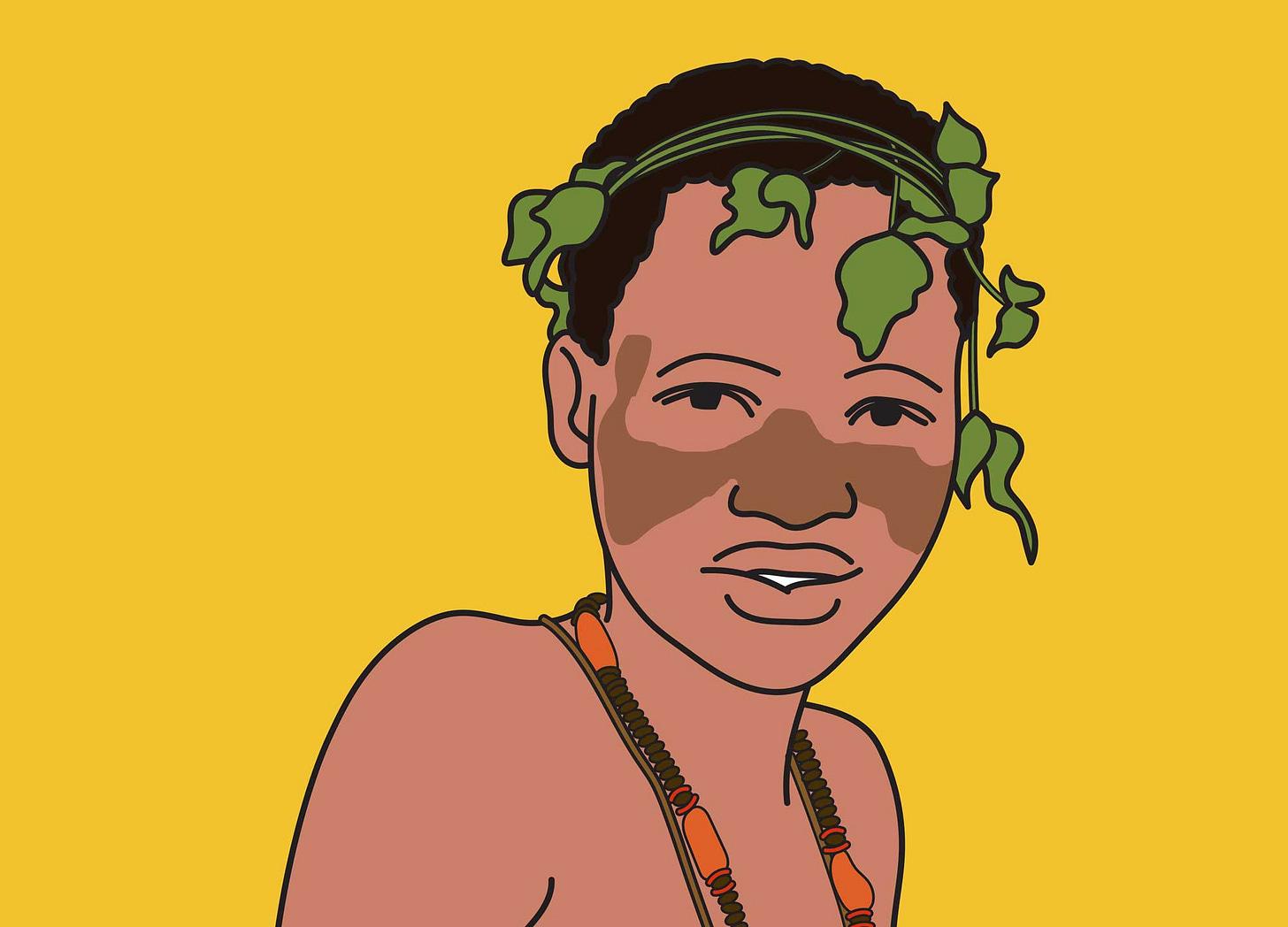
Quibbles over terminology aside, primal societies are not the only ones which demonstrate that we do not need money, usurious systems of debt peonage, hyper-specialisation, entrenched networks of professional power, bureaucracy, law and similar civilised techniques to live well together. People around the world, from the middle-ages up to the present day, have functioned on informal, decentralised, systems of decision-making, taking care of their lives, working, playing, educating themselves and dealing with conflict without the interference of dominants. Money supplies have dried up, police have vanished, governments have broken down and people have found that life has not just gone on as before, but has been far easier and more pleasant. Ordinarily this happens during a crisis, such as when the banks shut down in Ireland in 1970, or in the early days of the British, French, Russian, Chinese and Hungarian revolutions, in the spring days in Prague in 1968 and in the breakdown of communism in the former USSR, not to mention in the middle of natural catastrophes, when people have found, in spite of all the horrors that attended these events, collective intelligence, resourcefulness and conviviality. This has surprised them, just as it does us, who are used to seeing the breakdown of ‘society’ portrayed as brutal chaos. Such chaos does exist of course, but usually only when dominants still exist. It is not the absence of civilisation that causes riots and violence during times of social crises, but its presence.
Peasant societies the world over, some of which are extremely complex and widespread, also demonstrate that the various machines of civilised coercion are not necessary to organise life. Groups living on the periphery of civilised states — the barbarians and the backward folk — have successfully conducted their lives along broadly anarchist lines, while resisting centralised control, for millennia.[42] Again, they haven’t been without their decidedly non-anarchistic internal problems, but to those who wish to look, they are also evidence of the genius and harmony that is possible among people working together outside systems of control.
Anarchism works, and there is important evidence to demonstrate that it works. Ultimately, however, evidence is secondary, even tertiary. You don’t need evidence to reason that theft is impossible in a society in which nobody owns anything, police are unnecessary when there are no laws to uphold or borders to defend, a teaching establishment is redundant when society itself (not to mention nature) is educational, and medical professionals have nothing to do when the causes of sickness and madness are removed. More than that, and most important of all, you don’t need evidence to know that you do not need governments and institutions to tell you what to do and that, ultimately, you are no different from them.
Objection 6: Anarchism is Unrealistic
If we accept if anarchism is a viable approach to our lives, and that it is not best represented by the Sex Pistols, there is another — and for many decisive — objection to realising a genuinely anarchist way of life. Given that we are about as far away from an anarchist world as it is possible to be, how on Earth are we to get there? Given that the whole world would have to be anarchist or concentrated technological power would soon overcome everywhere else; how are we to create an international anarchist paradise?
Once again, we aren’t. In the first place, on the foundational recognition that nature, including conscious human nature, is inherently intelligent — a living intelligence moreover, that is responsive to a phenomenally complex and ever-changing context — anarchist strategies for organising society are necessarily extremely weak. People will, when unconstrained, create their own unique federations, associations, cultures, traditions, fluid guidelines for living, styles of working and so on. To be sure we can speak of certain attributes a free, functioning anarchist town or farm or theatre is almost sure to have; ego-dissolving rituals, small groups federated into weaker large ones, tools that ordinary people can fix and use, presence of the wild, love of craft, freedom of women and children, leaders taking the hindmost, etc. Finally though, we don’t know how innumerable people in innumerable situations are going to set about organising their lives. And thank God we don’t.
On top of this, we face the titanic world-system as it is. Bringing that down and allowing anarchism to grow is obviously impossible for us. As it stands it would take centuries to change our institutions (by some estimates around 400 years to change our energy systems). Add to this the power and extent, not to mention the invasiveness, of the state-corporate technological system and its professional, political and military organs of control, then perhaps multiply by the domesticated passivity, sickness and fear of the masses[43] and lay that against how polluted the planet is, how little tree-cover is left, how much co2 is in the atmosphere, how rapidly the ice-caps and the permafrost are melting and the oceans heating up, how much time we have left before we run out of oil, rare-earth metals, fresh water, fish and top-soil… then heap on top of all that, if you are capable of perceiving it — and few are — the basic abomination of the world, the depths of dissolution and darkness we now live in, so far from collective intelligence or joy that they appear as dreams within dreams within dreams; if they appear at all. And then, finally, consider what it means to situate all this as a process, consider the phenomenal relentlessness of the system; how it grows continually, picking up the pieces of failed civilisations and institutions, improving on previous techniques, pushing inexorably onwards, spreading indefatigably outwards, colonising, rationalising, fixing, defining and controlling more and more, and more and more. We are on the edge of doom and the system is not merely growing, it is, like the compound interest that drives it, growing exponentially. It never stops, never sleeps and never, ever, gives up — it is the evil, inhuman supermind par excellence. It is so complete that just as it makes the most radical of us guilty hypocrites (‘hohoho, look at this radical wearing shoes made in a sweatshop!’), so, as it disintegrates, it suffocates and scatters not just its supporters, but its opponents. The radical, forced like everyone else to suckle from the satanic tit, is not strengthened by the weakness of the system, but weakens with it.
Now, after all this, consider what readjustment can achieve, what reform and change and petitions and marches and newspaper articles can do to stop this leviathan for good, so that it never picks up its tools again. Nothing. Consider how absurd, how blind, it is to suppose that we can legislate our way out of this, or, even more ridiculously, technologically steer growth down ‘eco-friendly’ channels; indeed that anyone can ever rationally control society. Consider what actually needs to be done to prevent the short-term annihilation of the natural world and, with it, our so-called civilisation which we’ve built upon it; immediate and massive negative growth, re-distribution of wealth and power, colossal scaling back on energy usage and a radical dismantling of the state-corporate system (both capitalist and socialist) — and all of this everywhere, pretty much immediately. What needs to be done? The system needs to end. For good. And who is going to do it? We, those of us who understand the problem, or even want to, are laughably, stupendously, weak. A few scattered oddbods set against a mechanism, ten-thousand years in the making, which has invaded every last recess of the natural world and the human mind. It is everywhere at all times, in all people. It is the polluted body, the restless emotion and all thought based thereon. We don’t stand a chance.
We don’t — but I know someone who does!
We have an ally in our long struggle against the Zone of Evil, an ally which is to the system, as the system is to us; unimaginably more powerful. Powerful on an epic, universal scale. This ally goes by a few names, but we’ll use here the least controversial, the one closest to common usage; nature. Nature is a more effective activist than man; and she, unlike us, is not one for discussion. Nature does not vote, or protest, or write petitions, or form unions, or write stern letters, or launch social media campaigns. She prefers to effortlessly sweep the world away.
The system thinks it understands nature because it can measure and describe every measurable and describable aspect of her; the so-called ‘objective’ world of things and events (external form) and the so-called ‘subjective’ world of thoughts and emotions (internal form). Because it appears, to the system, that everything is form, philosophers of system regularly claim that everything is natural. The word ‘unnatural’ has no meaning for them because they are incapable of experiencing the principle of nature, which precedes and comprises form. ‘Natural’ — the natural organisation that anarchists strive to base society upon — describes the consciousness which precedes internal form, and the context which comprises external form. It is this natural principle which produces the natural wren and guides it to naturally respond to the earwig. Lack of consciousness, and separation from the context, produces the unnatural crop-duster and guides it to respond unnaturally to the earwig.
Natural organisation is impossible for the self-informed mind to grasp. The mind is an either-or mechanism. It perceives either wave or particle, either here or there, either order or chaos. Nature, like consciousness, is both-and. It is both wave and particle, both here and there, both ordered and chaotic. When the anarchist asserts (without either-or evidence) that nature should reign over scientific method, artistic scenius, transport, education, farming, city planning or anything else in life, mind — to the extent it is informed by mind (or by the mind-made system) — objects. It creates an object of nature; a thing over there, dis-ordered, out of control, wild and chaotic, which must be tamed, isolated, dominated, ordered before we bring it over here. The idea that nature can organise society with the same intelligence and beauty as it organises tree crowns and mycelium networks is unthinkable.
The nature that is coming to blow the world away is not, then, merely the formal hurricanes, floods, draught, diseases and freezes that, even as you read, are waiting in the wings, not merely the waves upon waves of displaced people sweeping across the earth or the unimaginable civil warfare soon to come, it is also, and ultimately, the super-intimate natural principle behind this cataclysm. Just bringing down the power lines and blowing away the government is not enough to free the mind. The system penetrates the deepest recesses of the psyche. From the moment it is born, the self is gradually moulded into a system-compliant form; through the corrupting (if well-meaning) influence of family — the erratic, emotional pain, and continual (if unconscious) repression of one’s finer, subtler instincts — through the continual pressures of socialisation to obey, accept, conform and submit, to the requirements of the school, the office, the court, the parliament and the artificial hyperworld they are slowly being absorbed into; through habituation to the totalising simulacrum of the spectacle, continual exposure to its relentless propagandising and surrender to its addictive enticements, all tailored (again, unconsciously) to the particular anxieties and manias of the individual; through a life lived continually in mediated environments, in which no wild nature, no direct truth, no aesthetic profundity and, increasingly, no reality at all is allowed to penetrate; through total dependency on the system for all its needs, the self slowly turns into an emotionally over-involved, highly abstracted, highly distracted ghost creature, a bland, half-dead, entirely predictable, desensitized, appendage to the system with no way, whatsoever, of discerning that which is not self. Self, in other words, becomes ego, a self-informed mental-emotional mechanism which accepts completely the system’s determinants of reality. It may rebel against narrow conceptions of ‘the system,’ it may fantasize about all kinds of artistic and creative freedom, it may invent all manner of fantastic conspiracies to account for its misery and confinement, it may — indeed must — break down or drop out completely, but while the system-ego reigns over conscious experience, the ordinary world forever appears to be the ordinary world and not, as it is, every second, a standing invitation to gut-ruptured astonishment and self-shattering psychological liberation.
This profound conditioning is not, it is vital to grasp, just an intellectual belief, a question of ‘accepting official / social narratives,’ (although it is that). Nor are we just talking of the anxiety and craving associated with emotionally-potent sociological conditioning and groupthink (although it is that too). The system-conditioned ego does not just reflexively spout the absurd scientific or religious nonsense of whatever cult, profession or state it belongs to, does not just think, feel or even act as the system does, but sees and feels systematically. The entire self is colonised. This is how the system — the discrete world of institutions and the diffuse hyperworld of the world brain — appears to merge with nature, with the passing of time. ‘It becomes necessity and fate, and is lived through as such;’[44] an oppressive, all-consuming, normality. Unlike the normality of nature though, it is alien to us, beyond our capacity to meaningfully experience, influence or understand. In dreams it appears as a monstrous, intangible, dread and yet, upon waking, we defend it with our lives. This is why genuine moments of liberation feel like a kind of dying; because we are not merely overcoming the world out there, but the entire self that creates and sustains it, in here. It is also why, paradoxically, genuinely liberating experiences do not merely amaze the mind and excite the heart, but baffle, delight and stun the natural body. Genuinely revolutionary realisations reveal the heartbreaking, radical truth of forms, colours, flavours; of the pressure of the ground under the feet, the taste of sugar on the tongue, the phenomenal, incarnate fact that there is anything at all.
Your sanity certainly depends on your capacity to live, as far as possible, independently from the world-machine, and every step we can take to disrupt its operation or spread understanding of what it is and how it works represents genuine progress, the return of the good thing. Debilitating strikes (without reformist demands — simply refusing to clean, for example, wealthy houses, or take their rubbish away), wiping out records (the first and most important act of peasant revolts throughout history), collective refusal to pay rents or loans, disruption of the mechanisms of definition and control, establishing communes (and avoiding activist groups and especially ‘democratic general assemblies’), disseminating the sweet truth and, most effective of all, finding and snapping, or jamming, the weak points that every overextended system creates (while avoiding direct confrontation); these are all meaningful and effective acts, as is learning bicycle maintenance, planting parsnips, distilling whiskey, building a bomb-shelter, making charcoal, learning the bassoon and painting beautiful graffiti on the Thameslink. A committed and intelligent group might even, eventually, at the right moment, be able to deliver a disabling blow to the system.[45] Engaging in genuinely subversive and system-destructive acts is not an option for the kind and the conscious, merely living in the unworld compels them; but the most widespread revolt and the most meticulous preparation don’t currently stand a peanut’s chance in the monkeyhouse of completely overthrowing the system or responding intelligently to its imminent collapse. Only nature can do that, the self-shattering principle of your own nature.
Although we might be able to deliver crippling injury to the system, eventually the pressure of suppressed nature and human nature will blow the lid off this dismal box. As the system closes in on the last recesses of human consciousness, more and more people will realise, learn to experience, and express that ‘recess’, their own nature. This peaceful and beautiful event, inevitably interpreted as ‘narcissistic’ by egoids plugged into the monolith, will take place in scattered individuals, as, at the same time, the unimaginable power of ordinary folk—chaotic, informal, undemocratic, non-centralised and violent—is unleashed, pulling the system apart, as it has so many times in the past. This is unlikely to be pretty, certainly not the ‘revolution in consciousness’ that middle-class mystics wish for, but it will be very effective.
Objection 7: Anarchism is Insane
Many people refuse to engage with politics, never read the news, and believe that, on every subject that comes under the rubric of ‘politics’—such as immigration, social class, health, education or work—there is very little to say, as it is all bullshit. This is an anarchist position.
There have also been many people in history, indeed for most of history if we look back to the beginning of human experience, who have not had to deal with anything like what we would call politics; with a state, for example, or with professional authority, or with war and taxation and news and technology and whatnot. Among such people are primal hunter-and-gathers, children, animals, plants and every other non-human thing in the universe. They are also anarchists.
Finally, there have been people, numerically few, but influential far, far beyond the ambit of their immediate reach, who have refused the moral, intellectual or social authority of their peers and have freely fathomed the depths of their own conscious experience. Such people we call geniuses. These might not be politically anarchist, and their work might be extremely sober and ordered, but in their approach to what they do, they were, as Paul Feyerabend has demonstrated, radically libertarian. We sometimes call their work anarchic too; the comedies of Monty Python, for example, the sketches of Reeves and Mortimer, the films of Emir Kusturica or Alejandro Jodorowsky, the thought of Jiddu Krishnamurti or Barry Long, the Moomin stories, the music of Can, The Residents or the Bonzo Dog Doo Dah Band, the drawings of Tomi Ungerer, Robert Crumb or Sengai; any radical refusal of authority which excites our original, natural instincts greets us as form of anarchism. This is why so many great people are attracted to it. Georges Brassens, Percy Bysshe Shelley, William Blake, William Morris, Oscar Wilde, Mark Rothko, J.R.R. Tolkien, Chuang Tzu, Lao Tzu, Jesus of Nazareth, Ludwig Wittgenstein, Leo Tolstoy, Albert Einstein, Charlie Chaplin and Mohandas Gandhi all realised, in their own lives, that refusal of all constraint is the only way to further knowledge, experience harmony, live with any integrity, create something actually new or have fun.
This refusal is usually understood as a kind of negativity or as a kind of madness and, strictly speaking, that is the case. Anarchism is largely defined by what it is not, because life, the life that great anarchists revere, is indefinable. Reality, as everyone realises from time to time, is far stranger, subtler and more flexible than what can be said of it.
Anarchism, in the finest primal sense of the word, resists definition because it claims that the only intelligence, like the only wealth, is life itself; the conscious life of each of us. The reason men and women do not need kings, princes, states, professionals, institutions and systems to rule over them is because the life within them is more intelligent, more apt, more sensitive, more forgiving and more creative than anything else—certainly any human authority. But this life cannot be rationally fixed. It can be expressed, artistically, indirectly, poetically, musically, or with tone and glance and such ordinary, metaphorical arts of human interaction; but it cannot be literally stated. This is why the ‘beliefs’ of anarchism, as far as direct statements go, are so often negative, why anarchism is so often dismissed as ‘just being against everything’. As nihilist.
Another reason that people accuse anarchism of nihilism is that anarchism is not a socialist or a capitalist approach to collective problems. The idea is this: ‘You are criticising our team (communism, socialism, feminism, the nation, the market, whatever)—therefore you believe in nothing!’ The system-state (like the system-institution or the system-corp), and all reformist plans for organising it in the image of the socialist institution, are all there is, or ever can be. Anything else is ‘nihilistic’ (because the system is the universe) or, alternatively, ‘insane’ (because the system is sanity) or, perhaps, ‘unrealistic’ (because ‘reality’ is the Way Things Are and The Way People Are). Domesticated automatons unconsciously fused with a technocratic state (or corporate, or feudal) system forever; that is reality. Oppose that, and you are by definition an unrealistic, insane, extremist or nihilist.
The egoic mind made the world that dominates us and so to say that we do not really need it quite naturally seems, to the mind, nuts. When pressed on what we do need, the answers that anarchists give seem equally absurd; because the egoic mind cannot quite grasp them. This ‘ideological elusiveness’ is, finally, why many people who are anarchists in so much of their lives, refuse to define themselves as such. When they start to think about their politics or their culture they find the thinkable; capitalism, socialism, Christianity, humanism, feminism or some other ideology of the system. And when they think about anarchism, in its mightiest form, they find the thoughts that the system has placed there; it seems inhuman, or chaotic, or violent, or parochial, or unrealistic, or uncivilised, or mad.
And yet, life is anarchic, and all good things within it; including you. Take a look at your friendships, at your love life, at your attitude to nature, at your creative life (if you have one), at your play. How do you behave, in other words, independently from coercive systems of centralised power and control? Do you base your closest relationships on authoritarian rule? Do you vote when you are out with your friends? Do you write and rigidly enforce laws with your family? Do you refrain from engaging in loving activities until you are properly accredited? Is there anything socialist about your natural life? Do you create and jam and play and collaborate together democratically? I don’t think so. There might be the odd ‘show of hands’, and there is surely inspiring leadership and, in the original sense of the word, ‘obedience’ (or listening), but wherever we find collective life that is intelligent, generous and joyous, we find a complete lack of domination; we find natural spontaneity; we find natural freedom.
This is why anarchism, in its profound and primal essence, is the instinct that won’t go away. Nature is anarchic, children are anarchic, the free, creative mind is anarchic, the body is anarchic, all of humanity’s beloved ancestors were somehow anarchic and all of human society, beyond the microscopic bubble of the corporate state, is and has always been anarchic; hunter-gatherers, friends, lovers and most effective working groups. We are anarchists.
What might a free anarchist society look like today? Imagine if we removed the state and all its laws, dismantled our institutions and corporations, made attendance at school voluntary, opened prisons, opened borders, abolished educational qualifications and all professional accreditation, allowed everyone access to all professionally-guarded resources, cancelled all debts, completely abolished the police, the army, modern digital-industrial technology, money, banks and private property. Imagine, in short, that we lived, now, ‘as if the day had come’. It seems to us, considering such a prospect, that the result would be unbelievable chaos and suffering; which of course, given the repressive, totalising conditions we live under today, it certainly would. But, even putting aside the fact that, outside a few comfortable bubbles, the world is already unbelievable chaos and suffering, it is still an irrelevant objection; because, firstly, we are now in the midst of a crash that end up doing all this anyway, and secondly, and far more importantly, the conscious I reading these words is already anarchist. I am already free. The day has come. It is today.
The Truth About The Truth About Primitive Life
Author: Darren Allen
Source: <www.expressiveegg.substack.com/p/the-woods
Date: Sep 7, 2023
Note: A version of this essay is in Ad Radicem, a collection of anarcho-primitivist enquiries into nature, culture, ethics, the history of art and gender relations.
Out of the Woods
The superiority of primal life over civilised living was well known to those who had the opportunity to judge the difference for themselves.
The proneness of human Nature to a life of ease, of freedom from care and labour appears strongly in the little success that has hitherto attended every attempt to civilize our American Indians, in their present way of living, almost all their Wants are supplied by the spontaneous Productions of Nature, with the addition of very little labour, if hunting and fishing may indeed be called labour when Game is so plenty, they visit us frequently, and see the advantages that Arts, Sciences, and compact Society procure us, they are not deficient in natural understanding and yet they have never shewn any Inclination to change their manner of life for ours, or to learn any of our Arts; When an Indian Child has been brought up among us, taught our language and habituated to our Customs, yet if he goes to see his relations and make one Indian Ramble with them, there is no perswading him ever to return, and that this is not natural [to them] merely as Indians, but as men, is plain from this, that when white persons of either sex have been taken prisoners young by the Indians, and lived a while among them, tho’ ransomed by their Friends, and treated with all imaginable tenderness to prevail with them to stay among the English, yet in a Short time they become disgusted with our manner of life, and the care and pains that are necessary to support it, and take the first good Opportunity of escaping again into the Woods, from whence there is no reclaiming them. One instance I remember to have heard, where the person was brought home to possess a good Estate; but finding some care necessary to keep it together, he relinquished it to a younger Brother, reserving to himself nothing but a gun and a match-Coat, with which he took his way again to the Wilderness.
We know, from first-hand reports, that primal people were happy, that alienation was unknown, that sickness was rare and ‘mental illness’ non-existent. We know from the archaeological record that primal folk never went to war, that their societies were egalitarian and that, despite certain features common to all sane human groupings, the variety of their cultural experience was almost unfathomably vast. And we know that these people were free, and we know[46] that freedom is its own reward. It is no surprise then, as Franklin notes, that those who had experienced such a way of life become ‘disgusted’ with civilisation, with its misery and confinement, and took ‘the first good Opportunity of escaping again into the Woods’.
Ted Kaczynski, the notorious ‘domestic terrorist’ and radical author also went into the Woods. After he was arrested and his work became widely known, he became, for a short time, the darling of anarcho-primitivists such as John Zerzan, and with good reason, as his infamous manifesto makes a devastating case against civilisation, a worthy successor to his intellectual forebears, Lewis Mumford and Jacques Ellul. It came as something of an awkward surprise then, at least to Zerzan and company, when Kaczynski published The Truth About Primitive Life, which critiques anarcho-primitivsm, highlighting the feeble political-correctness of those who advocate it, along with several uncomfortable facts of pre-civilised life glossed over by civ-critical academics (such as Marshall Sahlins).
The account, as with all of Kaczynski’s writing, is compelling, scathing and clear, and far more valuable and incisive than the usual ‘anarcho-primitivism = mass murder’ / ‘you can talk you’re using a computer’ knee-jerk reactions. It is a useful corrective to the romantic notions of anarcho-primitivists who see their own fanciful image of human life in the darkness of the distant past; a darkness which can only be illuminated by a self-knowledge which necessarily allows for whimsical, subjective wish-fulfilment[47]. While Kaczynski’s attack on such wish-fulfilment is peerless, his own capacity for self-knowledge had definite and very obvious limits. It is against those limits that I’d like to offer ten brief counter-points to his critique.
-
Kaczynski’s sample of primal societies is extremely narrow.
-
He brings his own experience in the wild to bear, an experience which was solitary, and therefore very difficult, and yet, as he writes elsewhere (with, some might say, surprising sensitivity and beauty for a murderer), it was fulfilling and joyous;
In living close to nature, one discovers that happiness does not consist in maximizing pleasure. It consists in tranquility. Once you have enjoyed tranquility long enough, you acquire actually an aversion to the thought of any very strong pleasure—excessive pleasure would disrupt your tranquility. One [also] learns that boredom is a disease of civilization. It seems to me that what boredom mostly is is that people have to keep themselves entertained or occupied, because if they aren’t, then certain anxieties, frustrations, discontents, and so forth, start coming to the surface, and it makes them uncomfortable. Boredom is almost nonexistent once you’ve become adapted to life in the woods. If you don’t have any work that needs to be done, you can sit for hours at a time just doing nothing, just listening to the birds or the wind or the silence, watching the shadows move as the sun travels, or simply looking at familiar objects. And you don’t get bored. You’re just at peace.
-
A lot of Kaczynski’s ‘truth’ of primitive life is therefore, in fact, a celebration of it. He describes with approval and admiration, for example, the pleasure of doing meaningful work, one of his favourite themes;
Another thing I learned was the importance of having purposeful work to do. I mean really purposeful work—life-and-death stuff. I didn’t truly realize what life in the woods was all about until my economic situation was such that I had to hunt, gather plants, and cultivate a garden in order to eat. During part of my time in Lincoln, especially 1975 through 1978, if I didn’t have success in hunting, then I didn’t get any meat to eat. I didn’t get any vegetables unless I gathered or grew them myself. There is nothing more satisfying than the fulfillment and self-confidence that this kind of self-reliance brings. In connection with this, one loses most of one’s fear of death.
-
Kaczynski waves away objections that a great deal of the primal grind would have been absent when hunter-gatherers were able to inhabit richer and more productive land than the marginal territories that civilisation pushed them into; before grudgingly admitting this is possible. Indeed there is an excellent section in the essay where Kaczynski points out the stupidity of assessing hunter-gatherer life from samples contaminated by civilisation—a contamination that has been as profound as it is significant.
-
Kaczynski understood work very well. He understood doing things, but he didn’t understand being things. This, as I outline in The Myth of Meaning, was his most serious failing. He’s right, in this case, that it’s a tedious grind to wash nuts and gut meat and so on, but he spends no time discussing the general quality of non-alienating work. He even lumps ‘child-care’ into work, as if taking care of children under primitive conditions is equivalent to what it is like for us today. He also suggests that modern man’s unhappiness is because he has more work to do, which takes up his ‘free time’, rather than that all the work we do is literally soul destroying.
-
Kaczynski criticises the anarcho-primitivist belief that primal societies exhibited a high degree of gender equality, before stating that this is just what they did have, compared to those civilisations which followed. From his small sample[48] Kaczynski presents cases of men exerting power over women and treating them horrendously, which certainly happened, but this is not a counter-argument, nor is the fact that men make manifest decisions in primal societies when these are often ratified informally by women. The point is there have been societies where men and women lived well and happily together (even with — shock-horror — men behaving like men) and these were not civilised societies. It seems reasonable to suppose that there were more such societies the further back in time we go, give that less civilisation always equals more freedom, peace and happiness.
-
Kaczynski mentions violence, which also occurred in primal societies, and then rightly points out that this is not ‘alienating violence’. Homicide was as rare as warfare, which was all but non-existent in our Palaeolithic past. Primal society was peaceful in the same way that nature is peaceful; which is to say, essentially peaceful. The overwhelming inner experience of living in nature, as Kaczynski himself noted, is one of astonishing tranquillity, occasionally punctuated with violent drama and contention that, in the absence of ego, never gets a chance to become cruel and tyrannous. This is the peace that the primalist yearns for, not some kind of sterilised condition in which it is impossible to get angry and hit a man; which, as Kaczynski understood all too well, is a civilised condition—one much touted by ‘pacifistic’ socialists—not a primal one.
-
Likewise, Kaczynski describes primal societies as competitive, which is indeed the case. And why should it not be? In a sane society competitiveness and cooperation live and breathe together, alternating. Kaczynski highlights the extreme premium on self-sufficiency and individualism in primal society, but seems unable to understand, at least in this essay, that not having to depend on others leads to less of the violence and lack of egalitarianism he ascribes to pre-civilised groups. He notes with approval the many examples of care, generosity and good-naturedness among hunter-gatherers.
-
Kaczynski then makes the ludicrous point that our society, like those of primal people, is also one of cooperation and sharing. He writes;
Of course, we share too. We pay taxes. Our tax money is used to help poor or disabled people through public-assistance programs, and to carry on other public activities that are supposed to promote the general welfare. Employers share with their employees by paying them wages.
This is no more ‘sharing’ than giving a lab rat a chew of one’s chocolate bar is, and Kaczynski knows this.
-
Kaczynski says that where food is abundant it will ‘maximize the likelihood of the social hierarchies that anarcho-primitivists abhor’. Speaking for myself, I don’t abhor hierarchies, or authority, and I think anyone who does so is a fool. The problem is rigid and coercive hierarchies, not leadership itself, nor even a couple of layers of prestige. The son looks up to the father, the father to the grandfather, the apprentice to the master, the master to the genius. And why not?[49]
Kaczynski concludes;
I agree with the anarcho-primitivists that the advent of civilization was a great disaster[50] and that the Industrial Revolution was an even greater one. I further agree that a revolution against modernity, and against civilization in general, is necessary.
In other words, one of the most astute critics of anarcho-primitivism agrees with its basic principles. What Kaczynski opposes is not, as he says, the belief that everything has been downhill since 10,000 BC, nor that primitive people had qualities without which we simply cannot function as human beings. What he opposes is not anarcho-primitivism, but anarcho-primitivists, who turn out to be more or less the same kind of ‘soft-headed dreamers, lazies, and charlatans’ as the rest of the anarchist and socialist world; namely, the leftists he hated and skewered at every opportunity.
Into the Woods
Ted Kaczynski’s arguments are impossible to ignore. For the most part, anarcho-primitivists do turn a blind eye to the less pleasant aspects of hunter-gatherer life, largely it seems biased by the feeble liberalism, ‘mushy’ utopian thought and hypocritical pacifism which Kaczynski excoriates with precision. Nevertheless, Kaczynski also had his blind-spots, chief of which the defect which most profoundly limited his analysis, a demonstrable lack of empathy. This concealed the truth of primitive life from him[51] and it chronically distorted his general outlook on life, as evidenced by the fact that he felt blowing people’s faces up in order to get his message across was a good idea.[52]
Nevertheless, even if there was a point in the far distant past when human society was a kind of paradise—and there was—and even if the garden common to the mythoi of the world once existed—and it did[53]—primal societies such as we know them do not, quite obviously, present a template we can emulate. We can see how human consciousness healthily and happily manifests in primal society, we can learn from their empathic sensitivity to each other, their self softening rituals and traditions, and their almost miraculous lack of concern for tomorrow, but we cannot live as they do, because we are no longer those people, and the world is no longer that which they lived in, and it is unlikely to be again for a very, very long time.
So what kind of primalist society is possible? A future Primalism would, first of all, have to be based on primal consciousness — what I call ‘panjective’ awareness — and on the foundational social qualities this consciousness manifests. Secondly, it would probably reach something like the social and technological complexity of the medieval world which, in the absence of coal and oil, is about as far as human beings will ever be able to progress to. This complexity would not rest on intensive agriculture, which our stripped-bare land can no longer sustain, but on permaculture and horticulture, which would militate against the rigid hierarchies and debilitating religious oppression of our civilised past. There would still be hierarchies, but weak, ‘flat’ ones, such as those of the late Paleolithic, in which federal associations rested on the self-sufficient individualism of fluid, independent groupings.
All of this is more or less as it was, a return to a mix of simple hunter-gatherer consciousness, complex hunter-gatherer federalism and medieval technology. As for what will be new, it is almost impossible to say. Presumably, people of the future will adapt some of our techniques and materials to their situation, creating new forms. Some elements of our culture might survive, such as our musical tradition, or our mythic tradition, also radically transformed. With our skills and traditions in tatters, with nobody able to do anything or remember anything, it seems impossible to imagine anyone, at least in this part of the world, resurrecting and readapting any kind of craft or robust, healthy society, but presumably it will happen in some fashion, somewhere. More fundamentally, there will be an entirely new quality to the world, a new way of being that only a world which has gone through the horrors we are facing can know, and this quality will form the foundation of the world to come, if there is a world to come.
But in the end, who knows, and who even cares? I don’t, not very much. Primalism is where we came from and Primalism is where we are headed, but I no more care about the precise nature of a past and future society than I do about what happens to me after I die. If there is a future world, one with human beings in it, it will be one worth living in, but I do not live there. I live here and now, and so I am concerned with what Primalism can mean to me, here and now. Let tomorrow take care of itself. If a new quality is to emerge, it is to do so here and now. And if I am to express that quality, it is not through guesswork, but through experiencing it here and now, in this shitty world.[54]
Anyone looking at me sitting here hunched over my personal computer, wearing cotton trousers made in Lithuania and plastic reading glasses made in Denmark, would probably scoff at the idea that I or anyone like me can be in any sense primitive, but this is not so. As I outline here, the value of Primalism[55] is not in providing a model which we should impose on the world, which would require intolerable — and very civilised — force, but as an expression of human nature which naturally creates natural social forms. The lives of geniuses offer a similar ‘expression’, but I would no more recommend that Beethoven’s dreadful life be emulated than I would suggest the reader take off all his clothes and head for the hills. What we have to learn from the free individual, either the primal man in the Woods, or the primal-hearted genius in the studio, is just that; his free, primal, individuality.
One of the most important characteristics of free people, often overlooked, is that they are, qualitatively speaking, utterly unique. They cannot be emulated and therefore, ultimately, there is no possible way to get what they have; because you are not them. You are you. You can be inspired by Rexroth or by Thoreau, or by the Pirahã or by the Situationists, and you can share, or by analogy understand, the conventions which formally unite these people[56]. You have to do these things, this is how you learn and grow; but they can never give you what you are, which is something infinitely more profound, and simple, and good, than anything which can be literally described. If it could be literally described, then we would be able to plan out a path from here to there, from the you that you are to the you that you want to be, just as we can from the shop to the office.
But we cannot. The truth, as Jiddu Krishnamurti said, is a pathless way. We read about the lives of the pygmys or the Ju/’hoansi, we read Shakespeare and listen to Bach, in order to ignite the flame of our own humanity,[57] not to emulate theirs, and then who knows where the light will lead us? And who cares? The light is its own reward. And although we all want to head into the Woods, and feel the pain of having to sit here, looking at our little screens, the Woods are never lost to us. Even sitting in the office, surrounded by civilised ghouls, its spirit softly speaks, for the wild is not, first of all, a thing there, which I must acquire, and the Woods are not, first of all, a place I must get to. I am that.
It would seem that if a hellish world such as ours, one which deprives us of natural life, is here to teach us anything, it is that you can’t get closer to the Woods than your own body.
On one of his radio shows (11.07.23) Zerzan approvingly referenced a paper receiving a great deal of media attention, The Myth of Man the Hunter (Anderson et at., 2023), which purports to expose the ‘myth’ that men in primal societies hunt and women gather, but which, of course, exposes no such thing. Zerzan’s anti-civ stance is rather selective. He’s tooth and nail against technology, but when Anthony Fauci is asking states to impose technocratic lockdowns and high tech gene therapy on the world’s population, Zerzan’s all for it.
The Technological System
Subtitle: A Critical Guide to the Machine
Source: <expressiveegg.substack.com/p/the-technological-system>
Date: 29 December, 2021. Updated: Feb 11, 2023
Notes: An earlier version of essay appears in Ad Radicem, a collection of radical reflections on the system and the self.
…those who use cunning tools become cunning in their dealings, and those who are cunning in their dealings have cunning in their hearts, and those who have cunning in their hearts are restless in spirit, and those who are restless in spirit are not fit vehicles for Tao. It is not that I do not know of these [tools you wish me to use]. I should be ashamed to use them.
Chaung Tzu
The last place the addict looks for the source of his ills is his addiction. If the spotlight of attention falls upon it he squirms, then lashes out. His attention is hopelessly narrow-minded, focused on a range of secondary effects, but never on the cause. Take the technoholic. He worries about the despoliation of the wild, ‘fascist’ mission creep, the criminalisation of gender, outrageous inequality, the state of the youth, rising prices and so on, but he ignores what all these things have in common. It’s like someone who never washes and, rather than deal with this, spends his life fretting about his itchy skin, oily hair and fungal infections, buying medications to deal with these second-order effects and finding ways to ingratiate himself with people who are offended by his smell.
So it is with the wider world. When it comes to our social ills, it’s not just that most people cannot see the wood for the trees, they are terrified of the wood and hypnotised by the trees, transfixed by the isolated ills that face them and afraid of tearing their attention away from isolated bad guys and bogeymen; not to mention from all the conveniences and gimmicks the system provides. This is not an intellectual bias and it has nothing to do with class interests. It is a deep-seated unconscious fear of grasping a truth so immense, so awful, that to do so would annihilate everything they’ve built their lives on.
What then is ‘the woods’? What is the root problem with the world? Is it the ‘New World Order’, a shady group of villains who are pulling strings behind the scenes for their own benefit? Are we speaking of a ‘conspiracy theory’? Is Big Money the problem here? Do we need to expose the secret agendas of multibillionaires? Must we come to an understanding of how corporations, states and — the real power players — investment companies and banks, operate? Clearly we must. Clearly all of this can throw light on our parlous situation.
As can analysis of that great modern bogeyman, ‘capitalism’. Despite the fact that socialism and communism are both integral elements of the system, and ultimately support it, we do live in a world built on capital, on private ownership of the means of production, and we do live in a world in which wage-slavery and debt-slavery, the twin pillars that capitalism is built on, have made a wasteland of the earth. This is why, despite the disastrous limitations and inherently tyrannous nature of socialism and communism, the Marxist tradition has a great deal to teach us, and is a fearsome weapon in our fight with the owners and creditors that control our lives.
But. Neither Globalist Supermen nor the capitalist wing of the system is the cause of our troubles any more than immigrants, my parents, snowflakes, communism, Trump or ‘the devil’ are. Those who believe such isolated, secondary effects are causally ‘behind it all’ are ensuring that, at best, the real problem goes undetected. By ignoring the ground and root of our ills, those who spend their lives focused on attacking capitalism, zeroing in on the oligarchs, billionaires, banks, and the autonomous ‘vampire-like’ activity of capital, only end up reproducing tyranny in another form.
Here we might make special mention of ‘the left’, that group of people who pour their energies into getting a fairer wage for Bangladeshi sempstresses, defending minority interests, promoting what they call ‘democracy’, trying to save the sea-plankton, criticising the American military juggernaut and battling away at greedy, ‘undemocratic’ landowners. These may be noble crusades, but, as a whole, focus on such symptoms draws fire away from the sickness which produces them; which is why leftism (in all its forms) is the most effective means by which the system can protect and perpetuate itself..
Obviously, ‘the right’ aren’t any closer to seeing things clearly either, obsessed as they are with controlling the uncontrollable (the people, the weather, the market), excluding the unexcludable (minorities, foreigners, women), hoovering up every last shekel on the planet and trying to return to a world that is lost forever. The left and the right are perpetually at odds about how to go about organising society, constantly criticising each other — the fraternalist left focusing on the monstrous greed and small-mindedness of the right and the paternalist right on the moral hypocrisy and individuality-annihilating blandness of the left — but neither of them are even slightly interested in the real problem, because they both benefit from its continual existence, which is why, when confronted by a threat to it, they forget their differences and instantly unite to crush their common enemy.
So what is The Real Problem? What is the ‘woods’ that so very few people can look at squarely, that stands both behind and part of all the menacing, monstrous ‘trees’ they heroically confront? What is that which both the right and the left serve, which runs their lives and ours? What is the cause of the horror we see around us — and feel within us — and that, many of us now know for sure, can only get worse? It is the technological system, and it is the human ego which built and maintained it. I’ll restate that. The horror, the nightmare world we live in, which is set to get worse and worse and worse, is the result of the unnatural technological system we have built, and, deeper than that, the ego which built and which continues to maintain and defend it.
By ‘the technological system’ I mean the unnatural industrial-technological world-machine that surrounds us. The ‘hardware’ of this machine is the superstructure of iron and steel, coal and oil, plastic and polycarbon, copper wire and fibreoptics, diode and microprocessor, box-ship and plane, computer and smartphone, road and rail, and so on. It is the mind-made substance of modernity which surrounds us; all the engines, factories, instruments, computers and various tools of the world. The ‘software’ of the machine is all the modern institutions we are familiar with — the prisons, schools, universities, law courts, offices and so on — and the information these organisations ‘run on’ — the ideas, ideologies, theories and beliefs — and capital — required to keep it all going; all the intangible organisations and organisational processes which operate the tools of the world, and all the facts required to build, maintain and justify them.
Thus the technological system is consubstantial with capitalism and socialism. ‘The technological rationale is the rationale of domination itself. It is the coercive nature of society alienated from itself’ as Horkheimer and Adorno put it, meaning that the rational demands of the machine, the rational demands of power, its imperatives of subjugation and control, the techniques of bureaucratic fact-gathering and data-flow which the system demands, all are one and the same (which is why schooling everywhere in the system promotes the professional self-suppressive ‘values’ it does). That we are focusing here on technology as a primal fact of the system should not be taken to mean that technology is fundamentally something other than the states, corporations, religions and professional institutions it merges into.
For many thousands of years, even until quite recently, it was possible to escape from the reach of the technological system, but eventually, over hundreds of generations and after many setbacks and cracks, through which free people were once able to slip, it all came together. This final consolidating process began in the fifteenth and sixteenth centuries, with a massive lurch forwards in the power of the ‘software’ of the system (including the software of newly-individualised egos, cut loose from old social ties), then, in the industrial revolution of the eighteenth and nineteenth centuries, in its ‘hardware’. Finally, around fifty years ago, all barriers towards a complete world system were lifted and we hurtled towards the state we are in now, standing before the doors of a complete technological dystopia, one so pervasive and invasive it literally inhabits the psyche of those who are part of it, such that it becomes, to machine people, meaningless to speak of freedom. Freedom from what? The prison and the prisoner have become one.
Now, it is critical to understand that although, as I’ve said, there are people who are responsible for all this — the owners of the system, particularly, but also its management class, its academics, doctors, priests, journalists and so on — and although such people should (and will) be held to account for their monstrous violence and cowardice, the technological system itself is, to a significant degree, autonomous. It has its own objective priorities and demands which its human servants must obey or be crushed.
To take a recent example, why is the communications technology of the developed world being upgraded to ‘5G’? Nobody really needs it, nobody really wants it, except perhaps a few technolotrous lunatics. The internet works fine — too well in fact; but we certainly don’t need it to be a hundred times faster. So who does need it? We can certainly say that tech companies do, who depend on continual ‘innovation’ for their power and profits, and we can certainly say that states do, who need hyper-rapid internet systems to more easily monitor and control their citizens. But the most important thing to understand is that ultimately the development of the technological system itself ‘requires’ 5G. As the system becomes more and more complex, more and more invasive and, consequently, more and more destructive, its communication systems require more and more power — which is why it must have 5G. Then as soon as one state or institution adopts this technology, and more ‘perfectly’ controls its environment through it, so everyone must immediately do the same to prevent themselves being overwhelmed.
Technology, the dominance of alienating machines (rather than empowering tools), has worked this way since it first took control of human affairs, many thousands of years ago. Every time a foundational tool or process has developed to the point that it has become too powerful or complex for individual human beings (or local communities) to control, it has forced complete social upheaval in order to accommodate the change. When, for example, two aspects of British society industrialised—mines and cotton factories—a vast number of attendant aspects had to be industrialised; because you can’t have machine power and machine-fabrics without machine-foundries, machine-logistics and machine-education. Every step of every ‘progress’ requires an accompanying development in every other technology — not to mention in the thoughts, feelings and lifestyles of the people who must use or be subjected to the use of these technologies. This leads to all kinds of unforeseen problems which then require more technological fixes.
Such problems today include the immense, swollen power of tech companies and of bureaucrats, the annihilation of the wild, the predominance of domesticated herd-rule (aka ‘democracy’), the death of culture (and of nuance), the ruin of children and the corruption of innocence, the humiliation of the spoken word, the decay of community and conviviality, the abolition of human dignity (particularly through meaningful artistic-artisanal work), vicious and callous abuse of the poor, suffocation of spontaneous instinct and the hollow, purposeless, futility of modern existence.
All of this is, ultimately, a result of the technological system. Right-wing owners make critical decisions, as do left-wing managers; but it is the system itself which commands them. People complain about the withering away of traditional values, about the rise in crime, about their heart-dead children, about their stressful lives, about the blasted immigrants buying up the town, about the poor quality of goods and services and about the maddening frustration of trying to get through to someone who can help them, and then they seize on the next most immediate cause of these things, without realising that the horrendous frustrations of modern life are because they live in a colossal machine which inevitably produces all these results.
Take for example immigration. For the past century the technological system has demanded that huge numbers of people shuttle around the world; and so they do. That so many ordinary people don’t like to have the places they live in overwhelmed with foreigners, or their families fragmented and their traditions diluted, is neither here nor there. The technological system needs it, so everyone must put up with it. This is why, when the system started to need the mass-movement of people, ‘tolerance’, ‘diversity’ and ‘inclusiveness’ became religiously important and why ‘racism’ — which here refers to forms of social complaint — took on the status devil worship did in medieval times.
Or take another example, the utter destruction of childhood innocence and freedom — and therefore sanity. Again, the technological system demands it. It must have children rigidly schooled in its procedures and values, and it must now have them engaging with ‘society’ through the screen. This, combined with parents’ terror of the real world and a social premium on ‘non-violent’ permissiveness — both of which are also consequences of the technological system — combine to create the stupid, sickly, cultureless, sick, sleep-deprived, anxious, anti-social, egomaniacal, hysterical and yet creepily unfeeling laboratory monkeys we once called our children (not to mention a society of child-minded adults who dress, speak and behave like fourteen-year olds).
Perversely, this annihilation of sensitive minds has gone hand-in-glove with a morbid worship of youth and youthfulness. Why? Again, we need look no further than the technological system which, as Jacques Ellul points out, prefers its users to be fungible (if the youth don’t resemble each other more than older people, they certainly fear the exposure of individuality more), full of energy and able to adapt to today’s technological requirements, which are of necessity quite different to those of a few years ago. This is why ‘the face of the youth inspires confidence’, just as a new car does, or a well-ordered spreadsheet.
Plastic is another example of ‘technological necessity’. For the past century the technological system has demanded that we build our entire world from plastic, with catastrophic consequences. Plastic slowly degrades into tiny particles which infiltrate the things we use, our food and water and the air we breathe and have been shown to act as vectors for a wide array of contaminants, including pesticides, persistent organic pollutants, heavy metals, and antibiotics. These particles, which are chronically toxic (neurotoxic, genotoxic, hepatotoxic) and carcinogenic, are then absorbed by and accumulate in biota tissue, organs, and even cells, causing a range of diseases. They also degrade soil fertility. What choice did we have in all this? None.
Or let’s consider social control. Western countries are headed towards a society, in which citizens, rated for how trustworthy or contagious they are, are automatically disciplined and controlled through invasive, automated systems of surveillance and punishment. Even in places like China and the UAE this system is in its infancy. The techno-dystopian horrors to come will be far, far worse than the automated ‘security’ systems already on the horizon, and will all but extinguish the human spirit for good. Why? At this stage only lunatics, morons and cowards believe it is for our health, safety or security. But neither is it happening, ultimately, because Machiavellian demons are consciously designing a world of living death. Once again, there are such monsters at the top of the Pyramid of Evil, and they do have significant control over banks, investment companies and the like, and they will get what’s coming to them, but all this is happening, and must happen, because a high-tech prisonworld is what the technological system itself demands. The supermachine is inherently unstable, unnatural and anti-human, which means the more powerful it becomes, the more rigidly it must control things (and turn people into controllable things) to keep it all together.
Or there’s the mind-crushing borrrrdom of modern life, its total absence of adventure, mystery and surprise. Once again, this is a requirement of the machine, which cannot operate in an environment of unpredictable danger or irrational ineffability. Everything which does not fit, which cannot be rationalised into a discrete thing, which cannot, thereby, be managed, must be levelled out by a machine system. Everyone feels the pain of living in a boring dystopia, all the way up the ladder, but all who work within the system are helpless to do anything about it, because allowing things to go haywire, allowing the kind of free spontaneity which leads to the wild, adventurous uncertainty we all (despite ourselves) crave, or allowing people to work slowly and carefully to create mysterious fractal beauty; all this disrupts the rational ordering of society, sending ripples of fear through the boring monsters who own and manage it. This is why everyone everywhere, with astonishingly few exceptions, looks as if they are stuck in a traffic jam.
Related to this, is the heart-rending loneliness of modern life. Not, note well, the liberation of genuine solitude, in which free individualism reveals itself, but a constraining atomisation in which, although one appears to be ‘free’ to pursue gratification, it is in a personal, virtual space untethered to reality, the result of advanced technological devices, such as cars, televisions, central heating, smart-phones and washing machines which detach men and women from focal, and therefore social, locations, such as the fireplace, the stage, or the river. Technology panders not to the individual character, allowing it to exalt in solitude, but to the needy personality, which grasps at a self-assertive ‘freedom’ that hi-tech devices offer while, at the same time, turning away from the focal places of the world where other people were once found. This is why the more advanced the technology, the more atomised, and therefore bored and lonely, the society.
Or there’s ‘the woman problem’ — that’s what feminism was called when it first appeared in the nineteenth century, when industrialisation forced women to enter the male domain, where they faced a radically different form of subjugation to that they had known. Prior to industrialisation women often had as much power as men; contributing to the wealth of the household and controlling its expenses. When they found themselves in the novel and unpleasant situation of being ordered around in their work, they responded with ‘feminism’. This ‘feminism’ was then used by the system, over the century and a half which followed, to coerce women into an economy which they had and still have absolutely zero meaningful power over. The only ‘power’ they could obtain was that offered to those who crawled their way up the mountain of excrement called ‘career’, a process which corrupted or compromised the femininity it might have liberated. Finally, as the technological system overcame the whole self, not just gender but sex itself was abolished, sexual difference being a barrier to the undifferentiated, bodiless ghosts the virtual system demands. The technological system, in other words, created ‘the woman problem’ and solved it by effacing woman.
Another consequence of living in a machine, perhaps the final and most awful of them all, is the rise of so-called ‘Artificial Intelligence’, which, as everyone is now aware, is rapidly turning life into an inhuman nightmare. Artificial Intelligence is, as the name proclaims, artificial; it is not real. It is, unlike natural, embodied, human intelligence, innately unempathic, innately hyper-rational and innately ruthless. Its decisions cannot even be described as ‘cold’, as there is no possible feeling, or consciousness, which it can betray. If you push the wrong button, or add the wrong file, or are late by one second, you fail, you lose. On top of this, the hyper-complexity of artificial intelligence guarantees constant failure and error and the growth of this complexity—along with its omnipresent invasiveness—ensures that these errors become more and more horrific. But again nobody is to blame; AI is being introduced everywhere because it has to be introduced. The system cannot allow real intelligence to operate; it is too slow, too generous, too disordered, too costly.
Not that, it is very important to understand, the social wasteland we live in is a result of AI, or even of the internet. Man has been alienated from his own existence since the birth of civilisation, and the creation of a civilised God that took all his creativity, wisdom, consciousness and love and threw it up into the inaccessible heavens. Nevertheless, until the modern machine age, man was not alienated from his own sensory existence on earth, which flowed through time as his life and his labour. The industrial world took this meaningful experience of time out of his hands and replaced it with the things of industrial production which then appeared to him as alien artefacts. He had no more idea of how his gadgets were made — above all the mega-gadget of the modern city — than he had of where the ingredients of his breakfast came from. He was now an exile from his own existence, alienated.
Alienation compels man to substitute meaningful living with objects. Man no longer exists consciously in time, and so he throws his consciousness out into the things — including the ideas and symbols—that appear to him in space. These fetishised things include his possessions, his status, the idea of his family, his money-value, his beliefs and his identity, including all his problems and ambitions, all of which provide him with the semblance, or image, of meaning, without the pain and difficulty of having to live differently. This is why it is fruitless to try to solve their problems, because the problem is not the problem.
The problem is not this or that ideology, religion, ‘mental illness’ or way of thinking; it is the way man must live in order to fit in to the technological system, a system which compels man — particularly the professional man—to suppress strong feelings and individuality, in himself and in his perception of others, because they interrupt organisational efficiency. Flattened affect (‘yeah, not too bad, yourself?’), absence of strong likes or dislikes (you never know if someone you upset might be useful to you later) a blasé attitude to experience, blunted discrimination (a complete inability to tell the difference between useless genius and marketable talent), a cold, reserved, yet restless intellectual gaze (the flat, inexpressive eye of modern people) and a constant ‘pricing up’ of people and things (knowing the price of everything and the value of nothing), are what modern life demands, which is why there are so few individuals in modern life with any real passion, or any ability to discriminate, or who care very much about quality, which, further, is why everything and everyone in modern life is more or less the same, lifeless, fungible thing; necessarily packaged in glaringly novel forms, to compensate for inner nothingness and to meet the needs of a system which forces man to compete for custom by occupying ever finer niches — ever more special appearance — in the expanding machine.
We cannot leave this carnival of nightmares without touching on the philosophy of the machine, the cultural trend known as ‘postmodernism’, which, consonant with the demands of the technological system—the demands of its software, that is—rejects all limits, barriers and distinctions, justifies or actively promotes the dissolution of cultural boundaries, celebrates the end of sex and of gender, effaces the difference between childhood and adulthood, or between the public sphere and the private domain, justifies the obliteration of tradition, and makes all discernment, between beautiful and ugly, right and wrong, good and evil, life and death, and love and hate, at best meaningless (at worst, fascist). The ideological industry had to manufacture this philosophy because the software of the machine world demands complete permeability of form. Form—what we might call manifest, boundary-limited, meaning—must, in a totalising mechanised system, be ‘free’ to meet the machine’s operative demands of the moment without being constrained by anything; the embodied mystery of femininity, for example, or the place-specific quality of natural culture, or the innocence of childhood, or the demands of craft or a morality empathically rooted in actual experience. The virtual space is bodiless, placeless, knowable, manageable, instantly acquired, without ethical ties or moral responsibilities, without history or memory or any sense of destiny, which is why it demands a philosophy, or cultural idiom, that justifies all this; postmodernism.
The postmodern horrorshow both justifies and perpetuates the complete destruction of sensate culture. We now live in a shredded social wasteland, in which human relations have been replaced by monetised simulations which can be autonomously managed in the same way that a bank account or a character in a game can. Human virtues, such as empathy, sociability, loving kindness and justice have no place in the virtual condition, because they cannot and must not. Intricate natural complexity (or ‘fractality’), sensation which incites reverie, which slows consciousness down, which frees it from emotionally potent stimulation, which is difficult, which requires intelligence and sensitivity to makes sense of — all of this must be banished from experience, from urban and virtual environments. Only those attributes and non-experiences which serve the system are allowed to thrive; technical skill, narcissistic apathy, absolute egoism, restless, painless abstraction and numbed passivity. Result? People are going out of their minds. Depression, anxiety and schizoid insanity are now everywhere, and with them, the dissolution of human individuality.
The machine, itself a product of the highest intellectual energies, sets in motion in those who serve it almost nothing but the lower, non-intellectual energies. It thereby releases a vast quantity of energy in general that would otherwise lie dormant, it is true; but it provides no instigation to enhancement, to improvement, to becoming an artist. It makes men active and uniform—but in the long run this engenders a counter-effect, a despairing boredom of soul, which teaches them to long for idleness in all its varieties
The machine is impersonal, it deprives labour of its dignity its individual qualities and its defects that are characteristic of all labour that is not done by machines—therefore, a portion of humanity. In other times every purchase made from artisans was a distinction conceded to a person, whose signs were all around him: so the usual objects and clothing became symbols of mutual respect and personal affinity, while today it seems that we live only amidst an anonymous and impersonal slavery. The lightening of the burden of labour must not be bought at so high a price.
Human, All Too Human, Friedrich Nietzsche
The hardware of the machine requires a different, but complimentary ideological foundation. This is called ‘scientism’ (or materialism / physicalism), which is the assumption that reality is made up entirely of discrete, isolable bits, called things or facts, which have a rigid causal relationship to each other. This, for the physicalist, is ‘reason’, ‘reality’, ‘truth’ and ‘sanity’, because extreme fidelity to caused facts is both necessary to build the machine and is impossible without it. Non-causal, non-factual experience is, for the physicalist, indistinguishable from the lies and insanity of postmodernism, which scientism appears to be at continual odds with, just as the right appears to be at odds with the left, craftsmen with artists, crew with cast, men with women. Appears to be, but the egoic foundations are identical, and are founded, in our world, on the monolithic, totalising technological system.
All of the above explains why people are going out of their tiny minds. Their lives are meaningless and they, as human beings, are becoming redundant. I don’t mean they are losing their jobs—which would be a reason to celebrate—I mean they are useless, superfluous to requirements, not just unable to do anything with any skill, but unable to contribute in any meaningful way to society and punished for even trying. This inevitably leads to ghastly feelings of futility and depression, which people are encouraged to assign to all kinds of reasons (chiefly ‘mental illness’) but the real one; the technological system, which must expel as many humans as possible from its operations or, if that’s not possible, expel genuinely human qualities—such as creativity, generosity, fellow-feeling and so on—from the people who remain within it. Such qualities cannot be controlled and, more often than not, disrupt the smooth operation of the machine, so they cannot be allowed, which is why only machine-people rise to the top in the technological system; unempathic, cowardly, hyper-analytical humanoids.
Owners and managers might occasionally have some need for beauty in their lives, they might value spontaneity and generosity, they might love wild nature, they might have all kinds of human qualities. It’s unlikely that there will be many such qualities or that they will be of much profundity — for it’s the ‘least among us’ who lead — but there might be something good somewhere in there. The system, however, has no use for the good. None. Radical beauty, innocence and honesty, integrity and decency, genuine originality, thoughtless generosity, ungovernable wildness, unconditional love are all threats to the smooth running of the machine, which is why all these things are vanishing from our lives.
All the problems I have mentioned are a direct or indirect consequence of living within and being forced to serve the technological system. This includes the financial and legal systems and the demands of capital, exposed by Marx, to innovate workers to death (into machine-like productive processes), but it is also independent of them and, more importantly, ignored in the Marxist tradition which, like every other political system, accepts technology as a neutral substrate on which the organism of society grows. Radicals might want to end biofascism or the destruction of the wild or the abuse of women or private property or wage slavery, and that’s all fine, but if technology is allowed to maintain its hold over men and women, nothing will or can really change and all ‘solutions’ are merely palliatives.
Consider the following story. An insecure man — let’s call him Tom—greedy for wealth and power, takes a stressful job in the middle of a city. Tom has no access to wild nature, no community around him to speak of — just work colleagues and a partner — and he is working flat-out at an essentially pointless task in the city, with no free time to discover and pursue interests which are meaningful. He is surrounded by thousands of objects that he has no meaningful connection to, that, for all he knows, were beamed down from an alien planet, he is completely dependent on an army of specialist fixers to feed, clothe, transport, entertain and protect him, and on an immeasurably complex technological system to communicate with his society; which, actually, is no longer a society at all, but a series of algorithms masquerading as a society. After ‘living’ like this for a decade or so, Tom gets sick and unhappy and starts to deal with his sickness and his mental health problems. He gets stomach pains, so he takes painkillers or alters his diet; he feels stressed, so he meditates or goes on holiday; he is bored, so he watches a movie or gets high; he is lonely so he uses social media or sees a prostitute; he is angry, so he criticises the government or goes on a march… and so on. All the problems are seen in isolation. At no point does he identify the technological system as the problem. Why? Because the actor and the play are one.
I’ve chosen here rather a crude example, a fellow that some readers will no doubt dismiss as just one of ‘them’, but everyone within the technological system is attached to it in much the same manner, from the most aggressively independent right-wing businessman to the most groovy, eco-radical leftist author, from the wealthiest billionaire, at the pinnacle of the techno-pyramid, through all the intellectuals, thinkers and professionals, down to the ordinary workers and the poor. All are plugged in, to their roots, which is why so many people, from all classes of society, are disturbed by the prospect of genuine independence from the machine. The socialist who wants ‘a fairer society’ or ‘an eco-friendly city’ or a ‘civilised world’ — we might not like such people, but we understand them. The madman who does not want a ‘society’, a ‘city’, a ‘civilisation’; this is the devil’s work.
All man’s egoic insecurities and cravings, his docile conformity and numbed passivity, his restless need for stimulation are plugged in, at every point, to the technological system, manifesting as his whole life. He cannot see the big picture, because to see it means that everything must change. Not just this or that activity or habit, but everything, his whole being and, consequently, his whole way of life. So he goes on identifying this or that problem and pursuing this or that isolated, short-term solution, until he dies.
This is how evil grows, by offering the lesser of two evils
until all the good has gone.
Those who own and manage the system well know that people are like this, and so they make sure that problems are presented without context and that solutions amount to nothing more than relieving immediate fears and stresses, all but ensuring that the passive mass are all together caught up in the panic of the day and all too willing to sacrifice more of their freedom and dignity for a short term fix; a little less fear, a little less insecurity. This is how evil grows, by offering the lesser of two evils until all the good has gone.
None of this means that men and women weren’t or aren’t capable of being greedy, selfish or stupid before or outside the technological system, nor that those men and women who are independent of the system to any significant degree are necessarily paragons of virtue. What it means is that, naturally, selfishness has its limits; it is restrained by the people around us and by the limitations of the society around us, which prevent selfishness from ruining our lives or those of our fellows. When the unnatural system reaches the size, extent, invasiveness and power of the modern world, there is no limit to how much the ego can feed from or be fed by it.
What I mean is that opportunities for addiction, escapism, irresponsibility and so on are virtually limitless in the fully developed system. Not only that, but the power of the system to pander to the ego, to flatter its vanities, excuse its fears and feed its baser impulses makes it almost impossible for men and women to resist its insidious creep into their lives. The system — by offering constant micro-hits of social-media fame, by rewarding failure, by lulling men and women to sleep with central heating, smartphones, video games, antidepressants, Pringles and endless porn, by rewarding those who comply, who bend over, who are obedient and subservient, by making it impossible to ever fully confront pain, dirt, loss or hard work, by rebranding self-love, conceit, cowardice and spite as mental illnesses or even as laudable values and by making love completely unnecessary — all this, along with the various illusory myths that the system furnishes its addicts with (chiefly that there was a lower quality of life in the pre-civilised, or even pre-modern, age), lets the selfish ego entirely off the hook which, as spoilt children everywhere testify, turns us all into monstrous egomaniacs, pitiful cowards and craven addicts.
Completely rejecting the system might seem like an entertaining idea, but when voicing your doubts — much less doing something about them — threatens your bank balance or your job, suddenly ‘prudence’ and ‘caution’ are required. This is why almost nobody can see the wood for the trees, because to do so, in the advanced system, means to reject a parasitical false self which has so overwhelmed consciousness that nothing else — no other quality — can be experienced. An inability to see the woods, to see the true cause of the world’s ills is not a question of intelligence and certainly not of taste or education — usually the most educated are the most morally blind and the most tasteless and uneducated the most perceptive, at least when it comes to seeing the true nature of the system. Men and women do not turn away from the truth of the world because they cannot intellectually understand it, or through error or blindness. They turn away because to see the nature of the technological system is, for the ego, to look straight into its own death; because it must die to be free.
Fortunately the system is dying, as all things do. It too is reaching its limits (imposed on it by its energy requirements, which exponentially outstrip cheap supply). This, like the much-vaunted ‘end of work’ that is also coming down the tubes, would be a cause for celebration were it not for the fact that these final stages are going to see the nightmarish perfection of the technological system. Its hold over our lives is going to be complete. We will be locked into a dystopian horror that our greatest writers could scarcely imagine.
But not for long.
Meanwhile, what can we do? If you understand The Problem clearly enough, the response to it is obvious. What happens when you clearly see, for the first time perhaps, a bad habit that you were not aware you had; that you don’t pay attention, perhaps, when someone is speaking to you? Do you need a solution to this problem? Do you need to be told what to do? Or is it obvious?
Well, we are not paying attention. If we were, we would live differently. We would liberate ourselves, as best we can and, in so doing, we would feel good. It feels good to have a noble purpose and to work towards it, even if you never objectively succeed. It feels good to strive to overcome your machine-made fears and desires, even if you are never completely free. It feels good to be independent, even if you must compromise somewhere along the way.
This doesn’t mean you must immediately give up using all industrial technology. That is also impossible — as the fact I have written this on a laptop demonstrates — as well as absurdly simplistic. The technological system has, as we have seen, distorted our relationship with each other; it has taken simple tools from our hands and made us forget how to use them; it has placed us under the thumb of technocrats, professionals, teachers, doctors and professional ‘security’ forces; it has corroded our intelligence, drained us of energy, sickened us, confused us; it has even deprived us of our language, inserting itself between our understanding of our lives and the means by which we once creatively expressed that understanding. Freedom from the machine world isn’t just a question of chucking the smartphone, nor even of identifying and confronting our alienated cravings and justifications. It’s not enough to fight the machine on one front, the most obvious, the most direct — although that too, obviously — but, as it has insinuated itself into every aspect of our lives, even our thoughts and feelings, so every aspect of our lives is an arena of engagement, a nemesis to overcome, a prison to escape from — and the prison is ‘I’.
I don’t mean to suggest that self-overcoming and personal revolution are the only way out of the technological system — obviously not. That would amount to chronic self-absorption. Even the revolutionary acts we are called upon to make in the world, once we are determined to free ourselves of its hold over lives, are not enough (I am referring to our battles in the workplace, in the neighbourhood and with the various institutions we must deal with). Something much more thorough is required to bring the system down.
Here we must recognise something else that is not always obvious about the technological problem, aside from its breadth and depth; something that must also be considered if we are to confront the machine-world intelligently, and that is the fact that it cannot be reformed. Ever. Just as every major development in the system immediately generated concomitant developments everywhere else, which seamlessly integrated themselves with each other, so the autonomous nature and almost inconceivable power of the system — not to mention the sludgelike passivity and learned helplessness of the domesticated mass — remains completely untouched by piecemeal adjustments, which almost instantly hit institutional limits by virtue of the fact that everything else in the system is threatened by them.
We’ve looked at one very intimate example of this in the life of poor Tom, who is unable to deal with any of his problems because they are all rooted in the same sterile soil. Just consider, by way of just another, less personal, example, what it would mean to meaningfully reform schooling, so that children could learn their culture in the manner they have learnt it for hundreds of thousands of years, by directly participating in it. In order for this to work everything would have to change — all of society would have to become educational; it would have to become a place that children can learn from, rather than a place they can do nothing but passively observe. And when I say ‘educational’ I mean meaningfully educational; allowing children to discover who they are, rather than forcing them to do what the system requires. What’s more, all the system-made distractions and addictions which would instantly absorb the attention of children allowed to live freely would have to be removed from their lives. All of this would mean the total disintegration of every aspect of the system.
Similar considerations prevent us from ever taking any of our technologies a step back. Consider what it would mean to return to horse-drawn carriages, or to coal-burning heating systems, or to paper- and tape-based information and filing systems. Again, everything would have to change. Only forward makes sense to the technological system, only more, only bigger. ‘Less’, ‘backwards’ and ‘smaller’ are as inconceivable to machines — and to mechanised minds — as better. So it must go forward, and those who dream of a future utopia must assume that it will be, with various permacultural frills and eco-harmonious designs, more developed.
All of this applies to meaningfully addressing — as in actually solving — any one of the following problems; nuclear weapons, the emptying of the oceans and the erosion of top-soil, overpopulation, genetic engineering, the proliferation of microplastics and other pollutants, widespread madness (addiction, anxiety, depression, etc.), the death of culture, the death of gender, generalised incompetence, outrageous inequality, corruption, the iniquitous exploitation of the poor or any of the other problems I’ve mentioned so far. Even if any one of these things could be effectively dealt with within, say, a hundred years — which is very unlikely — dealing with any one of them throws the whole system into disarray, which is why defenders of the system simply will not allow any aspect of the system to meaningfully change — even if it could — which is why, further, as any reader with the slightest intellectual honesty will recognise, there has been no real progress dealing with any of the serious problems humanity faces. None.
You can believe that a few new laws will fix things, or that a new green technology will be invented which will magically clear everything up, or that a successful anti-lockdown movement will liberate us, or that the ‘right leadership’ will rescue us all, but only by not paying attention to how tightly integrated the system is, how widespread the wasteland world actually is, or how profoundly invasive it is, the result of a process which, as mentioned, has taken thousands of years to reach its current global form. Such development cannot be turned around in a few years or even decades. If genuine reform were possible it would take centuries to change society from within, far longer than we have before nature and human nature are obliterated.
The best that can be (vainly) hoped for is that one group of technocrats are replaced by another, trendier group. Such a hope is rarely articulated by radical (leftist, socialist, Marxist or nominally ‘anarchist’) authors, they are rarely aware of it, but this is the inevitable outcome of reforming society without meaningfully addressing the technological system. You can have the landscape scattered with permacultural cloud farms and propertyless vegan love-ins, but if no meaningful movement has been made towards addressing the global machine upon which society is built, a powerful technocratic, bureaucratic class of intellectuals will have to exist to maintain it. This class will then be what powerful professionals always are — bland, bodiless brains on legs — and do what powerful professionals always do — dominate society in the name of caring for it.
This is why the perennial objection to these kind of critiques — that ‘technology is neutral’, that it ‘depends how it is used’ — is so short-sighted. Technophiles assume that the internet is the same kind of thing as a stone axe, when vastly complex machines are not just different in degree but completely different in kind to simple tools. It may be the case that a nuclear weapon is ‘neutral’ in the already absurdly limited sense that it can be exploded or not, but, like all the high-tech devices we now rely on, they are part of a system which demands a certain kind of society; namely, the one we have, in which education, politics, law, transport and health are, and can only be, technical concerns.
What’s more, who is to decide how all this technology is used? It’s ridiculous enough to make the claim that we have ‘a choice’ about how we can use bucket-wheel excavators, it’s even more stupid to assert that the technological system which demands the use of such machines is ‘neutral’, but even given these fantastic assumptions, there is nothing in the training of scientists and engineers to enable them to decide how hyper-complex machines should be used, nor can there be; as not only can morality never be found in technical (‘scientific’) education, but is a threat which is and must be eradicated by that education. So what if technology is ‘neutral’ when those with power over it are guaranteed never to be able to use it wisely?
If you have ever discussed these matters with people you will have noted how similar counter-arguments are to those of religious adherents, with the same kind of redemptive beliefs; for indeed we are talking about a religion. Man’s being is so fused with technology, his dignity and strength so dependent upon it — witness the manner in which men compensate for their impotence with big cars and loud music — his pleasures inconceivable without it — he cannot make music, paint, dance, talk, do anything without technology — that any criticism of it evokes irritation, emotion, anxiety, outrage, fury; just as criticism of his religion would, or his nation, or his mental illness or his over-active penis, or whatever other surrogate thing (and it must be a literal thing) he’s poured his lonely, alienated, lifeless being into. It’s not just that cars are fetishised, phones fiddled with, bombs given names and perfectly ordered spreadsheets sighed over, it’s that man himself is a machine, which is why he charges technology with existential power, even erotic power, and why he refuses to take into account the vast whole in which his fetishised gadgets have their place. If he does, if he ‘opposes the machine’ or is ‘anti-tech’, he is always very careful not to let that little part of it that he is spiritually attached to — professionalism, perhaps, or institutional Christianity — to be critically scrutinised.
The technological system has its high priests and fanatical crusadors, and it has its casual believers and lapsed lay folk, but regardless of how conscious individuals are of their technophilia, all are enfolded into the system which produces it. We live to the rhythm of the machine, we encase ourself in its shields, we filter our senses through it and, if we own or manage it, we gain our livelihood from it. We are already cyborgs, our intelligence is already artificial, our reality already virtual. This is why, although a typical modern may well never have uttered a word in its defence, he will react to the idea that we are imprisoned by the technological system, that it is unreformable, that it is not ‘neutral’, that it has its own priorities, that it runs the world and that it ruins man and woman, in the same way as all believers react to the reality of the illusion they live by. He may agree, up to a point, or he may passionately disagree, but he will not change the way he lives.
The Dawn of Everything
Subtitle: David Graeber’s Apologia for the System
Date: Jan 2, 2024
David Graeber was, like Noam Chomsky, a rationalist, democratic, technophilic socialist who appropriated the radicalism of anarchism in order to distance himself from the conspicious futility of the professional leftism he embodied. He uncritically supported democracy (and was unable or unwilling to accept that it tyrannously subordinates individuals), he was uncritical of standard leftist causes (such as anti-racism, and other tools of management), he had no real interest in genuine anarchist revolt (continually focusing his ‘activism’ through statist party politics), he was uncritical of professionalism (firing potshots at every job conceivable in his book Bullshit Jobs, yet curiously reluctant to attack doctors, teachers, lawyers and so on[58]), he was uncritical of technology (lamenting that we’re not technologically advanced enough[59]) and when push came to shove and state-imposed lockdowns inaugurated a new dawn of subjugation and control, he was strangely silent[60].
Perhaps more surprising, for a celebrated ‘anarchist’ professor of anthropology, David Graeber wasn’t, despite appearances to the contrary, very interested in the origins of human society. He believed there were no origins. We were, as he argued in his last book, co-authored with David Wengrow (G&W), always kind of civilised, always kind of screwed up, so no need to investigate how the horrific civilisation we have actually began. Graeber didn’t want to criticise the nightmares of early civilised life and the psychological descent that mass domestication represented. He liked civilisation. He believed that cities, states, technology and private property were inevitable. Like other goodies of mainstream socialist-anarchism, he liked fighting ‘fascists’, ‘sexists’ and other right-wing baddies on the other side of the stage; remaining within the theatre that granted him his fame and influence.[61]
The Dawn of Everything (DOE) promises to deliver an explanation of how humanity got in the terrible state it is in today; how the world of misery, futility, coercion and control that covers the earth started, or ‘dawned’. This is framed as ‘how did we get stuck in one mode of social organisation?’ G&W find some evidence—not very much, but some—to suggest that in the period just before the horrors of civilisation, around ten thousand years ago, we ‘played’ at seasonal hierarchies, bowing down to a king in winter before gadding off into anarchic tribes during the holidays. Then, G&W say, we got disastrously ‘stuck’ in this repressive, monarchical mode.
But how? The reader has to wait to the very end of DOE to find the answer to the oft-teased question, ‘what went wrong?’ There, in the last itty-bitty section of the last chapter, we discover that this horrendous world came about because ‘people began defining themselves against each other’, because we became confused about the difference between ‘care and domination’ and between ‘external violence’ (warfare) and ‘internal care’ (our relation to our family and our possessions). That’s it. That’s all they’ve got. There is no development of these trivial ideas of course. The authors just hope you won’t notice that in 600 pages they have refused to answer the question they set out to ask.
G&W can’t answer their central question, so what do they address? They have two other ambitions; one is trivial and reasonably convincing, the other critically important and completely unconvincing. The first aim, which we could call a ‘fluid history’ theory, is to show that certain beliefs held about the distant past are actually false, or at best misleading, including the idea that there were rigidly deterministic causes for repressive societies, that there were sharply demarcated stages in sociopolitical development (bands, tribes, chiefdoms, states, civilisations) and that it is impossible for groupings of a certain size to be anything other than repressive.
G&W show that these beliefs can sometimes be rather crude. An agricultural society does not have to be one of civilised brutality. In most cases (at least in Eurasia, where states first arose) the earliest agricultural (and ‘proto-agricultural’) societies did eventually lead to the repressive societies we associate with ‘squeezing as many calories as possible from a handful of seed grasses’, they did lead to ill health, social stratification, hyper-specialisation and the utter misery of agricultural societies; but some of them also appear to have been reasonably pleasant places to live. And that’s nice to know. Perhaps we modern folk can, like our distant cousins, also have casual groupings of ‘federated’ tribes or communities non-hierarchically cooperating with each other? Perhaps a society founded on casual horticulture is possible for us?
DOE also does a good job in showing that large and reasonably complex societies of such ‘federated’ groupings, such as existed in North America when Europe first started colonising it, do not have to be repressive. Again, in an important sense these more complex hunter-gatherer societies did eventually terminate in states, but it is, as G&W point out, also important to recognise that they don’t have to, that we can live in a world in which local groups overlap into a greater whole, without any central power dominating the whole thing.
G&W also show, following James C. Scott,[62] that there was not a brutally rigid progression in history from simple hunter-gatherer societies[63], to complex societies, to horticulture, to agriculture, to states and then to civilised empires. In reality the transition from prehistory to history was very long and very messy, with some proto-agricultural societies appearing earlier than we used to think and some forms of social simplicity existing well into the civilised era. This is surely as anyone with any intelligence would expect, but it’s always nice to see crude systems ‘fractalised’ somewhat. It doesn’t alter the fact that there were what can be called stages in the collective human story though, just as there are in our individual lives (childhood, adolescence, youth, etc.).
It is true that rudimentary cities sometimes appeared before intensive agriculture and that agriculture didn’t always lead to horrendous oppression or to urbanisation… but so what? There were simple bands in the far distant past, there were simple forms of agriculture which followed these simpler groupings, then there were more complex forms, then there were civilised states. Those are the facts. Understanding the differences between these stages is useful and important, and we need to draw conceptual demarcations in order to do this; unless you are committed to a kind of postmodern, distinction-obliterating, ‘fluid’ view of our past, as G&W appear to be, here and with the second point they want to make, which is not at all trivial.
This we could call the ‘perpetual present’ theory, which is that, essentially, there was ‘no such thing as a garden of Eden’, that we were not once in a kind of innocent paradise or, conversely, that what we call prehistory—our pre-civilised ancient past—wasn’t really any different to the agricultural and urban societies which followed, a state of repression which human beings are inclined to choose.[64] There was, say G&W, a massive amount of variation in how people lived, but we’ve always kind of lived in cities and had states, we’ve always kind of had inequality, we’ve always kind of had hierarchies, we’ve always kind of had agriculture and we’ve always kind of had bureaucracy. We have always been, in sum, kind of civilised. No need for revolution, no need to end exploitation, no need for class struggle.[65]
How do G&W try to persuade us of these things, and, by implication, that domestication, stratification, urbanisation, agriculture, specialisation and technology are natural, right, good for us? Firstly, they redefine ‘city’, ‘state’, ‘equality’, ‘hierarchy’, ‘agriculture’, ‘bureaucracy’ and ‘civilisation’ so that pre-civilised societies can be described as civilised, hierarchical, bureaucratic, etc. The idea of ‘bureaucracy’ is expanded to casual systems of abstract management, the idea of ‘city’ is expanded to ‘large gathering places’, ‘agriculture’ is expanded to gardening, ‘hierarchy’ is expanded to include seasonal, playful or sacred leadership and ‘property’ is expanded to mean possession (even, amazingly, possession in a sacred sense; apparently the idea that a lake ‘belonged’ to a Great Spirit shows that we always had private property!). With their own meaningless definitions in place G&W can then declare that we’ve kind of always had ‘property’, ‘bureaucracy’, ‘cities’, ‘agriculture’ and ‘hierarchies’. This is like saying that we’ve always had cars because when you think about it boats are cars, or hunter gatherers had access to the internet because mushrooms exchange information too.
Secondly, to smear the prehistorical into the historical, the authors focus on certain kinds of early Neolithic societies—those of the past 10,000 years (particularly those between the fifth to the tenth millennium BC in Eurasia and those of the most recent pre-conquest millennia in Amerindia). The 250,000 years of history before that don’t interest them quite as much,[66] because there is no evidence for the cities, states and kings they want to show have ‘always’ been with us. The societies that G&W are most interested in are those which are relatively recent and between simple hunter-gatherer societies and agricultural states, although they are forced to ignore the ‘relatively’ and argue that the ‘between’ is really an illusion. They wish to obscure the fact that there was a relatively recent stage between the simple bands we lived in for hundreds of thousands of years and states. They can then argue, or assume, that we’ve probably always lived like these more complex, recent societies, which were really ‘kind of like civilised states’.
The third way G&W can do away with the ‘myth’ of the good life we once lived and chew history together into a single semi-civilised bolus, is to focus on social forms (which are amenable to the conceptual analysis of academics like G&W) and on what they call ‘self-conscious’ decision making (meaning rational planning). Innocence, soft consciousness, joy, simplicity of life, non-alienating experience and other qualities widely attested in simple hunter-gatherers are absent from their analysis, at least in any meaningful sense, as is any kind of proof that ‘bold social experimentation’ was the basis for early human society.[67]
These are the three means by which G&W defend civilisation. Let’s take a more detailed look, returning first to their semantic shenanigans. In order to argue that we’ve always kind of lived in civilised societies G&W assure us that areas where large numbers of semi-civilised peoples met were ‘really’ cities. They provide a handful of examples, such as ‘Poverty Point’ in North America, or Aguada Fénix in pre-Mayan Central America as evidence; without dwelling on the fact that, firstly, these were recent Neolithic societies and, secondly, that they were almost certainly meeting places. Poverty Point’s status as a dwelling or meeting place has long been debated and will probably never be resolved, although it was certainly not a ‘hunter-gatherer metropolis’—they practiced horticulture and there is no decisive evidence of dwellings. The authors of the paper that G&W rely on in the latter case tell us that ‘the scarcity of residential platforms… suggests a substantial portion of the inhabitants… maintained a degree of residential mobility.’[68]
So this was not a city either, not in anything but G&W’s loose sense, and even if it were, it would be one of a handful of recent examples, such as the Calusa people of southwest Florida, a complex, stratified ‘hunter-gatherer kingdom’ also cited by G&W—which subsisted on papaya and maize. So not hunter-gather either, and certainly not simple.
Our distant ancestors were far more rational than we give them credit for, but it was their irrational quality that distinguished them from the automatons which followed.
Another example of G&W blasting the walls away from a word is ‘egalitarianism’, which they want us to believe has never really been with us. In order to defend this extraordinary claim they tell us, first of all, that it makes no sense to discuss equality when the people in question didn’t. This is like saying we can’t talk about the psychology of children because children don’t read Freud, or the beauty of butterflies because butterflies don’t have a word for beauty. Children ‘understand’ psychology and butterflies ‘understand’ beauty, just as primal folk understood equality—they just called it ‘freedom’. In order to deflect the reader’s attention away from this foundational meaning, they throw sand in his eyes: ‘Everyone,’ they say, ‘agrees that equality is a value; no one seems to agree on what the term actually refers to. Equality of opportunity? Equality of condition? Formal equality before the law?’
G&W tell us that societies like the seventeenth-century Mi’kmaq, Algonkians or Wendat are referred to as ‘egalitarian societies’ without anyone ever really clarifying what the word ‘equality’ really means. Are authors who reference these societies talking about an ideology, the belief that everyone in society should be the same, or one in which people actually are the same? And what does this mean? Clearly, amidst so much disagreement about the meaning of the word, there can be no such thing as ‘equality’.
This is criminal obfuscation. It’s like saying that ‘rape’ doesn’t really exist because nobody can agree what ‘consent’ really means, or that there is no such thing as a good omelette because everyone has their own ideas of what constitutes a well-cooked egg. The egalitarianism that really matters, here and elsewhere, is freedom to do as one pleases without being told what to do, as Greaber and Wengrow themselves point out. They tell us that freedom in American societies was founded on the powerlessness of leaders and that aboriginal Americans continually mocked the submissive obedience of Europeans. The authors know that this mockery was not based on ‘an ideology, the belief that everyone in society should be the same’, but they glide past this so they can claim that egalitarianism never really existed, that ‘they are societies of equals only in the sense that all the most obvious tokens of inequality are missing’ when they are actually egalitarian in the most obvious and basic sense, of nobody having power over anyone else (except the soft power of age, experience and persuasive intelligence).
This, once again, the authors recognise elsewhere. They tell us that ‘there was usually a degree of equality by default; an assumption that humans are all equally powerless in the face of the gods; or a strong feeling that no one’s will should be permanently subordinated to another’s’. But for some reason this isn’t real equality, or it is just one equality among others which are all somehow equally valid or equally applicable.
G&W know—and tell us—that people can be honoured for all kinds of reasons, given lavish burials and even be put into positions of responsibility without having the power to coerce or to enforce any rules. They know this, they even tell us this, yet they present the discovery of well-provisioned graves before the year 10,000 as evidence that we have always been somehow unequal, that the well-known and widely attested egalitarianism of hunter-gatherers is an illusion. It’s strange though, say G&W, that the number of such graves is vanishingly few. ‘We still have to ask’, they write, scratching their heads, ‘why the evidence is so patchy in the first place’. It can’t be for the transparently obvious reason, that everyone recognises, that inequality, in the most important sense we use this word, was, for hundreds of thousands of years, non-existent, can it? Of course not, because these few graves are what G&W’s astonishingly flimsy argument rest upon.
G&W argue that because building monuments indicates complex stratification, the existence of commemorative structures in the distant past shows that we’ve always lived in complex stratified societies. The monuments they are referring to are the so-called ‘mammoth-huts’ of late Palaeolithic Northern Europe, which probably took a couple of people a couple of days to make. Apparently these are not really any different to the large monuments of Göbekli Tepe or the vast pyramids of ancient Egypt, despite the fact that they are orders of magnitude simpler. As Peter Turchin points out, ‘momumentality’ expands roughly and simply in line with tech and population. Equating mammoth huts with Göbekli Tepe and the pyramids is like saying… well, it’s like saying all the other things G&W say in order to argue that simple hunter-gatherer bands 24,000 years ago, large interconnected Amerindian neolithic societies and centralised civilisations[69] were all kind of the same really. It is to G&Ws credit that they dispel the myth that simpler people were simpler minded and unable to perform remarkable technical feats or to display intelligence which would put our university professors to shame. The issue is the ridiculous and unfounded leap the authors make into equating the capacity for rational thought with the dominating structures of civilisation—based on, here, a heap of bones.
This brings us onto technology, something else which G&W are keen to justify, at least by omission. They tell us, again correctly, that the presence of some tech does not automatically and deterministically lead to its repressive use, but they ignore the role of technology in subordinating men and women. This is because David Graeber doesn’t have a critical word to say about technology, he had no interest in engaging with our greatest critics of technology and he yearned for force fields, teleportation, antigrav fields, jet packs and immortality drugs. The idea that technology beyond a limit automatically subjugates men and women to its needs, infects their consciousness with its utilitarian priorities, degrades man’s apprehension of the ineffable, trivialises nature, numbs awareness, forces dependency, supplants free choice[70] and tends towards the colonisation of every sphere of human activity; none of this was of interest to Graeber (as it is not to most socialists). It’s no surprise technology plays at best a walk-on part in DOE or its evils are dismissed, again, with a wave of the indeterministic hand.
Let’s take another look at determinism, or at what causes or leads to repressive societies. Towards the end of the book G&W present to us three kinds of control, three ways in which freedom can be limited, which they exemplify with a neat little story about Kim Kardashian’s diamonds. To stop people from stealing her jewels, they say, she needs certain powers—I call these dominants—to stop would-be thieves. These are control of violence (she can call on the state and its police if someone tries to steal them), control of information (she can hide them, or employ people to hide them) or individual charisma (she can persuade everyone she is special enough to deserve the diamonds).
It’s an interesting and admirably clear illustrative example, but there are other ways Kim can protect her diamonds. Yes. Firstly she could, if she were some kind of high priestess or super-influential professional, convince people that diamonds are worthless. This is similar to ‘controlling information’ but she does nothing to alter the flow of communication or conceal the facts that comprise it. Instead she redefines the relationship of individuals to diamonds (creating or contributing to what Ivan Illich called newspeak).
Secondly, she could create a society which so stupefies and confuses people, they become too weak to take them from her, or too stupid to recognise their value, or simply unable, from the way society is structured, to get close to her. Of course she couldn’t do this on her own. She would require almost unimaginable power—almost unimaginable, because such power is available; through technology. Indeed the value of the diamonds is partly dependent on technology—the technology of money—in the first place.
Thirdly, Kimmy could just let society ‘progress’ under the influence of dominants, allowing the source of domination, the selfish self, acquire to more and more power. When we say that ‘power corrupts and absolute power corrupts absolutely’ what we mean is that it fuels selfishness, turning people with power into grotesque, cancerous caricatures of themselves. This powerful self, through democratic groupthink, then fashions society in its image, until the world outside and the world within become one, at which point it simply becomes normal that hollow, artificial ‘media-personalities’ like Kim Kardashian possess the ludicrous power they do. This may appear to be a very modern problem, but in fact primal societies put self-overcoming—conceived as acting in accordance with the will of the cosmos or of the gods—at the heart of their activities.
G&W then only tell us half the story about dominants—because they are complicit in the half they omit—leaving us with a skewed idea of what actually constitutes repression and coercion in our world.[71] The power of the professional class, the power of technology and the power of the ego, along with the three dominants that G&W mention, have now subordinated individuals, and their communities, completely to the system, so much so that we are at the point where it is practically meaningless even to speak of power. Where is it? Who wields it? It is there, but we hardly need the threat of overt violence, the manipulation of information and the hypnotic influence of charismatic leaders to control people, because the system itself is in charge. Even professionals and their institutions are becoming obsolete. Human beings are automatically disciplined by their estrangement from reality.
Again there is not, as G&W continually point out, a rigidly deterministic path that has led us here, a strict causal-literal relationship between dominants and the societies they frame or control, which can take all manner of forms and take some surprising routes to them. Nevertheless, generally speaking, the less freedom we have, the more power dominants have over our lives, the more ‘stuck’ we become, until we can’t even imagine freedom, let alone desire it. This is how civilisations became a succession of nightmarish death-factories we recognise in history—indeed which comprises history—which began with the Bronze Age horror show that erupted in Mesopotamia, and which appeared again and again in more and more advanced and repressive forms. As technologies progressed and developed (starting with organised agriculture, iron smelting, money, literacy and so on), as neighbouring or successive states were forced to adopt technologies to defend themselves against more powerful neighbours, as—again, thanks to technology—populations increased, as bureaucracy proliferated and as states, professionals and egos became more and more powerful, so civilisation got worse and worse and worse.
G&W are mystified by how this all happened. They can’t explain how we ‘got stuck’ because they have a partial and ambiguous view of dominants, because they don’t really understand human nature, because they refuse to accept how, beyond a critical mass, the power and presence of dominants subordinates society (a recognition of limit informs all intelligent attitudes to society and nature, including those of the indigenous cultures G&W respect) and because they are not interested in how, as the system becomes more powerful, it creates more and more misery. All of this is what gives DOE, like all of Graeber’s books,[72] its curiously ‘weightless’ feel. Nothing in it is rooted in the real world.
At any rate, technology isn’t the biggest or most serious of G&W’s blindspots. Their gravest omission—and, actually, the source of Graeber’s enthusiasm for technologically-advanced socialist democracies—is also the subtlest and most disastrous. G&W tell us, again and again, that they want to show how early people ‘self-consciously chose’ what kinds of societies they wanted to live in. They ‘self-consciously chose’ monarchism and repression, they ‘self-consciously chose’ to build monuments, they ‘self-consciously chose’ horticulture and they ‘self-consciously chose’ to congregate in cities before self-consciously dispersing into smaller groups. Unfortunately this commitment to free choice as an explanation for ‘how we got stuck’ is completely circular; ‘we got stuck because we chose to, and we chose to because we got stuck’.[73] Intellectually this is on the same level as ‘the Bible is true because it is the word of God and we know it’s the word of God because the Bible says so.’
G&W emphasise self-consciousness and choice because these are rational attributes—precisely the attributes which lead to dominating, domesticating states. G&W want us to believe that early people were essentially technicians, rationally organising their societies for their own benefit and amusement. While telling us that we must ‘demythologise’ the past, G&W overlay it with their own grim, rational myth. Where, in DOE, is the mythic sense of the transcendent, the ritualised immersion in the non-human and the love of the mysterious wild? These weren’t just secondary frills for primal people, they were the motivating core and ineffable fabric of their entire lives.
Certainly, our distant ancestors were far more rational than we give them credit for, achieving almost miraculous feats of coordinated conceptualisation, but it was their irrational quality that distinguished them from the automatons which followed. G&W, rationalists in the Enlightenment tradition, have no interest in this quality. None. This makes it impossible for them to understand how we fell from our original nature, what has happened to people as the power of their kings, professionals, tools, egos, states and systems has increased, what we can do about our confinement or how it is ever likely to end.
There is also no recognition of the relationship between people and context (time and place) and how this is disrupted by technology. The wild has no place in DOE, nor do the lessons it can teach us and has taught us. The reader will search in vain for an understanding of the class violence, existential insecurity and attachment to idols (gods, politics, technology, money, groupthink, etc.) that separation from the wild engenders in man. Innocence, sensitivity, presence, genius and love play no role in G&W’s work, and the idea that people once exhibited these irrational qualities to any great extent, or that they are central to our understanding of what is wrong with the world, or how to overcome it; all this is ignored or brushed away as socially regressive ‘Edenic myth-making’.[74]
G&W want us to believe that, basically, before we ‘got stuck’, through our pesky definitions, with kings and presidents and popes, we were all once rational technicians, rationally planning what kind of world we want to live in, rationally deciding to ‘play’ for half the year as kings before rationally ‘playing’ at living in smaller mobile bands. G&W want us to believe that, basically, we lived in hierarchical, bureaucratically managed cities with rationally planned trading routes and monuments. G&W want us to believe that the reformist, leftist, feminist, professionally-managed technocratic world[75] they wish to inhabit is somehow right and natural, even eternal. This is a gross misrepresentation of humanity, one that has led, and can only lead, to misery.
Read more critical reviews here.
The Mechanical Marx
Subtitle: An Anarchist critique of Marxism
Date: 5 Oct 2021. Updated: Nov 3, 2023
Notes: This essay appears in Ad Radicem, a collection of radical reflections on the system and the self.
The great mistake of the Marxists and of the whole of the nineteenth century was to think that by walking straight on one mounted upward into the air.
Simone Weil
Marx’s theories are complex and subtle, but they can be summarised. He starts by defining the value of commodities as a function of the work necessary to produce them.[76] This labour-power, the source of the worker’s dignity, is the only ‘commodity’ which he has to sell.[77] Once the capitalist has bought sufficient labour to meet his own needs he then exploits the worker—through direct oppression or through indirect improvements to ‘efficiency’—for profit. This profit accumulates, making capitalists more and more powerful, until the middle-class has been absorbed into the working-class and the whole miserable, degraded mass revolts and creates socialism. This process is, for Marx, both necessary and inevitable, which is why he extolled capitalism,[78] and the bourgeois state, which he believed prepared the conditions for the superior mode of production of socialism. It’s also why he worshipped production itself, the machinery of society,[79] to which he believed that man must submit until the day it ceases to destroy him. Then, says Marx, all social antagonisms will magically cease. Marx’s proletariat is, therefore, a kind of Christ in mass form, ‘redeeming the collective sin of alienation’[80] through its historically necessary suffering. How much suffering? It doesn’t matter. As the proletariat-Christ will bring heaven down to earth, ‘ending the quarrel between man and man’ and ‘solving the mystery of history’, any act which serves this messianic expectation, no matter how coercive or cruel, is morally justified. Because the God of History decrees it.
Marx celebrated the dignity of work, he endorsed independent working class action, he criticised the state, he bitterly opposed unearnt privilege and he put his finger on the great mystery of working life; why must we do it for other people? But, as Camus put it ‘the reduction of every value to historical terms leads to the direst consequences’[81]; to precisely the degradation, dependency, statist oppression and repulsive privilege which Marx ostensibly opposed. This happens because Marx’s moral quality is located in bare[82] facts; which have no meaning. Marx’s materialism compelled him to banish everything which does not serve the material needs of perfected society; serve the objective fact of ‘life’. Love, beauty, truth, dignity, independence, fellow-feeling, all must be sacrificed to this greater good, this rational, utilitarian ‘life’.
Marx’s economic and social theories were based on a rationally apprehensible, law-like universe, a continuation of Western civilisation’s perennial endeavour to found reality on factual-causal laws, which began with the Greeks and Jews of the Iron age, and reached its modern fulfilment in the work of Hegel (the law of history), Darwin (the law of nature) and Freud (the law of mind). This project is flawed from its foundation, for the facticity and causality it is founded on cannot be located in reality—they are conceptual tools, phenomenally useful, but no more foundationally real than numbers are. Establishing a philosophy on a universe of caused facts, or mind-isolated things, condemns the individual to alienation from the reality of that universe, that which is ‘beyond’ the representations that the mind presents of it. Such a mind is incapable of even perceiving what ails it—it is conditioned by its own activity—let alone remedying its problems through fiddling with the rational-material-economic structure of society.
How is the Ikea factory to be reformed, under communist governance,
into a small-scale craftsman’s workshop? It isn’t.
Philosophically speaking, the inherently alienating activity of the rational mind comes in several varieties, all of which entail gross fallacies and, to the extent they govern the lives of men and women, monstrous violence. The ‘varieties’ that Marx held to were rationalism and materialism which (just like their ostensible opposites, empiricism and idealism) ignore what the non-rational and the immaterial have to teach us, forcing the story of humanity into an essentially mechanical process which can only be explained by artificial, rational laws. Marx, like all rational managers, had no interest whatsoever in the ineffable, in the paradoxical, in the ungovernable, in the elusive, or in the individual which embodies such qualities. He was only interested in the quantitative, material mass, motivated by entirely mechanical, utilitarian ends; the satisfying of material needs which must be met before any other airy-fairy value, like freedom for example, or peace of mind, is attended to. For Marx ‘freedom’ and ‘peace’ must begin with the rational domination of nature and must find its fulfilment in the development of industrial technology, the only way, according to Marx, that the war against ‘scarcity’ can be won, the unquenchable lack that all humans are born with.
For Marx, history was a teleological, or purpose-driven, machine, the purpose being a classless society to which the various antagonisms within society must inevitably terminate in. Such a paradise is essentially no different from the standard Judeo-Christian heaven he rejected; promised, but continually deferred. To this end, Marx continually praised the development of capitalism — even when it resulted in the utter degradation of working people. Following the quasi-fascistic nationalism of Hegel, he praised England’s ruin of India, writing in his essay The British Rule in India, that the British empire was ‘the unconscious tool of history’ and that we might not be happy about the crimes of the British, or the crumbling of an ancient empire, but that we can console ourselves with the knowledge this grotesque torture ultimately ‘brings us greater pleasure’. He was equally sanguine about the European colonisation of the United States. Such events were ‘necessary stages’ in the linear, law-like process of history which he was committed to.
Only mechanical, rational processes were of any interest to Marx. He ruled out consciousness (timeless or otherwise) as an agent in history. Later Marxists attempted to sneak it, or its manifestation in culture, belief, law and so on, through the back door, or they sought to understand society as a whole; undermining, in both cases, Marx’s cast-iron deterministic laws[83] and the foundations of Marxism itself. Marx himself had no interest in exploring non-historical, non-causal and non-factual realities which is why, beyond his penetrating analysis of the alienating effects of capitalist economics on the human psyche, he had almost nothing to say about love, art, death, morality or anything else of vital interest to human beings. His vision of revolutionary change, a mechanical, utilitarian process which must follow the direction of history, was a betrayal of free human nature. The utilitarian need to meet material needs, for Marx the determinant factor in human affairs, manifests as the economy, the mechanism by which such needs were met at scale.
For Marx, thought, awareness, instinct, belief, inspiration are, first of all, subordinate to the need to eat, sleep and keep warm, and then, as societies grew, to the need to plant crops, build houses, manufacture trousers and so on. Apparently, we don’t first of all need to be aware, to think, to believe, to have instincts and to be inspired to hunt, cook, make fire, fire clay, write books, tile floors or run restaurants. Not that material needs and the economy don’t explain much of the world, or shape man’s attitudes — obviously they do, and we can thank Marx for helping us understand how they do, but positing material-economic facts as the sole or primitive determining factor in man’s life reduces him to a component in a material history machine, which isn’t just a morally repugnant conception of humanity, but intuitively false — at least to anyone conscious enough to experience their own inner reality — logically false — as all economic relations are founded on an original conception of property and on a coercively maintained assumption of scarcity — and empirically false — what actually happens simply doesn’t bear out Marx’s predictions. He was confident, for example, that the immiseration of the proletariat would compel it to revolt against the bourgeoisie. As we know, that didn’t happen and doesn’t happen; man enters the capitalist world in a submissive state which only gets worse as he is stupefied by poverty (particularly in the third-world), crippled by professionalism, domesticated by technology, fractured and coarsened by nationalism and pacified with the various sops offered to him by the welfare state — a quasi-socialist mechanism perfectly consonant with capitalist self-perpetuation.
The so-called ‘real basis’ (Engel’s words) on which Marx established his laws of history led to four disastrous interconnected consequences; statism, reformism, technophilia and professionalism. Statism — attempting to create a socialist state (or ‘nationalist capitalist’ state) which will then be overthrown by the proletariat — was, according to Marx, an indispensable step on the road to communism. This is why he made the almost unbelievable demand that ‘the bourgeoisie must first come to the helm’. As with many socialists and communists to follow, he made vague gestures towards the state one day withering away, but like the constantly deferred freedom of all tyrannous authority, it could only be effected by first granting power to experts (such as Lenin’s ‘vanguard party’) who will manage the state-mechanism for the ‘good’ of the people. That this party might (and time and time again did) manage the state in its own interests didn’t seem to occur to Marx, nor that the technological progress that he demanded as a prerequisite for meeting the needs of such a state would further bloat it with a centralised techno-bureaucracy, again with its own interests.
In fact Marx had no intention of bringing down the state, he wished only to reform it from within. This is why the concrete reforms he called for in The Communist Manifesto, his ‘radical’ programme for revolutionary change, called for an inheritance tax, graduated income tax and centralization of credit and communications.[84] Mikhail Bakunin, who, like all anarchists worth their salt, endeavoured to do away with the state by actually doing away with it, opposed this feeble, self-serving gradualism tooth and nail;
Marx is an authoritarian and centralising communist. He wants what we want, the complete triumph of economic and social equality, but he wants it… through State power, through the dictatorship of a very strong and, so to say, despotic provisional government, that is by the negation of liberty. His economic ideal is the State as sole owner of the land and of all kinds of capital, cultivating the land under the management of State engineers, and controlling all industrial and commercial associations with State capital. We want the same triumph of economic and social equality through the abolition of the State and of all that passes by the name of law… We want the reconstruction of society and the unification of mankind to be achieved, not from above downwards by any sort of authority, nor by socialist officials, engineers, and either accredited men of learning—but from below upwards, by the free federation of all kinds of workers’ associations liberated from the yoke of the State.
In Marx’s ‘above-downwards’ reconstruction of society, nature and human-nature continue to be dominated, only now in the name of the people, by technocratic officials and with the deferred aim of doing away with the authoritarian state. The embarrassing fact that authoritarian domination persists, and continues to ruin that which it is supposed to liberate, is pushed out of view by socialists, as is the fact that, in essence, nothing has changed. ‘Work’, to take one critical example, was supposed to be liberated in a communist society. The idea was that by taking over the industrial system of production developed in a capitalist economy, with all its specialists, and their theories, and all its technicians, and their machines, something fundamentally different would thereby result. In the real world this is a ridiculous ambition. A capitalist machine which, as Marx himself told us, exercises total control over the working man — over where he works, over how fast he works and over what tiny specialised manoeuvres he is expected to make — remains the same machine when governed by a communist state. It cannot do or be otherwise. How is a furniture-factory for example (the kind that makes IKEA flat-packs), to hand over autonomy to the individual worker? How is the individual labourer to take complete control of the productive apparatus of the shop floor, devised for a mechanised, rigidly hierarchical system, and designed to mechanically discipline the workforce? The factory was designed to produce the maximum number of goods at the lowest cost and the highest speed; this is what its machines are for. How then are they to be used to produce high quality hand-made goods, at the pace the individual worker chooses, and with the individual worker able to autonomously exercise his discriminating intelligence on the process of creation? How is this…

…to be reformed, under communist governance, into this…?

It isn’t. It can’t be. The factory, as it is, has to be destroyed. And not just its physical architecture and machinery, but its ideological and organisational structures; the division of labour activity into a thousand hyper-specialised tasks, and the division of labour purpose into the intellectual work of the manager and the submoron machine servitude of the worker. Somehow, magically, all this can be reformed, under communist or socialist governance, back into a dignified whole, although nobody knows how. Marxists and socialists simply hope that all of the scattered tasks required by, say, the mechanised industrial cake-making system (one man on the mixing machine, one man on the baking machine, one man on the cutting machine, one man on the boxing machine) will somehow, by itself, dissolve into the autonomous activity of a single baker, and that the management class will, once freed of the pressures put on it by capitalist owners, freely join hands with the drones who follow their orders, cheerfully re-skill each other and then triumphantly march towards a lower-tech society that makes the specialist skill of the manager, and the power based thereon, obsolete. We are supposed to imagine that the bureaucratic techno-elite demanded by a global industrial machine will renounce its power when that machine is taken from the hands of private business owners and given to the socialist state, and that nuclear power plants, oil-powered container ships and injection-moulding factories will be thereby reformed to serve low-energy, local economies.
This idea is, to anyone able to perceive it without the distorting ideological filters of leftism, a religious belief. An immense industrial factory can no more be reformed for the benefit of man than a tractor can be repurposed to dig over a garden. And just as the land has to be redesigned to fit the needs of the tractor, so man has to be redesigned to fit the needs of the factory, which explains why factory-man (including a management class which may never set foot in a factory) is so keen on perpetuating the factory system, and resists the idea that if man is to be in control of the factory the whole factory has to be destroyed and rebuilt for man — and not just one factory, but all the interlocking systems which feed into and from it. Factory-man understands that a radical threat to the industrial system is a radical threat to his own being, which is why he receives radical critiques of industrial technology in almost exactly the same way as fundamentalist believers take radical critiques of their prophets or sacred texts.
Marx understood very well the horrific effects of mechanisation, the means by which it could be used to further exploit labour,[85] but his understanding of what the full ‘development of the productive forces’ of mankind, through technological progress and expansion, would inevitably entail — the ruin of man and the absorption of the human psyche into a nightmarish, self-informed (and, ironically enough, non-material) simulacrum — was next to nil.[86] In his technolotrous zeal, he ignored the fact that energy is a more primitive source of value than labour[87] (and was unable, therefore, to understand the rise and fall of civilisations). In this, classical Marxist economics are, for all their worth, no different to the neoclassical theories which superseded them. These latter, in making everything a question of supply and demand—so that anything for which there is a need, whether slaves, phones, moondust, heroin or usurious interest, is ipso facto valuable—make a wasteland of human existence; but, like Marxism, they too fail to account for the source of both labour and desire, the energy—and beyond that the consciousness—upon which the hyper-complexity of the system runs.
Marx did not understand, or did not want to understand, that a technocratic system has its own autonomous requirements—which suppress consciousness—that it has a ruinous and ever expanding need for energy, and that it necessitates a bourgeois technocratic management elite. His analysis of productive alienation and the chicanery of capital was second-to-none, and still justly celebrated, but his obsession with class exploitation blinded him to exploitation by the democratic mass, by the technocratic system, by professional power and by the abstracted hyperworld parasitically overwhelming conscious reality. The alienating effect of having one’s capacity to freely work, learn, speak, heal and die completely uploaded into a ‘weightless’ technosphere, or appropriated by a class of technicians (calling themselves ‘managers’, ‘teachers’, ‘scientists’, ‘doctors’ and occasionally ‘businessmen’ and ‘politicians’) was invisible to Marx, as it is to all the professionals who, directly or indirectly, have followed him up the blind alley of technological progress. Bakunin (and, incidentally, Dostoevsky) saw the writing on the wall;
A scientific body to which had been confided the government of society would soon end by devoting itself no longer to science at all, but to quite another affair; and that affair, as in the case of all established powers, would be its own eternal perpetuation by rendering the society confided to its care ever more stupid and consequently more in need of its government and direction.
We now find ourselves in the dead-end that Bakunin[88] predicted and that Marx and his many followers directed us towards, one where it is no longer principally kings or capitalists, but professional, technical experts, and the bewildering supermachine they tend, which oppress us. The military power and property power of kings and capitalists still exists, but it has been supplanted by the managerial power of technicians (who, as their universal acceptance of lockdowns and the latest bio-fascist phase of the system demonstrated, are just as happy to see the working classes brutally disciplined as capitalists and kings ever were) and the reality-absorbing power of virtual unculture and a world built to serve it.
All of this explains why Marx was contemptuous of that class of society least affected by industrialisation; namely, the peasantry. Marx (like Plato) had zero interest in the lessons that wild nature could teach man and advocated, effectively, the end of small-scale rural production. He wished to see ‘modern methods, such as irrigation, drainage, steam ploughing, chemical treatment and so forth applied to agriculture…’[89] along with a ‘large-scale’ cultivation of the land; what today we would call a ‘monocultural’ farm. The extermination of bio-diverse nature and of the conscious lives of those who lived from it didn’t, ultimately, concern him, just as it doesn’t those who, despite much high-sounding ‘eco-friendly’ rhetoric, are still engaged in the suppression of subsistence and of vernacular independence. Such people don’t just include land-owning nobles and information-controlling professionals but the very proletariat which Marx told us would create a classless society, but who were and still are engaged, in collusion with the bourgeoisie and the aristocracy, in the industrialisation of all aspects of life and culture, imprisoning themselves ever more profoundly in ‘the kingdom of scarcity’ that such activity produces.
David Cayley summarises Ivan Illich’s account of this process;
“The [working] man found himself in a conspiracy with his employer” insofar as “both were equally concerned with economic expansion and the suppression of subsistence.” “This fundamental collusion between capital and labour,” [Illich] continues, “was mystified by the ritual of class struggle.” The breadth of this claim is quite breathtaking. Marx had asserted that the universal class in which capitalism meets its comprehensive contradiction and potential abolition is the proletariat. Not at all, says Illich—the proletariat is only an accomplice in the war against subsistence, which is the real site of the contradiction. The novelty that Marx misses or takes for granted is homo economicus, a being who must be “distinguished… from all other human beings.” The class struggle is no more than a ritual, and a ritual, as Illich’s defines it elsewhere, is “a procedure whose imagined purpose allows the participants to overlook what they are actually doing.” What the antagonists/accomplices in the class struggle are “actually doing” is making war on subsistence through their joint interest in industrializing every aspect of culture and every element of livelihood—the project that marks out homo economicus from “all other human beings.” Marx’s “proletarians” with “a world to win” and “nothing to lose but their chains” are, in fact, tightening their fetters by trying to improve their position in the kingdom of scarcity rather than fighting for a restoration of the commons. The true universal class is the shadow workers—all those who toil “unproductively” in the shadow of production.
Marx had no idea that the working class would become subdued and domesticated by the ‘development of their productive forces’, that the industrialisation of their lives would force them to surrender to the God of Productivity, and lay waste a natural world in which scarcity does not exist. Marx was unable to predict that eventually everyone — meaning the individual psyche of everyone on earth — would inevitably become a ‘means of production’, a virtual capitalist-industry of one, working in front of, and psychologically welded to, the factory of the screen. How can you ‘seize the means of production’, as Marx told us to do, when this means of production is[90] your self? Who or what is to do the seizing? Marx had no answer. Not because he could not imagine a world dominated by, say, the internet, nor because he wasn’t aware of how capitalism inevitably drives the masses towards rebellion, but because he did not — could not — ask any deeply critical questions of the technocratic priesthood he was part of, and in many ways the founding prophet of.
Marx was the first stagversive, or professional radical; promising revolution, freedom, equality and other such marvels, but, in his actual assumptions and actions, supporting the system, and helping to develop it. He was uncritical of technology or of the techno-bureaucratic class of functionaries (managers, professionals, politicians, trade-union leaders) it engendered, he was contemptuous of the power of the rural poor and the working class (the peasantry and the ‘insufficiently developed’ proletariat, both of which were, for Marx, dispensable before the almighty laws of history) to manage their own affairs, he was supportive of colonial wars, provided they worked towards his statist revolution, and he was committed to a monstrously crude theory of human life, history and experience with nothing of interest to say about life beyond it. This is why he was feted by the bourgeois press, by edgy radicals like John Stuart Mill, by company-men, by progressive businessmen and by ‘revolutionary leaders’, of whom, several decades after Marx’s death, Lenin was to be the most notorious, tyrannical exemplar.
If this were all, we could safely forget about him, but in all these key respects he is identical to the the countless socialists, communists and nominal anarchists who followed him, which is why, once we have extracted the few observations of priceless value he made — along with those within the indispensable critique of capitalism he initiated (e.g. those of Braverman, Baran & Sweezy, Mumford, Ellul, Fromm, Berger and many, many others) — why it is so important to understand and reject his crude, hyper-rational theorising, his brutally insensitive authoritarianism, his pathetically gradualist reformist — and statist — politics, his monomaniacal worship of technological, bourgeois-managed progress, his naked contempt for ordinary people and his celebration of the civilising machine which makes slaves of us all. Marx can lead us away from the prison of capitalism, but has nothing to say about freedom.
[1] Heidegger, 2013, p. 29
[2] Heidegger, 2013, p. 26
[3] Ibid., p. 26
[4] Heidegger, 2002, p. 30
[5] Heidegger, 2013, p. 24
[6] For Heidegger’s consideration of other modes of revealing, see: Heidegger, 2013, p. 10. For his definition of standing reserve, see: Heidegger, 2013, p. 17.
[7] Ibid., p. 17
[8] Ibid., p. 18
[9] Heidegger, 2013, p. 27
[10] Allen’s particular spin on this historical claim can be found at Allen, 2016, p. 185. Examples of skepticism regarding the beneficiality of sedentary civilization are numerous; a popular encapsulation of such claims can be found in Harari, 2011.
[11] Allen, 2016, p. 185
[12] Allen, 2016, p. 190
[13] Heidegger, 2013, p. 14–15
[14] Heidegger, 2013, p. 14–16
[15] Carman, 2019
[16] Allen, 2016, p. 188, brackets and emphasis in the original
[17] Heidegger, 2013, p. 16
[18] Heidegger, 2013, p. 24, my emphasis
[19] Ibid. p. 32
[20] Allen, 2016, p. 196
[21] Which makes the literal or etymological meaning of anarchism — absence of a chief — misleading.
[22] Largely limited to the preposterous ideology of ‘anarcho-capitalism.’
[23] Usually on ‘pragmatic’ grounds. This is why Kropotkin supported the state, and why Chomsky does.
[24] And, arguably, of Jesus of Nazareth; provided that you discount his rather dubious pronouncements (dubious in the sense that they are unlikely to be his) on the formation of the church and those of the mystifying authoritarian propagandiser, [St.] Paul of Tarsus.
[25] And the far less honourable exception of Max Stirner, who was, insanely, for the ego.
[26] States have a long tradition of forcing egalitarian and ‘horizontal’ peoples to appoint leaders.
[27] Although there are few people capable of discerning real authority in a system which brutalises sensitivity. That we all drown at the behest of the various cretins who are popularly exalted as philosophical, artistic, or moral authorities is less of a worry to systemacrats than that someone who knows what they are doing finds the helm.
[28] ‘In any one tribe there may be a hunting chief, work chief, dance chief, women’s chief, age grade chief, and fishing chief. These leaders function only in specific contexts and for limited periods of time; usually, their primacy is based on capacity in the particular activity. It does not carry over into the round of daily life; and, almost everyone in the society is, at one time or another, in a ‘chiefly’ position’. In Search of the Primitive: Stanley Diamond. Similar observations about fluid ‘omnarchical’ leadership have been made by Bakunin, Comerford and Ruskin
[29] The police were invented to criminalise subsistance and disorder, track down slaves, control large, defiant, crowds and protect shops; which, combined with more modern functions of surveillance, intimidation and filling in forms, remain the principle tasks of the police. Coming round to your house after it has been burgled and being nice is really just a PR exercise.
[30] Meaning without syllabuses, state-compulsion, credentialism and so on. No need to get rid of the buildings, some of them are rather nice. They could even be used, of all things, for instruction and study.
[31] At least initially they would. Weeds initially ravage all fields from which artificial controls are lifted.
[32] Or chaotic — although I prefer not to use this word as the chaos of nature is more like the ‘chaos’ of chaos theory, a paradoxical state between unpredictable chaos and intuitively appreciated and generated (rather then merely mind-made) order. For the educational and organisational power of wild chaos see Richard Sennett, The Uses of Disorder. See also Innes H. Pearse and Lucy H. Crocker, The Peckham Experiement; A Study of the Living Structure of Society.
[33] Not that there is anything wrong with squats. I’ve lived in a few I’d be happy to take my nan to.
[34] According to Woodcock in Anarchism: A History of Libertarian Ideas and Movements.
[35] A word, incidentally, which is notoriously difficult to define.
[36] See Peter Gelderloos, How Nonviolence Protects the State, for a flawed but thorough and convincing critique of totalising pacifism, and argument for the use of violence in certain situations.
[37] Some hunter-gatherer cultures are also hierarchical. The word ‘hierarchy’ is normally used in an entirely negative sense; hierarchical processes are always said to be predicated on force. For this reason the word is probably best not applied to anarchist federations.
[38] You wouldn’t call the slums of India, Brazil or Pakistan ‘successful’ in the sense of allowing people to live well, but that they have allowed them to live at all, under extraordinarily difficult circumstances, has not been down to any kind of central planning, or socialistic intervention. They often exhibit some of the finest examples of anarchy in action.
[39] ‘Those who have lived among savage or barbarous peoples in several parts of the world have related how they have attended native councils, where matters in which they were interested were being discussed. When, after a time, the English observer found that the people were discussing some wholly different topic, and inquired when they were going to decide the question in which he was interested, he was told that it had already been decided and they had passed on to other business… The members of the council had become aware, at a certain point, that they were in agreement, and it was not necessary to bring the agreement explicitly to notice.’ W.H.Rivers
[40] James C. Scott, Against the Grain. There have been, in Peter Gelderloo’s words, ‘resolutely anti-authoritarian and ecocentric agricultural societies’.
[41] Particularly our high tech tools but also the hyper-complex ‘tools’ of social organisation that build pyramids and feed Pharaohs.
[42] James C. Scott, Weapons of the Weak. Some large-scale radical movements of the middle ages — such as the ranters and the brethren of the free spirit — were also broadly anarchist. Indeed the so-called ‘dark ages’ — the period before the stereotyped late medieval period of starvation, servitude, intolerance, poverty and plagues — were only dark to states, who were unable to control them. Many medieval towns were not exactly anarchist, but, after having thrown off their lords, were independent and egalitarian to a level unimaginable today.
[43] How many people do you think would choose a world without the system, without its hierarchies and narcotics, without the internet, cars and plastic?
[44] Peter L. Berger and Thomas Luckmann, The Social Construction of Reality.
[45] Kaczynski’s, Anti-Tech Revolution: Why and How provides a readable overview of how such a group would need to be constituted and what it would have to do. His criticisms of half-arsed reformism are, as elsewhere, particularly useful. And funny. But, as discussed in the notes to myth 32 of 33 Myths of the System, Kaczynski has close to zero understanding or appreciation of conscious being, or of the role that ego played in forming the system, or plays in maintaining it, or would play in screwing up the potency of a genuinely revolutionary group. Such a group, along the lines that Kaczynski outlines, may be able provide a service to the earth. Who knows? But I wouldn’t endorse it. The kind of group that could really do what needs to be done, and with style, would be far gentler and more playful than Kaczynski seems to think. This doesn’t mean they would be opposed to violence, or be wishy-washy. It means they would be human.
[46] Me and thee, dear reader, me and thee.
[47] Just as it does for cynical objectivism, although, despite the general popularity of the ‘we’ve always been brutal egoists’ school of anthroplogical thought, serious proponents — such as Napoleon Chagnon, Lawrence Keeley and Steven Pinker — are very thin on the ground, because none of the evidence bears out their Hobbesian outlook. Kaczynski is right to aim his critique at the more pernicious philosophy of leftists such as John Zerzan who aggressively supports trans-rights (i.e. using advanced technology to change your biological sex) and believes that civilisation formed gender.
[49] In any case Kaczynski here is making the old ‘if we had primal anarchism again we’d just become civilised again’ argument, which is like saying, ‘if you have a bath you’ll only get dirty again.’
[50] Demonstrated time and time again by anthropologists. See for example Hunter–gatherers have less famine than agriculturalists by J. Colette Berbesque et al.
[51] And of modern life too. He was a superb critic of some aspects of our world, but others — our cultural achievements, the spiritual necessity of pain — passed him by.
[52] It’s worthwhile contrasting Kaczynski’s assessment of primal man with that of D.H. Lawrence, one of the most sensitive human beings who has ever lived. Lawrence had his faults and biases of course, but he could look at primal or pre-civilised art and feel out the inner life of those who created it. Lawrence knew, from his own experience, what true empathy is capable of making of the world, which is why he yearned for a world which Kaczynski was at pains to repudiate.
[53] Just not literally.
[54] And, through my craft, through mastering the means to express it here and now.
[55] A term I use to distance myself somewhat from the kind of ‘anarcho-primitivism’ that Kaczynski critiques.
[56] Individualism without convention, or tradition, is ego. Okay, so you never say ‘Hello. How are you?’ but instead flap your wings like a duck. Very ‘unique’, but this is self-contained, self-informed personality, it splits you from the context, and therefore from the source of genuine uniqueness, your character.
[57] “The hollow burned into our surroundings by the work of genius is a good place to put in one’s little light. hence the incitement that emanates from genius, the general incitement that fires one not only to imitation.”
Franz Kafka (diary)
[58] Bullshit Jobs has almost nothing on the fundamental cause of pointless work. Graeber focuses on fascinating but secondary matters, such as how inequality creates ‘managerial feudalism’ (useless and well-paid placeholder tasks) and how the insane debt-economy creates jobs which serve bureaucracy. He has no interest, however, in analysing the rise of the techno-bureaucratic elite and its alienating effect on public life, which is why what he has to say about bureaucracy, technology and work never really feels rooted, or real — interesting (particularly to the techno-bureaucratic middle-class mind) — but, ultimately, peripheral and hollow.
[59] See David Wants to Fly; The ‘Mad Fantasies’ of David Graeber for a good overview.
[60] Offering not a word of criticism before his death in September 2020. My guess is that he would have waited until it was safe to do so, like all those brave souls who came out against the tyranny a year and a half after it had begun. That’s really what ‘stay safe’ meant during the ‘pandemic’ — protect your brand, your career and your follower-count.
[61] Which he made many coy allusions to; ‘Imagine my surprise when I found out I’d accidentally changed the world’—that kind of thing.
[62] See James C. Scott, Against the Grain.
[63] ‘Simple’ here meaning small in size and modest in impact; the social and cultural life of such bands were actually extremely complex.
[64] See Chris Knight’s comprehensive [albeit Marxist] review ofThe Dawn of Everything which focuses on G&W’s defence of repression, wealth inequalities and private property. Knight applauds G&W’s interest in ‘social oscillation’ but their explanation of how we ‘got stuck’, the central question of the book, ‘is so meandering that it is difficult to know’ what it is.
[65] None of these appear in any meaningful form in The Dawn of Everything.
[66] They basically believe human society began 30,000 years ago. The anthropologist James Suzman, in his review of theDawn of Everything concludes;
“The Dawn of Everything then is less a history of humankind than an account of the most recent tenth of anatomically modern Homo sapiens’ history almost exclusively as it played out mainly the Northern Hemisphere. And even then it is at its most persuasive when dealing with material from the last few thousand years.”
Essentially, G&W ignore Africa because it upsets their idea that humans are ‘basically’ comfortable in large complex groups which are happy to choose repression.
“Graeber and Wengrow are by no means the first to have flirted with with the idea that north America might be a better model for the diversity of ancient hunter-gatherer life than small scale African foragers. But most have rejected that on the simple grounds that the human population densities in Ice Age Europe and Asia were a mere fraction of that in much of the Americas in the second millennium and because modern humans only ever became widely established there at the onset of the current warm interglacial period. This they note was a time when hunter-gather populations across the northern hemisphere exploded on the back of a vastly increased resource base thanks to a considerably warmer climate as well as the opening up of vast rich territories courtesy of the retreat of the ice sheets. This in turn gave rise to an efflorescence of new social and cultural forms based on far more intensive exploitation of their environments as well as systematic food storage and out of which rudimentary agriculture arose entirely independently on every different continent over a remarkably short period of a five millennia.”
[67] And not, for example, adaptation to the seasons. G&W, to support their claim that rational choice was the basis for their ‘carnival’ of social forms, offer a handful of hunter-gatherer societies that varied their social structures between summer and winter; not as an expression of free-choice, but to respond to the context.
[68] Inomata, 2020.
[69] Such as grim hierarchical, warlike city-states, Tikal or Mohenjo-daro, which G&W are keen to portray, against all the evidence, as places without centralised storage facilities, palaces or evidence of extreme inequality
[70] In the sense that there is no human decision that can be made between which of two technologies or techniques to use, for one is always objectively superior.
[71] “Therefore, having pursued their ‘experiment’ to a successful conclusion, [Graeber and Wengrow] suggest that what we call ‘the state’ is in fact a more or less arbitrary combination of three ‘principles’: control of violence, control of information, and individual charisma. They then argue that wherever we find any of these ‘elements” we will find a state’.
“Notwithstanding the fact that this ‘proof’ presupposes both private property and inequality, it is completely circular. The criteria have been made as abstract as possible in order to be found anywhere. Such is the power of their ‘new science of history’.
“But amazingly, having ‘proved’ the eternal existence of the state, they then disprove it the moment they are forced to return to the facts, acknowledging that prior to the Neolithic we see none of ‘the usual trappings of centralised power: fortifications, storehouses, palaces’. ‘Instead,’ they add, ‘over tens of thousands of years, we see monuments and magnificent burials, but little else to indicate the growth of ranked societies, let alone anything remotely resembling ‘states’.”
How Can We Be Free? A Marxist Critique of the Dawn of Everything. This essay, if you can subtract the Marxist bias (and in some key places substitute the word ‘communism’ for ‘anarchism’) contains many good arguments against G&W.
[72] Which appear to be well written, because each paragraph is very clear, but which actually go round and round and round and round, always seeming to lead to a foundational, world-shaking point, but never actually doing so.
[73] How Can We Be Free? A Marxist Critique of the Dawn of Everything.
[74] “Graeber and Wengrow are motivated to associate anyone advocating for human arrangements which are less materially or administratively complex as effectively right-wing in psychological and political outlook. Although Graeber and Wengrow never directly say this, it is a theme which can be discerned throughout The Dawn of Everything. They promote a model that anything other than progressivist thought is not only ‘childlike’ and ‘primitive’, but also that such ‘primitivist’ tendencies are effectively politically right. Driven by this logic, The Dawn of Everything attempts to situate a prehistoric left/right divide, with certain hunter-gatherers representing the right and settled agriculture societies representing the left. They do this mainly through their total avoidance of ever making any distinction between two separate adaptations that were alternative to evolving urban civilisation and its politics. One of these adaptations is what Graeber and Wengrow refer to as the ‘heroic societies’. The other is that of people pursuing small-in-scale, non-resource-intensified subsistence lifeways, for the agent-based purposes of maintaining actual autonomy.”
James Van Lanen, ‘Cancelling’ hunter-gatherers for the cause of twenty-first-century urbanism.
[75] There is a horrible sterility to Graeber’s visions of the good life. As with many other socialists he simply cannot see beyond mere work, mere play, mere pleasure and mere well-being, none of which, without the irrational truth of life, can bring men and women anything but mere misery.
[76] ‘A use value, or useful article, therefore, has value only because human labour in the abstract has been embodied or materialised in it.’ Karl Marx, Capital. Vol. 1, chapter 1, section 1. This expression of ‘the labour theory of value’ is a basic pillar of Marxist economics. Criticisms can certainly be made of it, chief amongst them the fact that energy is the ultimate source of value in any economy, but for my purposes here there’s no reason to question the accuracy or utility of considering the value of objects as ‘congealed’ labour.
[77] ‘Labour-power is [the worker’s] property (ever self-renewing, reproductive)… It is the only commodity which he can and must sell continually in order to live, and which acts as capital… in the hands of the buyer, the capitalist.’ Karl Marx, Capital. Vol. 2, chapter 20, section 10.
[78] ‘In place of the old local and national seclusion and self-sufficiency, we have intercourse in every direction, universal inter-dependence of nations. And as in material, so also in intellectual production. The intellectual creations of individual nations become common property. National one-sidedness and narrow-mindedness become more and more impossible, and from the numerous national and local literatures, there arises a world literature… The bourgeois [capitalists], by the rapid improvement of all instruments of production, by the immensely facilitated means of communication, draws all, even the most barbarian nations into civilization. The cheap prices of commodities are the heavy artillery with which it batters down all Chinese walls, with which it forces the barbarians’ intensely obstinate hatred of foreigners to capitulate.’ Karl Marx and Friedrich Engels, The Communist Manifesto.
[79] Marx believed that freedom cannot be realised without productive activity. His view on this subject changed, and he was certainly a fierce critic of technocratic production under capitalism, but not of technological production itself, which he frequently extolled.
[80] A now commonplace observation, most succinctly offered by Albert Camus in The Rebel.
[81] Ibid.
[82] Which is to say ‘literal’. See this critique of literalism.
[83] ‘Social existence determines consciousness.’ Karl Marx, A Contribution to the Critique of Political Economy. Note that Marx’s determinism is ‘dialectical’, in that it allows for non-linear and contingent forms of causality.
[84] ‘1. Abolition of property in land and application of all rents of land to public purposes. 2. A heavy progressive or graduated income tax. 3. Abolition of all rights of inheritance. 4. Confiscation of the property of all emigrants and rebels. 5. Centralisation of credit in the hands of the state, by means of a national bank with State capital and an exclusive monopoly.’ Sounds great doesn’t it? But just wait till we combine ‘education with industrial production’. Karl Marx and Friedrich Engels, The Communist Manifesto.
[85] By forcing man to sell his children to capital, by lengthening the working day, by intensifying labour and ‘depriving it of all interest’, by stealing ‘everything that is necessary for the workman to live, robbery of space, light, air and protection of his person’ and by throwing him into the street when he can no longer compete with the machine. See Capital, chapter 15.
[86] Notwithstanding his casual realisation, sketched in the Grundrisse, that the ‘human being comes to relate more as watchman and regulator to the production process itself… As soon as labour in the direct form has ceased to be the great well-spring of wealth, labour time ceases and must cease to be its measure. Capitalism thus works toward its own dissolution as the form dominating production…’ For some reason Marx did not pursue this insight.
[87] Marx flirted with the idea, in the Grundrisse, that energy is a more important source of value than labour, that although labour-power is ‘congealed’ in machinery, energy is a more fundamental determinant of its productivity (indeed labour itself needs energy) but he was a technocrat, so he abandoned this line of thought because it threatened the technology which his socialism depends on. While ‘the labour theory of value’ is useful, particularly in understanding exploitation, the ‘energy theory of value’ explains the rise and fall of societies and civilisations; the wealth of Europe during the nineteenth century, for example, the economic stress as the coal ran out, during the early twentieth century (which led to two world wars), the massive wealth and rise in productivity of the West after oil was put to use, during the ‘boom’ years of the mid-twentieth century, and the consequent decline in living standards, frantic financialisation and collapse of civilisation itself that we are now in the middle of.
[88] I am certainly not an uncritical supporter of Bakunin by the way. I find it hard to find fault with his criticism of Marx, but he was a pretty dodgy character himself.
[89] Karl Marx, The Nationalisation of the Land, in which he says that ‘what we require is a daily increasing production.’
[90] Or is an integral part of.