Eisel Mazard
Escape from Gor
March 14, 2025
John Norman of Gor interview (1980)
No More Gor: A Conversation with John Norman (1996)
Although we have this saying in English; ‘don’t judge a book by its cover’, the truth is that the cover is an important part of the book.
A large percentage of the readers and devotee of John Norman’s book series, Gore, the Counter-Earth Chronicles, the Gorian Saga, whatever you want to call it... a large percentage of the readers would admit that they started reading in the first place because as teenage boys, the highly sexually suggestive cover art caught their eye and stoked their curiosity.
Alec Purves: First of all, where does the term kajira come from, Brandy?
Brandy: So kajira is a Gorean term that comes from the books. The commonality is la kajira, which is not French, and it means I am a slave girl.
Alec: But you’re almost 30 now. But it’s the fact that--.
Brandy: And you’ve known me since I was 18? 18 years old. …
I had a male who was telling me that I should be removed from school because it’s not my job to go to get an education. I need to be taken out of work because my job is to serve him. That I was going to live in a basement, and that was just my life.
The first editions of the books, when they were first published in the United States of America, had covers that were in absolutely no way sexually suggestive or provocative.
The Publishing companies, plural, who tried to make money out of these books, only realized in retrospect, many years later, just how pornographic these books were.
They went back and issued 2nd and 3rd editions, later editions of these books had increasingly sexually explicit covers as they figured out that’s what the audience was interested in, that was what the market was, and even that was the core content of these books that the author was trying to get across.
David Stewart: From this image, you should get an idea of what this is about.
Essentially, there’s this earth on the other side of the sun, and you have characters from our earth get kind of whisked off there and on this earth, it’s essentially like a medieval fantasy.
Women are, most women are basically slaves, and there’s a bunch of sex slaves, as you can tell from this particular cover image right here and this is something that goes through all of the novels, as women are literally physically dominated, like beaten, sexually dominated.
It’s a very strong, what most people consider anti-female empowerment narrative that runs throughout these particular books.
Brandy: So I first found out about gore when I was 18 years old.
That was 11 years ago now and I was like, what’s gore? And then I went on Google and then that kind of, I mean, wrapped this whole slavery, domination, Conan the Barbarian meets Frank Frazetta meets dirty perverted minds come to life in the book series and I just hook, line, sink or sunk into it.
David: A lot of people consider them misogynist, sexist, and perhaps they are.
The thing is, they’re also very successful, not just with men, but with women.
There’s a whole subculture that developed called the Gorean subculture, the Gore subculture, where women choose to live this lifestyle where they are essentially sexual slaves to a man and in the books, they’re often presented, you know, women are often presented as being sexually liberated through slavery, which is a weird thing and the women who aren’t slaves, like, are sexually repressed and There’s, I don’t know, there’s a lot of weird things like that.
So when we look at the content of these books, and we look at the intent of the author, there is a peculiar tension with what is written out so plainly, shall we say, in the cover art of these books and that is these books are at least ****** if not outright pornographic.
But here’s where the strange tension lies.
No one could have less of a detached, good-humored attitude towards this than the author of the books himself.
I think there would be no political controversy surrounding the Gore books whatsoever if he had the same sort of relaxed Hollywood entertainer’s attitude as someone like Kevin Smith. Kevin Smith is a film writer, movie director, what have you.
If he just had the attitude of, well, you know, these books are a little bit eccentric, but so am I and so are my readers. Well, you know, it’s all in good fun. Who hasn’t had a wacky, off-the-wall fantasy like this once a while? No, The enduring significance of these books and their enduring infamy and their source of political controversy is created by the incongruous fact that the author was a professor of philosophy, and he took these books seriously to a mind-blowing extent, as not merely his satire in our society as it is now, but the pronouncement of his political and social philosophy for what our society ought to be.
Alec: How did we meet, Brandy?
Brandy: So, funny story, you actually saved me because I was about 18 at the time, maybe a couple months to being 19 and as a Kajira, who was very young and naive.
So first of all, where does the term kajira come from, right? So kajira is a Korean term that comes from the books.
The commonality is la kajira, which is not French and it means I am a slave girl.
Kajira, you know, Dan is 30 now, but it’s the fact that. and you’ve known me since I was 18? 18 years old.
I had a male who was telling me that I should be removed from school because it’s not my job to go and get an education.
I need to be taken out of work because my job is to serve him.
that I was going to live in a basement and that was just my life and actually stalked me and found me at my school.
Rocker actually helped me get the authorities involved, get this person off of any kind of venue where he could contact me and kind of guided me towards like what ethical gore is versus what like a video game is.
David: So maybe it’s sexist, maybe it’s misogynist. Does that mean that you blacklist or censor it, particularly when you have a group of people, including women, who are really into wanting to live this lifestyle and it became a whole subculture, like an S&M subculture and you also have similar content like Fifty Shades of Grey.
Now, what happened with this novel is that the original publisher, Ballantine Books, didn’t want to publish the books anymore and you can maybe guess why, but this was a long time ago.
This is like in the 70s. So Dahl picked it up. Dahl’s a very famous publisher. Fantasy published a whole bunch of Michael Moorcock’s novels and a bunch of other people.
Very big fantasy, you know, fantasy publisher and somewhere in the book series, they decided they weren’t going to publish them anymore and the official reason they gave was low sales.
Not only that, he couldn’t find another publisher.
He said he got blacklisted by the entire industry as a result of the portrayal of women in his books and I also think he wrote like a practical, like fantasy dominating, sex dominating guide for couples as well, just as an aside, that I think might have sold pretty well.
John Owen: I posted a review of Hunters of Gore on Amazon.com and reposted it to my personal Facebook page.
It got such a strong, positive response that I figured I’d go ahead and share it with everybody.
Having heard various people, especially those in the role-playing **** community, extolling the magnificence of this series, I looked into it and found myself disgusted time and again at the idea of a philosophy that values men who control women with rape and physical beatings.
The most common defense I heard of the books was that they were intended to satirize feminism.
While there were certain thematic elements of this in the plotline of Outlaw of Gore, the remainder of the books seemed to ever increasing degrees to justify why a bully is the best thing that a man can ever be, and that men have a right and a responsibility to beat up women and terrorize them and what are three things that you would give as far as advice? to any new person coming in that’s considering as far as being a part of gore, as far as being a kajira, what are three things that you would give advice?
Brandy: First thing I would say is read the books. Just read them. Know what it is that you’re dealing with. Know the nuances of the difference of a stray slave versus a free woman that’s actually a kajira in clothing.
There’s a lot of subtle differences and nuances, and the most important thing is don’t submit to people that you’ve never met.
You don’t know who these people are, and there are a lot of dangerous people in this world, and you are more than likely a very attractive, very sweet girl who they want to keep forever.
perhaps the books touch on neglected or suppressed human constants, male and female.
Perhaps they have something to say, which has not been said for a long time.
They are probably unique, or almost so in modern literature, in raising serious questions about the intellectual superstructure of Western civilization.
I’m sorry. I’m sorry. The cover of the books doesn’t just matter to the members of the audience, they’re reading public. How is it possible for this guy, who is a professor of philosophy in New York State, how is it possible for him to hold up the book with these sexually graphic covers on it, how is it possible for him to be making millions of dollars out of peddling **** **** based on his own twisted sexual fantasies and to say, dead serious with a straight face in this way, these books are unique in modern literature in raising serious questions about the intellectual superstructure of Western civilization.
Absolutely nothing about the cover of these books suggests that they’re raising serious intellectual questions and let me tell you something, as this video goes on, I think you and my audience will come to agree with me that nothing about the content of these books raises such serious questions.
They have intellectual content.
There are ideas in them.
Perhaps that is what’s so outrageous Some critics.
He here compares himself to no less important thinker than James Watt, the inventor of the steam engine.
Many scientific breakthroughs related to the transformation of the modern West.
He compares himself in writing these sex fantasies to James Watt in challenging and transforming our civilization.
Hero of Alexandria in the 2nd century BC invented the steam engine.
James Watt the 18th century designs an improved steam engine and alters the course of human civilization.
I think a similar phenomenon has occurred with the Corrigan books.
How is it possible to be this delusional? And let’s just pause to reflect on this for a moment.
Again, keeping the lurid cover art in mind, what is the discovery that he thinks is equivalent to discovering the steam engine, industrialization, electricity, these kinds of things? What is the breakthrough that he’s saying people knew in ancient times, in the 2nd century BC, and then they’re rediscovering now in his sexy fantasy books, It’s slavery.
His idea is that in ancient Greece, they had ***** sex slavery, and now here he is again, rediscovering and profoundly transforming ***** sex slavery.
You know, the same sense that James Watt didn’t just rediscover the steam engine, he profoundly changed his civilization.
The claim is that John Norman, in writing the Gore books, is now going to transform the future of our civilization by rediscovering something from the past that was forgotten and what it is he’s rediscovering is men taking women captive, enslaving them, and in plain English, ****** them and that his claim is, this isn’t just the only thing that can make men happy.
This is the only thing that can make women happy.
It’s the only way to set Western civilization back on the road.
right path.
So again, a little bit of a contrast from the joking, self-effacing attitude of someone like Kevin Smith.
Kevin Smith very often is challenged about the fact that one film or another of his is absolutely terrible.
Perhaps the majority of his films are absolutely terrible and he’s able to sit there in a relaxed way and say, well, he’s just a storyteller.
He’s just having fun and some people like it.
If that were John Norman’s attitude towards creative output, I think I can say we wouldn’t be having this conversation right now.
There wouldn’t be any political controversy surrounding these books.
But I think because this was his attitude, because he took this strident philosophical and political position, I think this controversy is never going to die.
I think 100 years from now, the Gore books and their fans are going to be with us, and there are going to be new movies being made out of them.
I think the inspiration, like Conan the Barbarian, like Star Wars, I think there are some elements of this that will never, ever die.
Serp Kerp: It must have been, when they made these books later, he must have just escalated and that’s what I heard people say when I go on the Amazon reviews, is the first books, the first couple of books are good, and then as it goes on, they just turn into straight **** and just kind of misogynistic pseudo-philosophy.
John: This was the first score novel I read, and I subsequently read Tarnsman, Outlaw, Priests, Kings, and Captive, in case you...
want to accuse me of being ill-informed and I was introduced to Tarl Cabot, who revels not in consensual **** but in the merciless, gloating, terrorizing, more akin to a high school bully who, unable to accept the more tender and vulnerable feelings he has for a girl, beats her and humiliates her to suppress his own inadequacy in the face of those feelings.
Serp: But it’s like women desiring men based on their status.
not how good they treat them.
So men that have higher status but abuse women are considered highly attracted by women.
That’s like as edgy as this book gets.
Seagulls Gather: The section I think that will enrage more people than any other is where they work out the details of her slavery and Talina is forced to wear a collar announcing that she is his property.
Her life as a slave, though, actually affords her slightly more freedom than her life as a princess did, confined as she was by being veiled and limited to the Gorian Seraglio.
This real-world commentary features a handful of times in the text, dealing with not just Greek mythology, but also Darwinian concepts and again, in a section that might well offend quite a few, comparing the activity of the slave market with the more modern for 1969 dating practices, though that comparison actually seems more relevant in the Twitter age, it will certainly raise an eyebrow or a hackle or two.
John: Norman’s assertion is that men must be brutally harsh with women because if they ever show the slightest sympathy, then women will seize on that and enslave the men by weakening and feminizing them.
For the women in the novels, this is undoubtedly Every single female character in the aforementioned books, with one very minor exception, was a shrill, maniacal, malicious, stuck-up pain in the *** that was ultimately brought under control by a physically strong, arrogant man and what are the expectations as far as surrendering as a Kajira?
Brandy: The idea is that you give up yourself completely to your master.
The idea being that you are his article of possession.
You are his clothing or property to do with whatever he pleases.
So at that same connotation, your mind, your soul, your body, your thoughts, your fears, your inhibitions, your desires, they no longer belong to you.
They belong to the person that you submitted to and it’s very difficult for a lot of people to come to terms with that because they lose their independence.
Seagulls: In conclusion, the sexism and the depiction of slavery, sexual or otherwise, in this book is fairly toxic.
Probably only those belonging to a certain sexual subculture would read this and Fifty Shades of Grey, but it’s hard not to see them as originating from the same sort of inspiration.
If you can shake off that mental shudder, you’ll find Tanzanman of Gore to be nothing like is expected, a maxim which holds true about just about every aspect of it.
The plot is better than expected, the characters are better than expected, the quality of writing is better than expected.
The relationship between Tal and Talina is probably the focus of the book, motivating Tal as it does even when the two are separated.
Not even 1% as explicit as Fifty Shades of Grey.
They are a much more engaging couple than Steel and Grey.
When not veering towards abuse or even being generous **** their relationship is a quite reasonable, occasionally enjoyable, transition from sparring to affection.
John: There is nothing noble about being so emotionally weak that anyone you don’t dominate physically will be able to take advantage of you.
Norman likes to make the argument both in the books and elsewhere that this savage patriarchal rule was necessary the good of society if there is one positive in the Gore novels it is that it will compel the reader to rise to the occasion and to articulate precisely why they disagree with Mr.
Norman and if on a personal note um why do you love Gore so much and what does being a K how is how is that you know G for me was.
Brandy: The secret to the world that I didn’t have.
It was like learning who I was all over again.
I’ve never been in a community where I strived so hard every waking moment to study and learn and just retain information.
It was like a, it’s a drug.
You can’t stop because once you are pleasing and once you do get that attention, it’s It’s addictive.
You don’t let that go and it’s not the same as when a **** master looks at you or even a vanilla person looks at you.
Like, when a Gorean looks at you, feel it. You know in your heart that this is a different dynamic and that like, you get to be the real you don’t get to be anywhere else.
obviously, my books answer to certain deep needs in human beings.
If they were not important to people, if they did not have something important to say, something which apparently desperately needs saying, they would not be as popular as they are.
Now, this type of claim is very difficult to make about comedy.
I could say that when I was a child, I responded to the comedy of Chris Rock, stand-up comedian, because it spoke to certain repressed political problems that existed in downtown Toronto, Canada.
Most obviously, the shadow of the Black Panther radicalism of the 1970s and the divisions between black and white, ethnic conflict, and this kind of thing.
There was something I could say that his comedy, that it meant for me, that made this seem empowerful and important.
But to make these kinds of generalizations, even with comedy, even with something as explicitly political as comedy can be, is incredibly dangerous.
I mean, if we’re being honest, why did Chris Rock become so popular? Did it have nothing to do with the fact that he makes a lot of jokes about cheating on his wife and sleeping around? It’s just an incredibly fatuous, self-serving path we start to go down when we try to justify what appeals to us, even in comedy or even in politics, as representing something profound for all human beings, or something that shifts in our own time and as I’m suggesting here with this illustration, It’s much, much more surreal, much, much more self-serving and delusional when we say this about *********** rather than when we say this about comedy or something with an explicit political message.
On screen there, I’m contrasting two women who were respectively the most successful pornographic actresses in their time.
One is Eva Elfie and one is Jana Michaels.
So about 12 years apart, these women were the leading pornographic stars.
What can you read into this? What, you know, okay, I could try to construct some kind of social commentary, like, well, you know, 12 years ago, hip hop music was going through this period where, you know, female body image linked to rapid.
You can try.
You can try.
But you know what the truth is? There’s absolutely nothing we can read into this.
At any given moment, including right now, you can Google around the internet and you can find a dozen women who look just like Gianna Michaels and a dozen women who just look like Ava Elfie, just very similar looking people, who never became stars, who never became wildly popular.
You can find all kinds of cross-currents in culture that way, but especially in something that blatantly appeals to the ****** right? But there is no rational explanation for why one person was a successful actress and another person was not.
Why one person became famous and another person languished in obscurity when they were just as beautiful or what have you and you know why? Because desire is irrational.
Desire is the most irrational and arbitrary part of human nature.
But if you’re looking at the cover of the gore books, if you’re looking at these pictures of women in bikinis with swords and so on, it doesn’t take that much imagination to figure out that yes, indeed, we’re dealing with the ****** pornographic, desiring side of human nature that irrationally fastens on one woman and becomes fascinated with her and makes her famous and makes her the most famous sex symbol of her generation and fails to fasten on another, all right? The arbitrariness of fame is quite surreal if you’re talking about comedy or action movies or adventure movies.
It’s already arbitrary enough.
But when you step into the blatantly ****** when you step into the realm of *********** the extent to which it’s arbitrary, irrational, and not susceptible to analysis.
It is on a whole other level.
Let’s not go any further with quoting the interviews with John Norman.
Let’s not go any further with the philosophy of John Norman in his own words, without a little soups all, a little taste of what it is you’re missing out in these books.
What it is that he characterizes as having so much profound intellectual content, transforming our civilization, et cetera, et cetera.
In this book, Norman continues his pattern of storytelling, interspersed with detailed explanations of how to train a slave, how to make a lawn blow, how to train a slave, how to make a ship, how to train a slave, how to fight naval warfare, how to train a slave.
Did I mention how to train a slave? This guy is joking about the extent to which these books incredibly repetitiously try to inculcate this philosophy of male dominance of female slaves into the readers.
He’s joking about it, but notice at the top of the screen, four stars.
Many of the harshest critics of the Gore series are people who openly admit they love the books, they enjoy the books, but they can admit and they can joke about the extent to which this is really kind of perverse and bizarre and repetitious and reflects some kind of monomania or insanity on the part of the author.
Another four-star review for the same book.
Taro has a bit of an existential crisis and even though I like this book, the reason behind it was handled very poorly and so out of character that it is laughable and he decides that money is what he wants in life, and so he becomes a pirate.
Arrr.
Tarl suddenly has no problem with torturing his captives.
He also has no problem with keeping lots of slaves and pimp slapping them at will and going beast mode on them at the slightest infraction.
Despite the big tonal shift, I actually like this entry into the Gore canon.
Although much of the old recipe is still in effect here.
Tarl meets Woman.
Woman and Tarl are mean to each other.
Tarl and Woman eventually fall in love after Woman realizes how awesome slavery is.
Again, this is a critique coming from someone who loves the books and who appreciates what the author does intellectually or in terms of providing a good adventure story, whatever it is he may appreciate.
This isn’t someone who hates the books, but this is someone who can admit how deeply flawed they are.
Readers of the books, whether they love them or hate them, debate at what point the series started to go downhill, at what point the authors Sexual, political, and philosophical obsessions started to destroy the quality of the books, but many of them would name this specific book, Raiders of Gore, as the turning point.
Prior to this, there was at least some ethical tension in that the main character in the books disapproved of slavery and as you’ve just heard from this book forward, after he briefly becomes a slave himself, he 110% embraces slavery and this becomes a univocal soapbox for the author to preach his pro-slavery, pro-rape, pro-violence to women views without the ethical ambiguity that was provided by having a main character, even a narrator, who in the earlier books at least felt some kind of misgivings about embracing that ethos.
From a website called Books Without Any Pictures, Based on reviews I’ve read, there’s a point where the series starts to go way downhill.
I’ve definitely reached that point.
It also represents a major departure from the series thus far, because instead of focusing on Carl Tabbot, the hero of all the previous books, it instead chooses to use an Earth woman as the protagonist, Eleanor Brinton, a rich ***** New York City socialite who hates men.
That’s her defining personality trait.
Her only personality trait, even.
One night, Eleanor is captured and taken to Gore, where it’s pretty obvious what happens to her.
She quickly learns that on Gore, women have no social status, and she changes hands between a variety of different men.
Here’s A one-star review.
If you are into domination and submission, then this is the book for you.
If not, it will bore you out of your brain, despite the rather well-crafted science fantasy world the story inhabits.
There is page after page of stuff like this:
Naked and in chains, humiliated, spoiled rich ***** lifts her head and rages, I am not a slave, I am not a slave.
Barbarian hunk roars and strikes her across the face and then kicks her in the guts.
Say you are a slave, *****.
Sobbing, humiliated, spoiled rich ***** hangs her head and says, I am a slave, I am a slave.
I kid you not.
That is the book, and I’ve just saved you a lot of time.
Another one-star review.
Everyone said that this book marks the point that the Gore novels start going downhill.
As a big fan of the novels, I didn’t want to believe it.
Well, let me tell you, this novel is awful.
Here is the plot in a scene which is repeated over and over and over.
Girl: I am not a slave.
Man: you are a slave.
Girl: okay, I am a slave and it feels so right.
The end.
This book represents something of a turning point in this series in terms of its misogyny.
For the first time, I think, it actually mentions the concept of rape.
Previously, the book series was coy about it, using euphemisms like taking, possessing, enjoying, etc.
But in this book, it actually mentions rape directly or explicitly.
Likewise, this book portrays actual violence against the women being hunted slash enslaved, a particular unfortunate being shot through the shoulder and pinned to a tree by an arrow.
It also describes in greater detail the physical maiming inflicted on women who do not adequately adapt themselves to their lives of sexual enslavement.
This is also the most sexually explicit of the books thus far.
Previously, the narrative would always pan to the moon or fade to black whenever a sexy time begins.
This book gets a little braver before cutting away.
Which is, of course, one of the most baffling things about this series.
Yes, it’s all about male dominance and the glorification of rape culture, literally, “fuck her until she loves you”
But it doesn’t bother to realistically portray the psychological slash emotional ramifications of this behavior.
What fun would that be? So it is clearly a fantasy for those who enjoy that kink.
But why is it that he’s so shy about the actual sex?
Many of the reviews ask this, like, why does it not actually describe the sex? You get all these descriptions of chains, chains and whips and the procedures of enslaving people, but then the sex itself, the author seems to be uncomfortable actually describing beyond the use of some vague euphemisms.
Slave Girl of Gore gets a one-star review.
Any reviews of this book have to begin with a comparison to Captive of Gore.
Captive of Gore was the first book in the series to be narrated by someone other than Tarle, being narrated by an Earth female captured and taken to Gore as a slave.
Just want to pause to note, absolutely, by definition, none of this is about **** because none of this is about people consensually having sex or playing games.
This is not about consensual sex between adults.
This is about people being abducted, kidnapped, taken captive, brutally raped, etc. Okay? This is very clearly and explicitly not about consensual sex.
So anyone who happens to click on this video who’s a fan of these books, Please accept the fact that is what you are in the position of making excuses for.
You’re actually making excuses for a political philosophy that’s asserting people genuinely violating one another’s consent, taking people captive, enslaving them, et cetera, is... for the victim’s own good, because, John Norman argues, inwardly and secretly, that is what women want, even if they don’t know it yet, until after this traumatic experience happens to them.
So she is an Earth female, taken captive and relocated to Gore.
This is essentially the same story as the earlier book, Captive of Gore.
In Captive of Gore, we have Eleanor Brinton, a rich ***** socialite, who is beaten into submission until she likes it.
In Slave Girl of Gore, we have Judy Thornton, a college student taken to Gore and raped into submission until she likes it.
There are a few differences between the books that are noteworthy.
One of the main differences in the books is that while Eleanor, in the earlier book, resisted her slavery, mostly through whining and screaming, Judy, in the later book, took to it quickly, too quickly.
Judy is literally melting in the hands of her rapists and, quote, realizing her place, close quote, within hours of being drugged and transported to an alien world.
While Eleanor remained in shock for much of her own story, which is more believable, and was constantly crying, plotting, and scheming to get out of her predicament, Judy instantly converts from a naive, virginal, opinionated college student to a gushing, love-starved, submissive sex slave.
Both books, however, make the same point about that conversion.
It’s what women really want.
A subtle difference between the books is that Captive of Gore took an approach that some women just don’t know what they want, and all you have to do is beat them and rape them until they realize it.
However, Slave Girl goes further than Captive by claiming that all women are submissive and natural sex slaves, and they can’t wait to show you.
Norman steps up this rhetoric from book to book.
At least he’s consistent.
In this video, we’re not going to judge a book by its cover.
We’re not going to judge a book by its book reviews.
We’re not going to judge a book by the response of its fan base or its detractors.
We’re not even going to judge a book by taking select quotations of the original text out of context.
We’re going to judge the book by the stated intent of the author and let’s never forget, John Norman was a career professor of philosophy.
He taught philosophy, he wrote philosophy, and then he started this side project, writing the books, the science fiction world of gore, that increasingly took over his life as the years went on and why? What was so rewarding him of this? Was it for him? Just a fantasy? Was it for him? Just a hobby? Was it the fame? Was it the adulation of at least thousands if not millions of fans? Was it the possibility of a connection to Hollywood and at least two movie adaptations? What was it? What you’re going to find in these interviews with John Norman is that he took himself incredibly seriously as a writer.
That he was motivated not just to reach out to people and change their minds and maybe change their sex lives by sharing his fantasies with them.
He really felt that he was out here trying to change the course of Western civilization.
From his perspective, he was trying to save the world. I kid you not.
1996 interview with New York Review of Science Fiction by David A. Smith.
Smith, the interviewer, says, I wonder if what upsets people is not the content of the books so much as their author.
After all, you were a man writing in part about the glories of dominating and enslaving women.
To this, John Norman responds, That is an important and interesting strand of the Gorian fabric, but it is only one strand.
An entire world is created here with languages, cultures, artifacts, politics, religion, costume, cooking, military strategies, weapons.
Oh, he alternates between boasting about the graphically sexual, violent nature of the vision of an alternate reality, an alternate future for planet Earth that he’s presenting here.
He alternates between boasting about it and this very evasive, cagey, dishonest sort of reaction, right? And I give a lot of credit to this interviewer.
He doesn’t let Norman wriggle out of it here, right? Like, oh yes, well, dominating enslaved women, that’s just one strand of the fabric.
That would be like pretending it’s just what happens to be on the cover, but as if the rest of the books were really concerned with, as he says, politics, religion, costuming, cooking, military strategy, weapons.
Keep in mind, John Norman, born in the 1930s, still alive today and still writing books in the 2020s, has he and his books addressed any of the major political issues that arose in his lifetime.
He lived through World War II. He lived through the Cold War, the rise and fall of the Soviet Union, right? The rise and fall of Mao Zedong in China, all right? The end of the British Empire, British colonialism, then the emergence of new nationalist movements, including pan-Islamism, pan-Arabism, you know, the increasing importance of Islam in Western politics, right? September 11th and so on. He’s lived through all of this.
When he says he’s interested in politics, religion, et cetera, is there any evidence of that in his books? And then on the contrary, as we’re going to discuss through this video, is there evidence that he has this unique belief in the significance of relations between the genders and that our society must be transformed to reflect the true inner nature of women and the kind of relationships they secretly inwardly want for men.
That is very clearly the exclusive obsession of his books, and that’s the key to his philosophical and political belief that he’s doing something profoundly meaningful in making a lot of money out of some pretty sick and twisted science fiction fantasy here.
The interviewer continues and I highlight it.
I highlight this obscure issue that your books are completely obsessed with, you know, domination.
Domination of women by men exclusively, never the other way around.
I highlight it because female sexual slavery seems to me such a prominent element in the novels.
Lots of credit.
Lots of credit to the interviewer.
Plenty of people would let him just wiggle out of this line of questioning, which is already what he’s trying to do, right? And in the reactions they generate.
The Gorian novels imply that women want this whether they know it or not.
Norman replies, well, there are plenty of folks, such as Anne Rice, who are writing material which is far, far more ******.
Anne Rice’s Sleeping Beauty trilogy is light years beyond anything I would do or even think of doing.
Yet Mrs.
Rice is a heroine to many feminists and is published by one of the houses that refuses to so much as look at anything by John Norman.
So he’s being very directly asked, about sex slavery in his books and then we have another form of dishonesty and innovation where he’s trying to make the issue that he’s a victim of censorship by feminists.
There’s a lot of that material in his interviews and I hate to say this, guys, but if what he were saying here about Anne Rice’s novels, Anne Rice is most famous for vampire novels, if that were true, it would still be completely, utterly irrelevant, right? Like if Anne Rice writes sexy vampire novels, you didn’t answer the question of the fact that you devoted your life to glorifying 1 particular type of slavery and rape.
Interviewer, you are saying that gore is an emotionally healthier society, that it’s emotionally healthier than our own in the real world in the 21st century? Norman’s reply, well, for example, some men in our world seem to want to hurt women.
These things are incomprehensible in a Gorian world.
But they make some sense in our world, a world in which natural relationships tend to be denied and you’ve heard that asks, Denied how? Oh, you’re giving him just enough rope to hang himself.
John Norman leaps at the chance to answer that question.
The male, cheated of his manhood, desires to inflict pain and revenge.
The female, cheated for womanhood, accepts and perhaps even desires pain, perhaps to punish herself for deserting her deepest self.
Really think about what he’s doing here.
Directly, he’s lying to you.
He’s being deceptive, dishonest, evasive, and lying.
He is directly lying to you in claiming that men do not hurt women in his fictional world of gore.
All right? That is a lie.
But he’s also inviting you in a very real sense to blame the victim in our world.
That women who are the victims of rape and sexual violence That in fact he’s suggesting we should instead feel sympathy or pity for the men because they are quote unquote cheated of their manhood and desire to inflict pain and revenge because of this sickness in our modern society that he, alone, John Norman, is trying to solve.
Just how much of A lie is it? Just how dishonest is it for him to say these things are incomprehensible in the Gorham world? Nobody gets hurt in his fabulous fantasy.
It would be easy to imagine some other author writing a book based on their own sexual fantasy or even based on their political philosophy, which Norman is here doing, where nobody gets hurt.
In fiction, anything is possible.
Quote, Misogynist Manifesto.
This one-star review really means zero.
The book asserts that what all women, including intelligent, well-educated women, really want is to be abused, degraded, humiliated by powerful, brutal men, and shared with other men.
The women begged to be sold into slavery rather than killed.
You can guess what the alpha males decided and he notes that he is a male reviewer.
This is the single most sexist book I’ve ever read.
I’m a guy.
Still, this entire thing is offensive and degrading to women.
The ideas behind the story could have led to an interesting sci-fi take on time travel.
Instead, it’s mostly about rape and subjugation of women.
This all sounds pretty standard and it is.
But right around page 50 is when Norman starts in with his bizarre dom-sub-philosophies.
So the whole story becomes murky.
Before Hamilton can be sent back to the distant past in the hopes that she will join a group of Cro-Magnon men, her will must be broken by her Yellison’s lackeys until she is deemed ready for the submissive slave-like existence.
For the submissive slave-like existence that awaits her.
Here’s the old Crank’s explanation to Hamilton before he shoves her into a box for a one-way trip to the Stone Age.
You must understand, said Hellerza, that if you were transmitted as a modern woman, irritable, sexless, hostile, competitive, hating men, your opportunities for survival might be considerably less.
I’m a prisoner, she said, and I want to be ****** like a prisoner, used!
Time Slave wouldn’t be a John Norman book if women didn’t revel in their captivity, which brings us to the middle of the book where things get real.
Brenda Hamilton, transported to an unfamiliar time, is naked and running through the forest with a leopard in pursuit when she runs into Tree, a red-blooded Cro-Magnon hunter.
At page 143 is the first of many very unfortunate rape scenes in this book.
Some go on for pages.
None are really necessary.
The next 100 pages chronicle Brenda’s transformation from a caricature of a fully realized woman to a whimpering, sex-obsessed slave.
Of course, this being a John Norman novel, she revels in this change and feels that she has finally become a true woman, in quotation marks.
For the first time in her life, she felt the fantastic sentience of an owned, loving female.
She had just begun under the hands of a primeval hunter to learn the capacities of her femaleness.
Regrettably, more than half of this novel is lent to Norman’s **** leadings, which involve A repetitive, preachy tone, because the man is literally trying to convert you.
How can he say that in our world, some men want to hurt women, whereas in his fictional world, This is inconceivable.
Frankly, how dare you, John Herman? The interviewer asks, Elsewhere, you have made the point that Gorian society is decentralized and pluralistic.
Would you want a Gorian society to actually be created? His reply, It seems possible that a Gorian world might be the best possible world empirically, given human realities.
it would not be a utopian world.
Now, apart from the obvious and important questions of morality and ethics here, like sex slavery being the ideal way to reorganize society, you wouldn’t prefer to live in a world that had electricity, flushing toilets, paper, pencils, pens.
Like, Why would this one factor of having access to sex slaves and being in a society that normalizes this kind of rape and violence towards women, why would that one factor alone make this, quote, the best possible world empirically for human nature? The interviewer, I give him a lot of credit, presses this point that obviously John Norman has spent his whole life evading.
Many people who express tolerance over people’s private lives and private fantasies become militant if those philosophies are forcibly imposed on others.
So this is asking the right question, the crucial question, in the most polite and tactful way imaginable.
The interviewer’s saying very clearly, we’re not talking about fantasy.
We’re not talking about dress-up playtime between 2 consenting adults, middle class, bourgeois, decadent people who just want to pretend to be slaves or pretend to be ****** each other.
We’re talking about actual rape, actual slavery and a political philosophy written by you, John Norman, that glorifies and propels these things as the greatest possible society, the most suitable for human nature.
John Norman replies,
The philosophies of statism, authoritarianism and collectivism are being imposed forcibly on the American people by the bayonets and guns of the state.
Sound a little bit familiar? John Norman’s biggest secret was the extent to which he was ripping off Ayn Rand.
Ayn Rand is a terrible writer to begin with and a terrible philosopher and a terrible economist. It’s a whole other story. But if this kind of verbiage doesn’t sound familiar to you, take a look at Ayn Rand or what her immediate followers and fans have to say about life in the 20th century United States of America.
Oh yes, what a deep analysis of what America was like from 1980 to 2020, the American people being forced by the big nets and guns of the state.
Does this even sound like someone with a PhD in philosophy offering a critique of the life of the contemporary United States of America? But this is how he justifies his own mission to save the world, his own mission to liberate his fellow man from this repressive regime that won’t let people enslave and sexually dominate one another.
Appendices
John Norman of Gor interview (1980)
John Norman (aka John Eric Lange) interview
Source: Questar magazine, February 1980.
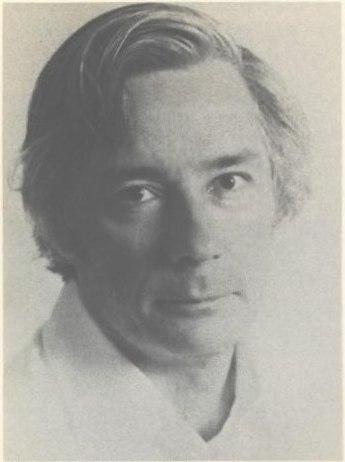
JOHN NORMAN
THE CHRONICLES OF GOR
QUESTAR INTERVIEW
by Dr. Jeffrey M. Elliot
Who is “John Norman?” That question has baffled readers and critics alike for years. Indeed, rumors of all kinds have circulated as to the long-guarded identity of one of the world’s most successful (as measured by total book sales) science fiction-fantasy writers. Now, in this exclusive interview. Dr. John Lange, a.k.a., “John Norman,” answers many of the questions which have sparked this debate, questions relating not only to the author’s identity, but to his controversial “Gorean” series. For the first time in print, Lange sets the record straight, speaking first-hand about himself and his work, in what amounts to one of the liveliest and most provocative interviews of its kind ever published.
Having divulged Norman’s identity, the next appropriate question is: Who is “John Lange?” The answer to this question was equally difficult to come by, but the facts below are as accurate as could be gleaned.
Dr. John Lange was born in Chicago, Illinois, on June 3. 1931. Lange is married and has three children, two boys and one girl He is a professor of philosophy at Queens College of the City University of New York, in Flushing, New York, where he specializes in the areas of epistemology, logic, and innovational conceptualization. The author received a B A from the University of Nebraska, an M A from the University of Southern California, and a Ph D. from Princeton University. Lange has published several scholarly works, including The Cognitivity Paradox: An Inquiry Concerning the Claims of Philosophy (Princeton University Press, 1970) and Values and Imperatives: Studies in Ethics, by C.l Lewis (Stanford University Press, 1969), which he edited.
Lange has worked, at one time or another, either part-time or full-time, as a radio announcer and writer for KOLN, Lincoln, Nebraska; a film writer for the University of Nebraska; and a story analyst for Warner Brothers Motion Pictures, Inc., in Burbank, California. He has also worked as a technical editor and special materials writer for Rocketdyne, a Division of North American Aviation. Inc., specializing in the production of rocket engines.
The author’s first professional sale was a radio script to a station in Lincoln, Nebraska, when he was in high school, or somewhere thereabouts. Under the pseudonym, “John Norman,” Lange has published a number of popular works, among which are the “Gorean” books. He Is a member of the Science Fiction Writers of America and the American Philosophical Association.
QUESTAR: Can you say how you started as a science fiction-fantasy writer?
NORMAN: I think this probably has something to do with one’s imagination and its nature. Certain sorts of imaginations probably lend themselves more readily to different literary genres. As a modality of self-expression, adventure fantasy seems attractive, rich, and natural to me. I’m sorry this is not a better answer. Why do some people paint, others compose music? And if one paints, why do some paint landscapes and others...? I do not think.I will attempt to respond further to this question.
QUESTAR: What is it about the genre, if anything, that accounts for your interest?
NORMAN: Let us suppose that a lion hunts antelopes. Does he hunt antelopes because there is something about antelopes that accounts for his interest? That sounds like a very rational decision process was involved. He probably hunts antelopes because he is a lion, and, being a lion, antelopes look good to him. Similarly, I suspect that I write adventure fantasy because I have a certain sort of imagination. Because of the way I am, perhaps, it looks good to me.
QUESTAR: Why did you decide to write under a pseudonym, as opposed to your actual name?
NORMAN: I have a family to support. At the time the first Gorean book was published, I did not have tenure at my academic institution. I did not wish to be denied tenure, and be out of a job, with no explanations given, but the reason being, perhaps, that I had dared to do something so academically disreputable as write science fiction. This situation has been ameliorated somewhat in the academic world in the last few years, but I think it is still true to say that, for the most part, it is academically customary to belittle and dismiss science fiction. For example, I think a young man or woman in an English department would do well, even today, to keep a low profile about an interest in science fiction, if he or she is interested in tenure, promotion, etc. To my mind, there remains today in the academic world a great deal of prejudice against the genre For example, at my own institution, science fiction, for purposes of fellowshipleave applications, does not count as “creative work.” That is interesting, I think, for science fiction and adventure fantasy are probably the most creative of the literary genres. If it had not been for the tenure probler.., I do not think I would have used a pseudonym. On the other hand, I think “John Norman” is an excellent writing name, and I am pleased with it My own name, John Lange, incidentally, is almost never pronounced correctly. That would seem a count against it, at least as a writing name. Furthermore, it, hilariously, is used by at least one other writer as his pseudonym.
QUESTAR: To what extent is John Lange knowable through his fiction?
NORMAN: I do not think I am qualified to respond to this question It is very difficult to know oneself, let alone worry about how aspects of one’s personality might be expressed in one’s work. Obviously, something of oneself must be involved in all honest creative work. On the other hand, I doubt that psychology is yet ready to make serious judgements on such matter. There are just too many unknowns in the equation, and it is difficult to control and correlate the writer variables, the analyzer’s variables, and the work variables. To be sure, anyone who has read the Gorean books surely knows me better than if he had not read them On the other hand, it is necessary to read the books intelligently and honestly. If the books are read unintelligently and hysterically, the result, I think, would be that the reader would finish up knowing very little about either the books or me.
QUESTAR: Unlike most writers, you have studiously avoided publicity. Why?
NORMAN: I have not, perhaps, as studiously avoided publicity as many people think. I have, for example, publicly addressed various science-fiction conventions and various science-fiction groups. On the other hand, I think it is quite true that I have not made a practice of actively seeking publicity. First, it is not my nature to do so. Second, as is no secret, various individuals in the science-fiction community bear me great hostility. This is obvious in emotive, abusive, slanderous reviews. Accordingly, I see no point in entering more actively into the affairs of the science-fiction community It is natural, incidentally, for these individuals to wish to control and limit science fiction. That I outsell them, say, forty or fifty to one, also, has perhaps contributed to their pique. Some of these individuals take themselves very seriously, in spite of their having no obvious justification in doing so. Some resent my extending the perimeters of science fiction into new areas, this perhaps seeming to reflect adversely on their own work, which might then, in contrast, appear unprogressive, sterile, and juvenile. It is popular to call for “new directions” in science fiction, but when one shows up, it seems that panic sets in. “New directions” usually means new wrinkles or variations on old variations or old themes, within the limitations of certain orthodox political structures. They are thrilled by new hardware, which is safe; they are terrified by an attempt to treat human beings honestly, rather than as Victorian abstractions. I do not bear these people ill will. They are doubtless as innocent as mice and rabbits. On the other hand, I think one of the reasons for the isolation of John Norman in the sciencefiction community, in spite of the fact that he is, I gather, the best-selling, or one of the best-selling authors in the genre, is to be explained in virtue of the hatred of a few individuals who wish to control, limit, and direct the destiny of science fiction. I think their power is unfortunate for the future of science fiction and, too, of course, for the future of up-and-coming writers who are not willing to spend years brown-nosing their way into the club. The John Norman phenomenon, however, indicates that their power is not complete. One may then similarly hope that many other new writers may, in their own chosen ventures, be fortunate enough to speak the truth as they see it. Not only are the old lies repetitious, they do not even sell very well. The writer’s hope is the readers, and their honesty^nd care for good writing. It is the readers, in the final analysis, who have made John Norman successful. In spite of what might happen in the future, for example, that certain individuals might eventually become successful in managing to fully implement the censorship implicit in their position, it will always be the case that, at least for a few years, something was done against them and beyond them which was itself, and was, in its way, whether correct or incorrect, proud and magnificent. The Gorean books exist.
QUESTAR: How would you characterize the kind of writing you do? Is it fair to label it “sword and sorcery” in content?
NORMAN: I dislike labels and categories. They can be useful, but often they become stereotypes, and one then tends to view matters not as they are, in their own fullness and uniqueness, but under the attributes of stereotypes. This is a cruel error where human beings are concerned and, logically, it does not improve in validity when the move is made to artifacts, musical compositions, stories, etc. The genre I write is, so to speak, “the Gorean novels.” They are, for most practical purposes, their own genre. If one had to use labels, I would think that something like “adventure fantasy” would be rather good. They are certainly not “sword and sorcery.” For example, magic is not involved in the books. Similarly, great attention is given to scientific verisimilitude, within, of course, artistic latitude. The Gorean books, incidentally, are one of the few productions in science fiction which take seriously things like human biology and depth psychology. I’m not announcing anything new if I point out that there is very little science, normally, in science fiction. Indeed, if one were merely interested in coming up with category titles which were more descriptive than “science fiction” of what actually goes on in “science fiction,” presumably one would speak of something like “engineering fiction” or “technology fiction.” Furthermore, what science, as opposed to applied science (e g., space ships, etc.), occurs in science fiction is usually limited to the physical sciences, or, in more knowledgeable writers, the social sciences. The human sciences (e.g., human biology and psychology) are usually avoided, perhaps because they involve areas “too close to home.”
QUESTAR: Do you have specific requirements when it comes to writing a story?
NORMAN: I once knew a musician who would ask himself the following critical question about his music, “Does it sound?” Not being a musician, I am not fully cognizant of what he may have had in mind, but, clearly, he was not asking if it was audible or not. I think he was suggesting that there was a “rightness” about it which might be difficult or impossible to analyze, but which, if attained, would be recognizable. His test of good music then was “whether or not it sounded.” It is hard to teach music on this kind of premise, but perhaps there is no other test or touchstone for excellence in that genre. Similarly, in writing, I suspect that all, or most, authors use a similar sort of subjective yet essential and significant test. “Does it sound?” Is it terrific? Is it marvelous? Does it make you want to leap out of your chair and scream with joy? More simply, is it good? Is it right? In this sense, I would like for my work to be “good,” to be “right,” indeed, to be “great.” Greatness is my objective. I would rather fail to have grasped a star than never to have lifted my head to the sky.
QUESTAR: Are you a meticulous writer? Do you do considerable rewriting?
NORMAN: Interestingly, the Gorean books write themselves. I do not know if other authors have this experience or not. I hope so, for it saves a great deal of work. The Gorean books are not put together like shelves, according to outlines or plans drawn up beforehand. They are more in the nature of organic products which grow. They are more like flowers and trees than reports and machines. I know when a book is ready. Then I sit down and watch it unfold. I am sometimes an amazed, delighted spectator. It is like something going on over which I have very little control. It is more like a welcome gift. Why should I ask questions? If the book is not “there,” then I do not know if it could be written or not. I have never hacked a book. When a book is ready, I have humbly accepted it, gratefully. On the hypothesis that these books are not dictated through me by some foreign intelligence, which would seem pretty screwy, I must suspect that they are very deeply related to subconscious creative processes. I am pretty much, perhaps unfortunately, at the mercy of such processes. As the Eskimos say, “No one knows from where songs come.” I do, of course, before turning in a manuscript, do some revising and some rewriting. I can sweat blood over commas, like any other beleaguered writer. On the other hand, if my information is correct, I probably expend fewer dues for literary torture than many authors. I hope so, for it sounds as though some of those fellows really suffer. I have nothing against suffering, incidentally. I just don’t care to do it myself.
QUESTAR. Given what you write, do you feel any special obligations to your readers? If so, what?
NORMAN: I have general obligations to human beings, and I have obligations to myself. I have special obligations to my family, etc. I am not clearly aware that I have special obligations to my readers, beyond those which I would have towards other human beings. I hope, of course, that they will enjoy my work. I do not think I have an obligation to please my readers, for example, but I would naturally hope that I would. In the final analysis, I write for myself. I wish to please mostly myself. If an artist cannot be true to himself, how can he be true to anyone else? I think my readers expect me to be honest to myself. My first obligation is thus to truth and integrity. If I can fulfill this obligation, I think then that my readers, or most of them, will be satisfied.
QUESTAR: How do you view your role as a writer—entertainer, observer, reformer?
NORMAN: I do not think of writing as a “role.” Similarly, I do not think of eating and sleeping as roles. Writing is something which, for me, is very natural. Accordingly, it is difficult for me to try and answer this question. I write primarily for myself. I wish to please myself. I wish to come up with something great. Therefore, I do not primarily consider myself in “other-related” roles (e.g., as an entertainer, reformer, etc ). One must be aware of defining oneself in relation to others. I am myself. So are most other people, if they only knew it.
QUESTAR: How much would you admit to modelling your characters on real people?
NORMAN. This seems an oddly phrased question. There is a sense in which I suppose most literary characters are modeled on “real” people. This seems something less to be “admitted” than something which it would be difficult to doubt. To be sure, characters, if interesting and believable, must have “real” characteristics, the characteristics of “real” people. One of the problems with much science fiction is that the background, perhaps because of its exotic nature, tends to intrude too much into the story and often distracts from elements such as plot and characterization. I think characterization, in particular, is difficult for many writers in science fiction because of the unusual “scenery” involved. It is hard to get involved with a particular character when unusual appliances and gadgets are clicking and blinking, and whistling and zooming in the vicinity. This is an advantage that more pedestrian genres usually have over science fiction; that the background, because of its prosaic nature, can commonly be taken for granted, and the author can concentrate on character development and conflict. One of the strengths of Robert Heinlein, I think, is his capacity to handle characterization. Aside from his own considerable talent, one of his devices in this matter, it seems to me, is not to bite off more than he can chew in the matter of a specific background at a specific time. The background in Heinlein commonly gives us an enhancing setting for human concerns. In Heinlein, people are there, really. In certain other authors, things seem to take precedence over people; such authors are perhaps less interested in people than in things. From my own point of view, I find both interesting. People, however, I must admit, come first. Incidentally, in the case of the Gorean books, the backgrounds are usually simple enough, and familiar enough, from the past history of Earth, and easily understandable extrapolations of barbaric cultures, to be fairly unobtrusive. Gorean backgrounds, thus, seldom distract from the interpersonal relations involved. Indeed, a great deal of attention is often given, in Gorean novels, to interpersonal interactions, sometimes of a dramatic and interesting nature. Similarly, character development is extremely important Most characters in science fiction, as you know, begin as, and remain substantially, the cardboard stereotypes of juvenile hero literature. Indeed, one of the difficulties which some people have with the Gorean books is that their familiar and predictable stereotypes do not occur The Gorean books present an ethos which is not that of most Earthlings, and, indeed, one for which a great deal is to be said The Gorean books suggest that human beings dare to think truly alternate realities, not just the old realities projected into an exotic environment Perhaps the fear to do this motivates some of the abusive and hysterical reactions which the Gorean books have aroused. It seems tragic when individuals who are supposedly original and daring thinkers, by profession even, are suddenly revealed, in basic matters, to be truly afraid of thinking. Or, perhaps it isall right to think about machines; it is only ourselves, perhaps, about which we must not dare to think. Thought, of course, is dangerous. It is the instrument of change.
QUESTAR: What degree of reality do your characters have for you after you have finished writing about them?
NORMAN: This seems something of an odd question, too. The characters in the Gorean novels, for what it is worth, seem extremely real to me. I am confident that I know how they feel about things, where their “heads are at,” and how they would be likely to respond in given instances. I suspect any author feels this way about characters. If the character is not real, it seems it would be difficult to write about him, or her, or it. Surely, the reality of such a character does not cease when one ceases writing about him.
QUESTAR: Do you write with a particular audience in mind? Do you tailor your work for this audience?
NORMAN: Perhaps I write because I have to. If that is the case, then questions about particular audiences, etc. become somewhat irrelevant. I do, of course, wish to please myself. Perhaps this is relevant. This might be a good point to mention a theory I have about literary selection. The analogy, of course, is to natural selection. Let us suppose an animal is born with a certain set of physical properties and behaviorial dispositions. Obviously, these properties and dispositions will influence its survival in a given environment For example, in some environments, thick fur and certain serum may be of value, while in other environments thin fur and different serum factors. Genetics, so to speak, throws the dice and the environment selects the winning numbers. A similar phenomenon occurs in evolving social and technological environments. Hero of Alexandria, in the Second Century B.C., constructs a novel toy; James Watt, in the Eighteenth Century A.D , building on the work of earlier inventors, designs an improved steam engine, and alters the nature and direction of human civilization. I think a similar phenomenon has occurred with the Gorean books. I have done what is right and natural and honest, at least from my own point of view. I have not attempted to please critics or conform to a market. I have been myself. I think this comes through in my writing. I am self-directed, rather than other-directed. I have kept my integrity. It has been my good fortune that the Gorean books are apparently needed in our contemporary civilization. Obviously, they answer to certain deep needs in human beings. If they were not important to people, and if they did not have something important to say, something which apparently desperately needs saying, they would not be as popular as they are.

QUESTAR: How would you describe your audience? Who buys a John Norman novel?
NORMAN: It is difficult to answer this question without market research. Fan mail, of course, and sales in special outlets, such as college bookstores, provide us with some evidence. My impression is that the Gorean books are read and enjoyed by individuals of all ages and backgrounds. The sales, for example, for better or for worse, indicate that the audience for them extends far beyond the borders of the “science-fiction” community. They have been on best-seller lists many times, for example. Unlike the usual science-fiction sales of a few thousand books, if one is lucky, they have sold millions of copies. Incidently, Gorean books have been published in several languages Certainly, many women are avid fans of the Gorean series. Indeed, I think one of the contributions, not likely to be acknowledged, which the Gorean books have made commercially to the science-fiction field is that they have helped to open it up to female interest. In this sense, I think I have brought, or have probably brought, many new readers to science fiction, not only male, but also female. The success of the Gorean books, I think, tends to improve the sales of other science-fiction books, or adventure-fantasy books, by encouraging interest in the genre and enlarging its market. I, personally, am very fond of my audience. Their encouragement and support is deeply appreciated.
QUESTAR: Would you enjoy reading your own books? Do you read other authors who write in the same vein?
NORMAN: This is a hard question to answer, because I have written the books. It is thus hard to look at them objectively, as though, say, they might have been written by someone else. Since I think the books are marvelous and interesting, etc., I certainly hope that I would enjoy reading them. On the other hand, I can conceive of feeling extreme frustration, anger and disappointment if I read them, and had not written them, for then I think I would have wished that it had been I, and not the other fellow, who had written them. Perhaps I would be angry that he had “gotten there first “ I do not read other authors who write in the same vein. I might if there were any. I don’t know. John Norman, at least at the moment, for better or for worse, is the only fellow in his field. My field, of course, is my sort of novel, that sort of novel which I have pioneered. I am tolerant of diversity in the science-fiction field, incidentally I do not have a set of a priori notions as to what counts as science fiction or not; I do not limit myself to certain traditional paradigms of propriety. I encourage each author to be true and honest to himself. The major danger which science fiction faces is selfimposed limitations, probably largely functions of psychological and cultural blocks.
QUESTAR: How much research, planning, and study do you do before sitting down to write?
NORMAN: As with most authors, my work is a result, at least in part, of resources accumulated over many years. As a youngster in high school, for example, I had an interest in ancient history. The first serious book I ever read, as I recall, was the Meditations of Marcus Aurelius. I remember reading it at the wrestling matches. Upon occasion, of course, specific research is in order for a given book; for example, in connection with one project or another, I have investigated, or deepened my investigations, of such matters as Roman naval construction, Medieval shipping, Viking sports, the economics of oases, Eskimo weaponry, and the flora and fauna of rain forests. I usually limit specific research to a dozen books or so and a few days’ time. After all, I am not writing, say, a novel of Napoleonic France, which would require incredible fidelity to historical details. I am writing adventure fantasy. The Gorean world, of course, has been heavily influenced by our world; on the other hand, it is not our world. Thus, there must be a creative contribution to the construction of the world. In that sense, in adventure fantasy, research must serve a purpose beyond familiarizing oneself with certain facts; one must not content oneself merely with the replication of past realities. Instead, one must consider how such things, in a different situation in time, might become altered or transformed. Indeed, perhaps new inventions, cultural practices, etc., would be developed. The major value of research, I think, in this sort of situation, is not to limit, but rather to stimulate and enrich, the creative purpose. Aside from questions of research, I do not do much pre-planning of my books. For example, as explained earlier, I prefer to let the book happen by itself, while I watch it. I am around, so to speak, while it is being written. I do, of course, generally have a background in mind, and sometimes a general problem or line of development. How can one make a map of territories he has never seen? How can he chart lands which he has not yet explored?
QUESTAR: Do you think highly of your own work? Are you proud of the Gorean series?
NORMAN: Yes, I think highly of my own work. It is the finest thing, of its sort, ever to be done in adventure fantasy. Whether or not one should be proud of one’s work, on the other hand, is a more complex and interesting question. The moral question here, for a humanist and a naturalist, is a knotty one. It is particularly acute in my case because the books, as I have mentioned, pretty much write themselves. I do not know if I should take credit, in that sense, for them or not. I welcome them as gifts. I do not know if I am “proud” that songs come to me. I am, of course, undeniably grateful.
QUESTAR: Do you have a favorite among your books? What makes it your favorite?
NORMAN: I do not think it is wise on an author’s part to respond to this sort of inquiry. One loves all one’s children.
QUESTAR: What is it about your novels that explains their tremendous popularity?
NORMAN: I don’t know. Hopefully, they are well written and exciting. Perhaps the readers find the Gorean world of interest. Perhaps the books touch on neglected or surpressed human constants, male and female. Perhaps they have something to say which has not been said for a long time. They are probably unique, or almost so, in modern literature, in raising serious questions about the intellectual superstructure of western civilization. They have intellectual content. There are ideas in them. Perhaps that is what so outrages some critics. Science fiction, however, or at least from my point of view, can be a literature with cognitive content. No one would deny that in principle, yet how few have troubled themselves to put it into practice. To paraphrase Nietzshe, the problem is not to have the courage of one’s convictions; that is easy. The problem is to have the courage for an attack on one’s convictions.
QUESTAR: Does writing serve a cathartic value for you? Does it teach you important things about yourself and what you prize?
NORMAN: I enjoy writing, and I’m happy when I do it. Perhaps some sort of cathartic value is involved. I do not know. I suppose it would be. I do not know. There are probably many values, of a diverse nature, connected with writing. I would also suppose that one knows more about oneself when one has written a book than before. Similarly, when one has written a book, I suppose one might be clearer about either what one has valued or what one has decided to value than one might have been before.
QUESTAR; How important is artistic excellence when it comes to your writing? Do you aspire to a certain literary standard?
NORMAN: I am not the sort of fellow who presents himself either as an “artist” or a “craftsman.” These seem to me vanity costumes. I am less concerned with being an artist or a craftsman than I am with writing the book. My focus is on the work, not myself. It has been my experience that those fellows who make a great deal out of themselves as being “artists” or “only humble craftsmen,” are likely to be either good artists or craftsmen than the fellows who forget about that role garbage and are work-oriented, not image-oriented. The real artist, or craftsman, is hard to find on the cocktail circuit; he is too busy in the studio trying to get some effect or another right. Does that sprinkling can belong in the picture or not? He may paint it in and out a dozen times. He is not worrying about his image; he is worrying about the sprinkling can.
QUESTAR: How do you respond to the charge that your books exploit sex and violence—that they debase and debauch the human spirit?
NORMAN: There seem to me two very different charges here. Let’s consider them separately. First, the word “exploit” is, of course, a hostile word, a signal word, chosen, I assume deliberately, to prejudice a reader. It is not the sort of expression an objective individual would choose. On the other hand, let us not quibble about semantics. Certainly, sex and violence occur in the Gorean novels; certainly, sex and violence are used in the Gorean novels. They are significant plot elements. Perhaps to the horror of the critic, I see no reason to be apologetic about this. I guess I am just less guilty or timid, or something, than he is. Though the critic will not understand this, judging by the intellectual or emotional level suggested in the criticism, sex and violence are both real parts of life. History and human reality would be inexplicable without them. They belong in any strong, honest literature. To advocate writing an emotionally truncated, expurgated, namby-pamby literature is, I suppose, permissible, but, it seems to me, it is certainly not desirable. Indeed, from my point of view, such a refusal to write honestly constitutes a betrayal of literature which I find not only aesthetically offensive but unreasonable and, I think, morally improper. The question here is a simple one: Is the writer to be honest to life, in its fullness, or not? I would think so, but that is my own answer. I cannot answer for others. Let those who fear to think and feel write without emotion or thought. Let those who can both feel and think write with both emotion and thought. Incidentally, while we are on the topic, it might also be noted, in fairness, that the Gorean books exploit discipline, courage, nobility, honor, and love. The human being, with his heights and glories, his depths and cruelties, exceedes in complexity and reality the abstractions and idealizations of the frightened and the weak. It will always be thus. I love man and fear him; thus I will celebrate him. I will try to honor him as being as he is; not as fools might wish him. The second charge has something to do with “debauching” and “debasing” the “human spirit.” It is difficult to know how to respond to a criticism of this sort, because it is difficult to know if the critic intends it to be understood literally or figuratively. If the critic intends it to be taken literally, it seems to be obviously false. There is no such thing, literally, as far as I can tell, as “the human spirit.” Accordingly, it can neither be debased nor debauched. Similarly, there is no such thing, strictly, as far as I can tell, as a “giraffe spirit” or the “spirit of apple pie.” On the other hand, on the assumption that the critic is al least vaguely aware of developments in science in the past 120 years, specifically in the sciences of biology, psychology and anthropology, we may assume that he intended it figuratively. But if this is so, it might mean a number of different things. Accordingly, he could always claim that whichever possibility I chose to discuss was not that which he intended. On the other hand, since that cannot be helped and is a predictable response, I think I have little choice but to steam ahead. Accordingly, I shall do so. The “human spirit,” I am afraid, for better or for worse, is more complicated than our critic understands. All things that human beings do are manifestations of the “human spirit.” If the critic would understand the nature of the “human spirit,” I suggest to him that he consult the tapestries and pageants of history. In those bloody threads he will find its biography delineated. There he will discover that hunting, and pride, and lust, and victory are as much authentic manifestations of the “human spirit” as the planting of flowers and the dreams of innocence. Indeed, they seem more germane to its iron and its songs than hypocrisy and lace. One of the strengths of the Gorean books, in my opinion, is that they constitute one of the few places in contemporary literature where the “human spirit,” as it exists in reality, and not in the abstractions of political mythologies, is neither denied nor distorted. The Gorean books celebrate the “human spirit” in its fullness, in its darkness and its glory, in its pettiness and cruelty, in its shame and in its incomparable splendors.
QUESTAR: Are you surprised by the tremendous controversy that has grown up around your work? Why do you think it exists?
NORMAN: Yes, I’m surprised. I’m not sure why there is so much controversy. The books seem to be pretty innocent. After all, what is so terrible about taking ethnology, or depth psychology seriously? I think the reasons for the controversy are irrational, rather than rational. Apparently, some people read the Gorean books with the dispassionate objectivity of a psychotic interpreting Rorschach blots. They see anything they wish to see in them. As a result of these projections, they are apparently sometimes disturbed. One has trouble, for example, with the sexual hysterics. Some of these have perhaps found a refuge in science fiction, which, commonly, even today, tends to avoid coming to grips with the nature and problems of human sexuality. There are, however, doubtless many other reasons for controversy as well. Three other factors come immediately to mind. First, the resentment of certain in-group individuals to the success of a newcomer; this resentment can be rationalized, of course, in a variety of ways; one hates first, then one thinks up reasons. Secondly, the Gorean books present a different ethos and take it seriously. This frightens some people because it makes them feel insecure; everyone is supposed to have the right opinions and values—theirs. When they meet someone who presents a genuinely alternative conceptualization of reality, an intellectual alternative rather than a merely mechanical alternative, they become alarmed; they feel threatened. They are only verbally in favor of diversity of thought; their rhetoric of freedom is revealed as hypocrisy; it is belied by their bigotry and intolerance. Thirdly, the Gorean books have introduced new subject matter and new ideas to science fiction. They have plowed new conceptual furrows; they have altered, in the thinking of thousands, the conceptions and horizons of science fiction. The borders of science fiction have been extended by my work; new possibilities have been delineated and explored It is natural that these changes would be felt as threatening to a vain, stale, insecure establishment Will the old formulas no longer work? Will their own work seem unimaginative and juvenile by contrast? Will they suffer a loss in prestige? Are the Huns truly at the gate? If I knew how, I would like to reassure these frightened people. They have their strengths and weaknesses, as I do; they have their naiveties, their stupidities, their frailties, as I do Perhaps the Hun at the gates is not really so different from themselves as they might fear. Perhaps he, too, has a respect and affection for a genre. Science fiction is a big place, really. It contains many countries. It is robust, it is healthy. Let them live and write. Let us each, in our ways, attempt todignifyourart and celebrate the wonders of the worlds of the imagination. The universe is large; I think there is room for all of us out there

QUESTAR: Does it matter to you that many people seem to misunderstand your work, misinterpret your intent?
NORMAN: I am not one of these authors who cries a great deal about being misunderstood. I suspect most readers understand me fairly well, on one level or another Obviously, one cannot expect a sharp fifteen-year-old boy to have the same meaning fulfillment from a Gorean book as a gifted, mature executive; he simply has not yet had the necessary life experiences. On the other hand, hopefully, both of these readers will find their experiences stimulating and rewarding. Many readers have read the Gorean books several times; they have learned, I gather, that there is more to come back for It is nice to have written books that can be read many times. These are interesting questions here, incidentally, about the concepts of understanding a work and of interpreting an author’s intent. Obviously, a Gorean book is not a secret message or a communication in code. Similarly, the relation of an author’s intent to a finished product is surely an obscure one. He may have had no clear intent. If he did, he might not have fulfilled it; he might have changed his mind somewhere; he may not remember what his intent was; his memory may be untrustworthy, etc. A work grows in its making. It can start dictating its own parts. Then what happens to the author’s “intent?” The notion of “intent,” it seems to me, is too conscious a a notion; I am not sure it is all that useful as a category for understanding literature. What was the potter s intent when he started on the pot? Probably to make a terrific pot. That may be about it. Some critics, of course, seem to have been almost perversely slanderous in their reactions to the Gorean books, over-reacting in ways that seem quite out of proportion to the texts involved. Here, I gather, some raw nerve or weakness in their psyche must have been touched. Perhaps, in cases such as this, it is fair to speak of such things as “misinterpretation.”
QUESTAR: Finally, have you flirted with the idea of “coming out”—talking about your books and your view of the genre in a more open manner?
NORMAN: I do not have to “flirt” with the idea of “coming out,” for, in my opinion, I have never been “in.” I have been fairly available to the science-fiction community and have, over the years, on a number of occasions presented my views on various topics. This question, like a preceding one, is simply based on a mistken assumption. On the other hand, I do, frankly, think it is not in an author’s best interest to be too publicly evident. The work is important, not me Once the work is published, the author, I think, is well advised to let it take care of itself Hopefully, the Gorean books are not so obscure or incomprehensible as to require explanation and elucidation. Similarly, it seems to me that it is not the author’s business to comment on his work, but, rather, that that is the task of the critic. I have never responded directly to any critic, as a matter of policy, no matter how idiotic, confused, or asinine he may have been. I feel that any honest reader of intelligence, perception, and awareness can see through the superficial would-be put-downs of intellectual pee wees. This is not, of course, to be construed as a criticism of serious critics who have attempted to come to grips with the Gorean phenomenon. I have not, loo, of course, discussed the honest and serious attempts to understand the Gorean works. This, too, is a matter of policy with me. Accordingly, I have not in the past, and I do not intend in the future, to publicly defend or discuss the Gorean books. This is not because I am a secretive villain, but because I do not think such defense and discussion on an author’s part is either necessary or judicious. Beyond this, of course, I am a shy person; it is thus natural for me to avoid publicity and the limelight. Perhaps I would be much belter off if I had a robust zeal for public relations and self-advertisement; I do not know. Too, it must be admitted that I do not find controversy stimulating. I am simply not that kind of person; I would rather be working.
No More Gor: A Conversation with John Norman (1996)
David Alexander Smith
Published in two parts by The New York Review of Science Fiction, part one in Issue #92, Volume 8, No. 8 in April, 1996 (ISSN #1052–9438) and part two in Issue #96, Volume 8, No. 12 in August, 1996 (ISSN #1052–9438).
Introduction to Part 1
A year ago, at Arisia ’95, I was wandering through the dealer’s room, idly checking name tags as one does, when I saw one labeled “John Norman.”
I struck up a conversation, believing I must be mistaken – John Norman was dead, wasn’t he? – only to discover that, yea verily, John Norman was alive and kicking. Later during the convention, he was a participant on my panel, The Science Fiction of Isaac Asimov.
Norman proved himself peppery, constructive, and thoughtful. Afterwards we talked a little about his situation.
Was he still publishing? I asked.
No, he said, he had been blacklisted.
You’re kidding, I said.
I’m completely serious, he replied.
After the con ended, I wrote him a letter, and there began a curious correspondence covering half a year. In the course of those letters, we conducted an extended conversation that sent me scurrying back to con dealer’s rooms to secure Gor books, which I then read so as to be able to hold up my half of this delayed, asynchronous dialog.
I mentioned to David Hartwell that I was having trouble reducing the mountain of material thus gathered into publishable form and he, with his flair for the Gordian solution, asked simply, “Why don’t you just cut up the letters and rearrange them into an interview?” I broached this idea with John Norman, who thought it plausible, and then worked with Norman to assemble what follows.
Blacklisting
Smith: Forgive my dispassion, but if you have been blacklisted it is hugely ironic: science fiction, the rule-breaking, boundary-stretching genre, the genre which prides itself on individual expression, blacklists a successful author for political incorrectness?
Norman: Oh, there’s no doubt I’ve been blacklisted, both by publishers and at conventions.
Smith: At conventions?
Norman: I was recently invited to participate in an SF convention and was listed among the invited guests. Subsequently a prominent fantasy feminist told the program committee that she would feel “uncomfortable” if I were at the convention when she was. Accordingly, my name was literally crossed off the ready-to-mail brochures.
Smith: How do you know?
Norman: I got one with my name crossed off the guest list with Magic Marker.
Smith: What did you do?
Norman: I tried to get an explanation. My inquiry was never answered.
Smith: How did you find out what had happened?
Norman: I was told later by outraged fans: another cave-in to political correctness, another victory for the liberal feminist axis and the thought police.
Smith: Being snubbed at conventions, however annoying, is not blacklisting, which occurs only when you cannot publish.
Norman: My agent has combed the woods and told me there is no opportunity to publish my work with any science fiction, fantasy, or mainstream publisher in the United States.
Smith: But why? Apparently the books, if allowed to be published, sell well (in Europe and elsewhere), which suggests that not only political correctness but also editorial elitism (we know what’s best for you) could be at work.
Norman: Tarnsman of Gor was published in late 1966. It has been reprinted 22 times.
Smith: That’s certainly impressive sales, but I see quite a stylistic difference between the early (Ballantine) and later (DAW) books. Even so, the DAW books (starting with Hunters and continuing through Magicians) have each sold at least 50,000 copies; the average is about 125,000 copies.
Norman: I have recently signed contracts for fresh French and German sales, and have recently been published for the first time in Czechoslovakia. There have been recent Spanish and Italian sales. There’s no evidence that my books no longer sell.
Smith: But there have been no Gor novels for five or six years.
Norman: After DAW refused to buy any more Gor books, I sold a three-part Telnarian series to Brian Thomsen of Warner Books. The first book, The Chieftain, had a 67 percent sell-through. The second, The Captain, had a 91 percent sell-through, which is the sort of thing that would make Stephen King rush over to shake your hand.
Smith: Then why aren’t you writing more Telnarian novels?
Norman: Brian Thomsen, my Warner editor for the Telnarian series, was suddenly no longer with Warner Books. He claims this had nothing to do with his willingness to champion my work.
Smith: What happened to the Telnarian series after that?
Norman: Thomsen was replaced by an editor from one of the blacklisting presses, one that explicitly informed my agent they would not consider anything by John Norman. That new editor canceled the series despite its success and without waiting to see how the third book, The King, would do. That way things are made nicely clear.
Smith: Do you have other examples of blacklisting?
Norman: Two full-length feature films have been putatively based on my work: Gor and Gor II: Outlaw of Gor, both by Cannon Films. Ballantine Books refused to do movie tie-ins to either film; they failed even to answer my letters.
Smith: Perhaps the letters never arrived.
Norman: The second one was sent registered mail.
Smith: Then how did the movies get made?
Norman: My attorney finessed his way around Ballantine’s rights department and contacted the legal department at Random House. The movies were made by going over the heads of the censors.
Smith: But if the books sell, surely you can find publishers willing to make money on them.
Norman: Unfortunately for me, only about seven or eight publishing houses maintain a mass-market paperback line in sc ience fiction and fantasy; this small, closely-knit group effectively controls the market. With such a group, a blacklist need not be an explicit, formal written or oral agreement subscribed to by a gathered cabal pledged to secrecy. It is an understanding that a certain individual is to be ostracized, excluded, methodologically overlooked or such.
Smith: How would that work?
Norman: All the editors talk to one anothe r. At Arisia ’94 one SF/F editor asserted that editors all know one another and keep in touch, so if anything happens, “in three hours everyone knows about it.”
Smith: Sure, that’s possible, but mere rejection of your work is by itself insufficient – any editor can decl ine any book for any reason. Nor is group rejection – several different editors can decline the same book, and for the same reasons, which may well be expressed in the book itself. Even if the editors discussed your work among themselves, and reached similar conclusions about it, that by itself would not in my opinion be blacklisting, because lemmings do not blacklist. Thus, an industry’s refusal to publish work constitutes blacklisting only if two conditions are true:
-
Editors are coerced into not publishing (or producing) the work.
-
If not coerced, they would publish the work.
Norman: Coercion does not seem to be necessary for blacklisting, even though it might obtain.
Smith: Why not?
Norman: Suppose a small set of editors have a particular ideology. Even without coercion, there could be a general understanding that an author who challenges that ideology is not to be published.
Smith: But editors are allowed to use their judgment; that’s what they’re paid for.
Norman: Editors have four responsibilities: to their employers, to customers, to art, and to society.
An editor who puts belief ahead of proven commercial investments owes it to his company to make certain they understand he is doing so.
Customers have a right to expect that editors will give them what they want. The customers are quite as serious about their beliefs and values as the editor is in his.
Editors should also keep the art form of the novel healthy and flourishing.
Finally, the editor can help society to be an arid, uniform, intellectually deficient, repressive, emotionally impoverished totalitarianism, or he can help it be a decent place to live, a place that is open, a place that acknowledges and celebrates the individual, that welcomes difference, that accepts controversy, in short, a place where a rational, thinking, feeling being can thrive and rejoice.
Smith: Editors are also responsible if the things they publish are actively harmful.
Norman: Certain things ought not to be done: folks interrupting religious services with profanity, folks advertising bogus stock, folks explaining how to produce poison gases and make bombs, and such. Not everything goes.
But the Gorean books are written against a background of reality, complexity, depth, breadth, history, experience, psychology, ethnology, biology, and sociobiology. As far as I know, they are the most carefully constructed and intricately designed alternate world in the history of science fiction and fantasy. They are healthy, sane, sound, and fun.
Smith: What does your evidence suggest about coercion and publishability?
Norman: I really doubt that the clique of editors who are in a position to decide what you may or may not read would publish me even if they were not coerced. I think it is possible to blacklist without coercion.
Smith: Embarrassment is a powerful form of coercion – indeed, coercion by embarrassment seems an intrinsic element in the attempted enforcement of political correctness. Have editors been embarrassed into refusing to consider your work?
Norman: Individuals in the little club of ideologically uniform editors might fear losing their cozy ensconcement in the personality network. They might not want to be ostracized as politically incorrect, find themselves castigated, have their characters assassinated and so on. Jobs might be lost. Why risk printing something by John Norman? One might shock one’s peers, one might jeopardize one’s spot in the gang.
Smith: It sounds like enough to make anyone paranoid. Is any of this in writing?
Norman: No, there’s no paper trail. To be sure, they could have made the matter more subtle by at least pretending to look at my material. If you want to be a censor, come up with some reason, other than politics, for rejecting it: the book is too long or too short, the plot is too simple or too complex; there are too few characters or there are too many. But I suppose they want me to know unmistakably what they are doing; it’s part of the fun.
Smith: Fun?
Norman: If the individual discriminated against has no idea what’s going on, what fun would that be?
Smith: You think people take pleasure in this?
Norman: I am frequently talked about. For instance, I have either heard or had reported to me many quotes l ike these:
“I am opposed to censorship, but I think everyone ought to get together and agree not to publish John Norman.”
“We are going to squeeze John Norman out.”
“I know the books will make money, but I publish what I like.”
“My press will not propagate the philosophy of John Norman.”
Smith: That last one is intriguing. If true (and it’s only one person’s quote), it implies that people are objecting not to the books’ literary quality, but rather their philosophical or political contents.
Norman: Is it possible that liberal rhetoric is a hypocritic al facade for thought control in America? Is it possible that liberals, if given the opportunity, will unhesitatingly and consistently impose on others the same restrictions of freedom of speech and thought which they themselves have objected to when applied to themselves?
Smith: No matter how much they try, editors cannot wholly divorce their view of a work from their image of the author. As a test, someone once retyped, and submitted as his own manuscript, the first fifty or so pages of Jerzy Kosinski’s National Book Award-winning novel, The Painted Bird. Every publisher rejected it, some with caustic comments about its lack of worth. I believe that people’s image of you and your work is acting against its consideration on its own merits.
Norman: Bad-mouthing John Norman is useful as a touchstone of political orthodoxy, rather like telling Ronald Reagan jokes.
Sex Is Not The Problem
Smith: I think people who have not read your work dislike it because they think it celebrates sadomasochism and violence against or suppression of women.
Norman: The standard criticism of the Gorean books, popular with those who have never read one, is that they are sadomasochistic or such. A sadist is an individual who derives s exual pleasure from the infliction of physical pain on another person, and a masochist is a person who derives sexual pleasure from the receipt of pain at the hands of another. There is not one individual in the Gorean books who meets these criteria.
In fact, sadists and masochists would seem anomalous in a Gorean culture – which does not breed them – a culture in which human nature is honestly fulfilled, rather than thwarted or denied.
Smith: The novels fall into three basic groups:
-
The six early novels (Tarnsman through Raiders), all published by Ballantine.
-
The two hinge novels (Captive and Hunters), the last Ballantine and the first DAW. Hunters is particularly important.
-
The later novels (all published by DAW).
-
By the way, how many Gor novels are there?
Norman: There are twenty-five books in the series. I stopped work on the twenty-sixth, Witness of Gor, when the blacklisting became clear. There was no point in finishing it.
Smith: Over the course of the novels, your themes seem to change. The early novels are action-oriented male fantasies. Tarl Cabot is strong, fierce, capable, self-contained, brave, just, and shrewd. A civilized man in a barbarian world, he is uniquely capable of mixing justice and equity with iron discipline, and as such he rises rapidly in Gor’s meritocracy of the sword.
Though Cabot is perfectly capable of meeting the Gorean world’s savagery with his own, he generally succeeds because of his kindness toward women (Tarnsman) or his equity toward prisoners (Outlaw) or naval slaves (Raiders).
While the world in these early books is savage, and so are its priest-kings, people, and creatures, your Earthman protagonist is not – and that is the foundation of his success.
In these stories women have at best a peripheral role; the novels concern Cabot’s external struggles, and his internal battles against his own guilt and sense of lost honor.
By the later novels, the themes are almost exclusively the sexual and social relations of men and women, with recurring and comprehensive demonstrations that, at least on Gor, men and women find their spiritual and sexual fulfillment in different ways.
Men are fulfilled by being dominant, strong, unyielding masters. They take pleasure in subjugating women, although once the women have acknowledged men’s superiority, they are protective, just, even loving. They will use force and pain, and more frequently the threat of force or pain, to break women’s independent spirit.
Women are fulfilled by being dominated and overcome. Essential to their nature is that they must accept their slavery. However, acknowledging their physical and social inferiority, and subjecting themselves to the will of a powerful master, actually liberates them sexually, as if their sense of place in society is a barrier blocking them from their true selves.
Norman: The books are written from the point of view that men and women are not identical; they are different in their natures and needs. They are complementary to one another, both wonderful but not in the same ways.
Smith: How do the sexes differ?
Norman: The books celebrate the strength of men, the beauty of women, and the intelligence and nobility of both. Women are presented as being sexually alive, heterosexual creatures, as opposed to Lesbic or bisexual creatures.
Heterosexual women tend to respond sexually to powerful, commanding males; they tend not to respect women-men: accommodating, manipulable weaklings fulfilling the political stereotypes of the desexualized male, robbed of the natural male birthrights pervasive among mammals generally and primates in particular.
Smith: What are those?
Norman: Command, pride, and power.
Smith: In between the Ballantine seven and the DAW seventeen books is Hunters of Gor, the hinge book. I find it remarkable. At first it seems much in the line of its predecessors – after all, it is narrated by Tarl Cabot, and the novel’s outward action involves his quest to find and free Marlenus, Ubar of Ar. Actually, the novel is principally concerned with the constant skirmishes between Cabot and Marlenus’s raiding parties and the misandronous panther girls.
After many encounters, most of which involve the victor staking out the vanquished naked on the ground, the men eventually conquer the women, whereupon a remarkable (to me) transformation occurs. All of the panther girls (except their leader) fling themselves joyfully upon their conquering men, ecstatic at becoming sexual and social slaves, delighted that in overcoming their pose of independence, their captors have genuinely freed them from themselves.
This plot line is qualitatively different from the previous stories, where slavery and sexuality are present but the main story is adventure. The first seven books were published by Ballantine; then with the eighth, Hunters, you started to be published by Don Wollheim at DAW. How did the change come about?
Norman: Betty Ballantine objected to Hunters. We had a signed contract but the book was rejected without explanation. I heard nothing further for some time. Finally I asked. Ian Ballantine, who was rather embarrassed about the whole matter, speculated that Betty’s problem with the text was the fact that the book contained sexual matter as part of the rich background of a barbaric culture.
Smith: So the problem was the sexual content?
Norman: I was told the problem was not sex. I inferred it must be political. Further experiences confirmed this hypothesis.
Slavery Is Not The Problem
Smith: Though in Hunters both men and women are enslaved, slavery’s depiction, and their reactions to it, differ greatly between the sexes. Cabot is made a slave. He resists violently and it is clear that to keep him a slave would be so humiliating that he would rather die. Being a slave thwarts essential elements in Cabot’s character.
The women, on the other hand, fight slavery but come to understand that it is their highest state. I cannot remember if anyone in Hunters says “Kiss the whip,” but the sentiment, which is echoed frequently in the later novels, aptly expresses the breakthrough moment for the women you depict. Doesn’t that express violence against women?
Norman: The issue is not violence but dominance and strength. Many women respond to strength and force. They like it. They want it. Most women want a man capable of mastering them.
Smith: As in romance novels?
Norman: The genre is referred to as bodice rippers. At a Lunacon a f ew years ago, I attended a panel on romances. One woman author recounted a criticism she had received from her editrix to the effect that the hero had not raped the heroine. That was supposedly something to be corrected.
Smith: Why?
Norman: I frankly suspect that the matter is biological, and that this does lie somewhere within all women. One supposes that there is a man and a situation in which any woman could be mastered and would respond as a loving slave.
Smith: That’s a broad statement.
Norman: To be sure, it is a universal hypothesis of a semantically non-finite scope, so it is not the sort of thing which could be conclusively tested. But even if it is not a disposition in all women, it is obviously a disposition in a great many of them, in my view the overwhelming majority of women.
Smith: It sounds like you’re espousing force in sexual relationships.
Norman: Force in itself is not evil. The male sex is naturally dominant, and the female dominance-responsive. This is an overwhelmingly general lesson among mammals and in particular primates. To be sure, it is not absolutely universal. Among hyenas, females tend to be dominant. Oddly enough, they are saturated in the womb with male hormones, which may make the difference. Among elephants and buffalo, the male will often only approach the family group when it wants sex; this means that the oldest healthy female will in effect head the male-absent household.
Smith: So dominance should be expressed via sexual slavery?
Norman: In the master/slave relationship one has, symbolically and beautifully expressed, a celebration of the glory of nature and the reality of dimorphic sexuality.
Smith: A world where men are on top because they are superior?
Norman: The Gorean point is not that one sex is better than another, but that each is unique. They are equal in value, in merit, but that is about it. The female Gorean slave with her beauty, her skills, her sex, her nature, has considerable power in her way, a point often made in the Gorean books.
Smith: But the women are not in charge.
Norman: Ultimately, of course, the male is the master, and the female is the slave. He and she will have it so.
Smith: And you think women like this?
Norman: The only market research with which I am familiar suggest s that 60 percent of the Gorean readers are women. In any event, they number ministers, psychologists, scientists, paramedics, computer experts, open-minded feminists, and many others among their readership. Many criticisms of the Gorean books come from anti-maleites, penis-envy militants, and such, who are only too eager to impose their views on society.
Smith: But women in the Gorean books are generally treated as property or slaves. Many people think that’s anti-female.
Norman: You can’t claim the Gorean books have in it for women, because too many women love them. The Gorean books are written for highly intelligent, highly-sexed individuals, both men and women.
Smith: What do you think women like in the books?
Norman: In their way, they are sensuous romances, and women love romance. Also, many women feel denied, sexually starved, frustrated, in our modern politicized reality, our would- be unisex planet. Contemporary society suppresses fundamental aspects of female sexuality, in particular those having to do with sexual surrender. Women, or some of them at any rate, have nothing against being feminine, sexy, desired, and so on, despite the fact that these properties are not required of dentists or accountants.
Smith: And thus, in your view, the world of Gor celebrates humanity’s animal instincts. If that is so, wouldn’t people want to live in it? How many American women do you think would want to live on Gor? None? Some? Most? All?
Norman: If you were to ask the average American woman, “How would you like to be blindfolded and have your hands chained behind your back, and then learn that you belonged to a man?” one might suppose that only a certain percentage of American women would be intrigued and thrilled.
Smith: Most of them would be frightened and horrified.
Norman: The percentage would be far higher if the woman were allowed to name the man, namely a master to whom she knows in her deepest self she could submit and would desire to submit. And if you made the question, “Would you like to be owned by a powerful, handsome sheik, and treasured by him, and ravished frequently as a slave, so that you screamed with pleasure?” you might get an enthusiastic “Yes.”
Smith: In defining it that way, you have made it into a fantasy, because the woman has control over the man and has specified the terms of her ravishment. Of course you can do that when you read a book. Do your typical readers, especially your enthusiastic fans, want to experience it in reality?
Norman: One has readers of many sorts and on many levels. If you are asking whether the average reader would wish to experience the Gorean reality, I would not know. Many would be interested in seeing what it was like. Would the average reader like his or her own life to contain more Gorean elements? I think the answer to that would be yes.
The Gorean Philosophy of Sexual Politics
Smith: Well, Hunters is largely a morality play expressing a view of sexual politics. The structure of pursu it, capture, and blessed submission is common throughout literature – indeed, Hunters of Gor is a kind of Genghis Khan Midsummer Night’s Dream. Hunters is a rape romance – it says, in effect, that if a woman will not succumb to her sexuality of her own free will, she must be forced into acknowledging it. Indeed, she subconsciously wants to be forced (as evidenced by the panther girls’ enthusiastic embrace of their masters at novel’s end).
Norman: On Gor men are men and women are women, but the twain meet quite frequently, meaningfully, and excitingly.
Smith: At least in the imagination, as seen in most of the couplings in The Story of O and the fireplace rape scene in Ayn Rand’s The Fountainhead.
Norman: I recall Dominique Francon’s fireplace “rape scene” very differently, although a rape interpretation is a common one. It is abetted by Dominique’s claim that she was raped; after all, who would know better than Dominique? On the other hand, one must consider the full background and context. Dominique and Roark are not strangers. Much has passed between them at the quarry where Roark was working. The sparks of desire have been flying like electricity between them. The symbolism of Roark’s masterful and casual handling of the drill piercing solid rock is clear.
Dominique is aroused and Roark, who is highly intelligent and very little socially controlled, is aware of this. Dominique longs for the power of Roark, and to be mastered. Roark is well aware of this. They want each other badly. However, Dominique is unable to bring to conscious acceptance that she, a young, beautiful, brilliant, sophisticated society woman, has met her master in this seemingly careless, vulgar figure of a common laborer.
Smith: So you are saying, in effect, that Dominique subc onsciously wanted to be taken, and in ravishing her, Roark was carrying out her will as well as his?
Norman: Dominique was taken without her explicit consent, but in accord with the depths of her being, with the full acquiescence of every fiber in her body, yielding to him as what she is and knows herself to be, his rightful slave.
Smith: Rand makes a point that Dominique neither cries out nor, when Roark is finished, is she in any hurry to remove the traces of him from her body.
Norman: I think the subtlety in Rand’s part is to belie Dominique’s conscious judgment, and to make it clear in the text that appropriate, perfectly suited lovers have met, wonderfully and explosively.
Smith: At The Fountainhead’s end, of course, Dominique is married to Roark and is proud of him as he stands, phallically, atop the biggest tower in the city.
Norman: Rand’s treatment of sex shows an awareness of power relations and the enhancement of sexuality by their frank admission and celebration. In Atlas Shrugged, even when Dagny Taggart is naked in bed, she wears an iron-link bracelet of Rearden metal like a slave cuff.
Smith: There is a large difference between power romances, where the heroine succumbs willingly to the hero’s greater strength, and rape romances, where the heroine has to be enslaved and bludgeoned into submitting, only to be liberated later on. While you may take issue with the word rape, your heroes put women in chains, brand them, starve them, and use force to make them succumb to sex. That the women come to enjoy, even to crave, their submission does not change the fact that force was used to obtain it in the first place. I am sure that many women who want to swoon to Heathcliff or Mr. Rochester would also draw the line at using force to procure sex.
Norman: There is very little bludgeoning in the Gorean books. Women slaves are mastered, but there seems to be little physical abuse involved. There is of course the actual control of food and the threat of the whip. That would be normal in a barbaric society.
Smith: In Imaginative Sex (1974) you come out and state explicitly that:
-
Imagination is a component in sex.
-
These should be fantasies.
They depend on, to quote you indirectly, affection and trust between partners. Is Gor your expression of a philosophy of sexual fantasy?
Norman: Fantasy in sexuality allows for a deepening and broadening of sexual relationships and an incredible enrichment of the sexual existence. A sexual life with the imagination left out seems to me to be a sexual life certainly beneath the potential of a rational animal. If imagination is permissible and commendable in life –
Smith: – which is, of course, the essential premise of science fiction and fantasy.
Norman: – then it seems obvious that it should also be permissible and commendable in one’s sexual life.
Smith: Then I don’t think people are objecting to imagination, or to sexual fantasy – goodness knows, we have enough of that available in science fiction, both in the work and in fandom – but rather to the type of sexual fantasy which dominates your work – namely, male masters dominating female slaves.
Norman: To be sure, not every fantasy appeals to every individual.
Smith: Certainly we have seen an explosion in erotica within science fiction and fantasy. Aside from a whole line of books about vampire sex, there are publishers specializing in erotic SF/F, and of course, the whole phenomenon of slash amateur fiction that combines common SF icons such as Kirk and Spock into sexual fantasies.
Norman: The Gorean books are written in exquisite taste and do not contain explicit sex, by contrast with many feminist works. But I like to think that my work was the seminal pioneer work in the area of SF/F sexual fantasy.
Smith: That’s quite a claim.
Norman: It is a bit like Leif Ericsson and Columbus. Some folks were there first, but I may have been the fellow who first landed there in a historically big way. To be sure, I could be wrong.
Introduction to Part 2
This piece, although presented in the form of an interview, is actually a construction that David Alexander Smith assembled from correspondence between himself and John Norman. In developing the piece, Mr. Norman cooperated with Mr. Smith, whom he respects highly, authorized the use of his correspondence, and received the opportunity to review a portion of the piece before its publication. Nevertheless, its contents and organization, ambiance and possible inferences, are primarily Mr. Smith’s responsibility.
Mr. Norman does not object to the article’s publication, so long as it is clearly understood not to be taken as adequate to or definitive of Mr. Norman’s views.
Smith: Although this is a personal judgment, the later books are to me less interesting than the earlier ones. They are also longer – for instance, Tarnsman (Book 1) is 220 pages of medium-size type, probably about 75,000 words, whereas Hunters (Book 8) is 320 pages of small type (perhaps 150,000 words), Players (Book 20) is 396 pages (about 190,000 words), and Renegades (Book 23) 436 pages (probably just about 200,000 words). Their pace also seems to slow down – conversations become more protracted and often repeat similar themes – and the later books seem to have less description of the setting. These features suggest to me that your readership is narrowing.
Norman: Well, my problem has never been with readers. Of my last three published books, The Chieftain had a 67-percent sell-through, and The Captain had a 91-percent sell-through. I have no figures on the last book, The King.
Smith: The early books also have much better, tighter prose. The later books are much more lengthy, and in my opinion would have benefited from tightening. Because of this, and because they focus exclusively on the same recurring theme, they are unlikely to attract new readers. I think this affects their publishability.
Norman: Writing style is a matter of taste. As I have matured as a writer, fire-engine prose seems less attractive to me. English is one of the richest, subtlest, most complex and flexible of all the native languages on the planet. I hope my prose has given the language its due, which it seldom gets from my esteemed colleagues in the genre.
Regardless, my novels are complex, thought-provoking adventure fantasy novels. They are also, in their way, intellectual, psychological, and philosophical novels which seem to me quite innocent.
Smith: As I understand the Hollywood blacklistings, coercion and suppression were present in the McCarthy era. Producers and directors were coerced by the threat of being named co-conspirators before the House Un-American Activities Committee, and they rejected works only after learning who wrote them, hence the burgeoning cottage industry in fronts who submitted work they did not write as their own.
Norman: In the Hollywood blacklistings – never proven in writing, so perhaps they never took place – certain authors were denied assignments and employment. Liberals objected vociferously to this sort of thing. One would suppose then that liberals were opposed to blacklisting on principle, regardless of political agendas.
Gor As a Sexual Fantasy
Smith: A therapist who works with sexually dysfunctional people once told me that essential to the erotic lure of many sex fantasies is their unachievability. The human mind is a complex thing, and people may become aroused by fantasizing about experiencing something which would terrify them if experienced in real life.
Norman: There is a literature on female sexual fantasy and it turns out that many women have rich, lively sexual imaginations – happily for them and their mental health.
Smith: Of course, a rape fantasy cannot harm a woman, whereas a rapist can. Reading about being a slave is a lot more intriguing than actually being a slave.
Norman: Perhaps, but within the privacy of their own relationships, many women do live and love the life of a female slave. These women, who have joyfully relinquished their freedom for the collar or the anklet, who have knelt and kissed the whip, seem to have found the rewards more than adequate recompense.
Smith: Placating the superego through fantasy allows the id free rein, much in the same way that riding a roller-coaster gives the illusion of being near death, without the corresponding risk. Key, though, is that the work is acknowledged (at least by the reader) as fantasy. Do you think the later Gorean books have strong elements of sexual fantasy?
Norman: All the Gorean books have strong elements of sexuality in them. And many psychologists use and recommend sexual fantasy in therapy. Indeed, some defend pornography not only for its obvious, documented value in defusing sexual aggression, but for its liberating roles in freeing the sexual imagination.
Smith: I doubt that you will get universal agreement that pornography reduces sexual aggression.
Norman: The matter is a bit like having safety islands and street lamps. Some folks are going to be hurt by bouncing their cars over safety islands or driving them into street lamps, but, on the whole, the safety islands and street lamps do a great deal more good than harm. For that matter, so do automobiles, yet no one is proposing banning them as expressions of male aggression.
Smith: Imaginative Sex states that partners should act out their sexual fantasies.
Norman: If one has never owned and mastered a female, one has missed an incredible adventure in masculinity, a uniquely fulfilling experience. Similarly, the woman who has not felt the bonds of a master, who has not felt his collar put on her, who has not knelt, who has not obeyed, who has not yet understood herself as a vulnerable, helpless slave who must and will obey, has not experienced the fullness of her femininity.
Smith: In Imaginative Sex you take pains to emphasize that these fantasies should be handled trustfully and safely.
Norman: In expressing sexual fantasy, there have to be precautions to protect the participants. One would wish to screen out the sadists, for example. Further, given the jealousy and possessiveness of men, the desire to pair bond on the part of most women, and the danger of communicable diseases, I would think that the best way is in couples, and that any sexual congress involved would be private and limited to the master and his particular slave.
Gorean and American Society
Smith: Many people who express tolerance over people’s private lives and private fantasies become militant if those philosophies are forcibly imposed on others.
Norman: The philosophies of statism, authoritarianism and collectivism are being imposed forcibly on the American people by the bayonets and guns of the state. I wonder how many people see through the rhetoric of “totalitarian liberalism” and recognize what is being done to them. The country is moving toward fascism, with ever more power being consigned to the omnipresent, paternalistic, later to be omnipotent, state.
The imposition of philosophies is nothing new, or exotic, or remote. To be sure, I, unlike various editors who currently decide what you may and may not read in science fiction, disapprove of the replacement of the individual with the group, of freedom with conformity, of liberated thought with supervised, managed discourse. The current readers of science fiction are political prisoners, and most of them, I suppose, haven’t caught on to that yet. And some of them, I gather, like it. It saves thinking, at any rate.
Smith: Elsewhere you have made the point that Gorean society is decentralized and pluralistic. Would you want a Gorean society actually to be created?
Norman: It seems possible that a Gorean world might be the best possible world empirically, given human realities. It would not be a Utopian world.
Smith: Would you want to live in it?
Norman: It’s very difficult to know if one would want to live in a Gorean society or not without having actually lived in it. Much would depend on the test of life consequences.
Smith: You mean how happy it makes its citizens?
Norman: Most large-scale human cultures have been catastrophic failures in producing human happiness. They have seemed to offer their victims little more than a choice of miseries, irrational isms, or actual social psychoses.
Smith: On Gor, anyone can be a slave, the world as a whole accepts and endorses slavery, and almost all of its cities have some form of female slavery.
Norman: It varies from city to city. In the Gorean world, only one woman in forty is in bondage. And in any case, if I understand the signs aright, most modern people seem to live boring lives. In a Gorean world, whatever one might die of, it would not be boredom.
Smith: The later books repeatedly assert that modern society not only suppresses women’s sexuality, it also functionally castrates men. Whereas you show many Earth women who are liberated by becoming Gorean slaves, you have few (any?) Earthmen who are liberated by becoming Gorean masters. For example, Tarl Cabot is not liberated by becoming a master; he steps into the role with little if any feeling other than his desire to recover his honor.
Norman: It seems pretty clear to me that manhood, virtue and virility, are under an ugly, consistent, and dangerous attack. Perhaps women’s rising longevity advantage is an effect of a pervasive promulgation of a diminishing, life-shortening ethos for men which attempts to twist, distort, and undermine them, to cripple them, to lead them to distrust their sex, to look with apprehension on their most natural urges.
Smith: How would this shorten their life-span?
Norman: It produces anxieties and depressing syndromes of health-threatening elements such as the discomforts of hypocrisy and the proven, deleterious consequences of prolonged mental and physical stress.
Smith: You are saying that Gor is an emotionally healthier society?
Norman: Well, for example, some men in our world seem to want to hurt women. These things are incomprehensible in a Gorean world, but they make some sense in our world, a world in which natural relationships tend to be denied.
Smith: Denied how?
Norman: The male, cheated of his manhood, desires to inflict pain in revenge. The female, cheated of her womanhood, accepts and perhaps even desires pain, perhaps to punish herself for deserting her deepest self.
Smith: And women? Are they more free on Gor?
Norman: Yes, I think women on Gor would be more intellectually free than on Earth. Women here are under attack. They are supposed to forgo themselves and line up behind anti-maleites and Lesbics, espouse a militant hate-founded creed, and conform to generally alien stereotypes.
Smith: Could you expand on that a little?
Norman: Some stereotypical principles of antimenicism are the dehumanization of the fetus; the attempt to diminish and devirilize males; the claimancy of victimhood; the demand for special advancements and privileges, economic and social, for themselves; the belittling of, and holding in contempt of, motherhood and love; careerism vs. family; hostility vs. nurturance; barrenness vs. maternity; the postmodern subordination of truth, objectivity and reason to political ends; the adoption of an adversarial relationship to males, abetted by falsification, slandering, demonizing and attempted demasculinization; the exaltation of a sexist “sisterhood,” the praise of, and espousal of, Lesbic attitudes and agendas; the denunciation of “heterosexism,” i.e., love between men and women; the insistency on vanity and self, on idiosyncratic egocentricity and methodological selfishness; recourse to the state to force the imposition of programs on an unwilling, confused and repulsed community, both male and female, and so on.
Smith: And how does all this relate to modern American women?
Norman: Many women want romance in their lives, and with men. They do not find the miniaturized, docile male, the poodle male prescribed by feminism, of much sexual interest. He is a bore and tends to be a lousy lover. By contrast, in the works of John Norman certain women are literally slaves, owned women, and they find their joy and their fulfillment in their condition as uncompromisingly dominated females. They revel in their condition; they would exchange it for nothing; they have tried freedom and found it wanting; they love their masters; they are hot, devoted, and dutiful. They are happy. A literature which does not recognize that such women exist is limited, incomplete and naive.
Smith: A world with slavery.
Norman: As the Gorean culture is richly, vividly, authentically barbaric, slavery exists, as it has throughout human history in one form or another. On Gor it exists honestly, openly, explicitly, not called by other names or hidden under political rhetorics.
Smith: You mean slavery is present now, in America for instance?
Norman: Economically, of course it is. The state can deprive an individual of his property, his freedom and his life. It may limit his thought and control his life as it pleases. The average American works 123 days a year to pay his taxes and the more successful work longer for the state, which harvests the fruits of their labor even more ruthlessly. The First Amendment itself is under attack from the feminist left; if not repealed, it will be reduced or nullified by judicial activism, subjecting it to creative interpretation – falsification to accord with self-serving political goals.
Smith: Has this reached science fiction?
Norman: Science fiction and fantasy in America are no longer free. If they are to be published, they must be subservient to the liberal-feminist agenda. The feminist prescriptions for and stereotypes of the “good woman” are demeaning , confining, and inhibitive, and irrelevant to the calm world of facts. Feminism represents as much a psychological prison for the woman as did the morality of the Victorian era.
Smith: So you are in essence demanding the freedom as a male writer to celebrate female sexual slavery. There is something incongruous in this.
Norman: I am not demanding freedom but rather calling attention to the fact that it has been denied to me.
Smith: Even if some people find it offensive?
Norman: Not everyone likes my work. That is a problem for anyone who has serious edges, hard surfaces and sharp corners – clear views and something to say. I think the many thousands who do like my work have a right to see it in print, and to enjoy it. The main point is censorship versus freedom. I come down on the freedom side of things. In my view people should try to do what seems fine, and worthwhile, and even great and important to themselves, rather than conform to the preferences and yardsticks of others.
To be sure, this is a recipe for integrity, not success. There is no standard, ideal human being which we should all attempt to emulate. Each human being has a right to exist for his own sake, and as he chooses to exist, subject to certain obvious qualifications having to do with sanity, civility, safety, health and love. My own search for truth in life, and in literature, has led to defeat, to the ashes and desolation of censorship, slander, misrepresentation and blacklisting
Gender and Critics’ Perception of Sexual Writing
Smith: I wonder if what upsets people is not the content of the books so much as their author: after all, you are a man writing in part about the glories of dominating and enslaving women.
Norman: That is an important and interesting strand of the Gorean fabric, but it is only one strand. An entire world is created here, with languages, cultures, artifacts, politics, religion, costuming, cooking, military strategies, weapons, plant life, animal life, complex social arrangements, and so on. Surely that is an incredible achievement. One could gather from your comments that there is nothing in the series but one particular variety of man-woman relationship: that of the virile male master and his lovely slave.
Smith: I highlight it because female sexual slavery seems to me such a prominent element in the novels, and in the reactions they generate. The Gorean novels imply that women want this, whether they know it or not.
Norman: There are plenty of folks, such as Anne Rice, who are writing material which is far more erotic than what I do. Anne Rice’s Sleeping Beauty Trilogy is light years beyond anything I would do or even think of doing, yet Ms. Rice is a heroine to many feminists ... and is published by one of the houses that refuses to so much as look at anything by John Norman. To be sure, there are many spankings and bawling men in that trilogy. My work is short on such sure-fire items. So it looks like politics is the real answer.
Smith: When Susan Palwick, author of Flying in Place, a novel about an abused child’s struggle to cope with her memories of abuse, revealed that she had in fact not been abused as a child, she received angry letters challenging her and claiming that she must have been abused because this could not have been invented. In both cases, critics were challenging the artist’s right to imagine something not directly springing from his or her direct cultural experience, as if personal experience were the only grounds from which fiction ma y spring, and any genuine imagination is poaching. In effect, such critics argue that certain topics are the exclusive province of authors who have lived through them, and other authors should be kept out: a kind of ethnic literary mercantilism.
Norman: It would require a feminist writer to fantasize men utilizing women for food, like Suzy McKee Charnas in her political tract, Walk to the End of the World. To me that seems sick, ugly and disgusting. Needless to say, the publishing house that published that pathology, and doubtless congratulated themselves on their political relevance in doing so, will not even look at anything by John Norman. My books celebrate virility and femininity. That, it seems, is their crime, and glory.
Smith: On that note, it may be appropriate to end this interview with an excerpt from the end of The King, the last John Norman novel published:
“[Free women] are dangerous, he thought. They have all the power of their freedom, of custom, of rude law protecting them, rendering them invulnerable, permitting them to strive in a thousand sly ways against men, capable of reducing and diminishing men, of denying them, of using their bodies to buy what they wanted, of withholding them for gain, of offering favors for bribes, and all with impunity.
It is pleasant to tame women, to make them obedient, dutiful, passionate slaves, and to drive them to sexual ecstasies a thousand times beyond those attainable by the free woman, perhaps bound hand and foot there, begging for your touch. Yes, women should be slaves; they belong in collars and shackles. And women, interestingly, dream of masters. They long for the chains in which they know themselves rightfully to belong. At the master’s feet is the place of women, and this, deny it and fear it and fight it as they will, in their hearts, they know.”
– Telnarian Histories Book III, The King