Edited by Giorgio Castriota Skanderbegh
Just dropped in – Interview with Emmanuele Jonathan Pilia x D Editore
April 8, 2024
The temptation of political and social disengagement always hangs over us, aided by disenchantment and propaganda. The consumption of culture is precisely this, a consumption, a commodity, to be eventually exhibited to acquire social points in this or that bubble. D Editore, today represented by its minds Emmanuele Jonathan Pillia and Magda Crepas, offers an antidote to the weakening of non-fiction, to the defusing of the themes covered and the language used, and extends its hand towards the exploration of topics too often dismissed by the mainstream media and press as nonsense.
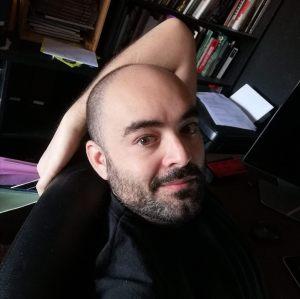
To introduce: how about telling us about the origin of the name “D” and the genesis of the publishing house?
This is a question that we answer according to the state of mind in different ways: from “Discomfort” to “Dogma”, up to “Duce”, when we feel naughty. Magda Crepas (administrator and decision-maker of D Editore) always sighs when I tell strangers, but of course it’s a gag. Joking aside, the “D” of D Editore comes from de Leyva, the real family name of the infamous Nun of Monza, who in life was a very different character from the one we know through Manzoni. Marianna de Leyva was a truly fascinating woman, an ante-litteram anarchopunk if you will, even if history remembers her through the mendacious words we learn in high school.
Against the logic of commodification and profit, which would impose a product that is palatable to as many palates as possible, standardized and adjusted so that no “party” feels excluded and judged, and therefore can shell out money, you publish polemical pamphlets such as the recent We will warm up to the fire of your straw tails, by Lorenzo Gasparrini. How would you describe your idea of cultural product, two terms that seem to come together in an oxymoron?
Honestly, I believe that generalist publishing has run out of time, or at least is heading towards the sunset: large generalist publishing houses now live on everything except culture. This is clear by seeing where their investments are headed: Feltrinelli that buys the most famous Italian publishing ecommerce site, Mondadori that buys up services for logistics and bookstores, Gruppo M that buys companies that own management software and that invoices more and more with shipments. In short, publishing is a machine that invoices more than other cultural sectors (even more than cinema[1]), but not with books. In this scenario of apparent indistinctness, where these strange paper parallelepipeds commonly called “books” qualify themselves on the basis of the hype generated rather than by the content (the case of the proud general V*, driven by criticism and newsreels, is an example), creating a coherent discourse, made together with readers, lettor@ and readers, is the only way forward. This is for two reasons:
1) beyond the numbers, it is the emerging and countercultural publishing houses (I hate the term independent, which has now lost all meaning) that bring fresh, new ideas to the plate, which are then copied in a bad way by the majors; 2) if you want to put a cultural discourse before marketing considerations, a certain consistency is necessary. Having said that, I am firmly convinced that books are “products”: we also need to get out of the naïve idea that what we do is part of a magical world extrapolated from a film by Jean-Pierre Jeunet. We are not martyrs of culture, especially of a culture that is increasingly dependent on the whims of algorithms or the theme of the moment. In this situation, ours is not a survival strategy, we do not want to whisper delicate jokes in a feeble way. We want to scream, make a mess, break windows. We know that we could take a few truncheons (which at least happens to me personally from time to time), but asking for a change in a state of affairs without even wanting to get up from the chair is, at best, naïve. Therefore, our idea of a cultural product is to define an atmosphere, a character, a desired state of affairs, and an inspiration.
Today there is still a joke against the imaginary dictatorship of political correctness and intellectuals of high importance declare a less committed and more, precisely, “literary” literature desirable; In your opinion, can there be such literature?
Absolutely, there is: political correctness is everything that respects labels and institutions, and does not go off the pavement. It is a cultural drama and should be included in the penal code, as it is contrary to the democratic principles of a nation. For example, politically correct is the statement of the CEO of RAI, who complains that the words of singers violate what is correct according to politics: I do not believe in laws or jail, but if there were a suitable punishment for political correctness, the maximum penalty should be applied here. We are led to believe, as inhabitants of the contemporary, that it is our problem, of our time, but in reality this has always been present, in every era. If we think that under the Roman Empire, according to the whims of the emperors, words or stories about unwelcome facts and people who had fallen into damnatio memoria could be forbidden, or that during the Renaissance Inquisition it was not even allowed to read some books... This is “political correctness”, not the fanciful threat that some areas (progressive and reactionary, in unison) fear to fear. But then, threat that comes from some supervisory body? By which armed body? And what is the object of the threat: having fewer followers? It seems to me that those in power are continuing to say their worst in all circumstances. If political correctness means not having the freedom to insult the weakest, the last, those who have always been trampled on or trampled on, well, I meekly deprive myself of this freedom. But this is not the case, and we all know it well. I am lucky enough to read English well, and it is interesting – speaking of political correctness – to see what is “correct” to say in the Knesset sessions in recent months, where ministers declare that they are proudly fascist and homophobic and that a part of humanity should be eliminated from the face of the earth in the most brutal way possible. Politically correct and doxing the very few Israelis who declare that they do not agree 100% with the massacre in progress and politically correct is a minister who goes to the homes of people guilty of having surnames that do not sound Italian to ask if their children are peddling. If, then, those who hold positions of power complain about the words of a few dozen people on the web, then their ability to analyze is really lacking in the context in which we live. To put it bluntly, it is trivially a lack of basic education. The powerful are simply rude, because education has never been necessary to them since they have always been able to do what they wanted. There is a common psychological trait, which can be described in the contempt for those in difficulty. This is a trait that emerges from the liberal psychological type, according to which every cause of malaise is a fault, more specifically a fault of one’s own. Do you live in poverty? Your fault. Do you have any disability? You can still do it, look at this athlete. This is a very subtle trait, because it can certainly be part of the rhetoric of empowermentent (the poor man who made it, the disabled person who wins a medal, the black boy from the ghetto who succeeds, etc.) and who often inspires people. But, on the other hand, it also mortifies them, because it pushes you to convince yourself (yes, I’m talking to you who read) that it’s “your fault” if you didn’t make it. And if it’s your fault, I can use all the slurs I can think of, and if you forbid me... Well, you belong to the wokeism movement, of weak thinking, and you just want to limit my freedoms! That said, I am proud that our books can boast the label of “politically incorrect”, without feeling the need to take the whim (because, after what has been said, this is for conservatives and powerful: a whim) to insult, offend, threaten or violate the dignity of those who already suffer from a context that is hostile to them.
FromCronofagia — the essay on the capitalist theft of time — to Fallosofia — the essay that is expressed in the name — passing through the magnum opus Libertaria, a large collection of anarchist writings, up to the imminent Metal Theory, a journey into the heart of the “Dionysian musical genre par excellence”. There is something for everyone! How does a work, an idea, a field of analysis enter your radar?
As you have well noticed, despite the thematic difference, there is a common thread that unites what we do. Meanwhile, at the base of this thread there is an almost annoying curiosity towards what is changing the world, or what has changed it, towards the most bizarre and unhealthy theories, but which are the pick that our time uses to unhinge some latches. Second, then, is the tone of voice: we are a rough, diagonal, sharp publishing house, we are not comfortable in well-decorated Victorian tea rooms and we feel strongly uncomfortable with the all-Anglo-Saxon attempt to sweeten reality through immense academic efforts that then end up sterilizing the debate. Third, the horizon of libertarian thought, which is the ideological engine that drives us. We have an internal code of ethics that pushes us in certain directions and not others, and I hope this emerges from the titles, tone of voice and contents of our books. This often also pushes us to miss opportunities, but the most important treasure we have is the trust of those who read us, and that is what we must respect...
Do you want to leave us with some juicy news? Any clues about upcoming publications? Maybe something that rhymes with Ned Kandinsky...?
With great pleasure! You anticipated one: we are about to retranslate and reprint the entire catalog of the work of Ted Kaczynski, the man who has long boasted (seriously: he has been very proud of it) of the title of most wanted person in America. Although much of his work has already been translated, we were not satisfied either by the absence of a critical framework on the character, or by the general reception itself that the character, which unfortunately derives a lot from a very old semi-amateur translation shot in the late 90s. We don’t want to lie to ourselves: Ted Kaczynski was a problematic character, even politically, and we cannot say that we share his thought 100%, And yet, he was the last great anarchist to get out of the logic of academia and for this reason to guarantee himself a freedom that today can hardly be expressed, especially on a specific theme, which is what interested us most, that is, that of violence. Today society as a whole is decidedly pacified. Only the state has a monopoly on the application of violence. Any other application is punishable. This has defused the world-changing capacity of libertarian movements, whatever they may be (from trade unions to anarcho- and transfeminist collectives, from radical ecologist groups to animal liberation groups) than for every step taken off the pavement of this monopoly. Even the smallest. Think of the criminal consequences of the boys and girls of Last Generation, the truncheons we are taking at every demonstration in solidarity with the Palestinian people, the charges that every striking worker has suffered outside the factories where he works. And the list would be long, but here the point I want to get to is that Kaczynski, in his manifesto, tells us this: political violence is a tool that we urgently need to reappropriate. And we must do it as soon as possible. Kaczynski’s is a whisper that comes from a small self-built hovel, yet it had the energy to shake the world. Reading Kaczynski without a critical framework, however, is misleading: his pen is often cryptic even for the reader in English, and moreover over time he has changed his mind on some details many times. For this reason, in addition to our critical framework, we have enriched the text with unpublished essays by the author himself, notes made up to 2022, and documents that have never been translated. Above all, we wanted to put limits on the parts of that text that we considered inadmissible (for example, Kaczynski’s reading is absolutely anti-intersectional). The anticipation I would like to make here, however, is another: Kaczynski wrote a lot, a quantity of textual material that is difficult to quantify. We are trying to bring that unpublished material to Italy. It will therefore be a series, in which we will try to translate the most significant things of his work. I would also tell you about the Ukrainian anarchofeminist Irina Zherebkina and her War Diary, the next cynical and bastard comic strip of Claudio Marinaccio’s troublemaker or the next horrific and bloody collection by Paolo di Orazio, but I risk boring those who are reading us...
Just dropped in
Interview by
Giorgio Castriota Skanderbegh
Original Italian
Just dropped in – Intervista a Emmanuele Jonathan Pilia x D Editore (a cura di Giorgio Castriota Skanderbegh)
8 aprile 2024
La tentazione del disimpegno politico e sociale incombe sempre su di noi, aiutata da disincanto e propaganda. Il consumo di cultura è appunto questo, un consumo, una commodity, da eventualmente esibire per acquisire punti sociali in questa o quella bolla.D Editore, oggi rappresentata dalle sue menti Emmanuele Jonathan Pillia e Magda Crepas, offre un antidoto al depotenziamento della saggistica, al disinnesco dei temi trattati e del linguaggio usato, e ci tende la mano verso l’esplorazione di argomenti troppo spesso derubricati da media e stampa mainstream a sciocchezze.
Per introdurre: che ne dici di raccontarci l’origine del nome “D” e la genesi della casa editrice?
Questa è una domanda a cui rispondiamo in base allo stato d’animo in modi diversi: da “Disagio” a “Dogma”, fino a “Duce”, quando ci sentiamo birichini. Magda Crepas (amministratrice e metà decisionale di D Editore) sospira sempre quando lo dico agli sconosciuti, ma ovviamente è una gag. Scherzi a parte, La “D” di D Editore nasce da de Leyva, il vero nome familiare della famigerata Monaca di Monza, che in vita è stata un personaggio assai diverso da quello che conosciamo tramite Manzoni. Marianna de Leyva è stata una donna davvero affascinante, un’anarcopunk ante-litteram se vogliamo, anche se la storia la ricorda tramite le parole mendaci che impariamo alle superiori.
Contro la logica della mercificazione e del profitto, che imporrebbe un prodotto appetibile a quanti più palati possibile, standardizzato e aggiustato in modo che nessuna “parte” si senta esclusa e giudicata, e quindi possa sborsare soldi, voi pubblicate pamphlet polemici come il recente Ci scalderemo al fuoco delle vostre code di paglia, di Lorenzo Gasparrini. Come descriveresti la tua idea di prodotto culturale, due termini che paiono unirsi in un ossimoro?
Sinceramente, credo che l’editoria generalista abbia finito il suo tempo, o almeno si stia incamminando verso il tramonto: grandi case editrici generaliste ormai vivono di tutto tranne che di cultura. Questo è chiaro vedendo dove sono diretti i loro investimenti: Feltrinelli che acquista il più noto sito di ecommerce editoriale italiano, Mondadori che fa incetta di servizi per la logistica e libreria, Gruppo M che acquista aziende che posseggono software gestionali e che fattura sempre più con le spedizioni. Insomma, l’editoria è una macchina che fattura più di altri settori culturali (anche più del cinema[2]), ma non coi libri. In questo scenario di apparente indistinzione, dove questi strani parallelepipedi di carta comunemente chiamati “libri” si qualificano in base all’hype generato più che dal contenuto (il caso del fiero generale V*, spinto da critiche e da cinegiornali, ne è un esempio), creare un discorso coerente, fatto assieme a lettrici, lettor@ e lettori, è l’unica strada percorribile. Questo per due motivi:
1) al di là dei numeri, sono le case editrici emergenti e controculturali (detesto il termine indipendente, che ormai ha perso ogni significato) a portare sul piatto idee fresche, nuove, che poi vengono copiate in malo modo dalle major; 2) se si vuole anteporre un discorso culturale alle considerazioni di marketing, è necessaria una certa coerenza. Detto questo, io sono fermamente convinto che i libri siano “prodotti”: bisogna anche uscire dall’idea naive per cui ciò che facciamo è parte di un mondo magico estrapolato da un film di Jean- Pierre Jeunet. Non siamo martiri della cultura, soprattutto di una cultura che è sempre più dipendente dai capricci degli algoritmi o dal tema del momento. In questa situazione, la nostra non è una strategia di sopravvivenza, noi non vogliamo sussurrare delicate facezie in modo flebile. Noi vogliamo urlare, fare casino, rompere finestre. Sappiamo che potremmo prenderci qualche manganellata (cosa che almeno a me personalmente capita di tanto in tanto), ma chiedere il cambiamento di uno stato di cose senza neppure volersi alzare dalla sedia è, nella migliore delle ipotesi, ingenuo. Per cui, la nostra idea di prodotto culturale è quella di definire un’atmosfera, un carattere, uno stato di cose auspicate, e un’ispirazione.
Oggi ancora si bercia contro l’immaginaria dittatura del politicamente corretto e intellettuali di alto rilievo dichiarano auspicabile una letteratura meno impegnata e più, appunto, “letteraria”; può esserci secondo te una letteratura del genere?
Assolutamente sì, c’è: il politicamente corretto è tutto ciò che rispetta le etichette e le istituzioni, e non va fuori dal selciato. È un dramma culturale e andrebbe inserito nel codice penale, essendo contrario ai principi democratici di una nazione. Ad esempio, politicamente corretto è il comunicato dell’amministratore delegato della RAI, che si lamenta che le parole dei cantanti violano ciò che è corretto secondo la politica: non credo né nelle leggi né nella galera, ma se ci fosse una punizione adatta per il politicamente corretto, qui si dovrebbe applicare il massimo della pena. Siamo portati a credere, come abitanti del contemporaneo, che sia un problema nostro, del nostro tempo, ma in realtà questo è sempre stato presente, in ogni epoca. Se pensiamo che sotto l’Impero Romano, in base ai capricci degli imperatori, potevano essere vietate parole o storie riguardanti fatti sgraditi e persone cadute nella damnatio memorie, o che durante l’Inquisizione del Rinascimento non era neppure permesso leggere alcuni libri… Questo è “politicamente corretto”, non la fantasiosa minaccia che alcune aree (progressiste e reazionarie, all’unisono) paventano di temere. Ma poi, minaccia che viene da qualche organismo di vigilanza? Da quale corpo armato? E qual è l’oggetto della minaccia: avere dei follower in meno? A me sembra che chi detiene il potere stia continuando a dire il suo peggio in ogni circostanza. Se politicamente corretto vuol dire non avere la libertà di insultare i più deboli, gli ultimi, chi è sempre stato calpestato o calpestata, be’, mi privo docilmente di tale libertà. Ma così non è, e lo sappiamo bene tutte e tutti. Ho la fortuna di leggere bene l’inglese, ed è interessante – a proposito di politicamente corretto – vedere cosa è “corretto” affermare nelle sedute della Knesset in questi mesi, dove ministri dichiarano di essere orgogliosamente fascisti e omofobi e che una parte di umanità dovrebbe essere eliminata dalla faccia della terra nel modo più brutale possibile. Politicamente corretto e fare doxing dei pochissimi israeliani e delle pochissime israeliane che dichiarano di non essere d’accordo al 100% con il massacro in atto e politicamente corretto è un ministro che va a citofonare a casa di persone ree di avere cognomi che non suonano italiano per chiedere se i figli spaccino. Se poi, chi detiene posizioni di potere si lamenta delle parole di qualche decina di persone sul web, allora la loro capacità di analisi è davvero deficitaria del contesto in cui viviamo. Detto fuori dai denti, si tratta banalmente di mancanza di educazione di base. I potenti sono semplicemente maleducati, perché l’educazione non gli è mai stata necessaria dato che hanno sempre potuto fare ciò che hanno voluto. Vi è proprio un tratto psicologico comune, descrivibile nel disprezzo verso chi è in difficoltà. Questo è un tratto che emerge dal tipo psicologico liberale, per cui ogni causa di malessere è una colpa, più specificatamente una colpa propria. Si vive in povertà? Colpa tua. Si ha una qualche disabilità? Puoi comunque farcela, guarda questo atleta. Questo è un tratto molto subdolo, perché senz’altro può rientrare nella retorica dell’empowerment (il povero che ce l’ha fatta, la disabile che vince una medaglia, il ragazzo nero del ghetto che ha successo, eccetera) e che spesso ispira delle persone. Ma, d’altro lato, le mortifica anche, perché spinge a convincerti (sì, parlo proprio a te che leggi) che è “colpa tua” se non ce l’hai fatta. E se è colpa tua, io posso usare tutti gli slur che mi vengono in mente, e se me lo vieti… Be’, appartieni al movimento del wokeism, del pensiero debole, e vuoi solo limitare le mie libertà! Detto questo, sono orgoglioso che i nostri libri si possano fregiare dell’etichetta di “politicamente scorretti”, senza per questo sentire il bisogno di togliersi lo sfizio (perché, dopo quanto detto, questo è per conservatori e potenti: uno sfizio) di insultare, offendere, minacciare o violare la dignità di chi già soffre un contesto che gli o le è ostile.
DaCronofagia — il saggio sul furto capitalista del tempo — a Fallosofia — il saggio che si esplica nel nome —, passando per la magnum opus Libertaria, grande raccolta di scritti anarchici, fino all’imminente Metal Theory, un viaggio nel cuore del “genere musicale dionisiaco per eccellenza”. Ce n’è per tutti i gusti! Come entra nel vostro radar un’opera, un’idea, un campo di analisi?
Come hai ben notato, nonostante la differenza tematica, c’è un fil-rouge che unisce ciò che facciamo. Intanto, alla base di questo filo c’è una curiosità quasi molesta verso ciò che sta cambiando il mondo, o che lo ha cambiato, verso le teorie più bislacche e malsane, ma che sono il grimaldello che il nostro tempo usa per scardinare alcuni chiavistelli. Secondo poi, è il tono di voce: siamo una casa editrice ruvida, diagonale, tagliente, non siamo a nostro agio in sale da thé vittoriane ben decorate e ci sentiamo fortemente a disagio verso il tentativo tutto anglosassone di edulcorare la realtà tramite immensi sforzi accademici che vanno poi a finire con lo sterilizzare il dibattito. Terzo, l’orizzonte di pensiero libertario, che è il motore ideologico che ci spinge. Abbiamo un codice deontologico interno che ci spinge verso talune direzioni e non altre, e questo spero che emerga dai titoli, dal tono di voce e dai contenuti dei nostri libri. Questo spesso ci spinge anche a perdere occasioni, ma il tesoro più importante che abbiamo è la fiducia di chi ci legge, e quello è ciò che dobbiamo rispettare…
Vuoi lasciarci con qualche succosa novità? Qualche indizio su prossime pubblicazioni? Magari qualcosa che fa rima con Ned Kandinskij…?
Con estremo piacere! Una l’hai anticipata tu: stiamo per ridare e dare alle stampe l’intero catalogo del lavoro di Ted Kaczynski, l’uomo che si è a lungo fregiato (seriamente: se ne è fatto gran vanto) del titolo di persona più ricercata d’America. Sebbene molto del suo lavoro sia stato già tradotto, non eravamo soddisfatti né dall’assenza di un quadro critico sul personaggio, né dall’accoglienza generale stessa che il personaggio, che purtroppo deriva molto da una vecchissima traduzione semiamatoriale girata sul finire degli anni ‘90. Non vogliamo mentire a noi stessi: Ted Kaczynski è stato un personaggio problematico, anche politicamente, e non possiamo dire di condividere al 100% il suo pensiero, Epperò, è stato l’ultimo grande anarchico a uscire dalle logiche dell’accademia e per questo a garantirsi una libertà che oggi difficilmente si può esprimere, soprattutto su uno specifico tema, che è poi quello che più ci interessava, ossia quello della violenza. Oggi la società è nel suo complesso decisamente pacificata. Solo lo Stato ha il monopolio dell’applicazione della violenza. Ogni altra applicazione, è punibile. Questo ha disinnescato la capacità di cambiare il mondo dei movimenti libertari, qualsiasi essi siano (dai sindacati ai collettivi anarco e transfemministi, dai gruppi di ecologisti radicali a quelli per la liberazione degli animali) che per ogni passo fatto fuori dal selciato di questo monopolio. Anche il più piccolo. Pensiamo alle conseguenze penali dei ragazzi e delle ragazze di Ultima Generazione, alle manganellate che ci stiamo prendendo a ogni manifestazione in solidarietà del popolo palestinese, alle cariche che ogni lavoratore scioperante ha subito fuori dalle fabbriche in cui lavora. E la lista sarebbe lunga, ma qui il punto a cui voglio arrivare è che Kaczynski, nel suo manifesto, ci dice questo: la violenza politica è uno strumento di cui dobbiamo urgentemente riappropriarci. E lo dobbiamo fare il prima possibile. Quello di Kaczynski è un sussurro che proviene da una piccola catapecchia autocostruita, eppure ha avuto l’energia di scuotere il mondo. Leggere Kaczynski senza un quadro critico però è fuorviante: la sua penna è spesso criptica anche per il lettore o la lettrice in inglese, e inoltre lui nel tempo ha cambiato idea su alcuni dettagli molte volte. Per questo, oltre al nostro quadro critico, abbiamo arricchito il testo con saggi inediti dello stesso autore, note apportate fino al 2022, e documenti mai tradotti. Soprattutto abbiamo voluto mettere dei paletti sulle parti di quel testo che ritenevamo irricevibili (ad esempio, la lettura di Kaczynski è assolutamente anti-intersezionale). L’anticipazione che vorrei fare qui è però un’altra: Kaczynski ha scritto moltissimo, una quantità difficilmente quantificabile di materiale testuale. Stiamo cercando di portare in Italia quel materiale inedito. Sarà quindi una collana, in cui cercheremo di tradurre le cose più significative del suo lavoro. Vi parlerei anche dell’anarcofemminista ucraina Irina Zherebkina e del suo Diario di guerra, del prossimo fumetto cinico e bastardo di quel combinaguai di Claudio Marinaccio o della prossima raccolta orrorifica e sanguinolenta di Paolo di Orazio, ma rischio di annoiare chi ci sta leggendo…
Just dropped in
Intervista a cura di
Giorgio Castriota Skanderbegh
[1] Publishing in Italy, 2023 data: books overtake TV and video games, by Miriam Carretto
[2] Editoria in Italia, i dati 2023: i libri superano tv e videogiochi, di Miriam Carretto