Rachel Lynette
Julia Butterfly Hill
Saving the Ancient Redwoods (Young Heroes)
4 May 2007
Heroes come in many sizes. In the Young Heroes biography series, KidHaven Press examines the lives of remarkable and heroic young people. Some have shown great personal courage in the face of difficult circumstances. Others have acted selflessly in an effort to improve other people’s lives. Each book presents a truly inspirational story that will appeal both to student researchers and casual readers. Full-color photographs, a bibliography, and index appear in every volume along with ideas for how young people can get involved in the causes that interest them.
About the Author
Rachel Lynette first visited the redwoods as a child and has returned several times since. She has written over a dozen other books for children as well as many articles on children and family life. She also teaches science to children of all ages. Lynette lives in the Seattle area in the Songaia Cohousing Community with her two children, David and Lucy; a cat named Cosette; and two playful rats. When she is not teaching or writing, Lynette enjoys spending time with her family and friends, traveling, reading, drawing, in-line skating, and eating chocolate ice cream.

© 2007 Thomson Gale, a part of The Thomson Corporation.
Thomson and Star Logo and KidHaven Press are trademarks and Gale is a registered trademark used herein under license.
For more information, contact:
KidHaven Press
27500 Drake Rd.
Farmington Hills, Ml 48331–3535
Or you can visit our Internet site at http://www.gale.com
ALL RIGHTS RESERVED.
No part of this work covered by the copyright hereon may be reproduced or used in any form or by any means—graphic, electronic, or mechanical, including photocopying, recording, taping, Web distribution or information storage retrieval systems—without the written permission of the publisher.
Every effort has been made to trace the owners of copyrighted material.
LIBRARY OF CONGRESS CATALOGING-IN-PUBLICATION DATA
Lynette, Rachel.
Julia Butterfly Hill, saving the ancient redwoods / by Rachel Lynette.
p. cm.—(Young heroes)
Includes bibliographical references and index.
ISBN-13: 978-0-7377-3628-1 (hardcover)
1. Hill, Julia Butterfly—Juvenile literature. 2. Women
conservationists— California—Humboldt County—Biography-Juvenile
literature. 3. Luna (Calif. : Tree)—Juvenile literature. 4. Old
growth forest conservation—California— Humboldt County—Juvenile
literature. I. Title.
SD129.H53L96 2007
333.72092-dc22
2007006796
ISBN 10: 0-7377-3628-3
Introduction: Two Years in a Tree
On December 10, 1997, Julia Butterfly Hill climbed an ancient redwood tree in northern California. She did not come down for 738 days. Hill stayed in the tree, which had been named “Luna” by other environmental activists, to keep loggers from cutting it down. She also hoped to bring public attention to environmental issues. Hill was not the first person to participate in a tree sit, but she was by far the most persistent. Hill’s tree sit lasted longer and got more attention from the media than any other tree sit, before or since.
Hill spent most of her time in the tree on a small platform 180 feet (55m) off the ground. She weathered two winters, as well as abuse from loggers who wanted her to give up her fight. Although her refusal to come down made some people angry, others admired her conviction and determination. Hill’s strongest allies were other activists who served as her support team on the ground. They made sure she had food, clothing, and other supplies she needed to survive. Hill did countless interviews from her perch in the tree, which brought both her and the issues she stood for to the forefront of public awareness.
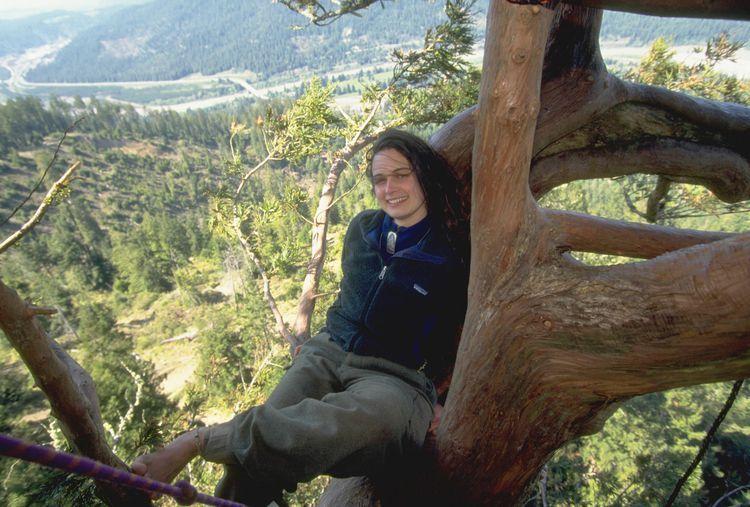
During her second year in the tree, Hill spent many months negotiating with the logging company to save Luna. Finally an agreement was reached. Pacific Lumber promised that Luna would never be cut down, and Hill came down. Although she saved Luna, she could not prevent Pacific Lumber from continuing to clearcut thousands of acres (hectares) of trees. Since ending her tree sit, Hill has continued to devote her life to saving trees and other forms of environmental activism.
A Different Kind of Childhood
Julia Hill was born in Mount Vernon, Montana, on February 18, 1974, to Dale and Kathy Hill. The couple also had two boys, Michael and Daniel.
Childhood in a Camper
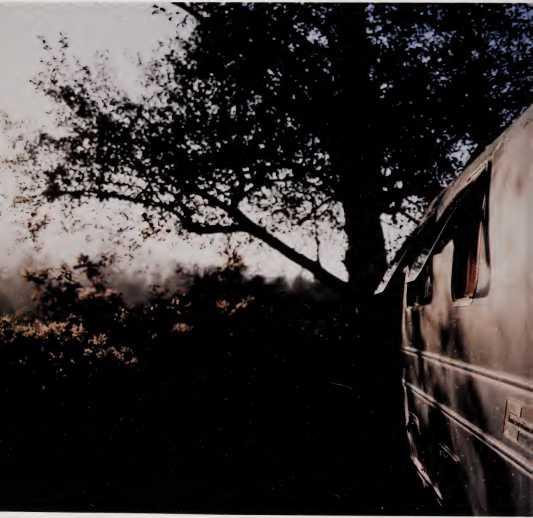
Julia’s family was very religious. Dale Hill was a traveling preacher. He preached in towns and rural communities throughout the Midwest and South. The Hill family involved themselves in the communities they traveled to. Julia’s mother sang religious hymns, and Julia and her brothers put on puppet shows for children. Julia’s parents felt it was important to live what they believed. Julia recalls, “In our family we placed God first, community service second, and our own personal concerns last.”[1] The family lived in a 31-foot-long (9.4m) trailer that they pulled behind their car as they traveled from town to town. Hill recalls that her family was very poor, but that being poor taught her to be thrifty and to appreciate the simple things in life. Julia and her brothers did not go to school. Instead their parents homeschooled them. Julia spent most of her time with her family, as their nomadic lifestyle made it difficult to have friends her own age.
Julia spent a lot of time outdoors. She enjoyed climbing trees and hiking in the woods. It was on a family hike that Julia got her nickname “Butterfly.” During the hike a butterfly landed on Julia and stayed with her the whole day. Julia has always loved butterflies, as well as all other animals. When she was fourteen, Julia decided that she no longer wanted to eat animals and became a vegetarian.
Teen Years in Arkansas
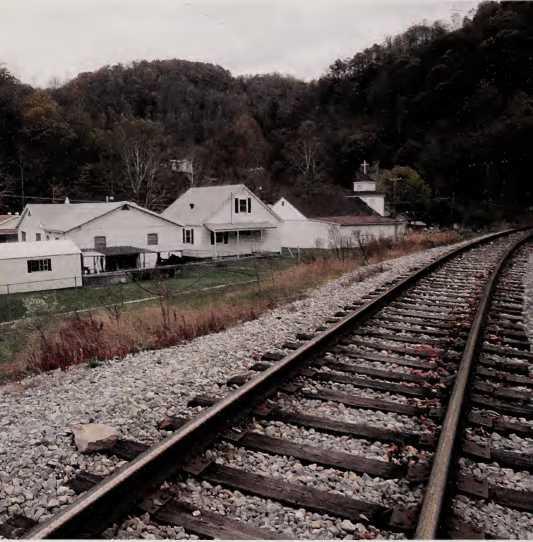
By 1990 Julia’s father had decided to give up preaching and the family moved to Jonesboro, Arkansas, where Julia attended high school. Around this time in her life, Julia started to rebel against her parents’ religion. She became more interested in her appearance and in making money than in God. She had fun with her friends and modeled for catalogs to make money. Although she was often swayed by her peers, she still felt it was important to do the right thing—even when it was not easy.
When Julia was in eleventh grade, some boys from her school attacked her and some of her friends in the parking lot of a restaurant. Julia later found out that the boys had attacked other people too, including a boy who was hurt so badly he had to be hospitalized. That boy was too afraid to take legal action, but Julia was not. She pressed charges, which made the attackers’ girlfriends angry. They began harassing her at school. They called her names and pushed her into lockers. But Julia did not back down, and because of her, several of the boys ended up in jail.
Julia graduated from high school early. At age sixteen she attended a local community college where she studied business. She quit school after two years and opened her own restaurant. The restaurant was successful. Julia was making a good living when, at twenty-two, her life changed forever.
The Accident
In August 1996 Hill was nearly killed in a car accident. She was driving with some friends when her car was rear-ended by a drunk driver. Hill’s head slammed into the steering wheel. She suffered brain damage that affected her short-term memory and her motor skills, which made it difficult for her to talk and move normally. “I began stuttering. I fell over all the time,” Hill said. “I would drop things. I would get flashes where my whole body would feel like it would light on fire. And then I’d throw up and pass out. All these crazy things.”[2]
For a while, Hill did not know if she would be able to function normally again. But after ten months of therapy, she was nearly back to normal. While recovering, she had a lot of time to think about her life. She explains:
When your life is threatened, nothing is ever the same. I suddenly saw everything in a new light. All the time and space I had taken for granted became precious. I realized that I had always been looking ahead and planning instead of making sure that every moment counted for something. I also saw that had I not come through [the accident] the way I did, I would have been very disappointed with my empty life.[3]
Hill decided that she no longer wanted to devote her life to making money. Instead, she wanted to travel. Soon she was on her way to the Pacific Northwest and a future she never could have imagined.
Chapter 2: Drawn to the Trees
After her accident, Hill wanted to visit some of the world’s most spiritual places in hopes of finding her own life purpose. But before she could decide where to go, some friends invited her to come with them on a trip to the West Coast.
First Encounter with the Redwoods
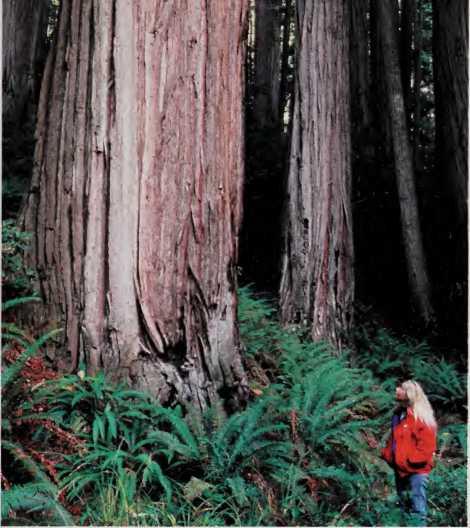
Hill’s first encounter with the redwoods was in Grizzly Creek State Park in northern California. She sensed something calling her as soon as she stepped into the forest. She felt a burst of energy and soon began to run. Once she got well into the woods, she slowed to a walk. The beauty astonished her. Everything was green and lush and full of life. The giant redwood trees amazed her. They were so tall she could not even see their tops. Overcome with what she calls “the spirit of the forest,” she fell to her knees and started to cry. “For the first time, I really felt what it was like to be alive, to feel the connection of all life,”[4] said Hill.
After her profound experience in the forest, Hill decided to give up her plans to travel. She felt called to do something to help save the last three percent of old-growth forest that was still standing in northern California.
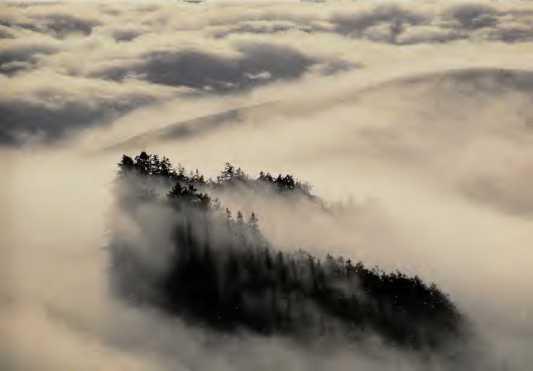
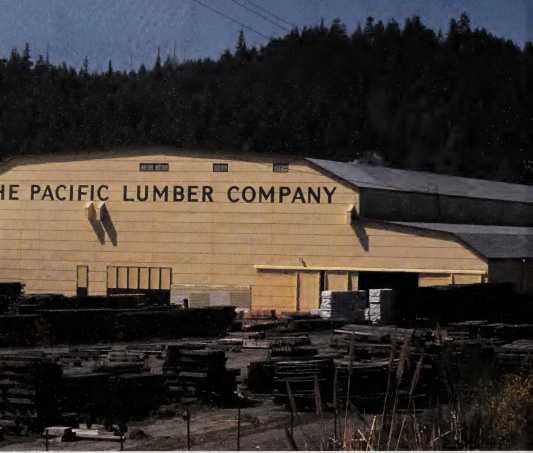
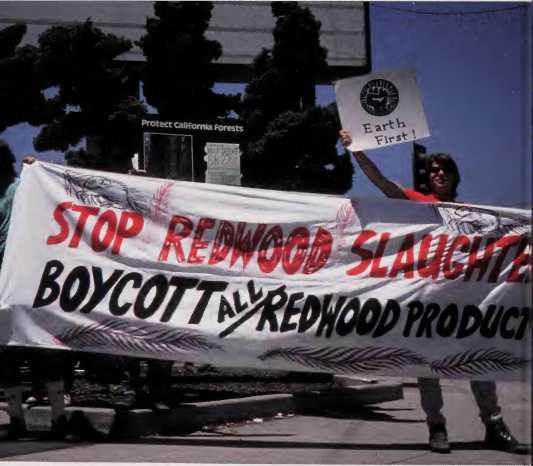
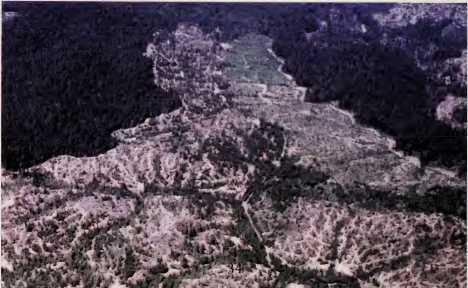
Hill learned that the Pacific Lumber Company was destroying the old-growth forests. For more than 100 years, Pacific Lumber had used sustainable forestry practices. Rather than clear-cutting the forest, they had logged selectively, leaving enough trees standing to maintain the forest ecosystem. But in 1986 Pacific Lumber was taken over by a Texas-based firm called Maxxam. Under Maxxam’s control, Pacific Lumber began to log more old-growth trees. They clear-cut huge tracts of land. This resulted in destroyed ecosystems, polluted rivers, and dangerous landslides. In addition, Pacific Lumber broke many forestry rules and received 103 citations from the California Department of Forestry in just three years. Hill felt she had to do something to stop Pacific Lumber from logging all the old-growth trees.
Returning to the Forest
Hill returned to Arkansas and sold almost everything she owned. She bought a backpack, sleeping bag, and tent and returned to northern California in midNovember 1997.
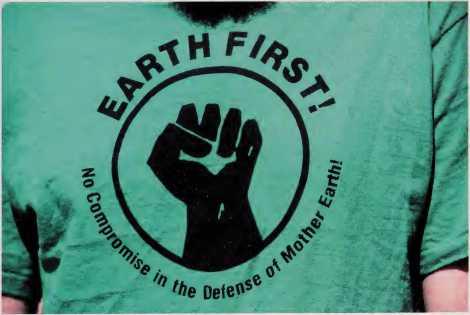
Although she was eager to help, Hill found it difficult to get involved. She began by calling the Environmental Protection and Information Center (EPIC). They gave her a number for Base Camp, a place in the forest where a group of environmental activists called Earth First! had made a temporary camp. Earth First! wanted to save the redwoods. When she called Base Camp, however, they told her they did not need her because they were closing down for the winter. They recommended that she go to a rally in Eureka. At the rally, Hill met a young man named Shakespeare. Shakespeare, like most of the other activists, had chosen a forest name. The activists used these nicknames to hide their real identities. Shakespeare was impressed with Hill’s enthusiasm and decided to take her to Base Camp, even though it was closing for the season.
Base Camp
Base Camp turned out to be a muddy field of tents. Hill tried to get involved, but most of the activists did not seem to want her help and avoided her. She made herself useful by cooking for the other activists, but she spent most of her time alone, waiting. Finally, on the fourth day, a man came to Base Camp looking for people to sit in a large redwood called Luna. Hill was eager to volunteer.
Tree sitting is a kind of civil disobedience. Activists live on small platforms located high in the trees. It is very difficult for logging companies to get them down, and as long as they are up there, the tree cannot be cut. Activists had been sitting in Luna for a few days, but they were ready to come down.
Meeting Luna
Hill, who by this time had taken the forest name “Butterfly,” left Base Camp with Shakespeare and two other activists. Each person carried a heavy pack filled with supplies. The day was cold and rainy, but Hill tried not to let the weather dampen her spirits. She was excited to have finally found a way to get involved.
Luna is located at the top of a ridge. The 2.5-mile hike (4km) up to the tree was difficult. The terrain was steep and very muddy. When they got to Luna, Hill learned about the system of ropes and harnesses that the activists used to climb the giant redwood. Hill was distressed to see that the harness that would hold her was held together by duct tape! She listened carefully as Shakespeare explained how to use the ropes to climb the tree. Although Hill was frightened on her first climb up Luna, she made it to the platform in just fifteen minutes.
Hill’s first two tree sits lasted a little less than a week each. During her second tree sit she got very sick and had to come down. While she recovered, she spent many hours with another activist named Almond and learned more about how to fight for the trees. By early December, Hill was healthy again and ready to do whatever it would take to save Luna.
Chapter 3: Living in Luna
On December 10, 1997, Hill and Almond arrived at Luna prepared to stay for up to a month if necessary. They had brought food, water, and warm clothing as well as a video camera and a cell phone.
Hill describes the first few weeks in Luna as being the hardest because the forest was being logged all around her. She was deeply saddened and frustrated at “seeing them slaughter this hillside and one by one by one watching those trees crash in the ground and splinter and roll down the hill crushing baby trees underneath, and not being able to do anything.”[5] The roar of the loggers’ chainsaws was constant. “I felt it cut through me as well,” says Hill. “It was like watching my family being killed.”[6] Seeing the forest around her being destroyed made Hill even more determined to save Luna.
At Home in a Tree
During their first few weeks, Almond and Hill worked to improve living conditions in the tree. The 6-by-8-foot platform (2m by 2.4m) was sheltered from the weather by tarps, most of which had come loose or were badly torn. They constructed a frame using branches that had broken from Luna. They secured the tarps with whatever string and rope they could find, as well as large quantities of duct tape. In addition, they designed a method of catching rainwater with the tarps.
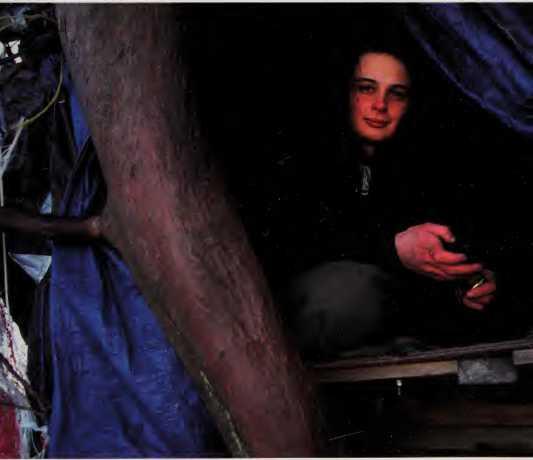
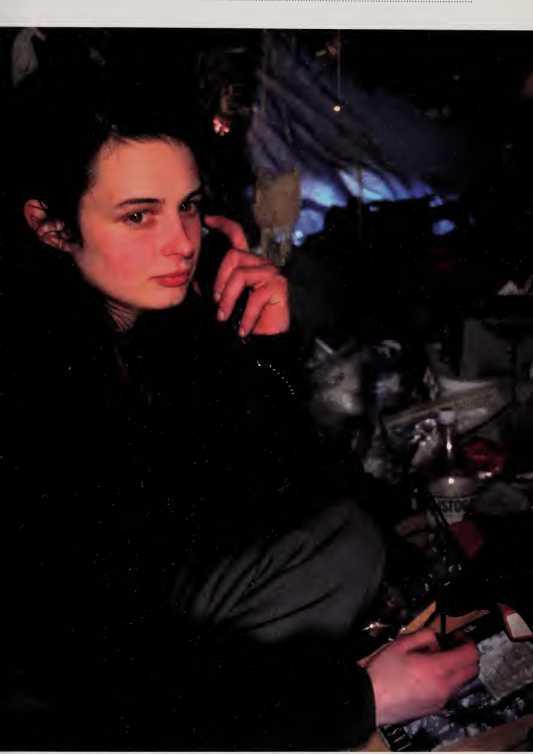
Living in Luna was often challenging. Hill and Almond learned to live with very little on the small platform. At night they used Almond’s small headlamp as a lantern and a few candles to light the shelter. They cooked their meals on a one-burner propane stove. Washing the dishes meant boiling water, but they could use only a small amount as both water and fuel were in limited supply.
Even more challenging than washing the dishes was washing herself. Hill took short sponge baths, washing just half of her body at a time before quickly drying off and rushing to put her clothes back on before she got too cold. She rarely washed her hair, because there was not enough water and she was worried about getting sick if her head was cold for too long.
Going to the bathroom was another challenge. Of course there are no toilets in a tree. Most of the time, Hill used a jar, which she dumped after each use. For solid waste, she had a bucket lined with a trash bag. The used bags were stored in a large cave in Luna’s trunk that had been hollowed out by a lightning strike. Every week or two an activist on the ground would pack the waste out.
In the early days, Hill spent a lot of time figuring out how best to survive in Luna. She also did a lot of reading. There was a small library with books about ecology and activism on the platform. Hill wanted to learn everything she could about the trees, as well as the people who wanted to destroy them. In addition, she spent time writing poetry, drawing, singing, and praying.
Although it was hard to live in the tree, Hill found the experience to be rewarding. She felt connected to Luna and to the universe. It was harder for Almond, who became more and more depressed. On January 4, 1998, he returned to the ground.
Cut Off
Soon after Almond left, the logging company set up a 24-hour security team at the base of Luna. Their goal was to prevent the activists on the ground from bringing supplies to Hill, so that eventually she would have to come down. As the days passed, the winter storms became more severe and the security guards at the base of the tree became angrier. They flooded the tree with bright lights and blew bugles and air horns almost all night long. They threatened Hill and called her names.
The guards’ assaults, as well as the harsh weather, started to take a toll on Hill. She was always cold and wet and was not getting much sleep. And she was starting to run out of supplies. Earth First! activists tried and failed to get supplies to her. Her spirits were at an all-time low, and she was ready to admit defeat and come down when Earth First! finally succeeded in getting supplies to her.
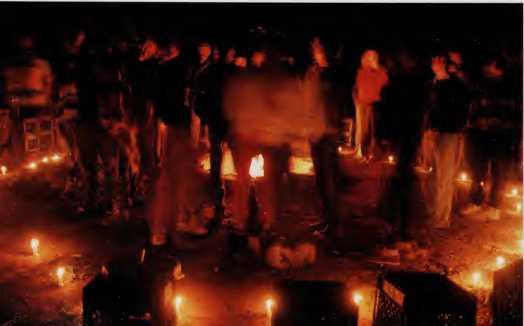
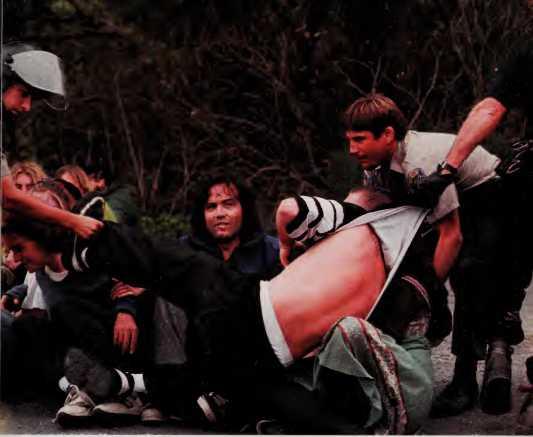
The resupply was well planned. Twenty activists emerged from the brush at once. They made a lot of noise to distract the security guards. Most of them carried bags, but only a few of the bags held supplies. There were only three security guards on duty, and they did not know which activist to stop. In the confusion, two of the activists were able to secure their bags to Hill’s rope, which she quickly pulled up and out of reach.
The resupply renewed Hill’s spirits. “I needed that day so bad! Even if we hadn’t been able to pull off the supply run ... just seeing those people down there was all I needed,”[7] said Hill.
Battered by Storms
The weather continued to worsen, and two days after the resupply the security guards left. Then the worst storm of the season hit with winds up to 70 miles per hour (113kph). Sheets of rain, sleet, and hail pelted Hill. The wind was so strong that it lifted the platform, a few feet, straining the ropes that held it in place. Branches were whipped around and many broke. For sixteen hours Hill held on to Luna with her nearly frozen hands, praying and crying, sure that she was going to die.
Hill thought she was losing her mind. She prayed to Luna and felt the tree answered her and told her to be like the trees and bend in the wind. When the storm was over, Hill was transformed. “It was only after living in the face of destruction and being pummeled by the elements that I could rise to my highest potential: a being inspired by love of the Earth and humankind.”[8]
One Hundred Days
Hill wanted to stay in the tree for 100 days in order to catch the attention of the media. This was important, because Hill and the other activists wanted people to know what was happening to the trees. She reached this goal on March 20,1998. Hundreds of people made the trek up to Luna to celebrate. Hill was presented with the Veterans for Peace Recognition of Valor as well as another award for defending the forest. Hill was touched by so many people showing their support for her and Luna. She was happy to have made it to the 100-day mark, but she was not ready to come down.
Chapter 4: Following Her Heart
Life changed for Hill once she caught the media’s attention. Reporters came to interview her. Articles were written about her in newspapers and magazines. Her cell phone number was posted on Web sites, and she started to receive calls at all times of the day and night. By this time, solar panels had been put in Luna’s branches. These panels converted sunlight into energy that was used to recharge batteries for her cell phone and other electronics. People wrote letters to Hill, which were brought to her by her team on the ground. Before long, Hill was spending six to eight hours a day fielding phone calls, giving interviews, and answering letters.
All the attention was difficult for Hill, who is a private person. But she knew it was important to make people aware of her cause. At times she got frustrated, because people were more interested in details like how she went to the bathroom than on why she was in the tree to begin with. She worked hard to be patient, always be polite, and keep her message focused on love for the trees, for the planet, and for humanity.
Climbing Around Luna
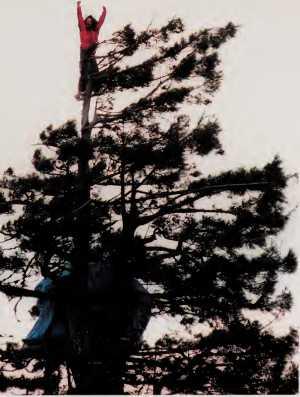
As the weather began to warm, Hill spent more time climbing around Luna’s branches. After she got comfortable in the tree, she stopped using the ropes and harness. She also stopped wearing shoes, preferring to feel Luna’s bark against her bare feet. Climbing was good exercise, and she enjoyed discovering Luna’s secrets. Hill discovered pockets where ferns and huckleberries grew, little mushrooms, soft layers of moss, and the nests of animals.
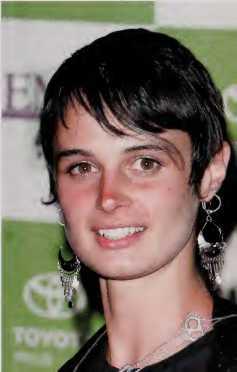
One of Hill’s favorite places in Luna was near the very top of the tree. At first she was frightened to make the climb. The wind blows harder near the top of the tree, and the branches are thinner. Making it to the top was an incredible experience. “Perched above everything and peering down, I felt as if I was standing on nothing at all, even though this massive, solid tree rose underneath me.... It was magical. I felt perfectly balanced. I was one with Creation,”[9] said Hill.
Visitors
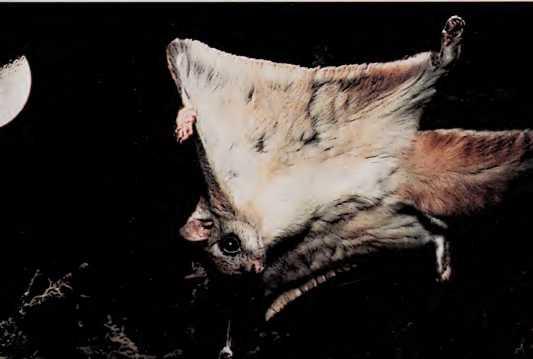
Springtime brought all kinds of visitors, some welcome and some not! The most challenging visitors were the bugs that seemed to emerge from every crack in Luna’s bark. Centipedes, beetles, spiders, and many kinds of winged insects shared Hill’s home in the tree. Other companions included a pair of northern flying squirrels that wanted nothing more than to get into her food stashes, as well as several small mice with the same goal. She also saw many species of birds.
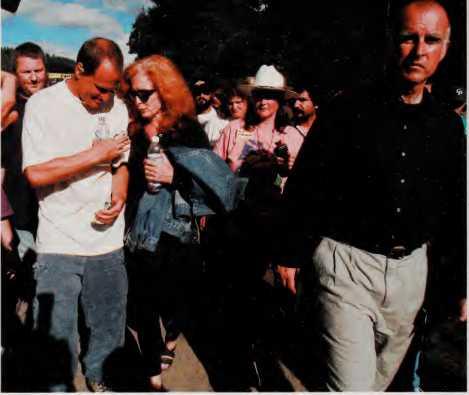
In addition to animal visitors, Hill had quite a few human visitors. Friends, activists, reporters, and her father all came to see her, as did several celebrities. Mickey Hart of the rock group the Grateful Dead made the trek up the hill. Actor and activist Woody Harrelson spent a night in the tree. Singers Joan Baez and Bonnie Raitt also spent time talking with Hill on the platform.
Hill also did some visiting of her own. Although she did not come down from the tree, she did climb down low enough to talk with the loggers. Hill tried to get them to understand her position. Although most of the loggers did not want to listen, a few did. She even became friends with one of them.
A New Home
Although she enjoyed having visitors, Hill was concerned about their effect on Luna. The inexperienced climbers often broke branches—branches that were Hill’s steps. In addition, the weather-beaten platform was showing signs of wear and tear. To solve these problems, the activists on the ground decided to build Hill another platform 80 feet (24m) below the first one.
The new platform was a huge improvement. The walls were constructed from clear sailcloth instead of tarps, so Hill could still enjoy the light on cold or rainy days when she could not roll them up. The roof was high and curved. Hill could even stand up inside. At first she used the lower platform just for visitors, but she liked the new platform so much that in the fall, she made it her home.
Another Winter
Although Hill was getting a great deal of media attention, Pacific Lumber still had not agreed to save Luna. Hill would have to spend another winter in the tree. This time, however, she was ready. In addition to her new shelter, she had received some valuable gifts. People had brought her warm clothing, rain gear, hats, and a cold-weather sleeping bag.
The best present was a bivouac, a type of weatherresistant tent that wraps around a sleeping bag. Snuggled up inside the bivouac, even the wind and rain that made it through the cracks in the canvas did not bother her. Unlike her first winter in Luna, snow was Hill’s biggest challenge. It snowed eight times, but with her new gear and countless cups of hot tea, she made it through the winter without too much difficulty.
Negotiations
Throughout the winter Hill had been talking to the president of Pacific Lumber, John Campbell, on her cell phone. She was trying to convince him not to log Luna. At first he refused to negotiate at all and just told her that she had to come down. Hill did not get discouraged, however, and worked to establish a friendly relationship with him. As time passed, the calls did become friendlier. Campbell even made jokes about buying her a cappuccino and some pizza if she came down.
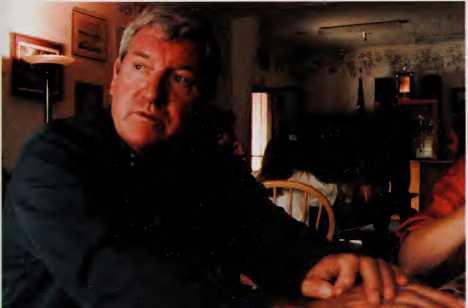
One day in April, Hill invited Campbell to visit her in the tree. To her surprise, Campbell accepted the invitation. Although he did not actually climb into Luna, he did talk to Hill from the ground. During their talk, Campbell agreed not to cut Luna. Hill pointed out that Luna needed to be in a forest environment in order to thrive. Campbell agreed to preserve the area around the giant tree as well. He also promised to have legal papers drawn up.
It took several months and many lawyers to prepare the papers. Then the deal stalled. Pacific Lumber added new demands. They wanted Hill to sign statements saying that the activists were wrong. They also wanted her to agree not to speak out against Pacific Lumber’s logging practices once she came down from the tree. Hill refused to sign, saying, “I could not sign away my rights, my beliefs, my values, my morals and my truths.”[10] The negotiations dragged on, and Hill prepared for anther winter in the tree.
Finally, on December 18, 1999, an agreement was reached. Luna and the 200 feet (61m) around her would be preserved forever. In exchange, Hill would come down from the tree. In addition, she and the activists would give $50,000 to Pacific Lumber, who would in turn donate the money to Humboldt State University for forest research. Hill and the other activists were not happy about the money, but they knew that they would have to give the lumber company something. The most important thing was that Luna was saved!
Chapter 5: Still Saving Trees
Hill’s father and about ten supporters greeted her when her bare feet finally touched the ground after 738 days in Luna. Hill was very emotional, sobbing as she collapsed to the ground near the tree’s massive trunk.
When she stood up, she and her supporters linked arms and circled the tree. Looking up into Luna’s branches Hill said, “I understand to some people, I’m just a dirty, tree-hugging hippie, but I can’t imagine being able to take a chain saw to something like this.”[11]
Spreading the Word
Dozens of reporters met Hill at the base of the trail to Luna. She was a little overwhelmed, but she still managed to speak about her time in the giant redwood.
Hill began by thanking all the people on the ground who had made her tree sit possible. Then she talked about a promise she had made to not let her feet touch the ground until she had done everything she could to bring awareness to the world and to save Luna.
Working for the Planet
Since she came down from the tree, Hill has continued to devote her life to environmental and humanitarian causes. She has written two books. The Legacy of Luna was published in 2000. It tells about her time in the tree and how the logging companies are destroying the forest. One Makes the Difference is all about what individuals can do to save the planet. In addition, Hill started a nonprofit organization called Circle of Life. According to Hill, Circle of Life creates “powerful, fun, creative, and meaningful events and opportunities that... create a space for anyone, anywhere, at any stage in their life, to find steps toward contributing to our world and making a difference.”[12]
In addition to writing books, Hill has continued to act on her beliefs. In July 2002 she went to Ecuador to protest an oil pipeline that was being constructed in a fragile rain forest. Her trip ended when she was arrested and deported back to the United States.
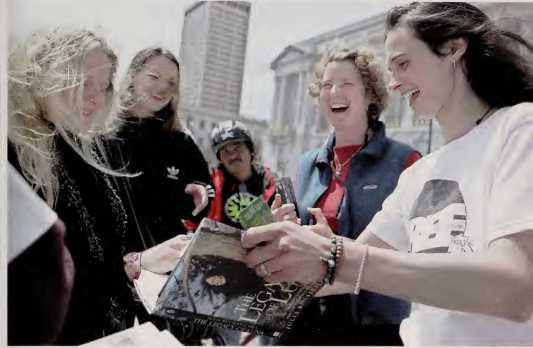
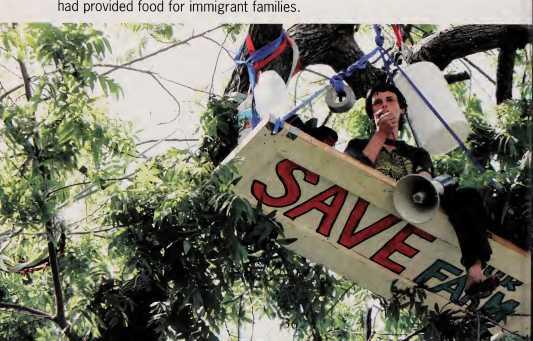
In May 2006, Hill participated in another tree sit, this time on an urban farm in central Los Angeles. The 14-acre farm (5.7 hectares) had provided food for 350 mostly poor, immigrant families for fourteen years. Hill, other activists, and celebrities tried to save the farm from being bulldozed by a developer who wanted to build a warehouse. However, the effort failed and the farm was destroyed.
In everything she does, Hill strives to bring people together and to send a message of love. She has given countless interviews and speeches to teach people how to live in healthier, more earth-friendly ways.
Living Lightly on the Earth
Hill lives her life as an example of how to live more lightly on the planet. She considers how everything she does impacts the earth and tries to make choices that will have as little negative impact on the environment as possible. “Every moment we make choices and every single choice changes the world—every single one of them,” says Hill.[13]
Although she loves nature, Hill lives in the city. That allows her to walk, bike, or bus to wherever she needs to go instead of owning a car. Cars are a major source of pollution, and Hill doesn’t want to contribute to it. She does not own a lot of manufactured products, either, because the process of making and packaging these items uses valuable natural resources and causes pollution, and they create more waste when they are thrown away. Hill also does not use disposable products. Disposable items such as plastic water bottles and fast-food containers not only create huge amounts of waste but also cause pollution when they are manufactured. Instead, Hill carries around her own stainless steel mug, plate, and utensils to use for her meals.
Hill also applies her values to what she eats. She is a vegan and eats organic food, most of which is grown locally. Hill feels that eating in this way is not only healthier for her but also for the planet. By eating organic food that is grown without chemical fertilizers or pesticides, she does not contribute to farming practices that destroy land and rely heavily on harmful chemicals. Eating food that is grown locally means that her food does not have to be transported thousands of miles, using more resources and causing more pollution.
Hill believes that even though she is only one person, the changes she makes impact the earth. She encourages others to make similar changes.
What You Can Do
It is important to conserve the earth’s limited natural resources, such as trees and oil, because once they are gone, they are gone forever. It is also important to limit how much garbage and pollution we create. No one wants to breathe polluted air and drink polluted water.
Small changes can make a big difference. One way to help the planet is to reduce the amount of garbage that ends up in landfills. Avoiding disposable products and reusing things like plastic and paper bags helps. So does using both sides of a piece of paper before recycling it. Paper, glass, aluminum, and many kinds of plastic can all be recycled. Buying products made from recycled materials also helps reduce waste.

Another way to help the earth is to save energy. Lights, computers, and other appliances should be turned off when they are not in use. Using energy-efficient light bulbs and walking or riding a bike or taking the bus instead of riding in a car are other good ways to conserve energy.
Perhaps the most important thing people can do is make their voices heard on important issues. People can also write letters to leaders who make decisions about environmental issues. They also can teach other people how to live more lightly on the earth and volunteer for earth-friendly causes or raise money to donate to them.
Julia Butterfly Hill’s life has inspired many people. But she wants people to realize that anyone can be an activist. Activism is “about caring about your world and choosing to do something to contribute and make a difference,”[14] says Hill.
Glossary
bivouac: A small tent made to shelter a single person from harsh weather.
civil disobedience: Intentionally breaking the law as a form of nonviolent protest or as a method for getting a government or other organization to change the rules or laws.
clear-cut: To cut down all the trees in a section of forest.
deported: Forced to leave the country.
ecosystem: All the living things in an area and the way they affect each other and the environment.
environmental activists: People who take action to bring about change to help the environment, humanitarian: Committed to improving life for other people.
motor skills: The ability to use muscles to move. Muscles cannot move without the brain and nervous system functioning properly.
negotiating: Participating in discussions with an opposing party in order to come to an agreement.
old-growth forest: Very large, old trees.
recycling: Processing used materials so that they can be used again.
sustainable forestry: A logging practice in which trees are logged selectively in order to leave enough trees standing to regenerate the forest and maintain the ecosystem.
tree sit: A form of environmental activism in which a person lives in a tree, usually on a small platform, to protect it from being cut down.
vegan: A vegetarian who in addition to not eating meat also does not eat animal products such as milk and eggs.
For Further Exploration
Books
Dawn FitzGerald, Julia Butterfly Hill. Brookfield, CT: Millbrook, 2002. A biography for children about Hill’s life before and during her tree sit.
Jean Giono, The Man Who Planted Trees: Generosity of Spirit as a Source of Happiness. Ferrisburg, VT: Heron Dance, 2006. This book tells the beautifully illustrated true story of a man who devoted his life to planting 100 acorns every day.
Loretta Halter, A Voice for the Redwoods. Solon, ME: Polar Bear, 2002. An adventure story told from the point of view of a redwood tree. This book is beautifully illustrated and endorsed by Earth First!
Juha Butterfly Hill, The Legacy of Luna. New York: HarperCollins, 2000. In this autobiography, Hill writes about her two years in the tree and her views on the logging industry. The book includes photos of Hill along with examples of her poetry and drawings.
Julia Butterfly Hill, One Makes the Difference: Inspiring Actions That Change Our World. New York: HarperCollins, 2002. In this book Hill suggests ways that readers can reduce their impact on the planet. It includes motivating quotes and sidebars, as well as statistics about waste and pollution.
Jane Kirkland, Take a Tree Walk. Lionville, PA: Stillwater, 2002. This colorful, user-friendly book uses text and illustrations to teach children about trees and how to identify them. It includes many interesting activities and resources.
Tara Koellhoffer, The Environment. Fredericksburg, PA: Chelsea Clubhouse, 2006. A collection of articles from Science News for Kids Magazine, examining threats to the environment such as pollution, overdevelopment, and global warming. The book includes critical-thinking questions.
Barbara A. Lewis, The Kid’s Guide to Social Action: How to Solve the Social Problems You Choose—and Turn Creative Thinking into Positive Action. Minneapolis: Free Spirit, 1998. This book gives step-by-step instructions on ways to get involved in social action. Also includes stories of kids and teens that made a difference.
Web Sites
Circle of Life (www.circleoflifefoundation.org/). This Web site contains a wealth of information about ways to live more lightly on the earth and ways to get involved in many environmental and humanitarian causes.
There is also information about Hill, the tree sit, and a link to her blog, as well as a Kid’s Zone with craft activities.
My Hero (www.myhero.com/myhero/). This site includes a collection of hero stories from around the world, including Julia Butterfly Hill.
Redwood National State Park (www.nps. gov/redw/). This National Park Service Web site includes information about the park including history, science, and visiting the park.
Index
Almond, 17–20
Baez, Joan, 28
Base Camp, 15, 16 bivouacs, 30
Campbell, John, 31–32 car accident, 11 cars, 36
celebrity visitors, 28 characteristics of Julia
Hill
courage, 9 persistence, 4
privacy, 26
Circle of Life, 34 civil disobedience, 16 clear-cutting trees, 6, 13
Earth First!, 15, 22–23
Ecuador, 34–35 education of Julia Hill, 8, 9, 10
energy efficiency, 38 environment, saving, 36–38
environmental activists becoming, 38
help and supplies from, 4–5, 20, 22–23
hiding identities of, 15
media and, 25
Environmental Protection
and Information Center (EPIC), 15
Eureka rally, 15
farming practices, 37 forest names, 15, 16 forest research, 32
garbage, 36, 37
Grizzly Creek State Park, California, 12
Harrelson, Woody, 28
Hart, Mickey, 28 health of Julia Hill, 11, 17
Hill, Dale (father), 7
Hill, Daniel (brother), 7
Hill, Julia, 7–9
on activism, 38 awards received, 25
on being resupplied, 23
books by, 34
on Circle of Life, 34 on feelings being on top
of Luna, 27 lifestyle choices of,
36–37
on logging, 18
on negotiating with
Pacific Lumber, 32 on public’s opinion of her, 33
on reaching her
potential, 11, 25
Hill, Kathy (mother), 7
Hill, Michael (brother), 7 homeschooling, 8
Humboldt State University, 32
Legacy of Luna, The (Hill), 34
lifestyle choices, 36–38
logging methods, 6, 13
Los Angeles, 35
Luna
climbing, 16–17, 27
early tree-sits in, 17 end of long tree-sit in,
32–33
living conditions in, 18–20, 26,28,29–31
Pacific Lumber security
guards, 22
preserved, 6, 32
reason for tree-sit in, 4
weather and, 24–25
Maxxam, 13
media, 25, 26–27, 33
money, importance of, 10, 11
nicknames
of activists, 15
of Julia Hill, 9, 16
nomadic lifestyle, 8
old-growth forests, 13
One Makes the Difference
(Hill), 34
Pacific Lumber Company assaults by security
guards of, 22 negotiations and
agreement with, 6, 31–32
practices of, 13–14 pollution, 36, 37
Raitt, Bonnie, 28 recycling, 37–38 redwood trees, 12–13 religion, 7, 9
Shakespeare, 15, 16 snow, 31 solar panels, 26 storms, 24–25 sustainable forestry, 13
tree-sits
early, 16–17
end of, 32–33
Hill’s goal, 25
living conditions, 18–20, 26, 28,29–31
in Los Angeles, 35 reason for, 4
Veterans for Peace
Recognition of Valor, 25
waste, 36, 37 weather, 24–25, 29, 31
Picture Credits
Cover: © Gail Albert Halaban/CORBIS Saba
AP Images, 17, 23,30,31,34,36
© Charles E. Rotkin/CORBIS, 38
© CORBIS, 5
© CORBIS/Sygma, 14, 19, 21
© Frans Lanting/CORBIS, 13
© Gerard Berkhart/Getty Images, 28
© Joseph Sohm ChromoSohm Inc/CORBIS, 24
© Kevin Fleming/CORBIS, 10
© La Coppola and Meier/CORBIS, 8.
© Matt Jones/CORBIS, 15
© Max Whittaker/Newsmakers/Getty Images, 35
© Paul Mounce/CORBIS, 27
© Phil Schermeister/CORBIS, 22
© Richard Alan Wood, 29
[1] Julia Butterfly Hill, “Committed Love in Action,” Radical Spirit, 2002. www.innerself.com.
[2] Quoted in Jack Boulware, “Up a Tree ... Still?” San Francisco Weekly, November 11, 1998. www.circleoflifefoundation.org.
[3] Julia Butterfly Hill, The Legacy of Luna. New York: HarperCollins, 2002. p. 5.
[4] Hill, The Legacy of Luna, p. 8.
[5] Quoted in Charlie Custer, “Butterfly’s Tale,” Circle of Life, www.circleoflifefoundation.org.
[6] Hill, The Legacy of Luna, p. 66.
[7] Quoted in Custer, “Butterfly’s Tale.”
[8] Hill, “Committed Love in Action.”
[9] Hill, The Legacy of Luna, p. 123.
[10] Quoted in Carla Martinez, “Butterfly Lands Safely,” Eureka, CA: Eureka Times Standard, December 19, 1999, A-l.
[11] Quoted in “After 2 Years, Tree-Sitting Woman Descends, Claiming Victory,” CNN.com, December 18, 1999. archives.cnn.com.
[12] Quoted in Native Energy, “Julia Butterfly Hill Q&A” Gather, January, 27, 2006. www.gather.com.
[13] Quoted in Don Oldenburg, “Julia Butterfly Hill, from Treetop to Grassroot,” Washington Post, September 22, 2004, p. C01.
[14] Quoted in Native Energy, “Julia Butterfly Hill Q&A.”