Rik Scarce
A Quarter Century of Deviance
1 November 2005
When it really comes down to it, what makes Earth First! different? What makes it stand out? Why should anyone pay attention to it?
Maybe it's the movement's nonexistent leadership or its casual organization, in which activists pick up the load as needed. Perhaps it's the culture—the movement has its own music, art and clothing styles. The ecocentric ideology makes people take notice, as does EFFs strategic approach to campaigns. Then there are the varied tactics, its grassroots existence and its location—not in the political power centers, but on the ground, where the planet needs it most.
There's one concept that covers all of those differences between the movement and mainstream American society: deviance.
By "deviance," I don't mean to imply that individual Earth First!ers, or the movement overall, are somehow abnormal. I'm not using “deviant" in a pejorative sense―there's no value judgment to it, only the observation that EF! as a movement, and the activists in it, violate social norms with what they do. They defy expected behaviors, and they flout accepted attitudes. Resistance, the heart of the movement, is what makes it deviant.
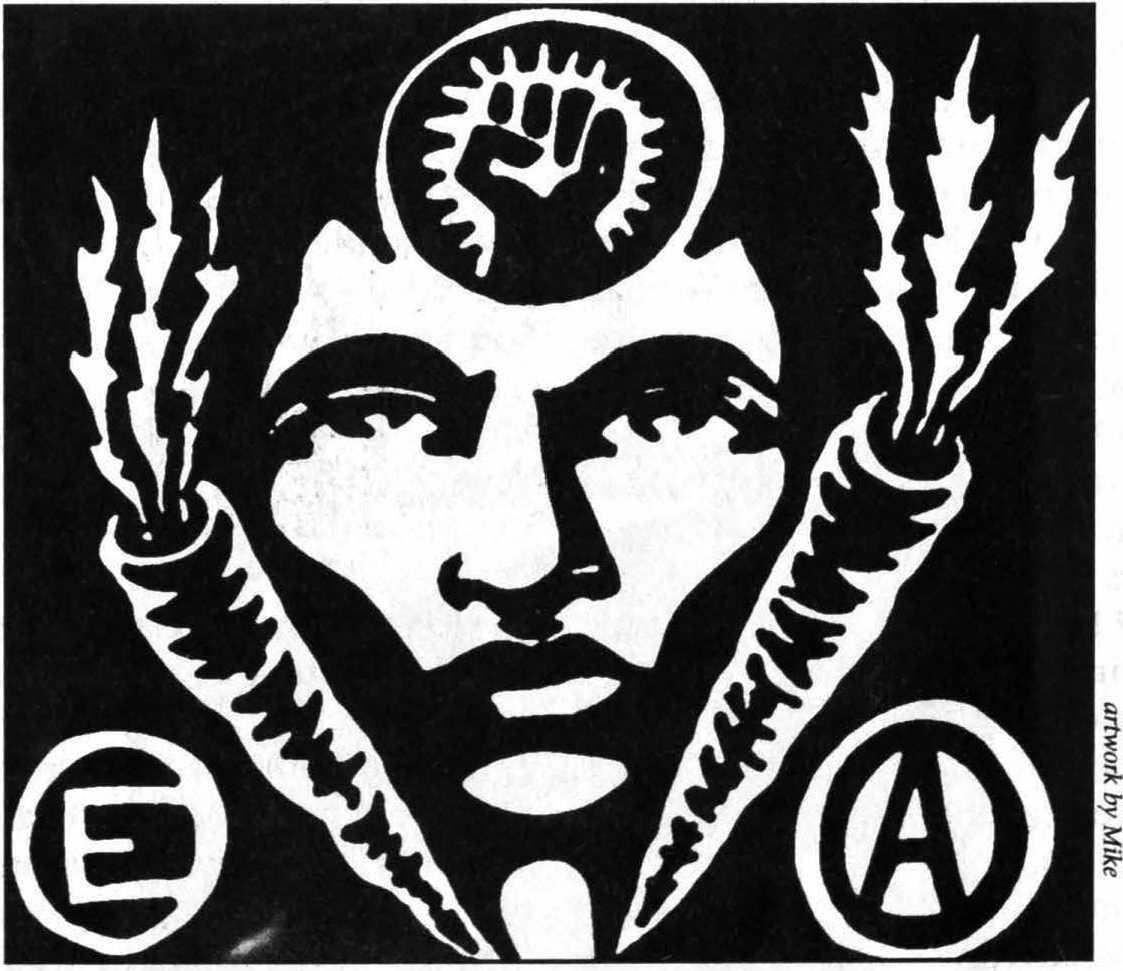
As a historian of the movement, Fm fascinated with how EF!'s deviance has been manifested over the last quarter century. With its endless supply of creative approaches to confronting the forces of environmental destruction, the movement rarely fails to surprise those of us who watch it from afar.
Making It Easy for the Mainstream
Ecocentrism is what this movement is about, not narrow human concerns. It is still, however, a social movement. EF! may seek to preserve wild places and to defend the planet against a host of assaults, but its successes depend upon its ability to effect social change—change outside of the movement itself.
That observation was central to EF!'s founders' view of their role in the broader environmental movement. EF!, they hoped, would allow mainstream environmental organizations to be more successful. The founders figured that with EF! around, the “deviant" label—and here I do mean the word pejoratively, since that's the connotation that its users intended—would shift away from the Sierra Club, the Wilderness Society and the like. In turn, the theory went, those mainstream organizations would become more successful.
So, from its start, EF! was deliberately deviant. Only two things have changed about that outlook in a quarter century.
First, the movement's early strategic vision never worked. The mainstream failed to find the courage to demand what EF! hoped to help it claim— more wilderness, the creation of wildlife corridors, and the development of stronger endangered species, wetlands and antitoxics laws.
In spite of this disappointment, the movement has always worked with the mainstream—the Headwaters Forest campaign stands as the foremost example of such collaboration. But Headwaters was not the sort of victory EF! had in mind. Too little was saved at too high a cost. The movement has found, I think, that the distance between its deviance and the mainstream's conservatism amounts to a gaping chasm.
Shifting Tactics
The second thing that has changed over the years is the form of deviance, which is constantly evolving. Initially, EF!'s tactics simply involved doing what the mainstream had never dared: norm-violating acts like placing a memorial plaque in a wilderness area or symbolically cracking Glen Canyon dam. Then there was the rhetoric: "No Compromise in Defense of Mother Earth." Of the hallowed names in US environmentalism, only John Muir had uttered anything like it, when he said that he might join the “beasts" should a war erupt between them and humanity.
By 1985, EF! activists were sitting in trees to stop logging companies from destroying old growth—the era of civil disobedience on behalf of the planet had begun. The other tactic that came to define EF!—monkeywrenching— was inspired by Edward Abbey's The Monkey Wrench Gang, but it had made its first appearance in 1970, when "The Fox" became the original ecoteur by dumping corporate executives' toxic waste in their own offices.
Ecotage, for EF!, was part of a broader strategy within any given campaign, a last resort when all other means had failed to preserve wilderness or otherwise halt environmental destruction. More recently, taking a cue from the Animal Liberation Front, the Earth Liberation Front (ELF) has rewritten the radical environmental playbook by eliminating the distinction between strategy and tactics. As "hard-core" anarchists driven by a political commitment to destroy capitalism, ELF activists act in defense of Mother Earth anywhere, anytime, often not waiting until other avenues of protest have failed—or have even been attempted.
ELF rhetoric is different as well. Earth First! activists often have been outright victims of destructive forces themselves, as when they were brutally dragged from treesits or had pepper spray swabbed directly into their eyes during acts of civil disobedience—to say nothing of David "Gypsy" Chain's unprovoked murder while he protested the destruction of Headwaters Forest or the car bombing of Judi Bari and Darryl Cherney. But the ELF has come close to threatening the lives—and has trashed the vehicles and homes—of those it opposes, personalizing struggles in ways Earth First! never dreamt, while protecting itself from violent persecution and reprisals.
Deviance Within the Movement
The ELF's rejection of Earth First's evolution-of-protest model (i.e., any given campaign should develop roughly step-by-step, from legal actions to civil disobedience to monkeywrenching) has some activists within Earth First! insisting that the ELF practices property destruction, not ecotage. But examples of that kind of internal deviance— rule-breaking within the movement—are nothing new.
Whether it is what others eat around the campfire, what they think of the US, their willingness to compromise in small ways to win big battles, their efforts to admit human concerns into radical environmentalism's purview or even who sits around the fire in the first place, activists within the movement have always struggled with one another.
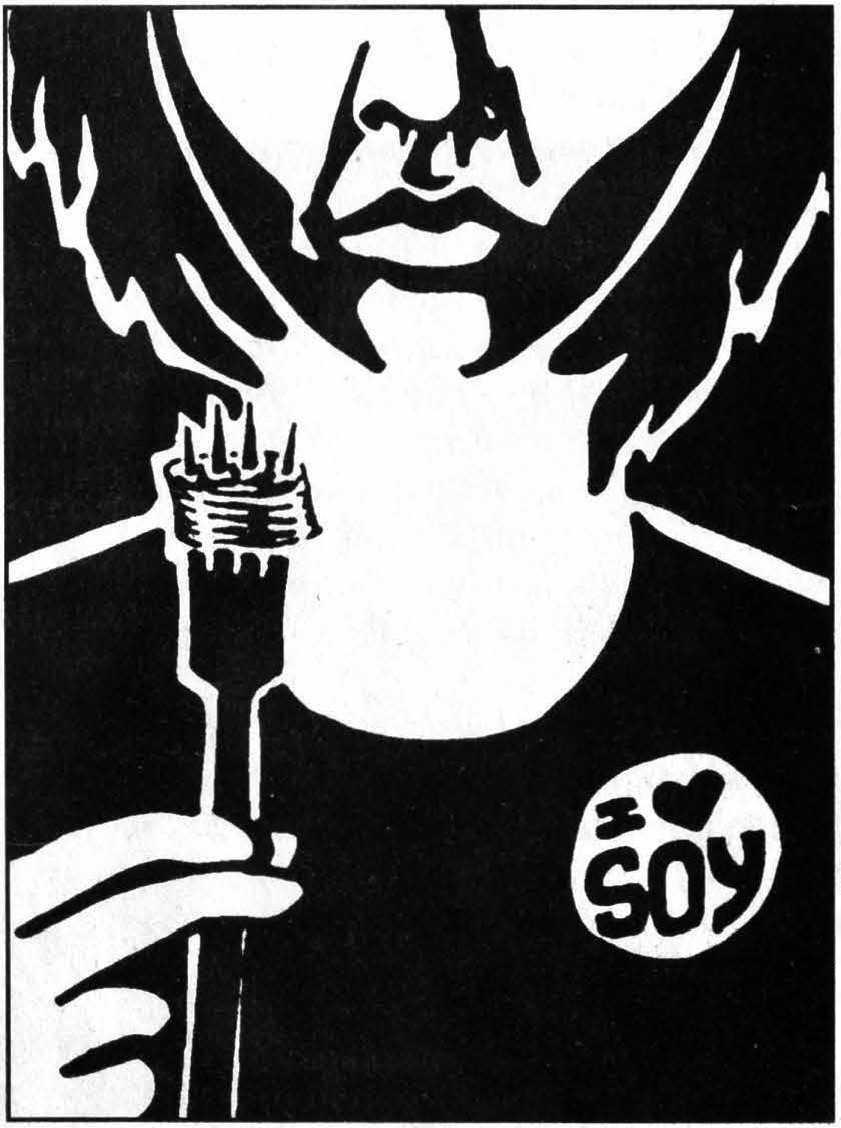
The EF! “Old Guard" knew that the movement was no longer theirs, one told me years ago, when they saw tofu rather than beef being grilled over campfires at the Round River Rendezvous. Even back then, tofu-eating anarchists were altering the movement's self-perception—from an effort to save “America" from itself into an effort to destroy nearly everything that is "American."
Other internal deviants included Judi Bari and North Coast Earth First! (NCEF!) activists, who renounced treespiking in their region as part of an effort to build bridges between the movement and timber workers. NCEF! was upbraided by many, not for compromising Mother Earth, but for compromising on the tactics that might be used to defend Her.
Dissension over similar acts of deviance occurs today, as activists build upon the continued momentum against corporate globalization that began with the Seattle World Trade Organization protests in 1999. At protest after protest, labor activists have marched alongside human rights, women's rights, children's rights and indigenous rights proponents—and activist environmentalists. Within the movement, however, some question whether it is possible to be ecocentric and uncompromising while building bridges to such groups.
And then there are those who struggle for a place for women and persons of color in the movement~~deviants pointing out that all is not well within EF!. Throughout its history, female activists in EF! have questioned men's willingness to make them full partners in the struggle. Those tensions have only risen in recent years as male activists have been outed for raping female treesitters and otherwise resisting women's full participation in the movement.
Like sexism, racism dogs EF!. Environmentalism is seen by many as a concern of whites, but EF!'s ostensibly free and open community ought to be a welcoming place for nonwhite activists. However, most persons of color who experience the movement encounter a chilly climate, and the movement has a reputation, according to one environmental justice scholar I spoke to, for racism. In the eyes of some, many activists' misanthropy and support for extreme limits on immigration indicates a movement subtly promoting racism.
Of course, what once was deviant often becomes standard and taken for granted. Direct action, for example, has been legitimized worldwide as an effective tactic for social change. And tofu is now a staple around Round River Rendezvous campfires. Other changes—like gender equality and multiracial representation within the movement—may take longer to come about. But a movement like Earth First! never ceases to change.
Rik Scarce's history of the radical environmental movement, Eco-Warriors, will be republished later this year with a new concluding chapter. In 1993, Rik spent more than five months in jail for refusing to betray confidential sources from his research on the movement. He now teaches sociology at Skidmore College.