Sandy Seaton
Montana Rosie and the Three Bears
Story and photos by Sandy Seaton
1996
Bawling and growling, the three black bear cubs tumbled off the shale slope. The overpowering smell of a winter-killed elk spurred them on; they hadn’t eaten since they had lost their mother three days before. One cub was definitely the leader, and his sharp bites drove his siblings down the mountain.
There! The decaying carcass of the dead cow elk signaled a feast to the hungry bears. They dove in and wolfed their meal, ignoring the loud scolding of several startled magpies. The cubs’ shrunken stomachs protested the gorging, and they napped soundly between feedings.
The cubs spent the day under the huge pine that sheltered the winterkill. The orphans had been spotted by a rider near their dead mother’s body days before, and the game warden had been searching for them every day. The six-pound cubs were at the mercy of eagles, adult bears, coyotes, and mountain lions; their lives would be short without the protection of their mother in the backcountry north of Yellowstone National Park. The little bears had traveled more than two miles in their quest for food, and every day lessened their chance of rescue.
On the fifth day the warden, Randy Wuertz of Emigrant, called Scott Sallee and me and asked if we would bring our hounds and try to track the cubs. Houndsmen like us throughout the West often volunteer to help fish and game departments. In previous years, Scott and I had caught young problem mountain lions for Montana Fish, Wildlife & Parks (FWP) so they could be tranquilized and safely transported. But this was our first bear call, and we were doubtful of success; it had been five days since the cubs left their mother, and we’d had two days of heavy rain in that period. But we were more than willing to try.
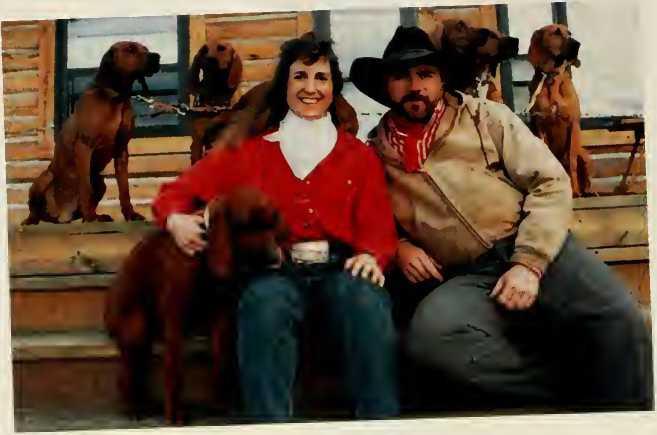
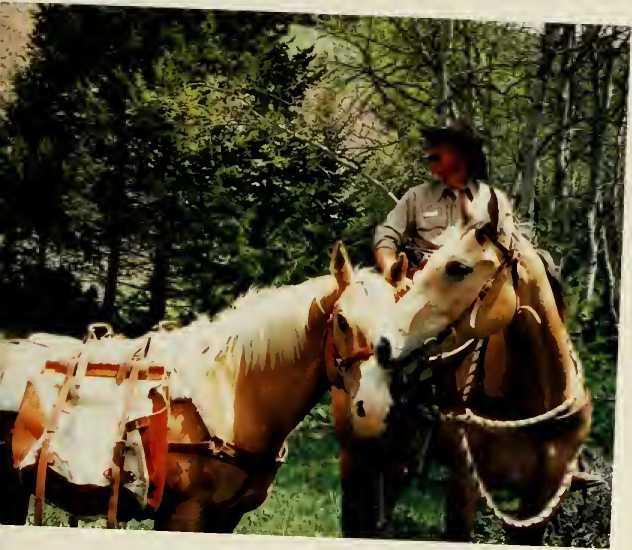
We met Randy at the trailhead with our horses and Red Montana Rose, our 5-year-old female redbone hound. We didn’t want to take a lot of dogs. Too many would increase the chances of catching the cubs on the ground, and we wanted them safely up a tree. Randy had his riding horse and a pack horse with panniers, or pack bags, to give the cubs a ride out if we could find them.
We rode for an hour to the site of the sow’s body, then we dismounted and cast Rosie around the creek bottom. Nothing. She made wider circles and kept working, snuffling like a vacuum cleaner in the shale rocks. We could see the doubt in Randy’s eyes, and we weren’t feeling too confident ourselves. Finally Rosie let out one long, mournful bawl; Scott explained to Randy that she smelled something, and the track was very old. We don’t have a season to run bears with dogs in Montana, and for all we knew Rosie had an old bobcat scent. But she was wagging her tail and working down off the hill, so we grabbed the horses and followed.
Two miles later, Rosie went nuts. Her unmistakable locating bawl and frenzied tree bark always sends shivers down my spine. We could only hope it was the three little cubs she had in the huge tree. We searched the branches— yes! In the very tip-top of an 80-foot Douglas-fir, swaying in the wind, were three tiny black bundles of fur with bi own muzzles.
Now that Rosie’s work was done, we had to decide how to get the cubs down from that towering tree and into our gunny sacks. Randy climbed a tree opposite on the steep slope, and shot a lightly loaded tranquilizer dart across the sky. But the cubs were so small and the distance so great that the warden couldn’t use a heavy enough charge to bridge the gap.
So, we needed an alternate plan. Scott was the only one willing to climb the tree; we rigged up a 15-foot-long branch with his lariat rope and he clambered up the fir. But whenever he would try to loop it over a cub, the little bear would squeal and bat the rope. Randy compared it to “trying to thread a needle with mittens on.” But what else could we do? We were totally unwilling to leave the cubs there; it was obvious they were too small to survive on their own for long.
Now came the fun part—we had to find a way to pry those cubs from that swaying fir. Randy searched through his tranquilizer kit and found one syringe and needle. Scott taped it on the end of his stick, ready to depress, and climbed skyward again. Meanwhile, I tied Rosie back over the hill, much to her chagrin, and Randy grabbed two gunny sacks from his pack horse. Randy and I positioned ourselves on either side of the tree, ready to throw our coats over any cub Scott might roust out. I assured Randy we could grab the cubs by the back of their neck and they couldn’t bite us, as I had done with baby raccoons. I’m sure he thought Scott and I were a pair of lunatics!
Scott, now in position, jabbed the first cub...and the needle came off. Only a small amount of tranquilizer penetrated. We were at a standstill again. But Scott suddenly yelled for us to look out and, high above, blocking the sun for just an instant, a tiny black cub tumbled from the tree. He landed hard, and I raced to throw my slicker over his fuzzy body. Peeking under, I felt sick when the little guy seemed totally lifeless. But suddenly he took a huge, ragged breath, and started to cry like a baby. He had only had the wind knocked out of him; he began to breathe deeply and regularly in his drug-induced sleep as we gently placed him in the gunny sack.
But there were still two lively cubs in the tree that we couldn’t leave, and we fiad no moi’e syringes and tranquilizer darts. Randy heaved a big sigh, cold me to ger ready, and hollered for Scott to push the cubs out to us any way he could. The excitement level climbed sharply. As Scott tried co wrest the bears from their perches, the wind picked up, and Randy and I ran back and forth under the tree trying to see where the cubs might land. Finally Scott shoved the most aggressive cub out—high above, we saw him hanging on the end of Scott’s branch, dangling desperately as Scott tried to shake him down to us. The cub definitely did not think we were trying to help him, and as he let go of his hold, he dropped only a few feet and grabbed the next tree limb, clinging like a monkey. At last Scott pushed him free, and the little bear hit the ground in front of Randy at a run, charging for the next tree. I yelled for Randy to grab him as I raced over with the gunny sack, and Randy suddenly had six pounds of angry miniature bear slapping and growling in his grasp. We quickly stuffed him in the gunny sack. Randy suffered only one bite from those needle-sharp teeth—not bad!
The third and final cub’s descent ended in an undignified landing, knocking the breath out of him. I was able to throw my jacket over him and place him in a sack before he could protest. Scott climbed down the tree one last time, and we congratulated ourselves on a seemingly impossible rescue job.
The cubs were loaded on the palomino pack horse, who was startled but amenable to his squirming load. We untied Rosie from the tree over the hill where we’d heard her muffled barking during the entire operation. As quickly as possible, we retraced our tracks back to the trailhead.
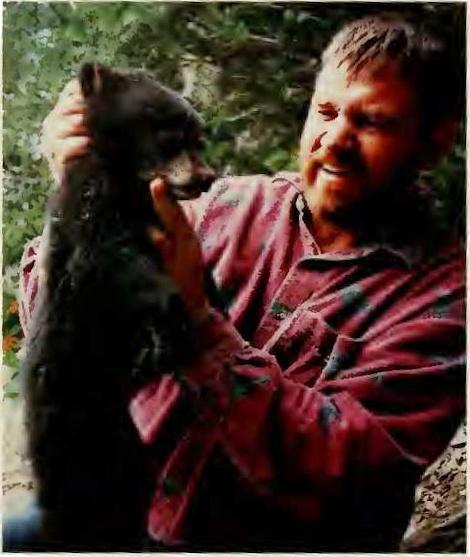
When we arrived at the trucks, I carefully untied the sack of the first tranquilized bear and peeked in. I expected him to either come at me or shrink away, but the little guy just stared at me wonderingly and cocked his head in amazement at his day’s adventures. All three cubs were fine despite their ordeal.
Randy transported the cubs to FWP’s Wild Animal Shelter in Helena, where they would be fed and cared for with minimal human contact. Within a month, the trio had tripled their weight and we. e doing well. By December, they were more than double the size they would have been had they been raised in the wild by their mother. Soon after, they went into hibernation in special denning boxes at the shelter. In mid-winter, they were moved to pre-dug dens in the Rocky Mountain backcountry, where they were born to live.
Editor’s Note.—According to FWP wildlife biologist Mike Model, the cubs, all of which are radio-collared, emerged from hibernation in April and appear ta be healthy. For a complete description of haw orphaned black bear cubs have been successfully reintroduced to the wild through FWP’s artificial denning method, see “Second Chance Bears” in the March/April 1995 issue of Montana Outdoors.