Various Authors
Contextual Articles on John Muir
1988–1921
Picturesque California (Overland Monthly, December 1888)
A Mountain Enthusiast (The Nation, November 15 1894)
Books of the Holiday Season (The Book Buyer, December 1894)
John Muir’s Mountain Book (Book News [originally published in The New York Times], December 1894)
Our Book Shelf (Nature, December 6 1894)
Reviews (The Saturday Review, December 29 1894)
The Book of Nature (The Critic, January 5 1895)
With the New Books (Book News, March 1895)
The Mountains of California (Natural Science, March 1895)
Comment on New Books (The Atlantic Monthly, July 1895)
Book Reviews (Overland Monthly, October 1895)
The Mountains of California (Garden and Forest, February 26 1896)
Our National Parks (The Literary News, November 1901)
Literature (The Christian Advocate, December 26 1901)
Recent Publications (The National Nurseryman, January 1902)
Phases of the World’s Affairs (National Magazine, February 1902)
Nature and Patriotism (The Literary Digest, February 8 1902)
Recent Publications (Forestry and Irrigation, April 1902)
Biography and Literature (Meehan’s Monthly, April 1902)
Our National Parks (The Nation, April 10 1902)
With the New Books (Home and Flowers, January 1903)
In the World of Literature (The Standard, May 8 1909)
A Row of Books (Everybody’s Magazine, June 1909)
Book Reviews (Sierra Club Bulletin, June 1909)
Stickeen, the Story of a Dog (The Christian Register, June 10 1909)
Stickeen (The Nation, July 8 1909)
Holiday Publications (The Dial, December 1 1909)
The National Parks and Forests of the United States (Engineering Literature, February 17 1910)
Recent Publications (Forest and Stream, March 19 1910)
Literature (The Nation, June 29 1911)
Books and Authors (The Living Age, July 22 1911)
A Guide to the New Books (The Literary Digest, August 5 1911)
Literature (The Christian Register, August 10 1911)
My first summer in the Sierra (A.L.A. Booklist, September 1911)
First Impressions of a Mountain Lover (The Dial, October 1 1911)
Book Reviews (Sierra Club Bulletin, January 1912)
In the Realm of Bookland (The Overland Monthly, March 1912)
New Books (The Outlook, May 4 1912)
The Yosemite (The Nation, May 9 1912)
Book Reviews (Sierra Club Bulletin, June 1912)
John Muir’s “Yosemite” (The Literary Digest, June 1 1912)
Book Notices (Missouri Historical Review, October 1912)
Chapters from a Naturalist’s Early Life (The Dial, April 1 1913)
The Story of My Boyhood and Youth (The Nation, April 17 1913)
Book Reviews (Sierra Club Bulletin, June 1913)
Our Book Table (Home Progress, August 1913)
American Autobiography [excerpt] (Munsey’s Magazine, September 1913)
Four Remarkable California Books (Out West, November-December 1913)
Book Reviews (The Yale Review, April 1914)
The Library (The National Humane Review, May 1914)
Book Table (American Primary Teacher, December 1914)
John Muir (The Nation, January 14, 1915)
Friendly Letters of a Wandering Naturalist (The Dial, April 15 1915)
Notes (The Nation, October 7 1915)
American Heights (The New Republic, November 20 1915)
Notes (The Nation, November 25 1915)
Book Reviews (Appalachia, December 1915)
Book Reviews (Appalachia, December 1915)
Eleven Books of the Month (The Bookman, December 1915)
Book Reviews (Sierra Club Bulletin, January 1916)
Book Reviews (The Washington Historical Quarterly, January 1916)
With John Muir in the Land of Flowers and Ice (The Dial, January 6 1916)
Recent Publications (The Journal of Geography, April 1916)
Recent Publications (The Journal of Geography, April 1916)
Briefs on New Books (The Dial, December 14 1916)
Poets on the March (The Continent, December 21 1916)
More Muir Travels (The Book News Monthly, January 1917)
Book Reviews (The Sierra Club Bulletin, January 1917)
Books of Travel and Distinction (The American Review of Reviews, February 1917)
Notes (The Nation, February 1 1917)
Books and Authors (The Living Age, March 3 1917)
John Muir’s Trip (The Argonaut, April 7 1917)
Book Reviews (Appalachia, June 1917)
Geographical Publications (The Geographical Review, August 1917)
Literature (The Christian Register, December 20 1917)
Book Reviews (The Bulletin of the Geographical Society of Philadelphia, 1918)
Book Reviews (The Sierra Club Bulletin, January 1918)
In the Realm of Bookland (The Overland Monthly, February 1918)
Briefs on New Books (The Dial, February 14 1918)
Literature (America, February 23 1918)
Books and Authors (The Living Age, February 23 1918)
The New Books (The Churchman, April 20, 1918)
Reviews of Books (The Mississippi Valley Historical Review, June 1918)
The New Books (The Outlook, November 13 1918)
The New Books (The American Review of Reviews, December 1918)
Book Reviews (Mazama, December 1918)
Book Reviews (Mazama, December 1918)
Book Reviews (The Mountaineer, December 1918)
John Muir’s Last Book (The Bookman, January 1919)
New Books (The Catholic World, January 1919)
Book Reviews (Sierra Club Bulletin, January 1919)
Book Reviews (The Washington Historical Quarterly, January 1919)
A Posthumous Volume by John Muir (The Literary Digest, February 8 1919)
Book Reviews (Appalachia, June 1919)
Books of the Desert and the Mountains [excerpt] (The Bookman, February 1920)
Muir’s Arctic Notes (The Geographical Review, February 1920)
John Muir (The Nation, April 12 1922)
An Ingenious Whittler (The Wisconsin State Journal, September 25, 1860)
Going into the Yosemite (New Life in New Lands, 1873)
San Francisco Bulletin (Friends’ Review, 1873)
Untitled Excerpt (The Atlantic to the Pacific, 1873)
Book Review (The Saturday Review, September 27, 1873)
John Muir’s Mountain Climb in Pasadenaland (History of Pasadena, 1895)
Untitled (The Bookman, December 1898)
John Muir, the Agassiz of the Pacific Slope (Self Culture, May 1899)
The Agassiz of the Pacific (Current Literature, July 1899)
John Muir, a King of Outdoors (Ainslee’s Magazine, April 1901)
John Muir: Geologist, Explorer, Naturalist (The Craftsman, March 1905)
Personal Impressions of John Muir (The Outlook, June 3 1905)
Among the Worlds Workers (The World’s Work, November 1906)
John Muir (The Chautauquan, September 1907)
A Skyland Philosopher (The Bookman, February 1908)
At home with John Muir (Overland Monthly, August 1908)
John Muir – A Man of the Mountains (Suburban Life, September 1908)
Three Days with John Muir (The World’s Work, March 1909)
Camping with Burroughs and Muir (Our Friend, John Burroughs, 1914)
John Muir, Poet-Scientist (California the Wonderful, 1914)
Muir Lodge in the Sierra Madre Mountains (Sierra Club Bulletin, January 1914)
The Lore of the Late John Muir (The Bookman, February 1915)
Introduction (The Writings of John Muir, 1916)
Introduction (The Writings of John Muir, 1916)
Preface (The Writings of John Muir, 1917)
John Muir (Your National Parks, 1917)
Introduction (The Writings of John Muir, 1918)
Editor’s Note (The Writings of John Muir, 1918)
Friendly Act (The Outlook, January 30 1918)
John Muir Misquoted (The Outlook, April 24 1918)
Muir and the Master (Outdoor Men and Minds, 1920)
Excerpt from John Burroughs Talks, 1922
An Excerpt from Theodore Roosevelt’s Autobiography, 1922
Chapter VIII (Nature in American Literature, 1923)
The Scottish Traits in John Muir (The Literary Digest International Book Review, January 1926)
John Muir (The Californian, June 1892)
John Muir (The Century, May 1893)
Some Hermit Homes of California Writers [excerpt] (Overland Monthly, January 1900)
Concerning an Old Student. (The Wisconsin Alumni Magazine, November 1900)
Some Reminiscences of the College Days of John Muir — and Others (The Pacific Monthly, August 1902)
John Muir (The Outlook, June 6 1903)
John Muir (The Outlook, November 28 1903)
An Act of Heroism (The Craftsman, March 1905)
John Muir (Overland, June-July 1906)
John Muir (The World’s Work, April 1907)
With John O’Birds and John O’Mountains in the Southwest (The Century Magazine, August 1910)
The Studious Hero of the Mountains, John Muir (Heroes of California, 1910)
In the Yosemite with John Muir (The Craftsman, December 1912)
John Muir’s Boyhood (The Outlook, May 10 1913)
The Conversation of John Muir (The American Museum Journal, March 1915)
John Muir at the University – Recollections of Early Days (The Wisconsin Alumni Magazine, June 1915)
John Muir (Butler Alumnal Quarterly, July 1915)
The Mystery of John Muir’s Money – Unraveled Here for the First Time (Sunset, February 1916)
The Coming of the Muirs (Trout Family History, 1917)
An Excerpt from Makers of Our History, 1917
An Excerpt from Heroes of Today, 1918
A Hunter of Glaciers (Everyland, August 1918)
John Muir in Yosemite (Natural History, March-April 1920)
The Father of the Yosemite (Our Foreign-born Citizens, 1922)
A Letter from the Farm (Poems and Inscriptions, 1901)
Untitled (Impressions Quarterly, 1902)
My Acquaintance with John Muir (Public Education in California, 1911)
The Psalmist of the Sierra (Sunset, August 1914)
Untitled (The Nation, December 31, 1914)
Death of John Muir (Sierra Club Bulletin, January 1915)
John Muir: Naturalist (The Outlook, January 6 1915)
John Muir: An Appreciation (The Outlook, January 6 1915)
Eulogy (Scientific American, 1915)
Casual Comment. (The Dial, January 16 1915)
Personal Glimpses (The Literary Digest, January 16 1915)
John Muir (The Christian Register, January 28 1915)
“John O’ the Mountains” (The American Review of Reviews, February 1915)
A Message and Appreciation from James Bryce (Sierra Club Bulletin, January 1916)
John Muir – President of the Sierra Club (Sierra Club Bulletin, January 1916)
John Muir (Sierra Club Bulletin, January 1916)
The Burial of John Muir (Sierra Club Bulletin, January 1916)
Recollections of John Muir (Sierra Club Bulletin, January 1916)
Muir of the Mountains (Sierra Club Bulletin, January 1916)
John Muir (Sierra Club Bulletin, January 1916)
John Muir (Sierra Club Bulletin, January 1916)
An Appreciation (Sierra Club Bulletin, January 1916)
John Muir (Sierra Club Bulletin, January 1916)
John Muir and the Alaska Book (Sierra Club Bulletin, January 1916)
John Muir (Sierra Club Bulletin, January 1916)
To Higher Sierras (Sierra Club Bulletin, January 1916)
Muir Lodge – an Appreciation (Sierra Club Bulletin, January 1916)
John Muir (The Overland Monthly, May 1916)
Two Woodsmen [Excerpt] (The North American Review, September 1916)
To the Memory of John Muir (The Sierra Club Bulletin, January 1917)
Memorial Exercises in Honor of John Muir (The Sierra Club Bulletin, January 1917)
Books and Bulletins (The American School, February 1917)
Detailed Contents List
Reviews
From: Overland Monthly, V. 12, No. 72, December 1888, p.659–660
From: The Story of the Files – A Review of Californian Writers and Literature, by Ella Sterling Cummins, Issued Under the Auspices of World’s Fair Commission of California, 1893, p.329–330
From: The Nation, V. 59, No. 1533, November 15, 1894, p.366–367
From: The Book Buyer, V. 11, No. 11, December 1894, p.600
From: Book News [originally published in The New York Times], V. 13, No. 148, December 1894, p.143–144
From: Nature, V. 51, No. 1310, December 6, 1894, p.125
From: The Saturday Review, V. 78, No. 2044, December 29, 1894, p.711
From: The Critic, No. 672, January 5, 1895, p.4
From: Book News, V. 13, No. 151, March 1895, p.301
From: Natural Science, V. 6, No. 37, March 1895, p.206
From: The Atlantic Monthly, V. 76, No. 453, July 1895, p.135
From: Overland Monthly, V. 26, No. 154, October 1895, p.457
From: Garden and Forest, V. 9, No. 418, February 26, 1896, p.81–82
From: The Literary News, V.22, No. 11, November 1901, p.323
From: The Christian Advocate, V. 76, No. 52, December 26, 1901, p.2076
From: The National Nurseryman, V. 10, No. 1, January 1902, p.12
From: National Magazine, V. 15, No. 5, February 1902, p.533–535
From: The Literary Digest, V. 24, No. 6, February 8, 1902, p.195–196
From: Forestry and Irrigation, V. 8, No. 4, April 1902, p.180
From: Meehan’s Monthly, V. 12, April 1902, p.66–67
From: The Nation, V. 74, No. 1919, April 10, 1902, p.294–295
From: Home and Flowers, V. 13, No. 3, January 1903, p.198
From: The Standard, V. 56, No. 36, May 8, 1909, p.14
From: Everybody’s Magazine, V. 20, No. 6, June 1909, p.875–876
From: Sierra Club Bulletin, V. 7, No. 2, June 1909, p.138
From: The Christian Register, V. 88, No. 23, June 10, 1909, p.635
From: The Nation, V. 89, No. 2297, July 8, 1909, p.37
From: The Dial, V. 47, No. 563, December 1, 1909, p.460–461
From: Engineering Literature, V. 63, No. 7, February 17, 1910, p.21
From: Forest and Stream, V. 74, No. 12, March 19, 1910, p.452
From: The Nation, V.92, No. 2400, June 29, 1911, p.651
From: The Living Age, V. 52, No. 3498, July 22, 1911, p.256
From: The Literary Digest, V. 43, No. 6, August 5, 1911, p.216
From: The Christian Register, V. 90, No. 32, August 10, 1911, p.851
From: A.L.A. Booklist, V. 8, No.1, September 1911, p.25–26
From: The Dial, V.51, No. 607, October 1, 1911, p.251–252
From: Sierra Club Bulletin, V. 8, No. 3, January 1912, p.243–244
From: The Overland Monthly, V. 59, No. 3, March 1912, p.290
From: The Outlook, V. 101, No. 1, May 4, 1912, p.43
From: The Nation, V.94, No. 2445, May 9, 1912, p.472
From: Sierra Club Bulletin, V. 8, No. 4, June 1912, p.293–294
From: The Dial, V. 52, No. 623, June 1, 1912, p.442
From: The Literary Digest, V. 44, No. 22, June 1, 1912, p.1165 and 1168
From: Missouri Historical Review, V. 7, No. 1, October 1912, p.49
From: The Dial, V. 54, No. 643, April 1, 1913, p.293–294
From: The Nation, V. 96, No. 2494, April 17, 1913, p.391–392
From: Sierra Club Bulletin, V. 9, No. 2, June 1913, p.118–119
From: Home Progress, V. 2, No. 12, August 1913, p.49–50
From: Munsey’s Magazine, V. 49, No. 6, September 1913, p.992
From: Out West, November-December 1913, p.264
From: The Yale Review, V. 3, No. 3, April 1914, p.611–614
From: The National Humane Review, V.2, No.5, May 1914, p.114
From: American Primary Teacher, V. 38, No. 4, December 1914, p.157
From: The Nation, V. 100, No. 2585, January 14, 1915, p.50
From: The Dial, V. 58, No. 692, April 15, 1915, p.294–295
From: The Nation, V. 101, No. 2623, October 7, 1915, p.440
From: The New Republic, V. 5, No. 55, November 20, 1915, p.24
From: The Nation, V. 101, No. 2630, November 25, 1915, p.630
From: Appalachia, V. 13, No. 4, December 1915, p.398–402
From: Appalachia, V. 13, No. 4, December 1915, p.402–405
From: The Bookman, V. 42, December 1915, p.473–474
From: Sierra Club Bulletin, V. 10, No. 1, January 1916, p.121–125
From: The Washington Historical Quarterly, V. 7, No. 1, January 1916, p.77–78
From: The Dial, V. 60, No. 709, January 6, 1916, p.17–18
From: The Journal of Geography, V. 14, No. 8, April 1916, p.306–307
From: The Journal of Geography, V. 14, No. 8, April 1916, p.307–308
From: The Dial, V.61, No. 731, December 14, 1916, p.539–540
From: The Continent, December 21, 1916, V. 47, No. 51, p.1689–1690
From: The Book News Monthly, V. 35, No. 5, January 1917, p.202–203
From: The Sierra Club Bulletin, V. 10, No. 2, January 1917, p.258–259
From: The American Review of Reviews, V. 55, No. 2, February 1917, p.217–218
From: The Nation, V. 104, No. 2692, February 1, 1917, p.136
From: The Living Age, Eight Series, V. 5, No. 3791, March 3, 1917, p.576
From: The Argonaut, V. 80, No. 2089, April 7, 1917, p.216
From: Appalachia, V. 14, No. 2, June 1917, p.185–186
From: The Geographical Review, V. 4, No. 2, August 1917, p.151
From: The Christian Register, V. 96, No. 51, December 20, 1917, p.1215
From: The Bulletin of the Geographical Society of Philadelphia, V. 16, 1918, p.101
From: The Sierra Club Bulletin, V. 10, No. 3, January 1918, p.379–380
From: The Overland Monthly, V. 71, No. 2, February 1918, p.180
From: The Dial, V. 64, No. 760, February 14, 1918, p.156
From: America, V. 18, February 23, 1918, p.503
From: The Living Age, V. 296, No. 3842, February 23, 1918, p.511
From: The Churchman, April 20, 1918, p.535
From: The Mississippi Valley Historical Review, V. 5, No. 1, June 1918, p.110–112
From: The Outlook, V. 120, No. 10, November 13, 1918, p.428–429
From: The American Review of Reviews, V. 58, No. 6, December 1918, p.662
From: Mazama, V. 5, No. 3, December 1918, p.287–288
From: Mazama, V. 5, No. 3, December 1918, p.285
From: The Mountaineer, V. 11, December 1918, p.82
From: The Bookman, V. 48, No. 5, January 1919, p.628–630
From: The Catholic World, January 1919, V. 108, No. 646, p.552
From: Sierra Club Bulletin, V. 10, No. 4, January 1919, p.487–488
From: The Washington Historical Quarterly, V. 10, No. 1, January 1919, p.72–73
From: The Literary Digest, V. 60, No. 6, February 8, 1919, p.44 and 46
From: Appalachia, V. 14, No. 4, June 1919, p.402
From: The Bookman, V. 50, No. 6, February 1920, p.558–560
From: The Geographical Review, V. 9, No. 2, February 1920, p.148
From: The Nation, V. 114, No. 2962, April 12, 1922, p.431–433
General Commentary and News
From: The Wisconsin State Journal, September 25, 1860
From: New Life in New Lands: Notes of Travel, by Grace Greenwood [Sara Jane Lippincott], J.B. Ford and Company, 1873, p.303–365
From: Friends’ Review, V. 26, No. 21, First Month 11, 1873, p.334–335
From: The Atlantic to the Pacific, by John Erastus Lester, Longmans, Green, and Co., London, 1873, p.159–160 and p.248–249
From: The Saturday Review, September 27, 1873, V. 36, No. 935, p.414–415
From: From: The Story of the Files – A Review of Californian Writers and Literature, by Ella Sterling Cummins, Issued Under the Auspices of World’s Fair Commission of California, 1893, -156
From: History of Pasadena, by Hiram A. Reid, Pasadena History Company, 1895, p.406–409
From: The Bookman, V. 8, No. 4, December 1898, p.288–290
From: Self Culture, V. 9, No. 3, May 1899, p.293–299
From: Current Literature, V. 36, No. 1, July 1899, p.40–41
From: Ainslee’s Magazine, V. 7, No. 3, April 1901, p.247–252
From: The Craftsman, V. 7, March 1905, p.637–654 and p.665–667
From: The Outlook, V. 80, June 3, 1905, p.303–306
From: The World’s Work, V. 13, No. 1, November 1906, p.8249–8250
From: The Chautauquan, V. 48, No. 1, September 1907, p.87–88
From: The Bookman, V. 26, February 1908, p.593–599
From: Overland Monthly, V.52, No. 2, August 1908, p.125–128
From: Suburban Life, V. 7, No, 3, September 1908, p.121–122, 140–141
From: The World’s Work, V. 17, No.5, March 1909, 5–11358
From: Our Friend, John Burroughs, by Clara Barrus, Houghton Mifflin Company, 1914, p.227–254
From: California the Wonderful, by Edwin Markham, Hearst’s International Library Co., 1914, p.368–369
From: Sierra Club Bulletin, V. 9, No. 3, January 1914, p.170–172
From: The Bookman, V. 40, February 1915, p.616–618
From: The Writings of John Muir, Volume 1, The Story of My Boyhood and Youth, Houghton Mifflin Company, 1916, p.vii-xii
From: The Writings of John Muir, Volume 1, A Thousand-Mile Walk to the Gulf, Houghton Mifflin Company, 1916, p.231–245
From: The Writings of John Muir, Volume 3, Travels in Alaska, Houghton Mifflin Company, 1917, p.v-ix
From: Your National Parks, by Enos A. Mills, Houghton Mifflin Company, 1917, p.360–365
From: The Writings of John Muir, Volume 7, The Cruise of the Corwin, Houghton Mifflin Company, 1918, p.ix-xxxiii
From: The Writings of John Muir, Volume 8, Steep Trails, Houghton Mifflin Company, 1918, p.v-vii
From: The Outlook, V. 118, No. 5, January 30, 1918, p.167
From: The Outlook, V. 118, No. 17, April 24, 1918, p.678
From: Outdoor Men and Minds, by William Le Roy Stidger, The Abingdon Press, 1920, p.175–184
From: John Burroughs Talks – His Reminiscenses and Comments, as reported by Clifton Johnson, Houghton Mifflin Company, 1922, p.210–211
From: Theodore Roosevelt, an Autobiography, by Theodore Roosevelt, Charles Scribner’s Sons, 1922 [new edition] p.321–322
From: Nature in American Literature, by Norman Foerster, The Macmillan Company, 1923, p.238–263
From: The Literary Digest International Book Review, V. 4, No. 2, January 1926, p.97 and 99
Biographical
From: The Californian, V. 2, No. 1, June 1892, p.88–94
From: The Century, V. 46, No. 1, May 1893, p.120–123
From: Overland Monthly, V. 35, No. 205, January 1900, p.3–5
From: The Wisconsin Alumni Magazine, V. 2, No. 2, November 1900, p.74–76
From: The Pacific Monthly, V. 8, No. 2, August 1902, p.73–74
From: The Outlook, V. 74, No. 6, June 6, 1903, p.365–377
From: The Outlook, V. 75, No. 13, November 28, 1903, p.763–764
From: The Craftsman, V. 7, March 1905, p.665–666
From: Overland, June-July 1906. V. 47, No. 6, p.517–525
From: The World’s Work, V. 13, No. 6, April 1907, p.8804–8808
From: The Century Magazine, V. 80, No. 4, August 1910, p.521–528
From: Heroes of California, by George Wharton James, Little, Brown, and Company, 1910, p.338–360
From: The Craftsman, V.23, No. 3, December 1912 p.324–335
From: The Outlook, V. 104, May 10, 1913, p.71–72
From: The American Museum Journal, V. XV, No. 3, March 1915, p.117–121
From: The Wisconsin Alumni Magazine, V. 16, No. 9, June 1915, p.557–562
From: Butler Alumnal Quarterly, V. 4, No. 2, July 1915, p.81–92
From: Sunset, V. 36, No. 2, February 1916, p.20–22 and 61–64
From: Trout Family History, by W. H. Trout, Milwaukee, Wisconsin, 1917, p.121–138
From: Makers of Our History, by John T. Faris, Ginn and Company, 1917, p.331–342
From: Heroes of Today, by Mary R. Parkman, The Century Co., 1918, p.3–28
From: Everyland, V. 9, No. 8, August 1918, p.242–244
From: Natural History, V. 20, No. 2, March-April 1920, p.124–141
From: Baraboo, Dells, and Devil’s Lake Region, by H. E. Cole, Baraboo News Publishing Company, 1921, p.61–64
From: Our Foreign-born Citizens: What They Have Done for America, by Annie E.S. Beard, Thomas Y. Crowell Company, 1922, p.184–193
Tributes and Obituaries
From: Poems and Inscriptions, by Richard Watson Gilder, The Century Company, 1901, p.10–16
From: Impressions Quarterly, V. 3, No. 3, September 1902, p.64
From: Public Education in California, by John Swett, American Book Company, 1911, p.231–233
From: Sunset, V. 33, August, 1914, p.355–357
From: The Nation, V.99, No. 2583, December 31, 1914, p.762, 781–782
From: Sierra Club Bulletin, V. 9, No. 4, January 1915, p.287
From: The Outlook, V. 109, No. 1, January 6, 1915, p.11–12
From: The Outlook, V. 109, No. 1, January 6, 1915, p.27–28
From: Scientific American, V. 112, No. 2, January 9, 1915, p.47
From: The Dial, V. 58, No. 686, January 16, 1915, p.39
From: The Literary Digest, January 16, 1915, V. 50, No. 3, p.114–119
From: The Christian Register, V. 94, No. 4, January 28, 1915, p.78–79
From: The American Review of Reviews, V. 51, No.2, February 1915, p.242–243
From: The Craftsman, V. 27, No. 5, February 1915, p.479–480
From: The Guide to Nature, V. 7, No. 9, February 1915, -314
From: Recreation, V. 52, No. 2, February 1915, p.98
From: Journal of Education, V.81, No. 6, February 11, 1915, p.146
From: The New Republic, V.2, No. 16, February 20, 1915, p.69–71
From: American Forestry, V. 21, No. 3, March 1915, p.184–185
From: Country Life in America, V. 27, March 1915, p.76–77
From: The Century, V. 89, No. 5, March 1915, p.794–796
From: Science, N.S. V. 41, No. 1053, March 5, 1915, p.353–354
From: Forestry Quarterly, V. 13, No. 2, June 1915, p.215–217
From: The Overland Monthly, V. 67, No. 1, January 1916, p.80
From: Sierra Club Bulletin, V. 10, No. 1, January 1916, p.1
From: Sierra Club Bulletin, V. 10, No. 1, January 1916, p.2–7
From: Sierra Club Bulletin, V. 10, No. 1, January 1916, p.8
From: Sierra Club Bulletin, V. 10, No. 1, January 1916, p.15
From: Sierra Club Bulletin, V. 10, No. 1, January 1916, p.16–19
From: Sierra Club Bulletin, V. 10, No. 1, January 1916, -22
From: Sierra Club Bulletin, V. 10, No. 1, January 1916, p.23–24
From: Sierra Club Bulletin, V. 10, No. 1, January 1916, p.25
From: Sierra Club Bulletin, V. 10, No. 1, January 1916, p.26–28
From: Sierra Club Bulletin, V. 10, No. 1, January 1916, p.29–32
From: Sierra Club Bulletin, V. 10, No. 1, January 1916, p.33–36
From: Sierra Club Bulletin, V. 10, No. 1, January 1916, p.37
From: Sierra Club Bulletin, V. 10, No. 1, January 1916, p.38–40
From: Sierra Club Bulletin, V. 10, No. 1, January 1916, p.60–61
From: The Overland Monthly, V. 67, No. 5, May 1916, p.397
From: The North American Review, V.204, September 1916, p.433–437
From: Proceedings of the American Academy of Arts and Letters and of the National Institute of Arts and Letters, V.2, No. 3, November 1916, p.58–62
From: The Sierra Club Bulletin, V. 10, No. 2, January 1917, p.146–151
From: The Sierra Club Bulletin, V.10, No.2, January 1917, p.239
From: John Muir, Charles R. Van Hise, The University of Wisconsin, 1916 [pamphlet], also published in Science, V. 45, No. 1153, February 2, 1917, -109
From: The American School, V. 3, No. 2, February 1917, p.50
From: Appalachia, V. 14, No. 4, June 1919, p.390–393
From: The Delineator, V. 99, August 1921, p.2, 34
Reviews
Picturesque California (Overland Monthly, December 1888)
From: Overland Monthly, V. 12, No. 72, December 1888, p.659–660
THE WELL-KNOWN PUBLICATION, — scarce1y so much a book as a combination of book and portfolio of engravings, — called “Picturesque America “ is doubtless the source of inspiration from which came the suggestion of Picturesque California. It is an undertaking on a truly magnificent scale, appearing in successive sections, of which the first is now issued; edited and in part written by John Muir, the man of all others who has most lived with and expressed nature in California; written also in part by others, all, so far as we know, suitable selections, such as Professor Holden who will describe Mount Hamilton and the Lick Observatory; containing over six hundred etchings, wood engravings, photogravures, etc., all by artists of standing, and even eminence; printed in large folio size, on extra-heavy, cream finished paper, in large, clear text.
The present section is not bound, but laid within gray cloth book-covers, tied with ribbon and stamped with a vignette design, in which a fine representation of the old Carmel Mission, printed in red, is thrown in a diamond figure across an uncolored background of landscape, — mountains, and pine and palm. The pages within are slightly bound together in a cover of heavy pebbled paper, on which is mounted a very fine design of a bear, — a cinnamon bear, we should say; certainly not a grizzly, — by the late Felix O. C. Darley. This artist’s contributions to “ Picturesque California” are announced as among his latest work before his death, and have an added value since there is no more ever to be expected from the same hand. A vignette of a coach driving at full gallop down a mountain road is printed in red on one of the fly-leaves, and the title-page is rubricated, red and black. Title-pages in red are prefixed to the full-page illustrations, and each title-page contains besides its lettering a small engraved vignette, a sort of prelude to the plate.
The first of these plates is a fine etching, The Half-Dome View from Moran Point, by Thomas Moran. In the most expensive edition this and many of the other illustrations are Ind a proof. It introduces an article on the Peaks and Glaciers of the High Sierra, and six more large plates are interspersed through the article, — engravings, and photogravures, and one photo-etching from paintings by Keith and Rix and drawings by Cary and Keller; while a dozen smaller photogravures and etchings, in India proofs, and engravings, several of them also from paintings by Keith, are scattered through the chapter. Two or three of the photogravures are by the ordinary gelatine process, much in use in recent American books and magazines: but most of them by some different process, more in the nature of heliotype work apparently. It involves the slight loss in detail that accompanies all photo-work, but we may say none in distinctness, the effect being of a somewhat “impressionist” breadth, such as one expects in a monochrome painting. Indeed, the likeness in effect of this work to monochrome painting is remarkable; the reproduction is far closer than engraving could make it. The atmospheric effects, the appearance of work by masses of color laid on with a brush, instead of by line, could not be achieved by a cutting tool in hard material. Nothing can ever supersede engraving for clear and strong rendering of subjects where detail is wanted, — for realistic work; and all paintings would not be adapted to this photogravure : but for reproducing painting broadly and simply done, with a good deal of “motif” and atmosphere, the result is really remarkable. In the India proofs, and still more in some satin prints that accompany the most expensive editions, it has also a peculiar silky delicacy of surface that is very pretty, and oddly enough, seems to interfere very little with the strong paint-like look of the lights and shades. They are printed not only in black, but in various shades of brown, and some in other colors, — reds and greens, but all well-chosen, rich shades, so that the fancy is quite pretty and decorative.
The engravings throughout the book are not of the best artistic quality: they are as good as the average work in the best illustrated magazines, but not as good as the choice work; less interesting artistically than the photogravures, but often of more value for purely illustrative purpose, as in showing the moraines and courses of glaciers, the contours of remarkable ravines, the types of face and figure and dress of Indians. A number are from drawings or paintings so fine that the slightly mechanical quality of the engraver’s work would scarcely be noticed.
The next article on the “Passes of the High Sierras,” also by john Muir, has five of these large plates, from paintings by Thomas Hill, Spiel, Rix, and Frederick Remington, and fifteen smaller ones. These articles of Mr. Muir’s are chiefly descriptive, though his knowledge of the ground as a naturalist crops out incidentally all through. It is a great recommendation to the work that its text should be of the very best quality, instead of merely a filling in for the pictures. The book is to be read, as well as looked at..
A paper on Monterey, with half a dozen large plates from paintings and drawings by Rix and Harry Penn, and fourteen smaller ones, completes the number. It is written by J. R. Fitch, and is a straightforward descriptive article, without high literary qualities, and pleasantly free from any affectation thereof.
The sections that are to follow will not only describe the rest of California, but extend over the whole Pacific region, — from Alaska to Mexico. It is really a vast undertaking, and if the work is not allowed to degenerate, but kept up to the thorough and worthy manner of the opening installment, it will be such a treasury of the picturesque elements of the Pacific Slope as has never been approached before. From the “boomer’s” point of view, it is a most invaluable piece of advertising. As its avowed purpose is to select for description the beautiful, it is perfectly honest in containing only attractive aspects of the region; and its permanent artistic and literary value will keep it a sort of standing evangel for years and even for generations of the country it treats of. But so expensive a work is hardly adapted to dissemination as a real estate pamphlet. Its incidental advantages in that way will be doubtless given their due weight in a community very much awake to the real estate side of things; but we are not concerned to consider that. It is for genuine artistic and literary merit, deserving of warm notice from us, even were it Eastern work and only one among the many beautiful books of the Eastern holiday market; of exceptional notice, considering its local origin.
Picturesque California (The Story of the Files – A Review of Californian Writers and Literature, 1893)
From: The Story of the Files – A Review of Californian Writers and Literature, by Ella Sterling Cummins, Issued Under the Auspices of World’s Fair Commission of California, 1893, p.329–330
VERY BEAUTIFUL ARE these volumes of the “Picturesque California,” devoted also to the region west of the Rocky mountains, from Alaska to Mexico. The illustrations are superb and in every way it is creditable to the coast. It is not of such historical value as the Bancroft Histories, as it contains merely descriptive writing; but it is like a portfolio of beautiful views, adapted to delighting the eye and the imagination.
The proof editions are magnificent specimens of the art of book-making, while the photogravures and etchings appear on the finest India paper, artistically mounted.
Of this work George Hamlin Fitch says:
A work so comprehensive as this will give to Eastern readers for the first time a satisfactory idea of the wonderful grandeur, beauty and variety of California scenery. Its illustrations will form a picture gallery of the superb natural features of the slope.
In the sheets that have appeared we would call special attention to Emerald lake, in the Sierras, which is printed in green, and to a glimpse of old Carmel Mission, which forms the vignette to the article on Monterey, and which is printed in the tawny hue that the Carmel valley wears daring the greater part of the year. A photogravure by the new process, which is especially worthy of note, is that of Midway point, on the drive at Monterey, from a fine painting by Rix. There is an etching of Moran’s “Half Dome in the Yosemite” that is exquisite in its skillful handling of light and shade. The wood-cuts are also uncommonly well done by the engravers, who are so well known by their work in the best American magazines.
Muir’s description of the great fall of the Yosemite is perhaps as good an example as could be selected of his power of painting a picture in words, and of the patient observation and skillful search that bring to him every secret of Nature.
This description, worthy of Buskin in its power of bringing the scene before the mind’s eye of the reader, is beautifully illustrated by a photogravure from a painting of the falls by C. D. Robinson. This is a triumph of the new process of reproducing paintings, as it preserves with a fidelity which can scarcely be believed without seeing it all the salient features of the picture. The down-rushing masses of foam, the shadow cast on the great cliff, even the huge pines that are thrown into silhouette against the somber cliffs at the base of the falls – all are brought out with remarkable clearness and power.
Thus far this is the first illustrated work on the Pacific Coast that is worthy of the scenery it represents. Its strongest claim to support is that it gives the Eastern reader who has been unable to see the wonders of California an adequate conception of the grandest scenery in the world, while the descriptions and sketches will furnish an idea of the resources of the Pacific Slope — a region which is still underrated by most Eastern people.
George Hamlin Fitch
A Mountain Enthusiast (The Nation, November 15 1894)
From: The Nation, V. 59, No. 1533, November 15, 1894, p.366–367
MR. MUIR’S DELIGHTFUL volume, which comes to jaded city-prisoners like a breeze from a mountain canon, will at once take its place as a California classic by the side of Whitney’s book on the Yosemite Valley, and Clarence King’s ‘Mountaineering in the Sierra Nevada.’ More than any other Californian of the past or present is he qualified by knowledge, sympathy, and personal experience, combined with the habit of scientific observation and the gift of a poetic style, to write a monograph on what he pronounces the “most divinely beautiful” of all the mountain chains he has seen. For a quarter of a century the Sierra Nevada Mountains have been his haunt in summer, often in winter, too. “Going to the mountains” is to him “like going home”; sometimes, even as the bees and butterflies, he is “too richly and homogeneously joy-filled to be capable of partial thought”; at other times he finds in regard to the influence of these surroundings that “instead of producing a dissipated condition, the mind is fertilized and stimulated and developed like sun-fed plants.” He is his own guide and cook; his outfit consists of a bag of bread, a package of tea, a cup, an ice-axe. No need of blankets or hammocks where one can, in the meadows, lie down almost anywhere. “And what glorious botanical beds I had!” he exclaims. “Oftentimes on awaking I would find several new species leaning over me and looking me full in the face, so that my studies would begin before rising.” In the higher regions there are natural pine thickets, or one can make beds of the boughs of the red fir, compared with which, “even in the matter of sensuous ease, any combination of cloth, steel-springs, and feathers seems vulgar”; in these alone one can enjoy the “clear, deathlike sleep of the tired mountaineer.” The pine thickets, where the branches form a roof overhead and are bent down around the sides, “are the best bed-chambers the high mountains afford —— snug as squirrel-nests, well ventilated, full of spicy odors, and with plenty of wind-played needles to sing one to sleep.” In the highest regions he takes a hint from the animals and their choice of the dwarf pine as a dormitory: “During stormy nights I have often camped snugly beneath the interlacing arches of this little pine. The needles, which have accumulated for centuries, make fine beds, a fact well known to other mountaineers, such as deer and wild sheep, who paw out oval hollows and lie beneath the larger trees in safe and comfortable concealment.”
These details regarding the author’s personal habits are scattered incidentally throughout the book. Mr. Muir never poses like Thoreau, whom he otherwise resembles in his worship of nature and intimacy with wild animals; he keeps his personality in the background, nor does he, like Thoreau, constantly drag in human analogies, and moralizings on man and his ways. The beauties and sublimities of the California mountains have for him such an absorbing fascination that man is crowded out, and even the writer usually disappears from sight. We have here nature pure and unadulterated, in chapters on the chain as a whole, the glaciers, the snow, the passes, the glacier lakes, the glacier meadows, the forests, the Douglas squirrel, wind-storms in the forests, the river floods, Sierra thunder-storms, the water-ours], wild sheep, the foothills, the bee pastures — sixteen chapters, each a gem of landscape or animal painting.
Mr. Muir believes that the Yosemite Valley was once a lake, and that it was carved originally, like all the Sierra scenery, by the ice which in the last glacial age covered this region perhaps more than a mile in average depth. The glaciers carved the mountain sides and the passes, and in gradually receding they left the glacier lakes, whose place, again, was taken by the glacier meadows, looking smooth as cultivated lawns, yet without their “painful, licked, nipped, repressed appearance”; for their graceful grasses and flowers respond to the caresses of every breeze. Until the discovery of the Black Mountain glacier by Mr. Muir in 1871, it was not known that there were any glaciers left in the Sierra. Now it is known they exist all the way down from the great Muir glacier, in Alaska, with its two hundred tributaries, to the much smaller ones of the Sierra, Mt. Shasta having three. The highest of all the peaks, nevertheless, Mt. Whitney, has not been able to preserve any of its ice-rivers from the rays of the southern sun, even at its altitude of 14,898 feet. Summer after summer did Mr. Muir hunt for new glaciers, driving in stakes to measure their rate of motion, which he found to be very slow — in the Maclure Glacier only an inch a day, whereas that of the Muir Glacier in Alaska is from five to ten feet. The lowest Sierra glacier is at an elevation of 9,500 feet.
Most of the sublime phenomena witnessed by Mr. Muir are accessible to any one who will spend a summer and a winter in the Sierra Nevada. But there are some of which he only can make sure who is willing, like our author, to give up half his life to intercourse with the mountains. Ninety-nine tourists in a hundred see the Sierra only in summer, but Mr. Muir used to “look forward with delight to the approaching winter, with its wondrous storms,” when he would be warmly snow-bound in his Yosemite cabin, with, plenty of bread and books. Thus it happened that (in 1878) he witnessed a perfect display of what he pronounces the most magnificent of all storm phenomena he ever saw — silvery banners of snow dust attached to the peaks of the Merced group like streamers at a masthead, each “from half a mile to a mile in length, slender at the point of attachment, then widening gradually as it extended from the peak until it was about 1,000 or 1,500 feet in breadth.” Some of these snow banners extended from peak to peak, while others overlapped.
The mountains of California are a region of startling contrasts and amazing climatic juxtapositions. While some places are buried forty feet under snow, while avalanches crash from the heights, making wide paths of desolation on the forested slopes, and while the low pine boughs are frozen so still’ that a horseman can ride safely over them, the sun may come out for days, inviting birds and squirrels to gambol and flowers to bloom. “It often happens that while one side of a lake basin is hopelessly snow-buried and frozen, the other, enjoying sunshine, is adorned with beautiful flower gardens. Some of the smaller lakes are extinguished in an instant by a heavy avalanche either of rocks or snow.” But there are plenty left. In Mr. Muir’s opinion, every lake in the Sierra is a glacier lake, and he estimates their number at 1,500, the Merced River Basin alone having 131. There are no fish in these lakes, but plenty of frogs. Glacier meadows have now taken the place of about 3,000 of these former lakes, and furnish ideal camping places and a botanists’ paradise. We read of larkspurs seven or eight feet high. “Here,” writes Mr. Muir of one place, “the lilies were higher than my head, and the sunshine was warm enough for palms. Yet the snow around the arctic willows was plainly visible only four miles away, and between were narrow specimen zones of all the principal climates of the globe.” Even in the glacial regions the sparseness and repressed character of the vegetation “ is caused more by want of soil than by harshness of climate,” for wherever a few rods of well-ground moraine chips have been dumped, there we find groves of spruce and pine, patches of willows and huckleberry bushes.
“A Wind-Storm in the Forests” is one of the most delightful prose-poems ever penned. Mr. Muir describes what he saw and felt during a violent storm when he had climbed, on a Douglas spruce, a hundred feet high, to the summit of a lofty ridge, clinging to its elastic top for hours, describing with it arcs of twenty to thirty degrees. What he saw in his “travels on a tree top,” and what he heard — each tree “singing its own song, and making its own peculiar gesture “ — the reader must look for in the book itself; but we cannot refrain from quoting his admirable analysis of Sierra mountain air-the delicious fragrance that intoxicates all the fortunate visitors to the Yosemite:
“The fragrance of the woods was less marked than that produced during warm rain, when so many balsamic buds and leaves are steeped like tea: but, from the chafing of resiny branches against each other, and the incessant attrition of myriads of needles, the gale was spiced to a very tonic degree. And besides the fragrance from these local sources there were traces of scents brought from afar. For this wind came first from the sea, rubbing against its fresh, briny waves, then distilled through the redwoods, threading rich, ferny gulches, and spreading itself in broad, undulating currents over many a flower enamelled ridge of the coast mountains, then across the golden plains, up the purple foothills, and into these piny woods with the varied incense gathered by the way.”
Twenty illustrations of various mountain trees — ranging from the graceful, slender Pinus tuberculata to the giant Sequoia — add to the interest of the long chapter on the forests, in which the section on the Big Trees occupies a prominent place. In the opinion of Mr. Muir, these Big Trees might continue to excite the awe and admiration of man for ever, were it not for man’s own depredations. Their vitality is practically inexhaustible. They produce abundance of seeds, millions being ripened annually by the same tree; he has found eighty-six saplings in the soil of an uprooted tree; groups are widely scattered — as widely as ever, as he gives good reason for believing; drought does not hurt them, as they withstand it best of all trees; but they suffer most of all trees from fires, especially those set by the sheep-herders; and unless protective measures are speedily taken in a few decades nothing but scarred monuments will be left.
Mr. Muir defends the mountains of California from the charge that there is hardly any animal life in them. The dusty tourist who goes to the Yosemite in a noisy stage will, indeed, see little of life. But if he will, Thoreau-like, or Muir-like, make his home in the woods, he will soon find himself surrounded by animal friends. He will make the pleasing discovery that wild sheep are less timid than the tame. Mr. Muir was once snowbound on Mount Shasta for three days, and when the storm abated he found that a band of wild sheep had weathered the storm under a group of dwarf pines a few yards above his storm nest. To these animals he devotes a separate chapter, and another to the water-ouzel, which makes its home near the waterfalls, never leaving them, and which, like the mocking-bird, always has new strains in its song. Very amusing is his biography of the bold and omnipresent Douglas squirrel, who handles one-half of all the cones; he throws them on the ground, and is often obliged to hasten down and drive away lazy pilferers below. He is not good for food: “eating his flesh is like chewing gum.” Then there are the humming-birds, woodpeckers, grouse, quails, crows, jays, and many other birds: deer, bears, beavers digging chambers in the glacier meadows, etc. Of bears Mr. Muir has no fear — like them, going through thickets on all fours; and in following the bear trails he “often found tufts of hair on the bushes, where they had forced themselves through.” Indians, too, he has met occasionally — Mono Indians, clad in geological dirt and rabbit skins, begging whiskey and tobacco, on their way to the Yosemite to get acorns and a trout supper; or gathering the wild rye, which grows to a height of six to eight feet, or the pine nuts, of which one man can gather thirty to forty bushels in a season — food for man, horse, dog, as well as for birds and squirrels. The crop is larger than the State’s wheat crop, but hardly a bushel in a thousand is ever gathered. White men have been killed by Indians for cutting down these bread trees — a penalty which would have been more justifiable in the case of the murderers of the venerable Sequoias.
Among the fifty-three illustrations in this volume there are many beauties; that of Mt. Hood alone does not seem to us a good likeness. The Century articles on the Greater Yosemite are not included in this volume, which makes one hope that there will be another.
Books of the Holiday Season (The Book Buyer, December 1894)
From: The Book Buyer, V. 11, No. 11, December 1894, p.600
By Noah Brooks
More than any other man, John Muir, artist, poet and naturalist, has given the world thorough information concerning the natural beauties and picturesque grandeur of the mountain regions of California. One may truly say that he is the discoverer of much that he describes; and it is certain that his name will forever be identified with the forests, mountains, streams and glaciers of the Golden State. In his latest book, “The Mountains of California” (The Century Company), Mr. Muir takes his reader through the Sierra Nevada, from one end of the State to the other, tarrying on the way to examine the bee-pastures and the bee-raising industry, catch a glimpse of the water-ouzel, admire the big trees, wonder in Yosemite, scan the glacier lakes and meadows of the High Sierra, and gaze on the awful splendors of Rainier, Hood, Shasta and other kingly peaks of these vast mountain systems. Mr. Muir does not describe like a botanist, but his scientific knowledge of nature gives weight and accuracy to all that comes from his pen; and his nicely illustrated book will enable thousands to know California, even if they shall never go there.
John Muir’s Mountain Book (Book News [originally published in The New York Times], December 1894)
From: Book News [originally published in The New York Times], V. 13, No. 148, December 1894, p.143–144
The Mountains of California
In these sketches, originally published in The Century Magazine, we may learn much of the beauty grandeur, and wildness of the California mountains as it is possible to get from another person. Mr. Muir not only knows what is in the grand region of the Sierra Nevada Range, but how to write about what he has seen. It would seem absurd to say that to read his sketches and to look at the pictures which illustrate them is as good as to go to the mountains and look about for one’s self, and yet, in a certain sense, this is true. The average man would leave the Sierras knowing less about their most wonderful features than another would know who should stay at home and read Mr. Muir’s book.
In the first place, Mr. Muir has lived in the California mountains for about ten years, tramping all over them, studying them, in love with them. He is an expert climber, a naturalist, a scientist, and a charming writer. He has seen things which the ordinary tourist may not see, because he may not reach the requisite points of view. There, for example, stands Mount Ritter, the king of the mountains of the middle portion of the high Sierra. Its summit is 13,300 feet above the sea level. The tourist may look upon this grand peak, but only the expert mountaineer will climb to its highest point. Even Mr. Muir writes of it as “almost inaccessible,” because of its being fenced about with steeply inclined glaciers and canons of tremendous depth and ruggedness.
Mr. Muir resolved one day that he would stand atop of Mount Ritter, and the next morning started off to put his resolution into execution. He did not hunt up a guide — he could not have found one if he had wished, for nobody in California ever heard that Mount Ritter had been climbed. But really a guide is a thing of which Mr. Muir knows nothing. He goes about the Sierras as one goes about the woodlands and pastures of the Connecticut hills. Most of the time he travels without company. So he climbed Mount Ritter — all by himself. Nobody was with him to show him the perils of the ascent; nobody was with him when, after hours of great anxiety, in which he more than once encountered dangers that almost paralyzed him, he stood upon the highest pinnacle of the mountain and looked out upon a scene which surpassed in grandeur and beauty any mountain scene he previously had looked upon. The story of his ascent, his descriptions of the structure of the mountain, and his vividly — drawn word-painting of the view that rewarded him for his painful journey, constitute one of the most interesting chapters to be found in all the literature of the mountains.
It follows that, aside from the interest which Mr. Muir’s book possesses in its descriptions of the mountains of California, it affords something quite as valuable — nay, even more valuable — in its revelation of a thoroughly unique man. He loves the animal life of the Sierras, and we may infer from his sketches that the relations between himself and the birds and squirrels of that wild region are much like the relations that existed between Thoreau and his forest friends.
Our Book Shelf (Nature, December 6 1894)
From: Nature, V. 51, No. 1310, December 6, 1894, p.125
The Mountains of California
Few regions offer more remarkable subjects for the student of nature than the State of California. There are the two great mountain ranges — the Coast Range on the west, and the Sierra Nevada on the east. Great canons furrow the latter to depths of from two thousand to five thousand feet, and in the middle of the deepest of them flourish the Sequoia, the noble sugar and yellow pines, Douglas spruce, Libocedrus, and the silver firs, each a giant of its kind. Floods of lava cover the north half of the High Sierra, and volcanic craters, recent and in all stages of decay, are dotted over it. Mount Shasta is one of these volcanic cones, rising to a height of more than fourteen thousand feet above sea-level. Deep grooves flute the sides of the mountains, and testify to glacial erosion. It appears that so far south as latitude thirty-six degrees, traces of glacial action abound. Mr. Muir has found sixty-five residual glaciers in the portion of the Sierra lying between latitudes thirty-six and thirty-nine degrees. The first one of these was discovered by him in 1871 between two of the peaks of the Merced group. He also determined the rate of motion of the middle of the Maclure glacier, near Mount Lyell, to be but little more than an inch a day. Mount Shasta has three glaciers; while Mount Whitney, though the highest mountain in the range, has none.
The special features of the volume are the descriptions of the glaciers, glacier lakes, and glacier meadows in the Californian mountains, and the interesting account of the grand forest-trees of the Sierra.
Reviews (The Saturday Review, December 29 1894)
From: The Saturday Review, V. 78, No. 2044, December 29, 1894, p.711
The Mountains of California
The Mountains of California is a scientific romance, written in poetical and sometimes in rhapsodical vein. Mr. Muir is a mountaineering enthusiast, with catholic tastes and affections. Probably no man has studied more closely the Californian sierra. Hunters and miners had passed from West to East by the few passes that thread the elevated ravines, but what they sought for was either furs or the precious metals. Mr. Muir went to explore with very different objects, and he prides himself on having been the first to discover the glaciers. Since 1871 he has been investigating the mountain topography, and the wonderful genealogical changes that have been wrought by immemorial snowfall and the resistless expansion of the seas of ice. Frost and the weather have been labouring slowly on a colossal scale, sculpting the peaks and the solid granite of the cliffs in an endless variety of fantastic forms. But it is rare for a zealous student of science to have the susceptibilities of an artist and idealist. Nothing can be more suggestive than Mr. Muir’s vivid description of the scenery in every sort of weather, when the sun is blazing in the serenity of the short summer, or when the snowdrift, as he expresses it, is flying before the gale from the cloudy summits, like so many streaming banners. The hardiest mountaineers generally seek shelter when the storms are raging, but Mr. Muir tells us that on these occasions he was tempted out into the forest to listen to the music of the hurricane tearing and howling through the branches and the crashing of the falling stems. He makes comparatively little of the sensational feats of his solitary mountaineering, when he went out on expeditions of several days without even a rope or an ice-axe. But he owns that on one occasion he altogether lost presence of mind when, as he was spread-eagled against the face of a smooth precipice, the feeling was borne in upon him that he must fall. But instinct, or his guardian angel, as he says, came to his rescue; his muscles became firm again; he saw each flaw in the perpendicular rock as through a microscope, and he scrambled out of the scrape as if he had been borne aloft upon wings. He was rewarded for his risky ventures by spectacles of rare sublimity, of which travellers who keep to the passes have no conception. He was in a world of domes, spires, and minarets, and at great elevations he came upon peaceful lakes, surrounded by verdant meadows enamelled with hardy wild flowers. In the winter these lakes and their natural gardens may be buried in the snow wreaths to a depth of 100 feet. Lower down, in the zone of the timber, the gigantic pines of various species sometimes attain to a height of 300 feet. But those magnificent forests are doomed, and indeed have been fast disappearing. Sawmills have been set up, wherever there is accessible water power; the ranchers have been sending vast herds of sheep to the Alpine pastures, and the sheepmen kindle the destructive fires which sweep away whole tracts of the noble timber. There is far more animal life in these woodlands than the casual visitor would imagine. Mr. Muir has spent many a. day in watching the squirrels of many kinds which swarm in the trees, though inclined to conceal themselves on human intrusion. They take infinite precautions in descending on the ground, though they will chatter and converse with the sense of impunity when safely perched on the inaccessible branches. The water-ousels are the birds of his predilection. They are to be found haunting each stream and pool, and even in the worst stress of weather their cheerful song is always enlivening. We ought to add that the volume is profusely illustrated, and the drawings of the trees and shrubs, being executed with much delicacy and care, are specially interesting.
The Book of Nature (The Critic, January 5 1895)
From: The Critic, No. 672, January 5, 1895, p.4
The Mountains of California
It stirs our patriotic blood to know what noble mountains, glaciers, trees and game we have within our national domain, and he who can combine science, sentiment and literary art in describing them is worthy of high praise. In enjoying the pages of Mr. Muir’s book we have been as much impressed with his conscientious care to set forth only the truth, as we have been delighted with his limpid diction. The fragrance of the forests, the soughing of the winds through the trees, and the animation of the intense life of this rich region seem to be transferred to his pages. His own enthusiasm is contagious and electric. He has lived so long amid the mysteries and splendors of the lakes, canons and peaks, that he seems to have become part of the landscape itself, while yet maintaining his unique personality. What the mystic is among worshippers and students of Revelation, John Muir is amid the works of God in air and earth. We could quote many a fascinating paragraph, but a delightful bit of autobiography on page 255 will, we think, suffice. This Scottish-born explorer of esoteric California tells us that, having been brought to Wisconsin when a boy, he walked from the middle of the Mississippi valley to the Gulf of Mexico on a botanical excursion. When in Florida, far from the coast, he suddenly recognized a sea breeze as it came sifting through the palmettoes and blooming vine-tangles, which at once awakened and set free a thousand dormant associations of old Scotland, where, in his childhood, the sea winds had carried the fragrance of dulse and tangle to him.
He speaks of the north wind that in winter makes upward sweeps over the curving summits of the High Sierra, publishing the fact with flying snow banners a mile long. In following the course of this wind, Mr. Muir talks of smooth, deep currents, cascades, falls and swirling eddies, which sing around every tree and leaf, as over all the varied topography of the region, with telling changes of form, it moves like mountain rivers conforming to the features of their channels. He loves to dwell on the high places of the earth; he has seen again and again many thrilling sights of which the average dweller on the plains and in the cities knows nothing; and he is an artist in transmitting the splendors of scenery into the glory of words:— “The divine alpen-glow flushes the surrounding forest every evening, followed by a crystal light with hosts of lily stars, whose size and brilliancy cannot be conceived by those who have never risen above the lowlands.” In telling of the animals, such as the Rocky Mountain sheep, and the birds, such as the water ouzel, the author is as full of wit as of minute accuracy. Living under the shadow of the everlasting domes, this naturalist seems to love the truth with intensest passion. There are many pages which, in the splendor of their style, remind us of John Ruskin. We do not wonder that Emerson considered Muir as “more wonderful than Thoreau.”
With the New Books (Book News, March 1895)
From: Book News, V. 13, No. 151, March 1895, p.301
By Talcott Williams
Mr. John Muir, in “The Mountains of California,” has written a book which will become one of the classics of the Pacific coast and is destined to take its place with that short list of nature-books which are suffused with love and enthusiasm for the open. It is delicious. The title is not an exact fit. Mr. Muir says little of the Coast Range. The mountains of Northern and Southern California are nearly untouched. The book is chiefly given to the Sierra ridge, some two hundred miles long, of which Mt. Whitney is the Southern culminant, Mt. Ritter the central and Mt. Shasta the distant Northern peak. Nearly half the book is given to peak, pass, lake, glacier, tree and bloom about Mt. Ritter. Lake Mono and the head waters of the Merced and Tuolomne rivers, with the plain of which they are a part. At opening, there is a sketch of physiography of the middle third of the “Coast” which clears up much which was hazy in my mind. The glacial farewell is belter summed than in any other one book. The Pacific conifers have eighty-seven pages. There are chapters on the Douglass squirrel, water ouzel, mountain sheep and bee. Mr. Muir has also the knack of making the flora live. No one can afford to take a trip to California without taking this book, parts of which appeared in the Century in 1890 and 1891.
The Mountains of California (Natural Science, March 1895)
From: Natural Science, V. 6, No. 37, March 1895, p.206
THIS BOOK CONTAINS some excellent studies in natural history, among which, in our opinion, one of the best is that upon the Dipper. Cinclus mexicanus is a frequenter of the coldest waters of the sierra, and is one of the few birds that is equally merry under depressing and exhilarating circumstances. Many birds droop and are dull when external nature does not suggest joviality; not so the Water Ouzel, who “both in winter and summer sings sweetly, cheerily, independent alike of sunshine and of love, requiring no other inspiration than the stream on which he dwells.” It is one of those birds that are thoroughly at home under the waves despite the fact that, apart from the plump and rounded form of the body, there is no special adaptation to an aquatic life. The feet are, of course, not webbed, and so progression is effected by flying under water as in the case of the penguin. The Water Ouzel is dignified with a chapter all to himself; so, too, is the Douglas Squirrel; but no other beast is thus treated, though scattered through the book are numerous notes and casual allusions. Like “Orpheus at the Zoo,” Mr. Muir whistled to the animals, and especially to the squirrels. He sang or whistled “Bonnie Doon,” “Lass o’ Gowrie,” and many other national airs to which the squirrel listened with more than a polite attention. But when, remembering, perhaps, its effect upon the Scotch professor, our author came to the “Old Hundredth,” off went the squirrel screaming “his Indian name, Pillillooeet.” We are inclined to praise Mr. Muir’s book, not only for what is in it, but also for what is not in it. With praiseworthy fortitude, in these days of free and easy generalisation, the author refrains from relating his experiences, if he had any, with living creatures looking like bits of sticks or, like the dweller in the suburbs, trying to appear to be something else than what they really are. However, we must not speculate further upon the “might have been “; and so, with a final commendation, we bid — not farewell — but au revoir to Mr. Muir.
Comment on New Books (The Atlantic Monthly, July 1895)
From: The Atlantic Monthly, V. 76, No. 453, July 1895, p.135
THE MOUNTAINS OF California, by John Muir (Century Co.), is a thoroughly delightful book. Mr. Muir has done for the Sierra Nevada what Mr. Burroughs has done for the Catskills, and Mr. Bolles for the White Mountains; but, naturally, this collection of studies has a spice of adventure which the works of our Eastern authors lack, while some readers will doubtless miss that appeal to personal experience which is wont to move them in descriptions of more familiar sights and sounds. Mr. Muir tells of mountains that fly pennants of snow, of glaciers with beautiful ice caves, of gigantic pine-trees which yield sugar; but it is not all grandeur and wildness and strangeness, and the author’s touch is light when his subject requires it. As a piece of bright, playful, and sympathetic description, what can be more charming than the chapter on the Douglas squirrel? When one is agreeably surprised, there is always a tendency to exaggerate, and perhaps our praise of this book may appear extravagant. If so, we can only say, as Mr. Muir says in speaking of his beloved forests, “Come and see.”
Book Reviews (Overland Monthly, October 1895)
From: Overland Monthly, V. 26, No. 154, October 1895, p.457
The Mountains of California
Professor John Muir has put in print the record of a lifetime of wanderings and observation in and about the mountains of California. As a naturalist and geologist the author ranks at the head, and as an observer of the things above the head and beneath the feet, he equals Thoreau. It is a wonderland that the reader invades, even the Californian who has spent his life among the mountains, as he listens to the author’s stories of the Sierra, of glaciers, snow, passes, lakes, meadows, forests, storms, flowers, and inhabitants. It makes one long to go as Mr. Muir has into a great redwood forest or into the depths of a canon and study and watch nature. Each tree has an individuality, each mountain slope a meaning, after one has looked upon them through Professor Muir’s eyes. His studies of the Douglas squirrel, the water ouzel, wild sheep, and bees, are revelations. They make the reader wonder if he has been going through the world with his eyes shut.
The book should not only be in every school library in California, but it should be in every home within the entire range of the grand old Sierra Nevada. It is the most valuable work of its kind that has ever been penned by a Californian. It is handsomely bound and illustrated.
The Mountains of California (Garden and Forest, February 26 1896)
From: Garden and Forest, V. 9, No. 418, February 26, 1896, p.81–82
THE TWO GREAT mountain ranges of California, united at the north by a transverse and broken mass of high ridges, but otherwise distinct-the Coast Range rising to elevations of from 2,000 to 8,000 feet and composed of innumerable spurs and rolling hills, enclosing many long valleys opening to the sea, and the Sierras separating the great central valley of California from the deserts which extend from its eastern base to the Rocky Mountains-are the predominant features of the state. The Sierras have a total length of five hundred miles, with a width of some seventy or eighty miles, and several of the highest peaks ascend to over 14,000 feet above the sea-level, Mount Whitney, its culminating point, being the highest mountain in the United States, with the exception of some of the Alaska giants. One of the most beautiful of mountain ranges, it possesses extraordinary interest in the history which is printed on its ice-swept pages, and in the forests of conifers which now clothe its slopes; and in the fascinating book whose title appears at the head of this article Mr. john Muir tells this history and describes the forests, their trees, and several ‘of the animals which live among them, speaking out of a full knowledge and with the feeling and affection of a devoted lover of nature. No one has had such opportunities for studying the Sierras, or knows them so well; and no one, it may be said, has done so much to preserve their beauty by securing the establishment of the Sierra Forest Reservations. Summer after summer, with a blanket twisted over his shoulders and a bag of dried bread crumbs and a pouch of tea at his belt, without a gun or any companion but his own thoughts, he has tramped over the whole range, tracing the lines of extinct glaciers. and exploring the highest peaks and the most remote and inaccessible gorges; only descending to replenish his scanty stock of food and passing long winters in a hut in the Yosemite Valley in order to become familiar with his beloved mountains and trees in winter as well as in summer. Interesting as is the story which he tells of the gradual modeling of the Sierras into their present form by the action of ice exerted through countless centuries, it is of the Sierra forest and the Sierra trees, of which Mr. Muir has succeeded in drawing pictures of life-like accuracy and remarkable beauty, that we must speak to-day. A paragraph like the following, describing the forests of the central Sierras, which seem to live in the picturesque language of which Mr. Muir is master, is a good example of his method:
Here, too, in the middle region of deepest cations are the grandest forest-trees, the Sequoia, king of conifers, the noble Sugar and Yellow Pines, Douglas Spruce, Libocedrus, and the Silver Firs, each a giant of its kind, assembled together in one and the same forest, surpassing all other coniferous forests in the world, both in the number of its species and in the size and beauty of its trees. The winds flow in melody through their colossal spires, and they are vocal everywhere with the songs of birds and running water. Miles of fragrant Ceanothus and Manzanita bushes bloom beneath them, and Lily gardens and meadows, and damp, ferny glens in endless variety of fragrance and color, compelling the admiration of every observer. Sweeping on over ridge and valley, these noble trees extend a continuous belt from end to end of the range, only slightly interrupted by sheer-walled canons at intervals of about fifteen or twenty miles. Here the great burly brown bears delight to roam, harmonizing with the brown holes of the trees beneath which they feed. Deer, also, dwell here and find food and shelter in the Ceanothus tangles, with a multitude of smaller people. Above this region of giants the trees grow smaller until the utmost limit of the timber line is reached, on the stormy mountain-slopes at a height of from 10,000 to 12,000 feet above the sea, where the Dwarf Pine is so lowly and hard beset by storms and heavy snow, it is pressed into flat tangles, over the tops of which we may easily walk. Below the main forest-belt the trees likewise diminish in size, frost and burning drought repressing and blasting alike.
In the chapter devoted to the forest all the principal Sierra trees are described, not in the dry and often obscure language of the botanist, but in the words of a literary artist who has studied them in all their varied aspects; and of all the descriptions of trees which we have read these are the only ones which enable the untraveled reader to form, without the aid of a photograph, a really correct and accurate idea of the appearance of the tree in question. Take, as example, Mr. Muir’s description of the juniper of the high Sierras (juniper occidentalis):
The juniper is preeminently a rock-tree, occupying the baldest domes and pavements, where there is scarcely a handful of soil, at a height of from 7,000 to 9,500 feet. In such situations the trunk is frequently over eight feet in diameter, and not much more in height. The top is almost always dead in old trees, and great stubborn limbs push out horizontally that are mostly broken and bare at the ends, but densely covered and embedded here and there with mossy mounds of gray foliage. Some are mere weathered stumps, as broad as long, decorated with a few leafy sprays, reminding one of the crumbling towers of some ancient castle scantily draped with ivy.
Here, in a few words, is a description which, presents the living tree to our eyes as clearly as if it was standing before us as we read, and it is this clearness and simplicity in description which seems to us to be the great charm and merit of the book.
Of especial interest are Mr. Muir’s studies upon the history, distribution and age of the Sequoia gigantea, one of the most interesting as it is the largest of American trees. The Sequoia grows in a widely interrupted belt from the middle fork of the American River to the head of Deer Creek, a distance of about 250 miles, the elevation of the belt above the sea varying from 5,000 to 8,000 feet. At the north the Sequoia occurs only in small isolated groups, which are sometimes from forty to sixty miles apart, but south of King’s River it is not restricted in groves, but extends across the broad basins of the Kaweah and Tule rivers in noble forests for a distance of nearly seventy miles. South of the canon of the south fork of King’s River there is a forest of Sequoias about six miles long and two miles wide. This is the most northern assemblage of this tree that can be called a forest, the very finest being found, however, on the north fork of Tule River. It has long been known that in the northern groves there are comparatively few young trees or saplings, and this fact led to the belief, before the discovery of the southern forests, that the Sequoia was gradually dying out. But in the southern forests Mr. Muir finds “that for every old storm-stricken giant there are many in all the glory of prime vigor, and for each of these a crowd of eager, hopeful, young trees and saplings growing heartily on moraines, rocky ledges, along watercourses and in the moist alluvium of meadows, seemingly in hot pursuit of eternal life.”
The largest Sequoia Mr. Muir has measured is in the King’s River forest, and is thirty-five feet eight inches in diameter inside the bark four feet from the ground. Such a tree he believes to be more than five thousand years old. His observations upon the age of the Big Trees are interesting and important. The stump of a tree in the Calaveras grove, when examined many years ago by Professor Asa Gray, showed about 1,300 layers of annual growth, and led him to believe that- the reputed age of these trees had been greatly exaggerated. A tree cut in the King’s River forest, however, of about the same size as the Calaveras tree, and not very old-looking, Muir found to be 2,200 years of age, while the King’s River giant displayed over 4,000 rings in an incomplete section which he was able to examine. “No other tree in the world,” he says, “so far as I know, has looked down on so many centuries as this Sequoia or opens such impressive and suggestive views into history.” It has generally been believed, too, by naturalists that the Sequoia was once far more widely distributed over the Sierras than it is at present. Mr. Muir, however, has reached the conclusion that it has never been at any time since the glacial period more abundant than it is now, his careful examination failing to reveal a single trace of its previous existence beyond its present bounds. Sequoias, apparently, do not die a natural death, and, barring accidents, appear to be immortal, living on indefinitely unless destroyed by man or fire, smashed by lightning or thrown down by storms or by the sliding down of the ground on which they stand. When one of the Big Trees falls, the trunk, which is practically indestructible by the action of the weather, may remain on the ground for centuries, and when it is finally destroyed by repeated burnings, a great trench, caused by the weight of the falling tree, permanently marks the place where it has laid. Such trenches exist in all the Sequoia groves and forests, but beyond their limits Mr. Muir has searched for them in vain — conclusive evidence, it would seem, that the Sequoia belt has not undergone any great diminution since the close of the glacial epoch.
The Sequoia was probably one of the first trees that obtained a foothold on the Sierras after the ice-sheet began to break up into individual glaciers, and its distribution in isolated groves and forests may be accounted for, as Mr. Muir suggests, by the fact that when it first appeared on the exposed ridges the intervening space was occupied by glaciers. The Sequoia belt, therefore, attained its greatest development at the place where, owing to topographical peculiarities, the ground had been most perfectly protected from the main ice rivers that pour down from the summits long after the smaller local glaciers had melted. Contrary to the now generally accepted theory that the Sequoia which existed in the Arctic Circle during the tertiary epoch ‘reached California from the north, Mr. Muir believes “that as the Sequoia forests present a more and more ancient aspect as they extend southward, the species was distributed from the south, while the Sugar Pine, its great rival in. the northern groves, seems to have come around the head of the Sacramento Valley and down the Sierra from the north..
We wish space would permit us to speak of the chapter devoted to the Douglas squirrel, the great Sierra forester, as Mr. Muir calls him, the devourer and incidentally the disseminator of coniferous seeds, and of the other animals and birds whose habits he describes with such delightful freshness; but for these we must refer our readers to the book itself. During the last fifty years a number of books in which nature and natural objects have been discussed in what may, perhaps, be called the poetical method, have appeared. None of them, however, in our judgment, compare with Mr. Muir’s production in truthfulness of observation and beauty of expression, and The Century Company has done a useful thing in collecting in a volume these essays on the Mountains of California, which first appeared in slightly different form in the pages of The Century Magazine.
Our National Parks (The Literary News, November 1901)
From: The Literary News, V.22, No. 11, November 1901, p.323
JOHN MUIR, THE author of “The Mountains of California,” a scientist of world-wide reputation, here writes of the great Western parks of American – the Yellowstone, Yosemite, General Grant, and Sequoia National Parks. He describes their majestic features – mountains, canons of unequalled vastness, and forests; also their trees and flowers, beasts and birds, fountains and rivers. No other man knows these parks so fully as Mr. Muir, no one more enthusiastically admires and enjoys their marvellous beauty and grandeur, and no other could describe them so accurately and so well. His book is illustrated from photographs, many of them taken in artistic manner by Mr. Muir himself.
Literature (The Christian Advocate, December 26 1901)
From: The Christian Advocate, V. 76, No. 52, December 26, 1901, p.2076
READERS OF “THE Atlantic Monthly” and others who are acquainted with Hr. John Muir’s previous writings will be prepared for the charm of his volume on Our National Parks; but there are many, we imagine, to whom its delightful qualities will come as a surprise. It is no cut-and-dried compendium of statistical information, setting forth the area in square miles, the flora, the fauna, and the geographical features of our great public reservations, but a fascinating description of the wonders and beauties of these glorious playgrounds of nature, written to the end that “people may come and enjoy them, and get them into their hearts, so that at length their preservation and right use may be made sure.” If any hook could possibly stir up the thousands of “tired, nerve-shaken, overcivilized people” who need the tonic of the mountains, this one would do it, it is so full of whole-souled delight in nature’s abounding loveliness, so fresh and sweet with the breath of God’s outdoors. More than this, Mr. Muir is a trained scientific observer, and knows whereof he writes when he tells us of the Wonderful geological history of these mountain ranges or discourses on the plants and animals he has studied with such loving care. It is a book that it is hard not to be very enthusiastic over. Though statistics are relegated to so secondary a place, there is an excellent map of all the Western forest reserves and national parks which the government has taken under its protecting care —— five parks and thirty-eight reservations — and they contain over 40,000,000 acres of wildness, in the main unspoiled as yet, and fairly accessible. Let the reader not familiar with what is being done in this direction look over this map and have his intelligence enlarged, and then let him go, if his purse will allow, to those regions of healing beauty, and, as Mr. Muir says, “thousands of God’s wild blessings will search that man and soak him as if he were u sponge” with pure health and joy.
Recent Publications (The National Nurseryman, January 1902)
From: The National Nurseryman, V. 10, No. 1, January 1902, p.12
NO ONE IN all the trades, professions and occupations of life has more reason to reverence Nature than has the nurseryman. It is only through her smiling aid and inviolable laws that he succeeds in propagating the many varieties of fruit and flower and ornamental or useful shrub and tree demanded by his patrons. It is to him more than to other workers in the soil that the wonders of forest and plain appeal; for his mind is bent on tree and flower exclusively. To the nurserymen, therefore, as indeed to all lovers of Nature, the recently published work of John Muir, on “Our National Parks,” is of special interest.
The author of this book has treated his subject in so entertaining and instructive a manner that his title seems but faintly to indicate the subject matter, unless one is somewhat familiar with the broad expanses of mountain and forest in the far West. The book is appropriately dedicated to Charles S Sargent, “steadfast lover and defender of the country’s forests,” for twenty seven years director of the Arnold Arboretum, chairman of important commissions for the preservation of forests, author of “Silva of North America” and other works. It is made up of sketches published in the Atlantic Monthly in attempt to set forth the beauty and usefulness of our wild mountain forest reservations to the end that they may be preserved.
In the first chapter Mr. Muir notes with pleasure a tendency to wander in wildernesses and proceeds to nourish that tendency, describing in simple yet alluring manner the attractions of the great forest preserves for business men needing rest from the cares of a strenuous life. Thompson-Seton has brought into busy homes and offices the daily life of feathered and furry denizens of plain and valley; the love of Nature is fostered even more by Mr. Muir’s graphic descriptions of both habitat and habitant; his depicture is interwoven with mention of the animal people of the forest, experiences with individuals forming many an aside. Full advantage has been taken of the opportunity for an enthusiast truthfully to portray the grandeur of mountain peak and towering tree, of echoing cañon and verdant plain.
The book is as fascinating as it is instructive. After expressing a regret that the work of man is likely to effect still greater changes in the beauties of Nature, the author takes a bird’s-eye view of the gardens of the continent, starting with the vast tundras of Alaska, smooth, even, undulating, continuous beds of flowers and leaves from latitude 62 degrees to the shores of the Arctic ocean, Nature’s own reservation defended by kindly frost. The Yellowstone, Yosemite, General Grant and Sequoia national parks are described in detail in succeeding chapters, but in the discussion of the wild parks of the West are most interesting descriptions of the Black Hills Reserve of South Dakota, filled with yellow pine and Engelmann spruce, and carpeted with an abundance of flowers; the Rocky Mountain Reserves, the Teton, Yellowstone, Lewis and Clark, Bitter Root and Priest River and Flathead, comprehending more than twelve million acres of mostly unclaimed, rough, forest-covered mountains in which the great rivers of the country take their rise. The least known of all of this grand group of reserves is the Bitter Root, the wildest, shaggiest block of forest wilderness in the Rocky Mountains, “full of happy, healthy, storm-loving trees, full of streams that dance and sing in glorious array, and full of Nature’s animals, elk, deer, wild sheep, bears.” “Wander here a whole summer if you can,” says Mr. Muir. “Thousands of God’s wild blessings will search you and soak you as if you were a sponge, and the big days will go by uncounted. If you are business-tangled and so burdened with duty that only weeks can be gotten out of the heavy laden year, then go to Flathead Reserve; for it is easily reached by the Great Northern Railroad.” There the king of larches grows to a height of 20 feet, and the forest is carpeted with the richest beds of Linnaea borealis.
“The vast Pacific coast reserves in Washington and Oregon — the Cascade, Washington, Mount Ranier, Olympic, Bull Run and Ashland — include more than 12,500,000 acres of magnificent forests of beautiful and gigantic trees. They extend over the wild, unexplored, Olympic mountains and both flanks of the Cascade range. Along the moist, balmy, foggy, west flank of the mountains, facing the sea, the woods reach their highest development, and, excepting the California redwoods, are the heaviest on the continent. They are made up mostly of the Douglas spruce, Pseudotsuga taxifolia, with the giant arbor vitae, or cedar, and several species of fir and hemlock in varying abundance. Over all the other species the Douglas spruce reigns supreme. It is not only a large tree, the tallest in America next to the redwood, but a very beautiful one with bright green drooping foliage, handsome pendant cones, and a shaft exquisitely straight and round and regular.” Mr. Muir refers to the use of this spruce for ship spars.
The author, now and then, emphasises the fact that the grandeur of these great reserves is unappreciated, unvisited, unknown. “These grand reservations,” he says, “should draw thousands of admiring visitors at least in summer, yet they are neglected as if of no account, and spoilers are allowed to ruin them as fast as they like. A few peeled spars cut here were set up in London, Philadelphia and Chicago, where they excited wondering attention; but the countless hosts of living trees rejoicing at home on the mountains are scarce considered at all” As an example of what may be seen if one will but visit these mountains, the following extract is made from a brief description by Mr. Muir of the reserve in the Cascade range referred to:
“To one who looks from some high standpoint over its vast breadth, the forest on the west side of the Cascades seems all one dim, dark, monotonous field, broken only by the white volcanic cones along the summit of the range. Back in the untrodden wilderness a deep-furred carpet of brown and yellow mosses covers the ground like a garment, pressing about the feet of the trees, and rising in rich bosses softly and kindly over every rock and mouldering trunk, leaving no spot uncared for ; and, dotting small prairies and fringing the meadows and the banks of streams not seen in general views, we find, besides the great conifers, a considerable number of hardwood trees, oak, ash, maple, alder, wild apple, cherry, arbutus, Nuttall’s flowering dogwood, and in some places chestnut. In a few favored spots the broad-leaved maple grows to a height of a hundred feet in forests by itself, sending out large limbs in magnificent interlacing arches covered with mosses and ferns, thus forming lofty sky-gardens and rendering the underwoods delightfully cool. No finer forest ceilings are to be found than these maple arches, while the floor ornamented with tall ferns and rubus vines, and cast into hillocks by the bulging, moss covered roots of the trees, matches it well.
“Passing from beneath the heavy shadows of the woods, almost anywhere one steps into lovely gardens of lilies, orchids, heathworts and wild roses. Along the lower slopes, especially in Oregon, where the woods are less dense, there are miles of rhododendrons making glorious masses of purple in the spring, while all about the streams and the lakes and the beaver meadows there is a rich tangle of hazel, plum, cherry, crab-apple, cornel, gaultheria, and rubus, with myriads of flowers and abundance of other more delicate bloomers, such as erythronium, bro. diaea, fritillaria, calochortus, Clintonia, and the lovely hider of the north, Calypso. Beside all these bloomers, there are wonderful ferneries about the many misty waterfalls, some of the fronds ten feet high, others the most delicate of their tribe, the maidenhair fringing the rocks within reach of the lightest dust of the spray, while the shading trees on the cliffs above them, leaning over, look like eager listeners anxious to catch every tone of the restless waters.”
It is in this happy style throughout the book that the reader is introduced to scenes restful in the extreme. In every line is seen the author’s love for the trees and the mountains, the flowers and the dashing streams about which he writes. Very unappreciative indeed must be the person who having read Mr. Muir’s description of Yellowstone park does not long to visit that wonderful spot at once. The same may be said of the description of the other national parks. Reference to the sequoias calls to mind the fact that it was the firm of Ellwanger & Barry, Rochester, N.Y., that first brought this famous tree to the east and that fine specimens are growing to day in their nurseries.
Notwithstanding the changes that have taken place since the expeditions of Lewis and Clark and Pike across the continent, much of the territory of the West is still wild and Mr. Muir’s book will be read with deep interest by lovers of Nature who have little sympathy with some of the “improvements” by man. The work is illustrated with engravings that add to its value, and there is an index. It is handsomely bound. Its mission is in every way commendable and the reader cannot lay it down without being convinced of the importance of prompt action on the part of the authorities looking toward the preservation of the forests.
Phases of the World’s Affairs (National Magazine, February 1902)
From: National Magazine, V. 15, No. 5, February 1902, p.533–535
Our National Parks
At last we have, within the compass of a single volume, an intelligible statement of Uncle Sam’s wealth in the item of national parks. Aside from the fact that the irrigation movement is directing attention toward the forest reserves and natural reservoirs of the Rockies, the demand for the creation of national parks in the northern pine-lands of Minnesota and in the lower Appalachians makes the new book timely. The book is entitled, “Our National Parks,” and is from the competent hand of John Muir, the Muir of the glaciers. Houghton, Mifflin & Co. have given the volume a dress esthetically suited to its theme, and the illustrations are clean-cut photographs of some of the natural wonders of these parks.
The parks are five in number, and bear the names, Yellowstone, Yosemite, Sequoia. General Grant and Mt. Rainier. The accompanying map shows their location, also the location of the great western forest reserves, in which the national government has made some belated efforts to save the noble aboriginal forests, natural water supplies, from extinction by devastating sheep herds, greedy and wasteful lumber sharks and other enemies of the public’s interests in this particular. Mr. Muir gives his several chapters these titles: “The Wild Parks and Forest Reserves of the West,” “The Yellowstone National Park,” “The Forests of the Yosemite,” “The Wild Gardens of the Yosemite National Park,” “Among the Animals of the Yosemite,” “Among the Birds of the Yosemite,” “The Fountains and Streams of the Yosemite National Park,” “The Sequoia and General Grant National Parks,” and “The American Forests.”
Just a taste of the text of the book — sufficient, we hope, to make you desire more:
“In calm Indian summer, when the heavy winds are hushed, the vast forests covering hill and dale rising and falling over the rough topography and vanishing in the distance, seem lifeless. No moving thing is seen as we climb the peaks, and only the low, mellow murmur of falling water is heard, which seems to thicken the silence. Nevertheless, how man y hearts with red blood in them are beating under cover of the woods, and how many teeth and eyes are shining. A multitude of animal people, intimately related to us, but of whose lives we know almost nothing, are as busy about their own affairs as we are about ours; beavers are building and mending dams and huts for winter, and storing them with food; bears are studying winter quarters as they stand thoughtful in open spaces, while the gentle breeze ruffles the long hair on their backs; elk and deer, assembling on the heights, are considering cold pastures where they will be farthest away from the wolves; squirrels and marmots are busily laying up provisions and lining their nests against coming frost and cold foreseen; and countless thousands of birds are forming parties and gathering their young about them for flight to the southlands; while butterflies and bees, apparently with not thought of hard times to come, are hovering above the late-blooming goldenrods, and, with countless other insect folk, are dancing and humming right merrily in the sunbeams and shaking all the air into music.”
Here you may learn the truth concerning trees the mightiest now to be found on the globe, forty feet in diameter and four thousand years old, trees that were past middle age when the Babe was born in the manger of Bethlehem, and that are still as sturdy and strong, apparently, as in that far-off time; you may learn of the birds which for thousands of generations have nested in the tops of these forest giants, hundreds of feet above the ground, a veritable yearly blossoming of song; here – now that, following the lead of the President, we are all studying the water sources of the arid West, you may learn what provision nature has made to enable man to irrigate the vast waste stretches of the one-time “Great American Desert,” soon to be a desert no more, but the home of happy and contented millions.
Mr. Muir’s chapter on “The American Forests” is a perspective – physical and historical – and a plea for more of federal intervention to preserve the trees. He says truly that though God has preserved the best and greatest of these trees through centuries against lightning, flood and earthquakes, He cannot save them from the pestiferous vandalism of man. “Only Uncle Sam,” the naturalist declares, “can do that.” Not the least of the public services of John Muir, the tireless pioneer and explorer, is the making of this large-viewed, far-sighted book, “Our National Parks.”
Arthur McIlroy
Nature and Patriotism (The Literary Digest, February 8 1902)
From: The Literary Digest, V. 24, No. 6, February 8, 1902, p.195–196
Our National Parks
Here is a book to stir the citizen, the lover of nature, and healthy admirers of good writing and of an honest man. Altho Mr. John Muir, the author of “Our National Parks,” seems to have a proper pride as a patriot, his sturdy, soul-impregnated love of nature is the dominant passion in him. What a wanderer he has been, to be sure, over the wild acres of native loveliness the West enfolds! Without any pedantry or fatiguing insistence, his speech betrays the scientist as its flowery style and live metaphors present the lover of earth’s beauty.
You can not get away from John Muir in these pages, nor have you the faintest wish to do so. He has had a close personal familiarity with the five National Parks — Mt. Rainier, General Grant, Sequoia, the Yosemite, and the Yellowstone, all west of the Mississippi, and the thirty-eight forest reservations. The Government has over seventy million acres of territory set apart as national reservations, and is behind all other civilized countries in its care for them. There are tears in Mr. Muir’s voice as he pleads for the preservation and decent protection of our noble forests. “It is not yet too late for the Government to begin a rational administration of its forests.” he says, after quoting Mr. Bowers to the effect that the value of timber stolen from government lands from 1881 to 1887 inclusive was valued at over thirty-six million dollars, while losses in the same by fires amounted probably to over two hundred millions!
The book is very interesting. Mr. Muir is intensely, quietly sincere, an enthusiast who glows with a steady flame. Some of his poetic touches are as naive as they are original. He has no hard word for anything in Nature. Witness his delicious apology for the rattlesnakes! “Poor creatures, loved only by their Maker, they are timid and bashful, as mountaineers know: and tho, perhaps, not possessed of much of that charity that suffers long and is kind, seldom, either by mistake or by mishap, do harm to any one.” This gentle woodsman had one crime upon his soul, the slaying of two rattlers! “I felt degraded by the killing business, farther from Heaven, and I made up my mind to be at least as fair and charitable as the snakes themselves.” The creaking frogs are “a brave, cheery set.” Of the water-ouzel (a plain bird about the size of a robin) he remarks: “ No wonder he sings well, since all the air about him is music: every breath he draws is part of a song, and he gets his first music lesson before he is born ; for the eggs vibrate in tune with the tones of the waterfalls.”
He tries to get to 33,000-feet ridge to study an avalanche. He precipitates one and has a ride back on it, the return trip taking a minute while the ascent required a day. He joyfully says of this: “This flight in a milky-way of snow-flowers was the most spiritual of all my travels, and, after many years, the mere thought of it is still an exhilaration.” He also assisted at an earthquake. “It seemed to me that if all the thunder I ever heard were condensed into one roar, it would not equal this rock-roar at the birth of a mountain talus. The sound was inconceivably deep and broad and earnest, as if the whole earth, like a living creature, had at last found a voice and was calling to her sister planets.”
The disposition to quote from this vigorous, genial mountaineer is almost irresistible. Through his steadfast love of nature breathes a simple sense of the Power behind Nature, to this observer evidently a tender, personal God. Where he speaks of the year’s seasons in the Sierras he is like the Psalmist calling upon the snow and rain and heat and cold to bless and praise the Lord.
He revels especially in the Sequoia gigantea, vulgo, “the Big Trees” of California, “the king of conifers, the noblest of a noble race. So old, thousands of them, still living, were in the vigor of youth or middle age when the star led the Chaldean sages to the infant Savior’s cradle.”
This book of Mr. Muir’s is one every American should read, and he will find a pleasure in doing so. Buffon’s phrase, Le style c’est l’homme, was never better exemplified. In speaking of the Sierra Nevada range he says: “To defrauded town toilers, parks in magazine articles are like pictures of bread to the hungry, I can write only hints to incite good wanderers to come to the feast.” Mr. Muir’s hints are worth taking.
Recent Publications (Forestry and Irrigation, April 1902)
From: Forestry and Irrigation, V. 8, No. 4, April 1902, p.180
Our National Parks
John Muir, geologist, explorer, and naturalist, and perhaps the best informed of any living man on the natural resources of the western United States, has written an unusually readable book under the title of “Our National Parks.’’ The purpose of the volume the author states in the preface in these words: “In this book ... I have done the best I could to show forth the beauty, grandeur, and all-embracing usefulness of our wild mountain forest reservations and parks, with a view to inciting the people to come and enjoy them and get them into their hearts, that so at length their preservation and right use may be made sure.”
The book is divided into ten chapters, the opening one being a description of the various national parks and forest reserves of the West. The “Yellowstone National Park” comes next, and in this the author has a subject that gives full scope for his rich descriptive style. Following this, the next six chapters contain the most comprehensive and interesting description to be found of the celebrated Yosemite National Park. This portion of the book contains a chapter on the “Yosemite National Park;” then “The Forests of the Yosemite Park” are described. Next are “The Wild Gardens of the Yosemite Park;” then some time is spent “Among the Animals of the Yosemite Park,” likewise the “Birds,” and this portion closes with a chapter on the “Fountains and Streams of the Yosemite National Park.”
Next in turn comes a chapter on the ‘‘Sequoia and General Grant National Parks.” in which there is contained a splendid study of the Big Trees (Sequoia gigantea), and the book ends with an interesting chapter on “American Forests.”
To readers more especially interested in forestry, the chapters on “The Forests of the Yosemite.” “The Sequoia,” and “American Forests” will prove most timely. The description of the Big Trees is especially well done, and Mr. Muir’s many visits to the Sierras have given him opportunities possessed by few to study these trees. Some idea of his long acquaintance with the Big Tree region may be had from a single sentence in his book: “One of my best excursions among the Sequoias was made during the autumn of 1875.”
Two points especially noteworthy in this book are the author’s enthusiasm and his exceptionally beautiful style. Upon first reading one is inclined to think that Mr. Muir sees too many beauties in that western country, and yet on second thought we must admit that thirty or more years are a good test, and he has had the best opportunities to learn the truth. His observations are all at first hand, as the book so plainly shows. He is true to his text, “Going to the woods is going home.”
The book abounds in beautiful passages. We cannot refrain from quoting here the following concerning the lumbering of the Douglas spruce:
“Felled and peeled and dragged to tidewater, they are raised again as yards and masts for ships, given iron roots and canvas foliage, decorated with flags, and sent to the sea, where in glad motion they go cheerily over the ocean prairie in every latitude and longitude, singing and bowing responsive to the same winds that waved them when they were in the woods. After standing in one place for centuries they thus go around the world like tourists, meeting many a friend from the old home forest; some traveling like themselves, some standing head downward in muddy harbors, holding up the platforms of wharves, and others doing all kinds of hard timber work, showy or hidden.”
If you want to learn about the glaciers, mountain peaks, canyons, and great waterfalls of the West; of the habits of the animals, from the squirrel to the moose ; plant life from the Big Trees to the wild flowers — in fact, be brought face to face with Nature’s works, this is the book. Taken altogether.it is the best written and most valuable nature book we know of.
Biography and Literature (Meehan’s Monthly, April 1902)
From: Meehan’s Monthly, V. 12, April 1902, p.66–67
OUR NATIONAL PARKS, by John Muir; published by Houghton, Mifflin & Co., Boston. Illustrated by numerous full-page half-tones. Appropriately dedicated “To Charles Sprague Sargent, steadfast lover and defender of our country’s forests.” Made up of sketches first published in the Atlantic Monthly.
The title of a book frequently fails to convey a good impression of the general interest it may contain; and many meritorious works are hidden and lost by the mass of literature that forces itself to the fore by one of many means. It is to be hoped “Our National Parks ‘‘ may not be among the former, but will receive the popular attention it well deserves, for but few will peruse the book and not feel that he has communed indirectly with nature — that all-inspiring source of much that is good in man.
It is quite evident Mr. Muir has spent considerable time in the great forests of the West; he writes as one who has been surcharged with natural and untamed life, yet without apparent enlargement of the scenes and his surroundings. The author states — and he well inaugurates his effort — that he has endeavored to show forth the beauty, grandeur, and all-embracing usefulness of our wild mountain forests, reservations and parks, with a view to inciting the people to come and enjoy them, and get them into their hearts, that so at length their preservation and right use might be made sure.
Mr. Muir writes briefly, with a note of sadness, of the devastation of natural beauties following unlimited advances of the cultivator. He pictures vividly the vast expanses of beautiful flowers, one of which thirty years ago occupied ‘‘ the great Central Valley of California, five- hundred miles long and fifty miles wide, one bed of golden and purple.” “Now it is ploughed and pastured out of existence, gone forever.’’ But the great National Parks have herded Nature’s treasures and given assurance of perpetual protection, and these the author dwells upon to reveal their true worth.
It is safe to say there is much in this work to interest every one. If the scenery portrayed does not appeal to one person, the animal and bird life so interestingly described may; or special interest might be had in the chapter on the wonderful Yellowstone Park, with its great geysers; or yet in the California Big Trees, and other like individuals, whose habits, uses and characters have not been fully told. This book of 365 pages, so interestingly filled, with its purpose ever before the author, can hardly fail to accomplish the desired results.
Our National Parks (The Nation, April 10 1902)
From: The Nation, V. 74, No. 1919, April 10, 1902, p.294–295
CHARLES DUDLEY WARNER once wrote that ignorance of America was one of the branches taught in English schools, in view of the proverbial ignorance of their own country displayed by most Americans who spend their summers abroad, the English attitude is perhaps not surprising. That great Alpine specialist, Mr. Whymper, declared in a recent lecture that there are fifty Switzerlands in British Columbia alone. This region, to be sure, is at present for the most part inaccessible to ordinary tourists; but how many of us know that there are now in the United States five great national parks and thirty-eight reservations, most of them easily accessible? These regions have Scenic beauties and wonders that Europe cannot match, yet the visitors to most of them are few.
A book calling attention to the manifold charms of these parks was a real desideratum, and it is most fortunate that it was written by such a genuine lover of nature as John Muir, who knows more about the forests and streams, the mountains and glaciers, the flowers and animals, of the Pacific Slope than any other living person. He has spent his life tracing rivers to their sources, climbing peaks, botanizing, studying the habits of animals, and camping wherever night happened to overtake him, often next door to mountain sheep or deer. The food question seems to lift” been his chief source of trouble. He envies the hardy grouse which are able to spend even the winter in the forests of the California mountains:
“Able to live on the buds of pines, spruce, and fir, they are for ever independent in the matter of food supply, which gives so many of us trouble, dragging us here and there away from our best work. How gladly I would live on pine buds, however pitchy, for the sake of this grand independence!”
Usually this indefatigable naturalist has wandered alone, and so well are his habits known all over the Pacific Slope that it has repeatedly happened to him, on coming across some logger or hermit in the densest forests, to be accosted with the words, “You must be John Muir.” Once he allowed himself to be persuaded to take along a beast of burden to carry his food and a pair of blankets; and the account of his Travels with a Donkey is as interesting as Stevenson’s, though much shorter. He never repeated the experiment, as he found the poor beast in the long run more of a burden than a help:
“Tough as he was, and accomplished as a climber, many a time in the course of our journey when he was jaded and hungry, wedged fast in rocks or struggling in chaparral like a fly in a spider-web, his troubles were sad to see, and I wished he would leave me and find his way home alone.”
Of the ten chapters in Mr. Muir’s book, two are devoted to the American parks and forest reservations in general, one to the Yellowstone, the others to the fountains and streams, the forests and big trees, the wild gardens and animals of the Yosemite. He grows enthusiastic over the vast tundras of Alaska as being “the most extensive, least spoiled, and most unspoilable of the gardens of the continent.” Nowhere else on his travels has be seen “so much warm-blooded rejoicing life as in this grand Arctic reservation, by so many regarded as desolate.” He urges tourists to give a month at least to the Flathead Reserve in Montana, with Lake McDonald and “the best care-killing scenery on the continent.” Most inviting, too, are his remarks on the Mount Ranier forest reserve in Washington, which includes not only a sublime snow mountain over 14,000 feet in height, with glaciers radiating in every direction, but forests reaching to a height of over 6,000 feet, and above them a zone of the loveliest flowers, fifty miles in circuit and two miles wide, of which Mr. Muir says: “Altogether this is the richest subalpine garden I ever found, a perfect fioral elysium.” The wonders of the Yellowstone also have never had a more eloquent and graphic portrayer, and altogether the author has succeeded admirably in his object of showing forth “the beauty, grandeur, and all-embracing usefulness of our wild mountain forest reservations and parks, with a view to inciting the people to come and enjoy, and get them into their hearts, that so at length their preservation and right use might be made sure.”
That the Yosemite should be specially favored in a book by John Muir was to have been expected, for the Sierra Nevada has been his headquarters, to which he always returned after excursions elsewhere; and he admits that of all the mountain ranges he has climbed, he likes this the best. Here there are no wild beasts and fevers trying to kill the adventurous traveller, as in many other parts of the world. Here everything is hospitable and kind; even the storms are friendly; the weather is mostly sunshine, both winter and summer, and
“Even the heaviest portions of the main forest belt, where the trees are tallest and stand closest, are not in the least gloomy.... The gardens and beds of underbrush, once devastated by sheep, are blooming again in all their wild glory, and the park is a paradise that makes even the loss of Eden seem insignificant.... Even the blind must enjoy these woods, drinking their fragrance, listening to the music of the winds in their groves, and fingering their flowers and plumes and cones and richly furrowed boles.”
Mr. Muir scouts the charge, so often made, that there are no animals in these Sierra forests. They simply shun the noisy tourists. He has never had any trouble in finding them, and gives many charming descriptions of their habits as observed at close range. A page (173) is devoted to an amusing catalogue of the diverse things a bear will eat, from ants and snakes to strawberries and acorns, besides sugar, bacon, the mountaineer’s bed, and a hundred other things. Bears never troubled the author during all his solitary wanderings; nor has any Yosemite tourist ever been bitten by snakes, though among these there are rattlers with which Mr. Muir had some interesting adventures. “No American wilderness that I know of is,” he says, “so dangerous as a city home, ‘with all the modern improvements.’” It will surprise many to read that, while settlers are usually destructive of animal life, one of the loveliest species of California birds, the quail, has vastly increased in numbers, because the ravages of the pot-hunters are more than offset by the killing off of the quail’s natural enemies — coyotes, skunks, foxes, hawks, owls, etc — which not only kill the birds, but plunder their nests.
How do birds know that winter is coming? We usually say an instinct tells them, but perhaps the secret is simply this, that, like John Muir, they have keener senses than most of us, and are guided by the silky streamers on the peaks, the warning tones of the wind, and the strange whisperings among the tree-tops he speaks of () in one of the many poetic passages in this book, which affect one like the surging waves of sound in a Wagner opera. His descriptions of forest fires, of Yellowstone geysers, of the outbursts of tree-bloom covering a thousand mountains, of earthquakes and avalanches, of the grinding, sculpturing, scenery-making glaciers, of the giant sequoias, “the auld lang Sync of trees,” looking as strange in aspect among other trees as would the mastodon among the homely bears and deer — are admirable specimens of prose poetry.
Throughout this volume there is a mixture of aesthetic appreciation, scientific knowledge, and personal adventure that gives it a unique charm. There are also amusing pages, among them an account of the author’s vain endeavor to cure Emerson of the house habit and the strange dread of pure night air. The philosopher would have none of it, though his guide praised the beauty and fragrance of the sequoia camp-fire, and told how the great trees would stand about them transfigured in the purple light, while the stars looked down between the great domes. So Muir, after his visitor had left, sauntered back into the heart of the grove, made a bed of sequoia, plumes and ferns by the side of a stream, built a great fire after sundown, and, as usual, had it all to himself.
With the New Books (Home and Flowers, January 1903)
From: Home and Flowers, V. 13, No. 3, January 1903, p.198
ANY FOOL CAN destroy trees, says John Muir, in his book. “Our National Parks” but “it takes a wise man to preserve a forest.” The forests of America, says Mr. Muir, “however slighted by man, must have been a great delight to God; for they were the best He ever planted.” Uncle Sam has seldom been called a fool in business matters, yet Mr. Muir points out that he has sold millions of acres of land at $2.50 an acre upon which a single tree was worth more than $100. This story of “Our National Parks” will help greatly to arouse us from our almost fatal lethargy in the matter of forest preservation. Mr. Muir writes only of the national parks and forest reserves of the western United States, with which he is personally familiar. Westward of a line drawn from the north to the south of the United States and beginning with the eastern boundary of Montana there are five national parks and thirty-eight forest reservations, containing over 40,000,000 acres of land, and as yet but a beginning is made in the plans of the national and state governments that will preserve and extend our forests and keep that great region from becoming an arid desert.
Mr. Muir knows every redwood in California, and has counted all the sequoias — but he does not tell you how many there are. There are no statistics in the book. He fills us with such love for the wonders and beauties he writes of that our one desire is to journey with him across the polished glacier meadows whose rocks are shining silver in the sunlight. We choose a stormy day to climb with him the electric peak and stand the shocks until our hair cracks like whips. He even writes tenderly of rattlesnakes, and makes us regret with him the two he felt obliged to kill. When snow is ten feet deep, with him, we wonder what instinct causes the woodchuck to leave its hole and follow it far up on the mountain side where in a sheltered, sunny nook it feeds on early green things. He names for us each tree and conifer, and tells us how they came there. He knows every flower that blows, each moss and lichen are at his call, while the rocks tell him their history, and the geysers have no secrets from him. Those of us who love Mr. Muir’s “California Mountains” will not need to be told of the masterly style and charm of this later book.
In the World of Literature (The Standard, May 8 1909)
From: The Standard, V. 56, No. 36, May 8, 1909, p.14
“Stickeen.” The Story of a Dog
The great discoverer and naturalist, author of “Our National Parks,” has in this little volume of seventy-four pages immortalized, so far as a book can do, a dog of unusual character. It is an icy-storm story, wonderfully written, picturesque, moving, unique. There is nothing of the vulgar, brutal or savage, and so it is finely removed from another class of stories of Alaskan life, and can only be warmly commended. There is in it the portrayal of affection, heroism, pathos and of nature in its awe-compelling forms.
A Row of Books (Everybody’s Magazine, June 1909)
From: Everybody’s Magazine, V. 20, No. 6, June 1909, p.875–876
IT IS NOT altogether easy for a lover of good stories who happens also to be a crank about dogs, to remain quite sane when the two are encountered running neck and neck between the same covers. The effect is that of mixed intoxicants. The reader, therefore, unless he happen to be conscious of a like double susceptibility, will perhaps do well to regard with some suspicion this paragraph about John Muir’s “Stickeen” (Houghton, Mifflin), an account of some actual experiences in the summer of 1880 in southeastern Alaska. John Muir, as we all know, is a scientist, an explorer, godfather to a great glacier, and lover of God’s handiwork. Stickeen was a “wee, hairy, sleekit beastie,” of unimaginable lineage and unprepossessing appearance. The story of their chance acquaintance and short companionship makes a slim booklet, externally unpromising. But the written word has seldom carried us,’ in so nearly corporeal presence, among the gleaming and translucent perils of the North; and the “true story” seldom proves so clearly its ability to be more searching, if not more strange, than fiction. In short, there is old wine in this small bottle; and no one whose imagination, on the one hand, is warmed by a sturdy tale, vividly straightforward and couched in resilient prose; and whose heart, on the other, is stirred by occasional dog eyes to a consciousness of kinship, will read “Stickeen” unmoved.
Book Reviews (Sierra Club Bulletin, June 1909)
From: Sierra Club Bulletin, V. 7, No. 2, June 1909, p.138
Edited By William Frederic Badè
Stickeen
This little story exhibits at its best the mature literary art of John Muir. It is a leaf from the large book of his experience as an explorer. Even one who has not had first-hand acquaintance with glaciers, forests, and mountains cannot read this story of adventure without a speeding pulse. The setting of the tale could scarcely have been more dramatic. A fierce storm on a great glacier of the Alaskan Fairweather Range, the “ice-cliffs towering above the shrinking forest,” an exploratory excursion over the ice-falls, the barrier of an abysmal crevasse encountered at night-fall in returning, the perilous crossing by an ice-bridge — these are materials worthy of Muir’s pen. The only actors in the drama are John Muir and Stickeen. The latter is a dog, named for an Alaskan tribe of Indians. Odd, independent, reserved on ordinary occasions, the presence of an awful danger suddenly brings to the surface unsuspected sagacity and emotion. “Who could have suspected the capacity of this dull, enduring little fellow for all that most stirs our mortal frame?” It is safe to say that henceforward Stickeen ranks among the immortals. The many thousands who now hail with joy the too infrequent products of John Muir’s pen, will place this sketch beside the water-ouzel as one of the finest of his animal portraits. No better recommendation could be given.
W. F. B.
Stickeen, the Story of a Dog (The Christian Register, June 10 1909)
From: The Christian Register, V. 88, No. 23, June 10, 1909, p.635
WHEN ENOS A. Mills, first began to write the history of a thousand-year-old pine, he prefaced it by a tribute to “that great nature lover, John Muir,” who first showed him how and when to learn the language of trees. Many another has felt his imagination stimulated and his reverence deepened by Muir, who yet writes as simply of his experiences as if they were only what another man might also know and feel. Stickeen is no copy of any other dog that has ever appeared in poetry or in fiction. He is as individual in one’s mind as he was independent in his character, and we see the thrilling adventure, in which he participated with Mr. Muir, from the dog point of view as from the man’s. It is good that the writer has put on record a dog story that illustrates as completely as this the possibilities of comradeship between such friends.
Stickeen (The Nation, July 8 1909)
From: The Nation, V. 89, No. 2297, July 8, 1909, p.37
WE HAVE HAD no American “nature writer” of quite the quality which has distinguished that indomitable patriarch of the wilderness, John Muir. Mr. Burroughs is of the farm, the domesticated countryside; he is the balladist, as Bradford Torrey may be called the sonnetteer, of wild life in the dooryard. Thoreau at his most savage was within hail of the pencil-market and his mother’s kitchen-garden. Professor Van Dyke has studied the desert wastes as he has studied pictures or economic conditions — as a series of interesting, even exciting, phenomena, worth the consideration of sensitive and sophisticated town-dwellers. But John Muir, with a full equipment of city lore, has written in terms of home-felt enthusiasm about the wilder~ ness, that stupendous far-western wilderness, which is (to so many whose daily walk hugs the Eastern seaboard, and whose daily gaze turns instinctively yet farther eastward) but the shadow of a name.
This little story of a man, a. dog, a storm, and a glacier, is full of the glamour that belongs to the heroic-in-little. Hop o’ my Thumb was a great boy because he was such a little one; and Stickeen, the least and most nondescript of all dog-kind, triumphs for similar cause. And yet far more than that: Stickeen is a tiny but vital atom pitted against a vast conspiracy of inorganic forces. He recognizes the odds, yet, at the summons of his fellow-atom, man, dares the impossible — and wins. There is an epical suggestion in this, as in other episodes recounted by Mr. Muir, which reduces to their right proportions, for the moment at least, those anecdotes of street, shop, or parlor with which our magazines, and daily lives, are filled.
Holiday Publications (The Dial, December 1 1909)
From: The Dial, V. 47, No. 563, December 1, 1909, p.460–461
A NEW AND enlarged edition of Mr. John Muir’s “Our National Parks” (Houghton) gives opportunity to express further appreciation of that remarkable work. Mr. Muir has suffered much at the hands of the “forty mile a day” tourist, but he still thinks that “the tendency nowadays to wander in wildernesses is delightful to see.” Certainly his descriptions of the wild parks of the West, from the flower-covered tundras of Alaska to the sculptured walls of the Grand Canon, will incite a genuine desire to wander in them. The Yellowstone Park he would have us know as he does — mountains, geysers, geology, and all — even to the climbing of Electric Peak in a thunder-storm, when “every hair of your head will stand up and hum and sing like an enthusiastic congregation.” Of the Yosemite he writes still better, for it is his home and his pride. In this “Paradise that makes even the loss of Eden seem insignificant,” he knows every rock, the name and habit of every stream and bird and flower. From his own experience he can say of the trees: “To learn how they live and behave in pure wildness ... you must love them and live with them, as free from schemes and cares and time as the trees themselves.” Both laughable and pathetic is the story of his disappointment when he failed to persuade Emerson to spend a night with him under the stars. “The mountains are calling,” he said; “run away!” But the “indoor philosophy” of Emerson’s friends objected. “Mr. Emerson might take cold,” and they consigned him to the hotel. “And to think,” reflects Mr. Muir, “of this being a Boston choice! Sad commentary on culture and the glorious transcendentalism!” Mr. Muir is the prophet of the American forests, and it is for us to see that he is our Isaiah with regard to them, and not our Jeremiah. His closing chapter, on the American forest, ought to be known by every citizen. The wantonness of destruction, the inadequacy of our laws, and the whole “bad, black business,” is set forth with clearness and force, but without vituperation. This is as near as he comes to unduly strong language: “God has cared for these trees, saved them from drought, disease, avalanches, and a thousand straining, levelling tempests and floods; but he cannot save them from fools, — only Uncle Sam can do that.” In the new edition, maps and tables increase the book’s usefulness, and there are many half-tone illustrations showing forests, mountains, the Alpine flora of the Sierras, their beautiful trout streams, and a few of the native denizens of the Western wilds.
The National Parks and Forests of the United States (Engineering Literature, February 17 1910)
From: Engineering Literature, V. 63, No. 7, February 17, 1910, p.21
Our National Parks – New and enlarged edition
Nearly ten years ago Mr. John Muir brought together in a very interesting volume a number of papers on our national parks and related subjects, which had appeared from time to time in the “Atlantic Monthly.” The volume has recently been enlarged by a number of handsome illustrations (from photographs taken for the purpose), by some statistical and descriptive tables showing our national parks, monuments and forests up to the middle of 1909, and by the inclusion of a map showing the location of these national possessions. (The forests alone now total about 200 million acres.) There do not seem to have been any changes in the text, further than the addition of a few foot-notes to correct statements which have become obsolete or inaccurate through the acquisition of additional parks and forest reserves, or through provision of better means for safeguarding them.
Seven of the ten chapters composing the book deal with the Yosemite National Park, with its forests, wild gardens, animals, birds, fountains and streams. Another chapter contains the results of [a very interesting survey of the Sequoias, or Big Trees, in what are now the Sequoia and General Grant national parks. By “survey” we do not mean to indicate any accurate measurements or delineations of areas and altitudes, but merely a general statement of such limits based on personal explorations made before very much was known about our sequoias beyond information pertaining to the first of the “big tree” growths to come to public attention.
The opening chapter deals with national parks in general, as established some years back. The closing chapter deals with the broad subject of “American Forests.” This chapter also deals with conditions as they existed some years ago, although unfortunately much of the neglect of our forest possessions and much of the wanton waste which Mr. Muir describes in this chapter still continue. A careful revision of portions of this chapter would have added to its strength and possible influence.
The usefulness of the volume is greatly increased by a carefully prepared and somewhat detailed index.
For the benefit of those who are unfamiliar with the attractive style of Mr. Muir and the spirit which pervades his writings, we quote the opening paragraph of the first chapter as follows:
The tendency nowadays to wander in wildernesses is delightful to see. Thousands of tired, nerve-shaken, over-civilized people are beginning to find out that going to the mountains is going home: that wildness is a necessity; and that mountain parks and reservations are useful not only as fountains of timber and irrigating rivers, but as fountains of life. Awakening from the stupefying effects of the vice of over-industry and the deadly apathy of luxury, they are trying as best they can to mix and enrich their own little ongoings with those of Nature, and to get rid of rust and disease. Briskly venturing and roaming, some are washing off sins and cobweb cares of the devil’s spinning in all-day storms on mountains: sauntering in rosiny pinewoods or in gentian meadows, brushing through chaparral, bending down and parting sweet, flowery sprays; tracing rivers to their sources, getting in touch with the nerves of Mother Earth; jumping from rock to rock, feeling the life of them, learning the songs of them, panting in whole-souled exercise, and rejoicing in deep, long-drawn breaths of pure wildness. This is fine and natural and full of promise. So also is the growing interest in the care and preservation of forests and wild places in general, and in the half wild parks and gardens of towns. Even the scenery habit in its most artificial forms, mixed with spectacles, silliness, and kodaks: its devotees arrayed more gorgeously than scarlet tanagers, frightening the wild game with red umbrellas even this is encouraging, and may well be regarded as a hopeful sign of the times.
The people of Los Angeles can scarcely fall to be pleased with the following statement regarding one of the headwaters of the new water-supply to be introduced by the aqueduct now under construction:
The water of one of the branches of the north fork of Owens River, near the southeastern boundary of the park, at an elevation of 0.500 ft. above the sea, is the best I ever found. it is not only delightfully cool and bright, but brisk, sparkling, exhilarating, and so positively delicious to the taste that a party of friends I led to it 25 years ago still praise it, and refer to it as “that wonderful champagne water”; though, comparatively, the finest wine is a coarse and vulgar drink. The party camped about a week in a pine grove on the edge of a little round sedgy meadow through which the stream ran bank full, and drank its icy water on frosty 4 and at night about as eagerly as in the heat of the day; lying down and taking massy draughts direct from the brimming flood, lest the touch of a cup might disturb its celestial flavor.
Mr. Muir’s position on the much-discussed question of the relation of forests to the conservation of water-supplies may be illustrated by the following quotation:
“Why, then,” it will be asked, “are the Big Tree groves always found on well-watered spots?” Simply because Big Trees give rise to streams, it is a mistake to suppose that the water is the cause of the groves being there. On the contrary, the groves are the cause of the water being there. The roots of this immense tree fill the ground, forming a sponge which boards the bounty of the clouds and sends it forth in clear perennial streams instead of allowing it to rush headlong in short-lived destructive floods. Evaporation is also checked, and the air kept still in the shady Sequoia depths, while thirsty robber winds are shut out.
The book can scarcely fail to appeal to any one who is interested in streams, forests and mountains. It abounds in pen pictures drawn in broadest outlines, and also in those which show minor details of natural scenery, such as the tiny plants and flowers of the woods and natural gardens which Mr. Muir so lovingly describes.
Recent Publications (Forest and Stream, March 19 1910)
From: Forest and Stream, V. 74, No. 12, March 19, 1910, p.452
Stickeen
In this little masterpiece — a true adventure told in picturesque and almost poetic prose — John Muir, one of the foremost explorers and nature writers of America, is seen at his best. It is a moving story of a faithful dog and a perilous escape in the glacier country. For all readers who appreciate perfect writing, whose blood is stirred by tales of open-air mountain life, and for all dog lovers, the appeal of this story is powerful and unique.
Literature (The Nation, June 29 1911)
From: The Nation, V.92, No. 2400, June 29, 1911, p.651
My First Summer in the Sierra
To the list of recently published readable books about the West, John Muir has added the most readable of them all — his diary of a trip which he made in 1869 as overseer of a flock of sheep in the Yosemite region:
June 3, 1869. — This morning provisions, camp-kettles, blankets, plant-press, etc., were packed on two horses, the flock headed for the tawny foothills, and away we sauntered in a cloud of dust: Mr. Delaney, bony and tall, with sharply hacked profile like Don Quixote, leading the pack-horses, Billy, the proud shepherd, a Chinaman, and a Digger Indian to assist in driving for the first few days in the brushy foothills, and myself with notebook tied to my belt.
These are the dramatis persona; who, with Carlo as inimitable sheep-dog and bears as resourceful sheep-devourers, give a background of narrative and human interest to 350 pages of nature description and enthusiasm. Only such blind mortals as the shepherd, who refused to step aside to see even Yosemite Valley, could resist the charm of these pages. Mr. Muir is in a perpetual glow of superlative joy — save when the bread gives out and mutton nausea visits him — but he has a sense of humor, a fund of literary ingenuity, and a lucky habit of calling the halt that save him from gush and foolishness. He has one quality at least that lends meaning to his journalistic name of “the Thoreau of the Far West” — manliness. Though he protests at intervals that he could stay at a certain spot “tethered forever with just bread and water,” the reader attributes these outbursts to the passing effects of the scenery rather than to an essential trait in an abnormal temperament.
“The Range of Light” Mr. Muir would rename the Sierra. His, indeed, is a philosophy of light. He shouts and gesticulates like a Whitman “in a wild burst of ecstasy,” till he makes Carlo the Sheepdog anxious and frightens a brown bear, who “ran away very fast.” He risks a fall of some three thousand feet into Yosemite, and dreams that night of “rushing through the air above a glorious avalanche of water and rocks.” On the other hand, he casts aspersions upon tailored tourists, silly sheep, Western wine, dirty Indians, and man-built churches. He even distrusts an extraordinary instance of “telepathy, transcendental revelation, or whatever else it may be called,” chiefly, one suspects, because such things lack the candor of the Sierra. The following paragraph, dated June 13, is typical of Mr. Muir’s manner:
Another glorious Sierra day in which one seems to be dissolved and absorbed and sent pulsing onward we know not where. Life seems neither too long nor short, and we take no more heed to save time or make haste than do the trees and stars. This is true freedom, a good practical sort of immortality. Yonder rises another white skyland. How sharply the yellow-pine spires and the palm-like crowns of the sugar pines are outlined on its smooth white domes. And hark! the grand thunder billows booming, roiling from ridge to ridge, followed by the faithful shower.
Books and Authors (The Living Age, July 22 1911)
From: The Living Age, V. 52, No. 3498, July 22, 1911, p.256
THE SPIRIT IN which John Muir’s “My First Summer in the Sierra” was written is suggested by these words which one comes upon more than midway in the narrative: “No Sierra landscape that I have seen holds anything truly dead or dull, or any trace of what in manufactories is called rubbish or waste; everything is perfectly clean and pure and full of divine lessons. This quick, inevitable interest attaching to everything seems marvelous until the hand of God becomes visible; then it seems reasonable that what interests Him may well interest us. When we pick out anything by itself, we find it hitched to everything else in the universe.” It was in this spirit that Mr. Muir, who has been aptly called the Thoreau of the far West, wandered forty years ago and more among the mountains and canons, the rivers and lakes of the Yosemite, watching the two thousand sheep of which he was in charge; and it is in this spirit that the diary of his experiences and observations from June to September is recorded in these pages. The book is one of the most virile and most enthusiastic contributions to Nature lore for many a day. The illustrations are in part from photographs and in part from sketches made by the author.
A Guide to the New Books (The Literary Digest, August 5 1911)
From: The Literary Digest, V. 43, No. 6, August 5, 1911, p.216
My First Summer in the Sierra
John Muir, famous now, and long to remain so, as the man of the California Sierras, spent his first summer on their sunny heights as a sort of assistant sheepherder, with never a thought of anything but the delight of it, and the joy of the naturalist and explorer. This book is made of the daily record with which he then stored his note-book — a record of slow journeyings on the lofty meadows whence spring the Tuolumne and Merced rivers, where only narrow Indian trails gave a hint of human presence, and the wild animals were hardly less tame than the sheep, for this was away back in ‘69. Muir was the last man to frighten them. He wanted to see them, just as they were, at home; and what he saw he straightway set down in that simple, refreshing, strong yet wonderfully flexible English, which makes his writing a pattern for descriptive literature.
But while you read the book first in gentle enthusiasm over its style, and the feeling of the mountain-meadows and vast clear distances and crisp vibrant atmosphere it conveys, you will reread it for its information. The book is packed with notes of observations of nature in every aspect — and it is all fact. One does not know whether John Muir is most poet or most naturalist. He points out a beauty and then explains how and why it is beautiful, so naturally and unaffectedly that you do not dream you are being instructed until the information has got into your system; and when you fear he is going to begin teaching, you get merely an odd trait of the dogs or a comical difficulty with the silly sheep. In short there is nobody quite like John Muir, in the Sierras or out of them; and this book gives one of his most delightful revelations.
Literature (The Christian Register, August 10 1911)
From: The Christian Register, V. 90, No. 32, August 10, 1911, p.851
My First Summer in the Sierra
John Muir’s first summer in the Western mountains was more than forty years ago. He had charge of a flock of sheep in the Yosemite. Two thousand and fifty sheep left the corral in the spring lean and weak, to be moved gradually higher through the successive forest belts as the snow melted, stopping for a few weeks at the best places. In the autumn two thousand and twenty-five of these sheep returned fat and strong, and each of the twenty-five missing was duly accounted for. So much for the sheep; but the major interest of the book is, of course, in the daily experiences among the mountains that have been John Muir’s lifelong passion. The first camp grew into him, he says, not merely as memory pictures, but as part and parcel of mind and body alike. A fine story of friendship is the incident of his meeting Prof. Butler after a half mystical premonition of his presence somewhere in the vast unroamed spaces. Somehow it seems not strange that one whose senses were so keen, whose nature was so 11nspoiled, and whose heart was so true, should be able to compass what others could not. Of all the nature writers John Muir is most lovable, most unaffected.
My first summer in the Sierra (A.L.A. Booklist, September 1911)
From: A.L.A. Booklist, V. 8, No.1, September 1911, p.25–26
MR. MUIR’S FIRST summer in California was spent in the Yosemite, Merced and Tuolumne country, and the present volume is a revision of a diary he kept while with a shepherd and a flock of sheep, from June 3 to September 22, 1869. The loving detail of his observations and his delight in all phases of natural life, reminiscent of Thoreau, will recommend the book to all nature-lovers, but it is also of value as a record of California’s flora and fauna. Illustrations from sketches by the author and from photographs.
First Impressions of a Mountain Lover (The Dial, October 1 1911)
From: The Dial, V.51, No. 607, October 1, 1911, p.251–252
My First Summer in the Sierra
As a revelation of “the glory and freedom of the out-of-doors” exemplified in the Sierra Nevada Mountains in and about the Yosemite Valley, Mr. Muir’s narrative of his first impressions in those regions is most charming and refreshing. It takes the reader by dusty trails into forest fastnesses of sugar pine, incense cedar, and giant redwood, along purling brooks and mountain torrents, through tangles of bracken and azalea, and across mountain meadows aglow with a thousand blossoms, to the precipice’s brink, and up to fields of perpetual snow, and to the rugged crags of the backbone of the continent.
Even more satisfying than the painstaking and often rather elaborate descriptions of forest trees, of shrubs of the chaparral and chamisal, and of the flowers of the sunny slopes and wet meadows, are the personal glimpses of the lover of trees and of blossoms which this narrative reveals. “I sat a long time beneath the tallest fronds, and never enjoyed anything in the nature of a bower of wild leaves more strangely impressive. Only spread a fern frond over a man’s head, and worldly cares are cast out, and freedom and beauty and peace come in. The waving of a pine tree on the top of a mountain, — a magic wand in Nature’s hand, — every devout mountaineer knows its power; but the marvellous beauty value of what the Scotch call a breckan in a still dell, what poet has sung this? It would seem impossible that anyone, however incrusted with care, could escape the Godful influence of these sacred fern forests.” His pages are all brim-full of the glowing enthusiasm of youth and the exhilaration of first impressions of the wonders of the mountains.
Yet withal it was a humble errand that took this poet-wanderer to the brink of the Yosemite — that of sharing with Billy (the shepherd) the care of two thousand sheep, the “hoofed locusts” whose busy nibbling strips the mountain side or forest floor of every trace of edible verdure. Stupid animals too, balking at every brook till pressed into the flood by men and dogs, or madly plunging in to return to the rest of the flock after having been carried across in the vain hope that the others might follow. The loneliness and monotony of the shepherd’s life that have brought many a herder to the madhouse, gave to our author the chance to acquaint himself with the flowers and trees, with the wild animals of the forests and mountains, and to explore lakes, snowfields, and mountain peaks, and even to drop down into the desert beyond the range to crater-nestling Mono Lake with its Indian village.
It was little sympathy or comradeship that could be had from Shepherd Billy, a soul befogged beneath mean pleasures and cares, who declined to walk a mile to the brink of the Yosemite Valley to see a “hole in the ground.” So the author turned to his faithful dog Carlo, to the sheep, the bears, squirrels, marmots, chipmucks, — yes, even to the lizards, ants, and grasshoppers; and found in these an unfailing source of interest and companionship in the solitude of the wilderness.
Mr. Muir’s first impressions of the Yosemite Valley will keenly interest all those whose own eyes have caught that never-to-be-forgotten first glimpse into this superb chasm with its roaring cataracts and peaceful valley.
“I came at length to the brow of that massive cliff that stands between Indian Canon and Yosemite Falls, and here the far-famed valley came suddenly into view throughout almost its whole extent. The noble walls — sculptured into endless variety of domes and gables, spires and battlements and plain mural precipices — all a-tremble with the thunder tones of the falling water. The level bottom seemed to be dressed like a garden, — sunny meadows here and there, and groves of pine and oak; the river of Mercy sweeping in majesty through the midst of them and flashing back the sunbeams. The great Tissiack, or Half-Dome, rising at the upper end of the valley to a height of nearly a mile, is nobly proportioned and life-like, the most impressive of all the rocks, holding the eye in devout admiration, calling it back again and again from falls or meadows, or even the mountains beyond, — marvellous cliffs, marvellous in sheer dizzy depth and sculpture, types of endurance.”
The blithe and venturesome spirit of the writer and his bubbling enthusiasm over each new tree or flower, his apostrophes to brook and water-fall, to the sunrise and the sunset, to the cloudless summer days, to the passing storm, might become wearisome were they not so sincerely genuine. They afford enticing glimpses into Nature’s Wonderland to those who have not been there, and will stir many fond recollections in the hearts of those who have “summered in the Sierras.”
“Here ends my forever memorable first High Sierra excursion. I have crossed the Range of Light, surely the brightest and best of all the Lord has built; and rejoicing in its glory, I gladly, gratefully, hopefully pray I may see it again.”
As President of the Sierra Club, California’s band of lovers of the mountains and devotees of the out-of-door world, Mr. Muir has not only visited the mountains again and again, but he has inspired hundreds of others with an enthusiasm for the forest glades, glistening snowfields, and towering peaks of our high Sierras. He has also led a valiant and successful fight for the preservation of these playgrounds for a sturdy and virile race. The American people will some day come to utilize and enjoy this heritage of which they now know all too little and which they value too lightly. Mr. Muir’s book will surely do a service in adding to the numbers of those who will know and love these American Alps and be watchful and ready to protect their treasures against the assaults of commercial greed and the irreparable damage by axe and fire which in a few short years can sweep away forever the forest growths of centuries, aye of thousands of years, and replace the great trees and the waterfalls with a desert and a turbid but evanescent flood.
The book is illustrated with numerous cuts from pencil-sketches made in the author’s notebook long ago, and many well-chosen plates from photographs by Mr. Herbert W. Gleason, the veteran photographer known to all who have shared in the memorable summer outings of the Sierra Club in California’s mountains.
Charles Atwood Kofoid
Book Reviews (Sierra Club Bulletin, January 1912)
From: Sierra Club Bulletin, V. 8, No. 3, January 1912, p.243–244
Edited By Marion Randall Parsons
My First Summer in the Sierra
More than forty years ago a young Scotchman, but recently recovered from an accident that had threatened his eyesight, came to California hoping to make his way into the mountain regions, whose beauty, he had feared in his hours of darkness, might forever be hidden from him. The story of his “First Summer in the Sierra,” now for the first time published, is a journal written in the solitude of the great forests, on the summits of lonely domes and peaks, or by the camp-fire with “Billy,” the shepherd, and the Indian asleep near by and the dull, dingy, unpastoral flock, for whose care he was responsible, looking “like a big gray blanket in the star light.” The beauty and freshness of the mountains is wonderfully reflected in this book, which seems to hold within its pages all the brightness and sunny geniality of a Sierra morning warming towards noon.
Aside from the enthusiasm for the new world opening before him which is perhaps the dominant note of the book, one is struck chiefly by Mr. Muir’s strong sense of the harmony and unity of Nature. In him the wide vision of the scientist is allied with a reverent spirit that traces even from the ravages of destructive forces an ultimate working out for good, and sees in apparent death the creative power of the Lord. “One is constantly reminded of the infinite lavishness and fertility of Nature, — inexhaustible abundance amid what seems enormous waste. And yet when we look into any of her operations that lie within reach of our minds, we learn that no particle of her material is wasted or worn out. It is eternally flowing from use to use, beauty to yet higher beauty; and we soon cease to lament waste and death, and rather rejoice in the imperishable, unspendable wealth of the universe, and faithfully watch and wait the reappearance of everything that melts and fades and dies about us, feeling sure that its next appearance will be better and more beautiful than the last.”
Mr. Muir’s intense feeling of fellowship and kinship with the mountain world is constantly manifest. “One fancies a heart like our own must be beating in every crystal and cell, and we feel like stopping to speak to the plants and animals as friendly mountaineers.” A friend that he especially loves to hold communion with is the Douglas squirrel. “How he scolds, and what faces he makes; all eyes, teeth, and whiskers! If he were not so comically small he would indeed be a dreadful fellow.”
An unusual insight into the beauties of the common things of the wayside is not the least of the book’s charm. The tracery of leaf shadows on rock surfaces, the “sun-sifted arches” of the trees, the flow of clear streams, the firelight glow on forest walls, above all the unending wonder of the cloud scenery, those “mountains of the sky” whose daily gathering and dispersal he never fails to mark, — all these are noted with as true a perception of their beauty and significance as are the rarer glories of the summit peaks.
Forty years have wrought no change in Mr. Muir’s enthusiasm for the Sierra. To those of us who have been privileged to journey with him through his best-loved mountains the story of his “first summer” will bring back many a radiant day of those later summers he has shared with us, days whose wonders he has helped us read,— “days in whose light everything seems equally divine, opening a thousand windows to show us God.”
M. R. P.
In the Realm of Bookland (The Overland Monthly, March 1912)
From: The Overland Monthly, V. 59, No. 3, March 1912, p.290
The Yosemite
The book of books of this great Western wonderland — comprehensive, inspiring, delightful, by “the most magnificent enthusiast about nature in the United States, the most rapt of all the prophets of our out-of-door gospel.”
This is no dry collection of facts — though facts are here — it is an open door, equally for the traveler and the stay-at-home, to an intelligent appreciation of the Yosemite’s phenomenal scenery, its wonders and its beauty.
Dr. Muir, for half a century a devoted student and explorer of the region, shows the reader what to look for and opens up on each page some new vista of enjoyment. He describes: The Approach to the Valley — Winter Storms and Spring Floods — Snow-storms — Snow Banners — Earthquake Storms — The Trees of the Valley — The Forest Trees in General — The Big Trees — The Flowers — The Birds — The South Dome — The Ancient Yosemite Glaciers — How to Spend Your Yosemite Time — Lamoni — Galen Clark — Hetch-Hetchy Valley.
The volume is a rare combination of the practical helpfulness of a guidebook and the delightful style of a poetic lover of nature who knows how to interpret what he sees.
New Books (The Outlook, May 4 1912)
From: The Outlook, V. 101, No. 1, May 4, 1912, p.43
The Yosemite
As The Outlook’s readers know, Mr. Muir is the happy combination of a close observer and lover of nature and a writer of literary quality and charm. No one has a closer affection for or a fuller knowledge of the Yosemite Valley; his chapters on various topics closely connected with this subject are always agreeable to read and always reflect closely the aspects of nature under observation. The book has been treated by the publishers with taste and discrimination in its physical presentation, and the photographs are a delight to the eye.
The Yosemite (The Nation, May 9 1912)
From: The Nation, V.94, No. 2445, May 9, 1912, p.472
FORTY-FOUR YEARS AGO John Muir made up his mind to go to the north end of South America, make his way through the woods to the headquarters of the Amazon, and float down that river to the ocean. That he would have lived to tell the story of his adventures seems unlikely. Fortunately, there was no ship at hand and little money in his pocket, so he went to California to see its wonderful flora and the famous Yosemite Valley. In this valley and the mountains of which it is the chief ornament he has since that time spent many a year, winter as well as summer, and his experiences have been recorded in more than one book, notably “The Mountains of California.” Now comes another book of nearly three hundred pages, with much that is new and quite as fascinating as his earlier writings. From these it differs chiefly in being cast in a practical mould, being, in fact, a guidebook frankly and undisguisedly.
It is, however, only in its general plan a guide-book in the ordinary sense of the word. A chapter on the approach to the valley is followed by sections on its wonders. The Appendix includes tables of distances and rates of transportation. There are, besides a number of beautiful pictures, three good maps, and special advice is given to tourists as to what they had best see in case their time is limited. This alone would make the book indispensable to the thousands of sightseers who now visit the valley every summer. But beyond these practical matters this monograph is a rich storehouse of observation by one who worships nature in all her moods. Personal experiences and narratives are mingled with scientific speculation as to the origin of the valley, and with remarks, now botanical, now aesthetic, on the trees and flowers peculiar to the region. Nowhere else could be found such masterly portraits as he gives, for instance, of the characteristic snow plant, the Washington lilies, and the manzanitas; nowhere such plastic sketches as he gives of the peaks encircling the valley; nowhere such graphic descriptions of the Yosemite in winter and at other times, when it is deserted by tourists. He has witnessed, and describes, the sublime spectacle of an earthquake in the valley and its effect on the Indians and the white who were present; he has seen the valley when a flood caused the waterfalls that tumbled into it to be multiplied into hundreds; he tells of hairbreadth escapes he has had; and in two final chapters he pays tribute to two other pioneers, Lemon and Galen Clark. The descriptions of snow-banners and diverse winter scenes may induce not a few to visit the Yosemite in winter. In summer it is uncomfortably overcrowded, and it is time to make the Hetch-Hetchy Valley (which also has a chapter here) more accessible to visitors. Their attention should also be specially called to the upper Tuolumne Valley, to which there is already a good road, and which, according to Mr. Muir, is “the widest, smoothest, most serenely spacious, and in every way most delightful summer pleasure-park in all the High Sierra.”
Book Reviews (Sierra Club Bulletin, June 1912)
From: Sierra Club Bulletin, V. 8, No. 4, June 1912, p.293–294
Edited By Marion Randall Parsons.
The Yosemite
A new book by Mr. Muir brings to his Sierra Club friends much of that feeling of joyful anticipation with which we enter upon an outing into the High Sierra. From its pages we are sure to gain a sense of actual contact with the mountain world. We are sure to find in it passages that with a few simple words will bring some forgotten mountain picture flashing back to memory with all its first glory renewed. This is particularly true of his recent volume, “The Yosemite.” It is a treasure-house of wonderful pictures of all the changing phases of the Yosemite year — of flood-time, with “rejoicing flood waterfalls chanting together in jubilee dress”; of Indian summer, and the “brooding, changeful days” that come between it and winter, “when the leaf colors have grown dim and the clouds come and go among the cliffs like living creatures looking for work”; of “the sunbeams streaming through the snowy High Sierra passes”; of “the sublime darkness of storm nights, when all the lights are out.”
Mr. Muir’s ten years’ residence in the valley brought him many remarkable experiences. He witnessed the effects of the successive shocks of the great Inyo earthquake, and confirmed the theory he had formed as to the origin of earthquake taluses by the actual formation of one before his eyes. He saw the valley in flood, when more than a hundred new waterfalls poured over the cliffs. He crept behind Yosemite Fall when its waters were blown out from the cliff by the wind, only to be caught there by a returning gust and pelted with “a dash of spent comets, thin and harmless-looking in the distance, but feeling desperately solid and stony when they struck my shoulders.”
A chapter of particular interest, and one which abounds in passages of uncommon beauty, is that devoted to “Ancient Yosemite Glaciers”: “Water rivers work openly where people dwell, and so does the rain, and the sea, thundering on all the shores of the world; and the universal ocean of air, though invisible, speaks aloud in a thousand voices and explains its modes of working and its power. But glaciers, back in their white solitudes, work apart from men, exerting their tremendous energies in silence and darkness.” Scientists we have in abundance, and poets in lesser measure, but it is a rare faculty indeed that can make a chapter on geology read like the noblest poetry.
The book is the fruit of long experience and loving, earnest, unwearying study. We who belong to a “time-poor” generation that counts its mountain experience by days instead of years, must indeed be thankful that the “long, bright-day and bright-night walks ... when like river and ocean currents time flowed undivided, uncounted,” were the portion of one who had so wonderful a power to make their glory live.
M. R. P.
Notes (The Dial, June 1 1912)
From: The Dial, V. 52, No. 623, June 1, 1912, p.442
MR. JOHN MUIR’S interesting tribute to the late Edward H. Harriman has been issued by Messrs. Doubleday, Page & Co. in an attractive booklet for private circulation. We understand that a copy will be sent free to any librarian who makes application to the publishers. It is well deserving of a place in every library.
John Muir’s “Yosemite” (The Literary Digest, June 1 1912)
From: The Literary Digest, V. 44, No. 22, June 1, 1912, p.1165 and 1168
By John Burroughs
Mr. Muir knows his Yosemite like a book, and the book he has written about it leaves little more to be said on the subject. It is an exhaustive survey of all the principal features of the famous valley, giving a detailed description of the waterfalls, the towering rocks, the trees, the birds, the wild flowers, the storms, the floods, the climate, with some account of its history and of the pioneers whose names are closely associated with the valley, with the addition of guide-book features for the benefit of tourists, laying out routes for one-day, two-day, and three-day trips, enlivened now and then with episodes from his own personal adventures during his life of three or four years amid those stupendous scenes. I think that most of his readers will wish that he had continued, through the entire work, the personal-narrative form with which he opens the volume, and thus strung his descriptions upon the thread of ‘his own life there, to a much greater extent than he has done. The personal element was one great source of the charm of his recent book, “My First Summer in the Sierras.” Still his reader has not much reason to complain on this score.
While making a guide-book to Yosemite, he has given us a pretty good guide to John Muir. It is a Muir book, and no other man could have written it. Probably no other man in this country has his enthusiasm for mountains and glaciers and waterfalls and big trees united with so rare a literary gift. We get many vivid glimpses of the Sierra-smitten Scot in these pages. We tremble for him when we see him peering over the dizzy brink of Yosemite Falls, clinging to a shelf of rock three inches wide with his audacious heels. And again when he climbs the high, hollow ice-cone formed by the spray of the falls, in order to get a look inside of it. This cone was four or five hundred feet high and the crater-like mouth into which the water poured was over one hundred feet in diameter. After many drenchings and hair-breadth escapes from fragments of falling ice, he gained a point where he could look down one hundred feet into the interior of this ice volcano, and his adventurous soul was satisfied. With an uneasy feeling we see him again climbing South Dome while it is covered with a fresh fall of snow, following in the footsteps of George Anderson, another Scot who had reached the summit by means of eye-bolts inserted in holes which he drilled in the rock as he progressed up an almost vertical surface for a distance of four or five hundred feet. Anderson tried to dissuade Muir from making the attempt under the unfavorable conditions that then existed, but Scot could not discourage Scot, and Muir gained the summit. “It was one of those brooding. changeful days that come between the Indian summer and winter, when the leaf-colors have grown dim and the clouds come and go among the cliffs like living creatures looking for work; now hovering aloft, now caressing rugged rock-brows with great gentleness, or wandering afar over the tops of the forest, touching the spires of fir and pine with their soft silken fringes, as if trying to tell the glad news of the coming of snow.” Of course, “the first view was perfectly glorious.” But the most surprizing, if not the most “glorious.” sight he saw from the summit of South Dome, was the “ Specter of the Brocken “ — his own shadow “clearly outlined, about half a mile long,” thrown upon “the glorious white surface” of a vast sea of cloud beneath him. “I walked back and forth.” he says, “waved my arms, and struck all sorts of attitudes to see every slightest movement enormously exaggerated.” During all his gazing from mountain tops this was the only time he ever saw the startling “Specter of the Brocken.”
To me, one of the most incredible things Mr. Muir saw during his four years’ residence in the valley was the effect of the wind upon the great Yosemite Falls, playing all kinds of fantastic tricks with it, such as driving “it back over the brow of the cliff whence it came.” But still more incredible was what he saw on the afternoon of a very windy day from his shelter in a big pine-tree, when the wind suddenly arrested the vast column of falling water in mid-air about half-way down and held it there while he timed it by counting! “It was neither blown upward nor driven aside, but simply held stationary in mid-air, as if gravitation below that point in the path of its descent had ceased to act. The ponderous flood weighing hundreds of tons was sustained, hovering, hesitating like a bunch of thistledown, while I counted one hundred and ninety. All this time the ordinary amount of water was coming over the cliff and accumulating in the air, swedging and widening and forming an irregular cone about seven hundred feet high, tapering to the top of the wall, the whole standing still, resting on the invisible arm of the North Wind. At length, as if commanded to go on again, scores of arrowy comets shot forth from the bottom of the suspended mass as if escaping from separate outlets.” How quickly his Scottish wit acted that he should set about timing the phenomenon by counting! Three hundreds of tons must have rested on the arm of the North Wind over one minute, enough to tire or break even such an arm. But we can not question the truth of Mr. Muir’s observation.
Mr. Muir considered himself very fortunate in being in the valley one moonlight night in March when an earthquake occurred. It nearly shook him out of bed, and he rushed out of his cabin scared, but sure he was “going to learn something.” He had long been seeking light on the formation of the huge rock tali at the foot of the cliff’s every mile or two. Now, he thought, the mystery will be solved. And sure enough it was: “Suddenly, out of the strange silence and strange motion there came a tremendous roar. Eagle Rock on the south wall, about half a mile up the valley, gave way and I saw it falling in thousands of the great boulders I had so long been studying, pouring to the valley floor in a free curve luminous from friction, making a terribly sublime spectacle — ~an arc of glowing, passionate fire, fifteen hundred feet span, as true in form and as serene in beauty as a rainbow in the midst of the stupendous, roaring rock storm.” The sound of it he describes as equal to all the thunders of all the storms he had ever heard condensed into one roar. Some of his neighbors who believed in the cataclysmic origin of the valley were greatly alarmed and prepared to leave the place. Those who know Muir can see him rallying and joking his frightened neighbors thus: “Come, cheer up; smile a little and clap your hands, now that kind Mother Earth is trotting us on her knee to amuse us and make us good.”
Mr. Muir is a nature-lover of a fine type, one of the best the country has produced. But it may be the reader gets a little tired at times of the frequent recurrence in his pages of a certain note — a note which doubtless dates from his inherited Scottish Presbyterianism. Whatever else wild nature is, she certainly is not pious, and has never been trained in the Sunday-school. But, as reflected in Mr. Muir’s pages, she very often seems on her way to or from the kirk. All his streams and waterfalls and avalanches and storm-buffeted trees sing songs, or hymns, or psalms, or rejoice in some other proper Presbyterian manner. One would hardly be surprized to hear his avalanches break out with the Doxology. The sugar-pine “spreads his arms above the yellow pine in blessing.” while the latter “rocks and waves in sign of recognition.” In contrasting the sugar-pine with the silence and rigidity of the juniper, he says: “In calm, sunny days the sugar-pine preaches like an enthusiastic apostle without moving a leaf.” “A little more than a little” of this sort of thing in the description of the various phases of nature “is by much too much,” and there is often too much of it in Mr. Muir’s pages and conversation. Just as there is at times too much of another element which is much less Scottish and much more Western — I refer to his “glorious experiences,” his “glorious views,” his “glorious canopies,” his “glorious floods.” and his “glorious” this, that, and the other, rivaling our Fourth-of-July orators in his over-use of this cheap epithet. However, such things are but specks in the clear amber of his style, but they are all the more noticeable because they are flies in the amber.
One finds just the right touch in such an account as this of the snow-plant: “The entire plant — flowers, bracts, stems, scales, and roots — is fiery red. Its color should appeal to one’s blood; nevertheless, it is a singularly cold and unsympathetic plant. Everybody admires it as a wonderful curiosity, but nobody loves it as lilies, violets, roses, daisies are loved. Without fragrance it stands beneath the pines and firs lonely and silent, as if unacquainted with any other plant in the world; never moving in the wildest storms; rigid as if lifeless, tho covered with beautiful rosy flowers.”
Probably there are few if any geologists who will agree with Mr. Muir that this and other like valleys in the Sierras are entirely the work of glacier erosion. Certainly a great geologic drama has been enacted here, but more than one star actor has taken part. Ice and water divide the honors between them, with water much the longest and most active upon the stage. No one knows better than Mr. Muir that the Sierras lie far beyond the limit of the old Continental ice-sheet which overspread so large a part of the Northern Hemisphere in late Tertiary times, and that the glaciers that formed in the Sierras were purely local, and of comparatively short duration. The streams and rivers of this region must have been at work carving out these valleys at least a million years before the glaciers got in their work. To see what water and air alone can do, one has only to look at the Grand Canon of the Colorado — a much more striking spectacle of erosion than the Yosemite, or let him visit the Hawaiian Islands and see valleys as deep as Yosemite, the not so precipitous, where a crystal of ice never formed. The Sierra mountains and valleys have all been worn and sculptured by the ice; he who runs may see that; but that ice alone, or mainly, dug out an almost rectangular groove in the solid granite, nearly a mile deep and only about seven miles long, and that ends as abruptly as a street in New York, is, I believe, only a version of Mr. Muir’s glacier-tipsy imagination. In my opinion, such valleys as Yosemite and Hetch-Hetchy can be accounted for only on the theory that, when the rocks that form the Sierras were uplifted and folded, deep grooves and chasms formed here and there, and that these the water and the ice have deepened and enlarged into the stupendous gorges we now behold. I can conceive of no other explanation of their abrupt rectangular character.
Mr. Muir is never more eloquent than when he writes about the glaciers. I must give myself the pleasure of quoting the fine passage with which he ends his discussion of the work of the ancient glaciers: “Water rivers work openly where people dwell, and so does the rain, and the sea, thundering on all the shores of the world; and the universal ocean of air, tho invisible, speaks aloud in a thousand voices, and explains its mode of working and its power. But glaciers, back in their white solitudes, work apart from men, exerting their tremendous energies in silence and darkness. Outspread, spirit-like, they brood above the predestined landscape, work on unwearied through immeasurable ages, until, in the fulness of time, the mountains and valleys are brought forth, channels formed for the rivers, basins made for lakes and meadows and arms of the sea, soils spread for forests and fields; then they shrink and vanish like summer clouds.”
Book Notices (Missouri Historical Review, October 1912)
From: Missouri Historical Review, V. 7, No. 1, October 1912, p.49
Edward Henry Harriman
We have received from the publishers this delightful personal appreciation of the well known railroad magnate by John Muir, also widely known. It deals with the home life of Harriman, and not of the vast business enterprises in which he was engaged; and it shows him as delighted in insisting on Mr. Muir making his home with the family while writing his books. He closes his memorial with “He will not be forgotten. Respect and admiration for his wonderful talents, and love for the greatness of his heart and service, are every day growing. And although scarce any one as yet is able to make anything like a fair estimate of his life and character, almost everybody comes at last to know a good man. His influence is touching everything, and he is coming to be recognized as one of the rare souls Heaven sends into the world once in centuries. When his work was finished his friends sang, Well done!” and soon or late the world must join in their ‘well done!’ song.’’
Chapters from a Naturalist’s Early Life (The Dial, April 1 1913)
From: The Dial, V. 54, No. 643, April 1, 1913, p.293–294
A MORE SEVERE or puritanical upbringing than that pictured by Mr. John Muir in his “Story of my Boyhood and Youth” could hardly be imagined. At school in his native town of Dunbar, Scotland, the rudiments of book-learning were soundly thrashed into the male pupils, the boys were flogged again at home for delinquencies at school, and they were also well birched by the paternal hand for seeking to ease the strain of unremittent discipline by pommelling one another. Sundays were made formidable by the rigors of church-attendance, and if a fearful joy was snatched on Saturdays from the indulgence of irrepressible youthful impulses, the recreation was likely to be paid for with additional administrations of chastisement. A little later in the autobiographer’s life, in the hard pioneer days of his early Wisconsin experience, only two holidays, the fourth of July and the first of January, were granted to him and his brothers and sisters by the strenuously industrious parents; and, by his own confession, the chronicler of these hardships and severities seems to have had assigned to him all the most back-breaking and heart-breaking of the fearful tasks encountered in subduing the wilderness of a frontier homestead of sixty years ago. No wonder he was called the “runt” of the family. Although he migrated to America at eleven years of age, he can scarcely be said to have grown up with the country; hard work stunted the growth.
Under the inflexible rule of a father who held the Bible to be the only book profitable for instruction, and to know “Jesus Christ, and him crucified,” the only knowledge of value, the eager intellect of the son must have been in some danger of atrophy. It is pathetic to imagine the lad snatching surreptitious glimpses of the inside of a book on church history — probably the only reading available except the Bible — and being sternly ordered to bed by the father, to whom such frivolity seemed doubly unpardonable when protracted beyond the hour of eight o’clock at night, the family bedtime. It is almost with incredulity that we read of the amount of scripture committed to memory by the son at the parental bidding. The better part of the Old Testament and all the New he tells us he was at one time able to repeat — perhaps he is still able to do so. Dick’s “Christian Philosopher” he hoped to be allowed to go through on the strength of the first word of the title. But he says his father “balked at the word ‘philosopher,’ and quoted from the Bible a verse which spoke of ‘philosophy falsely so-called ‘“ — though he must have altered the text if he used those exact words. With approaching manhood, however, the book-hungry lad seems to have succeeded in providing himself with a few of the English classics; and this is what he says about them:
“I remember as a great and sudden discovery that the poetry of the Bible, Shakespeare, and Milton was a source of inspiring, exhilarating, uplifting pleasure; and I became anxious to know all the poets, and saved up small sums to buy as many of their books as possible. Within three or four years I was the proud possessor of parts of Shakespeare’s, Milton’s, Cowper’s, Henry Kirke White’s, Campbell’s, and Akenside’s works, and quite a number of others seldom read nowadays. I think it was in my fifteenth year that I began to relish good literature with enthusiasm, and smack my lips over favorite lines, but there was desperately little time for reading, even in the winter evenings, — only a few stolen minutes now and then. Father’s strict rule was, straight to bed immediately after family worship, which in winter was usually over by eight o’clock.”
At last paternal permission was obtained to use as much of the early morning for reading as was desired. Fired with zeal to make the most of this opportunity, the son was out of bed the next morning long before daylight; and when he found by the kitchen clock that it was only one o’clock, his exultation at the prospect of five free hours knew no bounds. But the kitchen fire was out, and he feared to strain his father’s indulgence too far by re-kindling it at so unheard-of an hour. The temperature was below freezing, and the only alternative to going back to bed was to take refuge in the comparative warmth of the cellar — not to read, however, as it was too cold even there for the enjoyment of poetry, but to give bodily shape to some of the many mechanical inventions with which the boy’s head was teeming. All the world knows of Mr. Muir as a naturalist, but before he devoted himself to the wonders of natural science he had earned a reputation as a most ingenious and skilful inventor. Without ever having seen the inside of a clock or watch, he conceived the idea of a clock that should not only tell the time of day, but also the days of the month and of the week; and he whittled out the machine in these early morning hours in the cellar, following it up with other curious constructions, and making them “go,” too, when they were set up. From an iron rod, three feet long and five-eighths of an inch in diameter, that had formed part of a wagon box, he made a most delicate and accurate thermometer, multiplying the expansion and contraction of the rod by a series of levers, and making it so sensitive to variations of temperature that the dial hand would move at the approach of a person. Another contrivance would tilt a bed on end at any desired hour — a most effective kind of alarm clock. Sketches of a number of these curious products of his inventive genius are drawn by the author for the illustration of his book. His account of these machines, and of the glory they won for him at county fairs and at the State University, where his room became a museum of wonders not yet forgotten, is exceedingly diverting and often amusing. Equally engrossing is his description of his eagerness for a college education and the way in which he contrived to gratify his longing. Let a short passage be here inserted:
“With fear and trembling, overladen with ignorance, I called on Professor Stirling, the Dean of the Faculty, who was then Acting President, presented my case, and told him how far I had got on with my studies at home, and that I hadn’t been to school since leaving Scotland at the age of eleven years, excepting one short term of a couple of months at a district school, because I could not be spared from the farm work. After hearing my story, the kind professor welcomed me to the glorious University — next, it seemed to me, to the Kingdom of Heaven. After a few weeks in the preparatory department I entered the Freshman class In Latin I found that one of the books in use I had already studied in Scotland. So, after an interruption of a dozen years, I began my Latin over again where I had left off; and, strange to say, most of it came back to me, especially the grammar which I had committed to memory at the Dunbar Grammar School.”
But to this student, Latin and Greek were only the dead sticks of knowledge; the living tree was science, with its manifold wonders. Not surprising is it, therefore, that he refused to follow the prescribed course leading to a diploma, but picked here and there such studies as chemistry, geology, and botany, and spent his four college years more profitably than if he had pursued the usual routine; for he had a maturity of mind and a wealth of hard-won experience not found in the average collegian. The problem how to support himself during his course at Madison was not the easiest one to solve, and at times he was reduced to fifty cents a week for the supply of his bodily needs. He boarded himself, as did many of his comrades, and worked at farming in summer and at teaching in winter to keep the wolf from the door. And through it all he turned his inventive faculty to good account, constructing a thoroughly successful automatic fire-lighter for the country school he was teaching, thus saving precious time for his studies, and filling his room at the university with divers sorts of labor-saving devices. Here is his account of one of his summers:
“At the beginning of the long summer vacation I returned to the Hickory Hill farm to earn the means in the harvest-fields to continue my University course, walking all the way to save railroad fares. And although I cradled four acres of wheat a day, I made the long, hard, sweaty day’s work still longer and harder by keeping up my study of plants. At the noon hour I collected a large handful, put them in water to keep them fresh, and after supper got to work on them and sat up till after midnight, analyzing and classifying, thus leaving only four hours for sleep; and by the end of the first year, after taking up botany, I knew the principal flowering plants of the region.”
With the completion of the university course the narrative comes to an end, much to the reader’s regret. Let us hope it may be continued at an early date. There is a freshness and truth and simple sincerity about it that go far toward making it one of the great pieces of writing of its kind. It clears the brain and braces the system to read so genuine, unpretentious, homely, and convincing a bit of autobiography. Sweet are the uses of adversity when it can shape such a life as is so unassumingly portrayed in Mr. Muir’s pages. No one, having once opened the book, can lay it down unfinished; and no one, having finished it, can fail to feel himself the better for it.
In form and workmanship the volume is worthy of its contents. A fine portrait of the author faces the title-page.
Percy F. Bicknell
The Story of My Boyhood and Youth (The Nation, April 17 1913)
From: The Nation, V. 96, No. 2494, April 17, 1913, p.391–392
JOHN MUIR’S ACCOUNT of his early years, printed serially in the Atlantic Monthly, has now been published in book form. It is a notable piece of autobiographic writing — the story of an unusually interesting boyhood and youth told with an energy and an eye for the diverting and significant that distinguish it at once from the slipshod garrulity of most books of the kind. One may open the volume at any page and be confident of striking either a passage of extraordinarily vivid description or an entertaining episode that closes with a curious solemnizing effect. As a literary artist, Mr. Muir sins at times through using loose constructions and phrases of doubtful reputation, and his galloping style on occasion quite runs away with him; but although the ruthless future may choose to forget the book on account of these weaknesses, the generous present will find them unimportant in comparison with the excellences.
The first fifty pages are devoted to the author’s boyhood in Dunbar, beside the North Sea — the discipline of his simple life at home, under the eye and the switch of a sober, “all-Bible” father; his learning by heart the entire New Testament and three-fourths of the Old; his lessons in self-reliance through daily and more than daily fist fights; his precious holidays in the country, listening to the skylarks and running ten or twenty miles at a stretch; his early skill at climbing, manifested, on one occasion, by his perching astride of the dormer roof when his mother had left him sleeping like a gude bairn; and his instruction at school by the old-fashioned Scotch teachers. “We were simply driven pointblank against our books like soldiers against the enemy, and sternly ordered, ‘Up and at ’em. Commit your lessons to memory.’ If we failed in any part, however slight, we were whipped; for the grand, simple, all-sufficing Scotch discovery had been made that there was a close connection between the skin and the memory, and that irritating the skin excited the memory to any required degree.”
At the age of eleven he accompanied the family “to the wonderful schoolless, bookless American wilderness”— “Oh, that glorious Wisconsin wilderness! Everything new and pure in the very prime of the spring when Nature’s pulses were beating highest and mysteriously keeping time with our own!” They settled a dozen miles from Portage, before a lily-rimmed pond which they named Fountain Lake, and here, by dint of an extraordinary energy even exceeding that characteristic of immigrants, had soon established a prosperous farm. Eight years later they moved to a larger tract of land in the neighborhood and the relentless labor began once more; “even when sick we were held to our-task as long as we could stand.” .Yet these were the happiest of days. The chapters that form the bulk of the volume (A New World, Life on a Wisconsin Farm, A Paradise of Birds, Young Hunters, The Ploughboy) describe with a twofold enthusiasm, that of the impressionable boy and of the venerable ‘man looking into the past, the joys of those early days in a strange land — the passionate response of his young heart to the beauty and fulness of life that confronted him at all seasons and all hours.
Having reached the age of fifteen or sixteen, the lad was visited by an ever-growing desire for knowledge. In spare minutes he studied mathematics, and read books borrowed of neighbors or purchased by his father. When the rest of the family had gone to bed, he lingered in the kitchen with a. book and candle, endeavoring to read till the inevitable command issued from his father’s room, and thought himself lucky in stealing “nearly ten minutes, magnificent golden blocks of time,” two or three times in a whole winter. Finally he contrived to get permission to rise early, which he interpreted to mean one o’clock, so that he found himself master of five solid hours before the day’s labor began. These hours he spent in inventing wooden machines — hygrometers, pyrometers, an “early-or-late-rising machine,” a self-setting sawmill, a clock that indicated the day of the week and month and started fires. At the age of twenty-two he took the advice of a neighbor who proposed that he should display his inventions at the State Fair in Madison, as a means of admission to the wide world. Carrying “two clocks and a small thermometer made of a piece of old washboard, all three tied together” — a combination pronounced by one villager “a machine for taking the bones out of fish” — ~he boarded the locomotive of a train and soon found himself in Madison achieving a great renown at the fair. The sight of students in the little university town having keenly roused his appetite for education, he entered the University of Wisconsin, where, by means of money earned in the summers, he was able to spend four years in studying and in devising curious machines. The interruption in his education due to the emigration to America did not, in that day of solid achievement, prove to be a serious matter: “After an interruption of a dozen years, I began my Latin over again where I had left off; and, strange to say, most of it came back to me, especially the grammar which I had committed to memory at the Dunbar Grammar School.”
Book Reviews (Sierra Club Bulletin, June 1913)
From: Sierra Club Bulletin, V. 9, No. 2, June 1913, p.118–119
Edited By Marion Randall Parsons.
The Story of My Boyhood and Youth
The life of a child among educated people to-day is sheltered from hardship, so protected from even minor discomfort, that the story of this stern Scotch boyhood comes to us almost like a record from a different world. We read how Mr. Muir was sent to school before he had “completed his third year,” and how a little later long lessons in French, Latin, and English, in spelling, history, arithmetic, and geography were supplemented at home by so many Bible lessons that “by the time I was eleven years of age I had about three-fourths of the Old Testament and all of the New by heart.” After the journey to Wisconsin, for long school tasks and the sound thrashings that accompanied each mistake was substituted the unremitting toil of reclaiming a farm from the wilderness — in summer time a “hard sweaty day of about sixteen or seventeen hours” of heavy farm labor, where “grinding scythes, feeding the animals, chopping stove wood and carrying water up the hill from the spring” constituted the chores to be done before breakfast, a mere prelude to the real work in the harvest fields; in winter, though “fuel was embarassingly abundant and cost nothing but cutting and common sense ... the only fire for the whole house was the kitchen stove ... around which in hard zero weather the whole family of ten persons shivered, and beneath which in the morning we found socks and coarse, soggy boots frozen.” “Excepting Sundays we boys had only two days of the year to ourselves, the Fourth of July and the First of January. Sundays were less than half our own, on account of Bible lessons, Sunday School lessons and church services.”
There is much in the book to make us thankful that brighter, easier lives fall to the lot of the children we now know. Yet when we consider the discipline of mind and body, the fortitude, the rare powers of concentration, the keen appreciation of the scanty hours of pleasure that this harsh existence engendered, we wonder whether the indulged children of to-day, satiated with amusement and ignorant of work, will at three score years and ten face life with the unfailing interest, the zest of enjoyment, the unflagging intellectual activity that so distinguish Mr. Muir to-day. It was a life, perhaps, to deaden the ambition and dull the perceptions of many a child; but in this vigorous Scotch lad the hunger to learn and create, the interest in wild nature and love of its beauty rose triumphant above hard labor and time-starved opportunity.
Of absorbing interest is the story of the growing boy wresting from his hours of sleep the leisure to work out his inventions — his “early-rising machine,” self-setting sawmill, thermometer, etc., which were destined to open the door for the education he so longed for. Equally absorbing are the chapters on the plant and animal life of that Middle West wilderness, much of it vanished now as are the vast fields of California wild flowers that Mr. Muir also saw in their full glory. Of the passenger pigeons he says, “I have seen flocks streaming south in the fall ... like a mighty river in the sky, widening, contracting, descending like falls and cataracts, and rising suddenly here and there in huge ragged masses like high-plashing spray.”
The book is full of beauty and of the exultant joy of youth. “Oh that glorious Wisconsin wilderness! Everything new and pure in the very prime of the spring when Nature’s pulses were beating highest and mysteriously keeping time with our own! Young hearts, young leaves, flowers, animals, the winds and the streams and the sparkling lake, all wildly, gladly rejoicing together!” As we close its covers the strongest impression that lives with us is of a boy’s life, not darkened by long days of toil, but brightened by an inner light that made visible to him the glory and the wonder of the world. Like the little black water-bugs whose playing in the meadow springs he loved to watch, Mr. Muir’s heart all his life seems to have been “dancing to a music” most of us never hear.
M. R. P.
Our Book Table (Home Progress, August 1913)
From: Home Progress, V. 2, No. 12, August 1913, p.49–50
Conducted by Alice Perkins Coville
The Story of my Boyhood and Youth
The beginnings of John Muir’s lifelong wandering were the Saturday runaways to the stormy North Sea coast and the old ruins of Dunbar Castle, against whose enchantment no threats of Scotch thrashings availed. There he refought old battles and changed into a live warrior every bone he could find. To be a “gude fechter” was the high ambition of every Dunbar boy, and each vexed question seems to have met its final settlement at a certain quiet spot on Davel Brae by methods learned from an inexorable father and a schoolmaster, who held firm “belief in punishment here and hereafter.”
Mr. Muir gives us a vivid picture of a Scotch school-room with its paradoxical disorderly order under the overhanging rod. His reminiscences are delightfully intimate and informal. He has a way of lapsing into dialect in the enthusiasm of some amusing memory, which adds a flavor and zest to the tale — whether it is the testing of eyes by a skylark’s flight, or some daring escapade whose discipline was fitting him for unguessed hardships that awaited. He tells us of his delight in the six weeks’ passage to America in a sailing vessel; of the weariness of the overland wagon journey to the Wisconsin wilderness, and the intoxicating joy of the first months at the Shanty in the meadow “dancing with fire flies.”
The Muir farm bristled with the passion for industry as only a Scotch pioneer’s could — and no pains were taken to diminish the hardships of pioneer life. With a human touch of resentment he tells us how he stood at the plow when his head was scarce above the handles, or knelt through a sixteen hour day chopping out oak stumps. The book is a harsh statement of the price paid for reclaiming our wilderness by the “slaves of the vice of over-industry.” It is also the exemplification of the broadening effect of constant open-eyed, open-eared contact with nature in her varying moods, and of the triumph over limitations. While the others “toiled and sweated and grubbed themselves into their graves before their natural dying days,” John Muir, hungry for knowledge, learned in the university of the wilderness secrets from nature which puzzled the ornithologists. In moments snatched from sleep, he made the crude inventions which led him coatless and penniless to Madison, on “a botanical and geological excursion that has lasted fifty years.”
Folk who are interested in the out-of-doors will enjoy this book and its illustrations from quaint sketches by the author. The memories impart the spirit of the open country, the kinship of bird, beast and man, and impress the useless waste of wild life due to man’s thoughtlessness. He makes us remember the very spot where we stood when we heard our first whippoorwill; and we hunt again with him the first anemone of spring.
A. P. C.
American Autobiography [excerpt] (Munsey’s Magazine, September 1913)
From: Munsey’s Magazine, V. 49, No. 6, September 1913, p.992
By Brander Matthews
The Youth of a Naturalist
Like Mr. Fagan, Mr. John Muir was born in Scotland; and he has in his veins the same implacable energy and the same love of wandering. Mr. Fagan left Scotland as a boy for South America, and went over for a season to South Africa, before arriving in North America a full-grown man. Mr. Muir was brought from Scotland as a boy and grew to manhood on a Wisconsin farm. His account of the methods of Scottish schoolmasters is the same as Mr. Fagan’s; if either of these young Scots failed in anything, at any time, they were whipped— “for the grand, simple, all-sufficing Scotch discovery had been made that there was a close connection between the skin and the memory, and that irritating the skin excited the memory to any required degree.”
But where his fellow Scot is interested in human nature more particularly, and in the relation of man to society, Mr. John Muir is interested rather in nature, in animals of all sorts, in storms, and in sunsets. He sees life poetically — although he had also the Scot’s practicality, which led him to invent half a dozen ingenious mechanical devices while he was still a student. His pages have a poetic glow, although they are never contaminated with any “fine writing,” falsely so called. In this narrative of youthful work and play — what little play was permitted to him — we perceive in the making the poet-naturalist who was to lead thousands to our Western mountains and forests and glaciers.
Here again, as earlier in Mr. James’s book, we cannot fail to see that the boy is father to the man. As the psychologic novelist was latent in Mr. James when he was the small boy he has set before us, so the poet-naturalist was latent in Mr. John Muir in the lad who led all the hired men in the eighteen-hours-a-day labor on his stern Scottish father’s Wisconsin farm.
Four Remarkable California Books (Out West, November-December 1913)
From: Out West, November-December 1913, p.264
The Story of My Boyhood and Youth
The fourth is John Muir’s The Story of My Boyhood and Youth. Everything that John Muir writes is entitled to most careful reading and will repay the reader both by its an stance, exquisite literary charm and the power with which he compels one to see and feel that which he describes. But when the book deals with his own remarkable life it becomes additionally alluring and attractive. The opening sentence is the key to Muir’s unusual and unique life: “When I was a boy in Scotland I was fond of everything that was wild, and all my life I’ve been growing fonder and fonder of wild places and wild creatures.” Another sentence explains more: “No punishment, however sure and severe, was of any avail against the attraction of the fields and woods.... Wildness was ever sounding in our ears and Nature saw to it that besides school lessons and church lessons some of her own lessons should be learned.... Oh the blessed enchantment of those Saturday runaways in the prime of spring! ... Kings may be blessed: we were glorious, we were free —— school cares and scoldings, heart thrashings and flesh thrashings alike, were forgotten in the fullness of Nature’s glad wildness.” From Scotland he came to the primeval wilds of Wisconsin where he enjoyed “a sudden flash into pure wildness,” and began his American life. With consummate artistry he paints pictures of his arm-days, his work as a plowboy, his joy in the paradise of birds he found, the excitement of his youthful huntings and the discovery of his own inventive faculties. Through page after page we read enchanted as a literary wizard unfolds the secret of his own genius with that sublime unconsciousness that is above all art. To young Americans this is one of the most important autobiographical documents ever written, and its unconscious message of the joy and power of Nature is needed today as never before. We have always been proud to overflowing because of John Muir, but this book is an added draft of sweet nectar which we call upon all to enjoy.
Book Reviews (The Yale Review, April 1914)
From: The Yale Review, V. 3, No. 3, April 1914, p.611–614
The Story of My Boyhood and Youth
When John Muir’s “Story of My Boyhood and Youth” was running in the “Atlantic,” it had probably few more interested readers than some gray heads by the open fire-places of Madison, who here in this latterly established city of modern enterprise and culture like to dream of the old days and schoolboy friendships. Even we young men, we wise young men of the East that help to develop “The Wisconsin Idea” out of notions as ancient as Plato’s “Republic,” feel somehow nearer to the romance of primitive things, with the “Publications of the Historical Society” at our elbow and Indian mounds and a bit of grass-grown trail at our feet, and now and then a stray Indian and squaw from Rice Lake or Oneida sitting stolidly opposite us in the street car. So some of us were also interested readers of Muir’s simple and vivid narrative. But the charm of the book is surely communicable to imaginative Americans outside the State of Muir’s boyhood and youth.
It is the story of a Scotch lad, leaving with westward-faring father and mother and brother, his schoolmaster and his Latin Grammar behind him in Dunbar town by the stormy North Sea, to toil and to explore on the wild farm-lands of the pioneer in south central Wisconsin. A story, too, of the adventure of a mind in the world of ideas, struggling for intellectual liberty with harsh and sordid circumstance until it stood on the college-crowned Hill, master of its own. Significant in itself, doubly significant in the justification of the large future years of the valiant explorer on the De Long expedition, of the naturalist-author of “The Mountains of California,” and of the geologist who discovered the Alaskan Glacier that like a monument bears his name — years which the reminiscent Old Man should soon be telling us of also (for we would listen).
Thousands of Wisconsin boys must have cleared beside their sturdy sires similar oak-grown swale, ploughed the same tough fields, built the same sort of plain frame dwelling (for it is to some degree a pretty fiction that all backwoodsmen house in log cabins), seen and heard the same birds and furry folk, and fished in the numberless woodsy lakes on the boundaries of their virgin acres. Thousands of Wisconsin farmer boys have blazed their paths from barn and hayfield to the Hill by the inland waters of the City of the Four Lakes. Every human experience is thousand-fold or more; but it is only one in a thousand or more who becomes its spokesman. All England has heard the skylark ever since the Druids raised the monoliths of Stonehenge; but only three Englishmen, I suppose, have ever spoken of it well and wisely. And Muir is the one spokesman of the Wisconsin pioneer boy and the Wisconsin college-seeking farm-hand. I wonder if indeed he knows what good stuff his book is.
His delight and his vision are as fresh as boyhood itself. “When we first saw Fountain Lake Meadow [site of their first house in the wilderness], on a sultry evening, sprinkled with millions of lightning-bugs throbbing with light, the effect was so strange and beautiful that it seemed far too marvellous to be real.” And as no other immigrant Muir makes us feel the wondrous newness of this new world, of the wild creatures, and, above all, of the feathered folk. His account of them, like that of Burroughs in its almost naive accuracy of observation and in its loving felicity of language, makes one happy. They keep coming into his chronicle as they must have kept coming into his life — the partridge at his drumming, “like a bogie or woodland fairy,” the jack snipe heard “at his love song on cloudy evenings, an unearthly, winnowing sound,” the whippoorwill, the nighthawk, the sand crane, the woodpecker — until there is no help for it and he must write a whole chapter for anyone who feels, as does he, that these creatures of the sky and branch and pool are the most lovely and mysterious of animated nature. In that paradise of the Wisconsin oak-openings were then (as I think, and hope, even now) “the brave frost defying” chickadees and nuthatches, “with the first hints of spring the brave little bluebirds, darling singers as blue as the best sky,” the bobolinks “gushing, gurgling, inexhaustible fountains pouring forth floods of sweet notes over the broad Fox River meadows,” the little speckle-breasted song sparrow— “small darling” whose pathos of voice “as he sat on a low bush often brought tears” to that farmer boy’s eyes, — prairie chickens, owls, wild ducks, the Canada honkers, the loon with wailing laughter. But there was one bird in that paradise that will never be seen there again — there or anywhere. The American’s hand on the passenger pigeon, like his hand on the buffalo, the forest, and the Indian, has been the hand of rapine and murder. Muir’s report has a strange sound to this generation: “The beautiful wanderers flew like the -winds in flocks of millions from climate to climate in accord with the weather, finding their food ... in fields and forests thousands of miles apart. I have seen flocks streaming south in the fall so large that they were flowing over from horizon to horizon in an almost continuous stream all day long, at the rate of forty or fifty miles an hour, like a mighty river in the sky, widening, contracting, descending like falls and cataracts, and rising suddenly here and there in huge ragged masses like high-plashing spray. How wonderful the distances they flew in a day — in a year — in a lifetime!”
Curiously (but not so uncommonly) disparate with this urge towards organic nature in the ploughboy was the urge towards her mechanics: he loved bird-song, but, like Budge in “Helen’s Babies,” he wanted to know “what made the wheels go round” — and more, he set to work on one astonishing contraption after another of cog-wheel, pendulum, and lever. To me at least, who as a youngster also loved birds and also puttered in the cellar after my humbler fashion on similar devices, his chapter on “Knowledge and Inventions,” with its graphic illustrations, is of enthralling interest. He worked with the poorest equipment and materials, and indeed had to steal his time, against his father’s stern opposition, from the dark hours before the early risings of the household. In that candle-lighted basement all sorts of machines took shape; marvellous clocks, thermometers, self-setting saw-mills. These inventions forthwith got his name into the papers, and resulted indirectly in his enrolling at the University. In those days, apparently, the officials did not consider too narrowly an eager young man’s “credits,” and the fact that Muir had not been to school since he left Scotland did not weigh against the proofs of keen intellect and fearless purpose.
At college he studied botany and other natural sciences, but continued to work on mechanical contrivances. And most bizarre and ingenious they were. He made himself a desk, wherein, as he says, “the books I had to study were arranged in order at the beginning of each term. I also made a bed which set me on my feet every morning at the hour determined on; and in darker winter mornings just as the bed set me on the floor, it lighted a lamp. Then, after the minutes allowed for dressing had elapsed, a click was heard, and the first book to be studied was pushed up from a rack below the top of the desk, thrown open, and allowed to remain there the number of minutes required. Then the machinery closed the book and allowed it to drop back into its stall, then moved the rack forward and threw up the next in order, and so on, all the day being divided according to the times of recitation, and time required and allotted to each study.” An old schoolmate of Muir’s, a retired physician of celebrated name, has told me in detail of a number of other inventions: for example, of a hair-thread (procured from the crown of an accommodating female) looped round the stem of an onion, and attached to a delicate apparatus recording the slightest pressure on the hair and thus measuring the amount of growth of the plant before and after watering in a single morning. These inventions became a University tradition; and used to be exhibited to visitors in old Science Hall until it was burned down a score or so of years ago. But as far as I know, the Mechanical Genius was soon lost forever in the large human heart of the Adventurer and Naturalist — the worthier life after all.
William Ellery Leonard.
University of Wisconsin
The Library (The National Humane Review, May 1914)
From: The National Humane Review, V.2, No.5, May 1914, p.114
Stickeen
The popular Riverside Literature Series of Houghton, Mifflin Co. has been added to by the publication of an unusually interesting story of dog life, as told by John Muir in “Stickeen.” The reader is taken on a trip of exploration through Alaska, in which a dog plays an important part. While emphasizing Stickeen’s utter worthlessness for many of the things that dogs in the North are valued for, the author creates in his readers the same strange interest in his fate that he and members of his party had for him. The crucial test of Stickeen comes on a trip across a glacier in the face of a storm and with night approaching. With great crevasses on all sides, it finally becomes necessary for the explorer to accept a peculiarly desperate chance to save his life. Stickeen, for the first time in his life, balks at the danger, but, at last, accepts the inevitable risk and crosses to safety. Incidentally, the reader learns many interesting things regarding glaciers and the uncertainty of Arctic exploration. It is an interesting and instructive book and will be read with profit.
Book Table (American Primary Teacher, December 1914)
From: American Primary Teacher, V. 38, No. 4, December 1914, p.157
Stickeen: the Story of a Dog
A little gem of a story, and written in such charming diction that it has a rightful place in the “Riverside Literature Series.” John Muir was exploring the icy region of Southeastern Alaska, when he fell in with a most unattractive looking little black dog, that had been born among the Stickeen Indians and had been named after the tribe. And the way the little dog grew into the man’s admiration for his sagacity, and into the man’s affection for his fidelity, is here told in inimitable language. The snowstorm that caught them both on the glacier, and the crossing of a fifty-foot wide crevasse on a narrow ridge of ice by both man and dog, is as intensely thrilling as anything we have found in literature.
John Muir (The Nation, January 14, 1915)
From: The Nation, V. 100, No. 2585, January 14, 1915, p.50
To The Editor of the Nation:
Sir: In none of the various accounts of John Muir which have come to my notice since his death have I seen any mention of one of the most attractive of his published writings, “Stickeen,” the story of a little dog which accompanied him on one of his expeditions in the Alaskan ice region. My copy of the little volume was read with delight by all the family, young and old alike, then lent to various others who found it equally pleasurable, and finally used as a Christmas present. I speak on the basis of a fair test, then, in expressing the opinion that a wide reading of “Stickeen” would be of immeasurable value in the cultivation of a kindly sympathy not merely for the dog, but for our animal friends in general. We know how certain books of the same tendency have caught the popular attention and sold by scores of thousands. I am convinced that a neat low-priced edition of “Stickeen,” preferably with a brief introductory sketch of the life of the author, would meet similar public favor; and fortunately the copyright is in the hands of a house which would be perfectly willing to limit its own profit if it should appear likely that widespread moral good could thus be accomplished.
W.H. Johnson
Granville, O., December 28, 1914
Friendly Letters of a Wandering Naturalist (The Dial, April 15 1915)
From: The Dial, V. 58, No. 692, April 15, 1915, p.294–295
JOHN MUIR’S AUTOBIOGRAPHY, brief and incomplete though it unfortunately is, has traced for us in delightful fashion the gifted Scottish lad’s development under the discipline of a harsh but salutary schooling, and no reader of that book can have failed to hunger for further chapters in continuation of its fascinating story. Those chapters can now never be written by the same hand that penned the earlier ones, but a partial substitute for them is offered in a collection of “Letters to a Friend” covering the years 1866–79. But it is incorrect to speak of these letters as covering the thirteen and a half years over which they are scattered. The writer was too much interested in the wonders of the world he roamed so extensively to spare time for describing his travels in any detail. It is, however, this very impatience of the drudgery of writing that causes him to pack into what he does write as much significance as the words can well convey. Poverty of thought is the last fault that will be charged against him. Hence the unusual readability, not to say charm, of these brief letters, filling in all not quite two hundred uncrowded pages.
They were written in the impressionable years of early manhood, soon after their writer had completed his four years of unprescribed studies at the University of Wisconsin and had. as he picturesquely expresses it in his autobiography, “wandered away on a glorious botanical and geological excursion, which has lasted nearly fifty years and is not yet completed, always happy and free, poor and rich, without thought of a diploma or of making a name, urged on and on through endless, inspiring, Godful beauty.” As to the fortunate receiver of these random letters by the way, the reader is informed in a brief prefatory note that “when John Muir was a student in the University of Wisconsin he was a frequent caller at the house of Dr. Ezra S. Carr. The kindness shown him there, and especially the sympathy which Mrs. Carr, as a botanist and a lover of nature, felt in the young man’s interests and aims, led to the formation of a lasting friendship. He regarded Mrs. Carr, indeed, as his ‘spiritual mother,’ and his letters to her in later years are the outpourings of a sensitive spirit to one who he felt thoroughly understood and sympathized with him. These letters are therefore peculiarly revealing of their writer’s personality. Most of them were written from the Yosemite Valley, and they give a good notion of the life Muir led there, sheep-herding, guiding, and tending a sawmill at intervals to earn his daily bread, but devoting his real self to an ardent scientific study of glacial geology and a joyous and reverent communion with Nature.”
It is not surprising to find that one who as a boy had so wonderful a knack at inventing “machines for keeping time and getting up in the morning, and so forth,” was not lacking, when it came to letter-writing, in the literary devices that impart liveliness and character to the written word — as will appear from such selections as available space will here allow the reviewer to reproduce. As a continuation of what we already know from Muir’s own story of his native skill in devising and fashioning all sorts of strange and more or less useful mechanical contrivances, the very first letter in the book, showing the young man as a factory hand somewhere in western Canada, is of interest. He writes:
“I have been very busy of late making practical machinery. I like my work exceedingly, but would prefer inventions which would require some artistic as well as mechanical skill. I invented and put in operation a few days ago an attachment for a self-acting lathe, which has increased its capacity at least one third. We are now using it to turn broom-handles, and as these useful articles may now be made cheaper, and as cleanliness is one of the cardinal virtues, I congratulate myself in having done something like a true philanthropist for the real good of mankind in general. What say you? I have also invented a machine for making rake-teeth, and another for boring for them and driving them, and still another for making the bows, still another used in making the handles, still another for bending them, so that rakes may now be made nearly as fast again. Farmers will be able to produce grain at a lower rate, the poor get more bread to eat. Here is more philanthropy; is it not? I sometimes feel as though I was losing time here, but I am at least receiving my first lessons in practical mechanics, and as one of the firm here is a millwright, and as I am permitted to make as many machines as I please and to remodel those now in use, the school is a pretty good one.”
From Canada to Indiana, thence to Wisconsin, thence again to Florida and Cuba and Panama and elsewhere in the South, and finally to California and the beloved home of mountains and glaciers and other manifestations of untamed nature, we follow the eager and adventurous young scientist, finding him more nearly stationary for a considerable period in the Yosemite than at any previous stage in his journeyings. As exhibiting powers both of observation and of description, as well as a fine artistic sense, the following from this paradise of scenic delights is noteworthy:
“‘The Spirit’ has again led me into the wilderness, in opposition to all counter attractions, and I am once more in the glory of the Yosemite.... I wish you could have seen the edge of the snow-cloud which hovered, oh, so soothingly, down to the grand Pilot Peak brows, discharging its heaven-begotten snows with such unmistakable gentleness and moving perhaps with conscious love from pine to pine as if bestowing separate and independent blessings upon each. In a few hours we climbed under and into this glorious storm-cloud. What a harvest of crystal flowers and what wind songs were gathered from the spiry firs and the long fringy arms of the Lambert pine! ... After making a fire with some cedar rails, I went out to watch the coming-on of the darkness, which was most impressively sublime. Next morning was every way the purest creation I ever beheld. The little flat, spot-like in the massive spiring woods, was in splendid vesture of universal white, upon which the grand forest-edge was minutely repeated and covered with a close sheet of snow flowers.”
Though lacking metre, this is as good as Lowell’s poem, “The First Snow-Fail,” and in the next paragraph the writer surpasses Lowell in originality (though not always in beauty) of imagery when he adds: “The common snow flowers belong to the sky and in storms are blown about like ripe petals in an orchard. They settle on the ground, the bottom of the atmospheric sea, like mud or leaves in a lake, and upon this soil, this field of broken sky flowers, grows a luxuriant carpet of crystal vegetation complete and ripe in a single night.” But such scenes as these beguiled him into no merely passive contemplation of their charms. The lure of the mountains beckoned him forth, and he went with alacrity. In another letter from the same region we read:
“I have climbed more than twenty-four thousand feet in these ten days, three times to the top of the glacieret of Mt. Hoffman, and once to Mts. Lyell and McClure. I have bagged a quantity of Tuolumne rocks sufficient to build a dozen Yosemites; stripes of cascades longer than ever, lacy or smooth and white as pressed snow; a glacier basin with ten glassy lakes set all near together like eggs in a nest; then El Capitan and a couple of Tissiacks, canons glorious with yellows and reds of mountain maple and aspen and honeysuckle and ash and new indescribable music immeasurable from strange waters and winds, and glaciers, too, flowing and grinding, alive as any on earth. Shall I pull you out some? Here is a clean, white-skinned glacier from the back of McClure with glassy emerald flesh and singing crystal blood all bright and pure as a sky, yet handling mud and stones like a navvy, building moraines like a plodding Irishman. Here is a cascade two hundred feet wide, half a mile long, glancing this way and that, filled with bounce and dance and joyous hurrah, yet earnest as tempest, and singing like angels loose on a frolic from heaven; and here are more cascades and more, broad and flat hike clouds and fringed like flowing hair, with occasional falls erect as pines, and lakes like glowing eyes; and here are visions and dreams, and a splendid set of ghosts, too many for ink and narrow paper.”
Pathetic is the earlier record of an accident that threatened to incapacitate its victim for seeing with full enjoyment such sights as those just described. An injury to the right eye in those days of work with machines gave Mr. Muir what must have been in every sense a gloomy month or two; and one is left to infer that the impairment of vision was never fully made good, though Mrs. Carr’s correspondent was the last person to waste time and energy in making moan over the irremediable.
One closes the letters with a desire for more, for later and still richer records of varying experience, for intimate interchange of thought and personal history with such sympathetic friends and co-workers in nature’s laboratory as, for instance, that other John of equal fame and kindred tastes, the “John of the birds” about whom Dr. Clara Barrus has recently written with so much of understanding and interpretative skill. Is it too much to hope that some such collection of later letters may ere long be published? Meantime we thank Mrs. Carr for sharing with us this feast of good things spread by the hand of her gifted friend.
Percy F. Bicknell
Notes (The Nation, October 7 1915)
From: The Nation, V. 101, No. 2623, October 7, 1915, p.440
AMONG THE EXTENSIVE Muriana, ready or projected, is “Letters to a Friend”, consisting of the letters written to Mrs. Ezra. S. Carr— “dear Mrs. Mother Carr” — in the years 1866–1879. These letters, scant and often trifling as they are, hardly merited publication in a separate volume, especially since the relatively few significant passages could easily have been made public in the authorized biography. It must be said, however, that this little book, redolent of Muir’s astonishingly energetic and enthusiastic personality, affords very pleasant entertainment to a languid reader; and of course friends of Muir will rejoice at its publication. The letter were written “in the third heaven of the Sierras” that this incurable mountaineer loved so passionately, mainly in the years when he was “observing ice” there. “In dreams I read blurred sheets of glacial writing, or follow lines of cleavage, or struggle with the difficulties of some extraordinary rock-form.” An interesting letter, dated October 8, 1872, tells of his finding “a living glacier.” Always he is rapturous in his praise of the beauties of nature, beauties “filled with warm God,” “so equal in glory, so ocean-like, that to choose one place above another is like drawing dividing lines in the sky.” “I will fuse in spirit skies.” Characteristic of this indomitable Scot is the moonlight night among the spouts of Upper Yosemite Falls, in the course of which he is struck with a mass of water. “Suddenly l was darkened; down came a section of the outside tissue composed of spent comets. I crouched low, holding my breath, and, anchored to some angular flakes of rocks, took my baptism with moderately good faith. When I dared to look up after the swaying column admitted light, I pounced behind a piece of ice which was wedged tight in the wall, and I no longer feared being washed off.” The volume is very attractively printed.
American Heights (The New Republic, November 20 1915)
From: The New Republic, V. 5, No. 55, November 20, 1915, p.24
Letters to a Friend
To very few of us is it given to roam the high places of the world, exulting with the dawn and the sunset, hibernating in snow-buried cabins in valleys where winter and summer chase each other through the month of May, living on familiar terms with glaciers, and making Sierras and the Yosemite our playground and workshop. John Muir made this his experience, and in these letters, written from California in 1866–1879 to Mrs. Ezra S. Carr, the wife of a Wisconsin professor, we can appreciate that untrammelled life, one of the most beautiful that has been lived in this country.
To Muir, the world had glory not only as the record of age-long forces and the storehouse of scientific interest, but as the expression of beauty. Simply because he felt so overpoweringly the mountains and woods and the rivers that his words seemed, as he said, only “ the rattle of dry bones,” he could not be poet. But his prose has a thrill of life such as few poems have. His patient botany and geology are reflected in these pages, but the insistent theme is his delight in his mountains and in his “valley, just gushing, throbbing full of open, absorbable beauty.” “And I must tell you about it,” he says.
The joy of Muir’s solitude has an undercurrent of wistfulness for the understanding friend, whose appreciations would complete the happiness. At times there is an almost lyric rapport with the distant friend. “lam lonely among my enjoyments; the valley is full of visitors, but I have no one to talk to.” Very poignant are his disappointments at her frustrated comings. His letters perfectly express that fusion of self-containedness with yearning for companionship which is a very certain mark of the high-souled life.
Muir was never perturbed by worldly judgments of his usefulness. He speaks with delightful lack of conscience of the “ true and liberal-minded friend who sent me a large sheetful of terrible blue-steel orthodoxy calling me from clouds and flowers to the practical walks of politics and philanthropy.” Politics and philanthropy meant little beside “ strange and beautiful mountain ferns, low in the dark canyons and high upon the rocky, sunlit peaks, banks of blooming shrubs and sprinklings and gatherings of flowers, precious and pure as ever enjoyed the sweets of a mountain home.” “And oh! what streams are there! beaming, glancing, each with music of its own, singing as they go in the shadow and light, onward upon their lovely changing pathways to the sea; and hills rise over hills, and mountains over mountains, heaving, waving, swelling, in most glorious, overpowering, unreadable majesty; and when at last, stricken with faint like a crushed insect, you hope to escape from all the terrible grandeur of those mountain powers, other fountains, other oceans break forth before you, for there, in clear view, over heaps and rows of foothills, is laid a grand smooth outspread plain, watered by a river and another range of peaky snow-capped mountains a hundred miles in the distance.”
That plain is the valley of the San Joaquin, and those mountains are the great Sierra Nevadas. And John Muir sings of them with his whole heart. “The valley of the San Joaquin is the floweriest piece of world I have ever walked, one vast level even flowerbed,” he says, “a sheet of flowers, a smooth sea ruffled a little by the tree fringing of the river, and here and there of smaller cross streams from the mountains. Florida is indeed a land of flowers, but for every flower creature that dwells in its most delightsome places, more than a hundred are living here. Here, here is Florida. Here they are not sprinkled apart with grass between, as in our prairies, but grasses are sprinkled in the flowers; not as in Cuba, flowers piled upon flowers, heaped and gathered into deep, glowing masses, but flower to flower, petal to petal, touching but not entwined.... “ So he sees and feels, and pours forth riches to his friend.
There is nothing in all our literature like these letters. Here was a man who superbly let himself go, who lived to his uttermost. His descriptions of his mountain-life are almost too strong wine for us. They thrill, but they also depress. To read these letters anywhere except on the high hills is an almost too poignant experience.
Notes (The Nation, November 25 1915)
From: The Nation, V. 101, No. 2630, November 25, 1915, p.630
ONE NEED NOT be an admirer of John Muir to be thoroughly entertained by the lively pages of “Alaska Days with John Muir” by S. Hall Young. The author is a minister who, as a close friend, accompanied Muir on some of his canoe trips of exploration in Alaska: he will be endeared to the sentimental as the owner of “Stickeen.” This little book, the record of these trips, is written in a style animated and vivid without being journalistic — a style not unlike that of the lover of glaciers himself. Exciting narratives abound; apt description of Nature in her forlornly beautiful aspects — description never unduly protracted — is usually capped with Muir’s “Praise God from whom all blessings flow!” or the more cogent “My God!” The Muir of this book is the familiar vibrant personality; one day, for example, he was away from camp, alone, for seventeen hours, “with only a bite of bread to eat, and never rested a minute of that time, but was battling with the storm all day and often racing at full speed across the glacier, yet he got up at daylight the next morning, breakfasted with me, and was gone all day again.” There is a genuinely thrilling account of the author’s all but losing his life by dislocating both shoulders and almost sliding over a precipice. Muir, the superhuman, rescued him: “holding me by his teeth as a panther her cub and clinging like a squirrel to a tree, he climbed with me straight up ten or twelve feet, with only the help of my iron-shod feet scrambling on the rock. It was utterly impossible, yet he did it!”
Book Reviews (Appalachia, December 1915)
From: Appalachia, V. 13, No. 4, December 1915, p.398–402
Alaska Days with John Muir by S. H. Young
In this fascinating account of John Muir’s travels in Alaska, we are brought into an intimate acquaintance with this great interpreter of Nature by one who was his companion on many expeditions.
It was in 1879 that Mr. Young, entering his life work among the Indians of Alaska, was visited by several men of national prominence. Among these was Dr. Sheldon Jackson, whose acquaintance we were likewise to enjoy some years later when he was supervising the educational system of Alaska and introducing reindeer into that territory. With the party came John Muir, who was then in his fortieth year, and who, from the first, was to become the great companion of our author.
I began to recognize him as my Master who was to lead me into enchanting regions of beauty and mystery, which without his aid must forever have remained unseen by the eyes of my soul. I sat at his feet; and at the feet of his spirit I still sit, a student, absorbed, surrendered, as this “priest of Nature’s inmost shrine” unfolds to me the secrets of his mountains of God.
Chartering a little steamer, the party sought close acquaintance with Alaskan fjord and glacier. Awaiting one afternoon in the canyon of the Stickeen for calmer weather, Muir cast longing eyes toward a peak of seven or eight thousand feet some ten miles distant. To him the sight of a mountain was always an invitation to ascend, and Young, himself, being quite willing to escape from the D.D.’s, they soon set out together to view the sunset from the summit.
From the first it was a hard climb.... Muir led, of course, picking with sure instinct the easiest way.... Nowhere else have I seen anything approaching the luxuriance and variety of delicate blossoms shown by these high, mountain pastures of the North.... Everything seemed to be represented there, from daisies and campanulas to Muir’s favorite, the cassiope, with its exquisite little pink-white bells shaped like lilies-of-the-valley and its subtle perfume. Muir at once went wild when we reached this fairyland. From cluster to cluster of flowers he ran, falling on his knees, babbling in unknown tongues, prattling a curious mixture of scientific lingo and baby talk, worshiping his little blue-and-pink goddesses.... I, as glad as he, tagged along, running up and down with him, asking now and then a question, learning something of plant life, but far more of that spiritual insight into Nature’s lore which is granted only to those who love and woo her in her great out-door palaces.
One may easily feel himself present with Muir, and enjoying it immensely, as
One plant after another, with its sand covered roots, went into his pockets, his handkerchief and the “full” of his shirt, until he was bubbling and sprouting all over, and could carry no more. He was taking them to the boat to analyze and compare at leisure. Then he began to requisition my receptacles. I stood it while he stuffed my pockets, but rebelled when he tried to poke the prickly, scratchy things inside my shirt.
Finally Muir awakened to the rapidly approaching sunset and fairly “began to slide up that mountain. I had been with mountain climbers before, but never one like him.... Fifteen years of enthusiastic study among the Sierras had given him ... pre-eminence over the ordinary climber.”
Carefully crossing a glacier, Muir led to a precipitious cliff up which he “climbed so fast that his movements were almost like flying.” Pausing near the summit they revel in a glorious landscape, but soon press forward to conquer the remaining fifty feet of the mountain.
Young puts forth every effort to follow in the footsteps of his friend; but, in jumping a fissure in the rock, he trusts his footing for an instant to an uncertain stone, and finds himself shooting downward with both his shoulders dislocated. Every effort fails to stop his flight until he hangs over the very edge of the precipice. He feels no fear, but “knows what it is to have a thousand thoughts flash through the brain in a single instant.”
The rock affords no holds by which Muir may reach his friend, but keeping perfectly cool and whistling “The Blue Bells of Scotland” he climbs upward, crosses above, and descends to a little two inch shelf. Here, with one hand clinging to the rock, he grasps Young by his clothes and swings him single handed out over the face of the cliff. Our author contemplates the glacier a thousand feet below; but impressions are quickly registered, and he offers no objection to having his collar grasped by the teeth, and to being lifted in this way toward safety. His arms hang useless, and he hears Muir “hiss through his clinched teeth ‘I’ve got to let go of you. I need both hands here. Climb upward with your feet.’”
How he did it, I know not. The miracle grows as I ponder it. The wall was almost perpendicular and smooth. My weight on his jaws dragged him outwards. And yet, holding me by his teeth as a panther her cub and clinging like a squirrel to a tree, he climbed with me straight up ten or twelve feet, with only the help of my iron-shod feet scrambling on the rock. It was utterly impossible, yet he did it!
To carry this helpless man down the thousand foot cliff in the twilight, to get him safely across the crevassed glacier in the dark, and to descend ten miles through an unknown canyon with precipitous walls and falls required a John Muir. No one else would have attempted it.
All that night this man of steel and lightning worked, never resting a minute, doing the work of three men, helping me along the slopes, easing me down the rocks, pulling me up cliffs, dashing water on me when I grew faint with the pain; and always cheery, full of talk and anecdote, cracking jokes with me, infusing me with his own indomitable spirit. He was eyes, hands, feet, and heart to me — my caretaker, in whom I trusted absolutely.
In the morning, as they came aboard the boat Young’s friends and councillors were awaiting him.
“See here, young man; give an account of yourself. Do you know you’ve kept us waiting—”
Just then Captain Lane jumped forward to help me, digging the old Doctor of Divinity with his elbow in the stomach and nearly knocking him off the boat.
“Oh, hell!” he roared. “Can’t you see the man’s hurt?”
After Muir and the others had worked for several hours to get Young’s shoulders into place, one would suppose that a rest would have been in order, but such was not the case, for Muir led the whole party on a glacier exploring excursion, returning in the evening as “fresh and enthusiastic as ever.”
Muir delighted in long and solitary rambles which he afterward shared with his friend.
Always upon his return ... he would be full to intoxication of what he had seen, and dinners would grow cold and lamps burn out while he held us entranced with his impassioned stories. Although his books are masterpieces of lucid and glowing English, Muir was one of those rare souls who talk better than they write; and he made the trees, the animals, and especially the glaciers, live before us. Somehow a glacier never seemed cold when John Muir was talking about it.
On other occasions these two friends would sail away together on voyages of adventure. What pure delight they found is evident to anyone who knows his Alaska, for visions will arise of fairy fjord and glacier, of tiny islands floating in a magic sea, of long, still twilights, orange clear, and of those unpaintable canary yellows ‘neath which the distant headlands lie enrobing for the night ... a night of companionship with the close enfolding stars, of wonder and of worship beneath the wierd fingers of the Arctic aurora.
He took with him a volume of Thoreau, and I one of Emerson, and we enjoyed them together. I had my printed Bible with me, and he had his in his head.... Every passage between the islands was a corridor leading into a new and more enchanting room of Nature’s great gallery.
On one of these voyages to distant villages, the first census of southeastern Alaska was taken by “getting the heads of the families to count their relatives with the aid of beans, — the large brown beans representing men, the large white ones, women, and the small Boston beans, children.”
We camped at the site of what is now Juneau, the capital of Alaska, and no dream of the millions of gold that were to be taken from those mountains disturbed us. If we had known, I do not think that we would have halted a day or staked a claim. Our treasures were richer than gold and securely laid up in the vaults of our memories.
We leave to the reader the story of Mr. Young’s dog Stickeen, who like his master, recognized a friend worth winning the moment he saw John Muir.
Everyone who has seen the marvelous colors of floating arctic ice, the painted walls of towering, sea-washed glaciers, or who has worked his way upward upon these crevassed rivers of ice, seeking their distant source in the heart of the mountains, will understand John Muir as he exclaims:
All the values of beauty and sublimity — form, color, motion and sound — have been present to-day at their very best. My friend, we are the richest men in all the world to-night.
To all who see and understand Nature with so deep and symphathetic an insight, the reality of God is an unquestioned fact of experience.
Muir was a devout theist. The Fatherhood of God and the Unity of God, the immanence of God in nature and His management of all the affairs of the universe, was his constantly reiterated belief. He saw design in many things which the ordinary naturalist overlooks, such as the symmetry of an island, the balancing branches of a tree, the harmony of colors in a group of flowers, the completion of a fully rounded landscape.... There was something so intimate in his theism that it purified, elevated and broadened mine.... His constant exclamation when a fine landscape would burst upon our view, or a shaft of light would pierce the clouds and glorify a mountain, was, “Praise God from whom all blessings flow!”
No wonder our author exclaims,
How often have I longed for the presence of Muir to heighten my enjoyment by his higher ecstasy, or reveal to me what I was too dull to see or understand ... for me the world has produced but one John Muir; and to no other man do I feel that I owe so much; for I was blind and he made me see!
Prof. W. F. Badè, editor of the Sierra Club Bulletin, writing in Science says,
In the death of John Muir the world has lost one of the most remarkable men of our time. To the last he preserved the eager interest of a child in all the phenomena of nature. His unaffected simplicity and modesty remained unchanged, though fame literally wore a path to his door. He knew how to translate his enthusiasms into human benefits.... his sentences are aflame with the passion of a Hebrew prophet who sees the vision of the coming age and its needs. It may be that the present generation is able to apprise justly the services of John Muir as a naturalist and explorer. John Muir the seer, the writer, the father and guardian of Yosemite, awaits the apprisal of a later and greater day.
All who really knew the man, or who have come to know him through his writings, will agree with Mr. Young that
Muir never grew old... All his writings exult with the spirit of immortal youth... I cannot think of John Muir as dead, or as much changed from the man with whom I canoed and camped. He was too much a part of nature — too natural — to be separated from his mountains, trees and glaciers. Somewhere, I am sure, he is making other explorations, solving other natural problems, using that brilliant inventive genius to good effect; and some time again I shall hear him unfold anew, with still clearer insight and more eloquent words, fresh secrets of his “mountains of God.”
Le Roy Jeffers
Book Reviews (Appalachia, December 1915)
From: Appalachia, V. 13, No. 4, December 1915, p.402–405
Travels in Alaska
Every friend of nature will rejoice in this final work of John Muir. In 1879 he first visits Alaska and meets Mr. S. H. Young, missionary to the Indians. Together they travel afoot and by canoe on many expeditions. Mr. Young’s book, “Alaska Days with John Muir,” just reviewed in these pages, gives us a most intimate and interesting account of these journeys and reveals the heart of his great companion as no other writer has done.
On the way to Alaska Muir revels amid the primeval forests and glorious mountains of our Northwest, studying with that penetrating insight wherever he goes the characteristics of glacier, tree and flower. Fear was unknown to him in all of Nature’s realm. A tempest was a “glad rejoicing storm in glorious voice singing through the woods.” To his fine ear the trees sang hymns, or their waving branches offered prayers. He imputes personality to flower, tree and bird, telling us as it were in their own words what they are doing. His is a religion of joy supreme and unquenchable, and we find him always praising God as each new beauty is unfolded. Well may he say,
The care-laden commercial lives we lead close our eyes to the operations of God as a workman, though openly carried on that all who look may see.
From Fort Wrangel as a center Muir explores the valley of the Stickeen. He revels in its ever changing flowery carpet spread beneath the evergreens, and down whose mighty walls white tumbling glaciers turn to fairy waterfalls whose music fills the air.
Here, late of an afternoon, Muir sets forth with Young on their climb (destined to be famous) of a distant eight thousand foot peak. Every lover of adventure, and every worshiper of the mountains will find Young’s thrilling description in “Alaska Days” even more fascinating than that by Muir, who makes little of his own ability.
On another occasion the party charters a steamer and follows the coast, winding in and out among a thousand islands, while they gaze in wonder at the mountains glacier-hung and glorious in the sky. Muir lands and wanders away alone, a child of the forest seeking his own.
As the twilight began to fall, I sat down on the mossy instep of a spruce. Not a bush or a tree was moving; every leaf seemed hushed in brooding repose. One bird, a thrush, embroidered the silence with cheery notes, making the solitude familiar and sweet, while the solemn monotone of the stream sifting through the woods seemed like the very voice of God, humanized, terrestrialized, and entering one’s heart as to a home prepared for it. Go where we will, all the world over, we seem to have been there before.
On one of his solitary journeys among the branches of the Stickeen, Muir finds the seekers after gold, men who were struggling for wealth in frenzied blindness. Soon he leaves them, feeling “happy and rich without a particle of obscuring gold-dust care.” His glacier explorations were alike incomprehensible to the Indians and to the missionaries. Alone for days he wandered far from man, fording icy torrents reaching shoulder high, crawling for miles beneath impenetrable forest jungles, always rejoicing amid the most trying circumstances.
Late in the fall Muir and Young set sail northward in an Indian canoe over uncharted waters. They visited the native villages, studying and helping the Indians who seem to have understood Muir more readily than they did his companion. They viewed and named the great rivers of ice that enter Glacier bay. Climbing a neighboring mountain, Muir beheld to the west the
Ineffably chaste and spiritual heights of the Fairweather range .... springing aloft in sublime beauty to a height of nearly sixteen thousand feet, while from base to summit every peak and spire and dividing ridge of all the mighty host was spotless white, as if painted.
How hopefully, peacefully bright that night were the stars in the frosty sky, and how impressive was the thunder of the icebergs, rolling, swelling, reverberating through the solemn stillness! I was too happy to sleep.
Muir describes with worshipful delight the wonderful morning glow as it descended the mountains making them divine, while “‘Gloria in excelsis’ seemed to be sounding over all the white landscape.”
In 1880 our two friends again charter a canoe and seek the unknown. To anyone unacquainted with Alaska they encountered unbelievable multitudes of salmon. Even Muir is unable to describe their numbers. “There was more salmon apparently, bulk for bulk, than water in the stream.” They explore Sum Dum bay, and follow a fiord of sublime beauty, at whose head two great glaciers tumble between four thousand foot walls into the sea. Entering a deep and narrow branch, they arrive, after some miles, in a veritable Yosemite valley. Here rise sheer and mighty cliffs in overpowering grandeur, down which countless snowy falls sing in ceaseless chorus as they seek the sea. Adorned with flower-fringed ledges and ferny dells, these stern gray walls reach upward for their crown of glacier snow, while, at the far end of the valley, a great ice river sends its voice of thunder far across the bay. No more inspiring fiord scenery has been found in all Alaska, and eventually Yosemite bay will become widely known.
Exploration of the other arms of Sum Dum bay revealed a multitude of perfect, ice-formed domes that “swell against the sky in fine lines as lofty and as perfect in form as those of the California valley, and rock-fronts stand forward, as sheer and as nobly sculptured.” Later they visit Taku glacier with its marvelous coloring and ice filled bay, and, camping near its berg-discharging wall, they glory in a marvelous alpenglow.
Early one wild stormy morning, Muir, omitting his breakfast, slips away alone to explore the great Taylor Bay glacier. He was soon joined by Young’s little dog Stickeen, who refused to leave him. Amid the rain and mist they worked their perilous way over the ice, jumping wide crevasses of unknown depth, until they reached the far side of the glacier at this point seven miles in width.
At five o’clock they were ready to return to camp about fifteen miles distant. How they re-crossed the glacier in a driving snowstorm, losing their way amid a labyrinth of crevasses where they were compelled to work up and down the ice stream for miles in order to advance even a few feet, is told in one of the most thrilling passages of this remarkable book. Dangers on every hand increased with the enfolding darkness, but only made Muir the more unflinching, as, “with blood fairly up Stickeen and I ran over common danger without fatigue.” After jumping a chasm eight feet in width, they found themselves on an island of ice two miles long. Muir followed his only hope of advance by cutting steps for eight or ten feet down the vertical wall to a knife-edge sliver of ice, astride of which he worked his way by inches for seventy-five feet before he could cut foot and hand holds up the opposite wall to safety.
Meanwhile Stickeen had yielded for the first time to feelings of despondency, for he hesitated to traverse the four inch arete which Muir had levelled for him. After much persuasion he made the attempt, and on reaching safety, no human being could have expressed more lively joy than did he. Thus in company they fought the weary miles backward through the night to camp.
Stickeen and I were too tired to eat much, and, strange to say, too tired to sleep.... Nevertheless, we arose next morning in newness of life.... and we sailed down the bay through the gray, driving rain rejoicing.
They visit the great Muir Glacier whose dimensions are given as fifty miles long, the width of its main stream twenty-five miles, and which is said to contain as much ice as all the eleven hundred Swiss glaciers combined. Here one revels with Muir in the glorious colors of the ice, in the birth of bergs as they send upward columns of radiant spray, while the darkest nights are lit by a living, phosphorescent sea with “luminous wave foam dashing against every bluff and drifting berg.”
Again in 1890, Muir returns to his glacier to undertake its more serious exploration. As usual he travels alone, this time dragging a hundred pound sled for days upon the surface of the glacier. Instead of complaining of his hardships, he tells us that
One of the most beautiful things to be seen on the glacier is the myriads of minute and intensely brilliant radiant lights burning in rows on the banks of streams and pools and lakelets from the tips of crystals melting in the sun, making them look as if bordered with diamonds.... It was perfectly glorious to think of this divine light burning over all this vast crystal sea in such ineffably fine effulgence.
Returning to camp, Muir joins Professor H. F. Reid’s party in a trip to other glaciers of the bay. In search of a landing place for his canoe, he tries to penetrate an icy barrier by entering a passageway four feet wide and two hundred feet long.
When I had got about a third of the way in, I suddenly discovered that the smooth-walled ice lane was growing narrower, and with desperate haste backed out. Just as the bow of the canoe cleared the sheer walls they came together with a growling crunch.
There followed nights of auroral splendor which Muir describes with inimitable charm, and with him we are renewed in spirit as we close this memorable and final volume from his pen.
John Muir is the undying prophet of our glorious western country, and many shall enter these lands of wonder through the enchanted portals of his books. In our opinion, he is destined to be recognized as our greatest interpreter of nature. Great because he recognized God not merely in theory, but as a living reality. With Him he communed, and with us he shares his vision of eternal beauty.
Le Roy Jeffers
Eleven Books of the Month (The Bookman, December 1915)
From: The Bookman, V. 42, December 1915, p.473–474
John Muir’s “Travels In Alaska” S. Hall Young’s “Alaska Days”
To lovers of nature and of the mountains these volumes of Alaskan travel and adventure should appeal. Dr. Young first went as a missionary to the Indians of southeastern Alaska in 1878. There he was visited in the summer of 1879 by Dr. Sheldon Jackson and other leaders of the Presbyterian denomination. With them went John Muir, already famous for his articles on the mountains of California. Establishing their headquarters at Fort Wrangel, the party chartered a steamer to visit the Indian villages and to explore the canyons of the Stickeen. Late one afternoon, John Muir, always an indefatigable walker and mountain climber, started with Dr. Young for a distant peak. After crossing a glacier and climbing the cliff to a point near the summit, they realised that they must proceed more rapidly if they were to complete the ascent. Pressing forward, Muir fairly slid up the mountain, while Young followed as fast as he was able.
In crossing a gully Young’s footing gave way and he found himself sliding downward with both shoulders dislocated. He was unable to check himself until he actually overhung a thousand foot precipice. Whistling in order to encourage his friend, Muir was finally able to reach his side. Hanging to the cliff with one hand, with the other he swung Young out over its face, and, pulling him in, grasped his collar with his teeth. Then, with both hands free to climb, he ascended for ten or twelve feet to comparative safety. All that night Muir carried and assisted the helpless man down through ten long miles of unknown glacier and canyon, reaching the steamer in the morning. With this introduction it is little wonder that these two became fast friends.
On another excursion they visited Glacier Bay, naming many of the wonderful, tumbling rivers of ice which flow into the sea. Muir’s description of the voyage among the islands, of the ever present glacier-crowned mountains, and of the marvellous colours of the floating ice reveals a high appreciation of beauty. In 1880 Muir and Young chartered a canoe and sailed northward, studying the Indian tribes. Those were the early days of Alaska, and fivers of salmon were found in which there were apparently more fish than water. The quest for gold held no allurements for Muir. His treasure was of flower, and bird, and tree. An interesting exploration was made of the fiords of Sum Dum Bay, and far in the heart of one of these was found a wonderful valley with flower-hung walls rising thousands of feet above the water, while a great tumbling glacier hurls its bergs into the peaceful waters. That was appropriately named Yosemite Bay.
No one in search of adventure should fail to read Muir’s account of his trip over the vast Taylor Bay Glacier. Unlike most men, he could not remain indoors during a storm; but regardless of darkness or danger, would match his powers against all of nature’s forces. In the worst weather, alone, except for Mr. Young’s little dog Stickeen, Muir crossed this widely crevassed glacier. Returning at night, they lost their way on its surface, and, after jumping an eight foot chasm, found themselves on an island from which they escaped only by traversing a frail sliver of ice seventy-five feet in length. On his trip in 1890 Muir made an extended journey upon the glacier which bears his name. While on the bay in his canoe, he entered a channel two hundred feet in length between high walls of ice. After getting well within their grasp he realised that they were closing upon him, and had barely time to escape before they crashed. Muir often seemed protected where other men would have met their
Le Roy Jeffers
Book Reviews (Sierra Club Bulletin, January 1916)
From: Sierra Club Bulletin, V. 10, No. 1, January 1916, p.121–125
Edited by Marion Randall Parsons
“Travels in Alaska” – Whatever in the future may be given to the world of the Alaska journals and other unpublished writings of John Muir, nothing is likely to come to us more alight with his personality than are the two volumes published since his death. They bear an interesting relationship to one another, for not only do the Letters end just as he was embarking on the first of the journeys recorded in Travels in Alaska, but the latter book, the last to leave his hands, is still expressive of the ideals and enthusiasms of the young John Muir so vividly revealed to us in the letters. It is not often given to a man to have lived his life with such singleness of purpose, nor at three-score years and ten to have so completely fulfilled the aims and ideals of his youth.
Travels in Alaska is a record of three journeys of exploration by canoe and afoot among the fiords and mountains of Southeastern Alaska. Although prospectors, traders and a handful of missionaries were scattered among the islands, and were beginning to push up the great river valleys, the greater part of Alaska was in 1879 still unexplored, its fiords uncharted since Vancouver’s day. With Fort Wrangell as his base, Mr. Muir made several short steamer trips, which gave him the opportunity to learn something of the glaciers and forests of the vicinity. After his return from an extended trip up the Stickeen River in October, he set out with Mr. Young, a Wrangell missionary, and a crew of Indian canoemen, to visit the fiords to northward, near the country of the warlike Chilcat tribes. Their eventful journey culminated in the discovery of Glacier Bay and its glorious company of glaciers, the largest of which bears Mr. Muir’s name. The following year he continued his explorations, particularly in the region of Sum Dum Bay and the Taku Fiord, and in 1890 returned a third time to the Muir Glacier for a more extended exploration of its upper fields and study of its flow.
Today, a generation after the journals were written that are the basis of this book, it is easy to under-rate Mr. Muir’s great service to science. He was the first American geologist to grasp the extent and scope of the glacial phenomena of our continent. Others have followed in the paths of research that he pioneered, and have laid before the world the truths he was the first to recognize. “Many detailed proof-facts will be required to compel the assent to this in the minds of most geologists ... but the glacial millennium will come.” In this, as in many another passage of the original journal, omitted in the book, one may read Mr. Muir’s quiet confidence in the truth of his theories, his knowledge that the time was not ripe for their general acceptance. It is a wonderful tribute to the thoroughness and soundness of his early investigations that none of his theories had to be modified in the light of later discoveries. His long, patient revision of his notes was devoted entirely to the task of bettering the expression of his early thought, never to any change in the substance of the thought itself.
No attempt has been made to rewrite or finish the book, which is presented as Mr. Muir left it, with the exception of some of the chapter divisions and the transposition of certain passages, and even these minor changes were made in accordance with Mr. Muir’s expressed intentions. It is not complete, inasmuch as it ends in the middle of the trip of 1890, nor as a whole can it be regarded as a finished production. The inequalities at once apparent in its style were not at all due to failing powers, but only to the fact that time was not granted him to finish it. Mr. Muir’s best work was always slow of fruition. To appreciate fully what the world has lost, one has only to compare the earlier published story, Stickeen, with the passages in Chapter XV, which give the incidents of that story practically as they were first written in the journals. The vivid, forceful language is there, the keen delight in the wild, stormy, icy day, the sense of oneness with elemental things, and yet it lacks something of the flashes of insight, the philosophy, the poetry, the illuminating touches of the master hand that make the little story a classic.
Nevertheless the book abounds in passages of wonderful beauty. The description of his camp-fire in the storm, of the auroras, of the sunrise in Glacier Bay, of the view from Glenora Peak, and a score of others, will rank among his best work. An interesting aspect of the book is the new light in which it places Mr. Muir in his relation to humanity. His fine, broad understanding of the Indians, their virtues, their failings, the hopelessness of their situation, where the approach of civilization brought mainly the “contamination of bad whites,” is manifested most sympathetically throughout. His meeting with the coureur-de-bois, Le Claire, and their intimate companionship for a day and a night before life parted them forever, is another revealing glimpse of the John Muir known to his friends, the big-hearted, open-minded companion, the lover of all things simple, sincere and best in mankind.
In this as in all his other books two qualities stand out pre-eminently — the sincerity of his enthusiasm, the intensity of his religious faith. The sound in the flow of a stream, the note of a thrush, the roar of a rain-laden gale — each of nature’s voices was to him the “very voice of God, humanized, terrestrialized, entering one’s heart as to a home prepared for it.” Perhaps in the years to come his greatest claim to the world’s love and reverence will be that in an age of groping, dark materialism he kept alight the flame of simple faith in God, of belief in the spiritual character of nature’s influence on man.
M. R. P.
“Letters to a Friend” – Slight in form in comparison with his later writings, these early letters of John Muir to his friend come to us as a voice from the past, bearing a charm and a fragrance like that of his own dear flowers. Written to one who in motherly affection offered her appreciation and sympathy, they are the outpouring of a heart in whose greatness many were to find companionship. But like all who bear to mankind a revelation of the invisible, Muir was destined to pass many lonely years with nature and with God before people in general were willing to receive his message.
In 1868 Muir yielded to that silent but potent invitation which the great forests and wild-flower gardens of our glorious California ever extend to the lover of nature. Inquiring the way to Yosemite, he set out afoot across the continuous flower fields of the central valley, pausing at night to lie beneath their enfolding bloom, and pressing onward by day toward the heavenly mountains that were to receive him as their own.
With an undying enthusiasm this prophet of the mountains casts forever aside the advice of his well-meaning friends, who would have him enter a career that amounted to something, and, with unspeakable joy, he roams over the untrodden paradise of our great Sierra Nevada.
Patiently he studies the life of bird, and flower, and tree, discovering their inmost secrets and enabling them to converse with us in a common language. He forms close acquaintance with glaciers, standing amid a storm of criticism as their friend, for he showed how they have carved and polished these mountains and made possible the peace and joy of the valleys. Even the rocks seemed to reveal to him their age-long secrets as he saw in them God’s own writing.
In the incomparable waterfalls of Yosemite and other valleys of the range Muir found an unending source of pure delight. How reverently he worships their creator as he listens to their changing music! Each tiny drop to him is a heaven-born voice, and all are singing in wondrous melody. By night as well as by day he mingles with their spray, on one occasion following a tiny ledge that led him far behind the great Yosemite Fall. Here, amid its ceaseless thunder, he watches the moonbeams as they filter through the mist. As he lingers long, some spent comets of the fall are blown inward, acquainting him with their hidden power, and speedily inducing him to depart from their sanctuary.
But it is to the glorious, eternal mountains that Muir oftenest turns. With only a crust of bread, living on air and water as only a mountaineer knows how, he seeks their distant summits. In all our wide domain none are more transcendently beautiful than these heavenly mountains. In their flowery valleys, filled with giant trees, innumerable lakes and fairy falls, even the unfeeling traveler must linger with delight, while in the higher regions of the range the wanderer will long find solitudes and mountain peaks unspoiled by man.
First of all, in spirit, Muir shares these joys with his friend, then reveals his heart in his letters. True friendship ever reaches far beyond the lives of those who find it. We feel with him the passion pure for God and His creation. Each mountain peak that Muir ascended calls us still to worship as in distant years they called their friend and prophet. With him we see again the holy morning’s Alpine glow crown Shasta’s distant summit, and by his side, in spirit led, our hearts respond in glad thanksgiving.
While we commend these letters of John Muir to the attention of all who are his true friends, we suggest that acquaintance with our greatest prophet of nature, and that of the land he loved, be further formed through his Mountains of California, Our National Parks, The Yosemite, and Travels in Alaska. Then will one roam through the valleys and over these mountains of God with seeing eye and understanding heart, while, perchance, the vision of eternal beauty that was his will become one’s own.
Le Roy Jeffers
“Alaska Days with John Muir” – Every lover of nature and of the mountains will find adventure, and in the account written by John Muir entitled Travels in Alaska. Mr. Young first went as a missionary to the Indians of Southeastern Alaska in 1878. There he was visited in the summer of 1879 by Dr. Sheldon Jackson and other leaders of the Presbyterian denomination. With them went John Muir, already famous for his articles on the mountains of California.
Establishing their headquarters at Fort Wrangell, the party chartered a steamer to visit the Indian villages and to explore the canons of the Stickeen. They found inspiring scenery between the precipitous walls of the river, where beautiful groves of evergreen were carpeted with flowers, and singing waterfalls filled the air with music.
Late one afternoon, John Muir, who was always an indefatigable walker and mountain climber, started with Mr. Young for a distant peak from whose summit they expected to view the sunset. They sauntered along botanizing and enjoying the unfolding landscape as they ascended the mountain. After crossing a glacier and climbing the cliff to a point near the summit, they realized that they must proceed more rapidly if they were to complete the ascent. Pressing forward, Muir fairly slid up the mountain, while Young followed as fast as he was able. In crossing a gulley Young’s footing gave way and he found himself sliding downward with both shoulders dislocated. He was unable to check himself until he actually overhung a thousand-foot precipice. Whistling in order to encourage his friend, Muir was finally able to reach his side. Hanging to the cliff with one hand, with the other he swung Young out over its face, and, pulling him in, grasped his collar with his teeth. Then, with both hands free to climb, he ascended for ten or twelve feet to comparative safety. All that night Muir carried and assisted this helpless man down through ten long miles of unknown glacier and canon, reaching the steamer in the morning. With this introduction it is little wonder that these two became fast friends.
On another excursion they visited Glacier Bay, naming many of the wonderful tumbling rivers of ice which flow into the sea. Muir’s description of the voyage among the islands, of the ever present glacier-crowned mountains and of the marvelous colors of the floating ice, reveals an appreciation of beauty which has seldom been equalled.
In 1880 Muir and Young charter a canoe and sail northward, studying the Indian tribes and speaking at their villages. These were the early days of Alaska, and rivers of salmon were found in which there were apparently more fish than water. The quest for gold held no allurements for Muir, and awakened only pity in his heart when he beheld men blind to all but a fortune. Muir’s treasure was of flower, and bird, and tree; in them he rejoiced as only a soul that is free from the search for outward things knows how.
A most interesting exploration is made of the fiords of Sum Dum Bay, and far in the heart of one of these is found a wonderful valley with flower-hung walls rising thousands of feet above the water, while a great tumbling glacier hurls its bergs into the peaceful waters. This was appropriately named Yosemite Bay.
Mr. Young’s story of the famous adventure with Stickeen is dramatically told, but no one in search of adventure should fail to read Muir’s own account of his trip over the vast Taylor Bay Glacier. Unlike most men, he could not remain indoors during a storm, but regardless of darkness or danger, would match his powers against all of nature’s forces. In the worst weather, alone, except for Mr. Young’s little dog Stickeen, Muir crosses this widely crevassed glacier. Returning at night, they loose their way on its surface, and, after jumping an eight-foot chasm, find themselves on an island, from which they escape only by traversing a frail sliver of ice seventy-five feet in length. Muir often seemed protected where other men would have met their fate.
Mr. Young has given us a vivid, lifelike impression of John Muir, of his vitality and abounding enthusiasm, above all of his abiding consciousness of God as directing all the processes of nature, and delighting in the beauty of the life which He is constantly creating. For him the trees wave and pray, while the lilies ring their bells for joy.
John Muir’s place in the literature of our western mountains, trees, and flowers is easily foremost. His gospel of beauty and of joy is destined to become increasingly known as the truth of his message is attested in the experience of all who follow in his footsteps.
Le Roy Jeffers
Book Reviews (The Washington Historical Quarterly, January 1916)
From: The Washington Historical Quarterly, V. 7, No. 1, January 1916, p.77–78
Travels in Alaska
Here is a posthumous volume from the pen of the greatest exponent of nature yet developed in the far west. The Scotch boy was moved in early life to Wisconsin where he lived a wonderful boyhood. But his long years of vigorous manhood were lived joyously and effectively upon the Pacific Coast.
The preface of the present volume is written by William Frederic Badè, ripe scholar and Professor of Oriental Theological Literature and Semitic Languages in Pacific Theological Seminary, University of California. He begins: “Forty years ago John Muir wrote to a friend: ‘I am hopelessly and forever a mountaineer. * * * Civilization and fever, and all the morbidness that has been hooted at me, have not dimmed my glacial eyes, and I care to live only to entice people to look at Nature’s loveliness.’ How gloriously he fulfilled the promise of his early manhood I Fame, all unbidden, wore a path to his door, but he always remained a modest, unspoiled mountaineer.”
The professor also pays a beautiful tribute to Mrs. Marion Randall Parsons, close friend of the great naturalist, who had worked much with him and knew well the pencilled notes on the manuscripts. “The labor involved,” says the preface, “was the greater in order that the finished work might exhibit the last touches of Muir’s master-hand, and yet contain nothing that did not flow from his pen. All readers of this book will feel grateful for her labor of love.”
The contents of the volume are divided into two parts, one giving the trip to Alaska in 1879 including the wonderful experiences that resulted in the discovery of the great glacier since called by his name and also in the writing of the American classic, the little dog story called “Stickeen.” The other part of the book gives the trip of 1880, the most charming portion of which is “My sled-trip on the Muir Glacier.”
Those who love the out-of-doors in the great far west and especially the numerous hosts who already know the writings of John Muir will greet with keen delight this new volume. They will also rejoice over the promise in the preface of further salvage from the naturalist’s unpublished writings.
With John Muir in the Land of Flowers and Ice (The Dial, January 6 1916)
From: The Dial, V. 60, No. 709, January 6, 1916, p.17–18
Travels in Alaska
Alaska Days with John Muir, by S. Hall Young
To call John Muir a naturalist is literally exact, but misleading; to call him a literary man seems grotesque. This sane, fundamentally normal man defies classification, fitting into none of our artificial categories. He did not write for the sake of writing; the greater part of his rich life remains unrecorded. He did not study nature as a scientist, with the principal purpose of adding new records to the accumulations of the past. Highly cultured, eminently civilized and modern in one sense, he nevertheless regarded the world so naively that he reminds us of some prehistoric being, endowed with every human faculty, but unhindered by custom and tradition. In his writings, he constantly describes natural phenomena as the work of God, and with simple pantheism identifies the contemplation of nature with communion with the Almighty. It is this directness, this reliance on immediate experience, which gives so much charm to his descriptions, and removes him so far from the professional writer on the one ‘hand, and the ordinary scientific man on the other. He rarely quotes other writers; the great white glaciers and the flowery meadows remind him neither of the classical poets nor of the transactions of learned societies; there is little to come between him and his experiences.
There is a natural tendency for an ordinary scientific worker, such as the present writer, to feel a certain impatience with John Muir. Notwithstanding all his contributions to our knowledge of the glaciers, and his illuminating descriptions of northern life, he seems to fall short of making and recording a thousand little discoveries which lay ready to his hand. Passionately fond of plant life, having a good knowledge of botany, might he not have given us a mass of exact information on the distribution of plants in the far north, in regions which few botanists, if any, have visited? Alaska is so vast, there is so much work to be done, and every real contribution is precious.
Criticism of this sort is really unreasonable, for a man cannot be all things at once. Muir developed his nature on its strongest side, and we may be more than content that he was able to see so keen1y, to love nature so warmly, and to communicate some measure of his emotions to us. Less endowed than he, we nevertheless respond to the appeal, and in some poor measure attain his freedom to enjoy.
So far as at present appears, “Travels in Alaska” is John Muir’s last book; indeed, he was not able to complete it before his death. If other manuscripts exist, the fact seems not to be known. The work consists of three parts, one dealing with his first trip, that of 1879, the second with the trip of 1880, and the third, unfinished, describing the voyage of 1890. The descriptions relate not only to the scenery and wild life, but also to the Indians, for whom Muir had the most genuine regard. These simple folk are shown to be capable of great degradation, under the influence of whiskey and other products of “civilization”; but at their best, they may be nothing less than heroic. Thus among the Stickeens the doctrine of the atonement, which seems remote and vague to most modern Christians, was readily accepted as the most natural thing, for they understood it as part of their lives. Not many years before there had been a feud between the Sitkas and the Stickeens, and a situation arose not wholly unlike that now existing in Europe. A Stickeen chief shouted across the lines that he wished to parley with a Sitka chief, and when the latter appeared he said: “My people are hungry. They dare not go to the salmon-streams or- berry-fields for winter supplies, and if this war goes on much longer most of my people will die of hunger. We have fought long enough; let us make peace. You brave Sitka warriors go home, and we will go home, and we will all set out to dry salmon and berries before it’ is too late.” The Sitka chief replied: “You may well say let us stop fighting, when you have had the best of it. You have killed ten more of my tribe than we have killed of yours. Give us ten Stickeen men to balance our blood-account; then, and not till then, will we make peace and go home.” “Very well,” replied the Stickeen chief, “you know my rank. You know that I am worth ten common men and more. Take me and make peace.” John Muir adds: “This noble offer was promptly accepted; the Stickeen chief stepped forward and was shot down in sight of the fighting bands. Peace was thus established, and all made haste to their homes and ordinary work. That chief literally gave himself a sacrifice for his people.” It may be that to stop the European carnage it will be necessary to sacrifice, not the lives, but the positions or political prestige of certain chiefs; but no one expects such sacrifices to be made without compulsion.
Dr. S. H. Young is the missionary who accompanied Muir on his first two Alaskan journeys, and who owned the little dog “Stickeen,” which Muir has immortalized. He now tells the story from his point of view, and the twice-told tale only gains in interest from repetition. Self-revealing as Muir’s own narrative is, we gain something new from another, regarding him objectively. Even had there been no Muir, Dr. Young’s book would have held its own as an excellent contribution to the literature of travel. Selecting a single quotation, we take his account of the death of Tow-a-att, a chief of the Stickeens:
“The Hootz-noos, maddened by the fiery liquor that bore their name, came to Wrangell, and a preliminary skirmish led to an attack at daylight of that winter day upon the Stickeen village. Old Tow-a-att had stood for peace, and rather than have any bloodshed had offered all his blankets as a peace offering, although in no physical fear himself; but when the Hootz-noos, encouraged by the seeming cowardice of the Stickeens, broke into their houses, and the Christianized tribe, provoked beyond endurance, came out with their guns, Tow-a-att came forth armed only with his old carved spear, the emblem of his position as chief, to see if he could not call his tribe back again. At my instance, as I stood with my hand on his shoulder, he lifted up his voice to recall his people to their houses, when, in an instant, the volley commenced on both sides, and this Christian man, one of the simplest and grandest souls I ever knew, fell dead at my feet, and the tribe was tumbled back into barbarism; and the white man, who had taught the Indians the art of making rum, and the white man’s government, which afforded no safeguard against such scenes, were responsible.”
There is a good map in Dr. Young’s book, but none whatever in Muir’s, — a lamentable omission. Both books contain excellent illustrations from photographs.
Recent Publications (The Journal of Geography, April 1916)
From: The Journal of Geography, V. 14, No. 8, April 1916, p.306–307
Travels in Alaska
One of the most delightful books on travel published in America during the last year is John Muir’s “Travels in Alaska.” It is a description of glaciers, fiords, and mountains, and deals with the author’s journeys in 1879, 1880, and 1890. It was not quite finished at the time of his death, although he seems to have substantially completed the narration of his travels in the three seasons cited. Had he lived to carry out his description to the end, he would have doubtless gone on to tell of what he saw and thought and felt during his trip in 1899 with the Harriman Expedition. He then went to the glaciers of Yakutat Bay and Prince William Sound, as well as to Glacier Bay, where he had previously described the ice tongue which others subsequently named Muir Glacier.
The book furnishes not only a charming and gripping description of the coast of southeastern Alaska, as it was a third of a century ago, but also a great deal of information about the natives and their habits of life. It gives a vivid picture of the aborigines before they had been greatly affected by white men; it reveals the man Muir — as a naturalist, as a philosopher, as a reverent worshipper of outdoor beauty.
Most people will enjoy reading the book from cover to cover; the reviewer took greatest pleasure in Muir’s retelling of the immortal story of the dog Stickeen and his trip with Muir over the Brady Glacier, in the discussion of Muir Glacier, and in the narrative of the discovery of Sum Dum Bay. The latter is now generally called Holkham Bay, and Muir seems to have been the first to explore it. It is quite likely that at the time of Vancouver’s explorations the glaciers were much larger and completely filled the whole fiord. When Muir explored this fiord in 1880 the recession of the ice tongue had revealed miles of ice-sculptured fiord wall that reminded him tremendously of the Yosemite Valley. Indeed Muir gave to one branch of Endicott Arm the name Yosemite Bay, a name lamentably replaced in recent years by the undescriptive Ford’s Terror. This likeness to the ice-wrought valleys of the Sierra Nevada led Muir to ascribe the Alaskan fiords to glacial erosion. He did this long before the relation of fiords to sculpture by ice was well recognized by geologists.
The reviewer can imagine no more delightful and instructive book for teachers to have, or to send their students to read in a public library.
Lawrence Martin
Recent Publications (The Journal of Geography, April 1916)
From: The Journal of Geography, V. 14, No. 8, April 1916, p.307–308
Alaska Days with John Muir, by S. Hall Young
The Reverend S. Hall Young was the missionary who accompanied John Muir in his Alaskan explorations of 1879 and 1880. He was the owner of the dog Stickeen, described so wonderfully by Muir. But more than this, he lived and worked in Alaska for more than thirty years, so that he knows the country and the people of the country he describes. His “Alaska Days with John Muir” deals only with his journeys with his friend during the first two years of his life in Arctic America. The book will be read with keen interest by all who knew and loved Muir and especially by those who read Muir’s last book, reviewed in this magazine. Young tells with directness and simplicity of the exploring trips which took them up the Stikine River, into Glacier Bay, and through the fiords from Wrangell to the head of Lynn Canal. It supplements without duplicating Muir’s descriptions. Young’s descriptions of the land itself are clear and interesting. The reviewer confesses to a greater interest in the additional information about the man Muir and the dog Stickeen than in any other parts of the book. Nevertheless the descriptions of the life of the natives are interesting and valuable.
Lawrence Martin
Briefs on New Books (The Dial, December 14 1916)
From: The Dial, V.61, No. 731, December 14, 1916, p.539–540
NO READER OF John Muir’s account of his boyhood and youth can have closed the book without wishing for a sequel. And now the sequel appears in “A Thousand-Mile Walk to the Gulf,” covering, it is true, only a little more than half a year (September, 1867, to April, 1868), but acceptably bridging the gap between “The Story of My Boyhood and Youth” and “My First Summer in the Sierra” — excepting an interval of a few months, which a letter added to the journal of the walk to the gulf is made to cover. Not polished as a work of literature, but perhaps none the worse for that, is the hasty journal now given to waiting readers by Mr. William Frederic Badè, who seems to have discharged his editorial duties faithfully and well. He had at his disposal both the original journal, interlined and amplified by its author, and a typewritten rough copy, dictated to a stenographer and slightly revised; also two separate elaborations of the journalist’s sojourn in Savannah, where he camped for a week in a graveyard – strange choice of an open-air bed-chamber. Views from photographs, with two sketches by Mr. Muir, illustrate the long tramp, and a map shows its course.
Poets on the March (The Continent, December 21 1916)
From: The Continent, December 21, 1916, V. 47, No. 51, p.1689–1690
A Thousand-mile Walk to the Gulf, by John Muir. Houghton Mifflin Company, Boston. $2 Net.
A Handy Guide for Beggars, by Vachel Lindsay. MacMillan Company, New York. $1.25.
Time was when to be a tramp was to be disreputable, but that must have been before the days when the philosopher poet, Vachel Lindsay, took his education jaunts through the land. It must have been even before 1867, when John Muir, the poet scientist, startled many a mountaineer and “cracker” on his thousand mile walk from Louisville to Cedar Keys, Fla. Probably it was in the years of “Tramp Columbus, Tramp Dante, Tramp St. Francis, Tramp Buddha and the rest of our masters,” of whom Mr. Lindsay writes. Hereafter, in any case, no tramp can easily be beneath the ban simply because he is a tramp, for Muir and Lindsay and their nature loving ilk have glorified the tramp profession. Each of the two books now under discussion in its own way does honor to memorable walks — Lindsay’s in several southern states and New Jersey and Pennsylvania; Muir’s across the south to the gulf. Each is full of love of earth and man and not without its devotion to earth’s Creator, though Lindsay’s religion has a touch of the untamed that would bear a bit of cultivating. “A Thousand-Mile Walk to the Gulf” is a botanizing classic, bold with affection for woods and beasts and sea and brave with appeal to the admirer of Muir and the nature Muir loved. “A Handy Guide for Beggars” delights with its adventure spirit and lure of the open spaces, its love of “the gospel of beauty,” its clear and rapid style and a dozen other considerations — each of which is a nonessential to many a prospective reader, who will wish to know simply “Lindsay wrote it,” to wish at once to make it his own.
More Muir Travels (The Book News Monthly, January 1917)
From: The Book News Monthly, V. 35, No. 5, January 1917, p.202–203
IN 1867 JOHN Muir took a walk of a thousand miles. He tramped first from Indiana to Florida, and from there he went on to Cuba and then back to California. This was the first of the many journeys made by a man now noted for his travels. With it began his lifework as a naturalist. Fortunately, Muir kept a very complete journal of all his travels, and hence it is that we have now, after his death, this vivid and picturesque record, written with all the fresh enthusiasm of twenty-nine years, and filled with descriptions that have scarcely been equalled even in Muir’s work of a much later date and after long experience both as a naturalist and a writer. The note-book from which this volume, “A Thousand-Mile Walk to the Gulf,” was taken, is headed, “John Muir, Earth-planet, Universe.” In a mood out of which a man might so designate his residence, Muir made this journey, which was probably the longest of the botanical trips of his earlier years. At the same time he had already indulged himself in a variety of tramps, and even as early as the date of the Gulf trip had schooled himself to endure the hardships of the road, to be proof against hunger and cold, and to brave danger if occasion arose.
Muir’s trouble with his eyes had much to do with his choice of a calling. A long period of confinement in a dark room gave him much opportunity for thought, and it was then that he decided to make a study of the world which day by day God was creating and developing. He was a deeply religious man, and his religious habit of mind caused him to take very seriously all that he did. The result was earnest, infinitely patient work, preceded by the most painstaking preparations. Nothing was too much trouble so long as it produced the desired end.
This will prove to be a fascinating book to the general reader; to admirers of the California naturalist it will come as new light on his life and his work.
Book Reviews (The Sierra Club Bulletin, January 1917)
From: The Sierra Club Bulletin, V. 10, No. 2, January 1917, p.258–259
Edited by Marion Randall Parsons
“A Thousand-Mile Walk to the Gulf” “Hungry and happy and hopeful” were his days at the University of Wisconsin, Mr. Muir tells us, when he bade it farewell to enter the “University of the Wilderness.” Equally happy and hopeful, and even more hungry, were the days of his “Thousand-Mile Walk to the Gulf,” the first of his more extended wilderness wanderings. In September, 1867, Mr. Muir started on his walk, through Kentucky and Tennessee and across a corner of North Carolina and all of Georgia to Savannah. There he took ship for Fernandina, a town on the border of Florida, and tramped across that “land of flowers” to Cedar Keys on the Gulf of Mexico, where he hoped to find a ship that would carry him to South America. In this disordered and lawless South of post-bellum days bands of guerillas threatened the whole country; a stranger was looked upon with suspicion and often given grudging hospitality; and hungry, desperate negroes lurked everywhere, ready to “kill a man for a dollar or two.” Sometimes Mr. Muir lay out in the open in swamps, not daring even to light a fire for fear of drawing the attention of some marauder; often he walked fasting— “traveled today more than forty miles without dinner or supper” is one entry. It is hardly surprising, therefore, that he contracted the fever which might have ended his life, and which did materially change its whole course. On his recovery, he left Florida for Cuba, thence sailing for New York, and then by way of Panama to California.
This book may be said to form the second volume of Mr. Muir’s autobiography, for it covers the period between My Boyhood and Youth and My First Summer in the Sierra. Dr. Badè has wisely included a California chapter— “Twenty-Hill Hollow” — not originally a part of the Florida journal, which makes the link complete. This delightful narrative is the first volume of his unrevised journals to be published since Mr. Muir’s death, and it holds rich promise of literary treasures yet to come. The journal, however, cannot altogether be classed as “unrevised,” for it bears the unmistakable stamp of Mr. Muir’s more mature thought and style, even though the typewritten copy from which the material was principally drawn was little more than a first draft of the projected book. Mr. Muir often told me that he intended to turn his attention to the Florida journal immediately after the Alaska travels. The book is full of charm and youthful enthusiasm, the register of a sensitive, alert mind, open to every new impression. He delighted to “ride over this unsullied country of ever-changing water,” or to “cling to a small chip of a ship when the sea is rough, and long, comet-tailed streamers are blowing from the curled top of every wave.” The California plains were “the floweriest piece of world I ever walked.” Even the prosaic jack-rabbit seemed to him to move “swift and effortless as a bird shadow,” and January weather “grows in beauty like a flower.” He exulted in the winds, even those of Florida, though they “no longer came with the old home music gathered from open prairies and waving fields of oak, but passed over many a strange string.”
The editor’s work has been done with such sympathy that the whole book breathes of Mr. Muir’s own personality, with no intrusive sense of an alien hand. Less happy, however, is the make-up of the volume. We regret that the clear-type, wide-margin pages could not have been given a more dignified outer dress, like that of the admirable large paper edition.M. R. P.
Books of Travel and Distinction (The American Review of Reviews, February 1917)
From: The American Review of Reviews, V. 55, No. 2, February 1917, p.217–218
A Thousand-Mile Walk to the Gulf
Although this volume describes a “tramp” taken by the late John Muir, as long ago as 1867, from Indiana to Florida, his trip from Florida to Cuba, and finally to California, the manuscript was never completed for publication by the author. Since his death, Muir’s diary of this journey has been prepared for publication by Mr. Badè. Although lacking the literary finish that characterized Muir’s published book, this narrative has many points of interest. It describes the observations of a young and enthusiastic student of nature and continues the life story of the great naturalist from the conclusion of the period covered in “The Story of My Boyhood and Youth” to his early experiences in California. Muir undertook this trip as a botanizing expedition, but his journal describes the general aspects of the country that he passed through and relates his dealings with the inhabitants.
Notes (The Nation, February 1 1917)
From: The Nation, V. 104, No. 2692, February 1, 1917, p.136
ALTHOUGH JOHN MUIR’S “A Thousand Mile Walk to the Gulf” was not prepared for publication by the author himself, it does not differ much in form or style from his “My First Summer in the Sierra.” In point of time, it fills the gap between “The Story of My Boyhood and Youth” and “My First Summer in the Sierra,” a period of not much more than half a year. Beginning his botanical walk in September, 1867, soon after the war, he found everywhere “the ineffaceable marks of the farthest-reaching and most infernal of all civilized calamities,” himself suffering the consequences through danger of assault and robbery by negroes, white highwaymen, and guerrilla bands that had not yet mustered themselves out, and more especially through the lack of hospitality engendered by such conditions. Again and again he went supperless and breakfastless, again and again he was obliged to seek what shelter he could find at night, lucky if he came upon a log schoolhouse and could choose “the softest looking of the benches,” for he was frequently obliged to sleep out-of-doors without so much as a blanket to ward off the dew. At Savannah he had an experience typical enough of his adventurous life. Nearly penniless through not finding there the money which he had ordered from home, he nevertheless enjoyed the most impressive “company of trees” he had ever seen— “the tillandsia-draped oaks of Bonaventure” — and at nightful sought sleep and security in the graveyard, resting “fairly well” despite the mosquitoes and “large prickly-footed beetles creeping across my hands and face,” and rising in the morning to find that his pillow had been a grave. Next day he arranged a kind of nest with a roof, and resorted to the cemetery nightly thereafter. By the time the money arrived he was “staggery and giddy.” Lack of identification brought a new difficulty, which he surmounted by strategy, and then, pocketing his wealth, he went out in quest of food, meeting, happily, “a very large negro woman with a tray of gingerbread,” and enjoying, after the gingerbread, “a large regular meal.” In Florida he became desperately ill; when the fever left him, he was seriously weakened. Nothing daunted, he sailed for Cuba. Told by the captain to go below, he replied that he hoped the storm would be as violent as the ship could bear, for he “enjoyed the scenery of such a sea so much that it was impossible to be sick.” In Cuba his health failed to return, and he was obliged to give up his foolish dream of walking through the jungles of South America along the Andes to a tributary of the Amazon, and then floating down that river on a raft all the way to the Atlantic! Needless to say, the book abounds in Muir’s unbridled enthusiasm, in happy descriptions of scenes and persons and manners, and in earnest Scotch moralizing on man’s blindness to beauty and man’s egotistic interpretation of nature.
Books and Authors (The Living Age, March 3 1917)
From: The Living Age, Eight Series, V. 5, No. 3791, March 3, 1917, p.576
NATURALISTS IN PARTICULAR, and lovers of outdoor life in general have reason to thank William Frederic Badè for putting together and editing, from the author’s journals, John Muir’s narrative of “A Thousand Mile Walk to the Gulf” (Houghton Mifflin Company). It was on the 2d of September, 1867, that the enthusiastic naturalist set forth from Louisville upon his long walk through Kentucky, Tennessee and Georgia to Florida, and thence to Cuba. He paid little attention to the towns and cities through which he passed, his was not the quest of the ordinary sight-seer; it was his purpose, as he explained in the first rough notes in his journal, after he had studied the map which he carried with him, to follow the “wildest, leafiest, and least-trodden way” he could find, promising the greatest extent of virgin forest. In this he was successful; and he kept along his way, sometimes a little lonely from the absence of human companionship, but for the most part well content with dim forest paths and what they disclosed to him of strange plant life. He wrote of all that he experienced and the new knowledge of Nature’s ways which he acquired with enthusiasm and simple directness, and anything that the reader may miss of the more finished literary style which marked the works which he designed for publication is more than compensated for by the unconsidered records of his daily observations, written without regard to any other eyes than his own. The book is attractively printed, and is illustrated with a map, a portrait, eleven views from photographs, and a colored half-tone from a water color by Miss Amelia M. Watson.
John Muir’s Trip (The Argonaut, April 7 1917)
From: The Argonaut, V. 80, No. 2089, April 7, 1917, p.216
IN 1867 JOHN Muir undertook a tramp from Indiana to Florida, thence he made a trip to Cuba, and finally to California. He kept a diary and he must have had some intention to publish it, for it was typewritten and partly revised. The present volume has been prepared by William Frederic Badé from the diary and its typewritten and revised copy, and it has been done in an entirely satisfactory way.
The trip was mainly botanical, but Muir’s interests were so wide, indeed universal, that there are no very visible boundaries. It need not be said that he had no money and lived on the country, a living sometimes sparse and sometimes plentiful. An old Tennessee farmer gave him the startling news that “three kingdoms, England, Ireland, and Russia, have declared war agin the United States. Oh, it’s terrible, terrible, this big war comin’ so quick after our own big fight. Well, it can’t be helped, and all I have to say is, Amerricay forever, but I’d a heap rather they didn’t fight.” Muir’s interest in plants excited a good deal of surprise and derision, but he effectually floored one critic by reminding him that Christ had said, “Consider the lilies,” and that Solomon had shown a concern for “the hyssop that springeth out of the wall.” He found an extraordinarily primitive people in Tennessee and North Carolina, but even they would speak of the “old-fashioned, unenlightened times.” Sometimes these people would be actually dangerous, and he was warned that murders were committed for four or five dollars or even less.
Even though we put the botany wholly to one side the book remains a most entertaining and attractive one, on no account to be missed by those who care to trace the whole life story of a man who will be remembered alike for his charm and for his great intellectual values.
Book Reviews (Appalachia, June 1917)
From: Appalachia, V. 14, No. 2, June 1917, p.185–186
A Thousand-mile Walk to the Gulf
John Muir’s Thousand-Mile Walk is of interest as the gateway to a life unequalled in its insight and unsurpassed in its interpretative power of nature. While a student at the University of Wisconsin an accident so seriously injured one of his eyes that he expected never again to see with it. Fortunately he in a large measure recovered, for many who have sought a vision of truth beneath the surface of nature have found it through the eyes of John Muir.
Tiring of his mechanical inventions at the University, and feeling that silent urge of the soul for a wider experience of life, he started on his journey afoot in September, 1867. Leaving Indiana he strolled across Kentucky, fairly revelling in the beauty of its noble forests. Many warnings of marauding bands did he receive, and many narrow escapes were his, for it was soon after the war, and in the border states all travellers were looked upon with suspicion. That anyone should spend his time in botanizing was beyond the comprehension of many he met, but his simplicity won their hearts, while his fearlessness carried him past their guns.
Being almost out of funds when he reached Savannah, Muir spent his nights in an old graveyard, one in which the evidences of life far outnumbered those of death. Resting his head upon a grave, he slept peacefully until the squirrels and the birds awakened him. For companions had he not the “joyous confidence of flowers?” Anyone may see that his attitude toward death was very different from that of those whose acquaintance with God is limited by an ancient theology.
Arriving in Florida, Muir found that walking amid swamps and brier tangles is rather an uncertain occupation; especially so after dark, when his feet might chance to find hazardous support on some alligator hiding in its silent pool. He finds the gestures of the palms less graceful than those of the oaks and pines that have heretofore been his companions, but even so, they “told me grander things than I ever got from human priest.” Muir was deeply sensitive to true values, for he remarks, “There is that in the glance of a flower which may at times control the greatest of creation’s braggart lords.” He saw no justification in killing anything for sport, and he always respected the common right to live of all things that God has created.
As he approached the Gulf of Mexico, the sea air awakened long slumbering memories of his boyhood on the Scottish coast. At Cedar Keys he awaited a schooner for Galveston, whence he expected to sail for the West Indies, but he was delayed by fever for three months. During convalescence he lay on the beach in friendly company with the chattering families of the birds, while he soliloquized on man’s relationship to the living world about him.
Muir finally sailed for Cuba in a lumber schooner, encountering a noble storm on the way. He seemed perfectly at home on the ocean, seeing in the foam of the wave the friendly forms of his beloved flowers. After spending a month in Havana, he fortunately altered his plan of going to South America to float down the Amazon on a raft, and decided to go to California by way of New York.
Fearless as was Muir among the forests and the mountains, he never felt at home in a city. Although he had several days in New York, he would not trust himself to a street car bound for Central Park, because he feared he might not find his way back to the vessel.
Reaching San Francisco by way of the Isthmus, he immediately started afoot for Yosemite Valley. And now he began to write of the flowers and trees and mountains as he alone could do, revealing to us their transcendent beauty with all the feeling and power of a soul that has found itself. No man has ever entered his life work with a more sacred enthusiasm than did John Muir. From the day that he beheld the purple and the gold of her flower fields and listened to the wondrous song of her innumerable waterfalls, California was his heaven. There he abode in the heart of her highest mountains, receiving and giving to the world full measure of their glorious life.
Le Roy Jeffers
Geographical Publications (The Geographical Review, August 1917)
From: The Geographical Review, V. 4, No. 2, August 1917, p.151
A thousand-mile walk to the Gulf
In these days when travelers are many, keen observers of nature few, and naturalists almost unknown, it is a keen delight to read and be inspired by the best that John Muir has written. A man of the wild, and yet a lover of domesticity, a philosopher who saw good in all things, with a vision beyond the ability of most men, interested in every nature story and yet primarily a botanist, John Muir gathered widely and carefully as he traveled. In the notebook paragraphs that have been edited into this very readable book, we have much of botany, more of men and places, and an occasional glimpse of a geographic observation far ahead of the times.
The South in the late sixties is presented as it was, and not as it seemed to be to an unsympathetic traveler along its railroads.
John Muir saw and appreciated, wrote down his observations and impressions, allowed himself to wander far into the unknown, earthly and spiritual, and recorded his visions. Out of his notes has been made a book that shows John Muir less mature than he is seen in his “Mountains of California,” but just as appealing and inspiring. The volume is interesting and helpful. It should be in the library of every person who would like to be a naturalist if opportunity permitted.
Richard Elwood Dodge
Literature (The Christian Register, December 20 1917)
From: The Christian Register, V. 96, No. 51, December 20, 1917, p.1215
The Cruise of the Corwin
John Muir’s Travels in Alaska have been a good preparation for enjoyment of the richness and charm of these descriptions of other Arctic explorations, made by this master of nature’s secrets, this keen, simple, lovable follower of unknown trails. It is more than a third of a century since the ill-fated Jeannette, crushed by the Northern ice, sank in tragic defeat. Muir joined the Corwin expedition, organized as a search and relief party, and sailed from San Francisco, first to the island of Unalaska, associated in most minds only with the “wolf’s long howl,” then through Bering Sea, landing on the northeast coast of Siberia and later making the first landing by white men on Wrangell Land in the Arctic Ocean. On Unalaska Muir apparently found no wolves, but he had a chance to climb a mountain and find out more about the Aleutian island than any one else would have learned with a long stay. This was a long cruise of about fourteen thousand miles, taking in experiences new to Muir and unknown to most of his readers, which bring out, as he describes them, the writer’s indomitable energy, his keen interest in all the wonder and beauty of nature, his skilled observation, and the charm of his unadorned narrative. We have found this one of the most charming of Muir’s books, which always strengthen the impression of his personality and effectiveness.
Book Reviews (The Bulletin of the Geographical Society of Philadelphia, 1918)
From: The Bulletin of the Geographical Society of Philadelphia, V. 16, 1918, p.101
The Cruise of the Corwin
In May, 1881, the U. S. revenue cutter Corwin was dispatched north from San Francisco to obtain tidings of the ill-fated Jeannette Expedition, which had disappeared in the Arctic mists north of Alaska.
John Muir accompanied the Corwin as scientific observer, and the book embodies his notes on the fauna, flora and native tribes encountered on the cruise through Bering Sea and the Arctic Ocean — besides a more detailed report on the glaciation of the Arctic lands visited. Readers familiar with other works of the author, will find reflected in this narrative the same buoyant spirit, keen observation and sympathy with nature which characterize all his writings. Muir formed one of the party which made the first landing on Wrangel Island and surprised his comrades by his easy ascent of the heights of Herald Island. An illuminating introduction is furnished by the editor. Dr. Badè, and the author’s sketches together with appropriate photographs enhance the value of the volume.
H. G. B.
Book Reviews (The Sierra Club Bulletin, January 1918)
From: The Sierra Club Bulletin, V. 10, No. 3, January 1918, p.379–380
Edited by Marion Randall Parsons
“The Cruise of the Corwin” – In the summer of 1881 Mr. Muir accompanied his friend, Captain Calvin Hooper, on a long Arctic cruise in search of the Jeannette and Captain De Long’s exploring party. Captain De Long had sailed into the Arctic in the summer of 1879, and grave fears were entertained for his safety. As a matter of fact, at the very time that the Corwin was beginning her search the Jeannette sank, crushed in the ice, a thousand miles to northwestward. Her captain and twenty of her men never returned. The Corwin was also searching for traces of two missing whaling ships. Coasting along the Siberian and Alaskan shores, making enquiry at all the Chukchi and Esquimo villages, gave Mr. Muir a wonderful opportunity to study the glaciation and plant life of the Arctic. The young Mr. Nelson, whose enthusiastic pursuit of birds and “other game” — such as the dead natives in the cemeteries and the “ivory spears, arrows, stone hammers ... which formed the least ghastly of his spoils” — so amused Mr. Muir, is now the director of the U. S. Biological Survey.
The book is based upon a series of letters written during the cruise for the San Francisco “Bulletin.” Certain passages from his journal containing material omitted from the letters have been included in chronological order to complete the record. Mr. Muir’s valuable and interesting report on the “Glaciation of the Arctic and Subartic regions visited during the cruise,” and his “Botanical Notes,” published in 1883 as a part of Treasury Document No. 429, likewise have been included in an appendix. The botanical report on the flora of Herald Island and Wrangell Land, says the editor, “still remains, after thirty-six years, the only one ever made on the vegetation of these remote Arctic regions.” The editor’s work throughout is admirable. An interesting introduction completes the story of the Jeannette, and gives a brief account of subsequent exploration in that region.
The narrative of the voyage dwells not alone on the features which were Mr. Muir’s especial object of study, but on the characters and customs of the natives as well. The voyage was not without its danger. More than once they risked being crushed by the ice, narrowly escaping, indeed, the fate of the lost Jeannette. Mr. Muir was a member of the first party ever to land on the ice-bound shores of Wrangell Land. He also made the first ascent of Herald Island. “The midnight hour,” he says, “I spent alone on the highest summit — one of the most impressive hours of my life. The deepest silence seemed to press down on all the vast, immeasurable virgin landscape. The sun near the horizon reddened the edges of belted cloud-bars near the base of the sky, and the jagged ice-boulders crowded together over the frozen ocean stretching indefinitely northward ... it was to the far north that I ever found myself turning, to where the ice met the sky.” Written in the full flush of a new and absorbing experience, this book has a bright, spontaneous charm that, coupled with the almost universal appeal of Arctic exploration, is sure to make it a favorite.
MRP
In the Realm of Bookland (The Overland Monthly, February 1918)
From: The Overland Monthly, V. 71, No. 2, February 1918, p.180
“The Cruise of the Corwin, Journal of the Arctic Expedition of 1881 in Search of De Long and the Jeannette”
John Muir, who joined the first search expedition from San Francisco, had achieved distinction by his glacial studies in the Sierra Nevada and in Alaska. The Corwin expedition afforded him a coveted opportunity to cruise among the islands of the Bering Sea and the Arctic Ocean, and to visit the frost-bitten shores of northeastern Alaska. The events that led up to the memorable cruise of the Corwin in 1881 and the hunt for the lost Arctic explorer, De Long, and his ship, the Jeanette. How keenly Muir appreciated the possibilities of the unknown Arctic land which they reached may be seen in the fourteenth chapter of the volume. To this time, nothing was known about Wrangell Land except its existence.
During the cruise Muir kept a daily record of his experiences and observations in this strange land. His note books contain a large amount of interesting literary and scientific material which has not been published. Muir’s primary object in joining the Corwin expedition was to look for evidence of glaciation in the Arctic and sub-Arctic regions, and this volume gathers up the results of his glacial studies and discoveries. Beside the illustrative drawings on glaciation in the Far North his note books contain numerous interesting sketches of geological and topographical features of Arctic landscapes. Freely illustrated with photographs and sketches. $2.75 net. Houghton, Mifflin & Co.
Briefs on New Books (The Dial, February 14 1918)
From: The Dial, V. 64, No. 760, February 14, 1918, p.156
THE CRUISE OF the Corwin. Journal of the Arctic Expedition of o188 in search of DeLong and the Jeanette
The Corwin cruised in search of the ill-fated Jeannette Expedition in Behring Sea and the Arctic Ocean, along the coasts of Siberia and Alaska, visiting Herald Island, and made the first landing of white explorers on Wrangell Land. John Muir accompanied this searching party and his private journals, letters published at the time in the San Francisco “Bulletin,” and his contributions to the government reports of the Corwin’s explorations have been skilfully woven by the editor into a connected narrative of the summer’s cruise amidst the ice-floes, fogs, and storms of these little known seas. John Muir was an interpreter of nature and of men, an observer of rare acumen and marvelously sympathetic approach. This rare quality, combined with his own zest in exploration, undaunted valor, and unreserved worship of the beautiful on land and sea, lift his writings above the commonplace narrative to the level of permanent distinction. The appendix contains valuable notes on glaciation and glaciers in these high latitudes, with illustrations from Muir’s sketches and his notes on the Arctic flora.
Literature (America, February 23 1918)
From: America, V. 18, February 23, 1918, p.503
The Cruise of the Corwin. Journal of the Arctic Expedition of 1881 in Search of De Long and the Jeannette
In July, 1879, Lieutenant George De Long, an American naval officer, set sail from San Francisco in the steam yacht Jeannette in search of the North Pole. Two years later, as it subsequently transpired, the vessel was crushed in the ice and De Long, with ten of his crew of thirty-four, died of exposure and starvation. “The Cruise of the Corwin” is the log of the ship that made an unsuccessful attempt to save Lieutenant De Long and his party. Early in the volume there is a good account of the Aleutian Islands, and their Indian inhabitants, who numbered in 1881 about 2,000, and whose chief occupation was to kill and flay the 100,000 seals taken annually by the Alaskan Commercial Co. Another interesting portion of the volume is the author’s description of the Siberian Chukchirs, a hardy Mongolian race, who can sleep peacefully in the open air, with heads uncovered, while an icy wind sweeps by. The author jots down the observations he made of the flora, the fauna and the glaciation of the regions visited during the cruise, gives gruesome pictures of the villages filled with the corpses of Eskimos, who had starved to death, and he has a particularly interesting chapter on “ Tragedies of the Whaling Fleet.” Mr. Muir writes that in 1871 thirty-three vessels were destroyed at once by a huge ice pack, but their crews escaped. In several places in the book the Arctic hunter is roundly berated for his harsh “treatment of his brother beasts,” whose “rights” he refuses to recognize. But the moment the Siberian walruses, reindeer and polar bears begin to be conscious of their “duties,” a society will no doubt be formed to protect their “rights.”
W. D.
Books and Authors (The Living Age, February 23 1918)
From: The Living Age, V. 296, No. 3842, February 23, 1918, p.511
The Cruise of the Corwin
To that indefatigable traveler and explorer, and delightful narrator of travel adventure, John Muir, the reading public is indebted for “The Cruise of the Corwin” (Houghton Mifflin Co.). Nearly thirty-nine years ago — in July, 1879 — Lieutenant George W. De Long sailed from San Francisco for Bering Strait and the Arctic Ocean on the ill-fated steam yacht Jeannette. Almost two years later, she was crushed in the ice and sank in the Arctic Ocean; and De Long and more than half of his party died of starvation and exposure in the retreat southward across the ice-floes. In the summer of 1881 a search expedition sailed from San Francisco in the Corwin, in quest of tidings or traces of the missing explorers. This expedition, John Muir, then forty-three years old, was — to his great joy — permitted to join. The present book, made up from the original journals, partly by Mr. Muir, and partly by William Frederic Badè, who edits the narrative, is a thrilling and engaging story of adventure and hardship, of new discoveries and the solution of old problems, especially with reference to the extent and insularity of Wrangell Land, and the glaciation of the Arctic and Subarctic regions visited during the cruise. The appendix contains some valuable botanical notes. There are twenty-eight illustrations, some of them from photographs and others from sketches by Mr. Muir. The title-page cut is from Mr. Muir’s cut of a plant which he discovered, and which Asa Gray named for him; and the half-tone picture of the Corwin which decorates the cover is from a painting by Denny.
The New Books (The Churchman, April 20, 1918)
From: The Churchman, April 20, 1918, p.535
The Cruise of the Corwin
That enthusiastic American naturalist John Muir, who could always make his readers feel the romance of nature, had the good fortune in 1881 to be a member of the Corwin expedition through Bering Sea and the Arctic Ocean in search for the explorer De Long. The expedition touched many interesting, and until then largely unknown, points in the great lone land, and published reports of scientific value. Dr. Badé has edited Mr. Muir’s journal of the cruise and included many illustrations, most of them being Mr. Muir’s own sketches. The chapters on the glaciation of the Arctic and Subarctic regions and “Botanical Notes” are the first printing of much valuable scientific wealth gathered on that historic cruise by Mr. Muir, and give his conclusions as he wrote them.
The romantic story of adventure and exploration, told with engrossing and charming effect and with colorful description, is the main interest of the book for the general reader. Scientists and historians likewise will enjoy with the general reader this last and without doubt best book from the pen of the man who so delightfully toured us through Our National Parks and lured us for A Thousand Mile Walk to the Gulf and fascinated us with travels in Siberia and Alaska.
A. L. M.
Reviews of Books (The Mississippi Valley Historical Review, June 1918)
From: The Mississippi Valley Historical Review, V. 5, No. 1, June 1918, p.110–112
Cruise of the Corwin
Many persons still in active life recall vividly the tragic story of the Jeannette which, under the enthusiastic De Long in 1879 sailed through Behring straits into the Arctic ocean in quest of the north pole. The same autumn two vessels were missing also from the whaling fleet in the north Pacific, and the following winter was so severe that an insistent demand was made upon congress and President Garfield for a relief expedition.
The Corwin was a finely built steamer in the service of the treasury department for the enforcement of federal laws for the protection of the fur seals and the sea-otters. The reports her commander brought back from the waters of Behring sea as a result of his trip in 1880 were disquieting, and when she sailed in 1881 it was with orders to seek information concerning the Jeannette and the missing whalers, and to extend to them any needed assistance. Fortunately Captain Hooper of the Corwin was a friend of Muir and urged him to go as naturalist.
Muir made up his mind on short notice to accept the unusual opportunity to visit the Arctic and wrote his mother as follows:
“I have been interested for a long time in the glaciation of the Pacific Coast, and I felt that I must make a trip of this sort to the Far North some time, and no better chance could in any probability offer. I am acquainted with our captain, and have every comfort the ship can afford, and every facility to pursue my studies... As the ice melts and breaks up, we will probably push eastward around Point Barrow, then return to the Siberian side to pick up our land party, then endeavor to push through the ice to the mysterious unexplored Wrangell Land.”
Although Wrangell Land had been reported by whalers as early as 1867, yet, so far as records go, the party from the Corwin was the first to set foot on its barren shores; this they did August 12, 1881. Muir’s narrative of the trip to the island, and to many other almost equally unknown points in Behring sea and the Arctic, is written in that clear, vivid style of which he was a recognized master. A portion of this account was published originally in Captain Hooper’s report of the voyage of the Corwin which appeared as a senate executive document in 1884. But during the trip, Muir wrote a series of letters to the San Francisco Evening Bulletin, embodying the contents of his daily record, and these are made the basis of the present volume. To them has been added new matter from Muir’s private journal, and notes from various sources.
Thus, while the major part of the material was in print, it has been heretofore inaccessible, and even at best so scattered that its use was not easy. In fact, one may doubt whether even those who seek for Muir’s writings because of their pleasure in them have known of the material brought together here. As presented in a single volume, the work will be readily available to a wide circle of readers who could not have enjoyed it otherwise.
To the geologist, this volume will appeal because of its record of studies on glaciation; to the naturalist, it furnishes a wealth of information on flora and fauna in a region even now little known; the student of primitive life among American and Asiatic peoples will rejoice to find accurate records of various tribes before they came into degrading contact with the white race. And all these accounts are presented with a charm in style and a clarity in statement that make Muir’s work attractive and all but unique.
Mr. Badè, the editor, is to be congratulated on the success with which he has woven this material into a work that is a real unit, and that breathes throughout the admirable style of Muir, as if written in its present form by his hand. The utilization of Muir’s sketches gives added interest and value to the work. Some of them, like those of Wrangell Land, are the only representations in existence of that little-known island.
Henry B. Ward
The New Books (The Outlook, November 13 1918)
From: The Outlook, V. 120, No. 10, November 13, 1918, p.428–429
Steep Trails
A posthumous collection of papers gathered from a variety of periodical publications by John Muir’s friend William Frederic Badè. They are characteristic of a man the charm of whose writings lies in the variety of qualities in his own kaleidoscopic personality. He is explorer, naturalist, poet, and artist, and one never knows what aspect of this varied but harmonious character will look out upon the reader as the pages turn. It is this variety in the author’s interests and sympathies which makes him so delightful an interpreter of the ever-varied life of nature. He is equally fascinated as an artist by the wonderful color scheme of the great Canon of Colorado, and as an adventurer by his wild and perilous night experience on Mount Shasta.
The New Books (The American Review of Reviews, December 1918)
From: The American Review of Reviews, V. 58, No. 6, December 1918, p.662
Steep Trails
This is the last of the volumes of John Muir’s writings that have been put together since his death. The papers here arranged in chronological order span a period of twenty-nine years of Muir’s life. They appeared as letters and articles, usually in publications of limited circulation. They include some of the naturalist’s best scenic descriptions, and have a range in scene from Mount Shasta, Mount Rainier and Puget Sound to the Nevada Desert and the San Gabriel Mountains. The introductory article is a delightful description of mountain sheep or bighorn of the Sierra Nevada. The last chapter of the book describes the Grand Canyon of the Colorado.
Book Reviews (Mazama, December 1918)
From: Mazama, V. 5, No. 3, December 1918, p.287–288
Steep Trails
This, the last of John Muir’s posthumous book, edited by William Frederic Badè, is a collection of letters and articles, written in the field, covering a period of nearly thirty years — from 1874 to 1903, during which time they appeared mostly in local publications. The papers are arranged in chronological order, making a book of nearly 400 pages, divided into twenty-four chapters, and with a dozen illustrations.
The volume opens with “Wild Wool,” a delightful bit, giving us a glimpse of the bighorn sheep of the Sierra Nevada, and describing the “love work of nature” in caring for her many bairns of clothing them with “smoothly imbricated feathers, shining jackets and shaggy furs. The squirrel has socks and mittens, and a tail broad enough for a blanket; the grouse is .densely feathered down to the end of his toes; and the wild sheep, besides his undergarment of fine wool, has a thick overcoat of hair that sheds off both the snow and the rain.”
The chapters on Mt. Shasta tell of rambles in that region, describing the woods and the wild life; also the lava beds, made famous by the Modoc war, with a vivid account of an ascent of the mountain for barometrical observations, when the party was overtaken by a storm and spent the night on top “midst the hissing, spluttering fumaroles.”
In “Steep Trails” we wander through Utah and the Nevada dead towns and the pine forests where the Indians of that region harvest the nuts for their winter food; on to the great Northwest, with observations on the Puget Sound country, with its lumber industries, interminable forests; once more wending upwards on the rise of Mt. Rainier; from thence into the Oregon country, with descriptions of its picturesque coast, through beautiful woodlands, filled with the singing of innumerable streams. Here we find an interesting account of David Douglas in the Umpqua Hills — the Douglas for whom the noble Douglas spruce is named — gathering specimens and exciting the curiosity of the Indians as he wandered through the woods.
The volume closes with a wonderful description of the Grand Canyon, depicting it in one place as a “collection of stone books covering thousands of miles of shelving — myriad forms of successive floras and faunas, lavishly illustrated with colored drawings, carrying us back into the midst of the life of a past, infinitely remote.”
All lovers of Nature’s work will be charmed by reading these accounts of the life out-of-doors — those days that enrich one’s life and of which Muir had so many; the thrilling experiences one has when Nature frowns; but the “night will wear away and tomorrow we go a-Maying, and what campfires we, will make, and what sun-baths we will take.”
Christine N. Morgan
Book Reviews (Mazama, December 1918)
From: Mazama, V. 5, No. 3, December 1918, p.285
The Cruise of the Corwin
The author’s own journal of the Arctic Expedition sent out by the U. S. Government to seek the Jeannette and missing whalers lost in the ice off Point Barrow. There is an introduction by William Frederic Badè, and an appendix giving the Glaciation of the Arctic and Subarctic Regions, and Botanical Notes.
In “The Cruise of the Corwin,” Mr. Muir tells of the difficulties encountered in their attempt to reach Wrangell Land, where it was expected they would find some record left by the Jeannette. The book not only tells of the glaciation and tundra and fauna of the Northland, in which Mr. Muir was particularly interested, but also of the natives, their life, habits and manner of abode. It is full of personal interest to those who are familiar with the Arctic, as well as to those who do not know it.
Mary L. Knapp
Book Reviews (The Mountaineer, December 1918)
From: The Mountaineer, V. 11, December 1918, p.82
Steep Trails
He is indeed fortunate who has heard at first hand reminiscences of John Muir. Second to such a one stands the reader of “Steep Trails.” The volume is not a single faithful account of some one expedition into an unknown region. It is rather a loved comrade of the trail, ready to talk with you, at any time, Out-of-Door-Man-of-the-West, about any of Nature’s Wonders of the Pacific States, in which you happen to be interested. Perhaps you have climbed Rainier. You will go over together the delights and difficulties of the trip. Or perhaps “Shasta Rambles” will bring to you memories of a like experience.
During the later twenty-nine years of his life, Muir wrote many letters and articles that escaped publication except in papers and magazines of limited circulation. These the editor. William Frederick Badè, of Berkeley, is presenting In “Steep Trails.” A masterpiece of fine literature is “A Geologist’s Winter Walk,” a letter written to a friend and preserved to us in this book.
F. M. W.
The Cruise of the Corwin
In putting this book into form William Frederick Badè has again rendered a valuable service to the admirers of John Muir and to the annals of exploration. The book, based on a series of letters by John Muir to the San Francisco Evening Bulletin together with extracts from his Journal, is a scientific, yet humanly sympathetic account of the writer’s observations and experiences in 1881 on the Thomas Corwin from San Francisco to Wrangell Land in search of the Jeannette, lost somewhere in the Arctic. There is a valuable introduction by the editor.
John Muir’s Last Book (The Bookman, January 1919)
From: The Bookman, V. 48, No. 5, January 1919, p.628–630
By Walter Prichard Eaton
America is deeply in debt to John Muir, just how deeply can probably never be determined. But in “Steep Trails”, the title given to his last, posthumous work, his editor, William F. Badé, has collected published papers and letters of his going back to 1874, or almost half a century, and we can plainly see from them how much a pioneer he was, not in the exploration of glaciers and mountain summits, forests and plains, but in the conscious cultivation of a love for wildness as wildness, for the sheer beauties and rejuvenating delights of nature. There were other scientists before John Muir, and other explorers, and other mountain scalers, and there have been many since. After all, his attainments in these lines were neither unique nor particularly impressive. For the one wild night of storm on Shasta, when he and a guide lay on the steam and gas jets, one half scalded, the other half frozen, Arch-Deacon Stuck spent sixty nights on Denali without any steam jets and the thermometer at times 70° below zero. David Douglas, the Scotch botanist who reached our northwest coast in 1823 and discovered the great spruce which bears his name, and the royal sugar pine, and such a host of wild flowers that the English gardeners went mad over them for a decade, endured more privations and faced more dangers on that one trip than Muir faced in his entire life. It was Muir’s great contribution to have a large and a pioneer share in the work of spreading enthusiasm for mountains and forests, for all the lovely and inspiring manifestations of the wilderness, an enthusiasm which has not only resulted in our great national parks (with one of which, especially, the Yosemite, his name will always be associated), but in countless outdoor clubs, in a considerable literature, and, above all, in what is a steadily growing army of individual nature lovers who seek the wilds for vacation and solace.
There is something totally different in this, of course, from any artificial eighteenth century “return to nature”, and something distinctly American. Indeed, among our distinctive contributions to literature must surely be classed what, for want of a better term, we call “nature writings”. The “Natural History of Selborne” is a delightful book, but when you turn from it to the pages of Thoreau you are in a different atmosphere, a different world. You are in a world where a wild bird, a wild flower, yes, even a wild apple, is held in a kind of still, passionate affection just because it is wild, because it removes the beholder — though he take his science with him — out of a man-dominated universe into a region of wonder and of spontaneous beauty, a beauty from which he seems to draw strength and comfort. Thoreau’s wanderings did not take him to the great West, more’s the pity. But John Muir, a true pioneer, came into the high Sierras while they were still but imperfectly explored, and with every sense tuned to their infinite allure, he hymned them to the world. Your true Briton, setting out resolutely to risk neck on a Welsh rock, or the Matterhorn, your American member of a “sportsman’s club” going joyously to the Carolina sounds to slaughter two hundred wild ducks, or into New Brunswick to kill a moose, of course has no connection at all with this wilderness love of which we are speaking. The former is harmless to all but himself and his guide, the latter is its primitive foe. The eager spinster at the summer boarding-house who makes timid dashes into the woods armed with her pocket guide to the birds is nearer to it. At least, her feet are set in the right direction.
You have only to read Muir’s description, in this his last book, of his ascent of Shasta in late summer, in 1874, when he spent nearly a week entirely alone, and most of the time snuggled in a little shelter at timberline while snowstorms raged, to sense the profound difference. He had the natural human ambition to scale the peak, of course, and he had various scientific interests in snow crystals, the formation of slides, and the like. But above all was his profound delight in the spectacle of the outspread world below, in the daily contemplation of the majestic sweeps of the mountain, in the solitary grandeur of earth’s lofty places. Alone? Not a bit of it! John Muir might have been alone on Broadway at Forty-second Street, but in an Oregon forest, on top of Mt. Shasta, anywhere in the true wilds, he could not be alone. All his ordinary five senses, and a few extra ones such favored mortals as he possess, were a host of eager, chatty companions, and above all their voices he heard, too, the whisper of the great Earth Spirit which does not use any language written in books.
Some of Muir’s letters from Utah and Nevada, written to the San Francisco “Evening Bulletin” in the ‘seventies, form an interesting commentary on a vanished era or a vanishing era. That concerning Nevada’s “dead towns” — towns built in a day and abandoned as quickly — could have been better written by Bret Harte, though we like this picture: “Coyotes now wander unmolested through the brushy streets, and of all the busy throng that so lavishly spent their time and money here only one man remains — a lone bachelor with one suspender.” We recall such a town in the Rockies, without even the lone bachelor. The ruins of one house were more imposing than the rest, and when we asked the explanation, our cowboy guide was covered with confusion and made an inarticulate reply. Later, when the women were out of earshot, he whispered that it was the home of the pretty ladies. Muir is not rich in these human touches. His real interest is elsewhere.
Still more, perhaps, the record of a vanishing order are his glowing descriptions of the Washington and Oregon coastal forests. Nobody has ever appreciated trees as individualities more keenly than Muir, and nobody has put the essential outline and splendor of a first growth sugar pine into words as successfully as he, in his chapter on the forests of Oregon. But, he adds, “unfortunately, the sugar pine makes excellent lumber”. Long before the war, these great forests were going fast. Since the war began, their destruction, of course, has increased in pace. We shall need another John Muir — a host of John Muirs — to fight for a saving remnant, and to preserve even what small proportion we have denominated as government forests. To the lumberman, there is no coming generation.
The last chapter in the book is a paper on the Grand Cañon, contributed to “The Century” as late as 1902. In some ways the contributor to F.P.A.’s “The Conning Tower”, who said that the Grand Cañon was the best place he ever saw to throw old safety-razor blades into, achieved the most eloquent description yet penned. It acknowledged, with a grin, the utter inadequacy of rhetoric, of the attempt at eloquence. Muir, in this chapter, cannot quite escape the taint of attempted eloquence. We like him better in his earlier years, when he was simpler, his eye more on the object than the effect of his description. However, he hits upon one truth of the Cañon view that denotes his keen perception — it is not the depth of the gorge, nor the drop under foot, nor the colors, that give the beholder that terrific and awesome sense of swimming on the crust of a star — it is the endless, vast exposure of the opposite wall.
But the Grand Cañon needs no John Muir to excite appreciation. His real work has been less specific. It has been to excite appreciation of the multifold life and beauty and spiritual companionship of the wilderness everywhere, to lead men into it not for mere adventure, not certainly to hunt and kill, but to learn humbly and lovingly its secrets, to find solace in its quietudes and new strength and vision in its beauties, new health in its simple, rugged, strenuous physical demands. America has responded to his call. Other writers have taken up his work, great expanses of our finest and wildest scenery have been preserved as a national asset, and the kind of wilderness vacation of which he could approve is more and more becoming, not a fad, but a deep spiritual necessity for hundreds of Americans. Perhaps something in our pioneer ancestry makes us peculiarly susceptible; certainly, we have superb physical opportunities. But still we cannot and must not take from John Muir, grand old hardy plodder that he was, with his pocketful of dry bread and raisins and his singing, happy heart, one jot of the credit which is his due.
New Books (The Catholic World, January 1919)
From: The Catholic World, January 1919, V. 108, No. 646, p.552
Steep Trails
Lovers of the West Country will be grateful to Mr. William F. Badè for editing these posthumous papers of John Muir. No one ever loved the West more than this well-known naturalist, and no one ever wrote more enthusiastically of its life in the old days of the seventies. This volume describes the mountain sheep or bighorn of the Sierra Nevada, the beauties of the Grand Canon and the Yosemite, the grandeur of Mount Shasta and Mount Ranier, the dead towns of Nevada, and the rivers of Oregon.
W. B.
Book Reviews (Sierra Club Bulletin, January 1919)
From: Sierra Club Bulletin, V. 10, No. 4, January 1919, p.487–488
Steep Trails
All who have found John Muir’s interpretation of the mountains to be the most beautiful in literature will rejoice in this new collection of papers and letters which Professor Badè has so sympathetically compiled.
Eventually it will be seen that Muir’s greatest service was that of recognizing and revealing God as the Infinite Personality who is working in and through nature. Never was he confused by the outward appearance, or by the evolutionary process, for his attitude of mind was that in which he perceived the Creator manifesting Himself in all that is true and beautiful. This insight illumined Muir’s heart, and it fills his message with power and life. Personality in God and man; individuality in bird, and tree, and flower, each created for itself but interrelated with all life.
All great souls are in a measure solitary, for their companionship is with the invisible. With the unawakened spirit they may have little true converse. Theirs is an inner world of reality, and they deal with causes rather than with effects. John Muir was most at home when alone in the mountains, for there he found a freedom of spirit that rose above the bondage of city-bound humanity. In Steep Trails there are many of these trips into the open paradise of our western country. Up glacier-polished Tenaya Canon, Muir made so difficult a trip that few have been able to follow him. For a hundred miles around the flower-strewn slopes of mighty Shasta he strolled alone in joyous content. Early and late in the season he forced his way through storm and night to its distant summit, finding in each new experience a fresh revelation of Divine love and purpose.
In all the annals of mountaineering one may hardly find a more thrilling night upon a mountain than was the one which Muir spent upon Mt. Shasta. In order to complete barometric observations he remained on its summit with a companion until overtaken by a blinding storm. Perilous in the extreme was their unseen route along a dangerous ridge, while beyond their progress was halted by the force of the wind and the uncertain darkness. Knowing no fear, Muir would have continued down the icy slope, but, respecting the wish of his companion, he retraced his steps to the fumaroles near the summit, where they spent the night. Unable to stand against the storm, they were compelled to lie in the boiling mud and fight for their lives amid its poisonous gases. Frozen, blistered and starved, they long awaited the dawn, when the storm ceased and they made their way slowly downward to warmth and safety.
In other chapters of poetic beauty Muir describes the wild wool of mountain sheep and relates his experiences and climbs in Utah and Nevada, in southern California, and in Oregon and Washington. Everywhere he studied glaciers and trees, roaming amid the continuous forests which thirty years ago surrounded Puget Sound, and reveling in the luxuriant flora which clothes the lower slopes of Mt. Rainier. He climbed this greatest of all our glacier-hung mountains, 14408 feet in height, with a party which bivouacked at 10,000 feet on its cheerless stones. Since then the spot has been known as Camp Muir, but it was neither referred to by Muir nor by those who have followed him as an abode of peaceful memories! Under ordinary conditions, Rainier may test the endurance of any climber, but in wind and storm its summit slopes are exceedingly dangerous.
In 1902 John Muir visited the Grand Canon, describing it with characteristic charm and power. No one has more nearly succeeded in picturing its size, its architecture and sculpturing, and its marvelous coloring. One must view the canon with his own eyes to realize its grandeur, for an adequate conception may not be conveyed by brush or pen. It contains many groups of mountains of fantastic form and varied hues that glow with sunrise and sunset splendors, or are veiled majestically by clouds and storms. To linger in the presence of the canon inspires one to nobler thoughts, to truer understanding, and to a deeper realization of the beauty and the immensity of God’s creation. Inevitably it measures the development of the person who views it. Some are noisy, but the great soul is silent.
Leroy Jeffers
Book Reviews (The Washington Historical Quarterly, January 1919)
From: The Washington Historical Quarterly, V. 10, No. 1, January 1919, p.72–73
The Cruise of the Corwin
In a series of letters to the San Francisco Evening Bulletin and in his private journal kept from day to day, John Muir left a very complete and extremely valuable record of his experiences and observations while on board the revenue steamer “Corwin” in the Far North. In June of 1881, the Jeannette, in command of Lieutenant George W. DeLong, was crushed in the ice and sank about one hundred and fifty miles north of the New Siberian Islands.
In the spring of 1880, when the Jeannette had been missing for nearly a year, the Corwin was commissioned, in addition to her regular duties, to search for traces of the lost vessel and her crew. Again in 1881 she set sail from San Francisco with the same object in view and it was at this time that John Muir was one of the party. He had long been eager to study the evidences of glaciation in the Arctic region and so took advantage of this rare opportunity.
The Corwin touched at many points in the Far North, Wrangell Land and Herald Island being of particular interest. Mr. Muir’s report is the first and practically the only scientific account of this part of the Arctic regions. In addition to his geological reports, some interesting botanical notes are included.
The author showed himself much interested also in the people of the lands which he visited, and has given us a fascinating account of the lives and customs of the various tribes of Indians found along the Alaskan and Siberian coasts. His descriptions of their villages, their homes and of the people themselves are extremely interesting.
The Cruise of the Corwin is edited by William Frederic Badè and is exceptionally well done. It was a rather difficult task to take material from two sources and put it together without danger of repetition, but Mr. Badè has been very successful in selecting the most important and essential material and has presented it in a very readable form. At the end of the narrative he has included as an appendix the scientific record of the glaciation of the Arctic and sub-Arctic regions visited during the cruise, also Mr. Muir’s botanical notes. While these are readable they are of chief interest to scientists. The book is a valuable contribution to the literature of the Far North.
Margaret Schumacher
A Posthumous Volume by John Muir (The Literary Digest, February 8 1919)
From: The Literary Digest, V. 60, No. 6, February 8, 1919, p.44 and 46
Steep Trails
In this posthumous volume of John Muir, Professor Badè has collected various papers and letters which will be enjoyed by all who have found the author’s interpretation of nature and of our Western mountains to be the truest and most beautiful in American literature. Perhaps Muir’s most valuable contribution was that of his clear recognition of God as the creator and revealer of beauty in nature. He is never confused by God’s manner of working when a desired result is brought about through an evolutionary process; for he sees the Creator working in and through his creation. This is a different attitude of mind from that of many nature-writers whose style is tiresome to the reader, and it is responsible for the insight and life of his marvelous descriptions. He stood strongly for individuality, believing that everything is made first for itself and then interrelated and united to all others.
More than any other well-known writer Muir was at home when alone in the mountains, and he delighted in long journeys afoot over difficult mountain and canon country. In “Steep Trails” he tells us of a trip from Yosemite Valley up the exceedingly difficult Tenaya Canon; and he describes his stroll around Mount Shasta. Most thrilling of his many experiences in this volume are his ascents of Shasta. In summer the lower slopes of the mountain are carpeted with miles of sweet scented flowers of many varieties, while a multitude of butterflies and of happy insect life fill the air with color and music. But in November the peak is robed in deep soft snow, and the fierce wind lifts the drifts, hurling them far out like a great glistening flag from its summit. Muir started alone at one o’clock of a November morning and worked his way up the steep slope amid intense cold, and through mealy snow in which he frequently sank to his armpits. Altho he had brought no cost, he enjoyed the view from the summit for two hours before he was forced downward by the icy clouds. In the following April, Muir ascended with a companion to make barometrical observations. Just as they finished, the fury of a storm burst upon them, beating them with hail and endangering their lives by continuous lightning. The temperature fell below zero and the wind threatened to sweep them away. No one who has not encountered a blizzard on a peak above 10,000 feet can realize the difficulty and danger of the situation. They passed the night near the summit rolling in the boiling mud of a group of fumaroles, and fighting for breath amid the fumes of poisonous gases. The force of the storm compelled them to lie prostrate while they were frozen, blistered, and starved, but by morning the storm ceased and they were able to descend to warm spring weather at the base of the mountain.
In other chapters Muir tells of his rambles in Utah, Nevada, Oregon, and about Puget Sound, concluding with his interesting impressions of that most stupendous of all our natural wonders, the Grand Canon of Colorado.
Book Reviews (Appalachia, June 1919)
From: Appalachia, V. 14, No. 4, June 1919, p.402
Steep Trails
In this posthumous volume of John Muir Professor Badè has collected various papers and letters, many of which appeared in local newspapers and magazines. They are an interesting and valuable addition to his uniformly published writings, and will be eagerly read by all who have found his interpretation of nature and of our western mountains to be the truest and most beautiful in American literature.
More than any other well known writer Muir was at home when alone in the mountains. In “Steep Trails” he tells us of a thrilling trip up the exceedingly difficult glacier-polished Tenaya Canyon. He describes his various ascents of Mt. Shasta, under widely different conditions of sunshine and fierce storm. In other chapters he narrates his rambles and climbs in Nevada and Utah, his travels in Washington and Oregon, and in the region about Puget Sound, where thirty years ago the magnificent forests appeared to be absolutely continuous when viewed from any high elevation. He tells us of his climb of Mt. Rainier; while, in the final chapter, are detailed his impressions of the Grand Canyon in 1902. Most stupendous of all our natural wonders, this grandest canyon of canyons baffles description, and many have failed in the attempt. In Muir’s account we see its wonderful architecture, its marvellous coloring and its sublime mystery with his mature powers of observation and description.
Leroy Jeffers
Books of the Desert and the Mountains [excerpt] (The Bookman, February 1920)
From: The Bookman, V. 50, No. 6, February 1920, p.558–560
By Le Roy Jeffers
The desert owes much of its charm to the mountains that gather around it. On their soft and colorful outlines the eye ever lingers in reverent contemplation. On their forested slopes we are dependent for our fertile valleys, for they receive and treasure the snow and the rain which give birth to our rivers. No mountains in America are more delightful than are the Sierra Nevada of California. On their eastern, or desert face, their vertical summit cliffs present for miles a most striking escarpment above Owen’s Valley. Their canyons have magnificent walls and beautiful lakelets and are aglow with a great variety of flowers and trees. The western slope of the range is heavily forested, being the home of the giant sequoia, while its canyons are of unequaled charm and grandeur, having the greatest waterfalls to be found in the mountains of America. With many summits over 14,000 feet in height, among whose rugged crags the glaciers linger, and with a multitude of polished granite domes that afford scant foothold to the climber, the Sierras are a paradise for the mountaineer. It is little wonder that our greatest mountaineer, John Muir, made his home for years in the heart of these mountains. In “The Mountains of California”, “The Yosemite”, and “Our National Parks” he wrote of them as their intimate friend with an understanding love and a beauty and richness of expression which no other writer of nature has equaled. Muir’s most valuable contribution, and the secret of his marvelously true descriptive power, was his clear recognition of God as the infinite Personality who is working in and through nature. The Creator was not hidden, but revealed by an evolutionary process.
John Muir was always at home when alone in the mountains, and nothing gave him greater enjoyment than a long stroll over difficult mountain and canyon country. In his last book “Steep Trails”, he tells us in fascinating language of many of his adventures. Perhaps his experiences on Mt. Shasta, 14,153 feet in height, will illustrate his fearlessness as a mountaineer. Like our other northwestern snow peaks, Shasta is an ancient volcanic cone that has been considerably worn down in height. Although it is lower than Mt. Whitney, which is 14,502 feet, it has a more striking individuality, for it rises in snowy slopes 10,000 feet above the surrounding country, while the western height of Whitney is only about 3,000 feet above the general plateau. In summer the lower slopes of Shasta are carpeted with miles of sweet-scented flowers of many varieties, a multitude of butterflies and of happy insect life filling the air with color and music.
Muir tells us of his ascent of the mountain in November, 1874, when it was robed in deep, soft snow, and the fierce wind lifted the drifts, hurling them far out like a great glistening flag from its summit. Starting from his camp near timber-line about one o’clock in the morning, he worked his way up the steep slope through the intense cold and the silence of the night. Frequently he sank to his armpits in the mealy snow, but thrilled by the beauty about him, he reached the summit at 10:30 A. M. Although Muir had brought no coat, he remained to enjoy the view for two hours until he was forced downward by icy clouds to his camp. The next morning the storm broke and continued for about a week, affording him much enjoyment but alarming his acquaintances who sent an outfit to his rescue.
In the following April Muir led a party which surveyed the summit of Shasta, and two days later he again ascended with a companion to make barometrical observations. During the morning they enjoyed the vast expanse of sun-illumined clouds that filled all the valleys beneath them, and which rose on every hand in peaks and mountain ranges as if they were permanent features of the landscape. Storm conditions had developed by noon, but a final observation was to be taken and Muir decided to remain. Just as they finished at three o’clock, the fury of the storm was upon them, beating them with hail and endangering their lives by continuous lightning. The temperature fell below zero and the wind threatened to sweep them away. At first they must traverse a long, dangerous ridge flanked by precipices, and darkness was almost upon them. No one who has not encountered a blizzard on a peak above 10,000 feet can realize the difficulty and danger of the situation. Although Muir would have continued the descent, his companion refused to attempt it, so they retraced their steps to a group of fumaroles near the summit, where they passed the night rolling in the boiling mud and fighting for breath amid the fumes of poisonous gases. The force of the storm compelled them to lie prostrate while they were frozen, blistered, and starved; but by morning the storm ceased and they were barely able to descend to warm spring weather at the base of the mountain.
Especially dear to the heart of John Muir was the great Kings and Kern river region with its magnificent canyons culminating in a wilderness of giant peaks, including Mt. Whitney, 14,502 feet, the highest elevation in the United States. It is proposed to include this area, comprising about 70 miles of the crest of the Sierra Nevada, with the already existing Sequoia National Park, renaming it the Roosevelt National Park. As a memorial to one who was foremost in his untiring efforts to protect and preserve our national wonders, nothing more fitting can be created.
In “Travels in Alaska” John Muir told us in exquisitely beautiful language of his explorations of Alaskan fiords, his study of their glaciers, and his perilous trips over their hidden crevasses. In “The Land of Tomorrow” by W. B. Stephenson Jr., who was formerly United States Commissioner at St. Michael, we find an entertaining account of this land of glaciers and gold, and of the work of the pioneers who are developing its resources. His reference to the flowers and birds of Alaska tempts me to renew my acquaintance with them; and how many of us mountaineers are awaiting the completion of the government railway to visit the Mt. McKinley National Park with its giant among North American mountains. The finest fiord, glacier, and mountain scenery of Alaska has been seen as yet by very few travelers. The coal, copper, gold, and platinum of this wonderful northland have hardly been touched, although the annual production is over $32,000,000. The astonishing life story of the salmon is told, -one of the most marvelous things in nature; and the author mentions the unique Valley of Ten Thousand Smokes which the expeditions of the National Geographic Society are making known to the world.
With the exception of John Muir’s finest work, Guido Rey’s “Peaks and Precipices: Scrambles in the Dolomites and Savoy” is by far the most beautifully written of all books for the lover of the mountains. Although published but five years ago, it is out of print in this country. In it the very spirit of the mountains illumines the soul of the author, who awakens his love for them in us.
Muir’s Arctic Notes (The Geographical Review, February 1920)
From: The Geographical Review, V. 9, No. 2, February 1920, p.148
THE CRUISE OF the Corwin: Journal of the Arctic Expedition of 1881 in Search of De Long and the Jeannette.
The dispatch in 1881 of the United States revenue steamer Thomas Corwin into Arctic waters in search of two missing whalers and especially of the ill-fated Jeannette, which under De Long had not been heard from since 1879, afforded Muir a long-wished-for opportunity to pursue one of his favorite studies, evidences of glaciation in the Arctic regions, a quest that had always fascinated him in his more southerly field work. His book contains many concise descriptions of the results of glaciation found on the land borders which he had an opportunity to visit during this cruise both along American and Asian coasts; and a number of his illustrations show glacial valleys and ridges and other effects of moving ice sheets.
Especially interesting is his graphic account of the life of the Eskimos on the islands and along the reaches of the American and Asian mainland. Few writers have so graphically depicted them in their daily life, their hardships, and their superstitions. His book is rich in descriptions of the flora he collected on the islands and along the edges of the continental coasts. The only map is a reduction of the map of Wrangel Island made by officers of the ship Rogers in the same year and a merely preliminary bit of work. Muir’s descriptions make a photographic impression on the mind of the careful reader. His power of vivid description is well illustrated in the passage on page 62.
Cyrus C. Adams
John Muir (The Nation, April 12 1922)
From: The Nation, V. 114, No. 2962, April 12, 1922, p.431–433
The Writings of John Muir – Sierra Edition
The infinite spectacle of what we are in the habit of calling Nature has produced almost as many species of observer as there are species of wind and rock and animal and plant to be observed. There are idiotic animals and plants, and we have been plagued with idiotic Nature-writers, plagued until we incline to shy at new ones, fearing that if we encourage them they will strike an attitude or babble a gospel. Still, there are the eagle and the bluebird, the otter and the fox; there are Audubon, Thoreau, Burroughs, Hudson, Muir.
John Muir died in 1914, or he might have been better known. Death on a different scale was about to occupy the energies of the race, and not much attention was paid to the passing of an old naturalist who had devoted his life to mountains, forests, and glaciers, and who never had liked killing. Now, however, when there are many readers for a quiet man like W. H. Hudson, and books are called forth by the death of Burroughs. There may be a movement toward Muir. An examination of his collected works shows them to be as fresh and strong as ever, and urges the belief that they already are American classics.
Burroughs said once, with characteristic modesty and accuracy: “Thoreau ... has a heroic quality that I cannot approach.” Muir is one of the heroes. There is a thrill in his books such as we do not get from Izaak Walton, Gilbert White, Richard Jefferies, Burroughs, of course, Fabre, or even Hudson, much as we may love those men in their respective times and places. He was no worker in pastoral prose like the immortal Angler, nor was he immovable in a parish like the naturalist of Selborne, soaking up Nature as a turtle soaks up the sun. He did not have the pathological dependence on field and hedgerow that the lonely Jefferies had; he did not concentrate upon the fascinating minutiae with which the books of Burroughs are methodically filled; he did not do his looking with the almost insect eyes of Fabre. And he lacked — as who does not? — the genius of Hudson for telling tales, the beautiful, baffling gift of a simplicity that never on two pages is the same. Muir belongs with Audubon and Thoreau. Not that he is anything like either, or that anyone is like Thoreau. But he shares their boundless energy, and he plunges into Nature with their particular type of enthusiasm. Audubon careering through deep forests and along wide rivers after birds, Thoreau vaunting his anarchy among the hickories and woodchucks of Walden, Muir keyed by the sublimities of the Sierra to a forty-years’ ecstasy — these are substantially the same.
Muir came with his father from Scotland to Wisconsin in 1849, when he was eleven. The last of his books which he ever saw printed, “The Story of My Boyhood and Youth,” and it is one of the most admirable American autobiographies, gives proof that even as a boy in Scotland he had been extraordinarily excited by powerful, free movements in the natural world. Here is an account of the skylarks at home:
“Oftentimes on a broad meadow near Dunbar we stood for hours enjoying their marvelous singing and soaring. From the grass where the nest was hidden the male would suddenly rise, as straight as if shot up, to a height of perhaps thirty or forty feet, and sustaining himself with rapid wing-beats, pour down the most delicious melody, sweet and clear and strong, overflowing all bounds, then suddenly he would soar higher again and again, ever higher and higher, soaring and singing until lost to sight even on perfectly clear days.... To test our eyes we often watched a lark until he seemed a faint speck in the sky and finally passed beyond the keenest-sighted of us all. ‘I see him yet!’ we would cry, ‘I see him yet!’ ‘I see him yet!’ ‘I see him yet!’ as he soared. And finally only one of us would be left to claim that he still saw him. At last he, too, would have to admit that the singer had soared beyond his sight, and still the music came pouring down to us in glorious profusion, from a height far above our vision, requiring marvelous power of wing and marvelous power of voice, for that rich, delicious, soft, and yet clear music was distinctly heard long after the bird was out of sight. Then, suddenly ceasing, the glorious singer would appear, falling like a bolt straight down to his nest, where his mate was sitting on the eggs.”
In Wisconsin Muir worked very hard on his Calvinist father’s backwoods farm, growing to great stature and strength and educating himself in poetry and the sciences under difficulties that few boys on earth would have surmounted. Bed-time in winter was eight o’clock, and the father was so great a stickler for rules that he rebuked the son for lingering in the kitchen, as he often did, ten minutes with book and candle; adding, however, that he could get up any morning as early as he liked. Pathetically grateful for this concession, Muir did nothing less than rise at one each zero morning of his fifteenth winter and read in the kitchen or work in the cellar with tools. He developed an uncanny genius for mechanical invention, contriving in scrap iron and wood a number of marvelous clocks, a huge thermometer that could be read from any corner of the farm, and a machine that would dump him out of bed in the morning — though he had little need of that last, as his father grimly observed. He soon became famous in the neighborhood and was encouraged one year to exhibit his inventions at the State Fair. He went to Madison, made a hit, secured employment of several sorts, worked his way through the State University, and by thirty was equipped for whatever distant wildernesses most irresistibly called him. “I wish I knew where I was going,” he wrote in a letter at twenty-nine. “I wish I could be more moderate in my desires, but I cannot, and so there is no rest.”
The demon drew him first to Florida, whither he went on foot from Indianapolis in 1867, botanizing. The journal which he kept on that excursion has been posthumously published as “A Thousand-Mile Walk to the Gulf,” and is rich not only in delicate observation but in humor. He was entirely happy, tramping the back paths of Kentucky, Tennessee, Georgia, and Florida, for specimens abounded, and the shade was thick and continuous, but he was also quick to observe the people as they passed, and in those post-Rebellion days the people were curious when they were not pathetic. He slept several nights under live-oaks in the Bonaventure graveyard near Savannah, at home there because he accepted death as he accepted life, with a whole mind. “Death is stingless indeed, and as beautiful as life ... the grave has no victory, for it never fights.” From Florida he took a boat to Cuba, where he was seized with a passion for California, and April of the next year landed him at San Francisco. The rest of his life, so far at least as it can be read in books, was identified with the mountains of the West and North. He went to Africa once, and once to Siberia, but his writing was about the Sierra Nevada, Alaska, and the Arctic Ocean, and his best and greatest writing was about the Sierra.
“Looking westward from the summit of the Pacheco Pass one shining morning, a landscape was displayed that after all my wanderings still appears as the most beautiful I have ever beheld. At my feet lay the Great Central Valley of California, level and flowery, like a lake of pure sunshine, forty or fifty miles wide, five hundred miles long, one rich furred garden of yellow compositae. And from the eastern boundary of this vast golden flower-bed rose the mighty Sierra, miles in height, and so gloriously colored and so radiant, it seemed not clothed with light, but wholly composed of it, like the wall of some celestial city. Along the top and extending a good way down, was a rich pearl-gray belt of snow; below it a belt of blue and dark purple, marking the extension of the forests; and stretching along the base of the range a broad belt of rose-purple; all these colors, from the blue sky to the yellow valley smoothly blending as they do in a rainbow, making a wall of light ineffably fine. Then it seemed to me that the Sierra should be called, not the Nevada or Snowy Range, but the Range of Light And after ten years of wandering and wondering in the heart of it, rejoicing in its glorious floods of light, the white beams of the morning streaming through the passes, the noonday radiance on the crystal rocks, the flush of the alpenglow, and the irised spray of countless waterfalls, it still seems above all others the Range of Light. In general views no mark of man is visible upon it, nor anything to suggest the wonderful depth and grandeur of its sculpture. None of its magnificent forest-crowned ridges seems to rise much above the general level to publish its wealth. No great valley or river is seen, or group of well-marked features of any kind standing out as distinct pictures. Even the summit peaks, marshaled in glorious array so high in the sky, seem comparatively regular in form. Nevertheless the whole range five hundred miles long is furrowed with canyons two to five thousand feet deep, in which once flowed majestic glaciers, and in which now flow and sing the bright rejoicing rivers.”
So lofty and so vibrant was the world Muir made the dwelling-place, now of his body, now of his imagination, during the remainder of his many years. The energy of the paragraph just quoted can be matched on almost any page of the five volumes which he devoted to his mountains. It is a miracle of literature, this rapture maintained at so high a pitch over so long a time. He passed the prime portion of his life climbing these cliffs, exploring these valleys, measuring and mapping these glaciers, threading these forests, sleeping upon these peaks, pausing upon these precipices “transparent as glass” to the beauty around him, and zealous to enter that beauty in his journal. The legend of his mountaineering is still strong in California. He could and would go anywhere, and he always brought back poetry with his facts; for he was a scientist, an authority on glaciers, as avid after data as an Agassiz or 8 Darwin.
Perhaps a greater miracle consists in the fact that his books have the virtue of variety. There was every chance for them to be monotonous. Clarence King, mountaineering in the later 1860’s, found comic relief from the exaltation of the Sierra in pack-mules and the squalid Digger Indians whom he met and occasionally camped with. If the readers of Muir grow tired of the “high, cool, green pastures” where he feeds their minds, it can never be for long, because relief is near in the animals which he inimitably describes, the shepherds and the Indians he hits off. No pages of Burroughs or Thoreau or Fabre are livelier than those of Muir on bears, on bees, on mountain sheep, on rattle-snakes, on the Douglas squirrels, and on those equally living things, the redwoods and the valley flowers. Or take this shepherd who accompanied him up the mountains in the summer of 1869:
“Our shepherd is a queer character and hard to place in this wilderness. His bed is a hollow made in red dry-rot punk!’ dust beside a log which forms a portion of the south wall of the corral. Here he lies with his wonderful everlasting clothing on, wrapped in a red blanket, breathing not only the dust of the decayed wood but also that of the corral, as if determined to take ammoniacal snuff all night after chewing tobacco all day. Following the sheep he carries a heavy six-shooter swung from his belt on one side and his luncheon on the other. The ancient cloth in which the meat, fresh from the frying-pan, is tied, serves as a filter through which the clear fat and gravy juices drip down on his right hip and leg in clustering stalactites. This oleaginous formation is soon broken up, however, and diffused and rubbed evenly into his scanty apparel, by sitting down, rolling over, crossing his legs while resting on logs, etc., making shirt and trousers water-tight and shiny. His trousers, in particular, have become so adhesive with the mixed fat and resin that pine needles, thin flakes and fibers of bark, hair, mica scales, and minute grains of quartz, hornblende, etc., feathers, seed wings, moth and butterfly wings, legs and antennae of innumerable insects, or even whole insects such as the small beetles, moths, and mosquitoes, with flower petals, pollen dust, and indeed bits of all plants, animals, and minerals of the region adhere to them and are safely imbedded, so that though far from being a naturalist he collects fragmentary specimens of everything and becomes richer than he knows. His specimens are kept passably fresh, too, by the purity of the air and the resiny bituminous beds into which they are pressed. Man is a microcosm, at least our shepherd is, or rather his trousers. These precious overalls are never taken off, and nobody knows how old they are, though one may guess by their thickness and concentric structure. Instead of wearing thin they wear thick, and in their stratification have no small geological significance.”
The account may close with Muir’s two Arctic volumes, “Travels in Alaska” and “The Cruise of the Corwin,” which are triumphs of the same sort. The danger in their case was that too much should be said about ice and snow. Muir, whose constitution after all was of the purest and coldest stuff, who looked upon the universe with veritably “glacial eyes,” got all the whiteness possible into his report, but when he had got that in, resorted to Eskimos and reindeer, seals and polar bears, for entertainment. The Arctic volumes, like all the others that he stole good time from Nature to assemble from old notes, have every sign that they will seem refreshing and important as long as there are persons to read them.
Mark Van Doren
General Commentary and News
An Ingenious Whittler (The Wisconsin State Journal, September 25, 1860)
WHILE AT THE Fair Grounds this morning we saw some very ingenious specimens of mechanism, in the form of clocks, made by Mr. John Muir, of Buffalo, Marquette County. They were without cases, and were whittled out of pine wood. The wheels moved with beautiful evenness. One registered not only hours but minutes, seconds, and days of the month. The other was in the shape of a scythe, the wheels being arranged along the part representing the blade. It was hung in a dwarf burr oak very tastefully ornamented with moss about its roots. We will venture to predict that few articles will attract as much attention as these products of Mr. Muir’s ingenuity.
Going into the Yosemite (New Life in New Lands, 1873)
From: New Life in New Lands: Notes of Travel, by Grace Greenwood [Sara Jane Lippincott], J.B. Ford and Company, 1873, p.303–365
THE MOST POPULAR present route to the valley — and I am inclined to think the most picturesque and comfortable, all things considered — is the Mariposa, via Merced. We went that way, a select party of seven, who left San Francisco on the 4th of June. At Merced we left the railway and spent the first night, stopping at the elegant new hotel, “El Capitan,” built by the Central Pacific Railroad Company, — that dreadful monopoly that brings about so many beneficent improvements. Things were in rather an unsettled, unfinished state, but we found excellent beds, and slept delightfully, as soon as we were able to sleep at all; but unluckily here, as at several places farther on, we “seven poor travellers” were sufferers from the untimely and unbounded hilarity of a large, conglomerate party of tourists, mostly from Chicago and St. Louis. These “young and joyous creatures” never subsided into dull slumber till some time in the small hours. To their ordinary nocturnal diversions of dancing, singing, laughing, and whistling, they occasionally added the unparalleled atrocity of the accordeon.
This party afterward came to grief in various ways, as all large parties are like to do, and all extravagantly gay parties are sure to do, on this grand but difficult and trying trip. It is a pilgrimage to the most beautiful but awful, holy places of Nature, her long secret, inaccessible shrines, and should be undertaken with at least a decorous seriousness and something of thoughtful and intelligent preparation. Cheerfulness is, of course, desirable, for one’s patience and courage may be severely taxed all through the expedition, and good-humor and good sense are absolutely essential to anything like enjoyment of the trip. At the beginning I would say, Let all mere lovers of pleasure, fond of benders and unbenders, all bon vivants, all dainty and dandiacal people, all aged, timid, and feeble people, all people without a disciplined imagination, keep away from the Yosemite. The entire trip will prove to all such a disappointment and a drag, weariness, and hardship, and the valley itself a great hollow mockery of wild, vague, extravagant hopes, — the biggest man-trap of the world. When you hear a traveller ask of the Yosemite, “Does it pay?” you may set him down as not fit to go there. But to men and women of simple minds, to healthy, happy natures, to brave and reverential souls, in sound, unpampered bodies, to “spirits finely touched,” I would say at the beginning and finally, Come to the Yosemite, though you have compassed the world all but this; come for the crowning joy of years of pleasant travel; come and see what Nature, high-priestess of God, has prepared for them who love her, in the white heights and dark depths of the Sierras, in the profound valley itself, the temple of her ancient worship, with thunderous cataracts for organs, and silver cascades for choirs, and wreathing clouds of spray for perpetual incense, and rocks three thousand feet high for altars.
The stage-ride from Merced over the plain to the foot-hills was not tedious, for the road led through magnificent golden grain-fields, ready for harvest; but we were not sorry to reach the rising ground and the shade of woods. Hornitos was our dining-place, — a place to be remembered for its nice hotel and nicer landlady. The drive from this point to Mariposa is quite delightful, the air as you ascend becoming purer, and the way more green and flowery. At Mariposa we were obliged to wait, with another party of tourists, some five hours, till coaches should come down from White and Hatch’s, — the powerful Chicago and St. Louis combination having swept all before it. The little old mining town, so long associated with the fame and fortunes of General Fremont, has now but a dismal and dilapidated look, though it is said business is reviving there somewhat.
We quickly looked up all there was to be seen in the town, and were reduced to extremities for amusement. Finally, we observed that something unusual was going on in the office of a justice of the peace, contiguous to the hotel, — something interesting to young Mariposans. In fact, preparations were being made in those narrow and awful precincts for an exhibition, by a band of “champion minstrels” and a “celebrated female contortionist,” — not a singer but an acrobat. We strolled into the place, and found a few benches arranged for the generous public; a stage was partitioned off from the auditorium by a row of tallow candles in tin candlesticks, and backed by a mysterious green curtain. That stage and the vacant hall were somewhat suggestive and tempting to the male portion of our party of idle tourists, who proceeded to organize a Grant meeting on the spot. One gentleman, a Boston official, who, though a Grant man, controls a good many Democratic votes (he having charge of the city jail), made a rousing speech, and was followed by other orators. The entire burden of the laughter and applause did not fall upon us, for the occasion had called into the hall a motley little “cloud of witnesses,” — two or three miners and drovers, several small boys, a Mexican mule-driver, a Digger Indian, and a Chinaman. A happy unanimity seemed to prevail in our meeting. One English traveller, late of the army, on whose military stomach the undigested Alabama matter evidently set hard, stood proudly neutral; but all the others, from the sheriff of Boston and the rich shoe-dealer of Lynn down to the small boys of Mariposa, the Chinaman, the Greaser, the Digger, and the women, were loyal to the administration. Yet, no: there was one hardy, grizzly old miner, with a throat like a hoisting-shaft and a fist like , a quartz — crusher, who swung his dilapidated gray hat, which, perhaps, once was white, and hurrahed for “honest old Horace Greeley.” I think Mr. Greeley would have been gratified by this brave demonstration in the face of an arrogant majority. Even we were touched by it, and a hush fell on the gay assembly; but I am sorry to have to add that one of our party, who had been in the bar-room and knew whereof he affirmed, declared the gallant minority to be in a state of semi-inebriation. The minstrels in undress here appeared from behind the curtain, greeted us courteously, confided to us that they were gentlemen doing a little minstrelsy for the adventure of the thing, declared for Grant, and solicited the honor of our patronage for the evening.
As we looked every minute for the coaches, we dared hold out no hopes to our patriotic friends, and we almost grieved, when came still evening on and twilight gray, to see them hurrying hither and thither to procure for us arm-chairs, which they placed before the rude benches provided for the common people. I am afraid that, gentle Bohemians and good Grant men though they were, they prayed for our detention at Mariposa that night; and I must confess to an amiable desire to listen to their wild warblings and to see their wilder audience. I even felt that I could smile on the modest efforts of the female contortionist, it being my principle to encourage woman in entering on new careers of fame and emolument, and knowing, as I do, to what turns and twists feminine genius is driven by cruel disabilities. Strange what an interest we all took in the gathering of that small audience. An infant drummer stood at the door, and drummed vigorously; but recruits came in slowly. I, having been in the show-business a little myself, was the most sympathetic. I strolled carelessly up and down the sidewalk with a friend, reconnoitring, returning now and then to the piazza of the hotel with reports like these: “A force of one old miner just marched in,” “A woman with a baby in arms,” “A small detachment of boys,” “A file of servant-girls,” “A squad of infantry commanded by papa and mamma,” “A reinforcement of grandma,” “A rear-guard of ranchmen and Greasers.”
Our coaches arrived, but it was announced that they would not be ready to leave before nine o’clock. During that half-hour we could see something of the performance. A commutation of half price was proffered, and we went in, — that is, a select few of us. We declined the reserved seats, and quietly sat down on one of the benches among the people. We felt democratic. We fellowshipped the rough miner, the ranchman, the Mexican mule-driver, even the Greeleyite. We could have tolerated, at a distance, the stern and haughty Digger, rightful sovereign of the soil, whose name is a misnomer, for he toils not neither does he dig. The orchestra chairs we had declined did not remain unoccupied. Eight small girls in their Sunday best entered the hall, with an imposing rustle of starched ruffles, came calmly forward, and filed into those seats of honor. There was more room than their small crinolines could fill; their little feet dangled uncomfortably; but they sat erect, stately, and solemn, as so many delegates to a female-suffrage convention, gazing intently at the curtain throbbing with dark dramatic mysteries. At last it was drawn aside, and the minstrels appeared, bowed graciously, and set to work. Every role was duly filled; there was the aggravating conundrum-man, and the proper middle-man, and the funny end-man, who played on the tambourine with his knees and his heels and his nose, and banged it against his head, till he struck fire from his wild, rolling eyes. It was curious to watch the effect this personage produced on a row of small boys just at his left. They watched him with rapt, unsmiling eagerness, unconsciously imitating every grimace and contortion of his countenance. It was as good as a play to watch the little chaps. As the one door of the hall was closed with jealous haste, and the shutters of the one window inexorably barred against the crowd of impecunious Peris outside, the air within was, to say the least, not bracing. So, when summoned to our coach, we were quite resigned to go, even though the fair star of the evening had not appeared. We shall all, I am sure, long remember with a gentle human interest that melancholy row of minstrels, and their serious little audience.
We had a rather anxious night-ride of twelve miles, over a rough road, through streams and gullies, and along steep, rocky canons, to the hotel of White and Hatch, which we did not reach till one o’clock in the morning. But the mountain air began to tell on us; and after a brief sleep and a good breakfast we were in condition thoroughly to enjoy the superb forest ride, up the Chouchilla Creek, over the Divide, and down, by a descent of nearly three thousand feet, to the end of the stage-road, the famous ranch of Clark and Moore, on the South Merced, — a lovely, lonely, piny, primitive place, with a peculiarly peaceful, restful atmosphere ‘pervading it. Here we were received with simple, hearty cordiality, and proffered the freedom of the Sierras and the ranch; here we were entirely comfortable and very happy throughout our too brief stay. The only drawback to the enjoyment of the ladies of our party was the discovery that the great Chicago monopoly had, by the means of an avant-courier despatched before daylight on a fiery mule, secured all the side-saddles, and that we must tarry there indefinitely, or take to the Mexican saddle, and riding en cavalier, both for our excursion to the Big Trees and our longer journey into the valley. So, with a tear for the modest traditions of our sex, and a shudder at the thought of the figures we should present, we four brave women accepted the situation, and, for the nonce, rode as woman used to ride in her happy, heroic days, before Satan, for her entanglement and enslavement, invented trained skirts, corsets, and side-saddles. We were fortunately provided with strong mountain suits of dark flannel and waterproof, which fitted us for this emergency, and for any rough climbing we had a fancy for; and that was not a little. Well, after a trial of some fifteen miles the first day and twenty-six the second, we all came to the conclusion that this style of riding is the safest, easiest, and therefore the most sensible, for long mountain expeditions, and for steep, rough, and narrow trails. If Nature intended woman to ride horseback at all, she doubtless intended it should be after this fashion, otherwise we should have been a sort of land variety of the mermaid.
Though the days were warm in that charming resting-place, beside the unresting Merced, the nights were very cool; and a bright camp-fire in front of the hotel was surrounded till a late hour by a circle of tourists, guides, pack-mule men, and stage-drivers. We took to reciting ballads and telling stories. Of the latter, the most horrible and hair-elevating sort were at a premium. There was a generous and amiable strife as to who should contribute most to the general discomfort, and produce the most startling and blood-curdling effects. The English ex-officer carried off the palm. His story, told in a characteristically cool way, so chilled us with horror that we drew closer around the camp-fire, and shuddered audibly. Just a little way off, under the pines, was a cluster of wigwams, and the camp-fire of the bloody Diggers, — howling fitfully that night over the bear-skin couch of a venerable savage, said to be over a hundred years old, and dying without benefit of clergy. Ah! how novel and wild and primitive and delightful it all was!
By the way, the old Indian didn’t die after all the ado. He was only testing the affection of his heirs.
The Mariposa grove of Big Trees is about six miles from Clark’s, up a trail somewhat rough, but leading through forests of great beauty. Many of the pines along our way were of imposing breadth and height, but the first regular Sequoia Gigantea we came upon was lying prone upon the earth, that had yielded to him, when he fell, almost as the sea gives place to the hull of a great ship. This mighty recumbent shape, whose battles with winds and tempests are over forever, is a majestic image of repose and release. What ephemeral creatures we seemed beside that scarred and mouldering trunk, on the tender green of whose young branches had glistened the dews of the night which was the shadow of the most blessed day of the world, — the day that dawned in Judaea, under the watching of angels and the singing of stars. Wild races had passed away under his shadow; he had greatened and towered, waited through the slow cycles, and decayed and fallen before the spiritual light of that dawning reached the dim solitudes of the vast Sierras.
The largest of these Mariposa trees is “The Grizzly Giant,” but perhaps the most satisfactory is “The Faithful Couple,” — one solid tree at the base, but separating at the height of about forty feet into two equally fine Sequoias. Some of our party saw in it, or them, a type of an unsuitable early marriage, followed by divergence and divorce; others saw a type of perfect wedded life and love, rooted and grounded in equality and assimilation, starting as one, but, with a higher development, asserting a nobler independence and individuality. And so we speculated and discussed, while taking our lunch in the dual shade of this new-world Baucis and Philemon. We visited, I believe, all the groups and solitary big trees of the great grove, riding in solemn procession through two hollow trunks, — one standing, and one fallen. This proceeding undoubtedly gives one the most accurate idea of the diameter of the trunks; but for a full realization of the height of any one of the finest standing trees, of the grand grip it has on the earth, there is nothing like lying on your back and looking up to its huge, immovable lower limbs, up, up, to where its tapering bole and highest branches stand above the ordinary green level of the forest tree-tops, like the mast and spars of a great ship sunken in a shallow sea.
Grander and grander they grow to you, these sombre, Titanic shapes, the longer you linger and look; and you feel that you shall never quite pass out from their solemnizing shadow, that fell on you like the shadow of the great past. Some of the stateliest trees are named for our poets. One noble trunk bears on it the name of Whittier. So simple yet grand a memorial of his character and genius is most fitting. Long may it keep his dear memory green. Only think, it may have been a middle-aged tree in Chaucer’s time!
Before we left the haunted forest, we were conducted by our pleasant guide to a high, beetling cliff, a favorite perch of Bierstadt’s, from which we had an enchanting view of the lovely Merced Valley, with emerald-green meadows and waters flashing to the sun; and what a setting were the mountains for the wondrous picture!
Early the next morning we were mounted and away, eager for the Yosemite, yet reluctantly taking leave of our hosts, Clark and Moore, both very interesting men, mountaineers of the best type, — and their kindly household. Mr. Moore walked out with us some little distance, and blessed us with his pleasant blue eyes, as he said good-by.
Perhaps it is well that I feel the impossibility of describing that day’s journey, — the wild and constantly varying scenery, the strange shrubs and flowers, the rocky steeps, the mountain torrents, the snow-banks, the bogs, over which led our narrow trail, the heaven of blue deeps and fleecy clouds far above us, the half-way heaven of snowy peaks and shining domes. It was a wondrous day to live and to remember.
As we jogged along, single file, we formed an odd, but not a very picturesque procession. Still, we had our dash of color, — one bright, graceful object in our moving picture. A lady of our party, a fair young girl from Boston, was charmingly dressed, for effect among the dim woods and gray rocks. Her short Yosemite suit was black, trimmed with scarlet,- a long scarlet sash falling at the left side; to her straw hat was attached a blue, floating veil; her long, bounteous golden hair, all her own, fell in heavy braids, tied with blue ribbons. Mounted on a white horse, riding with quiet grace, she was a perpetual delight to the eye, quite illuminating our dull cavalcade.
We found our guide — Peter Gordon, at your service! a remarkably agreeable young man — modest, but not averse to imparting information. I kept near him most of the time, plying him with questions. His patience was also severely tried by our pack-mule, a diminutive animal, so built on and about by valises, carpet-bags, and bundles, that of the original structure only four slender piers and two turrets were visible, from the rear, at least. The poor brute had a mild, melancholy face, but was of perverse and erratic tendencies. He seized upon every opportunity to leave the trail and go off prospecting. When brought back, by shouts and blows, to the path of rectitude and the Yosemite, his countenance always wore a touching look of humility and penitence, that seemed to say,
“Prone to wander, Lord, I feel it.”
We dined, and dined sumptuously, at Paragoy’s, the new half-way house, set’ under the pines, in the greenest of mountain meadows, with melting snows and rushing streams about it, and grand white-headed mountains above it. I think tourists, for whom the delay is possible, should spend the night here, and go into the valley in the morning.
Only a few miles from Paragoy’s, and we were on Inspiration Point, looking down on the mighty Mecca of our pilgrimage, — on awful depth and vastness, wedded to unimagined brightness and loveliness, — a sight that appalled, while it attracted; a sublime terror; a beautiful abyss; the valley of the shadow of God!
It seemed to me as I gazed, that here was Nature’s last, most cunning hiding-place for her utmost sublimities, her rarest splendors. Here she had worked her divinest miracles with water and sunlight, — lake, river, cataract, cascade, spray, mist, and rainbows by the thousand. It was but a little strip of smiling earth to look down on, after all; but ah! the stupendousness of its. surroundings! There were arched and pillared rocks, so massive, so immense, it seemed they might have formed the foundation-walls of a continent; and domes so vast they seemed like young worlds rounding out of chaos.
The trail down from Inspiration Point is steep, rough, and somewhat perilous for inexperienced riders; but I prefer it, for its variety, and cool, shadowy places, to the shorter new trail by Glacier Point, which is wide, even, monotonously good, and almost wholly without shade. On our way down, our guide pointed out to us a large hollow tree fitted up with modern conveniences, in which a real hermit had kept house for some years. Disappointed in love or politics, he retired from the world to this rather public spot, where, finally, he died by his own hand. He left a large trunk, but with little in it.
This trail enters the valley near the Bridal Veil. Beautiful Pohono had dressed herself royally in rainbows to receive us. The sight of this fall, in the height of its summer glory, and the surpassing loveliness of the valley through all the five miles that remained for us to ride, charmed away our fatigue and restored us to vigor and gayety. We forded countless streams, cold as snow and bright as sunshine; we passed through forests of blooming azaleas and sweet wild roses and wondrous ferns, grand natural parks of oak and cedar, groves and avenues of locusts and pines, — indeed, of all sorts of trees; for the variety of foliage in the valley is wonderful. Much of the way we rode along the rapid Merced, a passionate, tumultuous stream, pushed on by cataracts. We readily recognized all the great rocks, from Watkins’s magnificent photographs, — the “ Sentinel,” the “ Three Graces,” the “Cathedral Spires,” the “Three Brothers,” and “El Capitan,” bluff and lordly, shouldering his way to the front. At the second hotel — Black’s — dear friends ran out to meet us with a joyous greeting, and we felt at home even before we reached our pleasant quarters at the Hutchings House, and received from Mr. Hutchings the hearty, happy welcome he so well knows how to give.
It was wonderful to us, if not to others, how comparatively fresh we were after a day of unprecedented fatigue and excitement. There must be some magic of stimulus and sustainment in the air of the Sierras. A good supper and good company further cheered and supported us, and, last of all, before sleep, there was for us absolute physical rejuvenation in the warm baths of the Cosmopolitan Saloon, just opposite our cottage. Here we were astonished to find — when we had expected to rough it — absolutely sybaritic arrangements, — large, bright bathing-rooms; spacious tubs, exquisitely clean; a limitless supply of pure, soft water; towels, fine and coarse, in profusion; delicate toilet-soaps; bottles of bay rum; Florida water and arnica, court-plaster, pins, needles, thread, and buttons, for repairing dilapidations; and late “Alias” and “Bulletins” for fresh “bustles.” The floors are all handsomely carpeted, the walls are hung with delicate paper, and decorated with pictures and mirrors, and cornices are daintily gilded. Here, after all our long excursions, hard rides, and harder climbs, we took baths of balm, of delicious soothing and healing. To find such luxury and comfort in the awful sunken fastness of this valley seems something absolutely marvelous, the work of enchantment; but the magical agencies have been only keen business foresight, energy, pluck, perseverance, and pack-mules.
To future Yosemite pilgrims, I would commend the brave, benevolent young proprietor of this establishment. I hope they will be careful accurately to remember his name. It is Smith, — John Smith. The pilgrims that have been here this year will be in no danger of forgetting it, or confounding it with Jones, Brown, or Robinson.
The Yosemite Falls proper, whose entire descent is over twenty-six hundred feet, is immediately in front of the Hutchings Hotel, on the north side of the valley. Of course, from below, you can see nothing of the Yosemite Creek. It looks as though it was a cataract from the start, born of the sky and the precipice. The roar of this king of waterfalls, in his grandest times, has a singular dual character; there is the eternal monotone, always distinct, though broken in upon by an irregular crash and boom, — a sort of gusty thunder. This composite sound, so changing and unchanging, floods and shakes the air, like the roar of the deep sea and the breaking of surf on a rocky shore.
On my first night in the valley, the strangeness of my surroundings, a sort of sombre delight that took possession of me, would not let me sleep for several hours. Once I rose and looked out, or tried to look out. The sky was clouded; it seemed to me the stars drew back from the abyss. It was filled with night and sound. I could not see the mighty rocks that walled us in, but a sense of their shadow was upon me. There was in the awe I felt no element of real dread or fear, but it was thrilled by fantastic terrors. I thought of Whitney’s theory of the formation of the great pit, by subsidence. What if it should take another start in the night, and settle a mile or two with us, leaving the trail by which we descended, dangling in the air, and the cataracts all spouting away, with no outlet! But in the morning the jolly sun peered down upon us, laughing, as much as to say, “There you are, are you?” and the sweet, cool winds dipped down from the pines and the snows, the great fall shouted and danced all the way down his stupendous rocky stairway, the river, and overflowed meadows rippled and flashed with immortal glee. It seems to me that darkness is darker and light lighter in the Yosemite than anywhere else on earth.
Yet, in the midst of its utmost brightness and beauty, you are more or less oppressed with a realization of some sudden convulsion of nature, that here rent the rocks asunder, that shook the massive mountain land till the bottom dropped out; or of the mighty force of drifting, driving glaciers, grinding, carving, just ploughing their way down from the “High Sierra,” leaving this stupendous furrow behind them. Somehow you feel that Nature has not done with this place yet. Such a grand, abandoned workshop invites her to return. The stage of this great tragic theatre of the elements waits, perhaps, for some terrible afterpiece. But it may be a comedy after all, — horse-railroads and trotting-tracks, hacks and hand-organs, Saratoga trunks and croquet parties, elevators running up the face of El Capitan, the Domes plastered over with circus bills and advertisements of “Plantation Bitters.”
There is here, at first, a haunting sense of imprisonment, though on a grand scale, of course. You feel like a magnificent felon, incarcerated in the very fortress of the gods.
The outside world seems very far away, and even recent events grow indistinct. There is an impertinent telegraph-wire that comes into the valley, but I fancy it does little business. There is no regular mail, and few letters are written or received. As for newspapers, I found only one or two in the hotel parlor. They told all about the snow blockade. We hardly knew Sunday when it came round. We were dropped into the bosom of Mother Earth, out of the old life of thought and feeling, out of business, fashion, and politics. We could hardly tell whether it was Horace Greeley, or Horatio Seymour, or a man by the name of Davis, who was nominated at Cincinnati. The news of the Philadelphia nominations came to us incidentally, via Honolulu, that is, we were told it by Consul Mattoon, just from the islands. This sense of isolation inclines people to be social and kindly. Petty conventionalities are left outside the grand walls. Tourists who have not been introduced, fall into conversation with each other in an easy, fraternal way, which I have not found the fashion anywhere else in democratic America. It is a pleasant feature of life in the valley. I found it impossible to work here, or even to talk fluently or forcibly on what I knew about the Yosemite. The theme mastered me. I noticed that there were few singing-birds about, and was told by an old guide that they, with most animals, were afraid of the valley. Poetic thoughts and gay fancies seem struck with a like fear. You are for a time mentally unnerved; but you feel that in your powerlessness you are gaining power; in your silence, more abundant expression.
The vague sense of oppression and imprisonment I have alluded to, doubtless often drives nervous tourists from the valley after so brief a visit that it must seem to them ever after like a wild, troubled dream of vast precipices and domes, of dizzy points, of booming cataracts and” roaring rapids, of toiling up and plunging down steep trails, on sore-backed mules and bucking bronchos. In fact, the valley, in the height of its short season, is a confused scene of hurry, pushing, and scrambling. Horses, mules, mustangs, and donkeys are burdened and goaded, and driven to the last point of endurance, and too often beyond. “All creation groaneth and travelleth” in the Yosemite. There is a vast deal to be seen hereabouts, yet none of the great points are very easy of access. There is no royal road to them; but if tourists who are strong enough, would give themselves a reasonable amount of time, they would see everything better by going on foot and sparing the wretched animals who now stagger under them in mute agony, and, perhaps, execrate the picturesque in their meek souls. Some unhappy people you see doing all the sights, driving through all the excursions, with a sort of gloomy desperation, as though obeying the injunction, “See the Yosemite and die,” or under a contract to return to San Francisco on the very next Friday and be hanged.
Aside from the multitude of tourists from all parts of the world, constantly coming and going, there is a curious and picturesque variety of races in the valley. Mexicans, Chinamen, negroes, and Indians, Diggers of rather the better class, who seem peculiarly to belong to the wild landscape, sad, though so lovely. The few buildings in the valley are of rather a primitive and temporary character, and, with the exception of the sumptuous Cosmopolitan Saloon, very simply appointed. Of the hotel-keepers, Mr. Hutchings offers the most ample accommodations, having three good buildings, comfortably furnished. His caravansery continues to be the most popular, though there are travellers who prefer the lower hotels, from gross considerations of appetite. It must be confessed, even by his warmest friends, that Mr. Hutchings is not an epicurean caterer, — not “high-toned on grub,” to use the expression of an indignant California landlady. I do not myself think that it was in the purpose and plan of the Divine economy that Hutchings should keep a hotel. There are better things which he could do better. But the man is already historical; his name is wedded to that of his beloved Yosemite, and it is not in the power of jealous rivalry or legislative enactments to divorce them. He is the recognized fountain-head of Yosemite lore, such as intelligent tourists like to get at, and, when from his burdensome cares and bewildering worriments he gets a little time for conversation, is a very interesting and picturesque talker.
Our first little expedition in the valley was with Mr. Hutchings, to his garden and grounds, on the north side of the valley, in the neighborhood of the falls. The Merced and Yosemite had so overflowed the meadows, that, just beyond the bridge, we were obliged to take a boat, and be rowed over by our host, and a young man by the name of Lo. We were told that such high water so late in the season, was quite exceptional. By the way, I have noticed that everything unpleasant, or undesirable in California is “exceptional.”
As he was to return for a couple of other friends, waiting on the bridge, Mr. Hutchings sent us three pilgrims (we know who) on through the wicket-gate, and directly into his fine strawberry patch. We justified his trust, and partook generously of the delicious fruit, feeling that he should be encouraged in the culture of such delicacies in this wild spot. We would a little rather have had them gathered for us, though, for the sun was “exceptionally” hot. On a flowery bank, under a noble oak, we soon sought rest and shade. Here, where a delicious breeze reached us, we revelled in the unspeakable loveliness of the scene. Above, below, on every side, was the fullness of beauty and life, — light, color, fragrance, graceful motion, grand repose. Here, while watching the Fall of Falls, the steady plunge of the great central column, the ever-varying swing and sway of the silvery mist that encircled it like a garment, the peculiar shoots of tiny side-streams and jets coming down like arrows or rockets, — passing beautiful; here, while listening to the many-voiced shout of the leaping waters, the shout that speaks alternately of joy, of dread, of defiance, and despair, we heard also, from the grave lips of the poet himself, Joaquin Miller’s
“Yosemite Song,” — a poem which almost expresses the inexpressible. Perhaps the fine frenzy was catching; perhaps we are never too old to catch it: certain it is, that one of the other three pilgrims, glowing with a mild poetic fervor, here took the word and said, “Ah, fellow-pilgrims, here, where every sense is enthralled with beauty and sublimity, where
‘The wild cataract leaps in glory’;
here, with the tremble of its melodious thunder in the air; here, in this summer, enchanted among eternal snows, this smiling valley, lapped in frowning sublimities; here, amid the shine and shimmer and shade and fruitage and fragrance, — is Paradise!”
As if to make the words true, to render the Sunday picture scripturally correct, just at this point the Serpent started up from the grass and the flowers, and came boldly into the path, near the gate through which our host and his friends were just entering the garden. It was an “exceptional” rattlesnake! Ah! if the “grand old gardener” of Eden had served the father of serpents and lies as Mr. Hutchings served this rash intruder, — mashed his head and cut off his rattles, — what a different world we should have had of it! Then, every first family could have had a Yosemite to itself, — a private Paradise, with no angel of expulsion to drive us down the valley and up the trail. Somehow, after that little snake incident, we didn’t poetize much, nor run at large about the grounds, for fear of meeting the mourning widow. It was time to go to dinner.
Among our visitors in the evening was Mr. Muir, the young Scottish mountaineer, student, and enthusiast, who has taken sanctuary in the Yosemite, who stays by the variable valley with marvellous constancy, who adores her alike in her fast, gay summer life and solemn autumn glories, in her winter cold and stillness, and in the passion of her spring floods and tempests. Not profoundest snows can chill his ardor, not earthquakes can shake his allegiance. Mr. Muir talks with a quiet, quaint humor, and a simple eloquence which are quite delightful. He has a clear blue eye, a firm, free step, and marvellous nerve and endurance. He has the serious air and unconventional ways of a man who has been much with Nature in her grand, solitary places. That tourist is fortunate who can have John Muir for a guide in and about the valley. He will thus see sights not set down in the Yelverton chronicles, learn facts which not even the most careful student of Olive Logan has come at.
The scene at the hotel, on the morning of my second day, was something memorable. The grounds and piazzas swarmed with tourists and guides, all demanding animals at once to make the excursions to Glacier Point, or the Vernal and Nevada Falls. Not only were there the Hutchings House people in the crowd, but strangers from the other hotels, frantically dashing about, calling for horses like so many Richards. Perhaps, in his emergency, Richard would have come down to a mule; it is certain that some of these gentlemen were glad to, after swearing as he did, and bribing the hostler as he didn’t. There is always more or less trouble here about horses, as they are not kept up, but turned loose at night in the wild pastures, and have to be lassoed in the morning by Indians, who are not remarkably early risers. This morning the demand greatly exceeded the sup^ ply. All of us, guests and interlopers, “went for” Mr. Hutchings. Unhappily, the half-distracted proprietor didn’t know the sheep from the goats. He frequently gave the wrong man the right horse. He did his best at omnipresence and omnipotence; but nobody he wanted to see could find him at the right moment, and nobody he especially wanted to serve could he do anything for. He was here, he was there, he was nowhere. We all mobbed him, and we all missed him, — poor, kindly, harassed, illusive Mr. Hutchings!
Out of the difficulties of the horse question grow minor difficulties and disputes, which break up many a pleasant party in the valley. Ours went to pieces very gently that very morning. It was inevitable disintegration. The more fortunate part, who got horses early, went to Glacier Point; others went to Nevada Falls and had a splendid dinner, and in the midst of it were called out of doors by the thunder of a great stone avalanche, which, came down from the Cap of Liberty and almost buried the hotel. It covered them with dust, and they thought it was an earthquake, or the day of judgment, and wouldn’t have missed it for anything. The rest of us finally straggled off one by one for the Bridal Veil, some on foot, some on a gallop, — the name we politely applied to a Yosemite animal’s best speed, — a sort of distracted walk. Some of us found the place, others got lost. The party that got lost had the lunch-basket.
The Bridal Veil is my favorite Yosemite cataract. There is for me a tender, retrospective charm in the name. Just opposite to the Bridal Veil is the lovely little trickling cascade called the Virgin’s Tears. Had the sight of the floating, flouting Veil anything to do with that lachrymose condition? We, who reached the Veil, lingered about it for hours, — read and slept, botanized and shouted poetry in each other’s ears. When the rainbows came, we went far up into the very heart of the splendor. We could have jumped through the radiant hoops like circus performers. Of course, we got well soaked with the spray, and had to hang ourselves out on the rocks to dry. Then we mounted and rode down the valley and some distance up the trail, to meet the travellers coming in from Clark’s. As they came in sight, headed by the patient pack-mule and our old guide, Peter Gordon, it was with a certain agreeable sense of proprietorship and patronage that we welcomed them to the valley. They looked jaded, travel-stained, and very. sober; but we cheerfully assured them that the worst was over, that they had the Bridal Veil before them (though they were rather late for the rainbows), and the glorious valley, at least five good miles of it, and a dozen or so fine streams to ford, very full, and only a few bogs to cross. Yes, the hotels were crowded, but they could get in somewhere, doubtless, if they were willing to rough it, take up with half-rations, and beds on the floor for a while. It was pleasant to be able to cheer them up a bit. In the late twilight, after supper, I found two or three gentlemen of this party sitting forlornly on the hotel steps, with their modest little parcels beside them, like so many foundlings. Mr. Hutchings provided for them in some mysterious way, but they soon disappeared from our midst. They endured but for a day.
As a rider a little difficult to please, I tried many experiments while in the valley. I rode Mr. Miller’s horse, and one of Mr. Muir’s. They were my Sunday best. I drew largely on Mr. Hutchings’s variegated stud. I see-sawed from horse to mule. I aspired to the refined precariousness of the side-saddle, and backslid to the masculine security of the Mexican saddle, with its high pommel and its long, roomy stirrups, which give one such a certain hold on the brute. However mounted, I found all my old wild practice in horseback-riding tell in the valley, as nowhere else, in a comfortable, almost unconscious confidence, that left me free to enjoy all I saw and to see all there was to be seen. Many an unhappy lady we saw utterly and anxiously absorbed by the spiritless but trustworthy animal she rode. The falls she looked for were not waterfalls, the ears of her mule could shut out the grandest prospect. It is important to be well mounted, on the expedition to Glacier Point, as the trail, though wide and even, is a little frightful, winding as it does almost up the face of Sentinel Rock, and having many dizzy points and sharp turns. You have to pay a dollar toll for going over this trail; but it does not seem unreasonable, as a temporary tax at least, when you see the amount of labor and expense and the enterprise and courage required to execute this astonishing work. Glacier Point is on the south side of the valley, three thousand seven hundred feet above the meadows. It is the point that gives you the finest comprehensive view of the valley, especially of its upper waterfalls, canons, and rocks, with vast views of the High Sierra. All the great heights were pointed out to us, — Mount Hoffman, Mount Lyell, Mount Dana, Mount Clark, and Mount Starr King. This last had for us a tender human interest. It seemed a most fitting monument of a noble, aspiring life and a broad, well-balanced character, being a singularly symmetrical cone, steep and smooth, a shape grandly massive, but not heavy. It had no clouds, no snows on its summit; it was bathed in sunlight, like his beautiful beloved memory. It stands up among the hoary, scarred old mountains in eternal youth and strength, like his unworn and steadfast soul. Its summit, though so undefended by sharp peaks and threatening glaciers, is absolutely inaccessible, like the sacred heights of his nature, known only of God.
The vast view from Glacier Point is the despair of poetry and art. Certainly its grandeur can never be compassed by the grandest sweep of human language. Its divine loveliness floats forever before the mind, in smiling, radiant defiance. It is glory that must be seen; it is sublimity that must be felt; it is the “exceeding great reward” that must be toiled for. Yet I would not care to linger long here, or on the loftier Sentinel Dome, near by. These heights supernal, toward which the stars stoop, against which the heavens trail their garments, are awesome places. How dreadful to be alone, up here, at night, with the lower world all drowned in darkness! Some of us proposed to stay and see the sunset from the point, but the guides, more practical than poetical gentlemen, overruled us, fortunately perhaps, for non facilis est descensus into the Yosemite.
So ended my third day.
Perhaps the most delightful excursion it is possible to take in the valley is the one to the Vernal and Nevada Falls. The trail to these, up the Merced Canon, crosses the beautiful Illilouette River and several small, sparkling streams, pierces the green depths of fragrant woods, winds among the massive rocks, under mighty mountain walls, passes a glorious succession of cascades and rapids, and finally leads you out into full view of the grand, green, columnar masses of the Vernal and majestic white splendor of the Nevada. Both these falls, and the cascades between them, have a singularly joyous look; they leap and tumble, hurry-skurry, over the rocks, as though glad to escape from the cold, gray mountain solitudes, and the dull pressure and sullen push of snows, out into freedom, down through kindling sunlight, to the bosom of beauty and peace, in the fair valley land.
Across the Merced, — the ubiquitous Merced, — between the two falls, and right under the old Cap of Liberty, called by the Indians Mahta, is a summer hotel, well kept, neat, and comfortable. Here we concluded to spend the night, in order thoroughly to see the two falls, — the only way it can be done. All the afternoon was spent beside the cascades and rapids and about the beautiful Vernal. This is the only waterfall in the valley which has any color. One portion of it is of the brightest emerald. There is on the edge of the precipice a singular parapet of granite, behind which you can stand and look down four hundred feet into a dim world of mist and spray. At one side of the falls there is an easy stairway, leading down to lovely, ferny grottos, and little hanging-gardens, kept green and cool by the perpetual baptism of the spray.
The night came on cold and wild, with clouds and wind and fitful moonlight. The guides built a camp-fire on the rocks before the hotel, which we gathered about, and roasted our faces while our backs were shivering. The only chance of comfort would have been in continually revolving, by some sort of spit arrangement, — to turn one’s self was too much like work; yet we were very merry, — not at all put down by little discomforts and great sublimities. Mr. Muir built large fires down by the river. The effects of the red gleams and wavering flashes among the rocks and dark pines, and of the reflections on the rapids, were marvellously picturesque. We slept well that night, to the grand lullaby of the cataracts, only disturbed by the fall of a small avalanche from the Cap of Liberty, and a mild earthquake shock. Old Mahta is given to avalanching, and vagrant earthquakes to prowling round the valley. The latter do little harm, — they knock and run. When I felt this one gently shaking my bedstead, I recognized the peculiar jog I had felt at Sacramento and San Francisco, and, familiarized with subterranean visitors, the irreverent words of Hamlet occurred to me: —
“Old mole! can’st work i’ the earth so fast?”
A climb up a steep, rough foot-trail to the top of Nevada Falls was the morning’s gallant undertaking. It was real work, though full of rare, hearty enjoyment. In the river, above the falls, is a picturesque, rocky island, near the shore. By crossing on a bridge of one log over the rapids of the small side fall, we reached this island, and secured the finest near view of the grand cataract, — one of the greatest in the world. From a projecting ledge, a sort of Table Rock, we were able to follow its mad leap down seven hundred feet, to look straight into the chasm where it was deepest and darkest, into the vortex of swirling, wrestling, fighting waters, — a mighty agony of contending forces. Turning from that image of eternal unrest to the serene blue sky and the steadfast white domes, we stored our brains with pictures of sublimity unimaginable, steeped our souls in beauty inexpressible, and then — we went to lunch.
Mr. Muir thinks he finds in this particular region abundant evidence of the truth of the theory he holds of the formation of the valley by glacial action. At the falls, and on our way down, he pointed out rocks showing, as he thought, distinct marks of the drift. Professor Whitney, the eminent State geologist, scouts at the idea of glaciers “sawing out these vertical walls,” carving the spires and “turning” the domes, and is as certain of “subsidence” as though he “was there all the while.” But he comes whose right it is to decide all glacier questions, Louis Agassiz. If he claims the valley, the subsiders will have to subside. I have endeavored to maintain a calm neutrality, though feeling, of course, the tremendous issues involved in the dispute. Forever unforgetable the last views we had of the two cataracts from the trail below the hotel, on our way down into the valley! They were absolutely resplendent in the afternoon sunlight, each plunging joyously into piles of welcoming rainbows, — a vortex of splendors. They were clothed in glory as a garment. The ride on the lower trail was even more charming than it had been in the morning. In the deep, sweet-ferny wood the sunset glories were exquisitely tempered by foliage of every shade of green; the air was delicious with the fragrance of great white buckeye flowers, creamy azaleas and wild roses and lilacs. Then there was the jubilant singing of the swift mountain streams, broken into, now and then, by the deep bass of cascades. A brief, rough mule ride; but what a joy it was, and is, and ever shall be!
My sixth day was a deliciously lazy day, spent mostly in rowing and in strolling and idling about with a lovely friend over the river, and beside the Lower Yosemite Falls. On our way we passed the saw-mill that furnishes all the lumber used in the valley, and, after our fashion, stopped for a little chat with the workmen we found grappling the great logs and putting them through. There is a law prohibiting the felling of live trees in the valley, and all these, we were told, had fallen in the natural way, — were doubly dead trees. But they looked singularly sound and plump, as though they had died a sudden death, — not, I am sure, from heart disease; and I fear no “crowner” sat on them. One of the men, who was opposed to the anti-chopping law (I suspect he was a Greeley man), said, speaking as an unprejudiced sawyer, “I think the pines, at least, ought- to be excepted; they might all be cut down; they are no ornament to the valley.”
In the evening, about sunset, I rode down to Black’s, for a little gossip with some gay friends. A woman cannot dwell in sublimities forever. On the way, I drew rein, as I frequently did, beside a little sheet of water, an overflowed meadow, to look at a wonderful reflection, in the clear, still water, of the Yosemite Falls, the neighboring rocks, and the sky. I was presently joined by a rough but kindly stranger, who, with the pleasant freedom of the valley, asked what I was “lookin’ at?” “At the reflections there,” I said, pointing to the wondrous picture of waterfall, precipice, and sky. He peered down in a puzzled way for a moment, then started back, as though fearful of falling into the abysmal blue, and exclaimed, “Well, now, I’ve been in and about this valley, in the packmule business, for ten years, but never noticed that thar before. Why, it’s as good as the real thing!”
How many such people we meet, men and women, who, “having eyes, see not”! If the sky were full of tilting comets, they would ask, “Why stand ye gazing up into heaven?” I doubt many a pack mule, since the time of the prophet Balaam, has seen more than his master.
There was a grand aboriginal entertainment before the hotel that evening, — a horse-race and a dance of Diggers. A “war-dance,” they called it; and, by means of burnt cork and wild berry-juice, bunches of turkey-feathers and tags of bear-skin, they had managed to impart a feeble ferocity to their meek, moony faces, — a faint touch of barbarism to their stunted, slouching, and pantalooned figures. But there is more of insolent cruelty in one slow, sullen glance from old Red Cloud’s bloodshot eyes than in the concentrated savagery of the whole Digger tribe. Squaws and pappooses followed the festive braves in giggling adoration. One tattooed princess, resplendent in a yellow calico robe and a tinsel coronet, passed round the hat. It was doubtless a poor show to travellers who had been in the wild Territories, where there are Indians that are Indians; who have seen war-dances where the dancers were armed with real tomahawks, and decorated with real scalps; but, after our show, I was quite willing to ride home through the dim moonlight alone; glad to be alone with the shadow and the shine, the fine silence and the great sound.
On the seventh day we found our Gospel privileges, which were already not inconsiderable, increased by the arrival of a number of clergymen, — distinguished divines, but (I mean no irreverence) good fellows for all that. They had evidently retained on entering the ministry, among their reserved rights, a good deal of human nature, some practical sense, and a healthy jollity. At table they were especially merry, and laughed generously at little jests; indeed, it was pleasant to see how far a very little joke would go with them, and how long it would run. They tossed it about tenderly, like good boys playing “throw-and-catch” with a Sunday-school book. The morning’s programme was a visit to the Yosemite Falls on the north side, and a ride up the valley to El Capitan. I was with a charming family party of old friends, with whom I was to make the overland journey home; but we were joined by several other tourists, making a large cavalcade. The Church was out in force. During the latter part of the ride, where the trail widened into a good road, and there was a chance for a gallop, and my old propensity for hard riding came over me, I suddenly found myself neck and neck with a clergyman, one of the gravest and gentlest of the new-comers, and an eloquent and eminent D. D. of Philadelphia, — a city as renowned for its preachers as it is proverbial for its lawyers, favored, indeed, both by the law and the Gospel. I should be only too proud to find myself in this friend’s edifying company any day; but I doubt if he would be willing to ride through Fairmount Park, where he might meet his respectable parishioners, with his Yosemite companion, dressed as she was, mounted as she was, on that golden Saturday. Here was a clergyman of reverent, poetic spirit, whose ideas of this beautiful world were not darkened by the traditional curse of Eden, — one who could find
“Books in the running brooks,
Sermons in stones, and good in everything.”
For him there was a “whole body of divinity” in El Capitan, as was shown by the reverential glow, the devout delight of his face, when he looked up the three thousand three hundred feet of broad, vertical rock from the vast mass of debris (which at a little distance attracts no notice) at the base. We were too much impressed by the grand aspect of this stupendous rock as an image of Eternal Majesty and strength, to see or seek in it any likeness to anything human; but what is called “the Old Captain” was afterwards pointed out to us, — a face and figure distinct enough, but not as fine by far as the Shakespeare at Lake Tahoe. On our way back, we were called on to pay fifty cents toll for passing a crazy old bridge, which we had to eke out by some rods of fording and floundering. Almost every excursion you take here subjects you to a tax of this sort; you cannot say of the valley, that the half has not been tolled. If the bridges and trails were in better condition, one would not be disposed to grumble, except to show people that one has travelled.
In the afternoon, the Bridal Veil again, and the rainbows, of which we found a full variety. That was a memorable last ride we had up to our hotel, through the lingering sunset. The gilding of the Cathedral Spires and Sentinel Rock was something marvellous to behold. The valley was just brimmed with tender, tremulous, aureate light. We felt that we had hardly seen it till then; but so we thought every latest time we beheld it. The beauty, the splendor, the height, the depth, the impression of infinite variety, grow upon you continually.
On Sunday morning it was announced at breakfast that there were to be divine services in the parlor of the Hutchings House. Couriers had been despatched the night before to the other hotels, with the glad tidings that Rev. Dr. Ormiston, of New York, was to preach; and at the usual hour for such gatherings in the world outside, a good-sized congregation was brought together in that wild little inside world, without the aid of “the church-going bell.” By the way, I wonder some enterprising Yankee doesn’t put one up on Cathedral Rock, if only for the sake of collecting toll. We tried to do the decorous thing on that occasion. Mr. Hutchings put on a “biled” shirt and a coat. I donned a long black skirt and a new paper collar. I think I must have looked respectable, for the minister himself did me the honor to invite me to lead the singing. This was an exquisite, though unconscious, joke on the part of Dr. Ormiston. Without me that portion of the exercises partook of the nature of a failure: with me it would have been a disaster. That was an eloquent discourse and an orthodox, given in a round and resonant voice; but over against us, just across the valley, there was a grand old preacher, thundering forth from a pulpit of immemorial rock, his long, white beard waving in the wind. He preached out of Eternity, into Eternity, and finally preached the good Doctor down.
After service I felt inclined to seek the “dim religious light” of Nature’s minster of rocks and woods; to tell the truth, I mounted, and hurried away to Mirror Lake, whither some friends had preceded me. I keenly enjoyed my solitary ride on that cold, cloudy, gusty day; and though the way was new to me, I had but one little adventure. As I was riding rapidly up a part of the trail which wound around a boulder as big as a meeting-house, I came suddenly on a mounted Indian, “wildly clad” and gorgeously decorated, for Sunday, doubtless. I had heard no sound: perhaps Indian ponies have a stealthy tread; certain it is that all horses but Indian horses are afraid of Indians. Mine shied, reared, and, for a moment, was badly demoralized. Now, if I had been perched on a side-saddle, of the narrow, “double-decker” sort used in the valley, there would probably have been a tragedy, with no one but the savage left to tell the tale.
Mirror Lake is a pretty little sheet of water, about two miles up the canon of the Tenaya Creek. It reflects with marvellous accuracy, morning and evening, the grand heights above it; that is, when the current of the stream passing through it is not too strong. Some tourists, who have “done” Europe, but will never have done with it, on visiting this modest little lake with great expectations, have been heard to denounce it as “a sell.” But the lake smiles on as placidly as ever. She never set up for a Como, or a Maggiore; but she bears in her bosom the images of precipices and domes such as those fine Italian lakes never dreamed of.
Here I found my friends and the lunch waiting for me. From here, under the guidance of Mr. Muir, we set out on a tramp to find Tenaya Falls and the cascades of Porcupine Creek, — beauties blocked and curtained away from ordinary tourists by great masses of rock and thick foliage. We passed first through a lovely piece of woodland along the creek; grassy and flowery it was, with great patches of wonderful ferns. It was the sweetest, peacefulest place I had found anywhere within Yosemite bounds. There was something so deliciously and dreamily poetic about it we named it the “Enchanted Forest.” It might have been the wood of “Midsummer Night’s Dream” or a strip of the Forest of Arden. Through this was, of course, pleasant, easy travelling, or loitering; but beyond, every step was a toil and a pull. We had to creep up and slide down boulders; cross streams on logs and slippery stones; to jump like the goat and climb like the bear, — at least Mr. Muir was pleased to compare me as a climbist, to that agile animal. I thought it best to take the remark as a compliment, and, in return, paid a tribute to his transcendent climbing: it was the best proof I had ever seen of the truth of the Darwinian theory. On account of the high water, we could not, with all our super- or subhuman efforts, get very near to the beautiful, lonely falls of the Tenaya, but we did get quite close to the more beautiful cascades of the “fretful Porcupine.” These come down the steep narrow canon in a lovely, winding procession, dazzling to behold. Clad in foam, sparkling with spray, like fine lace lit with diamonds, they look, as they leap down those steps of light, strangely glad and exulting, full of frolic and passion, reminding one of the naiads of Mysia, who stole young Hylas from Hercules, and ran away with him. This is the way they ran, this is the way they laughed. Taken as a whole, this, I think, would be pronounced the most radiantly lovely of all the Yosemite waterfalls; and yet what a shy, secluded little savage it is! To look on her face, you must fight your way through brake and brier, as the fairy Prince fought his way to the Enchanted Palace of the Sleeping Beauty. You have to brave perils of poison-oak, tumbles and bruises, torn clothes, wet feet, and scratched faces. This should not be. A good trail should be made to both the falls and the cascades, — sights which alone would, if in Europe, call crowds of tourists to their vicinity. I take occasion to say that several new trails are needed in and about the valley, and that the old ones call loudly for reconstruction; and I cannot think that California, into whose care Congress gave these wonderful places, so long God’s inviolate preserves, is fully justifying that noble trust. A generous fund from the treasury of the generous State should be set aside by every Legislature for Yosemite improvements. But whether the fund be large or small, the commissioners, certain magnificent and mysterious gentlemen of whom you hear much but see nothing in the valley, — should look to it that the money be judiciously expended. I was told that the sum of five hundred dollars had been or was to be allowed a certain “cute” Yankee, in payment for the extraordinary enterprise of cutting off the pretty little side cascade of the Nevada, by means of a dam, and turning all the water into the great cataract. “Fixing the falls,” he calls the job of tinkering one of God’s masterpieces. There is a chance to pun on “the deep damnation of that cutting off”; but I forbear. All the rights of toll-gate keepers should be bought up, and all the trails and bridges be absolutely free. This would be not only the most liberal, but- the most politic course to pursue, and all such’ expenditures would be returned a hundred-fold to the State. Let it not be said, even by fools, that the Yosemite “doesn’t pay.” Let it not be said by any visitor that it is a new Niagara for extortions and impositions, — a rocky pitfall for the unwary, a “Slough of Despond” for the timid and the weak. I doubt not all the improvements I have indicated, and more, will come in time, if not in good time; and though I shrink from seeing engines snorting about in the very face of El Capitan, and puffing sooty smoke through the pure mist of the Bridal Veil, I hope to hear soon of the fine stage-road being continued from Clark’s, by the old Indian trail along the Merced, into the valley. That will enable invalids and people of advanced age to make the great trip without peril or hardship, and release a few miserable mules and horses from the torture of the sidesaddle.
But to return to Tenaya Canon. As we faced about to return to the lake, we perceived that the storm that had been sullenly brewing all day was almost upon us. One dark cloud, like a vast, broad-winged bird, came swooping down from Mount Watkins. The summit of the great Half-Dome had so vanished in mist and mystery that you could easily imagine that vast vertical wall miles high. The winds soughed mournfully in the pines of the Enchanted Forest, and made a terrified tumult in the poplars as we hurried through. By the time we reached our horses the rain came down, though very gently at first. Indeed, the entire preparations for a storm were very solemn, stately, and deliberate. The thunder was low and slow; the very lightning seemed languid. As for us, we took matters as quietly, wrapped ourselves in our water-proofs, and gave ourselves up to a profound enjoyment of the strange, sombre beauty of the scene. Over the smooth domes and jagged precipices the heavy rain-clouds continued to roll lazily down. As we looked behind us we saw how they blotted out the Enchanted Forest and the lake, and filled the canons like the waves of a dull, gray sea; but in the great valley they were floating and surging here and there, filing down every pass and trail, toppling off” peaks and pinnacles, — some of them looking so solidly dark they almost seemed a part of the mighty, many-towered walls. As we neared the hotel, still riding quietly and in rapt (well wrapt) silence, though the sprinkle had steadily increased to a respectable summer shower, we noticed that half the great fall was shrouded from sight, — clouds and rain come to visit their cousins, mist and spray, — while the great gorge to the right, Indian Canon, was dark as night, crammed with tempest. Of course, for these clouds there was no blowing over, no getting out; they were “corralled,” and had to rain themselves away, which most of them did in the course of the night.
After dinner all the guests — tourists from many parts of the world — gathered about the huge fireplace of rough granite in the primitive parlor at the old Hutchings House, enjoying the sparkling flame and genial warmth immensely, considering that it was the 15th of June. The next morning I rose bright and early, — no, early, but not bright. I was not by any means in a jubilant mood. I was to go out of the valley that day, — the dreadful, delightful, overwhelming, uplifting valley! I had chosen to depart by the Big Oak Flat and Chinese Camp routes, the chief recommendations of which are that you have only about eight miles of horseback-riding, if that be a recommendation; and that it gives you a chance to visit the Calaveras big trees, if, after Mariposa and Yosemite, you have not had enough of big things. The steep mountain trail is only three miles long. You take the stage at Gentry’s, and go by the route I have indicated, or by the Coulterville route, said to be even more picturesque and interesting. This strikes the railroad at Merced. But I am poaching on the guide-book man’s preserves.
When I left our cottage that morning, to go to my breakfast at the hotel, I found that the rain had ceased, but that it was still cloudy and strangely cold, and — had I risen from a small Rip Van Winkle sleep? — all along the upper edge of the valley, and in some places half-way down, the rocks and wooded steeps were white with snow! How grand the pines looked, standing up white and still, like so many ghostly sentinels! A winter view of the Yosemite was what I had keenly desired, but never hoped to see. This was a little dream of it, — a hint of the holy white beauty, the fearful splendor, which Hutchings and Muir know so well, and which Bierstadt endured and braved so much to see and transfer to his canvas, last winter.
With a choking good by to my host and his family, who had been most kind to me, — with lingering backward looks at the pleasant places that would know me no more, and not know their loss, — I rode gloomily down to Black’s, where there were other leave-takings, sad enough, heaven knows, for all the jests and brave words, — the froth on the bitter stirrup-cup, — and then away under the dreary clouds and chill mists. I had lingered till all the friends with whom I came into the valley had left. Other friends were going by the other route; and the small party I found myself with to-day were strangers, as much so as any fellow-pilgrims to the sacred Sierras can be to one. Yet, in the mood I was in, I did not mind it. Indeed, I rode, wherever it was possible that morning, quite apart and alone, feeling in the gusty mountain air and wild, tempestuous surroundings a peculiar stormy delight which is quite inexpressible. My last view of the Yosemite was the grandest I ever had, — full of majesty and mystery. Great, billowy rain-clouds were driving across the valley and breaking against the tremendous rocks of the south side like surf against a craggy shore. The beautiful Cathedral spires faded out of sight; the Bridal Veil wavered, glimmered, and was gone; the valley itself vanished like a magnificent, fantastic dream; and there was only left the steep, narrow mountain-path before me, with its noisy brooks and snow-dropping pines and beetling rocks, and to my left a dark gorge, in which I caught faint, far-down glimpses of the swift and sounding Merced.
San Francisco Bulletin (Friends’ Review, 1873)
From: Friends’ Review, V. 26, No. 21, First Month 11, 1873, p.334–335
From the San Francisco Bulletin, Dec. 5
Another Wonderland
Gorges, Forests, Torrents, and Water jails of the Tuolumne Canon
The diadem for scenic grandeur has heretofore been won by Yosemite, but late explorations in the Sierra Nevada have revealed some half dozen contestants for that honor. Among these may be mentioned Mt. Shasta, the canon of the South Fork of King’s river (in the shadow of Mount Whitney), and the great Tuolumne river canon. John Muir, the lonely adventurous explorer and geologist of the Yosemite valley, and Galen Clark, State Guardian of that valley, last month penetrated and explored the last-mentioned canon, which Professor Whitney and Clarence King did not enter, the former expressing doubt, in his State geological report, whether it was possible to get into it at all. Mr. Muir reports that this canon lies about eighteen miles in an almost due northerly direction from Yosemite valley. Its beginning or mouth is below Hetch-Hetchy valley, and the main Tuolumne river runs through it. It curves in an unbroken line for over forty miles, and runs up to and ends in the very heart of the summits of the Upper Sierra Nevada.
The uneuphoniously named Hetch-Hetchy valley constitutes an expanded portion of the great Tuolumne canon, which properly begins at the eastern end of Hetch-Hetchy, and has, from thence to its head, a length of twenty miles of continuous, unbroken, vertical walls of granite, similar to, but more clear cut, and with much greater depth than those of Yosemite valley. Yosemite valley has an average width of half a mile, and is in one place a mile wide, but the Tuolumne canon has nowhere a width exceeding a quarter of a mile, and is in some places much narrower than that. The Tuolumne river which runs through it has twice the width of the Merced.
The falls of the Merced-Yosemite surpass those of the Tuolumne canon in unbroken volumes oi descending water; but, in endless variety of cascades and water-shoots the Tuolumne canon is far superior. The great walls of the canon are seamed by water-worn fissures, down which rivers leap, churn, thunder, brawl and sing with all possible varieties and expression of sound. There is one water-leap 1,800 feet high in the Tuolumne canon, but it is not unbroken, like the Upper Yosemite, and is in that respect inferior to the latter. The Upper Yosemite falls are 1,600 feet high. In the spring, when the river is full, that fall tumbles into its great water-worn, rocky bowl, with a sound resembling the fall from the sky of gigantic cannon balls on massive and tightly stretched drums. This sound closely resembles, yet hardly rises to the noisy dignity of the loudest peals of thunder; but the noise produced by the Tuolumne waterfalls is as deafening as the loudest thunder — a thunder which is brought directly home to the ears by the narrowness and vast depth of the great ice-covered fissure, and the unsurpassed facilities it affords for ponderous echoes. One of the waterfalls spreads out at first like a great filmy fan of silvery-threaded water; but after a descent in this shape of about 200 feet, it is whirled over, closed up with lightning-like rapidity, changed in color, shot down a narrow groove of rocks, like an arrow of steam. The great sculpture marks of glacial action are much newer and more easily read in the Tuolumne than in the canon, (for, though called a valley, it is really a canon) of the Yosemite. The glacial alphabet by which the history of the glacial action can be read is very much blurred in Yosemite by the subsequent action of rain, snow, sun, winds and earthquakes; but in the Tuolumne canon the page is fresh from the glacial workshop on the summits of mounts Lyell, Dana, Gibbs and Ritter. The glacier on the latter has a length and width of about half a mile, and a depth of about 800 feet. The glaciers from these mountains, Mr. Muir thinks, at one time not only filled the great Tuolumne canon, but lavishly overflowed it as a river overflows its banks in springtime.
Messrs. Muir and Clark had a rough task in exploring this great canon and its surroundings. They were forced to wade rushing, icy torrents, the sides of which brushed the foot of perpendicular rocks of granite. They camped one night in their shirt sleeves, and went supperless to bed. One of the walls mentioned is 4,000 feet high.
Those who have come out of Yosemite by the Coulterville trail will remember what a magnificent view of the Bridal Veil Falls is had from it. Those falls are by no means the largest, but they are the most beautiful and appropriately named of all the many falls of the great valley. The wind swings them and disarranges their falling folds and silver threads, just as it would a veil of the most gauzy texture. There are many of these bridal-veil falls in Hetch-Hetchy valley and the Tuolumne canon. There is a greater display and variety of water-shapes, hues, tints, motions and expressions in the latter canon than in Yosemite. One imagines that he has seen and heard all the possible combinations into which water can enter to awe and delight the eye and charm the ear, after a visit to Yosemite; but Mr. Muir states that the exploration of the Tuolumne canon has revealed innumerable new discoveries in this respect, even to his eye, which has for years been familiar with all the waterfalls of the Yosemite region.
It is evident from these and other recent discoveries in the Sierra Nevada, that there is a wealth of wonders there, outside of and in many respects far surpassing those regions on which the eyes of tourists have heretofore rested.
Untitled Excerpt (The Atlantic to the Pacific, 1873)
From: The Atlantic to the Pacific, by John Erastus Lester, Longmans, Green, and Co., London, 1873, p.159–160 and p.248–249
WHOEVER VISITS THE Yo-Semite Valley should find and become acquainted with John Muir, the scholar and enthusiast, who has seen more of the Valley and adjacent country than any other white man. Visiting the Valley about four years ago, he became so much impressed with its grandeur and sublimity, that he returned home, closed up his business, and then took up his permanent residence here; and for three years, now, he has ‘been reading this great book of nature,’ as he says. Our evenings we spent in his little cabin; and one night the clock struck three in the morning before we ended what to me was a most instructive discussion, upon the different theories which have been advanced to account for the formation of the Yo-Semite.
The theory advanced by Whitney never did satisfy me; and the more I observed, the more doubts arose; and from Mr. Muir facts enough were obtained to lead me to believe with Agassiz, that all such deep-ploughed gorges have been made by immense ice-floes. It seems strange that so few of our scientific men have visited the Valley, and made a thorough examination; for, so far, only superficial glances have been made, and crude theories are the result. This Valley is upon so much grander a scale than any other yet found, that geologists have shrunk from advancing a theory grand enough to explain it. Until we can describe an ice-floe broader and deeper by a thousand times than any now known, and shall find its terminal moraine in the great valleys of the Sacramento and San Joaquin, we shall fail to discern in the Yo-Semite, one of Nature’s grandest works.
Hetch-Hetchy Valley
For the benefit of those tourists who desire to extend their journey, and behold more of the beautiful scenery of the Sierras, I will mention Hetch-Hetchy Valley. It is reached by a good mountain-trail from Hardin’s Ranch, which is situated on the route to the Yo-Semite by way of Big-Oak Flat. A visit to this valley will amply repay the time and fatigue, and show that, out of the usual routes of travel, there is scenery grand and imposing — another valley which is almost another Yo-Semite.
Mr. John Muir thus describes it, as seen in his visit there in November last: —
‘This valley is situated on the Main Tuolumne River, just as Yo-Semite is on the Merced. It is about three miles in length, with a width varying from an eighth to half a mile. Most of its surface is level as a lake, and lies at an elevation of 3,800 feet above the sea. Its course is mostly from East to West; but it is bent northward in the middle, like Yo-Semite. At the end of the valley, the river enters a narrow canon, which cannot devour the spring floods sufficiently fast to prevent the lower half of the valley from becoming a lake. Beginning at the west end of the valley, where Hardin trail comes in, the first conspicuous rocks on the right are a group like the Cathedral Rocks in Yo-Semite, and occupying the same relative position to the valley. The lowest member of the group, which stands out well isolated above, exactly like the corresponding rock of the Yo-Semite group, is, according to State Geological Survey, about 2,270 feet in height. The two highest members are not so separate as those of Yo-Semite. They are best seen from the top of the wall, a mile or two further east. On the north side of the valley there is a vast perpendicular rock-front 1,800 feet high, which resembles El Capitan of Yo-Semite. In spring a large stream pours over its brow, with a clear fall of at least 1,000 feet. East of this, on the same side, is the Hetch-Hetchy Fall, occupying a position relative to the valley like that of Yo-Semite Fall. It is about 1,700 feet in height, but not in one unbroken fall.... The wall of the valley above this fall has two benches fringed with live-oak, which correspond with astonishing minuteness to the benches of the same relative portion of the Yo-Semite wall.... The surface of Hetch-Hetchy is diversified with groves and meadows in the same manner as Yo-Semite; and the trees are identical in species.... We have no room here to discuss the formation of this valley: we will only state as our opinion that it is an inseparable portion of the great Glacier Canon of the Tuolumne, and that its level bottom is one of a chain of lake-basins extending throughout the canon, which have been, no great time ago, filled up with glacial drift. The Yo-Semite is a canon of exactly the same origin.’
Book Review (The Saturday Review, September 27, 1873)
From: The Saturday Review, September 27, 1873, V. 36, No. 935, p.414–415
THE ATLANTIC TO the Pacific [By John Erastus Lester, London, Longman’s & Co.]
This is a little book which has a certain interest from its subject, though it has no pretensions to literary excellence. In character it is half-way between a guide-book and a book of travels properly so called. The author does not make the smallest attempt at fine writing. He shows equal modesty and discretion in declining to paint in words the Wonders of the Yosemite Valley, and dwells at much greater length upon the admirably contrived stables of Mr. Milton S. Latham. It is not that Mr. Lester possesses a mind more sensible to the charms of horseflesh than of scenery. His very silence impresses us with the belief that he really enjoyed the sight of waterfalls and cliffs; but he evidently feels that it is easier to find adequate language for the description of stables inlaid with polished wood and resembling a drawing-room rather than a provision for the comfort of ordinary horses. If we feel a certain negative gratitude to Mr. Lester for resisting the ordinary temptation to fine writing, we are almost equally grateful to him for not indulging in small facetiousness. American humour is at times really amusing; but the inferior article sup lied under that name is apt to have a depressing effect upon the spirits. That Mr. Lester would hardly be qualified to succeed in the vein of Bret Harte or of Mark Twain may be inferred from the two or three instances in which he condescends to be funny. There is a simplicity about his notion of a joke which is almost touching. He records, for example, the smart saying of a passenger on the Pacific Railway, whose wife had provided a luncheon-basket in which were a deviled chicken and other similar delicacies. Tired with carrying it about, this wag at length exclaimed, “Wife, I wish all these devilled things were at ‘the devil’!” We presume that a long railway journey becomes after a time so depressing that the passengers are amused by jokes which would hardly pass muster in the Tichborne trial. We cannot think of a stronger comparison to express utter inanity. We may set by the side of this gem a brilliant remark of the lady who writes under the name of Grace Greenwood. The Californian mountains, it seems, have a t abundance of brightly coloured flowers, many of which are yellow. When this phenomenon was brought under her notice, Grace Greenwood “prettily said” that it was to let us know that there was yellow gold under them. We have the misfortune not to be acquainted with this lady’s writings; but we venture to hope that this is not a fair specimen of her talent. Perhaps it is rather a proof that when literary lions, even of a moderate variety, are travelling in a remote country, they must expect to have their smallest sayings diligently collected and repeated for the benefit of an admiring world.
However, it is time to say that the book has its merits. Mr. Lester very rarely indulges m these little outbursts of wit and humour; and, on the other hand, he gives us a plain, sensible and straightforward account of the best method of reaching, the wonders of California. The railway across the Continent has already brought the country within easy reach of the Eastern States, and even a traveller from England might get there without much trouble in three weeks. Mr. Lester is anxious that the trip should become popular. The expense of a tour from Boston and back, including visits to various parts in Nevada, Colorado and Utah, is put by him at about one thousand two hundred dollars. Adding the expense of two transits of the Atlantic, we may suppose that an Englishman could visit California for some three hundred pounds. The expense is enough to deter the great bulk of tourists, but it is certainly not extravagant, considering the distance to be traversed. Mr. Lester points out that the trip has for Americans und Englishmen the great advantage of requiring no knowledge of language; and he thinks that Americans at least would be “far better pleased and much more instructed” by visiting their own country than by going abroad. It is not for us to say what would most please them. As for instruction, we admit that the ordinary American tourist who comes to Europe with a total incapacity for putting together even two words of French probably receives as little intellectual improvement as if he had stayed at home. Perhaps, indeed, it is as well that Americans should sometimes prefer a trip which teaches them that other countries are tolerable to a trip which chiefly impresses them with the extraordinary size of their own country, an impression which is not unfrequently superfluous.
It is impossible, however, to lay down any general rule in such matters. Some people travel for repose, and others because they enjoy constant bustle and motion; some like art, and others prefer scenery; and each variety has something to say for itself. We have no doubt, however, that many tastes may be gratified by a visit to California. In many respects, as everybody knows, it is amongst the most characteristic and interesting of the States. The climate, the population, and the natural features of the scenery have all marked peculiarities which may attract an intelligent observer. The attraction, however, upon which Mr. Lester dwells at greatest length is the wonderful Yosemite Valley. It is creditable to the United States Government that this and two or three other districts have been set apart as public parks, and are thus to be preserved in their natural wildness for the benefit of future generations. The Yellowstone Valley, which is another of these parks, seems to be destined to outshine even the Yosemite. There is one water-fall three hundred and fifty feet high, and there are other rapids and cascades equal to those of Niagara. There is a lake twenty-five miles in length, at a height of over eight thousand feet above the sea, which is so warmed by the hot springs that it does not freeze in winter. Then there are innumerable geysers of all shapes and sizes which entirely eclipse our old friends in Iceland. At present, unfortunately, this “place of public resort and recreation,” as it is called in the Act of Congress, is only accessible to people prepared to encounter the hardships of a. rough frontier life. Doubtless it will be in time a superb place of recreation; and the descendants of the present generation of Americans may be thankful to their forefathers for having looked so far into the future for the security of the public interests. Mr. Lester did not visit this extraordinary region, but he gives us a full account of the most familiar wonders of the Yosemite. The name, we may observe in passing, is said to be properly Yo-ham-e-ta, which means “grizzly bear” in the language of the former inhabitants. We accept the etymology, though our faith in Mr. Lester’s authority is slightly diminished when he tells us that the name of Calistoga is obviously derived from “calis, ‘hot,’ and toga, ‘a garment,’ “ on account of its sulphur springs. Why a place should be called hot garment — assuming that to have been the meaning of the gentleman who invented the name — because it possessed sulphur springs we do not precisely see. To return, however, to the Yosemite, it is news to us to find that it was discovered by white men in the course of some Indian warfare so early as 1850. Excursions began in 1856, and there are now several hotels, on the merits of which Mr. Lester discourses as naturally as though the country had been settled in the days of Columbus. Most of them, we are glad to say, a pear to be tolerably good, and the difficulties of a visit, which are daily diminishing, are insufficient to repel any tolerably active lady or gentleman.
The wonders of this district, the big trees, the perpendicular cliffs, and the extraordinary falls have become notorious; the Alpine Club will be glad to hear that there is still a peak in this region which is pronounced to be “perfectly inaccessible to man,” though we regret to add that it is little more than eight thousand feet above the sea; and, in short, the Yosemite Valley will soon be one of those wonders which no man has a right to die without having visited. One curious testimony to its merits is given by the history of Mr. J. C. Lamont. He was engaged in mining in 1859, and, being drawn to the place by the wonderful accounts which he heard, found it so charming that he built a house there within the next year or two, and has never since quitted the place. For several years he passed the winter there in absolute solitude, and declared that the scenery was so grand and everchanging that he never found it dull. For two years he had the occasion company of another hermit, one James Wilmer, who had been driven from New York by domestic troubles, and found a tolerably secure refuge in the wilderness. Unluckily Wilmer was not even then beyond the reach of the post, and when letters came from his friends he would grow very low-spirited. Finally he seems to have drowned himself, a victim to family troubles or to the perfection of the American postal system. Still another inhabitant of a similar kind is John Muir, “the scholar and enthusiast.” He, too, was so much struck with the grandeur of the place that he went home, closed his business, and returned to take up his permanent residence in the valley, where he has now “been reading the book of nature for three years.” Mr. Muir is a geologist, and apparently maintains the doctrine, which has still rather a startling sound, that the tremendous gorge of the Yosemite was ploughed out by a glacier. Not to dwell upon this, however, it is certainly curious to find so strong a proof of the influence of this wonderful scenery.
We must confess that the accounts which we have generally read of this district have impressed us rather with a sense of strangeness than of beauty. Perhaps this is simply the fault of the describers; and indeed we have remarked a similar peculiarity in the descriptions of Niagara. It is so much easier to say how many tons of water fall for how many feet than to describe a poetical impression, that the really exquisite beauty of the great waterfall is generally passed over to give a merely engineering account of its magnitude. Perhaps, on the same principle, the height and the strange formation of the Yosemite cliffs have blinded people to their true charm. Something, too, must be allowed for that uncomfortable sense of rawness which of necessity pervades even the wilder scenery of a new country. In the Alps we admire savage rock and ice; but then we are always conscious of human life in the background. Nobody can say how much the charm of Mont Blanc and the Jungfrau would be destroyed were it not for the chalets and the villages which cluster around their feet, and the network of paths which everywhere speak of human industry. The mountains are, so to speak, clotted with a web of associations which could not be stripped off without making their savagery too stern for aesthetic pleasure. Now in America the civilization which breaks the painful sense of solitude has not yet had time to harmonize itself with the scenery. It is plain from Mr. Lester’s account that the hotels which receive travellers in the Yosemite Valley are merely repetitions on a small scale of the type of inn which prevails m New York to San Francisco. The true mountaineer does not exist; though a. certain number of prosaic Yankees manage to force the mountains into their service. And all this leaves rather a blank impression upon the imagination, as though that quarter of the world were still imperfectly finished, and the mountains themselves more or less in the condition of Hundred-and-First Street in an American chessboard town. We should almost expect to find that lichens had not yet had time to grow upon the rocks, and, were it not for the giant trees, that the slopes of the hills were still unplanted. Of course this is more or less a fallacious view, and is perhaps connected with the fact that as yet California is more connected in our minds with florid oaths and strange miners’ slang than with any indigenous literature. In the last respect it is beginning to show a few growths of some promise; and in time we feel that the country will be properly aired, and the mountain ranges fitted to cradle a poetical imagination. Meanwhile we receive much consolation from the cases of Messrs. Lamont and Muir. A Yankee hermit, and a hermit from a pure love of natural beauty, is rather a new idea to us, though Mr. Emerson’s friend Thoreau may be said to be a case m point. But the valley which has exercised so magnetic an influence over these two enthusiasts must be a distinguished valley in its way; and we do not know that such a testimony to its merits is not even more conclusive than the death of a dozen tourists in the attempt to scale the inaccessible peak.
The Overland School [excerpt] ( (The Story of the Files – A Review of Californian Writers and Literature, 1893)
From: From: The Story of the Files – A Review of Californian Writers and Literature, by Ella Sterling Cummins, Issued Under the Auspices of World’s Fair Commission of California, 1893, -156
THE FOLLOWING SKETCH upon John Muir is contributed by a young writer, Theodore S. Solomons. He has for years been a student of the literature of Professor Whitney, Clarence King, John Muir and other Californian nature-lovers and scientists. To such an extent, indeed, has he been an ardent disciple of these men that he has himself invaded the King’s River country and other fastnesses of the High Sierra.
“Mr. Muir’s literary work is not more unique than that work would seem to suggest in his character as a man. A flavor of poetry introduced into the prose of the traveler or scientific explorer is common enough, and, in a sense, quite necessary, and Mr. Muir’s descriptions are unique in respect to this peculiar merit. On the other hand, no one who has suffered under the pen of the indiscriminating nature-gusher will be likely to undervalue the quality of thorough, accurate observation, or of reliable technical reference, in the description of natural wonders, such as the Californian mountain scenery or Alaskan glacial regions, and here again his writings are unique because they must be conceded to possess this virtue in a very marked degree.
“Professor Whitney, who, in his geological description of the State, and more especially in his several Yosemite guidebooks, has contributed more than any other scientist to the literature of California, is to be compared as a writer to Mr. Muir, from whom, however, he differs in many essential particulars. Both have the faculty of clothing exact scientific description in the most graceful, felicitous and poetical of garments. But, in the case of Professor Whitney, the scientist had spoiled the colorist, and, in an extensive perusal of his pages, there is developed a certain dry, and, as it were, scientific repetition of poetic thought.
“Mr. Clarence King, who, as a Sierra traveler, was a contemporary of Mr. Muir and Professor Whitney, was a fair example of a scientist gone poetry-mad, and, moreover, and more deplorable, fiction-mad. His tendency to invest his peaks, domes and canyons with forms and dimensions which Nature has denied them is observed in striking contrast to the faithful, loving fidelity of Mr. Muir’s descriptive statements.
“Mr. Hutchings’ several books upon Sierra scenery and history claim little attention in a general comparison, for, unlike Muir, Whitney and King, Mr. Hutchings was not an explorer and did little in the way of original description. His chief merit as a writer may fairly be said to consist rather in a capacity of appreciation than in an ability to create.
“Mr. Muir’s style is considered by some to be over-florid. But there is a sincerity visible throughout his entire work, and it is simply a necessary manifestation of that sincerity that he should describe in generous warmth of feeling those scenes upon which Nature has herself lavished such wealth of color, beauty and sublimity. There is one peculiarity of John Muir, and it is seen in a certain occasional carelessness of rhetoric, or in the repetition of a phrase. He speaks out ingeniously to his readers and is never guilty of studied composition.”
“Mr. Muir is a scientist, a poet and a painter. From the standpoint of style, pure and simple, he has stamped upon his work the impress of the landscape painter. Viewed in the light of his subject he is invariably a poet, and not of the barnyard type. His is the almost tragical poetry of the wilderness, of the remote solitude, of that sublimity of desolation which hovers in the atmosphere of the naked granite or the slow-moving, eternal ice. Yet he has complained of no desolation. There is in the poetry of his prose an undercurrent of cosmical ethics, the suggestion of a mode of thought, to which the conception of a real desolation is utterly inimical.
“As a scientist he is of a far too active temperament to have stopped short at his magazine sketches. On the contrary they would seem to have been rather his recreation than his work. There is undoubtedly in manuscript form, or be it still in the cerebrum, in every quarter of the scientific globe, material which is later to become part of our own vast volume of fact and data. It is hardly likely that Muir, during his twenty odd years of exploitive activity, can have failed in gathering a generous supply of material which may one day be presented to the world between the covers of a volume.”
— Theodore S. Solomons.
John Muir’s Mountain Climb in Pasadenaland (History of Pasadena, 1895)
From: History of Pasadena, by Hiram A. Reid, Pasadena History Company, 1895, p.406–409
WELL, WHO IS John Muir? Why, he is the man who has climbed more mountains, walked more miles, lain out more nights, and discovered more glaciers than any other man known to history. Glaciers was his hobby. In Harper’s Monthly for November, 1875, he gives an account of the “ Living Glaciers of California “; and says he has discovered no less than sixty-five of them in the Sierra Nevada mountains, between latitudes 36° 30’ and 39°, his first discovery being in October, 1871. These living glaciers form the head fountains of the San Joaquin, the Tuolumne and the Owens rivers. He was also the first explorer of the great Muir glacier of Alaska, which rightly bears his name. He was the editor of a notable art-work published in 1888, entitled “Picturesque California, and the region West of the Rocky Mountains from Mexico to Alaska.” Also author of the “Mountains of California,” published by the Century Co., New York, 1894.
John Muir was a classmate with Dr. O. H. Conger in the State University at Madison, Wis., when Dr. Ezra S. Carr of Pasadena held the chair of Natural Science in that noble institution. Dr. Conger settled in Pasadena in 1874; and in the summer [August] of 1875 John Muir came to visit him and renew old acquaintanceship. At that time no man had ever gone from Pasadena directly to the top of the mountains, and Muir made the venture alone. Mrs. Conger baked three loaves of bread for him, and gave him half a pound of tea, which he usually steeped by putting a little into a bottle of cold water and laying the bottle on a rock in the warm sunshine. He carried no fire-arms, as he had conscientious scruples against taking animal life, and hence used no meat food. With provisions and blankets on his shoulder, he started, and was gone three days. When he got back he was extremely hungry; and Mrs. Conger writes:
“He said that in all his mountaineering he had never found any trip so laborious as that, on account of the very thick growth of underbrush; and he had never found a view so fine as that from the top of these mountains.” In another note Mrs. Conger adds this interesting item: “He brought me some tiger lily bulbs from the mountains, and I planted them in my yard, where they have blossomed every year since [I9 years]; and I have always called them my ‘John Muir lilies.’”
He made his trip to the mountains by way of Eaton canyon; and in an article on “The Bee Pastures of California” published in the Century Magazine of July, 1882, he gives some account of this mountain climb. It is the first report on record of any trip or exploration from Pasadena to our immediate mountain summits, and hence I quote a few paragraphs. He took one day in getting from Pasadena to the mouth of Eaton canyon — camped there over night with a native Mexican woodchopper, and in the morning walked up to the Falls — then hard climbing commenced. Of this Mr. Muir writes:
“From the base of the falls I followed the ridge that forms the western rim of the Eaton basin to the summit of one of the principal peaks, which is about 5,000 feet above the sea level.{1} Then, turning eastward, I crossed the middle of the basin,{2} forcing a way over its many subordinate ridges and across its eastern rim, having to contend almost everywhere with the floweriest and most impenetrable growth of honey bushes I have ever encountered since first my mountaineering began. Most of the Shasta chaparral is leafy nearly to the ground; here the main stems are naked for three or four feet, and inter-spiked with dead twigs, forming a stiff chevaux de frise through which even bears make their way with difficulty. I was compelled to creep for miles on all fours, and in following the bear-trails often found tufts of hair on the bushes where they had forced themselves through.
“For a hundred feet or so above the fall the ascent was made possible only by tough cushions of club-moss that clung to the rock. Above this, the ridge weathers away to a thin knife-blade for a few hundred yards, [Hence called “Muir’s Knife-Blade Ridge.” — Ed.] and thence to the summit of the range it carries a bristly mane of chaparral. Here and there small openings occur in rocky places, commanding fine views across the cultivated valley to the ocean. These I found by the tracks were favorite outlooks and resting-places for the wild animals — bears, wolves, foxes, wildcats, etc. — which abound here, and would have to be taken into account in the establishment of bee ranches. In the deepest thickets I found wood-rat villages — groups of huts four to six feet high, built of sticks and leaves in rough, tapering piles, like musk-rat cabins. I noticed a good many bees, too – most of them wild. The tame honey-bees seemed languid and wing-weary, as if they had come all the way up from the flowerless plain.
“After reaching the summit I had time to make only a hasty survey of the basin, now glowing in the sunset gold, before hastening down into one of the tributary canyons in search of water. Emerging from a particularly tedious breadth of chaparral, I found myself free and erect in a beautiful parklike grove of live-oak, the ground planted with aspidiums and brier-roses, while the glossy foliage made a close canopy overhead, leaving the gray dividing trunks bare to show the beauty of their plain, interlacing arches.{3} The bottom of the canyon was dry where I first reached it, but a bunch of scarlet mimulus indicated water at no great distance, and I soon discovered about a bucketful in the hollow of the rock; This, however, was full of dead bees, wasps, beetles and leaves, well steeped and simmered in the hot sunshine, and would, therefore, require boiling and filtering through fresh charcoal before it could be made available. Tracing the dry channel about a mile further down to its j unction with a larger tributary canyon, [the one that flows from Mount Lowe down easterly through Grand Basin to a junction with Eaton canyon – Ed.] I at length discovered a lot of boulder pools, clear as crystal, brimming full, and linked together by glistening streamlets just strong enough to sing audibly. Flowers in full bloom adorned their margins, lilies ten feet high, larkspurs, columbines and luxuriant ferns, leaning and overarching in lavish abundance, while a noble old live-oak spread its rugged arms over all. Here I camped, making my bed on smooth cobble-stones.”
Judging from his account, and from what I know of the same mountain region and its present local designations, I conclude that he went up across Grand Basin to Muir’s Peak; then down across the basin northwestwardly to near where the head of Eaton canyon is lost in a pass or gap that leads through to West San Gabriel canyon ; and crossing here ; he climbed up to Precipicio Peak, and thence along to Knife-Blade Ridge; but he, evidently had to descend before he reached Mount Wilson, on account of nightfall, and came down somewhere in the trough of Henniger’s Flat.
Dr. Carr had given college lectures on geology at Madison; I heard him myself on this theme in January, 1862, while I was there at the state capital on some business connected with my army work as member for Wisconsin of the United States Sanitary Commission; and Mr. Muir, some time after his Pasadena trip, told the Doctor that these were “the worst tumbled up lot of mountains he had ever got into.” This is accounted for by the fact that these mountains were elevated by the crushing, jamming, mashing-together process, from secular compression of the earth’s crust, instead of from an internal center of upheaval which produces the long, gradual incline and anticline slopes of higher ranges farther inland.
In his book on “The Mountains of California,” published by the Century Co., New York, in 1894, John Muir re-tells the story of his climb in Eaton canyon, but with some variations, and he now makes the grave mistake in geography of supposing this canyon to be in the foot-slopes of “Old Baldy.” On page 376 he says:
“The fall, the flowers, the bees, the ferny rocks, and leafy shade forming a charming little poem of wildness, the last of a series extending down the flowery slopes of Mount San Antonio [‘Old Baldy ‘] through the rugged, foam-beaten bosses of the main Eaton canyon.”
Then again on page 380, he says:
“Next day, in the channel of a tributary that heads on Mount San Antonio I passed about fifteen or twenty gardens like the one in which I slept “; etc.
As Mount San Antonio is about sixty miles away from Eaton canyon, in another and entirely different range of mountains, this is a singular error; and I can only account for it by supposing that he mistook San Gabriel peak, which does furnish a tributary to Eaton canyon, for Mount San Antonio.
Untitled (The Bookman, December 1898)
From: The Bookman, V. 8, No. 4, December 1898, p.288–290
MR. JOHN MUIR, the genial naturalist of California and the discoverer of Muir Glacier in Alaska, has been in New York for about ten days visiting his friends and publishers. The author of The Mountains of California and the explorer of the desolate Alaskan fiords, is a born raconteur, and to listen to him relating his adventures is one of the most delightful treats that one could desire. The charm of his conversation and the modesty of his demeanour are more characteristic of the man who has lived out of doors in the great silences than of the dweller in cities. There is a beautiful self-unconsciousness about him, and it is only when he becomes absorbed in what he has seen and experienced that he is able to give these stories a personal trend and embue them with the feeling of romance. “I don’t like to tell adventures,” he says; “you know that a man wandering among the wonderful works of God gets used to thinking of what He does, and then to tell of the insignificant things I have done — just fancy it!” Another characteristic remark was that made to a guest of his who had just returned from encircling the globe. “You go round the world for your health,” he said, “I just go up a cañon and forget all the ills of life.” The beautiful simplicity and warm humanity of his nature may be illustrated by two incidents which we recollect. At one time it was feared that through an accident to one of his eyes he would lose his sight entirely. In a letter to a friend he wrote: “The sunshine and winds are working in all the gardens of God, but I — I am lost; I am shut in darkness;” and in referring to the accident at a later date he wrote: “I felt neither pain nor faintness, the thought was so tremendous that my right eye was gone; that I should never look at a flower again.” The other incident will be easily recalled by those who read his “Adventure with a Dog and a Glacier,” in the Century Magazine. In this story he has immortalised the “helpless wisp of hair” which followed him on his exploration of the icy region of South-eastern Alaska in 1880. One reads the narrative with mingled feelings of admiration and wonder. The conquest of his canine companion, “Stickeen” — called so after the Indian tribe of that name — seems even a greater cause for triumph to the unspoiled, big-hearted man than that of his greatest exploits. And then the close of it all is so touched with pathos: “When my work for the season was done I departed for California and never saw the dear little fellow again. — — His fate is wrapped in mystery. If alive he is very old. Most likely he has left this world — crossed the last crevasse — and gone to another. But he will not be forgotten. Come what may, to me Stickeen is immortal.” Mr. Muir, by the way, has an article on the “Animals of the Yosemite” in the November Atlantic.
John Muir, the Agassiz of the Pacific Slope (Self Culture, May 1899)
From: Self Culture, V. 9, No. 3, May 1899, p.293–299
By Olaf Ellison
Human history, its determining epochs and the master-spirits which embody its demands and direct its forces, bears, in numerous instances, a striking resemblance to the great rivers, with their humble origin and their wide domains as they approach the sea. Tracing back race history, events, and great personages to their origin, we find that they appear to collect in all obscurity on the highlands and in out-of-the-way corners of the earth, to gather volume and body from a thousand unknown rivulets. The determination on the part of nature to conceal the beginnings of signal events and personages is but the wise instinct personified in the mother-bird who carefully selects the most inconspicuous spot obtainable for the hatching-place of her coming brood. She avoids the direct sunshine and the open breeze, well knowing, however, that those she now so carefully shelters from it will some day court both.
Speaking generally, it can be said that human history, like rivers, reaches its climax and destination at the meeting-place of ocean and shore line. Given a great river, — a noble harbor and a wide reaching ocean beating against its bar right towards this conjunction, — one may rest assured that destiny will focalize events, which is but another term for the appearance of the full-fledged individualities which create history.
Standing at the “Golden Gate,” watching the departure of our troops for the Philippine Islands, gave emphasis to these reflections. When the tea chests were thrown overboard in the historic harbor at the other side of the continent, the mission of the “Charleston” and the “Peking” was not contemplated, but it has been hatching ever since. The history of this part of our domain, which many “stay-at-homes” on the east side of the Missouri deem half-closed, has barely opened, and was never more pregnant with events than now. What Constantinople, Genoa, Alexandria, Smyrna, Carthage, Athens, and other cities have been and are to the Mediterranean, San Francisco will prove to be to the Pacific. Among other attributes in common with the cities named, it has the very potential of having collected within its environs representatives of every nation, who are adding something to the world’s progress and welfare. As the human rivulets became mighty rivers and learned to harmonize the divers currents and appreciate the worth of each genuine ingredient, out of the very vortex and because of it came the commerce, art, literature, and sciences of the past. Each department was that much richer and more diversified because the great city had become the hatching-place for a thousand obscure mother-birds whom fate had brought there from strange and unknown places.
San Francisco holds all the elements in solution that give the requisite setting to great and epoch-making individuals, and we shall not look for them in vain. The influence of the Sierra Nevada scenery upon the first cultivated American man who saw it appeared at once in Fremont’s reports. In another way, and in an even more universal language, came Bierstadt’s “Heart of the Sierras.” The Rev. Starr King, of San Francisco, caught perhaps the first deeply human aspect of the Sierras. No one can read his sermons and lectures of the ante bellum days and not realize that his patriotic fervor had been dyed and his thoughts winged by the inspiration drawn from the Sierras. But as yet only the major key of the mighty Sierra Nevadas (God’s best and greatest dower to his beloved Columbia) had been touched, and, as we all know, the heart of the race is not easily attuned to the visions of mere grandeur; it asks unconsciously for a fellow-interpreter, yet not any farther away than it can at any time reach and find the hand of its guide; then it follows even to unknown heights. Such a guide, philosopher, and friend, taking one direct to the innermost sanctuary of the Sierras, is John Muir, of Martinez, San Francisco Bay, California.
As Hans Christian Andersen sat down at the foot of the great mountain descended through the ages comprising the fairy-tales and legends of the race, and soon felt it thrill with life and beauty, its innermost recesses were opened to him; the fairies came, adopted and carried him away, making him their very own; and when he descended once more into the valley of men, it was to rain visions and blessings upon them in veritable showers of purest gold.
Similarly, the subject of this sketch, the American explorer and naturalist of the Pacific coast, upon discovering the Sierras, became as “a little child” and entered their solitude, as it were, with uncovered head. Sincere lover, with an undivided heart, the keys to the innermost sanctuaries of these temples of the Lord were given to him, and right nobly has he used this intimacy. From Shasta to the San Jacinto extend 700 miles of the Creator’s omnipotence expressed in grandeur and sublimity nowhere surpassed; but over and through it all Mr. Muir has fused the human elements, so that one almost hears the throb of his heart from the centre of the mountains.
John Muir is an Agassiz, a Thoreau, a John Burroughs, with something of Henry Drummond all commingled; yet it must be remembered that it required the setting of the Sierras to bring out just such a genius, for the light he sheds over “sea and land” in the Golden State is one that never before was there. No one can speak for John Muir, however, although books could be written about him. The most judicious thing to be done is to allow John Muir, for the time, to take possession of these pages and allow him to speak for himself. Fortunately, he is the most “quotable” of all living authors. It was in the latter part of the ‘seventies that the writer first became aware that a new and fresh voice had entered the arena in which nature and science were under discussion. The crudest and therefore the most vociferous misinterpreters of Darwinism, Tyndalism, and Huxleyism were rampant — the clerical defenders of the “Faith of our Fathers “ were as misleading in their well-meant answers as the incipient students but would-be masters of departments of science then and still in process of evolution, while from an unexpected quarter, and above the battle of mere “words, words,” came a “still small voice” which all that had ears instantly recognized as authoritative. It proclaimed no mandate, it did not seek to startle, it spoke in simple words coined at the hearthstone, yet it was the language of a master.
“A Windstorm in the Yuba Forests,” in “Scribner’s Monthly,” was among the first of Muir’s utterances that served to convert the writer into a permanent devotee, and, if, by quoting a portion of it, we shall add a few more students to the Muir writings, it will be in itself ample compensation.
In order to obtain from an original source (and all of his utterances are obtained in this manner) a perfect idea of the velocity and character of a great windstorm in the California forests, Muir went up into the midst of one, when others would have sought safety and shelter at the nearest house. Not only that, but in order to be sure that he was right in the very heart of the storm, he selected a tall, slender sequoia, climbed into its branches, and there permitted himself to be swayed backward and forward, following the motions of the tree, yet observing most intently and accurately the imposing scene before him.
Concluding his description, Mr. Muir observes:
“When the storm began to abate I dismounted and sauntered through the calming woods. The storm tones died away, and, hurrying towards the east, I beheld the countless hosts of the forest hushed and tranquil, towering above one another on the slopes of the hills like a devout audience. The setting sun filled them with amber light, and seemed to say while they listened, ‘My peace I give unto you.’ As I gazed on the impressive scene all the so-called ruin of the storm was forgotten. Never before did these noble woods appear so fresh, so joyous, so immortal....
“Winds advertise all they touch, telling their wanderings by their scent alone. As an illustration, I breathed the sea air on the ‘Frith of Forth’ when a boy, and was then taken inland in the United States for nineteen years. After that I walked quietly and alone, botanizing, from the middle of the Mississippi valley to Florida. Suddenly I recognized sea air among the palmettos, which at once awakened and set free a thousand dormant associations and made me a boy in Scotland again, as if all the intervening years were annihilated.”
The following is a picture from the same source of the mountain streams of the Sierra Nevadas:
“After tracing the Sierra streams from their fountains to the plains, marking where they rush over falls in white crystal plumes, or surge, gray and foam-filled, in boulder-choked gorges, or anon slip through the woods in long tranquil reaches, — after thus learning their language and form in detail, we may at length hear them chanting together in one grand anthem and comprehend them all in a clear inner vision, covering the range like lace.”
Referring to the office and mission of the storm clouds, as observed on the crest of Mount Shasta, the giant of the Sierra Nevadas, Mr. Muir writes as follows in “Harper’s Monthly” for 1878:
“Storm clouds on the mountains — how truly beautiful they are! Floating fountains, bearing water for every well; the angels of streams and lakes; brooding in the deep pure azure, or sweeping along the ground through forests, over gardens and groves, lingering with cooling shadows and soothing rugged rock-brows, with a gentleness of touch and gesture no human can equal.”
In the summer of 1897 Mr. Muir was a member of the United States Forest Commission, whose duty it was to report on the various forest-reserves in the western part of the United States, and to advise the government what further measures were necessary to complete the important task inaugurated under that commission. Mr. Muir himself may be said to be the most conspicuous of the promoters of this wise measure, as he certainly is its most intelligent exponent. In the course of the wanderings of this commission its members visited the Yellowstone Park, and, as one might expect, we are at once supplied with a new vision of that wonderland. In the “Atlantic Monthly” for April, 1898, a fascinating account of his observations in the park will be found, from which we quote the following:
“How admirable it is that, after passing through so many vicissitudes of frost, fire, and flood, the physiognomy and even the complexion of the landscapes should still be so divinely fine. Reviewing the eventful past, we see nature working with enthusiasm like a man, blowing her volcanic forges as a blacksmith blows his smithy fire, shoving glaciers over the landscape as a carpenter shoves his plane, clearing, ploughing, harrowing, irrigating, planting, and sowing broadcast like the farmer or the gardener — doing rough work and fine work — planting sequoias and pines, rose-bushes and daisies; working in gems, filling every crack and hollow with them, distilling fine essences, painting plants and shells, clouds and mountains, the earth and the heavens, like an artist — ever working higher and higher toward beauty. Where may the mind find a more stimulating pasturage? A thousand Yellowstone wonders are looking up and down and round about you. A multitude of still, small voices may be heard directing you to look through all this transient shifting show of things, called substantial, into the truly substantial spiritual world, whose forms of flesh and wood, rock and water, air and sunshine, only veil and conceal, and teach us that here is a heaven and the dwelling-place of angels. The sun is setting, long violet shadows are growing out over the woods from the mountains along the western rim of the park. The Absaroka range is baptized in the divine light of the Alpen-glow, and its rocks and trees are transfigured. Next to the light of the dawn on high mountain tops, the Alpenglow is the most impressive of all the terrestrial manifestations of God.”
It is to be hoped that some capable editor will soon compile a selection of Mr. Muir’s writings, and, in cooperation with a competent publisher, make an effort to secure their popular introduction on the widest scale. The feverish, overstrained era of which we are all a part needs just such a spirit as his. He is not a preacher and does not moralize, but he shames mere worldly wisdom out of countenance; his sweetness and spiritual insight admonish mere intellectual conceit, as the sacred stillness of a Quaker meeting makes a mere noisy exhorter ridiculous. He demonstrates without argument that the open-visioned soul, pure and teachable as that of a child, can extract from nature her profoundest secrets, and that it behoves mere fashion to enter the woods and ascend mountains with more reverence than to pass into costly city church pews. It is no surprise to us that Emerson, when in the Yosemite Valley, secured Mr. Muir for his guide and teacher. El Capitan is Mr. Muir’s pulpit, and that unmatched cathedral of the Sierras, the Yosemite Valley, is his very own, he being its chief oracle and exponent. This is not mere theory, as will be seen from the following extract from “The Century Magazine”:
“It was to one of his papers describing the wonderful country in the neighborhood of Yosemite, and setting forth the desirability of reserving these environs for public use, that was primarily due the establishment, in October, 1890, of the great Yosemite National Park, embracing a territory almost as large as the State of Rhode Island. Mr. Muir’s article or the King’s River Canon, entitled ‘A Rival of the Yosemite,’ contained a similar suggestion, which led to the important series of forest reservations made by President Harrison and Secretary Noble in 1892–93, one of which includes the territory specifically proposed. It is not surprising that such a lover of the Yosemite was also among the first to make energetic protest against the uninstructed meddling with the native wild beauty of the valley, and to show the need of greater skill and care in the management of its affairs.”
Mr. Muir passed ten years in the upper Sierras practically without meeting there a single fellow-being, excepting upon one occasion, when he encountered some stray Indians; but to offset this seeming isolation he established the closest intimacy with bird and beast, all of whom appear to have recognized in him an old-time friend. The writer has forgotten in what particular journal, some six or eight years ago, he read a description of his little camp high up in the Sierras. In that article Mr. Muir relates how a deer, coming near his camp, clearly indicated by its actions that a man was an entirely new species in its mountain home. After assuring itself that this curious-looking newcomer was perfectly harmless, it scampered away, only to return with two more; then signalled to others, and shortly a small herd was giving object lessons in the daintiest wood-nymph graces before an audience of one; but they evidently felt certain that he was a select one, for the description given of this interesting event would enable any painter to portray them all on a lifelike canvas. He is perhaps at his very best in disclosing his intuitive perceptions of bird-life and their sphere as the orchestra of the Sierra Nevada temples. Limitation of space forbids any extract on this topic save one of his many delightful reminiscences of the mountain-ouzel or water-thrush.
“He is a singularly joyous and lovable little fellow, about the size of a robin, clad in a plain waterproof suit of bluish gray, with a tinge of chocolate on the head and shoulders. In form he is about as smoothly plump and compact as a pebble that has been whirled in a pot hole, the flowing contour of his body being interrupted only by his strong feet and bill, the crisp wing-tips, and the up-slanted, wrenlike tail.... No canon is too cold for this little bird, none too lonely, provided it be rich in falling water. Find a fall, cascade, or rushing rapid anywhere upon a clear stream, and there you will surely find its complementary ouzel, flitting about in the spray, diving in foaming eddies, whirling like a leaf among beaten foam-bells, ever vigorous and enthusiastic, yet self-contained, and neither seeking nor shunning your company.... Even so far north as icy Alaska I have found my glad singer. When I was exploring the glaciers between Mount Fairweather and the Stikeen River, one cold day in November, after trying in vain to force a way through the innumerable icebergs of Sum Dum Bay to the great glaciers at the head of it, I was weary and baffled and sat resting in my canoe, convinced at last that I would have to leave this part of my work for another year. Then I began to plan my escape to open water before the young ice which was beginning to form should shut me in. While I thus lingered, drifting with the bergs, in the midst of these gloomy forebodings and all the terrible glacial desolation and grandeur, I suddenly heard the well-known whirr of an ouzel’s wings, and, looking up, saw my little comforter coming straight across the ice from the shore. In a second or two he was with me, flying three times round my head with a happy salute, as if saying, ‘Cheer up, old friend; you see I’m here, and all’s well.’ Then he flew back to the shore, alighted on the topmost jag of a stranded iceberg, and began to nod and bow as though he were on one of his favorite boulders in the midst of a sunny Sierra cascade.”
Mr. Muir, as has been said, belongs to a class of men whom it is futile either to add to or to try to define by a mere title. If we have ventured to call him “the Agassiz of the Pacific slope,” it is because that great master preferred the simple prefix of a “student of nature.” And as Agassiz doubtless was at his death the preeminent authority of the glacial epoch as regards the Mississippi Valley and the Atlantic slope in general, so unquestionably John Muir sustains the same relation to-day to the more intricate and perplexing glacial problem of the Pacific slope.
Mr. Muir believes that, for instance, the noble sculpture gallery presented in the vast ensemble of mingled majesty and grandeur known to the world as the Yosemite Valley, constitutes the everlasting monument of the glacial epoch of the Sierras, carved by the Invisible Sculptor, the chisel wielded being that of moving glaciers. “I am off for Norway to prove it,” said the indefatigable student, as we met during the World’s Fair year in Chicago. He returned from that last stronghold of glacial Europe more convinced than ever that the lesson he had learned in the high Sierras and elsewhere on the Pacific was more than borne out by the corresponding testimony of the rocks as he read them in the “Land of the Midnight Sun.” Bearing all this in mind, one is prepared to appreciate our hero’s delight in obtaining at first hand one of the grandest object-lessons in actual glacial action on a splendid scale in the North-American portion of the “Land of the Midnight Sun.”
Mr. Muir, in one of his references to Alaska, designates it as a “continent yet in the making.” The term is significant, since to get as near as possible to the Creator’s own methods is the paramount desire of all great investigators. And as Alaska, more than any other portion of the Pacific slope, has afforded Mr. Muir just that opportunity so far as glacial phenomena is concerned, his researches there in that department of science have undoubtedly yielded him many of his most cherished results.
It was at the end of October, 1879, after a long sojourn in Alaska, and when he had practically made ready to return home, that the remark of an Indian guide led him to prolong his stay, and enabled him to make the detour on which he discovered the now world-famous “Muir Glacier.” In making the attempt, at that season of the year, he found full scope for that inherent capacity for overcoming natural and all other unexpected obstacles to investigation which has enabled him to pass years in the solitude of the Sierras. After he was practically within reach of his object, the Indians in charge of his boat determined to turn back, and only the most skilful diplomacy, coupled with firmness, enabled him to make the trip one of the great epochs in his remarkable career as an explorer of the Pacific slope.
For the full story of this remarkable exploit we must refer our readers to “The Century Magazine” for the year 1895. In reading the following description of the effect of the sunlight on the glaciers and the vast ranges of snowy mountains behind them, the reader will bear in mind that he is reading the utterances of a man who had been drenched with rains, chilled by icy blasts, and who, in making his discovery and in climbing the summits here referred to, actually took his life in his hands.
“About daylight,” he says, “we crossed the fjord and landed on the south side of the island that divides the front walls of the Pacific glaciers.... Leaving the Indians in charge of the canoe, I climbed the island and gained a good general view of the glacier; at one favorable place I descended about fifty feet below the side of the glacier, where its denuding and fashioning action was clearly shown. Pushing back from here I found the surface crevassed in sunken steps like the Hugh Miller Glacier, as if it were being undermined by the action of the tide-waters; for a distance of fifteen or twenty miles the river-like ice-flood is nearly level, and when it recedes the ocean water follows it, and thus forms a long extension of the fjord, with features essentially the same as those now extending into the continent farther south, where many great glaciers once poured into the sea, though scarce a vestige of them now exists. Thus the domain of the sea has been and is being extended in these sculptured lands, and the scenery of the shores is enriched. The dividing island is about 1,000 feet high, and is hard beset by the glaciers which still crush heavily against and around it A short time ago its summit was at least 2,000 feet below the surface of the oversweeping ice. Now 300 feet of the top is free, and under present climatic conditions it will soon be wholly free from the ice, and will take its place as a glacier-polished island in the middle of the fjord, like a thousand others in this magnificent archipelago. Emerging from its icy sepulchre it affords an illustration of the birth of a marked feature of the landscape. In this instance it is not the mountain, but the glacier, that is in labor, and the mountain itself is what is being brought forth.
“After we had seen the unveiling of the majestic peaks and glaciers that evening, and their baptism in the downpouring sunbeams, it was inconceivable that Nature could have anything finer to show us. Nevertheless, with what was coming the next morning, all that was as nothing. The sunrise we did not see at all, for we were beneath the shadows of the fjord cliffs; but in the midst of our studies we were startled by the sudden appearance of a red light, burning with a strange, unearthly splendor, on the topmost peak of Fairweather Mountain. Instead of vanishing as suddenly as it had appeared, it spread and spread until the whole range down to the level of the glaciers was filled with celestial fire. In color it was at first a vivid crimson, with a thick furred appearance, as fine as the Alpen-glow, yet indescribably rich and deep. It was not in the least like a garment, or mere external flesh or bloom, through which one might expect to see the rock or snow, but every mountain apparently glowed from the heart like molten metal fresh from a furnace. Beneath the frosty shadows of the fjord we stood, hushed and awe-stricken, gazing at the holy vision. Had we seen the heavens open and God made manifest, our attention could not have been more tremendously strained. When the highest peak began to burn, it did not seem to be steeped in sunshine, however glorious, but rather as if it had been thrust into the body of the sun itself. Then the supernal fire, slowly descending, with a sharp line of demarcation separating it from the cold shaded region beneath, peak after peak, with their spires and ridges and cascading glaciers, caught the heavenly glow, until all the mighty hosts stood transfigured, hushed and thoughtful, as if awaiting the coming of the Lord. The white rayless light of the morning, seen when I was alone amid the silent peaks of the Sierra, had always seemed to me the most telling of the terrestrial manifestations of Deity. But here the mountains themselves were made divine and declared His glory in terms still more impressive. How long we gazed I never knew. The vision passed away in a gradual fading change, through a thousand tons of color to pale yellow and white, and then the work of the ice-world went on again in everyday beauty. We turned and sailed away, joining the outgoing bergs, while Gloria in Excelsis still seemed to be sounding over all the white landscape, and our burning hearts were ready for any fate, feeling that whatever the future might have in store, the treasure we had gained would enrich our lives forever.”
John Muir is a native of Scotland. He was born at Dunbar in 1838. He received a comparatively good education up to the age of fifteen, when his father became a pioneer of Wisconsin. He then shared all the toils and privations of such a life, but realized none of them, for birds were plenty. A clear stream meandered through the homestead, and the little Wisconsin lakes were full of water lilies. Why should not a boy be happy amid such surroundings as these?
John Muir is one of the most natural and unassuming of men — the most approachable of mortals, and too well balanced ever to allow the praise of the world or its censure to alter the even tenor of his ways. Graduating from Wisconsin University after a four years’ course, he still found a mechanical talent his surest source of revenue. This practical faculty has indeed served him many an excellent turn. Before starting out on his permanent career as an exploring scientist, he became associated with a manufacturing firm in Indianapolis. There he met with a fortunate accident which forever deprived the firm of a first-class mechanical genius, but gave to the world a great seer and scientist. A file injured one of his eyes, and on recovering his sight “he determined to get away into a flowery wilderness, to enjoy and lay in as large a stock as possible of God’s wild beauty before the coming on of the time of darkness.” These are his own words, and no man ever succeeded better in carrying out a noble purpose. Mr. Muir is happily married and resides at Martinez, on San Francisco Bay. Were the resources of a painter like Sargent at my disposal, instead of those of a humble sojourner in a limited field of word-pictures, another canvas would be ‘added to the collection of fine arts in San Francisco. It would depict the subject of this most incomplete biography against a background of the blue Sierras, surrounded with a wreath of Sierra Nevada Alpine flowers, all enclosed in a frame made from the native sequoia wood, for John Muir is at once the truest prophet, the clearest seer, and the noblest poet that the grandeur and majesty of our great West has yet produced. Long may he live, a gracious benediction to our land and people!
The Agassiz of the Pacific (Current Literature, July 1899)
From: Current Literature, V. 36, No. 1, July 1899, p.40–41
JOHN MUIR IS thus described by Olaf Slope Ellison in Self-Culture:
He is an Agassiz, a Thoreau, a John Burroughs, with something of Henry Drummond all commingled; yet it must be remembered that it required the setting of the Sierras to bring out just such a genius, for the light he sheds over sea and land in the Golden State is one that never before was there.
It is to be hoped that some capable editor will soon compile a selection of Mr. Muir’s writings, and, in co-operation with a competent publisher, make an effort to secure their popular introduction on the widest scale. The feverish, overstrained era of which we are all a part needs just such a spirit as his. He is not a preacher and does not moralize, but he shames mere worldly wisdom out of countenance; his sweetness and spiritual insight admonish mere intellectual conceit, as the sacred stillness of a Quaker meeting makes a mere noisy exhorter ridiculous. He demonstrates without argument that the open-visioned soul, pure and teachable as that of a child, can extract from nature her profoundest secrets, and that it behooves mere fashion to enter the woods and ascend mountains with more reverence than to pass into costly city church pews. It is no surprise to us that Emerson, when in the Yosemite Valley, secured Mr. Muir for his guide and teacher. El Capitan is Mr. Muir’s pulpit, and that unmatched cathedral of the Sierras, the Yosemite Valley, is his very own, he being its chief oracle and exponent. Mr. Muir passed ten years in the upper Sierras practically without meeting there a single fellow-being, excepting upon one occasion, when he encountered some stray Indians; but to offset this seeming isolation he established the closest intimacy with bird and beast, all of whom appear to have recognized in him an old-time friend. The writer has forgotten in what particular journal, some six or eight years ago, he read a description of his little camp high up in the Sierras. In that article Mr. Muir relates how a deer, coming near his camp, clearly indicated by its actions that a man was an entirely new species in its mountain home. After assuring itself that this curious-looking newcomer was perfectly harmless, it scampered away, only to return with two more; then signaled to others, and shortly a small herd was giving object lessons in the daintiest wood-nymph graces before an audience of one.
Mr. Muir belongs to a class of men whom it is futile either to add to or to try to define by a mere title. If we have ventured to call him “the Agassiz of the Pacific slope,” it is because that great master preferred the simple prefix of a “student of nature.” And as Agassiz doubtless was at his death the preeminent authority of the glacial epoch as regards the Mississippi Valley and the Atlantic slope in general, so unquestionably John Muir sustains the same relation to-day to the more intricate and perplexing glacial problem of the Pacific slope.
It was at the end of October, 1879, after a long sojourn in Alaska, and when he had practically made ready to return home, that the remark of an Indian guide led him to prolong his stay, and enabled him to make the detour on which he discovered the now world-famous “Muir Glacier.” In making the attempt, at that season of the year, he found full scope for that inherent capacity for overcoming natural and all other unexpected obstacles to investigation which has enabled him to pass years in the solitude of the Sierras. After he was practically within reach of his object, the Indians in charge of his boat determined to turn back, and only the most skilful diplomacy, coupled with firmness, enabled him to make the trip one of the great epochs in his remarkable career as an explorer of the Pacific slope.
John Muir is a native of Scotland. He was born at Dunbar in 1838. He received a comparatively good education up to the age of fifteen, when his father became a pioneer of Wisconsin. He then shared all the toils and privations of such a life, but realized none of them, for birds were plenty. A clear stream meandered through the homestead, and the little Wisconsin lakes were full of water lilies. Why should not a boy be happy amid such surroundings as these?
John Muir is one of the most natural and unassuming of men — the most approachable of mortals, and too well balanced ever to allow the praise of the world or its censure to alter the even tenor of his ways. Graduating from Wisconsin University after a four years’ course, he still found a mechanical talent his surest source of revenue. This practical faculty has indeed served him many an excellent turn. Before starting out on his permanent career as an exploring scientist, he became associated with a manufacturing firm in Indianapolis. There he met with a fortunate accident, which forever deprived the firm of a first-class mechanical genius, but gave to the world a great seer and scientist. A file injured one of his eyes, and on recovering his sight “he determined to get away into a flowery wilderness, to enjoy and lay in as large a stock as possible of God’s wild beauty before the coming on of the time of darkness.” These are his own words, and no man ever succeeded better in carrying out a noble purpose.
John Muir, a King of Outdoors (Ainslee’s Magazine, April 1901)
From: Ainslee’s Magazine, V. 7, No. 3, April 1901, p.247–252
By Adeline Knapp
A king of outdoors: I know no other phrase that so aptly designates John Mulr, naturalist, explorer and writer; nor do I know any man to whom the phrase is so applicable.
He has been styled “the Californian Thoreau,” and Emerson, who knew and liked him, once went so far as to call him “a more wonderful man than Thoreau.” It is doubtful, however, whether Emerson himself knew exactly what he meant by that rather impossible expression. The two men are wholly different in essentials of thought, so that it would be hard to institute any real comparison between them.
For twenty-five years John Muir has made out of doors his realm. For more than half this time he lived and wandered alone over the high Sierras, through the Yosemite Valley, and among the glaciers of California and Alaska, studying, sketching, climbing. At night he sometimes rested luxuriously, wrapped in a half-blanket beside a camp fire; sometimes, when fuel was wanting, and the way too arduous to admit of carrying his piece of blanket, he hollowed for himself a snug nest in the snow. He is no longer a young man, but when last I saw him he was making plans to go again to the North, to explore the four new glaciers discovered last summer by the Harriman Expedition. John Muir.
“What do you come here for?” two Alaskan Indians once asked him, when they had accompanied him as far, through perilous ways, as he could hire or coax them to go.
“To get knowledge,” was his reply.
The Indians grunted; they had no words to express their opinion of this extraordinary lunatic. They turned back and left him to venture alone across the great glacier which now bears his name. So trifling a matter as their desertion could not deter him from his purpose. He built a cabin at the edge of the glacier and there settled to work, and to live for two long years. He made daily trips over that icy region of deep gorges, rugged descents and vast moraines, taking notes and making sketches, until he had obtained the knowledge, and the understanding of knowledge, that he was after. Muir Glacier is the largest glacier discharging into the wonderful Glacier Bay on the Alaskan coast. Being the most accessible one in that region, tourists are allowed to go ashore to climb upon its sheer, icy cliffs, and watch the many icebergs that go tumbling down from it. This is a thrilling experience to the globe trotter, but to dwell there beside the glacier, to study the phenomena, encounter perils, alone and unaided, is an experience that few besides John Muir would court.
It is largely to the extended, patient researches of John Muir that the scientific world is indebted for a great part of its information on glacial movements. What Thoreau did for the region about Walden Pond, Mr. Muir has done for the whole Pacific slope, from the ice-bound fastnesses of Alaska to the snow-capped peaks of the South, giving us a minute and accurate record, geographical, geological and botanical.
Along the mountains of the coast to Alaska stretches a series of glaciers, thousands in number. Many of them are still active. From the 3ummit of Mount Rainier, for instance, radiate eight glaciers, from seven to twelve miles long, forming the sources of the principal rivers of the State of Washington. On through British Columbia and into Alaska, the mountains stretch, and among their peaks and in their deep canyons, are still other glaciers. John Muir estimates that there are probably more than 5,000 glaciers, not counting the smallest ones. Muir Glacier has 200 tributaries, and, at its greatest width, spreads out about twenty-five miles.
The work of these great streams is even yet doing. They are cutting deep canyons in the mountains, preparing the soil for forests yet to exist, forming new lakes, sometimes destroying those now there; forming and extending fiords and inlets, blocking out, grinding down, breaking away precipices, and, by age-long processes of erosion helping on the business of licking into shape the continent upon which we live. It is among these awesome forces that John Muir has spent the best years of his life. “God’s glacial mills grind slowly,” he has somewhere said, “but they have kept in motion long enough in California to grind sufficient soil for a glorious abundance of life.”
This grinding he has watched year by year. He has spent months beside now one, now another great glacier; measuring their rates of travel, sometimes little more than one inch in a day, sometimes, in the case of what we may call lightning express glaciers, five or ten feet in twenty-four hours. He has noted the making of meadows and moraines; the extinction of a lake by an avalanche. He has traversed under ice caverns and crevasses, where, inch by inch, great boulders were journeying down through the centuries, to the plains below. For hours he has watched the antics of a squirrel on a bough. Nothing has been too mighty, too awe-inspiring to turn back his reverent feet and inquiring brain from investigation; nothing too small, among all the living things of nature, not to be worth his sympathetic observation and record. This is why the story of his life reads like a saga of old, and the records of his studies are full of fascination.
On his travels John Muir carried bread, made by himself, in a little sack attached to his belt. In one pocket he kept an alcohol lamp, in its tin cup; in another a package of tea. Melted snow furnished water to infuse this, and the outfit formed his provisions for weeks at a time.
“I never carried a gun,” he once said to me, “because I wanted to gain the confidence of my fellow creatures, and to make their acquaintance. You can’t learn much about either men or wild animals, merely by killing them and making arithmetical measurements of their bodies.”
“Suppose you had been killed?” I asked somewhat hastily.
He looked at me, with the one bright eye that sees so much more than the two of other people, and I realized my foolishness.
“Killed?” he repeated, with his broadest Scotch burr. “Suppose I had been. Could there be a sweeter, decenter place to die and be buried’ than up there on a snowy peak, or in a deep ice gorge? I might die in a dirty street in any city, and be buried in a hole in the ground.”
“Going to the mountains,” Mr. Muir says, “going to God’s clean, healthy wilds, near or far, is going home.”
The mountains and the wilds have been the home of his own choosing, through many years, and a marvelous home they are for any human creature. The Sierra Nevada is about 500 miles long, some seventy miles wide, and from about 7,000 to nearly 15,000 feet high. It is a region comparatively new, the most recent evidence of volcanic action, the cinder cone, dating less than one hundred years ago.
This “Snowy Range,” which Mr. Muir loves to call instead, “The Range of Light,” is the largest, and, on the whole, the most interesting chain of mountains in the United States. But until the King of Outdoors began his wonderful years of mountaineering among them, they were fairly unknown territory. Until recent years, it was declared by geologists that while traces of glacial action were everywhere visible among its higher peaks, no glaciers were to be found within the range. How superficial was the knowledge upon which this statement was based, John Muir’s explorations have since shown.
His researches have done much to familiarize us with the geography and the resources, other than mineral, of this wonderful region. To him we owe our knowledge of hidden lakes among lofty peaks; of beautiful streams making deep canyons and passes in their journey to the sea; of fair blooming meadows and magnificent forest-crowned ridges hid among bare, brown slopes, and snow-crowned peaks that, alone, impress themselves upon the observer from below. He it is, more than any other one man, who has brought to us knowledge of the floral wealth of these mountains. He has written of the natural gardens of the Yosemite, since destroyed by the hooved and wool-clad locusts of the valley herdsmen. To his eloquent pleas was due the earlier movement to protect this great natural park from commercial vandalism. It was because John Muir’s writings had made Mr. R. M. Johnston familiar with the thought of Yosemite as a garden that he demanded to know, on the occasion of his first visit to the valley, what had become of all those wild flowers that Muir had romanced about. When he was told that the sheep had devoured them, and that the work of devastation still went on, he returned East to start, through the pages of The Century Magazine, that wave of public protest which ended in the Government’s protection of Yosemite.
John Muir is a Scotchman by birth, a Highlander. He came to this country with
his parents in early youth, and his boyhood was spent in the middle West. He is a kind of mechanical genius as well as a scientist. It is perhaps this mechanical bent that so widely differentiates him from his Eastern prototype, Thoreau, the poet and philosopher. In all his work he is essentially objective; the observer, the recorder, the scientist and exact mathematical constructor. What of philosophy creeps into his writing is most elementary. At one time he believed that nature meant him to be an engineer and inventor; but an accident blinded one eye, and drove him into the wilds for comfort and peace — to the great gain of the rest of the world.
But he likes to remember the days when he was one of the cunningest of tinkers, as, now, he is one of the wisest of nature students. One day, in his library, he showed me a clock which he made for himself while at college. At that time he had never seen the inside of any clock, but his contrivance was a good timekeeper, besides being very cleverly designed, and carved. Moreover, it was connected with his bed and with his study table, in such fashion that, at a certain hour every morning, it stood him upon his feet, by the simple process of elevating his bed endwise, while, at the proper time, the book that he needed for study was lifted from a shelf by a lever and laid, open, upon his table. After seeing this contrivance, one learns without surprise that John Muir holds several patents of his own for labor-saving inventions.
The real work of his life, as we have seen, has been done among the mountains. The record of it is contained in volume upon volume of notes. He showed me a number of these note books. Little black-bound, pocket-worn things they are, filled, from cover to cover, with minute writing of exquisite neatness. On many of the pages are sketches as interesting as the notes themselves; here the curious growth of a stormwrenched tree; there a singular rock-formation; on another page a painstaking study, leaf by leaf, of the top of a tree.
“Nature finishes up her work so beautifully,” he said. “Just see the top of that great tree. ‘Was there ever a feather more graceful or perfect? See what a delightful curve that one takes; look at this one — and at these: Every one is different, every one has its own beauty, and every one, in a forest of a million trees, with just its own particular little curve or twist to make it charming in its own way.”
It was John Muir’s custom, during the years of his mountain pilgrimages, to build little shelters, the merest storm nests, at snow line, to serve as bases of supplies, and from these to make trips in the higher regions of perpetual snow and ice. Several of these tiny huts are still standing, in the Yosemite, and through the mountains. One, in the valley, has been “discovered,” now and again, by tourists, but owing to the inability of any one of them to relocate the hidden shelter when seeking to return to it, it has been dubbed, “TheLost Cabin,” though the builder of it declares that he could even now go to it in the dark.
In these cabins the explorer was wont to settle down for a few days, or even weeks, when a great storm was raging, to write his notes and prepare for his next adventure. Here he rested in the luxury of a fir-bough bed, often to be awakened in early morning hours, by the rocking of his cabin and the noise of detached torrents and avalanches rushing down side canyons, making the whole valley vibrate with thunderous music.
He has printed some of his most thrilling experiences; but more wonderful it is to hear him tell them. There is something primeval in his account of how he climbed Mount Ritter. In it one gets a glimpse of the very beginnings of things in man’s agelong struggle to subdue the earth.
For forty-eight hours he had been climbing the mountain, tracing the channel of an avalanche in daylight, resting in the snow at night. On the morning of the third day he reached an elevation of 12,200 feet, and found himself at the foot of a sheer, icy wall, some fifty feet high. He had no ice ax with him; he dared not go back; for already, in his progress, he had scaled passages which he knew he could not descend. He could only go on. Cautiously picking finger and toe holds in the smooth ice, he began the climb. For the first time in all his experience, his matchless nerve failed just as he was half way up. With outstretched arms and clinging feet, he pressed his body close to the sheer wall. Helpless and shaken, he was awaiting the inevitable instant when, the tension of his muscles relaxing, he should plunge down that terrible descent to the glacier showing white below him.
Suddenly, in the thick of that awful peril, his mind cleared, his strength seemed to be renewed, and as one returning from a look upon death, he crept up the remaining distance, to a firm foothold. The rest of the way, a maze of deep gullies and yawning caverns, “riven ravine and rocky precipice,” he traversed without difficulty, to reach the topmost crag in a blaze of sunlight, conqueror at last of that sublime place.
One of the greatest services John Muir has done for his adopted state, and, incidentally, for the country at large, has been his aid in procuring legislation for the protection of the forests. The forestry problem, in California, has long been a serious one. Among all the forest reservations within the state none includes that most characteristic Californian tree, the sequoia sempervirens, commonly known as the redwood. This grows nowhere outside California; yet the state now owns not one acre of redwood forest. Every foot of it has been sold to private parties, and the trees are rapidly converting into lumber. But with the history of every forest reservation in the state the name of John Muir is closely associated. He loves a tree as most of us love kindred spirits among human kind, and is even now engaged in an exhaustive work dealing with the national parks and forest reservations of this country, a subject, to handle which he is pre-eminently well qualified.
“Do you know the sugar pine?” he once asked of me. “The high priest among trees; look at this one,” and he showed me a photograph of a magnificent specimen. “I wish,” he added, “that the whole world could go out and listen to him. We should not need then to implore protection for our forests.”
To John Muir, trees are individual and characteristic. Each one that he meets becomes an acquaintance; but for the rest of us it is as he himself says, “Few have lived long enough with the trees to gain anything like a loving conception of their grandeur and significance as manifested in the harmonies of their distribution and varying aspects.”
John Muir is a fascinating companion. He abounds in fun, and his talk is apt to become a monologue, as listeners grow too interested even for comment. He runs on in a steady, sparkling stream of witty chat, charming reminiscence of famous men, of bears in the woods and red men in the mountains; of walks with Emerson in the beautiful flowered meadows of Yosemite; of tossing in a frail kayak on the storm-tossed waters of Alaskan fiords. By turns is he scientist, mountaineer, story-teller and lighthearted schoolboy.
Alhambra Valley, where he has a home of many broad acres, is a beautiful vale curled down in the lap of the Contra Costa hills, sheltered from every wind that blows, and warmed to the heart by the genial Californian sunlight. Here he dwells, a slender, grizzled man, worn-looking, and appearing older than he is, for the hard years among the mountains have told upon him. Here he has a series of vineyards that are a delight to look upon. It was grape time when I saw it last; acre upon acre of vines stretched out in every direction, the brilliant red of flaming Tokays, the golden green of ripe Muscats, the rich purples of Black Hamburgs and Cornichons made a fine color scheme amid the rich dark foliage, while all the air was deliciouswiththe fragrance of the teeming harvest.
It was a fair picture of peace and plenty, under the soft, blue September sky. A stream ran close at hand, shaded by alders and sycamores and the sweet-scented wild willow. On the bank nearest us stood a solitary blue crane, surveying us fearlessly. A flock of quail made themselves heard in the undergrowth, and low above the vineyards a shrike flew, uttering his sharp cry. Noting him, I said to Mr. Muir:
“So you don’t kill even the butcher birds?”
He looked up. following the bird’s flight. “Why, no,” he said; “they are not my birds.”
John Muir: Geologist, Explorer, Naturalist (The Craftsman, March 1905)
From: The Craftsman, V. 7, March 1905, p.637–654 and p.665–667
By George Wharton James
The child upon her knee,
Saying: “Here is a story-book
Thy Father has written for thee.”
“Come wander with me,” she said,
Into regions yet untrod;
And read what is still unread
In the manuscripts of God.”
And he wandered away and away
With Nature, the dear old nurse,
Who sang to him night and day
The rhymes of the universe.
And whenever the way seemed long,
Or his heart began to fail,
She would sing a more wonderful song,
Or tell a more marvelous tale.
The words so long ago applied by Longfellow to the elder Agassiz, have an equal descriptive power when attached to the lonely student of the American glaciers. They are, perhaps, even truer of the Scotch-American, than of the Swiss, since the latter, although a pioneer in his chosen path of scientific progress, lived in direct and constant intercourse with a large body of co-workers and students, in an atmosphere of high culture; while the former, more than once, has vanished for years together, into the wilderness, reappearing on the margins of society, coming into sight upon farms, in mills and in factories, only when his wants have compelled him. The result of these lonely labors has been twofold for the country and for the world: first, the acquisition of extensive knowledge regarding the effects of the glacial period; second, the establishment, through the influence of his writings, of national reservations and parks, in which our American flora and fauna may pursue their lives unmolested. Either side of the result would have been a life-work, the parallel of which is accomplished by a handful of persons in a whole generation; while the union of the two distinct divisions of the attainment assures for Mr. Muir the recognition of scientists, together with the warmer gratitude of the people to whose instruction and pleasure he has so richly contributed. His work demanding the most intelligent and trained powers of observation, coupled with heroic courage, patience and self-abnegation, has been done with a quietness and modesty all unconscious of requirement, exaction, or hardship, and with an enthusiasm which claims no exterior reward.
The writings of this faithful, passionate lover of Nature have a quality of interest and charm almost beyond description. His words, until they are examined critically, pass unnoticed, since they are a transparent medium for the transmission of thought. The ideas, in the first force of conception, seize the reader, who is swept onward, as through a constantly changing panorama of real scenery and amid the most varied and emphatic forms of animal life.
But enchanting as these writings are, their chief value lies in the fact that they offer a record of observation and experiment; that they are a solid contribution to scientific literature whose accuracy can not be assailed. The work of Mr. Muir stands much above his words, and it will be accepted as his most valid claim to the lasting gratitude of the world. This is as he would wish it to be, since his attitude toward the more passive forms of intellectual labor was well defined in his refusal to prepare himself for teaching his science: replying repeatedly to the alluring inducements offered him, by saying simply that he wanted to be more than a professor, whether noticed by the world or not; that there were already too many instructors as compared with the students in the field. With the same restraint he has confined his public utterances to two volumes and perhaps one hundred fifty comparatively short articles, the latter of which he has contributed through a period of three decades to the current literature of the country; the first one appearing in the New York Tribune during the year 1871, while his first book, “The Mountains of California,” was delayed until 1894.. Of this a competent critic wrote that “it should take high rank among the productions of American naturalists by reason of the information which it contains, and yet it reads like a romance.” It were better to say that this book, like all other writings of its author, “reads itself”; that it quickens the pulse and enlivens the imagination of the one who follows its story, not with the fevered heat generated by fiction, but with a glow of mental enthusiasm akin to the physical sensation produced by the ascent into rarified an.
The work and the writings of the man constitute his best portrait and biography. The bare facts of life — birth, early education and preliminary effort — are, in this case, as in all distinguished careers, of small importance, except as they are plainly the cause of success, and as such interesting and instructive. Otherwise, if recorded, they form a kind of literary gossip which it is unjustifiable, or at least idle to propagate.
In the personal history of John Muir there occur a number of these effect-producing facts from which have flowed the streams of his activity. Such, for instance, were his Scotch birth and the severe training in several languages which, begun in early childhood, in the Mother Country, gave him the industry and the persistence with which to pursue his lonely studies in the forests of the New World. The acquisition needed the opportunity to be developed, which came in the disguise of a hardship and of parental restraint of long duration; since, at the age of eleven, taken by his family to Wisconsin, at a period (1849), when life in that State could not be other than that of pioneers and colonists, he struggled against the forces of Nature for bare existence, under circumstances familiar to all readers of the romantic, legendary history of the West, which never fails to recall the Labors of Hercules: that cycle of fables which epitomizes the story of civilization in the adventures of a hero and demi-god.
The life of the boy and youth, John Muir — for these conditions prevailed for eleven years — was made difficult to the limit of endurance by the refusal of his father to allow him any but very early morning hours in which to pursue his studies. He thus records experiences from which those conscious of power may draw courage and inspiration for the death-combat against adversity.
“It was winter,” he writes, “and a boy sleeps soundly after chopping and fence-building all day in frosty air and snow. Therefore, I feared that I should not be able to take any advantage of the granted permission. For I was always asleep at six o’clock, when my father called. The early-rising machine was not then made, and there was no one to awaken me. Going to bed wondering whether I could compel myself to awaken before the regular hours, and determined to try, I was delighted, next morning, to find myself called by will, the power of which over sleep I then discovered. Throwing myself out of bed and lighting a candle, eager to learn how much time had been gained, I found that it was only one o’clock; leaving five hours before the work of the farm began. At this same hour, all winter long, my will, like a good angel, awakened me, and never did time seem more gloriously precious and rich. Fire was not allowed; so, to escape the frost, I went down into the cellar, and there read some favorite book — the Bible, ‘Pilgrim’s Progress,’ Shakspere, Plutarch’s Lives, Milton, Burns, Walter Scott — or I worked out some invention that haunted me.”
Thus closely set round with the hardest physical limitations, the boy was furthermore open to the censure of his parent. Deeply interested in Scott, as was inevitable in one of his traditions, temperament and talents, he was constantly confronted by the fact that “Feyther did na believe in a laddie’s readin’ novels.” And again, having carved from wood the most ingenious clocks fitted with automatic attachments for lighting the lamps and fires, he was reprimanded sharply for wasting his time upon “sic-like fol-der-rols” ; while he feared even that “Feyther might deem it his duty to burn them.”
Thus up to the age when the ordinary boy is about to leave college, this youth of the wilderness worked in solitude: missing the companionship which forms and polishes the man of the world; which fits the individual to fence, to thrust and parry with such invisible arms as are necessary to success in professional, social, and business life. But compensation for this loss was not wanting. The lonely boy escaped the routine which a hard and fast system always entails. He studied things in and for themselves, and was carried from attainment to attainment by pure enthusiasm for his subjects. He was hampered by no set tasks and feared no examinations. Through stress of circumstances, he gained the best, the only, preparation for a career of individual and most difficult scientific investigation in which self-reliance and judgment, as well as knowledge, were among the principal factors of success. At the age of twenty-two, as a consequence of a visit to the State Fair at Madison, undertaken in order to sell specimens of his wooden clocks and other devices, he entered the University in that town; choosing to devote himself to mathematics, geology, chemistry and botany, and casting aside from the beginning all expectations of a diploma. This action which, to-day, would have no special significance, was, in 1860, a proof of strong individuality and practical sense; since a single curriculum leading to a single degree was prescribed to all students, and even Harvard, the pioneer in college progress, was yet far from offering elective courses.
During Mr. Muir’s studies at Madison there entered into his life the influence which is so often found working miracles in the early part of the careers of men destined to become famous: a guiding force, gentle, judicious and strong, which can proceed only from the sympathy, experience and protecting instinct of an elder and cultured woman. Isolation, the rude contact or the indifference of the world, poverty and hardship can often be forgotten, if only this influence be present to sustain, as we recognize it to have been during the formative period of the man and scientist with whom we are dealing. The wife of a professor at the University of Wisconsin encouraged and inspired the struggling student; urging him to experiment, investigate, explore, until he developed into his strong maturity. Then, according to the law of such cases, ceasing to be the inspiring cause of action, she became the confidant, the one friend who lent the willing ear, the attentive mind to the story of project and success, of the discoverer’s exultation and of the hero’s daring. Therefore, while the honor which attaches to the self-made man, can not be taken away from Mr. Muir, the gift of his personality and accomplishments to the Nation and the world is jointly due to himself, as the active, and the kindly enlightened woman, as the passive agent; each force being absolutely necessary to the other.
A vista into a long period of doubt and probation is opened by a letter written by Mr. Muir at the age of twenty-seven. From this a quotation will be effective, since it offers a contrast with the quiet, assured current of thought running joyously through the writings of the same man after the attainment of signal success. While yet the chief path of his life lay unmarked before him, he expressed himself:
“A life-time is so little a time that we die before we get ready to live. I should like to study at a college, but then I have to say to myself: ‘You will die before you can do anything else.’ I should like to study medicine that I might do my part in lessening human misery; but again it comes: ‘You will die before you are ready, or able to do so.’ How intensely I desire to be a Humboldt! But again the chilling answer is reiterated: ‘Could we live a million of years, then how delightful to spend in perfect contentment so many thousand years in quiet study in college, so many amid the grateful din of machines, so many amid human pain, so many thousands in the sweet study of Nature, among the dingles and dells of Scotland, and all the other less important parts of our world.’ Then, perhaps, we might, with at least a show of reason, ‘shuffle off this mortal coil,’ and look back upon our star with something of satisfaction .... In our higher state of existence, we shall have time and intellect for study. Eternity, with perhaps the whole unlimited creation of God as our field, should satisfy us, and make us patient and trustful; while we pray with the Psalmist: ‘Teach us to number our days that we may apply our hearts unto wisdom’....What you say respecting the littleness of the number who are called to the pure and deep commission of the beautiful all-loving Nature is particularly true of the hard-working people with whom I now dwell. In vain is the glorious chart of God in Nature spread out for them. ‘So many acres chopped’ is their motto. And they grub away amid the smoke of magnificent forest trees, black as demons and material as the soil they move upon....In my long rambles, last summer, I did not find a single person who knew anything of botany, and but few who knew the meaning of the word; and wherein lay the charm which could conduct a man who might as well be gathering mammon, so many miles through these fastnesses to suffer hunger and exhaustion, was with them never to be discovered.”
This melancholy view of life held by the young man was, a year later, changed to poignant grief by an accident whose results threatened the loss of his right eye. Then, yielding to his strongest impulse — the love of Nature — he subordinated to it the necessity of earning his bread. His sight seemed chiefly dear and valuable to him because it permitted him to enjoy the beauty of the external world, and his sorrow condensed into the single cry: “The sunshine and winds are working in all the gardens of God, but I, I am lost. I am shut in darkness.”
But again, as in the case of his early hardships and solitude, the accident and a subsequent malarial fever were but the workings of destiny which slowly drew him to the place of his real labors. Scarcely recovered from his accident, he undertook a thousand mile tramp to Florida, sleeping for the most part in the open, from preference, as well as for reasons of economy. Weary, fasting and footsore, he never lost enthusiasm, and at the end of a fatiguing stage of his journey he wrote: “I have walked from Louisville, a distance of one hundred seventy miles; but, oh, I am repaid for all my toil, a thousand times over.... The sun has been among the tree tops for more than an hour, and the dew is nearly all taken back, and the shade in these hid basins is creeping away into the unbroken strongholds of the grand old forest. I have enjoyed the trees and scenery of Kentucky exceedingly. How shall I ever tell of the miles and miles of beauty that have been flowing into me? ....I am in the woods on a hill-top with my back against a moss-clad log. I wish that you could see my last evening’s bedroom....It was a few miles south of Louisville where I planned my journey. I spread out my map under a tree, and made up my mind to go through Kentucky, Tennessee, and Georgia to Florida, thence to Cuba, and from that island to some part of South America. But it will only be a hasty walk. I am thankful, however, for so much.”
In the failure of this project his last serious disappointment awaited him. Stricken with malarial fever, he lay prostrate for two months, after which he referred to himself as “creeping about, getting plants and strength”: by this expression revealing, as usual, his love of Nature as his first impulse, and his realization of physical necessity as secondary. But he yet knew the value of health, and in the effort to regain it, he sailed for California, whence in the late summer following, he wrote that except for an occasional feeling of loneliness, the pleasure of his existence would be complete, and that he should remain upon the Pacific Coast for eight or nine months.
As he acknowledged, “Fate and flowers carried him to California,” but the mountains held him until he read the story of the earth which lies sculptured in hieroglyphs upon their flanks. Making his entrance into the Golden State in his lesser qualities of naturalist and botanist, he described his first experiences and impressions with the ingenuousness of the old missionaries: setting aside all the severities of science and giving to his writing the savor of a wonder tale:
“Arriving in San Francisco in April, I struck at once into the country. I followed the Diabolo Foothills along the San José Valley to Gilroy: thence over the Diabolo Mountains to Valley of San Joaquin by the Pacheco Pass; thence down the valley opposite the mouth of the Merced river; thence across the San Joaquin, and up into the Sierra Nevada to the mammoth trees of Mariposa, and the glorious Yosemite; thence down the Merced to my present position in the county bearing the name of the river.
“The goodness of the weather as I journeyed toward Pacheco was beyond all praise and description: fragrant, mellow and bright, the sky was delicious — sweet enough for the breath of angels. Every draught of it gave a separate and distinct piece of pleasure. I do not believe that Adam and Eve ever tasted better in their balmiest nook. The last of the coast range foothills were in near view all the way to Gilroy. Their union with the Valley is by curves and slopes of inimitable beauty, and they were robed with the greenest grass and richest light I ever beheld, and colored and shaded with myriads of flowers of every hue — chiefly of purple and golden yellow — and hundreds of crystal rills joined song with the larks; filling all the Valley with music like a sea, making it Eden from end to end.
“The scenery, too, and all of Nature in the Pass is fairly enchanting: strange and beautiful mountain ferns, low in the dark canyons, and high upon the rocky sunlit peaks; banks of blooming shrub; sprinklings and gatherings of garment flowers, precious and pure as ever enjoyed the sweets of a mountain home. Oh, what streams are there beaming, glancing, each with music of its own, singing as they go in shadow and light, onward upon their lovely changing pathways to the seal And hills rise over hills, and mountains over mountains, heaving, waving, swelling, in most glorious, overpowering, unreadable majesty. At last, when stricken and faint, like a crushed insect, you hope to escape from all the terrible grandeur of these mountain powers, other fountains, other oceans break forth before you. For, there, in clear view, over heaps and rows of foothills is laid a grand, smooth, outspread plain, watered by a river, and another range of peaky, snow-capped mountains a hundred miles in the distance: that plain is the Valley of the San Joaquin, and those mountains are the Sierra Nevada. The Valley of the San Joaquin is the floweriest piece of world I ever walked: one vast, level, even flowerbed, a sheet of flowers, a smooth sea, ruffled a little in the middle by the tree fringing of the river, and here and there of cross streams from the mountains. Florida is a land of flowers, but for every flower creature that dwells in its most delightsome places, more than a hundred is living here. Here, here is Florida. Here they are not sprinkled apart with grass between as in our prairies, but grasses are sprinkled in the flowers; not as in Cuba, flowers piled upon flowers, heaped and gathered into deep glowing masses. But, side by side, flower to flower, petal to petal, touching but not entwined, branches weaving past and past each other, but free and separate: one smooth garment, mosses next the ground, grasses above, petaled flowers between.
“Before studying the flowers of this valley, and their sky, and all their furniture and sounds and adornments of their home, one can scarce believe that their vast assemblies are permanent, but rather that, actuated by some great plant-purpose, they have convened from every plain and mountain, and meadow of their kingdom, and that the different coloring of patches, acres and miles, marked the bounds of the various tribe and family encampments.”
The quotation just given, is chosen from the riches of a born raconteur. The thought is clothed in words approaching quaintness, and the style flowing on easily, suggests what Wordsworth so happily named “a quiet tune.” Equally fascinating to the unlearned is the description of the Yellowstone National Park, published in Volume 81 of the Atlantic Monthly, in which Mr. Muir relates with expert clearness, free from clogging technicalities, the story of the natural drama of the region: dividing it into the successive acts wherein fire or water, in the form of volcanoes or glaciers, played the principal part, and giving to his writing a force and grandeur suggestive of Victor Hugo; as, for example, in the sentences:
“Now the post-glacial agents are at work on the grand old palimpsest of the park, inscribing new characters; but still in its main, telling features it remains distinctly glacial. The moraine soils are being leveled, sorted, refined, and re-formed, and covered with vegetation; the polished pavements and scoring and other superficial glacial inscriptions on the crumbling lavas are being rapidly obliterated; gorges are being cut in the decomposed rhyolites and loose conglomerates, and turrets and pinnacles seem to be springing up like growing trees, while the geysers are depositing miles of sinter and travertine. Nevertheless, the ice-work is scarce blurred as yet. These later effects are only spots and wrinkles on the grand glacial countenance of the park.”
Again in the succeeding volume of the Atlantic (Number 82), there appears the article in which, perhaps, Mr. Muir reaches the climax of his lighter style. In “Among the Animals of the Yosemite,” he describes the Sierra bear as one of the happiest of beings: “all the year round his bread is sure, for some of the thousand kinds that he likes are always in season and accessible, ranged on the shelves of the mountains like stores in a pantry...A sheep, or a wounded deer, or a pig, he eats warm, about as quickly as a boy swallows a buttered muffin. After so gross a meal as this, perhaps the next will be strawberries and clover....And, as if fearing that anything eatable in all his dominions should escape being eaten, he breaks into cabins to look after sugar and bacon. Occasionally, too, he eats the mountaineer’s bed.”
Here, although greed is the quality put forward, the subject of the sketch, far from being rendered repellent, becomes amusing and even attractive, through the application of a few well-chosen words.
A contrast to this portrait is offered by the subtile description of the Douglas squirrel, which reflects the darting motion, the very being of the sprightly creature. Of the representative of this species Mr. Muir says: “He is the most influential of the Sierra animals, although small, and the brightest of all the squirrels I know — a squirrel of squirrels, quick mountain vigor and valor condensed, purely wild, and as free from disease as a sunbeam. One can not think of such an animal ever being weary or sick. His fine tail floats now behind, now above him, level or gracefully curled, light and radiant as dry thistledown. His body seems hardly more substantial than his tail. The Douglas is a firm, emphatic bolt of life, full of show and fight, and his movements have none of the elegant deliberation of the gray. They are so quick and keen they almost sting the onlooker, and the acrobatic harlequin-show he makes of himself turns one giddy to see...He goes his ways bold as a lion, up and down and across, round and round, the happiest, merriest of all the hairy tribe, and, at the same time, tremendously earnest and solemn, sunshine incarnate, making every tree tingle with his electric toes. If you prick him, you can not think he will bleed. He seems above the chance and change that beset common mortals, though in busily gathering burrs and nuts he shows us that he has to work for a living, like the rest of us. I never found a dead Douglas. He gets into the world and out of it without being noticed; only in prime is he seen, like some little plants that are visible only when in bloom.”
We could wish, in the interest of the people that all species of our fauna and flora might be described by the pen of Mr. Muir, since he clothes the dry bones of fact in most attractive form, and, to use the phrase of Addison, succeeds in making “knowledge amiable and lovely to all.” But yet had he written more voluminously, had he been content to remain a simple naturalist, we should not have benefited by his studies of the effects of the glacial period. These researches entailed a decade of isolation, and difficult journeys in the Sierras and Alaska, as well as participation in the Corwin Expedition organized in 1881, to search for the ill-fated exploring vessel Jeannette. By this means, Mr. Muir was enabled to extend his observations to the Behring Sea and along the coast of Siberia; while, twelve years later, in 1893, he visited Norway and Switzerland further to examine the intensely interesting natural phenomena to the study of which he had given the best years of his life. His belief in the existence of living glaciers in the Sierras was at first combated by scientists of higher academic training, who had made these mountains the subject of their study, and the public was illy disposed to accept the assertions of a “sheepherder” against what appeared to be the authoritative statements of scholars like Whitney, King, Le Comte and Hoffman. “Therefore,” wrote Mr. Muir, “although I was myself satisfied regarding the nature of these ice masses, I found that my friends distrusted my deductions, and I determined to collect proofs of the common arithmetical measured kind.”
These proofs Mr. Muir gathered alone, often with great peril to his life, but always in the certainty that the truth would triumph. He ended by demonstrating the Sierra glaciers to be living, as determined by their motion, which he found simple means to verify. The correctness of his arguments, the sure foundation of his belief were acknowledged by the scientists who had questioned and challenged the lay intruder into their circle; the oldest University in the country conferred upon him an honorary degree; while the Western institution, at which he had acquired a working knowledge of the sciences, bestowed upon him a similar mark of approval. A glacier in Alaska has been called after him, and his memory will go down in scientific history as that of a man of real attainments: one whose name is attached to a discovery, and consequently must live as long as the fact or the thing discovered shall prove of interest or of use. His lifework, by no means ended, or even slackened, has yet passed beyond the period of struggle into that of achievement, variety and well-ordered quiet. He continues to observe Nature and to record his observations, relieving his study by the practical cares incident to the ownership of one of the largest cherry orchards of the world. In this position his practical sense, his close study of growth, his love for everything living make him most successful; while his broad Scotch humor, exemplified in a response to a summons to a scientific expedition among the Sierras, reveals a new and pleasing aspect of his character unsuspected by those who know him only through the facts of his career as geologist and naturalist. The summons came at the annual gathering season, and the owner of the orchard was found by the messenger, at his post among heavily-laden trees. A shade of mock despair passed over his face, and picking a cherry, he exclaimed in his native dialect: “Dinna ye see that, mon? That red-faced, baldheaded, sleek, one-legged wretch? I’m an absolute slave to that divvil. So, I can na go, I can na go.”
From this example and from many others of the kind which might be adduced, it is plain that the life which we have now considered at some length runs the whole gamut of existence, each note sounding clear and full: the austere, the strenuous and the sorrowful up to the highest notes of pure and simple gayety.
It remains but to accentuate two points: first, his responsiveness to the inspiring source of his endeavor, as witnessed in a descriptive letter to the lady previously mentioned, and here printed for the first time; second, his heroism, which, in an instance related by a friend, shows him to be of the purest blood of Alpine climbers: one in whom cowardice and selfishness have been eliminated through the contemplation of Nature clothed in her divine majesty. Reading this story of courage and devotion, one hears rising in his mind the themes of Beethoven’s Heroic Symphony, and certain words of Robert Browning recur also to the memory as a fitting epitaph to John Muir, when he shall have “passed over to the majority”:
“He did too many grandnesses to note
Much of the meaner things along his way.”
An Act of Heroism
In certain of his wanderings in Alaska, undertaken to further his study of glaciers, Mr. Muir was accompanied by the Reverend S. Hall Young, then a Presbyterian Missionary. Companions in privation and danger, the two men formed for each other a strong, close friendship which was destined to be tested by a dramatic incident nearly approaching the tragic.
It happened in Southern Alaska. On their approach to a mountain, twelve thousand feet, or more, in height, they decided to ascend it in order to observe the surrounding country. They left their canoe cached on the river banks below, and, visiting an Indian village near, asked the best way to make the summit. By this time, day was far spent and they resolved to stop for the night. They found good pasture for their horses, and, close by, scented beds of pine spiculae for themselves; In the morning, they planned to ascend as far as their horses could climb, then, to camp again for the night, and, on the following morning to push on, leaving the horses hobbled. They could return to camp by the next nightfall. They were successful the first day, and the next morning found them at the fire, preparing the meal which was to fortify them for the ascent. “Those clouds over yon have a stor-rm inside their black coats, which, like as not, they’ll spill before the day’s over; but, mon, I ken ye luve a stor-rm in the mountains as I do mysel’,” exclaimed Muir, lapsing into brogue, as he is wont to do, when his imagination is fired, or his heart touched. Fearlessly, even gaily, the two made their way over steep slopes of basic rock, distintegrating lava, and rough scoriae, pausing now and then to talk about some treasure trove, or to enjoy the superb vistas revealed by breaking clouds below.
Presently, other dark clouds gathered and scurried in armies over the heavens; the winds almost whirled the two travelers off their feet; rain, sleet, hail, and snow were poured upon them; but they pushed on, shouldering the storm, which buffeted them like a human adversary. Several times, the missionary was tempted to suggest their return, but one glance at his companion trudging ahead killed his impulse. He said nothing, and followed, until a still fiercer blast swept down the mountain and threw him off his feet, upon the face of a glacier, or sloping mass of frozen snow. Its slippery surface afforded him no hold, and it was impossible to arrest his rapid downward slide.
Unconscious of what had happened, Muir pushed on. At length, receiving no answer to a question twice repeated, he turned round and found himself alone, with no trace of his companion. He called aloud, but there was no response. Returning, he came to the tell-tale sliding tracks, and shouted again. Still there was no answer. Then, slowly, and realizing that upon each step depended both their lives, he cut his way along the tracks, which led to the edge of a precipice. He looked into the profound chasm and his heart sank, for no one, it seemed, could fall into that fearful place and escape. “Young, me friend, are ye there?” he called. A low moan answered him, and, suddenly, a rift in the storm permitted him to see on the face of the precipice, a kind of shelf, an out-thrust mass of rock or snow, upon which lay the body of his friend.
With masterly care and skill, step by step, Muir cut his way. Roused from his swoon, the missionary looked up, and tried to move, but his legs were paralyzed. He tried to stir his hand, but both shoulders were dislocated. “What would you do?” he wailed. “Go back. I’m nearly dead. You can not get me out. Don’t risk your life! For God’s sake, go back!”
Another step was cut by the man above, “I’ll gang back, me friend, by and by, when I’m ready. I’m no ready yet.” Nearer and nearer he came, and at length stood by Young’s side. “It is folly, it is madness, to come here,” moaned the disabled man. “It will be worse to try to get me out. Go, and save yourself.”
Muir knelt beside him, feeling out the hurts. “Well, mon, ye’re certainly in a bad fix, but I’ll get ye out. Can ye stand it if I hurt ye a little?”
“Don’t, John, don’t try. Go back and save yourself,” pleaded the other.
But the stout-hearted Scot bent over him. “So,” he said, and turned the wounded man on his face. Gripping Young’s collar with his teeth, and getting astride of him, he slowly lifted his burden, as a panther lifts her young, and began to drag it up the sloping shelf. It was the only way.
Then the struggle began, in silence, save for the raging of the storm, the panting of Muir, the stifled moans of the man he was carrying. One step, two, three, four — his breath grew more labored; five, six, seven, eight — his fingers bled; nine — his right hand gripped the hole above, his left foot felt for its resting place, dislodging a piece of ice, which went bounding down to the depths below. In spite of the cold, his forehead and cheeks streamed with sweat. Heavier grew the now insensible load. Four more steps, each a convulsive effort. Now, there are but two, — can he go on? One more! It is taken! Rescuer and rescued roll over together beyond the bulwark of a protecting stone.
Then, when Muir, himself unconscious for a time, recovered, he placed his friend under shelter, packed the snow about him to ward off the storm, piled up a heap of stones as a landmark, and went for aid, which, having procured, he led the rescuers from the valley straight to the spot where Young lay, so unerring was his instinct and mountain wisdom. The missionary was carried below into the valley, where he was nursed back to health by Muir, who then returned to his work, unaware, like all heroes, that he had transcended the ordinary man in courage, kindness and constancy.
Personal Impressions of John Muir (The Outlook, June 3 1905)
From: The Outlook, V. 80, June 3, 1905, p.303–306
By Robert Underwood Johnson
My first meeting with John Muir was in the spring of 1889, in a canon of the Palace Hotel in San Francisco. I had arrived but a few days before, and was dressing for a dinner en ville when he was announced. Rather than keep him waiting, I sent word begging him to come up. It was an unconscionably long time before I heard along the corridor a high, thin, but cheery voice calling, “Johnson! Where are you? I can’t find my way in these confounded city canons 1” and when greetings were over, he launched into a disquisition on the superior intelligence with which nature marks her paths with streams and bent trees and moraines so that the wayfaring man, though city-bred, cannot err therein.
That evening was memorable to me for two manifestations of natural force — one my only experience of an earthquake shock, and the other my first impression of this human embodiment of outdoor life. Muir’s subsequent knowledge of cities and of world-travel has not been able to sophisticate the lover of mountains as I saw him that night. His spare, wiry frame, thin face, and longish curling hair and beard suggested Donatello’s John the Baptist in the Bargello at Florence, a comparison in which I like to indulge myself. Surely a diet of locusts and wild honey would have no terrors to Muir, who, with no sentimental pretensions to asceticism, has practiced the recently discovered “simple life” for half a century and has thriven on it. I was struck at once with the keenness and the kindliness of his eye and with the shy humor in his muffled voice, which, however, soon revealed resources of varied expression which make it to me one of the most individual and attractive voices I have ever heard.
To know Muir at his best one must have camped with him as I did in the Sierra — for he generously agreed to go with me to the Yosemite. Here, happily for me, he proved to be, indeed, not only guide and philosopher, but friend. After a few days in the Valley itself, he arranged a camping expedition to the Tuolumne River and Canon, the next gorge to the north. We had three burros, Muir, as usual, taking the worst of things provided — in this case the most obstinate and lazy piece of horseflesh out of fiction. I can see him now, astride this pernickity beast, his long legs nearly touching the ground, endeavoring to urge him along the trail, while our factotum, a Pike County woodsman, who had nearly lost his voice, kept shouting back to Muir in a stage-whisper, “Wallop him, John, wallop him!”’ Muir, unperturbed, was meanwhile roaring out line after line of Burns. Occasionally, when these two and their wonder-stricken tenderfoot would stop to breathe the cattle, Muir would point out a natural phenomenon with a gesture of his long, thin arm, or would break into laughter at some witticism of his own, usually directed against the folly of living in cities. His humor, which came out more sparklingly in the leisure of the camp-fire, was of rare brilliancy and point, as Scotch humor is apt to be. Underneath his most telling ridicule there was always a sympathetic tolerance of the man he was laughing at, as though to say, “God made him among the animals, and I suppose we must not be too hard on him.” He disliked most the vandals of the forest — particularly those who then were stupidly taking the wildness out of the Yosemite by “improving” it; but when he met these fellows, he always had a more excellent way to show them, along with a gentle but incisive joke at their expense, which, though it turned the laugh on them, did not impair their respect for him.
It was at our camp-fire at the Tuolumne fall at the head of the canon that Muir let himself go in whimsical denunciation of the commissioners who were doing so much to make ducks and drakes of the less rugged beauty of the Yosemite by ill-judged cutting and trimming of trees, arbitrary slashing of vistas, tolerating of pig-sties, and making room for hay-fields by cutting down laurels and underbrush — the units of measurement by which the eye is enabled, in going from lower to higher and still higher trees, ultimately to get adequate impression of the grandeur of cliffs nearly three thousand feet high. It is an old scandal, and I only refer to it now because it was at that camp-fire that a practical beginning was made of a campaign which, after fifteen years, by the recent act of recession of the Valley to the United States, we may confidently hope has ended an era of ignorant mismanagement. Muir had been set going by a challenging remark from me: “By the way, where are all those mountain meadows you wrote of — the flowers up to the breast of a horse? I didn’t see any on the way over.”
“No,” he replied, “you didn’t; but they were there when I wrote of them. It’s all the devilish work of the sheep, driven up here by the hundred thousand in charge of the Portuguese. What they don’t eat they dig up with their hoofs, and because of them the very waterfalls in Yosemite are shorn of volume and beauty.”
It was our second night in camp. All day we had been down the Tuolumne Canon, amid scenery hardly less remarkable than Yosemite. In spite of a fatiguing climb among gigantic boulders overgrown with manzaniita, made no easier for Muir’s badinage at the tenderfoot, I was wide awake with the impression of the day’s wonders: a forest of saplings bent by the snows of successive winters into writhing shapes, like something out of Dante; a series of roaring falls, haunted by the ouzel darting in and out of the water; and (most unusual to me) a half-mile of river rushing over the smooth granite at an inclination of thirty degrees, and broken at a dozen places by water-wheels, sometimes twenty-five feet high. I was all aglow with the day’s experiences. This even wilder region should have been reserved along with Yosemite. Had it never been attempted? Muir remembered a bill of Senator Newton Booth’s years before, but nothing had come of it. And so the discussion went on, the upshot being that Muir consented to prepare a map of the region desirable to be reserved — including the watershed of both the great gorges — and, subject to Mr. Gilder’s confirmation of my suggestion, to write two articles for “The Century,” one on “The Treasures of the Yosemite,” to call attention to the general subject, and the other on “The Proposed Yosemite National Park” (he and I having proposed it); while I, on my part, was to present the matter to the Public Lands Committee of the House at Washington and to others, which in due time I did, prophesying in Muir’s name, quoting from his articles, and showing photographs of the region. This was in the summer of 1890, and in October of that year — the year of the long session over the McKinley tariff — a bill for the reserve, drawn by Charles I). Poston on the lines laid down by Muir, became a law. Such was the origin of the Yosemite National Park, which then surrounded and now includes the old mismanaged Valley tract. It was our confident intention that the creation of this park should prove the rescue of the Yosemite from the bad system under which it was administered. From that day Muir led the fight for recession, enlisting in it the energy and influence of the Sierra Club, of which he is President, and which has been of extraordinary service in advancing the world’s practical and scientific knowledge of California’s supreme natural beauty. The victory is California’s tribute of respect to John Muir.
In the mountains Muir’s keenness and resourcefulness suggest an Indian’s. Nothing escapes his eye, and yet he never seems to be hunting for anything. He does not walk so much as glide, with his soles near the ground, as he says the Indians do, for greater speed and ease. For him there is always a way out of every difficulty, and he has a quiet confidence in finding it. He is more than cheerful, he is gay, happy, intoxicated with nature. No obstacle but is lightened by his humorous way of looking at things. I remember that one day when I had grown deathly sick over the miscalculated skill of our amateur cook, Muir cheered me up with an anecdote of the Rev. Dr. John Hall, whom he had guided through the region. With a chuckling enjoyment of the remembered scene, he pictured the doctor sliding inevitably, feet foremost, down a steep granite slope into a large pot-hole, where he sat waist-deep in water, “looking for all the world,” said Muir, “ like a baby taking its bath.” Those who remember the cherubic face of the good doctor will see the appositeness of this comparison, and those who remember his height would have enjoyed Muir’s description of the figure cut by the minister when, after Muir had taken him at a panting pace to a half-way house, he was fitted out with clothes much too small for him — in which, under cover of the darkness, he slunk into the back door of the Stoneman House in the Valley.
I have never heard better stories than Muir’s. Some of the funniest concern the Mormons, whom he fell in with while he was engaged in Utah on the Geodetic Survey. He has a good faculty of mimicry, and seems to remember every odd or picturesque character or incident in his life. But his underlying moods are serious, poetic, and, above all, sympathetic. His “Adventure with a Dog and a Glacier” is one of the best dog stories ever written, but the printed lines cannot even suggest the effectiveness of his dry recital of it. It is neither funny nor short, but people never tire of hearing it again, for he always adds some new graphic impression of the great Muir Glacier, or some additional insight into dog nature, as revealed in “Stickeen,” his companion on that perilous trip. Once when we were visiting at Professor Sargent’s in Brookline he was compelled to tell it three times in one day.
On the serious side, I remember many an instance of Muir’s reverent and abiding pantheism. To him nature is one beautiful psalm in praise of the Creator. It was not in empty words, but with a Biblical conviction, that he spoke of the voice of God in stream and blast. He is too close an observer of, design” in all things to take any stock m’’” the elimination of Conscious Will from the problem of the universe, and yet he has not a scintilla of dogma in his make-up. The world — his world — is so beautiful that he is perhaps at a loss to comprehend the abject miseries that are so frequently accepted as a divinely ordained necessity of modern life. His cure for every ill is to “go up a canon,” and perhaps he is right in the larger sense that the country is to be looked to as the only hope for the half-life, the stifling existence, of our crowded cities. Once, when some one spoke to him of the danger of getting lost in the high Sierra, he replied, with a bit of Scotch accent, in some such phrase as this: “Well, mon, what d’ ye want? What better place could ye have to die than right here, in sight o’ these glorious mountain peaks, with a glacier stream a-singin’ to ye to the last and the north wind in those pines for your requiem!” If he could tolerate anything so uncheerful as a dirge, he would sympathize with this stanza of Dr. Parsons’s lines on Winthrop:
churches;
Take him to the fragrant fields ‘neath the
silver birches,
Where the whippoorwill doth mourn, where
the oriole perches.”
But it would be out of character in writing of John Muir to leave the reader with a sad suggestion. The veteran explorer and naturalist is still hale and has much work yet to do. Of his scientific services I am not competent to speak, but the appreciation of such men as Emerson, Guyot, Asa Gray, Torrey, Le Conte, Sir Joseph Hooker, Charles S. Sargent, and Henry Fairfield Osborn is not lightly bestowed, and these are among the many, living or dead, who have been attracted by his intimate report of nature, as well as by his delightful qualities of character. My whole energy has been exerted to get him to put into book form the rich store of observation and comparison which is now embedded in his note-books. Three more volumes, at least, he should be made to write at once — one on Glaciers, with his great namesake as the text, a second of his observations on the Jeannette relief expedition, and a third on the Yosemite, in supplement to his charming books on “The Mountains of California “ and “Our National Parks.”
Among the Worlds Workers (The World’s Work, November 1906)
From: The World’s Work, V. 13, No. 1, November 1906, p.8249–8250
A Conversation With John Muir
Home is the most dangerous place I ever go to,” remarked Mr. John Muir, the famous geologist and naturalist. He was on the train returning from Arizona to his home in Martinez, Cal., after the earthquake. “As long as I camp out in the mountains, without tent or blankets, I get along very well; but the minute I get into a house and have a warm bed and begin to live on fine food, I get into a draft and the first thing I know I am coughing and sneezing and threatened with pneumonia, and altogether miserable. Outdoors is the natural place for a man.”
The train was passing through the San Francisco Mountains in northwestern Arizona. The conversation was left to Mr. Muir, in acknowledgment of his superior powers of entertainment and instruction. It drifted naturally on to mountain tramping, and Mr. Muir told of a walk he took around Mt. Shasta several years ago. “I was stopping at Sisson’s,” he said, “and one morning I thought I’d take a walk, so I put on my hat and started. As I went down the path to the gate, Mrs. Sisson called after me to ask how long it would be before I would be back. ‘0, I don’t know,’ I said, ‘not very long, I guess.’ ‘Will you be back to luncheon?’ she asked. ‘I expect so,’ I said, and went on. After I had got along a bit I concluded to walk up to the timberline and back again. So I started off up the mountain side. I soon found that I could not go up directly, as I had expected, as there were long gulches full of snow ahead, around which I had to make detours before I could proceed. I kept repeating this performance, intent on getting up, until it was growing dusk before I realized what time it was. But I was used to being caught out so I simply got on the lee side of a big log, made a fire, and went to sleep on a pile of leaves. In the morning I soon reached the timber-line. Then I noticed some new snow formations near the summit, and I concluded to go on up. I made the ascent and got back to the timber-line again by about nightfall of the second day. It was snowing, so I made a bigger fire and lay up closer to my log shelter. When I awoke in the morning I was covered with snow, but I wasn’t uncomfortably cold. But I concluded I would work down to a little lower level and continue on around the mountain. By this time I began to feel a little ‘gone’ from lack of food. I’ve often spent two days without anything to eat and even felt better for it; but the third day is getting toward the point of being too much. As I tramped along I thought I saw smoke. I stopped and watched it for a long time to make sure that it wasn’t a ribbon of cloud. When I was sure it was smoke, I worked toward it, and in about an hour I came on a Mexican sheep-herders’ camp. After a lot of signaling and gesticulating, I made them understand that I was very hungry, and at last they got me up a meal. I spent the night with them, and the next day continued my march around the mountain, taking some bread and coffee from the camp. For three days I went on without seeing anybody. On the seventh day I completed the circuit of the mountain, and about noon I sauntered up the walk to Sisson’s, as if I had just come in from a half-hour’s stroll. Mrs. Sisson saw me and called out, ‘Well, Mr. Muir, do you call this a short walk? Where have you been? I’ve had a guide out searching for you.’ ‘O, I just took a little walk: I went around the base of the mountain. But I got back in time for lunch, didn’t I?’ I had been gone seven days and had walked a hundred and twenty miles.
“But that is the way to enjoy the mountains. Walk where you please, when you like, and take your time. The mountains won’t hurt you, nor the exposure. Why, I can live out for $50 a year, for bread and tea and occasionally a little tobacco. All I need is a sack for the bread and a pot to boil water in, and an axe. The rest is easy.”
Some one mentioned the “Boole,” reputed to be the biggest “big tree.”
“Yes,” remarked Mr. Muir, “I measured it. I’d been fooled so often with yarns about these biggest trees that I wouldn’t go until the engineer who had measured it told me himself that he had used a steel tape. Then I made a three days’ journey to the tree. When I measured it, though, the most I could make its girth was fifty feet less than the engineer’s figures. But I learned afterward that a lumberman who had helped him had held out that much slack of the tape as a joke. Later, when looking over some of my old note-books, I found memoranda on this very tree, which I had made years before.
“But,” added Mr. Muir, “I would go three times around the world to see a tree as big as they said that was.”
Then the subject branched off. Later Mr. Muir told of a trip which he and Professor Sargent of Brookline, Mass., took together to study trees in Siberia. “We went out there and saw them all right, and then I wanted to see the Cedars of Lebanon that old Solomon used to build the temple. So while Professor Sargent went back to Petersburg I ran down that way, but was headed off by the smallpox quarantine at Joppa. To fill in the time I went over in the Transcaucasus to see some American copper concessions that are being worked there. When I got back to Constantinople the quarantine was still on, and I took a run up the Nile to see Assouan and the old temples at Karnak. Then I came back and went into Palestine, and saw the Cedars of Lebanon at last. Then Professor Sargent came along, and we went through the Red Sea together, and around to India. I had always wanted to get into the high Himalayas, so I took six weeks to go back into them about 600 miles. After I got back to Calcutta I decided to see some of the trees in Ceylon, and that took several weeks. Then we went on around to Hong Kong. I had a letter from President Roosevelt to Conger at Peking, but when we got to Hong Kong I didn’t want to get into the hot, dusty city, so I told Sargent to take the letter and go on up there. ‘Why don’t you want to go?’ says he. ‘O, there aren’t any trees there.’ ‘Well, where are you going, then?’ he says. ‘Never you mind,’ says I. ‘You go ahead. I’m going to buy a map of the world and figure out a little trip.’”
That “little trip” was to Australia, and included a 2,600-mile excursion into the interior by rail, boat, stage, and afoot, solely to see the great eucalyptus forests. “And,” concluded Mr. Muir, “I’d have gone on from there to Chile, to see the Araucaria imbricala, if I hadn’t found out that the nearest way was to go back home to San Francisco and start over again.”
The reference to the Araucaria imbricala was to an earlier part of the conversation, about the petrified forests of Arizona. For twenty years the Santa Fe” has advertised these forests as a side-trip to be made from either Holbrook or Adamana. “And do you know,” said Mr. Muir, “those fellows had waited all that time for me to come down there to find three more forests that not even the people in that country knew about — and one of them is the biggest one there. But what strikes me most about these forests is that there is not a solitary one of their species of trees in the North American continent. These petrified trees were carbon millions of years ago — and yet in Chile to-day there are magnificent forests of this identical species, the Araucaria imbricala. And if I live long enough I’m going to make a trip to Chile just to see them.”
John Muir (The Chautauquan, September 1907)
From: The Chautauquan, V. 48, No. 1, September 1907, p.87–88
ADDICTED TO “WANDERLUST” from earliest boyhood the famous nature student, naturalist and geologist, John Muir, has given to the scientific world “the stuff to put in books,” as he once said when tendered a professorship in one of the great universities. He did not fancy teaching from other men’s knowledge; he preferred to teach the teachers, and so declined the proffer. The field, the forest, the river, the dale, the lowland and the mountain peak are pages that John Muir has studied in the book of nature. His early days were spent tramping over the world. He went to the University of Wisconsin and from the halls of learning plunged into the western forests. His father was a farmer, who emigrated from Scotland to the backwoods of Wisconsin in 1849, but his son did not take kindly to the phase of nature study found in planting corn and potatoes in newly cleared soil. His mind was ingenious and with a jackknife he carved out a clock that recorded the moon’s phases. This, and other novelties, shown at a state fair, attracted to him friends who prevailed upon him to go to college. But Muir’s eyes were turned skyward and the far-off peaks of the Sierras fascinated him. He tramped to the south, embarked on a coaster to Colon, crossed the Isthmus, sailed to San Francisco and set out for the snow capped Sierra Nevadas, earning his way by various odd jobs of work in saw mills and on farms. Alaska beckoned him on and Muir was practically the first white man to traverse the glaciers of that then no-man’s-land. Muir’s Glacier, perhaps the grandest in Alaska, is an enduring monument to his daring exploration.
John Muir’s work as a nature student and scientist is unique. Full of the poetic love of nature he endowed his exploits and discoveries with romantic interest. His heart responds to the call of the wild and his pen sings in the praises of the majesty of nature. He has devoted his pen to the protection of forest and valley. Congress responded to his appeal and preserved the grandeur of the Yosemite to future generations. To Muir nature has a “visible spirit,” and the mountains have “countenances.” The rocks of the deep canons talk to him and he reads their secrets. To science and literature he has contributed important work. He labored incessantly for the preservation of forests and parks. His published works on Alaska, Russia, Siberia, Manchuria, India, Australia, New Zealand, and the Arctic regions are authoritative. Muir lives simply in a comfortable picturesque house in the San Joaquin Valley at the foot of the Sierras, in California, his two daughters his constant companions. In 1880 he married Louise Strentzel, daughter of a Polish refugee. The great naturalist is just under seventy years of age and is wiry and active and can climb a mountain and tramp over the hills at a pace that would fatigue a much younger man. His last trip afar was with the Harriman expedition to Alaska in 1899. He was for some years connected with the Geodetic Survey, in Nevada and Utah.
A Skyland Philosopher (The Bookman, February 1908)
From: The Bookman, V. 26, February 1908, p.593–599
By Bailey Millard
I have no time to fool away making money,” said the old mountaineer to me. “The rich man carries too heavy a pair of blankets.” Nothing that I have heard or read about the claw and clutch of encumbering wealth has remained with me so long as this homely speech of the man who tramps the heights and knows tranquillity. It has impressed me even more than that line of Edwin Markham, who after contemplating the eager rush of men and women for lucre and luxury, and their attainment of them, hears at the end of it all not a note of triumph, but merely a “goblin laugh.”
Methinks I hear a goblin laugh unwind.
My mountaineer, who has no time nor any desire to play the “sedulous ape” to the men who have made millions, climbs the trail with a light pack and a light heart. Indeed, in a whole fortnight of footing it he has often taken along nothing but a bag of bread, a tin cup and a handful of tea. His exultant voice, his bright eye and the straight-away swing of his legs tell me that there never was a happier man in all the world. And this is because he has found his life — because he is not one of the tethered and mastered men who are content with the sham life of streets and clubs, but one of the free and unattached beings who know and feel the lyrical uplift of life in the open.
John Muir is the name of the man whom I am so uncertainly celebrating. He is of Scottish ancestry, and began life under the most rigid paternal rule, being compelled to read the Bible daily and memorise whole books of it which he could repeat, to the wonder of Wisconsin villagers. A hint as to the nature of his father is contained in the fact that though he was excessively proud of the lad, who made the most wonderful clock-work inventions for kindling fires, a student’s revolving desk and a contrivance for tipping himself out of bed at a certain hour in the morning, yet the sturdy old Covenanter thought it a sin to give him a single word of praise.
John Muir worked his way through college, where he developed a great love for botany. Then he tramped all through the South, and through California, where he has lived for many years. To the world he is now best known as a naturalist, physiographer and glacier climber, and his friends will tell you that he is as sweet and rare an old man as you shall find on this planet. There are other men far more famous, but there is none that has better deserts of fame. For just as
Henry David Thoreau seems to me the most individual and most significant man who ever lived on the eastern side of the continent, so Muir seems to me to be the most discerning and most important man in all the West.
Muir is tall, lean, craggy, with wonderful grey eyes and a soft, agreeable voice. He has that indescribable charm by which nature’s men are revealed to us. He is a greater Burroughs — greater because he has been to a greater school and studied in a larger way. The scope of his observations includes all the grand, wild places of the world and particularly from the Bering shore to the Mexican mesas. He has an intimate acquaintance with all that eloquent land of the setting sun. He has read with eager, reverent eyes the spreading scroll of its immensities. He knows its wild folk and their ways. The airy affairs of the birds have interested him no less than have the deer and the grizzly, and he has such an affection for all the creatures of the wood and the plain that he would not harm a hair or a feather of any of them. Indeed, I have even heard him deplore the killing of a rattlesnake.
One day he met a grizzly in the big-tree country. The bear gazed at him and he gazed at the bear. They stood looking at each other a long time, Muir furtively, the bear ferociously, with nothing but a low-lying log between them; but finally the bear turned about and walked quietly away, compelled, as I believe, by the mastery of the man’s keen eyes.
Muir knows the Alaskan glaciers as New York men know Broadway. He discovered the largest of these glaciers and it is named for him. He knows Shasta, the Yellowstone, the Sierras, the Grand Canyon; he knows books; he knows science and he knows men. His knowledge is not of the affairs that Wall Street prizes, but of the things that are worth knowing.
Nearly every man has his pose, but after the briefest meeting with Muir you would acquit him offhand of any charge of affectation.
His is an intrepid spirit. The only thing he is fearful of is praise or emolument. When he received an honorary degree from Harvard he said, looking askance at his sheepskin, “I’m blessed if I know what to do with this thing; I would chuck it into that grate, if my wife would let me.”
Although he has written much and has a library of notes, he has published but two books, The Mountains of California and Our National Parks. On dipping into these works anywhere one sees at a glance the true poet. In all the nature literature of our time there is nothing so charming as that of Muir. His description of his meeting with Emerson in the Yosemite stands out as one of the best bits of prose I have ever read. He has told me some things which show how
Emerson regarded him.
“I took him up into my slab study in the Yosemite,” said he. “It was amusing to see the old philosopher climb up the hen-ladder into the 6x8 room, built onto the side of a sawmill and hanging out over the stream. Emerson looked at my specimens and we had an afternoon of fine, clear talk. I never had a man take hold of me so, and I must have impressed him rather favourably, too, for he wanted me to come and live with him — pressed me, in fact, to do so. ‘You love to live with nature,’ said he, ‘but society also has its claim on man. Intimations will come to you that this wild life is not all you need. When you have learned what you want here you must come to me. Stay with me as long as you like. Then go to a bigger man.’ He made me promise that I would do this, but I did not go to Concord for seventeen years. Then Emerson was dead. His son greeted me most lovingly, saying when he met me, ‘Muir? Why, that name is a household word here.’”
Muir has an affinity for solitude and silence and is never happier than when he wanders “lonely as a cloud.”
“Most city people,” he says, “seem to dread being alone. It is as if they were bored by their own company. A man’s thoughts should suffice him, at least, for a day or so, I should think.”
The frankness, the simplicity, the carelessness and the extreme sensitiveness of the man who has lived close to nature are all his. So receptive is his mind that he has had most remarkable telepathic experiences.
“One day,” he told me, “I was sitting up on top of the North Dome of Yosemite when there came to me a strong flash of intelligence concerning Prof. J. D. Butler, my old Latin teacher at the University of Wisconsin. I had not heard from Butler for years, but I was now fully persuaded that he was just entering the valley, which was the fact.”
Butler was thinking of Muir, whom he hoped to find in the valley, and Muir’s sensitive, impressible and highly receptive mind caught the message.
“I sprang up,” said Muir, “and started toward the hotel, four or five miles distant, but thought it impossible to get there until late, and not wishing to disturb my friend, I waited until morning, when I went down, found Butler’s name on the register, and was told he had gone up to Vernal Falls. I followed up the trail and met him on top of Liberty Cap.”
Never was there such a talker in all the world as John Muir. He flows on and on about the wonderful things he has seen and about his strange adventures in the wilds until his interested listener sits fairly amazed, if not dazed. He does not know it, and would not admit it, but his long life in the vast solitudes has made of him a storage battery from which the current must flow at some time, and when he gets an appreciative listener there is no occasion for that listener to say a word. Muir will make all the conversation. I have listened to him untiringly from 8 in the morning until n at night, heard him tell story after story of adventures on glaciers and in the woods. It is his perfect self-sufficiency in conversation, his love for solitude and his violent attacks upon the uselessness of the lives of most city men that have made him so little understood. I once heard a learned Californian say:
“Muir thinks more of a tree than he does of a man.”
Which deadly epigram would be very convincing to a certain order of minds, but it does not convince me. For after years of acquaintance with this strange genius I have come to feel that he is one of the most human of men. The test of a man’s humanness is the number of his true friends, and Muir has more friends worth having than any other man I know. When I asked him to come and make his home with me in my canon his eye brightened with a strange tenderness.
“Home,” he repeated, “why, I have homes everywhere. My friends are wonderfully good to me.”
Such a man is bound to have friends if for no other reason than that he is so mightily entertaining. To have Muir by your fireside at night, rattling on in his wonderful way about the Alaskan Indians, the Norwegian fjords, the Manchurian forests and the Polynesian volcanoes is to have harboured a Munchausen come true.
Because he is a liberated man and loves his freedom, wishing always to be master of his own times and seasons, it may be that he is sometimes rather hard to handle. His engagements with himself are often such that he does not care to have them broken in upon. For ex- ample, he did not, at the outset, want to go with Roosevelt into the Yosemite. To a genius like Muir a President is very likely to be merely a President, and he has no more desire to meet him than he has to meet a plain citizen. He was preparing to excuse himself by a polite note to Mr. Roosevelt, when a friend said to him:
“But, my dear Muir, a man must always accept the President’s invitation. It is like a command from a king to his subject.”
This, however, made no appeal to the liberty-loving old mountaineer. How he finally persuaded himself to go at the Chief Magistrate’s bidding was curious enough.
“Well,” he argued against his inclination, “I suppose I oughtn’t to refuse his invitation just because he happens to be the President”
And so he went along in King Theodore’s train, apparently as docile a subject as any. Afterward he remarked that the President was a pretty good fellow and knew several things about the mountains.
Up in our canon we had a sort of monopoly of the ceanothus which empurpled all the April hills. To bring Muir over from Martinez, fifty miles away, and show him this dazzling display of flowers was a great delight to us. He came up the trail like a pious aspirant and gazed with a rapt reverence and a most curious connoisseur ship upon the myriad-floreted wonder of the canon. Then he gave a marvellous exposition of the variety and construction of the ceanothus and its flowers. Next morning the stiff green madrono leaves were all sparkling with dewdrops. Here was food for his Homeric imagination.
“Did you ever think,” said he, pointing to one of the crystal drops, “that here is an eye that not only sees everything around it, but reflects everything from its wonderful retina? You take a magnifying glass and look into that drop and you will see how it pictures the whole landscape and all the clouds above it. All up and down this canon from every pendant leaf — a million eyes!”
Muir married rather late in life, but is now a widower. He has two children, both college girls and faithful believers in the genius of their father.
Few men understand Thoreau as Muir does. I thought I had read Walden, having gone through the volume at least a dozen times, but it remained for Muir, who knows the book backward, to read it to me. This he did from memory while I walked with him one rainy day at Martinez. I wish all the little folk of little soul who think they know and are able to classify Thoreau could have received that flood of illumination upon his work and character which I received that day. Even Lowell could have learned something. Emerson once said that, although
Muir had not known Thoreau personally, he would have been the best man in the world to edit his works.
But Muir has something better to do than to write about other men’s writings. After forty years of careful observation of Nature’s wildest moods and greatest pictures and such ability to report upon them, he is a man fit to voice the great message of the wild. He is the accredited spokesman of Nature in the West. Although he makes no great figure in the popular mind, his work is recognised among all the high literary and scientific authorities of the world. But the more his writings are demanded by publishers the shyer he is of putting them forth.
When a magazine editor heard he was to make his recent journey around the world in search of new natural wonders he made him an offer of $10,000 for a short series of letters. This offer was refused by Muir on the ground that he had not the time to do the work carefully.
Muir is probably the most painstaking of all the literary craftsmen in America to-day. He has a large library of microscopically written note-books with the most wonderful thumbnail sketches to illustrate them. He never writes until he has thoroughly informed his material. And yet his work never seems to lack spontaneity. As a rule he leaves nothing of value to be said about any subject that he attacks. Read his chapter on the Yellowstone and you cannot fail to feel the finality of it. For to describe the Yellowstone after Muir would he like trying to write a new Inland Voyage after Stevenson.
“I write and rewrite,” he said to me once, “and make terrible work of it. I like to consider the infinite possibilities. So I turn my material this way and that, and brood over it like a setting hen. Sometimes it will take me six weeks to write an ordinary magazine article of seven or eight thousand words.”
And yet to read that brisk bit of writing which tells of how he climbed the bending fir tree in the storm — a chapter that is full of refulgent poetry — one might think, so simple and dashing is the style, that it was written at a sitting.
Muir does not write for money. He is probably paid less for the time he consumes than any other recognised writer of his day. He makes far more as a ranchman than as a writer. He has a horror of the hampering futilities of life, cares nothing for accumulation, save in valuable experiences, and seems to despise wealth as he despises danger. Once in a long talk with E. H. Harriman he frankly told that gentleman that he was richer than he was.
“I know what you mean,” said Mr. Harriman, “but I won’t admit it. Don’t you think wealth is a good thing for a man?”
“Not great wealth — no. Your rich man renounces too much. I would rather lie down at night by an old spring I know up in the Sierras than to own the Waldorf-Astoria — that is, if I had to live in it.”
This story, I know, is hard for the average city man to understand, but of its genuineness there is no doubt. And what would the bejewelled couple dining ostentatiously in the Broadway restaurant make of this instance of his simplicity:
Once Muir was dining with me in a cafe in San Francisco. We sat down and he began to tell me a story. The waiter came around several times, but as the story was such a good one, I thought I would wait until it was ended before I gave the order. Muir talked and talked, and in between he would reach over and break off a piece of bread from a French loaf on the table. This he did a good many times. The story reminded him of another, and so he talked and ate bread, until finally, being very hungry, I broke in with:
“Well, what shall I order for you, Mr. Muir?”
“Order?” he repeated in his abstraction.
“Yes, order — to eat.”
He looked over at the last little remaining piece of bread on the plate and said, as if waking from a dream:
“Eat? Why, I’ve had all I want — that bread was bully.”
To fall into a complex way of life is with him something to be greatly avoided. His plan of keeping clear of literary as well as other engagements, for example, is steadily persisted in. He is the despair of editors. As he does not write for money and merely when he pleases and cares nothing for the publicity of print, the editor can hold out but little inducement to him. Though among the ablest of our writers, he makes no literary pretension whatsoever.
“Writing,” I once heard him say, “is an unnatural business. Your head gets hot, your feet get cold and you can’t digest your meals. I would rather make tracks up a mountainside any day than to peg away at the most glorious of epics. I want to be free. I want to be up on the glaciers — out where God is making the world. Glaciers don’t haunt towns, so I don’t care to go there. I get lost in New York or San Francisco, but I never get lost in the mountains.
“Up there among the glaciers one gets a lot of light on how the cosmos is growing. Beauty is being made there. The snowflakes are being compacted into a solid grand army, all marching to music.”
When he caught a severe cold while working in his study, and it developed into bronchitis, he said:
“I know what’s the matter with me — I am becoming a victim to the house habit. Soon I shall be having a long list of indoor complaints.”
Much against his wife’s objections, he insisted on immediately setting out for Alaska.
“In your condition,” she insisted, “it will kill you.”
“No,” said he, “the best thing in the world for bronchitis is to go and camp on a wet glacier.”
So he went and camped on the ice and his bronchitis left him.
Discussing literary style one day, I asked him where he learned to express himself so clearly.
“In the Bible.” he said unhesitatingly. “There is the best school for English in all the world. When I was a boy I memorised the whole of the New Testament. I still know whole chapters of it and of the old book. My favourite is the twenty-ninth chapter of Job — the description of a good man.”
Muir carries his notions of independence to the extreme. For many years he would not have a barber, but cut his own hair. In the mountains he prefers always to go alone and with the least impedimenta. He has the most rigid ethical views, but he never forces them upon others. He is a philosopher who cares absolutely nothing about leading you this way or that. I think he would blush if he knew he had made a disciple of any one even in the matter of his aversion to wealth and to the wealthy.
He is not a man for the world to set its watch by. There would be too much missing of business trains and pleasure boats, to none of which is he timed. But, like all geniuses, he has his distinct use and value. The world loves Nature’s men, and year by year it will come to have a larger place in its heart for them and for the charm which they possess and radiate.
At home with John Muir (Overland Monthly, August 1908)
From: Overland Monthly, V.52, No. 2, August 1908, p.125–128
By George Gerard Clarken
John Muir belongs to California and California to John Muir. Muir is an inalienable asset, just as much as the poppy and the redwood, the climate and the flowers. Mr. George Gerard Clarken has given us a keen appreciation of Mr. Muir and his characteristics, a valuable addition to the chronology of famous Californians published in Overland Monthly from time to time. It is the editorial policy of this magazine to laud a man while he is alive rather than sing his praises after his death.
Editor Overland Monthly
We of California, with our birthright of sunshine and flowers, are wont to accept the distinction with that complacency generally exhibited by any one whose earliest remembrance follows him unchanged through life, and are likely to pay scan heed to those benefactors of natural science who have brought us to a clearer understanding of our environment.
While unmistakably proud of the national reputation of California as a State of flowery profusion, we might go a step farther and glance into the lives of the men who have brought us in touch with nature and given to the world the result of their labors.
Perhaps the greatest natural scientist in the United States to-day, and to whom every cultured people of the globe are indebted, is John Muir, the Burroughs of California, who has come out of the deserts and mountains with geological and botanical treasures, and laid them at our feet that we might profit by his investigations.
John Muir’s name has been spoken in every corner of the globe; indeed, during his travels he has minutely studied from the frozen wilds of far Alaska to the tropics of South America and Africa. And while he has been studied much in the same manner in which he studies, he has seldom been met in the quiet of his library or his garden, or while applying himself to those pleasure-duties which occupy him throughout the day, and at times far into the night.
Muir has been likened to Joaquin Miller, and the similarity in temperament and aim is closely akin. He possesses the same keen, dominant desire for shearing nature of the prosaic and treating it as the most beautiful handiwork of creation, as does the Poet of the Sierras. He would sleep in the fields that he might learn the flowers, or in the forests to be close with the trees as they tower above him. Beside a rivulet or on barren plain, in valley or in the deep solitude of mountain peak, John Muir is content. All are his companions, his earth-born studies holding out new possibilities with each visit, and appealing to him with a silent sympathy such as only years of close association can make possible.
While his literary efforts have seldom resolved themselves into verse, he writes with a wonderful mastery at his command, born of long years of study, concentration and affiliation with his subjects. Muir has spent years in the depths of the Yosemite forests, and years more in the desolate wastes of Arizona’s deserts, communing with nature in her swaddling clothes, and studying, analyzing and noting. He declares the happiest days of his life have been spent on mountain side, in the sun-baked deserts or beneath the shade of a redwood grove. A blanket and a little food in the wilderness transform it into a paradise to John Muir, for he long ago allied himself with primal conditions, and made them his life study. What he begins at such times as he is away from home, he completes in the quiet of his spacious residence, surrounded by massive and comprehensive volumes on geology and the sundry phases of plant life.
Queer as it may seem, this venerable man no longer regards his hearthstone as a home, but purely as a place where he may have those conveniences, which are not at his command in a tent on mountain or plain. Save for the additional facilities to be obtained for study, he and the four walls of a house would be aliens, and, as he apologetically remarked some time ago to a man who said he was glad to see him home again: “Why, this isn’t my home. It is on the mountains or in Arizona. I’m simply here to secure that rest which my body demands. I am getting old, you know, and what was mere exercise a few years ago is fatiguing exertion now.” This is the artist speaking in Muir, and when it is known that he prefers a soughing west wind to the melody of other music for his De Profundis, it is not difficult to abide with him.
In his selection of a home, Muir sought to combine massiveness with simplicity, and at the same time preserve harmony in the contrast. He chose the site for his house in one of the most beautiful locations in the Contra Costa Valley, where inspiration sighed with the winds and where he could perchance dream himself back to the Yosemite and fear no disappointment upon awakening.
Sheltered on one side by a wooded hill and surrounded on three others by vineyard, orchard and stream, overlooking miles of rolling landscape, and in the very shadow of towering Mt. Diablo, this mansion commands a magnificent scope of view. In the garden he planted countless varieties of tree and shrub, and let nature run riot in luxuriance. Pine and palm and cacti bow to each other in the breezes while the thousand scents of budding fruit trees waft themselves incense-like through his study window. A winding walk of concrete leads around the place through profusions of bloom and fruit, and four stately tropical palms stand sentinel like before his door.
Within, one is introduced to simple elegance. The hardwood floors are hidden by rich Oriental rugs, and the reception room, with its immense fireplace and paintings of the Yosemite, proclaim the aged master of the place an artist by temperament and taste. No glaring monstrosities of the wood turner’s art are to be seen in any corner, for he carefully planned the furnishings, and brought with him nothing that could not serve some end other than display. Two Morris chairs, a rocker, table or two, several pictures and bits of petrified wood on the long, narrow mantel-piece about the chimney, comprise the furnishings and combine the antique with the modern.
But there are evidences of a more feminine hand in the appointment of the room than John Muir would perhaps care to have called his. Off in a corner is a settle almost hidden by hand-worked fancy pillows. One with the letters “U. C.” worked in blue and gold, another with a painting of a California poppy, and still one more with a Gibson creation worked through the facing in silk and water color.
Let it be known here that John Muir does not live alone, nor study without a companion. The feminine touches were the work of Miss Helen Muir, daughter of the house, and a true product of the West. While we drew mental pictures of her, expecting the appearance of a young woman in fluffy creations of a stylish dress-maker, the Troy maiden entered — frank, healthy-cheeked and with a firm tread, which bespoke an outdoor life. A blue army shirt, string tie, old skirt and heavy boots, gauntleted, and wearing the regulation cowboy hat, she stood before us with a grace of manner which would have put to shame her sisters of silks and satins.
Would Mr. Muir be interviewed? No, she hardly believed he would. But we might try. “There’s nothing like making the attempt,” she hastily temporized, with a laugh, and vanished to her father’s study. While awaiting her return, we had ample time to study the scenes which unfolded themselves on three sides through the windows of the room. To the south lay the Santa Fe viaduct, the longest in California, piercing the hills on one end and losing itself in a tunnel on the other. Muir station, named after the aged naturalist some years before, stood off to the east, while the valley below, blinking in the early afternoon sunlight, wandered vagrantly to north and south.
I will not soon forget my first impression of John Muir. Many times had I seen his photographs, but until now had never grasped his hand, a hand, by the way, as creased as his broad face, and still retaining a strength at 70 that many of half his age might envy. He was seated as we entered, and closely bent with microscope to his eye studying the formation of a bit of petrified wood. His greeting was hearty, his grip firm, and his words echoing a strange note. It was as though he had partaken of the strength of his subjects, as though the blood in his veins ran iron, and his eyes were of steel. There was a vigor and manhood about John Muir that stamped him as strong of mind as of limb, and possessing the full courage of his convictions.
His face must appeal to any student of human nature seeking facial expression, of an underlying great mind and learning. The brow, while lined with deep furrows, is lofty, and his hair, almost iron-gray, sweeps well back from the forehead, while the eye-brows have adopted that quizzical contraction following constant study and deep thought. The eyes themselves are well apart and clear, the cheek-bones setting well up above his beard and lending them additional intellectual tone. Could one penetrate the bushy beard which sweeps down upon his breast, the same effective strength which characterizes the rest of his face and personality would show its lines about his mouth. But John Muir never shaves, and nature, curbed to a rough nicety, has not felt the blade of razor. And to see him and study the contour of his face would mean to agree that the cultured and kindly eyes, the fearless poise of his head and the wrinkles born of long application, would not well permit of the sacrifice of his beard. It is to him that “something” which is the distinctive feature of all great men. Without it, his appearance would be so altered as to be almost unrecognizable. He is strong in mind, body and personality. To meet him is to be won by his quiet commandery, and to know him is to be infused with his strength.
John Muir is distinctly of the great West, and not alone that, he is of California, with the rugged vigor of the mountain air in his lungs and the fires of Southern deserts in his eyes. Give him the open country or the wooded hill, the grandeur of the Yellowstone or the barren wastes of an alkali plain, and in one, as in the other, he sees only that which is beautiful, although to any but a lover of God’s own mature there could be no pleasing significance.
His study represents the work of a lifetime in contents. Unlike the dens of many scientists and naturalists, this room is scrupulously clean, and even the shelves and cases of minerals, relics of the Indian age and phenomena of land and “sea, are carefully dusted. In themselves, all of these things may be considered trivial, but they reflect John Muir in many ways, and are typical of the nature of this great and good man.
In the early morning he is about in the grounds watching the growth of his garden and pruning, transplanting or studying the trees and shrubs. An hour or more he spends thus, learning the leaves and flowers, and calling the birds from the orchard below to flock about his feet. As an exponent of the simple life, John Muir is a distinct type. His strength is even stronger because of its simplicity, and yet to watch him at his work, few would deem his duties a pastime. During the remainder of the day, he may be found in his den either with microscope — as we came upon him — or adding closely written lines to a voluminous manuscript, which, dealing with the result of his research, is shortly to appear in book form. He works leisurely but steadily, and if he is fatigued at evening, his face fails to show it.
It is wonderfully quiet about John Muir’s unique home. There is nothing to disturb his solitude save the occasional rumble of a train across the viaduct, and this, soon losing itself in an echo among the hills, is the connecting link of the Primitive and Modern in his life.
At night he scorns the bondage of his room for a couch on the dormer balcony. With the weird wail of a skulking coyote or the screech of a distant owl coming to him as a call from the great wilderness, he knows and loves so well, the goodnight twitter of his feathered friends lulls him to sleep and rest for the few hours between darkness and dawn.
John Muir – A Man of the Mountains (Suburban Life, September 1908)
From: Suburban Life, V. 7, No, 3, September 1908, p.121–122, 140–141
By Bailey Millard
One blowy Spring day, not long ago, I stood with rare old John Muir in a little tower atop of his California ranch house and ate sweet raisins, hanging in great bunches up there, while we looked down upon the orange trees and palms of the Martinez valley, and I listened to a smoothly running flow of talk from a man who has more to talk about than any one I have ever known.
Lean, long-legged, long-haired and long-bearded is Muir, with a craggy brow and a mild gray eye that has peered deep into the mysterious places of nature — into the high, remote and secret folds of the Sierras, into the most inaccessible of the Arizonian cañons, into the dark depth of the Manchurian forests, and down into abysmal crevasses to the very heart of the greatest of Alaskan glaciers, named for him, “The Muir,” because he discovered it.
Straying as carelessly as one of the mountain streams he loves, his talk rippled on. It was all about the wild places he had seen and wild adventures where few, if any other man, savage or civilized, had ever set foot. He talked of everything in a blithe, child-like way that showed a large relish for the out-of-door life, with now and then a quaint, quiet bit of satire about those who are hopelessly addicted to what he calls “the house habit.”
An unusually vigorous burst of wind, that shook the little tower and made the hands of the palms clap wildly, brought him back to the Martinez valley.
“I love the wind,” said he impulsively, “and the harder it blows, the better it suits me. See those madronas over there on the hillside, how they bend under the sweeping force of it! It reminds me of a storm I was out in once up in the Sierras when I was exploring one of the wild little valleys that come down into the Yuba river. When the storm began to pound, I knew there was something rare afoot, and I pushed out into the woods to get the good of it. Pine tassels were flying through the air, and bright green branches went flashing past me. For hours I heard and saw great trees falling here and there, some uprooted by the gale, and others broken off short. Nothing is so enjoyable to me as to witness the gestures of trees in the wind, and I had my full of the fun that day.”
“Wasn’t it dangerous?” I asked.
“Not any more so than it would have been crouching deprecatingly under a roof,” he replied. “And you know what I think of the other hazards of house-living,” he added laughingly, “the indoor complaints that Walt Whitman speaks about, and all that. Yes, it was a glorious sight to see those big pines, many of them over two hundred feet high, rocking down to their very roots, while the clear, sharp sunlight played upon their trunks and branches. It could not have failed to fill a nature-lover full of wild pleasure. All the savage in a man comes out and gloats at such times, and I own that there is an unusually big streak of it in me.”
“It was enough to fill a man with the abandon of the gods,” he added reflectively. “It inspired me to do what might seem to some a very risky thing, and that was to climb one of the wildly swaying trees.”
This he did, and, more marvelous still, upon the very summit of the ridge, where the crash of falling pines was heard all about him. He selected a tall spruce, that seemed likely to withstand the tumult of the storm, and fearlessly climbed high up into it, and in the teeth of the angry gale, which bent the tree and tossed its branches wildly about. In its widest sweep, the tree-top would describe an arc of 30 degrees, and Muir was rocked with it in a circle as though upon a mast.
Many times and in many places have I talked with Muir hour on hour, and many strange things he has told me, but I have selected this storm incident as showing the love he has for lone adventures in the wilds. Nearly always, in his most daring trips, when he has climbed cliffs that seemed to defy the foot of man, he has gone alone, so that we must take his word for it, but daring spirits have ventured with him often enough to attest to the truth of his perfectly fearless nature.
Often, with nothing in the way of provisions save a bag of bread and a little tea and a tin-cup, he has spent a whole week alone in the mountains, exploring glaciers, high peaks, remote cañons and waterfalls.
Besides his famous discovery of the Alaskan glacier that is named for him, John Muir has made many minor discoveries of glaciers and waterfalls on the Pacific coast, and has written hundred of articles about his explorations for magazines and newspapers. He visited the Arctic regions on the steamer Corwin in search of the lost DeLong expedition, and was a prominent member of the Harriman expedition to Alaska. His journeyings in the Sierras and Rockies have been numerous and have taken him over a great deal of rough country.
His articles on the Yellowstone, the Yosemite and the Grand Cañon of the Colorado, have attracted much attention. On such subjects his word as a physiographer may be considered final. His years of study, his thoroughness of description, and his happy, fluent style, make him the despair of less-equipped writers on these subjects. Take, for example, his paper on the Yellowstone, to be found in his “National Parks.” It seems unnecessary that any one should write of the Yellowstone after that. And it is not really as a scientist that he writes, but as a poet.
Muir’s travels in Russia, Siberia, Manchuria, India, Australia and New Zealand, and his patient studies of the flora and mountains there, make his knowledge of the natural wonders of those countries second to that of no other man in the world.
He has been very impatient of the attacks of the lumbermen upon our American forests, and has labored long and hard in the establishment and preservation of national parks. He has probably done more for the saving of groves of big trees on the Pacific coast than any other person who has worked to that desirable end.
His home ranch, in the lovely Martinez valley in Costra Costa County, California, affords a good example of what a tree-house can do in a fertile, sub-tropical country. His palms, fig-trees, and grape vines, are a joy to the eye of the visitor. At present he does not actively engage in his former work of horticulture, preferring to lease his orchard and vineyard, that he may have more time to cultivate his library. In his roomy ranch-house he has fine editions of the best books, and he delights in the reading of them. During the past few years, his daughter Helen has been ill, and he has spent a great deal of time with her in Arizona, where she has been staying for her health. Mrs. Muir, a very talented lady, who shared all her husband’s tastes in literature, as well as his passion for out-of-doors, has been dead for several years.
Muir is a man who has been for such long periods in places where he has not seen or talked with his fellows, that when he gets back into civilization he bubbles over with the many wonderful things that he has to impart. So vivid and vital are his recitals, and so interesting is his personality, that he is much sought by men and women who have an appreciation for the large, free life of the wilds. His friends are numerous, particularly in San Francisco, where he goes visiting occasionally, although he generally stipulates that he shall be met at the ferry and conducted safely through the “dangerous city.”
“I’m far more likely to get lost in the streets,’ says he, “than in the wildest of forests. Sometimes, even when I have the number of a friend’s house and particular directions how to get there, I can’t find the place.” One of Muir’s oldest and closest friends is William Keith, the landscape artist, who has made so many notable pictures of the high Sierras. Another is Dr. Edward Robeson Taylor, the poet-mayor of San Francisco, whom he has known for many years.
To be a looker-on and listener at a meeting of Muir, Keith and Taylor, in Keith’s studio, with pictures of the mountains and the forests all about, is to have enjoyed a rare privilege. For then the familiar side of the old mountaineer reveals itself, and jovial banter and merry tricks of speech are the order of the hour, while story after story streams forth. But there is a wide catholicity about Muir’s confidences in story-telling, as in other ways. Once, after I had taken a long walk with him and he had told me many reminiscences of his youthful days — how he used to arise very early in the morning and work in the cellar on wonderful inventions-a student’s desk, so fashioned and operated that a given book would appear on the top of it, and open at a given page; a clock-work bed, that would pitch the occupant out upon the floor at any desired hour of the morning, and other ingenious devices — as well as tales of his lone wanderings as a young man, I remarked to Dr. Taylor that I thought Muir had been especially confidential with me.
“Don’t flatter yourself,” laughed the worthy poet, “why, he’s just as confidential with any man he happens to meet on the street.”
In this respect, as in many others, he is like Thoreau, to whom one man was very much like another, and who, Lowell said, would sit up and talk with the last man awake at the tavern.And in a much higher and worthier way, Muir is the prototype of Thoreau, to whom, he owned to me, he owes much of his philosophy. As for Thoreau’s books, he knows them backward, and is very fond of quoting from them. Our California nature — lover is probably a broader man than Thoreau, but he has just as vigorous prejudices as to money-grubbing and other forms of life-wasting as were held by the New England naturalist.
“I have never wanted to be wealthy,” Muir once said to me while he was giving me his ideas of life. “It seems to me that the rich have to renounce too much.” Another time he remarked: “Your millionaire has to carry too heavy a pair of blankets.” Meaning that to have a million was to be too greatly encumbered in the great mountain-climb of life.
To walk with Muir in the woods is to have one’s eyes opened to many things not commonly suspected. He knows all the flowers, the plants, the trees, the birds, and the other wild folk of the forest, and he never tires of explaining them to an interested listener. He points out to you such curiously hyperbolical and yet indisputable things as, that a dewdrop is an eye that sees and reflects the whole world about it, and that the living atoms of the rocks are all dancing to music. His is a highly poetical imagination-not that of the mere geologist or naturalist; and yet, though he is constantly uttering such fancies as the foregoing, he is the sternest critic of the nature-fakers, and often laughs them out of court by showing the absurdity of some of their pretensions to intimate knowledge of animal life.
“I never carry a gun,” said he, “so that of course I never kill any game. Indeed, I love wild creatures so much that I would hesitate to slay a rattlesnake. Often in high rocky places have I encountered rattlers, but always I have let them alone.”
He told me an odd tale of how, while tramping through the forest, he once met a grizzly. “The bear was a monstrous chap,” said he, “and he looked hungry. I own that I was fearful lest he should be minded to make a meal of me. He came directly toward me, and there was no use trying to run away. I looked for a handy tree, but those nearby were all too large to climb. So I stood, looking across a log, waiting for the grizzly to come on, thinking that possibly he might not prove very dangerous on close acquaintance. Muttering madly, the big bear came to within a few feet of me, when he stopped and reared upon his haunches and glared at me over the log. We both stood perfectly still eyeing each other respectfully for a long time. Finally, the beast dropped upon all fours and walked away through the woods. Psychological sharps to whom I have told this story say that by my steady stare I doubtless hypnotized the grizzly out of the notion of a Muir dinner. That may be. But I have an idea that where a man shows no hostility to wild beasts he is more likely to be let alone than to be attacked by them.”
Muir has written over one hundred and fifty magazine articles and two books— “The Mountains of California’’ and “Our National Parks.” He is a laboriously slow writer. For example, a review of the Sargent tree books, which was not long and would have been finished by an ordinary writer at a sitting, occupied his time for over six weeks.
“I shall never get rich at writing,” he said to me one day. “I write and re-write in a way that would be the despair of most men of my craft. You see, I like to consider the infinite possibilities.” His letters are models of brevity. He can say more on a single sheet of paper than any other writer I know. A letter I received from him from India, though it contained only a few hundred words, gave me a better idea of the Himalayas than anything I had read in a whole volume.
He has rarely visited New York, but when he goes to that Babel of self-assured greatness, it is not with bowed and uncovered head. In fact, he loathes great cities, agreeing with Carlyle that they are “wens on Nature’s face.” But his writings have made him so well known and well liked in the metropolis that he is always seized upon and carried off to the club, where he is made to tell stories that are listened to by men of the world who recognize in him a rare spirit.
Emerson, who visited California in the seventies and was guided through the Yosemite by Muir, then a young man, was captivated by his character and philosophy, and urged him to go and live at Concord with him. But Muir’s heart was in the California mountains, and to have gone would have been to have left it behind. When, at last, he visited Concord, the sage was no more, but his son received Muir with open arms as a man loved of his father, who had read everything of his writings on which he could lay his hands. Muir was assured that with the Emerson family his name was a household word. “I never felt so proud in all my life,” he told me, “for Emerson — well, you know how a man like that stands with me. Only,” he added sadly, “there are no men like that.”
To see Muir in his home-life on the ranch is to see as gentle a master of a house as one is likely to find anywhere. He is much devoted to his two daughters, who go on annual pilgrimages with him to his Sierran shrine. Although now seventy, the tread of the old mountaineer up to the heights to which he goes as a pious aspirant, is firm and elastic. When he conducted President Roosevelt through Yosemite, and up the trail to the falls and the domes a few years ago, it was remarked by the strenuous one that “that man Muir could walk a mule to death.” Walking, that inspiration of so many poetic writers, has been John Muir’s religion. Thousands of miles he has walked, up and down the mountains, the cañons and the deserts, and when after his full, rich years of life, he shall pass up the Long Trail, who shall say but that he will still tread the Sierran skylands, where the ancient, sun-loving peaks will know and nod to him as to a friend of old?
Three Days with John Muir (The World’s Work, March 1909)
From: The World’s Work, V. 17, No.5, March 1909, 5–11358
Conversations with the man who has a most intimate knowledge of nature – His home in the Alhambra Valley and his excursions into the Sierras
By French Strother
Reverence — that is the most noteworthy characteristic that I observed in three days’ continuous conversation with Mr. Muir. The Sage of the Sierra, as Californians call him, has turned his seventieth year, and now, with heaps of notebooks about him, accumulated through years of observation in the forests, on glaciers, and among the mountains, he has begun to write the story of his life, and to leave some permanent record of the beauty in Nature to which he is supremely sensitive.
Hardly any civilized man has lived so completely at home with Nature in her untouched wildernesses. Perhaps no man of our generation has so combined, as he has, the gift of poetic prose with the exact knowledge of the scientist to transcribe the beauty of the wild places.
“There are no accidents in Nature,” he said. “Every motion of the constantly shifting bodies in the world is timed to the occasion for some definite, foreordered end. The flowers blossom in obedience to the same law that marks the course of constellations, and the song of a bird is the echo of a universal symphony. Nature is one, and to me the greatest delight of observation and study is to discover new unities in this all-embracing and eternal harmony.
“Little men, with only a book knowledge of science, have seized upon evolution as an escape from the idea of a God. ‘Evolution!’ — a wonderful, mouth-filling word, isn’t it? It covers a world of ignorance. Just say ‘evolution’ and you have explained every phenomenon of Nature and explained away God. It sounds big and wise. Evolution, they say, brought the earth through its glacial periods, caused the snow blanket to recede, and the flower carpet to follow it, raised the forests of the world, developed animal life from the jelly-fish to the thinking man.
“But what caused evolution? There they stick. To my mind, it is inconceivable that a plan that has worked out, through unthinkable millions of years, without one hitch or one mistake, the development of beauty that has made every microscopic particle of matter perform its function in harmony with every other in the universe — that such a plan is the blind product of an unthinking abstraction. No; somewhere, before evolution was, was an Intelligence that laid out the plan, and evolution is the process, not the origin, of the harmony. You may call that Intelligence what you please: I cannot see why so many people object to call it God.”
Another day he said:
“People talk about creation as a remote fact of history, as if it were something that was attended to a long time ago, and finished at the time. But creation was not an act; it is a process; and it is going on to-day as much as it ever was. But Nature is not in a hurry. With God ‘a thousand years is as a day.’ Suppose you could have been a spirit in one of the past periods of the creation of the world, and that the Archangel Gabriel had taken you to a place’ where you could see the earth as it was then covered miles deep with snow and ice, the air still full of swirling snowflakes that seemed to be burying the world forever. Suppose he showed you this silent, frozen, characterless waste (as it would seem to you), and told you that God was creating here a world of beauty, of seas and mountains, of flowers and forests, of song-birds and men. Suppose you flew away and were gone for a thousand years, and then looked again. You could not see that the scene had altered a particle. Another thousand years. Still no change that you could see.
“‘Creation?’ you cry out, ‘I see nothing being done here.’
“‘Patience,’ is the angel’s answer. ‘Down beneath these miles of snow the ice is shifting, grinding, slicing, leveling, building, making a sierra here, a broad valley there, scooping out a Yosemite, leveling off a plain, polishing boulders, marking rock ledges with the handwriting of God, making ready warm glades for grass and flowers, mountain slopes for majestic forests, homes for birds — breaking ground for beauty.’
“At the end of a few million years your visits are rewarded. The ice-cap has receded from parts of the earth. Seas are exposed, land has come into view, flowers have followed the retreating ice, trees nestle in the canons and climb the mountain shoulders, birds are caroling, fish dart along the singing streams, man is abroad to enjoy the beauties of the earth.
“This is creation. All this is going on today, only men are blind to see it. They think only of food. They are not content to provide three meals a day; they must have enough for a thousand meals. And so they build ships to carry the food that they call commerce, and they build houses to store food in, and other houses to buy and sell it in, and houses to eat it in, and load themselves down with the care of it so that they cannot get away. They can not pause long enough to go out into the wilderness where God has provided every sparrow enough to eat and to spare, and contemplate for even an hour the wonderful world that they live in. You say that what I write may bring this beauty to the hearts of those that do not get out to see it. They have no right to it. The good Lord put those things here as a free gift that he who chooses may take with joy, and he who will not walk out of the smoke of the cities to see them has no right to them.”
On another subject he said:
“See how painstaking Nature is in her minutest creations. I picked up this piece of petrified wood in Arizona. It is millions of years old. Millions of years ago the tree that it is from was covered about two miles deep in alluvial mud. Then Nature set about making it imperishably beautiful. All living organisms are composed of microscopic cells that are linked together to make the organism. These cells are so minute that millions of them would have to be laid side by side to extend the length of an inch. But each cell is perfectly formed and individual.
“When the process of decay began in this bit of wood, these cells began to break down and lost their shape. But, as they did this. Nature repaired each tiny break with a bit of mineral from the water of the ooze in which this lay, so that when a cell disappeared it was replaced by a piece of enduring masonry that is an exact reproduction of the living cell. It is as if you had a brick building and wanted to change it into a stone replica without tearing it down all at once, and so you took out a brick at a time and substituted a block of marble so carefully carved that it reproduced every microscopic peculiarity of the brick in structure and surface. In time your brick house would be all of marble, but identical in appearance and structure. So with this bit of wood, except that the replacing of cells was done on a scale of millionths of an inch. The result is that piece of wood translated into stone, in exact replica, except that Nature has added, with the mineral, a rainbow of coloring that rivals the finest gems. Think of it: millions of years of silent labor under miles of dirt, all that at some day there might come to light a new beauty to adorn the earth.”
A fine glow of humor, sometimes kindling into irony, illumines much of Mr. Muir’s conversation. He had on his study table a magazine, just come to hand, in which a writer had described one of Mr. Muir’s adventures in Alaska with much dramatic force and imaginative power. The imaginative power was especially evident, for Mr. Muir checked off the hair-raising details and of all of them just one inconsequential item was correct. The writer made Mr. Muir carry in his teeth to safety a companion (a missionary to the Indians) who had fallen on a dangerous mountain ledge and broken some bones and his nerve at the same time. That tickled Mr. Muir mightily. He read the account through aloud with unctuous emphasis, burlesquing every breathless incident, chuckling with amusement as the writer put into his mouth a barbaric Scotch dialect at the moment of greatest dramatic intensity, and lingering with perfect glee upon the crux of the whole miswritten tale — the terrible moment when, with his mouth full of maimed Scotch brogue and missionary’s collar, he was made to crawl on his hands and knees with the lacerated form trailing beneath him, like a rat’s in a cat’s jaws, over cruel rocks and ice to safety. It was rich, delicious irony, but without malice. It was too funny for that.
I happened to use the word “psychology” in a remark, and he came back with:
“When I was eleven years old I could repeat the entire New Testament from memory, and about two thirds of the Old Testament. Memorizing was the larger part of schooling in Scotland in those days. Teachers had not heard of psychology and all these other newfangled ‘ologies’ with which modern teaching is chopped up. They had only one theory: they had learned from experience that there is some unexplained connection between the memory and the skin, and that by irritating the skin the memory was stimulated. So we had the Catechism and the Bible and John Milton thrashed into us, and much of it we never forgot.”
Mr. Muir lives in the Alhambra Valley, an hour’s ride by train from San Francisco. This valley winds down narrowly between two walls of high hills to the Straits of Carquinez. Nearly all this valley was once the property of Mrs. Muir’s father, and most of its thousands of acres of trees and vines were planted and, for many years, cultivated by Mr. Muir. His method was to superintend the winter pruning and the spring cultivating, bringing everything into readiness for the summer sun to do its work, and then to leave in May for the mountains, where he lived alone with the wild things he loves until October, when he returned to complete the harvest of the fruit. Mr. Muir’s poetic spirit and literary skill have not been developed at the sacrifice of a keen business sense that has made him a successful farmer and a practical man of affairs as well as an author of rare charm and a scientist of extraordinary achievement.
Mr. Muir’s family consists now of two daughters, neither of whom is at home, though the elder, who is married, lives near the old homestead in the Alhambra Valley. Mr. Muir lives alone in the huge old family mansion, sleeping outdoors on an upper porch, cooking his own coffee for breakfast — reminiscent of his mountaineering days. He works long hours in his study, surrounded by his books, current magazines, and specimens from the petrified forests of Arizona and Australia; solitary, in a sense, but with much companionship though his correspondence. Solitude of the person — in the wilderness — has always been full of mental companionship for him, so I doubt that he is ever very lonely. One or two of his neighbors are old friends, and drop in often for a chat; a sister lives a mile up the valley; his little grandson lives near by, and gets a deal of spoiling from the gentle old man, who thinks that the innumerable thrashings of his Calvinistic Scotch youth did him no good.
Perhaps Mr. Muir’s greatest service to the cause of science has been his example in going direct to Nature for study and observation. He is of the class of Darwin, Agassiz, and Sir Joseph Hooker — men who were as conspicuous for the extent of their original researches and first-hand observation of Nature as for the acuteness of their power of analyzing and classifying what they saw and the laws that they illustrate. Mr. Muir has spent much more of his time living with Nature, hourly studying “things as they are,” than he has spent over text-books or at his writing-desk. The result is that he has literally hundreds of notebooks, containing the most careful notes made in the field upon the phenomena of flowers, trees, and glaciers, illustrated with sketches from Nature that are almost mathematically accurate.
It is a fitting old age for one who has put his faith in Nature to have achieved, without seeking it, a great fame in literature and in science; to have earned the honor and affection of the best minds of his generation; to turn the seventieth year with sound health, clear vision, an active mind, considerable fortune, children, friends, and work still to do for which is waiting an eager and appreciative audience. Few men achieve such fortune; few men earn it, as he has, by years of labor, sincerity, and gentleness.
Camping with Burroughs and Muir (Our Friend, John Burroughs, 1914)
From: Our Friend, John Burroughs, by Clara Barrus, Houghton Mifflin Company, 1914, p.227–254
IN FEBRUARY, 1909, I was one of a small party which set out with Mr. Burroughs for the Pacific Coast and the Hawaiian Islands. The lure held out to him by the friend who arranged his trip was that John Muir would start from his home at Martinez, California, and await him at the Petrified Forests in Arizona; conduct him through that weirdly picturesque region, and in and around the Grand Canon of the Colorado; camp and tramp with him in the Mojave Desert; tarry awhile in Southern California; then visit Yosemite before embarking on the Pacific preparatory to lotus-eating in Hawaii. The lure held out to the more obscure members of the party was all that has been enumerated, plus that of having these two great, simple men for traveling companions. To see the wonders of the Southwest is in itself great good fortune, but to see them in company with these two students of nature, and to study the students while the students were studying the wonders, was an incalculable privilege.
It frightens me now when I think on what a slight chance hung our opportunity for this unique journey; for Mr. Burroughs, though at first deciding to go, had later given it up, declaring himself to be too much of a tenderfoot to go so far from home alone at his age.
“Why should I go gadding about to see the strange and the extraordinary?” he wrote me, when trying to argue himself into abandoning the trip. “The whole gospel of my books (if they have any gospel) is ‘Stay at home; see the wonderful and the beautiful in the simple things all about you; make the most of the common and the near at hand.’ When I have gone abroad, I have carried this spirit with me, and have tested what I have seen by the nature revealed to me at my own doorstep. Well, I am glad I have triumphed at last; I feel much better and like writing again, now that this incubus is off my shoulders.” But the incubus soon rested on him again, for the next mail carried a letter begging him to reconsider and let two of his women friends accompany him. So it all came about in a few days, and we were off!
We wondered how Mr. Muir would relish two women being in the party, but assured Mr. Burroughs we should not hamper them, and should be ready to do whatever they were.
“Have no fears on that score,” he said; “Muir will be friendly if you are good listeners; and he is well worth listening to. He is very entertaining, but he sometimes talks when I want to be let alone; at least he did up in Alaska.”
“But you won’t be crusty to him, will you?”
“Oh, no, I shan’t dare to be — he is too likely to get the best of one; he is a born tease.”
The long journey across the Western States (by the Santa F6 route) was full of interest at every point. Even the monotony of the Middle West was not wearisome, while the scenery and scenes in New Mexico and Arizona were fascinating in the extreme.
Mr. Burroughs had been to the Far West by a northern route, but this was all fresh territory to him, and he brought to it his usual keen appetite for new phases of nature, made still keener by a recently awakened interest in geological subjects. It enhanced the pleasure and profit of the trip a hundredfold to get his first impressions of the moving panorama, as I did when he dictated notes to me from his diary, or descriptive letters to his wife and son. The impression one gets out there of earth sculpture in process is one of the chief attractions of the region, and Mr. Burroughs never tired of studying the physiognomy of the land, and the overwhelming evidences of time and change, and of contrasting these with our still older, maturer landscapes in the East.
In passing through Kansas he commented on the monotonous level expanse of country as being unbearable from any point of view except as good farm land. Used to hills and mountains, inviting brooks and winding roads, he turned away from this unpicturesque land, saying if it was a good place to make money, it was also a place to lose one’s own soul — he was already homesick for the beauty and diversity of our more winsome country.
Two days’ journey from Chicago and we reached the desert town of Adamana. As the train stopped near the little inn, a voice called out in the darkness, “Hello, Johnnie, is that you?”
“Yes, John Muir”; and there under the big dipper, on the great Arizona desert, the two friends met after a lapse of ten years.
“Muir, aren’t you surprised to find me with two women in my wake?” asked Mr. Burroughs, introducing us.
“Yes; surprised that there are only two, Johnnie.” Then to us, “ Up in Alaska there were a dozen or two following him around, tucking him up in steamer rugs, putting pillows to his head, running to him with a flower, or a description of a bird — Oh, two is a very moderate number, Johnnie, but we ‘11 manage to worry through with them, somehow.” And picking up part of our luggage, the tall, grizzly Scot led the way to the inn.
The next day we drove nine miles over the rolling desert to visit one of the petrified forests, of which there are five in that vicinity. Blended with the unwonted scenes — the gray sands dotted with sagebrush and greasewood, the leaping jack rabbits, the frightened bands of half-wild horses, the distant buttes and mesas, and the brilliant blue of the Arizona sky — is the memory of that talk of Mr. Muir’s during the long drive, a talk which for range and raciness I have never heard equaled. He often uses the broad dialect of the Scot, translating as he goes along. His forte is in monologue. He is a most engaging talker, — discursive, grave and gay, — mingling thrilling adventures, sidesplitting anecdotes, choice quotations, apt characterizations, scientific data, enthusiastic descriptions, sarcastic comments, scornful denunciations, inimitable mimicry.
Mr. Burroughs, on the contrary, is not a ready talker; he gives of his best in his books. He establishes intimate relations with his reader, Mr. Muir with his listener. He is more fond of an interchange of ideas than is Mr. Muir; is not the least inclined to banter or to get the better of one; is so averse to witnessing discomfiture that even when forced into an argument, he is loath to push it to the bitter end. Yet when he does engage in argument, he drives things home with very telling force, especially when writing on debatable points.
As we drove along the desert, Mr. Muir pointed to a lofty plateau toward which we were tending,— “Robbers’ Roost,” — where sheep-stealers hie themselves, commanding the view for hundreds of miles in every direction. I wish I could make vivid the panorama we saw from this vantage-ground — the desert in the foreground, and far away against the sky the curiously carved pink and purple and lilac mountains, while immediately below us lay the dry river-bed over which a gaunt raven flew and croaked ominously, and a little beyond rose the various buttes, mauve and terracotta colored, from whose sides and at whose bases projected the petrified trees. There lay the giant trees, straight and tapering — no branching as in our trees of to-day. The trunks are often flattened, as though they had been under great pressure, often the very bark seemed to be on them (though it was petrified bark), and on some we saw marks of insect tracery like those made by the borers of to-day. Some of the trunks were more than one hundred and fifty feet long, and five to seven feet in diameter, prostrate but intact, looking as though uprooted where they lay. Others were broken at regular intervals, as though sawed into stove lengths. In places the ground looks like a chip-yard, the chips dry and white as though bleached by the sun. The eye is deceived; chips these surely are, you think, but the ear corrects this impression, for as your feet strike the fragments, the clinking sound proves that they are stone. In some of the other forests, visited later, the chips and larger fragments, and the interior of the trunks, are gorgeously colored, so that we walked on a natural mosaic of jasper, chalcedony, onyx, and agate. In many fragments the cell-structure of the wood is still visible, but in others nature has carried the process further, and crystallization has transformed the wood of these old, old trees into the brilliant fragments we can have for the carrying— “beautiful wood replaced by beautiful stone,” as Mr. Muir was fond of saying.
With what wonder and incredulity we roamed about witnessing the strange spectacle! — the prostrate monarchs with hearts of jasper and chalcedony, now silent and rigid in this desolate region where they basked in the sunlight and swayed in the winds millions of years ago. Only a small part of the old forest is as yet exposed; these trees, buried for ages beneath the early seas, becoming petrified as they lay, are, after ages more, gradually being unearthed as the softer parts of the soil covering them wears away.
The scenic aspects of the place, the powerful appeal it made to the imagination, the evidences of infinite time, the wonderful metamorphosis from vegetable life to these petrified remains which copy so faithfully the form and structure of the living trees, were powerfully enhanced by the sight of these two men wandering amid these ruins of Carboniferous time, sometimes in earnest conversation, oftener in silence; again in serious question from the one and perhaps bantering answer from the other; for although Mr. Burroughs was intensely interested in this spectacle, and full of cogitations and questions as to the cause and explanation of it all, Mr. Muir was not disposed to treat questions seriously.
“Oh, get a primer of geology, Johnnie,” he would say when the earnest Eastern student would ask for a solution of some of the puzzles arising in his mind — a perversity that was especially annoying, since the Scot had carefully explored these regions, and was doubtless well equipped to adduce reasonable explanations had he been so minded. That very forest to which we went on that first day, and where we ate our luncheon from the trunk of a great petrified Sigillaria, had been discovered by Mr. Muir and his daughter a few years before as they were riding over the sandy plateau. He told us how excited he was that night — he could not sleep, but lay awake trying to restore the living forest in imagination, for, from the petrified remains, he could tell to what order these giants belonged.
When others congregate to eat, the Scot seems specially impelled to talk. With a fine disregard for food, he sat and crumbled dry bread, occasionally putting a bit in his mouth, talking while the eating was going on. He is likewise independent of sleep. “Sleep!” he would exclaim, when the rest of us, after a long day of sight-seeing, would have to yield to our sense of fatigue, “why, you can sleep when you get back home, or, at least, in the grave.”
Mr. Burroughs, on the contrary, is specially dependent upon sleep and food in order to do his work or to enjoy anything. On our arrival at the Grand Canon in the morning, after a night of travel and fasting, all the rest of us felt the need of refreshing ourselves and taking breakfast before we would even take a peep at the great rose-purple abyss out there a few steps from the hotel, but the teasing Scot jeered at us for thinking of eating when there was that sublime spectacle to be seen. When we did go out to the rim, Mr. Muir preceded us, and, as we approached, waved toward the great abyss and said: “There! Empty your heads of all vanity, and look!” And we did look, overwhelmed by what must be the most truly sublime spectacle this earth has to offer — a veritable terrestrial Book of Revelation, as Mr. Burroughs said.
We followed a little path along the rim, led by Mr. Muir, to where we could escape from the other sight-seers, and there we sat on the rocks, though the snow lay in patches on the ground that bright February day. Mr. Burroughs made a fire of juniper brush, and as the fragrant incense rose on the ah1, with that wondrous spectacle before our eyes, we listened to Mr. Muir reciting some lines from Milton — almost the only poet one would think of quoting in the presence of such solemn, awful beauty.
Mr. Muir tried to dissuade us the next day from going down into the canon: “Don’t straddle a mule and poke your noses down to the ground, and plunge down that dangerous icy trail, imagining, because you get a few shivers down your backs, you are seeing the glories of the canon, or getting any conception of the noble river that made it. You must climb, climb, to see the glories, always.” But when Mr. Burroughs would ask him where we could climb to, to see the canon, since under his guidance we had been brought to the very edge on the top, he did not deign to explain, but continued to deride the project of the descent into the depths — a way the dear man has of meeting an argument that is a bit annoying at times.
We did go down into the canon on mule-back, — down, down, over four thousand feet, — and the jeering Scot went with us, sitting his mule uncompromisingly, and indulging in many a jest at the expense of the terrified women who felt, when too late to retreat, that it would have been better to heed his advice. Still, after the descent, and then the ascent, were safely accomplished, we were glad we had not let him dissuade us. None of us can ever forget that day, with its rich and varied experiences, the mingled fear and awe and exultation, the overpowering emotions felt at each new revelation of the stupendous spectacle, often relieved by the lively sallies of Mr. Muir. We ate our luncheon on the old Cambrian plateau, the mighty Colorado, still a thousand feet below us, looking entirely inadequate to have accomplished the tremendous results we were witnessing.
One day at the canon, feeling acutely aware of our incalculable privilege, I said, “To think of having the Grand Canon, and John Burroughs and John Muir thrown in!”
“I wish Muir was thrown in, sometimes,” retorted Mr. Burroughs, with a twinkle in his eye, “when he gets between me and the canon.”
In contrast to Mr. Muir, the Wanderer, is Mr. Burroughs, the Home-lover, one who is under the spell of the near and the familiar. The scenes of his boyhood in the Catskills, the woods he wandered in about Washington during the years he dwelt there, his later tramping-ground along the Hudson — these are the scenes he has made his readers love because he has loved them so much himself; and however we may enjoy his journeyings in “Mellow England,” in “Green Alaska,” in Jamaica, or his philosophical or speculative essays, we find his stay-at-home things the best. And he likes the familiar scenes and things the best, much as he enjoyed the wonders that the great West offered. The robins in Yosemite Valley and the skylarks in the Hawaiian Islands, because these were a part of his earlier associations, did more to endear these places to him than did the wonders themselves. On Hawaii, where we saw the world’s greatest active volcano throwing up its fountains of molten lava sixty or more feet high, the masses falling with a roar like that of the “husky-voiced sea,” Mr. Burroughs found it difficult to understand why some of us were so fascinated that we wanted to stay all night, willing to endure the discomforts of a resting-place on lava rocks, occasional stifling gusts of sulphur fumes, dripping rain, and heat that scorched our veiled faces, so long as we could gaze on that boiling, tumbling, heaving, ever-changing lake of fire. Such wild, terrible, unfamiliar beauty could not long hold him under its spell.
A veritable homesickness came over him amid unfamiliar scenes. One day in early March, after journeying all day over the strange region of the California desert, with its giant cacti, its lava-beds, its volcanic cones, its rugged, barren mountains, its deep gorges and canons, its snow-capped peaks, on reaching San Bernardino, so green and fresh and smiling in the late afternoon sun, and riding through miles and miles of orange groves to Riverside, this return to a winsome nature (though unlike his own), after so much of the forbidding aspect had been before us, was to Mr. Burroughs like water brooks to the thirsty hart.
His abiding love for early friends, too, crops out on all occasions. Twice while away on this trip he received the proffer of honorary degrees from two of our American universities. Loath to accept such honors at any time, he was especially so now, and declined, defending himself by saying that the acceptance would have necessitated his hurrying straight home across the States to have the degrees conferred upon him, when he was planning to tarry in Iowa and see an old schoolmate.
“I didn’t want to do it,” he said petulantly; “I wanted to stop and see Sandy Smith” — his tone being not unlike what he would have used when as a boy he doubtless coaxed to “go out and play with Sandy.”
Mr. Burroughs is too much a follower of the genuinely simple life to be long contented in hotels, however genial the hospitality. He declared the elegant suite at the Mission Inn at Riverside, which was tendered to him and his party in the most cordial, unobtrusive way, was too luxurious for a “Slabsider” like him. It was positively painful to him to be asked, as he was frequently on the Western and Hawaiian tour, to address audiences, or “just to come and meet the students” at various schools and colleges. Such meetings usually meant being “roped in” to making a speech, often in spite of assurances to the contrary. I have known him to slip away from a men’s club early in the evening, before dinner was announced, and return to our little cottage in Pasadena, where he would munch contentedly an uncooked wafer, drink a cup of hot water, read a little geology, and go to bed at the seasonable hour of nine, the next morning awakening with a keen appetite for the new day, for his breakfast, and for his forenoon of work, whereas, had he stayed out till eleven or twelve, eaten a hearty dinner, and been stimulated and excited by much talk, he would have awakened without the joy in the morning which he has managed to carry through his seventy-six years, and which his readers, who rejoice in the freshness and tranquillity of his pages, hope he will keep till he reaches the end of the Long Road.
Mr. Muir is as averse to speaking in public as is Mr. Burroughs, much as he likes to talk. They both dislike the noise and confusion of cities, and what we ordinarily mean by social life. Mr. Burroughs is less an alien in cities than is Mr. Muir, yet, on the whole, he is more of a solitaire, more of a recluse. He avoids men where the other seeks them. He cannot deal or dicker with men, but the canny Scot can do this, if need be, and even enjoy it. Circumstances seem to have made Mr. Muir spend most of his years apart from his fellows, although by nature he is decidedly gregarious; circumstances seem to have decreed that Mr. Burroughs spend the greater part of his life among his fellow-men, though there is much of the hermit in his make-up.
Mr. Muir gets lost in cities — this man who can find his way on the trackless desert, the untrodden glaciers, and in the most remote and inaccessible mountain heights. He will never admit that his wanderings were lonely: “You can always have the best part of your friends with you,” he said; “it is only when people cease to love that they are separated.”
One Sunday in Pasadena we had planned to have a picnic up one of the canons, but the rain decreed otherwise. So, discarding tables and other appurtenances of life within doors, we picnicked on the floor of our sitting-room, making merry there with the luncheon we had prepared for the jaunt. While passing back and forth through the room in our preparations, we heard the men of the party talk in fragments, and amusing fragments they were. Once when Mr. Browne, the editor of the “Dial,” was discussing some point in connection with the Spanish-American War, I heard Mr. Muir say, with a sigh of relief, “I was getting flowers up on the Tuolumne meadows then, and didn’t have to bother about those questions.” When another friend was criticizing Mr. Roosevelt for the reputed slaughter of so many animals in Africa, and Mr. Burroughs declared he did not credit half the things the papers said the hunter was doing, Mr. Muir said, half chidingly, half tolerantly, “Roosevelt, the muggins, I am afraid he is having a good time putting bullets through those friends of his.” Now I had heard him call Mr. Burroughs “You muggins” in the same winning, endearing way he said “Johnnie”; I had heard him speak of a petrified tree in the Sigillaria forest as a “muggins”; of a bear that trespassed on his flowery domains in the Sierra meadows as a “muggins” that he tried to look out of countenance and failed; of a “comical little muggins of a daisy” that some one had named after him; and one day he had rejoiced my heart by dubbing me “You muggins, you “; and behold! here he was now applying the elastic term to our many-sided (I did not say “strenuous”) ex-President! Later I heard him apply it to a Yosemite waterfall, and by then should not have been surprised to hear him speak of a mighty glacier, or a giant sequoia, as a “muggins.”
“Stickeen,” Mr. Muir’s incomparable dog story, came out in book form while we were in Pasadena. I sent a copy to my brother, who wrote later asking me to inquire of Mr. Muir why he did not keep Stickeen after their perilous adventures together. So I put the question to him one day. “Keep him!” he ejaculated, as he straightened his back, and the derisive wrinkles appeared on one side of his nose; “keep him! he wasn’t mine — I ‘m Scotch, I never steal.” Then he explained that Stickeen’s real master was attached to him; that he could not take him from him; and besides, the dog was accustomed to a cold climate, and would have been very unhappy in California. “Oh, no, I couldn’t keep Stickeen,” he said wistfully, but one felt that he had kept Stickeen, the best part of him, by immortalizing him in that story.
While we were housekeeping in Pasadena, Mr. Burroughs began writing on the Grand Canon. One morning, after having disposed of several untimely callers, he had finally settled down to work. We sat around the big table writing or reading. Mr. Burroughs was there in the body, but in spirit we could see he was at the “Divine Abyss,” as he called the Canon. Once he read us a few sentences which were so good that I resolved we must try harder to prevent interruptions, that he might keep all his writing up to that standard. But while engaged in letter-writing, some point arose, and, forgetting my laudable resolution, I put a question to him. Answering me abstractedly, he went on with his writing. Then I realized how inexcusable it was to intrude my trivialities at such a time. Castigating myself and resolving anew, I wrote on in contrite silence. After a little Mr. Burroughs paused and lifted his head; his expression was puzzled, as though wrestling with some profound thought, or weighing some nicety of expression; I saw he was about to speak — perhaps to utter his latest impression concerning the glories of the Canon. As he opened his lips this is what we heard: “Couldn’t we warm up those Saratoga chips for luncheon?” Whereupon it will be seen that the abyss he was then cogitating about was in the epigastric region, instead of in Arizona.
Mr. Muir likes a laugh at his own expense. He told us of a school-teacher in the vicinity of his home instructing her pupils about Alaska and the glaciers; and on telling them that the great Muir Glacier was named after their neighbor, who discovered it, one little boy piped up with, “What, not that old man that drives around in a buggy!”
I may as well offset this with one of our Hawaiian experiences. When we were in Honolulu, we heard that one of the teachers there, thinking to make a special impression upon her pupils, told them the main facts about Mr. Burroughs’s writings, their scope and influence, what he stood for as a nature writer, his place in literature, and then described his appearance, and said, “And this noted man, this great nature lover, is right here — a guest in our city!” A little lad broke in with, “I know — I saw him yesterday — he was in our yard stealing mangoes.”
One day, while still in Pasadena, I told Mr. Muir that on April 3d a few of us wished to celebrate Mr. Burroughs’s birthday, his seventy-second, by a picnic up one of the Mount Lowe canons. He said it would be impossible for him to be with us on that day, as he had to go up to San Francisco. On my expressing keen disappointment he teasingly said: —
“Why, you will have Johnnie, and Mr. Browne, and the mountains — what more do you want?”
“But we want you,” I protested, assuring him that this was not a case where one could say, —
“How happy could I be with either,
Were t” other dear Johnnie away 1;”
“Well, then, why can’t you have it some other day?”
“Because he wasn’t born some other day.”
“But why must you be tied to the calendar? Can’t you celebrate Johnnie’s birthday a few days later just as well? Such a stickler for the exact date as you are, I never saw.”
Thus he bantered, but when he had to leave us, we knew he was as disappointed as we all were that he could not be with us on that “exact date.”
How he did enjoy hectoring us for our absurd mistake in not reading our long tickets through, consequently getting on the Santa Fe train to go up to San Francisco when a little coupon stated that the ticket took us by the Coast line. We were bound to let the Scot know of our mistake, and our necessary transfer to the other road (as we had arranged to meet him at a certain point on the Santa Fe), else, I suppose, we never should have given him that chance to jeer at us. He made us tell him all about it when we met, and shaking with laughter at all the complications the mistake entailed, he declared, “Oh, but that’s a bully story!”
“It’ll put an inch of fat on Muir’s ribs,” retorted “Oom John,” who was not without chagrin at the fiasco.
“Johnnie, when you sail for Honolulu, I expect, unless you’re narrowly watched, you’ll get on the wrong ship and go off to Vancouver,” teased the fun-loving Scot.
In Yosemite, Mr. Muir told us about the great trees he used to saw into timber during his early years in the valley, showing us the site of his old mill, and bragging that he built it and kept it in repair at a cost of less than twenty-five cents a year. It seemed strange that he, a tree-lover, could have cut down those noble spruces and firs, and I whispered this to Mr. Burroughs.
“Ask him about it,” said the latter, “ask him.” So I did.
“Bless you, I never cut down the trees — I only sawed those the Lord had felled.”
The storms that swept down the mountains had laid these monarchs low, and the thrifty Scot had merely taken advantage of the ill winds, at the same time helping nature to get rid of the debris.
“How does this compare with Esopus Valley, Johnnie?” Mr. Muir was fond of asking Mr. Burroughs, when he saw the latter gazing in admiration at mighty El Capitan, or the thundering Yosemite Falls. Or he would say, “How is that for a piece of glacial work, Johnnie?” as he pointed to Half Dome and told how the glacier had worn off at least half a mile from its top, and then had sawed right down through the valley.
“O Lord! that’s too much, Muir,” answered Mr. Burroughs. He declared that it stuck in his crop — this theory that ice alone accounts for this great valley cut out of the solid rocks. When the Scot would get to riding his ice-hobby too hard, Mr. Burroughs would query, “But, Muir, the million years before the ice age — what was going on here then?’
“Oh, God knows,” said Mr. Muir, but vouchsafed no further explanation.
“With my itch for geology,” said Mr. Burroughs, “I want it scratched all the time, and Muir doesn’t want to scratch it.” So he dropped his questions, which elicited only bantering answers from the mountaineer, and gave himself up to sheer admiration of the glories and beauties of the region, declaring that of all the elemental scenes he had beheld, Yosemite beat them all—” The perpetual thunder peal of the waters dashing like mad over gigantic cliffs, the elemental granite rocks — it is a veritable ‘wreck of matter and crush of worlds’ that we see here.”
Mr. Burroughs urged Mr. Muir again and again to reclaim his early studies in the Sierra which were printed in the “Overland Monthly” years ago, and give them to the public now with the digested information which he alone can supply, and which is as yet inaccessible in his voluminous notes and sketches of the region. At Mr. Muir’s home we saw literally barrels of these notes. He admitted that he had always been dilatory about writing, but not about studying or note-taking; often making notes at night when fatigued from climbing and from two and three days’ fasting; but the putting of them into literature is irksome to him. Yet, much as he dislikes the labor of writing, he will shut himself away from the air and sunshine for weeks at a time, if need arises, and write vigorously in behalf of the preservation of our forests. He did this back in the late seventies, and in more recent years has been tireless in his efforts to secure protection to our noble forests when danger has threatened them.
Mr. Muir’s knowledge of the physiognomy and botany of most of the countries of the globe is extensive, and he has recently added South America and South Africa to his list; there is probably no man living, and but few who have lived, so thoroughly conversant with the effects of glaciation as is he; yet, unless he puts his observations into writing, much of his intimate knowledge of these things must be lost when he passes on. And, as Mr. Burroughs says, “The world wants this knowledge seasoned with John Muir, not his mere facts. He could accumulate enough notes to fill Yosemite, yet that would be worth little. He has spent years studying and sketching the rocks, and noting facts about them, but you can’t reconstruct beauty and sublimity out of mere notes and sketches. He must work his harvest into bread.” But concerning this writing Mr. Muir confesses he feels the hopelessness of giving his readers anything but crumbs from the great table God has spread: “I can write only hints to incite good wanderers to come to the feast.”
Here we see the marked contrast between these two nature students: Mr. Muir talks because he can’t help it, and his talk is good literature; he writes only because he has to, on occasion; while Mr. Burroughs writes because he can’t help it, and talks when he can’t get out of it. Mr. Muir, the Wanderer, needs a continent to roam in; while Mr. Burroughs, the Saunterer, needs only a neighborhood or a farm. The Wanderer is content to scale mountains; the Saunterer really climbs the mountain after he gets home, as he makes it truly his own only by dreaming over it and writing about it. The Wanderer finds writing irksome; the Saunterer is never so well or so happy as when he can write; his food nourishes him better, the atmosphere is sweeter, the days are brighter. The Wanderer has gathered his harvest from wide fields, just for the gathering; he has not threshed it out and put it into the bread of literature — only a few loaves; the Saunterer has gathered his harvest from a rather circumscribed field, but has threshed it out to the last sheaf; has made many loaves; and it is because he himself so enjoys writing that his readers find such joy and morning freshness in his books, his own joy being communicated to his reader, as Mr. Muir’s own enthusiasm is communicated to his hearer. With Mr. Burroughs, if his field of observation is closely gleaned, he turns aside into subjective fields and philosophizes — a thing which Mr. Muir never does.
One of the striking things about Mr. Muir is his generosity; and though so poor in his youth and early adult life, he has now the wherewithal to be generous. His years of frugality have, strange to say, made him feel a certain contempt for money. At El Tovar he asked, “What boy brought up my bags?” Whereupon a string of bell-boys promptly appeared for their fees, and Mr. Muir handed out tips to all the waiting lads, saying in a droll way, “I didn’t know I had so many bags.” When we tried to reimburse him for the Yosemite trip, he would have none of it, saying, almost peevishly, “Now don’t annoy me about that.” Yet, if he thinks one is trying to get the best of him, he can look after the shekels as well as any one. One day in Yosemite when we were to go for an all day’s tramp and wished a luncheon prepared at the hotel, on learning of the price they were to charge, he turned his back on the landlord and dispatched one of us to the little store, where, for little more than the hotel would have charged for one person, a luncheon for five was procured, and then he really chuckled that he had been able to snap his fingers at mine host, who had thought he had us at his mercy.
I see I have kept Mr. Muir close to the footlights most of the time, allowing Mr. Burroughs to hover in the background where he blends with the neutral tones; but so it was in all the thrilling scenes in the Western drama — Mr. Muir and the desert, Mr. Muir and the petrified trees, Mr. Muir and the canon, Mr. Muir and Yosemite; while with “ Oom John,” it was a blending with the scene, a quiet, brooding absorption that made him seem a part of them — the desert, the petrified trees, the Grand Canon, Yosemite, and Mr. Burroughs inseparably linked with them, but seldom standing out in sharp contrast to them, as the “Beloved Egotist” stood out on all occasions.
Perhaps the most idyllic of all our days of camping and tramping with John of Birds and John of Mountains was the day in Yosemite when we tramped to Nevada and Vernal Falls, a distance of fourteen miles, returning to Camp Ahwahnee at night, weary almost to exhaustion, but strangely uplifted by the beauty and sublimity in which we had lived and moved and had our being. Our brown tents stood hospitably open, and out in the great open space in front we sat around the campfire under the noble spruces and firs, the Merced flowing softly on our right, mighty Yosemite Falls thundering away in the distance, while the moon rose over Sentinel Rock, lending a touch of ineffable beauty to the scene, and a voice, that is now forever silenced, lent to the rhymes of the poets its richness of varied emotion, as it chanted choicest selections from the Golden Poems of all time. We lingered long after the other campers had gone to rest, loath to bring to its close a day so replete with sublimity and beauty. Mr. Burroughs summed it up as he said good-night: “A day with the gods of eld — a holy day in the temple of the gods.”
John Muir, Poet-Scientist (California the Wonderful, 1914)
From: California the Wonderful, by Edwin Markham, Hearst’s International Library Co., 1914, p.368–369
JOHN MUIR HAS flung open to the imagination our splendid heritage of mountains and forests. He has proclaimed the genesis and the revelation of peak and gorge and tree and flower.
Others have touched corners and angles of this field; but Muir is the only one to view it and to review it in full circle. Moreover, he has not only the exact knowledge of the scientist, but has a flash also of the imaginative vision of the poet. This makes his testimony more authentic. For the mere scientist tells us only what the world means to the cold intellect, and so brings us only a half truth. But this does not satisfy us: we want to know also what the world means to our restless, wondering hearts. After the scientist has revealed the world as a cordon of laws, a chain of fates, we cry out, “What do all these things mean to our heart?” And the poet comes to answer that cry. So an all-round interpreter of nature must be a poet-scientist.
Muir has had strange adventures. Once, when walking in the high hills, the ground began to slide under him: it was an avalanche, and lo (as if straddled upon Leviathan) he was riding gloriously upon the back of it! Down, down into the void canyon below, his wild courser convoyed him, his heart leaping with a fearful rapture. At another time, in the midst of a Sierran tempest, he climbed two-hundred feet into the top of a swaying and whistling pine, and clung exultingly to the blowing branches, taking into his heart the wild joy of the storm. And once, unarmed, he met a grizzly, face to face, in the far mountains: Bruin calmly looked him over, and recognizing Muir as a wild-heart like himself, walked courteously away. Our beloved John o’ the Mountains is sketched in this Bailey Millard vignette:
Wild as a Modoc and as unafraid —
A man to go his way with no man’s aid,
Yet sweet and soft of heart as any maid.”
Muir Lodge in the Sierra Madre Mountains (Sierra Club Bulletin, January 1914)
From: Sierra Club Bulletin, V. 9, No. 3, January 1914, p.170–172
By A. Martha Walker
The rapidly increasing interest in our local walks in the vicinity of Los Angeles is bringing many people to know our own mountains. That we do have beautiful mountains, within easy reach, many do not know. Mt. Lowe and Mt. Wilson (6,000 feet), the nearest, loom up daily before the ordinary eye of the people of Los Angeles and beckon with their white shining trails, even at the distance of twenty miles. Farther east, “Old Baldy’s” snowy crest (10,080 feet) is a familiar sight in winter, while Greyback and San Jacinto, both over 13,000 feet, are the monarchs of the range. These mountains are especially adapted to winter walks. When snow does fall on Mt. Lowe or Mt. Wilson, it is only an added attraction. One of our best trips last winter included seven miles on the sky line from Mt. Wilson to Mt. Lowe, over a trail that was covered with snow six to ten inches deep. That was a two days’ trip and we spent the night at the Mt. Wilson Hotel, on the summit. Another memorable trip was with sleeping-bags and burros up Mt. Lowe and down via Switzer’s Camp, when the yucca was in full bloom on the upper mountain slopes.
As the result of this increased interest in mountain climbs and walks, the Club has felt the need of a mountain home. The site selected is six miles from the town of Sierra Madre, which is one hour’s ride from Los Angeles by the electric cars. The easy zig-zag trail leads for four miles up the east slopes of Mt. Wilson and then follows for two miles up the Big Santa Anita Canon, crossing the stream at intervals. On the way up, beautiful views are constantly to be had back over the foothills and the San Gabriel Valley to the sea. The dreamy, hazy atmosphere, filling the canons and softening the mountain slopes, casts a spell all its own on the traveler. In the canon the stream hurries along by huge boulders, amidst banks of giant woodwardia ferns. Many beautiful cabins have been built throughout the canon.
The lodge is built on three Government sites, leased from year to year. Back of it are large spreading live-oaks, while in the front is the stream with its islands, covered with alders and sycamores. The new trail continues on for about five miles, to the top of Mt. Wilson. The first day that the site was selected, each person helped to start the “building fund” in earnest by carrying up from the bed of the stream his quota of stones. From that time the Building Committee worked earnestly and the chairman of the committee unselfishly devoted his entire summer vacation to the work.
Getting the lumber carried up by burros was one of the many interesting problems. By constant effort, the secretary of the committee succeeded in getting splendid contributors to the fund. In the autumn, we were invited to be present at the dedication of Muir Lodge, October 4th and 5th. A few of us were fortunate enough to be present the Saturday before the dedication, and could see the actual work of construction. That day the locker-seats and the doors received their coat of paint; the pictures were hung, and the rustic oak table completed, while outside the shovel and wheelbarrow brigade kept busy. All this was skilled, but unpaid labor. The lodge, all of stone, is 20 by 48 feet, and has a large granite fireplace. The living-room is 20 by 35 feet, while the kitchen and a small locker-room take up the rest.
The cost of the lodge in cash was $1,350. The contract for mason work was the largest item. Long-term rental of the forty lockers, many more of which are to be provided, helped the fund. The Building Committee is pleased to announce that it has been all paid for by members of the Club, although no assessments were levied. Further assistance has been given by the Directors allowing a part of the fee of all new members joining the Club through our efforts up to December 1st. The furnishings were all donated by members and friends. The dark-green corduroy cushions on the wide locker-seats, useful also as beds, the pictures, rocking-chairs and rugs make it a truly homelike lodge. It is a particular joy to see hanging over the mantel the splendid autograph portrait of Mr. Muir. It was fitting that the lodge should be named after one who has pointed the way to the heights to “get their good tidings.”
On the evening of the dedication one hundred and eighty people met in the lodge, as one happy family, to hear music and speeches. It was a dignified and earnest body of people assembled there, who knew that they were glad to belong to an organization that was really worth while — one that had accomplished much and gave promise of greater things to come. The next morning, a beautiful Sabbath, a veteran Club member acting as chaplain, dedication services were held and two little trees were planted, in the hope that they might “like their neighbors” — Sequoia gigantea and Sequoia sempervirens.
The lodge is a good starting-point for a trip up Mt. Wilson and over to Mt. Lowe, or farther back into the West Fork of the San Gabriel River. It is hoped that all the members of the Sierra Club and their friends will come to visit and to enjoy this, their new mountain home. The lodge is open the “year round,” the key being easily obtainable by members at the foot of the trail.
The Lore of the Late John Muir (The Bookman, February 1915)
From: The Bookman, V. 40, February 1915, p.616–618
ON A SPARKLING April day in California ten years ago a gaunt, grizzled old mountaineer and nature lover and a city man who also loved the wilds scrambled through the chaparral up the ridges of Mount Tamalpais. From the summit of that serene eminence whose base is washed by the Pacific waves, they looked down upon a broad blue bay outspread before them in liquid light. To the right grey San Francisco sat upon its seven hills. To the left the scattered peaks of the Coast Range loomed above broad valleys and cañons. Straight before them, more than two hundred miles away, over the wide plain of the Sacramento, clear across the great State of California, the Sierras lifted their faint, ghostly minarets of snow. It was a rare scene. The altitude of the observers set at naught the convexity of the globe and the unusually clear air aided the eye to defy distance.
“What a wonderful thing is sight!” observed the old mountaineer. “From this position it takes only the fraction of a second to cover a space upon the earth that it would require a week for human feet to traverse. Yes; I was more than ten days on my first tramp from San Francisco to the Sierras. And what an interesting tramp it was, over the hills and through the great valley! It was in the spring, just like this, and the flowers were so thick for miles and miles that I hardly could set my foot down without crushing them. It was a rapturous sight. Beauty, beauty, beauty all the way.”
“And the Sierras,” asked the city man, “did they meet your expectation?”
“The Sierras!” cried the traveller. “There is no such range in all the world. It should be called the Range of Light. I have climbed mountains all over the globe. I have lived among the Sierras many years and they are the most divinely beautiful of all the mountain chains I ever have seen. And for magnitude — well, remember the range is over four hundred miles long. I love to think how those great peaks were sculptured by the creative forces. Eruption has succeeded eruption and will still succeed it. Shasta will erupt. So will Lassen. Men have confidingly built their homes and planted their orchards on the sides of fire mountains that may at any time during our lives belch forth in flame and smoke. It would be a terrible, yet a glorious sight.”
Here was a remarkable prophecy, made by a remarkable man, John Muir, to the present writer, and the prophet lived to see his words come true. Nor did he live much longer, for he died a short time after Mount Lassen, after what was probably over a thousand years of silence, broke forth with might rumbling in the sublime spectacle of its first historic eruption.
It is with peculiar satisfaction that this fact is set forth. It is good to think that the man who of all men knew the Sierras best, who loved them most and who wrote of them in such authentic and glorifying terms should have been spared to witness their most wonderful manifestation.
When John Muir was called from his earthly sojourn last December, the world lost one of its greatest physiographers, nay, more — one of its finest poets. For it was given to him not only to seek out the wonders of the woods, the ranges and the glaciers, but to write of them in language in which there always was more of poetry than of prose. Born in Scotland, he came to this country with his parents in his eleventh year, when he worked hard on a Wisconsin farm and harder still in college. He was employed in a carriage factory when one of his eyes was injured, though not permanently. Had it not been for that mishap he might never have become a scientist. He took a vacation tramp from Wisconsin through the South and then determined to go to California. In the Golden State he began a scientific study of its forests and mountains. He probably knew more about glaciers than any other man of his age. He discovered the great glacier in Alaska that is named for him.
He worshipped Nature. A friend of his once said to him, “John, you think more of a tree than you do of a man.”
“What wonder,” replied John. “Look at the trees and then look at the men!”
Yet he was a social being, in his strange, shy way. In his human converse he loved to dwell in the most solemn provinces of thought, but he was a man of infinite humour and would descend to the telling of the most ludicrous tales. His life was of the simplest. Bread and tea were about all he ever took as provision on his mountain tramps. These with a tin cup were his camp outfit. He laughed at the elaborate equipment of some mountain climbers. One of them, a man named King, after long and careful preparation, climbed Mount Tyndall and then wrote of his awful perils and narrow escapes.
“He must have given himself a lot of trouble,” remarked Muir. “When I climbed Tyndall I ran up to the summit and back before breakfast.”
On different occasions he guided both Roosevelt and Taft through the Yosemite during their Presidential terms.
“Presidents somehow don’t interest me very much,” Muir observed to the writer. “Taft was a pretty good fellow, but he annoyed me by his irreverence. He refused to regard Yosemite as a place to worship in and cracked some pretty poor jokes. Roosevelt was more serious. He showed some appreciation of the grandeur of the valley and asked very intelligent questions.”
Muir was a master of woodcraft and could tell any tree at a glance. As a mountain climber, in the Sierras, the Andes, or the Himalayas, he was a marvel. He could stand on the sheer edge of a cliff and look straight down four thousand feet or more without the least dizziness. He could cross a crevasse on a sliver of ice with the ease of a rope walker. He attributed his athletic hardiness and his level-headedness to his obedience to the simple laws of health which he pursued all his life. Thoreau was his model and he exceeded him in his rigorous regime. Although enduring the most strenuous exercise and terrible exposure he rarely had a cold.
“Whatever illness I have suffered,” he said, “has been from indoor living.” His remedy for bronchitis was to go out and camp on a glacier, which drastic treatment, he declared, proved wholly effective.
He was a slow, laborious writer, much given to considering the infinite possibilities of expression. It took him three weeks to write a six thousand word review of Sargent’s tree books. All of the poetic chapters of The Mountains of California and Our National Parks were written and rewritten many times before they were put into print. But the finality — that is the word — with which he treated such great subjects as the Yosemite and the Yellowstone must be the despair of all the truly appreciative writers on those themes who shall come after him.
Introduction (The Writings of John Muir, 1916)
From: The Writings of John Muir, Volume 1, The Story of My Boyhood and Youth, Houghton Mifflin Company, 1916, p.vii-xii
By William Frederic Badè
“Longest is the life that contains the largest amount of time-effacing enjoyment — of work that is a steady delight. Such a life may really comprise an eternity upon earth.” These words of John Muir I noted down after one of our last conversations. To few men was it given to realize so completely the element of eternity — of time-effacing enjoyment in work — as it was to John Muir. The secret of it all was in his soul, the soul of a child, of a poet, and of a strong man, all blended into one. Only such a one would have mounted the top of a pine tree in a gale-swept forest in order to enjoy the better the passionate music of the storm, and then tell how “we all travel the milky way together, trees and men; but it never occurred to me until this storm-day,” he wrote, “that trees are travelers in the ordinary sense. They make many journeys, not extensive ones it is true; but our own little journeys, away and back again, are only little more than tree-wavings — many of them not so much.”
But the play of his rich imagination did not pause with the adventure in the tree-top. “When the storm began to abate,” he continues, “I dismounted and sauntered down through the calming woods. The storm-tones died away, and turning toward the cast, I beheld the countless hosts of the forests hushed and tranquil, towering above one another on the slopes of the hills like a devout audience. The setting sun filled them with amber light, and seemed to say, while they listened, ‘My peace I give unto you.’”
These quotations illustrate the irresistible charm of simplicity, the directness of poetical feeling and perception, that were a part of everything Mr. Muir wrote, said, and did. When he struck out upon the long trail he was not only foremost among the nature writers of America, but in many respects the most distinguished figure among contemporary men of letters. It will take more than this hasteful, fretful generation to take the measure of his greatness, and to explore the sources of his power.
Before me lies a letter written to Mr. Muir by a friend fifty years ago. He was then twenty-nine years old and had just received a serious injury to one of his eyes. “Dear John,” the writer says, “I have often wondered what God was training you for. He gave you the eye within the eye, to see in all natural objects the realized ideas of His mind. He gave you pure tastes, and the steady preference of whatsoever is most lovely and excellent. He has made you a more individualized existence than is common, and by your very nature and organization removed you from common temptations.... Do not be anxious about your calling. God will surely place you where your work is.”
Thus early did his friends see in him those personal qualities and those powers of insight which gave a rare distinction to his person and his presence. Evil thoughts fled at the sound of his voice. An innate nobility of character, an unstudied reverence for all that is sublime in nature or in life, unconsciously called forth the best in his friends and acquaintances. In the spiritual as in the physical realm flowers blossomed in his footsteps where he went. After all, it is to such men as John Muir that we must look for the sustenance of those finer feelings that keep men in touch with the spiritual meaning and beauty of the universe, and make them capable of understanding those rare souls whose insight has invested life with imperishable hope and charm.
Not many years ago the directors of the Sierra Club arranged for a quiet little dinner in honor of James Bryce, when he returned from his visit to Australia. To all intents and purposes there were only two men at the dinner, Bryce and Muir, for the rest were intent listeners — too intent, altogether, to take more than mental notes. Both were enlarging upon the value of the civilizing influences that arise from a deep and humane understanding of nature. Lord Bryce ventured the remark that the establishment of national parks, and the fostering of a love of nature and outdoor life among children, would do more for the morals of the nation than libraries and law codes. Muir welcomed this opinion, and added that children ought to be trained to take a sympathetic interest in our wild birds and animals. “Under proper training,” he said, “even the most savage boy will rise above the bloody flesh and sport business, the wild foundational animal dying out day by day as divine, uplifting, transfiguring charity grows in.”
To all who knew John Muir intimately his gentleness and humaneness toward all creatures that shared the world with him was one of the finest attributes of his character. He was ever looking forward to the time when our wild fellow creatures would be granted their indisputable right to a place in the sun. The shy creatures of forest and plain have lost in him an incomparable lover, biographer, and defender.
John Muir’s writings are sure to live — by the law that men, when they lift their eyes from the commonplace tasks of work-a-day life, unerringly, indefeasibly fix them on the snowy crests of human thought and achievement. Thence it is that they must derive their power to hope and to toil. As long as daisies shall continue to star the fields of Scotland men will choose to see them through the eyes of Burns. Forgotten generations have heard the nightingale sing its love-song at twilight; but a finer music is in the song since Keats listened to the notes from the thicket on the hill. Nor will the name of Wordsworth ever be dissociated from the carol pf the rising lark and the call of the cuckoo across the quiet of rural England.
John Muir is of their number. He had “the eye within the eye” — was a seer of rare distinction. Among the great few who have won title to remembrance as prophets and interpreters of nature he rises to a moral as well as poetical altitude that will command the admiring attention of men so long as human records shall endure. Thousands and thousands, hereafter, who go to the mountains, streams, and canons of California will choose to see them through the eyes of John Muir, and they will see more deeply because they see with his eyes.
But while in a high sense his wisdom has become a part of us forever, his going has left an aching void in the hearts of all lovers of the California mountains. Long accustomed to meet him where wild rivers go singing down the canons, and skyey trails are lost amid cloudy pines, they now must perforce apply to him the simple words which sixteen years ago he wrote on his visit to the grave of his friend Ralph Waldo Emerson: “He had gone to higher Sierras, and, as I fancied, was again waving his hand in friendly recognition.”
William Frederic Badè
Berkeley, California
April 15, 1916
Introduction (The Writings of John Muir, 1916)
From: The Writings of John Muir, Volume 1, A Thousand-Mile Walk to the Gulf, Houghton Mifflin Company, 1916, p.231–245
By William Frederic Badè
“John Muir, Earth-planet, Universe.” These words are written on the inside cover of the notebook from which the contents of this volume have been taken. They reflect the mood in which the late author and explorer undertook his thousand-mile walk to the Gulf of Mexico a half-century ago. No less does this refreshingly cosmopolitan address, which might have startled any finder of the book, reveal the temper and the comprehensiveness of Mr. Muir’s mind. He never was and never could be a parochial student of nature. Even at the early age of twenty-nine his eager interest in every aspect of the natural world had made him a citizen of the universe.
While this was by far the longest botanical excursion which Mr. Muir made in his earlier years, it was by no means the only one. He had botanized around the Great Lakes, in Ontario, and through parts of Wisconsin, Indiana, and Illinois. On these expeditions he had disciplined himself to endure hardship, for his notebooks disclose the fact that he often went hungry and slept in the woods, or on the open prairies, with no cover except the clothes he wore.
“Oftentimes,” he writes in some unpublished biographical notes, “I had to sleep out without blankets, and also without supper or breakfast. But usually I had no great difficulty in finding a loaf of bread in the widely scattered clearings of the farmers. With one of these big backwoods loaves I was able to wander many a long, wild mile, free as the winds in the glorious forests and bogs, gathering plants and feeding on God’s abounding, inexhaustible spiritual beauty bread. Only once in my long Canada wanderings was the deep peace of the wilderness savagely broken. It happened in the maple woods about midnight, when I was cold and my fire was low. I was awakened by the awfully dismal howling of the wolves, and got up in haste to replenish the fire.”
It was not, therefore, a new species of adventure upon which Mr. Muir embarked when he started on his Southern foot-tour. It was only a new response to the lure of those favorite studies which he had already pursued over uncounted miles of virgin Western forests and prairies. Indeed, had it not been for the accidental injury to his right eye in the month of March, 1867, he probably would have started somewhat earlier than he did. In a letter written to Indianapolis friends on the day after the accident, he refers mournfully to the interruption of a long cherished plan. “For weeks,” he writes, “I have daily consulted maps in locating a route through the Southern States, the West Indies, South America, and Europe — a botanical journey studied for years. And so my mind has long been in a glow with visions of the glories of a tropical flora; but, alas, I am half-blind. My right eye, trained to minute analysis, is lost and I have scarce heart to open the other. Had this journey been accomplished, the stock of varied beauty acquired would have made me willing to shrink into any corner of the world, however obscure and however remote.”
The injury to his eye proved to be less serious than he had at first supposed. In June he was writing to a friend: “I have been reading and botanizing for some weeks, and find that for such work I am not very much disabled. I leave this city [Indianapolis] for home to-morrow, accompanied by Merrill Moores, a little friend of mine. We will go to Decatur, Illinois, thence northward through the wild prairies, botanizing a few weeks by the way.... I hope to go South towards the end of the summer, and as this will be a journey that I know very little about, I hope to profit by your counsel before setting out.”
In an account written after the excursion he says: “I was eager to see Illinois prairies on my way home, so we went to Decatur, near the center of the State, thence north [to Portage] by Rockford and Janesville. I botanized one week on the prairie about seven miles southwest of Pecatonica.... To me all plants are more precious than before. My poor eye is not better, nor worse. A cloud is over it, but in gazing over the widest landscapes I am not always sensible of its presence.”
By the end of August Mr. Muir was back again in Indianapolis. He had found it convenient to spend a “botanical week” among his University friends in Madison. So keen was his interest in plants at this time that an interval of five hours spent in Chicago was promptly turned to account in a search for them. “I did not find many plants in her tumultuous streets,” he complains; “only a few grassy plants of wheat, and two or three species of weeds — amaranth, purslane, carpet-weed, etc., — the weeds, I suppose, for man to walk upon, the wheat to feed him. I saw some green algae, but no mosses. Some of the latter I expected to see on wet walls, and in seams on the pavements. But I suppose that the manufacturers’ smoke and the terrible noise are too great for the hardiest of them. I wish I knew where I was going. Doomed to be ‘carried of the spirit into the wilderness,’ I suppose. I wish I could be more moderate in my desires, but I cannot, and so there is no rest.”
The letter noted above was written only two days before he started on his long walk to Florida. If the concluding sentences still reflect indecision, they also convey a hint of the overmastering impulse under which he was acting. The opening sentences of his journal, afterwards crossed out, witness to this sense of inward compulsion which he felt. “Few bodies,” he wrote, “are inhabited by so satisfied a soul that they are allowed exemption from extraordinary exertion through a whole life.” After reciting illustrations of nature’s periodicity, of the ebbs and flows of tides, and the pulsation of other forces, visible and invisible, he observes that “so also there are tides not only in the affairs of men, but in the primal thing of life itself. In some persons the impulse, being slight, is easily obeyed or overcome. But in others it is constant and cumulative in action until its power is sufficient to overmaster all impediments, and to accomplish the full measure of its demands. For many a year I have been impelled toward the Lord’s tropic gardens of the South. Many influences have tended to blunt or bury this constant longing, but it has outlived and overpowered them all.”
Muir’s love of nature was so largely a part of his religion that he naturally chose Biblical phraseology when he sought a vehicle for his feelings. No prophet of old could have taken his call more seriously, or have entered upon his mission more fervently. During the long days of his confinement in a dark room he had opportunity for much reflection. He concluded that life was too brief and uncertain, and time too precious, to waste upon belts and saws; that while he was pottering in a wagon factory, God was making a world; and he determined that, if his eyesight was spared, he would devote the remainder of his life to a study of the process. Thus the previous bent of his habits and studies, and the sobering thoughts induced by one of the bitterest experiences of his life, combined to send him on the long journey recorded in these pages.
Some autobiographical notes found among his papers furnish interesting additional details about the period between his release from the dark room and his departure for the South. “As soon as I got out into heaven’s light,” he says, “I started on another long excursion, making haste with all my heart to store my mind with the Lord’s beauty, and thus be ready for any fate light or dark. And it was from this time that my long, continuous wanderings may be said to have fairly commenced. I bade adieu to mechanical inventions, determined to devote the rest of my life to the study of the inventions of God. I first went home to Wisconsin, botanizing by the way, to take leave of my father and mother, brothers and sisters, all of whom were still living near Portage. I also visited the neighbors I had known as a boy, renewed my acquaintance with them after an absence of several years, and bade each a formal good-bye. When they asked where I was going I said, ‘Oh! I don’t know — just anywhere in the wilderness, southward. I have already had glorious glimpses of the Wisconsin, Iowa, Michigan, Indiana, and Canada wildernesses; now I propose to go South and see something of the vegetation of the warm end of the country, and if possible to wander far enough into South America to see tropical vegetation in all its palmy glory.’
“The neighbors wished me well, advised me to be careful of my health, and reminded me that the swamps in the South were full of malaria. I stopped overnight at the home of an old Scotch lady who had long been my friend, and was now particularly motherly in good wishes and advice. I told her that as I was sauntering along the road, just as the sun was going down, I heard a darling speckled-breast sparrow singing, ‘The day’s done, the day’s done.’ ‘Weel, John, my dear laddie,’ she replied, ‘your day will never be done. There is no end to the kind of studies you like so well, but there’s an end to mortals’ strength of body and mind, to all that mortals can accomplish. You are sure to go on and on, but I want you to remember the fate of Hugh Miller.’ She was one of the finest examples I ever knew of a kind, generous, great-hearted Scotchwoman.”
The formal leave-taking from family and neighbors indicates his belief that he was parting from home and friends for a long time. On Sunday, the 1st of September, 1867, Mr. Muir said good-bye also to his Indianapolis friends, and went by rail to Jeffersonville, where he spent the night. The next morning he crossed the river, walked through Louisville, and struck southward through the State of Kentucky. A letter written a week later “among the hills of Bear Creek, seven miles southeast of Burkesville, Kentucky,” shows that he had covered about twenty-five miles a day. “I walked from Louisville,” he says, “a distance of one hundred and seventy miles, and my feet are sore. But, oh! I am paid for all my toil a thousand times over. I am in the woods on a hilltop with my back against a moss-clad log. I wish you could see my last evening’s bed room. The sun has been among the tree-tops for more than an hour; the dew is nearly all taken back, and the shade in these hill basins is creeping away into the unbroken strongholds of the grand old forests.
“I have enjoyed the trees and scenery of Kentucky exceedingly. How shall I ever tell of the miles and miles of beauty that have been flowing into me in such measure? These lofty curving ranks of lobing, swelling hills, these concealed valleys of fathomless verdure, and these lordly trees with the nursing sunlight glancing in their leaves upon the outlines of the magnificent masses of shade embosomed among their wide branches — these are cut into my memory to go with me forever.
“I was a few miles south of Louisville when I planned my journey. I spread out my map under a tree and made up my mind to go through Kentucky, Tennessee, and Georgia to Florida, thence to Cuba, thence to some part of South America; but it will be only a hasty walk. I am thankful, however, for so much. My route will be through Kingston and Madisonville, Tennessee, and through Blairsville and Gainesville, Georgia. Please write me at Gainesville. I am terribly letter-hungry. I hardly dare to think of home and friends.”
In editing the journal I have endeavored, by use of all the available evidence, to trail Mr. Muir as closely as possible on maps of the sixties as well as on the most recent state and topographical maps. The one used by him has not been found, and probably is no longer in existence. Only about twenty-two towns and cities are mentioned in his journal. This constitutes a very small number when one considers the distance he covered. Evidently he was so absorbed in the plant life of the region traversed that he paid no heed to towns, and perhaps avoided them wherever possible.
The sickness which overtook him in Florida was probably of a malarial kind, although he describes it under different names. It was, no doubt, a misfortune in itself, and a severe test for his vigorous constitution. But it was also a blessing in disguise, inasmuch as it prevented him from carrying out his foolhardy plan of penetrating the tropical jungles of South America along the Andes to a tributary of the Amazon, and then floating down the river on a raft to the Atlantic. As readers of the journal will perceive, he clung to this intention even during his convalescence at Cedar Keys and in Cuba. In a letter dated the 8th of November he describes himself as “just creeping about getting plants and strength after my fever.” Then he asks his correspondent to direct letters to New Orleans, Louisiana. “I shall have to go there,” he writes, “for a boat to South America. I do not yet know to which point in South America I had better go.” His hope to find there a boat for South America explains an otherwise mystifying letter in which he requested his brother David to send him a certain sum of money by American Express order to New Orleans. As a matter of fact he did not go into Louisiana at all, either because he learned that no south-bound ship was available at the mouth of the Mississippi, or because the unexpected appearance of the Island Belle in the harbor of Cedar Keys caused him to change his plans.
In later years Mr. Muir himself strongly disparaged the wisdom of his plans with respect to South America, as may be seen in the chapter that deals with his Cuban sojourn. The judgment there expressed was lead-penciled into his journal during a reading of it long afterwards. Nevertheless the Andes and the South American forests continued to fascinate his imagination, as his letters show, for many years after he came to California. When the long deferred journey to South America was finally made in 1911, forty-four years after the first attempt, he whimsically spoke of it as the fulfillment of those youthful dreams that moved him to undertake his thousand-mile walk to the Gulf.
Mr. Muir always recalled with gratitude the Florida friends who nursed him through his long and serious illness. In 1898, while traveling through the South on a forest-inspection tour with his friend Charles Sprague Sargent, he took occasion to revisit the scenes of his early adventures. It may be of interest to quote some sentences from letters written at that time to his wife and to his sister Sarah. “I have been down the east side of the Florida peninsula along the Indian River,” he writes, “through the palm and pine forests to Miami, and thence to Key West and the southmost keys stretching out towards Cuba. Returning, I crossed over to the west coast by Palatka to Cedar Keys, on my old track made thirty-one years ago, in search of the Hodgsons who nursed me through my long attack of fever. Mr. Hodgson died long ago, also the eldest son, with whom I used to go boating among the keys while slowly convalescing.”
He then tells how he found Mrs. Hodgson and the rest of the family at Archer. They had long thought him dead and were naturally very much surprised to see him. Mrs. Hodgson was in her garden and he recognized her, though the years had altered her appearance. Let us give his own account of the meeting. “I asked her if she knew me. ‘No, I don’t,’ she said; ‘tell me your name.’ ‘Muir,’ I replied. ‘John Muir? My California John Muir?’ she almost screamed. I said, ‘Yes, John Muir; and you know I promised to return and visit you in about twenty-five years, and though I am a little late — six or seven years — I’ve done the best I could.’ The eldest boy and girl remembered the stories I told them, and when they read about the Muir Glacier they felt sure it must have been named for me. I stopped at Archer about four hours, and the way we talked over old times you may imagine.” From Savannah, on the same trip, he wrote: “Here is where I spent a hungry, weary, yet happy week camping in Bonaventure graveyard thirty-one years ago. Many changes, I am told, have been made in its graves and avenues of late, and how many in my life!”
In perusing this journal the reader will miss the literary finish which Mr. Muir was accustomed to give to his later writings. This fact calls for no excuse. Not only are we dealing here with the earliest product of his pen, but with impressions and observations written down hastily during pauses in his long march. He apparently intended to use this raw material at some time for another book. If the record, as it stands, lacks finish and adornment, it also possesses the immediacy and the freshness of first impressions.
The sources which I have used in preparing this volume are threefold: (1) the original journal, of which the first half contained many interlinear revisions and expansions, and a considerable number of rough pencil sketches of plants, trees, scenery, and notable adventures; (2) a wide-spaced, typewritten, rough copy of the journal, apparently in large part dictated to a stenographer; it is only slightly revised, and comparison with the original journal shows many significant omissions and additions; (3) two separate elaborations of his experiences in Savannah, when he camped there for a week in the Bonaventure graveyard. Throughout my work upon the primary and secondary materials I was impressed with the scrupulous fidelity with which he adhered to the facts and impressions set down in the original journal.
Readers of Muir’s writings need scarcely be told that this book, autobiographically, bridges the period between The Story of My Boyhood and Youth and My First Summer in the Sierra. However, one span of the bridge was lacking, for the journal ends with Mr. Muir’s arrival in San Francisco about the first of April, 1868, while his first summer in the Sierra was that of 1869. By excerpting from a letter a summary account of his first visit to Yosemite, and including a description of Twenty Hill Hollow, where he spent a large part of his first year in California, the connection is made complete. The last chapter was first published as an article in the Overland Monthly of July, 1872. A revised copy of the printed article, found among Muir’s literary effects, has been made the basis of the chapter on Twenty Hill Hollow as it appears in this volume.
William Frederic Badè
Preface (The Writings of John Muir, 1917)
From: The Writings of John Muir, Volume 3, Travels in Alaska, Houghton Mifflin Company, 1917, p.v-ix
By William Frederic Badè
Forty years ago John Muir wrote to a friend: “I am hopelessly and forever a mountaineer.... Civilization and fever, and all the morbidness that has been hooted at me, have not dimmed my glacial eyes, and I care to live only to entice people to look at Nature’s loveliness.” How gloriously he fulfilled the promise of his early manhood! Fame, all unbidden, wore a path to his door, but he always remained a modest, unspoiled mountaineer. Kindred spirits, the greatest of his time, sought him out, even in his mountain cabin, and felt honored by his friendship. Ralph Waldo Emerson urged him to visit Concord and rest awhile from the strain of his solitary studies in the Sierra Nevada. But nothing could dislodge him from the glacial problems of the high Sierra; with passionate interest he kept at his task. “The grandeur of these forces and their glorious results,” he once wrote, “overpower me and inhabit my whole being. Waking or sleeping, I have no rest. In dreams I read blurred sheets of glacial writing, or follow lines of cleavage, or struggle with the difficulties of some extraordinary rock-form.”
There is a note of pathos, the echo of an unfulfilled hope, in the record of his later visit to Concord. “It was seventeen years after our parting on Wawona ridge that I stood beside his [Emerson’s] grave under a pine tree on the hill above Sleepy Hollow. He had gone to higher Sierras, and, as I fancied, was again waving his hand in friendly recognition.” And now John Muir has followed his friend of other days to the “higher Sierras.” His earthly remains lie among trees planted by his own hand. To the pine tree of Sleepy Hollow answers a guardian sequoia in the sunny Alhambra Valley.
In 1879 John Muir went to Alaska for the first time. Its stupendous living glaciers aroused his unbounded interest, for they enabled him to verify his theories of glacial action. Again and again he returned to this continental laboratory of landscapes. The greatest of the tide-water glaciers appropriately commemorates his name. Upon this book of Alaska travels, all but finished before his unforeseen departure, John Muir expended the last months of his life. It was begun soon after his return from Africa in 1912. His eager leadership of the ill-fated campaign to save his beloved Hetch-Hetchy Valley from commercial destruction seriously interrupted his labors. Illness, also, interposed some checks as he worked with characteristic care and thoroughness through the great mass of Alaska notes that had accumulated under his hands for more than thirty years.
The events recorded in this volume end in the middle of the trip of 1890. Muir’s notes on the remainder of the journey have not been found, and it is idle to speculate how he would have concluded the volume if he had lived to complete it. But no one will read the fascinating description of the Northern Lights without feeling a poetical appropriateness in the fact that his last work ends with a portrayal of the auroras — one of those phenomena which elsewhere he described as “the most glorious of all the terrestrial manifestations of God.”
Muir’s manuscripts bear on every page impressive evidence of the pains he took in his literary work, and the lofty standard he set himself in his scientific studies. The counterfeiting of a fact or of an experience was a thing unthinkable in connection with John Muir. He was tireless in pursuing the meaning of a physiographical fact, and his extraordinary physical endurance usually enabled him to trail it to its last hiding-place. Often, when telling the tale of his adventures in Alaska, his eyes would kindle with youthful enthusiasm, and he would live over again the red-blooded years that yielded him “shapeless harvests of revealed glory.”
For a number of months just prior to his death he had the friendly assistance of Mrs. Marion Randall Parsons. Her familiarity with the manuscript, and with Mr. Muir’s expressed and penciled intentions of revision and arrangement, made her the logical person to prepare it in final form for publication. It was a task to which she brought devotion as well as ability. The labor involved was the greater in order that the finished work might exhibit the last touches of Muir’s master-hand, and yet contain nothing that did not flow from his pen. All readers of this book will feel grateful for her labor of love.
I add these prefatory lines to the work of my departed friend with pensive misgiving, knowing that he would have deprecated any discharge of musketry over his grave. His daughters, Mrs. Thomas Rea Hanna and Mrs. Buel Alvin Funk, have honored me with the request to transmit the manuscript for publication, and later to consider with them what salvage may be made from among their father’s unpublished writings. They also wish me to express their grateful acknowledgments to Houghton Mifflin Company, with whom John Muir has always maintained close and friendly relations.
William Frederic Badè
Berkeley, California
May, 1916
John Muir (Your National Parks, 1917)
From: Your National Parks, by Enos A. Mills, Houghton Mifflin Company, 1917, p.360–365
JOHN MUIR ARRIVED in San Francisco by boat from Panama in 1868. He was thirty years old. This was in the days of adventure. San Francisco Bay was alive with strange ships from every part of the globe. The city was filled with adventurers. On every hand were heard exciting tales of colonization and wealth in South America, Siberia, and Australia, stories of fabulous fortunes made in the islands of the South Seas, and rumors of rich strikes by the “Bonanza Kings” in the mines of Nevada. These things did not interest Muir. He became the Nestor of National Parks.
The second day after reaching San Francisco, he wandered away alone into the wilderness. He heard Nature’s bugle-call and was led on and on. He wandered far into the flower-filled distances, threaded the forests, and climbed the heights where wild cataracts leaped and where the glaciers had left their story.
For forty years he spent the most of his time camping and exploring and studying in the wilderness along the Pacific Coast, chiefly in the Sierra of California. He neither fished nor carried a gun. He frequently went hungry; many times was without bedding; often he was entirely alone for weeks. These were glorious years!
He rambled through parts of Nevada, Oregon, Washington, and British Columbia, and made five trips to Alaska. He also made visits to Australia, India, Switzerland, Sweden, South America, and Africa. Long and intimately he associated with Nature in the Yosemite National Park.
He married in 1879, and for ten years devoted a part of his time to business, amassing a fair fortune. But in each of these years he managed to have several weeks in the wilderness.
He had a large share in arousing the public interest that led to the creation of forest reserves. For years he splendidly led the movement for National Parks. His work and his writing glorified the scenic outdoors.
In his Autobiography he says, “When I was a boy in Scotland I was fond of everything that was wild, and all my life I’ve been growing fonder and fonder of wild places and wild creatures.” In his boyhood Wisconsin home he was so enraptured with Nature that, as he says, he could hardly believe his senses except when he was hungry or his father was thrashing him.
In another case he says, “Every wild lesson a love lesson; not whipped into us but charmed into us.” Commenting on leaving college, he declares, “I was only leaving one university for another, the Wisconsin University for the University of the Wilderness.” Stevenson wrote, “There should be nothing so much a man’s business as his amusements.” John Muir’s amusements occupied the major part of his life, and the result is an inspiring and ennobling influence on the world. More than anything else, his work is likely immeasurably to help the human race by getting us outdoors.
While ever enjoying the beauty of Nature, he was continually searching for facts. He had the poetic appreciation of Nature. He was the greatest genius that ever with words interpreted the outdoors. No one has ever written of Nature’s realm with greater enthusiasm or charm. He once said, “In drying plants, botanists often dry themselves.” He also felt that “dry words and dry facts will not fire hearts.” Much that he wrote is prose poetry or is enlivened with the poetic fire of his genius.
His writings contain a wealth of National Parks material, and I wish that every child might know of them. His books are: “The Mountains of California,” “Our National Parks,” “Stickeen,” “My First Summer in the Sierra,” “The Yosemite,” “The Story of my Boyhood and Youth,” “Travels in Alaska,” and “A Thousand-Mile Walk to the Gulf.”
In December, 1914, the grandest character in National Parks history and in nature literature vanished into that mysterious realm into which all trails inevitably lead. He had rendered mankind a vast and heroic service. His triumphs were of the very greatest. They were made in times of peace for the eternal cause of peace. We are yet too close to the deeds of this magnificent man to comprehend their helpfulness to humanity. His practical labors and his books are likely to prove the most influential force in this century for the profitable use of leisure hours.
He has written the great drama of the outdoors. On Nature’s scenic stage he gave the wild life local habitation and character — did with the wild folk what Shakespeare did with man. He puts the woods in story, and in his story you are in the wilderness. His prose poems illuminate the forest, the storm, and all the fields of life. He has set Pan’s melody to words. He sings of sun-tipped peaks and gloomy canons, flowery fields and wooded wilds. He has immortalized the Big Trees. His memory is destined to be ever associated with the silent places, with the bird-songs, with wild flowers, with the great glaciers, with snowy peaks, with dark forests, with white cascades that leap in glory, with sunlight and shadow, with the splendid National Parks, and with every song that Nature sings in the wild gardens of the world.
Introduction (The Writings of John Muir, 1918)
From: The Writings of John Muir, Volume 7, The Cruise of the Corwin, Houghton Mifflin Company, 1918, p.ix-xxxiii
By William Frederic Badè
One of the poignant tragedies of north polar exploration, that of the Jeannette, still lingers in the memory of persons now living, though a generation has since passed away. John Muir, who joined the first search expedition dispatched from San Francisco, had already achieved distinction by his glacial studies in the Sierra Nevada and in Alaska. The Corwin expedition afforded him a coveted opportunity to cruise among the islands of Bering Sea and the Arctic Ocean, and to visit the frost-bitten shores of northeastern Siberia and northwestern Alaska. So enticing was the lure of this new adventure, so eager was he to study the evidence of glaciation in the Far North, that he said a reluctant good-bye to his young wife and fared forth upon the deep. “You remember,” he wrote to her from the Siberian coast, “that I told you long ago how eager I was to get upon those islands in the middle of the Bering Sea and Strait to read the ice record there.”
The events which led up to this memorable cruise of the Corwin in 1881 had their origin in the widespread interest which north polar exploration was exciting at this time all over the world. In 1877 Lieutenant George W. De Long, an American naval officer, was searching among the northern ports of England for a whaling vessel adapted to the requirements of Arctic exploration. De Long had commanded the Juniata which was sent out for the relief of the Polaris, and through this experience had grown enthusiastic over his own plans for reaching the North Pole.
The whaling industry was at that time a very profitable one, and few owners of whalers and sealers were willing to part with their vessels. Though Sir Allen Young’s steam yacht Pandora, which De Long finally selected, had already made two Arctic voyages, she appears to have been chosen more because she was available than because of her superior fitness for ice navigation. In any case she was purchased by James Gordon Bennett, patron of the proposed expedition, was fitted out at Deptford, England, and re-named the Jeannette. Though the new name evaded the suggestion of a box of evils, she proved to be one for those who sailed in her. Commander De Long himself brought her around Cape Horn to San Francisco. In the month of July, 1879, she sailed from that port for Bering Strait and the Arctic Ocean — never to return. Crushed in the ice, she sank, June 12, 1881, in the Arctic Ocean, one hundred and fifty miles north of the New Siberian Islands.
The retreat southward across the ice-floes was one of great peril. Only thirteen out of thirty-four men ultimately reached civilization and safety. De Long himself, and ten of the men with him, died of starvation and exposure on the delta of the Lena River, where two of the Jeannette’s storm-beaten cutters landed in the middle of September, 1881. One of them, commanded by Chief Engineer Melville, reached a Russian village on one of the eastern mouths of the Lena River. He promptly organized a search party, recovering the ship’s records in November, 1881, and the bodies of his unfortunate shipmates the following spring.
When the North Pacific whaling fleet returned from Arctic waters in the autumn of 1879, two ships, the Mount Wollaston and the Vigilant, were reported missing. They had been last seen in October in the same general region, near Herald Island, where the Jeannette had entered the polar ice. The Mount Wollaston was commanded by Captain Nye, of New Bedford, Massachusetts, one of the keenest and bravest men that ever sailed the frigid seas. He it was who at a conference of whaling captains, called by De Long in San Francisco before the departure of his expedition, hesitated to give an opinion on the practicability of De Long’s plans. But when urged for an expression of his views, he said, “Put her [the Jeannette] into the ice and let her drift, and you may get through, or you may go to the devil, and the chances are about equal.”
In the service of the United States Treasury Department there was at this time a stanch little steamer called the Corwin. Built at Abina, Oregon, she was constructed throughout of the finest Oregon fir, fastened with copper, galvanized iron, and locust-tree nails. She had a draught of nearly eleven feet, twenty-four feet beam, and was one hundred and thirty-seven feet long between perpendiculars. The ordinary duties of the captain of such a revenue steamer involved primarily the enforcement of federal laws for the protection of governmental interests on the Fur Seal Islands and the sea-otter hunting grounds of Alaska. But the supposed plight of the Jeannette and the unknown fate of two whalers caught in the ice were soon to increase the Corwin’s duties, and call her into regions where her sturdy sailing qualities were to prove of the utmost importance.
In the spring of 1880 the Corwin, in command of Captain Calvin L. Hooper, was ordered into North Alaskan waters in pursuance of her regular duties. But Captain Hooper had also been directed to make all possible inquiries for the missing whalers and the Jeannette. He returned with no tidings of the lost, but with reports of starvation and death among the Eskimos of St. Lawrence Island on account of an uncommonly severe and stormy winter in the Arctic regions. He entertained no hope for the lost whalers, but thought De Long and his party might be safe.
A general demand for relief expeditions now arose. Petitions poured into Congress, and the American Geographical Society addressed a forcible appeal to President Garfield. When the Corwin was sent to Alaskan waters again in 1881 it was with the following specific instructions to Captain Hooper: —
No information having been received concerning the whalers Mount Wollaston and Vigilant, you will bear in mind the instructions for your cruise of last year, and it is hoped you may bring back some tidings of the missing vessels. You will also make careful inquiries in the Arctic regarding the progress and whereabouts of the steamer Jeannette, engaged in making explorations under command of Lieutenant-Commander De Long, U.S.N., and will, if practicable, communicate with and extend any needed assistance to that vessel.... You will in your season’s cruise touch at such places as may be practicable on the mainland or islands where there are settlements of natives, and examine into and report upon their condition.
A letter written to his mother from Dutch Harbor, Unalaska, gives Muir’s own account of his purpose in joining the expedition.
I wrote you from San Francisco [he says] that I had suddenly made up my mind to avail myself of the opportunity offered to visit the Arctic region on the steamer Thomas Corwin sent to seek the Jeannette and the missing whalers that were lost in the ice two years ago off Point Barrow....
I have been interested for a long time in the glaciation of the Pacific Coast, and I felt that I must make a trip of this sort to the Far North some time, and no better chance could in any probability offer. I am acquainted with our captain, and have every comfort the ship can afford, and every facility to pursue my studies.
We mean to proceed from here past the seal islands St. Paul and St. George, then northward along the Siberian coast to about Cape Serdze, where a sledge party with dogs will be sent out to search the North Siberian coast, while the steamer the meanwhile will cross to the American shore and call at St. Michael, Kotzebue Sound, and other places, [where we shall have the opportunity of] making short journeys inland. Then, as the ice melts and breaks up, we will probably push eastward around Point Barrow, then return to the Siberian side to pick up our land party, then endeavor to push through the ice to the mysterious unexplored Wrangell Land. We hope to return to San Francisco by October or November, but may possibly be compelled to winter in the Arctic somewhere.
De Long, in a letter to his wife, had written that his plan was to proceed north by the eastern coast of Wrangell Land, touching first at Herald Island to build a cairn and leave news of the Jeannette’s progress. Believing that Wrangell Land extended northward toward the Pole, he proposed to leave similar records along its eastern coast, under cairns, at intervals of twenty-five miles. These known intentions of De Long show why it was one of the foremost objects of the Corwin expedition to reach what Muir called “the mysterious unexplored Wrangell Land.”
How keenly Muir appreciated the possibilities of science and adventure in the exploration of this unknown Arctic land may be seen in the fourteenth chapter of this volume. Up to this time nothing was actually known about Wrangell Land except its existence. The first European who reported its discovery was Captain Kellett of H.M.S. Herald. He saw it in 1849 when he discovered Herald Island, which was named after his vessel. By right of discovery Kellett’s name should have been given to Wrangell Land, and upon British Admiralty charts it was very properly indicated as “Kellett Land.”
The name Wrangell Land, it seems, became associated with the island through a report of Captain Thomas Long, of the whaling bark Nile. In 1867 he reported that he had sailed to the eastward along the land during the fifteenth and part of the sixteenth [of August], and in some places approached it as near as fifteen miles. I have named this northern land Wrangell Land [he says] as an appropriate tribute to the memory of a man who spent three consecutive years north of latitude 68°, and demonstrated the problem of this open polar sea forty-five years ago, although others of much later date have endeavored to claim the merit of this discovery. The west cape of this land I have named Cape Thomas, after the man who first reported the land from the masthead of my ship, and the southeastern cape I have named after the largest island in this group [Hawaii].[1]
Captain Long apparently was unaware of the fact that the island already bore the name of Kellett by right of discovery eighteen years earlier. But since Baron Wrangell had made such a brave and determined search for this “problematical land of the North,” as he referred to it in his final report, there is a certain poetic justice in applying his name to what he only sought, but never found.
While Captain Hooper, in his report of 1880, had expressed the conviction that Wrangell Land was an island, the first demonstration of its insularity was made by Commander De Long, who had practically staked the success of his expedition on the belief that it was a country of large extent northward, and suitable for winter quarters. But before his vessel was crushed in the ice it drifted, within sight of Wrangell Land, directly across the meridians between which it lies. This fatal drift of the Jeannette not only furnished conclusive disproof of the theory that Wrangell Land might be part of a continent stretching across the north polar regions, but proved it to be an island of limited extent. It is an inaccuracy, therefore, when the United States Hydrographer’s report for 1882 sets the establishment of this fact down to the credit of the Rodgers expedition.
So far as known, the first human beings that ever stood upon the shores of this island were in Captain Hooper’s landing party, August 12, 1881, and John Muir was of the number. The earliest news of the event, and of the fact that De Long had not succeeded in touching either Herald Island or Wrangell Land, reached the world at large in a letter from Muir published in the San Francisco Evening Bulletin, September 29, 1881. But the complete record of Muir’s observations, together with some of the sketches contained in his journals, is now given to the public for the first time.
A second Jeannette relief expedition, already mentioned as that of the Rodgers, was sent out under the direction of the Secretary of the Navy. It succeeded in reaching Wrangell Land two weeks after the Corwin. In order to make our geographical and scientific knowledge of this remote island as complete in this volume as possible, we deem it desirable to include a brief account of what was achieved during the cruise of the Rodgers.
This vessel, a stout and comparatively new whaler, known before its re-baptism as the Mary and Helen, was placed in command of Lieutenant, now Rear Admiral, Robert M. Berry. He discovered on the southern shore of Wrangell Land a snug little harbor where he kept the Rodgers at anchor for nineteen days while two search parties, in whaleboats, going in opposite directions, explored the coast for possible survivors of the missing whalers and for cairns left by the crew of the Jeannette. These search parties nearly circumnavigated the island without finding anything except Captain Hooper’s cairn, and Commander Berry, in his report to the Secretary of the Navy, said, “I believe it impossible that any of the missing parties ever landed here.”
The principal gain of this exploration was a running survey of the coast and a general determination of the size of the island. In other respects the harvest of scientific facts gathered on Wrangell Land by the Rodgers was meager, if one may judge by W. H. Gilder’s Ice Pack and Tundra. Unfortunately, the act which carried the appropriation for the expedition provided that the vessel selected “be wholly manned by volunteers from the Navy.” This fact seems to have prevented the taking of men trained in the natural sciences, like John Muir or E. W. Nelson. Nineteen days on Wrangell Land would have enabled them to obtain a large amount of interesting information about its flora, fauna, avifauna, and geology.
Commander Berry, taking charge of an exploring party, penetrated twenty miles into the interior of the island and ascended a conspicuous mountain whose height, by barometric measurement, was found to be twenty-five hundred feet. He reported that he “could see from its summit the sea in all directions, except between S.S.W. by W. per compass. The day was very clear, and no land except Herald Island was visible from this height. There was no ice in sight to the southward.” A letter of inquiry addressed to Rear Admiral Berry by the editor brought a courteous reply, stating that he did not know of any photographs or sketches, made by members of the Rodgers expedition, which would show the coast or interior topography of the island; that “the vegetation was scant, consisting of a few Arctic plants, a little moss, etc.”; that “polar bears, walrus, and seal were quite common upon or near the island,” and that the provisional map which accompanied his report to the Secretary of the Navy in 1881 is the only one available.
From our reproduction of this map, and from the report of the Rodgers, it will be seen that practically the whole interior of the island still awaits exploration. Estimates of its size vary between twenty-eight and forty miles as to width, and between sixty-five and seventy-five as to length. Striking an average, one might say that it contains about twenty-five hundred square miles of territory. The distance across Long Strait from the nearest point on the Siberian coast is about eighty-five or ninety miles, and Herald Island lies about thirty miles east of Wrangell Land.
In 1914 the Karluk, Steffansson’s flagship of the Canadian Arctic Expedition, was crushed in the ice, and sank not far from the place where the Jeannette was lost. Under the able leadership of Captain Robert A. Bartlett the members of the expedition made their way to Wrangell Land, where they remained encamped while Captain Bartlett, with an Eskimo, crossed Long’s Strait to Siberia over the ice. Thence he made his way to St. Michael, Alaska, and enlisted aid for the Karluk survivors. Their rescue was effected successfully, and,-so far as we are able to discover, these members of the Canadian Arctic Expedition are the only human beings that have been on Wrangell Land since the visit of the Corwin and the Rodgers in 1881.
We venture to mention, in this connection, a few facts which call for consideration in the interest of a historical and consistent geographical nomenclature. The United States Geographic Board has done much to bring order out of the chaos of Alaskan names, and its decisions are available in Baker’s Geographic Dictionary of Alaska, which has been followed in the editing of this volume. There is a “Wrangell Island” in southeastern Alaska, well known to readers of Muir’s Travels in Alaska, hence it occasions needless confusion to call Wrangell Land by the same name, as even recent Hydrographic Office charts continue to do, besides misspelling the name. The retention of the term “land” for an island is supported by abundant precedent, especially in the Arctic regions.
The altitude of the mountain ascended by Commander Berry had already been determined with remarkable accuracy by Captain Long in 1867. He described it as having “the appearance of an extinct volcano,” and it is shown on his sketch of Wrangell Land, reproduced on the map accompanying Nourse’s American Explorations in the Ice Zones. Captain Hooper, in his report of the cruise of the Corwin, declares that the peak had been appropriately named for Long, and adds, “Singular as it may appear, this name to which Captain Long was justly entitled has, notwithstanding our pretended custom of adhering to original names, been set aside on a recent issue of American charts.” It is some compensation, however, that the wide stretch of water between the North Siberian coast and Wrangell Land is now known as Long Strait.
Captain Hooper and his party, being the first to set foot upon Wrangell Land, exercised the privilege of taking possession of it in the name of the United States. In order to avoid the confusion of the two names, Kellett and Wrangell, which it already bore, Captain Hooper named it New Columbia. This name, which was set aside by the Hydrographic Office, he says
was suggested by the name which had been given to the islands farther west, New Siberia. It is probable that the name Wrangell Land will continue in use upon American charts, but its justice, in view of all the facts, is not so apparent. In my opinion the adoption by us of the name Kellett Land given by the English would be appropriate, and avoid the confusion which is sure to follow in consequence of its having two names.
Headlands and other geographical features of the island were named by us, but as the names which were applied to features actually discovered by the Corwin and heretofore unnamed have been ignored, it is possible that a desire to do honor to the memory of Wrangell is not the only consideration. To avoid the complications which would result from duplicating geographical names, I have dropped all bestowed by the Corwin and adopted the more recent ones applied by the Hydrographic Office. I have also adopted the plan of the island [from surveys of the Rodgers] as shown on the small chart accompanying Hydrographic Notice No. 84, although the trend of the coast and the geographical position of the mouth of the river where we first planted the flag do not agree with the result of the observations and triangulations made by the Corwin.
Now that Captain Hooper and nearly all the men who had a share in these explorations of the early eighties have passed on, it is proper that the basic facts as well as conflicting judgments should be set down here for the just consideration of geographers. Both from Muir’s vivid narrative of the Corwin’s penetration to the shores of Wrangell Land, and from Captain Hooper’s admirable report published in 1884 as Senate Executive Document No. 204, the reader will conclude that the Captain of the Corwin had a better right to be remembered in connection with the geographical features of the island than most of the persons whose names have been attached to them by the Hydrographic Office.
Whether Wrangell Land became United States territory when Hooper formally raised our flag over it is a question. The editor is unable to discover any treaty between Russia and the United States which would debar possession by the latter. But questions involving rights of territorial discovery have not, so far as we know, been raised between the two governments.
Muir’s opportunity to join the Corwin apparently arose out of his acquaintanceship with Captain Hooper, and when the invitation came he had little time to prepare for the cruise. A letter to his wife affords a glimpse of his surroundings and plans when the Corwin was approaching Unalaska.
All goes well on our little ship [he writes] and not all the tossing of the waves, and the snow and hail on the deck, and being out of sight of land so long, can make me surely feel that I am not now with you all as ever, so sudden was my departure, and so long have I been accustomed in the old lonely life to feel the influence of loved ones as if present in the flesh, while yet far.... There are but three of us in the cabin, the Captain, the Surgeon, and myself, and only the same three at table, so that there is no crowding....
Should we be successful in reaching Wrangell Land we would very likely be compelled to winter on it, exploring while the weather permitted. In case we are unsuccessful in reaching Wrangell Land, we may get caught farther west and be able to reach it by dog-sledges in winter while the pack is frozen. Or we may have to winter on the Siberian coast, etc., etc., according to the many variable known and unknown circumstances of the case. Of course if De Long is found we will return at once. If not, a persistent effort will be made to force a way to that mysterious ice-girt Wrangell Land, since it was to it that De Long was directing his efforts when last heard from. We will be cautious, however, and we hope to be back to our homes this fall. Do not allow this outline of Captain Hooper’s plan to get into print at present.
From another letter written the following day we quote this breezy bit of description: —
How cold it is this morning! How it blows and snows! It is not” the wolf’s long howl on Unalaska’s shore,” as Campbell has it, but the wind’s long howl. A more sustained, prolonged, screeching, raving howl I never before heard. But the little Corwin rides on through it in calm strength, rising and falling amid the foam-streaked waves like a loon. The cabin boy, Henry, told me this morning [May 16] early that land was in sight. So I got up at six o’clock — nine of your time — and went up into the pilot-house to see it. Two jagged black masses were visible, with hints of snow mountains back of them, but mostly hidden beneath a snow-storm.
After breakfast we were within two miles of the shore. Huge snow-peaks, grandly ice-sculptured, loomed far into the stormy sky for a few moments in tolerably clear relief; then the onrush of snowflakes, sweeping out into the dark levels of the sea, would hide it all and fill our eyes, while we puckered our brows and tried to gaze into the face of it all.
We have to proceed in the dimness and confusion of the storm with great caution, stopping frequently to take soundings, so it will probably be one or two o’clock before we reach the harbor of Unalaska on the other side of the island. I tried an hour ago to make a sketch of the mountains along the shore for you, to be sent with this letter, but my fingers got too cold to hold the pencil, and the snow filled my eyes, and so dimmed the outlines of the rocks that I could not trace them.
Down here in the cabin it is warm and summerish, and when the Captain and Doctor are on deck I have it all to myself.... I am glad you thought to send my glasses and barometer and coat. We will procure furs as we proceed north, so as to be ready in case we should be compelled to winter in the Arctic regions. It is remarkably cold even here, and dark and blue and forbidding every way, though it is fine weather for health.
I was just thinking this morning of our warm sunny home ... and of the red cherries down the hill, and the hundreds of blunt-billed finches, every one of them with red bills soaked in cherry juice. Not much fruit juice beneath this sky!
During the cruise Muir kept a daily record of his experiences and observations. He also wrote a series of letters to the San Francisco Evening Bulletin in which he turned to account the contents of his journal. Comparison of the letters with the journal shows that his notebooks contain a large amount of interesting literary and scientific material which has not been utilized in the Bulletin letters. To publish both would involve too much duplication. It has seemed best, therefore, to make the letters the foundation of the volume and to insert the additional matter from the journal wherever it belongs chronologically in the epistolary record. Most of the letters have thus grown far beyond their original size.
The performance of this task has often been trying and time-consuming, especially when it became the editor’s duty to avoid repetition, or overlapping, by selecting what seemed to be the more comprehensive, the more finished, or the more vivid form of statement. But this method of solving the difficulty has the advantage, for the reader, of unifying in the present volume practically the whole of Muir’s literary and scientific work during the cruise of the Corwin. Sometimes, as in chapters eleven and twelve, all the material is new and has been derived exclusively from the journal. The style of the latter may generally be recognized by its telegraphic conciseness.
During his studies in the Sierra Nevada Muir had acquired skill, speed, and accuracy in sketching the features of a landscape. This ability he turned to good account during the cruise of the Corwin, for one of his journals is filled with a variety of sketches which prove to be remarkably faithful pictures in cases where it has been possible to compare them with photographs. In judging the pictorial value of these sketches it should be remembered that Muir employed them chiefly as an auxiliary descriptive means of recording his observations for future use. One of the sketches, for instance, is an extensive panoramic view of the southern coast of Wrangell Land, evidently done as the Corwin cruised along the coast. Since his numerous sketches of Wrangell Land are apparently the only ones in existence, they are of unique importance in connection with his account of the Corwin’s landing on the island. The same considerations apply in a measure to Herald Island whose precipitous cliffs he was the first to scale as well as to sketch.
Since Muir’s primary object in joining the Corwin expedition was to look for evidence of glaciation in the Arctic and subarctic regions, we have deemed it desirable to include in this volume the article in which he gathered up the results of his glacial studies and discoveries. It was published in 1884, with Captain C. L. Hooper’s report, as Senate Executive Document No. 204 of the Forty-eighth Congress.
Both the Hooper report and the article on glaciation were elaborately illustrated from Muir’s pencil sketches, though the fact that they were Muir’s is nowhere stated. “The ‘Glacier Article’ arrived on the sixth,” wrote Captain Hooper to Muir under date of February 7,1884, “and was sent on its way rejoicing the same day. The Honorable Secretary [of the Treasury] assures me that he will see that the whole is printed without delay. Please accept my thanks for the article, which is very interesting. The sketches are very fine and will prove a valuable addition to the report. That of the large glacier from Mount Fairweather is particularly fine.”
The article on glaciation should have been published a year earlier, in the same volume with the “Botanical Notes.” But for some reason Muir was misinformed, and an apologetic letter to him from Major E. W. Clark, then Chief of the United States Revenue Marine, hints at a petty intrigue as the cause. “I regret very much,” he writes, “that I had not myself corresponded with you regarding your contribution to the Arctic report. Your article on glaciation would have been exactly the thing and would have admitted of very effective illustration. I feel well assured that you were purposely misinformed regarding the report, and could readily explain the reason to you in a personal interview. There has been much anxious inquiry for your notes on glaciation.” It was the writer of this letter after whom Captain Hooper named the river at whose mouth the Corwin anchored on Wrangell Land. This fact has been recorded by Professor Joseph Everett Nourse, U.S.N., in his work American Explorations in the Ice Zones. He states that through the courtesy of Major Clark he had access to the unpublished official report of the cruise of the Corwin. Since the river in question appears without a name upon the chart of Wrangell Land, we must suppose it to be one of the names which Captain Hooper complains the Hydrographic Office ignored. Besides the illustrative drawings which accompany Muir’s article on glaciation in the Far North, his note-books contain numerous interesting sketches of geological and topographical features of Arctic landscapes. They show with what tireless industry and pains he worked at his task. This is the first publication of the general conclusions of his Arctic studies, supported in detail by the records of his journal, and by his sketches. In its present form the article follows a revised copy found among Muir’s papers.
Muir’s report on the flora of Herald Island and Wrangell Land still remains, after thirty-six years, the only one ever made on the vegetation of these remote Arctic regions. It has seemed best, therefore, to include also his article entitled “Botanical Notes” as an appendix to this volume. It was first published in 1883 as a part of Treasury Department Document No. 429. Strangely enough, the letter of transmittal from the Secretary of the Treasury refers to it as “the observations on glaciation in the Arctic Ocean and the Alaska region made by John Muir.”
The author never saw printer’s proof after he sent the manuscript, and the number of typographical errors made in the technical parts of his article must have established a new record, for they mount into hundreds. Knowing that Muir had sent a duplicate set of his Arctic plant collection to Dr. Asa Gray for final scientific determination, the editor went to the Gray Herbarium of Harvard University, in order to make the necessary corrections and verifications. Fortunately the writer found there not only the original plants, but also Muir’s letters to Asa Gray. “I returned a week ago,” wrote Muir under date of October 31, 1881, “from the polar region around Wrangell Land and Herald Island, and brought a few plants from there which I wish you would name as soon as convenient, as I have to write a report on the flora for the expedition. I had a fine icy time, and gathered a lot of exceedingly interesting facts concerning the formation of Bering Sea and the Arctic Ocean, and the configuration of the shores of Siberia and Alaska. Also concerning the forests that used to grow there, etc., which I hope some day to discuss with you.”
The editor has made no attempt to reduce the genus and species names to modern synonymy. As in the case of Muir’s A Thousand Mile Walk to the Gulf, it has seemed best to offer the original determinations, making the necessary corrections by reference to the Index Kewensis, and, in the case of the ferns, to Christensen’s Index Filicum. Since Muir’s lists did not follow any particular order of classification we have adopted the order of families laid down in the last edition of Gray’s Manual of Botany.
Special interest attaches to the fact that Muir found on the Arctic shore of Alaska, near Cape Thompson, a species of Erigeron new to science. It is an asteraceous plant with showy, daisy-like flowers In reporting this find to the American Academy of Arts and Sciences, Asa Gray described it as “the most interesting and apparently the only new species of an extensive and truly valuable collection made by Mr. Muir in a recent searching cruise which he accompanied, and which extended to “Wrangell Island [Wrangell Land]. The plant seems to have been abundant, for it occurs in the collection under three numbers.”
Gray promptly named it Erigeron Muirii in honor of its finder, thus redeeming for the second time a promise made ten years earlier when he wrote to Muir, “Pray, find a new genus, or at least a new species, that I may have the satisfaction of embalming your name, not in glacier ice, but in spicy wild perfume.”
William Frederic Badè
Harvard University Library,
June, 1917
Editor’s Note (The Writings of John Muir, 1918)
From: The Writings of John Muir, Volume 8, Steep Trails, Houghton Mifflin Company, 1918, p.v-vii
THE PAPERS BROUGHT together in this volume have, in a general way, been arranged in chronological sequence. They span a period of twenty-nine years of Muir’s life, during which they appeared as letters and articles, for the most part in publications of limited and local circulation. The Utah and Nevada sketches, and the two San Gabriel papers, were contributed, in the form of letters, to the San Francisco Evening Bulletin toward the end of the seventies. Written in the field, they preserve the freshness of the author’s first impressions of those regions. Much of the material in the chapters on Mount Shasta first took similar shape in 1874. Subsequently it was rewritten and much expanded for inclusion in Picturesque California, and the Region West of the Rocky Mountains, which Muir began to edit in 1888. In the same work appeared the description of Washington and Oregon. The charming little essay “Wild Wool” was written for the Overland Monthly in 1875. “A Geologist’s Winter Walk” is an extract from a letter to a friend, who, appreciating its fine literary quality, took the responsibility of sending it to the Overland Monthly without the author’s knowledge. The concluding chapter on “The Grand Canon of the Colorado” was published in the Century Magazine in 1902, and exhibits Muir’s powers of description at their maturity.
Some of these papers were revised by the author during the later years of his life, and these revisions are a part of the form in which they now appear. The chapters on Mount Shasta, Oregon, and Washington will be found to contain occasional sentences and a few paragraphs that were included, more or less verbatim, in The Mountains of California and Our National Parks. Being an important part of their present context, these paragraphs could not be omitted without impairing the unity of the author’s descriptions.
The editor feels confident that this volume will meet, in every way, the high expectations of Muir’s readers. The recital of his experiences during a storm night on the summit of Mount Shasta will take rank among the most thrilling of his records of adventure. His observations on the dead towns of Nevada, and on the Indians gathering their harvest of pine-nuts, recall a phase of Western life that has left few traces in American literature. Many, too, will read with pensive interest the author’s glowing description of what was one time called the New Northwest. Almost inconceivably great have been the changes wrought in that region during the past generation. Henceforth the landscapes that Muir saw there will live in good part only in his writings, for fire, axe, plough, and gunpowder have made away with the supposedly boundless forest wildernesses and their teeming life.
William Frederic Badè
Berkeley, California
May, 1918
Friendly Act (The Outlook, January 30 1918)
From: The Outlook, V. 118, No. 5, January 30, 1918, p.167
By William H. Hamby
John Vance Cheney, the poet, told me this story of his long-time friend John Muir.
“One night, after a long absence, Muir walked in, as he often did, looking like a wild man, and sat down by my fire. He had been up in the Sierras for weeks.
“Had a beautiful storm up there, said Muir, after he got a little accustomed to the fire and the presence of a fellow human being. ‘Snow was waist deep most places. One night I found a crevasse where steam was coming out of the mountain. I lay down as close to it as I could, and when one side froze numb I would turn it over to the steam.
“In the night I dozed, and waked to feel something warm on my face that did not feel like steam. I did not stir, but opened my eyes very slowly. It was a grizzly bear licking my face!’
“The geologist looked around at me with a twinkle— “Now I call that a right friendly act of that old bear.’
“‘Didn’t you ever get scared at anything in the woods?’ I asked. He always went into the wilds unarmed. In fact, usually the only preparation he would make for a five months’ trip would be to take his hat off the hall rack.
“‘Well, he confessed, “once I was a little embarrassed by fear. You know what acres of blackberries grow up in the mountains. They were ripe, and I waded into a patch to help j}. There was a scuffing noise fifteen feet away, and I saw an old grizzly also helping himself. His method was to reach out and rake in an armful, eating berries, tops and all. That old grizzly looked at me in a way that suggested I was an intruder, a trespasser, committing a willful misdemeanor.
“‘I returned his look in the friendliest sort of way, trying to convey to him the impression that I had no thought of intrusion; that I admitted the berry patch was his, but in passing had merely stopped to taste a mouthful of berries — and that I was going on in a minute.
“‘I did, smiled John Muir, ‘in less than a minute, for he did not seem to get my impression, but started to gather me in with his next armful of blackberry vines.’”
John Muir Misquoted (The Outlook, April 24 1918)
From: The Outlook, V. 118, No. 17, April 24, 1918, p.678
HUMAN MEMORY IS a treacherous thing, particularly when it ventures to quote, second hand, words uttered many years ago by a person now dead. These remarks are called forth by a short article entitled “A Friendly Act,” by Mr. W. H. Hamby, who quotes Sir. John Vance Cheney as his authority, published in The Outlook for January SO, 1918. In this article John Muir, telling of a night spent in the mountains by a crevasse where steam was escaping, is made to say:
In the night I dozed, and waked to feel something warm on my face that did not feel like steam. I did not stir, bat opened my eyes very slowly. It was a grizzly bear licking my face!
Now Muir never had any such experience as this, and never said that he did, unless joking, and he rarely, if ever, joked in this way. He was a great talker, and loved to tell of his experiences in the wilderness, but he was a truthful man, not given to drawing on his imagination. Having known him for many years, and having been with him on various field trips in California and Alaska, I have heard him relate more than once his experiences with bears — of which, by the way, there were only two. These he published in his book entitled “Our National Parks.”
The article referred to in The Outlook gives another second-hand alleged quotation from-Muir, concerning a bear encountered by him when picking berries. As published in The Outlook the story runs:
You know what acres of blackberries grow up in the mountains. They were ripe, and I waded into a patch to help myself. There was a scuffing noise fifteen feet away, and I saw an old grizzly also helping himself. His method was to reach out and rake in an armful, eating berries, tops and all. That old grizzly looked at me in a way that suggested I was an intruder, a trespasser, committing a willful misdemeanor.
I returned his look in the friendliest sort of way, trying to convey to him the impression that I had no thought of intrusion; that I admitted the berry patch was his, but in passing had merely stopped to taste a mouthful of berries — and that I was going on in a minute.
“I did.” smiled John Muir, “in less than a minute, for he did not seem to get my impression, but started to gather me in with his next armful of blackberry vines.”
By comparing this very inaccurate statement with Muir’s own description of the incident (“Our National Parks,” p-177), it will be seen that the distance between Muir and the bear was not fifteen feet, but “a dozen yards or so;” that the animal was not a grizzly, but a cinnamon (a color phase of the common black bear); and that, instead of attempting to gather him in “with his next armful of blackberry vines,” it gazed at him for a short time and then withdrew in a dignified manner.
Washington. D.C.
C. Hart Merriam
Muir and the Master (Outdoor Men and Minds, 1920)
From: Outdoor Men and Minds, by William Le Roy Stidger, The Abingdon Press, 1920, p.175–184
THOSE WHO KNEW John Muir, those who followed his life from his boyhood on, those with whom I have talked out here in his great West, some of whom knew him when he used to visit a little Methodist church in California, where he found his wife singing in the choir, that wife who was later his constant companion on his mountain trips; those who know his books, know that in walking the high passes, in climbing the Shastas, the Raniers, the Saint Helens, the Glaciers, and Meadows and Bee Pastures, John Muir was always walking with God. He might well have stopped amid the great silences of some vast canyon, or amid the solemn stillness of some one of the more than fifteen hundred glacial lakes that he has found in the Sierras; or he might have stopped under the thundering of a Nevada Falls in his beloved Yosemite; or he might have lifted his eyes to the skies one of the several nights he was storm-bound on Shasta’s steaming crater, or that other night when he climbed the great Redwood to listen to the storm; he might have paused and said, amid the silences or amid the thundering:
“I hear and to myself I say,
‘Why, God walks with me every day.’”
For that is literally what God did and what Muir did. God and John Muir walked together on earth among the sequoias that were born, according to Edwin Markham and Muir himself, before Christ; and over the Mono Pass; and across the Glacial Meadows and Bee Gardens; over the glaciers of Alaska, up and down the Atlantic Coast, and across the continent; and now, that he is gone, he walks with God amid the stars. That is sure. That was inevitable. No man can walk with God here and not walk with God over there.
It Was No Miracle
I have often said that it was no miracle that John Muir was what he was. Indeed, it would have been a miracle if he had not been what he was. It is the same with Luther Burbank. It is the same with Joan of Arc. It is the same with any great character. They are molded in youth. If they walk with God in youth, they will walk with God through life, and then in turn they will walk with him when the walking is along the celestial ways.
I have been told by Luther Burbank himself that one of the first toys that he had to play with, when he was a child seven years old, was a cactus plant. He kept this plant a long time. It was to him what a dog is to most boys or a doll to a girl child. It was his to care for and to water and to love. It is a singular thing that, later in life, it was with this very plant that he was to make one of his greatest contributions to humanity. As one reads the life of Joan of Arc he finds that she “listened to God talk,” and, because she listened to God talk, she led her nation out of its bondage and made herself unconsciously one of the greatest heroines of all time. John Muir had a strange experience when he was a boy.
From Scotland to Wisconsin in his early years his playworld was out of doors. The birds and animals of home and the woods and the fields were his playfellows. During a long overland trip to Wisconsin John Muir lived out of doors, hunted, learned to love the trees, the fields, the mountains, the prairies, and the inhabitants thereof — under the ground and above the ground — as he loved nothing else on earth. With the particular early experiences that John Muir had, with the particular early experiences that Luther Burbank had, with the particular early influences of Joan of Arc’s life it seems to me that it would have been a miracle if they had been anything other than what they were when they grew in years and stature.
One night as they were crossing the American continent there appeared a particularly beautiful auroral light of wonderful colors. The old Scotch father, calling the family to come outside said to them: “Come! Come, mother! Come, bairns! and see the glory of God. All the sky is clad in a robe of red light. Look straight up to the crown where the robes are gathered. Hush, and wonder and adore, for surely this is the clothing of the Lord himself, and perhaps he will even now appear looking down from his high heavens.” What lad could live under such a reverent father and atmosphere and not learn to see God through nature and not learn to love both?
When I talked with Mr. Burbank of John Muir, his great friend, he kept saying over and over: “John Muir was a great man; John Muir was more than that: he was a good man. John Muir was a great man; he was more than that: he was a good man!”
John Muir’s Reverence For God
In a wonderful chapter on “The Water-Ousel” he tells of that beautiful little waterbird; of how it lives in the outposts of nature all alone; of how it inhabits the far-flung glaciers, cold and bleak and desolate; of how it darts in and out and under and through the densest falls; of how it flies in ice-caverns without a spot of light; of how he has found them from Mexico to Alaska, and then adds with reverence: “And throughout the whole of their beautiful lives they interpret all that we in our unbelief call terrible in the utterances of torrents and storms, as only varied expressions of God’s eternal love.”
One day in Alaska, when he was studying a glacier that was later named for him (as has been a beautiful forest of redwoods near San Francisco), he was particularly impressed, and, following a vivid and scintillating description of the blue and gleaming ice of the glacier, he says, “We rejoiced in the possession of so blessed a day, and came away with a feeling that in very foundational truth we had been in one of God’s own temples and had seen him and heard him working and preaching like a man.”
He speaks of a scene in Alaska when he and Mr. Young met a new tribe, and after the missionary had spoken Mr. Muir was asked to speak. He told them of the brotherhood of man and the Fatherhood of God, and an old chief in replying said: “I have often been caught in a storm and held in camp until there was nothing to eat, but when I reached home and got warm and had a good meal, then my body felt good. For a long time my heart has been hungry and cold, but to-night your words have warmed my heart, and given it a good meal, and now my heart feels good.”
He tells with deep reverence a story of a living example of the atonement which he heard of among the Indians of Alaska. An old chief sacrificed himself for his tribe.
There had been a war all summer between two strong tribes. Fall had come and the war was not settled. One old chief saw that, unless it stopped soon and his people had a chance to lay in their winter supply of berries and salmon, they would starve, so he went out under a truce flag to ask the chief of the other tribe to stop and go home, telling him the reason for this request.
The other chief said that his tribe would not stop fighting because ten more of his men had been killed than of the enemy’s. Then the chief said to him: “You know that I am a chief. I am worth ten of your men. Kill me in place of them and let us have peace.”
This sacrificial request was granted, and there in front of the contending tribes the old chief was shot.
When Mr. Young and Mr. Muir came to this tribe they told them the story and then added: “Yes, your words are good. The Son of God, the Chief of chiefs, the Maker of all the world, must be worth more than all mankind put together; therefore, when his blood was shed the salvation of the world was made sure.”
One of his most burning descriptions is that of the morning that he discovered Glacier Bay. It was a supreme hour even in this great man’s eventful life, when glaciers, and giant trees, and triumphant moments on mountain peaks at the top of the world were everyday experiences with him. I think that I have seldom seen him so moved as he was on this tremendous day.
He speaks of the calm dawn, the frosty clearness of the morning, the brooding stillness; and amid this stillness the thunder of new-born icebergs; of the fact that they did not see the sunrise because they were beneath the ice-cliffs; then of the sudden appearance of a red light burning with a strange splendor, an unearthly splendor, from the top of the utmost peak. Then he tells of how this light began to spread over everything until the “whole range of ice peaks was illuminated with this strange red glow like a crimson, furred Alpin glow.”
“We turned away from that scene, joining the outgoing bergs, while ‘Gloria in excelsis’ still seemed to be sounding over all the white landscape, and our burning hearts were ready for any fate, feeling that, whatever the future might have in store, the treasuries we had gained this glorious morning would enrich our lives forever.”
His strange sympathy with all things that breathe and live is illustrated with the story of a school of great whales that he saw once. One seldom thinks to waste any sympathy on a whale. One has a feeling that a whale is big enough to take care of itself in any and all weather. But as John Muir watched this great school of monsters he makes a comment that for sheer warm-heartedness I think seldom has been equaled. His heart was even big enough to take in a school of whales. It was said of Lincoln that “his heart was as big as the world, but there was no room in it for the memory of a single wrong.” And so I might say that the heart of John Muir was as big as the world; and there was room in it not only for mountains, and seas and giant sequoias, and tiny flowers, and mountain sheep, and Shasta lilies, and tiny snow flowers, and Ousel birds, but there was room in it for a poor lumbering leviathan of the seas:
“But think of the hearts of those whales, beating warm against the sea, day and night, through dark and light, on and on for centuries ; how the red blood must gush and gurgle in and out, bucketfuls, barrelfuls at a beat!”
His sense of humor was keen and he knew how to express it with a flashing sentence. He was describing a deserted mining camp in California. There was little left of what had once been a flourishing city in the old days. A tall chimney still remained with mining machinery rusted and ruined. Coyotes wandered unmolested through the city streets, “and of all the busy throng that had so lavishly spent their time and money here only one man remains — a lone bachelor with one suspender.”
Where can be found a more vivid, a shorter, sharper picture of a drip of water “petering out to a dribble at the end” than that phrase, “a lone bachelor with one suspender”?
And then he shoots this striking epigram. It is illustrative of another tremendous lesson he learned from nature: “But, after all, effort, however misapplied, is better than stagnation. Better toil blindly, beating every stone in turn for grains of gold, whether they contain any or not, than lie down in apathetic decay.”
And so this great out-of-doors man of the mountains learned, even amid earthly things, to walk with God. Nature was his great schoolhouse, but he did not stop at that schoolhouse. He went on into the High School of Humanity. And in that high school he found a host of friends who forever clung to him because they loved him and found him a true Christian gentleman at heart; and finally he passed on into the College of God’s Communion, and forever there he shall walk and talk, and study and dream and sketch and learn and love and live through eternity. When he walked up the mountains he never walked away from God. His face was always turned toward the Creator of all the wonders and beauties that he saw, and he never failed to give God credit for his handiwork. He knew whence it had come.
Excerpt from John Burroughs Talks, 1922
From: John Burroughs Talks – His Reminiscenses and Comments, as reported by Clifton Johnson, Houghton Mifflin Company, 1922, p.210–211
“ANOTHER VISITOR WHO came and stopped over Sunday was John Muir. He is a poet, prophet, man of science — a wonderful fellow. We forgot to eat and sleep, and time slipped past unnoticed — all on account of his delightful talk. He is the incarnation of the spirit of the mountains. There’s a far-away look in his face and eyes as if he saw the heights and peaks beckoning to him. You miss in his books his personality and the spontaneity that glows in his talk. Some people have the gift of putting themselves in what they write. But Muir has n’t it. You don’t get his best on the printed page.
“He is looking everywhere through the country for marks of the ice overflow, and no matter where he searches he finds those marks. When he was a young fellow he attended a Western college, and not long after he finished his course he started out for a walk. He did n’t stop till he reached Florida, and he did n’t get back home for eighteen years. He wanted to see what God was doing in the world, and he’d only got an inkling of it in college.
“Now he has a fruit farm in California, and he’s prosperous. He says he can make money anywhere, and that he has so much he does n’t know what he’s worth. He is n’t tied to his farm. From there he goes up to Alaska nearly every summer to live among the glaciers. When he gets sick, all he has to do is to go to Alaska and he gets well. Glaciers are his hobby. He can’t be long away from them without getting hungry for them. He takes a glacier just as other men take a plate of ice-cream. He knows all about flowers, and he knows geology from beginning to end. You ought to hear him tell his dog story. It is one of the few really good dog stories. But you don’t want to ask him to tell it unless you have plenty of time. He takes an hour to go through it, and you get the whole theory of glaciation thrown in, but it is fascinating.”
An Excerpt from Theodore Roosevelt’s Autobiography, 1922
From: Theodore Roosevelt, an Autobiography, by Theodore Roosevelt, Charles Scribner’s Sons, 1922 [new edition] p.321–322
WHEN I FIRST visited California, it was my good fortune to see the “big trees,” the Sequoias, and then to travel down into the Yosemite, with John Muir. Of course of all people in the world he was the one with whom it was best worth while thus to see the Yosemite. He told me that when Emerson came to California he tried to get him to come out and camp with him, for that was the only way in which to see at their best the majesty and charm of the Sierras. But at the time Emerson was getting old and could not go. John Muir met me with a couple of packers and two mules to carry our tent, bedding, and food for a three days’ trip. The first night was clear, and we lay down in the darkening aisles of the great Sequoia grove. The majestic trunks, beautiful in color and in symmetry, rose round us like the pillars of a mightier cathedral than ever was conceived even by the fervor of the Middle Ages. Hermit thrushes sang beautifully in the evening, and again, with a burst of wonderful music, at dawn. I was interested and a little surprised to find that, unlike John Burroughs, John Muir cared little for birds or bird songs, and knew little about them. The hermit thrushes meant nothing to him, the trees and the flowers and the cliffs everything. The only birds he noticed or cared for were some that were very conspicuous, such as the water-ousels — always particular favorites of mine too. The second night we camped in a snow-storm, on the edge of the canon walls, under the spreading limbs of a grove of mighty silver fir; and next day we went down into the wonderland of the valley itself. I shall always be glad that I was in the Yosemite with John Muir and in the Yellowstone with John Burroughs.
Chapter VIII (Nature in American Literature, 1923)
From: Nature in American Literature, by Norman Foerster, The Macmillan Company, 1923, p.238–263
Muir
1
No doubt there are various reasons why John Muir, author, inventor, botanist, geologist, explorer, mountaineer, rancher, conservationist, wrote his first book when he was nearing sixty. The fundamental reason, however, is simply that he was too busy enjoying life to say much about it. Experience was to him not merely stuff for artistic essays or scientific monographs, still less material for carving an imposing career, but a thing to be sought for its own sake. He thought only — and how fervidly! — of beauty and knowledge; he was intoxicated with the various beauty of the world and with the perfection of its natural law. Like his contemporary Fabre, “the insects’ Homer,” he had the ecstasy of both the poet and the scientist. His pre- vailing attitude is one of wonder — not that of the undisciplined romanticist dissolved in a Byronic emotion “too deep for thought,” but that of a true poet-naturalist, eager to analyze as well as enjoy nature’s beauty and perfection. He was a poet well schooled in the discipline of facts.
Of course he had first of all the wonder of childhood, which is neither introspective nor inquiring, and he expressed it charmingly in his Story of My Boyhood and Youth, one of the most absorbing autobiographies of our time.
Up to the age of eleven John Muir lived in Dunbar, beside the stormy North Sea, reveling in adventure and nature. From the straight and narrow ways of his Scotch home, presided over by the inflexible Daniel Muir, who required him to learn the entire New Testament and three fourths of the Old “by heart and by sore flesh,” Johnnie Muir ran away to the shore and the fields. Many were the happy days he and his companions spent in listening to the skylarks, running ten or twenty miles at a stretch, watching the great storms beating on the headlands, climbing the craggy ruins of Dunbar Castle by the sea more daringly than in all his later thrilling mountaineering — climbing, too, on occasion, when his mother had left him sleeping like a gude bairn, on the gabled roof of his house while the howling wind made a balloon of his nightgown.
One night his father came to the boys studying by the fireside, saying, “Bairns, you needna learn your lessons the nicht, for we’re gan to America the morn!” To the eager heart of youth it was a memorable summons. The long journey over, the family settled in Wisconsin, a dozen miles from Portage, before a lily-rimmed pond which they named Fountain Lake, and here, by dint of extraordinary energy, they soon established a prosperous farm. Eight years later they moved to a larger tract of land, and the relentless labor began once more; “even when sick we were held to our task as long as we could stand.” John was put to the plough at the age of twelve, when his head scarcely reached above the handles. Alone he dug a well through fine-grained sandstone to a depth of ninety feet, doing all the work with chisels, chipping day after day for months, and all but losing his life, finally, in the carbonic acid gas at the bottom.
Yet he was radiantly happy. “Oh, that glorious Wisconsin wilderness! Everything new and pure in the very prime of the spring when Nature’s pulses were beating highest and mysteriously keeping time with our own!” He never forgot the wild life of those days — the kingbird who fought as pluckily as the boys had fought in ancient Dunbar, the weird whippoorwill that came to the cabin door every night, the partridge mysteriously drumming in the depths of the woods, the multitudinous fireflies making the meadow throb with light on sultry evenings, the tranquil peep of the hylas and the bellowing of the bullfrogs, the white water lilies, admired by all the European settlers, the curious lady’s-slippers and the Turk’s-turbans, the brave anemone in the spring, the adhesive snow crystals, “like daisies,” silently weaving an immaculate earth-blanket and transforming the landscape, the great Middle Western thunderstorms, unlike those of Scotland, marching terribly overhead and emitting zigzag lightning and sheets of rain and hail. To the countless wonders of nature his passionate youthful heart beat its glad response, all but oblivious of the tortures incident to “getting-on.”
At the same time his mind was awakening, adventuring in the chaos of things and bravely seeking order. In spare minutes he studied mathematics, and read books procured with difficulty, much as Lincoln had done. When the rest of the family had gone to bed, he lingered in the kitchen to read till the inevitable command issued from his father’s room, and thought himself lucky in stealing “nearly ten minutes, magnificent golden blocks of time,” twice or thrice in a whole winter. Finally he contrived to get permission to rise early, which he interpreted to mean one o’clock, so that he found himself master of five solid hours before the day’s labor began. These hours he spent, like the great Newton in his school days, in inventing ingenious machines — hygrometers, pyrometers, an early-or-late-rising machine, a self-setting sawmill, a clock that indicated the day of the week and month and started fires. At the age of twenty-two he took the advice of a neighbor who proposed that he should display his inventions at the State Fair in Madison, as a means of admission to the wide world. Laden with two clocks and a thermometer made of a piece of washboard, he climbed into the locomotive of a train and studied its machinery while it bore him on to the fair and success. The sight of students in the little university town having keenly roused his appetite for education, he entered the University of Wisconsin, where by means of money earned in the summers, he managed to spend four years in devising ingenious machines and in studying. Without seeking a diploma, he took courses independently, especially in natural science.
His first scientific passion was botany; never the research laboratory botany of our day, but the study of plants in the field. After leaving the university he acquainted himself with the flora of the southern Great Lakes region, and in 1867 set out on a botanical tramp to the South, which is recorded in A Thousand-Mile Walk to the Gulf, often going supperless and breakfastless, and sleeping out of doors without a blanket, made happy, nevertheless, by the great oaks of Kentucky, the noble many-domed mountains of North Carolina, the piny plains of Georgia, and the lightsome palms of Florida. In Florida he became desperately ill, and when the fever left him he was seriously weakened. Nothing daunted, he sailed for Cuba. Here his health failed to return, and he was obliged to give up his foolish dream of walking through the jungles of South America along the Andes to a tributary of the Amazon, and then floating down that river on a raft all the way to the Atlantic.
Then, in 1868, he traveled to the Pacific Coast, where he was to spend his happiest and most productive years. “What is the nearest way out of town?” he inquired in San Francisco, bewildered, intent only on making his escape, and he was soon on his way to the austere loveliness of the Sierra Nevada. Now began those glorious months between the head waters of the Tuolumne and the Merced rivers described in one of Muir’s most charming volumes, My First Summer in the Sierra. The years immediately following, Muir, more and more blessed, passed “in the third heaven of the Sierra,” ever afterward his best-loved mountains of any in the world, acting as guide now and then, or tending a sawmill, or otherwise maintaining life, and meanwhile eagerly roaming and seeing, sketching and noting, pressing flowers, and studying the tell-tale rocks. The grand, bare, craggy mountains, unlike anything he had seen in the elevated sinuosities of the Southern Appalachian system, challenged his scientific instincts and his poetic delight in the great powers of nature so urgently that by comparison his fern-fretted dales of Wisconsin must have seemed tame if lovable. Henceforth he was a seeker after the sublime.
Partly in order to see the Great Basin, Muir joined the United States Coast and Geodetic Survey in 1876, and soon found himself on speaking terms with the strange country of Nevada and Utah, described in Steep Trails. He also came to know, and described in this book, the dark forests and snowy mountains of Oregon and Washington. In 1879 he went to Alaska to study glaciers, and subsequently made repeated voyages thither; none of the selections from his journal is more interesting than Travels in Alaska. In 1881 he was a member of the Arctic relief expedition in search of De Long, which took him well up in Behring Sea and across to Siberia, a voyage described in The Cruise of the Corwin. Other travels gave him a knowledge of nature in Central America, in South America, in South Africa, in Switzerland and Norway, in India and the Philippines, in Australia and New Zealand. There was little of the world that he did not know at first hand, and apparently he was everywhere at home.
2
He was emphatically at home in mountainous country. “I am hopelessly and forever a mountaineer,” he wrote to a friend. The beauty of mountains entranced the poet and artist in him; their flora and rock structure roused his scientific instincts; their dangers called into action his keen zest for adventure. Never, perhaps, has there been such a complete mountaineer and glacier-climber as he, unsurpassed alike in skill, in knowledge, in passionate enjoyment. Alone and in all weathers, he penetrated forlorn wildernesses never before traversed by man. No one who had seen him could forget his tall, lean, bearded figure mounting upward, his blue eyes absorbing everything. Sinewy as a wild animal, he often climbed in his shirt-sleeves, with never a thought of a pack train — carrying only a bag of bread, a bit of tea and a tin cup to steep it in, his notebook, and his scientific instruments (thermometer, barometer, and clinometer). The professional climber, to whom mountaineering is merely a sport, was never a match for him in skill and resourcefulness. Accompanied by at least two guides, such a climber relies upon the rope that unites the party to save any one that may slip on a grassy or icy slope or plunge into a crevasse. Unless all slip or plunge together, all are reasonably safe, however perilous their course may appear in a thrilling photograph or breathless magazine article. Such mountaineering is a cheap accomplishment in comparison with Muir’s solitary climbs. In all his years of rambling over all kinds of mountains and glaciers, there was ever the chance that his first slip would be his last. Tireless, accustomed to every privation, nearly independent of food and shelter, buoyed by an indomitable will, superior to giddiness when standing on the verge of an abyss thou- sands of feet deep, he roamed among the high mountains very much like the wild sheep and goats. Renouncing his usual logical processes, he let his body take care of itself; “one’s body seems to go where it likes,” he said, “with a will over which we seem to have scarce any control.” Mountaineering thus became an unconscious art rather than a science.
Muir had few adventures, because adventures, as he remarked, are usually misadventures. Reading a magazine essay by an ardent young climber, who detailed his exciting perils in the ascent of Mount Tyndall, Muir remarked: “He must have given himself a lot of trouble. When I climbed Tyndall, I ran up and back before breakfast.” In his many years of wandering he faced fewer critical situations than the ordinary sporting climber would face in a season or two. A single instance must suffice — his terrible night on Mount Shasta, recounted with remarkable vividness in Steep Trails. With Jerome Fay, a guide, he started for the summit from the timber-line camp at two in the morning. They detected no signs of a storm till they had attained the summit, from which they witnessed the clouds forming for the fray in the morning sun down in the valleys— “a sky of spotless blue above, a sky of glittering cloud beneath.” Although recognizing the danger of being caught on the summit in a great storm, they stayed long enough to make an observation of the barometer at three p.m., by which time the storm had begun. The thermometer fell below zero; darkness as of night came on speedily; a terrific wind boomed and surged; lightning flashes cut the darkness, stroke following stroke “as though the mountain were being rent to its foundations.” To return to the timber-line camp was now impossible, and for want of a better refuge Muir and Jerome found their way against the wind to the “Hot Springs”:
“‘Here,’ said Jerome, as we shivered in the midst of the hissing, sputtering fumaroles, ‘we shall be safe from frost.’ ‘Yes/ said I, ‘we can lie in this mud and steam and sludge, warm at least on one side; but how can we protect our lungs from the acid gases, and how, after our clothing is saturated, shall we be able to reach camp without freezing, even after the storm is over ?’”
For seventeen hours they lay frozen, scalded, famished, fatigued, benumbed, crusted with snow, like fallen angels in hell, fearful of the carbonic acid gas, calling each other by name “in a frightened, startled way, each fearing the other might be benumbed or dead.... The weary hours wore away like dim, half -forgotten years, so long and eventful they seemed, though we did nothing but suffer”:
“‘Are you suffering much?’ Jerome would inquire with pitiful faintness. ‘Yes,’ I would say, striving to keep my voice brave, ‘frozen and burned; but never mind, Jerome, the night will wear away at last, and to-morrow we go a-Maying, and what camp fires we will make, and what sunbaths we will take !’”
Day did dawn; the pale light stole down the ridge to the hollow where they lay; the bitter frost lost its power; at length they were able to struggle to their feet and start feebly homeward. When they had descended three thousand feet, the sun on their backs was strong enough to restore some of their terribly depleted energy; and soon after, Muir returned to the gay lilies and larkspurs and the warm brown boles of the pines as one restored from a desolate limbo of the sky.
3
In his wanderings over the fair face of the world, especially its rugged mountains and glaciers, John Muir was by no means a sentimentalist or a trifler. He was a distinguished field naturalist; he belongs to a type virtually unknown before the time of the gentleman-naturalist of Selborne, and he ranked high among the men of his type in his day. He knew the mountains of
California not only more intimately, but more correctly, physiographically speaking, than any other scientist; he knew their flora, particularly the pines, as did no other botanist; he knew regions of Alaska, especially certain inlets, as did no other geographer; he knew thoroughly the small glaciers of the Sierras and the great glaciers of Alaska — knew glaciers in general, for that matter, better than any other geologist of his time. It is unfortunate for his fame as a scientist that he did not organize and utilize his knowledge after the accepted fashion; he cared little about preparing contributions to the scholarly journals, and he refused offers to immure himself in Eastern universities. But he knew that he knew more than others of higher scientific ranking, and we know it.
Though he became primarily a geologist after reaching the grand rock scenery of the Sierras, he had begun his scientific studies as a botanist. Like the poet Lanier, he loved trees more than other green things; he was fascinated by the pines of the Sierra, the petrified forests of Arizona, the eucalyptus groves of Australia, the banyan trees of India. With Professor Sargent he made an expedition to the Far East for the purpose of studying trees. Flowers, however, were better adapted to what his friend Young termed his “amatory botany.” In his delightful book Alaska Days with John Muir this “adventurous evangelist” gives a pretty picture of Muir running from one cluster of flowers to another, kneeling before them eagerly, “prattling a curious mixture of scientific lingo and baby talk”:
“‘And who might you be, now, with your wonder look?
Is it possible that you can be (two Latin polysyllables)?
You’re lost, my dear, you belong in Tennessee.’”
And he thrust his dear friends into his pockets and shirt front till he was sprouting all over. Such prattle was never mere gushing, however; for, unlike most amatory botanizers, he really knew his loved plants: loved them and knew them as Fabre loved and knew the insects of his harmas.
As geologist, he loved the cold rocks. The earth had written; the records were all there, only a little blurred— “a collection of stone books,” as he says, ‘‘covering thousands of miles of shelving, tier on tier, conveniently arranged for the student”; it was a joy to wander among these stone books and to read with a mind warmed to the task of interpretation. Their oracular messages stirred him profoundly; the cold rocks pulsed with life as he brooded over them; his study became communication, and all the wondrous past leaped before him in clear vision, by day and by night. The mountains were not, to him, “everlasting,” but cloud-like, forming in grand folds and domes and melting away again, and he saw the whole process. The part that earthquakes play in these mutations interested him without awakening fear: “A noble earth- quake!” he would exclaim, and go to see what happened. In The Yosemite he tells how, awakened at two o’clock one morning by a “strange, thrilling motion,” he hurried out to make observations while the earth-ship was heaving and tossing so that he could scarce walk her decks. He saw thousands of tons of solid rock tumbled into fragments, with a roar as of all the thunder he had ever heard: “the whole earth was, like a living creature, calling to its sister planets.” He wanted to go to the west coast of South America to study earthquakes, but he was too busy with his glaciers.
Before Muir’s studies in California, it had been supposed that the Yosemite and other gorges had been formed during terrific earthquakes. But Muir proved that the true explanation was glacier action. He traced the paths of old glaciers everywhere in this region, and discovered many residual, or “living,” glaciers where authoritative scientists had declared none existed. In
The Mountains of California is an account of how in 1871, one October day of goldenrod and orange-yellow poplars, coming upon a suspicious deposit of fine gray mud, he traced to its lair in a shadowy amphitheater the Black Mountain Glacier and greeted it with a shout. At the uppermost crevasse, or Bergschrund, where the glacier breaks away from the nevi, he made his way into a weird underworld:
“Its chambered hollows were hung with a multitude of clustered icicles, amid which pale, subdued light pulsed and shimmered with indescribable loveliness. Water dripped and tinkled overhead, and from far below came strange, solemn murmurings from currents that were feeling their way through veins and fissures in the dark. The chambers of a glacier are perfectly enchanting, notwithstanding one feels out of place in their frosty beauty. I was soon cold in my shirt-sleeves, and the leaning wall threatened to engulf me; yet it was hard to leave the delicious music of the water and the lovely light.”
From that day onward, he gave more time to glaciers than anything else, studying their movements, trends, moraines, crevasses, meadows, lakes, rock carvings, and burnishings intelligently, patiently, heroically. Alone in the higher Sierras summer after summer, he labored till he mastered the range from glacierless Whitney north to Shasta, “a huge palimpsest,” with its three glaciers. Then he worked in Alaska, in Switzerland, in Norway. In Alaska he became acquainted with glaciers in comparison with which those of the Sierras were mere toys, including the Muir Glacier, which he was the first white man to see. Everywhere he measured, recorded, sketched, accumulating knowledge at a prodigious rate, studying the laws of nature in wonderment at the perfection of the flowing world, tracing cause and effect in all their deftly woven complexity.
4
But nature, to John Muir, was vastly more than matter permeated with law. Had he looked upon it so, he might have been a more productive scientist; but he regarded it, instead, as the unspeakably beautiful work of a loving creator, and consequently produced books that are only secondarily scientific, and primarily literary. More and more, as time goes on, and as later botanists, geographers, physiographers, and geologists supplement Muir’s studies till they are covered over with accretions, as if they belonged to an earlier geological age, we shall go to such books as The Mountains of California, Our National Parks, and My First Summer in the Sierra for a living and accurate picture of the Great West such as no one else is likely soon to duplicate.
Muir emphasized several causes that make it impossible for most men to look upon nature, with him, as the unspeakably beautiful work of a loving creator, the temple of God in which man may worship. One cause is fear. Men are afraid of nature. They will sometimes venture into the wilderness when they can lean on each other, but to entrust their precious selves to cruel nature alone is too much. Yet, as Muir points out, all the “dangers” of the wilderness — all the colds, fevers, Indians, bears, snakes, “bugs,” impassable rivers, jungles of brush, and quick and sure starvation — are either imaginary or grossly exaggerated, and even if they are not, amount to nothing in comparison with the dangers of living indoors in crowded cities. If a man is in good health to begin with, there is nowhere such physical well being as in the kindly wilderness. A wise man will perceive that frightful canyons and glacier crevasses are part of an orderly whole; that a great storm is “a cordial outpouring of Nature’s love”; that all, indeed, “that we in our unbelief call terrible” is really an expression of the divine love.
Another cause for the blindness of men is the mistaken conception of nature as existing for man’s use. Blandly asserting that nature was made for man’s material needs — sheep for his clothing, oil for lighting his dark ways, lead for his bullets — most men cherish a curious view of the importance of man. Man is only one of many creatures, and the Lord loves them all. “The creation of all for the happiness of one” seems to this fellow-countryman of Adam Smith an inequitable arrangement of the universe: instead he proposes as the probable object “the happiness of each one of them,” and goes on to confute his opponents by pointing out that this earth-ship on which we proudly sail had made many a successful journey round the heavens before Homo sapiens was created, and that things may be conducted very satisfactorily after man has disappeared from the world. Why, then, he asks, should man value himself as more than one small part of the great whole? Man is not distinct from, not above nature, but a part of it with his brother winds and rocks, all alike “fashioned with loving care” and all equally admirable.
Still another cause is the meanness of man. Man has desecrated not only nature but himself. More and more men live in cities, dirty, ugly, and morally impure cities. If they live in the country it is perhaps only to seek wealth in sheep, and the shepherd type is produced, living in many- voiced nature but hearing only “baa”! “Even the howls and ki-yis of coyotes might be blessings if well heard, but he hears them only through a blur of mutton and wool, and they do him no good.” Or they become gold miners, hardy, adventurous, blazing a trail to nature’s utmost fastnesses in disregard of dangers innumerable, as bold as Muir himself tracing his glaciers to their lairs in the mountains — but always blind to the beauty they desecrate, utterly deaf in their immorality, to the celestial love-music of nature. Beholding what God has made of nature, we may indeed deplore what man has made of man. One of the noblest of men, Emerson, Muir terms the sequoia of the human race, yet makes us feel that compelled to choose between the two, he would have discarded the man and kept the tree. The same choice he made more broadly in constantly quoting, as his ministerial friend Young tells us he did, Wordsworth’s famous stanza:
May teach you more of man,
Of moral evil and of good,
Than all the sages can.”
Beauty and love in nature, then, we shall see only if emancipated from fear, utilitarianism, and meanness of soul. That Muir was never threatened by any one of the three is manifest from his books and the story of his life. Others have responded to nature more profoundly, but none with more rampant enthusiasm. The wealth of one mountain day was enough to make him run home in the moonlight happy beyond words, and he recorded such days in his journal with a lover’s abandon. According to Young, his constant exclamation on beholding a fine landscape was, “Praise God from whom all blessings flow I” It was a never-failing cause of surprise and gratitude to him “to think that He should plan to bring us feckless creatures here at the right moment, and then flash such glories at us.” In his first summer in the Sierra, upon seeing a certain view he shouted and gesticulated so extravagantly that the sheep-dog Carlo came up to him with the most ludicrous puzzled expression in his eyes, and a brown bear in the thicket ran away in a panic, tumbling over the manzanita bushes in his haste. He was so enamoured of the Sierras that he asserted that he would be content among them forever if tethered to a stake; and with more literal truth, he said that, if it were not for the need of bread, civilization would never see him again. In his enthusiasm for all of God’s handiwork he refused to kill animals for food, and even spared the rattlesnakes that he encountered — after all, they were not his snakes.
Rapt away by his enthusiasm, Muir enjoyed many hours when his scientific pursuits were laid aside, together with the whole of his rational impedimenta, and his personality was freely immersed in the landscape. Like the bees and butterflies, he would “lave in the vital sunshine, too richly and homogeneously joy-filled to be capable of partial thought,” till he became “all eye, sifted through and through with light and beauty.” Intoxicated with the champagne water, distilled air, and his own glad animal movements, it seemed to him that beauty entered, not through the eyes alone, but through all his flesh, like heat radiating from a camp-fire, “making a passionate, ecstatic pleasure-glow not explainable,” as if his flesh-and-bone tabernacle were transparent as glass to the beauty surrounding it, “truly an inseparable part of it, thrilling with the air and trees, streams and rocks, in the waves of the sun — a part of all nature, neither old nor young, sick nor well, but immortal” — immortal because life now seemed neither long nor short, and time meant no more to him than to the trees and stars. In such hours Muir was impressed with the familiarity of natural objects, their human warmth; “no wonder,” he says, “when we consider that we have the same Father and Mother.” Yet he never went so far as to maintain that, in such hours, he was laid asleep in body and became, with Wordsworth, a living soul privileged to “see into the life of things.” It was not spiritual insight that he enjoyed, but a pleasure-glow, a pure sensation, not a sensation exalted by thought; his body, deliciously alive, pulsed with nature. What we might call the human element in man had not been transcended but simply omitted. Muir was inclined to think that man is at his best, not when he is most human, but when he is most natural.
5
But one does not go to John Muir for a criticism of life. He understood neither the heights and depths of his own nature, which he avoided as most of us avoid the dizzy heights and depths of the material world, nor the complexities of social life — the boundless results of man’s being a gregarious animal. When Emerson said of him that he was greater than Thoreau, he must have been thinking, not of Thoreau the moralist, but of Thoreau the naturalist. It is as a literary naturalist that Muir is perhaps greater than Thoreau and certainly equal to Burroughs. Knowing his facts perfectly, he had the capacity to present them not only with truth but also with charm. His description of nature — and most of his writing is merely description — has a degree of vividness that reminds one of those ocularly-minded masters of his day, Carlyle and Ruskin.
His sensuous perception, like Thoreau’s, was unspoiled by tobacco or liquor — he drank only tea and mountain water. Then, he had a good plastic sense, saw the compositions of nature with an artist’s eye, throwing up his arms for a frame, and often sketching in order to commemorate a scene or to bolster up his geological notes. But far more important than his sensuous alertness and aesthetic appreciation was his enthusiasm — his passionate absorption in nature’s law and nature’s beauty. He had, as we began by saying, the ecstasy of both the scientist and the poet, and it is this ecstasy, more than anything else, that gives power to his account of natural appearances.
Everywhere his enthusiasm revealed to him the principle of life. His landscape is ever “filled with warm God”; it is a living, breathing, moving landscape, rather than so much expressionless matter outstaring the beholder. His clouds, his very rocks, are instinct with life. A primrose by the river’s brim was to him far more than a primrose. An ordinary drop of rain was no less than this: “a silvery newborn star with lake and river, garden and grove, valley and mountain, all that the landscape holds reflected in its crystal depths, God’s messenger, angel of love sent on its way with majesty and pomp and display of power that make man’s greatest shows ridiculous.” In imagination he followed each drop, some penetrating to the roots of meadow plants, some shivered to dust through the pine needles, some drumming the broad leaves of veratrum or saxifrage, some plunging straight into fragrant corollas, or into the lake, dimpling it daintily, some flinging themselves into the wild heart of falls or cascades eager to take part in the dance and the song. He remembered without an effort that everything called “destruction” in nature is really creation, a passage from one use to another, one form of beauty to another. The immobile and changeless face of nature, which appals the unimaginative visitor, was to him replete with fascinating alteration.
Partly for this reason his descriptions of moving water, and storms, and the aurora borealis are usually his best work. The rain-storms of Alaska and the thunder-storms of the Sierras he described with power again and again; perhaps the best of his storm descriptions, however, is the wonderful chapter on “A Wind-Storm in the Forests,” which bathes the reader with thrilling light, intoxicates him with piny fragrance, and exhilarates him with pure air and swaying, straining motion. Perched for hours in the top of a Douglas spruce “with muscles firm braced, like a bobolink on a reed,” swaying backward and forward, round and round, describing every capricious curve in the air, closing his eyes now and then to enjoy the music the better, or to drink in the tonic fragrance of chafed pine boughs, Muir experienced novel sensations — became, for the time, a pinecrest passive but thrilled by the booming wind. He watched the play of light over the forest billowing like summer grain, he listened to the orchestra of the pines — the deep bass of the naked branches, the shrill hiss and silken murmur of the needles. And he described what he saw and heard with a combination of accurate perceptiveness and bounding emotion that is truly memorable.
Nor does one soon forget the supernal beauty of the aurora at the close of Travels in Alaska. Wrapped in his blankets, lying on a glacial moraine, Muir spent an entire night watching “a glowing silver bow spanning the Muir Inlet in a magnificent arch right under the zenith ... the ends resting on the top of the mountain walls”: “so brilliant, so fine and solid and homogeneous in every part, I fancy that if all the stars were raked together into one windrow, fused and welded and run through some celestial rolling-mill, all would be required to make this one glowing white colossal bridge.... At length while it yet spanned the inlet in serene and unchanging splendor, a band of fluffy, pale gray, quivering ringlets came suddenly all in a row over the eastern mountain-top, glided in nervous haste up and down the under side of the bow and over the western mountain-wall.... Had these lively auroral fairies marched across the fiord on the top of the bow instead of shuffling along the under side of it, one might have fancied they were a happy band of spirit people on a journey making use of the splendid bow for a bridge.”
And so on through several pages of delicately sensitive description.
Where there is action, where there is a narrative element in description, as in Muir’s account of moving water, roving storms, and evanescent Northern lights, the picture is held together by the cohesive quality of the subject itself. But, as Lessing demonstrated long ago, where this chronological thread is wanting, the picture easily falls apart, one group of details canceling another group, so that the total impression is a blur or a blank. Sheer description in literature is indeed dangerous, now as in the eighteenth century, and yet the suffusion of modern descriptive passages with imagination — not a conspicuous commodity in the age of prose and reason — has gone far to justify “pen portraits” and literary landscape-painting. In Muir’s writing, thanks to his kindling imagination, one rarely feels that he is going beyond the boundaries of literature and foolishly competing with the painter ; a principle of life animates all his work — life in the thing seen, life in the seer.
Nowhere does this principle of life manifest itself more strikingly than in the fresh, free-ranging figures of speech that are nearly certain to illuminate his scenes wherever they are in danger of being darkened with words. The muddy floods that rush down the gorges and gulches during a shower roar “like lions rudely awakened, each of the tawny brood actually kicking up a dust at the first onset.” The mountain tarns in early summer “begin to blink and thaw out like sleepy eyes.” The hairs of the squirrel’s tail quiver in the breeze “like pine-needles.” In the dry weather of midsummer in the lower part of the Sierra “the withered hills and valleys seem to lie as empty and expressionless as dead shells on a shore.” Muir’s metaphors and similes are abundant, new, and apt; they reveal because they proceed from the poet in him.
Life, too, results from his frequent use of onomatopoeia. His very words become sentient and mimic the mood of the moment. There are obvious instances everywhere, and also subtle ones that easily escape notice. This is obvious (the topic is icebergs on the Pacific coast):
“Nearly all of them are swashed and drifted by wind and tide back and forth in the fiords until finally melted by the ocean water....”
In the following, the contrast between two types of motion is emphasized by the word sounds:
“Butterflies, too, and moths ... some wide-winged like bats, flapping slowly and sailing in easy curves; others like small flying violets shaking about loosely in short zigzag flights.”
One more, in which the style reflects perfectly the quiet grace of the deer:
“Deer give beautiful animation to the forests, harmonizing finely in their color and movements with the gray and brown shafts of the trees and the swaying of the branches as they stand in groups at rest, or move gracefully and noiselessly over the mossy ground about the edges of beaver-meadows and flowery glades, daintily culling the leaves and tips of the mints and aromatic bushes on which they feed.”
This means of adding to verisimilitude is not rare in Muir’s style, but is, rather, a normal method. In all his description he seems to have felt, more than most writers do, that the sound of his phrases and sentences must carry a large part of the sense, and this is clearly one reason why his description is impressive.
Finally, he attained life through speed. His language does not emerge soberly, but flings itself out and hastens on as if word pursued word, sentence pursued sentence, like the pouring notes of a musical composition that rush over every obstacle to their triumph. This is not to say that he wrote with facility, since we know that he did not. “Very irksome” he pronounced “this literary business”; he worked laboriously, rewriting many of his most poetical chapters repeatedly. Hard writing often makes easy reading, and indeed no style could be much simpler than Muir’s. It is perhaps too simple, too unvaried, too coordinated, too breathless in its persistent predication, so that one longs to stop, now and then, to rest and muse. At times his style has the melody and the imaginative magnificence of Ruskin, but the melody is rarely swelling, the magnificence rarely deep and reserved. Both Muir and Ruskin were nourished on the Bible and knew most of it by heart, and both became ardent admirers of nature and described her beauties with a lover’s eye for detail; but whereas Muir became a scientist, Ruskin became a critic of life in several distinct fields; his work is therefore reflective. It is Muir’s lack of reflection, betrayed by his restless, hurried style, that prevented his attaining a high position in our literature. Accurate and enthusiastic description of nature will go far, but no matter how remarkably accurate and enthusiastic, it cannot reach preeminence without the deeper elements infused by the mind and the spirit.
Even as description, then, his work suffers from its comparative superficiality. Yet who has described what Muir described as he described it? The human life of the West has been frequently pictured in our literature, most notably perhaps by Parkman and Bret Harte and Joaquin Miller. Their West is, however, a thing of the past, recognized as such by Muir decades
ago; those trying times of the pioneers, he exclaims, have already become “dim as if a thousand years had passed over them.” Parkman, Harte, and Miller, moreover, did not present the physical aspect of the West adequately — the physical West is exacting because it is so wonderful. Perhaps John Muir’s treatment of it, persistently divorced from the human life of the region, is also inadequate; perhaps in time it will be superseded. Yet to-day it remains the most telling description we have of a part of America that has become steadily more important in the development of our continental democracy.
Whoever would know the Far West, from Alaska to Mexico, from the Coast to the Rockies, must know John Muir. Of course, he could scarcely master and reveal with equal distinctness all of this tremendous area. But the part that he knew by heart and described with greatest power is itself large — the National Parks, and the Sierras from giant Whitney to giant Shasta, his beloved “Range of Light,” as he preferred to call it, the most beautiful mountains he had climbed in all his wanderings. The purple and gold of the valley flowers massed as perhaps nowhere else in the world; the lovely foothills penetrated with water coursing from the glaciers and snowbanks above; the breathless sublimities of the high mountains, whether storm-shrouded, or shining in the white light with a clearness surpassed nowhere, or flushing with the tender rosy alpenglow as if awaiting a vespertine benediction; the wild, tossing landscape seen from above, with only the sky overhead, a nerve-trying chaos unless one’s conviction of nature’s order and goodness be like Muir’s; the roaring of many waters, the crack and boom of avalanches, the many-mooded winds, singing or flowing softly or beating with passion; the naked rocks, weather-worn through ages, their recorded history opening up the procession of time ; the wild sheep, demonstrators of the impossible, “unworn and perfect as if created on the spot”; the brave little water ouzel, Muir’s darling comrade in the wildest canyons and gorges, living unconcerned and singing sweetly in the spray of thunderous waters; the Douglas squirrel of the pine woods, vibrant in every atom, the accomplished mocking-bird of squirrels; the wonderful trees, the sugar pine, the nut pine, the Douglas spruce, the white silver fir, the red fir, all of them as beautiful and grand as any in America, and the monarch of them all, the famous Sequoia gigantea, over three hundred feet high, swaying in the Sierra winds when Christ walked in Palestine.
In his Mountains of California, Our National Parks, The Yosemite, My First Summer in the Sierra, Muir gave this region to the country — both to those who could not go to see and to those who, having eyes, saw not. That is his foremost achievement. And in a more literal sense may it be said that he gave this region to the country, for it was he, more probably than any other one man, who was responsible for the adoption of our policy of national parks.
The Scottish Traits in John Muir (The Literary Digest International Book Review, January 1926)
From: The Literary Digest International Book Review, V. 4, No. 2, January 1926, p.97 and 99
By Llewelyn Powys
Professor Badè has done a valuable service in editing the life and letters of John Muir. Admirers of the American naturalist should certainly make a point of acquiring these two well-bound volumes, which throw so much fresh light on the earthly wayfaring of the energetic investigator of America’s glaciers and chivalrous champion of America’s forest trees.
John Muir came to the United States from Scotland when he was a small boy. His father was a stern, Bible-reading Scotchman, who took up land in Wisconsin and gravely settled down to his favorite study, leaving the task of converting a wilderness into a farm to his eldest son. Indeed, it is abundantly clear that the future naturalist endured a most severe discipline at the hands of his parent. Every enterprise that did not contribute to what the elder Muir considered the honor and glory of God — which, incidentally, usually meant the improvement of his Wisconsin property — was strictly discouraged, nay, forbidden. And yet one can not fail to suspect that the gifted, overworked son inherited his talent for direct writing from his bibliolatrous father. For how firm and apposite — with the particular appositeness peculiar to his country — some of the old man’s sentences sound to-day! As, for example, when he writes to his son in reference to his geological activities: “You can not warm the heart of the saint of God with your cold icy-topped mountains.”
John Muir left the Wisconsin farm as soon as he grew up, and did not see his father again until, prompted by a curious presentiment of impending disaster, after an interval of twenty years, he traveled across the continent to visit the aged evangelist. And what a reunion it was! The elder Muir had apparently fallen into a kind of dotage, and in order to rouse his power of recognition the son spoke to him in the tongue of their native country. As soon as he heard the familiar crabbed dialect the old man looked up. “I don’t know much aboot it noo,” he said. “You’re a Scotsman aen’t you?” And he had “said it.” Scotch! Scotch! Scotch! That, in very truth, is the key to John Muir’s character and success, that is the origin of his peculiar gifts and of his peculiar limitations.
Small wonder that the first time he visited Edinburgh, rainy, cold and befogged, he declared it to be the most beautiful city he had ever seen. It was his Scotch blood that gave him the stamina to endure the hardships he faced, that made it possible for him actually to enjoy clinging to the top of a pine-tree in a raging blizzard, that gave him the wit and the fortitude to invent a bed designed to shoot him bolt upright on his feet each morning at the first whistle of dawn. It was also his Scotchness that made it possible for him to write the following sentence to his wife during his journey to the remote wilds of Alaska: “I’m now about as far from you as I will be this year — only this wee sail to the North, and then to thee, my lassie!” How well one knows that particular brand of jocose sentimentality! And yet how few Scotchmen even unto the third or fourth generation would be capable of understanding what we others are girding at when we grow critical about it!
The older Muir used to say, when confronted with the impertinences of science, “Let God be true and every man a liar.” The less logical son, however, managed to pursue his geological investigations, as his biographer so proudly notes, “without relaxing his hold on the essentials of the Protestant faith.” From the days of King David there have always been those who delight in regarding the various aspects of nature as so many manifestations of God. But surely only a Caledonian would go on and on about it with a particular kind of self-conscious covenanting unction till one simply longs for a primrose on the bank of a stream to be a primrose on the bank and nothing more.
John Muir travels north and enters “the Lord’s Arctic palaces.” He visits a glacier and alludes to it as “God’s own mountain-manuscript.” He hears a wave break on the shingle at Dunbar, and to his ears it sounds like “a Psalm.” The Yosemite Valley “forms a part of the one grand anthem composed and written in the ‘beginning.’” He contemplates life and comes to the conclusion that “Divine Love is the sublime boss of the Universe.” Even if one possest the necessary audacity, how hopeless a task to explain to one of Mr. Muir’s countrymen why one quarrels with such a sentence as this last, why one’s sense of style is outraged by it, and why it traduces by an unworthy and unpleasant association the noble and aloof beauty of existence. We might just as well have attempted to make John Muir himself feel ashamed for having kept John Burroughs awake half the night by deliberately reciting Robert Burns’s poems on the other side of a narrow partition. “Fun for us,” as he confesses with malicious Scotch satisfaction, “but death and broken slumbers to Oom John.”
How “John o’Birds,” if for once we may be allowed to use the unfortunate popular nomenclature by which it is the custom to refer to the good and wise vine-tender of the Catskills, how John Burroughs, we say, must have disliked this bed-projected glacier hunter! Indeed, if common report is true, there was little love lost between the two elderly naturalists, the one lean as a Scotch fir, the other upright and wide-spreading as the sugar-maples he used to love so well. Undoubtedly John Muir was more scientific, more clever than John Burroughs, and yet, in spite of the latter’s love of publicity and touchy egotism, he was, in my opinion, capable of writing the finer prose. I have seen sentences of his that had in them the very spirit of the Catskill uplands, sentences which convey the feeling of nature as surely as an animal’s track over freshly fallen snow. Such comparisons, however, are seldom profitable. One can certainly derive great benefit from the contemplation of John Muir’s life. What a splendid fury burned in the man! As a boy, propelled to his feet by his mechanical bed, soon after midnight he would open his books with the utmost eagerness, “no sleep left in a single fiber of me, burning and bright as a tiger springing on his prey.”
And it is “burning and bright as a tiger” that one thinks of him in relation to his life. From childhood till old age the flame within him never grew dim. His interest in life never flagged. As a child with the utmost delight he watched the spray of the North Sea waves sweep across the schoolyard. As soon as he left home we see him sitting beside his favorite flower, the beautiful Calypso, “and fairly crying for joy,” or, too proud to ask his way, steering himself through the city of Louisville “by compass.” We see him in the depths of winter “alone among the old glacier wombs,” or in the autumn crossing “bear-paths leading down to acorns in the valley.” We see him scaling the incense cedar, which flowers in midwinter, in order to pluck some of its golden sprays to send to his friend, Ralph Waldo Emerson, who, with the uncanny insight and foreknowledge that he so often showed, was not slow in recognizing the talents of the “shepherd of the Yosemite.” They saw each other for the last time on Wawona Ridge, the famous philosopher from Boston and the youthful geologist. Eighteen years later John Muir visited the older man’s grave, noting, with that love of accuracy in season and out of season which is so striking a characteristic of his race, that “the soil he sleeps in is a glacial drift.”
Truly John Muir’s mania for marking down evidences of the glacial period knows no stint. He thinks of nothing else. In the Arctic Ocean he looks across at the mountains of Asia and they tell him “of the grand old story of their birth beneath sculpturing ice of the glacial period.” To our amazement it is the same when he visits New York. “I found,” he writes, “glacial scouring on the rocks of Central Park.”
In these letters we recognize the same power of developing an apt and picturesque simile as is shown in his published works. For example, how excellent is this as a description of tourists mounting their horses outside a hotel in a public park: “They climb sprawlingly to their saddles like overgrown frogs pulling themselves up a stream-bank through the bent sedges”; and this of the revenue steamer towing along a number of Indian canoes through the Northern seas: “The Corwin looked like a mother field-mouse with a big family hanging to her teats.” We feel, however, sadly discouraged when he finds it in him to write: “Ruskin is great, but not a great man — only a great ready-to-burst bud of a man.” And how could an author with Muir’s prestige put on paper a sentence like the following: “Christianity and Mountainanity are streams from the same fountain”? Such writing, indeed, is very far from being, to use a phrase from the geologist’s own letters — a phrase that one would have supposed better placed in a report of a woman’s club of New Thought— “music Godful” to our ears.
Biographical
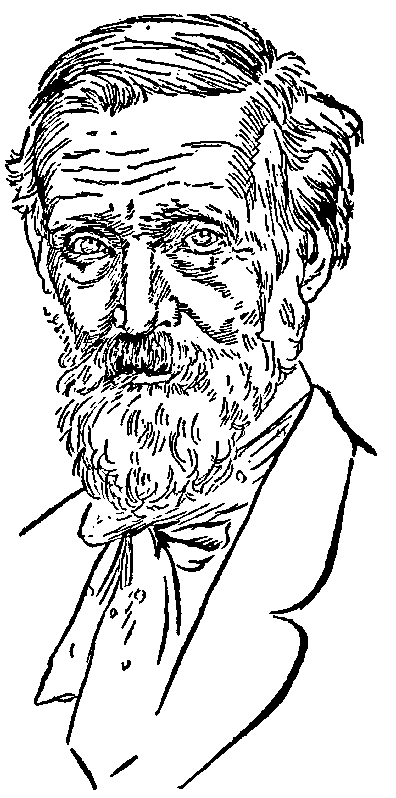
John Muir (The Californian, June 1892)
From: The Californian, V. 2, No. 1, June 1892, p.88–94
By Jeanne C. Carr
I first met John Muir a quarter of a century ago in Madison, the beautiful capital of Wisconsin, where Dr. Carr was for many years Professor of the Natural Sciences and of Chemistry in the State University.
As one of the Geological Commissioners, he also had much to do in gathering and arranging the extensive collections which illustrate the natural history and resources of the region bordering the great lakes and the Mississippi. Professor James Hall, the eminent geologist, was at the head of the commission, and students employed as assistants have since become eminent in the fields of scientific research and education.
During a fair of the state agricultural society, held at the Capital, the secretary wishing to secure a special premium for the meritorious inventions of a young Scotch friend from Portage, asked me to report them to the proper committee. They were not easy to classify under the society’s specifications.
I accompanied him to a part of the grounds where we found John Muir engaged in showing the relation between brains and bedsteads.
The bedstead exhibited was a rude affair over which some blankets were thrown, but was mysteriously connected with a rustic clock, which if set for any desired time of waking, gently raised the occupant of the bed to an upright position with his feet upon the footboard.
He was assisted in this demonstration by two small boys; one a truant belonging to me and the other to the Professor of Greek. The lads soon became perfect in their role, sleeping tranquilly without moving an eyelash, until surprised by the cheers of the spectators. The little side-show attracted many visitors who were entertained by the naive explanations and enthusiasm of the inventor. But these incidents would probably have been forgotten had not Dr. Carr soon after reported Muir’s attendance upon his lectures at the University.
A friend happened to be present, a physician from Portage, where the Muir family lived; whose story of piety and patience as exemplified in the lives of John’s parents, David and Annie Muir, seemed like a reading from the pages of George McDonald.
And of genius also; for as bidden by the Psalmist, David praised the Lord upon stringed instruments, even upon a violin of his own making; he also practiced the prayer and faith cures as a free gift, and like the Master he strove to imitate, deprecated notoriety. He was reputed to be a severe disciplinarian; not from passion or even justice but because the consequences of sparing the rod were so explicitly stated in the Holy Word. When he was called by the Spirit into the wilderness of towns and cities on religious errands, the brave mother and her loyal sons took up the family burdens uncomplainingly, and waited for his return.
And so this pioneer family took root; became useful and greatly respected by their neighbors in spite of somewhat hard conditions.
They had few books, but these were the best and tales of grandfather, their very own, to fall back upon. David and his Annie were doubtless as happy in their simple belief that the world was made in six literal “days,” as if these had been called aeons or crores; but the spirit of inquiry developing in one of their bairns was already leading him to the “Great Stone Book” for a fuller explanation.
In winter the inglenook was not destitute of cheer and thus this budding genius was accounted for in the orderly processes of nature.
When the “twa laddies” who had tested the bedstead heard that Muir was a student of the University, they gave me no peace until we visited him, having planned a course of jack knife studies under this most competent professor. We found his room furnished with several ingenious and useful articles besides the now famous clock and bed.
One of these was a desk, which if en rapport with the clock, moved the text books required in each study to the front, and opened them at the proper place.
But to me the most captivating piece of mechanism was an apparatus for registering the growth of an ascending plant stem during each of the twenty-four hours. The plant he had selected for the purpose was the common Madeira Vine; (Boussingaultia of botanists) which was growing luxuriantly in his sunniest window.
A fine needle, threaded with the long hair of a fellow studentess, when attached to the plant, made the record faithfully upon a paper disk marked to indicate minute spaces with great exactness, while the rustic clock ticked the minutes and hours away.
During the following winter Muir taught a district school in a log building without other apparatus than the water pail and dipper.
But with the help of these he contrived a clock, and by applying his knowledge of chemistry and mechanical powers still farther found a fire and warm schoolroom awaiting him after his long walks through snow drifts in an almost Arctic temperature. A water color painting of that log schoolhouse was long treasured by one of his friends as a proof that the artist’s eye and touch were not wanting among his many gifts.
At the beginning of the next University year he was missed, and knowing how eagerly he wished to finish the course, Professor Sterling in behalf of the faculty, invited his return as a free student. The University had not then come into possession of its large endowments.
Dr. Carr had plans for him also in the geological service which we were holding back for a surprise; but
Gang aft aglee, -”
and these letters were never received. After many fruitless attempts to recover him a characteristic missive reached us from Trouts Mills near Meaford, in West Canada, where there was a manufactory of wooden rakes.
“I am sorry over the loss of Professor Sterling’s letter, for I waited and wearied for it a long time, keeping up an irregular course of study but since undertaking, a month ago, to invent new machinery for this mill my mind seems to busy itself in this work to the exclusion of everything else.” He had been disappointed and we were grieved as we read. “Oh how frequently, when lonely and wearied, have I wished that like some hungry worm I could creek into that delightful kernel of your house, your library, with its portraits of scientific men upon its walls and such bountiful store of their sheaves into the blossoms and verdure of your little kingdom of plants” (our winter garden,) “luxuriant and happy as if opening their leaves under the open sky of the most flower-loving zone in the world.”
He seemed uncertain into which of many alluring ways he might turn his steps, and again he wrote: “A voice seemed to mock my aspirations towards the study of medicine, that I might do something to alleviate human misery.” At another time: “I felt called toward the study of nature among the dells and dingles of Scotland, and all the other, less important parts of our world.”
“I would like to invent useful machinery, but the voice answers ‘you do not like to spend your life among machines.’”
In spite of the warning of his demon Muir committed himself to rake making, supplying new contrivances for setting the teeth and handles, and by the subtlety of his intuitions and suggestions, impressed his employer with his ability to substitute mind for muscle in a great variety of ways.
His services were substantially rewarded, and on becoming a capitalist, he had decided to invest in a grand walking tour; when the factory was burned, and his money, clothes, books and papers vanished in flames.
Then began the wanderjahre of this meister in nature’s greater workshops, whose record for the next ten years were as strange as any recorded in the literature of her lovers.
His first important stopping place was at Indianapolis, where visiting some of the great machine shops, he fell into conversation with a skilful and intelligent operator. Some suggestion of Muir created a discussion of mechanical powers and their applications, which led to an engagement, promising still greater advantages than those he had lost.
In this new work he wrought as faithfully as before, making many friends, but during the following April there came a letter to us, traced by his fingers, with no help from his eyes, which read: “The sunshine and winds are working in all the gardens of God, but I, I am lost! I am shut in darkness. My hard toil-tempered muscles have disappeared; and I am feeble and tremulous as an ever sick woman.
“My friends here are kind beyond what I can tell, and do much to shorten the immense, black days.”
The explanation, written by an attendant, told us that while adjusting some delicate machinery, a small file had pierced he right eye on the outer edge of the cornea. Afterwards he wrote: “I felt neither pain nor faintness, the thought was so tremendous that my right eye was gone; that I should never look at a flower again.”
Later, during his slow recovery, he wrote: “On some cloudy day, I am promised a walk in the woods, where the spring’s sweet first-born are waiting.” After many weeks I received his token of recovery in a small package of Climacium, that miniature palm among the mosses.
We were still more encouraged when he concluded a letter by saying: “I have nearly an eye and a half left, and can read a letter with the poorest. I feel if possible more anxious to travel than ever. I read a description of the Yosemite Valley last year, and have thought if it almost every day since.”
That he was using both his eyes was proven by a rhapsody upon the mosses.
“The dear little conservative green mosses have elevated their smooth, shining shafts and stand side by side, every cowl properly plaited, and drawn down just far enough, every hood with its dainty slant, their fashions unchanging because perfect.”
One may trust a nature-lover to be his own doctor, and soon this one prescribed a walk from Indianapolis to Portage, Wisconsin, accompanied by a lad eleven years old. They were weeks on the way, and appeared at Madison, laden like donkeys, with their burdens of pressed plants. He spoke only once of his trial, saying that “he was very thankful that his affliction had driven him to the sweet fields rather than away from them.” This was in June, 1867, when he spent some happy weeks with “the loved of home.”
The shock to his nervous system, resulting from his injury, was greater and his recovery slower than had been expected. September found him in Kentucky, among the hills of Bear Creek, after walking from Louisville, a distance of one hundred and seventy miles.
Of his plans and purposes he wrote: “It was a few miles south of Louisville when I planned my journey. I spread out my map under a tree, and made up my mind to go through Kentucky, Tennessee and Georgia to Florida; thence to Cuba, and from there to some part of South America. It will be only a hasty walk. I am thankful, however, for so much. I will be glad to receive any advice from you; I am very ignorant of all things pertaining to this journey.
“The lordly trees and scenery of Kentucky are cut into my memory, to go with me forever.”
In pursuance of this plan, he reached Georgia, where, from a camping place near Savannah — the famous Buenaventura — his letter was an exquisite prose poem on the “natural beauty of death.”
“I gazed at this peerless avenue as one newly arrived from another planet, without a past or a future, alive only to the presence of the most adorned and living of the tree companies I have ever beheld. Buenaventura is called a graveyard, but its accidental graves are powerless to influence the imagination in such a depth of life. The rippling of living waters, the song of birds, the cordial rejoicing of busy insects, the calm grandeur of the forest, make it rather one of the Lord’s elect and favored field of clearest light and life. Few people have considered the natural beauty of death. Let a child grow up in nature, beholding their beautiful and harmonious blendings of death and life; their joyous, inseparable unity, and Death will be stingless indeed to him.”
Having no doubt that Muir’s persistence would lead him to the Andes and the Amazon, we addressed to friends in Buenas Ayres and to President Surmiento letters which we hoped would ensure his comfort and safety. Meanwhile he lay sick with a fever in Florida, and a lady friend and admirer informed us of the perils he had incurred, and the interest felt in his behalf by all who had listened to his glowing descriptions of the scenes still fresh in his mind. On the eighth of November, he wrote from Cedar Keys that he was getting plants and strength, and about to go to New Orleans for a passage to South America; not quite sure as to what point.
Then occurred a break in a correspondence, so fully shared with others that the letters are far more travel worn than the writer of them, next heard from — Near Snelling, Merced County, California, July 26th, 1868:
“I have had the pleasure of but one letter from any source since leaving Florida, and of course am very lonesome and hunger terribly for the communion of friends. Fate and flowers have carried me to California, where I have reveled nearly four months. I am well again, and were it not for loneliness and isolation, the joy of my existence would be complete. I saw little of the beauty during the journey across the Isthmus of Panama, for my body was still a wreck, and was borne with cruel speed through the gorgeous Eden of vines and palms. I could only gaze from the car platform and weep and pray that the Lord would sometime give me strength to see it better.”
The prayer seems to have been answered at once and strength given to improve his opportunities in California, for he says: “Florida is indeed a land of flowers, but for every flower creature dwelling in its most delightsome places, more than a hundred are living here. Here is Florida. Not scattered, with grass between as on our prairies; but the panicled grasses are sprinkled among the flowers; not as in Cuba, piled and heaped into glowing masses; but side by side, flower to flower, petal to petal, touching but never entwined, each free and separate, yet making one smooth earth garment, mosses next the ground, grasses above, petaled flowers between.
“Before studying the flowers of this valley, their sky and all of the furniture sounds and adornments of their homes, one can scarcely believe that their vast assemblies are permanent, but rather that actuated by some great plant purpose, they had convened from every plain, mountain and meadow of their kingdom; and that the different coloring of the patches, acres and miles marked the bounds of the various tribe and family encampments.”
He reached San Francisco in April, and at once struck out into the country, following the foothills along the San Jose Valley to Gilroy; thence into the San Joaquin Valley by the Pacheco Pass, and down to the mouth of the Merced. “This walking (?) trip included the Mariposa forest of Sequoias, and the Yosemite Valley, then in primeval freshness; Lemon’s Log Cabin; Hutching’s original hotel and the smaller one at Blacks being the only houses, did not mar the impression of ‘a sacred solitude.’
“One week from the burning plains of the San Joaquin, and I was lost in the blinding snows of the Arctic winter. The winter scales are shut fast upon the buds of the oaks and alders; the grand Nevada pines wave solemnly; my horse is plunging in snow ten feet in depth. Wonderful indeed is the meeting and blending of the seasons of the mountains and plains, beautiful as the joinings of lake and land, or the bands of color in the rainbow.”
A letter dated February 24th, 1869, written from Snellings, showed how much he had felt the human hunger for friends and fellowship.
“Your two California notes from San Francisco and San Mateo reached me last evening, and I rejoice at the glad tidings they bring of your arrival in this magnificent land. Of all my friends, you are the only one who understands my motives and enjoyments.
“Only a few weeks ago a true and liberal-minded friend sent me a sheet -full of the most terrible blue-steel orthodoxy, calling me from clouds and flowers to the walks of politics and philanthropy. I thought that you had never lectured me thus, and were coming to see and read for yourself these glorious lessons of sky, plain and mountain, of which no mortal lips can adequately speak.
“I thought, when in the Yosemite Valley last Spring, that the Lord had written things for you to read some time. I have not made a single friend in California, and you may be sure I strode home last evening from the post office feeling rich, indeed.
“I am engaged at present in the very important and patriarchal business of keeping sheep. I am a gentle shepherd. The gray box in which I reside is distant about seven miles northeast from Hopeton. The Merced pours past me on the south, from the Yosemite. Smooth, downy hills and the tree fringes of the Tuolumne bound me on the north; the lordly Sierras join sky and plain on the east, and the far coast mountains on the west. My mutton family of eighteen hundred range over about ten square miles, and I have abundant opportunities for reading and botanizing. In about two weeks I shall be engaged in sheep-shearing between the Tuolumne and Stanislaus, from the San Joaquin to the Sierra foothills, for about two months. I will be in California until next November, when I mean to start for South America.
“You must prepare for your Yosemite baptism in June.”
This I did with the utmost zeal and earnestness. Just before starting another letter came from Muir, telling me that he “would be ‘at Black’s’ until the end of June.” In my own or others’ ignorance that there were two localities of the same name, one near Coulterville and one in the valley, a blunder was made which prevented my meeting Mr. Muir that summer. I inquired of every dusty herder that we passed on our horseback ride from Mariposa to the Yosemite until the curiosity of a fellow traveler, not of our party, was aroused. Riding alongside of me she asked, “is the feller you’re huntin’ herdin’ sheep!” “That is his present calling,” I replied. “Wall, you’re darned lucky to miss him; that’s my experience with sech as them;” and she rode complacently away. What had befallen John Muir, especially in the regards of this female, or what there could be in a calling of which so many poetic things have been said since shepherds watched their flocks by night, to offend the most fastidious, I could not imagine.
Many of his letters about this time were dateless, thrown off as if to relive the tension of his unshared enjoyment.
“My studies have increasing rewards of truth, and I will seek to be true to them, although all the rest of the world of beauty besides these mountains burn and nebulize back to star smoke.” He becomes more and more in love with ice.
“I know how you love this purple and yellow and green — these warm sun songs of color, but I must edge in a kind word for ice. Glaciers are paper manufacturers, and they pulped these mountains and made the meadowy sheets on which this leaf music is written.”
“Are you pluming for our mountain better land? I was on Cloud’s Rest yesterday, and enjoyed a very vigorous snowstorm. Did you not hear a shout? Three avalanches of ice and snow started from the summit of Cloud’s Rest ridge, one after the other in glorious gestures and boomings; I was within a few yards of them.
“It will probably be late in June before we can get on to the summits, snow is very abundant. Nevada and Vernal and the strip of glory between were in full gush of spirit life as I passed them yesterday.
“I will be glad to know your friend Stoddard. He wrote about the Lord’s making Yosemite, and I want him to write an entirely different version of the affair.
“Sunday night I was up in the moon among the lumined spray of the upper falls. The lunar bows were glorious, and the music Godful as ever. You will yet mingle amid the forms and voices of this peerless fall.
“I wanted to have you spend two or three nights up there in full moon, and planned a small hut for you, but since the boisterous waving of the rocks (slight earthquake tremor on the coast) the danger seems forbidding, at least for you. We can go up there in the afternoon, spend an hour or two and return.
“I had a grand ramble in the deep snow outside the valley, and discovered one beautiful truth concerning snow structure, and three concerning the forms of forest trees.
“These earthquakes have made me immensely rich. I had long been aware of the life and gentle tenderness of the rocks, and instead of walking upon them as unfeeling surfaces, began to regard them as a transparent sky. Now they have spoken with audible voice, pulsed with wave-like motion — this very instance, just as my pen reached the spot indicated on the third line above, my cabin creaked with a sharp shock and the oil waved in my lamp. We had several shocks last night. I would like to go somewhere on the west coast to study earthquakes. I think I could invent some experimental apparatus whereby their complicated phenomena could be separated and read, but I have some years of ice on hand.
“’Tis most ennobling to find and feel that we are constructed with reference to these noble storms so as to draw unspeakable enjoyment from them. Are we not rich when our six-foot column of substance sponges up heaven above and earth beneath into its pores. AYE, we have chambers in us the right shape for earthquakes!”
John Muir of to-day everyone knows — one of the most delightful writers in the West, a word colorist in every sense, who, it is hoped, will not lay down the pen for many a day to come.
John Muir (The Century, May 1893)
From: The Century, V. 46, No. 1, May 1893, p.120–123
By John Swett
The name of John Muir is inseparably connected with the Yosemite Valley and the alpine regions of the Sierra Nevada, and with the glaciers of Alaska, the greatest of which bears his name. When Ralph Waldo Emerson visited the Yosemite, Muir was his guide for a week, and on his return Emerson said of him, “He is more wonderful than Thoreau.” Of Emerson, Muir wrote, “He is the Sequoia of the human race.” When Agassiz and Joseph Leconte met in San Francisco, and were talking about the glaciers of the Pacific coast, Professor Leconte remarked that John Muir knew “more about the subject than any other man.” “Yes,” said Agassiz, bringing his hand down on the table by way of emphasis; “he knows all about it.”
John Muir was born in Dunbar, Scotland, in 1836. His mother, Anne Gilrye, is a descendant of the old Scotch family of Gilderoy. His father, Daniel Muir, was a grain-merchant. John was the third child in a family of eight children, three boys and five girls. At three years of age he was sent to the public school, where for eight years he was put through the ordinary English branches, Latin, French, the Catechism, and the Bible, in the old Scotch style. In spite of hard lessons and many floggings, he grew up savagely strong, healthy, and active, fond of all kinds of games and of long tramps into the country and along the sea-shore.
In 1850 his father emigrated to the United States, and settled as a pioneer in the wilderness near Fox River, Wisconsin, twelve miles from Fort Winnebago, on an uncleared section of land bordered by a beautiful stream and a small lake, white with water-lilies. Birds and flowers, game and fish, made the farm a boy’s paradise, in spite of the hardest kind of toil in chopping, grubbing, and general farm-work. At the age of fifteen John’s mechanical genius stirred within his brain, and while doing a man’s work on the farm he rose, for months in succession, at one o’clock in the morning and worked until daylight, inventing and making millwheels, wooden clocks, and various other mechanical appliances. At the same time he read every book within reach, and studied grammar, algebra, and geometry, improving every available moment, keeping an open book beside him at his meals, and working out mathematical problems on chips or on the ground while he was at work in the field. At twenty-two he entered the University of Wisconsin, where he continued for four years. He taught school one winter, and worked at harvesting during the summer vacations, to earn money to pay his college expenses. He pursued a special scientific course, and, when that was completed, went off into the wilderness on a long botanical excursion around the great lakes. While on the Canada shore he worked for a year in a mill for making hand-rakes, lathes, boring-machines, and agricultural implements. Here he set about improving the old machinery, inventing new appliances, and in many ways increasing the product of the mill. All his leisure time was given to botanizing. The mill, however, took fire and burned down, and Muir went to Indianapolis, where he worked for a year in a large manufactory of carriage and wagon material. Here he was so highly appreciated that he was offered the place of foreman, with a prospective partnership; but one of his eyes was accidentally penetrated by the sharp point of a file, and after several weeks of confinement in a dark room, to quote his own words, he “determined to get away into the flowery wilderness to enjoy and lay in as large a stock as possible of God’s wild beauty before the coming on of the times of darkness.” Accordingly, he had scarcely recovered from the shock of his injury when he set out on his travels, afoot and alone, going southward on a botanizing tour across Kentucky, Tennessee, North Carolina, Georgia, and Florida, reaching tidewater at Cedar Keys on the Gulf of Mexico.
In consequence of exposure in swamps, and from lying out at night on the bare ground, he was taken down with malarial fever. After partial recovery, he took passage in a schooner for Havana, intending to proceed thence to South America to explore the head waters of the Amazon and to float down the river to its mouth. But after spending a few months amid the tropical vegetation of Cuba, and finding that fever still lingered in his system, he reluctantly changed his plans, and turned his face toward California, where, going by the Panama route, he arrived in April, 1868. He at once set out on foot for the Yosemite Valley, botanizing on his way across the broad plains of the San Joaquin Valley, then covered with flowers. He made his way into the valley without a guide, while the trails were yet deeply buried in snow, and after a stay often days, his money having given out, returned to the lowlands and worked as a harvest hand in the wheat-fields. The following winter, glad to find any employment that allowed contact with nature, he herded sheep to earn a living while studying the flora of that region. With a migratory sheep-camp as his headquarters, he passed the summer in botanizing, and in sketching the head waters of the Merced and Tuolumne rivers. Returning to the plains in the autumn, he worked on a ranch for a few months, breaking mustangs and running a gang-plow, and then again pushed over the mountains into the Yosemite. There he was fortunate enough to find employment, and was thus enabled to make the great valley his home.
At that time Mr. J. M. Hutchings, the Yosemite pioneer, desiring to build some cottages to accommodate the increasing travel to the valley, and finding that cutting lumber by hand with whip-saws was a slow and very expensive method, determined to build a small sawmill. The frame of the mill was already up when Mr. Muir arrived on his second visit to the valley, and Mr. Hutchings was anxiously looking for some one to put in the machinery and run it. Finding, on inquiry, that John Muir the botanist was also a millwright, he gave him the job, and thus enabled him to carry on his famous explorations in the high Sierra until he began to write and could depend on his pen for bread. But it must not be supposed that any of the trees were cut down to supply the mill. All the logs were obtained from fallen timber, mostly yellow pine blown down in a gale. John Muir, of all men, would be the last one to lift an ax against the Yosemite groves.
When the mill was completed, he hung his bed in the peak of it, beneath the rafters, for the sake of fresh air and the music of the waters. On the end of the gable overhanging the stream he built a small room for a study and as a storehouse for his collections of plants, cones, sketches, and papers. In this little study, which could be entered only by climbing a narrow, rough-hewn plank, he had the honor of several visits from Emerson. Here, too, was written his first article on the Yosemite glaciers, which was published in the “New York Tribune” in 1871.
By working in the mill, Muir soon earned a few hundred dollars, enough to buy his bread for several years, and set out in glorious independence to make a systematic survey of the mountains, tracing every river to its source, going from canon to canon in regular order, noting particularly the distribution of the forests and of the flora in general, the structure of the rocks, the traces of the ancient glaciers, and the influence they exerted in sculpturing the mountains, in creating valleys and lake-basins, and in fashioning the landscape. Wherever night overtook him, he made his camp. The scope of his studies was ever increasing, but he was never in a hurry. He took no note of time, for he had all the time there was. Throughout an entire day he could sit motionless, studying the habits of squirrel, or bird, or grasshopper; and every plant and animal was his friend. How lonely and adventurous his life was is strikingly manifested by the fact that during ten years of exploration in the high Sierra, with the single exception of a band of Mono Indians, he never met a human being.
His outfit on one of his ten-day excursions was the lightest possible. It consisted of a pocket aneroid, chronometer, and thermometer, a note-book and pencil, a few pounds of bread and oatmeal, a little tea and sugar, and a small tin can. After climbing a summit during the day, he descended at night to the timber-line, built a fire, made a can of tea, ate his bread, and lay down by the side of his camp-fire, with no other covering than that which he had worn during the day. At an elevation of from nine to twelve thousand feet (the height of the timber-line in the Sierra) the nights are severe, and the fire required to be replenished at intervals of about an hour, thus making his sleep a broken one. But this hardship was not without fine compensation in enabling him to hear the many strange sounds of the night, and to see the glories of the starry mountain sky. Blankets would have been a convenience, but in the rugged regions where he climbed it was impossible to carry them. A gun was too heavy to carry, and a pistol would have been only a useless encumbrance. Bears never molested him, and other animals were his companions. In this manner for years he studied the channels of ancient glaciers, pushed through the wildest canons, and noted the forest-covered moraines.
Muir’s numerous note-books of the period are filled with sketches of forest trees, mountain meadows and lakes, glaciers and moraines, domes and pinnacles, the cleavage planes of rocks, the direction of glacial striae, and sections of mountains and valleys. So careful were his observations, so accurate his notes and sketches, that when he writes on geological subjects his statements and conclusions have the force of mathematical demonstration. He discovered and located sixty-five glaciers among mountain heights where none had been supposed to exist. From these fragmentary heads he traced the course of ancient glaciers far down the slopes of the Sierra toward the plains, in the valleys where now flow the rivers. Probably no living geologist has recognized so fully as he the vast amount of denudation effected by ice during the glacial period, and it is doubtful if any other man has made so exhaustive a study of the subject.
In his ten years of field-work he had some narrow escapes from death. Once he was caught in a snow-storm on the summit of Mount Shasta, where he lay all night long over the jets of sulphur steam in the crater, with the thermometer at twenty degrees below zero. He was in his shirt-sleeves, without food or fire, and a less hardy or less resolute man would have perished. He escaped with frozen feet, and a back blistered by the hot steam of the fumaroles. Once, when out with a surveying party in the Great Basin, he nearly perished with thirst, and but for his endurance and will-power the whole party might have been lost. On the Muir Glacier in Alaska he had a hair-breadth escape from a tomb in a deep crevasse.
For many successive summers and for five winters Muir made his home and headquarters in the Yosemite region. He spent the summers and autumns in exploring the mountains, and the winters in writing out his notes, studying storms and avalanches, and the habits of birds and animals. During his longer trips, when the last crumbs of bread were gone, he descended the range to the nearest point on the breadline, filled his sack, and again vanished into the wilderness, often saying, at such times, that he wished he could eat one meal in the spring that would last all summer, so that he could go on with his studies uninterrupted. During this period he met many noted scientists who became his friends — Guyot, Harrington, the Lecontes, Sir Joseph Hooker, Asa Gray, Dr. Torrey, Dr. Parry, Professor Runkle of the Boston Institute of Technology, and others.
Emerson, Gray, Professor Runkle, and others offered him flattering inducements with a view to drawing him from the obscurity of his mountain haunts; but he declined them all, heartily choosing to pursue his studies in perfect independence, saying “that there were already plenty of professors in the colleges and few observers in the wilderness; that he wanted to be more than a professor, whether noticed in the world or not.”
In 1876, after his ten years’ residence in the Yosemite region, Mr. Muir joined an exploring party connected with the geodetic survey in the Great Basin, chiefly on account of the opportunity it afforded to study the botany and geology of the plateau between the Sierra Nevada and the Rocky Mountains. With this party he passed three summers, during which he became familiar with the country. In 1879 he went to Alaska, and, in a canoe manned by Indians, began a careful exploration of the rugged icy region to the north of Fort Wrangel. It was then that he discovered the now famous Glacier Bay and the great glacier that bears his name. Here he saw glaciers on a yet grander scale than those which he claims once covered the summits and plowed out the canons of California. He also pushed inland to the head waters of the Yukon and the Mackenzie rivers. He has since made three exploring trips to that region. In 1881 he accompanied one of the search expeditions for the lost Jeannette, and returned with a notebook full of sketches, and with an enlarged idea of the vast scale of ice denudation in the north. The scope of his studies during this cruise of the Corwin may be traced in the series of twenty-one letters to the San Francisco “Bulletin,” and by his paper “On the Glaciation of the Pacific Coast and the Polar Region about Behring Sea and the Arctic Ocean.”
John Muir has not been a voluminous writer. He has chosen, in his enthusiastic love of nature, to be an original observer. His first notable articles appeared in the “Overland Monthly,” in the form of a series of illustrated papers on mountain sculpture. Later, he contributed papers to “Harper’s Magazine,” which were followed in “The Century” (old series) by a number of illustrated articles on the forests, glaciers, and scenery of the Sierra. Two recent papers in The Century on the Yosemite Valley (August and September, 1890), and one on the great King’s River Canon (November, 1891), complete the list of his magazine articles.[2] He has also contributed from time to time many interesting articles to the San Francisco “ Bulletin.” For two years his leisure time was chiefly occupied in editing “Picturesque California,” for which he himself wrote most of the descriptive text relating to the mountain scenery of the Pacific coast. He has recently been elected first president of the Sierra Club.
As an original observer and interpreter of nature, as a hardy and enthusiastic explorer, John Muir is without a rival in California. Indeed, it is safe to say that no other geologist has ever made so exhaustive a study, in so grand a field, of the agency of glaciers. He combines scientific accuracy of statement with a poetic expression which lends a singular charm to his writings. His descriptions of “Shasta Bees,” “Mount Shasta,” and the “Water Ousel” are prose poems; but the facts are as accurate as they could be made by the baldest statement of the most technical scientist.
It will be pleasant for those who read this brief sketch of his early struggles to know that John Muir is now in the enjoyment of a happy home and a comfortable income. In 1879 he married the only daughter of the late Dr. John Strentzel, a wealthy fruit-grower of Contra Costa County, and since that time, when not out on exploring trips, has been kept busy in the management of a large vineyard and orchard. Though money-making has been with him altogether secondary to science, his inherited Scotch thrift and his hard training on a Western farm combine to make him a shrewd and successful man of business.
In person Muir is tall and slender, possessed of great power of enduring hunger, thirst, and fatigue. As a mountain-climber few can keep pace with him. He is unassuming in manner, and simple in his tastes and habits. He is a ready talker, and, when drawn out by an interested listener, discourses in the most charming manner about birds and flowers, glaciers and mountains. He possesses an exhaustless fund of humor, and is inclined to look on the sunny side of life as well as of nature.
Some Hermit Homes of California Writers [excerpt] (Overland Monthly, January 1900)
From: Overland Monthly, V. 35, No. 205, January 1900, p.3–5
By Adeline Knapp
There seems to be something in the air of California that makes our writers “take to the woods” from time to time, there to gather strength to meet the world, arid give it of their best.
Perhaps this is how it comes that so much of Californian “atmosphere” creeps into all that they do, giving a distinct local flavor to the least as well as to the greatest creations of their pens.
The call of the mountains, of the forests, and of the streams is irresistible to the lover of nature in California.
“The preacher among trees/’ John Muir has called the pine, and they who hear its message must needs go again and again to listen to its preaching. So, too, must they hear and voice the message of the mountains, and the teaching of the rivers.
It is a curious thing, this tendency of Californian writers to turn hermit, now and then. Thoreau, from his retreat beside Walden Pond, sent a letter to the world, a study of literary hermit life, that will live through many generations, to delight urban folk; but Thoreau’s cabin in the Walden woods was the embodiment of luxury beside some of the abodes where nature-loving Californians have lived and worked. When Emerson visited this coast, some twenty-odd years ago, and met John Muir, then a young man in the full enthusiasm of his tremendous studies amid the glaciers of the High Sierra, he wrote back to the Thoreau-admiring East: “This is a more wonderful man than Thoreau.” But even Emerson did not then guess what would be the extent of John Muir’s achievement in studying nature in her sternest moods. In the most inaccessible depths of Yosemite stands a little hut which Mr. Muir built with his own hands, a mere shelter in which he might take refuge during the least endurable storms of that wintry region, but so well built that it still stands, albeit so well hidden, that among the few who have seen it it is known as
“The Lost Cabin.”
More inaccessible still, perched upon the edge of Muir Glacier in Alaska, is another of the homes where this “More wonderful man than Thoreau” lived during the years when he climbed and delved about that marvelous region, making himself master of those icy records, and gathering the notes for the fascinating papers that delight us so greatly from time to time as they appear.
When Mr. Muir gave me permission to use the accompanying pictures of this home he charged me to be sure and say that the gun leaning against the big chimney-jamb is not his. During all his thirteen years’ sojourn in the wilderness he never used such a thing. He lived among the birds and the beasts, but he did not kill his neighbors. A bag containing bread he carried over one shoulder. A packet of tea and an alcohol lamp traveled in one pocket. These constituted his provision in the food line. A little melted snow gave him water for his tea, the bread satisfied hunger. His bill of fare seldom varied during his long, hard tramps. He had to travel light. There were seasons when, so arduous were his labors, that he could not carry on his climbing tramps even the thin half-blanket which on more luxurious journeys he sometimes took with him. Then he was wont to make a blanket of the soft snow, hollowing out a bed from its white depths, in which, with feet toward his camp-fire, he slept the sleep of weariness.
In his glacier-bound storm-nest, however, he took his ease, or what he was pleased to consider his ease, though few men would regard his life, even when toasting and working beside the hospitable fire that used to roar up the great chimney, as that of a sybarite. The world owes a great deal to that little hut on the edge of the glacier. People do not pilgrimage to it, as they do to the place where Thoreau’s cabin stood beside Walden Pond, its site marked by an ever-growing heap of stones reared by visitors; but it is as pleasant to think of Mr. Muir’s tiny house with its big warm heart, up there in the ice, as it is to remember Walden.
Concerning an Old Student. (The Wisconsin Alumni Magazine, November 1900)
From: The Wisconsin Alumni Magazine, V. 2, No. 2, November 1900, p.74–76
By I.N.
There are many readers of this Magazine who will be interested in seeing the following clippings, very different in nature, but both referring to the famous naturalist, John Muir.
These verses are clipped from the San Francisco Sunset for May, 1900:
JOHN MUIR.
(The Mountaineer.)
The tempest in its fury cannot compel thee back;
The glory of the heavens shall flood thy lofty place,
And smiling flowers wait for thee along the glacier’s track.
Seer of the high Sierra, thine is the “Range of Sight;”
The avalanche, to thee, is nature’s whitest flag unfurled;
Brother of one, the Prophet, who stood on Sinai’s height,
Thou read’st on rocky tables records of a vanquished world.
Ina C. Tompkins.
The following was reprinted in the University Press for September 30, 1881, from the Wisconsin Free Press. These data are given in order that if any one should venture to doubt the truth of the statements herein contained, he may have full opportunity to trace them to their source. The account of student habits is certainly .an interesting one, and why should we be too critical, of its historical accuracy?
JOHN MUIR.
Twenty years ago there were but few students at the University of Wisconsin. The school was yet on its trial, a severe trial, too, out of which it has come triumphant. But among those few students were many who have since made a name in their various lines of work. Among them came a queer genius whose name heads this article. There were many there, who had genius: the Vilas brothers, the Parkinsons, High, Hale, Fallows, Rattan, Ed. Coe, G. W. Bird, and others more or less known in the land. But this John Muir was a queer genius then. Where he came from I do not know. He was of Scotch parentage, studious, inclined to have hut few companions, yet social; was a lover of quiet fun and long rambles in the country, and like many others who had their way to make, “cooked himself,” that is, cooked his frugal meals in his room. In all these things he was not singular; his remarkable trait was his love of practical mechanics and invention. In the brief sketch I am able to give there is no room for a full account of all his work; a few samples must suffice.
He seemed to need few tools; an ax, saw, jack-knife and gimlet were his chief weapons, while almost anything served as material. His clock served as a center about which several of his most interesting machines clustered. This was in the form of a scythe and snath hung in an old gnarled burr-oak grub, where Father Time is supposed to have left it. The scythe was split lengthwise, and in the opening thus formed was a train of wheels constituting the works. The motor was a heavy stone concealed under the roots and moss from which the clock rose on the table. The year, month, day, hour, minute and second were indicated by index arrows on the various paper dials. The pendulum was also an arrow with a heavy copper point. His study desk was provided with a spring trapdoor, under which moved a rack in which his books were set up separately on their backs. He arranged his study hours for each lesson and connected the machinery of his desk to the clock, so that at the appointed moment the trap door opened, dropped the book into its rack, moved this along, threw up the next book and closed the trap under it. His bed was a machine utterly destructive to the “little more sleep” of the sluggard. It was hung on a pivot and supported at such a height that when turned up it stood nearly perpendicular, foot down. The foot was held up by a lever. Beside the bed was the lamp stand on which the fluid lamp, then in use, was placed at night. To this bed the clock was connected and then set for rising. In the morning the machine took off the extinguisher, struck a match, lighted the lamp and then withdrew the lever, letting the bed down and bringing its occupant out on his feet. I have known him to satisfy the curiosity of visitors by putting them into the bed wrong end to, and so bringing them out head down. In summer time he connected this bed to the east window by a linen thread. A sun-glass was so adjusted as to burn off this thread when the sun came to the right position.
Judge Griswold and myself roomed opposite him, and he arranged signals by which we were often called in to see a bit of fun, in particular with his “loafer’s chair.” This was a wooden chair with its bottom split. Apparently to cure this split, an awkward chunk was nailed over it near the front. This caused the sitter to spread his knees. As soon as the supposed loafer, but real victim, leaned back, he pressed a concealed spring which fired an old pistol directly under the seat. The wonderful leaps of the victims were worth the seeing. Nor did John forget the ladies, who sometimes came to see his machines. Out of a raisin a huge, vicious-looking black spider was made, which was so suspended aw to drop just before the face of the fair visitor when she was well seated in his best chair. It was delicious to hear them scream.
John taught school near Madison one winter; his clock built his fire for him every morning. Perhaps some of his pupils, seeing this, will tell us more of the curious things he invented for their instruction and amusement. It only remains to say that John now has the reputation of knowing more of Yosemite Valley and the Nevada mountains than any other living man. He is the author of the article (illustrated by himself) on the pines of California in the September Scribner.
Some Reminiscences of the College Days of John Muir — and Others (The Pacific Monthly, August 1902)
From: The Pacific Monthly, V. 8, No. 2, August 1902, p.73–74
By William Allen Mears
When I was a student at the University of Wisconsin in the early sixties, John Muir was also a member of that institution, one or two classes in advance ot me. I have never met Mr. Muir since he left college, and I doubt very much if he would remember the undersized “kid” who used to frequent his study. His room was like all the other dormitory rooms, smallsay I0x12 feet — with a little cubby-hole for a bedroom: and in another little cubby-hole of a room was hung the chapel bell. It was the custom at that time, and may be yet, to allow some pupil whose means were small to ring the bell hourly in payment for his room rent: consequently, it can be seen that Mr. Muir was not over-burdened with this world’s goods and chattels at that time.
His study and sitting-room was furnished in the plainest manner, but the only thing I remember particularly of it is, that against one wall was a narrow desk at which one could stand. On the top of it was a wooden rack, made by Muir, each book that he studied being placed on end in its individual compartment, and when the hour came for him to study a certain book, a clock-workapparatus, which he had contrived himself, tipped the book out from the rack onto the desk, so that he should be reminded that the hour had come for him to study it. As to his bed-room, I remember that he had a narrow, cot-like bed. and that by another one of his mechanical contrivances when the hour came for him to arise the same clockwork pulled out some prop, so the foot of the bed went down and the head up. and left Mr. Muir standing on his feet. At the State Fair, held at Madison while Mr. Muir was attending college, he exhibited a large clock which he had carved out of wood with a jack-knife, and which not only told the seconds, minutes and hours, but — if my memory is correct — also told the day of the week, the phases of the moon, and many other things. It may be that time has exaggerated my remembrance of this clock, but to my mind it was the most ingenious piece of mechanism, and filled with innumerable wheels of all sizes.
My remembrance of John Muir’s personality is that he was a tall, slim young man, with gentle mien and kindly eye, and of a most lovable disposition. My parents lived at Madison, and therefore I did not live at the college, but walked up and back twice a day (a distance of a mile) and consequently had no room to study in. Mr. Muir, who was kindness itself, offered me the privilege of occupying his room when I was not at recitation, and I remember many pleasant conversations held with him there.
I remember only three of the students attending that seat of learning at that time who have really made their mark in the world: John Muir, John C. Spooner. present U. S. Senator from Wisconsin, and Wm. L. Vilas, ex-Postmaster-General under Cleveland. The two latter were my acquaintances long before my college days, as they resided with their parents at Madison. Only one reminiscence of either of these men during my college days remains, and neither one of these is of any moment, except to show what trifles will remain in one’s mind when far greater incidents vanish.
My one remembrance of Senator Spooner is of some interest as foreshadowing the forensic ability which he now displays to so much advantage in the Senate chamber. When I first entered college there were two debating societies, the Hesperian and the Athenean. Of course, there was a great rush made by the members of each society to secure the new scholars as they entered college for membership to one or the other society. After the usual amount of pulling and hauling, I finally decided to join the Athenean society.
One night I was put on as chief disputant, the question being: “Resolved, That the war for the perpetuation of the Union, now being waged, is right.” As was but natural, in Wisconsin University at that time, nine-tenths of the boys were republicans or war-democrats, consequently strong for the Union, and it was a very easy matter to persuade the jury that the affirmative side of this question was in fact the only one. But, alas for my hopes! As I was closing mj case for the affirmative, the door at the other end of the hall opened and in walked several of the leading Hesperians.
After I sat down, the president, in graceful words, noted the presence of the “distinguished members of our rival society,” and called for a few remarks on the subject from Mr. Spooner. It is useless to portray the result of Spooner’s eloquence. The force with which he put his ideas before the jury, the shaking of his leonine head, with its covering of tawny hair, and the knowledge that he was one of the best debaters in the college, combined to show the jury that he was right, and the side I headed wrong — for he took the negative (although, like most of us, strongly supporting the other view) simply to try his argumentative powers. The result was, of course, humiliating to me, but I am happy to say that myself and my coadjutors are not the only ones that have been placed hors-de-combat by the oratorical ability of Mr. Spooner.
John Muir (The Outlook, June 6 1903)
From: The Outlook, V. 74, No. 6, June 6, 1903, p.365–377
By Ray Stannard Baker
“Climb the mountains and get their good tidings. Nature’s peace will flow into you as sunshine flows into trees. The winds will blow their own freshness into you, and the storms their energy, while cares will drop off like autumn leaves.” — John Muir.
A dictionary of biography, in giving us John Muir, “geologist, botanist, and lover of Nature,” illustrated the futility of attempting to define a man of genius with mere names. For when his various eminences have been set down one after another, fairly and exactly, we discover that the man, after all, is not there. Geologist John Muir certainly is, for no man is more eminently an authority than he on the work performed by glaciers in sculpturing the mountain landscape. One of the greatest of Alaskan glaciers, first explored by him, bears the name Muir Glacier; and no scientist is better informed than he on the geological wonders of the great valleys and mountains of Western North America — the “grand side of the continent,” he calls it. Botanist he is, too, the recognized authority on the flora of the Sierras, especially the pines, to which he has devoted years of study. Two universities have attested with honorary degrees the value of his work in these branches of science. And, truly, John Muir is a lover of Nature. Emerson said of him, “He is more wonderful than Thoreau.” Few men, indeed, have ever given themselves to Nature so freely as John Muir.
Still other names might be added to those of the dictionary of biography. John Muir is also an author, who has written with rare literary and poetic charm of his mountains and glaciers and trees; he is a traveler, a “ wanderer,” he would call it, for he has explored the jungles of Cuba and Central America, the glaciers of Alaska, Siberia, Norway, and Switzerland, the deserts of Utah, the forests of Canada, and, best of all, he knows the valleys and peaks of his own Sierras; he is an inventor, having won his earliest successes in devising curious and ingenious mechanical devices; and, finally, he is a rancher, the master of a fruitful valley in central California, with wide-spreading vineyards and orchards and a house set on a hill.
But even these added names, though they indicate some of the diverse activities of a remarkable man, fail in giving us John Muir. We are interested, not so much in what John Muir has done, though he has done much, as in what he is — the man of rare personal charm, of ripe philosophy, of gentle humor, of deep, even mystical, appreciation of natural beauty, the friend of the wild things of the woods, the poet of trees and waterfalls.
John Muir’s life appeals to us because it is a complete expression of a deep human instinct which we have often felt, and throttled — the instinct which urges us to throw off our besieging restraints and complexities, to climb the hills and lie down under the trees, to be simple and natural. John Muir not only felt that impulse, but he really escaped. “Going to the mountains,” he believed, “is going home.” And the fact that he dared to follow his impulse, and that now, after a long life devoted with singular fidelity of purpose to winning the loving confidences of mountain and glacier, forest and flower, the ardor of the impulse is in no wise dimmed, gives us a sense of completeness, shows us in projection, worked out with joy, an instinct of our own. And we want to know more of John Muir, and to hear some of the new and strange things he must have to tell us.
John Muir’s career may be said to have had its beginning on the day that he set forth, a raw country boy, to conquer the world, hope in his heart and an odd bundle of whittled wooden machinery on his shoulder. He had made a thermometer out of the end rod of his father’s wagon, so fastening it to the side of the house that the expansion of the iron in varying degrees of heat was indicated on a large dial. He had invented and built an automatic sawmill, and several wooden clocks, one of them in the form of a scythe hung on a burr-oak sapling, representing the scythe of old Father Time — a good timekeeper, indicating the days of the week and month, and having attachments for other inventions — for lighting fires and lamps, a bedstead that set the sleeper on his feet at any desired time, and so on. He had also invented an automatic arrangement for feeding horses, a bathing-machine, barometer, pyrometer, hydrometer, safety locks, etc., all original, even the clocks, he never at that time having seen the works of any sort of timekeeper. For he had grown up on a backwoods farm in what was then the wilderness of Wisconsin, near Fox River, twelve miles from Fort Winnebago. His father was a sturdy, hard-working Scotchman of the old school, deeply and sincerely religious, with stern notions concerning the training of his boys and girls. Daniel Muir had been a grain merchant in Dunbar, on the Frith of Forth, Scotland, where John was born (April 21, 1838) and spent the first eleven years of his life, and he had come to America that he might own land and make a place for himself in the world. It was pioneer work of the hardest kind — chopping trees, clearing land, and building barns — and the hours were long, so that when supper was eaten and the Bible read it was time for bed. But one of the boys of the Muir family was ambitious, often taking his mathematical problems with him to the fields and working them out on chips from the trees that he felled; and though he knew that his father’s rules were like those of the Medes and Persians, never changeable, and that he could not hope for more time to read in the evening, he was finally told that he might get up as early as he liked in the morning. Though accustomed to sleep ten hours every night, he now broke off sharply to five hours by sheer force of will.
“It was winter,” he said; “a boy sleeps soundly after chopping and fence-building all day in frosty air and snow; therefore I feared I would not be able to take any advantage of the granted permission. For I was always asleep at six o’clock when father called, the early-rising machine was not then made, and there was no one to awake me. Going to bed wondering whether I could compel myself to awake before the regular hour and determined to try, I was delighted next morning to find myself early called by will, the power of which over sleep I then for the first time discovered. Throwing myself out of bed and lighting a candle, eager to learn how much time had been gained, I found it was only one o’clock, leaving five hours all my own before the work of the farm began. At this same hour all winter long my will, like a good angel, awoke me, and never did time seem more gloriously precious and rich. Fire was not allowed, so to escape the frost I went down cellar, and there read some favorite book or marked out some invention that haunted me.”
And in those long, quiet hours, robbed of sleep, he not only invented machines but he read many books — all he could buy or borrow from neighbors, the best of them, after the Bible and Shakespeare, being “Pilgrim’s Progress,” “Plutarch’s Lives,” Josephus, Milton, Burns’s poems, Hugh Miller’s works, and Scott’s novels. The novels were forbidden and most of the others frowned on as leading away from the Bible. Daniel Muir believed that the Bible and the Latin grammar should be the chief if not the only books in the library, and before he was eleven years old John had learned in the hard yet effectual school of the birch switch to recite from memory the entire New Testament and the greater part of the Old; and at that age he knew the Latin and French grammars almost as well. All this seemed hard training to a boy fond of the fields, but in later years it was a precious possession, for there is no school in literary style to equal King James’s Bible. John Muir tells with delightful humor how his father frowned on these early risings, but that, having once given his word, Scotch-like, he would not go back on it, even though he felt that his permission had been interpreted quite too faithfully according to the letter. How he trembled lest his father should discover his inventions and deem it his duty to burn them up 1 After the spare hours and minutes of a year or more had been spent in secret on the construction of one of his curious clocks, his sister came to him whispering, “ Feyther kens what yer doin’, John.” But, fortunately, Daniel Muir had not the heart to destroy the invention, satisfying his conscience by solemnly condemning the wicked waste of time on nonsense which should be given to study of God’s Word. Nevertheless, when the great machine for getting up in the morning was finally completed and set to ticking in the parlor, Daniel Muir stepped in quietly, watch in hand, when he thought he was alone, to see if the wooden clock struck exactly on the second.
In 1860 John Muir’s neighbors, who regarded him as a great genius, advised him to take some of the most portable of his inventions to a State fair about to be held in Madison, assuring him that they would enable him to enter any sort of machine-shop he liked. But surely, he objected, among such grand machinery as will be there nobody will look at my poor wooden things. Yes, they will, said his encouraging friends, because they are original; there’s nothing like them. Go ahead and don’t be afraid; a Marquette County farm is no place for you, you’re dead sure to get on in the world and be whatever you like.
Since coming to Wisconsin he seldom had been more than a dozen miles from his father’s farm, and yet he started out with barely six dollars in his pocket, full of vague hope and innocent ignorance, never expecting that anything wonderful would be seen in any of his whittled machines, and he was greatly surprised to find that they opened all doors to him. When the train that was to carry him to Madison came in, the conductor showed so much interest in his curious bundle that he was emboldened to ask permission to ride on the engine, although he had not been on a railroad train since coming from Scotland. He did not know that it was against the rules ; he was completely fascinated in the locomotive as a marvelous mechanism; and, astonishing as it may seem, a momentary glance at his strange bundle so interested the conductor and the engineer that he was actually allowed to ride on the tender, except when nearing stations, all the way to Madison. Next to a trip on a mountain avalanche, which he took quite involuntarily years later, he says it was the most exciting ride he ever had. When he reached the Fair grounds, he found the superintendent only too pleased at the prospect of exhibiting such marvels, and they soon occupied a prominent place in the fine arts hall, where young Muir, too shy to pose as the inventor, mingled with the crowd and heard the admiring comments of the spectators. Though suddenly finding himself a celebrity, he refused, quaintly enough, to read the accounts of his inventions which appeared in the newspapers, because his father had always warned him of the deadly poison of praise. After various adventures in Madison and Prairie du Chien, studying mathematics, drawing, pattern-making, etc., he learned from a student he chanced to meet that he could attend the State University at a cost of a dollar a week or even less; and for four years he was a student, supporting himself largely by working in the harvest-fields, by teaching school, and doing all manner of odd jobs. He was especially interested in mathematics, geology, chemistry, and botany, taking the same course in chemistry year after year, and spending much time besides in experiments, caring comparatively little for the languages, or for the usual rewards of a college career. At the end of his irregular four years’ course he departed, without a diploma, though years later his Alma Mater felt honored in making him a doctor of laws and Harvard University conferred on him the degree of Master of Science.
Though he found himself becoming more and more interested in the natural sciences, he did not lose his enthusiasm as an inventor. His room at the University must have been a place of wonders. Besides the getting-up machine, young Muir built a desk so operated by clockwork that it brought his books before him, each in its turn, and exactly at the time when he should begin its study. After the time-arangements had been made at the beginning of the term for each study, the machine continued to operate whether he was on hand or not. Another invention registered the growth of plant stems during each of the twenty-four hours. It is related that where he once taught school he fitted up a machine which lighted the fire for him every morning, so that he did not have to reach the schoolhouse so early.
It was during his college course that his deep love for wandering afield and studying out-of-door life first began to manifest itself in botanical rambles around the Madison lakes. After leaving the University he vanished in the northern wilderness about the Great Lakes to study the plants and rocks. When his bread-money was spent, he worked on a farm, and again in a mill on the Georgian Bay, where hand-rakes, broom and pitchfork handles were manufactured, and where he invented an entirely new set of automatic machinery, which saved about half the labor formerly involved; he spent all his spare hours in the adjacent woods. But he was not ready yet to give himself fully to outdoor scientific work, which, in those days especially, would not have yielded him bread, to say nothing of butter. Next he went to Indianapolis, where he found employment for a time in a carriage-material factory, and where an unfortunate, or perhaps fortunate, accident deprived him for a time of the sight of one eye, and probably changed the course of his whole career. Writing of this accident to his friend Mrs. Carr, the wife of one of his professors at Madison, he said:
“I felt neither pain nor faintness, the thought was so tremendous that my right eye was gone, that I should never look at a flower again.” Escaping from his dark room, he set out on yet longer walks, determined to lay in as great a store as possible while light lasted.
In 1867 he started from Louisville, with a plant-press on his back, a small bag, and three books — the New Testament, Burns’s poems, and Milton’s “Paradise Lost.” Thus free and glad, he made his way, afoot and alone, over a thousand miles to Florida, where he reveled for a time in the deep flowery swamps and jungles, crossing then to Cuba. During most of this journey he slept on the ground out-of-doors, both by preference and because he had no money to pay for other lodgings. He did not avoid human habitation, nor did he seek it, finding his deepest pleasure in winning the secrets of the woods. Even at this early day he revealed the rare sensitiveness toward what may be called the personality of trees and flowers, which finds such delicate and poetic expression everywhere in his later writings. He writes to Mrs. Carr:
“The dear little conservative green mosses have elevated their smooth shining shafts and stand side by side, every cowl properly plaited and drawn down just far enough, every hood with its dainty slant, their fashions unchanging because perfect.”
Though originally intending to explore the Amazon River from its highest source to the sea, Muir found himself so racked with fever contracted in the Florida swamps that he departed for California by way of the Isthmus of Panama. It is significant of his great love for the mountains that he should have remained just one day in San Francisco, though it must have been at that time, April, 1863, a most fascinating city, brilliant with the color of the new Western life. He set his face eastward, where the white Sierra, which he was soon to know so well, rose in the distance. In his accounts of this trip on foot through the wonderful San Joaquin valley, then in its virgin glory of plant and flower, mostly untouched as yet by plows and “hoofed locusts,” one is conscious in every line of a fine note of exultation. He was free in a pure wilderness; he had escaped.
“Sauntering in any direction,” he writes, “hundreds of these happy sun-plants brushed against my feet at every step, and closed over them as if I were wading in liquid gold. The air was sweet with fragrance, the larks sang their blessed songs, rising on the wing as I advanced, then sinking out of sight in the polleny sod, while myriads of wild bees stirred the lower air with their monotonous hum — monotonous, yet forever fresh and sweet as every-day sunshine. Hares and spermophiles showed themselves in considerable numbers in shallow places, and small bands of antelopes were almost constantly in sight, gazing curiously from some slight elevation and then bounding swiftly away with unrivaled grace of motion.
“The great yellow days circled by uncounted, while I drifted toward the north, observing the countless forms of life thronging about me, lying down almost anywhere at the approach of night. And what glorious botanical beds I had I Oftentimes on awakening I would find several new species leaning over me and looking me full in the face, so that my studies would begin before rising.”
A few months after leaving San Francisco Muir reached the Yosemite Valley, and there, in the midst of all that was glorious in nature, he decided to renounce all his inventions and devote his life to the study of the inventions of God. Though he could live on little enough — he has said fifty cents a week — that little was necessary, and one season he herded sheep, and then he made his mechanical knowledge serviceable in building a small sawmill in Yosemite, to be used for cutting fallen trees. The hotel-keeper who employed him was somewhat doubtful of his ability, for Muir had earned the title of “one of them botany fellers,” but, business having called the owner away for a few months, he was glad on his return to find the mill running. Out over the waterwheel Muir built himself a little cubby of a den, hanging like a swallow’s nest to the gable of the building, with one window opening to the grandeur of the valley. It was approached by a steep, narrow plank ladder, making it rather difficult of access to careless visitors. Here he kept his treasures, his collections of cones and plants, here he filled some of his voluminous note-books with sketches and closely written memoranda, and here he entertained Emerson, though he must have trembled when he saw the tall, angular, awkward form of the poet climbing his perilous ladder. Undoubtedly he showed Emerson his treasures with the same unconscious enthusiasm with which he exhibits them to-day. “Man,” he says, with a quaint bit of Scotch in his voice, “but that’s a grand tree,” or, “Isn’t that an awful queer muggins of a cone!” Anyway, we know that Emerson enjoyed Muir, and insisted on seeing much of him, and that when he returned he told Asa Gray about him, and when Gray visited the Sierras he searched Muir out and made a friend of him. Muir paid his highest compliment to Emerson by comparing him with the grandest of trees. “He is the Sequoia of the human race.” Afterwards other botanists besides Asa Gray came to the Yosemite — the famous Torrey, Sir Joseph Hooker, and others — and they all sought out Muir, not only for his extraordinary knowledge of the plant-forms of his valley, but for himself, his quaint philosophy, and his abundant humor. More than once Muir was tempted by his friends to quit his life in the mountains, which they looked upon as a hardship, but he with joy, and take up a professorship somewhere in the East; but he replied that there were plenty of professors in the colleges and few observers in the wilderness. Nothing, indeed, has ever tempted him far from the mountains.
In order to see something of the deserts and mountain ranges of the Great Basin, Muir joined the United States Coast and Geodetic Survey in 1876 and worked for three years, mostly in Nevada and Utah. He tells with humor of his experiences with the Mormon pioneers of what was then an almost undiscovered country; for Muir, though most deeply interested in mountains, glaciers, and trees, was never a recluse, never unsociable; his sympathies were broad enough to include the human species, and his vision seems all the clearer for his having come to men fresh from the hills. His writings abound in nice bits of characterization of miners, pioneers, Indians, bee-hunters, and others of the wandering sort whom he met on his travels. Having completed his work with the Geodetic Survey, Muir set out for Alaska in 1879 to study the work of glaciers; and there he discovered Glacier Bay and the magnificent river of ice which has since borne his name — Muir Glacier. Indeed, he traversed vast stretches of the ice-country between the coast and the head-waters of the Yukon and McKenzie Rivers, nearly always alone or with a few Indians as his sole companions, braving dangers and difficulties and enduring hardships which to an ordinary man must seem wholly insuperable. In 1881, as a member of the Arctic relief expedition which sailed in the Corwin to search for De Long and the lost Jeannette, he was able to extend his study of glaciers far up in the Behring Sea and along the coast of Siberia. No scientist, indeed, was ever better informed on the world’s glaciers than John Muir. After exploring the most notable ice-rivers of North America and the action of ancient glaciers about the coast of Behring Sea and the adjacent Arctic regions, Muir was able in 1893 to gratify a long-cherished scheme of visiting Norway and Switzerland and seeing for himself the fiords and mountains already, famous to science, so that he could compare them with those of western America that he knew most intimately, and draw with more certainty the great conclusions which his studies now suggested.
To Muir, a glacier, indeed, is almost a living and toiling presence, a mighty world-force which in the hand of God has fashioned the mountains, carved out the valleys and lake basins, and given us most of that which is beautiful in new mountain landscapes. He tells of going forth to “see God making landscapes,” and explains how the “features of the mountains “were developed and polished into beauty by the patient action of the ice-river. Indeed, one who talks long with John Muir cannot help feeling the very personal presence of the mountains. He speaks of the “landscape countenance” and the “expressive outspokenness of the canon rocks” as he might speak of the countenance or the voice of a friend. Before Muir’s time science declared that the great valley of the Yosemite and other similar gorges were formed by terrific cataclysms of nature during which a portion of the earth sank in, leaving behind awful chasms and gulches; but Muir discovered that these glorious mountain temples and palaces were the result of the slow, orderly, grinding action of glaciers working through thousands of years on rocks of peculiar physical structure. He traced out the courses of scores of these ancient glaciers, and, what was more, he discovered no fewer than sixty-five small residual glaciers in the high Sierras, where some of the best-informed scientists asserted with confidence that no glaciers existed. So enthusiastic was he in his studies that he once braved the sublime and awful spectacle of an earthquake in Yosemite Valley, which shook down, with solemn thunder, from cliff and precipice, uncounted thousands of tons of rock, in order to assure himself that the talus or rocky refuse at the sides of that great valley was the result of earthquakes. It is significant of Muir’s absorption of interest in these great natural wonders that when he first heard the rumblings of the earthquake, waking him from sleep, his scientific enthusiasm should instantly have risen uppermost, and that, instead of flying in terror for safety, he ran out exclaiming, “A noble earthquake 1” and sought the spot where he could best behold the awful spectacle of the falling rocks. Muir has himself written a graphic account of this extraordinary experience.
While John Muir’s greatest interest has always been centered in glaciers, and it is on this subject that he has added most to the world’s knowledge, he has lost no opportunity to study the trees, flowers, squirrels, and birds of his mountains, nor to take account of the varying rock formations, so that he has contributed to many departments of scientific knowledge. Without Muir the splendid Sierras would still be comparatively little known to the world.
John Muir’s methods of exploration are characteristic of his peculiar genius. Had his interest in the mountains been merely the dry curiosity of the scientist in quest of facts, many of his most notable expeditions would never have been made. While he possessed a voracious appetite for everything of scientific significance, he was forever drawn and thrilled by the beauties and splendors of forest and chasm. He would climb as far for the magnificent spectacle of a wind-storm in the tops of a noble forest, or to behold a rare sunset, or a snow-storm, as he would to discover a new glacier. Indeed, it was always the poet who led and the scientist who followed. “A perfectly poetic appreciation of nature,” says Walter Bagehot, “contains two elements — a knowledge of facts and a sensibility to charms. Everybody who may have to speak to some naturalists may be well aware how widely the two may be separated. He will have seen that a man may study butterflies and forget that they are beautiful, or be perfect in the ‘lunar theory’ without knowing what people mean by the moon.” Both of these elements of poetic appreciation are united in John Muir, and he shows us nature “tinged by the prismatic rays of the human spirit.”
So Muir has always gone forth seeking beauty as well as knowledge, and ordinarily he has gone alone, not only because this method best suited his purposes, but because few men could endure the hardship and fatigue which were his daily portion. A wiry man, of slight build, all muscle and sinew, he was able to traverse great distances on foot, climb precipices and the walls of glaciers with steady nerves, subsist on the smallest possible allowances of food, and sleep where night found him, with no covering but the light clothing which he had worn during the heat of the day. His needs were of the smallest — a bag of bread, a little sack of tea, and a cup in which to steep it — that was the only outfit he carried, beyond his note-book and his four scientific instruments — a thermometer, a barometer, a clinometer, and a watch. Sometimes, when he had nearly reached the top of a mountain and expected to return the same way, he would leave his bag of food and trust to finding it on his return. No matter how wild and rough the country, nor how far he had gone, nor how stormy the weather, he never lost his way, nor failed to find the particular gorge among a thousand where the bread-bag was hidden. Sometimes he missed three or four or even a greater number of meals without special inconvenience. And it was always something of a cross to him to be compelled, when the bag was empty, to return from his heights to what he called the “bread line.” He has himself described one of his camping-places in the high Sierras:
“I chose a camping-ground on the brink of one of the lakes, where a thicket of hemlock spruce sheltered me from the night wind. Then, after making a tin cupful of tea, I sat by my camp-fire reflecting on the grandeur and significance of the glacial records I had seen. As the night advanced, the mighty rock-walls of my mountain mansion seemed to come nearer, while the starry sky in glorious brightness stretched across like a ceiling from wall to wall, and fitted closely down into all the spiky irregularities of the summits. Then, after a long fireside rest, and a glance at my note-book, I cut a few leafy branches for a bed, and fell into the clear, death-like sleep of the tired mountaineer.”
The hardships, indeed the adventures, of his work seem to have left comparatively little impression upon him. Adventure, he says, is usually misadventure, and a skilled mountaineer is too careful to have many misadventures. Seemingly he became so absorbed in the wonders which were constantly opening before his vision that he was unconscious of his own discomfort and danger. All his writings are singularly and charmingly free from any evidence of self-consciousness in the matter of hardships, though here and there a remark, dropped as if by accident, gives one a glimpse of the tremendous difficulties which he was constantly surmounting. It is a source of humorous mystery to him how one of his friends, a well-known Western explorer, could write so voluminously on his experiences.
“Why,” he said, “he had one chapter on how he went up a mountain and another on how he came down again.”
And yet it has fallen to the lot of few men to have had more thrilling, and often terrible, experiences than John Muir. At one time, owing to his desire to complete some important observations for the Government, he was caught in a tremendous wind and snow storm on the summit of Mount Shasta, where he lay for seventeen hours in his shirt-sleeves over the jets of sulphur steam from fissures beneath the ice and snow, with the thermometer below zero. Dry, mealy snow, driven by a fierce wind, hissed over him, sifting under his clothing, and yet he escaped from what must have been death to one less hardy than he with nothing more than a few frost-bites. At another time his endurance and will-power saved a surveying party which was traversing the great desert in Utah from perishing by thirst on the sand. Once he became exhausted in attempting to scale a fearful precipice, once he was carried down a mountain-side on an avalanche, and once — and it was one of the few times when he varied his rule of making solitary expeditions — a companion fell on a crumbling spire of a mountain summit, dislocating both arms, and it was only with the most fearful exertion that Muir was able to effect his rescue. But he has himself told the story of what was perhaps the most remarkable of all his experiences. With his little dog Stikeen he was caught one stormy evening on one of the great unexplored glaciers of Alaska, and in returning to camp he found it necessary to cross a crevasse on a narrow and dangerous bridge of ice. The account not only thrills with adventure, but it is one of the most charming of dog stories, showing Muir’s rare insight into dog character.
To his own danger in those expeditions he never seemed to give a thought. Death he looked upon with calmness. “I never have had contempt of death,” he writes, “though in the course of my explorations I oftentimes felt that to meet one’s fate on a mountain, in a grand canon, or in the heart of a crystal glacier, would be blessed as compared with death from disease, a mean accident in a street, or from a sniff of sewer gas.”
Though his expeditions carried him constantly among the haunts of wild creatures, Muir was never a hunter, not even killing for food, nor does he believe in fishing.
“Hunting,” he once said,” is a healthy natural instinct, but one should outgrow it.”
He would almost as soon think of killing a friend as he would of killing the wild things of the woods. A visitor once asked him why he did not kill the butcherbirds around his home.
“Why should I kill them?” he asked. “They are not my birds.”
Of snakes he says, “Poor creatures, loved only by their Maker.” To him all the woods are full of friends. “How many hearts with warm red blood in them,” he writes, “are beating under cover of the woods, and how many teeth and eyes are shining 1 A multitude of animal people, intimately related to us, but of whose lives we know almost nothing, are as busy about their own affairs as we are about ours. Beavers are building and mending dams and huts for winter, and storing them with food; bears are studying winter quarters as they stand thoughtful in open spaces, while the gentle breezes ruffle the long hair on their backs; elk and deer, assembling on the heights, are considering cold pastures where they will be farthest away from the wolves; squirrels and marmots are busily laying up provisions and lining their nests against coming frost and snow foreseen; and countless thousands of birds are forming parties and gathering their young about them for flight to the southlands; while butterflies and bees, apparently with no thought of hard times to come, are hovering above the late-blooming goldenrods, and, with countless other insect folk, are dancing and humming right merrily in the sunbeams and shaking all the air into music.”
No more beautiful tribute was ever paid to a bird than his chapter on the “Water Ouzel,” in the closing lines of which he suggests how clearly these birds of cataract and storm interpret, “throughout the whole of their beautiful lives,” “all that we, in our unbelief, call terrible, in the utterances of torrents and storms, as only varied expressions of God’s eternal love.” Out of sheer joy of friendship we find him singing and whistling merrily to his friend the Douglas squirrel, which he calls “a bright chip of nature:”
“I sang or whistled ‘Bonnie Doon,’ ‘Lass o’ Cowrie,’ ‘O’er the Water to Charlie,’ ‘Bonnie Woods o’ Craigie Lea,’ etc., all of which seemed to be listened to with bright interest, my first Douglas sitting patiently through it all, with his telling eyes fixed upon me, until I ventured to give the ‘Old Hundredth,’ when he screamed his Indian name, Pillilloveet, turned tail, and darted with ludicrous haste up the tree out of sight, his voice and actions in the case leaving a somewhat profane impression, as if he had said, ‘I’ll be hanged if you get me to hear anything so solemn and unpiny.’”
Though never a moralizer, John Muir is thus constantly teaching gentleness and sympathy. Indeed, he is by nature too sensitive to the personality of all living things to be less than friendly. He is a very poet for personifying. Coming once on a somewhat rare and bright-colored insect-devouring plant in the woods, he started back, exclaiming: “Hello, who are you? snake, I guess.” Similarly, the familiar pepper-tree of California, with its green-yellow foliage, is to him a threatening and unpleasant personality, as the pines are noble or beautiful personalities.
Muir’s attitude toward Nature is that of one who stands with bared head. Speaking of him who goes to Nature, Muir once said: “He must be humble and patient, and give his life for light; he must not try to force Nature to reveal her secrets, saying proudly, ‘ I’m a great man. Trot out your wonders; I’m in a hurry.’” Muir is not one of the scientists who first forms a theory, and then, falling in love with it, reads all nature as its proof, but, recording every detail of fact, storing it up, and “letting the blood circulate around it,” he awaits the slow coming of his conclusions. Scores of note-books filled with careful drawings and notes put down in the most painstaking manner indicate the thoroughness of his method. And yet he is no idolater of minute details, believing that science has a much wider sphere than the discovery and tabulation of isolated facts. “Dry words and dry facts,” he says, “will not fire hearts.... In drying plants, botanists often dry themselves.”
To him the details are the A B C’s from which the great words and sentences of science are to be formed. Thus he is no believer in the painfully fine distinctions with which science sometimes dallies, much less in those controversies which have their rise in scientific jealousy over priority of discovery, nomenclature, and so on. Having so much beauty to see and so many sweet sounds to hear, the poet in him says we have not time here for controversies and jealousies. “While we are disagreeing over the final letter in a name,” he said, “we are possibly forgetting that the tree is beautiful, and that it is here for us to enjoy.”
At one time our conversation turned to the subject of evolution, particularly with reference to the views of Professor Haeckel, with whom I had recently been talking. His comment was, firmly: “Some scientists think that because they know how a thing is made, that therefore the Lord had nothing to do with making it. They have proved the chain of development, but the Lord made the chain and is making it.” Speaking at another time, he said: “We sometimes hear the Lord spoken of as if He were a little, cranky, old-fashioned being, fastened and sealed in by well-established rules, and that the parsons are on confidential terms with him and know just what he intends.” And yet, though brought up in the strict Scotch faith, he said: “I would go down on my knees and barefoot to learn something more about how the Lord works.” All through Muir’s writings, indeed, one feels the mood of reverence toward the great things of nature, the pervading presence of a powerful and loving Creator.
In the course of his long life John Muir has written much, mostly for the best American periodicals, and he has published two books, “The Mountains of California” and “Our National Parks.” Authorship was not among the ambitions of his earlier years, his first published article being a letter which he wrote to a friend. Later, he conceived the idea of earning a little money to pay the small expenses of his expeditions, and he wrote a long series of letters for the San Francisco “Bulletin,” including twenty-one articles during his trip to the Arctic in the ship Corwin. He also wrote for the “Overland Monthly,” and for a time he edited and wrote extensively for “Picturesque California.” He was always deeply interested in the preservation of the wild beauty of the West in parks and forest reservations, and through the influence of Mr. Robert Underwood Johnson, of the “Century,” who made an expedition with him in the Yosemite country, he began writing for the “Century,” and some years later for the “Atlantic,” on the need of governmental protection for our forests — a work of love which has borne rich fruit. “Wildness,” he wrote, “is a necessity,” and “soon we may have to go further than Nansen to find a good sound solitude;” and that this “wildness” is being preserved to the country by a wise Government is due in no small degree to Muir’s efforts.
Muir writes with rare charm and simplicity, his descriptions of natural beauty abounding in delicate sentiment and poetic feeling. He will tell you that writing is the most difficult of his tasks. He composes slowly, often recasting his sentences, rewriting and polishing, seeking always to reach the height of his taste and yet never quite doing it to his own satisfaction. Indeed, he has always more than half begrudged the time spent in writing, feeling that while he was tied to his desk fine things were being done outdoors.
John Muir was married in 1879, the year of his first Alaskan trip, to the daughter of Dr. John Strentzel, of California, and for a time he devoted much of his energy to the management of an extensive vineyard and fruit ranch inherited by his wife. He has two daughters, who are his constant companions and friends. His home, a large, comfortable wooden house, set on a knoll, is in a beautiful valley among the Contra Costa hills, some thirty miles east of San Francisco. A station on the railroad a few hundred yards from his house is named after him. Here, surrounded by his extensive vineyards and, nearer at hand, by some of the wild trees and flowers that he cherishes, he lives and works; and yet he will tell you, “This is a good place to be housed in during stormy weather, to write in, and to raise children in, but it is not my home. Up there is my home “ — pointing toward the Sierras. He works in a little upper front room, surrounded by a busy litter of books, pictures, and botanical specimens, cones each of which has a history, twigs of pine yet fragrant of the forest, though dry and brown. Now past sixty-four years old, he is still full of vigor and enthusiasm, a fascinating talker and story-teller, interested in the great outside world of men and yet having no desire to touch it more closely. It is very rarely indeed that he is persuaded to leave his home, and he has an especial dread of attending any sort of “function” where he may be called upon to speak. He has been President since its organization of the Sierra Club, and in the summer of 1901 he went for a trip to the Yosemite with a party of its members. Of late years he has not done so much mountain-climbing, though he is still a great traveler; as a companion of the Forest Commission of the American Academy of Sciences, with Professor Sargent, of Harvard, and others, he traversed much of the mountain country of the coast and visited Yellowstone Park, and later, as a member of the Harriman exploring expedition of 1899, he returned once more to the scene of his discoveries in Alaska. And it was only a few years ago that he had the pleasure of visiting his old home in Scotland. It is now his purpose to give the world as much as possible of the results of his long years of exploration, drawing upon the riches of his note-books, and to that end he is confining himself much to his desk.
A rare man, poet and scientist, we have to be thankful that John Muir stands out, though almost alone in a world of moneymakers, a quiet exemplar of the simpler life.
John Muir (The Outlook, November 28 1903)
From: The Outlook, V. 75, No. 13, November 28, 1903, p.763–764
By Harvey Reid
To the Editors of The Outlook:
The very appreciative article by Ray Stannard Baker, in your June 6 number, on the great California naturalist, John Muir, reminds me so vividly of my own short acquaintance with that unique character that I am tempted to share with your readers the reminiscence.
We were fellow-students at the University of Wisconsin in the spring of 1861, and our rooms in the old North Dormitory were in neighborly proximity. Among the furnishings of his room were the two curious wooden clocks to which Mr. Baker alludes. The one which had been shown at the State Fair I had seen at that exhibition the previous fall. It was a mere oblong wooden rack filled with wheels, at one end of which a pendulum swung, and almost the whole of it had been fashioned with no other tool than a jackknife. It would record the seconds, minutes, hours, day of the week and day of the month; and it had an apparatus attached by a light cord to a delicate set of levers at the foot of his bed. The frame of the bed was hung on trunnions; and, at a desired hour, the clock would release a catch and the sleeper be tilted to nearly a standing posture.
The other clock, also fashioned with no other tools than a jackknife and a hammer, was a wonderful revelation of rustic ingenuity and poetic instinct. It was wholly emblematic of old Father Time, being a combination of scythes, wheels, and arrows. A rough bough of burr oak was set upon a base incrusted with moss. In one of the branches hung a miniature scythe with a regularly fashioned snathe and handles. At the place of union were attached two wooden scythes, swelling slightly from each other, but united at the points. Filling the space between the scythes from heels to points was a succession of wooden cog-wheels and small wooden dials. Depending from the scythe points was a wooden pendulum in the shape of an arrow, hanging point down. At its lower end, forming the ball of the pendulum, was a cluster of six copper arrows, crossed. These had been hammered out of the large copper cents in use at that day. To the upper end of the arrow pendulum were attached two tiny copper scythes (also formed out of coins) which, as the pendulum swung, would move as in mowing, the points of the scythes at each swing catching a cog in the little wheel placed there, thus setting in motion the whole machinery. In addition to the records of the larger clock, this one told also the month and the year, and could be attached to the bed alarm.
Muir told us that, at one boarding-place, he had connected with the clock a device that would throw the cap off a fluid lamp, strike a match, and light the lamp at the same moment that the bed fell, so that he need not arise in the dark. One day he came in and announced to my roommates and myself that he had fixed his alarm so that it would waken him on pleasant, sunshiny mornings, but would allow him to sleep if it should be rainy or cloudy. Of course we were eager to see the phenomenon, and followed him to his room for the disclosure. He had detached the little cord from the clock, and carried it through staples in the floor and up over the sill of the window, which faced the east. Where it crossed the stone sill outside it was replaced by a thread, under which, at a convenient spot, he had rubbed powdered charcoal. Above this he had fixed a hand magnifier, or sun-glass, at such angle and focus that when the sun rose it would bum the thread in two, and thus trip his bed and awaken him I If the morning were cloudy, no such result would occur, and he could finish his morning nap in peace.
Financial stringency and then war service prevented my return to the University, and I never saw my young Scotch classmate after that spring term closed. During the years which have elapsed the query often crossed my mind, “What ever became of John Muir?” I expected to hear of him as a great inventor or mechanical expert; and although the similarity in name of the Western scientist who discovered the Muir Glacier attracted my attention, I never really suspected the identity until I ran across a biographical hint in a magazine article, three years ago, which I now find absolutely confirmed in Mr. Baker’s article.
Harvey Reid.
Maquoketa, Iowa.
An Act of Heroism (The Craftsman, March 1905)
From: The Craftsman, V. 7, March 1905, p.665–666
IN CERTAIN OF his wanderings in Alaska, undertaken to further his study of glaciers, Mr. Muir was accompanied by the Reverend S. Hall Young, then a Presbyterian Missionary. Companions in privation and danger, the two men formed for each other a strong, close friendship which was destined to be tested by a dramatic incident nearly approaching the tragic.
It happened in Southern Alaska. On their approach to a mountain, twelve thousand feet, or more, in height, they decided to ascend it in order to observe the surrounding country. They left their canoe cached on the river banks below, and, visiting an Indian village near, asked the best way to make the summit. By this time, day was far spent and they resolved to stop for the night. They found good pasture for their horses, and, close by, scented beds of pine spiculae for themselves; In the morning, they planned to ascend as far as their horses could climb, then, to camp again for the night, and, on the following morning to push on, leaving the horses hobbled. They could return to camp by the next nightfall. They were successful the first day, and the next morning found them at the fire, preparing the meal which was to fortify them for the ascent. “Those clouds over yon have a stor-rm inside their black coats, which, like as not, they’ll spill before the day’s over; but, mon, I ken ye luve a stor-rm in the mountains as I do mysel’,” exclaimed Muir, lapsing into brogue, as he is wont to do, when his imagination is fired, or his heart touched. Fearlessly, even gaily, the two made their way over steep slopes of basic rock, disintegrating lava, and rough scoriae, pausing now and then to talk about some treasure trove, or to enjoy the superb vistas revealed by breaking clouds below.
Presently, other dark clouds gathered and scurried in armies over the heavens; the winds almost whirled the two travelers off their feet; rain, sleet, hail, and snow were poured upon them; but they pushed on, shouldering the storm, which buffeted them like a human adversary. Several times, the missionary was tempted to suggest their return, but one glance at his companion trudging ahead killed his impulse. He said nothing, and followed, until a still fiercer blast swept down the mountain and threw him off his feet, upon the face of a glacier, or sloping mass of frozen snow. Its slippery surface afforded him no hold, and it was impossible to arrest his rapid downward slide.
Unconscious of what had happened, Muir pushed on. At length, receiving no answer to a question twice repeated, he turned round and found himself alone, with no trace of his companion. He called aloud, but there was no response. Returning, he came to the tell-tale sliding tracks, and shouted again. Still there was no answer. Then, slowly, and realizing that upon each step depended both their lives, he cut his way along the tracks, which led to the edge of a precipice. He looked into the profound chasm and his heart sank, for no one, it seemed, could fall into that fearful place and escape. “Young, me friend, are ye there?” he called. A low moan answered him, and, suddenly, a rift in the storm permitted him to see on the face of the precipice, a kind of shelf, an out-thrust mass of rock or snow, upon which lay the body of his friend.
With masterly care and skill, step by step, Muir cut his way. Roused from his swoon, the missionary looked up, and tried to move, but his legs were paralyzed. He tried to stir his hand, but both shoulders were dislocated. “What would you do P” he wailed. “Go back. I’m nearly dead. You can not get me out. Don’t risk your life! For God’s sake, go back!”
Another step was cut by the man above, “I’ll gang back, me friend, by and by, when I’m ready. I’m no ready yet.” Nearer and nearer he came, and at length stood by Young’s side. “It is folly, it is madness, to come here,” moaned the disabled man. “It will be worse to try to get me out. Go, and save yourself.”
Muir knelt beside him, feeling out the hurts. “Well, mon, ye’re certainly in a bad fix, but I’ll get ye out. Can ye stand it if I hurt ye a little?”
“Don’t, John, don’t try. Go back and save yourself,” pleaded the other.
But the stout-hearted Scot bent over him. “So,” he said, and turned the wounded man on his face. Gripping Young’s collar with his teeth, and getting astride of him, he slowly lifted his burden, as a panther lifts her young, and began to drag it up the sloping shelf. It was the only way.
Then the struggle began, in silence, save for the raging of the storm, the panting of Muir, the stifled moans of the man he was carrying. One step, two, three, four — his breath grew more labored; five, six, seven, eight — his fingers bled; nine — his right hand gripped the hole above, his left foot felt for its resting place, dislodging a piece of ice, which went bounding down to the depths below. In spite of the cold, his forehead and cheeks streamed with sweat. Heavier grew the now insensible load. Four more steps, each a convulsive effort. Now, there are but two, — can he go on? One more! It is taken! Rescuer and rescued roll over together beyond the bulwark of a protecting stone.
Then, when Muir, himself unconscious for a time, recovered, he placed his friend under shelter, packed the snow about him to ward off the storm, piled up a heap of stones as a landmark, and went for aid, which, having procured, he led the rescuers from the valley straight to the spot where Young lay, so unerring was his instinct and mountain wisdom. The missionary was carried below into the valley, where he was nursed back to health by Muir, who then returned to his work, unaware, like all heroes, that he had transcended the ordinary man in courage, kindness and constancy.
John Muir (Overland, June-July 1906)
From: Overland, June-July 1906. V. 47, No. 6, p.517–525
By Henry Meade Bland
It was a famous walk that John Muir took when he first landed in California. It was spring-time, April 1863. Strolling out among the immemorial live-oaks of Oakland he slowly, dreamily ranged south along the foot of the Diablo hills till he found himself in the valley, of Santa Clara. On his right was the variant mani-colored Saint Francis marsh sloping off in a deep green towards the bay line. Near by were plashy channels and still nearer the broad robes of yellow wild marguerites and their sister, golden compositae. Along the reedy mud-banks mallard, rail and plover were screaming to their mates while the majestic heron sailed in lazy fearlessness over his head.
Speaking of his trip afoot, “The goodness of the weather,” he says, “as I journeyed toward Pacheco (Pass) was beyond all praise and description: fragrant, mellow, and bright, the sky was delicious — sweet enough for the breath of angels. Every draught of it gave a separate and distinct piece of pleasure. I do not believe that Adam and Eve ever tasted better in their balmiest nook. The last of the coast range foothills was in near view all the way to Gilroy. Their union with the valley is by. curves and slopes of inimitable beauty, and they were robed with the greenest grass and richest light I ever beheld, and colored and shaded with myriads of flowers of every hue — chiefly purple and golden yellow — and hundreds of crystal rills joined song with the larks; filling all the valley with music like a sea, making it Eden from beginning to end.” And this is as John Muir first saw California.
This pilgrimage carried him on through Pacheco Pass into the San Joaquin; “The floweriest piece of the world I ever walked; one vast, level, even, flower bed, a sheet of flowers, a smooth sea, ruffled a little in the middle by the fringing of the river, and here and there by cross streams from the mountains. Florida is a land of flowers, but for every flower-creature that dwells in its most delightsome places, more than a hundred are living here. Here, here is Florida. Here they are not sprinkled apart- with grass between them as in our prairies, but grasses are sprinkled in the flowers: not as in Cuba, flowers piled upon flowers, heaped and gathered in deep glowing masses; but side by side, flower to flower, petal to petal, touching but not entwined branches pass and pass each other, but free and separate: one smooth garment, mosses next to the ground, grasses above, petaled flowers between.”
This was the Poet-Scientist’s introduction to the Golden West.
He had been trained, as it were, specially for the appreciation and interpretation of what he saw on the wonderful walk. The first eleven years of his life he had been nurtured by the “dingles and dells of Scotland.” Here his father, Daniel Muir, a grain merchant of Dunbar, had, with strenuous Scotch rigidity, held his boy close to the study of the bible and the classics; and mountain and sea (the Muirs lived on the Frith of Forth) struggled for the strongest hold of the boy’s instincts.
1849 found John with the family in the New World near Fox River, Wisconsin, a half-score of miles from Fort Winnebago. And it was here, a boy-pioneer in a primal forest, that he began in earnest to carve his career. This was a time and place of primitive civilization. There were no machinery, few tools, no watches or clocks — nothing but vast opportunities for felling timber, clearing land, and building fences; and at these opportunities John Muir had plenty of chance to grasp.
The elder Muir insisted on full time in the fields. Consequently he deemed it wise that John should retire early so as to be fresh for the morning’s work. The hours therefore which John had for study, were scarce — what time he could casually pilfer in the fields where, on a chip he sometimes worked out a mathematical problem. But the father was inexorable, declared that time not spent in work or in bible-study is spent unprofitably, looked askance on what he called “folderols;” but finally compromised by allowing John to get up in the morning as early as he pleased.
There were immediate plans to take advantage of this wonderful early-rising privilege. Yet it was no easy task for a hard-worked boy, who was ready for rosy dreams in a warm bed to rouse himself early enough for even an hour’s extra time. However, John went to sleep that night resolving to test the power of mind over body; to depend upon his will-power to call him to treasured books and loved inventions. Sure enough! While it was yet dark he found himself wide awake. It was just an hour after midnight. He was delighted; and dived into his work. The next night will power triumphed again, and thus he found himself flushed with time; and he found, too, that he really, did not need the long time for sleep. Six hours of deep rest undisturbed by dreams was enough.
When winter opened it became too cold for early morning work, and his father would allow him no fire. But the cellar! He knew that was warm. Accordingly books and whittled machines were moved to the even-temperatured dug-out under the house; and there John’s whittling and self-education went on.
Here in the silent hours, before summer dawns or cold misty Wisconsin winter mornings, he read and reread the Bible, Pilgrim’s Progress, Shakespeare. Scott, Plutarch, Milton, Burns, Josephus, Hugh Miller. He memorized the whole of the New Testament and much of the Old. “Fayther” drew the line at novel-reading, as he did not believe in stories. When a boy in Scotland he had already studied Latin and French and practically knew the grammars by heart.
So he worked in solitude — a love of which lasted him through life.
Daniel Muir regretted that he had licensed his son to use these precious morning hours, fearing that some of these books, delicious to the boy, might lead him “away from the Bible.” But Daniel Muir’s word was out and while he frowned upon John’s questionable industry, he would not withdraw his permission.
When not reading John was using his most useful and perhaps only tool, a knife, in making clocks. The timepieces he made were original affairs; as the young artisan had not yet seen a manufactured clock. He however knew the principle of the pendulum. For more than a year he worked secretly on a time-piece for the parlor. John’s sister found that her father had been watching John’s work and told her brother; but the rigid old Daniel could not bring himself to destroy it; and John’s fear that his precious mechanism might be committed to the fire-place was safely passed. To the intense satisfaction of the young inventor- he caught “fayther,’ watch in hand, testing the clock after it had been finally placed in the parlor, to see if it beat seconds correctly.
The neighbors knew that John was a genius; and, by the advice of some of the interested, the most striking of the machines were taken to the Madison State Fair. With but six dollars to his name he trudged away with the mechanical wonders. Arriving at the fair his breath was almost jostled out of him for he found everybody had an open-eyed interest in what he was doing. Even the conductor on the train on which he rode to the city good-naturedly gave him the coveted permission to ride on the engine — a privilege usually forbidden. John’s bundle of whittled machinery seemed to be the magic key to all doors.
His exhibit not only had a prominent place at the fair, but received great attention from the curious crowds. He, however, stood quietly and unostentatiously behind the onlookers, enjoying their remarks, but characteristically keeping his identity unrevealed. No, John Muir has never posed. Nor could he be brought to read the glowing newspaper reports of his wonderful inventions “because ‘fayther’ had always warned him against the deadly poison of praise.”
Remaining at Madison for some time feeding his appetite for books, drawing, and mechanical construction, way was opened for him to enter the State University.
“You can attend at -an expense of a dollar a week or even less,” he was told by one who “knew the ropes.”
Thus he plunged at the age of twenty-two into college study, earning his own way by working at anything that turned up; and by teaching school or labor in the harvest-field in vacations. Mathematics and science claimed his definite attention. The course in Chemistry he took repeatedly for the sake of absolute thoroughness.
He paid little attention to languages; and it was perhaps well for the student that his father held him to the study of the Bible till its wonderful literary style was a part of him; for John Muir probably owes much of the fire and transparency, to the King James version of the scriptures. His course at college was irregular and he received no diploma at the end of the four year’s course. This was because he dodged the regular course and chose studies to his own liking. He afterward was honored by Harvard with the degree of Doctor of Laws and by the Wisconsin University with that of Master of Arts. His honored positions in the scientific world also attest further recognition. He is President of the Sierra Club, is Editor of “Picturesque California,” and a fellow of the American Association for Advancement of Science.
His botanical work at college brought out an instinctive love for the life of the open air. After graduation he explored the woods around Madison studying the flora; and then, as a phantom, disappeared in the forests north of the great lakes returning only when his rations and coin were exhausted. While earning the cash to proceed an accident happened to him which changed the tenor of his whole life. His right eye was so badly injured in a carriage factory that entire loss of sight was threatened. It was then he definitely chose a life out of doors; for that alone promised recovery.
It was at the University, of Wisconsin that John Muir had been greatly influenced by Mrs. Carr, wife of one of the professors, a woman who proved a “guiding force, gentle, judicious and strong,” says Gustav Stickley. This growth in character of young John Muir, under the influence of a high-minded woman much older than himself, is an illustration of the action of an instinct which draws the younger adolescent toward the older woman — an instinct which is born of many generations in which the succeeding families have been nurtured by noble mothers. It is natural for the boy to look up to the woman older than himself, because, for countless ages, it is the mother who is the ideal to the boy of all that is good and pure and noble in womanhood.
In his friendship with Mrs. Carr, John Muir was living the phase of his life which comes to every boy. It was lucky for John that this ideal friend understood him and his aspirations. She became his adviser and confidant, the one to whom he trusted his secrets, to whom he told his theories: and it was a sympathetic and willing ear she lent him; for she recognized his genius arid knew what rational appreciation meant to him. She encouraged him and lead him into the field of experiment and exploration. It was to her he went in all his troubles; and it was to her he wrote after the accident in the carriage factory in which he nearly lost his eye-sight: “I felt neither pain nor faintness, the thought was so tremendous that my right eye was gone.’’”
This accident turned him firmly into his chosen field — out-door science; for believing he should without doubt lose his eyesight entirely, he determined to see all of nature he could with the light he thought would be spared to him but for a short time.
The problems of life bore heavily on Muir at this age. There was so much to be accomplished and so little energy and such a small span of life to do it in. He couldn’t see through the maze. The outlook was dark. How he wrestled, as Jacob with the angel, with the problem of a life-occupation becomes evident in one of his letters:
“A life-time is so little that we die before we get ready to live. I should like to study at a college, but then I have to say to myself: ‘You will die before you can do anything else.’ I should like to study medicine that I might do my part in lessening human misery; but again it comes: ‘You will die before you are ready or able to do so.’ How intensely. I desire to be a Humboldt. But again the chilling answer is reiterated: ‘Could we live a million years, then how delightful to spend in perfect contentment so many thousand years in quiet study in college, so many amid the grateful din of machines, so many amid human pain, so many thousands in the sweet study of nature, among the dingles and dells of Scotland, and all the other less important part of our world. Then perhaps we might with a show of reason ‘shuffle off this mortal coil’ and lookback on our star with some satisfaction.”
I wonder if Yosemite is now when compared with the “dingles and dells of Scotland” to be thought of by Muir as “one of the other less important parts of our world.”
The accident to his eye opened a way to the solution of what to do. For he then and there resolved “to do with his might what his hand found to do.”
He planned a thousand-mile ramble in the forests of America. “Going to the woods is going home,” he afterwards wrote. His itinerary, putting it broadly, was south through Kentucky,
Tennessee, Florida, Cuba, and to South America. He originally intended to explore the Amazon to its source. He would be a Humboldt. In the pack he carried were the sources of his literary inspiration: the Bible, Burns, and Milton. Later on when he got into geological problems he also carried a barometer, a thermometer and a clinometer. This with his watch and knife made his simple outfit.
Thus the vague dream began its fulfillment. South and further south he went till in Florida, seized with a malarial fever, he was obliged to modify South American plans and to drift west to a kindlier air and sun. It was then he came to California; and we find him in roseate Santa Clara and daintily flowered San Joaquin on his way to the heart of the Sierras — Yosemite, his home. Strolling across the flower-fields through the foothills the white eternal snowiness lured him on till he was between the tremendous walls of the glacier-cut canyon, and at once sacredly devoted himself to the service of the “God of the open air.”
Fifty cents per week was his allowance. This he earned in diverse ways — sheepherding, in sawmills or in any forestry-work. His accurate observations and reports soon came to be valued by the United States Government and his service was recognized in many ways. While in Yosemite he constructed a sawmill much to the profit of a man who had been using most primitive ways in securing timber.
One is awed into absolute reverence at the wonders the Sierra yielded to John Muir. The work of the glacier he proved to be stupendous, showing that by the slow movement of the patient ice-rivers, grinding away throughout the ages, the ancient lofty Sierra was cut down until reduced in height by a full mile. When other scientists declared that no glaciers now existed in the Sierras he found residual glaciers by the score. There was no primeval forest dome, peak, chasm or cataract that did not yield its secrets.
The wild north-wind roared titanic music for him through pine and sequoia, and strung the wild high cones and summit-crags with wonderful cloud-forms and snow-banners.
Yet his theories were never hastily formed nor preconceived. They were distilled from fact — fact as genuine as patient, painstaking research could make it. He kept as near as possible to the reality, yet all of the time he heard God’s music singing through the lightning-flash, the mountain tornado, or roar of the valley flood. Did he wish to be certain of a glacial fact he would go to Switzerland or Siberia to verify, A ride on an avalanche, or the rescue of a hurt and fallen companion from a precipice ledge without even a rope — a rescue in which the wounded is carried up the perpendicular cliff as a cat carries a kitten, holding the rescued by the neck of his clothes in his teeth — is dangerous business and demands nerve and muscle that a Titan would be proud of. Two days in a snowstorm, without food, on Mount Shasta, and still living, is a record of endurance; yet Muir passed through it all, not only because of sheer powers of endurance; but because he knew nature and her friendly ministrations; and the hot Shasta Sulphur Spring or nut-supply of some four-footed forest friend sometimes held the line of his life. In all of his long marches such was his instinct for place and direction that he never lost his way. Through all of his work the spirit of scientific research was his Guardian Angel; and all through his life he- has called to her.
He saw nature working in a splendid unbroken rhythm. The great fall of Sierra winter-snow beginning in December he saw slowly melted by the earth, still warm from summer heat and absorbed into the porous lava through which it slowly percolated to issue as spring and brook: he saw the interminable forest woo and enfold the stream and river coaxing it to linger in the dark recesses and shady, dells until at last when it broke from the forest’s arms it was ready to murmur in late spring through the foothills clown to cool and enrich the valleys when without these tender ministerings of tree and fern the floods would become a wild monster, raging and destroying where they ought to lave and bless.
Thunder-storm and earthquake spoke to him and bleak mountain wall, ice-polished dome, and river-washed canyon had a smile for him; and through it all he felt the pulse of power infinite, and the smile he saw- and the voice he heard was God’s. Nor did he have less interest in animal life than in flower, forest or mountain. It was the water-ousel, or the Douglass squirrel, or Stikeen that drew forth keenest study. Those chapters which deal with his accounts of the bird or animal which got next to his heart can never fail to find readers and hold them with serenest, tenderest interest.
Nor had he the slightest fear of any wild animals of the Sierras. The wood-folk were his friends. “Poor creatures,” he said of snakes, “loved only by their Maker.” The bear was to him a great good-humored forest-clown whose worst crime was the killing of a sheep or a wounded deer.
It might seem that to lead the way to the heart of the Sierras is enough for the life of one man. But John Muir’s hunger for nature was not appeased here. While his first home was the Sierran crag and while he returned again and again to the never-failing beauties of Yosemite, his instinct for rambling took him time after time to search for other natural glories of the world.
The whole chain of the Rockies from the glacier in Alaska which bears his name to Mexico ministered unto him. Leaving friends and society he strolled away, into the depths of the primal mountains and forests to be lost sight of for years. On these journeys he traveled on foot unattended, sleeping at night by a great camp-fire or deeply housed from storm in the forest underwood. His bed was of leaves or boughs and his fare the simplest — such as he got on the trail or brought from his bag of bread and tea. At one time he took with him a pack-mule; but in the rugged paths and on the heights the animal was unable to follow the master, and more than once the mountain-climber wished the mule home again.
Physically Muir was well fitted to storm the fastnesses of nature. Light in weight, wiry-built, possessed of illimitable endurance, with a steady head, a keen eye, knowing how to take advantage of every assistance to life nature afforded, able when necessity required to go for days without food he was at home climbing the branches of the Douglass spruce or on the bare wall of a precipice and a thousand miles were as a mile to him, when a mountain-peak or a water-fall beckoned to him.
This was the equipment of the nature-poet when he sallied from his home in the Sierras to search the mountains and forests of the world. One is overwhelmed at the list of his explorations, — Alaska — (where he had some of the most dangerous experiences and where he most successfully observed the glacier), Switzerland. Norway, Siberia, the Alleghanies, Yellowstone, the great deserts of the west all felt the tread of his tireless feet. In and out of the hills and dales among the avalanches and precipices of these countries he glided like the will-o-the-wisp until such was his reputation as a roamer, that when any mountain-scarred traveller was found by an explorer in the forest or along the trail he was sure to be accosted, “You must be John Muir.”
As a scientist he became the great authority, on glaciers and their action; yet there was no department of natural history that he did not sympathetically touch upon. He was intensely gentle, so that small animals and birds around his Yosemite home did not flee from his presence as they did from a crowd of chattering tourists. He was in the habit of personifying every tree, shrub and bird, and for this reason his conversation and writing have a constant tendency to effervesce into poetry. As a matter of fact he did write verse, as is indicated in the following, said of Vernal Falls, Yosemite:
“The falls respond gloriously to the ripe sunshine of these days. So do the flowers. I have written a song but dare not tell anyone as yet. I never can keep my pen perfectly sober when it gets into the bounce and hurrah of these falls, but it has never broken into rhyme before.”
While he has been from first to last a wanderer and apparently a hermit, Muir is one of the most social of men, and makes the strongest of friends. Out of the fullness of his heart, his constant endeavor is to make others see the wonders of nature as he sees them. His disappointment that Ralph Waldo Emerson, on account of the philosopher’s age, could not follow him to the sublime heights in Yosemite, could not sleep out of doors and see his stars shine through the redwood trees, could not roughly bump against the bowlders and underbrush as he had done, was keen. Yet he was full of reverence for the sage. Of a few hours spent with Emerson at Clark’.’ Station, near the big trees, he says: “He hardly spoke a word all the evening, yet it was a great pleasure simply to be near him, warming at the light of his face as at a fire.”
Yet Muir recognized that Emerson was in declining years at this time and could not “mountaineer.” And while he urged Emerson to stay longer, saying: “You are yourself a sequoia. Stop and get acquainted with your brethren,” yet “It was the afternoon of the day and the afternoon of (Emerson’s) life and his course was now westward down all the mountains into the sunset.”
Muir was lonesome when Emerson rode away, the last one of the part) over the ridge, and waved to the mountain-climber the last good-bye. Yet Muir was soon consoled. “The trees had not gone to Boston nor the birds and,” he says, “as I sat by the fire Emerson was still with me in spirit.’
“It was seventeen years after our parting,” he goes on, “on Wawona ridge that I stood beside his grave under a pine tree on the hill above Sleepy Hollow. He had gone to the higher Sierras, and, as I fancied, was again waving his hand in friendly recognition.”
While making his observations on the Alaskan glaciers, Muir built with his own hands on the edge of Muir glacier, (named after him) a cabin in which he lived. It was a small wooden affair with a large chimney showing that next to the open fire of the woods Muir loved the open fire of the house The cabin built on the glacier has moved on of course with the movement of the ice and is now known only to a few hardy adventurers who call it “The Lost Cabin.” In Yosemite his cabin was a sort of “Fire Hung Bird’s Nest” built in a pine over the waterwheel of the sawmill he himself planned there.
It was in this that the naturalist entertained Emerson when the sage of Concord sojourned in Yosemite. As to his home in Martinez where his California farm is located, and where he has raised a family, his wife having been the daughter of Dr. John Streutzel, the following letter from Mr. Harold J. White, artist and nature-lover, gives a realistic picture:
“Well, you want to know about John Muir. I couldn’t make the right train connections with Martinez and did not get there until five p. m., but learning at the Post-office that he was at the home alone, I concluded to go after all. I walked about three miles up into the hills until I came to his place, a little ranch with a large brown house on a hill about sixty feet high. There was no lawn but the top and the slope of the hill was laid out with trees, many kinds of wonderful bushes and shrubs, and trails in which the natural grass and that sort of thing are not disturbed. It was all very beautiful and did not give that primped, worked-at appearance that such places usually have. When I came to go through it with him later, he told me about some of the trees and shrubs growing there, that some were from Africa, Australia, and other continents. Altogether, it was a cosmopolitan, botanical garden, giving an effect neither tropical nor temperate and probably not to be seen elsewhere.
“However, its owner is not an especially peculiar person, that is in the sense of being in any way one-sided, as many, great people are. He has everything that people commonly have — and a great deal more. His genius is mostly a matter of love — the one who “would love infinitely and be loved” — it seems to me. Because 1 am interested in the same things he is and know some of the people and places he does he seemed to take great pleasure in telling about them. He asked me to stay all night, and showed me pictures from Egypt, Australia, Asia, and such places until after eleven o’clock. He converses beautifully, constantly evolves new ideas and expressions, his style of speaking is always in perfect harmony with the subject; strikingly so in one instance when he said those ministers who preach about man being a little lower than the angels and then go out hunting and fishing are ‘fools!’ For a man so greatly religious as John Muir an expression like that means as much, I fancy, as the most polished and picturesque swearing combinations. It seemed to me to carry a good deal farther. I was not looking for it and am glad that the expression does not include me. He has a fine sense Oi humor and told me some of the funniest things I ever heard of. Anything ridiculous appeals very strongly, to him.
“He took me into his ‘den’ or “littery workshop,’ as he expressed it when I said it looked like a literary workshop, — a large room with a car pet on the floor, barely perceptible through the papers, magazines and botanical specimens, which lie in hopeless confusion (to anybody but him in places to a depth of some feet. On the walls are a number of Keith’s best paintings of mountain scenes, a map of Muir Glacier, and a drawing of his desk he made at college — a clockwork combination that did everything but learn his lessons for him. The main part of it was two big cog-wheels, one inside the other and a clock-work above. To the left he piled his books. One of the wheels would bring around the first book and open it, and after the indicated number of minutes would close it, drop it below and bring on the next book. If he wanted to study the first book longer it was only a half-second’s work to put the clock back. He said he invented that and other clock arrangements when he was a boy, before he had ever seen a clock.
“He said he had a great deal of work on his hands but that it was hard for him to ‘bone down’ to any, piece of writing. He has promised Houghton, Mifflin Co. a book on Alaska, and from the vast amount of material collected from this last trip he intends sometime to write others, but had much rather climb mountains.
“When I left he told me I knew the way there now and to come back and tell him what I had seen in the Humboldt redwoods. Well, that’s an acquaintance and a friendship worth having, isn’t it?”
John Muir has written voluminously for the magazines and papers, his work aggregating one hundred and fifty articles on all sorts of natural history topics. His two books, “The Mountains of California,” and “Our National Parks” contain the spirit of his work. He has done more to preserve intact the great natural wonders of the West than any other man, and his power has been in the sympathetic touch that he has put in to his great stories of the Western mountains. His dog story, “Stikeen,” is one of the best of its kind, and will always find readers when it is lifted from the oblivion of the bound magazine volume in which it rests.
John Muir is deeply reverent and severe in his attitude to nature. He says of the man who seeks her: “He must be humble and patient, and give his life for light; he must not try to force Nature to reveal her secrets.”
Muir is willing to pay the price of hard patient toil, after the manner of one of his glaciers, to gain his inspiration and feel the touch of truth. Should we put into words the spirit and faith in which he toiled through the years to unfold the beauty of the Sierras they should be these:
I know the stars of God are overhead;
And, by that far-off streaming spirit-wand,
The meteor’s gleam, I know that I am led,
And so I keep a-climbing.
I only keep a-climbing.
It may be yon blue range will be the last;
It may be many others loom beyond;
And yet I know the summit will be passed,
And so I keep a-climbing.
John Muir (The World’s Work, April 1907)
From: The World’s Work, V. 13, No. 6, April 1907, p.8804–8808
Naturalist, Geologist, Interpreter of Nature
By French Strother
On a Sunday afternoon in 1900, the vessel bearing the Harriman Alaska Expedition steamed into sight of the Stikine Mountains, gloriously tinted with the alpenglow. Below decks, most of the party drowsed through chapel services. On the bridge, John Burroughs watched the beauties of the northern sunset flung from the sky to the rainbow peaks. Spying John Muir pacing the deck below, he called down to him:
“John Muir, you should have been up here twenty minutes ago, enjoying this, instead of sleeping down there in your bunk in the cabin!”
“John Burroughs,” Mr. Muir called back, “you should have been up here twenty years ago, enjoying this, instead of sleeping down there in your cabin on the Hudson!”
Mr. Muir’s retort contains a suggestion of an epitome of his own life. He has preceded most people by about twenty years in the knowledge and the enjoyment of the things in which he takes delight. Twenty years before the lure of gold made Alaska a familiar land, he had explored its glaciers and described its floral beauties. Before the world knew much about the Sierra Nevada, except that it was heavy with gold and that it was the scene of Bret Harte’s best tales, John Muir had lived amongst its peaks for ten years to study its plant life and forests, and to trace its history through geologic ages.
To-day, yet young-hearted as a boy, he knows the Sierra Nevada better than any other man. As a scientist, he has contributed perhaps more than any other to the accurate knowledge of glaciers and of their action in hewing out mountains and filling in valleys. His work to preserve the trees that protect our streams and valleys is primarily responsible for the reservation by the Federal Government of our vast system of national parks and forest reserves. And now, after a long career of fruitful scientific research and practical, helpful work for the country, he stands among the vines of his ranch in the foothills of Contra Costa County, in California, and wonders that men labor years to buy fine houses to shelter them, and fine raiment to cover their bodies. For he has lived a lifetime under the open sky and the stars, and has found Nature always kind in providing for his comfort, and has won from his study of the earth a richness of intellectual experience, and a serenity of mind that few men possess. “This is well enough as a place to earn a living for my family,” he says, indicating the fertile valley around him, “but yonder,” sweeping his arm toward the Sierra, “they are home.”
In 1849, his father, Daniel Muir, brought him to Wisconsin from Dunbar, Scotland. Here, on a backwoods clearing, the boy worked for years at farm tasks. His father’s ideas of discipline denied him much recreation during the day. But he learned that his will was master of his mind, so nightly he set a mental alarm clock that waked him at one o’clock every morning. Then, for four hours, by candle light in the comparative warmth of the cellar, he read Shakespeare, “Pilgrim’s Progress,” and Scott’s novels, studied botany and mathematics, and worked out some ingenious inventions. Though he had never seen the mechanism of a clock, he carved one of wood that kept time, struck the hours, and indicated the moon’s phases.
The neighboring farmers admired the boy’s inventions so much that they persuaded him to take them to a state fair at Madison. There they attracted much attention, and the friendly interest of some people in Madison incited him to enter the University of Wisconsin. He worked his way, taking a special course in chemistry, botany, and mathematics, and left without his classical degree.
He was very methodical in his habits at college, and devised a machine to facilitate his routine. This device, operated by clockwork, lit the fire in his stove in the morning, rang an alarm bell to wake him up, and automatically brought up his text books, one at a time, on a study-shelf, in the order and at the hour that he preferred to study each.
From college, Mr. Muir explored alone the region of the Great Lakes. His special interests were botany and geology. After this trip he had trouble with his eyes and was threatened with total blindness. He determined to see as much of the beauty of the world as he could before he should lose the power to see. He started tramping again, sleeping in the open wherever night overtook him, and gathering botanical specimens as he went. At Indianapolis, he ran out of funds. For a year he managed a wood-working shop in the absence of the owner. When the owner returned, he found his shop producing as much as ever with about half the former force of men, because of several inventions that Muir had installed. He offered Muir a partnership, but the offer was refused. Mr. Muir continued his tramp through Kentucky, Tennessee, Georgia, and Florida. At Tampa he embarked for Cuba, intending to go on to South America to explore the Amazon. But after an attack of Cuban fever he sailed, by way of the Isthmus, to California.
He landed in San Francisco in 1873. The city was gay and prosperous, and he was almost penniless. But one day of town was enough for him. The next morning he asked a man in the street, “Where is the Sierra Nevada?”
“Over yonder,” replied the man, pointing east.
And Mr. Muir started to walk to the Sierra, a hundred miles away. He was soon in the San Joaquin Valley, alone except for the occasional companionship of antelope. In his “Mountains of California,” he has described the scene through which he passed:
“The Great Central Plain ... was one smooth, continuous bed of honey-bloom, so marvelously rich that, in walking from one end of it to the other, a distance of 400 miles, your foot would press about a hundred flowers at every step. Mints, gilias, nemophilas, castilleias, and innumerable compositae were so closely crowded together that, had ninety-nine per cent, of them been taken away, the plain would still have seemed to any but Californians extravagantly flowery. The radiant, honeyful corollas, touching and overlapping, and rising above one another, glowed in the living light like a sunset sky — one sheet of purple and gold, with the bright Sacramento pouring through the midst of it from the north, the San Joaquin from the south, and their many tributaries sweeping in at right angles from the mountains, dividing the plain into sections fringed with trees.”
Through this plain he walked to the Sierra, which he has ever since called home. For thirty years he has lived among these mountains, exploring one huge section of them so minutely that there is scarcely a single peculiar rock formation or tree of unusual size that is not recorded in his note-books. For one period of ten years he saw white men almost as rarely as a New Yorker sees a blanket Indian on Broadway. During these years he proved scientifically that the Yosemites were formed by glacial erosion, and not by a prehistoric cataclysm, as scientists before him had contended. He traced the course of nearly every glacier that, ages ago, carved out the mountains and canyons of the Sierra, and he discovered nearly every one of the remnant glaciers on the higher range. He gave to science its first accurate knowledge of the Big Trees. He discovered one of the greatest glaciers in the world, in Alaska — named the Muir Glacier by Commander G. C. Hanus, then of the United States Coast Survey. He has written books and articles for newspapers and magazines that are the highest authority on the greatest mountain range in North America and on the greatest forests in the world. He recently discovered two “petrified forests” in Arizona that had never been recorded before. And now, nearing seventy, he regrets that his years do not permit as active a life of investigation as he has lived. But the task now presses on him to sit down to collate, from the stacks of note-books he has filled, the mature knowledge of his long life of independent research in Nature’s own laboratory.
The patience and hardihood required by his method of investigation are astonishing. Years ago he refused several offers of professorships of botany and geology in Eastern colleges. “No,” was his reply, “there are already too many men teaching things they have got out of books. What are needed are original investigators to write new books.” Therefore he has devoted his life to research. He has gone alone into unexplored wildernesses, carrying practically no luggage and using no pack animal. For years his camp equipment in the mountains, summer and winter, consisted of a tin cup, a packet of tea, a sack of bread, and a hand-axe. He never carries arms, tent, or even blankets. He has therefore been able to go where only goats have been before him, and to live for weeks where only the birds have before found sustenance.
He first earned the money to buy this simple equipment by coming out of the mountains in midwinter and doing a month or two’s manual labor on a farm — just enough to net him $50 for another year’s supplies. After he had settled in the Yosemite Valley, he managed a sawmill there during the summer months, so that he need never leave the mountains. All the lumber that the mill cut was from fallen trees, for Mr. Muir has never cut down a healthy tree, even for scientific purposes. He lived the year round, now, in a little suite of rooms over the mill. Here he kept his books and specimens, and added to his income by writing articles for the newspapers, especially several series for the San Francisco Bulletin. Here he entertained Asa Gray, the great botanist, and Emerson, and other distinguished visitors to the Yosemite. Every one went away astonished at his scientific knowledge, and they carried his fame to every part of the world.
The fruit of a few years of this life was $500 saved — so goes the story that he does not contradict. Now he would be free. That $500 would pay his expenses for ten years of mountaineering and study.
He quit his job, and went to San Francisco to lay in supplies. There he met and married Miss Louise Strentzel, the daughter of Dr. John Strentzel, a famous Polish refugee and physician. The bridal journey was a trip to the Yosemite. At the end of the honeymoon the $500 was gone. “And the moral of that is,” says Mr. Muir, “never take your bride to the Yosemite.”
That was in 1880. In 1881 the Corwin expedition was organized to search for the lost Jeannette, containing the De Long Arctic exploration party. Mr. Muir went with the expedition, and later wrote “The Cruise of the Corwin,” a series of articles for the Bulletin describing their work.
In 1889, he accompanied Mr. Robert Underwood Johnson, the associate editor of the Century Magazine, to the Yosemite Valley. Mr. Johnson was much interested in Mr. Muir’s sorrow that the beauty of the valley and its surrounding country was being threatened by the inefficient state control of the valley.
Mr. Muir’s suggestion for a remedy was that the National Government might set apart a forest reserve which should entirely encircle the state reserve of the Yosemite, with the hope that an efficient administration of the national reserve would either shame the state into an equally good administration of the valley, or result in the taking over of the national reserve. Mr. Johnson offered to cooperate in this scheme, and arranged for a series of articles by Mr. Muir, to appear in the Century, to start the movement. When these articles appeared, Mr. Johnson appeared before Congress. In October, 1890, a bill was passed to set apart the reserve. The effect of Mr. Muir’s original impulse and unceasing later work can hardly be overestimated in its productiveness of good in the preservation of the forests and the scenic parks of the country.
In 1893, Mr. Muir traveled through Norway and Sweden to study their glaciers. In 1900 he started around the world with Professor Sargent, the great authority on trees, stopping in Siberia, Palestine, Ceylon, India, the Philippines, and Australia, to study their forests. On this latter expedition Mr. Muir walked hundreds of miles alone to reach forests inaccessible by established modes of travel.
Though he prefers to be alone in his researches, that he may go where he will, when he will, he is not a recluse. On the Harriman expedition he organized many parties for side excursions, of which he was the guide and most entertaining philosopher. In a company, he usually leads the conversation. As a teller of stories from his own experiences, he has a world-wide reputation amongst his acquaintances. His description of his dog “Stickine,” whom he coaxed to cross a crevasse on a narrow bridge of ice, is a fit companion of “Rab and His Friends” and “Bob, Son of Battle.” He has been president since its organization of the Sierra Club, the California mountaineering society which he leads every summer to some part of the range.
Mr. Muir often complains that the writing of his books is a most difficult struggle to make the words express the beauties he wishes to describe. But few men have so suggestively expressed their own observation of Nature as he. In his “Mountains of California,” the clean odor of pines, the majesty of the mountains, the music of the streams are brought surely to the senses of the reader. He addresses his writings to “every lover of fine wildness,” and with him the reader may “wade out into the grassy sun-lake, feeling yourself contained in one of Nature’s most sacred chambers, withdrawn from the sterner influences of the mountains, secure from all intrusion, secure from yourself, free in the universal beauty.” Or he may see with him trees like the “grand old patriarch ... that has enjoyed five or six centuries of storms, and attained a thickness of ten or even twelve feet, living on undecayed, sweet and fresh in every fibre,” with wood that “is deliciously fragrant, and fine in grain and texture; ... of a rich cream-yellow, as if formed of condensed sunbeams.” And, by the grace of God, he may even come to a faith in the serene philosophy of Mr. Muir that “these mountain mansions are decent delightful, even divine, places to die in, compared with the doleful chambers of civilization.”
His native Scotch wit has matured into a fund of gentle, clean humor. Some one asked him last year what he thought of Walt Whitman as a poet.
“He had big ideas,” said Mr. Muir, “unusual ideas But his verse reminds me of an experience I once had with Tom Magee. Magee is a real estate dealer in San Francisco. For several years he had been after me to take him out and give him some practical lessons in mountaineering. So I telegraphed him one day to meet me at Truckee, near Lake Tahoe. He showed up promptly, and proudly displayed a pair of skees he had brought along.
‘“I want to learn how to use these,’ he said.
“‘Alright,’ said I, ‘I’ll show you.’
“We started off over the snow, and I explained to him how he must slide along, and how to steady himself with an alpenstock. Pretty soon we struck a beautiful hillside, with a clean slope about three-quarters of a mile long. About half a mile down, there was a level shelf to one side of the incline. I told Magee to go ahead and that I’d watch him and criticize his performance later. But he insisted on seeing how I did it first. After cautioning him particularly to keep his feet parallel when he followed, I started down.
“When I got to that level shelf two-thirds of the way down, I turned over to it and stopped to watch Magee. Here he came, traveling like an express train, and going well, too. But just before he got to me his toes got crossed, and he turned a double somersault about fifteen feet in the air and went down head first into the snow, with just his legs showing. I shot on down to the bottom of the hill, and by the time I could look back he had righted himself and was zigzagging his way on down.
“‘Wel’, Magee,’ I called out, ‘how do you like skeeing?’
“He thought I hadn’t seen his tumble, so he called back:
“‘Fine! Fine! Why it’s the poetry of motion.’
“‘Poetry of motion! Humph!’ said I. ‘If you could have seen yourself writing your name on the sky with your feet you’d have thought it looked like the poetry of motion. You must mean Walt Whitman’s kind of poetry.’”
The spirit of eternal youth is in Mr. Muir’s unflagging zeal to learn, to find out from any, however humble, source new facts about the wonderful organization of Nature whose unfolding mysteries have been the delight of his life. By chance I rode with him last year through Arizona and California on an almost empty railroad train. In the smoking compartment of the sleeping car Mr. Muir spent hour after hour in recounting to two of us the adventurous incidents of his pursuit of knowledge. At length the news agent on the train, a dreamy eyed boy who had come West from Philadelphia for his health, after successive failures to sell us oranges, chocolate, and the latest magazines, laid aside his tray and sat down to listen to Mr. Muir. The conversation was about the pleasures of the wilderness. The news agent broke in.
“O, I’ve tried that business of tramping through the mountains. Another fellow and I did it last year when I had to get out for my health. We took a couple of pack horses and started to walk a hundred miles between two towns, and it nearly killed us.”
Mr. Muir’s gentle rebuke was this:
“You made your mistake in the first place in taking the pack animals. They are enough bother to spoil any trip. And your other mistake was in starting out to ‘get somewhere.’ That is the mistake of most people. The true way to enjoy the mountains is to start out to walk, not to a particular destination in a certain time, but as you happen to feel like walking. When you get tired, stop and make camp. If you like the looks of a side trip, take it, and when you have exhausted the pleasure of it, go on again toward your destination. But forget time. Take it easy until you are used to longer distances, and in the delay you will enjoy enough beauties to pay up for the lost hours.”
The conversation drifted on to the mountains through which we were passing. The news agent, ignorant of Mr. Muir’s fame as a geologist, described at length the geologic formations about us. Mr. Muir was all attention, asked questions, and gave all deference to the answers, though I think with some sly humor at the moment that he was being told things he had discovered. But in two days’ journey no hint of this was thrown out to the boy, and he and Mi. Muir continued boon companions for the rest of the trip, exchanging ideas and facts about the rivers, mountains, desert and varying flora which the train passed. And it cannot be doubted that somewhere in those two days Mr. Muir caught some new glimpse of truth for which he was grateful. I know the newsboy did.
Mr. Muir’s work has produced a rich addition to the scientific knowledge of botany and geology. He has also produced a real literature of nature that is sound scientific knowledge, besides being most delightful reading. His example in research has given a great impetus to the method of scientific study by independent investigation of natural phenomena. In its practical aspect — practical in the workaday sense of the word — his work for the preservation of the forests is an incalculably great service to the United States.
He has lived a clean life of hard work for worthy ends, indifferent to material reward. He has influenced many thousands of men to appreciate the livable beauties of Nature without descending to an ignorant or meaningless sentimentality over them. Nature has also been to him a means of approach to a solution of the spiritual problems of men. He has brought back from the majestic solitudes of the mountains only peace and gentleness and kindly wisdom and a stronger sense of fellowship with humanity.
In each of five homes in the United States there is a “John Muir room.” They are never used except when he knocks at the door and is welcomed as if he were a member of the family just returned from a journey. That is one measure of John Muir’s quality as a man.
With John O’Birds and John O’Mountains in the Southwest (The Century Magazine, August 1910)
From: The Century Magazine, V. 80, No. 4, August 1910, p.521–528
By Clara Barus
Let me tell the reader at the outset that John o’ Birds is the name Mr. Gilder, years ago, in one of his poems, gave to John Burroughs. For a like reason, we may call John Muir John o’ Mountains, as he has felt the call of the mountains as his friend has felt the call of the birds, and has spent many years of his life roaming in pathless places in the high Sierra, the radiant peaks of which, he says, “are more than half-way to heaven.”
I have often heard Mr. Burroughs speak of himself as a reluctant traveler. “I am almost as local as a turtle,” he is wont to say, “and like to poke about in a narrow field.” When, last winter, one of his friends suggested to him a trip to California, he hesitated, and made excuses.
“Why should I, at my age, go about alone, just to see things?” he said. “I can see the constellations every night from my own door-step.”
But the friend who had planned the journey for him was not to be easily thwarted. When Mr. Burroughs found that this friend had arranged for John Muir to meet him in Arizona and go with him to the petrified forests and to the Grand Canon of the Colorado, he began to feel the westward pull as he had not felt it before. When he finally learned that two of his friends — friends for many years — stood ready to accompany him, his conquest was completed. I esteem it great good fortune that I happened to be one of the friends. Mr. Muir I had never met, but I had read his books, and had had many lively accounts of him from Mr. Burroughs himself.
We reached the little Arizona town of Adamana at night. Mr. Muir was there as the train stopped near the inn, and there the two friends met each other for the first time since, ten years before, they had gone to Alaska in the Harriman expedition. It was good to see them meet, both a little past seventy, both earnest students and lovers of nature. Unlike in face and figure, they are equally unlike in temperament and character, in their ways of studying nature, and in their manner of reporting her.
Mr. Muir looks what he says he recognized himself to be in early manhood, “hopelessly and forever a mountaineer”; yet in certain moods one catches glimpses of much besides, his many-sided nature revealing in turn the student, the rover, the inventor, the practical man, and the mystic. Mr. Burroughs looks like the investigator and philosopher that he is — one who loves to know, and to know the reason why; who can see the highest poetry in things as they are, and whose way of studying nature has been leisurely and tranquil; who has gone quietly to her and serenely waited, confident that she would yield herself unreservedly to him; and who has, therefore, written about nature with that inevitable lucidity and charm that come only from an intimate and sympathetic companionship with her.
Mr. Muir’s forte is in monologue. He is one of the most engaging talkers imaginable, discursive, grave, and gay, relating thrilling adventures, side-splitting anecdotes, choice quotations, apt characterizations, scientific data, enthusiastic descriptions, sarcastic comments, scornful denunciations, inimitable mimicry. All this and much more one will get, if one but lets him talk on uninterruptedly as he listeth.
Mr. Burroughs, on the contrary, is not a ready talker. He gives of his best in his book, while Mr. Muir’s admirable writing approaches more to the conventional, and has much less the flavor of the man than his talk. Mr. Burroughs always establishes intimate relations with his reader, Mr. Muir with his listener. Mr. Burroughs is fonder of an interchange of ideas than is Mr. Muir; is not the least inclined to banter or to get the better of one; is so averse to witnessing discomfiture that even when forced into an argument, he is loath to push it to the bitter end. Yet when he does engage in an argument, he drives things home with very telling strokes, especially when writing on debatable points.
Mr. Muir takes great pleasure in taking down or cutting under almost any remark you chance to make, though it is always from a fun-loving motive, never in a spirit of unkindness. I once heard him say, “There is nothing I hate as those three things — dirt, — physical and moral dirt, — confusion, and cruelty, especially cruelty.” And one look into his kindly face would convince you that compassion and benevolence are in the very warp and woof of his character.
Concerning his liking for talk, one evening I heard him say, as he half apologized for having monopolized the conversation, “Johnny, I like the feel of words in my mouth better than bread,” and those of us who knew his opinion of bread realized the force of the remark.
One is drawn to him, above all else, for some rare quality he has acquired in the mountain solitudes that gives him a pathetic seriousness and a certain wistfulness and furtiveness, like the wild things in nature. With all this, one has the feeling that his love of nature is a consecration; that, much as he has loved home and friends and humankind, he has loved nature more, and has obeyed some imperative need of his own in yielding to the wanderlust, which, with him, has not occupied a few years of his youth, but has been the master passion of his life. A line from Whitman aptly characterizes him:
Wandering, yearning, curious, with restless explorations.
In contrast to Mr. Muir, the wanderer, Mr. Burroughs is the home-lover, who is under the spell of the near and the familiar, and likes to wander about in a small circle. Wherever he goes, it is to be noted that the home things continue to draw him. Looking off into the Grand Canon to where Bright Angel Creek joins the main stream, he was reminded of Montgomery Hollow, where he fished for trout as a boy; in the Yosemite Valley, amid all the unwonted beauty and grandeur, it was the robin’s song that seemed to add the touch that won his heart to the valley itself; on the Mojave Desert the alfalfa patches were all that made that arid region tolerable to him; and journeying up great Haleakala, on the island of Maui, the skylarks that soared and sang about us until we passed above the clouds were what most endeared the great volcanic mountain to him.
After our arrival at Adamana, Arizona, we rode nine miles out across the rolling desert till we came to one of the petrified forests, — the North Sigillaria Forest, — discovered about three years ago by Mr. Muir as he and his daughter Helen were riding over the sandy plateau. He told us how he could not sleep that night for excitement, for he was able to judge from the petrified remains of the trees to what order, far back in geologic times, these giants had belonged; and trying to restore the living forest in his imagination was one of the most exciting of his experiences. Most of the trees in this forest are what the botanists know as Sigillarias, but I remember that occasionally Mr. Muir would indicate a great, black, silicified trunk with his foot and say: “That’s a Lepidodendron, Johnny. See the leaf-marks there?”
How I should like a record of the talk between the two men that first day together! Mr. Muir supplied most of it. It would need to be reinforced by his slight Scotch accent, the varying expressions of his mobile face, and by his sly nudges when he made his good-natured jibes at “Johnny,” as he loved to call Mr. Burroughs. I started to make notes as we sat on the sand and ate our luncheon from a petrified stump; but as Mr. Muir noticed it and exclaimed: “By Jove! ‘A chiel’s amang us takin’ notes.’ I’ll have to mind how I ‘discoorse,’” I desisted, fearing it would annoy him or make him less spontaneous.
Ah, the charm of that first day as we drove across the Arizona desert, listening to Mr. Muir’s tales of all the lands under the sun, yet absorbing the strange scene about us, — the trackless course over the rolling sands, jack-rabbits bounding over the sage-brush, bands of wild cattle in the distance, — till suddenly, on our left, there appeared a glory of rose color shining in the morning sun! “Squirrel Mountain,” Mr. Muir told us, but to me it was a vision of
The light that never was, on sea or land.
Then the strange, ineffable beauty burst upon us as, from the brink of the high plateau, we obtained our first view of this weird petrified forest region. Far in the distance stretched the desert sands, and on the horizon rose curiously carved and sculptured mesas of the most wonderful pink and lilac and purple hues. Immediately below us lay the dry river-bed, and a little beyond it rose buttes of mauve and terra-cotta from which projected trunks of the petrified trees.
Those days in the petrified forests we ate our luncheons on the trunks of trees uprooted millions of years ago, Mr. Muir talking while we ate. When others congregated to eat, the Scot seemed specially impelled to talk. With a fine disregard for food, he sat and crumbled dry bread in his fingers, occasionally putting a bit in his mouth, talking while the eating was going on.
On this and other occasions we saw how insensible to fatigue Mr. Muir was when he could command companionship, and how independent of sleep. “Sleep!” he would exclaim. “Why, you can sleep when you get back home, or, at least, in the grave. That’s what I consoled myself with when I was too cold and hungry to sleep, when camping out, with the night and stars.”
Mr. Burroughs, on the contrary, is specially dependent upon sleep and food in order to do his best work. On our arrival at the Grand Canon in the morning, after a night of travel and fasting and little sleep, all the rest of us felt the need of refreshing ourselves, and taking breakfast before we would even take a peep at the great rose-purple abyss out there a few steps from the hotel. The teasing Scot jeered at us for thinking of eating when there was that sublime spectacle to be seen. Although he deigned to breakfast with us, he preceded us to the rim of the canon, where he stood in silent contemplation as we approached. Turning, he waved toward the great abyss and said: “There! Empty your heads of all vanity, and look!” And we did look, overwhelmed by what must be the most truly sublime spectacle this earth has to offer — a veritable terrestrial Book of Revelation, as Mr. Burroughs said.
The next day we descended over four thousand feet in the canon, to within a thousand feet of the river, several hours later making the ascent to the rim, the only part of the excursion that met Mr. Muir’s approval. “Climb, climb, if you would see the glories,” was always the burden of his cry.
One day, feeling acutely aware of our incalculable privilege, I said, “To think of having the Grand Canon, and John Burroughs and John Muir thrown in!”
“I wish Muir was thrown in, sometimes,” retorted Mr. Burroughs, with a twinkle in his eye, “when he gets between me and the canon.”
Our six weeks’ stay in Pasadena, where we rented a furnished cottage and played at housekeeping, was specially welcome to Mr. Burroughs, who could not feel at home in great hotels, however genial and unobtrusive the hospitality. To formal dinners, to receptions, to clubs where men congregate and smoke, to schools or colleges or before organizations or bodies where he is expected to “show off” or be lionized in a formal way, he goes as a lamb to the slaughter, and, as a rule, he openeth not his mouth. He is not, on such occasions, a ready speaker, and it is positively painful to him to be asked to address assemblages of any kind.
Mr. Muir does not like to speak in public any more than his comrade. Neither of them likes the noise and confusion of cities or the artificial side of social life.
Once when some one asked Mr. Muir if he did not feel lonely in those years when he spent much time in the high Sierra away from everybody, he replied: “There is no loneliness except in the city. A mountain range, or even a continent, cannot separate friends.” It seems strange, yet it is true, that this wanderer, who can find his way on the trackless desert, in deep forests, and on the mountains, even when the trails are covered and the snow is waist-deep, is almost as helpless as a child when he finds himself alone in a city of only a few thousand inhabitants. Even in Pasadena he had to be piloted about, and in Los Angeles he was hopelessly at sea. One day, however, he came over from the latter city to our cottage in Pasadena, and, on being asked how he had got there, said triumphantly, “By Jove, I came all the way from Hooker’s alone today, and only made one mistake!” A stranger piloted him to our door, but in this, as in other chance acquaintances, he had evidently given freely of his best, as he and the man were deep in the discussion of the botany of some foreign country.
In his recital of any adventure, Mr. Muir always gives much more than the adventure itself; if he starts to tell a bear-story, you get that — after a while, but you get by the way a vivid description of gentian meadows and glacier lakes; or, if, as his readers know, he tells the story of Stickeen, his sturdy dog comrade over Alaskan glaciers, we get the story of the glaciers themselves, as well as of Stickeen, and we get, too, all unconsciously, much of the story of Stickeen’s master.
Mr. Muir likes a laugh at his own expense. He told us of a school-teacher in the vicinity of his own home instructing her pupils about Alaska and the glaciers, and on telling them that the great Muir Glacier was named after their neighbor, who discovered it, one little boy piped up with, “What, not that old man that drives around in a buggy!”
I may as well offset this with one of our Hawaiian experiences. When we were in Honolulu, we heard that one of the teachers there, thinking to make a special impression on her pupils, told them the main facts about Mr. Burroughs’s writings, their scope and influence, what he stood for as a nature-writer, his place in literature, etc. Then she described his appearance, and said: “And this noted man, this great nature-lover, is right here — a guest in our city!” A little lad broke in with: “I know; I saw him yesterday. He was in our yard stealing mangoes.”
One memorable day, with the artist William Keith and others, we walked in the noble primeval forest of sequoias just out of San Francisco, recently given to the United States as a national park. President Roosevelt, on the self-denying suggestion of the generous donor, Mr. William Kent, fittingly named it “Muir Woods.”
At the outset of those five Yosemite days he disparaged our exclamations of delight at the wondrous beauty of the wild-flowers in San Joaquin Valley by telling us that we had come just forty years too late; that when he first came there it was “one golden and purple carpet of composite,” but that in the years that have followed the glorious blooms have been “plowed and pastured out of existence.” He told us how, forty years ago, when living in Wisconsin, he started out for a walk, not planning very particularly where he would go, and how he did not return till eighteen years afterward. When, in his journeyings, he reached California, he immediately asked the way to Yosemite, and went in with no knowledge of its topography, and with the snows so deep that the blazed trails were all covered. Yet for three weeks he had a glorious time, and “lived on three dollars the entire time in the valley.”
This was the first of many excursions in the high Sierra. For many years he summered and wintered there. In those early days he had a saw-mill in the valley, which he had built himself. We wondered how he, a tree-lover, could engage in such work; but we learned later that he never committed the sacrilege of felling the trees, and “sawed only those which the Lord had felled.”
On leaving his cabin in the valley, he established a home on a ranch about forty miles from San Francisco. As soon as the vineyard was prepared for the summer, he would flee to the mountains, and be gone for three months, living mainly on bread and tea, and pursuing his studies. Then he would return to harvest his grapes.
Several times I heard him say, in effect, “Few have loved beauty as I have — enough to forego so much to attain it.” He told us, as he has written in “The Mountains of California,” of the music of the storm in the trees, of how he used to climb to the tops of their swaying branches to feel the very pulsing of the heart of the storm; of his ride upon an avalanche; of his deep joy when he came first upon the giant sequoias; and how he sat in his creaking cabin making notes while an earthquake was in progress in the valley; how he rushed out while the air was full of the tremendous roar from the fall of Earthquake Rock and of fumes like burning sulphur from their friction. He actually climbed upon one of the newborn taluses as, grinding and chafing, it settled into place. Such reckless enthusiasm gave us a glimpse of the man’s ardor. He disclaims recklessness, however; says a mountaineer learns caution, and practises it instinctively; and that he has always observed caution in dangerous places.
“How does this compare with Esopus Valley, Johnny?” called out the proud Scotchman as he saw all of us dumb with wonder and admiration at the grandeur and beauty revealed along the way. And then he told us that when Emerson was in the valley he had said that Yosemite was the only thing he saw in the West that “came up to the brag.”
In speaking of certain desecrations in the valley, in spite of its having been made a national reservation, Mr. Muir said indignantly: “But what can you expect? The Lord Himself couldn’t keep the devil out of the first reservation that ever was made.”
As we came into the deep-walled inclosure of Yosemite Valley, and looked up in amazement at its stupendous, sheer granite walls, three thousand and more feet high, and saw also the tender, winsome beauty of it all, we were awed into reverent silence, mighty El Capitan guarding the entrance, granite domes and spires roundabout, foaming waterfalls, stately trees, and the river, which we had seen tumbling over boulders as we came hither, now lazily coursing along through pastoral meadows.
“How is that for a piece of masonry, Johnny?” asked Mr. Muir, as we came to El Capitan. The next day, when we were journeying toward Half Dome and Mr. Muir was telling how probably the glacier had worn off at least half a mile from its top, and then had sawed right down through the valley, he turned and asked, “John, how is that for a piece of work?” Mr. Burroughs answered him, “Oh, Lord, that’s too much, Muir.” He said that it stuck in his crop — this theory that ice alone accounts for this great valley cut out of the solid rocks. On our way up Nevada Fall, I heard Mr. Muir telling him of the glacial scourings that he had seen on the top of Half Dome, and of their traces all along as the glaciers had sawed down through this valley; and Mr. Burroughs had protested: “But, Muir, the million years before the ice age — what was going on here then?”
“Oh, God knows,” said Mr. Muir; but he added that he had found slate fragments on the top of Half Dome, which he adduced as further proof of his theory.
When we stood as near as we could get to the thundering Yosemite Fall, and looked up at that body of water, which in a series of three great leaps has a fall of twenty-six hundred feet, Mr. Burroughs exclaimed in reverent wonder, “Great God Almighty!” and seemed more deeply moved than I had noticed him to be at any of the wonders we had yet seen.
As we neared Register Rock, a granite boulder weighing, they estimated, between twenty and thirty thousand tons, Mr. Muir said, “Think of the roar when that came down, and the smell like sulphur, and the red glow!”
The second day in Yosemite, one of us was lamenting that we could not see the giant sequoias, climb to Glacier Point, go to the tops of various falls, and do many other things. Mr. Muir retorted, “I puttered around here for ten years, and you expect to see and do everything in four days!” And again: “You come in here, and then excuse yourselves to God, who has kept these glories waiting for you by saying, ‘I’ve got to go back to Slabsides,’ or, ‘We want to go to Honolulu.’”
I shall never forget the sight of him that May day as we rushed excitedly down the trail to the foot of Nevada Fall, and saw the hilarious, tumbling waters throwing up glistening fountains of spray. With great bounds he leaped down the trail, and, on reaching the foot, threw up his arms and shouted exultantly, “Ha!” There was something almost demoniacal in his glee: his spirit and the wild free spirit of the madly rushing waterfall seemed to be saluting each other. One had a glimpse of the wild, ecstatic moods he must have experienced when, alone, he came upon those glorious scenes in the years that are gone.
As we were resting on the rocks after our climb to Nevada Fall, he showed me a tiny fern (pellae densa)— “one of the bonniest of our father’s bairns” — and said, “Will you keep it, if I pick it for you?” receiving assurance before he would remove it from its shelter in the rock. Just to hear him name certain flowers is a privilege; his face grows tender, and his voice is a caress as he speaks of his darlings — Calypso, Bryanthus, and Cassiope, and declares that “Heaven itself would not be heaven without them.”
I see that I have kept Mr. Burroughs somewhat in the background. But so it was on our Western tour; when the Scot was there, he occupied the center of the stage, and we were content to have it so, for Mr. Muir was on his native heath.
The night of our return from Nevada Fall we found shelter in the hospitable Camp Ahwahnee, where, as happy dwellers in tents, we tasted the charm of the ideal way of living in Yosemite.
Sitting about the huge camp-fire, under the noble spruces and firs, we saw the moon rise over Sentinel Rock, lending the crowning touch to this ideal scene. After the other campers had gone to rest we lingered, loath to bring to its close a day so replete with sublimity and beauty. Mr. Burroughs summed it up as he said good night: “A day with the gods of eld — a holy day in the temple of the gods.”
The next day as we reluctantly left the valley, turning back for one more glance, I surprised a wistful parting look on Mr. Muir’s countenance, and, as he faced forward, he confessed: “I hate to think any time I ‘m leaving the valley that it is for the last time.” Later, as one tried to voice the gratitude we felt at the inestimable privilege of seeing all this wondrous beauty under his guidance, he said: “You were pretty good people when you went into the valley, but you are a good deal better now. Life is richer.”
The Studious Hero of the Mountains, John Muir (Heroes of California, 1910)
From: Heroes of California, by George Wharton James, Little, Brown, and Company, 1910, p.338–360
IN AN EARLIER chapter has been given the story of Clarence King’s mountaineering and the heroism of his endeavors. Soon after the time that Clarence King did the work there recorded, a young man, whose name was to be even more inseparably connected with the mountains of California, was working his way from Madison, Wisconsin, through the South towards the Pacific Coast, though when he started he had no intention to make that the end of his journey. His name was John Muir, — a well-known Scotch name, but as yet almost unknown in American annals. Now, by the life and work of this one man, the name of Muir is known throughout the world.
Rightly to understand and appreciate this life, one should read an article in The Outlook, of June 6, 1903, in which Ray Stannard Baker shows how the lad Muir prepared himself unconsciously and unknowingly for the work of the man Muir. It is a wonderful example of that self-discipline I have endeavored to inculcate in the chapter on Junipero Serra. Here are a few quotations to show the spirit of the lad:
“This one of the boys of the Muir family was ambitious, often taking his mathematical problems with him to the fields and working them out on chips from the trees that he felled; and though he knew that his father’s rules were like those of the Medes and Persians, never changeable, and that he could not hope for more time to read in the evening, he was finally told that he might get up as early as he liked in the morning. Though accustomed to sleep ten hours every night, he now broke off sharply to five hours by sheer force of will.
“‘It was winter,’ he said; ‘a boy sleeps soundly after chopping and fence-building all day in frosty air and snow; therefore I feared I would not be able to take any advantage of the granted permission. For I was always asleep at six o’clock when father called, the early-rising machine was not then made, and there was no one to awake me. Going to bed wondering whether I could compel myself to awake before the regular hour and determined to try, I was delighted next morning to find myself early called by will, the power of which over sleep I then for the first time discovered. Throwing myself out of bed and lighting a candle, eager to learn how much time had been gained, I found it was only one o’clock, leaving five hours all my own before the work of the farm begun. At this same hour, all winter long, my will, like a good angel, awoke me, and never did time seem more gloriously precious and rich. Fire was not allowed, so to escape the frost I went down cellar, and there read some favorite book or marked out some invention that haunted me.’
“John Muir’s career may be said to have had its beginning on the day that he set forth, a raw country boy, to conquer the world, hope in his heart and an odd bundle of whittled wooden machinery on his shoulder. He had made a thermometer out of the end rod of his father’s wagon, so fastening it to the side of the house that the expansion of the iron in varying degrees of heat was indicated on a large dial. He had invented and built an automatic saw-mill, and several wooden clocks, one of them in the form of a scythe hung on a burr-oak sapling, representing the scythe of old Father Time — a good timekeeper, indicating the days of the week and month, and having attachments for other inventions — for lighting fires and lamps, a bedstead that set the sleeper on his feet at any desired time, and so on. He had also invented an automatic arrangement for feeding horses, a bathing-machine, barometer, pyrometer, hydrometer, safety locks, etc., all original, even the clocks, he never at that time having seen the works of any sort of timekeeper.”
In 1860 his neighbors prevailed upon him to exhibit his wonderful inventions at the Wisconsin State Fair, to be held at Madison. Since he had come to the farm from Scotland (when he was eleven years old) he had never been more than six miles from home and had not ridden on a railway, yet a glimpse at his sackful of machinery so interested both conductor and engineer that they allowed him to ride on the engine. When he reached Madison the superintendent of the Fair was “only too pleased at the prospect of exhibiting his marvels, and they soon occupied a prominent place in the fine-arts hall, where Muir, too shy to pose as the inventor, mingled with the crowd and heard the admiring comments of the spectators. Though suddenly finding himself a celebrity, he refused, quaintly enough, to read the accounts of his inventions which appeared in the newspapers, for his father had always warned him of the deadly poison of praise.”
“For four years he was a student (at the State University), supporting himself largely by working in the harvest-fields, by teaching school, and doing all manner of odd jobs.”
“It is related that where he once taught school he fitted up a machine which lighted the fire for him every morning, so that he did not have to reach the schoolhouse so early.”
Thus he was unconsciously preparing himself to begin his real life work. Through what battlings and strugglings a man attains. In 1866, when he was twenty-seven years old, he writes:
“I have been keeping up an irregular course of study since leaving Madison but with no great success.... A lifetime is so little a time that we die ere we get ready to live. I would like to go to college, but then I have to say to myself ‘ you will die ere you can do anything else.’ I should like to invent useful machinery, but it comes ‘you do not wish to spend your lifetime among machines and you will die ere you can do anything else.’ I should like to study medicine that I might do my part in lessening human misery, but again it comes ‘ you will die ere you are ready, or able to do so.’ How intensely I desire to be a Humboldt, but again the chilling answer is reiterated. But could we but live a million of years then how delightful to spend in perfect contentment so many thousand years in quiet study in college, so many amid the grateful din of machines, so many among human pain, so many thousands in the sweet study of Nature among the dingles and dells of Scotland, and all the other less important parts of our world. Then perhaps might we, with at least a show of reason, shuffle off this mortal coil and look back upon our star with something of satisfaction.... In our higher state of existence we shall have time and intellect for study. Eternity with perhaps the whole unlimited creation of God as our field should satisfy us, and make us patient and trustful, while we pray with the Psalmist: ‘So teach us to number our days that we may apply our hearts unto wisdom.’ ... What you say respecting the littleness of the number who are called to ‘ the pure and deep communion of the beautiful all-loving Nature’ is particularly true of the hard-working people with whom I now dwell — in vain is the glorious chart of God in nature spread out for them. ‘So many acres chopped ‘ is their motto, so they grub away amid the smoke of magnificent forest trees black as demons and material as the soil they move upon.... In my long rambles last summer I did not find a single person who knew anything of botany, and but a few who knew the meaning of the word; and wherein lay the charm that could conduct a man who might as well be gathering mammon, so many miles through these fastnesses to suffer hunger and exhaustion was with them never to be discovered.... That ‘sweet day’ did, as you wished, reach our hollow, and another is with us now. The sky has the haze of autumn and excepting the aspen not a tree has motion. Upon our enclosing wall of verdure new tints appear. The gorgeous dyes of autumn are too plainly seen, and the forest seems to have found out that again its leaf must fade. Our stream too has a less cheerful sound and, as it bears its foam-bells pensively away from the shallow rapids in the rocks, seems to feel that summer is past.”
Let us now go back to the earlier portion of this letter and reread it. Here are four distinct aims that moved Muir’s soul at this time. Study of nature, machinery, the healing work of the physician and to be a Humboldt. He bitterly regretted the shortness of human life that he could not take up and master all four departments. An accident soon after this date for the time being injured his eyesight so severely that he feared he had lost sight in his right eye for ever. Here is what he wrote at the time. His letter is dated April 3, 1867. “I felt neither pain nor faintness, the thought was so tremendous that my right eye was gone, that I should never look at a flower again. The sunshine and the winds are working in all the gardens of God, but I, I am lost. I am shut in darkness.”
Three days later he writes: “I believe you that ‘nothing is without meaning and purpose that comes from a Father’s hand,’ but during these dark weeks I could not feel this, and as for courage and fortitude, scarce the shadows of these virtues were left me. The shock upon my nervous system made me weak in mind as a child.”
Little by little his sight began to return and on June 9th he writes: “I am thankful that this affliction has drawn me to the sweet fields rather than from them.” As soon as he was able he started, with a plant press on his back, and three books in his pocket, — the New Testament, Burns and Milton, — for a tramp through the South. Glad and thankful to be out-of-doors, he tramped, often footsore, weary and hungry, over a thousand miles, to Florida. Then he crossed to Cuba and botanized there.
On this trip he slept out-of-doors most of the time, both as a matter of preference and economy, but it was unwise, for in the Florida swamps he contracted a fever which again brought him to despair — but the accident to his eyesight and the fever were blessings in disguise.
Here are parts of two letters he wrote while on his Southern trip. “Among the Hills of Bear Creek, seven miles southeast of Burkesville, Kentucky, Sept. 9th. I left Indiana last Monday and have reached this point by a long, weary, roundabout walk. I walked from Louisville, a distance of one hundred and seventy miles, and my feet are sore, but oh, I am paid for all my toil a thousand times over.... The sun has been among the tree tops for more than an hour, and the dew is nearly all taken back and the shade in these hid basins is creeping away into the unbroken strongholds of the grand old forest. I have enjoyed the trees and scenery of Kentucky exceedingly. How shall I ever tell of the miles and miles of beauty that have been flowing into me? These lofty curving ranks of rolling, swelling hills; these concealed valleys of fathomless verdure and these lordly trees with the nursing sunlight glancing on their leaves upon the outlines of the magnificent masses of shade embosomed among their wide branches. These are cut into my memory to go with me forever.
“I am in the woods on a hill top with my back against a moss-clad log. I wish you could see my last evening’s bedroom.
“It was a few miles south of Louisville where I planned my journey. I spread out my map under a tree and made up my mind to go through Kentucky, Tennessee, and Georgia to Florida, thence to Cuba, thence to some part of South America. But it will be only a hasty walk. I am thankful, however, for so much.”
The second letter is dated Cedar Keys, November 8th.
“I am just creeping about, getting plants and strength after my fever. I do not yet know which point in S. America I had better go to.”
Then suddenly his purpose changed. California was suggested. He decided to accept the suggestion. He came by way of the Isthmus of Panama, and in April of 1868 stood in the streets of the active, bustling, exciting, gold-loving San Francisco. One would have supposed this new and stirring city of the Pacific shore would have aroused his curiosity and desire to know all of its wonders and mysteries. But not a nerve thrilled to any call the wonderful city made. Far to the south and east were the Sierra Nevada — those peaks of the great snowy range that separate California from Nevada — with their deep canyons, glacier-formed domes, fearsome precipices, dense forests, all sending out thrills of allurement. He knew next to nothing about what he was going to see; he anticipated nothing of the great discoveries that were to make him famous, yet the mysteries and wonders of this portion of great Nature called to him with many voices that could not be withstood, and, with but one day given to the attractions of the city, he fled to the mountains.
It was the voice of his fate, his love, calling to him. He could not have resisted it had he tried, and he did not try. He went, he saw, and was conquered. Since then he has wandered over many thousands of miles of the earth’s varied surface, yet he has never lost his first love for the Sierra Nevada.
With all this after knowledge before us, it is interesting to read in a letter dated “Near Snelling, Merced Co., California, July 26th, 1868. Fate and flowers have carried me to California and I have reveled and luxuriated amid its plants and mountains nearly four months. I am well again. I came to life in the cool winds and crystal waters of the mountains, and were it not for a thought now and again of loneliness and isolation, the pleasure of my existence would be complete. I will remain here eight or nine months.”
That was in 1868. It is now 1910; forty-two years later, and John Muir is still within sight and reach and smell of his beloved Sierras.
But at this distance it is more than interesting to read a few passages from his first letter descriptive of the wonders of California.
“After a delightful sail I arrived in San Francisco in April, and struck out at once into the country. I followed the Diablo foothills along the San Jose valley to Gilroy — thence over the Diablo Mountains to the valley of San Joaquin by the Pacheco pass, thence down the valley opposite the mouth of the Merced River, thence across the San Joaquin, and up into the Sierra Nevadas to the mammoth trees of Mariposa, and the glorious Yo-Semite — thence down the Merced to this place.
“The goodness of the weather as I journeyed towards Pacheco was beyond all praise and description — fragrant, and mellow, and bright, the sky was perfectly delicious. Sweet enough for the breath of angels, every draught of it gave a separate and distinct piece of pleasure. I do not believe that Adam and Eve ever tasted better in their balmiest nook. The last of the coast range foothills were in near view all the way to Gilroy; their union with the valley is by curves and slopes of inimitable beauty, and they were robed with the greenest grass and richest light I ever beheld, and colored and shaded with myriads of flowers of every hue, chiefly of purple and golden yellow, and hundreds of crystal rills joined song with the larks, filling all the valley with music like a sea, making it Eden from end to end.
“The scenery too, and all of nature in the pass is fairly enchanting, — strange and beautiful mountain ferns, low in the dark canyons, and high upon the rocky sunlit peaks, — banks of blooming shrubs, and sprinklings, and gatherings of garment flowers, precious and pure as ever enjoyed the sweets of a mountain home. Oh what streams are there beaming, glancing, — each with music of its own, singing as they go in shadow and light, onward upon their lovely changing pathways to the sea. And hills rise over hills, and mountains over mountains, heaving, waving, swelling, in most glorious overpowering, unreadable majesty — and when at last stricken and faint like a crushed insect, you hope to escape from all the terrible grandeur of these mountain powers, other mountains, other oceans break forth before you, for there, in clear view, over heaps and rows of foothills is laid a grand, smooth, outspread plain, watered by a river, and another range of peaky, snow-capped mountains a hundred miles in the distance. That plain is the valley of the San Joaquin, and those mountains are the great Sierra Nevadas. The valley of the San Joaquin is the floweriest piece of world I ever walked — one vast, level, even flower-bed — a sheet of flowers — a smooth sea, ruffled a little in the middle by the tree-fringing of the river, and here and there of smaller cross streams from the mountains. Florida is indeed a land of flowers, but for every flower creature that dwells in its most delightsome places, more than a hundred are living here. Here, here is Florida. Here they are not sprinkled apart with grass between as in our prairies, but grasses are sprinkled in the flowers; not as in Cuba, flowers piled upon flowers, heaped and gathered into deep glowing masses, but side by side, flower to flower, petal to petal, touching but not entwined, branches weaving past and past each other, but free and separate — one smooth garment, mosses next the ground, grasses above, petaled flowers between.
“Before studying the flowers of this valley, and their sky, and all of the furniture, and sounds, and adornments of their home, one can scarce believe that their vast assemblies are permanent, but rather that, actuated by some great plant purpose, they had convened from every plain, and mountain, and meadow of their kingdom, and that the different coloring of patches, acres and miles, marked the bounds of the various tribe and family encampments.”
In 1876 he joined the United States Coast and Geodetic Survey in order to know something of the deserts and mountain ranges on the other side of the Sierras. For three years he worked, mainly in Nevada and Utah, enlarging his knowledge, and coming into contact with many interesting and unconventional people in the States of Sage Brush and Mormons.
Then he went back to his glacier studies in the Sierras, and in 1879 determined to explore the glaciers of Alaska. There he discovered the great glacier that bears his name, as well as Glacier Bay, into which it flows. He traveled thousands of miles up and down the streams of Alaska, often alone, sometimes with Indians, many hundreds of miles in the company of Rev. S. Hall Young, a Presbyterian missionary. In 1881 he was a member of the Corwin expedition which went in search of De Long and the ill-fated Jeannette, and thus was afforded another opportunity of extending his glacial studies in the Behring Sea and along the coast of Siberia. The continuity and persistence of his interests may be seen from the fact that he personally explored and studied the most notable ice-rivers of North America, as well as the work of the ancient and extinct glaciers, and then, in 1893, went to Norway and Switzerland in order to compare what he had seen on this continent with the conditions there.
In person he is tall, wiry, of slight build, but possessed of the muscles, nerves and sinews of a trained athlete. Dressed in black conventional costume, he looks more like a minister than the hero of mountain climbing adventures and daring glacier-exploring.
Muir’s later work has been mainly in the West. He has been a persistent and tireless worker. Hundreds of pages in magazines, scientific journals, newspapers testify to his indomitable energy, and his two books, The Mountains Of California and Our National Parks, are prose poems full of meat for scientist, orator and writer. Everything he writes is worth reading. He always has something to say and says it well, because he writes unaffectedly and simply. But when his heart is bounding with joy he does not refrain from expressing it, — he pours it out with enthusiasm and thus communicates the same delightful emotions to his readers. He has written only one other book, — a beautiful story of a dog, Stickeen.
To give a little of Muir’s flavor, his literary style, as differentiated from his letters, let me quote an experience from the first-named book, in the chapter entitled, “A Near View of the High Sierra.”
“I made my bed in a nook of the pine-thicket, where the branches were pressed and crinkled overhead like a roof, and bent down around the sides. These are the best bedchambers the high mountains afford — snug as squirrel-nests, well ventilated, full of spicy odors, and with plenty of wind-played needles to sing one asleep. I little expected company, but, creeping in through a low side-door, I found five or six birds nestling among the tassels. The night-wind began to blow soon after dark; at first only a gentle breathing, but increasing toward midnight to a rough gale that fell upon my leafy roof in ragged surges like a cascade, bearing wild sounds from the crags overhead. The waterfall sang in chorus, filling the old ice-fountain with its solemn roar, and seeming to increase in power as the night advanced — fit voice for such a landscape. I had to creep out many times to the fire during the night, for it was biting cold and I had no blankets. Gladly I welcomed the morning star.”
His objective point was Mount Ritter — one of the glorious snow-clad peaks of the Sierras.
“There, immediately in front, loomed the majestic mass of Mount Ritter, with a glacier swooping down its face nearly to my feet, then curving westward and pouring its frozen flood into a dark blue lake, whose shores were bound with precipices of crystalline snow; while a deep chasm drawn between the divide and the glacier separated the massive picture from everything else.... After gazing spellbound, I began instinctively to scrutinize every notch and gorge and weathered buttress of the mountain, with reference to making the ascent. The entire front of the glacier appeared as one tremendous precipice, slightly receding at the top, and bristling with spires and pinnacles set above one another in formidable array.... I could not distinctly hope to reach the summit from this side, yet I moved on across the glacier as if driven by fate. Contending with myself, the season is too far spent, I said, and even should I be successful, I might be storm-bound on the mountains; and in the cloud-darkness, with the cliffs and crevasses covered with snow, how could I escape? No; I must wait till next summer. I would only approach the mountain now, and inspect it, creep about its flanks, learn what I could of its history, holding myself ready to flee on the approach of the first storm-cloud. But we little know until tried how much of the uncontrollable there is in us, urging across glaciers and torrents, and up dangerous heights, let the judgment forbid as it may.
“I succeeded in gaining the foot of the cliff on the eastern extremity of the glacier, and there discovered the mouth of a narrow avalanche gully, through which I began to climb, intending to follow it as far as possible, and at least obtain some fine wild views for my pains. Its general course is oblique to the plain of the mountain-face, and the metamorphic slates of which the mountain is built are cut by cleavage planes in such a way that they weather off in angular blocks, giving rise to irregular steps that greatly facilitate climbing on the sheer places. I thus made my way into a wilderness of crumbling spires and battlements, built together in bewildering combinations, and glazed in many places with a thin coating of ice, which I had to hammer off with stones. The situation was gradually becoming more perilous; but, having passed several dangerous spots, I dared not think of descending; for, so steep was the entire ascent, one would inevitably fall to the glacier in case a single misstep were made. Knowing, therefore, the tried danger beneath, I became all the more anxious concerning the developments to be made above, and began to be conscious of a vague foreboding of what actually befell; not that I was given to fear, but rather because my instincts, usually so positive and true, seemed vitiated in some way, and were leading me astray. At length, after attaining an elevation of about eight hundred feet, I found myself at the foot of a sheer drop in the bed of the avalanche channel I was tracing, which seemed absolutely to bar further progress. It was only about forty-five or fifty feet high, and somewhat roughened by fissures and projections; but these seemed so slight and insecure, as footholds, that I tried hard to avoid the precipice altogether, by scaling the wall of the channel on either side. But, though less steep, the walls were smoother than the obstructing rock, and repeated efforts only showed that I must either go right ahead or turn back. The tried dangers beneath seemed even greater than that of the cliff in front; therefore, after scanning its face again and again, I began to scale it, picking my holds with intense caution. After gaining a point about half-way to the top, I was suddenly brought: to a dead stop, with arms outspread, clinging close to the face of the rock, unable to move hand or foot either up or down. My doom appeared fixed. I must fall. There would be a moment of bewilderment, and then a lifeless rumble down the one general precipice to the glacier below.
“When this final danger flashed upon me, I became nerve-shaken for the first time since setting foot on the mountains, and my mind seemed to fill with a stifling smoke. But this terrible eclipse lasted only a moment, when life blazed forth again with preternatural clearness. I seemed suddenly to become possessed of a new sense. The other self, bygone experiences, Instinct, or Guardian Angel, — call it what you will, — came forward and assumed control. Then my trembling muscles became firm again, every rift and flaw in the rock was seen as through a microscope, and my limbs moved with a positiveness and precision with which I seemed to have nothing at all to do. Had I been borne aloft upon wings, my deliverance could not have been more complete.
“Above this memorable spot, the face of the mountain is still more savagely hacked and torn. It is a maze of yawning chasms and gullies, in the angles of which rise beetling crags and piles of detached boulders that seem to have been gotten ready to be launched below. But the strange influx of strength I had received seemed inexhaustible. I found a way without effort, and soon stood on the topmost crag in the blessed light.”
There are five things in John Muir’s career that stand out with boldness as landmarks for the guidance of young men who would attain in their sphere, as he has attained in his. These are: 1. His determinate and careful selection of the work he deemed worthy the energy of his life. In John Muir, the author of that much praised book — The Simple Life — would f1nd a living example of his teaching. No man can love Nature as Muir does and not become simplified in tastes, requirements, needs. And thus it is that a man lives. Muir knows no policy, no diplomacy; follows no manmade charts of life, has no fear as to what other people think, feel, act or do. He does his own chosen work bravely, fearlessly, reverently, and knows, with Emerson, that God’s Spirit within a man will never guide him far wrong. Here is a short extract from one of his own frank expressions upon this subject: “I am glad to know by you and Emerson, and others, living and dead, that my unconditional surrender to Nature has produced exactly what you have foreseen — that, drifting without human charts through light and dark, calm and storm, I have come to so glorious an ocean.”
2. The result of this selection was a concentration of power that was bound to produce results. Muir eliminated all distracting influences. He subordinated his desires for lesser good to the good he deemed highest for himself, — his complete abandon to a study of Nature.
3. Everything he did, he did thoroughly. He was a born questioner. What people said and believed was “so” did not necessarily make it so. Muir was a philosopher. He reasoned that as errors have been made by taking things for granted in the past, such errors will continue to be made, and, therefore, in his mountain and glacier work he would question everything, and then demand an answer. This meant a steady, persistent thoroughness, a resolute patience that tries and tests men. It does more, too. If they stand the test it develops them. And so Muir was developed. You cannot determine the flow of glacial ice in a day, or a week, or a month, or a year. You cannot resolve questions of geology in an hour. Theories are not changed into scientific certainties by chance. Let Muir tell in one of his letters how he studied glaciers and came to his conclusions. Says he: “Although I was myself thus fully satisfied concerning the real nature of these ice masses I found that my friends regarded my deductions and statements with distrust, therefore I determined to collect proofs of the common measured arithmetical kind.
“On the 21st of August last, I planted five stakes in the glacier of Mt. McClure, which is situated east of Yosemite Valley near the summit of the range. Four of these stakes were extended across the glacier in a straight line, from the east side to a point near the middle of the glacier. The first stake was planted about twenty-five yards from the east bank of the glacier, the second ninety-four yards, the third one hundred and fifty-two, and the fourth two hundred and twenty-five yards. The positions of these stakes were determined by sighting across from bank to bank past a plumbline made of a stone and a black horse hair. On observing my stakes on the sixth of October, or in twenty-six days after being planted, I found that stake No. 1 had been carried down stream eleven inches, No. 2 eighteen inches, No. 3, thirty-four, No. 4, forty-seven inches.
“As stake No. 4 was near the middle of the glacier, perhaps it was not far from the point of maximum velocity, forty-seven inches in forty-six days or one inch per day.
“Stake No. 5 was planted about midway between the head of the glacier and stake No. 4. Its motion I found to be in forty-six days forty inches. Thus these ice masses are seen to possess the true glacial motion. Their surfaces are striped with bent dirt bands. These surfaces are bulged and undulated by inequalities in the bottom of their basins causing an upward and downward swedging corresponding to the horizontal swedging as indicated by the curved dirt bands.
“The Mt. McClure Glacier is about one-half mile in length and about the same in width at the broadest place.
“It is crevassed on the southeast corner; the crevasse runs about southwest and northeast and is several hundred yards in length. Its width is nowhere more than one foot in width.
“The Mt. Lyell Glacier, separated from that of McClure by a narrow crest, is about a mile in width by a mile in length.”
4. From this and other of his letters it is evident that no second-hand knowledge was ever of service to him.
He learned everything at first hand. The world is deluged to-day with Nature books. But no man knows Nature who only reads about her. He must live with her, personally commune with her. Muir having done so for many years, his words, when he either writes or speaks, have weight. When he first began to tell of what he had discovered of the living glaciers in the Sierra Nevada, the scientists laughed at the presumption of a “sheepherder” to question the determinations of such great scientists as Whitney, King, Le Conte, and Hoffman. These men knew there were no living glaciers in the Sierras. They knew the Yosemite Valley was formed by a great cataclysm which had split open three thousand feet of solid granite and yawned so vastly that the bed of the valley had dropped in to that depth. Who was Muir, that he dare challenge these long-accepted theories of the scientists? Muir was nothing, save in that he was the human instrument of careful observation, thorough reflection, and accurate recording of the facts; and he lived to see every scientist in the world hastening to declare his belief that he was right and his fellow-scientists of the past wrong.
Muir never would have changed the knowledge of the world from error to truth had he been content to accept other people’s ideas. He must know for himself. And thus must every person do who would really know. This lesson Muir learned early and has taught grandly to the world. The slow accumulation of facts, the resolute hunting down of an idea, the persistent determination that things must prove themselves ere he accepted them, ultimately made of him a great scientist.
5. Nor is this all that Nature made of Muir. She made him a poet and a man of power. To many people these two things do not harmonize — poetry and power. Yet every true poet is a man of power. The poet is one who sees and knows, who understands and interprets. Power is not always measured by pounds and tons, kilowatts and other material indications. The power of initial thought can seldom be measured or estimated, yet one thought properly given has sometimes changed the whole current of history. The power of thought is well seen in the lives and works of such men as Luther, Mahomet, Patrick Henry, Lincoln, Herbert Spencer, Darwin and Muir. And in no way does one lose power in becoming a poet. The poet is one who sees below the actual or material surfaces of things, and understands their spirit, then has the ability to tell what he sees in the most perfect way, so that you also see. The poet, then, is an enlarger of other people’s visions. He broadens, widens, deepens, heightens their outlook upon the things that surround them. Is this an occupation unworthy the energies of the manliest of men? Nay, but rather should all men seek to be poets if thereby they might heighten the joy of living in themselves and their neighbors. It is the poet in them that makes of men artists, painters, sculptors, architects, writers. And according as they get their inspiration so is their power. The man who gets his inspiration from Nature, from the basic things, from the primitive sources, is filled with a basic, primitive power that is dominating, overwhelming. Such was the power of Michael Angelo, of Shakspere, of Millet, of Rodin. Such is the power of Muir. Such power is for all time; it lasts as long as man lasts. It is permanent, because the good in human nature is permanent, persistent, divine.
In the Yosemite with John Muir (The Craftsman, December 1912)
From: The Craftsman, V.23, No. 3, December 1912 p.324–335
By Clara Barrus
John Muir, born in Scotland, reared in America, a wanderer in nearly every country on the globe, seventy-four years of age and hale and canny, is doubtless one of the most picturesque figures in our country today. Scot to the backbone, yet America claims him as her own, so earnestly has he studied our trees and mountains, so closely is he identified with the wonders of the great West, so loyally has he labored to preserve our natural beauties when from time to time there have been those of our own countrymen who would have wrested them from us.
It is fitting that the mighty Alaskan glacier he discovered bears his name, and that a noble forest of California redwoods is called The Muir Woods, and it is likewise fitting that a little mountain daisy is his namesake, for with all his enthusiasm for mountain and glacier and noble sequoia, his love for “the bonnie wee blossoms of the wild” is one of his abiding passions.
“To any place that is wild,” is the reply Mr. Muir made in eighteen hundred and sixty-eight to a man on the streets of San Francisco of whom he inquired the nearest way out of town.
“But where do you want to go?” the stranger asked. Imagine his surprise on receiving this reply: “To any place that is wild!” But he directed the seeker after the wild to the Oakland ferry, and thence he and another young man made their way on foot through the great flowery central valley of California, walled in on the east by the mighty Sierra range, on through the deep Sierra canyon without knowledge of the topography of the country, and with the snows so deep that the blazed trails were all covered; and after many adventures they reached their goal — the famous Yosemite.
“Any place that is wild” seems always to have been the watchword of this wanderer who started out from Indiana more than forty years ago, journeying alone and afoot to the Gulf of Mexico, then to Florida and Cuba, intending to go to South America. Weakness from Southern fever and failure to get a ship for South America prevented him just then from carrying out his plans, so he took the Panama steamer, arrived in San Francisco, and after one day in that city, set out, as before stated, for the Yosemite. But, as I heard him say this spring, he usually gets to the place he starts for, and doesn’t mind a delay of forty years or more, so long as he can explore other wildernesses by the way. Now in nineteen hundred and twelve he returns from South America and South Africa!
“You see I got there,” he said triumphantly on his return.
Recently his book on the Yosemite — the result of ten or more years in the Valley in the early seventies — has come from the press. Assuredly Mr. Muir is not to be hurried. Like the enduring rocks, the slow-moving glaciers, and the many-centuried sequoias, he believes in the amplitude of time. How pityingly he speaks of “time-poor” persons who never spare enough of their scanty store to wander leisurely in some of the world’s wildernesses!
In reading Mr. Muir’s book on the Yosemite, or, in truth, any of his books, one gets but a partial view of his character. The enthusiastic nature lover, the tireless student, the adventurous explorer — these characteristics stand out on every page, but to know the man one should camp and tramp with him in the Yosemite, as I did in nineteen hundred and nine, in company with Mr. John Burroughs, Mr. Francis Browne and a few others. There we saw the many-sided Muir — the man one sees in his books, and also the teasing, fun-loving Muir, the arbitrary, the devout, the modest, the assertive Muir — an exasperating, lovable, complex personality.
On first meeting him he fell naturally into telling us about himself; of his boyhood in Scotland, and his early years in the “beautiful wilderness of Wisconsin,” where his family first settled on coming to America. He spoke of his stern, soldier-like father, a strict disciplinarian and an enthusiast in religion, with much native intelligence and marked inventive ability, but with little schooling; of his gentle and gentler-bred mother, well educated for her time — she could paint, read poetry and was an ardent lover of natural scenery. He told how she tried to second the father’s sternness, and to scold the mischievous lads into decorum, but could never really scold however hard she tried.
If allowed to talk on uninterruptedly, Mr. Muir regales his hearers with a monologue of exceptional range and raciness, but, intrude a question, or venture an opinion, and the smoothly-flowing stream Of talk is impeded; and if it happen when a choice bit Of description is in progress, the chances are you will never hear that to completion, though you may hear something exceedingly diverting instead. Confess ignorance and seek enlightenment from him, and you will more than likely be met with bantering ridicule; yet he will on occasion volunteer the most minute and painstaking information. I recall how, as we neared the Yosemite, Mr. Muir took great pains to teach me about the different trees in the Sierra, indicating their diagnostic points and the distribution of the various belts — Object-lessons in tree-lore one was exceptionally fortunate to have from such a teacher. But when Mr. Burroughs raised some questions about the geology of the Yosemite over which he was puzzling, and earnestly asked Mr. Muir for a solution, the Yosemite student replied:
“Aw, Johnny, ye may tak’ all your geology and tie it in a bundle and cast it into the sea, and it wouldna’ mak’ a ripple,” and that is all the satisfaction one could get out of him.
Arbitrary in conversation, Mr. Muir’s is the attitude of the fencer, ever delighted to give a thrust; caring little for the point of view of another, he catches at conversational straws, is sure which way the wind blows in the speaker’s mind, and enlarges on this when, perhaps, the opinions he is ridiculing are as foreign to the speaker as to the Scot himself. One wonders how much of this disputatiousness is racial and how much individual, how much due to his belief that you are what he charges you with being, and how much to his perverse inclination to tease. But his hectoring is always from a fun-loving motive; his nature is essentially kindly. I once heard him say: “There is one thing I hate with a perfect hatred — cruelty for anything or anybody.”
Mr. Muir has been in nearly every land under the sun; his descriptions are vivid; his anecdotes inimitable. Occasionally he uses the broad dialect of the Scot.
Though so full of wit and humor, a pathetic look often comes in his face as he speaks of lonely mountain and glacier explorations, although he had so much delight in them. At such times one thinks of him as the “Beloved Wanderer;” again, as the other side comes uppermost, and one sees his opinionatedness, sees him tripping up his companions, meeting their opinions with gibe and hectoring remark, one is moved to dub him the “Beloved Egotist;” although a description of this side alone would give a biased impression of his character.
How keen is our mountaineer’s susceptibility to beauty — the beauty of wild and remote places, the grandeur of storms, the ecstasy of pine trees, the roar and plash of rain, the wild leaps of waterfalls! Concerning some of these sights he said that not only his soul but also his whole body drank in the beauty, and he prayed for a bigger body, for more bulk, that his delight might be the greater. Absorbing it in his pores, he sighed for more pores for absorption, more blood vessels to carry the joyous blood, more nerves to be thrilled, for life more and abundant — so intoxicated was he with the wonders of the mountain fastnesses.
After being alone on the heights for a season, on coming down among men, he was preternaturally keen to impressions; he could see deeper and clearer into the hearts and motives of people, and was often pained by the revelations experienced. The sensitiveness wore off as he mingled more with men.
The look that comes in Mr. Muir’s mobile face as he tells of miles and miles of beauty traversed, and his reverent reference to certain excursions as “glorious seasons of forest grace,” make one aware of his unspeakable experiences, for with all his engaging loquacity he is shy about disclosing his deeper feelings. He told us how through the long summer nights he used to lie under the stars upon a bed of pine needles at the edge of a daisy and gentian meadow; again how he gloried in being “magnificently snow-bound in the Lord’s Mountain-House” — those regions in the high Sierra. Sometimes hungry and often cold, yet he was drunk with the beauty of it all. Some of his descriptions have a religious exaltation; he is always hearing the still, small voice in nature; never tires of trying to make others aware of “God’s wild blessings,” speaks of snow and rock crystals as “God’s darlings;” experiences a “baptism of light” on icy Shasta, and regards the “divine alpenglow” as one of the most impressive of the terrestrial manifestations of God.
Such glimpses of him made one feel that practical man, inventor, geologist, botanist, explorer that he is, beyond and above all these he is the mystic. His studies in the Sierra, earnestly as they were pursued, were only secondary — his rapt admiration of the dawn and the alpenglow, 0f majestic trees that wave and pray, of rejoicing waters, and the sacred, history-bearing rocks, of night and the stars on lonely mountain tops, reveal the soul of the mystic.
How this apostle of beauty scorns the fleshly apathy of the ordinary tourist who walks or rides emotionless through the sublimity of the Yosemite! He told many a tale of the indifference and callousness of the soulless ones whom he conducted through the Valley in the years when he acted as guide to parties. But to offset these, there were memorable hours with Asa Gray, Sir Joseph Hooker, Le Conte and other scientists, and there was Emerson’s all too brief sojourn there when he sauntered under the big trees with Mr. Muir, “as serene as a sequoia, his head in the empyrean.”
It was particularly gratifying to Mr. Muir to show Mr. Burroughs the glories of the Yosemite and make him admit that he had nothing like it in Esopus Valley, or in the Catskills. He had conducted Colonel Roosevelt to his mountains a few years before, and not many weeks after we were there, President Taft saw the Yosemite and the Big Trees under the guidance of Mr. Muir, yet neither the earlier nor later experiences effaced from his recollection the wondrous spectacle as he viewed it for the first time when he and his young companion tramped in there all the way from San Francisco. After crossing innumerable boulder-choked canyons, scrambling through chapparal, and wallowing through snow, they at last stood upon the heights and looked down to the floor of the Valley which lay nearly a mile below them, and across to the opposite wall of the chasm, half a mile distant:
“Great God! have we got to cross that gulch, too?” ejaculated his intrepid companion whom Mr. Muir had led at such a lively pace all the way thither.
Thereafter for many years Mr. Muir wintered and summered in Yosemite, tracing the waterfalls to their sources, examining each basin, observing the fauna and flora, making sketches of the rocks, tracing the courses of the ancient glaciers, and discovering the glaciers that still lingered there.
He showed us the site of his old saw-mill, told us how he built it and kept it in repair, and how he used to sit and sketch until he saw the great logs nearing the end, when he would stop and start another log on its way, and resume sketching. He spoke of his inventive ability which showed itself in boyhood, and told us of several ingenious devices which he has patented, which have yielded him tangible financial returns. With engaging frankness he said he was so smart he could not help making money whenever he ceased his wanderings for a spell.
He used to make Sunday raids on the heights above the Yosemite, starting out at daybreak and tracing Pohono or some other wild waterfall to its source, walking all night among the moon shadows, and descending the perilous cliffs in the darkness, reaching his cabin at daybreak to begin work at the mill.
“Ah! how many glorious Sundays were mine!” he mused. And here he roamed, loving the wilderness, glorying in storms, in the roar of waterfalls, even in the thunder of earthquakes and the relentless speed of avalanches. He told of one wild ride on an avalanche: He had been climbing all day hoping to reach a certain summit in time to see the sunset, but stepping inadvertently on the trampled snow, he started an avalanche, and in the twinkling of an eye was swished down to the foot of the canyon, the avalanche lurching and plunging, the snow particles flying in a blinding mist around him. The next instant he picked himself up unharmed, gloriously exhilarated by the astounding experience.
When his cabin would rock and creak during an earthquake, this imperturbable student would sit unmoved making his notes, registering the desire that some day he could go to South America and study earthquakes. In those days he was so engrossed with his studies that he read the glacial tracings in his dreams, followed the lines of cleavage, and struggled all night with the things that puzzled his waking hours.
He told us how he drifted about the Valley and on the heights above, and said that it was only by resting on the rocks as the ice had done that he was able to absorb and arrive at the truths about them. And when the great geologic truths about the formation of the Valley burst upon him, and he found the proofs piling up as a result of his unwearied research, he was fairly beside himself with admiration of the Power that had achieved such stupendous results. Pushed on by his thirst for more and more knowledge, he became so oblivious to his health and safety that his friends feared for his life; but he laughed at their fears, and only asked that they find him some concentrated food so he could carry a year’s provisions and thus pursue his studies in those almost inaccessible heights, without the interruption of coming down the mountains to get bread. Still as a young man he was much more dependable upon friendship than one might gather, and during those years of lonely wandering in the high Sierra he came down from the snow-line to the breadline quite as often for the nourishment he found in friendly letters as to replenish his bread sack and tea can.
“When I was in college,” he said, “I nearly starved; I lived on fifty cents a week, and used to count the crackers and jealously watch the candles, but I didn’t mind after I got in here — no bell that rang meant me; I was free to go and come, and here were things that were bread and meat to me — things to fatten my soul, and all free as the air. Ah! but I’ve had a blessed time in here. But I did wish the ravens would come and feed me, so I could keep at my studies.”
It was often amusing to hear him recount hairbreadth escapes and in the same breath disclaim recklessness. We wondered to what lengths a reckless person would have gone; but there seem to have been certain rules he observed, such as never taking a step forward when scaling cliffs, unless he was sure that from that point he would be able to take a step backward; and never to gaze about him, no matter how glorious the view, until he had made sure his footing was secure.
On the long dusty stage ride from El Portal into the Yosemite, Mr. Muir diverted us much by his bantering talk with a sprightly elderly woman on the seat with him. She did not know who he was, or that on other seats of the coach were other men of note also, although later in the forenoon on hearing more of Mr. Muir’s talk she got an inkling and asked, “Who are you, anyhow, that you know so much about all these things?” He forebore enlightening her, but burst a bomb at her feet by asking her if she knew the works of John Burroughs, then telling her that that was the man sitting two seats ahead of her. She nearly jumped out of the wagon. Later she learned who Mr. Muir was himself, and still later, in coming upon Mr. Browne, she naively asked, “Won’t you tell me if you are not somebody — somebody in particular, I mean.” But I’m afraid the able editor of The Dial disclaimed being anybody but “plain Mr. Browne of Chicago.”
“What is that lavender flower up there?” innocently asked this vivacious little woman of nobody in particular, soon after the coach had started.
“That, madam,” said Mr. Muir, “is the coeanothus integerrimus.”
“Mercy! but hasn’t it any other name?”
“Yes, coeanothus integerrimus, buckthorn, deer-brush, California lilac, bearberry — take your pick,” said the Scot.
“But you give me so many — I can’t tell any of them,” she complained.
“But, madam, I gave you first the one it is known by the world over, and you would have none of it.”
On seeing a huge boulder, which had been cleft from the face of the rock above, lying in the roadway so that the road had to be turned aside for it, the loquacious lady exclaimed, “My! but why didn’t it go further?” Then the Scot rallied her thus:
“So you are not satisfied, madam, with the place the Lord gave it? He made quite a job of it as it is.” Then he drew her into an argument as to whether the Lord had planned and placed every boulder in the spots where they lie, telling her that as a good Presbyterian she was going back on her religion unless she believed this, and exasperating her by declaring that it was presumptuous in us to criticise His work, laughing in his sleeve at her earnestness all the time. Later when we came to a mammoth boulder which had gone clean down into the roaring Merced, Mr. Muir queried, “Did that go far enough to suit you, madam?”
That Mr. Muir thoroughly enjoys witnessing one’s discomfiture when the distress is only comical was seen when he told us of a well-known lecturer’s trip into the Valley many years ago with a body of scientific men. The lecturer having crammed on Whitney’s geology, had started out with the intention of worsting Mr. Muir in his arguments in favor of the tremendous importance of glaciers in the formation of the Valley. Though talking glibly at first, he was soon at a disadvantage, having no well-grounded knowledge of these things; while Mr. Muir was able to prove to the audience that what he affirmed was first-hand knowledge. After the discussion, the lecturer trotted up to Mr. Muir as they were about to start for a walk up one of the trails where he was to show some of the convincing evidences of glaciation, and asked, “If there were glaciers here, Mr. Muir, where are the moraines?”
“You better ask, ‘Where could the moraines have rested in the Valley,’ “ retorted the Scot. Then he explained that if the lecturer had known a moraine when he saw it, he would have recognized a large lateral moraine, covered with trees and underbrush, at the beginning of the Valley. Presently, they came to a place where the old glaciers had made it very slippery. The stout defender of the Ice-gods warned the guest: “Look out here, Doctor, it is pretty dangerous, you better take my hand.” But saying airily that he was all right, Mr. A. went his way. The next instant out went his feet and down he fell on the slippery rocks, striking on the ice-polished granite with a force that made him pale long afterward. He sprawled about, and finally tottered to his feet, his clothes dripping. For the rest of the way he was willing to take Mr. Muir’s hand.
“Now are you ready to accept the glacial theory?” mercilessly asked the stout defender of it.
“Yes, I capitulate to the Huge Miller of the Sierras,” humbly answered the dripping disputant.
“I thought you would,” added Mr. Muir. “God works in a mysterious way His wonders to perform — He almost has to kill some people to get the truth into them.” Then he chuckled as he recalled how comical the stout little man had looked when on returning to the hotel he had walked about in someone’s trousers much too short for him, while his own were being made presentable again.
But many a man thinks Mr. Muir goes too far in attributing so much of the formation and sculpturing of the Yosemite to glaciers, though unquestionably they have done their part. Mr. Burroughs had many a tilt with him on this score, and said of his claims: “Muir rides his ice-hobby till the tongue of the poor beast hangs out, and he is ready to lie down and give up the ghost. Ice is by no means the only agency at work here.” This much to the scorn of Mr. Muir; but the two men were one in their admiration of the beauties and wonders of the Valley.
Mr. Muir shows a marked indifference to creature comforts, especially to food. After long tramps, when the rest of the party would almost devour luncheon, he would sit and play with a piece of dry bread, and keep up a steady stream of talk. Place a sandwich close to his hand, or shell an egg for him, and a courteous “thank you” is forthcoming, but more often than not a mere nibble is all the attention he pays to your efforts, and the talk flows on. Not that one wants it to stop, but one feels guilty at being so entertained at the expense of the entertainer. He declares that bread is about the only food that he needs, and insists that through some temperamental quality he can get out of bread more than any chemical analysis can show — if his spirit is pitched in the right key. “Eat bread in the mountains,” he said, “and with love and adoration in your soul you can get a nourishment that food experts have no conception of.”
He is equally careless as to rest and sleep if there is something he wants to see, or some one at hand to talk to. One night in the Yosemite after a most fatiguing day, when most of us were ready to sleep on going to our rooms, the indefatigable Scot, finding himself rooming with the editor of The Dial, who is a veritable repository of Golden Poems and who knows his Burns as well as does Mr. Muir himself, could not resist the temptation to quote and quote, matching Mr. Browne’s favorites with favorites of his own. The walls of the room were thin so that this debauch of poetry was enjoyed by the occupants of adjoining rooms as well, until out of prudence and the fear that the lack of sleep would unfit us all for the long day’s tramp on the morrow, we arrested the Burns’ devotees in their quotations by a warning knock on the partition and the entreaty:
“O, try and sleep, ye waukrif rogues,
Now, bairnies, cuddle doon!”
The introduction of another poet in place of their beloved Bobby had the desired effect, and the wakeful “bairnies cuddled doon.”
The Scot has a way when he wishes to call your attention to anything in nature, of taking you by the shoulder, arresting your attention for an instant as he indicates the object, then as abruptly giving you a little push from him, as much as to say, “Go! it rests with you whether you are worthy to behold it.” In like manner he put his hand on my shoulder and pointing to Half Dome said:
“There! take a look at my darling — it is nearly five thousand feet from this valley floor, and nearly nine thousand from the level of the sea — look at its sublime tranquillity, its repose, the solemn, god-er calm that rests on that rock!” And then the push away as he walks on silently contemplating the majestic rock which 0 all others in the Valley seems nearest his heart. It seems a bit uncanny for a man to give up so large a place in his heart to a rock, a glacier, or a tree, however sublime it may be, but his devotion is not to be questioned.
One day on our return to the hotel after a tramp up one of the canyons, the sprightly seat-mate of Mr. Muir, above referred to, told him that she and her friend had been to Mirror Lake. “We might know you would go where there is a mirror,” he taunted, but a moment later he said contritely, “I am ashamed of myself for attempting to jest in here.”
Many of his associations with the Valley are naturally of a serious and solemn nature — the months of loneliness and hardship, the narrow escapes from accident and death, the years of consecration to his work, the wild and terrible beauty he has often witnessed, the overflowing peace be has experienced in traversing glacier meadows, the ecstasy on remote mountain heights — almost mountains of transfiguration to him — these have combined to make of the place almost holy ground.
Perhaps the most idyllic of our Yosemite days was when we tramped to the Nevada and Vernal Falls, a distance of fourteen miles, returning to Camp Ahwahnee at night weary almost to exhaustion, but strangely uplifted by the beauty and sublimity in which we had moved. Our brown tents stood hospitably open and out in the great open space in front we sat around a huge campfire under the noble spruces and firs, the Merced flowing softly on our right, the mighty Yosemite Falls thundering away in the distance; the moon rising over Sentinel Rock on our left, lending a touch of ineffable beauty to the scene. Nor was the charm of melancholy missing, for on the morrow we were to leave the Happy Valley.
John Muir’s Boyhood (The Outlook, May 10 1913)
From: The Outlook, V. 104, May 10, 1913, p.71–72
THERE IS GREAT reason for rejoicing that John Muir chose to give us, in a volume by itself, “The Story of My Boyhood and Youth” (Houghton), instead of making it the introductory part of the complete autobiography he is planning. Whether in fiction or biography, books are rare which truly bring the grown reader’s mind close to the heart and life and way of thinking of a boy. One recalls Mr. Howells’s “A Boy’s Town,” Mr. Vachell’s “The Hill,” Mr. Charles I). Stewart’s “Partners of Providence,” and a few other books; but uncommon indeed is such a faculty as John Muir here shows for remembering not only facts, but moods and aspirations. He always has been intensely interested in people as well as external nature, in the farm as well as in science; he had as a boy that desire to know, that eagerness of imagination and persistence in seeking new things, that have made him as a man go so far and see so much with the understanding eye and tell what he has seen with so vivid a touch. When he changed, as he says, the University of Wisconsin for the University of the Wilderness, after four years of studying those things he wanted to know about, regardless of regular courses, he “wandered away on a glorious botanical and geological excursion which has lasted nearly fifty years and is not yet completed, always happy and free, poor or rich, without thought of a diploma or of making a name, urged on and on through endless, inspiring, Godful beauty.” So, with all his youth, his thought was free and his spirit that of joy and hope. His grimly orthodox Scotch father tried to impress him with the terrors of literal hellfire into which bad boys would be cast “as we are casting branches into this brush fire,” but infinitely hotter; but, says Mr. Muir, “those terrible fire lessons quickly faded away into the blithe wilderness air: for no fire can be hotter than the heavenly fire of faith and hope that burns in every healthy boy’s heart.”
There is humor abundant in the chapter on “Boyhood in Scotland,” with its recollections of the rule of the rod at school and home, the austere Sundays, the school-boy fights, and the first forbidden but irrepressible excursions into the out-of-doors; some indignation at the narrowness of that life might have been natural, but that is not John Muir’s way.
Those “auld lang syne” days were ended when one night the father announced: “Bairns, ye need not learn your lessons the nicht, for we’re gan to America the morn.” To the Wisconsin wilderness went the family by sailing-ship, coach, and ox-train. There John found delight in true farm life, in the new country, in the unknown animals and flowers, and, above all, in the fact that Wisconsin was a veritable “Paradise of Birds,” so that he (and his reader) finds it well worth while to devote an entire chapter under that title to his pleasure in bird observation; here evidently he first trained his eye and mind to keen power in seeing and noting. Another equally readable chapter tells of the hunting of small game then possible for the boys. In short, “everything about us was so novel and wonderful that we could hardly believe our senses except when hungry or while father was thrashing us.” Even his hard work as a plow-boy, when only twelve years old, did not slacken his universal interest : and his recollections of what he saw of people and things make up a graphic picture of Wisconsin life half a century or more ago.
Soon his love for books sprung up as irresistibly as had his love for nature. His father forbade his reading nights, so he set to work to train himself to awaken early. He records his joy at finding, the first morning, that he was out of bed at one o’clock: “Five hours to myself I can hardly think of any other event in my life, any discovery I ever made, that gave birth to joy so transportingly glorious as the possession of those five frosty hours.” His awakening to literature was as individual and original as everything else about him. He tells us:
I remember as a great and sudden discovery that the poetry of the Bible, Shakespeare, and Milton was a source of inspiring, exhilarating, uplifting pleasure; and I became anxious to know all the poets, and saved up small sums to buy as many of their books as possible. Within three or four years I was the proud possessor of parts of Shakespeare’s, Milton’s, Cowper’s, Henry Kirke White’s, Campbell’s, and Akenside’s works, and quite a number of others seldom read nowadays. I think it was in my fifteenth year that I began to relish good literature with enthusiasm, and smack my lips over favorite lines, but there was desperately little time for reading, even in the winter evenings — only a few stolen minutes now and then.
Comparatively few people know that John Muir was an inventor as well as a naturalist; in his early days he made some rather remarkable contrivances — for instance, a clock and lever that would tilt a bed on end at a selected time as a hint for a sleepy person, a thermometer so delicate that it would indicate the heat or cold of a hand brought near it, a clock that would start fires, and a machine for taking the bones out of fish. His experiences in the field of invention, if not important, at least indicated an ingenious and active brain: his neighbors called him a genius; his machines were welcomed at the State Fair; but what was best of all was that he enjoyed himself tremendously in the making of them, and talks about it here with humorous retrospection.
Blitheness and simple sweetness, human sympathy for the world and all in it — bird and beast and man — make this book delightful. It is unassuming, sincere, and entertaining.
The Conversation of John Muir (The American Museum Journal, March 1915)
From: The American Museum Journal, V. XV, No. 3, March 1915, p.117–121
By Melville B. Anderson
Professor of English Literature, Leland Stanford University
John Muir is beyond care for what we do, yet I am a little disturbed by the feeling that, if he knew what I am doing now, he would not spare me a shaft of his irony; perhaps, with allusion to Burns, his prince of poets, he would enquire what he had done that I should be discharging my musket over his grave! Certainly I have no claim to be heard upon him, just as I had no claim to his friendship, with which, nevertheless, I was graced for nearly a quarter of a century. Yet I like to think of “the way that love began.”
When John Muir, then a shy youth, best known at the University of Wisconsin as a mechanical genius, left his Alma Mater to start upon his great quest, he carried a letter from Professor Butler to Miss Catharine Merrill of Indianapolis, a lady whose memory is ever blessed among the elder generation there. At Indianapolis he stopped for awhile to earn some money by working in a machine-shop, where, however, he met with an accident which deprived him of sight in the right eye and threatened him with total blindness. During this trying time Miss Merrill, who was a busy teacher, showed herself a friend in need. In a memorial notice of her, he says: “She came to my darkened room an angel of light, with hope and cheer and sympathy purely divine.” It was from the lips of this lady that I first heard of Muir, and through my friendship with her and her family that it became natural and necessary, when coming to California, that I should know him. Thus one of the most perfect of women is beautifully linked in my memory with one of the noblest of men. Now that they are both gone, it is pleasant to think that what I had in him I owed to her grace.
Muir had set out for South America, and the next stage of his trip was a tramp from Indianapolis to the Gulf. There he suffered another setback in the shape of an attack of some malignant fever. Recovering from this, he changed not his mind but his goal; the tropics, he decided, were not for him — he would go to California. He has often told me of his landing in San Francisco one April morning in I know not what year in the sixties. Strolling up Market Street and peering timidly into the faces of the people hurrying to the business of the day, he at length singled out a carpenter carrying a box of tools on his shoulder, as one who might safely be accosted. The momentous question was one to which, for the rest of us, the speaker’s future life was to be a large answer: “How can I get out of town?” — The reply of the carpenter was: “Well, sir, you just go back the way you came and take the Oakland Ferry.” — Oakland was then but a straggling village, and the way out was not the problem that it now would be for a stranger on foot. Instantly Muir turned his back upon all that San Francisco might have to show, and found himself an hour later at home and happy in the hills above Oakland. Following the line of the hills and mountains, he sauntered day after day, botanizing as he went, as far as Pacheco Pass, whence he had a Pisgah view of his Land of Promise, the distant Sierra. Descending into the San Joaquin Valley, he found it everywhere glowing with beautiful flowers. Men with their cattle had not yet broken into this garden of Nature to such a degree as to devastate it, and to push out of existence scores of plant-genera. He would lie down in his track at night and look up at a luminous and friendly sky through a canopy of Mariposa lilies. Making his way across the great plain and up along the Merced River, he found himself after a few days on the brink of Yosemite. What followed is told in My First Summer in the Sierra. Equally interesting would have been his account of his first winter there. Someone employed him to build a sawmill and to cut lumber, so that within a few months he had earned, as he once told me, enough money to last him for the next fifteen years.
Then began the series of patient hardy explorations of which his books and articles are but a fragmentary record. More than once, during the last year of his life (which no one thought of as the last!), I urged him to continue the autobiography which he seemed to have dropped just at the outset of his real career. His answer was that the writing would require another lifetime. Possibly he may have felt that whatever he wrote was in the best sense autobiographical; it is indeed peculiarly true of his writings that they bear the stamp of his character. Then, too, he detested the drudgery of composition. Whenever I went to see him, he was doggedly at work upon some literary task; the Scot in him kept him forever at it, although not forbidding him the luxury of an occasional lament. I am sure his writings have cost him more groans by far than all the hardships incident to his explorations. Less than a fortnight before the unforeseen end, going up as usual through the lonely house without the ceremony of knocking, I found him sitting before the fire at work upon his typewritten manuscript. Showing me the new bookshelves he had had made since my previous visit, he said, upon my congratulating him on the orderly state of his library, which for years had been lying in dusty heaps and tiers along the floor: “I am going to begin buying books now.”— “What,” I could not help saying, “do you expect to do much reading?”— “O yes”; and then with a sigh, “If I only had not so much writing to do!” —
He always appeared eager to put everything aside for the sake of a long talk. After the marriage of his daughters he lived alone in the old mansion, which stands on a mounded knoll rising from amid the narrow alluvial valley of Alhambra. He took his meals at the neighboring house where his elder daughter with her husband and growing family lives, and was otherwise cared for by a faithful old Chinaman who had been in his employ for some thirty years. This old gardener was a man of deeds, not words. Orders were received in silence, and did the master wish to assure himself that an order was understood, the reply would be: “Too muchee talk!” — In thirty years the taciturn fellow had not learned thirty words of English. For all his inward resources, and notwithstanding the pleasure he took in the family of his daughter, perhaps Muir had moments of loneliness. Whenever I wrote asking permission to visit him for a day, he would telephone or telegraph that I should come soon and stay as long as possible.
Scarcely would the guests be seated, when Muir would begin, as if thinking aloud, pouring forth a stream of reminiscence, description, exposition, all relieved with quiet humor, seasoned with pungent satire, starred and rainbowed with poetic fancy. What would one not give for a phonographic record of those wonderful talks! One recalls them as one recalls the impressions of travel, or the pictures in a gallery, or sweet music which one is impotent to reproduce. Taking a text from what was uppermost in his mind, or from a chance question, or from a leaf or pebble or petrifaction, he would begin very quietly and without the slightest hesitation, and would soon lead the spellbound listener into the inward parts of the subject. Sadly considering how little I can recall, I respect more than ever the talent of a Boswell. Whatever one attempts to reproduce seems to fade like those pebbles which Emerson brought home from the brook. I venture to offer here two imperfect snatches of his talk, which I owe to a friend who accompanied me to visit Muir last August, and who jotted down a few notes. Muir rarely referred to current events, but some reference to the invasion of Belgium brought out the following deliverance:
It all reminds me of an experience of mine soon after leaving the University of Wisconsin. I wanted to go to Florida to see the plants down there; so I set out afoot toward the fall of the year. I traveled along the western foothills of the Appalachian Mountains where the people were none too hospitable. It was just after the War and they were distrustful of Northerners. When refused shelter I would creep into the thickest brush I could find under the large trees. Often it would rain, and again it would not be safe to light a fire, so that I got pretty chilly by morning. Then, when the sun was up, I’d crawl into an open, sheltered spot and try to get another nap. But I didn’t generally sleep long. The people there all keep hogs and let them run on the mountainsides to feed on the acorns. In order to keep the herd together, they throw out a few ears of corn in the morning about the cabin, at the same time calling the hogs. I’d hear a shout away down the valley somewhere, then a crackling of the brush all round, and those razorbacks would come charging down the hillside right through my little camp and right over me, if I didn’t look out — snorting and squealing, blind and mad to get at that corn.
And that’s the way with us in these days of our modern civilization and automobiles and a’ that, rushing pellmell after something and never getting anywhere. We imagine if we make a big disturbance we’re “progressing”! — Progressing down hill like the Gadarene swine! —
Much later on in the same conversation, he chanced to be speaking with humorous indignation, but not unkindly, of certain differences he had had with an Eastern naturalist, and wound up about as follows:
....But I got the better of him once. A number of us, botanists and foresters and others, were examining the mountain region of Tennessee and North Carolina and on down the ridge. The autumn frosts were just beginning, and the mountains and higher hilltops were gorgeous. My friend and the rest were making a little fun of me for my enthusiasm. We climbed slope after slope through the trees till we came out on the bare top of Grandfather Mountain. There it all lay in the sun below us, ridge beyond ridge, each with its typical tree-covering and color, all blended with the darker shades of the pines and the green of the deep valleys. — I couldn’t hold in, and began to jump about and sing and glory in it all. Then I happened to look round and catch sight of standing there as cool as a rock, with a half amused look on his face at me, but never saying a word.
‘‘Why don’t you let yourself out at a sight like that?” I said.
“I don’t wear my heart upon my sleeve,” he retorted.
“Who cares where you wear your little heart, man?” I cried. “There you stand in the face of all Heaven come down on earth, like a critic of the universe, as if to say, Come, Nature, bring on the best you have: I’m from BOSTON!” —
Sallies like these were not infrequent, but the main current of his talk was deeper and graver. One hobby, upon which he would discourse for hours with poetic eloquence, interspersed with philippics against those chamber geologists who “never saw a glacier in the life,” was the glacial origin of the Yosemite and kindred gorges. On one occasion, when my companion was a colleague interested in mechanical subjects, the conversation turned all upon inventions, and Muir brought out the remnants of the celebrated machine for facilitating early rising, described in his autobiographical volume. I remember that we had that day propelled our bicycles the ninety odd miles from Stanford University to the Alhambra Valley, and the exhausted flesh quenching the spirit, 1 was obliged to interrupt our host early in the wee sma’ hours. I have no doubt he would have talked all night and would in the morning have been as fresh as Socrates after the Symposium. Last August, I chanced early in the conversation to ask him why the prairies of the Middle West were treeless, since it is proved that trees flourish there. To answer that question he took an hour or more, talking freely with great wealth of detail and illustration, but without diffuseness. He liked also to give long accounts of his great journey round the world, when he visited the Himalaya, Australia, Africa, Chili, all apparently with the guiding purpose of studying certain kinds of trees.
Perhaps the secret of his pleasure in narrating episodes of his life is to be found in the illusion of living over again, feeling the thrill of past emotion, sensing the flow of spent springs of joy. As he revisited in the light of vivid memory beautiful landscapes and memorable places, he carried along with him the sympathetic listener, who received much of the delight and profit of travel without expense, without fatigue, and without that sense of wasted time which the traveler suffers in the dreary intervals of waiting and transit. What was told was so interesting in subject and manner that one did not think until afterward of the wonderful qualities of the teller — his alertness and flexibility of thought, his photographic memory, his wit and poetic imagination, his selfless regard for whatever seemed true to him — his scorn, too, for the man who, having knowledge of the truth, stoops for a mean end to flatter the public with the falsehood for which poor human beings chiefly crave. Despite his fullness of talk and the unusual remoteness of his interests from those which, unhappily, chiefly claim our solicitude, I never found him either tedious or garrulous. Simple and almost childlike as he seemed, the hearer felt, upon reflection, that in this simplicity was the most cunning refinement of art. I used to fancy that he used conversation as a means of shaping his material and trying out his effects for composition. One was struck with the masterly way in which he handled long and complicated sentences, whose members would fall into line with the precision of a well-trained military company after the confusion of a sudden change of face. Finally, his vocabulary was choice and arresting; to slang he never needed to descend to produce a telling effect; his talk had none of the cheap devices by which we Americans are especially prone to seem witty at no expense to ourselves. He was indeed saturated with the homely proverbial wisdom of Scotland and with the wit and satire of Burns, and loved to lighten his discourse with them; but he never stooped to any hackneyed or vulgar phrase.
In the high Sierra there are trails which lead along the axis of the range, sweeping in great curves far back toward the river-heads in order to avoid the deeper gorges, in places climbing nearly level with the snow-line up where the hardy pines crouch on all-fours — nay, all-twenties, all-hundreds — as if to provide shelter for storm-bound man or beast; again plunging far down through the shadowy forest to embowered streambeds where the traveler pauses in the sheen and fragrance of the azalea, and where the water ouzel dances to the fluting and tinkling of the rivulet. Like such a trail in varying charm was the talk of John Muir, dwelling much upon the heights, anon descending to pleasant homely places, giving glimpses at times of Nature’s jealously guarded arcana, freely turning aside on the spur of every casual fancy, and when apparently most vagrant, bringing you at last safely into camp at the goal for which you started.
John Muir at the University – Recollections of Early Days (The Wisconsin Alumni Magazine, June 1915)
From: The Wisconsin Alumni Magazine, V. 16, No. 9, June 1915, p.557–562
By Charles E. Vroman
John Muir, whose death has recently been announced, was a student at the University of Wisconsin for a period of four years, beginning in the fall of 1860. A preparatory department was then attached to the University: this department served the purpose of the modern high school in preparing students for the classes. Muir entered this department, where he remained about a year. My acquaintance with him began in the spring of 1862, when I entered this department at a young age (fourteen years). Because of my youth and inexperience, an anxious father placed me in care of the tutor — then John D. Parkinson — with instructions,
I suspect, to put me in a room with a much older student. Anyway, after registration, the tutor took me in charge and led me down to the north dormitory – the dormitory system then prevailed, the north and south halls being used for that purpose. We entered the northeast corner room on the first floor without rap or signal. A young man, of about twenty-two years of age, was there busily at work sawing boards. The room was a strange looking place for the room of a college student. It was my first impression that the tutor was kindly showing me a branch of the college museum. The room was lined with shelves, one above the other, higher than a man could reach. These shelves were filled with retorts, glass tubes, glass jars, botanical and geological specimens and small mechanical contrivances. On the floor, around the sides of the room, were a number of machines of larger size, whose purposes were not apparent at a glance, but which I came to know later. The floor was covered with boards, sawdust and shavings. After looking around a while, the tutor introduced the young man as JOHN MUIR, with the remark: “This is your room and there is your roommate,” Thus began my acquaintance with Mr. Muir, which quickly ripened into a close and delightful college friendship.
It is not my purpose to tell of his explorations and work in natural history, nor of his many articles and books on these subjects for, as to them, the reader is probably as well informed as I. My purpose is to tell of his college life as I saw it, and of him as I knew him in our close companionship as college chums and roommates, and of the things he told me of his life. He was a Scotch boy, born near Dunbar Castle, Scotland, and often told stories and legends of that old ruin, many of them of a spooky sort. While he spoke and wrote English perfectly, he often dropped into a rich Scotch brogue, especially when telling me these stories and reading Burns, which he often did. In fact, I never saw him read anything but his Bible, Burns, and his school books. His father was a very rigid Scotch Presbyterian, who maintained that the Bible is the only book human beings can possibly require throughout all the journey from earth to heaven and who interpreted the Bible literally, and lived his life accordingly. So did the family.
Muir left Scotland with the family at an early age and settled on a heavily timbered piece of land near Portage, Wisconsin, where he helped hew out a farm. His life on the farm was hard, very hard, nothing but work, work. Early to bed and early to rise was the daily motto strictly enforced. Little time was left for study or pleasure, summer or winter. He often told me of his hard pleasureless youth, and lack of opportunity for study and improvement. He best expressed it in his “My Boyhood and Youth.” He says: “[quotation describing attack of mumps and pneumonia]” But notwithstanding the hard and dreary life of his young days, he was the most cheerful, happy-hearted man I ever knew.
Muir’s wide reputation rests upon his explorations, his investigations of natural history subjects, principally geology and botany and his published articles on these subjects.
It is not commonly known that he was a mechanical genius, but he was, as evidenced by the many mechanical devices that cluttered his room. Time and space will not permit a description of all these devices nor their purposes, I will mention some of them. In the room were two wooden clocks, both of which would keep the time of day, day of the month and month of the year. They were made with saw, jack knife, and chisel. One was a perfect farmer’s scythe with two wooden blades; between these blades were pieced all the wheels, levers, etc., of a perfect time-keeping clock. The pendulum was a long wooden arrow loaded at the bottom with several copper arrows to give it weight; the escapement was a small and perfect scythe; the escapement points were the handles on the snath, leaving the little blade free to swing back and forth when the clock was running. Every part of this clock was either a scythe, wheel or arrow and emblematical, as Muir used to say to me, of the cutting away of time. This clock was hung in an oak grub as a farmer hangs his scythe. The other clock was a strange affair and more nearly resembled in its structure, the framework of a saw-mill. It did many wonderful and uncanny things, such as throwing John out of bed in the morning and at a predetermined time; picking a cap off a fluid lamp and lighting it with a match while he was on the floor rubbing his eyes; building the fire in the country schoolhouse where he taught in the winter months. All these things it did without a miss. The bed was built after I came to room with him; it was made of pine boards with three legs, two near the head, on which the bed hung on a pivoting device, and the third In the middle foot; along the foot leg ran an elbow jointed support on the top of which the foot of the bed rested, A peg in the elbow kept it upright and firm. When the bed was in place for use it was level. When the elbow doubled up as It did when the peg was out, the foot of the bed dropped so that the bed sloped at an angle of 45°, A strong cord was fastened to the peg and led through the door into the other room to an escapement device on the clock; to the end of the cord a heavy stone was fastened, On top of the foot leg, which extended a couple of feet above the bed, was set a fluid lamp surrounded by levers and triggers. Before retiring, the escapement device was adjusted to do its deadly work at a fixed time the next morning, usually five o’clock. Exactly at that time the clock would drop the stone, pull the peg out of the elbow joint and down would come the foot of the bed — and John; this movement would drop other stones attached by cords to nicely adjusted levers surrounding the lamp and light it. This shower of stones and falling bed — and John — made his getting up a very noisy and disorderly affair. Of course, everyone in that part of the building knew when Muir was getting up (or down). I asked him one day why he adopted such a noisy and reckless way of waking up. He replied by describing a plan he formerly had in use. He tied one end of a strong cord to his big toe and hung the other end out of the window for pat, the janitor, to pull at an agreed time in the morning. The plan worked all right until the students discovered the cord and nearly pulled him out of the window. In building a fire in the country school-house, the clock, by means of the escapement device, upset a tube of sulphuric acid into a mixture of chlorate of potash and sugar placed under the wood and kindlings the night before. Chemical action caused instant combustion.
The study table was another curious and amusing device which Muir made for his own use. It had little resemblance to a table; the legs were wooden compasses and imitation wooden books. The top was slanting and made of a series of cog wheels, the center wheel being solid and about fourteen inches in diameter. This wheel was cut through the middle into two equal halves and the parts so hung on pivot pegs that the two halves would flop up leaving an open space between them of about two inches. Underneath this wheel and on tracks was a car fitted with stalls. Muir would place his school books in the stalls in the order in which he wished to study them, lock the car and put the key where it was difficult to get, attach the clock to the machinery of the desk, climb on a high stool and await results. The clock would move the car to place and by a knocker arrangement underneath push a book up through the open space between the halves of the solid cog wheel, close down the halves and open out the book. Muir would study that book until time was up, when the halves of the wheel would flop up and drop the book in its stall. The car would then move to the next stall and repeat to the end of the list of books. Muir prearranged with the clock as to the time he should have to study each book, which arrangement was carried out to the letter. It was amusing to watch John sitting at that desk as if chained, working like a beaver against the clock and desk. The desk was built, he said, to make him more orderly and regular in his studies. He had a thermometer made of parts of an old, broken washboard, which was so sensitive that if one stood near it the index hand would quiver and move on the dial; also a miniature sawmill with a self-setting log carriage — ingenious but not practical; also a little device for measuring the growth of plants, so delicate that when attached to a plant, one could see the hand move across the dial, measuring the growth from hour to hour; also other devices as ingenious and curious in construction and purpose as the ones described.
Muir’s manner of life at the University was very simple. He boarded himself, as many of the students did in those days. His diet consisted chiefly of bread and molasses, graham mush and a baked potato now and then. Being in the good graces of Pat, he obtained a key to the basement where the old-fashioned wood furnaces were. Here he baked his potatoes in the hot ashes and boiled his mush on the hot coals, Muir was very poor at that time. He taught in the country schools in the winter months, keeping up with his college classes in the meantime, and worked on farms in the summer to procure necessary funds to carry him along in college.
For exercise he played wicket, walked, and swam, wicket was the only game then played at the University. It is much like cricket, except that the bails are six feet long, placed fifty feet apart on pegs about eight inches high. Four played the game, two at the ball and two at the bat. The ball was about the size of a modern foot-ball, but perfectly round arid made of wound yarn covered with leather. The game furnished good exercise and was not so prolific of surgeon’s bills and obituary notices as the modern game of football.
Muir was absolutely without self-consciousness. This was well illustrated on an occasion when we were invited to a reception at the apartment of Professor Sterling, the Vice Chancellor. Quite a party of ladies and gentlemen were present. Muir became very much interested in a large square piano, which had been contributing to the entertainment. He managed to get the top up and then climbed on to the wires; when I first noticed him he was reaching into the back part of the instrument to discover what caused the music. After satisfying himself, he climbed down and mingled with the company. The host and guests smiled, but were not at all disturbed by the event, because it was John Muir and almost anything was allowable to him.
Muir’s course of study, while irregular, corresponded closely to the then modern classical. He was a hard working student and very apt, and absorbed knowledge rapidly and accurately. The last two years of his course were devoted largely to chemistry and geology. He was acknowledged by common consent to be the most proficient chemical student in college. There were no laboratory facilities in the University at that time so Muir built a chemical laboratory in the room. With the multitude of things already there, the chemical laboratory capped the climax. It would require a vivid imagination to picture conditions in that room after the laboratory was constructed and in full operation.
Muir left college with the intention of becoming a physician, but he almost immediately landed in a machine shop in Indianapolis, where he remained for some time, and then started on his grand botanical tour through the southern states and Cuba, bringing up finally in the Yosemite Valley, where he built a shack and lived several years studying botany, geology — especially glacial action – and laying the foundation for the nation-wide reputation that came to him in later years.
He was of a most gentle and loving disposition, a high-minded Christian gentleman, clean in thought and action. While he was not a very regular attendant at church, he read his Bible and said his prayers morning and evening of every day and he led the kind of life that all this imports. It must not be inferred, however, that he was austere and without any sense of humor, fun or frolic; far from it; he was as keen to a college prank as any of us, and always ready to “put one over” on Pat, the janitor, who came to the University about that time with an exalted opinion of himself and his position. Pat conceived it to be among his duties to report the students to the faculty. This was not the students’ point of view; they insisted that it was his duty to report the faculty to the students. The issue was sharply drawn. Pat was obdurate, argument was useless, so a “persuasive course” of instruction was outlined for Pat. Muir was one of his most active instructors, what Pat suffered while taking his course he alone knows. Suffice it to say, that he came through all right, saw the students’ point of view, and. thereafter was peace and harmony.
Muir was not ambitious for wealth. ‘That cane to him of material prosperity was a mere incident of his life. It was his firm unchanging religious faith, his all-absorbing love of man and beast and of nature generally that characterized the man and his life. One gets his spirit from his own words:
“Climb the mountain and get their good tidings. Nature’s peace will flow into you as sunshine flows into trees. The winds will blow their freshness into you and the storms their energy, while cares will drop off like autumn leaves.”
John Muir (Butler Alumnal Quarterly, July 1915)
From: Butler Alumnal Quarterly, V. 4, No. 2, July 1915, p.81–92
By Katharine Merrill Graydon
While the goldseekers of ‘49 were making their perilous way by land and by sea to California, there came to our Middle West a Scotchman with his little son of eleven years. This lad, too, was bound for the great Golden State, though years and toil and travel were to intervene.
Knowing nothing of the Old World but his own birthplace in the land of brown heather, the little stranger wandered with unspeakable delight over his father’s acres in unploughed, un- trodden, undesecrated Wisconsin. Such vastness, such color, such glory, he had never dreamed of. Here were tall, wide-spreading, awful trees; flowers that had been growing through hundreds — through thousands — of springs and summers, unseen by any but the wild eyes of savages and the heavenly eyes of angels, and unmolested by herds or flocks or men. To the amazed, enraptured boy it was Paradise.
The top and the bottom of society are alike self-indulgent, if not alike luxurious. It is not from these unfortunate classes that great men usually come, nor did the parents of John Muir belong to either of these classes. Like the parents of Burns and of Carlyle, they were intelligent, upright, pious, duly observant of the laws of earth and heaven, with will and strength for steady toil.
John Muir’s mother, Anne Gilrye, was a representative Scotch woman, quite conservative, affectionate, fond of poetry and painting. His father, Daniel Muir, was a man of marked character, impetuous, enthusiastic, full of fiery energy, fond of adventure and new enterprise, while his whole life was controlled and kept in a steady glow with the religion of the Old Covenanters.
In the Wisconsin wilderness the adventurous father and mother, with their eight children, applied themselves with relentless vigor to the work of creating a farm, — chopping, grubbing, fencing, burning brush, plowing, sowing, even the boy of eleven doing a man’s work. While following the plow, John’s eager eyes, like those of another plowman, caught glimpses of mouse and daisy, and loved them both; they watched the coming and going and nesting of robins and thrushes and bluejays; they saw the life of insects, frogs and snakes; they rested with ever new delight on the flowers as they arose from the dead at the call of spring, — and the boy learned the habits of all. Unawares he found and unconsciously he accepted his vocation in life.
For him there was no school but the prairie and the forest, no discipline but toil and strict obedience to parental authority. After the day’s work, the evening meal and worship, the family promptly retired. But one of Farmer Muir’s boys had a way of lingering behind by the firelight to catch, perchance, five minutes — or, at most, ten — for a book or for some self-imposed task of invention before the father’s not-to-be-disobeyed voice called out, “John, go to bed. Must you get every night a new commandment to go to bed?” One night he chanced to add, “If you will read, read in the morning. You may rise as early as you like,” — of course with no idea of advantage being taken of the permission. But it gave a new thought to the boy; never before had the possibility of waking without the father’s call occurred to him, and he mounted to his room so charged with the brave purpose of early rising that he found himself down again at one o’clock. Five hours of time all his own! What a treasure! But it was winter. The thermometer was below zero. A fire would rouse the father and would waste the wood. With shivering body and numb fingers he could not sit down to a book, but to go back to bed and to lose these precious hours was not to be thought of. He could warm himself with the kind of work he loved.
At stolen intervals or in the hour of rest at noon, he had been trying to construct a self-acting mill. By the feeble light of a tallow candle, he now set to work in the cellar at this mill.
The whole winter, from one or as early an hour as he could waken, until six, he worked at either his books or his mechanical inventions, making for the latter even his own tools.
His book hunger was insatiable. Again and again he read the meager home library. To buy a book he saved his pennies for a year. Wealth seemed to come with Wood’s Natural History, or Plutarch’s Lives, or Josephus, or Rollin. At the age of fifteen, amid the dreary work of the farm, the realm of poetry began to open to him like the dawn of a glorious day, and he found new joy in Burns, in Aikenside, in Cowper, in Milton, in Shakespeare, and in the language, the imagery, the nobler thoughts of Job, Isaiah, David. In addition to history and poetry, he eagerly studied mathematics without the slightest incitement or assistance from teacher or friend, carrying knotty problems to the field in his mind and solving them as he swung his axe or scythe, or as he followed the plow.
Thus, while the boy was giving time and strength toward reducing the farm to cultivation, his mind pondered the thought of his books, and his soul grew upon the beauty which Nature had scattered about him.
The scene has changed. John Muir is again in a strange land. The flowery wilderness of Wisconsin has given way to the mountains of California, to Alaska, and to the dark forests where rolls the Oregon. In these marvelous regions he wanders and wonders and wishes to live forever. The boy has grown to be a man, tall, fair, not very Scotch in appearance. The farm gave health and strength and manly beauty. The University of Wisconsin added to his store of knowledge, gave him mental discipline and discretion, and bestowed on him what perhaps was better still, the abiding friendship of Professor James Davie Butler.
While in college, his strongest bent seemed toward mechanical contrivances. To this day, traditions of his inventions linger about the university. He seemed possessed with the desire to make a machine with voluntary powers, not a monster like Mrs. Shelley’s, but a thing to be of use; and he very nearly succeeded. Had John Muir lived in the Middle Ages, he might have paid dearly for his ingenuity. In connection with one of his wooden clocks, he contrived a bed that at a certain hour would place its occupant upon his feet, a lamp that would light itself, and a desk that at proper intervals would present a chemistry for study, a volume of mathematics, a Latin work, or whatever else formed the day’s routine, allowing time for meals and recreation.
After working his way through college, young Muir set out on long botanical and geological rambles in Wisconsin, Iowa, Michigan, Canada, and around the Great Lakes, roving free as a bird over prairies and bogs, and through wild, majestic forests, supporting himself by any farm work or mill work that came in his way.
A year or two in Indianapolis, where he worked in factory or foundry, offered opportunity for acquaintance with the trees and flowers of this vicinity. This was the very time that Dr. Schliemann found a transient home in our city. Widely different were the two men and their destinies; one learned in the language of men, severely trained in ancient and modern literature; the other unsurpassed in knowledge of the various language and form and dress of Nature; one with pride and circumstance, unearthing cities and investigating enchanting ruins of the childhood of the world, the other wandering alone and unknown in primeval forests, discovering with unutterable joy some frail flower or curious fern or mighty river of ice.
It was in a workshop in our town that in one unhappy dusk the skilled hand of John Muir slipped and that his keen, clear eye was pierced by a sharp instrument, which, in the same moment, pierced his heart, for all the glory of the world he might never see again flashed swifter than lightning before him. For weeks the stranger suffered in a dark room, where he was visited by Miss Catharine Merrill, introduced to him by Professor James D. Butler, who wrote, “Walk into the fields with this young man and you will find him wiser than Solomon.”
With Miss Merrill were oftentimes children whom he charmed with accounts of the things he had seen and had heard. Through the years which have brought manhood and womanhood to his childish hearers, they have cherished the memory of that dark room and of those beautiful stories, and they have never ceased to listen to the tales still as wonderful — to the voice still as beloved.
The accident, agonizing though it was, gave light for darkness, and he now made the decision that his work should no longer lie along the line of mechanics and invention, but be spent in the study of Nature. So, from Indianapolis Mr. Muir set out afoot on a thousand-mile ramble to the Gulf of Mexico, studying the flora of Kentucky, Tennessee, North Carolina, Georgia and Florida. Yet the plants and the animals and the rocks were not his only companions; very small copies of Burns, of Milton, of the New Testament, he carried, and made them a part of the very fiber and essence of his being.
With appetite whetted by the exuberant vegetation of the Southern States, he pushed his way further south, sailing for Cuba, where he enjoyed the glorious plant life and scenery of the tropics. All the while quite unaware whither his path was leading, he was pushing on toward the Lord’s garden of California.
His own words best tell the story of his arrival: “After leaving the Florida swamps I came here. All the world was before me, and every day was a holiday. I stopped one day in San
Francisco, and then asked the nearest way out to the untrampled part of the country. ‘But where do you want to go?’ asked the man to whom I had applied for this important information. ‘To any place that is wild.’ I said. This reply startled him, and he seemed to fear that I might be crazy, and that, therefore, the sooner I got out of town the better; so he directed me to the Oakland ferry. From East Oakland I started up the Santa Clara Valley on the first of April, after a wet winter. The warm, sunny air was fairly throbbing with lark song, and the hills back of the cultivated fields were covered with bloom, making bright masses of color side by side and interblending blue and purple and yellow from many species of giliae, lupines, compositae, etc., now mostly lost. Of course with such an advertisement of plant wealth, I was soon on those hills, and the glowing days went by uncounted.
“Inquiring the way to Yosemite, I was directed through the Pacheco Pass, and from the summit of this pass I gained my first view of the Sierra with its belt of forests, and of the great San Joaquin and Sacramento valleys. It was one of those perfectly pure, rich, ripe days of California sun-gold, where distant views seemed as close as near ones, and I have always thanked the Lord that I came here before the dust and smoke of civilization had dimmed the sky, and before the wild bloom had vanished from the plain. Descending the pass, I waded out into the marvelous bloom of the San Joaquin when it was in its prime. It was all one sea of golden and purple bloom, so deep and dense that in walking through it you would press more than a hundred blooms at every step. In this flower-bed, five hundred miles long, I used to camp by just lying down wherever night overtook me, as if I had sunk beneath the waters of a lake; the radiant heads of compositae touching each other, ray to ray, shone above me like the thickest star-clusters of the sky; and, in the morning, I sometimes found plants that were new looking me in the face, so that my botanical studies would begin before I was up.
“At Crane Flat I reached the main forest belt, and there for the first time I saw the giants of the Sierra woods in all their glory: sugar pines more than two hundred feet high, with their long arms outstretched over the spiry silver firs, and yellow pine, libocedrus and Douglas spruce. This was in 1868. I was perfectly free, and I soon saw it would be long ere I could get out of those woods, and, as you know, I am not out of them yet. Then the sugar pine seemed to me the priest of the woods, ever addressing the surrounding trees, — and calling upon everybody with ears to hear, — and blessing them.”
For five winters and ten summers Mr. Muir made the Yosemite Valley his central camp while studying the adjacent region — reading the mystic leaves of that wondrous book of mountains and interpreting the mighty things written there. Keen observation, tireless study, and familiar acquaintance gave to him a knowledge of the ice rivers that have sculptured those mountains, grinding out canyons, sharpening peaks, digging out domes from inclosing rocks, carving their plain sides into their present glorious forms. “No man living understands glacial action in the formation of scenery as that young Muir in California,” wrote Professor Louis Agassiz.
For awhile at first he worked in the little mill he built for Mr. Hutchings to make the fallen pines into lumber. In this way the man of few wants earned money enough in a year or two to last through ten years of seclusion and solitude while he studied the sculpture of the earth, the action of glaciers, the growth and distribution of forests.
For months, even years, he was separated from human life, living absolutely alone, with trees, flowers and rocks as companions. Nothing, in fact, seems to have set him apart from his time more than this liking for solitude, yet it was mingled with perfect sanity, kindliness and love of his kind. It was said of him that he cared less for a man than for a tree, but the countless friends he made all over the world from Presidents of the United States and railway magnates, literary and scientific men in many countries, to sheep-herders and ranchers, disprove the assertion. He was known and loved everywhere in the Sierras by men who would scarcely have been able to read his books, even if they had ever heard of their existence. As there gathered last December about his open grave a noted group of men and women, and remembrance was evident from the universities which had honored him, from the leading magazines of the country and from various societies of science, there stood, the picture of loss and sorrow, a little old Chinaman who for years had served the family with Oriental loyalty, and not a dry eye saw him turn, when all was over, to his cabin across the vineyard. Mr. Muir was the truest of friends, constant and loving even to children’s children of those who had ever helped him or for whom he had ever cared.
In 1881 Mr. Muir was appointed botanist on the government expedition sent out for the relief of the Jeannette, and was thus enabled to extend his studies into the frozen regions of Siberia and Alaska, around the shores of Bering Sea and the Arctic Ocean adjacent to Bering Strait.
In 1893 he returned for the first time to his birthplace. The East Lothian fields on which his eyes had first looked are among the most fertile and beautiful of all Scotland, and few portions of the East Coast are rockier or more wildly beaten by the sea. The farms, the gardens, the heathy Lamermuir Hills, the grand sea storms thundering and foaming on the black cavernous rocks, made impressions that had never grown dim. Here in historic Dunbar, among the shore cliffs and the picturesque ruins of the old castle which had afforded shelter to Edward II on his flight from Bannockburn, had become the residence of the widow of James I in the Fifteenth century, and had served several times as a refuge for Queen Mary during her troubles,
Mr. Muir’s adventurous rock climbing had commenced. At the old home he had had a little garden of his own in which he had diligently scratched and planted, declaring that when he was a man he would have a big garden full of tulips and lilies and daisies. Here, on Saturdays, with or without leave, he had made truant raids along the shore and into the country, robbing orchards and turnip fields, seeking birds’ nests, catching butter- flies, watching skylarks mounting and singing over the field of Cromwell’s famous battle and over the green meadows that belonged to the Gray Friars’ Monastery. He found still the old stone schoolhouse where at three years of age the baby had been started with his one little book ; here Latin and French grammars from cover to cover had been committed to memory; the Shorter Catechism likewise, upon the slightest stumbling over the recital of which came the master’s flogging, as if some connection existed between the skin and the memory; and here he had learned by heart the most of the Old Testament and all of the New Testament, which knowledge he regarded as his most valuable school acquisition. John Ruskin esteemed as highly his knowledge of the Bible, and surely no men are larger debtors to the matchless Book for style, thought, and feeling.
He visited Switzerland and Norway for general views of their mountains, forests, glaciers, fiords. Eight years ago he returned to make more careful study of these regions, pushing his investigation into the Carpathian Mountains, and the Himalayas; crossing Manchuria, revelling in the ferns and palms of Hawaii, and in Australia and New Zealand returning to botany, his first love. The last long trip was three years ago into the Andes and on to the mountains of Africa.
The latter years of Mr. Muir’s life were spent upon a beautiful ranch in the Sierra foothills. His chief activities were with his pen and in connection with the Forestry Commission. Strongly influential was he in arousing the powers at Washington to the fatality of tree destruction — to its criminality, and to the desirability of preserving- the most beautiful regions of the West through establishment of National Parks.
His winters were spent largely in writing, for though he successfully declined importunities for lectures, he could not so well escape the pressure of magazine and book men. He did not like to write. So painstaking was he that he looked upon the completion of an article as if it had arisen from a bed of illness. No money tempted him — the lure was not there, even though the Atlantic Monthly has paid no contributor higher per page, and though he was offered ten thousand dollars for a series of letters on his last trip. No friend ever sat in that large study of his without fear lest the dado of unused notebooks, — the accumulated record of years of wandering and seeing and saving, — never be converted into a form read and known of men.
It did seem as if, with all that large Homeric leisure, more might have been written. But he stoutly maintained that people did not keenly care for the tales he had to tell, that he had no particular mission, and that it did not matter whether he wrote or not. “Books and talks,” he used to say, “and articles about Nature are at least little more than advertisements, hurrah invitations, dinner bells. Nothing can take the place of absolute contact, of seeing and feeding at God’s table for oneself. The cold and perishing cannot be warmed by descriptions of fire and sunshine, nor the hungry fed with books about bread. The Lord Himself must anoint eyes to see, my pen can not. One can only see by loving; love makes things visible and all labor light. Nobody can be ambitious to do anything wonderful, when God’s wonders are in sight. Every day we should all pray, ‘O Lord, open Thou mine eyes.’”
Mr. Muir’s personal appearance was attractive: the slender, slightly stooped figure, the shapely head covered with curls, the face on which was written the result of solitary and scant living, the beard streaked with gray, the clear blue eyes and refined brow. Many a traveler in the Golden State found himself attracted to this inimitable man. It was a conquest to entice him into your home, and no guest was held in higher esteem by those who knew the privilege of entertaining him. Listeners were held for hours by his rare conversation, — there was never anything like it, — made up of spirited narrative and descriptions so vivid that “Our foreheads felt the wind and rain,” spiced with irresistible humor and gentle irony. But though enjoying men and enjoyed by men, he cared not to spend time in a city while he “might see God making a world.” “And then there are your stupid streets. I never can find my way. Why, in my mountains
I am never lost. I drop my pack and at midnight come back on my trailless path to find it without trouble. You ought not to live here. Go up a canyon. How is it possible to teach young people until you have absorbed the magnetism and mountainism of the glacial regions, until you have been baptized in God’s shoreless atmosphere of beauty and love?”
A letter written by the light of his campfire closes with: “Here are a few green stems of prickly rubus and a tiny grass, God’s tender prattle words of love which we so much need in these mighty temples of power. How wholly infused with God is this one big word of love we call the world!”
Mr. Muir has been called “The Thoreau of California.” With love of nature and renunciation of worldy glory in common, one has but to glance at the writings of each to see the difference be-tween their lives and their aims. R. L. Stevenson says: “Thor- eau did not wish virtue to go of him to his fellowmen, but shrunk in a corner to hoard it for himself.” Not so with John Muir. No man gave of his store more lavishly. Ignorant ears were favored with what would delight the hearing of a Sir Joseph Hooker, an Asa Gray, a Joseph Le Conte. The language in which to one or two or three listeners he told of the sights he had seen in untrodden parts of the earth was simple enough for the humblest understanding, eloquent enough to charm the most scholarly. In that upper study, many and many a traveler along life’s rugged way has had his path illumined, his heart set at ease, his hope renewed, his idea of the greatness of living reformed. He had an indescribable way of showing men the things that are real, of stripping from feverish self-seeking those things that blind the vision and deter the soul, of declaring the eternal verities.
Mr. Muir was exceedingly tender. If there were one thing hateful to him, it was cruelty — the cruelty of the sportsman who finds pleasure in making a hole through a beautiful animal, of tearing the gills out of a fish. In his early experience in the wilds, he showed his inherited idea of the necessity of killing a rattlesnake when met by crushing the first to cross his path, — the only animal he ever took the life of, and he hoped ever after that he would be forgiven for killing the creature “loved only by its Maker.”
Another impressive characteristic was his self-sacrifice. Not often was reference made to this aspect of his work, but once he said, “I have made a tramp of myself; I have gone hungry and cold; I have left bloody trails on sharp, icy peaks, to see the wonders of earth.” How truly self in his noble pursuit was lost sight of may be seen in most of his writings, not least in the little dog story, “Stickeen.”
In Mr. Muir keenness of observation, vivid imagination, and poetic feeling found well balanced expression. It is this that gives charm to his scientific papers, body and substance to his literary articles. More than any one man did he influence the Government to set apart our great National Parks. More than any man’s has his voice crying in the wilderness urged tired, nerve-shaken, over-civilized people to turn to the mountains — their home — and shown that wildness is a necessity and that mountain parks and reservations are fountains of life. Thus, the sole motive of his writings was to interest men in and to educate them up to some sort of appreciation of the garden our Lord has here placed us in, and our personal responsibility in maintaining this high estate. Few things were ever so hard for Mr. Muir to accept as, a year ago, the ruling of the Federal court to grant to San Francisco the right to use the Hetch-Hetchy Valley, twin of and greater than the Yosemite, as a reservoir for the city supply of water.
For more than anything he did, was what Mr. Muir was. That there are favored men to whom Nature especially discloses herself, — men who preach the gospel Wordsworth came to announce, — the world accepts. Their eyes are not holden that they cannot see, nor are their hearts dulled that they cannot feel, nor their ears so grossly closed in that they cannot hear.
The great mass of men may never know the secrets of Nature, for the great mass of men must toil through life bearing the burden of the mystery of this unintelligible world, and to such come gratefully the words of a seer. Mr. Muir knew, as the prophet of old knew, that where there is no vision the people perish, and he lifted his voice against the fatal pursuit of the present for non-essentials, for the things not really worth while and not eternal. A ray from the Transfiguration Mount seemed to have been caught by him, also, — he had seen the Truth, and the truth had made him free of narrow conventions and false ideals, of pretense and shallowness of all kinds, and of self-seeking; the truth had led him out not only to see God making a world, but also to interpret the wondrous sight for you and for me.
The Mystery of John Muir’s Money – Unraveled Here for the First Time (Sunset, February 1916)
From: Sunset, V. 36, No. 2, February 1916, p.20–22 and 61–64
By Arno Dosch
A country buggy, powdered with the dust of Contra Costa county, drew up before the Bank of Martinez, and a wiry old man in a faded coat stepped out on the foot he had been dangling over the side, country-fashion. Reaching into the back of the buggy he took out a large bag, labeled conspicuously “Laundry,’ and disappeared with it in the bank.
“There goes John Muir,” remarked the storekeeper across the street, “putting his laundry in the bank again.
By and by the old man came out carrying a pillow-case bulging in an angular, mysterious way. He threw it into the buggy with a practised hand, as though that were his custom, and drove slowly out of town again, still dangling his foot, but the whole affair was one, nevertheless, to arouse interest and create talk. Martinez watched him go, and speculated on what the spare old white-bearded Scotch naturalist might have in that strange bundle of his.
At that time, a year or so ago, Martinez had little else to think about. It was still the sleepy little California town that had grown up where the Alhambra valley breaks off abruptly at the tules of Suisun bay. Its old gardens were filled with oleanders, crêpe-myrtles and geraniums, but its hills had not yet begun to sprout great oil tanks, painted as yellow as poppies, and the boom that has sent Martinez town-lots soaring with the coming of the new oil refinery and the millions — oh, countless millions! — to be spent there, was not even dreamed of. Martinez still had time to let its imagination loose on what its most distinguished citizen, the world-celebrated author-scientist, could be taking in and out of his safe-deposit box in the outlandish bundles he carried back and forth from Martinez to his farm a couple of miles out of town. It was rumored that he had a safe-deposit box as big as a chest of drawers, and, curiously, rumor was right. So Martinez let its imagination run riot over the valuables that box was believed to contain. Then John Muir died and the daughters of the discoverer of Muir Glacier opened the safe-deposit box in the presence of the county officials. They had some inkling of what lay hidden and they could hardly keep from smiling at the serious expectant look on the faces of the officials; but even they did not know all that was concealed under the odd collection that lay before them.
Piled on top of the legal documents they sought were scores of neatly written notebooks, the unfinished work of the scientist, and lying alongside of a bank-book containing a certificate of deposit for over a hundred thousand dollars was a little essay by one of Muir’s grandchildren. The officials were puzzled by a sense of values that gave the bank-book no preference over the child’s essay. But they had a puzzling day of it anyhow. They pulled out bills of sale from the midst of nature studies, and it took them an hour to separate the books of bank deposits from the tumbling heaps of notebooks. Their search was rewarded, however, to an astonishing degree. It revealed an old deposit book of the Savings Union and Trust Company of San Francisco which showed that John Muir had an account there of $108,158.18. In the Security Savings Bank of San Francisco he had $33,415.11 and in the Hibernia Savings Bank $7,432.62. The Bank of Martinez, besides the safe-deposit box, contained a savings account of $33,129. Altogether John Muir had where he could get the cash all in one day over $184,000, and all but a small drawing account was earning four per cent at compound interest. The modest lover of nature had left an estate worth a quarter of a million dollars, most of it in cold, hard cash.
When the news of John Muir’s fortune reached the world it gasped. A large sum of money did not seem to fit somehow with the popular conception of the naturalist passing months idealistically in the mountains with nothing but a few loaves of stale bread and a little bag of tea in his pockets. The world had not heard of the safe-deposit box. It wondered where and how John Muir had made so much money. Was the grand old man of the Sierras a secret place miner? Had the simple naturalist been handed a sheaf of Union Pacific bonds by his friend and admirer,
Edward H. Harriman? What was the solution to the mystery of John Muir’s money?
It piqued my curiosity, too, when I learned that the author of “Stickeen” had left behind so much money. Could he have made it out of the sale of his books? That I doubted. The solution of the mystery lay in some other direction. I fancied I would find the key to it in the Alhambra valley. But before I went I began to hear stories which intensified my curiosity. Some of these old savings accounts of his dated back thirty years and more. As the money was put in, it remained. Each account kept growing by compound interest with an occasional substantial addition of fresh funds. No part of it was ever withdrawn.
One of these accounts had until a few years ago lain untouched for a long time. New clerks had come and “John Muir, Martinez,” meant nothing to them. At the end of seven years, as compelled by law, they sent a formal notice. John Muir was in Australasia studying plant life. Six months later another notice was sent, and that went unheeded, and another and another. But before the deposit slipped into the ledger recording unclaimed funds, Muir’s brother walked into the bank one day and deposited a dollar. The account was revived and went on drawing compound interest.
This seeming carelessness with money was so contrary to all the other stories I began to hear about the famous Scotchman that I sought an explanation. Here it is. I cannot vouch for it as I can for many other anecdotes telling of a side to John Muir’s life of which the public is ignorant, but I learned it from a trustworthy source.
In the old house in the Alhambra valley where John Muir spent his later years he had pasted on the wall a list of the banks in which he had deposited money. But the list was so placed that water was occasionally splashed upon it, and the ink had faded. The name of one bank had entirely disappeared. That was the bank which had so much trouble locating its lost depositor.
I journeyed to the Alhambra valley in the late fall when the grapevines that cover it from hill to hill needed all their knotted strength to hold up the two-foot clusters of purple tokays. Out of the level valley, winding like a green ribbon into the tawny Contra Costa hills, stood the old Muir house on a knoll commanding a sweeping view of Suisun bay. In between now are the sprouting oil tanks. I could not help feeling it was just as well John Muir had died before these tanks had risen to spoil the perfect contour of his view. They seemed to rise out of the ground like some unnatural growth that had sprung up to mock the naturalist, and they gave the impression that at any moment they might spring a fresh crop flanking the old house on the knoll and taking all dignity from it by their brazen commercialism.
In this valley lay that side to John Muir’s life of which he never wrote a word. For all the world knew of his personal life he might have been a confirmed bachelor; yet there was a rich personal history to the lover of nature which a certain Scotch reticence prevented him from ever mentioning. It was his own and he held it sacred. So I felt as I wandered among the orchards and vineyards of the lovely valley. But even the tawny flanks of the hills exhaled that ripe romance peculiar to the shut-in California valleys, and I realized before I was told that in the story of the Alhambra valley lay the mystery of John Muir’s money.
Before John Muir ever saw California, when he was a boy in Wisconsin newly arrived from Scotland and working hard on his father’s farm, a fiery little Polish revolutionist who had escaped from Siberia, Dr. John Theophil Strenzel, found shelter for his ninety pounds of consumption-racked body at Benicia, on Suisun bay. With him were his invalid wife, the daughter of a Tennesseean who had settled in Texas, and their sturdy little seven-year-old daughter. Benicia was a mere trading-post then and the country thereabouts was empty except for the Indians and the Spaniards who ranched on so grand a scale that they hardly knew their own estates. For this was the year 1853. Dr. Strenzel had brought his wife and baby overland from Texas to California in ‘49, and he had dug for gold in Tuolumne Gulch. But he did not have the strength for the rough life of the camp and when he arrived at Benicia the doctors had told him he had only three months to live.
But John Strenzel could not afford to die. He was not the kind that die easily. Still there was not much he could do. He knew about fruit, but who was stopping to plant fruit in California in £ year 1853? — Dr. Strenzel rowed across Suisun bay, left his boat in the rushes and walked up the creek three miles to a knoll which commanded a view of the valley. He liked the location and he felt rightly he would have no difficulty in buying this infinitesimal part of the Rancho Cañada del Hambre y los Bolsas. Study that name and you will see how the valley came to be known as the Alhambra. It is really the Hungry Valley. Its name dates back to the Indian famine recorded by the mission padres, but as no one has ever been hungry there since, it is just as well the name was corrupted.
Dr. Strenzel put up a shack and planted vegetables. He had no money, but he worked... Some unexplained incident in his Polish or Siberian past made him unwilling to practice his profession for money. It was just as well, for, as he worked in the open, he gathered strength. No one expected to see him harvest his first crop of potatoes. But I stood on the same spot just the other day with his four great-grandsons about my knees. They were £ up to their father, as he told me the story of the early struggle. Their grandmother, the seven-year-old daughter of Dr. Strenzel, washed the clothes and cooked the meals for the family at the direction of her bedridden mother that first summer. Mrs. Strenzel died there years afterwards, and Dr. Strenzel fooled his contemporaries completely. He outlived most of them and died on that knoll forty years later. The little girl grew up to marry John Muir, and she too lived out her life and died in the Alhambra valley. The fourth generation is now living and prospering on the knoll at which John Strenzel turned and looked back down the valley that day in 1853.
Dr. Strenzel planted an orchard.
“You’ll never live to eat the fruit,” he was told.
“That’s all right,” he replied. “Someone else will.”
Starting with nothing but his knowledge of fruit, Dr. Strenzel built up a well-rounded ranch. He had fruit in the valley, grapes on the hillsides, grain lands and £ lands. His little world was self-sustaining. As his orchards and vineyards thrived he sent fancy baskets of fruit to the San Francisco market. That was in the flush ‘60’s and he received fancy prices. With the money he experimented with all sorts of fruits, and was the first experienced horticulturist in California after the mission fathers. He dried the first raisins in California for the market. Much has been said recently about the possibilities of shipping California grapes in redwood sawdust. Dr. Strenzel did that more than forty years ago. In the early ‘70’s he packed tokays in redwood sawdust and sent them to an exhibition in Dublin. He planted an orchard in ‘54 that contained sixty varieties of pears. That orchard is still bearing on the original stock, except for a few trees which were cut out of one corner to make room for the family cemetery. There lie, among the rest, £n Muir and his wife, appropriately close to all that was best in their lives. One of their daughters, Mrs. Thomas R. Hanna, lives with her growing family within a stone’s throw.
A mile up the valley is the ranch of the late John Swett, founder of the California school system. He met the wandering young naturalist, John Muir, in San Francisco, in the ‘70’s, and brought him to the Alhambra valley. On the way up the valley they passed the Strenzel ranch, and there began John Muir’s romance.
I have an advantage over my readers in that I have seen an old daguerreotype of Miss Strenzel. I would have liked to have it grace these pages but I must confess I hardly tried to get it. Mrs. Hanna produced it almost shyly and I could see it was her dearest possession, one she did not care to share with the world. But it was easy to see what turned John Muir from a mountain-wanderer to a fairly domesticated man. She had the broad, intelligent brow and dark, dreaming eyes of the Pole set in a slender American face with high daring Tennessee cheek-bones and an eager mouth. Scattered through the Contra Costa hills you will find a few old-timers who £ wistfully of her beauty. They will all confess they asked her to marry them. But the young Scotch naturalist won.
Now we begin to unravel the mystery of John Muir’s money. Dr. Strenzel gave the original ranch to the young couple and built himself a more pretentious house on a knoll farther down the valley. This house still stands. In it Mr. and Mrs. Muir also spent their declining years and, after Mrs. Muir died, Muir lived there alone, occupying only one room, the light shining out from the windows through many long nights as he worked carefully over his writings, making him more of a mystery than ever to his neighbors. The picture you get of John Muir now in the Alhambra valley is of an old man rarely seen, but a generation ago there was another John Muir, a young, devoted husband anxious to show his mettle, and it is to that John Muir I wish to introduce you. I feel certain of my facts in this instance, and the stories I have to tell are authentic.
“Don’t let our marriage interfere with your work,” his young wife said to him. “Don’t let me tie you down to the farm.”
But Muir was a Scotchman with a Scotchman’s sense of duty, and he felt he must first make his family secure against need. So he turned to and became rancher for ten years, and was one of the most successful ranchers who ever took advantage of California’s possibilities.
‘‘Father never liked it,” said his daughter Wanda, Mrs. Hanna, “but he had an enthusiasm about everything he undertook which made him successful. For ten years he did hardly any writing and only left the ranch for two or three months every summer. He was then, as always, up before the earliest bird stirred in the morning and he made the ranch pay as it never had before.”
Mr. and Mrs. Hanna handed me the key to the mystery, and told me the details of the life of John Muir, rancher. No one knows better than they that hidden side to his life, so I set it down with complete confidence.
Dr. Strenzel farmed because he loved it. He was successful too, but was always a bit of a dilettante. He was content with sending to the market choice baskets of pears. People of discerning taste asked their grocers to get his unusual varieties of pears. He delighted in going through his orchard and hand-picking the perfect fruit.
It was different with John Muir.. He did not like farming. He much preferred the wild things growing as they would. But he made a much greater financial success than his father-in-law. He took up fruit growing on a commercial scale.
Dr. Strenzel had a few acres of tokay grapes. John Muir increased the vineyard to a hundred acres.
The lower part of the old Strenzel place contained thirty acres which Dr. Strenzel had always kept for hay and grain. It was part of his scheme for a rounded ranch.
“I can make more money off that in grapes,” said Muir to his father-in-law, “and buy the hay and grain.”
“But it’s too late this year to plant,” objected Dr. Strenzel.
“What, lose a year?” said Muir. “I can’t afford it. I have other things to do.”
So he set out the cuttings, and did it himself, as he always did important things. He would not take the trouble to touch a plow or do any ordinary work he could hire someone else to do, but he refused to delegate particular jobs.
Dr. Strenzel waited, confident that the dry late spring would wither the cuttings, but that spring it rained five inches in June, an almost unprecedented rainfall at that time of year, and the vines received a substantial growth.
Dr. Strenzel never ceased talking about it. “Luck, fool’s luck,” he used to say, but Muir told his own son-in-law, Hanna, years later, that he had expected to haul water, and the rain had merely saved him the trouble.
In a few years Muir had the biggest and most dependable supply of tokay grapes in California. The San Francisco jobbers bought his yield to meet their regular shipments to the north and east. There were at that time four big fruit jobbing houses in San Francisco and they tell tales yet in commission row of the bargains John Muir drove with them. Ordinarily the grower in those times was putty in the hands of the jobber, but not so John Muir. All his Scotch canniness came to his assistance and he got his share. Where Dr. Strenzel sold a hundred crates, Muir sold a thousand and got his money in advance. He began shipping in carload lots, something Strenzel had never dreamed of. The old doctor had always admired his son-in-law as an idealistic naturalist. Now he began to have a wholesome respect for him as a business man.
It was John Muir’s custom to leave the valley in June when the spring work had all been finished and there was nothing to do but wait for the crop to ripen, and for three months abandon himself to his love of the mountains. During those summers he gathered the data for his “Mountains of California” and “The Wild Flowers of California.” But he never became so engrossed that he forgot the season. On the first of October he was always back on the ranch, and the jobbers of San Francisco knew they could expect him in a few days with an estimate of his yield. He also told them what he expected to be paid.
As a bargainer John Muir was pure Scotch. He was never known to name a price first. Whether he was selling grapes or land, he tried first to find out what the other man was willing to pay. But he always had a price in his mind, and he got it. It made no difference what was the market price of grapes. He made the jobbers pay what he expected.
“I’ll take five hundred crates on commission,” a jobber once said to him.
“You’ll buy a thousand outright at fifty cents,” replied Muir, “or you’ll not get any.”
The jobber had orders to fill and he had to take Muir’s terms. The jobbers sometimes complained he was overloading them.
“If you work as hard creating a market as I do supplying the grapes,” he replied, “you will get rid of them.”
“Steamer-days” were sometimes anxious times for the men who bought of John Muir. They often tried to hold off buying until the last moment in the hope that Muir would lower his price to anticipate a falling market, but he never faltered.
“But if you don’t let me have them at my price,” a jobber was once foolish enough to say, “they’ll rot on your hands.”
“Let them rot,” replied Muir dourly.
One time the jobbers, knowing the importance of steamer-day to him as well as to them, decided to hold off in a body before they would buy. When they finally came, Muir, knowing their game, refused to sell. “Too late,” he replied, and the steamer to the north went off without the grapes. The next steamer carried double the usual amount, sold by Muir at Muir’s price.
For ten years Muir laid away above all expenses an average of $5000 a year. He kept putting this in the savings bank, depositing altogether $50,000. This is the deposit which grew to nearly a hundred and ten thousand dollars. Compound interest kept on depositing after Muir ceased.
His other savings bank deposits grew from his later ventures, for, though he ceased to take so active a part after ten years, when he had his competence, he never quite ceased to be the rancher and became entirely the naturalist. Once in more recent years a jobber called him up over the telephone and offered to buy five hundred crates of grapes. A voice at the other end of the line which Muir was not expected to hear, said, “Pay him sixty if you have to, but you can get them for fifty.” Muir promptly hung up the receiver. A little later he was called up again, and the jobber offered to take five hundred at sixty cents.
“A thousand or none,” he replied.
“Send us five hundred at sixty,” came the reply, “and we’ll do the best we can with the other five hundred.”
“I will not sell less than a thousand crates,” was Muir’s ultimatum, “and it will be a complete sale at sixty cents.”
“They’ll rot on your hands at that price,” the jobber said.
“That’s my affair,” said Muir before he hung up again. “I’m not trying to sell them. I believe it was you who called me up.”
As usual he got his price.
A number of years ago a big fruit commission firm swept ahead of all others and made a fortune for its promoters, but not for the men who dealt with it. One of its buyers came up the Alhambra valley, and Muir took an instinctive dislike to him. But a price was agreed on, so Muir reluctantly made the sale. When the crates arrived they were double depth. The agent tried to bluff it through.
“It’s immaterial to me what size crates you prefer using,” Muir said to him, “but you bought from me on a basis of what has become established as a crate. So you will take them by weight.”
As the grapes were packed he stood by and ordered his men to weigh in each crate. When the shipment was complete and the agent was moving off with the grapes, Muir said,
“Just a moment. I want the money first.” He refused to deal with this company again.
Another jobber who tried to force down his price finally and reluctantly came to Muir’s terms.
“I hope you’re satisfied,” he said gruffly.
“Of course you understand,” said Muir, in reply to the discourtesy, “that you furnish the crates.”
It is not surprising to learn that John Muir grafted the sixty varieties of pears in the old orchard into one variety, Bartletts. “Give people what they want,” he used to say to Dr. Strenzel.
John Muir reaped the harvest of Dr. Strenzel’s pioneering, but he did not do it for himself. He never touched any of the money but placed it where it accumulated and grew for the benefit of Dr. Strenzel’s grandchildren and great grandchildren. His own wants were notoriously so few as to amount to nothing. Once after he had been visiting Harriman at his hunting lodge on Klamath lake in Oregon he came away with another guest. Harriman had been called East and had left hurriedly the day before.
“They tell me,” said the other guest, “that Harriman has a hundred million dollars.”
“He’s not as rich as I am,” replied Muir.
“How do you mean?”
“Well, he has only a hundred millions while I have all I want.”
Once the ten years of providing for his family had passed, Muir turned to his long-deferred work. He worked slowly and conscientiously so that some of his most important contributions have not yet been published. Most of his books, in fact, were published after he was seventy. For the last fifteen years he spent most of his time in the house that now has such a perfect view of the oil tanks. In Martinez one can hear strange tales of the hermit life he lived. As a matter of fact, he ate his meals at the Hannas and loved to have his little grandsons make over him. When he was writing he would brook interruption from no one else, but they were always welcome.
Once a publisher visited the Alhambra valley to make a contract with the naturalist. He was a spruce New York type and eager to get Muir’s signature in time to catch the afternoon train. But the children came along and decorated their grandfather with a waste-paper basket and all business was postponed for two hours. At the end of their game Muir was still wearing the waste-basket and had it on when he signed the contract.
After Mrs. Muir died the old naturalist clung to the Alhambra valley in a way that will strike as odd those who knew him only as a mountaineer. For years he would not let the house be touched, though his daughters sometimes pointed out to him that the furniture was falling to pieces from disuse. He insisted it should be left as their mother had lived in it. But a year ago in the autumn, just before he started on the trip south that ended for him the day before Christmas at Los Angeles, he went into San Francisco and bought complete new furnishings for the house. Perhaps he had a premonition of his end and wished literally to put his house in order, or, maybe, another recurrence of the Scotch in him, he wanted to make ready for a “decent funeral.”
The Coming of the Muirs (Trout Family History, 1917)
From: Trout Family History, by W. H. Trout, Milwaukee, Wisconsin, 1917, p.121–138
ABOUT THIS TIME (1863), on one midsummer day, a grownup beardless boy called at our mill applying for work. I asked him how he came to look for work with us in our secluded valley. He replied that he had tried all over town to get work and failed, and was advised by several that our place was the likeliest to find it. I told him our spring rush was over, and we had then nothing for him to do. His fine, boyish face and frank open manners interested me. I said to him, “You are evidently a stranger in this part of the country?” “Yes,” he replied, “I am; my brother and I are students from Wisconsin University at Madison, and we are spending the summer vacation here in Canada botanizing.” A couple of my farmer customers were standing by, and that big new word “Botanizing” aroused their curiosity. “What’s that?” “Why,” I said, “the boys are examining and studying the different kinds of plants.” “What for? For medicine?” “No! but for knowledge.” They looked bewildered, but said no more. He explained that his brother and he found it best to separate for a while, and meet again at a certain town, but somehow they failed making connections, and each was no doubt hunting the other; also his money was about all gone, and he must find work till he could get word from home or from his brother. I again regretfully told him I had no work, nor could I tell him where he would get it. He left, and in the evening I was surprised to find him working for the man who was running the sawmill. I said to him, “I am glad you got a job.” “Oh, just working for my board.” “Is that all? Why, you come with us, you’ll get better board and at least a dollar a week.” “Thank you, I shall be glad to do so.” So I soon introduced Mr. Daniel Muir, of Portage, Wisconsin, to my sister-housekeeper, and he soon became to us, not a needy young tramp, but a most welcome companionable guest. He remained with us about six weeks; then through a few home communications his brother was finally located, and he left us to join him, and they continued their journeyings for a couple of months longer until winter was likely to set in, and snow would cover up nearly all of the plant life. They had not returned to the Wisconsin University because of a positive order from their parents that Dan should remain in Canada while the military draft was enforced in the northern United States, and John, his elder brother, being of manhood age, was urgently requested to remain with him. While John’s feelings did not coincide with their wish, yet especially for his mother and Dan’s sake, he complied. So now on the approach of winter, like the squirrels and marmots and bears, the great question was, “where shall we den up?” not in the inactivity of the two last mentioned animals, but with the common characteristic activity of the squirrels, the Trouts and Muirs as well. So the question was not alone, “where shall we go?” but also, “what shall we do?” (The Muirs’ never knew idleness.) After John had proposed several places that fell under his observation, and were considered, Dan suggested our mill place. It would be as much like a winter den as they could find, and though the place was not our family home, yet a good part of it would be there; and that we were a studious, well-informed lively lot of boys and girls, some of them school teachers, and they were all in touch with others of the same style; and we had a large shop in which they could likely have employment, or they could work in the woods getting out logs for the mill. Dan’s proposal carried the day. One evening, after returning from town, I met our former good boy friend, Dan Muir, who at once introduced me to his brother John, who after a few minutes of general friendly chat laid before me their situation very much as I have outlined it above; and hoped we might make some mutual good arrangement in regard to work for the winter, at least such that would be profitable to us and helpful to them. After due consideration an agreement was made, and their first work was to assist in building an addition to our shop, or rake factory as it was afterwards known. They remained with us altogether a year and one-half, or until near the close of the war, when Dan went home and John remained to complete a contract which he had entered into with us to make one thousand dozen rakes and turn thirty thousand broom handles. The broom handles were turned and stored in every available space about the factory for final seasoning, and a good start made on the rake contract, when one stormy night, near the first of March, 1866, the factory took fire; and sawmill and factory with broom handles and partly manufactured rakes all were completely destroyed, and no insurance. We had recently paid the second payment on the property, which was now forfeited. We had accounts to collect, and debts to pay, one of which would about balance the other. A good span of horses and wagon was the only firm property left to us. We settled with John Muir under the peculiar circumstances as equitably as only Christian brothers could. I don’t remember the exact figures of the account, somewhere about three hundred dollars, and after paying him what cash we could scratch up, enough to carry him a good journey into the United States, he cut down the account to two hundred dollars, taking our individual promises to pay, each one hundred dollars, without time limit and without interest. A few years afterwards in San Francisco, when relating some of his experiences, he showed these notes to his friends, who derisively asked him when he expected payment. “Never mind,” he replied, “those notes will be paid.” Laughingly, they responded, “Won’t you kindly let us know when you get the cash?” They regarded it as a good, soft joke on John. Not long afterwards he wrote me that he was contemplating marriage, and that he never began to feel poor till he faced the calculations regarding it, and also intimated the acceptability of the promised fund. Though poor enough myself, I got together a hundred dollars and sent it to him. Muir at once showed his jibing friends the cash, and had the laugh on them, who said, “Well that is pretty good, there is one Christian conscience in the world, but that is only one, wait till we see the other paid.” “That will be all right, too, one of these days,” replied John, and so it subsequently proved.
Appreciative References to John Muir
The first winter of John Muir’s stay with us he regarded it as likely to be the only one, so he took up no special course of study, but gave us pretty freely the benefit of his fine conversational powers. He was making acquaintances with us, and we were endeavoring to fully understand him; and when it comes to measuring up and determining the extent of the capabilities, disabilities, liabilities and various other abilities of a gifted young man, who had the advantage of about three years’ university study and training, and a continuous study of nature’s great book as well, it will be easy to see that we had much the hardest sizing-up job. It was easy to admire, but to understand and appreciate him required some knowledge of the subject matter of his studies and his modes of thought. Though ardently devoted to science, as well as the study of nature, yet the agnostic tendencies that had their beginning about that time found no sympathy with him. With him there was no dark chilly reasoning that chance and the survival of the fittest accounted for all things. On the contrary, that God “cared for the sparrows of the air and the lilies of the field,” was something that his kindly nature could most readily understand and heartily appreciate. He examined nature with a lover’s eye, and he saw not only an All-Creator, but an All-Father and Protector. In temperament and parental training between myself and he there was much in common. In my thirteenth year I read and studied Goldsmith’s Natural History, to which was added Brown’s Anecdotes of Animals. Though Goldsmith could hardly be called a naturalist, yet he could write interestingly on any subject which he treated, and when I read Goldsmith I was certainly in close contact with nature and with very little else, such as the native woods and waters of Canada can exemplify. So that Goldsmith at the least helped to make me an interested observer. Not a studious, methodical systematic persistent observer like Muir, but one that had always an interested eye with regard to what was going on about me. Beside this I had from childhood a strong bent for astronomy, mastering as well as I could all accessible information regarding it. In this Muir and I more nearly mated. He was a real live inventor, while I was also so regarded, yet I felt I could not by any means take rank with him, but I was easily awarded the lead in practical mechanics, as my experience, if nothing more, would have justified. But John and I were not the only frogs in that little pond, there were others there to croak as well as we. There was Mary, our steady housekeeper, who had also been a teacher, and three other sisters, one or more of whom would come from the home farm, or the schools where they were teaching, and visit us on Saturdays along with other teachers; also my business partner, C. H. Jay, who lived with us, and Dan Muir and my brother Peter, who was a great reader and never forgot anything; all young lively intelligent people, with common aims and purposes, and yet each with his distinct individuality, which, in discussion, was often decidedly pronounced, but which rarely became ungentlemanly. If, as Garfield said, that Mark Hopkins and a good student sitting on a log would make a university, so I should think that John Muir, though himself then a student, and others learning and contributing, our log house in the mill hollow might modestly claim the same dignity.
I have referred to similarity of temperament, and parental conditions and environment between Muir and myself. These would account for my tendency to invention and mechanics, as my father was at the least a good mechanic, and my ability was largely acquired; but with John it was altogether different, his father was in no sense a mechanic, yet with the seeming absence of the hereditary impulse, and the usual necessary training, both of which I had, he showed himself to be a real born inventive designing mechanic. While still a small boy, he began fixing things about the house and farm, and later while still in his minority, took methodical and regular times out of each morning’s sleep to construct special clocks and other intricate machines of his own original design. In this I am not dependent on his or anyone’s story because I examined the constructions.
When John Muir made his rake and broom handle contract with us, he also made a proposition to be given the liberty of improving the machinery as he might determine, and that he should receive therefor half the economical results of such improvement during a given period. An arrangement of this kind was entered into, and he began with our self-feeding lathe for turning rake, fork and broom handles and similar articles, which I considered nearly perfect; by rendering this more completely automatic, he nearly doubled the output of broom handles. He placed one handle in position while the other was being turned. It required great activity for him to put away the turned handle, and placed the new one in position during the turning process. When he could do this there would be eight broom handles turned in a minute. Corresponding to this I had on the floor immediately above him a machine that would automatically saw from the round log, after it was fully slabbed or rounded, eight handles per minute, but setting in the log and the slabbing process occupied about three-eighths of the time. This, with keeping saws and place in order, cut the daily output to about two thousand five hundred. John had his drawbacks in similar ways, and at best could not get ahead of the sawing. It was a delight to see those machines at work. He devised and started the construction of several new automatic machines, to make the different parts of the hand rakes, having previously submitted and discussed them with me, from which our intimacy may be judged.
Like all others who have made much of themselves, and much for the world of humanity, Muir was a most diligent student and systematic worker. He would make inroads on his time for sleep and recreation. In fact, for the latter, there was no time allowed. What fun we had was generally caught on the fly. For him, seven hours was the allotment for sleep, that was from ten in the evening to five in the morning. The encroachments were made on the first part of the period, when the study became more especially interesting; an hour or two was not considered, and the clock would strike eleven or twelve before retiring, but that made no difference about the rising. That was previously determined, and unalterably fixed. His bed was mounted on a cross axle, sustained by two high pedestals, one on each side, and nearer the head than the foot; so that if the foot was not held up it would fall and lie on the floor, and the bed would be reclining at an angle of about forty-five degrees. A rod screwed to the ceiling, and hooked to the foot, sustained it in the level position.
At night, however, a special trigger was affixed to the rod, and sustained the bed. A string connected the trigger to his specially constructed clock, which at the determined hour, five in the morning, would pull the trigger, and release the bed, which would instantly fall, leaving the occupant in a half-upright position, with his feet on the floor. If he lay crooked in the bed, or crossways, he was apt to be rolled out sharply to the floor. Our house had only board partitions, ordinary sounds could be heard in every room; so that when John’s bed fell it was a wake up signal for all in the house; but if we heard a double shock, which would be caused by a roll out, then we had the signal for a good laugh on John, and he had further jolly reminders of this at the breakfast table. Charlie (Mr. Jay) generally led off in these jibes.
When the bed fell, an arm swung around, into the fingers of which had been placed a match, which in swinging, rubbed over a piece of sandpaper, and being ignited, came to rest over the wick of an oil lamp, perched in its regular place on a shelf. The lamp was thus lighted with the fall of the bed. A sponge bath in the tub was the next move, then dressing, which was followed by study, till breakfast time. Then the day was for work except the noon hours, when there was always the handy book, and place to turn to, and if there was one minute or five minutes before eating, it was used in reading; and it was the same after dinner for the remainder of the noon hour, unless some very interesting topic was started at the table that must be extended beyond the meal.
Muir in Indianapolis
Soon after the burning of our mill, as has been previously mentioned, John Muir left us, and went to Indianapolis, Indiana, and engaged with a wagon manufacturing firm; they soon discovered John’s ability in fixing things, and gave him the care of all the machinery. After he had been there about four months, one day, while unlacing a belt, using the tang end of a file to pull out the laces (such as I have done hundreds of times), in which he had a hard pull with a sudden release, which allowed the strain on his arm to plant the tang of the file into the center of his right eye, causing the vitreous humor to run out, it was thought the eye was totally lost; but with highly skillful treatment, and eminent “vis naturae” or good healing force, his sight was fully recovered. An angular corner in the pupil of the eye was testimony during his lifetime of the entrance of the file. He had about one month’s confinement in a dark room, and was gradually brought to the light. While in this confinement, as he remarked to me in a letter, he had the grandest opportunity for prolonged meditation. He decided that life was too short and uncertain, and time too valuable, to spend it mending belts, and sharpening saws. While he was looking after wagon-making machinery, God was making a world; and if his eyesight was spared, he would devote his time to watching the process. Accordingly, about six weeks after the accident, he settled up with his employers, paid his bills, and started a cross country journey on foot, from Indianapolis to South Carolina. He rather avoided the ordinary roads, preferring the woods, river banks and mountains, plant and general nature study being his object. At Charleston he had a weary time waiting for money from home. South Carolina had scarcely begun to recover from the devastations of the war, food was scarce, and very limited was the money to buy. He took his abode in a half-ruined church outside the city, from which for six successive days he made his anxious journey to the post office, for the needed money that was to come from home. When it finally arrived, he continued his way southward through Florida, then over into Cuba, making the double journey through its extent; then taking in some of the West India islands, he crossed the isthmus of Panama, and took steamer for San Francisco, from thence he started for the mountains. In order to fill up his depleted exchequer, he engaged as a shepherd for a large flock of sheep, the migrations of his flock enabling him to see the country and pursue his studies, which were never lost sight of. Shortly previous to this, Yosemite valley had been discovered, and its possibilities as a great wonderland for tourists estimated. A company was formed, a stage road projected, and a hotel was to be built in the valley. The inaccessibility of the valley called for a sawmill to be built on the ground, in order to make the lumber to build the hotel. Muir was in touch with all this, and convinced the money magnates that he could build the mill, a simple structure, which, when satisfactorily completed, he ran, until the hotel was finished. Then, except for Muir’s residence in it, the mill was of no further use. He had built his bachelor’s den in the back end, up under the roof. It was a bed room, kitchen and dining room, as well as a naturalist’s studio, and museum of botanical collections and interesting curios, natural and mechanical. It was reached by a ladder and a plank stretching across the wide space from one beam to the other. I am describing it from his letter and my sawmill knowledge. It seemed as primitive as a cliff dweller’s home, yet he had city privileges. He had an acqueduct system, by which constantly clear sparkling water flowed through his room, or rather headquarters as he traveled the mountains. He now began to be known as a magazine writer and lecturer, and scientific and literary celebrities from Eastern America and Europe, visiting the Yosemite, called on him, pleased to enjoy his humble hospitality and his enthusiastic, enlightening conversation. Early in the seventies, when in the reading room of the Mechanic’s Institute, Peterboro, Canada, in looking over one of the leading magazines, my eye fell on a well-illustrated article, captioned “the Glaciers of the Sierras.” Glancing over it, I inwardly remarked, “That style of writing and those sketches make me think of Muir.” I then began at the beginning, enjoying the reading, thinking how much it was like Muir’s talk; and at the end was most agreeably though not wholly surprised to find my friend’s brief name appended to it. He was and always is just plain John Muir.
A life like this, so interestingly interwoven with ours, hardly calls for an apology for the extended references which I have made to it. What I have given is only a brief introduction to a great career. He became the great mountain explorer of America, giving particular attention to finding the location and action of the great glaciers, from the arctic circle to the gulf of California. Often for months at a time he never saw the face of humanity. The masterly mountain sheep, that spurns all but the loftiest crags, and bears and deer and the birds were his principal acquaintances; but he was never lonely, to him all nature was alive, and told a never-ending charming story. Woods and winds and waters had their ceaseless music. Even quiet, restful, sleepy winter occasionally broke out into the howling storm or booming avalanche or the shaking earthquake, which were regarded as only demonstrations of nature’s great power and fulfillment of God’s purpose. But I must leave off. Those who would like a further acquaintance with this fine old friend must read some of his charming books, “The Mountains of California,” “The Forest Reservations of America.” Young folks will be delighted with his dog story, “Life in the Sierras” and “Boyhood Life.” There are several other works, all charmingly written, and can be had at most of the publishing houses.
About two years ago I received one of his specially good friendly letters, and I turned it over to my son to read, after which I said to him, “Now you are a business man and understand the money worth of things, can you put a value on that letter?” He reflected a moment and said, “Oh, I give it up.” My reply was, “So do I.” And so it is always, genuine friendship never gets down to the dollar measurement.
The Passing of John Muir
The above lengthy reference to my much-esteemed old friend was written nearly a year ago, and was thought to be all that might be said regarding him; and this is interjected on account of the fact that on December 24, 1914, after a summer of irregular health conditions he contracted pneumonia, and in a few days died. The next morning I read the account in our Milwaukee paper; it had been telegraphed to all the leading papers in the United States. It was an overwhelming surprise and disappointment to me. In a prolonged journey to the Pacific coast in 1911, I expected to make him a long visit; but before I arrived there he had started on his great South American journey. Failing to see him in 1911, I wrote him in the early part of 1912, stating that I had planned a visit for the summer of 1915, if health and strength permitted, not mainly because this was the summer of the great exposition in San Francisco, for that was to me a second or third consideration; seeing relatives and friends was the main purpose, and as the time drew on, and it was arranged that our general missionary convention would be in Los Angeles in the same summer, the interest of the trip became much greater. Of course, the exposition, then going on, was a most extraordinary show — a great beautiful mass of matter, that in some sense might represent spirit; but grand as it undoubtedly was, it was still only a fleeting show, while Christian friendship is eternal and abiding, and as we draw near the sunset of our brief day, we appraise the values of things, by their relation to the things unseen, yet enduring and eternal.
John’s reply to this letter of mine is the one referred to at the close of the previous paragraph, regarding which I asked my son to adjudge its value. Now that John is parted from us, everything connected with him becomes doubly dear and valuable. On this account I introduce a copy of this letter, so that relatives and friends may share the pleasure of its reading with myself.
Martinez, May 10, 1912.
Dear William Trout:
In trying to clear away the huge talus of letters a year high, accumulated while I was in South America and Africa, I find your long interesting letter of March 15th full of good news.
I’m always glad to hear from you. Friends get closer and dearer the farther they travel on life’s journey. It’s fine to see how youthful your heart remains; and wide and far reaching your sympathy, with everybody and everything. Such people never grow old. I only regret your being held so long in mechanical bread winning harness, instead of making enough by middle age and spending the better half of life in studying God’s works as I wanted you to do long ago. The marvel is that in the din and rattle of mills you have done so wondrous well. By all means keep on your travels, since you know so well how to reap their benefits. I shall hope to see you when next you come West. And don’t wait until the canal year. Delays are more and more dangerous as sundown draws nigh. I’ve just returned from a long fruitful trip: first up the Amazon a thousand miles, and return to Para; thence to Rio de Janeiro; thence to Santos, and inland four or five hundred miles, in the State of Parana; thence back to the coast at Paranagua. Thence to Buenos Aires, stopping at many interesting ports by the way; thence across the Andes to Santiago; thence south five hundred miles up through grand forests to the snow, where I found Arucaria imbricata, a wonderful tree forming the strangest woods imaginable. Thence back across the Andes and Argentina, to Montevideo; thence to Teneriffe. Thence to Cape Town, Africa; thence one thousand three hundred miles northward to Victoria Falls, where I found Adansonia digitata, another wonderful tree; thence to the East Coast and Beira. Thence to Mozambique, Zanzibar, etc., to Mombasa; thence to Victoria Nyanza, Entebbe Jinji, to the head of the Nile. Thence back to Mombasa, around the north end of the continent to Aden, and home by the Red Sea, and Naples and New York; thus crossing the equator six times on a journey about forty thousand miles long. Hope to tell you about it some day. In the meantime, I am, ever faithfully, your friend,
JOHN MUIR.
Yes, John hoped to tell me his great travel story, and I, as earnestly hoped to listen and talk it over with him, much the same as I did in the year of the great earthquake, when he had a year or two previous made his globe circuit through Europe and Asia and the islands of the Pacific and back home again, a much longer and in every way a greater journey than the one described above. I have this letter. But I did not heed his suggestion, that it was “dangerous to wait, we being too near sundown.” I thought the danger lay all on my side. I was four years and two months older than he, and was not near so hearty and strong, though on account of his weather-beaten face from the outdoor life, he looked quite as old as I, who for forty years past have spent nearly all my time indoors. I felt sure that if we failed to see each other it would all depend on me. But we never can tell, and while many of our troubles show advance signs of their coming, pneumonia, old people’s greatest foe, gives no previous notice. It comes without warning, and even with the vigorous, often makes short work.
While the public press of the whole country and the magazines made more or less extended references to his death, the Pacific coast papers showed an interest and sympathy much beyond all others. Some of my friends sent me copies or clippings. But I could not rest without more direct information. I had an acquaintance with the younger daughter at her home; my youngest daughter Lucretia who accompanied me on that journey and Helen Muir, being both near the same age, were generally cordial chums. They had their daily horseback rides and other enjoyments, while their fathers had their times together at home. Mrs. Muir had died some years before this. Wanda, the elder, had just been married, and was away on her bridal tour. I did not see her. Shortly afterwards, Helen also married, and now, not having the address of either of the daughters, with their new and unknown names, I wrote my letter of requests and condolence to the Muir estate, expecting it to reach at least one of the daughters, and most kindly and cordially Wanda (Mrs. Hanna) answered it, besides sending special printed matter and clippings. This good letter follows:
Dear Mr. Trout:
I must thank you for your very kind letter. Although I have never met you, I feel that I know you as a friend, for my father so often spoke of you with regard and affection, and talked of the times when he was with you as a young man. His death was a great shock to us all, for although he had been very frail for a year following an attack of the grippe, and been very sick last July he seemed somewhat better when he started south to visit my sister on the 17th of December, and we had no idea that the end was so near. He had often spoken of having only a short time left to finish his work and had put all his affairs in shape, but seemed cheerful and hopeful to the very last, and was talking of his work when his health suddenly stopped without any warning or suffering.
My father’s Alaska book was nearly completed at the time of his death and will soon be published. There are a good many other notes and manuscripts that probably will at some time be edited and published in some form, but as yet no decision has been made as to how they are to be used.
The botanical and geological specimens are still in our possession. Some of them, no doubt, will be given to some scientific association; and some of them we will keep. He made no disposition of them himself.
My father had three surviving sisters and two brothers. My sister, Mrs. Buel A. Funk, lives at Dagget, San Bernardino County, California, and has three little boys. I have four boys. If you come to California in 1915, or at any other time, I hope that you will visit us. I am deeply sorry that you did not do so while my dear father was still with us.
Thanking you for your sympathy, and your long friendship for my father.
Sincerely,
Martinez, California.
Wanda Muir Hanna,
January 31, 1913.
(Mrs. Thomas R. Hanna)
I have already referred to eulogistic articles in the magazines in regard to John Muir. I will now refer to only one, that of Theodore Roosevelt in the Outlook. During his last presidential term he made a visit to California, and, as a matter of course, visited the Yosemite Valley; and, as a further matter of course, took along with him John Muir as the best guide and exponent of the beauties and wonders of that wonderful glen with its surroundings, the big trees, etc. In his mention of Muir in the Outlook, the president so nicely refers to his beautiful simplicity of character as well as his accurate knowledge of any subject of his attention and study. The president told of the encampment under the big trees, and incidents of the journey as they related to Muir; and Muir, in conversation, told me the incidents as they related to the president. A great crowd of editors, reporters, politicians and others, accompanied, or rather, followed, the president on this mountain journey. They not merely wanted to see, but to have the prestige of being a part of the president’s great Yosemite party. Muir regarded them as an unmitigated nuisance, and no doubt the president partially shared his opinion. At the great Sequoia Grove, Muir suggested that they quietly give the party the slip, and let it go forward while they would remain behind and encamp alone under the canopy of the towering Sequoia Gigantiae. To this the president promptly agreed. The manager of the party was let into the secret, and he left them what was needed. I remarked to him that an event like that, alone in confidential chat with the president of the United States, in such sublime surroundings, was something long to be remembered. “Oh, yes,” said I, “Did you sleep much?” “No, not very much.” “Then you did a lot of talking?” “Well, I did the most of it.” “What was it about?” “Oh! I stuffed him pretty well regarding the timber thieves, and the destructive work of the lumbermen, and other spoilers of our forests.” “How did he take it?” “Well, he did not say much, but I know and so do you, how he went for them afterwards.”
While it was a good time for quiet conversation, it was also a grand opportunity for great meditations. The towering majesty of the great trees, as enhanced by the fire light, and their immense age, as proven by Muir’s count of the rings of one that is fallen, show them to be as he says “respectable saplings when Adam was young.” They are undoubtedly the oldest and the largest living things in the world.
John Muir held a doubtful attitude to what is called spiritualistic phenomena, telepathy and such occult beliefs as are enlisting the attention of psychologists so largely at the present time; yet there occurred with him a remarkable presentiment, vision or dream, whatever one may call it, relating to the death of his father.
It was near the last of June, 1896, when he gave me the narration direct. The occurrence and his father’s death were in the same month. He told it quite circumstantially, but the details are not well remembered. However, one night in the earlier half of the month he had a very vivid striking dream regarding his father, seeing him in bed, and likely to die. He was strongly impressed with the idea that he must go to his old Wisconsin home at once, and began getting ready. The following night he had much the same vision. His older brother, David, was then living in California, John went to him, and told him he had the most certain impression that their father would die about as soon as they could get to see him. David made light of his premonitions, but finally concluded, since John was surely going, and at the best his father might not live much longer, that he would go with him, and they started at once. At Omaha, Nebraska, where their younger brother, Dan, resided they stopped off and soon persuaded him to accompany them. They arrived in Portage City, Wisconsin, and in time to have a recognition and some conversation with their father and a day or two afterwards he passed away. John did not regard this as a chance dream, but a real presentiment.
The only thing approaching that in my experience, was in the town of Owen Sound, Ontario, Canada, forty-five years ago. One summer morning about eight o’clock, a farmer, while plowing in his field two miles from the town, was fatally shot by a man in ambush. That very time I was at work in a shop, and was suddenly impressed with the mental sight of a crouching man firing a gun at another man. I was just as much startled as if I had heard the report. I turned around and said, “Somebody is shot.” I would have regarded it as a freak of the imagination, had not my sister come in a half hour afterwards and related the occurrence, having gotten the news direct from the messenger who came in on horseback for a doctor.
On his return journey, John Muir notified me that he would be at our Union Station at a given time, and requested me to meet him, which I did most cheerfully. After the greeting he apologized for taking me from my work to meet him, saying he never could trust himself in the cities, they were man’s arbitrary building without any intelligible common plan. “But,” said he, “you might put me down in any dark valley in God’s mountains and I could soon find my way out. If you come across a man’s face in the dark and feel his nose, you know where to find his mouth.” On the street cars going to our home he told me the story of the presentiment regarding his father, which I have given, regarding it as extraordinary. He remained with us about twenty-four hours. The children greatly enjoyed his talk. None of us retired till midnight. Mother and I were complimented on our family. “See those fine big boys of yours, and I have no boys. They are scarce with the Muirs, there may not be enough to carry the name.”
He left us to join a commission in Chicago, appointed by President Cleveland, on forest reservations to be made in different parts of the United States. This occupied his attention for a year or more, and was the subject of his largest and best book.
Well, his day is past, but his story is not told. A life so full of great service cannot be fully told. No one knows it all, except it be himself and his Creator. It is all finished and in the great record, and he passes on with the closing. One of his Eastern literary friends sublimely pictures this in three magnificent stanzas. Though we might criticise the phrasing, the imaginative sweep overpowers us, except the last three lines which approach the common place. Chas. L. Edson of the New York Evening Mail is the poetic author. He makes a characteristic answer for John when he says: “John o’ the mountains says, ‘I knew’.” That is, I have been watching, I have seen it.
Is past the summit and traveling on;
The turn of the trail on the mountain side,
A smile and “Hail” where the glaciers slide,
A streak of red where the condors ride,
And John is over the Great Divide.
John o’ the mountains camps today
On a level spot by the milky way;
And God is telling him how he rolled
The smoking earth from the iron mold,
And hammered the mountains till they were cold,
And planted the redwood trees of old.
And John o’ the mountains says: “I knew,
And I wanted to grapple the hand o’ you;
And now we’re sure to be friends and chums
And camp together till chaos comes.”
From Collier’s Weekly, January 16, 1915.
Collier’s editor continues, “Of course, John Muir and God are friends. Muir fraternized with the birds of the field and forest, and chummed with the squirrel and the bear. He rhapsodized over the beauty and sweetness of the flowers, and communed with God through the redwoods and pines. His life was a glorification of God’s original handiwork.”
John was familiar with his Bible, God’s revealed will, as well as nature’s book. It was his child study and was ingrained in his mental make-up as his writings abundantly testify.
We must now reluctantly part from our friend and his story and again resume the family narration.
An Excerpt from Makers of Our History, 1917
From: Makers of Our History, by John T. Faris, Ginn and Company, 1917, p.331–342
“YOUNG HEARTS, YOUNG leaves, flowers, animals, the winds and the streams and the sparkling lake, all wildly, gladly, rejoicing together!” – John Muir
Chapter XXV
John Muir, Interpreter of Nature
(Born in Dunbar, Scotland, 1838; died in Los Angeles, California, December 24, 1914)
When John Muir was a schoolboy in Scotland he was fascinated by the vivid description of the American fish hawk given by the naturalist Alexander Wilson and by Audubon’s story of the passenger pigeon. Then the pictures of the great American forests attracted him. If only he could see America!
One night he was startled by his father’s announcement, “Bairns, ye needna learn yer lessons the nicht, for we be gaun awa’ to America the morn.”
The voyage to America, which was made in an old-fashioned sailing vessel, lasted six weeks and three days, but it was not too long for John Muir and his brother David. They were on deck in all sorts of weather; in fact, they thought they liked the rough weather best.
Something said by a fellow passenger on the ship led Mr. Muir to decide to go to Wisconsin, instead of to Canada as he had intended. From Milwaukee the family was hauled one hundred miles to Kingston by a farmer who was driving home with an empty wagon. From Kingston the immigrants were taken by ox-team to a farm ten miles farther John Muir into the lonely wilderness.
The oxen had hardly halted when John and his brother were off among the trees by the side of a little lake, beginning their explorations in a region that to them seemed very wild. That day, and on later days, they could not look enough at the feathered dwellers in the tree tops.
Their feelings were expressed thus by John:
Oh, that glorious Wisconsin wilderness! Everything new and pure in the very prime of the spring when Nature’s pulses were beating highest and mysteriously keeping time with our own! Young hearts, young leaves, flowers, animals, the winds and the streams and the sparkling lake, all wildly, gladly, rejoicing together.
Deep impressions were made by the first sight of a woodpecker’s hole, by the discovery of a hen hawk’s nest on the top of a tall oak, by the startling cry of the whippoorwill, by the wonderful vision of tens of thousands of fireflies flitting over the meadows on a summer night.
In his own story of those early years on the pioneer farm, Muir told of the more serious side of his life:
I was put to the plough at the age of twelve, when my head reached but little above the handles, and for many years I had to do the greater part of the ploughing. It was hard work for so small a boy; nevertheless as good ploughing was exacted from me as if I was a man, and very soon I had become a good ploughman, or rather, ploughboy. None could draw a straighter furrow. For the first few years the work was particularly hard on account of the tree stumps that had to be dodged. Later the stumps were all dug and chopped out to make way for the McCormick reaper, and because I proved to be the best chopper and stump-digger I had nearly all of it to myself. It was dull, hard work leaning over on my knees all day, chopping out those tough oak and hickory stumps, deep down below the crown of the big roots. Some, though fortunately not many, were two feet or more in diameter.
To the boy came also the work of splitting rails for the long line of zigzag fences. When the father found that he was not the success as a maker of rails that his son was, and that the boy rather liked the struggle with the great trees from which the rails were cut, he was quite content to leave the task in John’s hands.
When the first farm was cleared, Mr. Muir bought a half section of wild land and the boys had to face a second time the disheartening prospect of making it ready for the plow.
Muir’s story of the digging on this second farm of a well ninety feet deep, all except the first ten feet or so in fine-grained sandstone, is thrilling:
When the sandstone was struck, my father, at the advice of a man who had worked in mines, tried to blast the rock, but from lack of skill the blasting went on very slowly and father decided to have me do all the work with mason’s chisels; a long, hard job, with a good deal of danger in it. I had to sit cramped in a space about three feet in diameter and wearily chip, chip, with a heavy hammer and chisels, from early morning till dark, day after day, for weeks and months. In the morning, father and David lowered me in a wooden bucket by a windlass, hauled up what chip was left from the night before, then went away to the farm work and left me until noon when they hoisted me out for dinner. After dinner I was promptly lowered again, the forenoon’s accumulation of chip hoisted out of the way, and I was left until night.
One morning, after the driving bore was about eighty feet deep, my life was all but lost in the deadly choke damp — carbonic acid gas — that had settled at the bottom during the night. Instead of clearing away the chips as usual when I was lowered to the bottom, I swayed back and forth and began to sink under the poison. Father, alarmed that I did not make any noise, shouted, “What’s keeping you so still?” to which he got no reply. Just as I was settling down against the side of the wall, I happened to catch a glimpse of a branch of a burr-oak tree which leaned out over the mouth of the shaft. This suddenly awakened me, and to father’s excited shouting I feebly answered, “Take me out.” But when he began to hoist he found that I was not in the bucket, and, in wild alarm, shouted, “Get in! get in the bucket and hold on! Hold on!” Somehow I managed to get into the bucket and that is all I remembered until I was dragged out, violently gasping for breath.
Later a neighbor told Mr. Muir to throw water down the shaft to absorb the gas, and to let down by a rope a bundle of brush or twigs which could be drawn rapidly up and down so as to stir up the air. When these precautions were taken the boy was let down once more, and he continued his work till he had chipped away ten feet more of the sandstone.
During the intervals of farm work John taught himself arithmetic, algebra, geometry, and trigonometry. Books, borrowed from the neighbors, were devoured eagerly. He longed to read after his eight o’clock bedtime, but his father told him he could not do this. Then, ‘when he saw the boy’s disappointment, he said, “If you will read, get up in the morning and read; you may get up in the morning as early as you like.”
He thought the weary farm boy would care more for sleep than for his books, but he was mistaken. Next morning his son rose at one o’clock, and all winter long this was his rising hour. The father decided to say nothing, for he realized that he was only being taken at his word.
Books did not occupy nearly all of the wonderful amount of spare time thus put at the boy’s disposal. He began to make strange inventions, among other things a self-setting sawmill which he operated after damming a stream in the meadow; curious door-locks and latches, thermometers, clocks, a lamplighter and firelighter, and an automatic contrivance for feeding the horses at any required hour.
At the suggestion of a neighbor, he decided to take some of his curious inventions for exhibition at the state fair at Madison. When he left home he had fifteen dollars in his pocket, most of the sum having been saved by raising grain on a patch of abandoned ground. This proved to be his start in the world, for he did not come back home to stay.
On his way to Madison he took his first ride on a railway train, but he was not content to ride in the coach; he pleaded so hard for a ride on the engine that his request was granted.
At the fair he made some good friends and was encouraged to enter the state university and earn his way as he studied. During the four years at the university he worked in the harvest fields in the summer and so earned enough for the winter’s bills. But he spent so much for experiments and extras that frequently he could spare only fifty cents a week for board.
One winter he taught school during the day and kept up his college work at night. He did not own a watch, so he used one of the clocks he had made from hickory wood. This was set on a shelf in the schoolroom and was made to start the fire at eight o’clock each morning. Not once during the winter did the clock fail to do its work.
Other inventions made while he was at Madison were a bed which dumped him on the floor at any given hour in the morning, and a desk on which his books were arranged in order; by clockwork the books were opened before him, one by one, and each was closed and removed when a certain time had passed. This odd contrivance worked perfectly.
A fellow student told him of the pleasure of studying plants. Muir’s love of nature made him listen eagerly, and from that day to his death he was an ardent student of the trees, the flowers, and all the wonders of earth and sky.
In writing the story of his struggles, he said that he “wandered away from the university on a glorious botanical and geological excursion which had lasted fifty years, and was not yet completed,” that he was “always happy and free, poor and rich, without thought of a diploma or of making a name, urged on and on through endless, inspiring, Godful beauty.”
When he left, as he said, the University of Wisconsin for the University of the Wilderness, he explored the region of the Great Lakes, botanizing and geologizing as he went. Trouble with his eyes led him to fear that he was going blind. Resolved to enjoy as much as possible of the beauty of the world while he could still see, he wandered to Indianapolis, sleeping in the open air. In Indianapolis he worked a little while to pay his expenses, then he tramped to Florida. From Florida he made his way to California.
Landing in San Francisco in 1873, he asked almost at once for the Sierra Nevada Mountains, and when these were pointed out to him he set out on the hundred-mile walk necessary to reach them. And when he came to the mountains, he was happy. Through all the remainder of his life he called the Sierras “home.” He wandered to Alaska and studied the glaciers; he went to Norway and Sweden for a similar purpose; he traveled around the world to study the beauties of forest and mountain. But always he returned with new zeal to the Sierra Nevadas, parts of which he knew as minutely as a farmer knows his acres or as a boy knows the schoolyard. To him America owes the first real knowledge of its Big Trees and the Yosemite. The great forest reservations in the mountains are really monuments to him, for he pointed out their necessity as a means of preserving the streams and valleys.
But perhaps his greatest work has been the gift to tens of thousands of the passion for the study of nature which was to him the breath of life.
An Excerpt from Heroes of Today, 1918
From: Heroes of Today, by Mary R. Parkman, The Century Co., 1918, p.3–28
Nature’s peace will flow into you
As sunshine into trees;
The winds will blow their freshness into you,
And the storms their energy;
While cares will drop off like autumn leaves.
John Muir.
The Laird of Skyland
A small Scotch laddie was scrambling about on the storm-swept, craggy ruins of Dunbar Castle. He was not thinking of the thousand years that had passed over the grim fortress, or of the brave deeds, celebrated in legend and ballad, that its stones had witnessed. He was glorying in his own strength and daring that had won for him a foothold on the highest of the crumbling peaks, where he could watch the waves dash in spray, and where, with out-flung arms and face aglow with exultation, he felt himself a part of the scene. Sea, sky, rocks, and wild, boy heart seemed mingled together as one.
Little John Muir loved everything that was wild. The warnings and “skelpings” of his strict father could not keep him within the safe confines of the home garden. The true world was beyond — the salt meadows, with nests of skylarks and field-mice, the rocky pools along the shore where one might find crabs, eels, and all sorts of interesting scaly creatures. But above all, there were the rocky heights where one might climb.
Sometimes the truant was sent to bed without his supper. But even then he made opportunities for climbing feats. In company with his little brother David, John played games of “scootchers” (dares) in which the boys crept out of their dormer-windows and found congenial mountaineering exercise on the slate roof, sometimes hanging from the eaves by one hand, or even — for an instant — by a single finger.
It was only on Saturdays and during vacations, however, that these lads could taste the delights of roving. Johnnie Muir’s school-days began when he was not quite three years old. Can you picture the sturdy infant trudging along, with the sea-wind blowing out behind him like a flag the little green bag that his mother had hung around his neck to hold his first book? This infant had already learned his letters, however, from the shop signs, and it was not long before he passed the first mile-stone and spelled his way into the second book. When eight years old, John entered the grammar-school. Here he studied Latin and French, besides English, history, geography, and arithmetic. In regard to the methods employed, this doughty Scotchman used to say, with a twinkle: “We were simply driven pointblank against our books like a soldier against the enemy, and sternly ordered: ‘Up and at ’em! Commit your lessons to memory!’ If we failed in any part, however slight, we were whipped, for the grand, simple, Scotch discovery had been made that there was a close connection between the skin and the memory, and that irritating the skin excited the memory to any required degree.”
From the school playground the boys loved to watch the ships at sea and guess where they were bound. In stormy weather, that brought the salt spume from the waves over the wall, they often saw the brave vessels tossed against the rocky shore. Many of John’s school-books showed ships at full sail on the margins, particularly the one that stirred his imagination most — the reader which told about the forests of America, with their wonderful birds and sugar-maple trees.
One evening, when John and David were loyally trying to forget dreams of voyages to magic lands where brave adventure awaited one at every turn, and master their lessons for the next day, their father came into the room with wonderful news.
“Bairns,” he said, “you need na learn your lessons the nicht, for we’re gaen to America the morn!”
How the words sang in their hearts!’’ America the morn!” Instead of grammar, a land where sugar-trees grew in ground full of gold; with forests where myriads of eagles, hawks, and pigeons circled about millions of birds’ nests; where deer hid in every thicket; and where there was never a gamekeeper to deny a lad the freedom of the woods!
Only their grandfather looked troubled, and said in a voice that trembled more than usual: “Ah, puir laddies! Ye’ll find something else ower the sea forby gold and birds’ nests and freedom frae lessons. Ye’ll find plenty of hard, hard work.”
But nothing could cast a shadow on their joy. “I’m gaen to Amaraka the morn!” they shouted to their envying, doubting schoolmates.
It took six weeks and a half for the old-fashioned sailing-vessel to cross the Atlantic. The father had taken three of the children, John, David, and Sarah, to help him make a home in the wilderness for the rest of the family. The spot selected was near Kingston, Wisconsin, then settled only by a few scattered, hardy pioneers. Here, with the help of their nearest neighbors, they built in a day a cabin of rough, bur-oak logs.
This hut was in the midst of the woods which fringed a flowery meadow and a lake where pond-lilies grew. The boys had not been at home an hour before they discovered a bluejay’s nest with three green eggs, and a woodpecker’s hole, and began to make acquaintance with the darting, gliding creatures of springs and lake.
“Here,” said John Muir, “without knowing it, we were still at school; every wild lesson a love lesson, not whipped but charmed into us.”
Soon farm life began in earnest. Fields were cleared and plowed; a frame house was built on the hill; and the mother with the younger children came to join these pioneers. It would seem that the long days of unceasing toil — planting, hoeing, harvesting, splitting rails, and digging wells — that retarded the growth of the active lad would have completely quenched the flickerings of his wild, eager spirit. But he managed to absorb, in the most astonishing way, the lore of woods and fields and streams, until the ways of birds, insects, fishes, and wild plant-neighbors were as an open book to him.
It was not long before his alert mind began to hunger for a real knowledge of the books which in his childish days he had studied without understanding. He read not only the small collection of religious books that his father had brought with him from Scotland, but also every stray volume that he could borrow from a neighbor.
When John was fifteen, he discovered that the poetry in the Bible, in Shakespeare, and in Milton could give something of the same keen joy that a Sunday evening on a hilltop made him feel, when sunset and rising moon and the hushed voices of twilight were all mingled in one thrilling delight. All beauty was one, he found.
The noble lines echoed in his memory as he cradled the wheat and raked the hay. The precious opportunities for reading were stolen five minutes at a time when he lingered in the kitchen with book and candle after the others had gone to bed. Night after night his father would call with exasperated emphasis: “John, do you expect me to call you every night? You must go to bed when the rest do.”
One night as he descended on the boy with more than usual sternness his anger was somewhat disarmed when he noticed that the book in question was a Church history. “If you will read,” he added, “get up in the morning. You may get up as early as you like.”
That night John went to bed wondering how he was going to wake himself in order to profit by this precious permission. Though his was the sound sleep of a healthy boy who had been splitting rails in the snowy woods, he sprang out of bed as if roused by a mysterious reveille long before daylight, and, holding his candle to the kitchen clock, saw that it was only one o’clock.
“Five hours to myself!” he cried exultingly. “It is like finding a day — a day for my very own!”
Realizing that his enthusiasm could not suffice to keep him warm in the zero weather, and that his father would certainly object to his making a fire, he went down cellar, and, by the light of a tallow dip, began work on the model of a self-setting sawmill that he had invented.
“I don’t think that I was any the worse for my short ration of sleep and the extra work in the cold and the uncertain light,” he said; “I was far more than happy. Like Tam o’ Shanter I was glorious— ‘O’er all the ills of life victorious.”
When his sawmill was tested in a stream that he had dammed up in the meadow, he set himself to construct a clock that might have an attachment connected with his bed to get him up at a certain hour in the morning. He knew nothing of the mechanism of timepieces beyond the laws of the pendulum, but he succeeded in making a clock of wood, whittling the small pieces in the moments of respite from farm-work. At length the “early-rising machine” was complete and put in operation to his satisfaction. There was now no chance that the weary flesh would betray him into passing a precious half-hour of his time of freedom in sleep.
“John,” said his father, who had but two absorbing interests, his stern religion and his thriving acres, “John, what time is it when you get up in the morning?”
“About one o’clock,” replied the boy, tremblingly.
“What time is that to be stirring about and disturbing the whole family?”
“You told me, Father—” began John.
“I know I gave you that miserable permission,” said the man with a groan, “but I never dreamed that you would get up in the middle of the night.”
The boy wisely said nothing, and the blessed time for study and experimentation was not taken away.
Even his father seemed to take pride in the hickory clock that he next constructed. It was in the form of a scythe to symbolize Time, the pendulum being a bunch of arrows to suggest the flight of the minutes. A thermometer and barometer were next evolved, and automatic contrivances to light the fire and to feed the horses at a given time.
One day a friendly neighbor, who recognized that the boy was a real mechanical genius, advised him to take his whittled inventions to the State Fair at Madison. There two of his wooden clocks and the thermometer were given a place of honor in the Fine Arts Hall, where they attracted much attention. It was generally agreed that this farm-boy from the backwoods had a bright future.
A student from the university persuaded the young inventor that he might be able to work his way through college. Presenting himself to the dean in accordance with this friendly advice, young Muir told his story, explaining that except for a two-month term in the country he had not been to school since he had left Scotland in his twelfth year. He was received kindly, given a trial in the preparatory department, and after a few weeks transferred to the freshman class.
During the four years of his college life John Muir made his way by teaching school a part of each winter and doing farm-work summers. He sometimes cut down the expense of board to fifty cents a week by living on potatoes and mush, which he cooked for himself at the dormitory furnace. Pat, the janitor, would do anything for this young man who could make such wonderful things. Years afterward he pointed out his room to visitors and tried to describe the wonders it had contained. It had, indeed, looked like a branch of the college museum, with its numerous botanical and geological specimens and curious mechanical contrivances.
Although he spent four years at the State University, he did not take the regular course, but devoted himself chiefly to chemistry, physics, botany, and geology, which, he thought, would be most useful to him. Then, without graduating, he started out “on a glorious botanical and geological excursion which has lasted,” he said, in concluding the story of his early life, “for fifty years and is not yet completed.”
He journeyed afoot to Florida, sleeping on the ground wherever night found him. ‘‘ I wish I knew where I was going,” he wrote to a friend who asked about his plans. ‘‘ Only I know that I seem doomed to be ‘carried of the spirit into the wilderness.’”
Because he loved the whole fair earth and longed to know something of the story that its rocks and trees might tell, he wandered on and on. After going to Cuba, a siege of tropical fever, contracted by sleeping on swampy ground, caused him to give up for a time a cherished plan to make the acquaintance of the vegetation along the Amazon.
“Fate and flowers took me to California,” he said. He found there his true Florida (Land of Flowers), and he found, also, what became the passion of his life and his life work — the noble mountains, the great trees, and the marvelous Yosemite. Here he lived year after year, climbing the mountains, descending into the canons, lovingly, patiently working to decipher the story of the rocks, and to make the wonder and beauty which thrilled his soul a heritage for mankind forever.
He lived for months at a time in the Yosemite Valley, whose marvels he knew in every mood of sunshine, moonlight, dawn, sunset, storm, and winter whiteness of frost and snow. He would wander for days on the heights without gun or any provisions except bread, tea, a tin cup, pocket-knife, and short-handled ax.
Once, on reading a magazine article by an enthusiastic young mountain-climber, who dilated upon his thrilling adventures in scaling Mount Tyndall, Mr. Muir commented dryly: “He must have given himself a lot of trouble. When I climbed Tyndall, I ran up and back before breakfast.’’
At a time when trails were few and hard to find, he explored the Sierra, which, he said, should be called, not the Nevada, or Snowy Range, but the Range of Light. When night came, he selected the lee side of a log, made a fire, and went to sleep on a bed of pine-needles. If it was snowing, he made a bigger fire and lay closer to his log shelter.
“Outdoors is the natural place for man,” he said. “I begin to cough and wheeze the minute I get within walls.”
Never at a loss to make his way in the wilderness, he was completely bewildered in the midst of city streets.
“What is the nearest way out of town?” he asked of a man in the business section of San Francisco soon after he landed at the Golden Gate in 1868.
“But I don’t know where you want to go!” protested the surprised pedestrian.
“To any place that is wild,” he replied.
So began the days of his wandering in pathless places among higher rocks ‘‘ than the world and his ribbony wife could reach.” “Climb the mountains, climb, if you would reach beauty,” said John Muir, the wild, eager spirit of the lad who had braved scoldings and “skelpings” to climb the craggy peaks of Dunbar shining in his eyes.
When his friends remonstrated with him because of the way he apparently courted danger, he replied: “A true mountaineer is never reckless. He knows, or senses with a sure instinct, what he can do. In a moment of real danger his whole body is eye, and common skill and fortitude are replaced by power beyond our call or knowledge.’’
It was not entirely the passion for beauty that took this lover of the sublime aspects of nature up among the mountains and glaciers— “up where God is making the world.” It was also the passion for knowledge — the longing to know something of the tools the Divine Sculptor had used in carving the giant peaks and mighty canons.
‘‘The marvels of Yosemite are the end of the story,” he said. “The alphabet is to be found in the crags and valleys of the summits.’’
Here he wandered about, comparing canon with canon, following lines of cleavage, and finding the key to every precipice and sloping wall in the blurred marks of the glaciers on the eternal rocks. Every boulder found a tongue; “in every pebble he could hear the sound of running water.” The tools that had carved the beauties of Yosemite were not, he concluded, those of the hidden fires of the earth, the rending of earthquake and volcanic eruption, but the slow, patient cleaving and breaking by mighty glaciers, during the eons when the earth’s surface was given over to the powers of cold — the period known as the Ice Age.
“There are no accidents in nature,” he said. “The flowers blossom in obedience to the same law that keeps the stars in their places. Each bird-song is an echo of the universal harmony. Nature is one.”
Because he believed that Nature reveals many of her innermost secrets in times of storm, he often braved the wildest tempests on the heights. He spoke with keen delight of the times when he had been “magnificently snowbound in the Lord’s Mountain House.” He even dared to climb into the very heart of a snow-cloud as it rested on Pilot Peak, and it seemed that the experience touched the very springs of poetry in the soul of this nature-lover. He found that he had won in a moment “a harvest of crystal flowers, and wind-songs gathered from spiry firs and long, fringy arms of pines.”
Once in a terrible gale he climbed to the top of a swaying pine in order to feel the power of the wind as a tree feels it. His love for the trees was second only to his love for the mountains. His indignation at the heedless destruction of the majestic Sequoias knew no bounds. “Through thousands and thousands of years God has cared for these trees,” he said: “He has saved them from drought, disease, avalanches, and a thousand straining and leveling tempests and floods, but He cannot save them from foolish men.”
It was due mainly to his untiring efforts that the “big trees” of California, as well as the wonderful Yosemite Valley, were taken under the protection of the Nation to be preserved for all the people for all time.
He discovered the petrified forests of Arizona, and went to Chile to see trees of the same species which are no longer to be found anywhere in North America. He traveled to Australia to see the eucalyptus groves, to Siberia for its pines, and to India to see the banyan-trees. When asked why he had not stopped at Hong Kong when almost next door to that interesting city, he replied, “There are no trees in Hong Kong.”
In order to make a livelihood that would permit him to continue his studies of nature in the mountains, Mr. Muir built a sawmill where he prepared for the use of man those trees “that the Lord had felled.” Here during the week he jotted down his observations or sketched, while he watched out of the tail of his eye to see when the great logs were nearing the end of their course. Then he would pause in his writing or sketching just long enough to start a new log on its way.
Sometimes he undertook the work of a shepherd, and, while his “mutton family of 1800 ranged over ten square miles,” he found time for reading and botanizing.
A very little money sufficed for his simple needs. Indeed, Mr. Muir once declared that he could live on fifty dollars a year.
“Eat bread in the mountains,” he said, “with love and adoration in your soul, and you can get a nourishment that food experts have no conception of.”
He spoke with pitying scorn of the money-clinking crowd who were too “time-poor” to enjoy the keenest delights that earth can offer.
“You millionaires carry too heavy blankets to get any comfort out of the march through life,” he said; “you don’t know what it is you are losing by the way.”
When there was a home and “bairnies” to provide for, he managed a fruit-ranch; but he was often absent in his beloved mountains weeks at a time, living on bread, tea, and the huckleberries of cool, glacial bogs, which were more to his taste than the cherries or grapes that he had to return in time to harvest.
Mr. S. Hall Young, in his interesting narrative “Alaska Days with John Muir,” gives a graphic account of the way John o’ Mountains climbed:
Then Muir began to slide up that mountain. I had been with mountain-climbers before, but never one like him. A deer-lope over the smoother slopes, a sure instinct for the easiest way into a rocky fortress, an instant and unerring attack, a serpent glide up the steep; eye, hand, and foot all connected dynamically; with no appearance of weight to his body — as though he had Stockton’s negative-gravity machine strapped on his back.
In all his mountain-climbing in the Sierras, the Andes, and the high Himalayas, he never knew what it was to be dizzy, even when standing on the sheerest precipice, or crossing a crevasse on a sliver of ice above an abyss of four thousand feet. He said that his simple laws of health gave him his endurance and his steady nerves; but when we think of the wee laddie in Scotland, hanging from the roof by one finger, or balancing himself on a particularly sharp crag of the black headland at Dunbar, we believe that he was born to climb.
“I love the heights,” he said, “where the air is sweet enough for the breath of angels, and where I can feel miles and miles of beauty flowing into me.”
He never ceased to marvel at the people who remained untouched in the presence of Nature’s rarest loveliness. “They have eyes and see not,” he mourned, as he saw some sleek, comfortable tourists pausing a moment in their concern about baggage to point casually with their canes to the Upper Yosemite Falls, coming with its glorious company of shimmering comets out of a rainbow cloud along the top of the cliff, and passing into another cloud of glory below.
All of Mr. Muir’s books— “The Mountains of California,” “Our National Parks,” “My First Summer in the Sierra,” and “The Yosemite” — are splendid invitations to “climb the mountains and get their good tidings.” “Climb, if you would see beauty!” every page cries out. “If I can give you a longing that will take you out of your rocking-chairs and make you willing to forego a few of your so-called comforts for something infinitely more worth while, I shall have fulfilled my mission.”
Read his story of his ride on the avalanche from a ridge three thousand feet high, where he had climbed to see the valley in its garment of newly-fallen snow. The ascent took him nearly all day, the descent about a minute. When he felt himself going, he instinctively threw himself on his back, spread out his arms to keep from sinking, and found his “flight in the milky way of snow-stars the most spiritual and exhilarating of all modes of motion.”
In “The Yosemite,” also, we learn how a true nature-lover can meet the terrors of an earthquake. He was awakened at about two o’clock one moonlit morning by a “strange, thrilling motion,” and exalted by the certainty that he was going to find the old planet off guard and learn something of her true nature, he rushed out while the ground was rocking so that he had to balance himself as one does on shipboard during a heavy sea. He saw Eagle Rock fall in a thousand boulder-fragments, while all the thunder be had ever heard was condensed in the roar of that moment when it seemed that “the whole earth was, like a living creature, calling to its sister planets.”
“Come, cheer up!” he cried to a panic-stricken man who felt that the ground was about to swallow him up; “smile and clap your hands now that kind Mother Earth is trotting us on her knee to amuse us and make us good.”
He studied the earthquake as he studied the glaciers, the scarred cliffs, and the flowers, and this is the lesson that it taught him:
All Nature’s wildness tells the same story: the shocks and outbursts of earthquakes, volcanoes, geysers, roaring waves, and floods, the silent uprush of sap in plants, storms of every sort — each and all, are the orderly, beauty-making love-beats of Nature’s heart.
Read about his adventure in a storm on the Alaska glacier with the little dog, Stickeen. You will note that he had eyes not only for the ice-cliffs towering above the dark forest and
for the mighty glacier with its rushing white fountains, but also for the poor “beastie” who was leaving blood-prints on the ice when the man stopped to make him moccasins out of his handkerchief. As you read you will not wonder that this man who could write about Nature’s loftiest moods could also write that most beautiful and truly sympathetic of all stories of dog life.
The last years of John Muir’s long career were, like the rest, part of ‘‘ the glorious botanical and geological excursion,” on which he set out when he left college. The names that he won— “John o’ Mountains,” “The Psalmist of the Sierra,” “ The Father of the Yosemite’ ‘ — all speak of his work. Remembering that he found his fullest joy in climbing to the topmost peaks, we have called him “The Laird of Skyland.” Going to the mountains was going home, he said.
The Muir Woods of “big trees” near San Francisco and Muir Glacier in Alaska are fitting monuments to his name and fame. But the real man needs no memorial. For when we visit the glorious Yosemite, which his untiring efforts won for us and which his boundless enthusiasm taught us rightly to appreciate, we somehow feel that the spirit of John Muir is still there, in the beauty that he loved, bidding us welcome and giving us joy in the freedom of the heights.
A Hunter of Glaciers (Everyland, August 1918)
From: Everyland, V. 9, No. 8, August 1918, p.242–244
By Anita B. Ferris
It was about the year 1850. Out in the very middle of a lake near Portage, Wisconsin, on the stern of an old flat-bottomed boat, stood a twelve-year-old boy, his arms straight above his head, poised for a dive. “Ye’ll do it this time!” he gritted out between his teeth. Then, with a sudden Spring, over he went, his hands cleaving the water as clean as a knife — down – down — forty feet into the clear water. Turning easily, he let his feet drag, while he paddled to the surface and triumphantly climbed into the boat again.
That was John’s first dive, and his heart still pounded against his ribs with the excitement of it, for there was no one near to come to his rescue if he had failed. He had seen to that; only a short time before he had nearly drowned on this very spot, and he had been so ashamed to think that he had lost his head and had to be helped to shore by his brother and a friend that he had made up his mind to punish himself. He would not be conquered by fear. So, seizing this first opportunity when no one was around, he ran down to the lake to test his courage again. This time he decided that it should be an out-and-out dare, for, instead of swimming slowly out into the deep water, he rowed to the very middle of the lake, and then dove to the very bottom.
He had won! But he was not satisfied. Again and again he dove, exclaiming before each plunge, “Take that now! Take that now!” as if he were fighting another boy. “And Davie hasna done it,” he whispered.
More than a year before, as John Muir and Davie, his brother, were studying their school lessons at Grandfather Gilrye’s in far-away Scotland, their father had suddenly burst into the room with the cry, “Bairns, you needna learn your lessons the nicht, for we’re gan to America the morn!” Hardly could the boys wait to rush out among their schoolmates, boastingly shouting, “We’re gan to America the morn!”
“It is na true, Johnnie Muir!” cried their school fellows, crowding about them. “You gan to America!”
“Well, you see whether you find us in school to-morrow morning,” replied John. “And see; here’s the gold piece grandfather gave me to keep. And we’re gan to America where there are sugar trees and gold and passenger pigeons, just as our schoolbook says. Man, but it will be grand” The boys about Davie and John could only stare in dumb envy.
“Eh,” Bobbie Burns mustered up at last, “but you’ll no more hunt the birds’ nests wi’ us, John, nor climb to the top of Dunbar Castle and crow over the rest of us, nor fecht with the other grammar school boys!”
“Na, na,” answered John, who was not to be made homesick, “but there’ll be no school for us in the new land!’’
And then came the wonder of the Wisconsin wilderness with the fireflies which John had never seen before and thought must be sparks inside his own head, and the strange whip-poor-wills, the blue jays, the brave king-birds, and all the other wonderful creatures of their new world home. Best of all was their pony, Jack. To be sure, John was thrown again and again when he tried to ride him, but he was not the boy to be conquered by a few bumps — not he. He kept on trying until he could finally ride Jack without saddle, bit, or bridle through the most difficult places, never moving an inch from his seat on the pony’s bare back and guiding him simply by pressing his right or left knee against his side.
But the new home was full of hard, hard work, as well as of wonderful new creatures and experiences. All summer John, although only a twelve-year-old boy, had to work from four in the morning until nine at night. But John was no coward about work any more than he was about swimming, and he never allowed a task to beat him into whining. He learned to set the heavy “breaker” plow, which cut the roots and tore the stumps from the ground of the new land, so true, and keep the knife so sharp, that, while others could hardly hold the nose of the heavy instrument in the furrow, he could ride grandly on the cross-bar and dangle his feet. As he grew older, it was his pride to beat all the other reapers in the harvest fields.
With the same courage that would not let fear or hard work conquer him on the Wisconsin farm, John Muir, when he grew up, worked his way through the University of Wisconsin. The entrance certificate that he presented was the strangest you ever heard of. He had attended a regular school for only a few months since leaving Scotland; so he explained to the professors that he had studied without a teacher by himself. But he had some things to show that he understood the laws of mathematics and physics. When he left home, he carried, tied up in an old cloth, a wonderful clock which he had whittled out of wood: it would not only tell the time accurately, but would also tell the day of the week a n d of the month. He also had a clever thermometer made out of a bit of old washboard, and – most wonderful of all — an app a rat us by which a bed could be made to set its occupant on his feet in the morning at the proper time for him to rise. No wonder the President decided he would like to have such a student in his college’
Naturally, after John Muir had finished college, he decided to be an inventor. But then an accident happened. While working in a carriage factory, he was temporarily blinded in one eye. Shut up in a dark room, hoping and praying that his sight might be restored to him, he thought of all the trees and flowers which he loved and which he had learned to know so well through his studies at college, of all the wonderful birds and animals, and most of all of the great mountains and rivers that he might never look upon again. He vowed that, if his eyes were given back to him, he would waste no more time on his own inventions, but would spend all his time in studying the inventions of God and in seeing all he could of the great beauty of the world.
John Muir’s sight was given back to him, and he started on a grand excursion to see the world. As he said it “lasted all his life.” On foot he traveled from Wisconsin to Florida, all over the wonderful Sierra Mountains, the Yosemite Valley, and the length and breadth of California, studying particularly the great sequoias, the big trees which had been growing through thousands of years.
Then Muir began to wonder about the little-known territory of Alaska. In a canoe, with the missionary, Dr. S. Hall Young, and a crew of Indians, he explored and mapped some of the greatest fjords of the coast line. The weather was stormy, the water dangerous, and the men suffered all sorts of hardships, but the man who as a boy had laughed at fear or hard work would not give in till he had learned the secrets of the great wilderness of Alaska. On this trip he discovered the famous Glacier Bay, which is now one of the show places of Alaska. The greatest of the glaciers, which discharges its bergs into this bay bears his name; it is famous throughout the world as the Muir Glacier.
John Muir had wonderful adventures and hairbreadth escapes in this northern land, for there was never a snow-capped mountain too high or a mighty glacier too crevassed for him to attempt to climb or study it. Once he and Dr. Young were climbing a lofty mountain. Within forty feet of the summit a rock rolled beneath Dr. Young’s feet, and he fell, dislocating both his shoulders. The rocks gave way beneath him; so he slipped rapidly down the steep mountainside until his feet hung over the edge of a precipice with a clear drop to the earth beneath. Of course, he could move neither arm, and he hardly dared to breathe for fear of falling thousands of feet into the valley below. But John Muir, who had taught himself never to lose his presence of mind in danger, knew what to do. Whistling a merry tune, he climbed like a cat to Dr. Young’s side. Clinging with one hand to a projecting rock, with the other he seized the missionary by the clothing and swung him out over the valley until his feet touched the solid rock. Then, holding him with his teeth also, he began the terrible climb up the almost perpendicular rock to the path, and finally got him safely down the mountain, a feat which Dr. Young believes no other man in the world could have performed.
Another adventure John Muir had with a wonderful dog named Stickeen. Together they faced death in crossing a perilous ice-bridge on a glacier – but you will love to read this story as John Muir himself tells it in his delightful little book, Stickeen. If you wish to know more about the book, turn to the Book Shelf page, at the front of the magazine.
John Muir studied the glaciers of Alaska so carefully that he came to know more about glaciers than any other man in the world, and could help much in teaching people how God has made this wonderful earth on which we live.
Every boy and girl in America should rejoice that John Muir came to our shores; for it was largely through his patient ten years of teaching and writing that the government finally set apart the beautiful Yosemite Valley as a national park. In this way the giant sequoia trees of California were saved from the woodsman’s axe, so that you and I may see them sometime.
John Muir, you see, was more than a lover of nature and outdoor life. He drank in the beauty of the world, as he vowed that he would, but like a true missionary, he taught other men to see and love that God-given beauty.
John Muir in Yosemite (Natural History, March-April 1920)
From: Natural History, V. 20, No. 2, March-April 1920, p.124–141
By William Frederic Badè
Imagine the Rip Van Winkle bewilderment of an old Yosemite pioneer like James C. Lamon, if he could wake from his forty-five years, sleep in the little graveyard near the mouth of Indian Canon, and come back to his old haunts! During the sixties and seventies the sunny quiet of the valley was hardly broken by the deep monotone of the waterfalls whose music, even for a newcomer, seemed part of the great, sheer-walled silence. But now, at the height of the tourist season, great camps and hotels, crowded with thousands of visitors, shed unwonted noise and electric glare among the astonished groves and their furred and feathered inhabitants. Old-time trails, grown into highways, resound with the horns of innumerable automobiles, and a railroad delivers its human freight of recreation seekers at a terminal on the edge of the park, twelve miles from the valley.
From the end of the sixties until well into the seventies John Muir also made his home in Yosemite, but he lived far enough beyond these decades to see the rising human tide of pleasure seekers set Yosemite-ward, and rejoiced in the sight. He used to say that he was moved to write about the beauty and sublimity of the valley only because he wished to incite people to come and see it for themselves. And now that they are coming in ever-increasing numbers they in turn are beginning to ask questions about the man who described it so alluringly. Where, in the valley, did he live? What was his occupation while there, and how did he go about his studies?
Although in the adventurous life of John Muir fact often was more wonderful than fiction, inquirers are sometimes obliged to content themselves with the latter. Perhaps it is natural that so picturesque a personality should become a magnet for legends. In any case, although he has been gone only five years, one legend is already current in Yosemite Valley. It concerns the place of his former habitation. There is little doubt that it owes its origin to the desire of local cicerones to gratify the desire of visitors who wish to see some particular spot that has associations with John Muir.
In a secluded, umbrageous tangle of alders and azaleas, on the spit of land formed by the confluence of Tenaya Creek with the Merced, stands what at first glance looks like the remnants of a log cabin. Examination reveals the fact that there never had been a floor or windows; that it was never more than partly roofed and too low for a man to stand comfortably erect, while the opening which should serve as a door is only three feet high. It is all that remains of Lamon’s goat or sheep corral. But the myth-making faculty of the local guide and antiquary has glorified it as Muir’s Lost Cabin,” and as such it has been and is being pointed out to great numbers of eager sightseers. The adjective “lost” is an important adjunct; it stimulates curiosity by hinting at mystery.
But there is no mystery about the two cabins which John Muir erected for himself in Yosemite. The places where they stood are known, although not a vestige of the original structures remains. The first he erected late in 1869 near the lower Yosemite Falls. This cabin was built of sugar-pine shakes and is reputed to have been the handsomest building in the valley. By means of a ditch he made a part of the beaten waters of Yosemite Creek flow through a corner of the cabin, with just enough current to make it “sing and warble in low sweet tones” as it bickered by his bed.
He was employed at this time by J. M. Hutchings to construct a sawmill — not, however, for the cutting of living trees. A few years earlier a severe windstorm, sweeping through the valley, had thrown down a large number of cedars and pines. These, by express permission of the commissioners. Mr. Hutchings was allowed to convert into building material. It seems important to state these facts since during the Hetch-Hetchy controversy some of Muir’s opponents falsely charged that he had erected a sawmill in Yosemite Valley in order to denude it of its trees. The very site of the old sawmill is still surrounded by pines and incense cedars of great age.
At one end of the mill he had built for himself a unique retreat, attached to the gable, which people failed “the hang-nest.” A kind of chicken-ladder led u]) to this sky parlor, and in writing to his sister he humorously remarked, “Fortunately the only people I dislike are afraid to enter it.” Ralph Waldo Emerson climbed into it to look over his sketches and botanical collection and came away declaring fervently, “Muir is more wonderful than Thoreau.” We may imagine with what enthusiasm Muir showed Emerson the sights to be seen from his two skylights on opposite sides of the roof. One opening commanded a view of South Dome, and the corresponding one on the other side made a frame for a living picture of the upper Yosemite Falls. “Here,” we might have heard him say, “nature offers brimming cups in endless variety, served in a grand hall, the sky its ceiling, the mountains its walls, decorated with glorious paintings and enlivened with bands of music ever playing.”
This hang-nest and his sugar-pine cabin were the places which he called his first home in Yosemite. There, as the letter of a reminiscent friend reveals, he might be found under the lamp in the evening reading the writings of Alexander von Humboldt and Sir Charles Lyell, and the latest botanical works on trees. Through his numerous friends the most important new books of a literary or scientific nature speedily found their way to his cabin where the long winter evenings, especially, were devoted to a wide range of reading and research.
In the summer of 1871 he left the employ of J. M. Hutchings, and in December he wrote from his old haunts along the Tuolumne near Lagrange that Mr. Hutchings required the sugar-pine cabin for his sister, and that in consequence he was “homeless again.” “I expected to pass the winter there writing, sketching, etc., and in making exploratory raids back over the mountains in the snow. But Mr. Hutchings’ ‘jumping’ my nest, after expressly promising to keep it for me, has broken my pleasant lot of plans, and I am at work making new ones.”
In January, 1872, he was back in the valley, “gloriously snow-bound.” He had taken up his quarters at Black’s Hotel which stood not far from the massive pedestal of Sentinel Bock. It was during the winter season of this year that two natural phenomena occurred which deeply impressed Mr. Muir. The one was a great flood-storm, the other a violent earthquake. Of the former he wrote to his sister Sarah, “We have had the grandest flood that has occurred in three years. More than three hundred falls, averaging near three thousand feet in height, sang together in glorious jubilee, besides a countless company of silvery arteries gleaming everywhere. A perfect storm of waterfalls, the smallest with a voice that was hearable at a distance of several miles.’” The same letter contains a hint of his literary activity at this time,— “With this mail,” he writes, “I send thirty letters, and the writing of these, together with my glacial studies, has kept me busy.”’
The earthquake occurred March 26, 1872. “At half-past two o’clock of a moonlit morning,” Muir wrote, “I was awakened by a tremendous earthquake, and though I had never before enjoyed a storm of this sort, the thrilling motion could not be mistaken, and I ran out of my cabin, both glad and frightened, shouting, ‘A noble earthquake! A noble earthquake!’ feeling sure I was going to learn something. The shocks were so violent and varied, and succeeded one another so closely, that I had to balance myself carefully in walking as if on the deck of a ship among waves, and it seemed impossible that the high cliffs of the valley could escape being shattered. In particular, I feared that the sheer-fronted Sentinel Hock, towering above my cabin, would be shaken down, and I took shelter back of a large yellow pine hoping that it might protect me from at least the smaller outbounding bowlders. For a minute or two the shocks became more and more violent — flashing horizontal thrusts mixed with a few twists and battering, explosive, upheaving jolts, — as if nature were wrecking her Yosemite temple, and getting ready to build a better one.” It was on this occasion that he saw Eagle Rock on the south wall give way and fall into the valley with a tremendous roar. “I saw it falling,” writes Muir, “in thousands of the great bowlders I had so long been studying, pouring to the valley floor in a free curve luminous from friction, making a terribly sublime spectacle — an arc of glowing passionate fire, fifteen hundred feet span, as true in form and as serene in beauty as a rainbow in the midst of the stupendous roaring rock-storm.” He was thrilled by the phenomenon for he realized that by a fortunate chance he was enabled to witness the formation of a mountain talus, a process about which lie had long been speculating.
Before the great bowlders had fairly come to rest he was upon the new-born talus, listening to the grating, groaning noises with which the rocks were gradually settling into their places. His scientific interest in the phenomenon made him so attentive to even its slightest effects that all fear was banished and he astounded his terrified fellow residents of Yosemite with his enthusiastic recital of his observations. They were ready to flee to the lowlands, leaving the keys of their premises in his hands, while he prepared to resume his glacial studies, armed with fresh clues to the origin of canon taluses.
It was during the spring of this same year that he erected a log cabin for himself in a clump of cornus bushes, near the Royal Arches, on the banks of the Merced. The precise locality is to be sought at the point where the Merced approaches closest to the Royal Arches, and in a bold curve swings southward again across the valley. In the same neighborhood Lamon had also built his winter cabin. During the cold season of the year, when the south side of the valley is wrapped in the frosty shadows of its high walls, the sun shines obliquely against the talus slopes of the north side and generates a grateful warmth. Here, then, was Muir’s second home in Yosemite Valley — one, however, that he seems to have occupied very little after 1874. The survival of Lamon’s old corral in the immediate neighborhood has led to its identification with this last of Muir’s cabins.
A subject that more than any other engaged Muir’s attention during his residence in Yosemite was the question of the valley’s origin. In 1870 we already find him an advocate of the glacial erosion theory. To him, indeed, belongs the credit of having been the first to set forth this theory in a carefully reasoned form, supported by a mass of detailed observation. The paper of William Phipps Blake before the Paris Academy of Sciences in 1807 was based on hasty and inadequate field study. True, Clarence King as early as 1864 observed evidence of glaciation in the valley, but he continued to believe, in common with his chief of the California Geological Survey. Josiah D. Whitney, that the valley owed its origin to a great cataclysm. In any case he did not publish his glacial observations until his Mountaineering in the Sierra Nevada appeared in the spring of 1872. Then, in the chapter entitled “Around Yosemite Walls,” he noted that one viewing the valley in its autumnal aspects “has crowded on him the geological record of mountain work, of granite plateau suddenly rent asunder, of the slow, imperfect manner in which nature has vainly striven to smooth her rough work and bury the ruins with thousands of years, accumulation of soil and debris.”
Professor Whitney maintained that Yosemite Valley had been formed by block-faulting. “... the bottom of the valley sank down to an unknown depth, owing to its support being withdrawn from underneath,” wrote Whitney. “... there is no reason to suppose ...,” he asserted, “that glaciers have ever occupied the valley or any portion of it ... A more absurd theory was never advanced than that by which it was sought to ascribe to glaciers the sawing out of these vertical walls and the rounding of the domes.” Even in the higher regions outside of Yosemite he found no evidence of ice erosion, for, according to him, “Most of the great canons and valleys of the Sierra Nevada have resulted from aqueous denudation.”
“Based on entire ignorance of the whole subject,” was the pungent and dogmatic fashion in which he dismissed the whole glacial erosion theory from his mind. Let me remind the reader that the man who expressed himself in this positive manner was chief of the California Geological Survey, and the only scientific man of acknowledged standing who up to that time had reached so decisive a judgment upon the facts. Besides, his conclusions were set forth in a volume “published by authority of the California Legislature.” It required considerable courage, knowledge, and interpretative ability to enter the lists against such an antagonist.
But Muir accepted the challenge. Whitney’s views, quoted above, as set forth in his Yosemite Guide-Book, probably became known to Muir in 1869, after his first summer in the Sierra. He at once recognized them as contrary to his understanding of the facts, but he took time to make a more careful geological study of the whole Yosemite region. All the time he could snatch from his occupation as sawmill operator and guide was employed in field study and exploration. Sundays, in particular, were devoted to what he calls “Sabbath raids among the mountains.” The intensity of his application to his task and the progress of his studies are interestingly told in a letter of September 8, 1871, to his friend, Mrs. Ezra S. Carr.
“You know,” he writes, “that for the last three years I have been ploddingly making observations about this valley and the high mountain region to the east of it, drifting broodingly about and taking in every natural lesson that I was fitted to absorb. In particular the great valley has always kept a place in my mind. What tools did He use? How did He apply them and when? I considered the sky above it and all of its opening canons, and studied the forces that came in by every door that I saw standing open, but I could get no light. Then I said: ‘You are attempting what is not possible for you to accomplish. Yosemite is the end of a grand chapter; if you would learn to read it, go commence at the beginning.’ Then I went above to the alphabet valleys of the summits, comparing canon with canon, with all their varieties of rock-structure and cleavage and the comparative size and slope of the glaciers and waters which they contained; also the grand congregations of rock-creations were present to me, and I studied their forms and sculpture. I soon had a key to every Yosemite rock and perpendicular and sloping wall. The grandeur of these forces and their glorious results overpower me and inhabit my whole being. Waking or sleeping, I have no rest. In dreams I read blurred sheets of glacial writing, or follow lines of cleavage, or struggle with the difficulties of some extraordinary rock-form. Now it is clear that woe is me if I do not drown this tendency towards nervous prostration by constant labor in working up the details of this whole question. I have been down from the upper rocks only three days and am hungry for exercise already.
“Professor [John Daniel] Runkle, president of the Boston Institute of Technology, was here last week, and I preached my glacial theory to him for five days, taking him into the canon of the valley and up among the grand glacier wombs and pathways of the summit. He was fully convinced of the truth of my readings and urged me to write out the glacial system of Yosemite and its tributaries for the Boston Academy of Science. I told him that I meant to write my thoughts for my own use and that I would send him the manuscript, and if he and his wise scientific brothers thought it of sufficient interest they might publish it.
“He is going to send me some instruments, and I mean to go over all the glacier basins carefully, working until driven down by the snow. In winter I can make my drawings and maps and write out notes. So you see that for a year or two I will be very busy.... Some of my friends are badgering me to write for some of the magazines, and I am almost tempted to try it, only I am afraid that this would distract my mind from my work more than the distasteful and depressing labor of the mill or of guiding. What do you think about it?
“Suppose I should give some of the journals my first thoughts about this glacier work as I go along and afterwards gather them and press them for the Boston wise; or will it be better to hold my wheesht and say it all at a breath?”’ Fortunately he decided not to hold his “wheesht”’ but wrote out his “first thoughts” which appeared in the New York Tribune, December 5, 1871. In addition to Mrs. Carr, he also furnished, during the preceding summer, information about his discoveries to Clinton L. Merriam and J. D. Runkle. The latter, it seems, turned over the letters to his colleague, Samuel Kneeland, who made a use of them which Muir did not wholly approve, for in October, 1872, he wrote to a friend, “Professor Kneeland ... gathered some letters I sent to Runkle and that Tribune letter, and hashed them into a compost called a paper for the Boston Historical Society, and gave me credit for all of the smaller sayings and doings and stole the broadest truth to himself.”
Professor Kneeland, however, made some amends in the revised edition of his book, The Wonders of Yosemite Valley (1872) in which he referred to Muir as “the presiding genius of the valley, the high priest of this temple of nature,” and pointed out justly that what others had seen on a limited scale, “Muir has examined on a very large scale, having traversed the upper Sierra in all directions, and ascertained the existence of a glacier system ... whose size and direction had previously been rather guessed at than determined.”
About this time Muir came into friendly relation with several scientific men of his time, foremost among them being Asa Gray, John Torrey, and Louis Agassiz. Agassiz was then the world’s leading authority on the subject of glaciers. When Mrs. Carr (see page 133) showed him the “glacial letters” of her Yosemite correspondent, he became enthusiastic and declared that Muir’s knowledge of glaciation exceeded that of any one whom he knew.
For two more years Muir continued his glacial studies in and about Yosemite and then published his results, in 1874, in a series of seven remarkable articles in the Overland Monthly. They were illustrated with line drawings and have remained the most detailed and comprehensive studies1 of the glaciation of the Sierra Nevada published thus far. It was unfortunate that they were not immediately gathered into the form of a book so as to be easily accessible to subsequent investigators. But the Mount Shasta region. Nevada, Utah, and Alaska soon began to absorb his interest, and he never managed to revise and prepare them for book publication.
During these studious Yosemite years, however, he learned to regard the surface of the earth almost as a living organism, and he was ever keenly interested to trace individual features of the earth’s topography through progressive modifications of form and aspect to the point where the cycle of evolution might be said to have run its course. “Nature,” he said, “is ever at work building and pulling down, creating and destroying, keeping everything whirling and flowing, allowing no rest but in rhythmical motion, chasing everything in endless song from one beautiful form into another.” So impressed was one great geologist with Muir’s vivid sense of this tendency to change that he felt sure, to use his words, “a popular physical geography by John Muir would usurp the place of the novel in the public library.”
Perhaps we cannot do better than to conclude this sketch with two paragraphs from his notebook of 1871. He had passed a beautiful September day in Yosemite Creek basin, tracing the pathway of an ancient glacier, and describing its gradual death where two freshly polished domes wore reflected in two new-born moraine lakes. There night had overtaken him, and according to his custom he sought repose under the stars, but not before he had paid the following tribute to the beauty of his surroundings:
“How softly comes night to the mountains! Shadows grow upon all the landscape: only the Hoffmann Peaks are open to the sun. Down in this hollow it is twilight, and my two domes, more impressive than in broad day, seem to approach me. They are not vast and over-spiritual, like Yosemite Tissiack, but comprehensive and companionable, and susceptible of human affinities. The darkness grows, and all their finer sculpture dims. Now the great arches and deep curves sink also, and the whole structure is massed in black against the starry sky.
“I have set fire to two pine logs, and the neighboring trees are coming to my charmed circle of light: the two-leaved pine, with sprays and tassels innumerable, the silver fir, with the magnificent fronded whorls of shining boughs, and the graceful nodding spruce, dripping with cones, and seeming yet more spiritual in this camp-fire light. Grandly do my logs give back their light, slow gleaned from suns of a hundred summers, garnered beautifully away in dotted cells and in beads of amber gum: and, together with this outgush of light, seem to flow all the other riches of their life, and their living companions are looking down as if to witness their perfect and beautiful death. But I am weary and must rest. Good-night to my two logs and two lakes, and to my two domes high and black on the sky, with a cluster of stars between.”
Professor Badè has recently been made president of the Sierra Club. He is editor of the Sierra Club Bulletin, and professor of Old Testament literature and Semitic languages at the Pacific School of Religion, Berkeley, California, and is well known for his work as a conservationist. He is president of the California Associated Societies for the Conservation of Wild Life.
Boyhood Home of John Muir, the Naturalist — The Father a Disciple — the Muir Family (Baraboo, Dells, and Devil’s Lake Region, 1921)
From: Baraboo, Dells, and Devil’s Lake Region, by H. E. Cole, Baraboo News Publishing Company, 1921, p.61–64
BEFORE MAKING THIS journey, by all means read “My Boyhood and Youth,” by John Muir, naturalist and author, a cherished volume in public libraries. To visit an historic spot or home of a famous character without familiarizing oneself with the associations and incidents that make the place of interest, is to lose the keenest enjoyment. What we fully appreciate, affords the greatest delight. Therefore, before seeking the lake and farm homes once dear to the heart of this Scottish boy of rare endowments, the mind should be fresh with the details of his early struggles and attainments as well as those of his later years.
Trunk Highway 33 takes one from Baraboo to Portage and after leaving the eastern extremity of the main street in the latter city, the highway winds over the Fox River, then up a slight incline to where three roads meet. The one to the left, known as the Montello road, leads to the earliest Muir home. The historic Fox River is often visible from the highway. Arriving at the first school building, the Spicer School, District No. 3, where Annie and Joanna Muir, sisters of the naturalist, taught, the road makes a turn to the right a quarter of a mile, then deflects to the left to another school located on the right where the Muir children were given instruction after their arrival in Wisconsin from Scotland in 1849. The Spicer School building is the one in which the sisters taught, but the one familiar to the Muirs, near the lake, has long since yielded to the ravages of time.
Just beyond the last named school, some ten miles from Portage, a little stream murmurs across the highway and a few rods farther on is a weather-beaten farm house. From the rear of the farm house may be obtained a fine view of the lake which empties its surplus water through the creek into Fox River not far away.
James McReath, son of the Mr. McReath (spelled McRath in the book) resides in the house to the left. The present owner of the old homestead knew the Muir family and will tell the visitor interesting things about the household. Here it was the pet coon fished in the sparkling stream and was called “my little man” by the Highland Scottsman. He would say:
“Coonie, ma mannie, Coonie, ma mannie, how are ye the day? I think you’re hungry,” as the comical pet began to examine his pockets for nuts and bread,— “Na, na, there’s nathing in my pocket for ye the day, my wee mannie, but I’ll get ye somethin.”
The McReaths came to Wisconsin in 1850, the year following the Muirs.
Continuing to the north and east, the home of Samuel Ennis is reached. Mr. Ennis also knew the Muirs. Walking southward through a lane one comes upon the shore of the lake and near some trees to the left, on the elevation overlooking the shimmering sheet of water, stood the pioneer home of the Scottish family. Naught remains but a few foundation stones now almost hidden in the turf. In a depression down the slope toward the lake, a spring supplied the Muir family with an abundance of clear, cold water, but extending years have covered this with sward. In the grassy lowland, where a wide lacustrine view is presented, numerous springs emerge, linger in the marshy vegetation and are lost in Fountain Lake. This lake was a dear spot to the traveler and author, in after years furnishing him the keynote for a delightful volume.
The lake still glistens in the sun as of old. No ridge of rock encroaches on its shores, which are low and lush with grasses, ferns, and other vegetation. Over this water John Muir rowed, in it he swam, and on one occasion nearly lost his life, as related in the story of his youthful days. The diversions which the lake afforded were never ending. Muir, speaking of it says: “The water was so clear that it was almost invisible, and when we floated slowly out over the plants and fishes, we seemed to be miraculously sustained in the air while silently exploring a veritable fairyland.”
Bluejays, kingbirds, blackbirds, buntings, kingfishers and other descendants of the feathered comrades of John Muir and his brothers, still inhabit its shores, delighting the visitor as they flit from tree to tree.
Ennis Lake is the name given on the government topographical maps to this sheet of water but it was known as Fountain Lake when the Muirs resided here. It should bear the name of Muir.
Father a Disciple
The father of John Muir was of a religious mind, an earnest student of the Bible. He was a member of the Disciple or Christian Church, and of a band of ten that held services in the Fountain Lake home.
Returning toward Portage, about a mile from the lake outlet, then going about as far east, over a sandy road, one observes a church standing near the tombs in the churchyard. Here lie many of the neighbors of the Muirs and possibly for some of them the senior Muir conducted the last rites. The gravestones are marked with many names familiar to Scotts; among them are Mair, Owen, Thompson, Graham and McDougal.
Turning to the right, after passing the church for almost a mile, then to the left a slightly greater distance, brings one to Hickory Hill Farm, the second Muir home. The house is located some distance from the highway and may be approached through the farm, either from the south or east. The farm is not as sandy as the one near the Fox River and when the Muirs came to this location the father purchased five eighties and a forty in one tract. The family occupied the land for many years. While residing here John Muir arranged many clever contrivances on gates and doors about the farm and buildings, but none of these remained, when, long after he became a famous naturalist, he visited the farm about 1898. The house, with some changes, still stands; the cellar in which John retreated to study and work remains; the well in which he almost lost his life yields abundant water; and some of the apple trees planted by the Muirs rejoice the present owners with juicy fruit each returning autumn. The barn has been moved and elevated, but the old timbers, familiar to the Muir family, have withstood the storms of many seasons and are still in service. Much of the land on this farm was plowed for the first time by the naturalist and from this home he went to the University of Wisconsin, loaded with curious contraptions, to realize after a sojourn there a new world of natural wonders.
This farm was sold to John C. McHaffy when the Muirs moved to Portage and after two years passed to Thomas Kearns of Pardeeville, the present owner, who talks entertainingly of the famous family.
The Muir Family
Father — Daniel Muir, born in England in 1802 or 1803 (date is not certain), and died in Kansas City, Mo., 1883.
Mother — Mrs. Daniel Muir, nee Anne Gilrye, born in Dunbar, Scotland, March 17, 1813; married Daniel Muir, 1833. They were married in Dunbar, Scotland, and there John Muir was born. Mrs. Muir died in Portage, Wis., June, 1896.
The Children –
Margaret, born September, 1834; married John Reid, December, 1860; died at Martinez, California, June, 1910.
Sarah, born February 18, 1836; married David M. Galloway, December, 1856; lives in Pacific Grove, California.
John, born April 21, 1838; died in Los Angeles, California, December 24, 1914; buried near Martinez, California.
David Gilyre, born July 11, 1840; died at Pacific Grove, California, October 28, 1916; buried at Martinez, California.
Daniel, born June 29, 1843; lives in Lincoln, Nebraska.
Mary and Annie, twins, born October 5, 1846; Mary married Willis Hand; her home is at Kearney, Nebraska; Annie died January I5, 1903, at Portage, Wisconsin, seven years after the demise of her mother.
Joanna Gilyre, born on September 7, 1850; married L. Walter Brown September 1, 1880; lives in Ivyland, Pennsylvania.
Angling is the road from this farm to Portage, a distance of some ten miles.
The Father of the Yosemite (Our Foreign-born Citizens, 1922)
From: Our Foreign-born Citizens: What They Have Done for America, by Annie E.S. Beard, Thomas Y. Crowell Company, 1922, p.184–193
John Muir
Among the wilds of Scotland, at Dunbar by the stormy North Sea, was born in 1838 a boy who always delighted in adventure and who even in his old age climbed almost inaccessible mountains and traveled long journeys into unfrequented places. John Muir was the eldest son of hard-working Scotch people and had few pleasures. He was sent to school when only three years old, his grandfather having previously taught him the letters of the alphabet from the street signs opposite his home.
School was not a place of enjoyment for John, for, like many another boy, he was mischievous and venturesome and paid the penalty by having frequent thrashings. Between the age of seven and eight he left the “Auld Davel Brae Schule” for the grammar school. Here he had three lessons a day in Latin, three in French, and as many in English, in addition to spelling, arithmetic, history, and geography. At home his father made him learn so many verses of the Bible that when he was eleven years old he knew by heart three quarters of the Old Testament and all of the New Testament. As he himself quaintly puts it: “By sore flesh I was able to recite the New Testament from the beginning to the end without a single stop, for the grand, simple, all-sufficient Scotch discovery had been made that there was a close connection between the skin and the memory, and that irritation of the skin excited the memory to any required degree.”
Boys of to-day would surely think themselves badly treated if they were given the meals John Muir and his brothers and sisters had. For breakfast they had oatmeal porridge with a little milk or molasses. Dinner consisted usually of vegetable broth, a small piece of boiled mutton, and barley scone. For tea they were given half a slice of white bread without butter, barley scone, and a drink called “content,” which was simply warm water with a little milk and sugar. For supper they had a boiled potato and barley scone. The only fire for the whole house was in the little kitchen stove, the fire-box of which was eight inches long and eight inches in width and depth.
Into the monotony of this life came one day a joyous surprise when Father Muir said, “Bairns, you needna learn your lessons the nicht, for we’re gaen to America the morn.” For many years after that John’s home was at Kingston, near Fort Winnebago, Wis. The heavy burden of clearing and plowing the land fell on him, although he was only twelve years old. One of his particularly hard experiences was the digging of the well, into which he was lowered every morning at sunrise, and there spent the day chiseling away the hard rock, except for a short interval at noon. This slow method occupied many months and was a great trial to a boy who loved outdoor life. When he had reached a depth of eighty feet he nearly lost his life by being overcome with gas. In that pioneer existence there was much hardship. He was sick with the mumps at one time, but was kept at work in the harvest field even though he fainted more than once. For several weeks he was ill with pneumonia, but he had to struggle through without any aid from a doctor.
At fifteen years of age John Muir became eager for an education. He borrowed such books as he could get, and because his father would not let him stay up at night rose at one o’clock every morning, studying in the cellar as the warmest place in the cold winter days. He developed a talent for invention, making his own tools out of the materials at hand. He made a fine saw out of strips of steel from old corsets; bradawls, punches, and a pair of compasses from wire and old files. He constructed a time-keeper which indicated the days of the month and of the week as well as the hours. One of his clocks kept good time for fifty years. He also built a self-setting sawmill and an automatic contrivance for feeding horses at a required hour.
Soon after Muir became of age he left home, with only fifteen “dollars in his pocket, with which to make his way in the world. He went to the State Fair and exhibited his inventions, which elicited much wonder and interest. At the age of twenty-two he entered the University of Wisconsin, discovering that although he had not attended school since he left Scotland except for two months in a district school, a few weeks in the preparatory department enabled him to qualify as a freshman. He spent four years at the university. In his book, entitled “My Boyhood and Youth,” he says.: “I earned enough during summer vacations to pay thirty-two dollars a year for instruction, my books, acids, retorts, glass tubes, etc. I had to cut down expenses for board to half a dollar a week.”
During this period he invented an apparatus which, when attached to his bed, not only awakened him at a definite hour, but simultaneously lighted a lamp. After so many minutes alloted for dressing, a book was pushed up from a rack below the top of his desk, thrown open, and allowed to remain there a certain number of minutes. Then the machinery closed the book, dropped it back into its place, and moved the rack forward with the next book required.
Having completed his work at the university, John Muir started on a trip to Canada on foot. He worked in a mill there for a year, improving its machinery and inventing appliances for increasing its product. Then he went to Indianapolis and in a carriage and wagon factory was offered the position of foreman with a prospective partnership. But one of his eyes through an accident was injured, and after several weeks of confinement in a dark room, he determined “to get away into the flowery wilderness to enjoy and lay in a large stock of God’s wild beauty before the coming on of the time of darkness.” He therefore went on foot on a botanizing tour to Cedar Keys on the Gulf of Mexico, and later traveled to Cuba. In 1868 he went to California. There in the Yosemite, he lived for many years, occasionally taking trips to still wilder places. He climbed the most inaccessible mountains and discovered some sixty-five glaciers. One of his remarkable feats was crawling along a three-inch ledge to the brink of the 1,600-foot plunge of the Upper Yosemite creek to listen, as he said, “to the sublime psalm of the falls.”
In 1879 he to went Alaska, and, while there he had an adventure which revealed the indomitable character of the man. Mr. Muir and his friend, S. Hall Young, were together on a mountain-climbing expedition. In brief the story as told in Mr. Young’s book, “Alaska Days with John Muir” is as follows:
“Then Muir began to slide up that mountain. A deer-lope over the smoother slopes, a sure instinct for the easiest way into a rocky fortress, an instant and unerring attack, a serpent glide up the steep; eye, hand, and foot all dynamically connected, with no appearance of weight to his body.... Fifteen years of enthusiastic study in the Sierras had given him preeminence over the ordinary climber.... No Swiss guide was ever wiser in the habits of glaciers than Muir.... Not an instant when both feet and hands were not in play; often elbows, knees, thighs, upper arms, and even chin must grip and hold. Clambering up a steep slope, crawling under an overhanging rock, spreading out like a flying squirrel, and edging along an inch-wide projection while ringers clasped knobs above the head, bending about sharp angles, pulling up smooth rock faces by sheer strength of arm, and chinning over the edge, leaping fissures, sliding flat around a dangerous rock breast, testing crumbling spurs before risking his weight, always going up, up, no hesitation, no pause — that was Muir.”
While climbing Mr. Young met with an accident which deprived him of the use of his arms, both shoulders being dislocated. In this dilemma he was practically helpless, but Mr. Muir was equal to the occasion and in a marvelous way climbed over glaciers and down the steepest crags, supporting his friend. It took all night to do it, but he succeeded. The story is a thrilling one. It concludes thus: “Sometimes he would pack me for a short distance on his back. Again taking me by the wrist he would swing me down to a lower level before descending himself. Holding my collar by his teeth as a panther her cub, and clinging like a squirrel to a tree, he climbed with me straight up ten or twelve feet, with only the help of my iron-shod feet scrambling on the rock. All night this man of steel and lightning worked, never resting a minute, doing the work of three men, always cheery, full of joke and anecdote, inspiring me with his own indomitable spirit. He gave heart to me.”
In one of his climbing expeditions he suddenly found the ground under him slipping. Instantly he threw himself on his back, spread out both arms, and so took a ride on an avalanche.
But though Muir was so great a traveler, going in 1903 and 1914 to Europe, the Caucasus, Siberia, Japan, China, India, Egypt, Australia, and New Zealand for botanical study, and even at the age of seventy-three making a trip to the wilderness on the Amazon River and then to the jungles of Africa, it is to his love for and investigations in the Yosemite that we are indebted for our possession as a nation of the most noted and wonderful of our national parks. Largely because of his earnest and persistent efforts the Yosemite was made a national reserve in 1890. It is thirty-six miles in length and forty-eight in breadth. The Yosemite Valley lies in the heart of it. It includes two rivers, innumerable lakes and waterfalls, forests, ice-sculptured canons, and mountains twelve thousand feet high. In his book, “The Yosemite,” the wonders and beauty of this marvelous region are fully described by this man who had given years of study to it. Other books written by him are “Mountains of California”; “Our National Parks”; “My First Summer in the Sierra”; and many magazine articles. His story of “Stickeen,” a favorite dog in Alaska, ranks with “Rab and His Friends,” and “Bob, Son of Battle.” In each of these one glimpses the far-reaching knowledge of nature and animal life that he acquired.
In the spring of 1880 Mr. Muir married Miss Louise Strentzel, daughter of a Polish physician who had come to California in 1847. Muir had a happy home, but much as he loved it and his friends, he loved nature more ardently. His devotion to it was the master passion of his life, and he himself recognized that he was “hopelessly and forever a mountaineer.” “Few have loved beauty as I have, enough to forego so much to attain it.” His home was a ranch forty miles from San Francisco. As soon as his vineyard was ready for the summer he would go to his loved mountains, where for three months he enjoyed every moment, living mainly on bread and tea. He fairly reveled in an earthquake that he might see the changes wrought by such a convulsion of nature. He would climb to the top of swaying branches to feel the pulsing of the heart of a storm. After these experiences he was wont to say, “We have met with God.” Tyndall said Muir was the greatest authority on glacial action the world has known, and Agassiz and Le Conte held a similar opinion. To the largest glacier Muir’s name has been given. When he discovered it, it was fully a mile and a half in width and the perpendicular face of it towered from four to seven hundred feet above the water.
A writer in the Craftsman has well said: “Muir was Scotch to the backbone, yet America claims him as her own, so earnestly has he studied our trees, so closely is he identified with the wonders of the great West, so loyally has he labored to preserve our natural beauties when from time to time there have been those of our countrymen who would have wrested them from us. A mighty Alaskan glacier bears his name, a noble forest of California redwoods — Muir Woods — and it is likewise fitting that a little mountain daisy is his namesake,” for he would speak of a tiny fern as “one of the bonnies of our Father’s bairns.”
Tributes and Obituaries
A Letter from the Farm (Poems and Inscriptions, 1901)
From: Poems and Inscriptions, by Richard Watson Gilder, The Century Company, 1901, p.10–16
From Four-Brooks Farm?
Well,
But there is news to tell,
As long as my arm!
“What! a new she-calf born
To this world forlorn?”
Few things are finer
Than a fine heifer-calf,
And most things are minor;
But ’tis better by half
The news that I’ve got now!
Such a wonderful lot now
Of heifers, — why, what now
Such farm news as this!
You were here, when, what bliss!
Alpha dropped on our planet,
And we all ran to scan it:
How the soft thing, with silk down,
Had learned to bring milk down
Without any teaching,
Example, or preaching!
No this is not the news
From Four-Brooks Farm —
Nor the ice-pond built
Where Hermit Brook spilt;
Nor the great pine we found
Thunder-burst in the middle
And spread on the ground
Like the strings of a fiddle;
Not of this, not of that, —
Such news now were flat, —
But something far racier!
Muir, of Alaska,
Path-finder, cliff-basker,
Known of bird, known of deer,
(Grizzlies know him, won’t harm,)
John Muir has been here,
And has hitched to the farm
A great blanket glacier!
Don’t flout it! don’t doubt it!
’Tis as sure and as clear
As if on the rock,
With chisel and knock,
A giant of eld
His message had spelled,
And ten thousand years after
We read it, — with laughter
And loyal acclaim, —
His ancestry, name,
The work he was doing,
The place whence he came,
And the journey pursuing.
“This giant of eld!
See his path,” said John Muir, —
“Here it held
North-west to south-east;
Slow and sure,
Like a king at a feast
Eating down through the list;
Inch by inch, crunch by crunch;
Yonder hollow his lunch,
Of this valley — one gobble, —
Then he supped light on Cobble!
This big boulder, he bore it;
Through eons uncounted
That range there he mounted,
He tore it.
Rock-grinding; strata rending;
Always pausing; never ending;
O what a grand rumpus!
Now, down on your knees,”
Said Muir, “an you please,
And out with your compass!”
(By the way— ’twas Thoreau’s
In the long, long-agoes,)
And then, in a trice,
Where the quartz glistens white,
Smooth as ice,
In the clear, slanting light
The fine striae show, —
Like arrows they go,
North-west to south-east,
Just as John Muir pleased!
And as he spoke I saw the huge creature glide
With speed that scarcely lessened or increased
From the far pole to ocean’s melting tide.
Through countless boreal hours
It moved on its torn pathway deep and wide; Its shining bulk I saw
Crunching the mountain tops with monstrous
maw; —
To make our Four-Brooks Farm with all its
flocks and flowers.
Untitled (Impressions Quarterly, 1902)
From: Impressions Quarterly, V. 3, No. 3, September 1902, p.64
MUIR OF THE Mountains
By Bailey Millard
Wild as a Modoc and as unafraid,
A man to go his way with no man’s aid,
Yet sweet and soft of heart as any maid.
Sky-loving, stalwart as the sugar-pine,
Clean, simple, fragrant as that noble tree,
A mountain man, and free as they are free
Who tread the heights and know tranquility.
A man whose speech hints of no studied art,
But careless straying as the stream that flows
And full of grace, poetic as the rose
Which to the wind its pure song petals throws.
Along the secret ways of Nature he
Makes careful quest, and unto him she speaks
And shows him that so eagerly he seeks, —
How toils the Hand that sculptures all the peaks.
The skylands brown, the blest sky-waters blue
He haunts and has a curious, kindly eye
For glaciers, where his bold feet dare to try
The dizziest summits and their threats defy.
He makes his bed amid the sheltering rocks
Where at his head a blood-red snow flower blooms,
There sleep more sweetly comes than ever comes
In the stale, heated air and dust of rooms.
Unarmed he greets the grizzly in the woods,
Birds trill him friendly notes from tree-tops tall,
The ouzel, thrush and quail and whimsical
Gray squirrel and raccoon — he loves them all.
Alone he treads the heights, yet not alone,
For with him go sweet Thoreau and the blest
Kin-spirits all who share his noble zest
For Nature’s ways and with him walk and rest.
My Acquaintance with John Muir (Public Education in California, 1911)
From: Public Education in California, by John Swett, American Book Company, 1911, p.231–233
IN THE WINTER of 1874 I first met John Muir in the city of Oakland, where I found him engaged in writing an article about his studies on glacial action in the Sierra Nevada mountain range. We at once established a close friendship, which has continued unbroken for more than a third of a century. Soon after our first meeting I persuaded him to come to San Francisco and occupy a vacant room in my house. He was to become a member of my household for three months without charge, and in return he was to go with me during the next summer vacation as a guide into the Yosemite Valley and the surrounding mountain region, in company with J. B. McChesney, the veteran principal of the Oakland High School, and William Keith, who was then beginning his successful career as a landscape painter.
At that time Mr. Muir was engaged in writing for the Overland Monthly a series of articles on mountain sculpture. After long and urgent persuasion on my part, he consented to prepare for Harper’s Magazine an illustrated article on California mountain scenery. Mr. Keith, who like Mr. Muir was born in Scotland, dropped into Mr. Muir’s room two or three evenings a week and lent his aid in selecting illustrations from sketches taken from Muir’s notebooks. The editor of Harper’s Magazine accepted his first article and asked for other papers. Those long evening meetings in Muir’s study room are among the pleasant recollections of my life.
In June following we made our visit to the Yosemite Valley, secured our outfit of saddle horses and equipments for camp life, and started out on a four weeks’ trip into the high Sierras above the valley. We did our own cooking and had no guide except Mr. Muir. We camped near the “soda springs” in the Tuolumne meadows; crossed through the Mono Pass down Bloody Canyon to the dead sea of Mono Lake; thence struck southward along the range for forty miles, and then climbed upward into the mountains and encamped for several days in a glacial meadow nine thousand feet above sea level, in the loveliest little mountain nook that my eyes ever beheld. Thence we ascended various mountain peaks, returning at night to camp. On our return trip we visited the Lyell glacier. Under the instruction of Mr. Muir, every day was crowded with the richest and rarest of lessons.
During the following winter Mr. Muir again made his home in my family. It was this intimate friendship that led me in 1881 to purchase a tract of land adjoining his home in Alhambra Valley, near Martinez, and begin upon it the planting of an orchard and vineyard to make a country home when it should become possible for me to retire from school life. It was during this time that my youngest daughter Helen, then about three years old, became a special pet in Mr. Muir’s study. My son, Frank Tracy Swett, then six years old, was also a frequent and welcome visitor to Mr. Muir’s room.
Mr. Muir’s articles in Harper’s Magazine were followed a year later by a series of papers in Scribner’s Magazine, and later still, another series of articles appeared in the Century Magazine. His first book, “The Mountains of California,” was published by the Century Company (1892); his second book, “Our National Parks,” appeared in 1902, published by Houghton, Mifflin and Company. Both of these books are invaluable to all lovers of mountain and forest scenery and to teachers interested in nature study. As a keen observer and poetic interpreter of nature, as an enthusiastic explorer in California, Alaska, and the Rocky Mountain regions, John Muir stands without a rival. He combines strict scientific accuracy with poetic expression in a manner that lends a singular charm to his writings.
The Psalmist of the Sierra (Sunset, August 1914)
From: Sunset, V. 33, August, 1914, p.355–357
By Harold French
Flee as a bird to your mountain” sang the first great Nature Lover, who lifted his eyes unto the hills from whence came his help. When the Poet of Palestine chanted his praises, the giant sequoias of Mariposa were in their saplinghood. Three thousand rings had swelled their girth when the Psalmist of the Sierra, John Muir, struck his fine new notes:
Nature’s peace will flow into you
As sunshine flows into trees.
The winds will blow their freshness into you
And the storms their energy,
While cares will drop off like autumn leaves.”
Obeying his injunction, an army of the disciples of this mountaineer follow in his footsteps each summer to his shrines of the Yosemite and the High Sierra.
Two-thirds of a century ago an irrepressible and highly impressionable Scotch schoolboy was becoming restive under the restraint of his stern, staid father and of the dogmatic Dominie of Dunbar town. Even at the age of ten he was beginning to think for himself, but his father forcibly discouraged his taste for science and other secular reading, declaring with the firmness of his faith that “the Bible is the only book human beings can possibly require throughout all the journey from earth to heaven.”
Thanks to a happy combination of pennies and switchings, Master John Muir was made to memorize innumerable chapters of the Good Book, but the verses which most moulded his character were the psalms of David. From his mother he inherited an innate love of literature, art and Nature. Once, in her sympathy for the boy’s aspirations, she had said: “Weel, John, maybe you will travel like Mungo Park and Humboldt some day.” “Oh, Anne, dinna put sic notions in the laddie’s heed” protested the father. Yet it was the canny Daniel Muir who really started his son on his roving career.
One day in 1849 he startled his children with this statement: “Bairns, you needna learn your lessons the nicht, for we’re gan to America the morn.” Settling in the wilderness of Wisconsin, the Muir family began a new life clearing a homestead. This land was a paradise to the young naturalist, so full of fascination was its fauna and flora. In the solemn hush of primeval woods he first heard the “boomp” of the drumming grouse and the plaintive call of the whippoorwill. Followed endless days of arduous toil, sixteen hours at a stretch. “Think of that, ye blessed eight-hour-day laborers!” he exclaims in his “Boyhood and Youth.” Arising at one in the morning he studied and experimented in a chilly cheerless basement inventing clock-work devices which tumbled slumberers out of bed, made fires and saved labor for overworked farm drudges like himself. At twenty-two his inventive genius won him entree to the University of Wisconsin, although his preparatory schooling had ceased when he was but eleven. For four years he pursued special scientific courses, with a leaven of letters. Then, in 1866, he started on a gypsy-free botanizing tour from Canada southward to Cuba. After two years of wilderness roaming he came to California in the spring of 1868. Heading afoot for the Yosemite, he crossed the San Joaquin valley, then in its pristine state. Full forty of his summers and winters has he since sojourned in the park he helped to create.
In his naive narrative, “My First Summer in the Sierra,” he has told how he helped to care for a flock of sheep in the upper watersheds of the Merced and Tuolumne rivers, while he sketched and studied the flora of ‘hanging gardens and the geology of the glacier-burnished domes overlooking the Yosemite and its more remote replicas hidden among the heights of “the Range of Light.” There he learned by ecstatic experience that “tracing a river to its fountains is a fascinating pastime.”
For several succeeding years he made his home in Yosemite valley, running a sawmill for Pioneer Hutchings. On Sundays he made “raids on the rim of the valley” and countless extended excursions, scaling unconquered crags and discovering no less than sixty-five living glaciers hitherto uncharted. On one occasion he climbed along a three-inch ledge to the very brink of the sixteen-hundred-foot leap of the upper Yosemite creek “to listen to the sublime psalm of the falls.” One moonlit night, when the stream was in flood, he ventured behind the thundering column of water. “The effect was enchanting” he lived to say. “Fine savage music sounded above, beneath, around me; while the moon, apparently in the very midst of the rushing waters, seemed to be struggling to hold her place.” Suddenly the wind-bent volume surged his way. “In an instant all was dark. Down came a dash of spent comets.” Half-strangled and pounded to death, he clung to the cliff and groped his way out to safety. This experience did not dampen his ardor, for riding on avalanches, crossing awesome crevasses on glaciers and weathering a winter storm on the summit of Mt. Shasta, freezing on one side and parboiling on the other as he lay by the acid-saturated steam of a fumarole, were a few of his later diversions. Noted men of science and letters came to the Yosemite and extended to this happy hermit their fellowship. Professor Joseph Le Conte was captivated at first sight by this unique naturalist, “clad in rough miller’s garb,” as he first described his guide, John Muir. Emerson came to the marvelous valley. “Muir is more wonderful than Thoreau” was his estimation of “John o’ the Mountains.”
Seeking new wildernesses to conquer, Muir went to Alaska in 1879. There he discovered the great glacier that bears his name. Incidentally he predicted that great gold discoveries would be made along the coast near Juneau. The following year the prophecy of this geologist bore golden fruit, for prospectors, taking his tip, located the fabulous bonanza of the Treadwell mine, which has paid the purchase price of the territory ten times over. While exploring a glacier-enameled sky-peak with a missionary named Young, his companion fell to an apparently inaccessible ledge. Muir, undaunted, cut steps in the ice to the wounded man and actually carried him to safety with his teeth while he clung with fingers and toes to terra firma. In 1881 he made an extended tour along the Bering coast. Between trips to the northland he married the daughter of Dr. John Strenzel, the owner of a magnificent ranch near Martinez, California.
Probably Muir’s greatest achievement was his successful campaign for the setting apart of the Yosemite National Park in 1890 as a great public playground. Concerning the crowning of his efforts, the Associate Editor of Century Magazine, Mr. Robert Underwood Johnson, in the issue of May, 1893, credited John Muir’s articles on the grandeur of the Yosemite and its environs with having convinced Congress of the vital importance of preserving this wild wonderland.
In the early nineties several editions of “Picturesque California” appeared in the form of two elegantly illustrated volumes. A large portion of the text was written by Mr. Muir, who edited the contributions published therein. This was followed in 1894 by “The Mountains of California,” and five years later by “Our National Parks.” Before these volumes made their welcomed appearance, one hundred and fifty articles upon the mountains of the West and Northwest had held the attention of the readers of many periodicals. “Stickeen,” “The Yosemite,” “My First Summer in the Sierra” and “My Boyhood and Youth” have been the latest finished products. And now, at seventy-six, he is hard at work in his unique home on an orchard-girt hill-top, finishing a book on Alaska. Only two years ago he returned from a wilderness jaunt up the Amazon and through the savage jungles of Africa.
Seventeen hundred and seventy-six had a special significance on his seventy-sixth birthday. Seventeen hundred of his disciples were on that date banded together in the organization he fathered in 1892, the Sierra Club. Most of its membership are actively devoting much of their time to keeping up the good work their president started nearly half a century ago, cultivating a more widespread appreciation of the rare wild beauty of the mountains of the Golden State.
Untitled (The Nation, December 31, 1914)
From: The Nation, V.99, No. 2583, December 31, 1914, p.762, 781–782
NO ONE CAN have read the obituary notices of the life of John Muir, whose death occurred last Thursday, without being impressed with the feeling that here was one of those grand personalities seldom met with in any generation or in any country. The combination of high intellectual powers with a nobleness, simplicity, and purity of spirit far more rare is what gave his life and work its unique character. Such a life would be an inspiration for all, even if it had accomplished no great public service of a specific nature. But in Muir’s case, we have not only his scientific and literary output, but the invaluable and imperishable service he rendered to his country and to the world in giving the chief impulse to the preservation of the marvellous scenery of our national parks. One cannot avoid a pang of keen regret that, in spite of his singular part in this achievement, the voice that he raised in his old age for the saving of one of the most precious bits of the Yosemite region from impairment was raised in vain.
John Muir, geologist, naturalist, and explorer, who died on December 24, was born at Dunbar, Scotland, on April 21, 1838. After an elementary education in Scotland (he went to school before he was three years of age) he came with his parents to America at an early age and settled in Wisconsin, where he shared in the hard life of a pioneer farmer. In boyhood he exhibited an extraordinary inventive gift, and this, through an exhibition of his devices at the Wisconsin State Fair in 1860, led to his attending the State University, working his way through his four years’ course at college. An accident to his eye turned him definitely to the study of nature; drew him, as he himself said, “to the sweet fields rather than from them,” and there followed some months of tramping which brought him finally to the “glorious Yosemite,” whose spell held him for the rest of his life.
In 1876 Mr. Muir joined the United States Coast and Geodetic Survey in order to increase his knowledge of the deserts and mountain ranges beyond the Sierras, and for three years he worked In Nevada and Utah; but in 1879 he returned to his studies of glaciers, which took him to Alaska, where he discovered the glacier named after him. In 1881 he went as a member of the Corwin Expedition in search of De Long and the lost Jeannette, which gave him opportunity for other glacial studies along the coast of Siberia and in the Bering Sea. He was the first to demonstrate the existence of living glaciers in the Sierra Nevada, his conclusions, when he first stated them, being laughed to scorn by the scientists. Apart from his scientific work, Mr. Muir’s preeminent service to his country was in the long fight, finally crowned with success, which he made to preserve the national parks and the forest reserves. He remained faithful to the end to his beloved Sierras, but he left them at times for extensive travels, and his absorption in the study of nature took him to South America, Australia, New Zealand, India, and South Africa. Mr. Muir, besides innumerable articles in magazines and newspapers, published: “The Mountains of California,” 1894 “Our National Parks,” 1901; “Stickeen, the Story of a Dog,” 1909; “My First Summer In the Sierra,” 1911; “The Yosemite,” 1912; “Story of My Boyhood and Youth,” 1913. Harvard conferred on him an honorary A.M. in 1896, and he received the LL.D. from Wisconsin in 1897 and from California in 1913, and the Litt.D. from Yale In 1911.
A correspondent sends us the following: How a steel-filing, hitting an embryo Edison in the eye, turned him suddenly into an Agassiz, is shown by the career of the late John Muir, and the incident will furnish numberless preachers with a theme for impressing upon their disciples the marvels of a Providential dispensation. But one of the things which will do most to leave the philosopher’s memory sweet in the thoughts of our fun-loving age is the way he put his Inventive genius to work on a small scale, to add to the comfort of his own life. Not only had he a mechanical device to wake him up in the morning at any hour he chose, and dump him out of bed, but he made another which would rid him of bores. He called it a loafer-chair. An undesirable visitor who was so willing to cut his call short that he would sit merely on the front of the chair, ready to rise and depart as soon as his business was finished, escaped any trouble; but one who was so bent on making himself at home as to lean back, by that act pressed a concealed spring which fired an old pistol directly under the seat. No one ever remained passive at that stage of the performance; and it was one of Mr. Muir’s special delights to make diagrams of the kind of parabolic curves different bores would describe as they flew through the air in terror. Less amiable, perhaps, but scarcely less startling in its effects, was the apparatus he rigged up to clear his study of lovely women who railed sometimes in shoals to inspect his inventions and ask questions which seemed to him superfluous. When this performance had proceeded as far as he desired, he slyly released a hair thread which brought down from the ceiling, into the midst of the gathering, a particularly horrid-looking spider, made of a raisin and some sprigs of wood. From that moment he had the room to himself.
Editorials
Death of John Muir (Sierra Club Bulletin, January 1915)
From: Sierra Club Bulletin, V. 9, No. 4, January 1915, p.287
As we were on the point of going to press the sad news of John Muir’s death was flashed over the wires. He endured no long and painful waiting for the end. Death found him almost in the midst of his literary activities, which he had not laid aside even for the few weeks which he intended to spend with one of his daughters in Southern California. His was a rich and beautiful life. Its seventy-six summers had not jaded his faculties, nor abated a jot of his eager-eyed interest in the world whose gardens, wonders, and wildernesses were so fascinating to his eyes. And when he had seen, and written down what he saw, men, charmed by the tale of his deeper vision, went back armed with his eyes, even to the familiar, and found there new revelations of beauty. It may take a generation before we shall find the measure of this truly great man. Natural science, geography, and literature, will each attempt their appraisement. His leadership in securing the establishment of national parks calls for adequate recognition in the form of a lasting memorial. What concerns us most deeply now is the fact that the Sierra Club has lost in him its first and only President, for since 1892 he has held that office continuously. He leaves an invaluable heritage of traditions to the Club, and we cannot do less than to devote the next issue of the Sierra Club Bulletin to his memory.
W. F. B.
John Muir: Naturalist (The Outlook, January 6 1915)
From: The Outlook, V. 109, No. 1, January 6, 1915, p.11–12
THOSE WHO FEAR that life has lost its color in these bustling times of practical work will do well to read the life of John Muir, who died at Los Angeles the day before Christmas, at the ripe age of seventy-six.
Conditions have changed since Drake scoured the seas under an informal arrangement with Queen Elizabeth by which he divided the spoils with her when he was successful and she disowned any connection with him when he got into trouble. Those were brave days; and Drake, Frobisher, and the men of that time were brave men. But these are brave days too; and much more considerate of other people’s rights.
Into this quieter age John Muir was born, with a clear brain, an energetic will, and an indomitable thirst for growth and life. He sprang from a soil prolific of heroic men and women who have combined idealism and practical good sense; for he saw the light of day in Dunbar, Scotland. After the Scotch fashion, he went to school almost as soon as he was born — that is to say, at the age of three. Two years later, at the manly age of five, he was, according to his own story, a belligerent of extraordinary vitality and success among his fellow-pupils. Half a dozen fights in a day with the other school-boys was no uncommon occurrence; and the natural history chapters in the school readers divided his interest with these fisticuff adventures.
One night his father came home and said, quietly, “Bairns, you needna learn your lessons the nicht, for we’re gan to America the morn;” and to America the family came and began life as pioneers in Wisconsin. It was an orderly house, ruled by rules; but the boy John, although not allowed to study at night, secured permission to begin at one o’clock in the morning. This was a highly characteristic Scotch arrangement: the law was kept to the letter, but completely shattered in fact.
The boy was already busy with his jackknife making new kinds of kites and clocks, although he had never seen a clock, and showing extraordinary versatility of mind and skill of hand. He devised an automatic sawmill, a bathing-machine, a thermometer which, being fastened to the side of the house, registered the temperature by the expansion and contraction of the metal of which it was made. At the age of twenty-two the young mechanician set out to visit the State Fair at Madison, carrying with him a lot of wooden machines. Since his arrival in Wisconsin he had never been six miles from home before; but the engineer and conductor found a fellow-spirit in him, and he went to Madison in the locomotive. His devices awakened wide interest; but he had the good sense to be modest; and he did not even read the accounts of his machines in the newspapers.
While he was in town he learned that he could study at the State University; and he spent four years in the institution, paying his own way. Not long after leaving college he made a long walking trip through four or five States. It was characteristic of the quality of his mind that in his traveling-bag he carried Burns’s Poems, Milton’s “Paradise Lost,” and the New Testament. Cuba and Florida were included in this journey. Later he went, by way of the Isthmus, to San Francisco, where he arrived without a dollar. He cared nothing for the city; but he immediately lost his heart to the Sierra Nevadas; and began on foot that intimate acquaintance which lasted all his life and developed into a passionate affection.
He was the real discoverer of the “glorious Yosemite,” as he called it. He not only discovered it, but he presently turned his study, observation, and acquaintance with it to such account that he reversed all the accepted opinions as to its geological history. It was characteristic of him that the Yosemite, one of the most sublimely beautiful landscapes in the world, captivated him; and that he should put a practical basis under his feet by managing a sawmill. He was an example of the kind of education which makes a man’s hand serve his brain.
In 1876 he became a member of the United States Coast and Geodetic Survey and saw Alaska, traveling many miles alone. Two years later he joined the expedition which went in search of De Long, and had the opportunity of studying the coast of Siberia, visiting most of the important ice rivers, and preparing for his later trip to Norway and Switzerland. Although of a daring genius, as all great adventurers must be, he was a man of scientific habits of mind, careful observation, thorough reflection, and had an eye for a fact, whether it was written in a book or in stones. All this time he was not only a naturalist, but an artist; for the soul of the hills spoke to his soul, and there was a wonderful fellowship between them. John Muir belonged to a type very often praised, very rarely realized: he was a natural man. He lived on the most intimate terms with nature, but not after the savage fashion. On the contrary, his intelligence was of the keenest and his training had been of the best. So he became not only an explorer and lover of the hills, but their defender and champion. He was a resolute fighter for the right of the people to own their scenery and forests; and readers of The Outlook have not forgotten the brave fight he made for the preservation of the Yosemite, and later of the Hetch Hetchy Valley, which is in the immediate neighborhood of the Yosemite and shares to an extraordinary degree its combination of beauty and sublimity. In this fight he was seconded by the tireless devotion of Mr. Robert Underwood Johnson, then editor of the “Century Magazine.”
The big trees fascinated him. “No other tree in the world,” he said, “as far as I know, has looked down on so many centuries as the Sequoia, or opens such impressive and suggestive views into history.” These trees, like the impressive cryptomeria of Japan, have become National emblems.
Mr. Muir knew not only the trees, but he knew all the creatures that lived in them and about them. Ten years ago his passion for the study of forests took him to Russia, Siberia, India, the Philippines, Australia, and New Zealand, and later he saw the great forests of Brazil. An extensive trip in South America was followed by an expedition to South Africa, where he visited the Victoria Falls, and saw the great baobab tree, one of the giants of the forest.
He declined all invitation to go indoors; and to the end of his life spent a great deal of time in camps and shacks out of doors, a past-master of the art and knowledge of the camper. Harvard and other universities gave him honorary degrees; he was invited to teach in college class-rooms; he wrote for magazines and journals, and he published a few books; but he was always the adventurer at large; one of the most striking figures of our time; a typical American in his simplicity, courage, love of nature, and insatiable curiosity to understand the world in which he lived.
John Muir: An Appreciation (The Outlook, January 6 1915)
From: The Outlook, V. 109, No. 1, January 6, 1915, p.27–28
By Theodore Roosevelt
Our greatest nature lover and nature O writer, the man who has done most in securing for the American people the incalculable benefit of appreciation of wild nature in his own land, is John Burroughs. Second only to John Burroughs, and in some respects ahead even of John Burroughs, was John Muir. Ordinarily, the man who loves the woods and the mountains, the trees, the flowers, and the wild things, has in him some indefinable quality of charm which appeals even to those sons of civilization who care for little outside of paved streets and brick walls. John Muir was a fine illustration of this rule. He was by birth a Scotchman — a tall and spare man, with the poise and ease natural to him who has lived much alone under conditions of labor and hazard. His was a dauntless soul, and also one brimming over with friendliness and kindliness.
He was emphatically a good citizen. Not only are his books delightful, not only is he the author to whom all men turn when they think of the Sierras and northern glaciers, and the giant trees of the California slope, but he was also — what few nature lovers are — a man able to influence contemporary thought and action on the subjects to which he had devoted his life. He was a great factor in influencing the thought of California and the thought of the entire country so as to secure the preservation of those great natural phenomena — wonderful canyons, giant trees, slopes of flower-spangled hillsides — which make California a veritable Garden of the Lord.
It was my good fortune to know John Muir. He had written me, even before I met him personally, expressing his regret that when Emerson came to see the Yosemite, his (Emerson’s) friends would not allow him to accept John Muir’s invitation to spend two or three days camping with him, so as to see the giant grandeur of the place under surroundings more congenial than those of a hotel piazza or a seat on a coach. I had answered him that if ever I got in his neighborhood I should claim from him the treatment that he had wished to accord Emerson. Later, when as President I visited the Yosemite, John Muir fulfilled the promise he had at that time made to me. He met me with a couple of pack mules, as well as with riding mules for himself and myself, and a first-class packer and cook, and I spent a delightful three days and two nights with him.
The first night we camped in a grove of giant sequoias. It was clear weather, and we lay in the open, the enormous cinnamon-colored trunks rising about us like the columns of a vaster and more beautiful cathedral than was ever conceived by any human architect. One incident surprised me not a little. Some thrushes — I think they were Western hermit-thrushes — were singing beautifully in the solemn evening stillness. I asked some question concerning them of John Muir, and to my surprise found that he had not been listening to them and knew nothing about them. Once or twice I had been off with John Burroughs, and had found that, although he was so much older than I was, his ear and his eye were infinitely better as regards the sights and sounds of wild life, or at least of the smaller wild life, and I was accustomed unhesitatingly to refer to him regarding any bird note that puzzled me. But John Muir, I found, was not interested in the small things of nature unless they were unusually conspicuous. Mountains, cliffs, trees, appealed to him tremendously, but birds did not unless they possessed some very peculiar and interesting as well as conspicuous traits, as in the case of the water ouzel. In the same way, he knew nothing of the wood mice; but the more conspicuous beasts, such as bear and deer, for example, he could tell much about.
All next day we traveled through the forest. Then a snow-storm came on, and at night we camped on the edge of the Yosemite, under the branches of a magnificent silver fir, and very warm and comfortable we were, and a very good dinner we had before we rolled up in our tarpaulins and blankets for the night. The following day we went down into the Yosemite and through the valley, camping in the bottom among the timber.
There was a delightful innocence and good will about the man, and an utter inability to imagine that any one could either take or give offense. Of this I had an amusing illustration just before we parted. We were saying good-by, when his expression suddenly changed, and he remarked that he had totally forgotten something. He was intending to go to the Old World with a great tree lover and tree expert from the Eastern States who possessed a somewhat crotchety temper. He informed me that his friend had written him, asking him to get from me personal letters to the Russian Czar and the Chinese Emperor; and when I explained to him that I could not give personal letters to foreign potentates, he said: “Oh, well, read the letter yourself, and that will explain just what I want.” Accordingly he thrust the letter on me. It contained not only the request which he had mentioned, but also a delicious preface, which, with the request, ran somewhat as follows:
“I hear Roosevelt is coming out to see you. He takes a sloppy, unintelligent interest in forests, although he is altogether too much under the influence of that creature Pinchot, and you had better get from him letters to the Czar of Russia and the Emperor of China, so that we may have better opportunity to examine the forests and trees of the Old World.”
Of course I laughed heartily as I read the letter, and said: “John, do you remember exactly the words in which this letter was couched?” Whereupon a look of startled surprise came over his face, and he said: “Good gracious! there was something unpleasant about you in it; wasn’t there? I had forgotten. Give me the letter back.”
So I gave him back the letter, telling him that I appreciated it far more than if it had not contained the phrases he had forgotten, and that while I could not give him and his companion letters to the two rulers in question, I would give him letters to our Ambassadors, which would bring about the same result.
John Muir talked even better than he wrote. His greatest influence was always upon those who were brought into personal contact with him. But he wrote well, and while his books have not the peculiar charm that a very, very few other writers on similar subjects have had, they will nevertheless last long. Our generation owes much to John Muir.
Eulogy (Scientific American, 1915)
From: Scientific American, V. 112, No. 2, January 9, 1915, p.47
JOHN MUIR. — News comes from Los Angeles of the death there, on December 24th, of John Muir, the widely known naturalist. He had been visiting his daughter at Daggett, where he was stricken with pneumonia, and removed to a hospital in Los Angeles, where he succumbed at the age of 76 years.
John Muir was born in Dunbar, Scotland, April 21st, 1838, and came to this country when 11 years old with his parents, who settled in the wilderness of Wisconsin. He secured more than the ordinary education by his own efforts, studying early and late when not engaged in farm labors, and later pursued his studies in the University of Wisconsin. His love of nature induced him to take up a wandering life, during which he covered much of the territory of the Southwest and West, constantly increasing his knowledge of natural history, as well as allied sciences. About 1876 he joined the United States Coast and Geodetic Survey to enable him to extend the field of his observations, and covered great sections of Alaska. The great Muir Glacier bears his name. He was one of the party that went in search of DeLong and the lost Jeanette expedition, and also of the Corwin expedition, during which he had an opportunity to study the glacier formation of the Bering Sea, and the coast of Siberia, and later went to Switzerland and Nor- way for purposes of comparison. Besides being a naturalist he was an able geologist, explorer, artist and philosopher, and in his younger years showed that he was a clever inventor. He was widely known as the “Guardian of the Yosemite” and the “Naturalist of the Sierras” from his intense interest in those regions, and he did much for the preservation of the national forests and parks. His literary work is widely known. He received many honors from institutions of learning, and was a member of a number of scientific societies.
Casual Comment. (The Dial, January 16 1915)
From: The Dial, V. 58, No. 686, January 16, 1915, p.39
NATURE-STUDY TRANSMUTED INTO literature is what the reader finds, to his delight, in the books of such gifted naturalists as White of Selborne, Richard Jefferies, Thoreau, Professor Fabre, Mr. John Burroughs, and that other John so commonly associated with “John of the birds,” namely, John Muir, or “John of the mountains.” Widespread is the regret caused by the death, on the day before Christmas, of the famous discoverer of glaciers, explorer of the wilds of many lands, geologist, naturalist, and writer (of too few books). Mr. Muir was born at Dunbar, Scotland, April 21, 1838; received a Spartan upbringing at the hands of a father who belonged decidedly to the old school; migrated with that parent and a brother and sister to this country in 1849, rural Wisconsin being the goal of their pilgrimage; won for himself a university education, or such branches thereof as appealed to him, at Madison; and thereafter became a wandering student of the wonders of the universe as displayed in more or less accessible quarters of this planet. Honorary degrees and society memberships and other distinctions came to him unsought, in sufficient abundance, and his name as author is attached to “The Mountains of California,” “Our National Parks,” “Stickeen, the Story of a Dog,” “My First Summer in the Sierra,” “The Yosemite,” and the extremely interesting account of his boyhood and youth which was the last book to come from his hand, though his fertility in magazine and other periodical articles continued to a later date. But he was too restless, too eager to be doing and seeing, to submit willingly to the drudgery, as he regarded it, of authorship. Perhaps he acquired an early distaste for the printed page, as contrasted with the marvellous book of nature, under the harsh discipline of his Dunbar schoolmaster, who compelled him to learn Latin and French and English grammars by heart, and of his father, who piled on top of that an immense amount of Bible-reading, making the boy commit to memory so many verses every day that, as the victim himself says, in terms that are hardly credible, by the time he was eleven years old he “had about three-fourths of the Old Testament and all of the New by heart and by sore flesh. I could.” he continues, “recite the New Testament from the beginning of Matthew to the end of Revelation without a single stop” — which, if true, would put even Macaulay’s feats of memory in the shade. But all this was a weariness and a vexation to the outdoor enthusiast who, when his father told him and his brother Davy that they need not learn their lessons for the next day, for they were “gan to America the morn,” looked forward with ecstasy to the land where there was “no more grammar, but boundless woods full of mysterious good things, trees full of sugar, growing in ground full of gold; hawks, eagles, pigeons, filling the sky; millions of birds’ nests, and no gamekeepers to stop us in all the wild, happy land.” ...
Personal Glimpses (The Literary Digest, January 16 1915)
From: The Literary Digest, January 16, 1915, V. 50, No. 3, p.114–119
A Comrade of the Giant Trees
“What Walt Whitman was to all sorts and conditions of men,” says one writer, “John Muir was to giant Sequoias, grand canons, glaciers, and wild flowers.” The “democracy of Nature” was “indelible” in him, and, more .than that, the Kansas City Star remarks, for all that John Muir gave to Nature, Nature paid him back. “She put on John Muir the stamp of her rugged beauties.... Now he is ‘rolled round through earth’s diurnal course with rocks and stones and trees,’ but so, it seemed, he was when he was living.”
He has gone, but leaving priceless gifts behind him for other Americans, who know only too little of what he had done for them and for this country. For his discoveries of the habits and nature of our glaciers science owes much to his memory; but for his tireless efforts to preserve for us the wonders and beauties of the Sequoia groves, the Yosemite Valley, and Yellowstone Park, we owe him even more. These are such things as no country in the world can duplicate, and yet they might easily have been lost to us had not John Muir been their friend. He alone know and appreciated those monarchs of Nature’s realm, the Sequoias, millenniums old, sturdy and flourishing when Romulus and Remus were sprawling in the den of their foster-mother. Since his earliest childhood he had been a lover of everything wild, says the New York Evening Post. In Dunbar, Scotland, where he was born, all was tame enough; but even here John Muir cultivated wildness of a. sort, being fond of a. fist-fight, and, at the manly age of ten, when he left that country, he was accounted by all his fellows as a “gude fechter” for his years. Already he and his brothers had read a little of America and of its forests. And then, we are told,
One night their father came in and said:
“Bairns, you needna learn your lessons the nicht, for we’ll gang to America the morn!”
The Muir family plunged into the Wisconsin wilderness and took up the rude life of pioneers. At eleven years, John was helping his father clear the land, and incidentally working out mathematical problems on the chips which flew from his ax. The elder Muir was a stern, just man. Law and order reigned in his house, and lights were doused at a certain hour. Young John obeyed the rule, but finally obtained permission to rise earlier than the rest of the family. By force of will the methodical boy cut down his sleeping hours from ten to five and changed his time of rising from 6 to 1 A.M.
In the quiet hours of early morning he was always busy, and soon began to prove that his inventive faculty had been well developed. He built different pieces of mechanism, with a knife as his chief tool. At the same time, he read whatever books he could lay his hands on.
John was fearful that when his father discovered his wooden inventions, they would be burned, but David Muir, canny Scot that he was, contented himself with talking about the wasted time that could better be spent in Bible study. Finally, the neighbors induced the boy to take his machines to the State fair at Madison. He had thought that no one would look at the things, but his neighbors knew better.
In 1860 young Muir set forth with a sackful of wooden machines to visit the State fair at Madison. His inventions interested both conductor and engineer of the train, and they allowed him to ride on the locomotive. It was a wonderful journey; for he had not been six miles from home since he came to Wisconsin, and a railway was a thing of mystery to him. His exhibits were accepted, and the young inventor mingled with the crowd and heard the generous comments of visitors. But he did not reveal his identity to them, and even refused to read the accounts of his machines which appeared in newspapers, because his father had warned him against the danger of praise.
It was at this time that his career began in earnest. He heard that young fellows could study at the State University for less than a dollar a week. He seized the opportunity, supported himself by farmwork, odd jobs, and school-teaching, and spent probably as little actual cash as any of the University’s needy scholars. After his graduation he had not the slightest idea of what his future might be. His coming to California was the result of some one’s suggestion that the climate there might benefit him, at a time when he was ill of a fever contracted in Florida. In April, 1868, he arrived almost penniless in San Francisco, but the city, we are told, did not long hold him, for
Far to the south and east lay the peaks of the Sierra Nevada, carved by the glaciers of ages and clothed with dense forests. He struck out afoot and followed the Diablo foothills along the San José valley to Gilroy; thence over the Diablo Mountains to the valley of San Joaquin by the Pacheco Pass. Finally he went into the Sierras to the big trees of Mariposa and the “glorious Yosemite,” as he called it. “I am well again,” he wrote. “I came to life in the cool winds and the crystal waters of the mountains, and were it not for a thought now and then of loneliness and isolation, the pleasure of my existence would be complete. I will remain here eight or nine months.”
The spell of the Sierras held John Muir in its grip for the rest of his life. To be sure, he left them at times to tramp about the world, but always did he go back to explore the mysteries of the ranges that made him famous.’
Mr. Muir’s simple camp equipment enabled him to go into the wildest and most inaccessible places — spots where birds and animals had to fight for sustenance. Notebooks, a tin cup, an ax, some tea, bread and cheese sufficed both in summer and winter. The boy who had fought his way through school never found use for firearms. Wild animals never suffered at his hands; they belonged to nature, and, in his eyes, were inviolate. Blankets and tents were other things that Mr. Muir deemed unnecessary. He declared that men who lived in houses were the only ones who caught cold, and he was content to sleep in a pine thicket beside a fire. When the embers died, and his limbs grew stiff, he would make another blaze and doze off again, breaking his rest several times in the night. His early habit of allowing himself a minimum of sleep enabled Mr. Muir to do this without physical discomfort, and he throve on the simple diet of bread and tea, his long, wiry muscles responding nobly to the hardships of mountaineering.
His glacier studies in the Yosemite were interrupted by a trip with the United States Coast and Geodetic Survey, and by other excursions to various localities where additional observations were made. In 1879 and 1880 he made his way to Alaska, where he discovered Glacier Bay and the famous mammoth ice — river that is now known as the Muir Glacier. George Wharton James, in his “Heroes of California,” says of his discoveries:
When he first began to tell of what he had discovered of the living glaciers in the Sierra Nevada, the scientists laughed at the presumption of a “sheep — herder” to question the determinations of such great scientists as Whitney, King, Le Conte, and Hoffman. These men knew there were no living glaciers in the Sierras. They knew that the Yosemite Valley was formed by a great cataclysm which had split open three thousand feet of solid granite and yawned so vastly that the bed of the valley had dropt into that depth.
Who was Muir, that he dare challenge these long-accepted theories of the scientists? Muir was nothing, save in that he was the human instrument of careful observation, thorough reflection, and accurate reading of the facts; and he lived to see every scientist in the world hastening to declare his belief that he was right and his fellow scientists of the past wrong.
His latter fame has quite obliterated his early exploits as an inventor, but the Milwaukee Wisconsin, recalling the days at the University, quotes from one of Muir’s roommates a few amusing stories of the Handy Andy that he was then:
Muir was an early riser and an indomitable worker. He was always making things. He built a model of a sawmill with a self-gigging carriage. His study table was high, like a bookkeeper’s desk, with a sliding rack above the top in which his textbooks were set, back down.
A catch supported each. His clockwork beneath at a stated time let the book of that hour fall open on the desk beneath the rack. He was great on clocks: there were many of them in many forms. One had a pendulum made with an old-fashioned cent for a bob, hung on a scythe, which in turn was hung in the branch of a bur-oak stub. The works were concealed in the stub.
The bed-tipping arrangement probably attracted most attention. This bed was connected with a clock in such a way that when it was time to get up a knee-joint was released and the bed tipped to the floor, leaving the occupant in a position almost upright. The machine also struck a match, took off the extinguisher for the camphene-lamp and lighted the lamp — when the match was good. Oil-lamps had given way to camphene, and kerosene was unknown then.
Prof. “John,” President J. W. Sterling was wont at times to bring visitors to Muir’s room. He brought one day the distinguished author of the text-books, then used in senior year, a very dignified gentleman. The visitor wanted to try the bed. Muir placed him in it, but wrong end to. When the clock released him, he was head down, to the horror of Professor ‘John.’ But the author was amused, and he and Muir fraternized at once.
When Muir taught a country school, in the winter, near Windsor, he used to stay after school to study. He rigged one of his clocks with an old blackboard, some twenty inches square, and adjusted it at a certain hour to tip over a little sulfuric acid, at the mouth of the big square stove on some sugar, which ignited and started his fire in the morning before he got there.
John Muir’s love of trees, developed in the solitude of the years he later spent among them, is best understood from his own words, which have been quoted from one of his books. Our forests, he cried, are in peril, from which only the Federal Government, acting quickly, can save them. And he added:
Any fool can destroy trees. They can not run away; and if they could, they would still be destroyed — chased and hunted down as long as fun or a dollar could be got out of their bark hides, branching horns, or magnificent bole backbones. Few that fell trees plant them; nor would planting avail much toward getting back anything like the noble primeval forests. During a man’s life only saplings can be grown in the place of the old trees — tens of centuries old — that have been destroyed. It took more than three thousand years to make some of the trees in these Western woods — trees that are still standing in perfect strength and beauty, waving and surging in the mighty forests of the Sierra.
Through all the wonderful, eventful centuries since Christ’s time — and long before that — God had cared for these trees, saved them from drought, disease, avalanches, and a thousand straining, leveling tempests and floods; but he can not save them from fools — only Uncle Sam can do that.
Of John Muir there is yet another aspect. John Muir the man. In the San Francisco Chronicle, George Hamlin Fitch, well known on the Pacific Coast as journalist and novelist, says that Muir was an even greater man than naturalist. His great personality could not be missed. Says Mr. Fitch:
When you talked with him you felt instinctively that here was a man consecrated to his great work. Absolutely without any pretense, free from all self-consciousness, he met every one in the simple spirit of brotherhood. All that was necessary to make him your friend was a love of nature. Then, if he was in the mood, he would talk as if inspired of rare days he had spent in Y0scmite and rare nights under the stars on the slopes of Tyndall or ‘Lyell. His fine eyes would grow luminous and in them you saw the spirit that made him a revealer of the secrets of the trees and the mountains.
My best recollection of Muir is of meeting him and Robert Underwood Johnson, then and until very recently editor of The Century, on their return from a rapid trip to the Yosemite. They took dinner with me in Jules’s old restaurant on Pine Street. Muir was in great spirits and he talked as I never heard him talk before or since — with the rapt face of a seer, as tho the vision of the majestic mountains and the great trees that were saplings when Rome was founded was actually before his eyes. That is the way I like to recall him — as a man so moved by the spiritual forces that he actually compelled a careless nation to preserve the Yosemite Valley, the Big Trees, and the Yellowstone Park as an everlasting heritage of the people.
John Muir (The Christian Register, January 28 1915)
From: The Christian Register, V. 94, No. 4, January 28, 1915, p.78–79
By E.S. Goodhue, M.D.
While at John Muir’s home last February, I noticed how frail he seemed, and when he returned from the door where he greeted us, up the long flight of stairs, to his study, he breathed with effort. He was just convalescing from a severe attack of influenza. The physical part of him was wasted, refined — his cheek touched with color like a consumptive’s. He was only a shadowy, spiritual semblance of his old self.
I spoke to him about it and expressed my concern.
“Oh, I’m all here,” he said, smiling, “a little less in bulk, not a whit less in the best of intentions.”
There had been several cold, disagreeable days outside; the air blew damp and penetrating. Inside, the large, barny house was chilly and comfortless except in one room which the author occupied. Here was a cheerful fire crackling upon an old-fashioned hearth. The other rooms were hardly furnished at all, being partly filled with valuable articles, — koa tables, teak and mahogany, etc., some unpacked. In one room were valuable paintings, the gifts of distinguished artists, canvases of the Muir Glacier, Redwoods, Yosemite, and Hetch-Hetchy. Yet everywhere but in the Den there was an air of cheerlessness, echoes, dust, and cobwebbed spaces, evidence enough of an “unwomaned” house. The Den itself was pleasant because it was comfortable, filled with books, papers, pictures, and the dear presence of the man himself.
He told us that his wife had died some years before, and that his two daughters were married, living away from him. Even “Stickeen” was dead. He kept his own house, caring for himself without even a servant, as Bradford Torrey did for a year before he died. Mr. Muir’s eagerness to have us (my little daughter and myself) stay touched me keenly.
“You mustn’t go, dear boy,” he said, placing an arm about me. “Why are you in a hurry? Aren’t you on a vacation?”
“Yes,” I answered, “but we have made other arrangements for to-morrow, much as I should prefer to stay here.”
“Change them,” he said. “When I returned to Buenos Ayres from my excursion into the Amazon country, I intended to go home, but found that I had $3,000 left. What can I do with this stuff at home, I said, but spend it? So I took that trip which brought me home by way of Honolulu, where I met your Professor Alexander. I thought of you and of our plan to climb your Kona forests together, but could not make it then.”
With a boyish pride he pointed to the drawing of an invention he had perfected while a student at the University of Wisconsin. It was a desk which automatically dropped books into the student’s hand, and he explained the instrument at great length.
“The best thing I’ve ever done,” he said emphatically. “Pretty good, isn’t it?”
Then he got some of his books, took them to his table, and wrote in each an inscription which fogged my eyes.
On the score of his health and our friendship (we had then been correspondents for some nineteen years), I urged him to pack up and come to Hawaii with us. I promised him a room at my house, freedom from intrusion, climatic comfort, and a sure improvement in health.
“When you feel like it, we can ramble about our island, and this will suit me for a year at least. I’ll guarantee privacy. No promotion committee will get hold of you.”
He seemed to have a dread of publicity, which has, I think, quite unfortunately disturbed the minds of other great men. Torrey suffered from this morbidness, and Whitcomb Riley told me that his desire to see England had not been satisfied because he dreaded the “lionizing” which might follow.
Mr. Muir was greatly pleased with the invitation and partly agreed to come with me if I would return to Martinez and stay with him a while before we left, which I agreed to do.
Then he talked to Dorothy about his dog “Stickeen,” and hunted up a little book he had written about his pet — a classic, by the way, which everybody should read.
Mr. Muir’s eyes filled with tears when we talked of Bradford Torrey, a friend we both had known and loved for twenty years or more.
“I have all his books,” I said. “The last one his nephew sent me after his death— ‘Field Days in California.’”
Then I told him of my talks with Torrey at Santa Barbara, how shy he was of contact with any but old friends, and how he avoided the Santa Barbara smart set, and how later he had welcomed John Burroughs, who came down to spend a day with him.
“A fine soul — a rare spirit,” said Mr. Muir, over and over again. “One of our greatest naturalists since Audubon, and the most graceful writer of English we have, not excepting Stevenson, ‘Friends on the Shelf’ is better than Hazlett at his best.”
We talked of Burdette, Burbank, London, Lummis, Rose Hartwick, and other California friends. Mr. Muir flashed over reference to Hetch-Hetchy. We discussed politics, and the naturalist expressed his admiration for Mr. Roosevelt, whose intimate friendship he enjoyed.
“You miss much in not knowing him personally,” he said, “and it may seem strange that I have a deep regard for both Mr. Taft and Mr. Roosevelt.”
Mr. Muir had proposed my name for membership in the Sierra Club some years before, and he suggested that more of our Hawaiian residents should become members. I told him I knew of several who belonged.
“I can see why you love Hawaii,” he remarked as I handed him two books I had brought for him to keep. “There is opium in its air — a harmless soporific, I might say to a doctor.”
He went on: “But isn’t Hawaii a little too much civilized, too modern and convenient for our purposes? I’ve thought of Tonga, rather — a grass-house there, and primitive life. When I come down, let us go there for a while.”
We had to run in order to catch our train — and we didn’t go back. A visit at Santa Rosa, Glen Ellen, and other things to fill the short space before sailing, prevented, although I received several letters from the dear man bidding us forget not our promise.
Mr. Muir was a geologist, naturalist, and a technical scientist, but he was more. He was a man. He was also a poet, intensely susceptible to the beauties of nature, a genuine lover of things many others only affect to admire. He was simple, and lived simply, cleanly, abstemiously. Possessing money enough he yet cared nothing for it except as it gave him opportunities to reach the objects and places he loved. He was great enough not to care for the conventions in dress and habit, or the traditions in theology. His “capacity for loving” his friends was large and unvariable.
“I was brought up in a hotbed of orthodoxy,” he told me. “As a boy I had lively fears of the judgment-day and hell-fire, but someway, without seeking it, my mind has been dismantled of theological rubbish, and I read Ingersoll with approval.”
I told him what Burdette had recently written me — that he once devoted a whole Sunday’s sermon eulogizing Robert Ingersoll!
“Up in the Sierras, near to God,” Mr. Muir continued, “mists of any kind can do one no harm.”
Well, one by one, these dear friends are passing over. Three weeks after a letter to me, Burdette died; in it he had said this would probably be his last — a farewell to me.
“I’ve been re-reading your verses of ‘89,” wrote the aged author of “Curfew must not Ring To-night” to me the other day, “and I wonder if we too are really growing old!”
I wonder!
These severed links, more than changes in ourselves, make us realize that our eyes too will soon close upon this beautiful world.
Holualoa, Hawaii.
“John O’ the Mountains” (The American Review of Reviews, February 1915)
From: The American Review of Reviews, V. 51, No.2, February 1915, p.242–243
AS GEOLOGIST, EXPLORER, and interpreter of nature, John Muir, who died in California on December 24, was one of the small group of writers who have helped to make known the scenic glories of the Pacific Coast. He it was who crossed the Sierras when the trails were few and obscure, who found the Yosemite Valley and after years of campaigning persuaded Congress and the country to set apart that unique region as a National Park. It was Muir, too, “the Psalmist of the Sierras,” who sang the praises of the giant Sequoia and the forest wealth of California and was one of the pioneers of the movement for water-shed and forest preservation. In Alaska he discovered the great glacier that bears his name and in California scores of smaller glaciers. His writings for many years have stimulated among his countrymen a love of Western scenery and a desire to conserve its beauties. Muir’s influence in this direction was incalculable.
In the California Outlook (Los Angeles) of January 2, Mr. Willoughby Rodman says of Muir:
When among his mountains, he was as simple as a child; easy of approach by all, ready to share his knowledge with any who sought it. 1 have seen him sitting on a log or a fragment of rock, surrounded by a group of eager listeners, talking for hours of the geology and botany of the surrounding country, answering many questions, which to him must have seemed stupid or frivolous, varying his discussion with anecdotes of personal experiences, all told in the simplest style and in a manner which showed the kindly heart of the man.
He loved nature, and no exertion was too severe, no hardship too great that permitted him entrance into communion with her. “‘With the eye of the poet he looked beyond the visible manifestations of nature and knew her deeper meaning; her spiritual significance. This feeling even he could not translate into words; it is best expressed in music.
In connection with him I worth’s beautiful couplet:
Shall pass into her face.”
So the beauty born of nature passed into his spirit.
One of the most characteristic passages in his works is used as a motto by the Sierra Club.
“Climb the mountains and get their good tidings. Nature’s peace will flow into you as sunshine flows into trees. The winds will blow their freshness into you and the storms their energy, while cares will drop off like autumn leaves.”
Such was his mission — to call us from the sordid scenes of every-day life to the glad, free life of nature.
In the New York Outlook of January 6 ex-President Roosevelt, who knew John Muir intimately, says:
Ordinarily, the man who loves the woods and the mountains, the trees, the flowers, and the wild things, has in him some indefinable quality of charm which appeals even to those sons of civilization who care for little outside of paved streets and brick walls. John Muir was a fine illustration of this rule. He was by birth a Scotchman — a tall and spare man, with the poise and ease natural to him who has lived much alone under conditions of labor and hazard. His was a dauntless soul, and also one brimming over with friendliness and kindliness.
He was emphatically a good citizen. Not only are his books delightful, not only is he the author to whom all men turn when they think of the Sierras and northern glaciers, and the giant trees of the California slope, but he was also — what few nature lovers are — a man able to influence contemporary thought and action on the subjects to which he had devoted his life. He was a great factor in influencing the thought of California and the thought of the entire country so as to secure the preservation of these great natural phenomena — wonderful canyons, giant trees, slopes of flower-spangled hillsides — which make California a veritable Garden of the Lord...... He had written me, even before I met him personally, expressing his regret that when Emerson came to see ‘the Yosemite, his (Emerson’s) friends would not allow him to accept John Muir’s invitation to spend two or three days camping with him, so as to see the giant grandeur of the place under surroundings more congenial than those of a hotel piazza or a seat on a coach. I had answered him that if ever I got in his neighborhood I should claim from him the treatment that he had wished to accord Emerson. Later, when as President I visited the Yosemite, John Muir fulfilled the promise he had at that time made to me. He met me with a couple of pack-mules, as well as with riding mules for himself and myself, and a first-class packer and cook, and I spent a delightful three days and two nights with him.
The first night we camped in a grove of giant sequoias. It was clear weather, and we lay in the open, the enormous cinnamon-colored trunks rising about us like the columns of a vaster and more beautiful cathedral than was ever conceived by any human architect.
All the next day Roosevelt and Muir traveled through the forest, when a snow-storm came on, and at night they camped on the edge of the Yosemite, under the branches of a magnificent silver fir. The next day they went down into the Yosemite and through the valley, camping in the bottom among the timber.
**** John Muir (The Craftsman, February 1915)
From: The Craftsman, V. 27, No. 5, February 1915, p.479–480
By Eloise Roorbach
Whoever has had the memorable experience of sleeping for a night at the foot of a sequoia gigantia watching the moon peer through its branches, and the sugar pines like priests upon Sierra ridges, the stars sweeping over them with ordered march, heard the water ousel singing with the waterfalls, heard the thunderous booming of rivers leaping and plunging down mighty gorges, listened to the chant of storm winds, waded waist deep through flower meadows, seen the Douglas squirrels scamper up a yellow pine, the summer patch of snow upon the top of Half Dome, a storm breaking over Cloud’s Rest, —— whoever has learned to call the western trees and wild flowers by name, holds the name of John Muir in reverence. His name will be forever associated with mountains, forests, glaciers, storms, with the big, fundamental facts of nature, and, too, with its delicate, evanescent, poetic beauty.
His love and deep appreciation of the majesty of Nature was so intense it gave him interpreter’s power; understanding her message he translated it so that all could understand. Many a novice has received initiation into Nature’s sanctuary through the pages of his books. Before even Sierra’s crags, forest trees and flower fields became mirrored forever upon my heart I had learned to call them all by name through the reading of his books. Through his writing I also became acquainted with the towering sequoias, the wonderful markings of the yellow pine, the storm twisted, fox-tail pines. His descriptions so exact, poetical, inspiring, caught my fancy, and remained so indelibly in my mind that I recognized them all on sight. Through his books I learned of the beauty of chrysoprase, ice-bound lakes, became enamored of dangerous passes, hungered and thirsted to see sphagnum meadows, yearned to hear the boom of distant waterfalls.
When at last I actually trod the trails he had described and saw for the first time flowers, trees, birds and animals he had spoken of they were all as familiar friends. When I first saw a rattlesnake crossing the trail just ahead of me, within easy striking distance, I had no fear, only intense interest, for John Muir had assured me it was a gentleman, would not strike unless I struck first. That serpent never coiled into a defensive circle, but gazed at me with the utmost dignity. I bore it no grudge for the trick its ancestors played mine when the world was young, though an avalanche of trouble fell upon the head of all my kind because we dared seek wisdom — a realm most jealously guarded by the sons of Adam.
When I met a funny brown bear, scraping the bark from a fallen log, hunting a luscious breakfast of ants, again I had no fear, for John Muir had taught me that bears were more fond of strawberries than of women for a diet, would not trouble himself to make a meal of us unless food was scarce and hard necessity forced him to a bitter meal. The knowledge gained from John Muir’s books robbed me of fear, taught me what to do and what not to do out in the untried wilds, opening up a marvelous, beautiful, new world, where I could wander steeped in wonder and delight.
When I actually met this world-renowned scientist, naturalist and poet face to face in his own realm, the Yosemite Valley, I knew him at once. The tramper’s pack upon my back was introduction enough, it proclaimed me without the use of social ceremony one of the “initiated.” As we talked of our familiar friends, the giant forests, Mt. Whitney, Kearsarge and Harrison Passes, the Tuolumne and Hetch Hetchy Valleys, of glaciers and national parks, of trees and butterflies, of desert nights and mountain sunrises, I became conscious of his unusual personality. His eyes were as clear as a mountain lake, bright as a delighted child’s. It is the life of cities, not the weight of years that dulls our eyes, robs them of the divine gift of sight. His forehead was high, unwrinkled by anxious struggle for an easy place in the race for gain. His nose was sensitive, finely chiselled, the chin firmly modeled, step light and buoyant. He reminded me of a Douglas squirrel, that embodiment of vitality, that flash of joyous vigor. There was no doubt about his ability to climb mountains, explore treacherous glaciers; his whole personality radiated confidence, fearlessness and delight of life.
Once having heard that his favorite reading was the book of Job, I reread it trying to discover wherein lay its especial charm for him. This verse discovered everything to me: “Speak to the earth and it will teach thee.” Who else has taught him? The wolves made Mowgli one of them, taught him the jungle password, “We be brother of one flesh, thou and I.” So he walked the earth in charmed safety— “little friend of all the world.” Some such password must have been given John Muir in the far vastnesses of the mountains. For he walked among them unharmed, possessed of all their secrets.
What Thoreau has done for the East, Muir has done for the West. Thoreau wrote of pastoral hills, the small wild life driven into woodlots and along the shore of little ponds by encroaching civilization. His careful observations were made within sound of a locomotive; John Muir wrote of wide, wild, primeval spaces, never before visited by man, far from the shrieks of locomotive. He followed the track of big game, sang of cataracts swirling and fuming over towering crags, of giant trees and jagged peaks. Both men have written accurately, poetically of things they knew and their works are monuments to eternal truths.
**** John Muir (The Guide to Nature, February 1915)
From: The Guide to Nature, V. 7, No. 9, February 1915, -314
AT CHRISTMAS TIME the newspapers told of the death of John Muir of Martinez, California, on December 24th. Every one who knows nature, especially in her larger aspects of mountains, glaciers and forests, knows John Muir and was pained to learn of the passing away of this great California naturalist, affectionately known as John O’ Mountains, in contrast to John Burroughs, our eastern naturalist at West Park, New York, known as John O’ Birds. The western John gave especial attention to the scenic phases of nature as our eastern John does to various forms of living things.
Ten years ago the editor of this magazine spent a Sunday with Mr. Muir at his Martinez home. This visit was arranged through the kindness of Miss Helen Swett and Miss Bertha Chapman, who accompanied him. Miss Swett is the daughter of the late John Swett, the beloved pioneer teacher and educator in California whose home joins John Muir’s. Both had immense vineyards in the Alhambra Valley. (Miss Chapman was supervisor of the nature study of the Oakland school.) She is now Mrs. Vernon Mosher Cady of New York City. Because of Mrs. Cady’s intimate acquaintance with Mr. Muir and his daughters, Wanda and Helen, we have requested her to give something of her personal recollections of John Muir as she knew him. She has complied with that request in the following.
A Personal Tribute.
By Bertha Chapman Cady, New York City.
John Muir is gone! The message came so unexpectedly it sent a chill through my heart as it did to every lover of the out-of-doors in this broad land of ours. John Muir, a name forever bound with the rugged western wilderness of mountain and forest as John Burroughs’s name is one with the gentler hills and woodlands of the East. John Muir the naturalist of the Sierras, the man who above all others has taught us how to know and to love our wonderous mountains and our giant trees. He knew their every mood for he has lived with them as his most intimate friends through the soft days of summer and the silent nights of deep snow-buried winter. Every bird was a friend. AH the lesser dwellers of the forests seemed to be a part of him. He was a rare botanist and an ideal guide to the mountains and meadows he knew so well. No blossom was too tiny or too shy to pass unseen and no giant sequoia too great to be appreciated by those strangely penetrating eyes that always had a way of looking straight out at the world seeming to hold it for his own.
To-day I can see him as I last saw him among his beloved Sierras, sitting easily against a gray granite boulder as a group of friends lounged near him. We had wandered across a wonderfully green meadow, here and there waist high with gorgeous blossoms. Muir’s face shone with the joy in his heart and as we passed to rest this sinuous, brown, weather-beaten man of the mountains sat looking far across the meadows toward Mt. Dana. What a picture! He pushed the silvering hair back from his forehead and began to talk. This was, of course, what we were waiting for, what we always waited, and how the little man could talk, and how he seemed to joy in the talking — not if there were many about or if others took part but when he could quietly develop his theme in his own way, giving his patiently wrought theories on some cherished subject like glacial action in the Yosemite. He often told of his travels here and there through these mountains or others in distant lands with a vividness of the artist. His word pictures of natural scenery were masterful tor he told of the things he loved, from the fullness of his heart.
I remember his affectionate caressing of a peculiarly beautiful mountain hemlock as he passed along a ridge trail overlooking a vast forest. He always said the hemlock is the most feminine of our mountain trees. They are always lovely and graceful no matter where you find them nor how severe their struggles may have been with storm and poor conditions. In overlooking this same forest, when in the full glory of blossom time, Muir was deeply moved by the rich glow of purple and blue mingled with the silvery gray of the foliage. One magnificent riot of color steeped in the full clear sunlight of the mountains — surely a picture for the gods and men. Long, long and reverently he looked and seemed to breathe the beauty into his soul. He said the wondrous blue of the pistillate flowers was of so fine and pure a tone that the best azure of the high sky above us had surely been condensed in their making.
John Muir was a dreamer, yet he had not been born a Scotchman and reared a vigorous Calvinist for nothing. He had eyes to appreciate the natural wonders and the seer’s wisdom to know what it might mean to generations of men and women yet unborn. He saw the vandals at their work, saw and understood what money greed would make of our country’s treasures. This was enough. John Muir was convinced and he never stopped until he had succeeded in convincing others and we shall forever be deeply in his debt for saving our Yosemite and our wonderful forests. He above all others could see and comprehend the giant Sequoia. He wrote and talked and argued and fought and was victorious, leaving these treasures for us to enjoy forever. Not only this but he has also left his precious guidebooks with us. No better companions can go with us in our tramps among his mountains than his own “Mountains of California,” “The Yosemite” and ‘Our Natural Parks.” Blessed are we who can hear his own gentle voice speaking through these pages and see his clear gray eyes looking at us while he paints the pictures of the land he loved. It will be long before another voice shall speak so truly of this wild and little known land with its ever changing moods. He knew how to picture for us the upheaving granite domes whose polished crowns flash back the glittering shafts of their nearer sun, or with undaunted spirit lead us to the dizzy height whose titanic fronts are torn and rent with thunderbolts of ages. Turning from nature’s giants he could pluck a heavy scented orchid from the shadow or stoop to lift the snowy violet’s head, drooping beneath the chill night’s crystaled dew, or pause to warm a sleeping butterfly back to life.
As a young man he wandered into the Sierras for a few weeks of rest but they cast their spell about him and he was theirs. Never again did he leave them for long. He traveled here and there about the world yet he turned to his mountains after each journey as a man returns to his home. It must forever be a comfort to us who knew and loved him to remember that he was near them at the last. Often he compared the great Sierran range to a magnificent wall composed of light beyond which might well be the celestial city, and we shall always feel his feet have but wandered into a new life beyond his own beloved “range of light.”
He Made the Clock Light the Fire.
John Muir when a boy was fond of tinkering with clocks, thermometers and various other scientific apparatus of his own invention. The following from “The Story of My Boyhood and Youth” tells how he made a clock perform his task of lighting the fire in the country schoolhouse each morning:
“The winter was very cold, and I had to go to the schoolhouse and start the fire about eight o’clock to warm it before the arrival of the scholars. This was a rather trying job, and one that my clock might easily be made to do. Therefore, after supper one evening I told the head of the family with whom I was boarding that if he would give me a candle I would go back to the schoolhouse and make arrangements for lighting the fire at eight o’clock, without my having to be present until time to open the school at nine. He said. ‘Oh! young man, you have some curious things in the schoolroom, but I don’t think you can do that.’ I said, ‘Oh, yes! It’s easy, and in hardly more than an hour the simple job was completed. I had only to place a teaspoonful of powdered chlorate of potash and sugar on the stove-hearth near a few shavings and kindling, and at the required time make the clock, through a simple arrangement, touch the inflammable mixture with a drop of sulphuric acid. Every evening after school was dismissed, I shoveled out what was left of the fire into the snow, put in a little kindling, filled up the big box stove with heavy oak wood, placed the lighting arrangement on the hearth, and set the clock to drop the acid at the hour of eight; all this requiring only a few minutes.
“The first morning after I had made this simple arrangement I invited the doubting farmer to watch the old squat schoolhouse from a window that overlooked it, to see if a good smoke did not rise from the stovepipe. Sure enough, on the minute, he saw a tall column curling gracefully up through the frosty air, but instead of congratulating me on my success he solemnly shook his head and said in a hollow, lugubrious voice, ‘Young man, you will be setting fire to the schoolhouse.’ All winter lone that faithful clock fire never failed, and by the time I got to the schoolhouse the stove was usually red-hot.”
* * * *
Those who fear that life has lost its color in these bustling times of practical work will do well to read the life of John Muir, who died at Los Angeles the day before Christmas, at the ripe age of seventy-six.
* * * *
Although of a daring genius, as all great adventurers must be, he was a man of scientific habits of mind, careful observation, thorough reflection, and had an eye for a fact, whether it was written in a book or in stones. All this time he was not only a naturalist, but an artist; for the soul of the hills spoke to his soul, and there was a wonderful fellowship between them. John Muir belonged to a type very often praised, very rarely realized: he was a natural man. He lived on the most intimate terms with nature, but not after the savage fashion. On the contrary, his intelligence was of the keenest and his training had been of the best. So he became not only an explorer and lover of the hills, but their defender and champion.
* * * * *
He was always the adventurer at large; one of the most striking figures of our time; a typical American in his simplicity, courage, love of nature, and insatiable curiosity to understand the world in which he lived. — The Outlook.
* * * * *
John Muir talked even better than he wrote. His greatest influence was always upon those who were brought into personal contact with him. But lie wrote well, and while his books have not the peculiar charm that a very, very few other writers on similar subjects have had, they will nevertheless last long. Our generation owes much to John Muir. — Theodore Roosevelt in “The Outlook.’’
**** Recreation (Recreation, February 1915)
From: Recreation, V. 52, No. 2, February 1915, p.98
Edited by Edward Cave
John Muir is “gone from the mountain.” Muir, the apostle of the beautiful and wonderful in nature and the especial knight errant of the Californian Sierras. Muir, the scientist who had red blood in his veins and not only loved the mountains and forests and the creatures of the wild, but loved also his fellow man, and particularly his fellow man’s best friend. Champion of an empire of wildernesses, patron saint of the amateur mountaineers of a nation, who could stoop to true — blue love of a little our dog.
Only last month we published his picture, chatting with his long — time friend and co-laborer, John Burroughs. And in a special article Harold French, a member of the Sierra Club, told of his splendid leadership, not only in that club but in the larger work of inspiring the people of America with an appreciation of the works of nature.
Muir was lovingly called by Californians the “Psalmist of the Sierras,” yet he was more than that. Oregon and Washington received generous share of his beneficent interest, as is attested in the records of the setting aside of the Crater Lake and Mount Rainier national parks. The most wonderful glacier in the world was discovered by him in Alaska in 1879, and on the same trip he explored the headwaters of the Mackenzie and the Yukon rivers. Two years later he went much farther into the North and made further valuable reports. Subsequent journeys took him to Hawaii, Siberia, Russia, Manchuria, India and Australasia. Long before, he had been active as a geologist, naturalist and explorer, in various states of the Union, in Canada, Cuba and the Isthmus of Panama. But it was through his work in Yosemite Valley in the late sixties that he first came into national prominence. Emerson, whom he guided through that wondrous valley of enchantment, paid him what was perhaps the highest tribute at his command, when he said: “He is more wonderful than Thoreau.”
He was born in Dunbar, Scotland, in 1838, and came to America when eleven years of age. The family settled on wild land near Fort Winnebago, Wis., and young John helped clear the farm. He earned his way through the University of Wisconsin, graduating in 1864. Four years later, taking up his abode in the then wilderness of the Yosemite, he began his life’s work of making an elaborate classification of the flora and fauna of the Pacific Coast mountain regions. In the early seventies his magazine articles began to appear, and through them the Yosemite was first brought to the attention of the world as a scenic wonderland. And so permeated were his writings with individual feeling of the finest character, so accurate were his details, and so manifestly superior was he as an observer, that he simultaneously achieved his just share of fame.
Although he wrote little for publication during recent years, he was nevertheless one of the wheel-horses of the conservation movement to remain in harness, and as such the country owes him much. He was a pioneer agitator for national parks and did more than any other man to secure the Yosemite and Sequoia national parks and the Sierra forest reservations, yet his public spirit by no means stopped at that. Happily, he remained hale and hearty, and it is not so long ago that he was the guide of President Roosevelt in the Yellowstone. But yesterday he was, as Mr. French stated, the active leader of the Sierra Club, the largest and perhaps the most progressive organization of amateur mountaineers on this continent. His personal friends among nature lovers are legion. He died at Los Angeles the day before Christmas, of pneumonia. He was taken ill at Daggett, where he had gone from Martinez to visit his daughter.
“Gone from the mountain” at last, as even the hardiest of his beloved patriarchal sequoias must go in time. But his soul goes marching on, and will continue, let us hope, as long as the Big Trees stand.
**** John Muir: Naturalist (Journal of Education, February 11 1915)
From: Journal of Education, V.81, No. 6, February 11, 1915, p.146
BY THE UNANTICIPATED decease of John Muir, America has parted with one of her noblest men, and one of her greatest naturalists. A Scotchman by birth, and American by adoption and residence, he became a leader in exploration, in scientific knowledge, and in Nature Study. He was a pathfinder as was Fremont, a scientist as was Agassiz, and in nature study a prince with Audubon and John Burroughs. With a primal education in the “land of brown heath and shaggy wood,” and with some adult years at the University of Wisconsin, he made his way to the Pacific Coast, and came to know that region from the sunny south of California to the icy wastes at and beyond Point Barrow. One of the greatest glaciers of Alaska was discovered and trodden by his fearless foot, and will be known to all time as the “Muir Glacier.”’
He knew the Sierras as an opened book, their deepest recesses and finest outlooks, with the Eyries of their eagles. He was as familiar with the giant sequoias as Burroughs with his humble “Wake Robin.” He knew every foot of the Yosemite, with its massive precipices and dashing waterfalls. He had heard the call of the wild in her retreat, and was the friend of her untamed beasts. No one was his peer as a guide to the Yosemite, for he had seen a thousand things quite unrecognized by the average tourist. He took Emerson through the weird valley, and was amused and chagrined when the Sage of Concord ‘became frightened as the shadows of evening fell, and insisted on making for the clearing. He felt safer amid its wild animals than in the busy haunts of men. For fun he would climb to the uppermost branches of a lithe young pine that he might be swayed by the tempestuous wind. Nature was to him the best of friends, even in her fiercest moods.
It is to this man that America owes the preservation of many of her most attractive beauty spots, that the greed of other men would have mangled and destroyed for financial gain. The setting apart of national reservations with their vast solitudes and elemental violences has placed the American people perpetually in John Muir’s debt. Fight for them he had to do many times against soulless corporations and legislative indifference, but he won out in the end, and they remain to the people as a monument of his sagacity and foresightedness and ardent love of nature.’
He was a prolific as well as winsome writer in magazines, newspapers, and pamphlets, on the physiography and natural history of the Pacific Coast. With a vocabulary unusually wealthy, and a diction charming as that of any poet, he has ‘given the world the story of his journeyings, and all he saw and heard along the way. For long he was president of the Sierra Club, and member of the Washington Academy of Sciences. He was editor of Picturesque California for many a year. Some day his valuable though scattered productions will be gathered into more permanent volumes, and will be found on the library shelf of every American who loves his native land. And in some part of that library, especially devoted to the American boy, will be one of the finest stories Muir ever wrote— “Stickeen: the Story of a Dog.” It can be read in an hour; it will be remembered for a thousand hours by every boy who loves a dog.
Martinez, (Cal.) was a lonely place when its people carried forth its first citizen to his last earthly resting-place. The eminent Scotch-American held a large place in their hearts.
**** John Muir (The New Republic, February 20 1915)
From: The New Republic, V.2, No. 16, February 20, 1915, p.69–71
By Edith Wyatt
“September 7, 1869 — How delightful it is to be alone here! How wild everything is — wild as the sky and as pure. Never shall I forget this big, divine day — and this camp in the gray crags above the woods, with its stars and streams and snow.”
For those who knew John Muir in person the first fact is that his divine days and starry camping nights are ended— “he is gone, on the mountain.” But for many admirers who knew him as readers of “My First Summer in the Sierras” and “My Boyhood and Youth,” that fact must remain unbelievable. His name is an evocation not of death, but of life well lived. For them he will always live, as long as there is life in the American forests.
It was John Muir’s distinguished fate to perpetuate in public imagination one of the most stirring and poetic of our country’s aspects — that of her sheer physical beauty. Silver Firs, the dreaming spires of virgin forests, the murmur and movement of the great Sierra rivers, the winds of high plateau ranges, and breathless drop of canyon shadows, live in his pages, less as elements described than as the harmonious phrases of a certain large music of existence.
“What is the Chief End of Man?” the Scotch Catechism begins magnificently. Consciously or sub-consciously, one is always seeking between the lines for an author’s opinion on the abiding question; and one need not seek in a very super-subtle manner between the lines of John Muir’s text to observe what one may well conceive to be his reply. For John Muir, clearly, the chief end of man was to live in the most beautiful places in creation.
In comparison with his refreshing testimony, many another fancied conception of man’s chief end — such, for instance, as to do good, or to be a cosmopolite — has the sudden air of a mere pietistic and derived response rather than of an authentic answer acquired by personal quest.
“I wandered away,” he says in a passage commemorating the close of his University studies, at the conclusion of “My Boyhood and Youth,” I wandered away on a glorious, botanical and geological excursion which has lasted nearly fifty years, and is not yet completed, always happy and free, poor and rich, without thought of a diploma or of making a name, urged on and on, through endless, inspiring, god-ful beauty.”
Precisely what obstacles might have impeded him in carrying out this large and interesting design it is difficult to conceive. “I was longing for the mountains about this time,” he says in the late spring of 1869, “but money was scarce and I couldn’t see how a bread supply was to be kept up. While I was anxiously brooding the bread-problem so troublesome to wanderers — Mr. Delaney, a sheep-owner for whom I had worked a few weeks called on me and offered to engage me to go with his shepherd and flock to the headwaters of the Merced and Tuolomne rivers — the very region I had most in mind — I judged, however, that I was in no way the right man for the place, and freely explained my shortcomings, confessing that I was wholly unacquainted with the topography of the upper mountains — in short that — I feared that half or more of his flock would be lost.” And he adds surprisingly: “Fortunately these shortcomings seemed insignificant to Mr. Delaney.”
Thus, without either money or experience, the inheritor of the earth set forth in the West in company with the shepherd and his sheep, on a practical project whose outline recalls in some respects that of another gifted woodsman in the East, undertaken in 1845. I mean the classic enterprise of Henry David Thoreau at Walden. “I went to the woods because I wished to live deliberately — to front only the essential facts of life. Our life is frittered away by detail. Men esteem truth remote, in the outskirts of the system, behind the farthest star, before Adam and after the last man. In eternity there is indeed something true and sublime. But all these times and places and occasions are now and here. God himself culminates in the present moment, and will never be more divine in the lapse of all the ages, and we are enabled to apprehend at all what is sublime and noble only by the perpetual instilling and drenching of the reality that surrounds us.”
In comparison with two men whose pursuit of happiness was as lucidly undertaken and as largely considered as John Muir’s and Thoreau’s, most of us human creatures appear to be following the existences of mere zigzagging ants, anxiously scurrying in and out of a few stuffy burrows; exciting ourselves ineffectually about mental and moral difficulties piled up for us by the thought of others, and of no more importance than the presence or absence in the palace of the Sacred Cat, the creator of such ironic panic in the civilization of Bernard Shaw’s “Caesar and Cleopatra,” incapable of clear-sighted plans for our valuable hours on a great globe in the midst of eternity. Here were two creatures capable of existing like gods on the earth; and the records of their experiences are commended to those persons whose faith is all for the strengthening powers supposed to reside in imitative competitions.
Those who enjoy reading about the god-like — and of such readers I boldly profess myself to be one — will find, however, in John Muir’s adventures none of a certain disaffecting quality characteristic of the accounts of many of those dwelling somewhat above mortal levels. I refer to the notorious, divine unconcern for the physical wretchedness of inferior orders of creation. Thoreau’s tone of sunny reason about the pain and struggle of the world has a touch of oriental calm, even funny, and reminiscent of the conversational elegance with the doomed exhibited by the aristocratic lord of Titi-Pu:
I heard one day,
A gentleman say,
That criminals who
Are cut in two
Can hardly feel
The fatal steel:
And so are slain
Without much pain.
The overtones of Zarathustra’s rhapsody vibrate with a despite of compassion, as all-too-human, and not for supermen. Jehovah smites the first-born of Egypt without a qualm, and the Far-Darter Apollo shoots the silver arrows of pestilence down on the Greeks with the grace of a careless hand.
The magnificent waters of the river of mercy pour through John Muir’s pages with a rush of mere splendid common sense sprung from a deep understanding of inarticulate struggle, of poverty and pain. The hardships of stupefying overwork, of beatings, of drudgeries and bitter cold were not alien to his knowledge. Like Whitman, he knew how to “stand up for the stupid and the crazy”; and he has an eloquent passage about the muted sufferings of an abused, half-imbecile farmer boy, not less enriching in its vision of the meannesses of nature than his evocation of the stateliness of the Sierra, Silver Firs.
Born a Scotchman, he possessed the birthright of a large gift of speech for the dumb — a gift akin to that of Robert Burns, of Dr. John Brown and Sir Walter Scott, characteristic of a nation famous for the power and warmth of its homelier sympathies. Hardly one patient work-horse, it would seem, nor bold long-flighted wild duck, not a singing bird nor friendly lost dog nor agreeable raccoon who encountered this fellow-traveler to an undiscovered country, but met in his look the glance of that sense of truth which is poetry. Not less than as a chronicler of the inanimate lay of the land he wandered through will he be known as one who understood its wide run of mute, animal life.
“The Song is for the Singer: and comes back most to him.” To few can it be given to look about at the nature in which we live in as perceptive a manner as that of the companion of Mr. Delaney’s flock to the head-waters of the Marced and Tuolomne rivers, but doubtless many of the ways of the earth will be freer and more familiar for thousands, because John Muir was so at home in creation.
**** John Muir (American Forestry, March 1915)
From: American Forestry, V. 21, No. 3, March 1915, p.184–185
By George B. Sudworth
In the passing, of John Muir, poet-naturalist and author, the State and Nation loses one of the most profound students of nature and its boundless treasures. Deep love of the wild solitude of the mountains impelled him always to explore his home State as no one else has done. On foot and alone he toiled ceaselessly over desert, through canyons, up mountain slopes, and to the deep recesses of trackless forests that he might learn their every secret. Undefiled nature, in all of its magnificent grandeur, ever possessed an appeal to him that few only of his intimate friends could fully appreciate. To him the life even of the humblest flower was sacred. He was not a hunter-naturalist, nor a collector of dried plants or of other natural objects, for he would have left them all as he had found them. He preferred rather to see each denizen of the wild, each wild flower in its chosen home, and to learn its life-history from nature’s own museum and herbarium. Love of the Creator’s work, as he saw it on every hand, was profound and it pained him deeply to see animal life destroyed, to see the woodman’s ax lay low a giant tree, or grazing herds despoil the delicate humbler plants he knew so well.
His was a poetic nature that saw in plant and animal life the greatest interest to human beings only through a knowledge and an enjoyable use of them that affords protection and preservation.
John Muir’s explorations extended far beyond the confines of his home State – even to the Old World, whither he journeyed in search of nature’s truths. But those of us who value his effort in forest preservation, like to dwell upon the great work he did here in saving the Big Trees of his State. No one knew so well as he the wonderful natural heritage California holds for future generations in the giant Sequoias of the Sierras and the lofty redwoods of its coast hills. He had not the lumberman’s view of long ago, that these forests were for use, without regard for their duration, or for their unique historical interest to future generations. Nor had he the forester’s view that may be even these rare timber resources might be preserved by wise use. He saw only that these greatest of living plants, which number their ages by thousands of years, would some day be swept away by human greed and irrevocably lost to posterity. It seemed to him that the American people would not be forgiven this needless sacrifice, and that it would forever cloud the good name of his home State. He undertook to save them. He brought to his task an eloquence of word pictures which no one possessed, and to him belongs in large measure the honor of having first awakened public interest to the point of permanently preserving the finest remnants of these ancient tree giants. Parts at least of most of the other notable sequoia forests of the Sierra Nevada Mountains were later included in National Forests, and National Parks, where the Federal Government is carefully guarding their life. He knew them all, for he had many times journeyed to their retreats, and in the last days of his life it was a comfort for him to know that he had helped to save to posterity what no other Nation possesses. But one regret remains, and that is, that some group of these ancient giant trees could not have borne the name of him who knew and loved them best.
But the name and work of John Muir, friend and life-long student of the forest, will not be forgotten. Memory of him will live in the somber depths of “Muir Woods,” a sister species of giant Sequoias to which grateful and loving friends have dedicated the name of California’s greatest poet-naturalist. And to those who knew the kindly heart of John Muir and his deep love of nature, his life work and simple teachings will always be an inspiration. In his own words others will “Climb the mountains and get their good tidings. Nature’s peace will flow into you as sunshine flows into trees. The winds will blow their freshness into you and the storms their energy, while cares will drop off like leaves.”
**** John Muir (Country Life in America, March 1915)
From: Country Life in America, V. 27, March 1915, p.76–77
By Bailey Millard
When John Muir climbed his last trail and passed over the Great Divide into the undiscovered country, a wonderful man was lost to the world. It seems strange for one who knew him so well to be writing in the past tense of this restless, fervid, eager man who spent the greater part of his life in strenuous tramps among the forests and mountains, and particularly so because he kept up his wild quest for new and strange places and objects to such an advanced age that one came to think of him as an immortal and eternal seeker-out of nature’s hidden shrines. And, indeed, it is easy to fancy him at this moment, peering into some remote and secret fold of the Sierras, into some inaccessible Arizonian canon, or some abysmal Alaskan crevasse in that great glacial field named for him because of his famous discovery of it, or lifting himself in triumph upon the summit of some Himalayan or South American peak whose snows never have received the impress of man’s footprints.
John Muir has been called the “Skyland Philosopher,” and the chief element of his philosophy, like that of many another great and true man, was simplicity. With this was coupled a fine, fragrant faith. Imagine a man setting out to scale a mountain or traverse a glacier, and to remain for weeks in a practically unknown region with no other camp equipment but a pocket-knife, a tin cup, and the clothes he stood in, and no other provision than a bag of bread and a little tea! And yet Muir did this, time and again, and never felt that he was tempting the fates; and always, even after he had been given up as lost, he would return to his home, weary perhaps, but little the worse for adventures that would have killed an ordinary being. When he read of the elaborate preparations of Abruzzi and other mountain climbers he laughed.
“Why don’t they go in Pullman cars?” he used to say.
It is still a marvel to many who thought they knew how to provide for such an expedition that Muir, in his simple way, should have been able to do all the wonderful things he has done and recorded in his books, to have lived to his seventy-sixth year, and to have been a mountain-climber almost to the end. But even as a boy he was always setting himself the hardest of tasks, particularly in his studies. In his youth he lived on a farm in Wisconsin. His father, a stern, old Scotch covenanter, would not even consent to his reading Scott’s novels. He would allow John only the earliest morning hours for his reading, to which the boy’s whole heart was devoted, and even this permission was charily given.
“A boy sleeps soundly after chopping and fence-building all day in frosty air,’ observed Muir in telling of this phase of his life, “so I was always asleep when my father called me at six o’clock in the morning to do the chores, and would have had no opportunity to take advantage of his granting me those still earlier hours. Therefore I invented an early rising machine to dump me out of bed. The first morning I rose at one o’clock, which gave me five glorious hours before the work of the farm began. After that I got up at the same hour every morning, and never did time seem so precious and rich. Fire was not allowed, so to escape the frost I read in the cellar. In this way I got through most of the Bible and all of Shakespeare, Milton, and Burns. When sated with reading I would work out some invention that haunted me.”
One of these inventions was a wonderful student’s desk which, in an ingenious way, emitted from an upper shelf the books with which it was loaded, and held them securely in position to be read.
Later while teaching the district school he rigged up a device for the automatic building of fires in the school-house. The first morning that he tested the invention the farmer at whose house he boarded said:
“Why, John, it’s nearly school time, and you haven’t been down to build that fire yet.”
“Wait until half past eight,” replied John. “At that moment you’ll see the smoke coming out of the chimney.”
The farmer and his whole family stared out of the windows, occasionally glancing at the clock. At precisely half past eight the smoke poured blackly forth from the chimney-top, and the farmer, looking awesomely at John, shook his head.
“I’m afraid you won’t do for a teacher, John,” said he. “You’re in league with the devil.”
Young Muir longed intensely to be a Humboldt. After college he set out on a tramp from his Wisconsin home to Florida. It was a very enjoyable journey, though for a time, because of an affection of the eyes, the result of an accident in a factory where he had been working just before he set out, he was threatened with blindness. He walked more than a thousand miles, rejoicing, like a true nature-lover, in every foot of the way.
“I was repaid for all my toil and weariness a thousand times over,” he says in his diary. “How shall I ever tell of the miles and miles of beauty that have flowed into me?”
From Florida he went to Cuba and then sailed for California. Arriving at San Francisco in the spring, he struck out immediately for the mountains on foot, by way of the San Joaquin Valley.
“They call Florida the land of flowers,” he once said to me; “but for every flower that dwells in its most delightsome places I found a hundred in the wonderful San Joaquin. I said to myself, ‘Here is the true Florida.’ The beautiful blooms grew side by side, flower to flower, petal to petal, covering the earth.”
Muir studied the mountains of California, the glaciers and forests, and wrote many interesting magazine articles upon them, as well as four books. He evolved the theory that the Yosemite Valley was scooped out by glacial erosion.
“Scientists are fond of accounting for the Yosemite by great eruptions and other cataclysms,” he remarked to me, “but I can prove that the silent, ever-flowing glaciers did the work.”
Muir made several journeys to Alaska. His discovery of what is now known as the Muir Glacier was the chief result of his work in the frozen North. He participated in the Corwin expedition in search of the ill-fated Jeannette. Also he was one of the Harriman expedition. On this latter voyage John Burroughs went with him, along with other scientific sightseers. One morning away up on the Blue Behring, Burroughs called to Muir who had been sleeping below deck:
“John Muir, you should have been up here twenty minutes ago enjoying this wonderful sun rise instead of sleeping down there in your bunk in the cabin!”
“John Burroughs,” Muir called back, “you should have been up here twenty years ago instead of being asleep down there in your cabin by the Hudson!”
Muir had many friends and he had “homes everywhere,” as he was pleased to say. Among his closest friends were Edward Robeson Taylor, the poet-mayor of San Francisco, and William Keith, California’s foremost artist. So frank and voluble was he that he readily picked up new friends wherever he went. He cared little with whom he talked — the governor of the state or the peanut boy on the train — it was all the same to him. But he was shy, and they had to make the first advances.
Tall, lean, craggy, wild-haired, wild-bearded, with wonderful gray eyes and a soft, agreeable voice, he had the indescribable charm which nature’s men possess and radiate. Folk listened to him raptly, because he had something to tell. He knew the forests, not only of the West, but of the world — the giant redwoods of California, the eucalyptus groves of Australia, the great pines of Siberia, the banyans of the tropics. He knew the grizzly and the deer, the coyote, the water ouzel, the oriole, and he loved them all. In all the days of his forest faring and mountain climbing he never slew bird or beast. He even treated rattlesnakes as friends, and did not dream of killing one though it menaced him on the trail.
To know John Muir well was to have received a liberal education in natural history and in the creative forces that made the world. Better still, it was to have gained an inspiration that lifted one above the sordid things of life. For he was a man of deep religious convictions, not wholly gained from Bible truths, but from nature as he saw her. No man ever had more relish for the larger life, or more reverence, wonder, and awe. Often he said to me:
“I love to be up among the glaciers and the mountains — up where God is making the world.”
Again he would say, “Think of the atoms that go to make up that great granite range — the Sierras — the millions of microscopic elements — all dancing to music!”
He spoke of the peaks and cliffs as being “sculptured by God.” Often and often he would repeat as he set out on some lonely skyland tramp, “Going to the mountains is going home.”
Muir had the eye of an artist, and, too, he had an artist’s hand, as is shown by his fine sketches, made in little note-books whose leaves were not larger than a common post-card. He detested all mean things. Also he despised wealth. Once a great railway magnate laughed when Muir made one of his careless, good-natured speeches at the expense of millionaires.
“Oh, come now, Muir,” said the man of much money, “you know you’d like to be rich yourself.”
“No,” was the reply. “You millionaires carry too heavy blankets to suit me.”
Again he said of rich men: “They renounce too much.”
Being of Scottish birth and traditions, though he lived in America from his eleventh year and loved it as he loved no other land, his greatest heroes, particularly the literary ones, were all of the gray Galloway country. Burns he knew almost by heart, and delighted in reeling off his rhymes in the broadest Scotch. Another favorite of his was Joe Miller, whose book he loved to read aloud, exulting in all the telling phrases and laughing loudly at the jests. He liked Carlyle, but thought him rather too cynical. The American Thoreau he loved, and he could repeat whole passages from “Walden.” In fact he was much like Thoreau — shy, aloof, full of the lore of nature, and none too fond of men and “their dirty institutions.” He had no reverence for station, and when Roosevelt wanted to go to the Yosemite he refused to act as guide as much because Roosevelt was president as for any other reason, and it took much persuasion on the part of the old naturalist’s friends finally to induce him to join the expedition. Having once consented to be a president’s guide he could not refuse to escort raft through the Yosemite, but he exhibited not the least pride in conducting either of these dignitaries. He invited me to go with him on the Roosevelt jaunt. We went to the train about two hours ahead of the rest of the party. It was in character that Muir should go to his berth before the president came aboard.
“He will have plenty of people to talk with besides me,” he said modestly.
Roosevelt was disappointed. He wanted to have a good long chat with his guide before he retired for the night.
Muir had many desperate adventures during his long and busy life. Once he fell into a deep crevasse and had to climb up the icy wall, digging hand-and foot-holds with his knife. Many a time he crossed crevasses on “splinter bridges” that sometimes barely held his weight. His adventure with a dog on such a bridge is told in his best story, “Stickeen” — a tale that I heard him tell many times before it appeared in print.
Once, in the “mountains, the earth began to slide under him, and down he came for miles upon just such an “awful avalanche’ as the youth of “Excelsior,” was bidden to beware. To hear him tell of the terror and rapture of that ride with the Fates was to have heard something to stir the blood. But perhaps his most daring adventure was when, in a terrible forest gale, with the stout trees thrashing down all about him, he climbed a swaying, whistling pine and was rocked back and forth for hours in the joy of the storm. What a wild, free spirit was his, and how fearless of the elemental! He feared only cities, for there, as he confessed, he was always getting lost, while in the mountains, he said, “I always know where I am and that I am safe.”
In a wild Sierran forest he once met a grizzly face to face. Man and bear stood on either side of a log, “trying to look each other down.” The man won. The grizzly’s eye fell and he walked away crestfallen. A person who had known less about animals probably would have been attacked on the spot.
“That was the time you should have had a gun, John,” remarked a friend to whom he told the story.
“What for?” asked Muir. “The carrying of a gun means a heart for slaughter. I don’t kill things.”
Although the books of this poet-naturalist were fairly well received and read during his lifetime, they will have a wider reading now that he is dead. It is a ghastly fact, and one that does little credit to human understanding and appreciation, that his own death is the best advertisement that any writer can receive. That classic work, “The Mountains of California,” will now come off” the shelf, and so also will “Our National Parks,” and new beauty will be found in them, while in his autobiography, readers who never knew the man or his work while he lived will follow the story of one of the most interesting characters that ever was in or out of a book. It will be discovered that whatever John Muir wrote about the Yosemite, the Yellowstone, or the high Sierras had in it a touch of finality, no matter what other writers might have said on the subject or were likely to say.
But to the writer of this brief paper, who knew Muir so long and well, he is remembered not so much as the author of books, but as the modest, low-voiced, never-tiring teller of tales at the fireside, where, as his bright eye would meet the glow of the hearth or camp-fire, he would climb his beloved mountains or glaciers over again and tell of the wonders of the heights or of odd adventures along the way. Often his tales would set the whole camp in a roar. Never was there a naturalist who could hold his hearers so well, for none had so much to tell.
Muir’s chief life work was in the preservation of the Big Trees. And that is why one of the most beautiful and at the same time most accessible of these great groves — only ten miles from San Francisco — is named the “Muir Woods.” Once, during the years before he had succeeded in his great work of conservation of the sequoias, he wrote:
“Through all the eventful centuries since Christ’s time, and long before that, God has cared for these trees, saved them from drought, disease, avalanches, and a thousand straining, and leveling tempests and floods; but he cannot save them from fools.”
During his latter years he worked hard and long to save the beautiful Hetch-Hetchy Valley from falling into the hands of a water corporation that proposed to flood it by damming the river and making a huge reservoir there. He lost this fight, but such rebuffs did not upset him.
“They will see what I meant in time,” he insisted. “There must be places for human beings to satisfy their souls. Food and drink is not all. There is the spiritual. In some it is only a germ, of course, but the germ will grow.”
**** John Muir (The Century, March 1915)
From: The Century, V. 89, No. 5, March 1915, p.794–796
By Fred Lewis Pattie
Apropos of the death of John Muir, it seems fitting that THE CENTURY, which has printed some of the best of Mr. Muir’s rare literary work, should give a place to this just appreciation. — THE EDITOR.
John Burroughs is the historian of a small area; he has the home instinct, the hereditary farmer’s love for his own fields and woods, haunts of his childhood. He is contemplative, tranquil, unassertive. John Muir was restless, fervid, Scotch in temperament as by birth, the very opposite of Burroughs. He was telescopic, not microscopic; his units were glaciers and Yosemites, Sierras and Gardens of the Gods.
The childhood of Muir was broken at eleven by the migration of his family to the wilderness of Wisconsin, near the Fox River. After a boyhood in what was literally a new world to him, he started on his wanderings. By accident he found himself in the University of Wisconsin, where he studied for four years, the first author of note to be connected with the new state college movement, the democratizing of education. He pursued no regular course, but devoted himself to chemistry, botany, and other natural sciences that interested him, and then, to quote his own words, “wandered away on a glorious botanical and geological excursion, which has lasted nearly fifty years and is not yet completed, always happy and free, poor and rich, without thought of a diploma, of making a name, urged on and on through endless inspiring Godful beauty.”
First he went to Florida, walking all the way, and sleeping on the ground wherever night overtook him; then he crossed to Cuba, with visions of South America and the Amazon beyond; but malarial fever, caused by sleeping on swampy ground, turned him away from the tropics toward California, where he arrived in 1868. The tremendous scenery of this west coast, those American Alps edging a continent from the Sierras to the Alaskan glaciers, so gripped his imagination and held him that he forgot everything save to look and wonder and worship. For years he explored the region, living months at a time in the forests of the Yosemite, in the wild alpine gardens and glacial meadows of the Sierra, in passes and cañons, moving as far northward as Alaska, where he was the first white man to see the great glacier now called by his name, sleeping where night overtook him, disdaining blanket or shelter, and returning to civilization only when driven by necessity. After years of such wandering he became as familiar with the mighty region, the tremendous western wall of a continent, as Thoreau was with Concord or Burroughs was with the Pepacton.
Unlike Burroughs, Muir sent down no roots during his earlier period; he was a man without a country, anchored to no past, a soul unsatisfied, restless, bursting eagerly into untrodden areas, as hungry of heart as Thoreau, but with none of Thoreau’s provincialism and transcendental theories. In 1869, in the Big Tuolumne Meadows, he was told of a marvelous, but dangerous, region beyond, and his account of the episode illumines him as with a flash-light:
Recognizing the unsatisfiable longings of my Scotch Highland instincts, he threw out some hints concerning Bloody Cañon, and advised me to explore it. “I have never seen it myself,” he said, “for I never was so unfortunate as to pass that way. But I have heard many a strange story about it, and I warrant you will at least find it wild enough.” Next day I made up a bundle of bread, tied my note-book to my belt, and strode away in the bracing air, full of eager, indefinite hope....
To read Muir is to be in the presence not of a tranquil, chatty companion like Burroughs, who saunters leisurely along the spring meadows listening for the birds just arrived the night before and comparing the dates of the hyla’s first cry; it is rather to be with a tempestuous soul whose units are storms and mountain ranges and mighty glacial moraines, who strides excitedly along the bare tops of ragged peaks and rejoices in their vastness and awfulness, who cries, “Come with me along the glaciers and see God making landscapes!” ...
He had more humor than Burroughs, more even than Thoreau, a sly Scotch drollery that was never boisterous, never cynical....
Like Thoreau, he was a mystic and a poet. He inherited mysticism with his Scotch blood as he inherited wildness and the love of freedom. He was not a mere naturalist, a mere scientist bent only on facts and laws: he was a searcher after God, even as Thoreau. As one reads him, one feels his soul expanding, his horizons widening, his hands reaching out for the infinite. The message of Muir is eager:
Next to the light of the dawn on high mountain-tops, the alpenglow is the most impressive of all the terrestrial manifestations of God.... Stay on this good fire mountain and spend the night among the stars. Watch their glorious bloom until the dawn, and get one more baptism of light. Then, with fresh heart, go down to your work, and whatever your fate, under whatever ignorance or knowledge you may afterwards chance to suffer, you will remember these fine, wild views, and look back with joy....
The output of Muir, especially of books, has been small. To one who cares nothing for money and who is indifferent to fame it is hard to offer inducements. He has written only to please himself; he will not be commanded or bribed or begged, for why should one write words when the Sierras are in bloom and the winds are calling in the upper peaks? The public at large knows little of him compared with what it knows of Burroughs or even of Thoreau. His influence, therefore, has been small. Though he had published many magazine articles, it was not until 1894 that he published “The Mountains of California,” his first book. “Our National Parks” came in 1901, and “My First Summer in the Sierra” in 1911. The last is a book of promise: it is Muir’s journal, kept on the spot, full of the thrill and freshness of the original day. In all his climbing and camping and watching he has been faithful always to this journal....
Unlike Burroughs, he has named the birds without a gun, and, unlike Thoreau, he has refused to kill even fish or rattlesnakes. He can look on even the repulsive lizards of his region, some of them veritable monsters in size and hideousness, with real affection....
Small fellow-mortals, gentle and guileless, they are easily tamed, and have beautiful eyes, expressing the clearest innocence, so that, in spite of prejudices brought from cool, lizardless countries, one must soon learn to like them. Even the horned toad of the plains and foothills, called horrid, is mild and gentle, with charming eyes, and so are the snake-like species found in the underbrush of the lower forests.... You will surely learn to like them, not only the bright ones, gorgeous as the rainbow, but the little ones, gray as lichened granite, and scarcely bigger than grasshoppers; and they will teach you that scales may cover as fine a nature as hair or feathers or anything tailored.
And there is no more sympathetic, interpretative study among all the work of the nature-writers than his characterization of the Douglas squirrel of the Western mountains:
One never tires of this bright chip of Nature, this brave little voice crying in the wilderness, observing his many works and ways, and listening to his curious language. His musical, piney gossip is savory to the ear as balsam to the palate; and though he has not exactly the gift of song, some of his notes are sweet as those of a linnet, almost flute-like in softness; while others prick and tingle like thistles. He is the mocking-bird of squirrels, pouring forth mixed chatter and song like a perennial fountain, barking like a dog, screaming like a hawk, whistling like blackbirds and sparrows, while in bluff, audacious noisiness he is a jay.
**** John Muir (Science, March 5 1915)
From: Science, N.S. V. 41, No. 1053, March 5, 1915, p.353–354
By William Frederic Badè
On the day before Christmas John Muir, geologist, explorer, naturalist, author, joined the great majority. Though seventy-six years old there had been no apparent decay of his remarkable faculties. Nor was there any painful waiting for the end. Death found him almost in the midst of his literary activities, which he had laid aside for a brief interval in order that he might spend the Christmas holidays with one of his daughters in southern California. On the 27th of December a large concourse of friends gathered from near and far at his home near Martinez, California, to hear the last rites spoken over his remains. He was buried, beside his wife, under trees planted by his own hand, in the beautiful family burial-ground among the Alhambra hills.
John Muir was born at Dunbar, Scotland, April 21, 1838. He was the third in a family of seven children. His early education was received at the grammar school in Dunbar. When he was eleven years old his father emigrated with his family to the United States. They settled on a farm near Portage, Wisconsin. There he indulged to the full his fondness for the life of the wilderness. His book entitled “The Story of My Boyhood and Youth” gives a pleasing picture of this period of his life. He also developed an extraordinary aptness for mechanical inventions of various kinds. Some of these are described in the same volume. In due time he went to the University of Wisconsin. His university career is best described in his own words: “Although I was four years at the university,” he wrote two years ago, “I did not take the regular course of studies, but instead picked out what I thought would be most useful to me, particularly chemistry, which opened a new world, and mathematics and physics, a little Greek and Latin, botany and geology. I was far from satisfied with what I had learned, and should have stayed longer. Anyhow I wandered away on a glorious botanical and geological excursion, which has lasted nearly fifty years and is not yet completed, always happy and free, poor and rich, without thought of diploma or of making a name, urged on and on through endless inspiring, Godful beauty.”
It was in the early sixties that Muir started off on those wanderings that finally brought him to California. In the early seventies his first brief communications on Yosemite and the Sierra Nevada began to appear in San Francisco and eastern papers. Soon his articles began to be published in the Overland Monthly, Harper’s, Scribner’s, the Century, and the Atlantic. A Reference List to the published writings of John Muir, prepared by Professor Cornelius B. Bradley in 1897, contains the dates and titles of nearly one hundred and fifty such articles and communications. At that time he had published only one book, “The Mountains of California,” which appeared in 1894. But in “Picturesque California,” edited by him in 1888, he had contributed articles on “Peaks and Glaciers of the Sierra,” “The Passes of the High Sierra,” “Yosemite Valley,” “Mt. Shasta,” “Washington and Puget Sound,” and “ The Basin of the Columbia River.” In the Proceedings of the American Association for the Advancement of Science he was represented by papers on “The Formation of Mountains in the Sierra” (Vol. XXIII.), and “The Post-glacial History of the Sequoia Gigantea” (Vol. XXV.).
It seems remarkable now that a man of such outstanding ability as a naturalist and a writer should not have published his first book until he was in the fifties. But Muir found himself very gradually. He spent long periods in exploring and living among the mountains of the Sierra Nevada. On these trips he endured many hardships and fared very frugally. He made copious notes of all his observations and accompanied them with surprisingly exact and often beautiful drawings. His studies were chiefly of a geological, botanical and physiographical nature. The extent and effects of glaciation in the Sierra Nevada received his particular attention, and he was first among geologists to work toward conclusions, on this subject, which in more amplified form now hold the field.
John Muir was an inveterate traveler. During his earlier years he went on foot through parts of the southern states and Canada. In 1876 he had become a member of the TJ. S. Coast and Geodetic Survey and visited Alaska, where he made many canoe trips and explorations. The great Muir Glacier, which he discovered, bears his name. In 1878 he visited the Arctic regions on the U. S. Corwin in search of the De Long expedition, and in 1899 became a member of the Harriman expedition to Alaska. In 1903–4 he visited Russia, Siberia, Manchuria, India, Australia and New Zealand. In 1911 he made a trip up the Amazon in South America, and he went to Africa in 1912. All these travels were undertaken for purposes of study primarily, and served to enrich still further his large stores of knowledge.
The publication of his book on The Mountains of California made him known to the world as a writer of exceptional power. His vivid, easy, poetical style was wrought out slowly and with great care. He refused to be hurried in his work, and rewrote his chapters a dozen times if he thought he could improve them in point of expression. His second book, “Our National Parks,” shows his literary style at its best. It appeared in 1901 and reflects his eager activity in the interest of forest preservation and the establishment of national parks and reservations. This was followed by “Stickeen, the Story of a Dog,” 1909; “My First Summer in the Sierra,” 1911; “The Yosemite,” 1912; and “The Story of My Boyhood and Youth,” in 1913. A book on his Alaskan explorations was practically completed at the time of his death.
A number of high academic honors came to Mr. Muir in his later years. Harvard University bestowed upon him an honorary M.A in 1896; the University of Wisconsin an LL.D. in 1897; Yale University a Litt.D. in 1911; and the University of California an LL.D. in 1913. He was one of the founders of the Sierra Club, in 1892, and its president for twenty-two years. The outings for which this organization has become famous were due to his initiative. At the time of his death he was president, also, of the Society for the Preservation of National Parks, and vice-president of the California Associated Societies for the Conservation of Wild Life. It should be noted, too, that he was a member of the Pacific Coast Committee of the American Association for the Advancement of Science, charged with the task of preparing for the San Francisco meeting in 1915.
In the death of John Muir the world has lost one of the most remarkable men of our time. To the last he preserved the eager interest of a child in all the phenomena of nature. His unaffected simplicity and modesty remained unchanged, though fame literally wore a path to his door. He knew how to translate his enthusiasms into human benefits, for no American citizen did more for the establishment of national parks, and the conservation of the great forests of the west. In the concluding chapter of his book, “Our National Parks,” his sentences are aflame with the passion of a Hebrew prophet who sees the vision of the coming age and its needs. It may be that the present generation is able to appraise justly the services of John Muir as a naturalist and explorer. John Muir the seer, the writer, the father and guardian of Yosemite, awaits the appraisal of a later and greater day.
**** John Muir – An Appreciation (Forestry Quarterly, June 1915)
From: Forestry Quarterly, V. 13, No. 2, June 1915, p.215–217
By J.D. Guthrie
In the recent death of John Muir the cause of American forestry has lost a pioneer friend. While it is perhaps true that his interest in forests was primarily that of a naturalist and explorer, yet his pen was used mightily in a very practical way for the cause of forest conservation at a time when help was much needed, to awaken a people unconscious of what their forests should mean to them.
From the time of his birth in Dunbar, Scotland, in 1838, through his boyhood and youth in Wisconsin and his later years in Alaska, the tropics and all the world, and his last years in California, he was a friend of the forests and all nature.
Bailey Millard, who knew him intimately, writes of Muir’s personal characteristics: “Tall, lean, craggy, wild-haired, wild-bearded, with wonderful gray eyes and a soft agreeable voice, he had the indescribable charm which nature’s men possess and radiate. Folk listened to him raptly because he had something to tell. He knew the forests, not only of the West, but of the world — the giant redwoods of California, the eucalyptus groves of Australia, the great pines of Siberia, the banyans of the tropics. He knew the grizzly and the deer, the coyote, the water ouzel, the oriole, and he loved them all. In all the days of his forest faring and mountain climbing he never slew bird or beast. He even treated rattlesnakes as friends and did not dream of killing one though it menaced him on the trail.” After reading Muir’s gentle statements about rattlesnakes in “Our National Parks,” “poor creatures, loved only by their Maker,” a friend of mine said, “Nobody else has ever said that since ‘not even a sparrow falleth.’”
Muir published “Our National Parks” in 1901, which was made up of sketches originally appearing in the Atlantic Monthly. This book unquestionably helped forward the cause of American conservation when it needed all the help that it could get. Writing of the area within the forest reserves at that time, Muir says:
“The forty million acres of these reserves are in the main unspoiled as yet, though sadly wasted and threatened on their more open margins by the axe and the fire of the lumberman and prospector, and by hoofed locusts, which, like the winged ones, devour every leaf within reach, while the shepherds and owners set fires with the intention of making a blade of grass grow in the place of every tree, but with the result of killing both the grass and trees.” In the above, Muir shows his stand on grazing, certainly sheep grazing, within the forests, which as we all know presented one of our most difficult problems, but which by intensive study and common sense has now been happily solved. Showing, however, that Muir did not by any means lose sight of the very practical value of the proper care and use of forested areas of the West and that he believed in “conserving by wise use” he says, regarding the Lodgepole forests of the Rocky Mountains:
“The Rocky Mountain reserves are the Teton, Yellowstone, Lewis and Clark, Bitter Root, Priest River and Flathead, comprehending more than twelve million acres of mostly unclaimed, rough, forest-covered mountains in which the great rivers of the country take their rise. The commonest tree in most of them is the brave, indomitable, and altogether admirable Pinus contorta, widely distributed in all kinds of climate and soil ..., and making itself at home on the most dangerous flame-swept slopes and ridges of the Rocky Mountains in immeasurable abundance and variety of forms. Thousands of acres of this species are destroyed by running fires nearly every summer, but a new growth springs quickly from the ashes. It is generally small, and yields but sawlogs of commercial value, but it is of incalculable importance to the farmer and miner; supplying fencing, mine timbers, and firewood, holding the porous soil on steep slopes, preventing landslips and avalanches and giving kindly, nourishing shelter to animals and the widely outspread sources of the life-giving rivers.”
At all times, everywhere, Muir stood up as the friend of the woods, of wild life, of nature, and did not mince words in expressing his feeling against the fear of hardship and discomfort of the average tourist: “Most travelers here are content with what they can see from car windows or the verandas of hotels, and in going from place to place cling to their precious trains and stages like wrecked sailors to rafts. When an excursion into the woods is proposed, all sorts of dangers are imagined —— snakes, bears, Indians. Yet it is far safer to wander in God’s woods than to travel on black highways or to stay at home. The snake danger is so slight it is hardly worth mentioning. Bears are a peaceable people and mind their own business instead of going about like the devil seeking whom they may devour. Poor fellows, they have been poisoned, trapped and shot at until they have lost confidence in brother man, and it is not now easy to make their acquaintance. As to Indians, most of them are dead or civilized into useless innocence. No American wilderness that I know of is so dangerous as a city home ‘with all the modern improvements.’ One should go to the woods for safety, if for nothing else.”
Had John Muir said nothing else, done nothing else, written nothing else except the words below, he would still be remembered as the friend of American conservation:
“Any fool can destroy trees. They cannot run away; and if they could, they would still be destroyed, — chased and hunted down as long as fun or a dollar could be gotten out of their bark hides, branching horns, or magnificent bole backbones. Few that fell trees plant them; nor would planting avail much towards getting back anything like the noble primeval forests. During a man’s life only saplings can be grown in the place of the old trees — tens of centuries old — that have been destroyed. It took more than three thousand years to make some of the trees in these Western woods, — trees that are still standing in perfect strength and beauty, waving and singing in the mighty forests of the Sierra. Through all the wonderful, eventful centuries since Christ’s time — and long before that — God has cared for these trees, saved them from drought, disease, avalanches, and a thousand straining, leveling tempests and floods ; but he cannot save them from fools, only Uncle Sam can do that.”
**** John Muir (The Overland Monthly, January 1916)
From: The Overland Monthly, V. 67, No. 1, January 1916, p.80
By E.S. Goodhue
Climb the mountains and get their good tidings. Nature’s peace will flow into you as sunshine flows into trees. The winds will blow their own freshness into you, and the storms their energy, while cares will drop off like Autumn leaves – J.M.
***** I
<verse>
Gone, too, to join other old friends
Whom I have lost in this short year.
Each one a friend I hold most dear –
Is it thus friendship ends?
Or does it live in word and deed,
Immortal like the soulds of men,
Sleeping betimes but quickened when
Love’s longing warms the need?
These friends are nearer now to me
Than when between us, boundless,
Wide,
Came with its ebb and flow of tide
The deep, secretive sea!
No longer does it separate
My friends from me, and much I feel
Their lessened absence will reveal
The Hope for which I wait!
They lead me out from sordid care,
Up toward the blessed mountain tops;
From busy men, from trade and shops
Into the cool, calm air!
II
Passed upward to his resting place,
Where in His presesence, face to face,
He may rejoice and speak!
Thanking the Father for his gift
Of better than a dying son –
The handiwork which he has done –
The mountain’s high uplift!
Good tidings there for such as he,
And peace he loved so dearly well;
Fresh winds and strength from storms
That swell
Across Eternity!
Cares dropping off like autumn things;
And who can doubt his trees are there
With branches waving high in air;
Songs, and the whirr of wings!
III
Better than any in the past,
The summit you have reached at last
Dead friend of mine, your Home!
A Message and Appreciation from James Bryce (Sierra Club Bulletin, January 1916)
From: Sierra Club Bulletin, V. 10, No. 1, January 1916, p.1
TO MY FRIENDS and Fellow Members of the Sierra Club:
May I venture to express to you the sorrow with which the news of the death of our friend, the venerable John Muir, has filled me? He was the patriarch of American lovers of mountains, one who had not only a passion for the splendours of Nature, but a wonderful power of interpreting her to men. ‘The very air of the granite peaks, the very fragrance of the deep and solemn forest, seem to breathe round us and soothe our sense as we read the descriptions of his lonely wanderings in the Sierras when their majesty was first revealed. California may well honour the service of one who did so much to make known her charms and to shield them from desecration. And you of the Club will cherish the memory of a singularly pure and simple character, who was in his life all that a worshipper of nature ought to be.
February 19th, 1915
Hindleap, Forest Row
Sussex
John Muir – President of the Sierra Club (Sierra Club Bulletin, January 1916)
From: Sierra Club Bulletin, V. 10, No. 1, January 1916, p.2–7
By William E. Colby
John Muir was the Sierra Club’s first President and held that office for twenty-two years — until his death. The Sierra Club was organized in 1892 largely as a result of the wide-spread interest in California’s wonderful mountain playgrounds, which had been aroused by his twenty years of preaching the necessity for their preservation before it should become too late. The Yosemite National Park had just been created as one result of his splendid work. While we could have this great leader of all true mountaineers and lovers of “pure wildness,” it was unthinkable that any one else should hold the office of President.
It was my good fortune to be Secretary of the Club for the last fifteen years of this period and I came to know this wonderful man as I have known few others. It is a priceless privilege to be in close contact with a man whose mind was as pure and whose ideals were as high as were John Muir’s, and moreover, one who so thoroughly lived up to this ideal purity.
John Muir will never be fully appreciated by those whose minds are filled with money getting and the sordid things of modern every-day life. To such Muir is an enigma — a fanatic — visionary and impractical. There is nothing in common to arouse sympathetic interest. That anyone should spend his whole life in ascertaining the fundamental truths of nature and glory in their discovery with a joy that would put to shame even the religious zealot is to many utterly incomprehensible. That a man should brave the storms and thread the pathless wilderness, exult in the earthquake’s violence, rejoice in the icy blasts of the northern glaciers, and that he should do all this alone and unarmed, year in and year out, is a marvel that but few can understand. These solitary explorations were quite in contrast with the usual heavily equipped expeditions which undertake such work. John Muir loved and gloried in this sort of life and approached it with an enthusiasm and power of will that made hardships and those things which most human beings consider essentials, mere trifles by comparison. He was willing to subordinate everything in life to this work which he had set out to do supremely well, and it is little wonder that he attained his goal.
His latter days were so full of the rich experiences of these earlier years of devotion to his chosen work and he looked with such calm and serenity out upon the feverish haste and turmoil of those about him, engaged in making everything within reach “dollarable,” that he seemed to be living in a world apart — a world created by his own wonderful spirit and efforts.
To those who thought him impractical and visionary, it is only necessary to point out his early skill as an inventor, which, if continued, would have made him world famous, or to his success as an orchardist, making his friends, the trees, bear as they had never been known to bear before or since. But these activities were chosen mainly because they seemed the duty of the hour and when finished were left for the nobler pursuits that lay nearest his heart.
His true position as a geologist will never be adequately recognized because his writings on his geological studies were so minimized by contrast with that greater field of beautiful literature in which he excelled. But any one who has read his “Studies in the Sierra” (now being reprinted in the S1erra Club Bullet1n), and who realizes that his views on glaciation as bearing on the origin of Yosemite Valley were written at a time when geologists of great eminence were advancing other theories, and had no patience with any glacial theory, will appreciate that John Muir was no ordinary student of the physical laws of nature. I ran across the following extract from a little pamphlet on the Yosemite, published in 1872:
“There is and has been for two years past, living in the Valley, a gentleman of Scottish parentage, by name John Muir, who, Hugh Miller like, is studying the rocks in and around the Valley. He told me that he was trying to read the great book spread out before him. He is by himself pursuing a course of geological studies, and is making careful drawings of the different parts of the gorge. No doubt he is more thoroughly acquainted with this valley than any one else. He has been far up the Sierras where glaciers are now in action, ploughing deep depressions in the mountains. He has made a critical examination of the superincumbent rocks, and already has much material upon which to form a correct theory.” (The Yosemite, by John Erastus Lester.) (1873.) Prepared for and read before the Rhode Island Historical Society.
When we bear in mind the fact that at that time Muir had been in the Valley only a little over two years, and that his glacial theory of the origin of the Valley is now quite generally accepted, this prophecy is all the more striking.
John Muir himself can tell more fittingly than I am able to his relation to the Club and, therefore, the following extracts have been selected from some of his letters. From his home near Martinez he wrote under date of January 15, 1907: “I herewith return the draft of a Club report on Kings River region with my hearty approval, excepting the first two pages of the MS., in which the Yosemite and Kings River regions are compared. Every possible aid and encouragement should be given by the Club for the preservation, road and trail building, etc., for the development of the magnificent Kings River region, but unjust one-sided comparisons seeking to build up and glorify one region at the expense of lowering the other is useless work and should be left to real estate agents, promoters, rival hotel and stage owners, etc. Certainly the Club has nothing to do with such stuff, tremendous advantages, wealth and variety of mountain sculpture depending on greater depths and heights, etc., suggest boys with eyes to depth and height of butter and honey, seeing tremendous advantages in one slice of bread over another cut from the same loaf.
“Have you seen the President’s Proclamation of Dec. 8, 1906, creating the ‘Petrified Forest National Monument’ under the Act of Congress of June 8, 1906? Contains 60,776.02 acres, and includes the Blue Jasper Forest Helen and I found. The large new forest to the north of Adamana is to be added to the above. Come up some Saturday night or Sunday and talk over matters.”
Martinez, Jan. 13, 1908: “Of course I heartily approve of the proposed vote of thanks to Mr. Kent, and suggest a slight change in the form of the resolution, as follows:
“‘Resolved: That the Sierra Club extend a hearty vote of thanks to Mr. William Kent in testimony of its appreciation of his noble gift to the Federal Government of the Redwood Canon on Mount Tamalpais, with its magnificent primeval groves of Sequoia sempervirens, to be devoted as a public park and pleasure-ground to the people forever.’”
Los Angeles, Cal., Jan. 16, 1911: “Thanks for your kind letter and the book which you forwarded.
“I am now at work on the Kings River yosemites, and I would like to have the part of the Kings River region which ought to be added to the General Grant and Sequoia National parks definitely described, because I wish to recommend the preservation of the region in the Yosemite Guide-book....”
New York City, May 26, 1911: “I have just received a copy of ‘My First Summer in the Sierra.’ It is dedicated ‘To The Sierra Club, Faithful Defender of the People’s Playgrounds.’ Am stopping with the Harrimans. The above will be my address until the first of July.
“The American Alpine Club is arranging to give me a dinner, at which you may be sure there will be a lot of Hetch Hetchy work
“We may lose this particular fight, but truth and right must prevail at last. Anyhow we must be true to ourselves and the Lord.”
Castle Rock, Garrisons on Hudson, N. Y., June 27, 1911: “I’ve just written to Mr. McFarland assuring him of my help in the Niagara fight and my eagerness to meet him. I had not in the least forgotten him or his magnificent work, but since coming here I’ve had so much Hetch Hetchy and book work to do, besides planning for S. America, and have also been tousled and tumbled hither thither, dinnered, honored, etc., almost out of my wits, I could never set a day to see him. The society weather is now growing calm as the thermometer rises, and I hope to get a quiet week or two to see friends and finish my Yosemite book....
“The American Alpine Club gave me a fine dinner, so did the Appalachian, and a great time at the Yale Commencement, getting honor for helping to save Hetch Hetchy. Glad you like the Sierra Club summer book. I’ll get the publishers to send some. Remember me to Mrs. Colby and Parsons and your brave pair of young mountaineers. Good luck for your outing. Greet them all at your camp-fire with my warmest good wishes.”
Para, Brazil, Sept. 19, 1911: “I hope you all had a good time this summer, the usual Sierra Club luck. When I left New York August 12th, the Hetch Hetchy looked comparatively safe as far as I could see, but the wicked, whether down or up, are never to be trusted, so we must keep on watching, praying, fighting, overcoming evil with good as we are able.
“I’ve had a glorious time up the Amazon. In about a week from above date, I hope to be on my way to Rio de Janeiro. Thence I intend going to Buenos Aires, sail up the Uruguay and La Plata, cross the Andes to Valparaiso and southward along the araucarian forests, etc. Then perhaps to South Africa to see its wonderful flora, etc.; may be home in the spring.
“My kindest regards to Mrs. Colby and the great pair of boys and to the Parsons, and all the Club you see.”
On the Steamer “Windkirk,” near Zanzibar, Feb. 4, 1912: “I’ve had a great time in South America and South Africa. Indeed it now seems that on this pair of wild, hot continents I’ve enjoyed the most fruitful year of my life. Some happy California day I’ll try to tell you about it. I’m now on my way from Beira to Mombasa after a grand trip to the Zambesi Baobab forests, Victoria Falls, and the magnificent glacial rock scenery of Southern Rhodesia. From Mombasa I intend to make a short trip into the Nyanza lake region, then home via Suez, Naples and New York, hoping to find you and all the Sierra Club and its friends and affairs hale and happy and prosperous.”
Martinez, May I, 1912: “I’ll be down Friday and stop over for the Saturday meeting. If a few of the Club members wish very much to give me an informal dinner I’ll not object, but my dress suit is in Los Angeles; have nothing but old clothes here, therefore the thing must be an informal sort of camp affair.”
Hollywood, Cal., June 24, 1912: “I thank you very much for your kind wishes to give me a pleasant Kern River trip, and am very sorry that work has been so unmercifully piled upon me that I find it impossible to escape from it, so I must just stay and work.
“I heartily congratulate you and all your merry mountaineers in the magnificent trip that lies before you. As you know, I have seen something of nearly all the mountain chains in the world, and have experienced their varied climates and attractions of forests and rivers, lakes and meadows, etc. In fact, I have seen a little of all the high places and low places of the continents, but no mountain range seems to me so kind, so beautiful, or so fine in its sculpture as the Sierra Nevada. If you were as free as the winds are, and the light, to choose a camp ground in any part of the globe, I could not direct you to a single place for your outing that, all things considered, is so attractive, so exhilarating and uplifting in every way as just the trip that you are now making. You are far happier than you know. Good luck to you all, and I shall hope to see you all on your return, boys and girls, with the sparkle and exhilaration of the mountains still in your eyes. With love and countless fondly cherished memories, Ever faithfully yours,
John Muir.”
“Of course in all your camp-fire preaching and praying you will never forget Hetch Hetchy.”
John Muir (Sierra Club Bulletin, January 1916)
From: Sierra Club Bulletin, V. 10, No. 1, January 1916, p.8
By David Stark Jordan
It is not easy to write of my good friend, John Muir. The impression of his personality was so strong on those who knew him that all words seem cheap beside it. Those who never knew him can never, through any word of ours, be brought to realize what they have missed.
John Muir first came to my notice in Indianapolis, forty years ago, but he was gone before I came there. He was a printer, I believe, in those days, and he made friends, for he was rich in wisdom and in love of nature. Five years later, in San Francisco, I met him frequently. He was lately back from the Yosemite, where, in rollicking enthusiasm, he had written the finest bird biography in existence, the story of the Water Ouzel in the “Ouzel Basin” of the Brewer range.
In those days every meeting with him was a fresh joy. He was possessed with love and the enthusiasm for a fresh great mountain range, almost new to literature in those days, but fit to dominate it when the Alps and the Apennines have vanished, swallowed up in the sea of blood. He had, moreover, a quaint, crisp way of talking, his literary style in fact, and none of the nature lovers, the men who know how to feel in the presence of great things and beautiful, have expressed their craft better than he.
There is another Scotsman of the cosmopolitan order to whom, in many ways, John Muir bore a strong resemblance. John Muir cared little for world-politics, and James Bryce knew little of the songs of birds, but these two great men looked on life and the universe in much the same way, both frank-spoken and absolutely democratic; both open-eyed to all phenomena of the world, whatever and wheresoever they be; both wandering wide from their homes; both large-brained, cosmopolitan citizens of the world, the world God made and which lies open to us all the time.
The Burial of John Muir (Sierra Club Bulletin, January 1916)
From: Sierra Club Bulletin, V. 10, No. 1, January 1916, p.15
By Charlotte Hoffman Kellogg
We went; by thy child-heart with joy were fed;
And by thy poet-heart to prayer were led.
Still following, we cross thy fields today,
Beside the stream, beneath the yew and bay;
Lower thy body to its chosen bed.
Quail call — tree-shadows creep toward thy dear head
As in green boughs we wrap thee for alway.
Now holy memories still our questioning —
Thou know’st not their despair whose reason would
Leap with the spirit the blind brink of Time;
Here thus to seal eternal brotherhood
With sun and lily, where the foam-bells ring,
For thee is immortality sublime.
Recollections of John Muir (Sierra Club Bulletin, January 1916)
From: Sierra Club Bulletin, V. 10, No. 1, January 1916, p.16–19
By Charles Keeler
My earliest recollections of John Muir date back some twenty-odd years, to those golden days in William Keith’s rather dingy but glorious studio on Montgomery Street, when Muir would drop in from his Martinez retreat for a chat with his old painter friend. The two Scotchmen, who had camped together in Sierra wilds in summer outings, and cracked jokes at one another’s expense in the studio or at one of the little French restaurants where they lunched during winter visits, were big elemental natures, both of them. The child-heart each had treasured in his own peculiar way. They were Willie and Johnnie in their bantering sallies.
Both were deeply religious natures, but emancipated from formalism and tradition. Both were students and lovers of nature, but where Keith saw color and atmosphere, poetry and romance, in mountain and vale, tree and sky, Muir’s eyes were fixed on the ever-changing processes of immutable law.
Those who knew Keith’s work best realized that it fell into two groups — a comparatively hard, literal portrayal of the facts of landscape, and a free, impassioned outburst of impressionistic depicting of nature’s moods. In his own heart he scorned the former and frankly gloried in the latter. His naturalistic sketches in color were either studies of underlying fact or potboilers for the uninitiated who were not up to his dream rhapsodies.
Muir was at heart a seer. But for him the wonder and glory of nature lay not in its romance of atmosphere and its appeal to human emotions. He saw in it rather the embodiment of divine law, and in a picture looked for a naturalistic portrayal rather than an impressionistic interpretation. So it was that he failed to appreciate his artist friend’s finest work. With his dry Scotch humor he loved to twit him in good-natured raillery. Both in the old Montgomery Street studio, and later in the larger Pine Street rooms, I have spent many a happy hour with these two great souls, looking at the pictures and listening to Muir’s talk.
As his keen gray eye ranged over the pictures stacked in piles all over the place, he would fall upon a big careful objective study of a Sierra landscape.
“Now there’s a real picture, Willie,” he would exclaim. “Why don’t you paint more like that?”
With a look of defiance the big shaggy-haired painter would draw from the stack a mystical dream of live-oaks, with a green and gold sunset sky, and stand it up on an easel with an impatient wave of his hand.
“What are you trying to make of that? You’ve stood it upside down, haven’t you?” Muir would sally with a mischievous twinkle.
And Keith would finally give it up with:
“There’s no use trying to show you pictures, Johnnie.”
But in spite of these little pleasantries, which revealed a fundamentally different approach to nature, the two men had a life-long admiration and friendship for one another.
Never have I met another man of such singleness of mind in his devotion to nature as Muir. He lived and moved and had his being as a devotee. He was naturally a recluse, but if he could get a listener, whether of high or low degree, he would talk by the hour of his beloved mistress. It was the passion of his life, the awakening of the dull and circumscribed soul of the average man or woman to the ineffable splendor of the great out-of-doors.
During the memorable two months of the Harriman Expedition to Alaska, Muir and I were room-mates. He had the tender kindliness of a father. Of himself he took little heed, but no zealous missionary ever went abroad to spread the gospel with his fervor in communicating a love of nature. And with him a love of nature meant an understanding of her laws. He has told me that he found it necessary, in getting people to listen, to tell them stories such as his immortal tale of Stickeen, but the real hope in his heart was to awaken their interest so they would want to go to nature themselves and to delve into the mysteries of her ways.
Our stateroom was filled with “brush” — pine and spruce boughs, with cones or blossoms, and other trophies gathered on shore rambles. “Look at that little muggins of a fir cone,” he would say to me, lovingly stroking the latest accession with which he littered the room, to the despair of the steward who tried to keep it in order.
That other great child-soul of nature, John Burroughs, was with us in Alaska, and the coming together of these two men was an event in American life. Burroughs is naively human, Muir intensely aloof. But Muir’s aloofness was never cold or hard. It was the result of his almost fanatical absorption in the thrilling play of nature.
We dubbed him “Ice Chief” in Alaska, because of his enthusiasm for the great ice sculptor of the Glacial Age who had carved out the mountains in their present form. In those far northern wilds he was in his element, for with glaciers thundering their bergs into the inlets and sweeping majestically down through rugged mountain denies, it was easy for him to show how all the carving of the mountains of the West was the work of their Titan graving tools. He would not hear of earthquake faults as a factor even in the shaping of the Yosemite. It was all the work of the ice, although he had himself witnessed a great avalanche there as the result of an earthquake, and loved to tell about rushing up on the great mass of granite when the blocks were still hot from crashing down the mountain.
To have explored with Muir the great glacier which bears his name, to have wandered with him in the Yosemite and Kings River Canon, is to have come, through his enthusiasm and vision, a little nearer the hidden mysteries of nature. Every tree and flower, every bird and stone was to him the outward token of an invisible world in process of making. He sauntered over the mountains in his blue jeans overalls, claiming kinship with the rocks and growing things and gathering them all to his heart.
Nor can I forget the simple kindly welcome at his Martinez home, the strolls about his broad acres of fruit and vine, and the evening talks, prolonged far into the night, in his study, littered with the trophies of a life-time of communion with the great out-doors in many lands. In the autumn, boxes of grapes would come to prove that Muir was not so absorbed in his studies as to forget his friends, and on his visits to Berkeley, shining gold pieces would be slipped almost shyly into the children’s hands.
Here was a real man, one who would get lost on the city streets, but could find his way through any unmapped wilderness; one who had the outward bearing of an unsophisticated farmer but was at home with the most polished man of the world. Devoid of all shams and affectations, sincere to the very roots of his being, his deadly earnestness was saved by that touch of Scotch humor and that deep tenderness and sympathy which shone through his being despite the habitual absorption in impersonal matters. And that Muir was able to fight, those who know with what zeal and single-minded devotion to a cause he carried on his campaign to save the Hetch Hetchy Valley, can testify. Recluse and devotee of nature though he was, he could come out among men and with unflinching courage, untiring energy and rare practical sense, work to save his beloved trees and mountains from being despoiled.
Others may praise him for his keen eye, his grasp of nature’s laws, his enthusiasm as an explorer, his grace and charm of literary style, but for me he was a personality that defies analysis — a great soul, a genuine friend, and I am grateful to share, with all who touched his life closely, in the consciousness that we are better and closer to the great primal things because we knew and loved him.
Muir of the Mountains (Sierra Club Bulletin, January 1916)
From: Sierra Club Bulletin, V. 10, No. 1, January 1916, -22
By Alexander McAdie
A scientific friend{4} recently sent me some measurements of the displacement of earth particles at Ottawa caused by a mountain slide in the Pamir. Seismographs in the Dominion Observatory (and elsewhere) had faithfully recorded the train of earth waves started by the trembling range ten thousand miles away. Moreover it was possible to determine the mass, momentum and energy involved in this fall of a mountain. John Muir would have been interested in these measurements made at a distance, but undoubtedly would have been far more interested in a description of the fall itself, and would have cheerfully started at a moment’s notice for Afghanistan or the uttermost part of the earth if assured that another gigantic slide were imminent. Entirely regardless of comfort or personal security he would have watched the mountain fall, exulting in the rare privilege of thus viewing at close range the making and unmaking of the “eternal” hills. We would have had a description, both accurate and eloquent, for he would have written into it not only what the eye beheld, but much that other men must have failed to note, because they failed to feel. His nature was keenly sensitive to the significance of motion in inanimate things. One recalls his story of the earthquake in the Yosemite. “A noble earthquake,” he cried, as he ran from his tent in the early morning to get a better view of what was happening in the Valley. This was the famous Inyo earthquake of March 26, 1872, about 2:30 a.m., with aftershocks until 6:30 a.m.; and probably the greatest seismic disturbance that has occurred in the United States for two centuries. It was quite severe in the whole Sierra zone, and of course to those who were in the Yosemite at the time was a most terrifying experience. Mr. Muir often described the scene to the writer and fellow members of the Sierra Club. It is plain that after the first two or three seconds of doubt and trepidation, Muir realized what was happening and enthusiastically welcomed such an opportunity for close observation of the swaying trees, and the piling up of the talus by the torrent of rocks from the cliffs, forming a luminous bow as they fell. His intense interest and forgetfulness of self were not assumed, but the natural expression of a spirit all eager to observe and interpret, if he could, the shaking earth and allied phenomena. He was probably the one man in the Valley who kept his head while these unnerving events were in progress.
He had many stirring adventures while climbing and roaming. One in particular was in later years somewhat joculary referred to as “a personally conducted ride on an avalanche,” although at the time it was anything but a jocular matter. Here again Muir showed remarkable presence of mind. And how he exulted in the mountain storms! Nothing of their majesty and might escaped his notice. He knew them well, from the towering cumulo-nimbus, whose slow up-building foretold the coming thunder, to the wild rush and wrestling of the blast with the forest monarchs. Sprung from a long line of Highland forebears, he scanned with critical eye the gray low-flying scud and the fast falling flakes that blotted out the landscape and bewildered men. To Muir these were never-to-be-forgotten and ever-to-be-enjoyed manifestations of Nature’s might and her thousand ways of casting forth her strength.
Or turning from scenes of elemental strife to those of elemental calm, we can picture him keeping lonely vigil on the summit of Whitney. Wandering as night falls, near the crest of the range, the solitary figure looms large against the sky-line. Out of the world, yet in it; no human hand within touching distance, no human habitation within a day’s march; serene and self-poised, like one of the prophets of old he strays from men. And as the sun passes below the farther peaks, and darkness broods o’er the vast stretch of earth, he holds communion with the friendly stars, nor knows nor feels his loneliness.
Of all the mountains he had visited, and he had climbed many in all parts of the world, his heart ever turned to and yearned most for the Sierra, or, as he called them, the Mountains of Light. They were his constant inspiration, and all their varying moods he knew and loved. Loitering through the meadows or scaling the heights, Muir was here at home and at his best. Not infrequently he was called upon to act as guide, interpreter and host to those who came from afar. For all such he mixed with the independence of a mountaineer a true Highland hospitality. It was delightful to hear him tell of Emerson’s visit, all too brief, or the later, longer outing of an intrepid former president, who insisted on having Muir for his escort and Muir only. Both saw to it that the trivialities of city life were left behind and forgotten. There was no room for artificialities in the friendly mountains. Rather the long day’s tramp, the inspiring views, the refreshment of the mountain stream, the growing appetite, the simple meal, the quiet mind, the pine-bough bed and restful sleep beside the camp-fire, that, flickering, threw into bolder relief the sentinel Sequoia.
Muir was the keenest of observers and no mean scientist; but it was his power of expression and gift of interpretation that made him known among men. He was able to convey to others a full measure of his own enthusiasm, and kindle in them an unquenchable longing for out-of-door life, and golden, glorious days and nights in Nature’s own playground, the mountains. This was Muir’s mission and at it he wrought diligently. His influence was not confined to one city or one State. It is indeed a question if this was not greater in distant lands than in the State and section where he dwelt and which he loved so well.
When a mountain falls and jars the planet’s crust, the earth waves spread in all directions with ever widening circles but ever diminishing energy. When a great man passes from the sunlit way, human interest is stirred in many lands, but there is no lessening of appreciation and sympathy with increasing distance. Thus it is with Muir. He stood as a great advocate for the preservation of the wild and the beautiful; he gave the best that was in him to the service of men; he strove earnestly to turn their thoughts from the daily routine, with its unrest and turmoil, to the peace and beauty of the hills.
His eloquent sentences will remain as long as our mother tongue endures; his pleadings will not lose their force, and his influence can but spread and strengthen as the years pass.
John Muir (Sierra Club Bulletin, January 1916)
From: Sierra Club Bulletin, V. 10, No. 1, January 1916, p.23–24
By Robert B. Marshall
I have put my brain to the test to find if it could choose words expressive of the grand old man Muir. It does not respond at all fittingly. My appreciation, feelings, respect and love for my friend Muir are all of the heart, and so intense and sacred that I cannot tell them even to my friends. Most of us have suffered the loss of those dear to us, and each one who has so suffered surely appreciates the force of my reluctance in attempting to put down in words my soul’s sorrow in the loss of a friend so big, so powerful — and yet he was the plainest and simplest person I ever knew. His simplicity was his power. He knew nature as no one else did, and with his God, he worshipped it. It was so much a part of him that the little children could understand him and knew what he said, and loved him even more than the older children, such as we all became in his presence.
His affection for the commonplace little pine-needle was as genuine as that for the most beautiful flower or the grandest tree, and the little flakes of snow and the little crumbs of granite were each to him real life, and each had a personality worthy of his wonderful mind’s attention; and he talked and wrote of them as he did of the ouzel or the Douglas squirrel — made real persons of them, and they talked and lived with him and were a part of his life as is our own flesh and blood.
I knew Mr. Muir long and intimately, and each day I learned something new and beautiful of life and of his wonderful mind. He did not enjoy answering questions, and in fact it was rarely necessary to ask one. Only allow him to be with a person for a short time and some sort of conversation would start; then by sheer force of intellect his mind would take the lead and his companion would drink in the purest of English, charmingly phrased, until soon a sermon of life was given that would remain one of the most wonderful experiences of a lifetime.
I cannot write a line worthy of the man we wish to honor. One cannot describe Mount Rainier, one cannot describe the Grand Canyon, one cannot describe his beloved Yosemite: humanity is silent in their presence. So it was with John Muir to all who knew him; so has his influence affected mankind, and so will his life and work impress generations to come. This most wonderful of men, lifted above death and time by his human sympathy no less than by his genius, will forever influence the world, and it will be the better for his example and his inspiration.
John Muir (Sierra Club Bulletin, January 1916)
From: Sierra Club Bulletin, V. 10, No. 1, January 1916, p.25
By Enos Mills
In December, 1914, John Muir vanished into that mysterious realm into which all trails inevitably lead. He rendered mankind a vast and heroic service. His triumphs were the very greatest. They were made in times of peace for the eternal cause of peace. We are yet too close to the deeds of this magnificent man to comprehend the helpfulness of his work to humanity. His books and his work are likely to be the most influential force in this century. The twentieth century promises to be for mankind the beautiful century of scenery.
The grandest character in national park history and in nature literature is John Muir. He has written the great drama of the outdoors. On Nature’s scenic stage he gave the wild life local habitation and character — did with the wild folk what Shakespeare did with man. He puts the woods in story, and in his story you are in the wilderness. His prose poems illuminate the forest, the storm, and all the fields of life. He has set Pan’s melody to words. He sings of sun-tipped peaks and gloomy canons, flowery fields and wooded wilds. He has immortalized the Big Trees. His memory is destined to be ever with the silent places, with the bird songs, with wild flowers, with the great glaciers, with snowy peaks, with dark forests, with white cascades that leap in glory, with sunlight and shadow, with the splendid national parks, and with every song that Nature sings in the wild gardens of the world.
An Appreciation (Sierra Club Bulletin, January 1916)
From: Sierra Club Bulletin, V. 10, No. 1, January 1916, p.26–28
By Harriet Monroe
I was fortunate enough to take two Sierra Club outings when John Muir was of the company during the whole four weeks — the first in 1908, through the Kern, and again the next year in the Yosemite. He talked often at the camp-fires, giving generously of his knowledge and love of nature, as everyone knows. But he talked also to smaller groups, and even to any chance companion on the trail, and it is some of these casual hours of happy intercourse which I remember most vividly.
One day, at the Big Arroyo camp, it was butterflies, for some youth was trying to take a picture of one as it poised on a flower. I was struck with the old man’s tenderness for these exquisite fairies of the forest, and with the depth and breadth of his knowledge. This was a rare spirit; never had I encountered such delicacy of sympathy with little fluttering, flitting lives. Again, in some high place, it was of a certain species of little bird he talked — I have forgotten their name — a Latin one, for they live incredibly high, beyond the reach of the vulgar tongue — and his voice softened as he described the valor of their daily life.
But it was on two occasions in the Yosemite that John Muir gave me perhaps the richest of my mountain days. And each day took form in a poem, which I shall probably quote on the trail as we pass. One morning we were climbing out of the Valley by way of Vernal and Nevada Falls. I was a poor climber, always the last on the trail, and Nevada, the dancer, held me back with her beauty. When at last I reached the level granite above her, John Muir was there, mounted on the horse which he rode now and then when no woman would accept the loan of it. He was rapt, entranced; he threw up his arm in a grand gesture. “This is the morning of creation,” he cried, “the whole thing is beginning now! The mountains are singing together” — ah, I can not remember his dithyrambic paean of praise, which flowed on as grandly as the great white waters beside us. Four days later I made of it this poem, which offers something of what he said, though his free biblical rhythms feel somewhat cramped in my rhymes, and it was I who dragged the human beings in:
Freshly the rivers run.
The cliffs, white brows adorning,
Sing to the shining sun.
The forest, plumed and crested,
Scales the steep granite wall.
The ranged peaks, glacier-breasted,
March to the festival.
The mountains dance together,
Lifting their domed heads high.
The cataract’s foamy feather
Flaunts in the streaming sky.
Somewhere a babe is borning,
Somewhere a maid is won.
It is creation’s morning —
Now is the world begun.
A few days later we took the “long, long hike,” as my diary records it, from Lake Merced to Tuolumne Meadows. Before many hours I met John Muir, who insisted on my riding his horse most of the time; and so it was in his company that I crossed the wet snows and slushy waters of Vogelsang Pass. He introduced me to that lady of the snows, the mountain hemlock, who was just then lifting her head from under the white weight of winter, and spreading her trailing garments in the sun. He told me how she pushed out of the rock and grew, how she bowed to the wind and gently resisted the storm; how she bent under mountain-loads of ice each year, and rose again to the beauty of the sun for a brief summer of joy. He described her moods, revealed her graces — gave me her individuality, her character, until I felt something of his love and intimacy. “You poet, write about that!” he commanded, and so once more — a few days later — I tried to catch the beauty of the moment:
The mountain hemlock droops her lacy branches
Oh, so tenderly
In the summer sun!
Yet she has power to baffle avalanches —
She, rising slenderly
Where the rivers run.
So pliant yet so powerful! Oh, see her
Spread alluringly
Her thin sea-green dress!
Now from white winter’s thrall the sun would free her
To bloom unenduringly
In his glad caress.
I wonder sometimes if there was ever such another lover of nature as John Muir. Never at least for me! He really loved every littlest thing that grows; studied the mole, the beetle, the lily, with complete and perfect sympathy. And for his glorious commanding love nothing was too sublime — not the sequoia, the cataract, the blizzard in the mountains.
John Muir (Sierra Club Bulletin, January 1916)
From: Sierra Club Bulletin, V. 10, No. 1, January 1916, p.29–32
By Henry Fairfield Osborn
I believe that John Muir’s name is destined to be immortal through his writings on mountains, forests, rivers, meadows, and the sentiment of the animal and plant life they contain. I do not believe anyone else has ever lived with just the same sentiment toward trees and flowers and the works of nature in general as that which John Muir manifested in his life, his conversations and his writings.
In the splendid journey which I had the privilege of taking with him to Alaska in 1896 I first became aware of his passionate love of nature in all its forms and his reverence for it as the direct handiwork of the Creator. He retained from his early religious training under his father this belief, which is so strongly expressed in the Old Testament, that all the works of nature are directly the work of God. In this sense I have never known anyone whose nature philosophy was more thoroughly theistic; at the same time he was a thorough-going evolutionist, and always delighted in my own evolutionary studies which I described to him from time to time in the course of our journeyings and conversations.
It was in Alaska that he quoted the lines from Goethe’s Wilhelm Meister which inspired all his travels:
Briskly venture, briskly roam;
Head and hand, where ‘er thou foot it,
And stout heart are still at home.
In each land the sun doth visit,
We are gay what ‘er betide,
To give room for wandering is it
That the world was made so wide.
Another sentiment of his regarding trees and flowers always impressed me: that was his attributing to them a personality, an individuality such as we associate with certain human beings and animals, but rarely with plants. To him a tree was something not only to be loved, but to be respected and revered. I well remember his intense indignation over the proposal by his friend Charles S. Sargent to substitute the name Magnolia foetida for Magnolia grandiflora on the grounds of priority. He quoted Sargent as saying, “After all, ‘what’s in a name?’” and himself as replying, “There is everything in the name; why inflict upon a beautiful and defenceless plant for all time the stigma of such a name as Magnolia foetida? You yourself would not like to have your own name changed from Charles S. Sargent to ‘the malodorous Sargent.’”
John Muir’s incomparable literary style did not come to him easily, but as the result of the most intense effort. I observed his methods of writing in connection with two of his books upon which he was engaged during the years 1911 and 1912. He came to our home on the Hudson in June, 1911, after the Yale Commencement, where he had received the degree of LL.D. on June 21. He brought with him his new silken hood, in which he said he had looked very grand in the Commencement parade. On Friday, June 21, he was established in Woodsome Lodge,{5} a log cabin on a secluded mountain height, to complete his volume on the Yosemite. Daily he rose at 4:30 o’clock, and after a simple cup of coffee labored incessantly on his two books, The Yosemite and Boyhood and Youth. It was very interesting to watch how difficult it was for him. In my diary of the time I find the following notes: “Knowing his beautiful and easy style it is very interesting to learn how difficult it is for him; he groans over his labors, he writes and rewrites and interpolates. He loves the simplest English language and admires most of all Carlyle, Emerson and Thoreau. He is a very firm believer in Thoreau and starts my reading deeply of this author. He also loves his Bible and is constantly quoting it, as well as Milton and Burns. In his attitude toward nature, as well as in his special gifts and abilities, Muir shares many qualities with Thoreau. First among these is his mechanical ability, his fondness for the handling of tools; second, his close identification with nature; third, his interpretation of the religious spirit of nature; fourth, his happiness in solitude with nature; fifth, his lack of sympathy with crowds of people; sixth, his intense love of animals.” Thoreau’s quiet residence at Walden is to be contrasted with Muir’s world-wide journeyings from Scotland to Wisconsin; his penniless journey down the Mississippi to Louisiana, Florida, across Panama and northward into California in its early grandeur; his establishment of the sawmill, showing again his mechanical ability, as a means of livelihood in the Yosemite; his climbs in the High Sierra and discovery of still living glaciers; his eagerness to see the largest glaciers of Alaska and his several journeys and sojourns there; his wandering all over the great western and eastern forests of the United States; his visits to special forests in Europe; his world tour, without preconceived plan, including the wondrous forests of Africa, Australia, New Zealand and Asia. Finally, his very last great journey.
When starting out on this South American journey, from which I among other friends tried to dissuade him, he often quoted the phrase, “I never turn back.” Although he greatly desired to have a comrade on this journey, and often urged me to accompany him, he finally was compelled to start out alone, quoting Milton: “I have chosen the lonely way.”
On July 26 I said good-bye to this very dear friend, leaving him to work on his books and prepare for the long journey to South America, especially to see the forests of Araucaria. I know that at this time he had little intention of going on to Africa. It was impulse which led him from the east coast of South America to take a long northward journey in order to catch a steamer for the Cape of Good Hope.
He remained at Garrison for more than two months, writing his Boyhood and Youth and his Yosemite, and I have just decided to erect a tablet at the log cabin where this work was done and to name the cabin John Muir Lodge.
Among the personal characteristics which stand out like crystal in the minds and hearts of his friends were his hatred of shams and his scorn of the conventions of life, his boldness and fearlessness of attack, well illustrated in his assault on the despoilers of the Hetch Hetchy Valley of the Yosemite, whom he loved to characterize as “thieves and robbers.” It was a great privilege to be associated with him in this campaign. But certainly his chief characteristic was his intimate converse with nature and passionate love of its beauties; also I believe his marvelous insight into the creative powers of nature, closely interwoven with his deep religious sentiments and beliefs.
There were published in the New York Evening Mail some verses by Charles L. Edson with which I would close this all too brief tribute:
Is past the summit and traveling on;
The turn of the trail on the mountain side,
A smile and “Hail I” where the glaciers slide,
A streak of red where the condors ride,
And John is over the Great Divide.
John o’ the mountains camps today
On a level spot by the Milky Way;
And God is telling him how He rolled
The smoking earth from the iron mold,
And hammered the mountains till they were cold,
And planted the Redwood trees of old.
And John o’ the mountains says: “I knew,
And I wanted to grapple the hand o’ you;
And now we’re sure to be friends and chums
And camp together till chaos comes.”
John Muir and the Alaska Book (Sierra Club Bulletin, January 1916)
From: Sierra Club Bulletin, V. 10, No. 1, January 1916, p.33–36
By Marion Randall Parsons
In November, 1912, not long after his return from his last long journey across South America and Africa, Mr. Muir came to Berkeley to begin work on his Alaska notes. For a month he worked at my home with a stenographer, getting an exact transcription of the journals. The travel-worn, weather-stained little books carried on those memorable exploring trips of nearly forty years before were crammed with sketches and voluminous notes, jotted down perhaps in the canoe, or around the camp-fire, but oftenest in the solitudes of the great glaciers in whose study he cheerfully underwent so much cold and hunger and hardship.
It was most amusing to watch Mr. Muir at work. His intense interest in his subject led him to make many a long digression as his notes brought this or that incident to mind. Time meant nothing to him. Household machinery might stop, food grow cold on the table, and the business members of the family miss their morning trains while Mr. Muir pursued the tranquil course of his subject to the end. And so for an hour or more he might discourse while the stenographer sat with her hands folded. Her stolidity and indifference exasperated him beyond measure. To have no curiosity about the “terrestrial manifestations of God,” above all to have no interest in glaciers, was to him both incomprehensible and sinful.
Once started on a task Mr. Muir was a tireless worker. The book in hand might have lain fallow for thirty years, but when it began to take form and substance he was all afire with eagerness to see it finished. Long evenings he spent poring over the notebooks or drawing from them the texts of the monologues he delighted in. His mind, indeed, dwelt with such complete absorption on his work that his conversation nearly always indicated its trend. His speech had all the beauty of phrase, the force and vigor of style of his written word, but with an added spell of fire and enthusiasm and glowing vitality that made it an inspiration and never-ending delight. Many a page of this Alaska book is for me a living record of our fireside hours of companionship.
Not until many months later, however, did I have any close acquaintance with Travels in Alaska. After working on it only a short time, Mr. Muir laid the book aside to take an active part in the fight for Hetch Hetchy. A few weeks after the final defeat a severe illness, from whose effects he never fully recovered, again interrupted the book. In his weakened condition the mere sifting out of the enormous mass of material was a task almost beyond his strength. Finding him one day utterly discouraged over it, I offered to go to him a day or two each week to help him until he could find the secretary to his mind. The arrangement proved unexpectedly happy and congenial to us both, and lasted until within a week of his death.
No one unacquainted with Mr. Muir’s habits of work and living could appreciate the difficulty, nor, indeed, the humorous nature of the task. He was living alone in the dismantled old home, unused save for his study and sleeping porch. He went to his daughter’s home for his meals, but neither she nor anyone else was allowed to touch the study, overflowing as it was with books and papers. Confusion was no word for the state of the manuscripts. He had been collecting material for over thirty years. In the interval that had elapsed since he began real work on it the two typewritten copies of the journals had become mixed, and in some cases both had been revised. Material from certain parts of the journals, moreover, had been used in newspaper letters and again in magazine articles, so as many as five different versions of some passages were in existence. Even had they been collected together and in order, to read and compare and reject would have been sufficiently hard, but fresh versions were constantly coming to light, or in my absence Mr. Muir would unearth a copy of some version already disposed of. He was in the habit of making notes on anything that came to hand — an opened envelope, a paper bag, the margin of a newspaper. No scrap of manuscript could ever be destroyed, and I could devise no system of putting the rejected material aside that served to keep him from “discovering” it at some later date. Finally I took to hiding copied and rejected sheets alike inside a great roll of papers conspicuously tied with red ribbons and labeled in huge capitals “Copied!” and little by little the orange-box full of manuscript and the piles of scattered notes littering desk and table were reduced to a single working copy.
By seven o’clock each morning Mr. Muir had breakfasted and was ready for the day’s work, usually lasting, with but the interruption of an hour at lunch and dinner and another at mail time, until ten at night. Composition was always slow and laborious for him. “This business of writing books,” he would often say, “is a long, tiresome, endless job.” To read his easy, flowing, forceful sentences, as rich in imagery and simple in diction as Bible English, no one would dream what infinite pains had been taken in their creation. Each sentence, each phrase, each word, underwent his critical scrutiny, not once but twenty times before he was satisfied to let it stand. His rare critical faculty was unimpaired to the end. So too was the freshness and vigor of his whole outlook on life. No trace of pessimism or despondency, even in the defeat of his most deeply cherished hopes, ever darkened his beautiful philosophy, and only in the intense physical fatigue brought on by his long working hours was there any hint of failing powers.
Mr. Muir himself, however, seemed to know that the end was near. Very touching were his attempts to rehabilitate the old house, whose forlorn emptiness and desolation were never allowed to weigh upon his own serene spirit, to put it in readiness for whomsoever should next live there. During the latter months of his life he often expressed the conviction that he would never live to write another book. His plan had long been to have his books tell the story of his life and travels, and in the early days of our work together he would often speak of the volumes of this wanderer’s autobiography that he hoped yet to complete. But he was curiously untroubled about leaving his work unfinished. To a most unusual degree he seemed to feel that his had been a glorious life, wholly worth while. “Oh, I have had a bully life!” he said once. “I have done what I set out to do.” And again: “To get these glorious works of God into yourself — that’s the great thing; not to write about them.” That nature’s beauty had a deep and lasting influence on character was one of his most earnest beliefs. No impassable gulf between things material and spiritual ever existed for him, and scientific study only served to deepen his natural reverence and faith. Throughout this book, as through all the others, rings his triumphant belief in the harmony and unity of our universe, its imperishable beauty, its divine conception, “reflecting the plans of God.”
It was a rare privilege to work with him day by day, a man of the most original thought, of the very highest ideals, of simplicity and truth and kindliness unsurpassed. He gave of his best in conversation. His genial, whimsical humor, his acute appraisal of character and motives, his wide knowledge of literature and intimate friendship with many of the leading men of his time, made him a wonderful companion. The memory of our long hours together will always remain a delight and an inspiration, for they brought me not only increased love and reverence for a beautiful spirit, but a new conception of the spiritual significance of the great world of nature he loved so well.
The work on this book was the chief pleasure and recreation of Mr. Muir’s last days, for through it he lived again many of the most glorious experiences of his life. Always I shall remember the glow that would light his face whenever he paused in his work to tell in stirring words the story of some particularly inspiring day. Many years ago, after watching a sunrise in Glacier Bay, he wrote: “We turned and sailed away, joining the outgoing bergs ... feeling that, whatever the future might have in store, the treasures we had gained this glorious morning would enrich our lives forever.” How true this was, how vital a part of his life these treasures of memory were, no one who met him could fail to know. For him neither time nor age had power to dim the glory of that icy land, after the Sierra Nevada, the best loved of all his wilderness homes.
John Muir (Sierra Club Bulletin, January 1916)
From: Sierra Club Bulletin, V. 10, No. 1, January 1916, p.37
By Charles Sprague Sargent
Few men whom I have known loved trees as deeply and intelligently as John Muir. The love of trees was born in him, I am sure, and had abundant nourishment during his wanderings over the Sierra, where for months at a time he lived among the largest and some of the most beautiful trees of the world. No one has studied the Sierra trees as living beings more deeply and continuously than Muir, and no one in writing about them has brought them so close to other lovers of nature.
Muir and I traveled through many forests, and saw together all the trees of western North America, from Alaska to Arizona. We wandered together through the great forests which cover the southern Appalachian Mountains, and through the tropical forests of southern Florida. Together we saw the forests of southern Russia and the Caucasus and those of eastern Siberia, but in all these wanderings Muir’s heart never strayed very far from the California Sierra. He loved the Sierra trees the best, and in other lands his thoughts always returned to the great sequoia, the sugar pine, among all trees best loved by him; the incense cedar, the yellow pine, the Douglas spruce, and the other trees which make the forests of California the most wonderful coniferous forests of the world. With these he was always comparing all minor growths, and when he could not return to the Sierra his greatest happiness was in talking of them and in discussing the Sierra trees.
To Higher Sierras (Sierra Club Bulletin, January 1916)
From: Sierra Club Bulletin, V. 10, No. 1, January 1916, p.38–40
By William Frederic Badè
“Longest is the life that contains the largest amount of time-effacing enjoyment — of work that is a steady delight. Such a life may really comprise an eternity upon earth.” These words of John Muir I noted down after one of our last conversations. To few men was it given to realize so completely the element of eternity — of time-effacing enjoyment in work — as it was to John Muir. The secret of it all was in his soul, the soul of a child, of a poet, and of a strong man, all blended into one. Only such a one would have mounted the top of a pine tree in a gale-swept forest in order to enjoy the better the passionate music of the storm, and then tell how “we all travel the milky way together, trees and men; but it never occurred to me until this storm-day that trees are travelers in the ordinary sense. They make many journeys, not extensive ones it is true; but our own little journeys, away and back again, are only little more than tree-wavings — many of them not so much.” When the storm had abated, he wrote, he “dismounted and sauntered down through the calming woods. The storm-tones died away, and turning toward the East, I beheld the countless hosts of the forests hushed and tranquil, towering above one another on the slopes of the hills like a devout audience. The setting sun filled them with amber light, and seemed to say while they listened, ‘My peace I give unto you.’”
These quotations illustrate the irresistible charm of simplicity, the directness of poetical feeling and perception, that were a part of everything which Mr. Muir wrote, said, and did. When he struck out upon the long trail he was not only foremost among the nature writers of America, but in many respects the most distinguished figure among contemporary men of letters. It will take more than this hasteful, fretful generation to take the measure of his greatness, and to explore the sources of his power.
Before me lies a letter written to Mr. Muir by a friend forty-nine years ago. He was then twenty-nine years old and had just received a serious injury to one of his eyes. “Dear John,” the writer says, “I have often wondered what God was training you for. He gave you the eye within the eye, to see in all natural objects the realized ideas of His mind. He gave you pure tastes, and the steady preference of whatsoever is most lovely and excellent. He has made you a more individualized existence than is common, and by your very nature and organization removed you from common temptations.... Do not be anxious about your calling. God will surely place you where your work is.”
Thus early did his friends see in him those personal qualities and those powers of insight which gave a rare distinction to his person and his presence. Evil thoughts fled at the sound of his voice. An innate nobility of character, an unstudied reverence for all that is sublime in nature or in life, unconsciously called forth the best in his friends and acquaintances. In the spiritual as in the physical realm flowers blossomed in his footsteps where he went. After all it is to such men as John Muir that we must look for the sustenance of those finer feelings that keep men in touch with the spiritual meaning and beauty of the universe, and make them capable of understanding those rare souls whose insight has invested life with imperishable hope and charm.
Not many years ago the Directors of the Sierra Club arranged for a quiet little dinner in honor of Sir James Bryce, when he returned from his visit to Australia. To all intents and purposes there were only two men at the dinner, Bryce and Muir, for the rest were intent listeners — too intent, altogether, to take more than mental notes. Both were enlarging upon the value of the civilizing influences that arise from a deep and humane understanding of nature. Sir James ventured the remark that the establishment of national parks, and the fostering of a love of nature and out-door life among children, would do more for the morals of the nation than libraries and law codes. Muir welcomed this opinion, and added that children ought to be trained to take a sympathetic interest in our wild birds and animals. “Under proper training,” he said, “even the most savage boy will rise above the bloody flesh and sport business, the wild foundational animal dying out day by day as divine uplifting, transfiguring charity grows in.”
To all who knew John Muir intimately his gentleness and humaneness toward all creatures that shared the world with him, was one of the finest attributes of his character. He was ever looking forward to the time when our wild fellow creatures would be granted their indisputable right to a place in the sun. The shy creatures of forest and plain have lost in him an incomparable lover, biographer, and defender.
John Muir’s writings are sure to live — by the law that men who lift their eyes at all from the commonplace ideals of work-a-day life will inevitably fix them on the snowy crests of human thought and achievement. Thence it is that they must derive their power to hope and to toil. Long as daisies shall continue to star the fields of Scotland men will choose to see them through the eyes of Burns. Forgotten generations have heard the nightingale sing her love-song at twilight; but a finer music is in her song since Keats listened to the notes from the thicket on the hill. Nor will the name of Wordsworth ever be dissociated from the warble of the rising lark and the call of the cuckoo across the quiet of rural England. John Muir is of their number. Among those who have won title to remembrance as prophets and interpreters of nature he rises to a moral as well as poetical altitude that will command the admiring attention of men so long as human records shall endure. He had “the eye within the eye.” Thousands and thousands, hereafter, who go to the mountains, streams and canons of California will choose to see them through the eyes of John Muir, and they will see more deeply because they see with his eyes.
But while in a high sense his wisdom has become a part of us forever, his going has left an aching void in the hearts of all lovers of the California mountains. Long accustomed to meet him where wild rivers go singing down the canons, and skyey trails are lost amid cloudy pines, they now must perforce apply to him the simple words which sixteen years ago he wrote on his visit to the grave of his friend Ralph Waldo Emerson: “He had gone to higher Sierras, and, as I fancied, was again waving his hand in friendly recognition.”
Muir Lodge – an Appreciation (Sierra Club Bulletin, January 1916)
From: Sierra Club Bulletin, V. 10, No. 1, January 1916, p.60–61
By Mary Frances Kellogg
Of the worship due our western mountains, not a tithe has been paid. Nor does the finest homage come from tourists poured into resorts by swarming cities, but from the winnowed few who behold the snow-girdled peaks, the innumerable mountain lakelets and the myriads of flower-enameled, fern-brocaded meadows circled by majestic sequoias. And how many of these elect were imbued with enthusiasm by John Muir’s matchless word-pictures! This above all is both his legacy to us and his own crown of glory — to have taught us his beauty-lore.
So John Muir has no need of a memorial. Rather do we long to express, though never so inadequately, the thanks we owe him. From magnificent glaciers, and forests, and mountains, even down to our own modest mountain home, all borrow honor from his name.
If that which is essentially material; if that which makes easeful the mountaineer’s toil; if that which cements friendships of the out-of-doors — if such may stand as an appreciation of one so predominantly of the spirit, who shunned no privation or hardship if it brought him into harmony with wildness, whose feet wandered so much alone and whose passionate search for understanding of the sculpturing of the ages found so few kindred souls — then Muir Lodge is, as intended, an appreciation of John Muir. Though he walked alone, he valued friendship as one of the finest of mortal possessions.
Muir Lodge is a brief home for the wayfarer, ever urging beyond — on — on, up the wonder-trails leading over the heights and far within the mountain barriers. In its simple plainness it is appropriate. No complications of thought, language or character were his. All his life was as openly inspiring as one of his own books.
John Muir could teach us because, like all great men, he exemplified a singleness of purpose — a perfect absorption in that to which he was dedicated. Because he himself reverently adored, he was able to give to us something of the majesty of the mountains, the glory of the glaciers, the records of the rocks, the teachings of the trees, the songs of the streams, the friendliness of the flowers. Material as these things are they roused in John Muir a very white heat of devotion — a devotion his writings breathe in every line. John Muir’s lofty worship, which thanked God for every good day and each bit of loveliness, must have been most acceptable to the Maker of the Universe, who saw that His works were good. Here is a man we may delight to honor. How the memory of him steadies us when our own understanding of essentials becomes warped.
The first time I ever saw John Muir he spoke of his intention to build some day a home close under the Sierra Madre Mountains. He often later spoke of this longing. And though it was never our good fortune to have him dwelling among us, yet in Muir Lodge we have a sort of shrine for his spirit, where none may sojourn without receiving the benediction of the mountains, which John Muir, more than any other, taught us to know aright. On the wall his pictured face first greets the entering guest.
Such a true, simple heart could not fail to love to be loved. At the time of the dedication of Muir Lodge, he wrote, “I’m very glad to get the picture of the fine Muir Lodge. It’s pleasant to be remembered in this way in the midst of this long-drawn-out battle for our national parks.”
John Muir (The Overland Monthly, May 1916)
From: The Overland Monthly, V. 67, No. 5, May 1916, p.397
(1838–1914)
By John Vance Cheney
Along the lofty ways;
Reading the cypher of the rock –
The field book of the days;
John Muir resolved what empery
Shall perish, what shall stand –
Himself risen to such sovereignty,
The wild things licked his hand.
Young yet at his three-score and ten,
Love’s wonder-world he trod,
Glad, far aloof from sated men
As stars are from the sod.
The trailing mist, the waving boughs,
Beckoned to fresh surprise,
Sweet as the flowers have when they
rouse,
Morning in their eyes.
Patience employed with saving power,
Courage with sturdy art,
Vision foreshadowing the fateful hour
Love arming for its heart
Skyward he climbed, nor dreamed how
high
Over the peaks he rose,
Into the white toward which they try,
The purged, eternal snows.
Rich in the trust, the mother lore,
But youth, long-lived, may learn,
If much he stored, he gave back more:
It overflows his urn.
Two Woodsmen [Excerpt] (The North American Review, September 1916)
From: The North American Review, V.204, September 1916, p.433–437
By Edith Wyatt
II
John Muir seems in many senses to set forth from nearer home, from the ground of an experience shared to some extent by thousands of people on earth today. Thoreau sought simplicity and freedom by a spontaneous desire. John Muir sought them from an early knowledge of crushing toil.
He has told us his view of drudgery for the sake of drudgery. Coming from Scotland to this country, as a little boy of about ten, he was obliged, on his father’s pioneer farm-land in Wisconsin, to pour forth his strength like water. His father roused him and his brothers to feed the cattle and horses, grind the axes, and bring in wood before breakfast; and, in brighter weather, to be out in the snow, chopping and fencing by day-break. In spite of the fact that “the very best oak and hickory fuel was embarrassingly abundant, the only fire for the whole house was the kitchen stove, with a firebox about eighteen inches long and eight inches wide and deep, beneath which in the morning we found our socks and coarse, soggy boots frozen solid. We were not allowed to start even this despicable little fire in its black box to thaw them. No, we had to squeeze our throbbing, aching, chilblained feet into them, causing greater pain than toothache, and hurry out to chores. Fortunately the miserable chilblain pain began to abate as soon as the temperature of our feet approached the freezing point, enabling us in spite of hard work and hard frost to enjoy the Winter beauty — the wonderful radiance of the Snow.”
Hard as the Winter was, in some respects the Summer offered greater severities. “It often seemed to me that our fierce, over-industrious way of getting the grain from the ground was too closely connected with grave-digging. The staff of life, naturally beautiful, after this suggested the grave-digger’s spade. Men and boys, and in those days even women and girls, were cut down while cutting the wheat... We were all made slaves through the vice of over-industry. The same was in great part true in making hay to keep the cattle and horses through the long Winters. We were called in the morning at four o’clock and seldom got to bed before nine, making a broiling, seething day seventeen hours long loaded with heavy work.”
Nothing exempted him. When he had mumps, and could swallow no food but milk, he was obliged to work though staggering with weakness and sometimes falling down in the sheaves.
With extraordinarily little time, and no instruction, John Muir contrived in the midst of this toil to invent and make a number of original and curious devices, among them a combined hygrometer, thermometer, and barometer, and a selfsetting saw-mill, the models constructed of wood, which were justifiably the wonder of the neighborhood. On the advice of a friend of the family he left home, a year after coming of age, for the purpose of exhibiting these models at the State Fair; of attempting to obtain employment by this recommendation, in a machine-shop; and of thus supporting himself while he studied in the preparatory courses and the University at Madison. He seems to have accomplished with remarkable ease the purposes he had in mind: but he says he did not complete the regular course of studies. “I wandered away on a glorious botanical and geological excursion which has lasted nearly fifty years, and is not yet completed, always happy and free, poor and rich ... urged on and on through endless, inspiring, Godful beauty.”
John Muir’s characteristic tone is epic. He sings great sweeps of space and time. Speaks continentally. Counts time in aeons. He is accredited with — more accurately, perhaps, it should be said he is accused of — that tendency to make lists and to mention specific localities which is characteristic of all genuinely epic authors, from Homer, with the catalogue of ships, to Walt Whitman, with all the lines about
Black-Smithing, glass-blowing, nail-making, coopering .
The truth is that those of Poe’s taste, who cannot like a long poem, cannot like the epic in any of its manifestations. It was not meant for them, but for those who enjoy being immersed for hours in a subject: who love to have the catalogue of ships sail on and on: love to hear the chords arising from their deeps all day at Parsifal: and would delight, once John Muir has revealed to them the immensities of the Yosemite, to know the names of all its waterfalls, climbing to the source of every fresh glacial fountain, and harking to the last foam-echo of the remote and all but unattainable Illilouette. Lyrics are for excursionists. Epics are for those who are keen on the trail: and enjoy the exhaustive, if not by foot, at least by fancy. For such travelers are the pages of John Muir.
His references are almost incredibly spacious. He tells us that after walking from Indiana to New Mexico with a plant press on his back, he took a Panama steamer in a certain Spring; and, on arriving at San Francisco, inquired for the nearest way out of town. “‘But where do you want to go?’ asked the man to whom I had applied for this important information. ‘To any place that is wild,” I said. This reply startled him. He seemed to fear I might be crazy, and therefore the sooner I was out of town the better, so he directed me to the Oakland ferry.” Incommoded only by the fact that he was still weak from a fever he had caught in Florida, and by the fact that he had almost no money, he set out at once for the Sierras.
“It was the bloom-time of the year over the lowlands and coast ranges,” he writes. “The landscapes of the Santa Clara Valley were fairly drenched with sunshine, all the air was quivering with the songs of the meadow-larks: and the hills were so covered with flowers that they seemed to be painted... I wandered enchanted in long wavering curves, knowing by my pocket-map that Yosemite Valley lay to the East, and that I should surely find it.”
So the walker’s prowess sings on and on up to the Pacheco Pass, along the full-fold mountain-tops and flowering valleys; and on and on through his whole life-time.
This first Sierra Summer of his was in 1868; and nearly fifty years later, only yesterday, he described for us another part of his way over what he calls foundational truth, among the innumerable glacial splendors of Alaska: “I traced the glorious crystal wall, admiring its wonderful architecture — clusters of glittering, lance-tipped spires, bold outstanding bastions, and plain mural cliffs adorned along the top with fretted cornice and battlement, while every gorge and crevasse, groove and hollow, was filled with light, shimmering and throbbing in pale blue tones of ineffable tenderness and beauty.”
Celestial was John Muir’s whole journey on earth, till, “when night was drawing near, I ran down the flowery slopes exhilarated, thanking God for the gift of this great day.”
When we heard that John Muir was gone, on the mountains, it was of some comfort to know that he could not be lost to the forest. Both in his deed and his word the protector of American woods, he will live immemorially in their beauty — not only in their actual and physical wonder as they rise on earth in the serried reserves of dreaming silver fir and giant redwood; but in their imagined splendor as they grow forever in the clear air of his truthful pages.
Among multitudes of men and women doing things in discontent, and because of demand or pressure, here were two men who did what they desired. A hundred acts and sayings of John Muir’s and of Thoreau’s might serve as a protest against the multitude of purblind, reluctant, and meaningless doings in which human energy is so poorly wasted. People cannot resist spending themselves in activities they only half like. Undoubtedly the most dangerous and weakening dissipation of life force might be found less in any drug or sport or even “strong temptation “ than in the mere habit of pe. 1.3tory performances at every turn.
At least there have been for us East and West prophets of wisdom who could think greatly, and whose ideas have been incarnated in lives original, happy, and independent.
“Really to see the sun rise or go down every day,” says Thoreau, “so to relate ourselves to a universal fact, would preserve us sane forever. Nations! What are nations? Tartars and Huns and Chinamen. Like insects they swarm. The historian strives in vain to make them memorable. It is for want of a man that there are so many men. It is individuals that populate the world.” It may fairly be claimed that Thoreau and John Muir, like Zarathustra, — and from a different outlook, — really could see the sun rise. The whole body of their works is informed by the tremendous re-creative faculty of their vision.
A few hours in the fresh poetry and bright-blown fragrance of these men’s wonderful conception of the universe, and one finds oneself fitter both to live and to die. All around, behind and before, the horizon is wider. The vanished flocks of the wild pigeons fly again in burnished splendor over the whole sky. For a lucid interval the heart is truly awake; and can think, in the enkindling beauty of the light of that sun which is but the shadow of love, about the fortunes of the captive and the purpose of the free.
John Muir (Proceedings of the American Academy of Arts and Letters and of the National Institute of Arts and Letters, November 1916)
From: Proceedings of the American Academy of Arts and Letters and of the National Institute of Arts and Letters, V.2, No. 3, November 1916, p.58–62
By Robert Underwood Johnson
[Read before the Academy, January 6, 1916.]
Sometime, in the evolution of America, we shall throw off the two shackles that retard our progress as an artistic nation — philistinism and commercialism — and advance with freedom toward the love of beauty as a principle. Then it will not be enough that one shall love merely one kind of beauty, each worker his own art, or that art shall be separated from life as something too precious for use: men will search for beauty as scientists search for truth, knowing that while truth can make one free, it is beauty of some sort, as addressed to the eye, the ear, the mind, or the moral sense, that alone can give permanent happiness. When that apocalyptic day shall come, the world will look back to the time we live in and remember the voice of one crying in the wilderness and bless the memory of John Muir. To some beauty seems only an accident of creation: to Muir it was the very smile of God. He sang the glory of nature like another psalmist and, as a true artist, was unashamed of his emotions.
An instance of this is told of him as he stood with an acquaintance at one of the great view-points of the Yosemite Valley, and, filled with wonder and devotion, wept. His companion, more stolid than most, could not understand his feeling, and was so thoughtless as to say so.
“Mon,” said Muir, with the Scotch dialect into which he often lapsed, “can ye see unmoved the glory of the Almighty?”
“Oh, it’s very fine,” was the reply, “but I do not wear my heart upon my sleeve.”
“Ah, my dear mon,” said Muir, “in the face of such a scene as this it’s no time to be thinkin’ o’ where ye wear your heart.”
No astronomer was ever more devout. The love of nature was his religion, but it was not without a personal God, whom he thought as great in the decoration of a flower as in the launching of a glacier. The old Scotch training persisted through all his studies of causation, and the keynote of his philosophy was intelligent and benevolent design. His wonder grew with his wisdom. Writing for the first time to a young friend, he expressed the hope that she would “find that going to the mountains is going home and that Christ’s Sermon on the Mount is on every mount.”
It was late in May, 1889, that I first met him. I had gone to San Francisco to organize the series of papers afterward published in “The Century Magazine” under the title of “The Gold-hunters of California,” and promptly upon my arrival he came to see me. It was at the Palace Hotel in San Francisco. I was dressing for dinner, and was obliged to ask him to come up to my room. He was a long time in doing so, and I feared he had lost his way. I can remember as if it were yesterday hearing him call down the corridor: “Johnson, Johnson! where are you? I can’t get the hang of these artificial canons,” and before he had made any of the conventional greetings and inquiries, he added, “Up in the Sierra, all along the gorges, the glaciers have put up natural sign-posts, and you can’t miss your way; but here there’s nothing to tell you where to go.”
With all his Scotch wit and his democratic feeling, Muir bore himself with dignity in every company. He readily adjusted himself to any environment. In the high Sierra he was indeed a voice crying in the wilderness; moreover, he looked like John the Baptist as portrayed in bronze by Donatello and others of the Renaissance sculptors, spare of frame, hardy, keen of eye and visage, and, on the march, eager of movement. It was difficult for an untrained walker to keep up with him as he leaped from rock to rock as surely as a mountain goat or skimmed the surface of the ground, a trick of easy locomotion learned from the Indians. If he ever became tired, nobody knew it, and yet, though he delighted in badinage at the expense of the “tenderfoot,” he was as sympathetic as a mother. I remember a scramble we had in the upper Tuolumne Canon which afforded him great fun at my expense. The detritus of the wall of the gorge lay in a confused mass of rocks varying in size from a market-basket to a dwelling-house, the interstices overgrown with a most deceptive shrub, the soft leaves of which concealed its iron trunk and branches. Across such a Dantean formation Muir went with certainty and alertness, while I fell and floundered like a bad swimmer, so that he had to give me many a helpful hand and cheering word, and when at last I was obliged to rest, Muir, before going on for an hour’s exploration, sought out for me one of the most beautiful 6pots I had ever seen, where the rushing river, striking pot-holes in its granite bed, was thrown up into waterwheels twenty feet high. When we returned to camp he showered me with little attentions and tucked me into my blankets with the tenderness that he gave to children and animals.
Another Scotch trait was his surface antipathies. He did not hate anything, not even his antagonists, the tree vandals, but spoke of them pitifully as “misguided worldlings”; yet he had a wholesome contempt for the contemptible. His growl — he never had a bark — was worse than his bite. His pity was often expressed for the blindness of those who, through unenlightened selfishness, chose the lower utility of nature in place of the higher.
Many have praised the pleasures of solitude; few have known them as Muir knew them, roaming the high Sierra week after week with only bread and tea and sometimes berries for his subsistence, which he would have said were a satisfactory substitute for the “locusts and wild honey” of his prototype. His trips to Alaska were even more solitary, and we should say forbidding, but not he; for no weather, no condition of wildness, no absence of animal life could make him lonely. He was a pioneer of nature, but also a pioneer of truth, and he needed no comrade. Many will recall his thrilling adventure on the Muir Glacier, told in his story entitled “Stickeen,” named for his companion, the missionary’s dog. I heard him tell it a dozen times, how the explorer and the little mongrel were caught on a peninsula of the glacier, and how they escaped. It is one of the finest studies of dogliness in all literature, and, told in Muir’s whimsical way, betrayed unconsciously the tenderness of his heart. Though never lonely, he was not at all a professional recluse: he loved companions and craved good talk, and was glad to have others with him on his tramps; but it was rare to find congenial friends who cared for the adventures in which he reveled. He was hungry for sympathy and found it in the visitors whom he piloted about and above the Yosemite Valley — Emerson, Sir Joseph Hooker, Torrey, and many others of an older day or of late years, including Presidents Roosevelt and Taft.
Muir was clever at story-telling and put into it both wit and sympathy, never failing to give, as a background, more delightful information about the mountains than a professor of geology would put into a chapter. With his one good eye, — for the sight of the other had been impaired in his college days in Wisconsin by the stroke of a needle, — he saw every scene in detail and in mass. This his conversation visualized until his imagination kindled the imagination of his hearer.
Adventures are to the adventurous. Muir, never reckless, was fortunate in seeing Nature in many a wonderful mood and aspect. Who that has read them can forget his descriptions of the wind-storm in the Yuba, which he outrode in a treetop, or of the avalanche in the Yosemite, or of the spring floods pouring in hundreds of streams over the rim of the valley? And what unrecorded adventures he must have had as pioneer of peak and glacier in his study of the animal and vegetable life of the Sierra! Did any observer ever come nearer than he to recording the soul of nature? If “good-will makes intelligence,” as Emerson avers, Muir’s love of his mountains amounted to divination. What others learned laboriously, he seemed to reach by instinct, and yet he was painstaking in the extreme and jealous of the correctness of both his facts and his conclusions, defending them as a beast defends her young. In the Arctic, in the great forests of Asia, on the Amazon, and in Africa at seventy-three, wherever he was, he incurred peril not for “the game,” but for some great emprise of science.
But Muir’s public services were not merely scientific and literary. His countrymen owe him gratitude as the pioneer of our system of National Parks. Before 1889 we had only one of any importance, the Yellowstone. Out of the fight which he led for the better care of the Yosemite by the State of California grew the demand for the extension of the system. To this many persons and organizations contributed but Muir’s writings and enthusiasm were the chief forces that inspired the movement. All the other torches were lighted from his. His disinterestedness was too obvious not to be recognized even by opponents. To a friend who, in 1906, made an inquiry about a mine in California he wrote: “I don’t know anything at all about the mine or any other. Nor do I know any mine-owners. All this geology is out of my line.” It was in his name that the appeal was made for the creation of the Yosemite National Park in 1890, and for six years he was the leader of the movement for the retrocession by California of the valley reservation, to be merged in the surrounding park, a result which, by the timely aid of Edward H. Harriman, was accomplished in 1905.
In 1896–97, when the Forestry Commission of the National Academy of Sciences, under the chairmanship of Professor Charles S. Sargent of Harvard, was making investigations to determine what further reservations ought to be made in the form of National Parks, Muir accompanied it over much of its route through the Far West and the Northwest and gave it his assistance and counsel. March 27, 1899, he wrote: “I’ve spent most of the winter on forest protection; at least I’ve done little besides writing about it.” From its inception to its lamentable success in December, 1913, he fought every step of the scheme to grant to San Francisco for a water reservoir the famous Hetch Hetchy Valley, part of the Yosemite National Park, which, as I have said, had been created largely through his instrumentality. In the last stages of the campaign his time was almost exclusively occupied with this contest. He opposed the project as unnecessary, as objectionable intrinsically and as a dangerous precedent, and he was greatly cast down when it became a law. But he was also relieved. Writing to a friend, he said: “I’m glad the fight for the Tuolumne yosemite is finished. It has lasted twelve years. Some compensating good must surely come from so great a loss. With the New Year comes new work. I am now writing on Alaska. A fine change from faithless politics to crystal ice and snow.” It is also to his credit that he first made known to the world the wonder and glory of the Big Trees; those that have been rescued from the saw of the sordid lumbermen owe their salvation primarily to his voice.
Muir’s death, on Christmas Eve of 1914, though it occurred at the ripe age of seventy-six, and though it closed a life of distinguished achievement, was yet untimely, for his work was by no means finished. For years I had been imploring him to devote himself to the completion of his record. The material of many contemplated volumes exists in his numerous note-books, and though, I believe, these notes are to a great degree written in extenso rather than scrappily, and thus contain much available literary treasure, yet where is the one that could give them the roundness of presentation and the charm of style which are found in Muir’s best literary work? One always hesitates to use the word “great” of one who has just passed away, but I believe that history will give a very high place to the indomitable explorer who discovered the great glacier named for him, and whose life for eleven years in the high Sierra resulted in a body of writing of marked excellence, combining accurate and carefully coordinated scientific observation with poetic sensibility and expression. His chief books, “The Mountains of California,” “Our National Parks,” and “The Yosemite,” are both delightful and vivid, and should be made supplemental reading for schools. When he rhapsodizes it is because his subject calls for rhapsody, and not to cover up thinness of texture in his material. He is likely to remain the one historian of the Sierra/ importing into his view the imagination of the poet and the reverence of the worshiper.
Muir was not without wide and affectionate regard in his own state, but California was too near to him to appreciate fully his greatness as a prophet or the service he did in trying to recall her to the gospel of beauty. She has, however, done him and herself honor in providing for a path on the high Sierra from the Yosemite to Mount Whitney to be called the John Muir Trail. William Kent, during Muir’s life, paid him a rare tribute in giving to the nation a park of redwoods with the understanding that it should be named Muir Woods. But the nation owes him more. His work was not sectional, but for the whole people, for he was the real father of the forest reservations of America. The National Government should create from the great wild Sierra Forest Reserve a National Park to include the King’s River Canon, to be called by his name. This recognition would be, so to speak, an overt act, the naming of the Muir Glacier being automatic by his very discovery of it. It is most appropriate and fitting that a wild Sierra region should be named for him. There has been only one John Muir.
The best monument, however, would be a successful movement, even at this late day, to save the Fletch Hetchy Valley from appropriation for commercial purposes. His death was hastened by his grief at this unbelievable calamity, and I should be recreant to his memory if I did not call special attention to his crowning public service in endeavoring to prevent the disaster. The Government owes him penance at his tomb.
In conclusion, John Muir was not a “dreamer,” but a practical man, a faithful citizen, a scientific observer, a writer of enduring power, with vision, poetry, courage in a contest, a heart of gold, and a spirit pure and fine.
To the Memory of John Muir (The Sierra Club Bulletin, January 1917)
From: The Sierra Club Bulletin, V. 10, No. 2, January 1917, p.146–151
By C. Hart Merriam
John Muir was doubtless more widely known and more generally loved than any other Californian. He was a famous wanderer, and left a trail that is well worth following. It leads to the mountains and forests, to health and happiness, and to a better appreciation of nature. While he loved the mountains and everything in them, his chief interests centered about the dynamic forces that shaped their features and the vegetation that clothed their slopes.
But, of all the objects in nature, trees appealed to him most strongly. These he knew as no other man has known them. They were ever-present in his mind and formed an inexhaustible theme of conversation. On his walks and in his study he delighted to talk of their individual peculiarities, and with his pencil he would make rough but characteristic sketches showing the dominant distinctive features of each species. He knew the dates of flowering and the differences of the sexes, and could tell offhand the time required by the several pines for maturing their cones. In nearly every case he could recognize a tree at a distance by its general habit, and when specimens were shown him he could identify them at a glance by the branches, flowers, fruit, or bark.
To gratify his love of forests and increase his knowledge of them he traveled far, studying not only those of the Pacific Coast from Alaska and British Columbia to southern California, those of the Rocky Mountains from Montana to Arizona, those of the Eastern states in both the northern and southern Alleghanies and in the pine barrens and everglades of Florida, but also traversing Russia, Siberia, and India, visiting Australia, New Zealand, and the Philippines, and late in life even journeying to South America to see for himself the great tropical forests of the Amazon and the remarkable Araucaria of western Patagonia. Has any other human eye seen so many and diverse types of arboreous vegetation, or any other mind learned so much of the great forests of the world?
One often hears Muir spoken of as an authority on the animal life of the mountains. This is an error. For while he liked to see birds and mammals in the wilderness and about his camps, he rarely troubled himself to learn their proper names and relationships. Now and then a particular species impressed itself sufficiently upon his attention to appear in his writings, and in a few instances to form the subject of a special article or chapter. His accounts of the water-ouzel and Sierra red squirrel — which latter he confused with the Douglas squirrel of the coast — are real contributions to natural history, abounding in original observations, full of sympathy, and charmingly told. But for scientific study of the great army of small birds and mammals he cared little. Plants, on the other hand, were always dear to him; he knew the names of hundreds of species and could tell at what altitude and in what situation each was likely to be found.
He had a strong mechanical bent, was fond of machinery, quick to grasp principles of mechanics, and was familiar with the various applications of power. He loved to study the forces of nature, and was one of the first to recognize the part played by ice in sculpturing mountains, canons, and valleys.
In 1870 or 1871 Muir took my father to Clouds Rest, from which lofty outlook he pointed with enthusiasm and conviction to the several channels through which deep rivers of ice had found their way before uniting to form the glacier that had plowed out and shaped Yosemite Valley. And later, when traveling together in the upper Tuolumne and Mokelumne regions, he often surprised me by the extent of his knowledge of the depth of the former glaciers and the details of ice action in those parts. It is a pity that his early studies of the ancient glaciers of the Sierra were not recorded in permanent form, but a matter of congratulation that his observations of those of Alaska have finally been published.{6}
Muir was a great talker, but not a loud talker. And although he usually monopolized the conversation, he was listened to with attention and often with delight. Like most men who have spent much of their lives in the mountains, he was an independent thinker and had well-digested opinions on a surprisingly large number of topics. He was argumentative by nature, and his Scotch blood showed in the persistence and tenacity with which he upheld his point of view. On the other hand, he was rarely aggressive or disagreeable. In fact, he was one of the most charming companions I have ever known. In addition to a kindly and generous nature, he possessed a keen sense of humor and was something of a tease. When walking the deck of the steamer on the Harriman Alaska Expedition, his most constant companion was the eminent geographer, the late Henry Gannett. Speaking of their friendship, he explained that when he first saw Gannett he was impressed by what he called the “preternatural solemnity” of his expression. This, he asserted, with a merry look in his eye, had convinced him that Gannett, like himself, was fond of humor, and he was not long in learning that Gannett, though not a Scotchman, also loved an argument. The result was that the two were always happy together.
Muir abhorred politics, and once, when speaking of a man whom he regarded as having fallen from grace, remarked, “This playing at politics saps the very foundations of righteousness.”
As a woodsman he was peculiar, combining an unusual knowledge of forest and mountain with a remarkably slender fund of what is commonly called woodcraft. For, in spite of his having spent a large part of his life in the wilderness, he knew less about camping than almost any man I have ever camped with. He could choose a sheltered spot for the night, was an adept in building a small fire in a safe place, and could make an excellent cup of coffee in his tin cup. But of the art and conveniences of camping as ordinarily understood he was as innocent as a child. His earlier trips in the mountains had been made afoot. He had carried no bed or blanket, and in the way of food only bread and tea, so that his main concern was in finding a protected place, usually a hollow beside a log, where he could spend the night with a minimum of discomfort from the cold. The heat of a small fire, requiring frequent replenishment, served instead of the usual sleeping-bag or blankets.
In after years his visits to the mountains were made with others who looked after the camping. I shall never forget the equipment he brought on his first trip with me into the High Sierra. It was in the late fall, when we were likely to meet a snow-storm at any time. And in fact two such storms overtook us — one in Mokelumne Pass, the other in Mono Pass. Our route lay in the high mountains from Lake Tahoe to Bloody Canon. The outfit he brought consisted of the clothes he wore and a small leather grip containing a clean shirt, a change of underclothing, and some extra socks. In spite of the lateness of the season, the high altitude, the icy nights, the almost certainty of snow-storms — in spite of all these, he carried not so much as a single blanket!
In reply to my inquiry as to the whereabouts of his bed, he replied that he had tramped the mountains for years, but had never carried one. I was amazed, but the condition confronting us permitted no compromise. I told him, therefore, that, although he had frequently slept on the ground without covering in summer when many years younger, he was too old to do so now, particularly at this late season of the year. I told him also that I had a good sleeping-bag, just big enough for one, with no extra blankets for two, and, further, that it was out of the question for me to set out on such a trip with a companion who had no bed. Recognizing the justice of my argument, he compromised by asking, “Where can I buy a bed in the mountains?” This problem was soon solved and the trip was carried out as had been planned. It may be added that, although my ground-canvas was a large one and did duty for us both, as we slept close together, yet the severity of the weather was such that he suffered nearly every night from cold. He made no complaint, but was always up and had a small fire burning and coffee brewing before full daylight. The incident is mentioned merely to emphasize a peculiarity of his character — that he rarely made any provision beforehand for his own comfort.
Another marked peculiarity for a woodsman was that he never carried a gun or killed game either for sport or meat,’ preferring to eat dry bread.
He was a light eater and never seemed really hungry. Even when tired after a long tramp or arduous horseback ride, he would rather talk than eat, and, as many who have camped with him know, he often had to be urged to eat in order that the camp-dishes might be packed to move on. And more than once his companions at the table have quietly taken what was on his plate while he, without noticing what had been done, kept right on talking. I remember an occasion when a plate of fried trout was set before him. It was well in the afternoon, and he had had nothing to eat since a six-o’clock breakfast; he had walked many miles and was tired. Nevertheless, he talked continuously of the forest and mountains through which he had gone, and was utterly oblivious to the fact that his plate was filled and emptied three times by his neighbors, while all he had taken was a piece of bread and a cup of coffee. I finally told him that it was time to go, and that if he would stop and eat I would do the talking for a few minutes until he had finished.
Muir was a worker. He felt that he had a task to perform and little time for idling. When in the wilderness he was continually making observations and recording them in his journals. These were usually, sometimes lavishly, illustrated by sketches that served to explain or emphasize the text. When at home he was busy looking after his fruit ranch or engaged in writing; and, as the years went by, the latter occupation consumed most of his time. While he did much writing, as shown by his books and manuscripts, he never did it easily or with pleasure, but from a sense of duty. More than once he spoke to me of the difference in this respect between John Burroughs and himself. Burroughs, he said, never would write except when the mood was on him; then he wrote rapidly, and sent his manuscript to the press with little or no revision, while he (Muir) made it his business to write every day, whether in the mood or not. To him writing was laborious, if not irksome, and much time was spent in smoothing, balancing, paragraphing, and arranging it for the press. He possessed a surprising amount of literary acumen, and usually cut out and trimmed down much that he had written, saying it was a serious error to dwell too long on one detail; that the reader wearied of a single theme, and should be led along by frequent changes. He had never used a stenographer until a few years before his death. When visiting the late E. H. Harriman at his Pelican Bay camp on Klamath Lake, Mr. Harriman had urged him to dictate an outline of his life. This he finally consented to attempt, dictating to one of Mr. Harriman’s stenographers. The result formed the basis of his autobiography, since published.
While Muir was a man of marked individuality and pronounced tastes, and while at one period of his life he was much alone, he nevertheless prized congenial companionship and numbered among his friends men eminent in constructive enterprise as well as in art, literature, and science. His most intimate friends perhaps, outside his own family, were the educator John Swett and the painter William Keith. Keith, like himself, was a Scotchman, and the two were great cronies. To hear them spar in their native dialect was a real treat.
How much Muir’s life work was influenced by his family it would be hard to say. His wife, who died a few years before he did, was a woman of more than ordinary character and ability. For years she relieved him of most of the cares of the home ranch at Martinez and a thousand and one little things that would have worried him or interrupted his work. She was a clever and noble woman, but so retiring that she was known to only a few. He owed much also to the sympathetic loyalty of his two daughters, Helen and Wanda, who, like their mother, were devoted to him and the work he was doing.
Muir’s influence has been a strong factor in the development of our national parks and forests and in their utilization as camping and recreation grounds, while to the people who could not go his writings have brought from the trees and mountains an inspiration and message of happiness.
“Notes on the Pacific Coast Glaciers.” In Harriman Alaska Expedition. Vol. I, p-135- 1001
“Travels in Alaska.” 1915.
Memorial Exercises in Honor of John Muir (The Sierra Club Bulletin, January 1917)
From: The Sierra Club Bulletin, V.10, No.2, January 1917, p.239
WE ARE INDEBTED to Mrs. Anna N. Kendall, a member of the outing party of 1911, for the following account of the exercises in honor of John Muir at the University of Wisconsin on December 6, when the bust by C. S. Pietro, given to the university by Thomas E. Brittingham, of Madison, was unveiled:
Dear Mr. Colby: I am sending you the program of the exercises in honor of John Muir and the unveiling of the bust of him. I thought of you, one of his younger friends, as his older friends, comrades, schoolmates, and professors sat on the platform, some of them very old and very white of hair, but all voicing his praise most sincerely and genuinely, and certainly with deep affection and emotion. I wish their words could be printed in full, also that I had a photograph of the platform with the old men sitting and standing, all with the expression and attitude of loving remembrance of their old-time friend.
The program, after naming the speakers, concludes with a “Tribute” from Dr. S. Hall Young and this letter from John Burroughs:
West Park, N. Y., Nov. 29.
Dear Sir: I wish I could be with you on Dec. 6th when the University of Wisconsin proposes to do honor to the memory of one of its old pupils, John Muir; but the very serious illness of my wife and my own uncertain health will not permit me to enjoy that privilege.
My affection and admiration for Muir were deep and genuine. When in his company I used to chafe a good deal under his biting Scotch wit and love of contradiction. He loved a verbal contest which was, with him, only another form of the trial of grit which in his school days he used to cheerfully submit to when two boys, armed with whips, used to stand up before each other and lay on till one of them cried enough. As I had never had that kind of Scotch discipline I did not keenly enjoy this sort of diversion. But his heart was all right, only he liked too well to mask its real kindliness in this way.
He was a genuine student and lover of nature, and he has brought to us the message of the mountains as no other man has.
In recently reading Emerson’s Journals, I was struck and pleased with the fact that he places John Muir in the list of what he called “My Men.” In said list the first is Thomas Carlyle, whom he first met in 1833, and the last is John Muir, whom he met in 1871. Muir’s nature lore and his striking characteristics were bound to make an impression upon Emerson. He met no “mush of concession” when he met Muir. Muir tried to persuade him to quit his party for a night and «o and camp with him in the woods, but Emerson’s friends objected. Muir said Emerson had the “house habit.” But Emerson looked upon himself then as an old man, though he was only 68.
I am glad your university is to pay this tribute to its famous and beloved old student.
With all good wishes, I am,
Very sincerely yours,
John Burroughs
Julius E. Olson, Esq.,
Madison, Wis.
John Muir – Address Delivered by Charles R. Van Hise upon the Occasion of the Unveiling of a Bronze Bust of John Muir by the Sculptor C.S. Pietro, Music Hall, December 6, 1916 (Science, February 2 1917)
From: John Muir, Charles R. Van Hise, The University of Wisconsin, 1916 [pamphlet], also published in Science, V. 45, No. 1153, February 2, 1917, -109
IT IS AS a human being ever striving upward that I would portray John Muir.
From his early boyhood to his old age this spirit dominated him. As a child in Scotland, at every opportunity, in spite of parental prohibitions, and notwithstanding the certainty of punishment upon his return, he would steal away to the green fields and the seashore, eagerly interested in everything alive.
Illustrating this trait, I quote his boyhood impressions of the skylarks[3]:
“Oftentimes on a broad meadow near Dunbar we stood for hours enjoying their marvelous singing and soaring. From the grass where the nest was hidden the male would suddenly rise, as straight as if shot up, to a height of perhaps thirty or forty feet, and, sustaining himself with rapid wing-beats, pour down the most delicious melody, sweet and clear and strong, overflowing all bounds, then suddenly he would soar higher again and again, ever higher and higher, soaring and singing until lost to sight even in perfectly clear days, and oftentimes in cloudy weather ‘far in the downy cloud’ ... and still the music came pouring down to us in glorious profusion, from a height far above our vision, requiring marvelous power of wing and marvelous power of voice, for that rich, delicious, soft, and yet clear music was distinctly heard long after the bird was out of sight.”
At the age of eleven Muir with his father to America to a farm beside a lake a few miles from Portage. His interest in the life of the wilderness, new to him, was thrilling. When first on Fountain Lake meadow he saw the lightning bugs, he thought to himself[4] “that the whole wonderful fairy show must be in my eyes; for only in fighting, when my eyes were struck, had I ever seen anything in the least like it. But when I asked my brother if he saw anything strange in the meadow, he said: ‘Yes, it’s all covered with shaky firesparks.’ Then I guessed it might be something outside of us.”
Again when first he heard partridge drumming he thought[5], “It must be made by some strange disturbance in my head or stomach, but as all seemed serene within, I asked David whether he heard anything queer. ‘Yes’, he said, ‘I hear something saying boomp, boomp, boomp, and I’m wondering at it.’ Then I was half satisfied that the source of the mysterious sound must be in something outside of us, coming perhaps from the ground or from some ghost or bogie or woodland fairy.”
Every boy who has grown up in Wisconsin and has a tinge of the love of nature will appreciate how accurately does John Muir tell of the feelings inspired in the heart of the lad, after the long cold winter, by the first migrating birds and the early spring flowers. The robin and the bluebird declare that spring is approaching, and the pasque flower shouts that spring has arrived.
Muir became intimately familiar with the southern Wisconsin flowers. He knew the gorgeous white water lily, the deliciously perfumed, delicate lady slipper, white, pink, and yellow, the scarlet painted cup, the nodding trillium and all the other beautiful early spring flowers so dear to the Wisconsin country children.
The life of the boy on the farm in pioneer days was one of hard work, and that of Muir was exceptionally hard; but he differed from the majority of his fellows in that he was not content simply to become a plowboy. Notwithstanding the prolonged physical labor his inner spirit expressed itself, in the summer by his love of out of doors, and in the winter by study and mechanical invention.
After leaving school in Scotland at the age of eleven, Muir had little further opportunity as a boy for formal instruction. He succeeded, however, in persuading his father to get for him a higher arithmetic; and in the ends of the afternoons and in the evenings after the day’s work he mastered the book; he followed this by algebra, geometry, and trigonometry.
From the neighbors, and in various ways, he possessed himself of Scott’s novels and the volumes of a number of the poets, including Shakespere and Milton; and also he read the Pilgrims Progress, Josephus and similar works.
In the winter, immediately after prayers, he was required to go to bed; but the elder Muir, one night in repeating the order added, “If you will read, get up in the morning and read. You may get up in the morning as early as you like.” From that time throughout the winter Muir was up at one o’clock. Although his father protested, he was held to his promise. In this manner Muir gained five hours each day, the time being used partly with his books and partly in the mechanical inventions in which he became interested — thermometers, barometers, hygrometers, pyrometers, and clocks. His more complicated clock told not only the hour of the day, but the day of the week and the month, and also had attachments which upturned his bedstead setting him on his feet at the required hour in the morning, and other attachments to start the fire or light the lamp.
The ingenuity which young Muir displayed in mechanical construction, had he followed this talent, undoubtedly would have given him a great career as an inventor. But such a life would never have satisfied his inner impulses.
Hearing of a state fair at Madison, Muir was encouraged to exhibit his various contrivances there. The extraordinary merit of his work was at once recognized, and the instruments exhibited attracted much attention. It was his visit to the fair that drew him to the University.
At Madison, Muir worked at any sort of thing, earning a few dollars. Of this he said[6]: “I was thus winning my bread while hoping that something would turn up that might enable me to make money enough to enter the state University. This was my ambition, and it never wavered no matter what I was doing. No university, it seemed to me, could be more admirably situated, and as I sauntered about it, charmed with its fine lawns and trees and beautiful lakes, and saw the students going and coming with their books, and occasionally practicing with a theodolite in measuring distances, I thought that if I could only join them it would be the greatest joy of life. I was desperately hungry and thirsty for knowledge and willing to endure anything to get it.”
Of his admission to the University he says[7]:
“With fear and trembling, overladen with ignorance, I called upon Professor Sterling, the dean of the faculty, who was then acting president, presented my case, and told him how far I had got on with my studies at home, and that I hadn’t been to school since leaving Scotland at the age of eleven years, excepting one short term of a couple of months at a district school, because I could not be spared from the farm work. After hearing my story, the kind professor welcomed me to the glorious University — next, it seemed to me, to the Kingdom of Heaven. After a few weeks in the preparatory department I entered the freshman class.”
Doing odd jobs during the term and working in the harvest fields in the summer, Muir maintained himself at the University for four years; but pursued those studies toward which he was attracted rather than a regular course. He was interested in all the sciences, and particularly in botany and geology. It was in his botanical studies about these Madison lakes that he first learned to wander. Upon leaving the University Muir says[8]: “From the top of a hill on the north side of Lake Mendota I gained a last wistful, lingering view of the beautiful university grounds and buildings where I had spent so many hungry and happy and hopeful days. There with streaming eyes I bade my blessed Alma Mater farewell. But I was only leaving one university for another, the Wisconsin University for the University of the Wilderness.”
John Muir’s life work was that of an explorer and a student of nature. His travels, beginning in the region of the Great Lakes shortly after leaving the University, extended throughout the world, and continued to old age. His journeys carried him to Russia, Siberia, Africa, Australia, South America, and other remote regions little visited by the ordinary traveler. But his contributions to knowledge were mainly due to his studies in California and Alaska.
It was inevitable that after reaching California Muir should be drawn by an irresistible attraction to the Sierra Nevada. His first visit filled him with burning enthusiasm; and during some ten years, he studied the flora, the fauna, the glaciers, and the topography of that superb range. His study of animals and plants was not that of systematic biology — the interior structures or methods of life growth — indeed was very unlike that in the biological laboratories of the present day. His interests were rather in the habits of the plants and animals and their relations to their neighbors and to their environment. Each animal or plant as an individual was a subject of interest to John Muir. The mighty silver firs, the sugar pines, the Douglas spruces, and the gigantic sequoia, were ever inspiring him; and he never ceased to write of their beauty and their majesty. However, he was no less moved by the dwarf cedars, pines, and oaks, which near the timber line carried on a brave struggle through the years against the terrific storms and prolonged cold of the heights.
The wonderful variety and beauty of the flowers of the Sierra also deeply stirred him. With enthusiasm he sought and admired each species, whether found for the first time or an old friend.
The animals and their habits thrilled him with delight. There have been no more appreciative nature studies ever written than that of the cheery, dauntless songster, the water-ouzel and that of the lively, demonstrative, and pugnacious Douglas squirrel. In short, his study of plants and animals was an appreciation of them as objects of nature, such as have been made by only two other Americans, John Burroughs and Henry Thoreau; and Muir worked on a far larger scale than either. He was one of the great interpreters of nature.
Muir’s interpretation of plant and animal life is always humanistic without being false or sentimental, as has been too frequently true of the modern nature writers. The rigid scientific man reads his descriptions with pleasure; and, while they are clothed with human warmth, he finds them in accord with strict truth. But John Muir’s most profound emotion aroused by magnificent scenery, and this he ways saw in its relations to sky and cloud.
The Sierra Nevada he thus epitomizes[9]:
“Along the eastern margin of the Great Valley of California rises the mighty Sierra, miles in height, reposing like a smooth, cumulous cloud in the sunny sky, and so gloriously colored, and so luminous, it seems to be not clothed with light, but wholly composed of it, like the wall of some celestial city. Along the top, and extending a good way down, you see a pale, pearl-gray belt of snow; and below it a belt of blue and dark purple, marking the extension of the forests; and along the base of the range a broad belt of rose-purple and yellow, where lie the miner’s goldfields and the foothill gardens. All these colored belts, blending smoothly, make a wall of light ineffably fine, and as beautiful as a rainbow, yet firm as adamant.
“It seemed to me the Sierra should be called not the Nevada, or Snowy Range, but the Range of Light. And after ten years spent in the heart of it, rejoicing and wondering, bathing in its glorious floods of light, seeing the sunbursts of morning among the icy peaks, the noonday radiance on the trees and rocks and snow, the flush of the alpen-glow, and a thousand dashing waterfalls with their marvelous abundance of irised spray, it still seems to me above all others the Range of Light, the most divinely beautiful of all the mountain chains I have ever seen.”
Muir’s explorations of the Sierra brought to the public as never before the wonders of its river-worn ravines, its enormous glacier-cut canyons, its mighty cliffs, and its craggy peaks. From the fiery, dusty foothills to the white granite, snow-covered crests, he knew the Sierra as an intimate friend; and through his vivid writings, he communicated his glow to all admirers of the sublime in nature.
After years of climbing in the Sierra, the magnificence of Alaska attracted Muir, and four times he visited that region. His explorations there represent the most important part of his geographic work; they added much to the knowledge of the Alaskan coast. A number of important inlets were mapped, the chiefest of which is Glacier Bay. In the latter was discovered the majestic glacier which bears Muir’s name, a mighty stream of ice, in its broadest part twenty-five miles wide and having two hundred glacial tributaries. As compared with this, the greatest of the Alpine glaciers is a pigmy.
Muir’s close observations upon the motion and work of glaciers, first the small ones of the Sierra, and later the mighty ones of Alaska, were important contributions to the knowledge of these great agents of erosion.
Muir saw that the mountains of the Sierra and Alaska, while apparently immutable and unalterable, are now being shaped by the same processes that formed them. Storms which drove the ordinary human being indoors were an ardent invitation to John Muir. Of one of the storms of the Sierra he writes[10]:
“It was easy to see that only a small part of the rain reached the ground in the form of drops. Most of it was thrashed into dusty spray, like that into which small waterfalls are divided when they dash on shelving rocks. Never have I seen water coming from the sky in denser or more passionate streams. The wind chased the spray forward in choking drifts, and compelled me again and again to seek shelter in the dell copses and back of large trees to rest and catch my breath. Wherever I went, on ridges or in hollows, enthusiastic water still flashed and gurgled about my ankles, recalling a wild winter flood in Yosemite when a hundred waterfalls came booming and chanting together and filled the grand valley with a sealike roar.
“After drifting an hour or two in the lower woods, I set out for the summit of a hill 900 feet high, with a view to getting as near the heart of the storm as possible. In order to reach it I had to cross Dry Creek, a tributary of the Yuba that goes crawling along the base of the hill on the northwest. It was now a booming river as large as the Tuolumne at ordinary stages, its current brown with mining-mud, washed down from many a ‘claim,’ and mottled with sluice-boxes, fence-rails, and logs that had long lain above its reach. A slim footbridge stretched across it, now scarcely above the swollen current. Here I was glad to linger, gazing and listening, while the storm was in its richest mood the gray rain-flood above, the brown river-flood beneath. The language of the river was scarcely less enchanting than that of the wind and rain; the sublime overboom of the main bouncing exultant current, the swash and gurgle of the eddies, the keen dash and clash of heavy waves breaking against rocks, and the smooth, downy hush of shallow currents feeling their way through the willow thickets of the margin. And amid all this varied throng of sounds I heard the smothered bumping and rumbling of boulders on the bottom as they were shoving and rolling forward against one another in a wild rush, after having lain still for probably a hundred years or more.”
It is at the time of storm that the large work of erosion is done. The great storm of the year may do more work than all the other storms of the year; and possibly the great storm of the century more work than all the other storms of the century.
John Muir’s explorations of the Sierra and in Alaska were done alone. He had no pack train; his entire outfit he carried on his back, a sack of bread and a package of tea for food (as long as they lasted), his scientific instruments and his note books, constituted his load; he had neither rod nor gun, usually no blanket, and seldom a tent except when chance threw him in with others.
This means to those who have been in the mountains and on the glaciers that Muir was wet for days and nights, that, throughout many nights he was cold, that he was frequently hungry; yet to these discomforts, which would be intolerable to a less hardy man, Muir appeared oblivious.
Climbing in the mountains by one’s self, as did Muir, is one of the most exacting of the physical arts. The semi-professional climbers, who climb in order to write articles for magazines, go with not less than two professional guides, the three being roped together. Only those who have done climbing will appreciate how unlike are the two methods. When three are roped together, if one makes a mistake, in all probability his life is saved. When a man is climbing alone on a steep or vertical cliff, his first mistake is likely to be his last. Neither hand nor foot can be moved except with the exercise of sure judgment, and with the nicest precision.
Muir was able to do what he did only by possessing a most wonderful combination of clear eye, unfaltering nerve, and limbs of great strength and endurance. John Muir’s books, in the matter of personal safety, are in marked contrast with those of many mountain climbers. One finds danger only occasionally mentioned. In order to appreciate Muir’s marvelous, almost uncanny skill as a climber, it is necessary to go to the writings of others who have had the good fortune to see Muir at work. With remarkable speed, unflagging energy, and nerves unshakened, he would climb on dangerous ground for twelve, fourteen, or sixteen hours without rest; and on one remarkable occasion when a life was at stake his mountain work extended throughout the night, during which he had not only himself to guide, but to lead and carry his crippled friend over very difficult ground in the darkness.
The same qualities were shown in Muir’s glacial work. To explore glaciers alone, and especially unknown glaciers, requires great agility and endurance, constant skill, steady coolness, and never failing watchfulness. To jump innumerable crevasses, to cross those too wide to jump on ice bridges, are a severe strain upon the nerves of any man; and yet Muir, on one of his trips of exploration, dragging a heavily loaded sled over the rough ice or pushing it ahead of him across the ice bridges, worked day after day alone on the vast glacier that bears his name.
The man who goes out to the wilds alone is a true lover of nature, not a lip worshipper. The mighty forests are sometimes so soundless that the ear hears only the circulating blood; at other times are a tumultuous mass of tossing boughs, swaying limbs, and crashing trunks. In the impenetrable darkness of the forests at night, it is as if the eye did not exist; but the tense ear may catch a myriad mingled sounds — the moaning of the trees, the falling of the waters, and the joyful, weird, or angry cries of fowl and beast. In the day the eye may sweep over the endless plain, leap a hundred miles to the distant mountain peak or attempt to penetrate the grey mist hanging over the crevasses of the glaciers. To be alone with nature, oppressive and terrifying to the city born, was a delicious pleasure to Muir. Indeed it was with almost delirious joy that he felt himself to be a part of the handiwork of the Almighty. To him cliff, air, cloud, flower, tree, bird, and beast, — all were manifestations of a unifying God.
The great public service of John Muir was leading the nation through his writings to appreciate the grandeur of our mountains and the beauty and variety of their plant and animal life, and the consequent necessity for holding forever as a heritage for all the people the most precious of these great scenic areas. Probably to his leadership more than to that of any other man is due the adoption of the policy of national parks.
Of a man who is likable, it is a commonplace to say that all who knew him loved him; but this was so intensely true of Muir that one feels he should have a stronger word than love. For his friends, mingled with love, were ardent admiration for his tall, thin, sinewy frame, and almost worship for the inner fire which burned upon his strong and noble face.
The story of Stickeen reveals the adorable qualities of the man as well as the finer qualities of a dog. Here are the impressions of his companion, the missionary Young, to whom Muir told the story of Stickeen after that memorable day and evening upon Taylor Glacier:
“Finally Muir broke the silence. ‘Yon’s a brave doggie,’ he said. Stickeen, who could not yet be induced to eat, responded by a glance of one eye and a feeble pounding of the blanket with his heavy tail.
“Then Muir began to talk, and little by little, between sips of coffee, the story of the day was unfolded. Soon memories crowded for utterance, and I listened till midnight, entranced by a succession of vivid descriptions the like of which I have never heard before or since. The fierce music and grandeur of the storm, the expanse of ice with its bewildering crevasses, its mysterious contortions, its solemn voices were made to live before me.
“When Muir described his marooning on the narrow island of ice surrounded by fathomless crevasses, with a knife-edged sliver curving deeply like the cable of a suspension bridge’ diagonally across it as the only means of escape, I shuddered at his peril. I held my breath as he told of the terrible risks he ran as he cut his steps down the wall of ice to the bridge’s end, knocked off the sharp edge of the sliver, hitched across inch by inch and climbed the still more difficult ascent on the other side.
“But when he told of Stickeen’s cries of despair at being left on the other side of the crevasse, of his heroic determination at last to do or die, of his careful progress across the sliver as he braced himself against the gusts and dug his little claws into the ice, and of his passionate revulsion to the heights of exultation when, intoxicated by his escape, he became a living whirlwind of joy, flashing about in mad gyrations, shouting and screaming ‘Saved, saved!’ the tears streamed down my face[11].”
It was especially fitting that, in recognition of Muir’s great public service to conservation through advancing the movement for the creation of forest reserves and national parks, the University of Wisconsin, many years after his regretful farewell, granted him her highest academic honor, the degree of Doctor of Laws.
It is indeed fortunate and most appropriate that through the decades and centuries to come, the youth of the University may behold this beautiful bronze bust which has so faithfully caught the thoughtful countenance of Muir, as if in meditation upon the meaning of the order of the Universe — which so prolifically creates, which so lavishly destroys, and which through innumerable alternations of life and death in some mysterious way ever climbs to higher things.
Books and Bulletins (The American School, February 1917)
From: The American School, V. 3, No. 2, February 1917, p.50
VAN HISE, CHARLES R., John Muir. P, 6x9 inches. Madison, Wisconsin, Published by the State University.
Those who see President Van Hise, of the University of Wisconsin, in his ordinary pose and are familiar with the astute, diplomatic university president, who has learned, through some years of severe training, to lead his difficult university flock and deal skillfully with successive legislatures and with that strange and not infrequently unreasonable creature — the public, will see President Van Hise here revealed in a new light. He harks back to the earlier years of his career. He becomes the student and lover of nature, who appreciates the rare quality of John Muir and speaks understandingly of a kindred spirit.
We think of John Muir in connection with California and the vast Alaskan Northwest. His name is most familiar to us through its connection with the mountains and the forests of his adopted state, and of that great Alaskan glacier which bears his name. Although from his name we might suspect it, probably not many know that Scotland was his boyhood home; that as an older boy and as a young man he dwelt in the new state of Wisconsin; that he attended for four years its young and soon to be famous university. Muir did not graduate because of the fact that he chose to study the things he liked, rather than those that were laid down in the prescribed course.
Muir was a boy of a kind more common in the days when he was young than at present. He lived on a farm and had the interest of the boy naturalist in every living thing about,-plants and flowers, birds and small animals, and the larger animals as well. All appealed to him and aroused his keen interest. He was, too, an ingenious boy, as the farm in that day stimulated a boy to be.. While in summer the farm labor kept him busy, in the winter he devoted his spare time to study and to the working out of original mechanical inventions. To get more time for these, he took advantage of an unwary promise of his father, who, irritated one night because the boy was reluctant to go to bed, said to him, “If you will read, get up in the morning and read. You may get up in the morning as early as you like.” The remainder of that winter young Muir was up at one o’clock in the morning, and although his father objected and stormed, the boy held him to his promise.
Among other things, he made a wonderful clock which told the hour of the day, the day of the week, and the day of the month; it also had an attachment which turned the bedstead upright at the required hour for getting him up in the morning. And there were other attachments to start the fire and light the lamp. At the State Fair in Madison young Muir exhibited his various contrivances, which attracted much attention. More important than this, he learned about the State University. To get money for entering the school he worked at any sort of thing, and as soon as he had a small modicum of funds he presented himself for admission.
The boy was not well prepared, but Professor Sterling, who was then Dean, tempered the law of admission with mercy, and allowed the boy to enter after a brief period of preparatory work; he does not appear to have been old enough to enter as an “adult special;” perhaps there were none in those days.
After leaving the school, Muir went to California and soon began to be known for his appreciation of, and the enthusiasm with which he made public, the grandeur and the beauties of the California mountains and valleys. He probably did more to make these wonders known and to create a sentiment for preserving them than any other one person. Few men have rendered so splendid a service to the nation as John Muir, in thus influencing public sentiment for the conservation of California’s natural resources and beauties. Later he was attracted to Alaska by the mystery of its unexplored steppes and valleys and mountain peaks.
Muir was essentially a naturalist. He did most of his exploring, mountain climbing and valley wandering alone, though sometimes he had a companion; sometimes he took only his dog. He explored because he loved to explore; he enjoyed it. Even the glaciers, which are exceedingly dangerous to study or traverse alone, lured Muir to study their peculiarities and habits.
Those who know President Van Hise in other guises and in different relations will be greatly interested to read in this little pamphlet, the tribute of a real nature lover to his friend, who was another of his kind. It will give the reader a new glimpse of President Van Hise, as well as of the subject of his address, which was made on the occasion of unveiling a statue of the naturalist, that is to stand on the university campus.
C. G. P.
John Muir: An Appreciation (Appalachia, June 1919)
From: Appalachia, V. 14, No. 4, June 1919, p.390–393
By Leroy Jeffers, F.R.G.S.
John Muir’s contribution to American literature is not yet fully recognized. Possibly this may be due to lack of acquaintance with the mountains of California which he so wonderfully described; but any lover of the beautiful may find in Muir a friend who will open for him the deepest things in the book of Nature with a truth and a joy that were before unknown. He ranks easily foremost as an interpreter of our grandest scenery. Eventually it will be seen that Muir’s greatest service was that of recognizing and revealing an infinite Personality working in and through nature. This insight illumined Muir’s heart, and it fills his message with power and life. Personality in God and man: individuality in bird, and tree, and flower, each created for itself but interrelated with all life.
All great souls are in a measure solitary, for their companionship is with the invisible. With the unawakened spirit they may have little -true converse. Theirs is an inner world of reality and they deal with causes rather than with effects. As a young man, attending college in Wisconsin, Muir made his great decision. Should he seek success as others would have him, along safe and conventional lines, or should he cast all aside for that priceless freedom of spirit which he had found when alone with nature and with God? There could be but one answer for such a spirit, so he left his acquaintance, for a time to be pitied as a failure. Responding to that silent urge of the soul for a wider experience of life, he started on his thousand mile walk to Florida and voyage to Cuba in 1867. Though alone, he was never lonely amid the beauty of the forest, or upon the vastness of the sea.
Directed by that divine Providence which ever overrules our life’s adventure, Muir yielded to that silent but potent invitation which the great forests and wild-flower gardens of our glorious California ever extend to the lover of nature, and in 1868 he arrived in San Francisco by way of the Isthmus. Inquiring the route to Yosemite, he set out across the continuous flower fields of the central valley, pausing at night to lie beneath their enfolding bloom, and pressing onward by day toward the heavenly mountains that were to receive him as their own.
With undying enthusiasm and with an unspeakable joy this prophet of the mountains roams over the untrodden paradise of our great Sierra Nevada. Patiently he studies the life of bird, and flower, and tree, discovering their inmost secrets and enabling them to converse with us in a common language. He forms close acquaintance with glaciers, standing amid a storm of criticism as their friend, for he showed how they have carved and polished these mountains and made possible the peace and joy of the valleys. Even the rocks seemed to reveal to their age-long secrets.
In all the annals of mountaineering one may hardly find a more thrilling night upon a mountain than was the one which Muir spent upon Mount Shasta. In order to complete barometric observations, he remained on its summit with a companion until overtaken by a blinding storm. Perilous in the extreme was their unseen route along a dangerous ridge, while beyond their progress was halted by the force of the wind and the uncertain darkness. Knowing no fear, Muir would have continued down the icy slope; but, respecting the wish of his companion, he retraced his steps to the fumaroles near the summit, where they spent the night. Unable to stand against the storm they were compelled to lie in the boiling mud and fight for their lives amid its poisonous gases. Frozen, blistered and starved they long awaited the dawn, when the storm ceased and they made their way slowly downward to warmth and safety.
In the incomparable waterfalls of Yosemite and other valleys of the range Muir found an unending source of pure delight. How reverently he worships their Creator as he listens to their changing music! Each tiny drop to him is a heaven-born voice, and all are singing in wondrous melody. By night as well as by day he mingles with their spray, on one occasion following a tiny ledge that led him far behind the Yosemite Fall. Here, amid the ceaseless thunder, he watches the moonbeams as they filter through the mist. As he lingers long, some spent “comets” of the fall are blown inward, acquainting him with their hidden power, and speedily inducing him to depart from their sanctuary. One day when the wintry north wind filled the valley and its voice was heard aloud through every pine like the roar of the sea, Muir saw this great waterfall caught and held in mid air on the arms of the wind. Without visible support the water piled up, forming a giant cone seven hundred feet from base to apex, hundreds of tons in weight. After visibly displaying its miraculous power while Muir counted 190, the wind released a feathery host of descending rockets, and swept on in its untiring quest of new experiences.
Early one moonlit morning the great rock walls of the valley were shaken by an earthquake, and Muir rushed forth from his shelter to view a scene of unparalleled grandeur. Pausing for an instant before taking its irrevocable leap, like the water on the brink of a fall, a mighty avalanche of granite as it sprung forth from Eagle Rock far into the air, and then fell in a triumphant arc of living fire into the valley. Before the giant talus blocks had settled Muir was bounding over them, full of worshipful delight at the recreating of the mountains and the valleys before his very eyes?
Ever to the glorious, eternal mountains Muir turns with the confidence of a friend. Fear he knew not, for how could they harm one who loved them so deeply? ‘With only a crust of bread, living on air and water as only a mountaineer knows how, he seeks their distant summits. In all our wide domain no mountains are more transcendently beautiful. In their flowery valleys, filled with giant trees, innumerable lakes and fairy falls, even the unfeeling traveller must linger with delight, while in the higher regions of the range the wanderer will long continue to find solitudes and mountain peaks unspoiled by man. True friendship ever reaches far beyond the lives of those who find it, and each mountain peak that Muir ascended calls us still to worship as in distant years they called their friend and prophet. With him we see the holy morning’s Alpine glow crown many a distant summit, and by his side in spirit led, our hearts respond in glad thanksgiving.
Muir’s was a sensitive soul, one often to be misunderstood and at first to find but few friends. Many were destined to find companionship in the greatness of his heart; but, like all who bear to mankind a revelation of the invisible, he had to pass many lonely years before people in general were willing to receive his message. But he talked to the trees and the flowers as with intimate friends. Wistful were his eyes in later years, conscious of the world’s sorrow, yet joyous as one who sees the invisible.
He who through love penetrated the veil of nature, becoming its greatest prophet, still speaks to us through his “Mountains of California, “Our National Parks,” “The Yosemite,” “Travels in Alaska,” and “Steep Trails.” With him one may roam through the valleys and over the mountains with seeing eye and understanding heart, while, perchance, the vision of eternal beauty that was his becomes one’s own.
John Muir – Pilgrim Soul (The Delineator, August 1921)
From: The Delineator, V. 99, August 1921, p.2, 34
By Charlotte Kellogg
This is a personal record of the great naturalist and scientist who spent the long years of his life saving for America the heart of her continent – her mountains and forests. Mrs. Kellogg knew him when she was a little girl in California. Her picture of him is a vivid tribute. His figure looms indeed against the skyline as one of the great men of America.
Standing against the sky-line, on the crest of his beloved Sierra, John Muir is the most conspicuous figure in the mountain world of America. Though his body has passed from the mountain tops, his spirit will long remain there. His was a fascinating personality. Almost all of us have read pages in the romantic chapters of his life-story that run like the tale of one of the poet-prophets of long ago. How vivid is our picture of the tall, gaunt mountaineer with flowing beard, broad forehead and kindly blue eye, spending most of his seventy-six years in the open. exploring, interpreting and fighting up to within a few days of his death to save the beauties of our national parks for our children’s children. By his personal method of year — counting, his own life was immeasurable. “Longest is the life,” he said, “that contains the largest amount of time-effacing enjoyment — of work that is a steady delight.”
Even as a little boy, on the stormy east Scotland coast — he was born in Dunbar in April, 1838 — he found much “time-effacing enjoyment.”
As I write, I am turning over a few of his unpublished letters on my desk and in each I read some tender reference to a child or children. In one, written when he was seventy-five, he says: “Tell darling Jean the kiss she sent came airy fast to me over the hills, for kisses have wings and fly far and never die and they make old folks young again.... When all the sky is diamonds, look at Hesperus and Jean and be calm. Even in cloud nights like this one, the stars are still bright and every rain-drop is a jewel like Jean.... This world is a shaky, bubbling place anyhow you take it. Earthquakes and the inner earth fires over which we float keep the whole rocky globe quaking and boiling forever, and the same wild Work is going on in the heavens. Yet all is so neatly managed by the Housekeeper of the universe that on the very slag and cinders of our star baby Jeans and baby blue-eyes grow. Therefore have faith and be calm.”
When John was only a lad- of eleven his father left stormy Dunbar with him, a brother, David, two years younger, and Sarah, thirteen years old, to try his luck on the far American forest plains. They settled in Wisconsin, whither the mother and four other children followed, once the home site was assured. Then came the tree-felling and clearing years — mixed magic and bitter endurance; the hunger for books and the need to give expression to a rare inventive gift, which led the thin undersized lad to slip down the cold attic stairs of the little wooden plains house shortly after midnight to read in the kitchen or to work on locks and wheels in the cellar. All sorts of things grew under his eager fingers — latches, water-wheels and thermometers, and a marvelous clock that told the days of the week and month and started fires and lighted lamps! More and more he thirsted for an education and believed he might succeed in a machine-shop. And kindly, pioneer neighbors encouraged him to take his clock to the State Fair, where he finally arrived, carrying his treasure in a sack. It proved an immediate sensation, and the young inventor’s hopes were high.
Then arrived March, 1867, heavily underscored in his life calendar! He had long been looking from the wild northern forests to the warm gardens of the South and dreamed of following them to South America. In March, 1867, a piece of metal cut into one of his eyes — and threatened blindness. By common belief in those days the loss of even one eye was an unsurmountable handicap in such a profession as mechanics, So through the darkroom hours he waited and thought, to conclude in the end that, even if his eyesight were spared, life was too precious to be squandered on belts and saws; that while he was “pottering in a wagon factory, God was making a world.”
He determined to use what sight might be left him in a. study of the process.
So after his release from the dark room with one eye unimpaired he felt the time had come to start on his great southward adventure. He went quickly home to his family and friends for their “Godspeed” and by September 1867, was off on his now famous one thousand-mile walk to the Gulf. The diary of that journey is inscribed, “John Muir, Earth-Planet, Universe,” and nothing he ever set down better suggested his cosmic consciousness.
In Florida illness called a halt; Cuba he reached; but South America had for the time to be given up. And finally he said good-by to spectacular tropical gardens and took his crooked way to California, reaching San Francisco in April. 1868. From that time the Golden Western State was to be as much his home as any particular place could be to one to whom the whole universe was home.
He sought out the Sierras and the grand Yosemite Valley almost at once, and till the day of his death theirs were his most loved haunts and the preservation of their beauties his chief concern. He acted as guide in the valley to such friends as Emerson and Roosevelt.
As he journeyed he studied all earth forms — flowers, rocks, trees, birds — it is hard to tell which attracted him most — unceasingly crammed note-books with his observations, and, happily, took time to make exquisite pencil drawings of many objects and scenes. His descriptions may be as awe-inspiring as those of storms of the high mountains or auroras of Alaska, or they may be as deliciously humorous as his account of that queer, and jolly fellow the grasshopper, or tender as his lingering over lily-bells or birds — they are for all moods and seasons. Of the smaller wild animals, the Douglas squirrel remained perhaps his favorite, and all who have read his incomparable dog-story, “Stickeen” — know how he felt about a dog.
Why has the world followed him in such joyous companies? Why did his dream of a Sierra Mountain Club to which not a favored few, but all the people who wished to, might belong, so splendidly come true? Why have we Muir Woods and lakes and Muir trails and lodges as well as Muir peaks and glaciers scattered throughout all our mountain lands?
It was certainly not merely because of what he knew, but largely because of the precious personality, the rare human qualities of this teacher-friend. Perhaps if we look at him for a moment from some single more intimate human angle we may better see why he was always the greatly loved leader.
I like, for instance, to remember his inconsistencies.
Now even the superficial setting down of a few facts in his life has shown that no one was more magnificently consistent, fundamentally, than John Muir. In the inner fastnesses of his spirit he rested sure and tranquil in his unalterable faith in the wisdom and goodness of the Creator of the universe. His belief in the brotherhood of rock and lizard and lily-bell and star and man, his abounding and inclusive love for the whole created, related cosmos was the stanch activating principle of his years, which progressed with superb logic to their close.
But against this rock-ribbed background of conviction and purpose was thrown delightfully a rare amount of contradiction and whimsicality. The tall, gaunt naturalist, with flowing gray beard and kindly blue eye, whose glacier-stride along any street was instantly arresting — the simple, great man — was guilty of many endearing inconsistencies.
He himself was lonely and lost in man-made places, shut off from the friendly universe, and that enveloping and sustaining sense of the immanence of the common spirit quickened by unmolested observation of the pageants of day and night, of the seasons and cycles. “I can make my exhilarated way over an unknown ice-field, or sure-footedly up a titanic gorge of the Himalayas, but in these terrible canons of the city of New York I am a pitiful, unrelated atom that loses itself at once!”
If, in life, more than a granite rock and a spruce bough were needed, well, there was the log cabin or the shed such as the one built over the babbling brook which sheltered him in the Yosemite.
Such habitations he preached and, in the main, practised. And many of us have been his guests on the granite rock or beside the stream. But in the end he capitulated to a substantial brown house on a hillock in the vine-garlanded Alhambra Valley in California. Here he was at home with the two children, Wanda and Helen, and his devoted wife, Louie, daughter of the Polish patriot, Doctor Strentzel. l chiefly remember of Mrs. Muir that she loved music and Modjeska; that her garden was filled with rosemary and thyme and lavender and bees; that she spent her days in good works, covering the valley in her little road-buggy on her errands to those in difficulty, and above all that she adored her John, with whom, in the early days, before a cruel, long-continuing illness held her valley-bound, she climbed the mountain ranges.
The house had no elbowing neighbors, and crowning it was an odd, glassed-in tower-room usually strung with drying grapes, roseate Tokays and golden Muscats. Here the worker could mount for silence and sky-viewing and raisin-munching. Half-way between the spice-beds and the grape-strung eyrie was the study, inviolable for successive weeks to disarranging broom or duster. There was the mantel with its closely clustered groups of friends — Thoreau, Emerson, Burroughs, among the goodly company — with, the Keith oil-painting of dusky California oaks above them (the house held several fine oils of mountains and glaciers and ocean); along the wall at the right ran shelves for cones and fresh boughs and recent treasure of petrified wood or ore; opposite was the many-sectioned color map of the Colorado canon and the large-scale drawings of the astonishing mechanical desk and clock; there were the littered desk and tables, the cluttered floor – and in their midst the great teacher transcribing the endless notes.
There was a certain emptiness and austerity in this house as a whole that made it different from others. Its days were not shattered by convention and ceremony, not bereft of continuity and significance. There was time for the stars and the sunshine and flowers, the dog, and the daily verse-making walk after luncheon with Helen, the younger daughter — and for much thought and talk.
Now, as I repicture the study with its mantlepiece array of photographs of famous men and rare friends, word comes of the loss of another one among them. And the death of John Burroughs proves once again how near our hearts is the friend of birds and flowers, the lover of the world of beauty and magic we long to know more intimately.
The friendship between John of New England and John of California started in 1899 on the Alaska expedition in which Mr. E. H. Harriman included both. And from that meeting time they were affectionately known as the “Two Johnnies.”
But from the chosen granite rock and the green roof to the top floor of Mrs. Joseph Hooker’s Los Angeles house, which had been especially fitted up for the naturalist’s comfort, was along step. Yet he gaily took that step, and still preaching the open tent as the only dignified habitation of man, and enjoying the humor of his inconsistency, he called that retreat his Sierran garret.
To the luxurious Harriman estate at Arden was a longer step. How like a child loving his fairy-tale he was, when having settled his gaunt length in a deep arm-chair, he re-lived the wonders of his visiting days there. He painted gleeful pictures of the great guest followed by a secretary ready to pounce upon his least utterance as he marched solemnly through halls and glades making oracular pronouncements. To those of us who knew, there was pathos behind this playful picturing. What would he not have been spared had he been able successfully to use such a secretary! Mr. Harriman tried to teach him to accustom himself to dictating, knowing how bitterly he labored with pencil and pen and how constantly the thought of the packets of little note-books crammed with observations and pencil sketches reproached him.
What a rare guest he was! His ever-present consciousness of this pilgrim soul of ours enriched for him all hospitality, revealed its full meaning and beauty. For to the wanderer on the endless way, tarrying here but for a breath, every gracious roof spread for a moment above him made that moment exquisite and poignant.
No human institution of error called forth from the insatiate student more satirical thrusts than did our modern system of education, to him futilely artificial and unsound. He held that the good old Scotch habit of inculcating the Bible and Shakespeare and Bobbie Burns did more to prepare man for life and death than any modern hash called a curriculum — for did not they go farther with concentration and holy purpose toward achieving the only legitimate end of education — the answer to the supreme question: What is the meaning of man on this earth?
But we find him in 1911 blithely accepting the invitation of Yale University to a Commencement where he was to be honored with the doctorate. Now his habit was to flee crowds and ceremonies. He was convinced of his utter failure as a public speaker on public occasions. How deliciously he recounted the tale of his appearance, following much persuasion, on a Sacramento platform, and of his precipitate flight after the first attempted sentence. In private, in the midst of a circle of friends, his magical talk flowed on for hours, but he preferred a wilderness of wild beasts to a formal audience. Yet Yale was honoring him chiefly because of his efforts to save our national parks, and after all, whatever were his opinions of our attempts to educate, he genuinely appreciated the aims and achievements of Yale. So he graciously accepted the robes loaned him by Mr. Osborn and stepped grandly forward to the center of the stage!
How greatly did this amused tolerance and occasional delighted acceptance of a part in the play deepen his charm for us who saw always behind the whimsical appearances the austere outlines. And all the while the tall spare prophet of the Cordilleras and the icy wildernesses, the poet-lover of flower-bell and squirrel and child, was leading the many thousands happily away from harnesses and cages to the high places.
1913 was a difficult year; bronchitis, since long an enemy, tightened its grip. Mrs. Muir had died and both daughters were married; one of them, to be sure, lived on a neighboring farm. Sisters and brothers had followed him from Scotland and shared the Alhambra valley vineyards with him. But now in the house on the hillock he lived alone, with a faithful old Chinaman.
Toward the end of November I met him unexpectedly at the San Francisco ferry-landing where he was about to board a streetcar. I took it with him. “I had thought to go alone,” he said, “but I should so like having your advice,” adding with a wry smile, “I’m going to a shop to buy some hangings and things.” I hid my astonishment, and once there, busied myself with the velvets and rugs spread before us. I dared not formulate the thought, but instinctively I knew that he was preparing his house for guests, and that his indomitable will had thwarted weakness in this effort to make that house fresh and decent as the forests he loved, but where he could not, it seemed, die.
Three weeks later, my sad conviction attested, I sat shut off in quietness from the rest of the house by the soft woodsy hangings, before the bow-window where rested the coffin hidden under violets and heaped about with the boughs of pine and sequoia we had brought to enfold him. And then we followed across his California fields to his chosen grave-plot beneath a white-barked eucalyptus-tree on the stream bank and watched there in mute farewell till the quail were still and the tree-shadows had softly covered his dear head.
[1] Quoted from a letter by Captain Long published in the Honolulu Commercial Advertiser, November, 1867. The same paper contains a letter from Captain George W. Raynor, of the ship Reindeer, giving additional geographic details.
[2] It was to one of these papers, describing the wonderful country in the neighborhood of Yosemite, and setting forth the desirability of reserving these environs for public use, that was primarily due the establishment, in October, 1890, of the great Yosemite National Park, embracing a territory almost as large as the State of Rhode Island. Mr. Muir’s article on the King’s River Canon, entitled “A Rival of the Yosemite,” contained a similar suggestion, which led to the important series of forest reservations made by President Harrison and Secretary Noble in 1892–93, one of which includes the territory specifically proposed. It is not surprising that such a lover of Yosemite was also among the first to make energetic protest against the uninstructed meddling with the beauty of wildness of the valley, and to show the need of greater skill and care in the management of its affairs. — Editor.
[3] The Story of My Boyhood and Youth, John Muir (Houghton-Mifflin Co. 1913) p and 47.
[4] The Story of My Boyhood and Youth, .
[5] Ibid, .
[6] My Boyhood and Youth, .
[7] My Boyhood and Youth, p-276.
[8] My Boyhood and Youth, p-287.
[9] The Mountains of California, John Muir (The Century Co.) p-5.
[10] The Mountains of California, John Muir, -3.
[11] Alaska Days with John Muir, S. Hall Young. p-88.
{1} This is the peak which ascends to a culminating summit from Pine canyon, Rubio canyon and Castle canyon — and forms part of the west wall of Eaton canyon and part of the south wall of Grand Basin. It is “Muir’s peak.” See page 369.
{2} This is the “Grand Basin” of the Mount Lowe literature.
{3} This was in the upper portion of the land now known as “Henniger’s Flat.”
{4} Dr. Otto Klotz, the Dominion Astronomer.
{5} The name is now changed to John Muir Lodge.
{6} See “On the Glaciation of the Arctic and Sub-Arctic Regions visited by the United States Steamer ‘Corwin’ in the year 1881.” In U. S. Senate documents, 48th Congress, 1st session. Vol. 8, No. 204, p-147.