
Bron Taylor
Desacralizing Mother Earth in the History and Future of Earth First!
From the earliest moments of Earth First!, a central rallying cry was to resacralize and defend Mother Earth. Resacralization was considered a prerequisite to ecological resistance.
The assumption underlying this demand was that human beings, especially those raised in the Western world, no longer perceived nature to be sacred. Usually accompanying this premise was a belief that many people—the world’s remnant foraging, animistic peoples; those steeped in religions and philosophies originating in Asia; and those in the West who had retained or were reconstructing Paganism—actually did consider nature as sacred and worthy of reverent defense.
No one did more to promote such a message in the early years of EF! than Dave Foreman. An avid reader of environment-related histories and cultural analyses of all sorts, Foreman was drawing on a burgeoning body of scholarship that viewed Western religion and philosophy as fostering dualistic worldviews that produce purely instrumental attitudes toward nature, which, in turn, catapult such cultures toward ecological calamity.
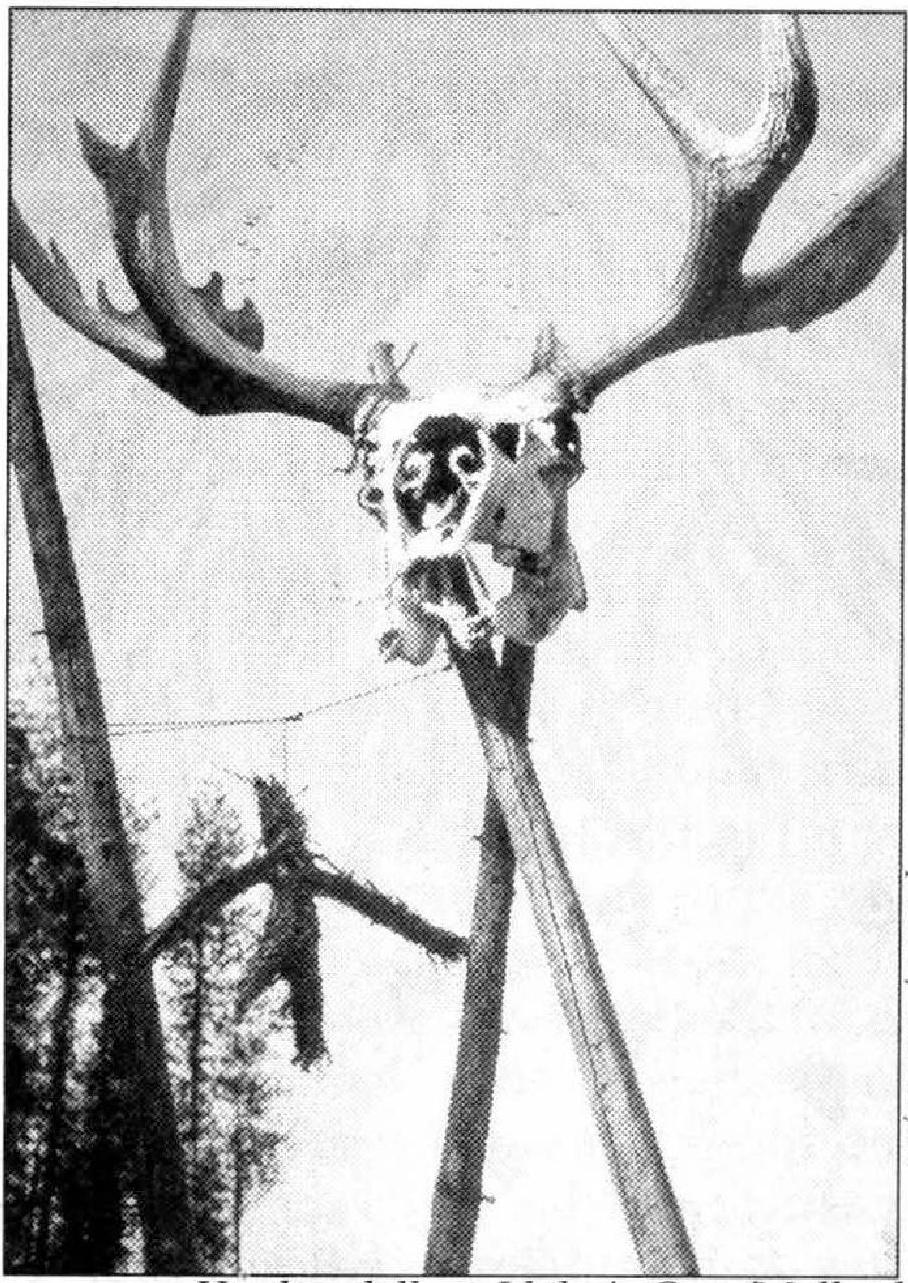
Foreman insisted, even against the reservations of Howie Wolke, another EF! co-founder and one of Foreman’s closest friends, that the EF! Journal should publish according to a pagan calendar and utilize pagan names on the masthead. Wolke worried that it would be politically counterproductive to be so overt about the spiritual perceptions motivating movement participants. In his reservation, Wolke was in good company, for many of the greatest environmentalists since Thoreau, including John Muir, Aldo Leopold and Rachel Carson, had similarly downplayed their nature-grounded spirituality in the fear that, in a predominantly Christian culture, expressing such spirituality might hinder the environmental causes they were promoting. Yet Foreman prevailed, and the masthead names stuck, as did the critique of Western civilization.
Foreman would later confess some embarrassment with his earlier enthusiasm in such areas, expressing discomfort with collective ritualizing and concern that it was becoming an end in itself, distracting activists from direct resistance to the forces of environmental destruction. Nevertheless, I do not think he would) then or now, deny that his own environmentalism has been fueled by profound experiences in wild nature that led him to consider nature sacred and intrinsically valuable.
Whatever the current sensibilities of the individual who was, without much doubt, the most charismatic of the early leaders of EF!, the critique and antidote that he helped to articulate drew others with similar intuitions, ethics and intellectual predispositions to the movement. Indeed, EF! became a magnet for diverse people who considered nature sacred, felt kinship with all life and, from these, deduced a corresponding ethical obligation to protect all forms of life.
As a result of the diverse religious/spiritual and ethical/ political streams drawn to the movement, a period of remarkable creativity began to unfold from the early 1980s until the mid-1990s. This creativity was not only political and tactical—it involved new forms of what I would call “religious production.” By this I mean that new ways of ritualizing and transforming consciousness were being invented afresh, or creatively adapted from existing practices residing largely at the margins of mainstream culture.
Four examples can be briefly mentioned:
-
EF! Roadshows. Beginning in the early 1980s, various groups of activists toured the US and beyond, presenting the movement in choreographed presentations that generally involved the juxtaposition of photographs of intact (sacred) wilderness ecosystems with clearcut (desecrated) wildlands, and the singing of diverse forms of music. The presentations were designed to express the movement’s political and ecological critiques, as well as the connection to nature that many of the musicians believed humans still innately held deep inside. The roadshows reflected a belief that when confronted with a clearcut landscape, good-hearted people will intuitively recognize that this is wrong and must be stopped.
-
The Round River Rendezvous (RRR). At these annual wildlands gatherings, an amazing array of music, poetry, and sometimes carefully constructed ritualized spaces and pageants were created. Much of this artistic work expressed the intrinsic value of nature or sought to deepen such perceptions among activists. The RRR was understood by many as a place to strengthen tribal bonds and to spiritually empower activists for the environmental struggles to which they would soon return.
-
The Council of All Beings. A ritual process invented primarily by the Australian Buddhist/deep ecologist John Seed and the American Buddhist/scholar Joanna Macy, the council has been conducted at a number of venues frequented by EF! activists. Like other movement ritualizing, it served to deepen the felt connections to nonhuman nature already arrived at through various paths by movement activists.
-
Direct Action Resistance. Resistance campaigns themselves, or aspects of them, periodically assumed an overtly or implicitly religious character, through actions resembling rituals. I have seen activists pray to the Great Spirit for strength in the midst of a near-violent confrontation and place pagan religious iconography on blockaded logging roads, as well as placards proclaiming the place to be sacred. And no small number of activists report profound experiences of connection to the Earth and its lifeforms, for example, while buried in a logging road or perched in a tree.
Of course, like any other endeavor in the spiritual or religious domain, not everyone found the same experiences to be equally meaningful, powerful or inspiring. Sometimes the efforts to invent, promote or facilitate the movement’s spiritual dimensions were met with good-natured kidding; at other times, with derision and ridicule. Without judging whether these reactions were justified, the result was that the movement, over time, did not provide fertile ground for the religious creativity that it had itself inspired.
If this is an accurate assessment, then this represents a missed opportunity.
One of the remarkable things about the early and middle years of the movement was the sense of many activists that they had found their “tribe.” By this they meant, it seems to me, that they had found a group of people who held the same things most dear. This had to do with a shared sense of the sacredness and intrinsic value of life, as well as the conviction that we should resist its destruction with all the strength we can muster.
Many of the ritual forms that evolved during those years contributed to this sense of belonging, which arguably was a source of movement strength. Even when tensions arose over ideological, strategic, tactical or other differences—some of which even led to major movement schisms—the ritualizing often managed to mitigate or soften the tensions.
It appears to most long-time observers, however, that much of this kind of solidarity has been eroded. No one disputes that many long-term activists have drifted away, and not only in the wave that accompanied Dave Foreman’s 1990 departure. Some of these activists are finding new ways, no longer under the EF! umbrella, to reconnect to each other and the Earth. Despite such efforts, it is difficult to avoid the impression that something valuable may have been lost from under the original EF! tent. Perhaps it is worth asking why this occurred, and whether anything could or should be done about it.
First of all, I think that a reason for the erosion of the movement’s spirituality, with a corresponding decline in at least some of its social power, is the antipathy of most activists to organized religion and anything that reminds them of it. Some of the movement’s spiritual experimentation evoked memories of the organized religions that most activists had fled. But the periodic ridicule of “woo woo” (which, when understood negatively, really means spirituality that does not lead to activism) may well have bred a reluctance among activists, who could otherwise have been spiritual leaders, to bring that part of themselves to the movement. And without a shared sense that movement spirituality was central, there was no plan to ensure the presence of those who would bring spirituality-evoking and solidarity-promoting music, workshops or rituals.
That there was no such plan is also related to the antipathy to leadership that came to characterize the movement as it assumed an increasingly anarchistic ethos. This may account, in part at least, for the loss of many of EF!‘s most innately talented leaders, both political and spiritual. It was easier to exercise such gifts elsewhere than to put up with those who thought leadership itself was another form of hierarchy to be overturned.
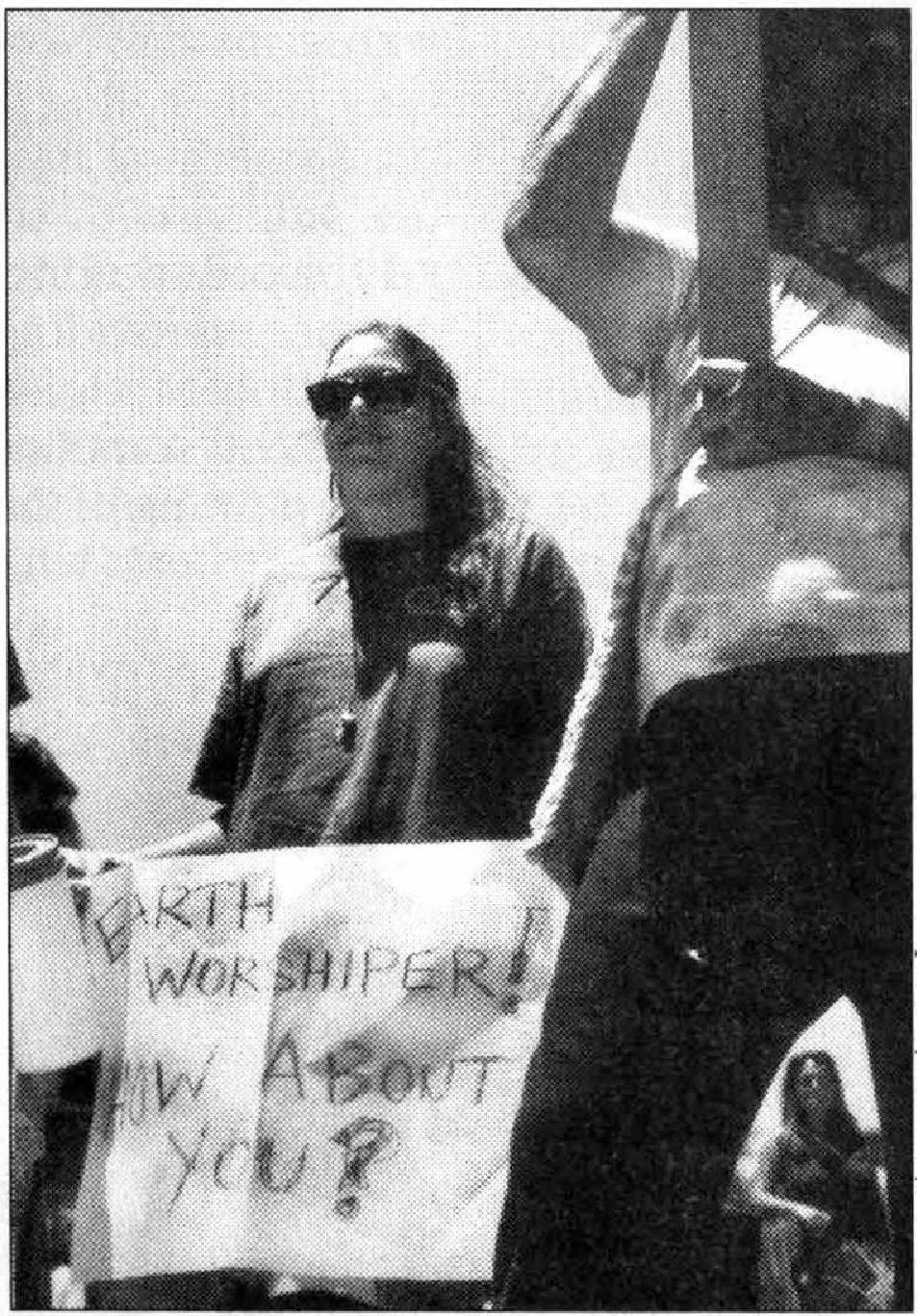
If this is even partly true, then this is highly ironic for a movement that claims to find wisdom in nature and indigenous cultures. Nature is replete with hierarchy, and dominance-submission dynamics are found among many species. This is relevant when thinking about leadership. Indigenous cultures, for their part, are known for respecting their elders. Eldership is another kind of leadership, one that is often deeply related to what might be called spiritual wisdom. But how often has the EF! movement asked its own elders to offer their own spiritual practices at page a RRR? More often, Native American elders are invited to provide a blessing or to lead some form of ritual or solidarity ceremony. The movement often acts as though it has no internal spiritual resources, or that they are not important.
One of the patriarchs of sociology, Max Weber, once suggested that there are three outcomes after a charismatic leader who has founded or revitalized a religious or social movement dies or departs. Either the movement dies out over time; the charisma is passed down through some designated hereditary line of succession; or it is passed on through a designated bureaucracy, such as a priestly class. Weber’s analysis poses interesting questions for all new social and/or religious movements, including EF!.
In the past 25 years, the EF! movement has made many positive contributions (despite ongoing, more numerous setbacks) to its vision for a comprehensive re-harmonization of life on Earth. But to make even greater contributions, EF! needs to take its animating spirituality more seriously.

The EF! movement, whatever the names it goes under, will not die out. There will always be those who feel and act like EF!ers. But it is worth asking how the spiritual energy that gave rise to the movement might more effectively draw people to itself, empower them and promulgate itself, from generation to generation.
With slogans like “Copulate Don’t Populate!” passing leadership along hereditary lines seems ill advised—indeed, like a recipe for group extinction. So perhaps, as the movement looks at its next quarter century, it should begin to talk more publicly about things thus far heard only in small groups around campfires-about how to honor, respect, bring back and cultivate the movement’s spiritual practices and leadership. This may be one way to reanimate a movement that many feel has become adrift and less powerful than it once was. Perhaps “Resacralize Mother Earth!” is a slogan that needs to be both resurrected and practiced anew.
Bron Taylor teaches in the graduate program in Religion and Nature at the University of Florida. His books include Ecological Resistance Movements: The Global Emergence of Radical and Popular Environmentalism and The Encyclopedia of Religion and Nature. For more information on his work and writings, visit wwxv.religionandnature.com.