Doug Saunders
We’re living in 1930’s Germany
Oklahoma bomber Timothy McVeigh was executed this week, but, as Doug Saunders reports, the anti-government extremism that inspired him lives on, from the deserts of San Diego to the Attorney-General’s Office in Washington. It’s a bizarre subculture
SAN DIEGO. CALIF.
Tony Hogrefe is a polite, intelligent 26-year-old with a wife, a kid and a full-time job just outside San Diego. Me enjoys reading, toying with his computer and spending time with his son. And he is fully prepared to lead an armed insurrection against his country’s government.
On Tuesday, Tony and a group of his friends and neighbours will gather in a nearby corner of the desert, as they do each month, and will use an impressive arsenal of assault weapons to launch an attack on a symbolic target (in April, they chose a United Nations Hag).
These exercises are led by Hogrefe, who fought in Somalia with the U.S. Marines in his early 20s, and they are deadly earnest: At any moment, the High Desert Militia of Southern California may decide to aim its guns at employees of a federal government whose legitimacy they believe is highly questionable.
Like millions of other Americans, Hogrefe backs his love of guns with a belief that his country’s constitution requires him to be ready to attack his government. “Our group’s gun ownership has absolutely nothing to do with duck hunting, and ... nothing to do with self-defence against criminal attack, either.” Hogrefe said in an interview. “It has nothing to do with any of those things: it has everything to do with the common man defending himself against a tyrannical government.”
And the current U.S. government, with its free-trade policies and very mild gun control, is very close to being tyrannical, he said. “They’re right on the line.” Later, he added, without irony: “We’re living in 1930s Germany.”
* * *
To an outsider. Tony Hogrefe seems a lot like another young man who decided to take up arms against his government’s tyranny. It has been live days since Timothy McVeigh, a veteran of the war in the Persian Gulf, look his Iasi breath in an Indiana death chamber, condemned for bombing a federal building in Oklahoma City in 1995.
Hogrefe’s group denies that McVeigh was a true militiaman; they also believe that the Murrah building was blown up by government agents to discredit them. But there is a clear continuity between McVeigh’s views and their own.
McVeigh’s bomb was itself intended as revenge against the FBI’s killing of the wife of Idaho antigovernment activist Randy Weaver at Ruby Ridge in 1992 and its burning of the Branch Davidian religious compound in Waco, Tex.
And in the wake of McVeigh’s actions, foreigners and urban Americans learned that the U.S. backwoods were full of organizations hoping to overthrow or secede from their own federal government.
There were Survivalists, who believe that the United States was about to yield to invasion by internationalist forces such as the United Nations; Patriots, who believe that the U.S. government has overstepped its limited constitutional authority; and citizen militias, most famously in Michigan and Montana — guerrilla armies ready to rise, or at least to play with some powerful guns.
This month, the American antigovernment ethos showed its face in another extreme incident: The northern Idaho family of JoAnn McGuckin was involved in a siege with local and state police after she was charged with neglect. They believe that the U.S. government had no authority over their lives.
“For years, Mrs. McGuckin has been fearful of the government taking her property and her kids,” said lawyer Edgar Steele, who represents the McGuckins as well as numerous other antigovernment extremists. “Today, that fear is realized.”
The United States is certainly not the only nation to have armed insurgents within its borders. But only in America would millions of citizens believe that an antigovernment army is not only legal, but is sanctioned and ordained by the U.S. constitution — that the foundation of the United States contains the seeds of its own destruction. Outside urban centres and college towns, this is a very popular point of view.
Indeed, while McVeigh’s bomb is often blamed for the decline of the outlaw groups of the 1990s, they may have collapsed simply because their antigovernment creed has become such an acceptable mainstream force. It is supported by millions of gun-owner activists, a wide array of academics, preachers, tax resisters, home-schoolers and Christian fundamentalists, a growing group of left-wing protesters and a surprising number of congressmen, and now by John Ashcroft, the man appointed by President George W. Bush to oversee the country’s law enforcers.
Somehow, a radical, insurrectionist reading of the U.S. Constitution has come to unite the views of both the U.S. Attorney-Genera) and of Tony Hogrefe, an angry former marine with a lot of guns.
* * *
The number of so-called Patriot groups in the United States has diminished from a peak of 858 in 1995 to 195 today, according to a survey released last month by the Southern Poverty Law Centre. But the antigovernment mantle has been taken up by religious groups that reject the legitimacy of Washington not by raising arms, but by establishing their own Christian parallel government and society.
The home-schooling movement has grown enormously in the past few years, largely because evangelical Christians have come to believe that government should not be permitted in education. Christian reconstructionists, who believe that government should adhere only to the Ten Commandments, have waged organized ideological attacks and have a solid beachhead in the Bush government.
Activists have won the right, in most states, to withdraw their children from schools, universities and most other institutions of civil society, and set up a Christian counterstate. “Thousands of children are being raised to be Christian theocratic revolutionaries,” historian Frederick Clarkson said.
“Instead of relying on politics to retake the culturally and morally decadent institutions of contemporary America, I said that we should separate from those institutions and build our own,” the influential U.S. Christian leader Paul Weyrich, president of the Free Congress Foundation, wrote in the Christian journal World in 1999.
Dave Roman is one of those separatists. On a recent Saturday afternoon, he and his 12-year-old son, Tyler, were examining an AK-47 assault rifle at a gun show on the Del Mar fairgrounds in southern California. Roman explained to his son that federal laws limit home use of this gun to a 1 O-shot magazine, rather than the 40-shot magazines used by armies around the world. “The government calls that an extended magazine, but it should be called a normal magazine.... You know,” he says, turning to a reporter, “laws like these are a sign that something is really wrong with this country.”
Roman is not a member of a militia group, and he said he lives a quiet suburban life, with a regular job for a major company. His son has not attended a “government school,” as he called it, for two years. Instead, he and a group of his neighbours run Christian-based, “patriotic” classes for the kids. And Roman said he intends to stop paying income tax next year, since he believes, like a surprising number of Americans, that Washington has no authority to collect taxes.
“Just look at the Constitution,” he said. “This country is supposed to be a federation of states, and the central government has only a few powers. And it doesn’t say anything about income tax.”
Dozens of tax-avoidance “declarations” and quasi-legal statements of non-citizenship are available on the Internet or by mail, and every year hundreds of Americans are arrested for using them.
As a father, Roman is reluctant to risk jail, but he does feel that he is no longer a subject of his own government. “Look at all the laws they’re passing— they’re foreign occupiers, not a real government. If you’re patriotic, you’ve got to be ready to defend yourself against those guys.”
Americans have always distrusted their government. But questioning the legitimacy of Washington’s rule is a recent development in mainstream thought — and even more novel is the belief that guns legally can be used to turn that distrust into action.
Three years ago, a Missouri senator named John Ashcroft stood before a congressional hearing and explained his interpretation of the Second Amendment. That brief text, written by James Madison in 1791, has proved one of the most controversial in U.S. history. It reads, in full: “A well-regulated militia being necessary to the security of a Free State, the right of the people to keep and bear arms shall not be infringed.”
Legal officials have argued for centuries over whether “the people” refers to institutions or individuals, and whether the militia should be a federal or state organization.
Ashcroft offered his fellow lawmakers a more radical interpretation, using language almost identical to Tony Hogrefe’s or Dave Roman’s: “A citizen armed with the right both to possess firearms and to speak freely is less likely to fall victim to a tyrannical central government,” he said.
In other words, the militias permitted by the Second Amendment are not only made up of individual gun owners, but they are meant to be used against the government itself. This would make the United States the only country in the world whose constitution describes not only the laws and structure of a national government, but also the mechanism of its armed overthrow.
No serious constitutional scholars subscribe to this view. The U.S. Supreme Court has ruled on the Second Amendment only once, in 1939,
And the Constitution’s Article 1, Section 8, says Washington can federalize and “call forth” the militias at any time to “suppress insurrections and repel invasions,” which would make it difficult for a legitimate militia to run an insurrection of its own.
Ashcroft has not changed his opinions, even since becoming the country’s top law-enforcement official in January, even though they seem to contradict his own job description. They inspired little controversy, in fact, because they have become so widely accepted in Republican Party circles.
Yet these ideas did not even exist until quite recently. The insurrectionist interpretation first appeared in a legal journal in I960, and languished on the distant margins until a revolution occurred within the National Rifie Association in 1977. That year, Harlon Bronson Carter, a rightwing extremist, was elected president of the NRA, and its focus immediately changed from sport hunting and self-defence to the right of armed insurrection. Suddenly, the most powerful lobby group in the United States had a political philosophy all its own.
“The Second Amendment was not really discussed very much at all until the last 25 years of U.S. history, beginning with the change in the NRA’s leadership.” said Gregg Lee Carter, a social-science professor at Rhode Island s Bryant College and author of several books on the Second Amendment. “It was a fringe view, and all of a sudden it had a huge national audience and the best marketing campaign in the country”
By 1980, constitutionally sanctioned insurrection had become part of the American vocabulary, backed by three million NRA members and countless other Americans who were exposed to the group’s literature.
Soon, revolutionary groups began to take up this call to arms: Posse Commitatus, a 1980s movement, waged war against the Federal Reserve system, income taxes, federal courts and most laws, and regarded the Democrats and Republicans as illegitimate. That group led directly to the Patriot, Survivalist and Militia movements of the 1990s. McVeigh was deeply inspired by the NRA position.
If George W. Bush’s cabinet is the first U.S. government to give official sanction to this insurrectionist view, it is also the first in a long time to champion another antigovernment notion: state sovereignty. The possibility of states holding powers equal to or above those of the central government, most recently used by the slave-holding states to justify their position in the Civil War, has won the vocal support of Ashcroft and his colleague, Interior Secretary Gale Norton, and of several judges appointed this month by Bush.
Once again, a fringe right-wing ideology used to question the basic legitimacy of the federal government has become part of that government’s own etho:,.
“Increasingly, you find these ideas coming together — especially with George W. Bush appointing people to the federal bench who support the most extreme interpretation of states rights and the insurrectionist view of the Second Amendment,” said Robert Spitzer, a State University of New York political science professor who specializes in anti-govemment views. “It’s only in the last 15 years or so that these ideas have been given some legitimacy by a very small group of academics. Now, they also have the government’s sanction.”
Of course, the United States has . always been a little bit funny this way. Its founders were an odd mix of Enlightenment intellectuals who wanted to form a more perfect union, colonial malcontents who. didn’t want to be governed at all and religious extremists who suspected that the laws of man were a sinful substitute for the word of God. In 225 years, little has changed.
Timothy McVeigh fell prey to a fashionably extreme reading of the Constitution, but, if you examine his life story closely, he was also a product of his surroundings: Everywhere he looked, U.S. history was telling him to revolt against Washington.
McVeigh grew up in an upstate New York neighbourhood that, according co his biographers Lou Michel and Dan Herbeck, “was located in a township founded by Sylvester Pendleton Clarke, an early , 19th-century tax protester who. hated the federal government and had tried to start his own republic on nearby Grand Island in the Niagara River.” American history is packed with such figures.
And when McVeigh joined the military, he was stationed at Fort: Benning, named after Generali Henry Lewis Benning, who sup? ported the notion of state sovereignty, served with Confederate. forces and advocated the secession of Georgia from the Union.
The United States was born of a delicate compromise between the. federalists, who wanted to form a modem nation, and the antifederalists, who wanted a loose and leaderless grouping of sovereign states; like today’s former Soviet republics. The federalists only barely won (the Second Amendment was Madison’s desperate sop to the antifederalists), and the antifederalist voice periodically threatens to overwhelm the American debate, as it does today.
To be specific, the current anti-government strain of thought began in the early 1960s, when Cold War, propaganda attuned U.S. citizens to the evils of a government-run Soviet economy. Inevitably, many of them-began to see those evils in their own government.
John F. Kennedy, in a typically overwrought speech, announced in-1960: “We need a nation of Minutemen, citizens who are not only pro-, pared to take up arms, but citizens who regard the preservation of freedom as a basic purpose of their daily life.”
He meant it rhetorically, but within months, police were arresting people across the e country who l had formed militant cells, calling themselves the Minutemen, armed with machine guns and mortars. They were ready to attack ‘not just communist invaders, but also United Nations troops, federal housing programs, agricultural regulations and anything reminiscent of government control. The precursor to today’s Militia movement was born.
Also born in the early 1960s was the peculiar institution that turns people like Tony Hogrefe and Timothy McVeigh into antigovernment militants, the political training of military troops.
In 1958, the U.S. government began an effort to educate its troops about the conflicts underlying the Cold War. Within two years, this plan had backfired badly. As historian Rick Perlstein recently, recounted, the chief air training in Pensacola, Fla., began teaching in his mandatory seminars that progressive income tax, the Federal Reserve and business regulations were all part of a Soviet takeover. General Edwin Walker spent years teaching his thousands of troops that there were treasonous enemies to be found in such figures as Harry Truman and Eleanor Roosevelt.
To this day, military troops and veterans are far more prone than other Americans to believe that the government they serve is their enemy. Hogrefe said half of his militia’s: members are veterans; John Trachmann, head of the Militia of Montana, said in an interview that he draws his greatest support from active soldiers and veterans.
Two days after the Oklahoma City bomb went off in 1995, terrorist profilers at the FBI’s lab in Quantico, Val. were asked what sort of suspect to look for. Special Agent Clinton R. Van Zandt answered quickly: “You’re going to have a white male, acting alone, or with one other person. He’ll have military experience.” Some of his colleagues doubted him, but Van Zandt was exactly right.
* * *
The man who did the most to turn anti-government philosophy into violent practice is another ex-serviceman’, a bearded old man who lives on a farm in the quiet logging town of Noxon, Mont. John Trochmann, a lifelong aficionado of conspiracy • theories, created the Militia of Montana in 1991. It quickly grew into a nationwide movement.
A few weeks ago, he could be found in the green-painted shed that is his headquarters, assembling copies of his newsletter Taking Aim. He is happy to explain his political philosophy: “I’m just a plain old country boy that wants to be left alone, and wants free enterprise to rule; not government.”
He believes that the Bush government is just as unconstitutional, and therefore worthy of legal overthrow, as its Democratic precursor. “I guess it’s like this,” he said. “The Democratic-slash-Communist party has got this busload of people called America headed to the cliff at full throttle, and now we’ve got the Republican-slash-capitalist party with the same busload headed to the same cliff at the speed limit. It’s just a much smoother delivery of the shaft.”
Trochmann noticed a decline in militia activity after the Oklahoma City bomb. But, in his view, interest in the movement has continued to increase. “A lot of people left because they didn’t want their egos hurt by being attacked,” he said. “And a lot more just went underground.”
McVeigh’s bomb undoubtedly had an effect on militia-group membership, as did the hundreds of arrests made by the FBI in the late 1990s. And the economic boom, with its rising wages and full employment, no o doubt diminished the appeal of underground military activities.
But it appears that a great many people left the militias not to “go underground,” but because they found voice for their views in mainstream politics. After all, there is little need to dig trenches in the woods when people in the White House are voicing your anti-government philosophy. “We all need to give a show of support for the John Ashcroft appointment — he believes in the Second Amendment and he’s one of us,” read one posting, written by “hollowpoint,” to the Internet discussion group misc.activism.militia.
Besides, the anti-government view is a deeply rooted part of U.S. religious beliefs. Many of the Protestant sects that founded the United States were antinomians: they believed that the Ten Commandments are the only true law and that human laws are, at best, secondary.
“This whole set of philosophies is all backed with apocalyptic visions out of the Book of Revelations,” historical researcher Chip Berlet said. “The basic story of America is infused with this end-times conspiracy-theory interpretation of prophecy, in which in the end times, real Christians will be betrayed by their own government.”
And no longer is anti-government militancy strictly a right-wing position. For instance, the belief that the United Nations is in collusion with the U.S. government to take over the country has found new support among demonstrators in Seattle and Quebec City, who fear that their governments are allowing international organizations to destroy national sovereignty.
While it used to be that the far right opposed the UN and the left opposed international trade organizations such as the General Agreement on Tariffs and Trade, there has recently been a convergence. Tony Hogrefe is one of many militia leaders who supported the Seattle and Quebec protesters.
Conversely, extreme left-wing groups such as the Earth Liberation Front have lent their support to right-wing anti-government activists. “I see something like Tim McVeigh as not being something I personally support, because it killed an awful lot of people, but I think that generally the ideas I can support,” said Leslie James Pickering, a spokesman for the ELF.
And even some liberals have come to support the stance. Gore Vidal, the essayist, novelist and sometime congressional candidate, was among five friends of McVeigh’s who were invited to attend his execution. He accepted the invitation, offering his support for the bomber’s ideas: “McVeigh’s sacrifice of himself to his sense of justice is a wake-up call, an alarm bell in what is an increasingly dark night,” Vidal said, adding cheekily: “He asked, and I thought, ‘Well we both have the same feelings about government running amok.’ We have both seen an election hijacked by a Supreme Court.”
Indeed, Vidal’s observation may be the final ironic flourish to this trend. For a nation that has long doubted the legitimacy of its government, a perfect match has finally been created: A government whose legitimacy is truly doubtful.
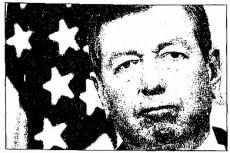
John Ashcroft
The Antigovernment Government
Appointed Attorney-General in George W. Bush’s cabinet, Ashcroft is the highest-ranking official ever to support the radical notion that the U.S. constitution’s Second Amendment gives Americans a legal right to prepare armed insurrections. His appointment, and that of fellow believer Gale Norton, marks the ascendancy of a concept that was virtually unknown a generation ago.
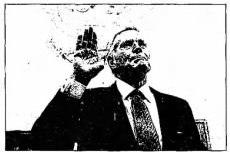
Charlton Heston
The National Rifle Association
The famous actor, shown here testifying before Congress in 1999, is the president of America’s largest antigovernment organization, the NRA, with three million active members. Since 1977, the NRA has promoted an ‘insurrectionist’ interpretation of the Second Amendment. Through its political donations, the group has an enormous influence on legislation in Washington.
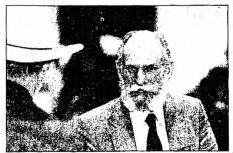
John Trochmann
The Militia Movement
In 1991, farmer and ex-serviceman Trochmann (shown here at a 1997 ‘Self-Sufficiency and Preparedness Expo’) took a number of fringe antigovernment views and formed the Militia of Montana, an armed group that prepares for war with what it sees as an unconstitutional U.S. government. Scores of similar citizen-militia groups formed during the 1990s; their numbers have decreased in the wake of Timothy McVeigh’s notoriety, but they remain popular in western states.
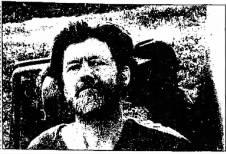
Theodore Kaczynski
The Anticivilization Left
Jailed ‘Unabomber’ Kaczynski (shown here after his 1996 arrest in Montana) is the most famous figure in a new leftwing branch of the antigovernment movement. Formerly, only ultra-right groups like the John Birch Society believed the U.S. government was illegitimate. Now that view is shared by extreme environmentalists, ‘primitivist’ anarchists and some anti-corporate activists. Right-wing Patriot and Militia members have come to support leftwing causes such as anti-trade protests.
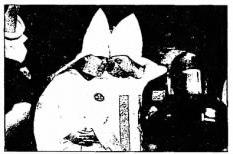
The Ku Klux Klan
The Old Guard
The wake of the Civil War led to the creation of the Ku Klux Klan (shown here at a 1999 gathering in Cleveland), committed not only to racism but to the view that the states, not Washington, held true sovereignty. This creed has been shared by the Silvershirts of the 1930s, the John Birchers and Minutemen of the 1950s and 1960s, and Posse Comitatus in the 1980s; and on the left, by the post-196Os Weather Underground, and various radical environmentalists and anarchist groups today.
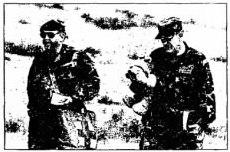
Norman Olson and Ray Southwell
The Rural Rebels
Since the early 1990s. the antigovemment underground has erupted into armed confrontation every couple of years. A year after the Oklahoma bombing, the FBI staged an armed siege at the headquarters of the Montana Freemen (where these two Michigan Militia members came to show support). Last month, the McGuckin family of northern Idaho was involved in a similar standoff.
