Emmi Bevensee and Frank Miroslav
Adapting to Transform Networked Conflict
How complexity is our greatest asset
It takes a network to defeat a network
Institutions have limits, especially in the age of information technology
Complexity, the root of networked warfare
vTaiwan: A case study in scaling direct democratic decision-making
The problem of managing complex decisions.
vTaiwan helps build consensus with greater efficiency and buy-in
Possibilities for New Internationalism
You can beat information war through networked resistance
Attempts at information isolation are leaky
Complexity as resistance against fascism
Conclusion: Human shaped networks are internationalist and anti-authoritarian

Summary
In the age of mass networked revolts spurred in part by advances in information technology, the call to update our frameworks grows more urgent. Through the lens of complexity, we tease out some of the strategic benefits of modernized perspectives on conflict and resistance. With this understanding, we can map out better and more realistic futures.
It takes a network to defeat a network
Complex and horizontal networks of people swarming together have some asymmetric advantages over centralized powers.
These advantages exist because of things like information proliferation, the agility of actors with local knowledge of a situation, and resiliency. There are risks and limitations to these strategies which can be studied using frameworks such as complexity theory. By analyzing conflict and struggle using these frameworks, we believe that the internationalist left can more accurately chart a way to sustainable futures with greater interconnected agency, while avoiding dystopian outcomes. Examples of all of this can be seen by analyzing the conflicts between fascist and anti-fascist networks.
An internet troll movement was able to instrumentalize pre-existing USian racism and build a movement that helped launch Trump into the highest position in the US (unfortunately not the sun). Parts of this movement then metastasized into a semi-decentralized digital cult that ultimately led to a conspiracy-driven meme-ified coup attempt on the US capitol with nazis and militias in tow.
While headline grabbing, the underlying dynamics that motivated these people and let them communicate go back decades. The monograph Networks and Netwars was published in 2001 and summarized the then-emerging examples of networked forms of organization. Terrorists, transnational gangs, and activists were already making use of networked computing technology to organize. The explosive protest movements of the last year are different in scale and capacity, but the underlying principles remain the same. John Arquilla and David Ronfeld’s summary of the changes will affect conflict appears particularly far sighted in retrospect:
“Major transformations are thus coming in the nature of adversaries, in the type of threats they may pose, and in how conflicts can be waged. Information-age threats are likely to be more diffuse, dispersed, multi-dimensional nonlinear, and ambiguous than industrial-age threats.”[1]
But despite networks and computers being at the core of many disruptive events that took society by surprise in the last two decades, the number of people who consciously grasp the changes wrought are a minority, even among people who consider themselves political. Most people have a direct understanding of networked conflict informed not by theoretical understanding, but rather by their lived experience of using the technologies and seeing things happen for themselves.
This way of operating can work “good enough” and can give amatures the ability to disrupt established actors.[2] But it leaves participants vulnerable to shifts in the broader environment that invalidate simple models. A clear example of this is with the sharp rise and fall of the alt-right. In 2015 and 2016 they were largely fighting the Republican and Democratic establishments and had a clear goal in electing Donald Trump. But after the victory of Donald Trump they found themselves floundering. Some of this was how hollow Trump was as a person and his lack of interest in pursuing some of their reactionary goals. But there was also the fact that antifascists, leftists and liberals came together in a bottom-up fashion to resist the movement. Unlike the decrepit top-down establishments of the major political parties, this grassroots approach was far more effective because it could be more fluid and dynamic, while also having clear goals and motivations.
This ability to readjust and reorientate one’s perspective is probably the most important skill to have in the information age. Having an edge at any particular point in time because of the arbitrary configuration of the present state of things is far less important than the ability to anticipate and adjust to changes. While expecting every leftist to become fluent in the ideas in this report is unrealistic, we think that getting a sufficient number such that the average leftist knows someone who knows about these ideas (and is therefore influenced by them) over the coming decade is a reasonable goal.
The difficulty leftists have had when it comes to reconfiguring approaches that leverage new possibilities can be seen in the popular attempts to intervene in society. Take for example the Bernie Sanders campaign. While in some ways it was genuinely novel for US presidential politics (a somewhat grassroots movement that managed to raise millions and bypassed traditional media gatekeepers to get the message out) the ends desired were quite conservative (a return to the promises of the New Deal, albeit with genuine progress on racial/gender discrimination and environmental problems).
Adopting such an approach speaks to a broader dynamic akin to what the technological theorist Lewis Mumford called a “cultural pseudomorph”, wherein the new technological possibilities that enable radically different ways to organize society are used instead to awkwardly serve pre-existing frameworks. Many leftists, unfortunately, are stuck in an outdated frame of reference assumptions about what it takes to win (organize the working class into institutions like political parties or unions!) and the landscape of dangers (fascism is a movement driven by petite-bourgeoisie resentments to crush an emergent workers movement!). The result is a left that struggles to recognize novel dangers and opportunities and is effectively what Samo Burja calls a “dead player” (an actor within a system that largely works off pre-existing scripts and struggles to change how they operate).
Some of this is simply the result of just how quickly things have changed. The number of people who self-identify as leftists exploded with the drama that was the 2016 US presidential election and it’s admittedly difficult to catch everyone up to speed, especially since there are so many obvious problems that demand immediate attention. We just haven’t had the time to popularize new frameworks and experiment with the possibilities offered to us.
However a failure to adapt to the changing circumstances likely means being outmaneuvered by other factions. Contemporary fascists like Steven Bannon and Alexander Dugin recognize that a great tectonic shift in power is happening but they are trapped in old frameworks for interpreting the world, largely based on assumptions inherited from the industrial era. However unlike the left they have access to significant resources that they can direct or can influence people who do. But they use these resources for cynical traditionalism rooted in an antiquated model of the world based on crude power. They also indirectly command powerful gangs of street level assailants such as the Proud Boys, or online in the form of top-down disinformation warfare. The left will not be able to beat such reactionaries in a straight-up conflict and will only be able to win by out-maneuvering/out-adapting them.
Thankfully we have reasons to believe that “leftists”[3], anti-authoritarians, and internationalists will have some structural advantages in the sort of conflict that appears to be emerging. Those who favor social justice, agency, consent, and collaboration will be able to punch above their weight when it comes to impacting the world. But a prerequisite for doing so is understanding the dynamics at play.
But just because networked leftism will have a structural edge going forward, this in no way means victory is inevitable. Environmental advantages are a nice thing to have, but the current state of the world means that we will be the underdogs for some time. To truly become a positively impactful network in the world, we need a complex, resilient ecosystem of actors, technologies, and institutions that give us the capacity to transcend existential risks and build better futures.
This means balancing both immediate concerns and long term navigation. While there are obviously immediate problems that must be addressed, it’s essential that we do not trap ourselves at a local optima by making decisions that limit our options in the future. One under emphasized reason the left failed in the 20th century was that both the social democracies of the West and the planned economies of the East couldn’t adapt to social and technological changes. When they originally emerged they appeared relatively successful (postwar social democracies saw significant growth rates and reduced class conflict, the Soviet Union saw tremendous growth rates and scientific advancement). But as the broader context changed, they couldn’t adapt to the changing contexts as a result of their centralization.[4]
What’s especially frustrating about all of this is that capitalism is only slightly more adaptive than planned economies. As such it is just as vulnerable to being out-adapted as social democracy/state socialism was. As Kevin Carson notes:
“The “technostructure” can survive because it is enabled to be less responsive to consumer demand. An oligopoly firm in a cartelized industry, in which massive, inefficient bureaucratic corporations share the same bureaucratic culture, is protected from competition.
...
These “innovations” succeed because they are determined by the organization for its own purposes, and the organization has the power to impose top-down “change” on a cartelized market, with little regard to consumer preferences, instead of responding flexibly to them. “Innovative strategies” are based, not on finding out what people want and providing it, but on inventing ever-bigger hammers and then forcing us to be nails. The large corporate organization is not more efficient at accomplishing goals received from outside; it is more efficient at accomplishing goals it sets for itself for its own purposes, and then using its power to adapt the rest of so-ciety to those goals.”[5]
That fascism, state-communism and capitalism are unable to deal with complexity and dynamism and so instead rely on enforced simplicity through violence to maintain the divisions within society means that innovations, connections, infrastructure and tactics derived to fight one can be repurposed to fight the other. Moreover as society becomes more complex, it will become more and more structurally resistant to fascist and capitalist tendencies.
Transforming our risks and building a better world is possible and we want to help explore how.
Institutions have limits, especially in the age of information technology
The last decade has seen global disruption. From the initial wave of protests like the Arab Spring and Occupy Wall Street, to a reactionary backlash against globalization seen by the rise of authoritarian leaders like Donald Trump and Jair Bolsanaro. These followed in turn by mass popular protest in the United States amidst the pandemic and many crises caused by the Trump regime along with popular uprisings in places like Hong Kong and Chile. We are in an unprecedented time of public unrest.
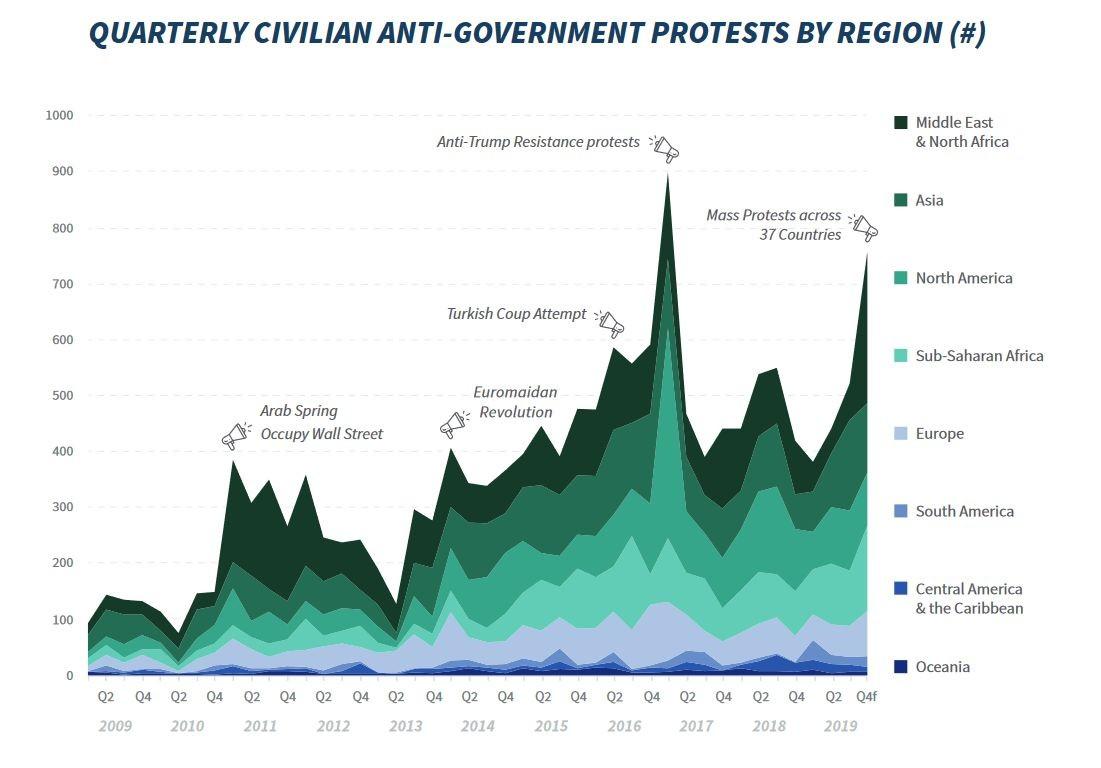
Central to this wave of upheaval is the universalization of information technology. As of 2019, 45% of the world’s population owns a smartphone. This means not just access to alternative sources of information, but also lowered costs (and in the case of end-to-end encryption, risks) of organizing. The result has been an upheaval to the established order but also one that is not strictly bound by geography, leading to larger webs of relationships both within and between states. Now simultaneous mass protests rattle cold war enemies simultaneously such as in the US and Russia.
What’s especially notable about the current wave of protests is that they are an excellent example of how technology has outstripped theory. When the masses take to the streets they tend to cohere around what they’re fighting against, but they rarely cohere around what they want to fight for.
Martin Gurri, an ex-CIA analyst who takes a conservative perspective on the current wave of protests, argues that this asymmetry between destruction and creation means there is a nihilistic streak to the current social upheaval. Because there is no positive vision for what these people want to build, all they end up doing is eroding structures without any replacement.[6] Liberal democracy and its institutions and mechanisms, despite their myriad problems, were somewhat effective at channeling the preferences and values of the masses into a decision-making structure that was somewhat workable.
But information technology is upending these systems. Individual citizens have the potential to express their preference in much higher fidelity to both centralized authorities and each other, because of the progress they’ve seen through communication technology over the last few decades. Moreover, the assumption that we need to rely on appointed experts to make decisions for the rest of us when non-institutional forms of education exists and people outside them can self-educate to the point where they can converse with experts (as seen in open forums like Reddit or Twitter) is bunk. Adjusting the system so it can incorporate those who have something to contribute but who don’t have accreditation into the decision-making process of institutions is challenging not just because it would require an overhaul of the credentialing system, but also for ideological reasons. Part of the legitimacy of institutions in our society comes from the fact that the barriers to entry are significant. If everyone was able to enter them, the prestige that those institutions offer would be undermined (which would in turn undermine the organizations that they act as gatekeepers for).
These concerns are merely derivative of one of the most important questions of our time, namely, how do build mechanisms for achieving coordination and harmony that can accommodate these gains in individual capacity (as well as any future gains)? For all its problems, the hegemonic liberal order that rose to dominance in the 20th century managed to create unprecedented economies of scale and scientific/technological development that resulted in a significant improvement in the lives of a minority, some of which did trickle down to the billions of people alive today.[7] While the negative externalities (like the horrors of imperial conquest) of its rise were significant and have left deep scars on both people and the environment, the fact that it was able to coordinate scale at all is an impressive accomplishment. If we want to bring this wealth to everyone on the planet, while respecting ecological limits and avoiding, we need to build coordination mechanisms on par with the liberal order.
These questions are worth considering because the upheaval we experienced with the proliferation information technology is only one of many technological disruptions that we will face this century. Many others are coming down the pike at us. Emerging technologies like 3d-printing, renewable energy, robotics/artificial intelligence, etc and biotechnology (just to name a few) will all be increasingly accessible in the next few decades alongside new or re-asserted older social forms. Absent a massive expansion of state power, these technologies will be largely impossible to repress, akin to the way that torrenting continues despite aggression from intellectual property mafias.
And of course, this is to say nothing about the broader scope of non-technological problems that include things like climate change, biosecurity risks, aging population, and climate refugees. All of these problems are concerning not just because of the catastrophic potential consequences, but also because they confound the standard mechanisms of problem-solving that we used to solve problems in the 20th century. They cannot be contained within national boundaries or standards of sovereignty because they affect everyone.
Complexity, the root of networked warfare
A central reason that networked technology is causing such a disruption is that it goes against common-sense assumptions that generations of people took to be common sense. The major conflicts that defined the 20th century were exemplified by command and control structures, both in terms of managing actual soldiers on the ground and in terms of the economy that supplied the war effort. Such an approach was also applied to the largely invisible conflict that defined the Cold War — the mechanisms of control and communication that operated the nuclear arsenal of both the US and USSR and things like inter-imperialist counter-intelligence warfare operated along such lines.
However, even at the height of high modernist planning, decentralization still had its virtues. The go to example is the Vietnam war, which saw a small pre-industrial state defeat a global superpower.[8] Part of why the Vietnamese won was due to how the US army operated. The US army assumed that it could fight the war through a “rationalized” statistical approach that assumed that the actors involved were operating along the lines of economic rationality. But these assumptions were fatally wrong. As a 2006 paper by Michele Chwastiak put it:
“[T]he U.S. leaders … thought they were fighting a limited war with an economically rational adversary. They … assumed that victory was assured as long as resources were employed in an efficient manner and statistics were improving. They further presumed that the U.S. soldiers could be manipulated through incentives and controls into producing high body counts. The Vietnamese, however, were not fighting a limited war but rather a total war, and the U.S. soldiers finally refused to conform to their instrumental identity as killers. As the war dragged on and a large percentage of U.S. ground troops became unwilling conscripts, the soldiers began to rebel against the identity imposed on them through the discourse of PPB and turned their training on the institution that put them in Vietnam. … [Ironically] the U.S. soldiers would contribute almost as much as the Viet Cong towards the defeat of the U.S. war effort.”[9]
There was also the fact that even when the terroristic and vanguardist CIA eventually figured out that the Vietnam War was lost and tried to tell the executive branch, the hierarchies of the military were too sunk in costs to let the message pass. As Tim Wiener described it in Legacy of Ashes:
“The suppression and falsification of reporting on Vietnam had a long history. In the spring of 1963, John McCone had come under enormous pressure from the Pentagon to scuttle a pessimistic estimate that cited “very great weaknesses” in the government of South Vietnam—including poor morale among the troops, terrible intelligence, and communist penetration of the military. The CIA rewrote that estimate to read: “We believe that Communist progress has been blunted and that the situation is improving.” The CIA did not believe that. A few weeks later came the riots in Hue, followed by the burning Buddhists, and the plotting to do away with Diem.
The pressure never stopped; the president’s new national security adviser, Walt Rostow, constantly ordered the CIA to produce good news about the war for the White House. Whose side are you on, anyway? Rostow growled. But on the same day that Helms squared the circle, he also sent a brutally honest CIA study to the president. ‘The attached paper is sensitive, particularly if its existence were to leak,” Helms’s letter to the president began. “It has not been given, and will not be given, to any other official of the
Government.” The very title of the report—“Implications of an Unfavorable Outcome in Vietnam”—was explosive. “The compelling proposition,” it said, was that “the U.S., acting within the constraints imposed by its traditions and public attitudes, cannot crush a revolutionary movement which is sufficiently large, dedicated, competent, and well supported.... The structure of U.S. military power is ill-suited to cope with guerrilla warfare waged by a determined, resourceful, and politically astute opponent. This is not a novel discovery.”
...
Never had there been a war where more intelligence was placed in the hands of commanders: captured enemy documents, brutal interrogations of prisoners of war, electronic intercepts, overhead reconnaissance, field reports brought home to the Saigon station through the blood and mud of the front lines, careful analyses, statistical studies, quarterly syntheses of everything the CIA and American military commanders knew. Today an old torpedo factory not far from the Pentagon houses eight miles of microfilm, a small part of the archive of American intelligence from the war.
Never had so much intelligence meant so little. The conduct of the war had been set by a series of lies that the leaders of the United States told one another and the American people. The White House and the Pentagon kept trying to convince the people that the war was going well.”[10]
To understand why the US military had such a hard time adapting, let’s turn to the premier theorist on the subject of decentralized conflict in the 20th century is the colonel John Boyd. His concept of the Observe, Orientate, Decide, Act (or OODA) loop is probably the most famous model for how to make decisions under conditions of uncertainty, scarcity, and time pressure. Originally developed to describe the process of decision making by fighter pilots engaged in combat, it was then generalized and has now become a staple of strategic thinking writ large.[11] The steps in the OODA loop are pretty simple to understand. The Observe step is where an actor takes in information from the outside world. The Orient step is where the actor either constructs a new model of reality or modifies its previous one to better reflect the information it has received. The Decide step is where the actor decides which course of action it should take going forward. The Act step is where it carries out the decision.
The central part of the OODA loop is the Orient step. The process of orientation is what separates the OODA loop from trivial self-correcting feedback systems. Reorientation involves changing your model of reality, the filters by which they receive information, the process by which they make decisions and the approach they take when it comes time to act.
Such an approach is necessary when operating within any complex environment that cannot be fully modeled. You cannot understand a complex environment from first principles. As such you need to adopt a trial-and-error approach wherein you construct and test models of reality to see how they fare.
Things become even more complex when you have adversarial actors facing off against each other. Combatants now not only have to keep up to date with the environment but also keep up with each other. This is amplified in hybrid warfare scenarios (conflicts that blend conventional and irregular warfare) where the line between combatants and civilians is intentionally blurred.
When you have two or more intelligent actors facing off against each other, each actor can influence the decision-making process of the other. When you successfully do this, you “get inside” the OODA loop of your opponents and can disrupt their decision-making process. Those who have a disrupted decision-making process are less effective at acting in the world. Things become especially complicated when agents start to cooperate with each other, which enables things like the building of trust and deception. However no matter how complicated things get the agents involved will still be moving through OODA loops when they make decisions.
What many people take from OODA loops, or updating collective decision making, is that you should move through the OODA loop quicker than your opponents. And while there is some value to be had in speed, what matters is the Orient step. Even if you can quickly Observe, Decide and Act, if you can’t escape from your poor model of the world then your actions will be ineffectual because they don’t accurately reflect reality.
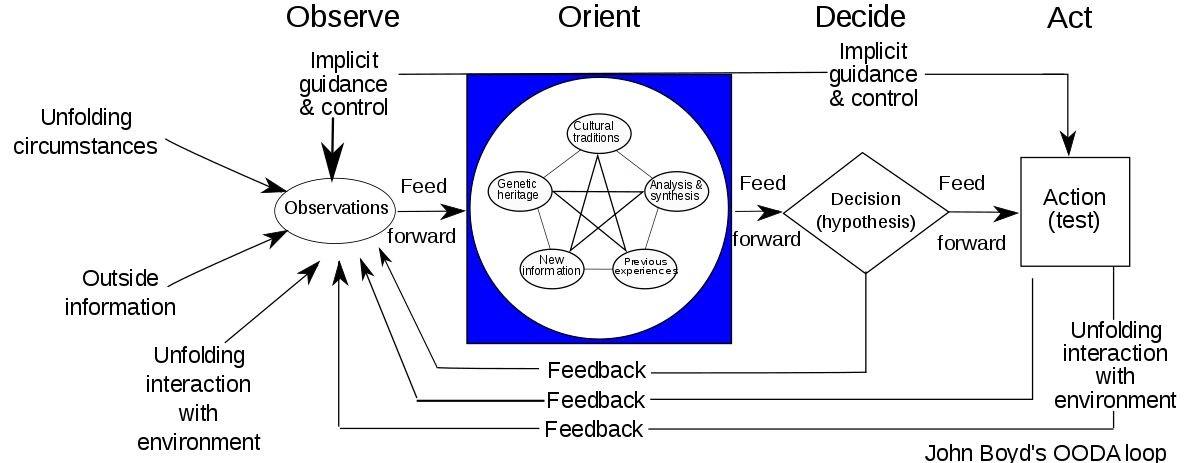
This is why Boyd is particularly concerned with making adversaries ‘fold back in themselves’. An actor folds inside itself when it finds the world to be too overwhelming and so retreats to established models instead of trying to keep pace with the world. By closing themselves off from the world, they are now vulnerable to unforeseen shifts in the environment because they can’t register them and thus can’t appropriately respond to them.
As such the model of conflict envisioned by Boyd puts just as much emphasis on psychology, the environment, and the moral fiber of the combatants as it does on the material capacity that they bring to the fight. How you organize is just as important as what you organize.
Further complicating matters is the fact that each person can run through their own OODA loop and share what they uncover with other people. This increases the iteration speed significantly by allowing individual actors to share information between themselves such as through a big protest group message. Hence, successful approaches or useful insights can quickly be spread among the network.
This form of organizing poses significant challenges to hierarchical forms of organization such as governments and corporations because hierarchies justify themselves on the basis that those in charge know best through greater awareness of the whole game. But in an environment in which things are constantly changing and enemies are trying to out-think you, bureaucratic approaches are often less effective because they can’t adapt to change and can be gamed by intelligent and agile adversaries.
When faced with this fundamental uncertainty, what you want are organizations, networks and ultimately individuals that are at “the edge of chaos”. The edge of chaos is a phase transition where systems break out of rigid, predefined behaviors, while also avoiding the sort of dissipative chaos that would dissolve the system. This can be seen in the way that groups of people use local knowledge of a protest scene to route around outsiders who don’t live there (even if that’s the state). As M. Mitchell Waldrop describes it:
“Right in between the two extremes [of order and chaos], at a kind of abstract phase transition called “the edge of chaos”, you also find complexity: a class of behaviours in which the components of the system never quite lock into place, yet never quite dissolve into turbulence, either. These are the systems that are both stable enough to store information, and yet evanescent enough to transmit it. These are the systems that can be organised to perform complex computations, to react to the world, to be spontaneous, adaptive, and alive.”[12]
Ultimately what is required to operate at the edge of chaos with any efficacy is the willingness to relinquish control, the ability to build trust and maintain trust with others and engage openly with novelty. Or to put it another way, it rewards autonomy, solidarity, curiosity and cosmopolitanism.
The fact that certain organizational forms require not just theoretical understanding, but also the nurturing and exercising of values and interpersonal trust goes a long way in explaining why the theories were never seriously adopted by the US military. Antione Bousquet’s book The Scientific Way of Warfare is a good reference on this topic and has an entire chapter dedicated to explaining the implications complexity theory has for conflict and then unpacking why the US military failed to seriously integrate such organizational insights. As he writes:
“Rather than constituting a decentralised organisation which can operate on the basis of limited and dispersed information, as in the case of al-Qaeda, the US military is developing armed forces which are dependent on large volumes of accurate information to take their decisions and act in unison. This information is to be acquired, processed and distributed through an overarching “system of systems” that has been an ambition of the military since General Westmoreland. For NCW [Network Centric Warfare] advocates, this is the “entry fee” to the brave new military world they promise and has prompted the Pentagon to earmark $200 billion or more in expenditure for the acquisition of network hardware and software over the next decade. However, reliance on this elaborate infrastructure and the skills and habits it will likely breed may in fact prevent troops from ever operating autonomously where only local or partial awareness is available. This point is all the more crucial when it becomes clear the information infrastructure will be the Achilles heel of any such army and that there exists a number of means to effectively disrupt both the hardware and software of electromagnetic equipment.”[13]
Part of the failure comes from an inability. But there’s also the fact that those in charge interpret the ideas of theorists like John Boyd in a self-serving fashion. As Bousquet writes:
“[W]hile advocates of NCW frequently refer to Boyd and the OODA “loop”, their main concern seems to be to defeat the enemy through an acceleration of the decision cycle, as opposed to the ability to act unpredictably and creatively adapt in response to contingencies.
…
Rather than utilising gains in the speed of information-processing and distribution to increase the time available for orientation and thereby the ability to adapt to changing circumstances and surprise adversaries, NCW persists with a rigid cybernetic understanding of warfare that risks rendering US military operations utterly predictable to a competent opponent.”
Attempts at decentralization and the granting of autonomy to subordinates are challenged by the natural inclination of those in charge to want to micromanage those on the ground. People seek communication mechanisms like water flows into a larger container so they automatically adapt. So the US military and intelligence agencies regularly lose despite vast economies of scale in violence and resources. As Bousquet writes:
“[M]uch will depend on the ability of the US military hierarchy to show appropriate judgment and resist the temptations of centralisation and micro-management when it is counter-productive. The historical record in this respect inspires little confidence.”[14]
The failure for the US military to successfully adopt organizational approaches based on complexity theory speaks less to the utility of such theoretical models and more to what the actual imperialist purpose of the US military is. The fact that the military failed to adapt to new organizational possibilities because of the necessity of retaining control.
It’s a testament to anarchist insights into how power functions that such dynamics of self-sabotage were predicted in fiction decades prior in works like Ursula LeGuin’s The Dispossessed. In one scene she has anarchist Shevek debate a conservative over the purpose of the military and why it fails to adopt more effective organizing principles:
“Atro had once explained to him how this was managed, how the sergeants could give the privates orders, how the lieutenants could give the privates and the sergeants orders, how the captains ... and so on and so on up to the generals, who could give everyone else orders and need take them from none, except the commander in chief. Shevek had listened with incredulous disgust. “You call that organization?” he had inquired. “You even call it discipline? But it is neither. It is a coercive mechanism of extraordinary inefficiency — a kind of seventh-millennium steam engine! With such a rigid and fragile structure what could be done that was worth doing?” This had given Atro a chance to argue the worth of warfare as the breeder of courage and manliness and weeder-out of the unfit, but the very line of his argument had forced him to concede the effectiveness of guerrillas, organized from below, self-disciplined. “But that only works when the people think they’re fighting for something of their own — you know, their homes, or some notion or other,” the old man had said. Shevek had dropped the argument. He now continued it, in the darkening basement among the stacked crates of unlabeled chemicals. He explained to Atro that he now understood why the Army was organized as it was. It was indeed quite necessary. No rational form of organization would serve the purpose. He simply had not understood that the purpose was to enable men with machine guns to kill unarmed men and women easily and in great quantities when told to do so.”[15]
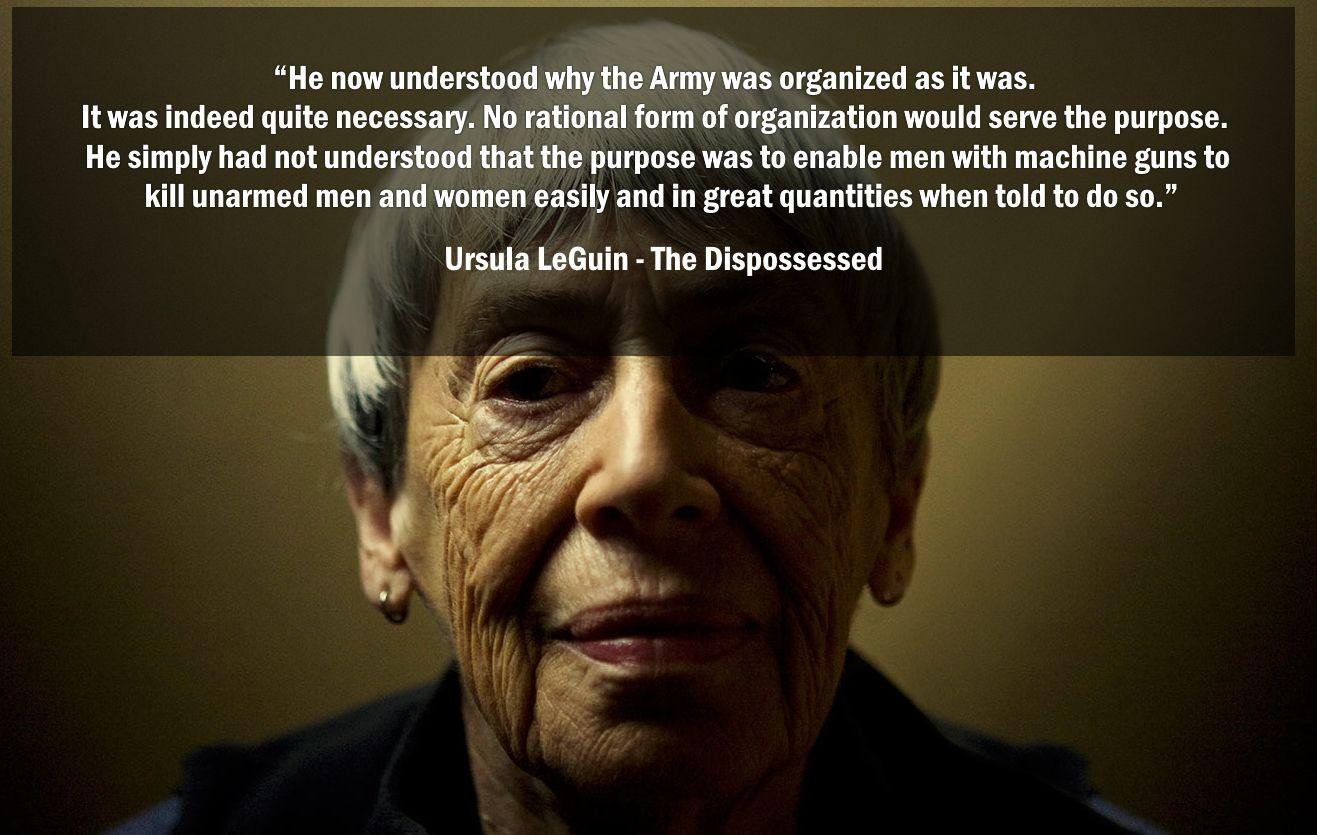
The US military failed to adapt to the new realities of conflict envisioned by figures by Boyd because the result would be a significant reorganization of the institution that would almost certainly result in significant social change. Once the most conservative institution in society moved to a model that privileged autonomy and independence, other institutions like workplaces, community organizations, schools, etc would probably be forced to shift. To use Boyd’s language, the US military (and by extension the rest of society) folded in on itself because the process of orientation would have resulted in significant social upheaval.
Unfortunately, we see a similar pattern on the left. The ‘capitalist realism’ that has predominated much of the radical left since the 80s has resulted in similar epistemic closure. With the collapse of organized labor, social democracy, and actually-existing-socialist states, the default vehicles for emancipation that were set in motion. As they collapsed or eroded the left failed to reorientate and thus folded back in on itself because it couldn’t see a way forward. But we believe that emerging technologies and the insights of complexity theory offer a far stronger basis on which to build a project of human emancipation then centralized industrial production and Marxist dialectics.
The Breakdown of Westphalia
The 30 Years War in Central Europe was a catastrophic event that resulted in anywhere from
4.5 to 8 million deaths. The war resulted in the peace treaty of Westphalia between various German states. The solution to the problems that set off the initial war was the concept of sovereign nation-states, political entities that have complete control over everything in their borders.
The erosion of the nation-state comes in two flavors. One is the increasing globalization of trade, information flows, crime, negative externalities of pollution and global existential threats like climate change. All these things do not neatly fit within the defined borders of any nation state and as such are effectively common pool resource management problems. To effectively address these concerns, nation states must concede their sovereignty. These problems will likely only increase as societies continue to change. For example, potential models of lunar settlement would use commons-based treaties to manage property and resources, which would undermine national autonomy of governments back on Earth (similar dynamics would play out if we were to restore Indigenous land management practices against colonizer governments).
The other dynamic is a reversal of what made the notion of a monopoly on force coherent to begin with. While the absolute supremacy of sovereigns has always been a myth — there have never been individuals who have had perfectly unchallengeable power over a territory — the states we’ve had have had “good enough” sovereignty such that it didn’t seem like an issue. But the overwhelming power that they enjoyed at the height of the 20th century has since eroded in some respects.
Right now we’re seeing this on the edges with somewhat non-state entities like gangs and militias, also provisioning services as in a mafia. For example, during the COVID-19 pandemic, in parts of Mexico and Brazil it was local gangs that imposed curfews on citizens because the state was so weak. Similarly Hezbollah sits in Lebanese parliament despite just openly assassinating journalists that disagree with them (as seen with Lokman Slim) .
The point isn’t that these insurgents will be able to take on the state and win, but rather impose sufficient costs such that hegemonic control is impossible. As John Robb notes in Brave New War insurgents do not need to destroy a city, they merely need to impose a “terrorism tax” through direct costs that come through direct damage to the city and indirect costs in the form of the security required to defend against such attacks. His summation of the dynamics follows:
“[A]s a rule of thumb, a terrorism tax of 10 percent would be sufficient to push a city to significantly lower equilibriums—it would cause workers and firms to leave the city for other locations until the city ceased to be a target or became less expensive to defend.”[16]
Hence small, dedicated groups of people can increasingly impact much larger groups of people through the exploitation of weak spots. Such assumptions for economic concentration apply not just for cities but any economic activity that relies on significant investments. Hence disruptions like unprepared weather events brought about by climate change or geopolitical upheaval can have a similar impact, even if they aren’t intentional.
But the gains that come with concentration are also at risk of being undercut from below. Emerging technologies like 3d-printers, computer controlled cutters, and rooftop solar (just to name a few) enables localized production that is both resilient to shocks to supply lines and increasingly economically competitive. Here is are some preliminary studies (as of 2021) on the economics of small-scale productive technology:
-
Petersen, et al (2017) showed that 3d-printing could produce certain plastic toys with 40–90% savings.[17]
-
Petersen and Pearce (2017) showed that an average American household would see a payback time anywhere from 5 years to 6 months by owning a 3d-printer and printing common items that would normally be store bought.[18]
-
Pearce (2020) showed that labs could see savings of 92% by 3d-printing certain pieces of scientific hardware.[19]
-
A 2015Guardian article on 3d-printing for humanitarian disaster relief claimed that there is potential for significant savings for small items like umbilical cord clamps because so much of the cost is transportation.
-
The FarmBot, a small-scale farming robot, has a payback time anywhere from 4 years to 6 months.[20]
-
The current payback time for owning solar panels is, as of 2021, 8 years.
-
Anyone can d-print the base of guns for a couple dollars (although you’ll need to buy gun kit parts to finish).
While such a summary ignores things like differences in quality, skills barriers and local context, what it nevertheless shows is that we are increasingly moving to a world where access to the means of production will be considerably more democratized. Of course we’re still far away from the utopian world of Star Trek replicators where every person can have the entire means of production on their desk.[21] The progress in small-scale manufacturing means a renegotiation of the global economy, not instant autarky.
But we also shouldn’t discount the possibility that we could make significant progress when it comes to innovation should small-scale productive technology reach a critical mass. Many people, even radical leftists, ignore just how deeply productive technology has been shaped by the needs of class struggle. But as James C. Scott notes, capitalism selects for control and then efficiency:
“As Stephen Marglin’s early work has convincingly shown capitalist profit requires not only efficiency but the combination of efficiency and control. … Without control the capitalist cannot realize that profit. Thus organizational forms which enhance capitalist control may increase favor with capitalists even if they affect productivity and efficiency adversely.”[22]
Accessible, small-scale productive technology overcomes the problem by dissolving the difference between worker and owner and by (ideally) giving everyone the capacity to become producers (be it for profit, to produce gifts or for self-consumption). Because control over the people producing is far less of an issue because there is less of a power imbalance when it comes to negotiation, the control necessary to derive profits is a non-issue.[23]
That these alternatives would be news for many leftists speaks not to their impracticality, but rather to the immense amount of energy that goes into making it seem like There Are No Alternatives to the status quo. As the late David Graeber wrote:
“Why is it that projects … aimed at democratizing society are so often perceived as idle dreams that melt away as soon as they encounter hard material reality? In our case, at least, it had nothing to do with inefficiency: police chiefs across the country had called us the best organized force they’d ever had to deal with. It seems to me that the reality effect (if one may call it that) comes rather from the fact that radical projects tend to founder—or at least become endlessly difficult—the moment they enter into the world of large, heavy objects: buildings, cars, tractors, boats, industrial machinery. This in turn is not because these objects are somehow intrinsically difficult to administer democratically … it’s because … they are surrounded by endless government regulation, and are effectively impossible to hide from the government’s armed representatives. …
The rarity with which the nightsticks actually appear just helps to make the violence harder to see. This in turn makes the effects of all these regulations—regulations that almost always assume that normal relations between individuals are mediated by the market, and that normal groups are organized internally by relations of hierarchy and command—seem to emanate not from the government’s monopoly of the use of force, but from the largeness, solidity, and heaviness of the objects themselves.”[24]
If true, then there are many potential “alter-modernities” that could have existed. We’re not just talking about differences in technological and social configurations at any particular instance, but rather entirely different trajectories. Had the industrial revolution played out differently, it’s likely that many assumptions about our world that seem indisputable would be seen as absurd or fanciful.[25]
If we’re right and there are functional sociotechnical arrangements outside the centralized corporate capitalism that defines our world today, then we should expect serious disruption as we uncover these alternate possibilities. To give an obvious example, the social upheaval of the 1960s was driven in part by the post-war abundance afforded to citizens and the values such a state of affair encouraged.[26] As the report published by the Trilateral Commission titled The Crisis of Democracy report put it:
“In all three Trilateral regions [the United States, Western Europe and Japan], a shift in values is taking place away from the materialistic, work-oriented, public-spirited values towards those which stress private satisfaction, leisure and the need for “belonging and intellectual and esthetic [sic] self-fulfillment.” These values are, of course, most notable in the younger generation. They often coexist with greater skepticism towards political leaders and institutions and with greater alienation from the political processes.”[27]
While not every disaffected youngster channeled such dissatisfaction towards progress politics, those who were inclined towards such politics were overwhelmingly young. But such movements relied on a low cost of living that gave them plenty of time to engage in activism. Hence the mass movements were kneecapped by the austerity that was imposed in the following decades, especially in countries like America.[28] As L.A. Kauffman recounts it:
“The massive economic crisis that began in 1973, combining deep recession with steep inflation, undercut even middle-class activists’ ability to devote most or all of their energies to organizing: it was simply no longer possible, as it had been throughout the sixties, to comfortably skate by with minimal income.”[29]
Small-scale productive technologies that produce relative abundance would reverse such austerity and provide an economic base that people could operate off of. We probably wouldn’t see a mass conversion of individuals to socialism/communism/anarchism, but would create space for many altruistic individuals to devote more time to activism and movement building.[30]
What these technologies ultimately offer is what the philosopher Pete Wolfendale called a “class war economy”. This sort of low-overhead, flexible, illegible productive technology is not just perfect for supporting those engaging in overt politics, it also has the virtue of subtly undermining the capitalist order on various fronts by both offering various products cheaper. It also shows the conceptual bankruptcy of things like large corporations, bosses, property claims, etc. This allows us to engage in what is effectively economic guerrilla warfare that avoids direct conflict with the system, instead attempting to outmaneuver and out last it.
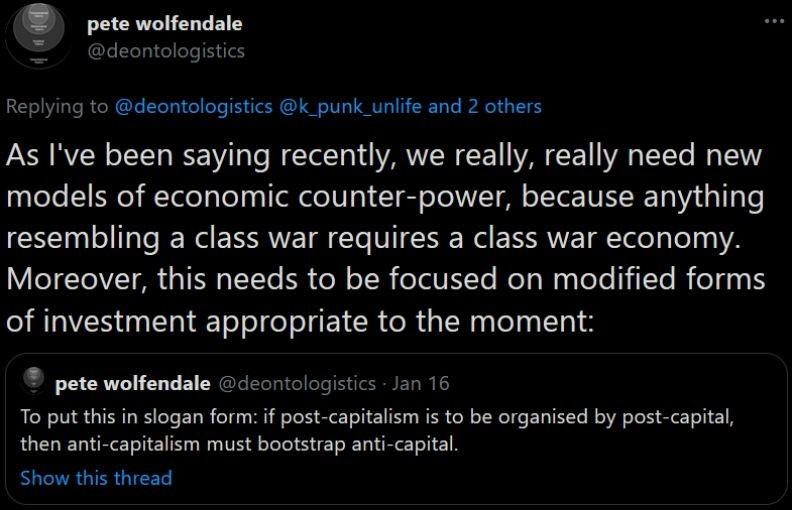
We are never going to be able to out-hierarchy the control hierarchies that rule our world. But instead of fighting them head on, we can instead erode them by creating a structure that is more flexible and distributed. Over a long enough time frame, the distributed flexibility of the system means it will be both more resilient in the face of unexpected negative events and more capable of taking advantage of positive developments.[31] This means that it can eat away at the existing structure piece by piece.
Another reason to be hopeful about emerging technologies is that many are built to be open-source and hence, are partially non-rivalrous. The non-rival nature of the designs of such technologies is significant because it’s the non-rival nature of projects like Wikipedia or piracy that makes them the closest we’ve come to a functional techno-communism.
Information is easy to defend and transmit. The Tor internet network allows for a form of hosting that obscures the location of the host. VPNs and end-to-end encryption allow people to access and transmit information with security. In worst case scenarios like authoritarian clampdowns on internet access, techniques like steganography and sneakernets still allow the transport of information.
All these developments frustrate attempts to control the process through measures like intellectual property law are fighting an uphill battle in this environment. When the majority of investment in the means of production are centralized, legible factories, the number of people you need to commit to actions like strikes or takeovers is high and the action is dangerous. But when the primary mechanism to capture profits is information, the critical mass required to make an impact is much lower.
Moreover failure is less costly. While individual leakers face significant harm if they are caught and prosecuted, they can take some comfort in knowing that if the information is public, it cannot be put back into the bottle (as seen with Snowden or Manning). While this is obviously a terrible outcome for those punished, it’s a considerable strategic development over prior forms of struggle wherein defeat would mean not just the persecution of workers, but also revision to prior ownership arrangements.
Of course these technologies have dark sides. Privacy and peer-to-peer technologies can increase agency, while also be simultaneously harmful to society in some ways. While the current system of nation-states is responsible for systemic injustices and violence perpetuated at an unimaginable scale, this does not mean that there aren’t worse alternative arrangements. A fascist US is still worse in many ways than a liberal US, even if they’re both horrifyingly bad (don’t be fooled, they will both be imperialist).
While there have been successful stateless societies that have operated at scale, the notion that you can just undermine the state and that it will magically lead to utopia is hubris. As complexity theorists Yaneer Bar-Yam and Alexander S. Gard-Murray note in their paper Complexity and the Limits of Revolution, autocracy is statistically more likely to emerge from violent revolutions than democracy. The reason why is that democracy as a system is more complex than autocracy and thus requires more time to establish. The chaotic violence that marks post-revolutionary periods is extremely difficult to channel into liberatory experiments in social coordination. As Bay-Yam and Gard-Murray write:
“[W]hile states are sometimes portrayed as being formally planned, the successful implementation of such plans must depend on an incremental accumulation of complexity. Constitutions can be written quickly, but if they call for institutions which are more complex than existing ones, they will take significant time to implement.... [T]he process by which complexity increases does not necessarily occur at a steady rate. Complexity may increase more rapidly in one period than previously,as described by the theory of punctuated equilibrium in biological evolution. But even in cases of rapid increase, higher levels of complexity are still dependent on previously existing structures.”[32]
Once established, liberal democratic states tend to generally be more stable than more autocratic counterparts (in the modern context anyway). But they need to survive long enough before that becomes a reality and things like international conflict, war and colonialism play against that development. Similar dynamics will be at work with a transition to a stateless society. A functional mass stateless society will be considerably more complex than the liberal democracies we see today. As such, the amount of energy and time required to stabilize things will be higher.
But one virtue statelessness has over democracies in this regard is that a liberal democracy works through centralized formal institutions that are backed through a monopoly on violence. A stateless order on the other hand works through alternative mechanisms and as such does not always need to directly take those institutions head-on.
This speaks to a broader point, namely that forms of social organization are suited to particular environments. This is why that lurking behind most social struggles over a particular concern are actually fights over the broader context that the struggle is merely a manifestation of. In his book Worshipping Power, Peter Gelderloos uses the term cratoforming — the process by which states shape the environment around them so as to make it more suited to their functioning. We need to undo this damage and create the sort of environment that states wilt in, namely one that is non-linear and dynamic.
At the same time, because overnight revolution will almost certainly result in a worse outcome, we need to adopt a strategy of strategic patience when appropriate. In this process of growing our capacity, there will be many detentes, appropriations, and compromises by states with our developments. As David Graeber put it “presumably any effective road to revolution will involve endless moments of cooptation, endless victorious campaigns, endless little insurrectionary moments or moments of flight and covert autonomy.” And it’s with this disclaimer that we turn to one of the most exciting contemporary experiments in e-democracy at scale.
vTaiwan: A case study in scaling direct democratic decision-making
Democratic decision making and deliberation confer some benefits to collective action at scale that other forms of decision making like hierarchies or markets do not. Hierarchies block feedback from below because the people in charge have a limited capacity to process information (and because hierarchies tend to exist for the purpose of control, not for enabling people). Markets, however, still provide some mechanisms for information coordination in the limited ways they have been explored so far.
The benefits of democratic decision making come about because they involve people actively engaging in debate with one another. It is through debate and discussion that more complex problems can be tackled because they can be understood from many different sides and the tradeoffs to various parties can be understood.[33] Democracy may be an inefficient collective decision-making tool in numerous ways but it still loosens the restrictions on agile societal feedback learning loops.
The problem of managing complex decisions.
Representative democracy, which works by delegating responsibility to another reaches its limit when individuals are not capable of understanding the context they operate within. As an overview of the work of complexity theorist Yaneer Bar-Yam in Vice Magazine put it:
“In the case of a representative democracy, we are expecting a president—aided by advisors and Congress, of course—to ultimately make decisions in an environment that is far too complicated for any one person. Democracy as we know it is failing.
“We cannot expect one individual to know how to respond to the challenges of the world today,” Bar-Yam said. “So whether we talk about one candidate or another, the Democrats or Republicans, Clinton versus Trump. The real question ultimately is, will we be able to change the system?”
“We’ve become fundamentally confused about what the decisions are, and what their consequences are. And we can’t make a connection between them,” he added. “And that’s true about everybody, as well as about the decision-makers, the policymaker.
They don’t know what the effects will be of the decisions that they’re making.”
Bar-Yam proposes a more laterally-organized system of governance in which tons of small teams specialize in certain policies, and then those teams work together to ultimately make decisions.”
Small teams working together is one way to have a more nuanced perspective on issues. But direct engagement in democratic decision making is another way to get around the problem of complexity. By allowing for multiple perspectives on any single issue to be debated and drawn out, you can (ideally) come to a more nuanced perspective on the decisions you make.
vTaiwan helps build consensus with greater efficiency and buy-in
vTaiwan came about after the success of the 2014 Snowflower movement. As part of the reforms enacted, the government reached out to the g0v community, a Taiwanese grassroots group that looked to improve government accountability through open-source tools. vTaiwan is a technological system built by g0v that allows for greater real-time direct democracy at scale. As its website describes it:
“vTaiwan is an online-offline consultation process which brings together government ministries, elected representatives, scholars, experts, business leaders, civil society organizations, and citizens. The process helps lawmakers implement decisions with a greater degree of legitimacy. It has various touchpoints such as a website (vtaiwan.tw), a combination of meetings and hackathons along with the consultation process. vTaiwan is also an open space, it is a combination of time and space run by participants to work on cases brought in.”
At the core of vTaiwan is a tool called pol.is, a machine-learning and network visualization algorithm that can evaluate real-time feedback from citizens on issues, which is then visually representative of them such that the areas of disagreement/agreement are immediately obvious to all involved. The overlap of agreement is especially helpful because it helps people identify possibilities for broad consensus, while also frustrating possibilities for trolling.
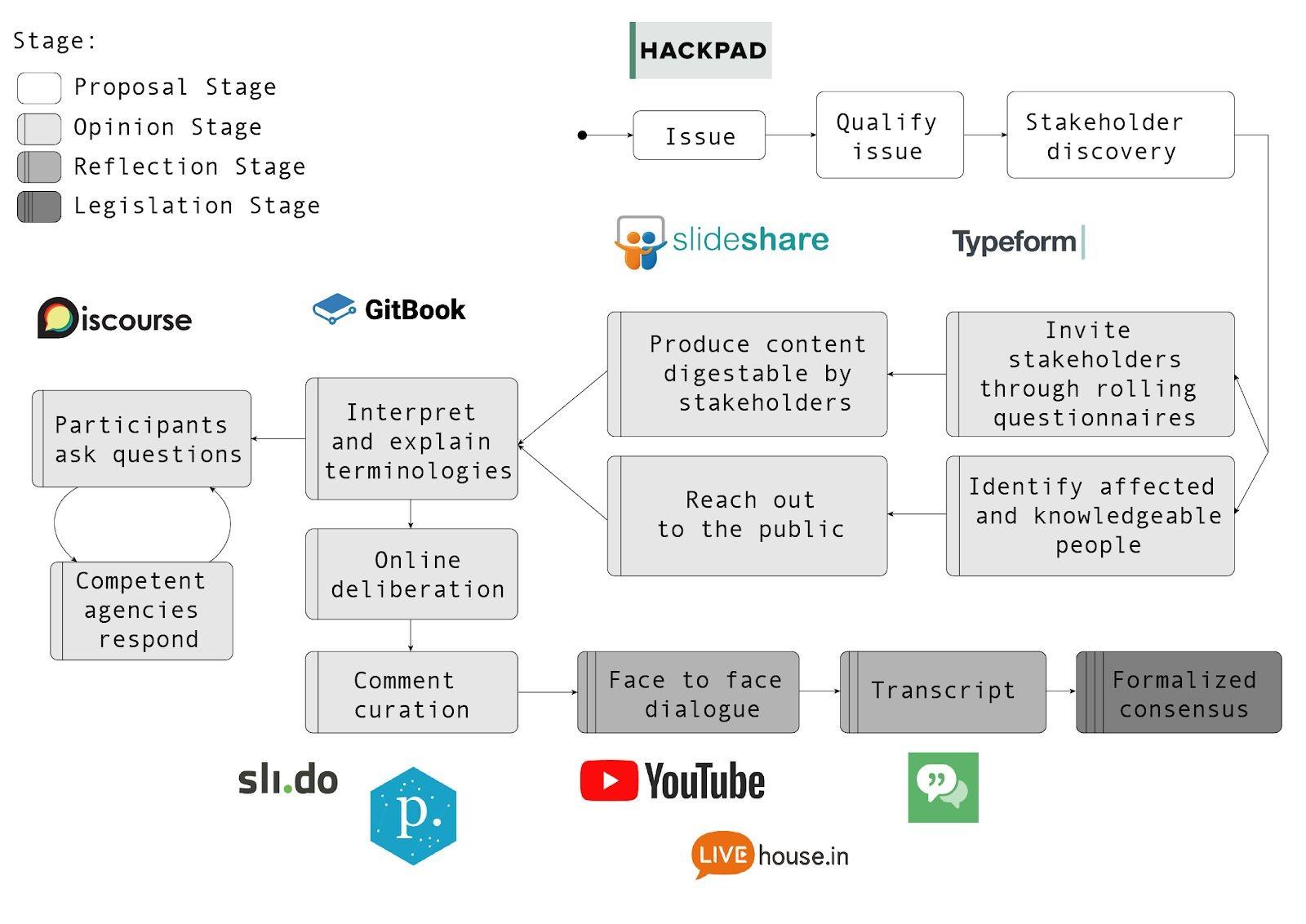
Flowchart of vTaiwan. Source
Technologies like pol.is have the potential to enable societies to deal with a more complex world. By allowing for a wider diversity of opinions that can be incorporated, collectives can adopt more nuanced perspectives towards problems and concerns. By making consensus easier to build, coordinated action at scale is easier because there are fewer dissenters.The less dissent a social network has the more likely it is to cooperate in other ways.
Moreover, the fact that this works on open-source software means that it can be easily exported. Rich Barlett, who contributed to the open-source consensus decision making software
Loomio, notes how in his article Organizing Beyond Organizations: Good News Stories from Spain and Taiwan:
In Taiwan as in Spain, the credibility of the new political actors is rooted in the streets. Second, those actors have deployed a rigorous political strategy, systematically making allies throughout the public & private sectors, and civil society. The folks from vTaiwan told me how they interviewed every state official they could find and used the results to map out which government departments were almost ready to concede decision-making power to citizens. Then they used those early engagements as leverage, playing departments off each other in a competition for who could be the most participatory. That is the kind of strategic genius that could be repeated the world over.
Stories like the above co-occur with stories about Taiwanese people engaging in large scale deliberations about the complexities of letting massive companies like Uber take over their streets. They use these technologies to change their laws. Whether you agree with this approach itself, it should be clear how these social and technical can be applied to a range of problems currently impeding coordination.
States deliberately moving in a more decentralist direction and giving their citizens more autonomy and agency is an exciting development because it could result in genuine alternatives to the hierarchical model that predominates at scale. Such experiments are certainly a far cry from a genuinely liberated society, but they offer empirical data for how various solutions to social problems might work at scale.
Possibilities for New Internationalism
While few acknowledge it, the internet has immense potential in the ends of left internationalism. The old internationals were centralized affairs which were necessary because the cost of communication made it difficult for individuals. The congresses where delegates from various workers movements would come together to discuss strategy and demands that they would then distribute to their respective organizations. This approach, which emphasized mass, had several problems, one of which was that it can only work by ignoring the underlying values and motivations of those involved. This is seen in the various splits of the workers movement, such as that of the anarchists and the Marxists in the First International or the nationalists and the internationalists in the Second support over the former supporting their respective nation-states in WWI. These organizations couldn’t contain the differences in values and as such would predictably fall apart when the papered-over differences were pressed.
Thankfully what the cheap communication tech that underlies the internet enables is people to bypass the need for such centralized institutions. Instead of deciding on a particular demand that the masses in a particular region can work togethers under the supervision of some organization, they can instead pursue a multitude of strategies
Such an approach might not have the sort of lockstep discipline that typified prior labor movements, but this sort of looseness is a virtue in a constantly changing world, both for reasons of flexibility and redundancy. Our internationalism must be an antifragile network that can take advantage of opportunities afforded, while also being resilient to the inevitable attacks in reaction to it.
Emerging technologies also allow us to more easily give material support to those in need. While travel is certainly possible — leftists and Indigenous campesinos traveled to Chiapas from all over the world to support and learn from the Zapatistas or went to Rojava to fight ISIS — the fact of the matter is that we’re just going to be less capable of moving materials around the world than the people we fight against. If we ever get to the point where we have the logistic capacity to rival states, we’ve probably already won.
It’s here that the aforementioned advances in productive technologies have value. One of the biggest problems with prior leftist movements is the incentives that encourage nationalism. As Adam Przewoski noted in Capitalism and Social Democracy, social democratic parties would inevitably find themselves appealing to [34]“‘the masses,’ ‘the people,’ ‘consumers,’ ‘taxpayers,’ or simply ‘citizens’” to win elections and in doing so would dilute their radical program for mass appeal. Likewise working class movements have been responsible for horrid acts of racism that colonizers attempted to justify by saying that immigrants were in competition with them for jobs.
But open source technology overcomes the zero sum aspect of national struggle by ideally creating a common pool of software and hardware that everyone can access and contribute to. Indeed in the long run it’ll probably be those who face extreme poverty who have the most to contribute to such technologies because they have the strongest incentives to cut costs while retaining quality.
If we can get technologies that allow individuals and communities to bootstrap capacity at scale, then the amount of material we need to move across borders to make a difference decreases significantly. Tools like 3d-printers, renewable energy generators, computers, etc are much easier to move across borders and can be used by communities to bootstrap their capacity. Learning materials and digital communications can allow people to educate themselves or learn remotely about phenomena, skills, and history from experts without having to have them in-person. Actions like open-source intelligence, digital payment systems and hacking can allow concerned parties to influence those on the ground while remaining remote.
Spreading technologies of resistance that let the marginalized fight asymmetrically has a storied history. One such example is the AK-47, which was originally designed for Soviet resistance against the Nazis, but ended up playing a vital role in decolonial struggles after World War II. The weapon was simple and durable, which made it perfect for the illiterate dispossessed who could use them to win drawn-out insurgencies.
However these technologies are also available to our enemies.[35] An international leftism would be fighting not just the decaying neoliberal world order, but also post-modern “international nationalists” who are also capable of employing bottom-up forms of organization. The actual dynamics and lines of such a conflict are still emerging, but we will assume that the leftist coalition will be more diverse, both in terms of race/gender and occupation. This is a significant asset given the evidence that more diverse teams are better at solving problems in complex domains than heterogeneous teams. As Earl Lewis and Nancy Cantor write in The Diversity Bonus:
“There is a bonus to be reaped in bottom-line performance when diverse groups function effectively together as teams in the highly charged, competitive, fast-changing work settings we face increasingly in today’s world—be it in business or in scientific discovery, in classrooms or on the battlefield. The relevant ability of an individual may not suffice— especially if those in the room share almost the same knowledge and set of approaches to problems that require the flow of all kinds of insights and the application of varied tools. Success may depend on the cognitive diversity that makes for intelligent teams, as Page demonstrates in this volume. What we want today are high- ability people who think in different ways and can function together, playing off each other and maximizing the emergent properties of diverse, inclusive, well-functioning teams.
In everyday parlance, the diversity of a team will likely be described as a function of the social identities, complex and intersectional as they surely are (arrayed along dimensions such as race, heritage, sexual orientation, class, and so on), of its members.
…
[I]t is the cognitive diversity of a team— measured by the lack of overlap in its members’ repertoires— that produces a diversity bonus.”[36]
However while diversity is an asset, it requires (like anything complex) more time to nurture and grow than simpler approaches. Hence carelessly pursuing diversity without putting in the proper care to create robust teams ends up. Scott Page uses the example of a Norwegian law that mandated 40% female representation of the boards of directors for companies that ended up reducing productivity because it was imposed in such a top-down fashion.
Instead Page turns to more organic forms of emergent diversity to justify his thesis. Among the papers he cites are:
-
A 2007 article that showed that diverse online crowds of amatures could outperform experts when solving complex problems.[37]
-
A 2015 paper reviewing data on collective intelligence that claimed that group diversity was an asset when solving creative or innovative tasks.[38]
-
A 2011 paper that shows that the majority of high impact papers in the social sciences have atypical connections between different research domains when compared to a random sample of paper published in the same journal.[39]
-
A 2014 article in Nature that shows that papers who have co-authors who have last names from different backgrounds tend to be cited more.[40]
While it’s difficult to prove absolute correlation because of how complicated working in teams are, we believe that this evidence gives credence to the project of building a global network that crosses both national and disciplinary boundaries to solve complex problems. In order to defeat contemporary reactionaries, we need to leverage benefits that are partially denied to them.
Another possible strategy is building sufficient capacity in key cities that are the centers of global economic activity since so much of the contemporary economy takes place within cities. In today’s world when information work is the primary commodity that generates profits, dissatisfied knowledge workers like renegade intelligence contractors or tech giant whistle blowers can have an outsized impact by getting proprietary knowledge into the broader world. As previously mentioned information is easy to move and defend.
Capitalists can guard against this by restricting access to the information within the workplace such as siloing of information in government computer systems, but introducing such friction makes the overall process less efficient. The on-the-job agency that many tech workers have is a direct result of the fact that the sheer amount of possibilities make the sort of work-to-rule management that typified prior forms of capitalism difficult.
Such action has precedent in the Snowden leaks. And while the NSA has taken action to prevent similar breaches of information in the future, the measures they have undertaken hamper the ability of their analysts to do their job. As Hugh Gusterton wrote in the wake of the Snowden revelations:
“American leaders say they will avoid future Mannings and Snowdens by segmenting access to information so that individual analysts cannot avail themselves of so much, and by giving fewer security clearances, especially to employees of contractors such as Booz Allen Hamilton, where Snowden worked. This will not work. Segmentation of access runs counter to the whole point of the latest intelligence strategy, which is fusion of data from disparate sources. The more Balkanized the data, the less effective the intelligence.”
They don’t call it the central intelligence agency for nothing. Such data siloing and internal bureaucracy is what was directly responsible for intelligence failures like that of 9/11. As Clive Thompson wrote in a 2006 New York Times article:
“[D]uring the cold war, threats formed slowly. The Soviet Union was a ponderous bureaucracy that moved at the glacial speed of the five-year plan.
...
Analysts also did not worry about anything other than their corners of the world. Russia experts focused on Russia, Nicaragua ones on Nicaragua.
…
Then on Sept. 12, 2001, analysts showed up at their desks and faced a radically altered job. Islamist terrorists, as 9/11 proved, behaved utterly unlike the Soviet Union. They were rapid-moving, transnational and cellular. To disrupt these new plots, some intelligence officials concluded, American agents and analysts would need to cooperate just as fluidly — trading tips quickly among agents and agencies. Following the usual chain of command could be fatal.”
Intelligence agencies have almost certainly moved towards such a model in the proceeding decades. But the underlying tension between the efficiency that could be unleashed by making the system more open and the loss of power that would inevitably result from such a move. If the US government really cared about preventing terrorism, they’d move towards an open-source model wherein far more information was available to the average person.
This distributed approach to intelligence is effectively what networks of antifascist researchers have built organically. They use constantly shifting networks of trust and ad-hoc sharing of information to identify reactionary threats to others. While duplication of efforts occurs because of decentralization, the movement as a whole is resilient, adaptive, and remarkably effective.
But adopting such a model, no matter how many lives it might save, would also undermine the dominance hierarchies that the ruling classes want to uphold. By giving autonomy to those who defend against threats, they risk them turning their efforts to dismantle the privilege and wealth that they have acquired.
But these sorts of trade-offs will only become more pronounced as information warfare ramps up is only growing. As co-author of this report Emmi Bevensee put it in her writeup for Center for the Analysis of the Radical Right: “The opposition to this horror [of patchwork multipolar fascism] is not unipolar, liberal imperialism, but rather complex, adaptive and overlapping networks of anti-fascist, anti-imperialist, and internationalist solidarity.” To understand why this is the case, let’s take a look at the nature of contemporary information warfare.
You can beat information war through networked resistance
There are many ways to win against information warfare. The important part is to leverage its weaknesses and move in swarms.
Because we are networked through trade, the internet, travel, and other means, information warfare faces an increased threat of being turned against itself. For example, it is often considered to be in a state intelligence agency’s best interest to encourage conspiracy theories in their rival countries. An example of this could be recent Kremlin-backed conspiracies in the US that 5G causes COVID-19, which in some unknown part led to people destroying 5G towers themselves or huge numbers of normal radio towers that they thought (incorrectly) were 5G. By spreading conspiracies that convince people in a rival country to attack telecommunication infrastructure, you increase the chance that the nervous system of that country will be disrupted or broken.
But conspiracies, as with any other type of information, are difficult to keep within one country. Russian state media has been found to spread COVID-related 5G propaganda, which while possibly contributing to the death toll in the United States, has also potentially spread into
Russia having the third-highest death toll. There are over 32k posts about Qanon on VK (Russia’s Facebook) and there’s a Russian Qanon Telegram channel. In the modern world, we see conspiracies traveling between rival countries. This undesirable outcome is the result of the complex networks that define our contemporary era.

Kremlin intelligence linked think tank Katehon spreads the conspiracy that 5G causes covid and that it was a US bioweapon. Subsequently, Russia has among the world’s highest COVID-19 death tollhttps://www.theguardian.com/world/2020/dec/28/russia-admits-to-world-third-worst-covid-19-death-toll-underreported][ and has a Russian Qanon channel on Telegram.
Attempts at information isolation are leaky
Some states, such as the PRC and DPRK (and to a lesser extent Russia), attempt to mediate this by largely isolating their internet from the world, to increase the speed of response time to critical attacks. However, this requires a degree of authoritarian control over people, in which people’s internet can be even more tightly controlled than the modern capitalist form (a la Twitter, Facebook, etc). This positions a state well to both clamp down on dissent, but also control the broader flow of information including conspiracies.
However closed governments are more rigid and fragile in the face of change. Because they rely on subordinating individuals to function, they must suppress individual initiative and autonomy to retain power. The relation between those ruling and those being ruled becomes increasingly zero-sum because those being ruled can use any agency they seize to erode the control of the ruling class. The zero-sum nature of control means that society as a whole is less capable of responding to significant unexpected changes since interventions can only come from the central authority.[41]
On the other hand, a more open government and a strong civil society hurts the capacity of the state to get its way but makes the broader society far more effective at responding to complicated challenges without sacrificing individual freedoms. Again, Taiwan tells this story. In this podcast episode with Audrey Tang, they discuss how Taiwan was able to create grassroots resistance to conspiracy theories in a way that prevented actual COVID-19 outbreaks. In one example, through PTT, a Taiwanese social network similar to Reddit, they were able to quickly find out about and react to COVID-19 despite CCP-backed repression of the information initially. Another example Tang gave was that of a meme that was gaining popularity that claimed a person photographed was a HK thug from the protests who was supposedly responsible for multiple thefts. Despite these propaganda efforts people in Taiwan were able to discover that the user account was state-run and lying and then publicly shame them in a more viral way.
The power of networked resistance can also use swarms to build collective intelligence and solve problems through things like combining social media with open-source intelligence and other sense-making meta-tools, like SMAT, that help to visualize trends on social media.
Complexity as resistance against fascism
Many of the ways that these combinations of tools discussed above can be used to resist top-down pressure and help networks adapt are also vulnerable to attacks from malicious users. The most obvious example of this is the use of swarm tactics by far-right, fascist, and white supremacist networks. Some of the ways they do this are things like collective mobilization for doxxing or stigmergically organizing and instigating fascist violence. These represent collective attack vectors, either from large actors like states or corporations or just by societies (especially the marginalized). More often than not, it is some combination of many such factors all contributing to eventual difficulties.
However, socially minded networks can, to some extent, also use these same social and technological tools to pivot and resist even phenomena such as fascist attacks. The following infographic, entitled “It Takes a Network to Defeat a Network”, explains some of the key ways that networks can resist (high quality version).

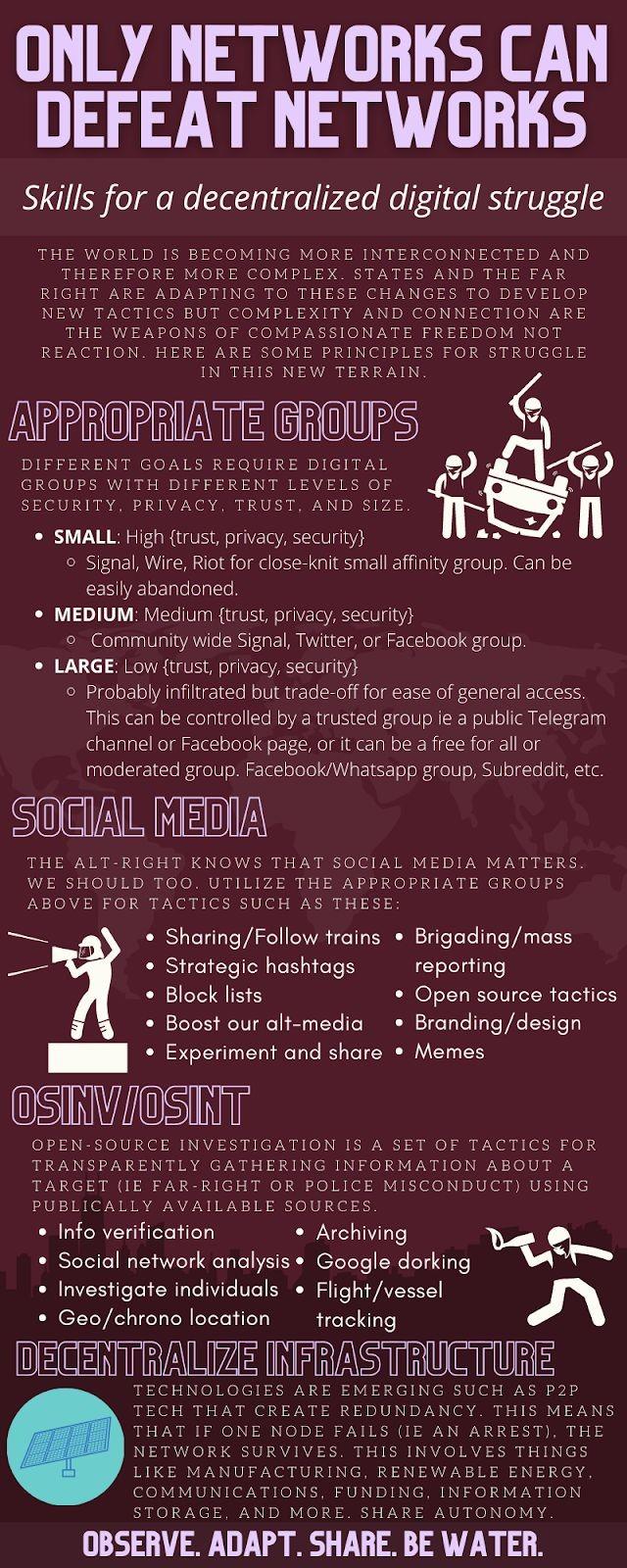
There are a few general categories of “decentralized digital struggle.” There’s a need for different sizes of groups, with different levels of trust, privacy, and security. There are also some general tactics for digital resistance through social media. Some of the key examples are as follows:
Retweet or Facebook sharing trains: This is pretty self-explanatory, but this is just a way to artificially boost the content of trusted users or organizations. Make America Great Again Facebook groups are extremely skilled at this.
Strategic use of hashtags: Hashtag campaigns can be collectively developed or centrally administered to influence or introduce narratives.
Follow-trains and block-lists: Groups like these can be used to decentrally inflate follower counts of important accounts or to just more tightly interconnect existing online networks.
Support trusted alternative media outlets: Utilize these strategies to combat media monopolies and force more mainstream media to publicly address the realities of more radical organizers and people on the ground. This can also be useful for drowning out competitive fascist, conspiratorial, or disinformation alternative media outlets. Conspiratorial outlets such as Global Research, Zerohedge, and The Grayzone utilize a tactic called ‘splintering’[42] wherein a wide variety of blogs syndicate or minorly adjust and then republish each other’s articles to create a sense of consensus and leverage a story up into larger media outlets. Although this is unethical for disinformation purposes, it is an avenue of struggle for legitimate alternative media and can be coupled with these social media strategies. Shoutout to organizations like Unicorn Riot for staying afloat and on top of things all these years later.
Dogpiling, mass-reporting, and brigading: These groups can help to push-back against attempts to brigade marginalized people by fascist groups, to attack fascist information warfare, or simply to more effectively promote radical counter-narratives in the mainstream in a way that gives the appearance of a consensus. Further, as the political Right does, a large Telegram group or the like can be used to coordinate efforts to mass report or otherwise harass dangerous actors:

Efforts to harass and mass-report an antifascist twitter account on Telegram.
Open-source insurrection: These types of strategies have other semi-intentional by-products of better integrating the strategies, art, and media of otherwise disconnected global movements. Examples of riot techniques spreading from Hong Kong to Portland or specific protests spreading from Chile to San Francisco abound and culminate to form a kind of open-source protest manual. This can also be used to share specific construction and formation techniques such as in this famous zine: Bodyhammer: Tactics and Self-Defense for the Modern Protestor which breaks down the basics of things like shield walls and shield construction techniques in reproducible ways.[43]
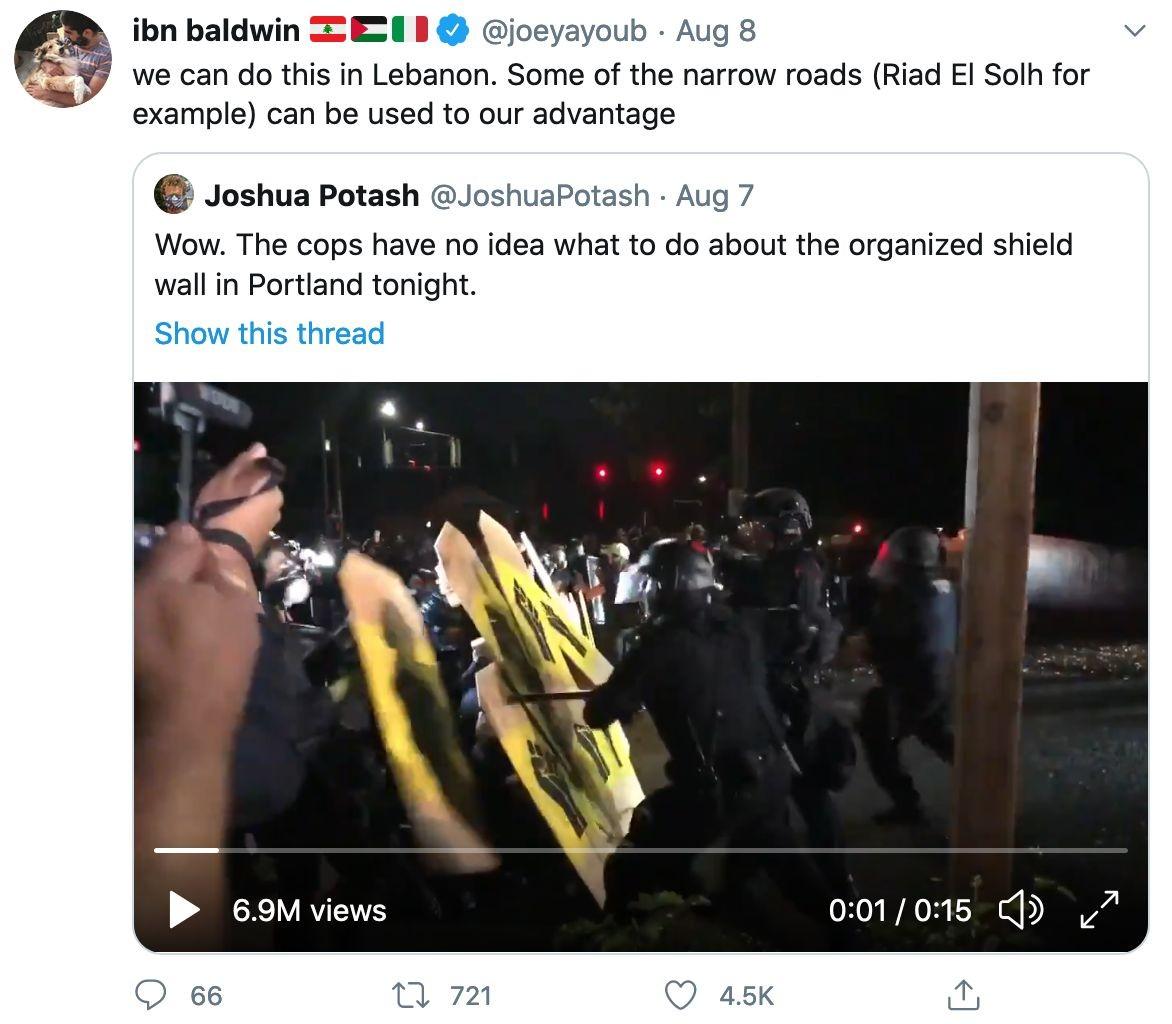
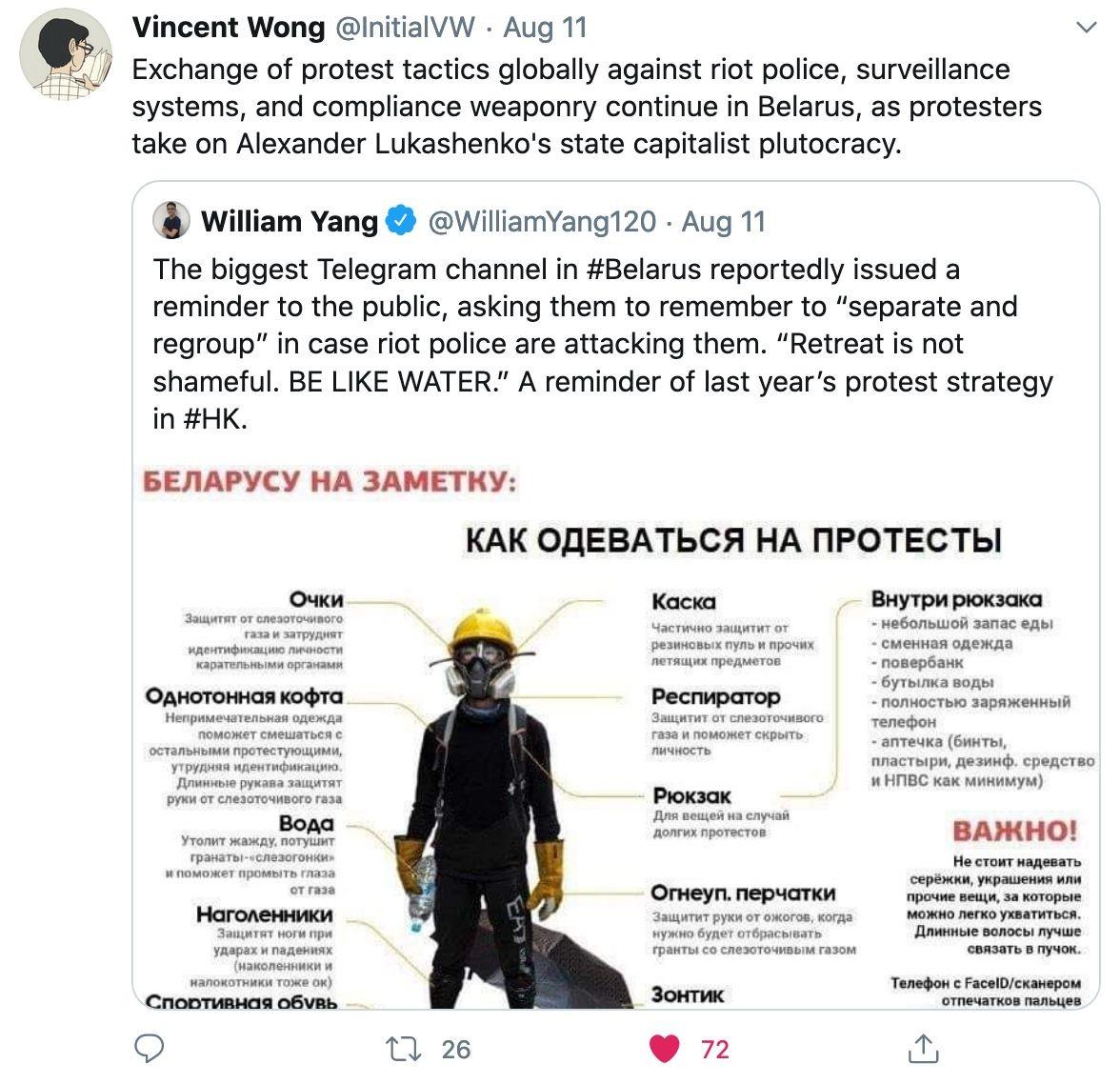
Information sharing via Twitter from Portland to Lebanon and from Hong Kong to Belarus
Branding: Obviously activists hate the concept and practice of branding (for many good reasons!) but the basic principles of things like strategic messaging, catchy graphics/videos, and basic search-engine optimization are useful to a wide range of efforts. The far-right intuitively accepts this, as evidenced in groups like Patriot Front and Identity Evropa, while the left tends to throw the baby out with the bath water. Within this set of tactics is issues of how to communicate messages which is addressed by some orgs like the Anarchist Agency and other effectively branded movement outlets like It’s Going Down and Crimethinc. Glossy and flashy media from memes to well edited videos gets people excited to get involved. Clear messaging increases and directs this momentum.
Memes: Need we say more? No, but seriously. Memes are high context packages of compressed information. Because of the compression, they are not good at nuance, but they are uniquely suited towards virality and thus spreading a highly simplified message as far as possible. This is decidedly the movement territory of Internet fluent radicalized gen-zers, though us ancients can participate with some effectiveness as well. Take a complex idea, make it simple and funny. The Right knew the power of trolling and harnessed it to help build the Alt Right Trump phenomenon. What can we do?
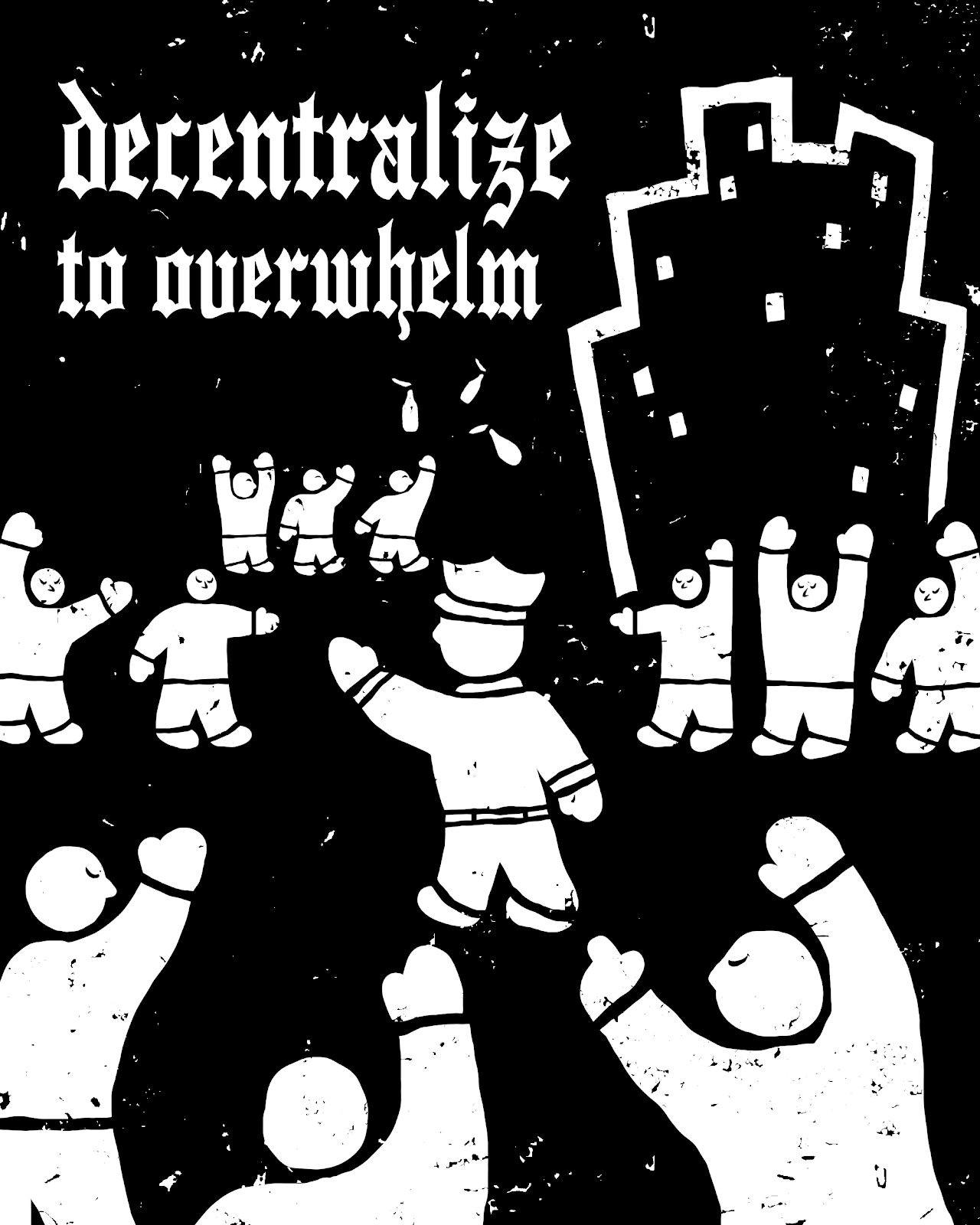
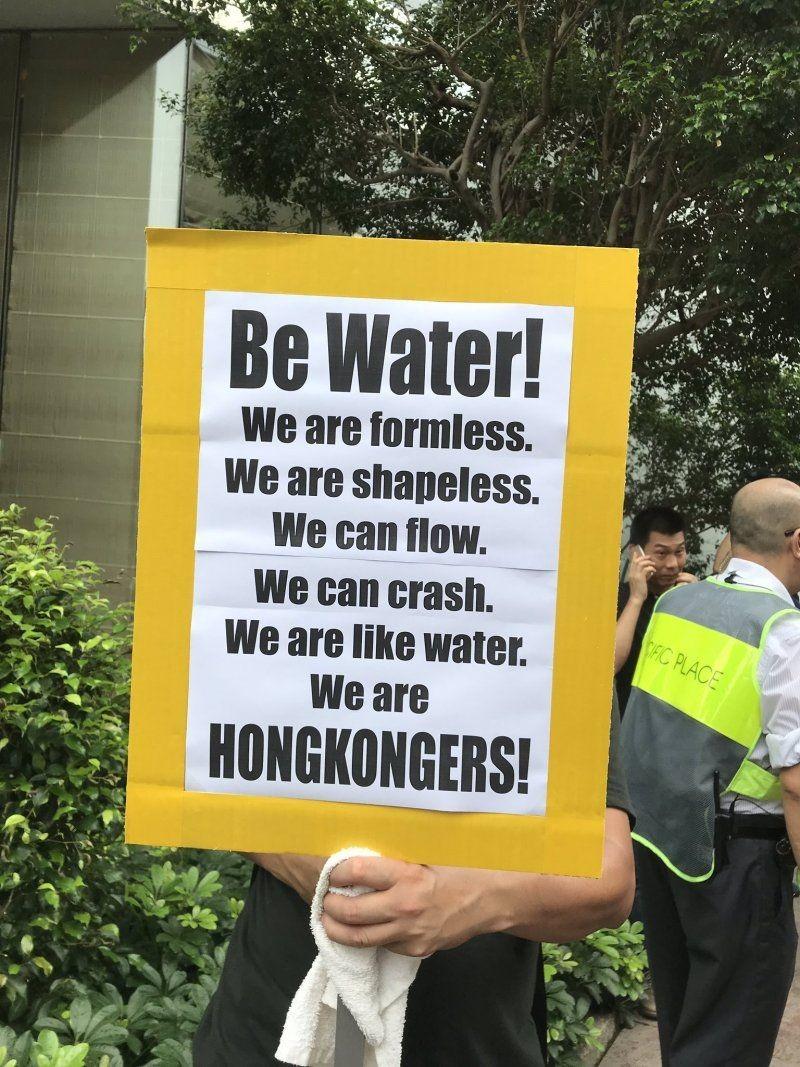
Run experiments: You can literally just run tests to see what kind of content you can share and what kind will get you suspended or shadow banned. See what posting times work best. Pay attention to analytics like impressions. Constantly share information about these experiments with others. Sex workers are among the most experienced in this form of renegade Search Engine Optimization work, so listen to them.
OSINT or “open-source intelligence” which is a “set of tactics for transparently gathering information about a target (ie far-right or police misconduct) using publicly available sources.
Some of the key areas of OSINT are:
-
Info verification
-
Social network analysis
-
Investigate individuals
-
Geo/chrono location
-
Archiving
-
Google dorking
-
Flight/vessel tracking
We can also decentralize physical infrastructure through things like 3d printing, mesh networks and P2P (peer-to-peer) technologies. The risks and positive potentials of P2P technologies, especially with regard to white supremacists, are highlighted in this report called, “The Decentralized Web of Hate” by Rebellious Data. In short, white supremacists are slowly switching to more censor-proof and resilient technologies but that there are many ways that people in the communities are resisting their spread at the level of code and communities. As well the technologies have too many benefits to ignore just because of their dangers.
Some people in P2P communities are using a variety of decentralized tech to create more resilient communication deep in Indigenous and Qilombo territories from the Amazon to the cerrado (savanna) in what is known as Brazil. This is the type of collapse-proof technology that makes networks antifragile and more resilient to the kinds of cascading system collapses we have seen in the COVID-19 pandemic. The antifragility here is both technical and social, combining present technology with Indigenous societies that go back thousands of years of practice in spite of settler brutality. These decentralized infrastructural networks, for example, would simply not be impacted by the previously mentioned targeted attacks on 5G mobile infrastructure by conspiracy theorists or states.
There is a hope that certain communities that are more naturally collaborative (which does not strictly correlate to hyper-collectivism) will be better able to win out in the conflict. This is an optimistic take because it implies that in the long-run those simplistic identities like nations or small fascist collectivities, will be out maneuvered in some important and leverageable ways by those already dedicated to birthing new forms of mutual-aid and collective learning.
Conclusion: Human shaped networks are internationalist and anti-authoritarian
Warfare has been a primary driver of state formation and consolidation throughout history. But at the same time there have been instances where conflict results in something better. In Worshipping Power: An Anarchist View of Early State Formation Peter Gelderloos details several instances where conflict made stateless societies more decentralized and egalitarian. Our hope is that
While the future is impossible to determine, there is the possibility that the emerging logic of conflict, both between and against states could empower more egalitarian forms of social coordination. As the world becomes more unpredictable, autonomy and cooperation will become more valuable. Centralized institutions and infrastructure are overly rigid and cannot keep up with the pace of disruption. While some states will solve the problem by clamping down and restricting agency, there will be some states that go against their long term interest by enabling more decentralized and autonomous ways of relating. These flowerings of agency, no matter how compromised, are worth analyzing and enabling because they will show us how to achieve collective action at scale.
We cannot give simple answers because we are not trying to sell a cult. Victory is not guaranteed and there is every chance we could fail with tragic consequences. But despite the massive setbacks for the internationalist left in the last few decades, we genuinely believe that the emerging sociotechnical environment is uniquely suited to anti-authoritarian forms of organizing in particular ways that prior forms simply weren’t. That the left has been unable to leverage these developments is disappointing, but there’s a silver lining to this, namely that there is probably a lot of low-hanging fruit to be salvaged.
If you take away one thing from this report, please let it be a respect for the fundamental uncertainty that defines complex systems. We cannot tell you which countries to root for in order to gain social status in a clique. We can only ask you to develop, test, and discuss your own ethics the most human way — through relationships predicated on consensual trust and solidarity. This combined with curiosity helps to see the agility and resilience of antifragile networks is the safest bet. This type of swarming will help us carve out a space of possibility for the future that far transcends the arbitrarily simple ones given to us from up high. We do not have to sit still though. We can act in the face of uncertainty and learn together. We can transform the emotional cowardice in the face of complexity that is fascism. We can adapt, not just to win the coming networked war, but also to carve out expanded spaces of possibility for everyone. Human shaped networks are already anti-authoritarian, anti-fascist, and internationalist. We just have to nurture them such that they can grow strong enough to change the world.
~~**~~*~*~~**~~
emmi bevensee: instigator with smat the open social media analysis toolkit for analyzing social media. queer internationalism and solarpunk mutualism are good actually. i like to lay on the grass and look up between the leaves in trees. they/them
frank miroslav: oceania-based anarchist whose interest in the possibilities opened up by the novel conceptual frameworks of the 20th century are matched only by his distaste for the social theory of the 19th.
~~**~~*~*~~**~~

plausible, adjective:
plau·si·ble | \ ˈplȯ-zə-bəl \
: appearing worthy of belief
+
possible, adjective:
pos·si·ble | \ ‘pä-sə-bəl \:
being within the limits of ability, capacity, or realization
[1] The Advent of Netwar (REVISITED), John Arquilla and David Ronfeldt
[2] Two examples of this “good enough” approach to online disruption would be the alt-right’s disruption of the US election in 2016 and kpop fans disrupting a Trump rally in 2020.
[3] Look, we know lots of these words like “leftism” or “socialism” have no real coherent modern shared understanding and vary wildly in their connotations and usage. We’re using very rough short-hands as general sign-posts.
[4] See Revolution, Reform and Resignation by Adam Prezworski for an overview of how social democracy was unable to adapt to the social and economic upheaval of the 70s. For the Soviet economy
[5] Organization Theory: A Libertarian Perspective, Kevin Carson, pg 16
[6] See Revolt of the Public and the Crisis of Authority in the New Millennium by Martin Gurri
[7] The actual cost/benefit of liberal modernity is absurdly hard to quantify and resists the simplistic sort of graphs employed by self-styled optimists such as Steven Pinker (because of things like negative externalities, economic benefits that are illegible to accounting practices that come belonging to pre-modern social networks and dangers brought about by technological lock-in). Nevertheless there are improvements that we see as unambiguously good that have occurred globally such as the proliferation of vaccines, the decline in infant mortality and the increase in average lifespan. Similar chart-brain goes for tankies.
[8] Per capita income adjusted for inflation at the time for North Vietnam was $1000 a year, whereas the US was roughly $18,000. Obviously the actual situation was far more complicated due to the flaws of GDP as a metric and the material support provided by China and the USSR to Vietnam. Nevertheless it demonstrates the material difference between the two belligerents.
GDP data sourced from the Maddison Project Database, version 2018. Bolt, Jutta, Robert Inklaar, Herman de Jong and Jan Luiten van Zanden (2018), “Rebasing ‘Maddison’: new income comparisons and the shape of long-run economic development”, Maddison Project Working paper 10
[9] Rationality, performance measures and representations of reality: planning, programming and budgeting and the Vietnam war, Michele Chwastiak, 2006
[10] Legacy of Ashes, Tim Weiner, pg 268-269h (you can get it as a free audiobook on the Internet Archive).
[11] See for example Chet Richard’s Certain to Win: The Strategy of John Boyd, Applied to Business
[12] Complexity: The Emerging Science at the Edge of Order and Chaos, M. Mitchell Waldrop, pg 293
[13] The Scientific Way of Warfare: Order and Chaos on the Battlefields of Modernity, Antoine Bousquet, pg 231
[14] Ibid pg 232–233
[15] The Dispossessed, Ursula LeGuin, pg 305–306.
[16] Brave New War, John Robb, Chapter 5
[17] Impact of DIY Home Manufacturing with 3D Printing on the Toy and Game Market, Emily E. Petersen et al, 2017
[18] Emergence of Home Manufacturing in the Developed World: Return on Investment for Open-Source 3-D Printers, Emily E. Petersen and Joshua Pearce, 2017
[19] Economic savings for scientific free and open source technology: A review, Joshua Pearce, 2020 </quote>
[20] What is the FarmBot’s Return on Investment?
[21] We personally prefer the nanotech assemblers of Charlie Stross’ Singularity Sky that can fit in a pocket and resulted in a workers revolution against technophobic monarchists, but that book isn’t widely known so you get the reference that actually has pop-culture cache.
[22] Seeing Like a State, James C. Scott pg 336
[23] The efficiency gains that come with overcoming the principal-agent problem can be seen to some degree when we compare co-operatives and conventional firms. What do we really know about worker cooperatives?, a report published by Virginie Pérotin showed that worker owned firms tended to be more efficient in their use of resources and that conventional firms would be more productive if they adopted the organizational practices of cooperatives.
[24] The Utopia of Rules, David Graeber, pg 85–86
[25] One alternate modernity that we could have had is suggested by Andreas Malm who shows in his book Fossil Capital that water power was cost competitive with coal power in the early decades of the industrial revolution in Britain. Coal power won out not because it was more efficient, but rather because water power required common property arrangements and because coal allowed for more control over workers. Had water power won out, we would not just live in a world with less environmental destruction but would probably have different class relations because renewables would give less opportunity and because the cooperation required for commons property arrangements would make control harder.
[26] The concept of citizenship was later expanded into a murder campaign through border militarization.
[27] The Crisis of Democracy, Michel Crozier, Samuel P. Huntington, and Joji Watanuki, pg. 8
[28] We don’t mean to imply that the neoliberal austerity was an intentional plot, but was rather a response to social upheaval that was encouraged by the economic changes that occurred at the same time (helped in part by the conservative backlash to the social upheaval).
[29] Direct Action: Protest and the Reinvention of American Radicalism, L.A. Kauffman
[30] One thing that tends to get downplayed by proponents of small scale productive technology is the possibility of enabling neo-autarkic nationalist regimes (see for example Nicolas Hausdorf’s Ending the Long 20th Century). While concerning, we believe that the benefits outweigh the dangers. Especially when considered against risks that small-scale productive technology could mitigate like climate apartheid arising from perceived zero-sum conflict over things like welfare states.
[31] For an overview of why organizational approaches that privilege decentralization and autonomy are superior at weathering negative uncertainty and benefiting from positive opportunities, see Nassim Nicholas Taleb’s Antifragile: Things That Gain from Disorder.
[32] Complexity and the Limits of Revolution: What will happen to the Arab Spring?, Alexander S. Gard-Murray and Yaneer Bar-Yam, New England Complex Systems Institute, 2013
[33] See Henry Farrell and Cosma Shalizi’s paper Cognitive Democracy for an overview of how democracy can be a superior decision-making tool to markets and hierarchy in particular contexts
[34] Capitalism and Social Democracy, Adam Przewoski, pg 27
[35] See for example The coming decline of globalism or: How I learned to stop worrying and love multipolarity by the reactionary Keith Woods which argues that the internet and cryptocurrencies will help dissolve the liberal world order.
[36] The Diversity Bonus, Scott Page, pg xiv-xv
[37] Getting Unusual Suspects to Solve R&D Puzzles, Karim R. Lakhani and Lars Bo Jeppesen, 2007
[38] Collective Intelligence and Group Performance, Anita Williams Woolley, Ishani Aggarwal, and Thomas W. Malone, 2015
[39] Recombinant search and breakthrough idea generation: An analysis of high impact papers in the social sciences, Melissa A. Schilling and Elad Green, 2011
[40] Collaboration: Strength in diversity, Richard B. Freeman and Wei Huang, 2014
[41] The tradeoffs that autocracies face around information control are known as the “dictator’s dilemma” wherein the ruling class would potentially benefit more transparency but risk social instability that might result. However openness and transparency carry risks of their own because of misinformation (see Henry Farrell and Bruce Schiner’s paper Common-Knowledge Attacks on Democracy for more)
[42] Information Wars: A Window into the Alternative Media Ecosystem, Kate Starbird, Design Build Use University of Washington, 2017
[43] Bodyhammer: Tactics and Self-Defense for the Modern Protestor, sarin, 2012