Faith G. Harper
Unfuck Your Brain (Preview)
Using Science To Get Over Anxiety, Depression, Anger, Freak-Outs, and Triggers
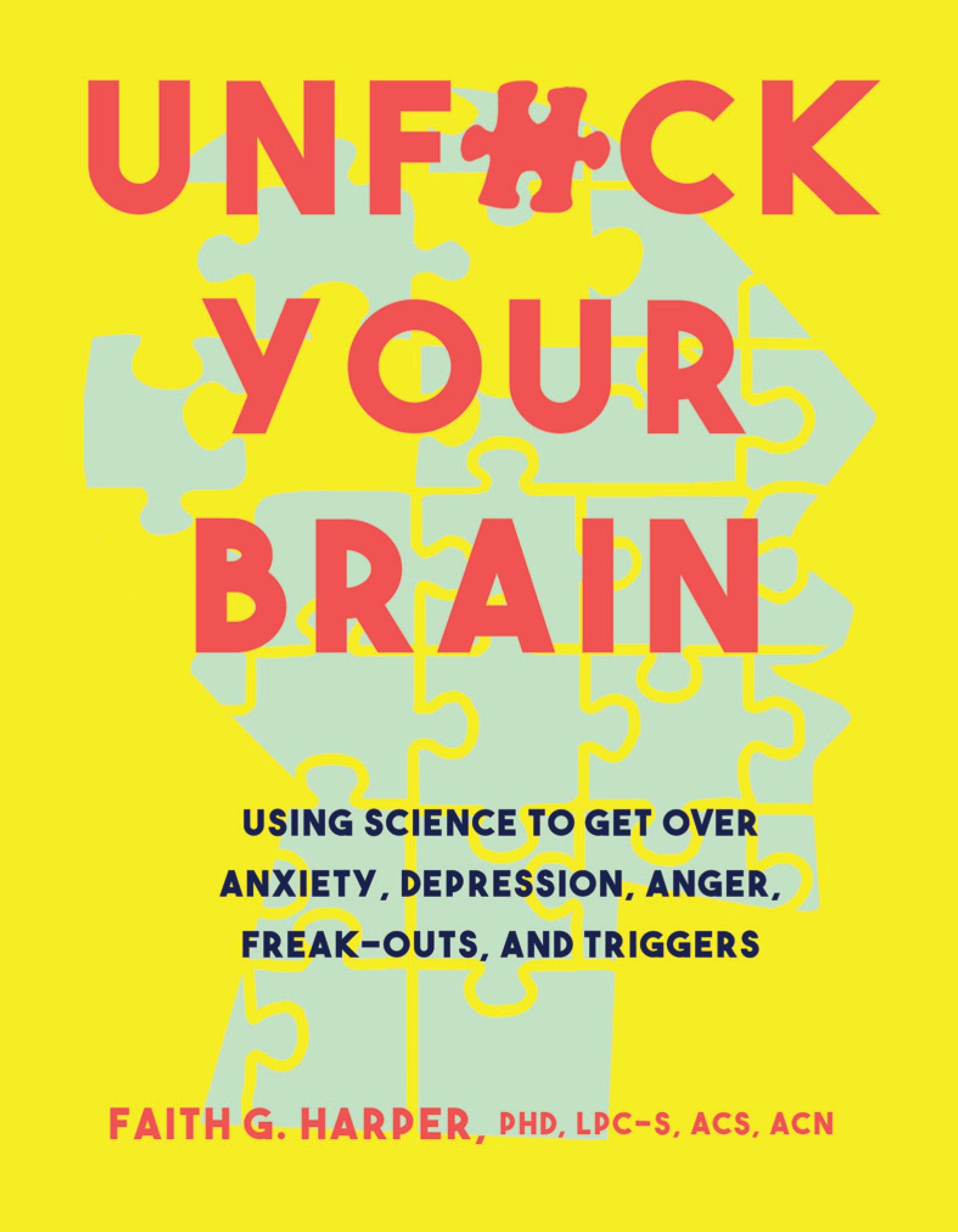
A no-nonsense and helpful guide on how to cope with a slew of mental-health issues that are hellbent on ruining the lives of millions of people worldwide.
Our brains do their best to help us out, but every so often they can be real assholes―having melt downs, getting addicted to things, or shutting down completely at the worst possible moments. Your brain knows it’s not good to do these things, but it can’t help it sometimes―especially if it’s obsessing about trauma it can’t overcome. That’s where this life-changing book comes in.
With humor, patience, science, and lots of good-ole swearing, Dr. Faith explains what’s going on in your skull, and talks you through the process of retraining your brain to respond appropriately to the non-emergencies of everyday life, and to deal effectively with old, or newly acquired, traumas (particularly post-traumatic stress disorder).
Self-Training for Learned Optimism
Like all other brain retraining, there are certain things that can really help combat chronic anxiety. It isn’t a magic bullet, better-immediately type cure, but the idea of training yourself to be optimistic has some merit behind it. There is a guy named Martin Seligman who is a legit big deal in my field. He was studying learned helplessness when he noticed that there are certain qualities that those obnoxiously, cheerful Susie-Sunshine optimistic people generally have:
Permanence: Optimistic people don’t dwell on bad events, and approach them as temporary setbacks. If they get neg’d on, they bounce back more quickly. They also believe that good things happen for reasons that are permanent. Essentially, the world is fundamentally in their favor.
Pervasiveness: People who are happy monkeys tend to keep failure in its proper place. They recognize failure in one area as only belonging in THAT area, rather than meaning they are a failure at ALL THE THINGS ALL THE TIME. They also tend to let the things they are good at inform the rest of their lives, rather than keeping that in its own space. Sucking at basketball doesn’t mean you will now make a shitty risotto. And if your risotto rocks, it is an indicator that YOU rock. And that you should cook more often. And invite me for dinner, I love risotto.
Personalization: Our cheerful buds blame bad events on bad circumstances rather than bad selfhood, but take credit for good circumstances as indicating that they are good people. So basically failures are events, not people. But successes are people, not events. If you dig me?
Interested in figuring out which way you wire? You can take the Learned Optimism test at tinyurl.com
Understanding what makes an optimist gave Seligman an idea. If we can learn helplessness and pessimism, then why can’t we learn optimism and a positive outlook? Especially if we know the three big indicators we are shooting for? Interested in figuring out which way you wire?
Take Action: Challenge Your Neg Gremlins
Seligman created an ABCDE model designed to help you reframe your thinking as optimistic. And yes, it looks a ton like Albert Ellis’ Rational Emotional Behavior Therapy (REBT) and Aaron Beck’s Cognitive Behavior Therapy (CBT). We all borrow from each other’s shit all the time. Therapists and researchers are assholes like that.
Think about the last time you felt anxious and write down some notes for each of these five letters:
In Seligman’s model the A stands for Adversity. What bullshit is going down that generally triggers your anxiety response?
B stands for Belief. What are your beliefs about this event? Be honest, if your anxiety is triggered a lot, you are probably running a thought pattern in the direction of “THIS IS FUCKED!”
C stands for Consequences, though really it should stand for Cookie. Seligman didn’t agree with me that once you think that shit’s fucked you should go have a cookie. Instead, he wants you to look at how you reacted to the situation and to your beliefs.
D stands for Disputation. This is where you literally argue with the neg-gremlins your brain is throwing down and focus your attention on a new way of coping. Remember the storytelling brain? Create a new story to use instead.
And finally, E stands for Energization. What was the outcome of focusing your attention on a different way of reacting? Even if you were still pretty anxious, did you handle the situation better than you may have in the past? Over time, with doing this, do you notice that your anxiety is starting to fizzle out FINALLY?
To start with, just fill out the first three categories (A-B-C). Think back and look for examples of pessimism and negativity. Highlight those instances. Did you beat yourself up way more than you expected?
Give it a few days to sink in and then sit down with this list again and add the last categories (A-B-C-D-E). This is gonna be harder—this is active work to challenge that pessimism and teach yourself optimism instead. But you got this, rock star. It takes practice, stick with it!
-
Adversity: Just the facts, baby. Describe what happened (who, what, where, when) being as precise and detailed as you can.
-
Beliefs: What were you thinking? Like, exactly. What was your self-talk? Don’t care if it was crude, ugly, or weird. Write it down. If it sparked a memory or flashback, that counts, too!
-
Consequences: How did these thoughts effect how you felt? How you behaved? What went on in your body? What emotions did you experience? How did you react?
-
Dispute:
There are four different ways you can dispute these negative beliefs
-
Evidence? Is there evidence that your belief was based in reality. If someone says “I hate you” then the belief that they hate you has some evidence behind it, right? But most beliefs really don’t.
-
Alternatives? Is there another way you can look at this situation? What were the nonstatic circumstances (you don’t always bomb a test, you were overtired from being sick)? What are the specifics (sucking at basketball doesn’t make you a lame human being or even a lame athlete)? What did other’s contribute to the situation (is it really ALL your fault???)?
-
Implications? Ok, so maybe you jacked up. Is it really a total catastrophe? What’s some perspective you can add to this (ok, so I failed in that job interview…does that mean no one will hire me from now to infinity)?
-
Usefulness? Just because something is true, doesn’t make it useful. How can you frame the experience as one that gives meaning to your life? Do you have a better respect for those things or people you value? Can you better demonstrate that respect now?
-
-
Energization:
How do you feel post disputation? Did your behavior change? Your feelings? Did you notice anything within the problem that you didn’t notice before? Maybe even created a solution?
Now go celebrate your success here, hot stuff!
You can download a worksheet of the Adverse Event Log from my website at FaithGHarper.com/app/download/7243931275/Adverse+Event+Log.pdf