Joe Egan
Wildlife Is Like It Is
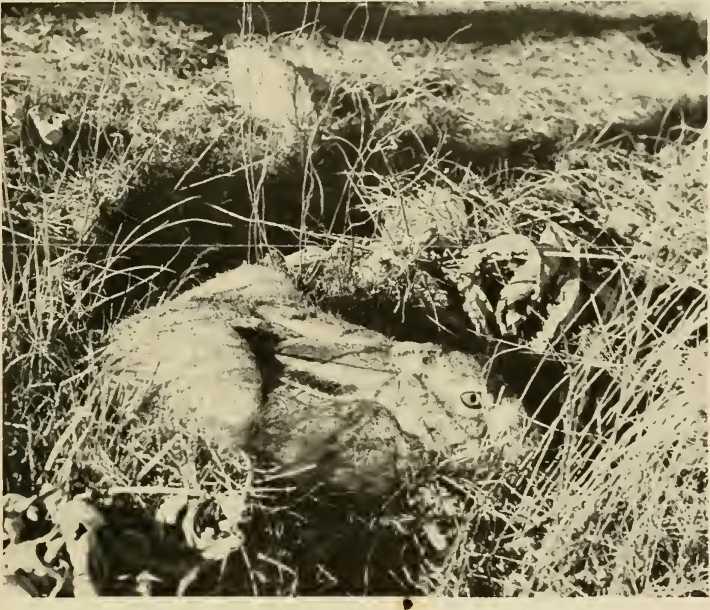
People are in favor of truth, integrity, honesty ... they believe a spade should be called a spade, and much is being said nowadays about “telling it like it is”. Telling it like it is, for many, won’t be what they want to hear!
Water is to fish what air is to mice and men—they are the mediums in which the respective animals are born, reproduce, and die. These mediums are essential in that they are the places that fish, mice and men have been relegated to live in; essential in that they provide the ingredients absolutely necessary to sustain life. All living organisms— plants, animals, bacteria—are totally and completely dependent upon and at the same time are products of the environment. If the environment is of good quality arid in good condition, then the organisms living there will be of good quality and in good condition. And that’s like it is. In the case of our wildlife, it is obvious they, too, are totally and completely dependent upon their environment. If their environment is altered, degraded, or destroyed, the wildlife will be altered, degraded, or destroyed, and that’s like it is.
In the beginning, when God created the heavens and the earth, He said, “It is good”. And it was good, the essential ingredients for life being arranged and available in exactly the right manner and in exactly the right way. And then the Creator gave man the charge of being “... the stewards of the land ...”. Right then and there, things probably started going downhill. W. C. Lowdermilk, in his “Conquest of the Land Through 7,000 Years” (Agric. Info. Bull. No. 99), leaves little doubt of man’s failure to be a “steward” of the biblical lands.
In our own country, and in our own time, we have the Potomac River, Lake Erie, the Mississippi River, Pittsburgh, Chicago, Los Angeles; all are “fine” examples of man’s ability as a “steward of the land”. In Montana, we have, during our short one hundred or so years, turned many creeks upside down looking for gold, “utilized” our prairies until they were nearly bare, smoked up the air in several places, and dried up, muddied up, and po- luted lots of water. And that’s like it is.
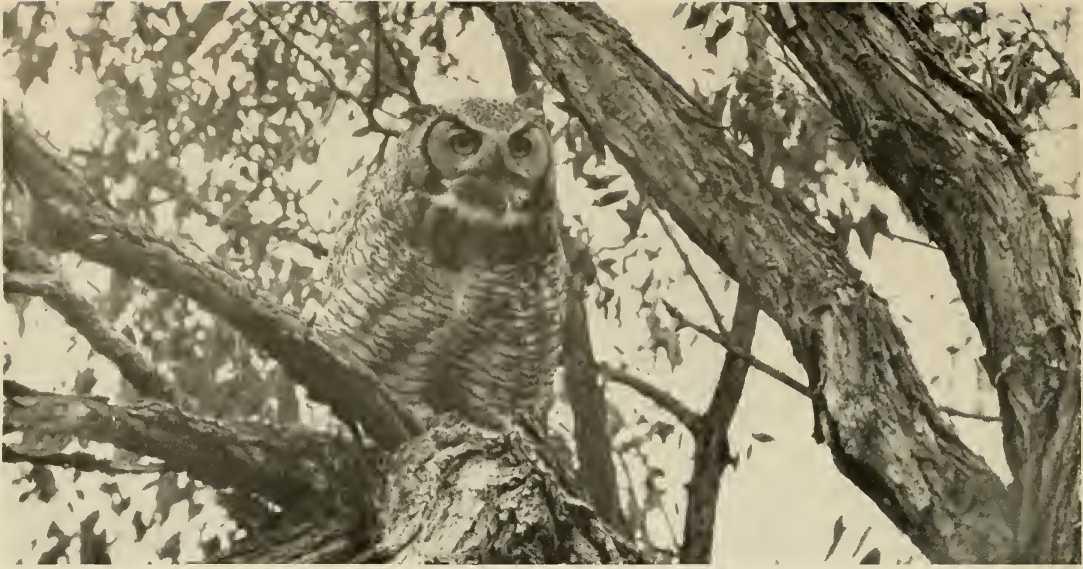
To wildlife, which are actually indices to the conditions of our own environment, what do these “changes” mean? It simply means some waters will no longer produce or even support fish. It means some areas will no longer produce or even support upland birds, deer, or frogs. Oh, we’ll initiate all kinds of temporary schemes aimed at the animals and fish or at people to “conserve” our wildlife resources and heritage. These will mostly be meaningless programs like unplanned fish planting, closing the hunting season, setting aside “preserves”. Meanwhile, out where things really count, there will be oil well leaks, taconite wastes, pesticides, “economic benefits” from pulp mills, special interest on public lands, “short grass seasons”, dams, highways.
People must quit fooling themselves. When a stream is polluted or dewatered, it ceases to produce or maintain fish. When a sage grouse’s environment is altered, reduced or eliminated, its ability to reproduce or maintain itself does exactly the same thing. It is ridiculous to suppose that wild animals live forever if they are not hunted, yet this seems to be the thinking underlying suggestions to do something for a declining species other than to take care of its environment. After each breeding season, every wildlife animal produces more offsprings than could possibly survive even in excellent environment. The “surplus” is scheduled for “harvest” by disease, predators, man, or what- have-you. The “survivors” are scheduled to maintain the species. That just happens h be the way it is. But as the quality and quantity of the environment declines, then so does the “harvestable” wildlife crop. You can plant all the fish, birds, elk, or whatever—close the season, restrict the bag, but the volume is a product of the environment. Environment’s the item that needs attention. And that’s just how it is.
Wildlife can not be separated from the land, air, and water; they are tied to it just the same as we are. However, they were not endowed with the fantastic intelligence we were, and when their land, air, and water gets full of garbage, chemicals, highways, cans, car bodies, domestic sewage, smog, soot, oil wells, fences, they diminish in numbers and even disappear. And that’s the way it is!!!
But, it doesn’t have to be that way ...
Maintaining wildlife environment in good condition means a little more than just producing more wildlife to hunt and enjoy. It also means that healthy wildlife indicates a healthy human environment, and everybody is in favor of that. There is probably nobody who would say, “We don’t want a clean outdoors, we don’t want clean, unpolluted water, we don’t want clean, unpolluted air!” But, there are people who imply that Montanans will simply have to tolerate some pollution with development. There apparently is some strange reasoning sequence that concludes that if cleaning up or preventing pollution detracts from someone’s profit, it is not desirable or perhaps even illegal!! This bizarre reasoning process even suggests that as long as there is some real or imagined economic contribution to the community, the state, or in some cases even the nation, the residents of that area should revel in their polluted environment. This unique thought process infers that any development, regardless of how it’s operated, will automatically make Montana a better place to live.
Do you think people in Chicago, Pennsylvania, ‘Frisco, or Des Moines have a better deal than Montanans? Do you think their unhampered “development” has resulted in lower taxes, cleaner air, cleaner water? A major problem in the U.S.A, right now is polluted air, water, and land. Montana’s pollution or garbage disposal problems are, of course, not of the magnitude experienced by our Eastern and West Coast brothers. But if we don’t pay attention, or if we accept statements like, “... Our state needs industry to broaden our tax base ...”, “.... Montana needs industry more than trout ...”, ‘Industrial development will enhance our economic climate ...”, without understanding all the implications or without an absolute acceptance of the responsibilities that go with them —before, during and after—then Montanans will deserve what they get. And that’s the way it will be.
Although our problems of development and pollution are not serious, Montana is not a virgin. We have air, water, and land pollution.
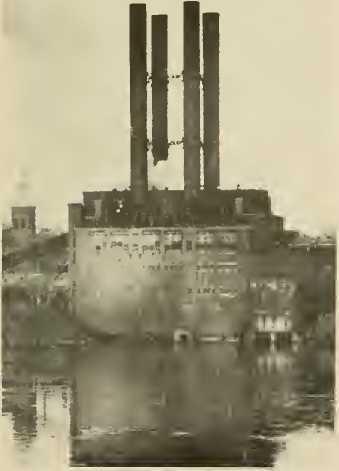
During the last decade, pollution in Montana did not decrease. Many Montana cities are facing or will face a serious problem concerning the disposal of domestic garbage. The Yellowstone River is polluted, so is the Missouri, and so is the Clark Fork of the Columbia. The air problems of Missoula and Billings are real. Pollution problems around the Great Lakes, along the East Coast (both in and adjacent to the ocean), and in a myriad of other places did not just happen or crop up over night. It was a “little by little” operation. It was allowed “little by little” because someone said, “it’s just a little smoke which won’t really hurt anything, and besides, look at all the people it will employ while it puts a big payroll into ‘our town’s economy!!” Nobody says, “We don’t want a clean outdoors”, but some are essentially saying, “Money is better than clean air, clean water, clean land!” But is a big payroll better than a clean environment? Are property taxes really lower for persons in industrial areas than for those who live in the ‘undeveloped” areas? Do they pay less for a drink of water or a bath? Do they pay less for their hunting or fishing (if they have any at all!!)? Do they have a better deal? Montanans seem to be acting like sheep—they do a lot of bleating while being led to slaughter. And that’s the way it is!!!
Development need not result in pollution. This is the 20th Century; modern technology has or can solve smoke and smog problems; clean water must not be some unthinkable term with development. Natural resources can and should be used, but it is not necessary to pollute and dirty the whole countryside in the process. In the coal mines of old, a canary was taken underground with the men. When the canary keeled over, it was time for the men to go topside. The canary has keeled over in many places in the United States. In Montana, there are a few places the canary has already gotten sick It is lime to say, “Pardner, make all the boards, gasoline, roads, dams, you want, but don’t make the canary sick. If you do, we’ll close your outfit down, and that’s the way it is.”