
Jonathan Glancey
A peculiarly English socialist
Merely a designer of fashionable wallpapers for the middle classes or an inspiration for the modern left? Jonathan Glancey makes the case for William Morris
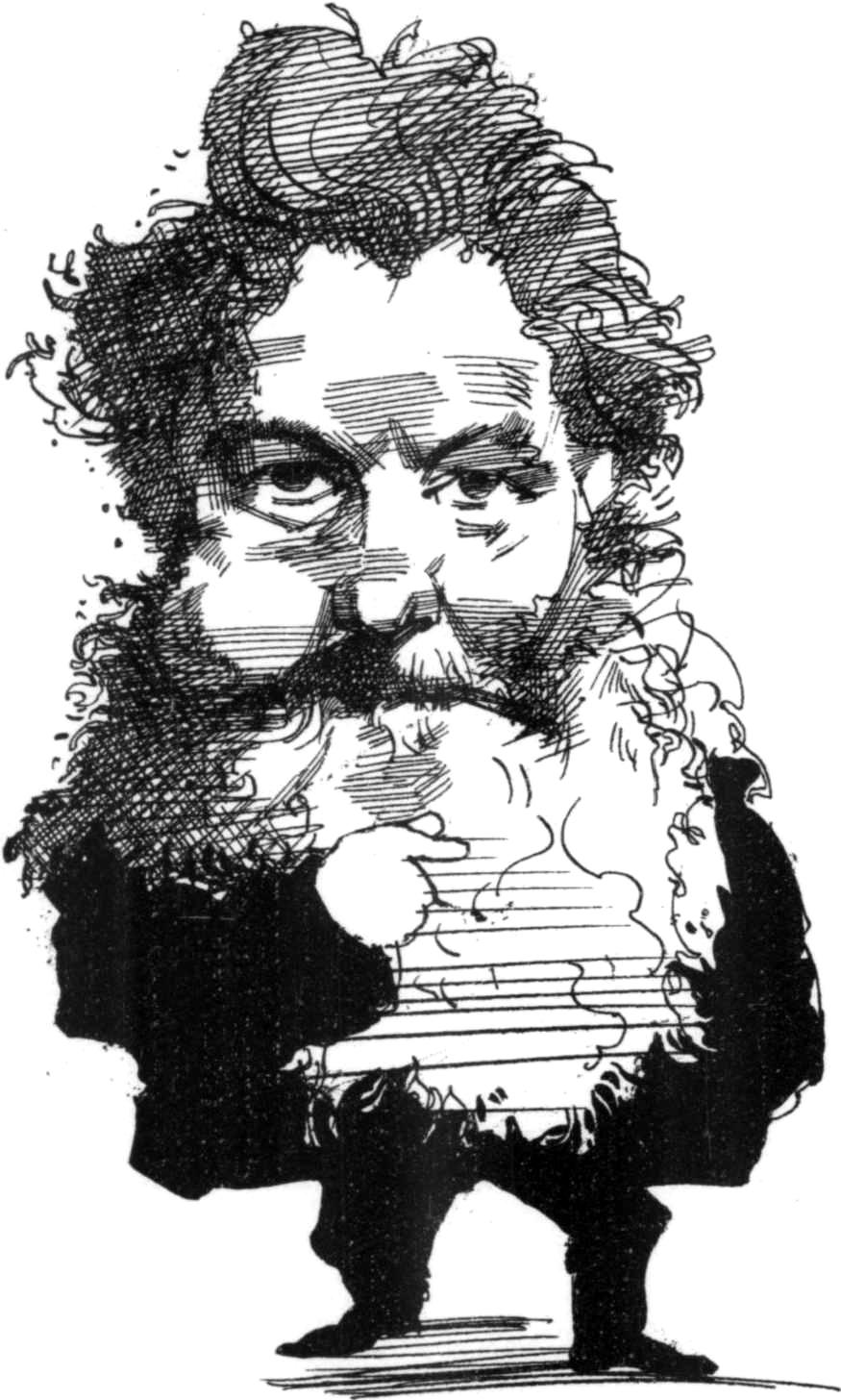
Well, what I mean by socialism is a condition of society in which there should be neither rich nor poor, neither master nor master’s man, neither idle nor overworked, neither brain-sick brainworkers, nor heart-sick hand-workers, in a word, in which all men would be living in equality of condition, and would manage their affairs unwastefully, and with the full consciousness that harm to one would mean harm to all—the realisation at last of the meaning of the word COMMONWEALTH.
From William Morris: Selected Writings and Designs, edited by Asa Briggs (1962)
William Morris became a socialist in 1883, the year Karl Marx died. The two events are, of course, unconnected, and yet the timing of Morris’ conversion on the road to the new Jerusalem seems somehow appropriate.
For although he protested that he was a “revolutionary international socialist”, this prolific Victorian polymath—by turns painter, architect, designer, printer, weaver, essayist, lecturer—had nothing at all in common with Marx’s brand of scientific materialism or Lenin’s version of revolutionary socialism.
Morris, a rare combination of wealthy ruralist dreamer and doer, was above all, a sentimentalist, whose socialism owed more to the English mediaeval guild system than to any theory of historic determinism. Perhaps this is not so surprising, given that his slow march to revolutionary socialism (declaring himself a convert at the age of 49) was made under the banner of Art, not Politics.
His creative genius as a designer and maker of everything from buildings and furniture to wallpaper, carpets, printing by hand, weaving and poetry is being celebrated this spring, the centenary of his death, in a plethora of exhibitions in Britain and the United States.
Through these retrospectives we have a chance to get to know Morris afresh. He has his critics, and there are many of them. Most argue that his impulse to step back into a make-believe mediaeval past was a significant contribution to the ensnaring of contemporary Britain in a trap of stifling nostalgia.
Equally, there are those who find the revolutionary socialism he preached with such vehemence towards the end of his rumbustious life less than convincing. Morris, they say, was a wealthy man playing radical politics while employing cheap labour. His wallpaper was kitsch, his political opinions an indulgence.
Is this fair? Probably not, for although Morris was a contradictory character, he did much to nurture a form of peculiarly English socialism that was uniquely bound up with the pursuit of excellence in art, architecture and design, and which continues to have a significant impact on the British body cultural.
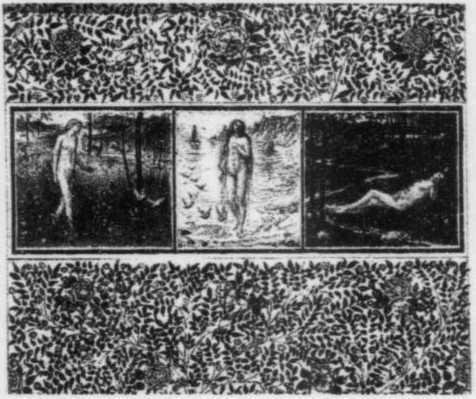
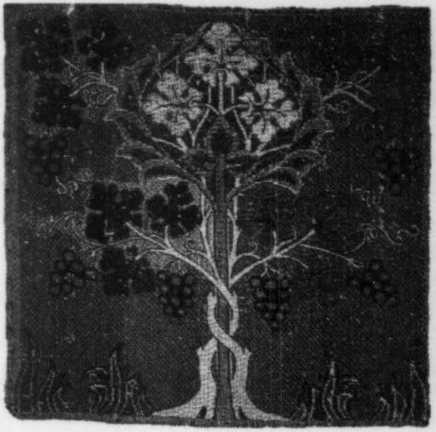
Morris was hardly the stuff of political rebellion when young. After graduating from Oxford, he used his privileged background and vast restless energy to set up a complex network of craft workshops and a decorating business, Morris & Co, in London’s Oxford Street. But to make beautiful things to ornament the homes of the aesthetically minded middle classes of late Victorian England, Morris found himself forced to employ cheap labour.
He nurtured a romantic dream of making beautiful things for the homes of everyone, grand and humble, yet was faced with an economic reality that meant he was, in his own words, forced to “pander to the swinish luxury of the rich”. To make beautiful things for the poor, he would have had to pay his craftsmen even less than he did.
Yet he dreamt of an England “small and green and clean” in which contented men and women would craft lovely things by hand, oblivious of the steam-driven machinery he so detested. This vision of craftworkers, happy in their labours, making useful things that were at the same time beautiful, lay at the heart of the Arts & Crafts movement that so inspired British architects and designers in the last two decades of the 19th century. Morris was its leading light.
There was nothing inherently socialist about the Arts & Crafts idyll. It was, if anything, a retrogressive movement, harking back to an idealised mediaeval world, a Merrie England that existed more in the poetry of Tennyson and in the imagination of the Pre-Raphaelite artists he inspired, including the young and impressionable Morris himself. If it stood for anything, the Arts & Crafts movement stood against the tyranny of the machine.
Appalled by the idea of industrial progress and the speed of change he saw around him, Morris conjured up, in romantic fables such as News from Nowhere and Dream of John Ball, a world in which all men (and, significantly, all women) were equal. Buildings were to be handmade by local craftsmen and from local materials. The idea of transporting building materials from one part of the country to another by the evil railway was anathema.
This is all a very long way from Marx and scientific materialism. In fact the image of this quintessential bourgeois Englishman sitting in one of his lovely gardens, at Kelmscott or Hammersmith, attempting to digest Das Kapital (he claimed to have read all of it) is almost funny. No; Morris was a romantic who looked back in time to see the future. In this sense, he followed in the wake of Thomas Carlyle and John Ruskin. His is the English socialism of Charles Kingsley, of Angela Burdett-Coutts, Octavia Hill and Elizabeth Fry.
And yet, because he came to see the capitalist system of industrial production as the enemy, he eventually became convinced that it must be destroyed. Honest English workers, denied the right to spin and weave freely and creatively, must rise up and slay the dragon of international capital.
In 1883, Morris joined Henry Hyndman’s Democratic Federation. Here he found a political home, acting as editor of Justice, the mouthpiece of the federation and a forerunner of the New Statesman. The revolution, thundered Morris, with all the certainty of the convert, would take place by 1889. From 1884 until 1890 he was hyperactive in the new Socialist League, publishing his own journal, Commonweal, and writing 500 articles in six years. He died, burnt out, six years later, at the age of 62.
Justice and Commonweal gave full vent to Morris’s brand of English socialism. The very titles of the two organs give away the nature of Morris’s political roots: both are redolent of cries for religious tolerance and political freedom that have rung down English history since the time of the Civil War and Cromwell’s Commonwealth. In his writings, one hears echoes of Bunyan and Blake, the Diggers and Shakers.
One even hears the concerned, if cocky voice of the Tory radicals of Morris’ youth. Morris’ idea, expressed most graphically in News From Nowhere, that we should share work, and enjoy working together as if on holiday, building roads in rural parts and making hay, can also be found in Coningsby, the novel by the young Benjamin Disraeli, future reforming Tory prime minister.
In short, Morris stood ultimately for a common English decency underpinned by Christian fervour and mediaeval aestheticism, rather than an exotic and intellectual communism.
This thread of common decency was to run through British socialism in the 20th century in both national and local politics. “Decency” was the word George Orwell chose to define his liberal, tolerant brand of English socialism. “Decent” was the word Clement Attlee used when outlining the socialist England of the future.
It was this word, prim-sounding today, that impelled local politicians and young architects working, for example, for the London County Council at the turn of the century (all of whom claimed Ruskin and Morris as their champions) to provide working-class families with some of the finest homes for rent this country has ever seen.
These were designed along Arts & Crafts principles and were thus one solution to Morris’s earlier dilemma of how it might be possible to design at a very high standard for those too poor to contemplate the fruity wallpapers on show at Morris & Co in Oxford Street. Here was the spirit of romantic English medievalism informing practical municipal socialism.
The same spirit of common decency gave us Frank Pick and the London Transport of the 1920s and 1930s, regarded by contemporary observers from both the US and the Soviet Union as a model of public service and an unparalleled work of civic art for all, regardless of class, creed or income. Frank Pick, chief executive of the new London Passenger Transport Board from 1933, had been appointed to shape the face of London’s transport network by Herbert Morrison, Labour leader of London County Council. Both Morrison and Pick acknowledged their debt to William Morris.
This vein of decent, romantic English socialism lives on, through the writings and soapbox oratory of E P Thompson and Tony Benn, among others. But it is less clear how it attaches to the new moralism that informs Tony Blair’s new Labour. How far is this a connection to a way of thinking championed by Carlyle, Ruskin and Morris, rather than simply a reaction to the deregulated, dog-eat-dog, amoral Britain, shaped over the past 15 years?
Blair’s new Labour should set about reclaiming Blake’s Jerusalem, sung with such fervour at hang-em, flog-em, privatise-em Tory party conferences. For in those famous lines can be found that spirit of decency and beauty that informed the political beliefs of those who have tried to forge a lovely and worthwhile world from the particular iniquities brought about by the industrial revolution.
Tony Blair and new Labour must have some inkling that the reason the Tory government is so unpopular is not simply because the electorate is bored by it or shocked by the succession of business and sexual scandals that have rocked it, but because it has, during its long tenure, set itself against the grain of this notion of common decency. The irony is that although more and more of the electorate will claim to reject further privatisation of the remnants of the public realm created by those such as Frank Pick and Clement Attlee, the same electors are rushing, even now, to buy shares in Railtrack.
Socialism, as William Morris found, is a narrow, if shining path. He employed cheap labour and serviced the “swinish” rich. Today’s potential Labour voters might express a desire to take the railways back into public hands, pump resources into public health, the arts and education; yet at the same time they want to benefit from the fruits of the capitalist loom.
Perhaps we are all as confused (or is it confounded?) as Morris by a system that we have no heart for, yet which refuses resolutely to go away. Today’s artists and designers still pander to the “swinish luxury of the rich”; while road-protestors, conservationists and other rural romantics continue to dream of an England small and green and clean.
It would be nice to believe that somewhere in all this are the makings of a populist political groundswell, which might yet link the socialist decency of Morris to anodyne new Labour in a practical and forward-looking way. Or perhaps this is just the kind of wishful thinking that in the end led William Morris, of all people, to embrace Karl Marx.
The author writes on design for The Independent
Appendix: Eight views on William Morris
A prince of preservationists, a nostalgic for mediaeval barns, William Morris was also one of the great architects of international modernism, and of its English and Scottish Arts & Crafts-led variant. Even at his most backward-looking he was always a futurist; he was a lifelong experimentalist in the arts and a self-proclaimed revolutionary in his anarcho-socialist politics. For all his love of the mediaeval, there was nothing “period” about his designs. Frank Pick, who brought the beauties and the severities of industrial design to the London Underground, was one of his interwar disciples. So were the Quennells, pioneers of “learning by doing” in the junior school. Long before pop art had been heard of, Morris was making a poetic of everyday life, and advocating the superiority of canvas-free art.
Raphael Samuel, cultural historian
I deplore William Morris. He achieved nothing but the cruel delusion that the past was better than the present and much better than the future. Some decent wallpaper design and effective pamphleteering do not excuse acres of turgid prose, mawkish pictures, ugly furniture and a retarding influence on culture that is still with us today.
I could go on (and on and on...)
Stephen Bayley, design guru
William Morris taught us that the things we use can be things of beauty too. He also taught us that things to use and things of beauty should be for everyone, not just an elite. We need to hold fast to that lesson today.
Chris Smith MP
Morris’s skills, talents and interests covered a quite extraordinary spectrum of activity. What gave them unity was his profound belief in the morality of beauty and the dignity of individual labour. His passionate conviction that, given the opportunity, every human being has a creative capacity, is as relevant and revolutionary a view of society today as it was 100 years ago.
David Puttnam, film-maker
The master of floral textiles bar none. He worked out repeats making nature and flowers flow and intertwine as they had never been conceived to do before his time. As a textile designer, one delights at the innovative repeat style. William Morris designs are a delight to study and will always be a major influence in the wonderful art of textile design.
Zandra Rhodes, fashion designer
William Morris has a very special place in the V&A pantheon: as the designer of our first restaurant (the Morris Room), as someone who helped the museum make important acquisitions (the Ardabil carpet is only the most famous example), but above all as a designer who embodied the original aims of the V&A, using the best examples from the past to inform and influence the present. Morris would be delighted to know that this remains the aim of the V&A and he would be equally pleased that his own work remains an inspiration for many designers today.
Dr Alan Borg, director of the V&A
The editor of the Clarion, reporting on the death of William Morris, wrote: “Morris was not only a genius, he was a man. Strike at him where you would, he rang true... he was our best man. We cannot spare him; we cannot replace him.”
A century later the humanity of his socialism still inspires us with the same power as it did then.
In the years between, much has happened to disappoint our early hopes, but these words from his Dream of John Ball are there to encourage us: “While I pondered on all these things, and how men fight and lose the battle, and the thing they fought for comes about in spite of their defeat, and when it comes, turns out not to be what they meant, and so other men have to fight for what they meant, under another name.”
Tony Benn MP
It is true to say that the characteristic style of Morris has never been more widely appreciated than it is today, probably attributable to the fact that home decoration magazines promote and advance decorating the interiors of homes in sympathy with the age and style of the property. The 1990s are more about authenticity and home comforts than the show and effect of previous decades.
Michael Parry, design director of Sanderson, producers of William Morris wallpapers