Kevin Tucker
Society Without Strangers
Conflict Resolution, Domestication and Systemic Violence
Reconciliation and the Society without Strangers
Violence within the Society of Strangers
How to Cope with Violence: Conflict Resolution and Dissolution
The Anarchist’s Laughter: Sharing Jokes and Meat
Society Against the State and Mitigating Tensions
The Organization of Violence and the Origins of War
Sahlins has called the state a society especially constituted to maintain law and order. The vast administrative hierarchies of the state are, of course, absent in band and tribal societies. An alternative but complementary view is to regard the process of social evolution leading to the state as one of externalizing violence rather than controlling or eliminating it. Such a view enables us to see the evolution of social control in a different light.
—Richard Lee, The !Kung San[1]
/Twi was a dangerous man.
Living amongst the /Du/da clan of the nomadic foraging !Kung San of Namibia of 1940s, /Twi stood out. Violence amongst the indisputably egalitarian !Kung has been both well-documented and largely over-stated. But /Twi was particularly violent. By his own family’s telling, he was possibly psychotic.
Amongst his contemporary !Kung this was well known.
Fed up, /Xashe, another !Kung man at /Du/da, one day ambushed /Twi, shooting him in the hip with a poisoned arrow, their preferred hunting weapon. They grappled and /Xashe’s mother-in-law held / Twi and told /Xashe to run. Other residents at the camp gathered around /Twi as he pulled the arrow from his hip. Some tried helping him by cutting the wound and attempt extracting the poison out.
/Twi took advantage of the situation. He snapped. He flung a spear which ripped the cheek of a woman named //Kushe. //Kushe’s husband, N!eishi, came to her aid and /Twi shot him in the back with a poisoned arrow.
At this point, everyone took cover, shooting arrows back at /Twi.
None sought to give aid to /Twi. They had decided, collectively, that he had to die.
/Twi walked out to the center of the camp and sat, calling out, “are you still afraid of me? Well I am finished, I have no more breath. Come here and kill me… Do you fear my weapons? Here I am putting them out of reach. I won’t touch them. Come kill me.” As /Twi’s younger brother, ≠Toma, recalled:
Then they all fired on him with poisoned arrows till he looked like a porcupine. Then he lay flat. All approached him, men and women, and stabbed his body with spears even after he was dead.
/Twi was buried and the camp split up. All going their separate ways.[2]
Within civilization, we have a very strange relationship with violence. For anthropologists Nancy Scheper-Hughes and Philippe Bourgois violence “defies easy categorization. It can be everything and nothing; legitimate or illegitimate; visible or invisible; necessary or useless; senseless and gratuitous or utterly rational and strategic.” It is a small term for a range of actions and provocations.
In their summation, “violence is in the eye of the beholder.”[3] You know it when you see or experience it.
Violence is an outburst. It is a response to emotions, to anger, and to fear.
As animals, violence has a place.
As animals, violence also has its thresholds.
When we remove the distance between our lives and our actions: violence is just one part of our experience of the world. It is a trait, an ability, but hardly one that defines our existence. In the civilized perceptions of the world, nature is a passive place.[4] For the escapist backpacker or the spiritual zealot, wilderness is a place of peaceful reflection. We carry these voyeuristic perceptions of the world, of the ecology of life, because they are comforting. On a surface level they stand in stark contrast to the systemic, organized violence and anxiety of civilized life.
As technology intrudes, this contrast only becomes louder.
Our perception of wildness echoes our understanding of what it means to be an animal, of what it means to be human. Embracing that wildness is neither a simple nor an easy process, but it gives us the ability to know who we are, what we need, and what stands between us.
Wildness is a state where passivity is not an option. To borrow a phrase from Tamarack Song, wildness is a state of dynamic tension.[5] In this all beings are aware, ready, and reliant on the songs of birds, the movement of leaves, the sounds of the environment. Here we inhabit a state that is neither entirely peaceful nor warring, but of being. This is a place where humans are neither angels nor demons. This is a place where power, be it social, political, or economic, does not exist. And this is the place where our nomadic hunter-gatherer bodies and minds evolved.
This is also the place where the /Du/da camp of the !Kung collectively decided that /Twi must die.
He had become a liability.
And so they killed him. Immediately and without remorse or anger. It needed to be done so that life could continue on, as it had and as it would, without unnecessary violence.
Within civilization, our relationship with violence is schizophrenic. Those of us unfortunate enough to have been born within this era of hyper-technological, modernized civilization live in the most violent society that has ever existed. And we have the fortune of almost never being confronted directly by any of it. We are so accustomed to not seeing the violence inherent in our daily lives that we can convince ourselves that it isn’t there. We convince ourselves that we are better off: as individuals, as a society.
These are the lies that are sold to us by programmers, the architects of Modernity, like Steven Pinker. In his widely upheld 2011 book, The Better Angels of our Nature, he makes the claim that our past, human history, is “a shockingly violent one.” He states that it “is easy to forget how dangerous life used to be, how deeply brutality was
once woven into the fabric of daily existence.”[6] And yet we kill.
We subjugate and suffocate the earth, our home. We colonize the periphery, we tear down forests, we scrape the life off the bottom of the oceans while we pour toxins into the air and dilute chemicals into the soil. We wipe out entire species methodically. This happens every time we turn on the light switch. Every time we get into our cars, turn on our phones, buy food at the grocery store; as I write these words on a computer and as you read them in a book: the earth and all its inhabitants feel the consequences.
And so do we.
We’ve just been trained to not see them.
We use technology to distance ourselves from those impacted.
We use the technology and politicking that Pinker upholds to feel as though we’ve braved the worst of our own humanity, our primal animality, to become civilized.
In the eyes of the State, violence is a violation of our supposed codes of conduct: a transgression from law and order. It happens when individuals act without involving the government-sanctioned mediators.
In the hands of the individual, violence is an unjust, uncivilized response to conflict.
All institutions, all vestiges of political power, require a monopoly on control. They require a monopoly on the justness or unjustness of violence. They must control it. They determine how an act of overt force fits with prescribed rules of conduct for any given society. And in doing so, they create systemic violence: the violence considered just and necessary to maintain a civilization.
What is happening in this process is the reification of violence. We turn it into an external entity, a thing. Violence becomes the property of the state; mitigated by its military and police. We remove violence from human emotion because, as Pinker’s forbearers have told us, our innately nasty and brutish humanity demands taming. Without control, our wild selves would uncaringly seek to lash out and destroy anything that stands in our way. In their defense, you get what you wish for.
In any society where power exists, social or political in nature, it is wielded over others. Power is always defined by who holds it as much as it is by who does not; be they individuals, ecosystems, other animals, or any other created groups. Power is the necessary precursor for politicians. And for those with power, the system serves well. Everyone else is left with varying degrees of disempowerment, without a voice or redress.
The demands of the state weigh heavily. Stagnancy fosters unrest. Robbed of the means to mitigate conflict, the disempowered lash out, violating the presumed sanctity of the law. The state calls it violence and uses the digressions as evidence for its own necessity. Criminals are to be punished.
Throughout all of this, violence, like the law, remains a thing: separated from flesh and soul. Violence becomes something we can object to, quarantine, divert, control or reject. It is removed from any and all context. Radicals uphold it. Pacifists reject it. The State arbitrates it.
Violence becomes the subject.
In the process, we completely miss the point. The discussions remain in the hands of the domesticators, the programmers: what level of violence is just? What level is unjust? We accept the premise of civility: this is how things are, this is how things must be.
Violence is a reaction to circumstances.
And our circumstances are the problem. Those circumstances are civilization: the domestication of our world and our beings. The pacification of our animality and the passiveness we put upon the world around us. We become spectators instead of agents within our own lives.
Nomadic foragers, the immediate return hunter-gatherers that all of our ancestors were, understood the importance of this. The complexity of being an animal, with a full range of emotions and needs, remained central to their relationship with the world and each other. That dynamic tension didn’t cause their lives to be overrun with fear of violence and a need for retaliation, but they accepted the possibility and probability of violence in many forms.
These societies, these egalitarian communities living in primal anarchy, work because they were built upon fluidity, with accepting the complications of our emotional states and giving the space to address and confront them. I didn’t open with the story about /Twi’s execution to rationalize it away nor to say that this story is exemplary of nomadic forager societies.
The case of /Twi was the exception, not the norm. And it is by understanding how egalitarian societies respond to such exceptional situations that we can shed light on our own circumstances: what does it look like to live without the State? As our society continues to spiral through an epidemic of mass killings, to constantly expanding its killing technology, and to embrace the fractured mentality of eternal war, typified by militarized police systemically targeting non-white communities and individuals, it is not enough to call the organization of violence implicit in the State into question.
We need to understand what life lived on our own terms, on the band level, looks like.
We need to understand what it means to be free.
And that means we need to grapple, with openness and honesty, with how we deal with each other without the State and its infrastructure.
But it also means questioning the perceptions we have of violence.
It means confronting our circumstances. /Twi’s violence didn’t shake the core of /Kung communities. He attacked them, but they were not terrorized by it to a place where they could no longer return. /Kung society, like all nomadic forager societies, understood violence not to embrace it, but to learn to cope with it: to diffuse it.
Written into books, isolated from time and place, we can extract and imply our fears. That is because our understanding of violence only knows retaliation and punishment. The /Kung, like all other wild beings, know reconciliation and dissolution.
For us, tensions constantly mount. Our violence is born of a brooding hatred. And it swells.
Short of external force and mediation, our societies know only of peace as toleration. Circumstances aren’t changed: policy is mitigated. The fluidity of egalitarian societies is stilled in sedentary lives and the need for stagnancy that fields and storehouses demand.
Our lives, carried out before an audience of strangers, each of us boiling over in our own minds, is steeped in violence that we likely will never see nor experience. And our ability to take part in or resolve our tensions is robbed from us by a system that requires obedience.
It is us who have to confront violence, to understand its circumstances, so that we can learn to live without fear of it. Just like our nomadic forager ancestors and cousins.
For the nomadic forager, violence exists, but it is not a defining trait of society. It is one type of conflict resolution and most often it is the last resort. When it arises, it often passes without escalation. And society moves on.
Like all wild things, the community must move on.
Reconciliation and the Society without Strangers
Our bodies and minds are made for social life, and we become hopelessly depressed in its absence. This is why next to death, solitary confinement is our worst punishment.
-Frans de Waal, The Age of Empathy[7]
It can be disheartening to read biologists’ accounts of the importance of community, within human societies or any other. As social beings, we have an innate need and deep fulfillment that comes from simply belonging to something larger than ourselves.
That doesn’t typically translate well for scientists. It’s simply not logical enough.
And so you have biological and anthropological accounts of why we are social animals that must contest with the overt brutishness granted by Richard Dawkins assertion that “we are born selfish.” That we should “understand what our own selfish genes are up to, because we may at least have the chance to upset their designs.”[8]
The presumption that biologists, whose field cut its teeth during periods of colonization and war, are working with is exemplified by Dawkins who extrapolated from Charles Darwin: we exist to do what is best for ourselves. We reflect the survivalistic individualism of life within civilization upon the world.
And so biologists feasted upon work like that of Jane Goodall discussing the brutal warfare of chimpanzees.[9] They disregarded the fact that Goodall’s encampment at Gombe created unprecedented hierarchy among wild chimps, much like early colonizers amongst uncontacted indigenous societies.[10] This is what the biologists were looking for: evidence that human nature was the “nasty, brutish and short” existence ascribed by Hobbes.

Despite the fact that humans share equal genetic ancestry between violence-prone chimpanzees and the pacifistic bonobos, a new wave of biologists bolstered the notion of innate human warring, partly, as primatologist Frans de Waal observes, “based on a single puncture wound in the fossilized skull of an ancestral infant, known as the Taung Child.”[11] That puncture wound, it turns out, was caused by an eagle.[12]
This reinforced a one-sided view of animality: as beings evolving with a machine-like drive towards self-preservation and self-interest. A distraction that kept biologists from seeing an important part of violent outbreaks within animal populations: reconciliation. For de Waal, that distraction was lost while observing chimpanzees at the Anaheim Zoo. A high-ranking male lashed out and fiercely attacked a female. The chimpanzees reacted loudly to this, other apes coming to the female’s defense:
Suddenly the entire colony burst out hooting, and one male produced rhythmic noise on metal drums stacked up in the corner of the hall. In the midst of this pandemonium, two chimpanzees kissed and embraced.[13]
This was more than an act of empathy; it was a sign of momentum. A violent outbreak had occurred, a chimpanzee was injured, but along with coming to her aid, there were acts of reconciliation. The violence hadn’t innately changed the group, it had broken out within it, and then it was over.
This incident happened in captivity, but the observations were then found in the wild. Ethologist Peter Verbeek observed that in both “the wild and in captivity chimpanzees regularly make peace after fights within the community or group” and “console victims of aggression.”[14]
Acts of reconciliation were seen not only amongst monkeys and apes, but in wolves, dolphins, hyenas, and elephants.[15]
35 years after de Waal’s observation, ethologists had case studies of post-conflict resolution in “close to 40 nonhuman primate species.” And then the door was open to observe reconciliation in humans. Ethologists found that “across cultures young children tend to make peace following peer aggression and conflict.” These acts of reconciliation decreased only when adults intervened in the situations.[16]
The crude biologist’s basis for not being able to see reconciliation following acts of violence is a reiteration of how violence is perceived within civilized societies. It is here that violence, or even the threat of violence, are grounds for mediation or decisive judiciary or military action. There is no de-escalation without force or arbitration. Within civilization, there is neither incentive nor grounding for de-escalation. There is only punishment.
The problem with civilization is the problem of mass society. There are a lot of people, far more than the band-networks of nomadic foragers. When violence breaks out, it is largely faceless and nameless. With so many people so tightly wound that their unraveling might be imminent, it is not surprising when strangers unleash on each other, but shocking when it doesn’t happen. Anonymity doesn’t exist within band societies.
If you do something, you are unquestionably responsible for your actions. There is no technology to buffer accountability or causation. There is no sea of people to fade into, nor is there the ability to flee without leaving a trace.
For the most part, this simply comes down to scale. The average hunter-gatherer band consists of roughly 25 people.[17] That band will consist of men, women and children affiliated with a group of other hunter-gatherers who share languages, customs, and proximity. The average size for that larger group leans around 500 people though that can vary.
Anthropologist John Bodley puts 500 as the number of people an individual can typically sustain relationships with.[18] The number game gets a bit tricky as the “scale differences are so vast that they cannot be comprehended or visualized within our ordinary perception.” But to continue putting numbers out for the sake of comparison, 500 is the average number of people within band or tribal level societies, 50,000 for chiefdoms, 50,000,000 for agrarian empires, and 500,000,000 for colonial empires.[19]
Lofty though these numbers may be, they are evidence of the fact that population, as Thomas Malthus famously observed, grows exponentially when left unchecked.[20] But that number, 500, is barely a drop in the bucket of the global society that technology has created where we are quickly approaching a population of 7.5 billion people. Naturally speaking, numbers are tricky and reductionist. The typical nomadic forager band could look vastly different for ecological or social reasons. Average band size amongst the Penan of Borneo ranged from 32 to 50 and 25 to 40.[21] In 1968, the Hadza living east of Lake Eyasi in Tanzania an average “camp contains about eighteen adults,” sometimes that meant a camp of an individual, other times a camp of a hundred.[22]
This variation is far from inconsequential, but we will return to that point. What matters here is that when any camp generally consists of a range of 18–40 people, nothing goes unnoticed. No one is going to go unnoticed. There is no need for secrecy here, because for all intents and purposes, there is none. As individuals from that camp intersperse and travel amongst their affiliation of roughly 500 people, the ability to simply fade into the background disappears. Strangers, as we have come to know most of the people we personally interact with, simply don’t exist here.
They simply can’t.
Affiliations, relationships, friendships, feuds, shared food, communal rituals; all of these things create bonds. It doesn’t mean that they always end well, but it means that you know who your neighbors are, often being intimately aware of or exposed to them. That plays a huge role in understanding and interacting with your world. One that we have easily ignored as people living in places like New York City with its population of nearly 24 million people or Tokyo nearing 38 million or Jakarta just over 30 million could potentially cross paths with thousands or hundreds of thousands of strangers every day.[23] My point in juxtaposing these numbers, arbitrary though averages may be, isn’t to approximate a sustainable number of people on earth, but to reflect on the kind of scale that we, as humans, as social animals, are psychologically capable of co-existing with. It’s a sense of our reach, as individuals, to impact others, typically without negatively harming them.
That is a balance that is impossible within mass society. Be it agrarian kingdoms or hyper-technological, post-industrial consumerist ones, the complexity of social relationships becomes intertwined with the machinery of a society based on extraction and production. Even as technology infuses the mirage of narcissism as self-worth, we fade into the fabric of the quilt of Ego. Each of us is unique, all of us are special; all of us oblivious to our impacts upon the world. And all of us unknown to the other Selves we are thrust upon. When we push beyond that 500 person threshold, when we are born into a world with 5 billion others and see the world hit 7.5 billion people, we have no sense of place or community other than the notion of what we are sold.
Yet civilization ensures that all of our lives are enmeshed.
500 people says nothing about the carrying capacity or thresholds for humanity. It just says: this is an approximation of the number of people I can interact and empathize with. Nomadic forager communities are built on that axiom and they can deal with each of those 500 people, their moods, their attitudes, their joys, and their grief.
None are lost here.
And none of those people live in a way that blindly impacts everyone outside of that sphere. Within the society without strangers, you are responsible for you own actions, for mending ties or seeking resolution, just as you are expected to be able to provide for yourself and the band. There is no place to hide and no reason to cover up your actions.
This is why band societies value methods of conflict resolution that don’t include violence, but also anticipates that violence can and will happen. That’s a complicated web for our minds to wrap around: nomadic foragers are peaceful in the sense that warfare does not exist, they seek to avoid escalations of hostilities, but they are also able to move past violent incidents when they inevitably do occur.
To the more liberal of sensibilities, this response to violence or even homicide should be a direct challenge to the notion of nomadic forager societies as the most egalitarian societies to have ever existed. The existence of violence is a trait of social animals: it doesn’t make us fascist. Fights can be broken up or avoided entirely, but that isn’t always the case.
Egalitarianism is about equality of access to subsistence, the freedom to exist on your own terms. It is the absence of systemic suppression that grants certain segments or individuals within society access to a subsistence base, food, ritual knowledge, shelter, or anything else. Nomadic foragers are notably capable of self-subsistence and they are raised from an early age knowing and accepting this. Band life exists because self-reliance doesn’t fulfill our emotional needs as individuals: we are social beings; we want and need community.
And we don’t always get along.
Arguments happen, fights may break out, but being fully capable and able to move on, to settle, diffuse, or reconcile disputes on your own terms is a hallmark of egalitarianism, contradictory though it may seem.
It is the absence of overarching political and socio-economic conditions that force people to stay within one society or circumstance. It is the absence of the ability of others to determine what you must do or not do that epitomizes the loss of freedom inherent in non-egalitarian societies.
Outbursts of violence are not a threat to egalitarianism; they are a latent understanding and acceptance of our animality. One that is understood so that it can be curtailed rather than simply controlled as an emotion.
Violence is something that may happen, but for nomadic foragers, it is not a defining trait of society.
Violence within the Society of Strangers
Thus the point to make about the Ju/wasi and their murder rate is not that they didn’t have one, not that they were peaceful by nature, and not that our species isn’t violent or hasn’t always been violent since we parted from our sometimes violent relatives, the chimpanzees. The point is that the Ju/wasi knew only too well what the human animal is capable of doing. The point is that they knew how to suppress anger and aggressive impulses, and placed a very high priority on doing so.
— Elizabeth Marshall Thomas, The Old Way[24]
Much has been said of the homicide rate of the !Kung.
In nearly every discussion about the role of immediate-return hunter-gatherers, it is not uncommon for the !Kung to take the exemplary center stage. And as a case point in egalitarian societies, rightfully so. Yet their homicide rate, famously comparable to 1970s Detroit, was touted as evidence of a seeming oversight in violence within the “state of nature.” Elizabeth Marshall Thomas came under scrutiny from anthropologists for having titled her ethnography on the !Kung of Nyae Nyae as the “Harmless People.” A claim she has supported as a translation of how the !Kung of Nyae Nyae saw themselves and also, generally true, as a statement of fact. In her mother, Lorna Marshall’s words, “The !Kung are strongly set against violence, and accord it no honor.”[25]
Nonetheless, socio-biologists and other engineers of civilization grabbed on to the statistics. Pinker makes it instrumental in his laughable argument for the notion that civilization has resulted in a net decrease in violence. He also touts the Master’s Narrative by flattening the violence among the !Kung by listing fights with intruding Bantu neighbors or European colonialists as evidence of their “pre-historic” violence.[26]
This cannot be overlooked.
As much as discussion of the !Kung and other nomadic foragers has been accused of “romanticism,” it is absolutely apparent that the opposite is far more widely and insidiously spread: the notion that violence is interchangeable with warfare and that eras of colonization are a reflection of a society’s pre-contact behavior.
The 22 cases of homicide that Richard Lee found amongst the !Kung occurred during a period of intensive contact and colonization by Europeans and their neighbors, including the Bantu. This is an important point that we will return to. But before White people actually came into the Kalahari in the 1930s, their path was exacerbated through the previously contacted and embattled Tswana and Herero pastoralists and Bayei and Mbukushu agriculturalists.[27]
To add to the context and give a glimpse of the reality behind intrusions upon the !Kung at this time, the Herero and Nama (Khoisan pastoralists, ethnically and linguistically tied to the !Kung) were subject to militaristic extermination at the hands of German colonizers. Between 1904–1907 alone, the Germans reported killing “more than forty-five per cent, 7,682 of approximately 17,000 Herero and Nama.”[28]
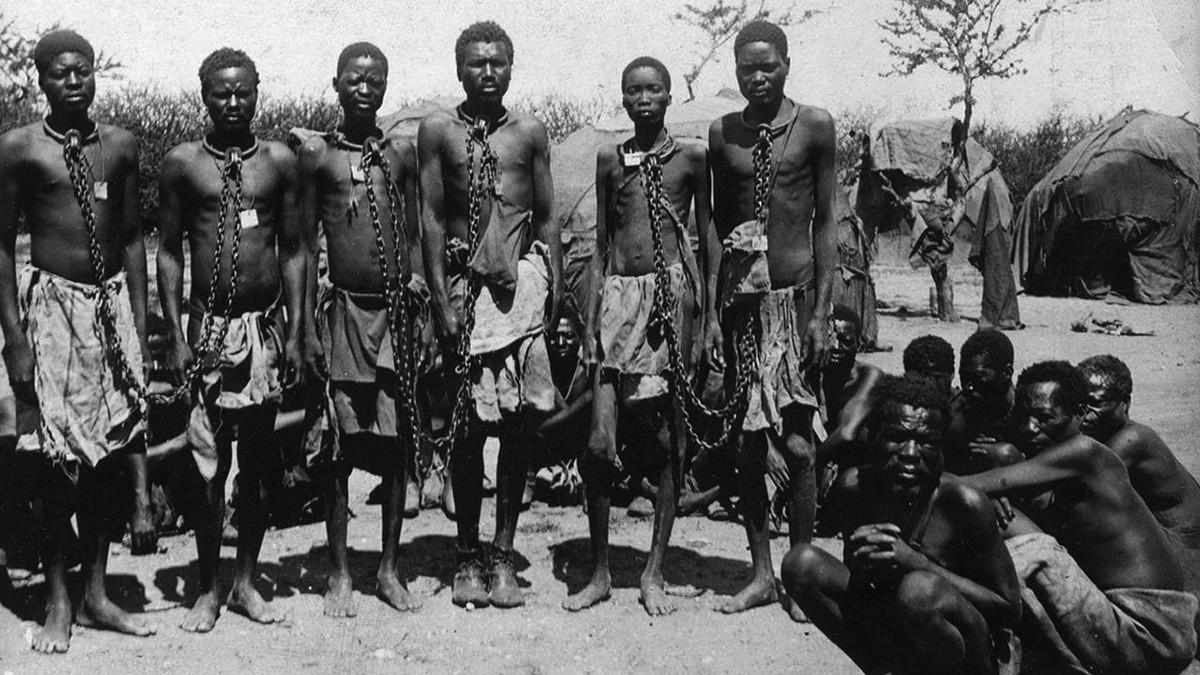
It is befitting for us, as the descendants of such genocidalists, to later draw an increase in violence as a justification for berating human nature, just as it had been used to justify the extermination to begin with. I would hope that no one would fault the !Kung for fighting back against intrusion. Brutal oppression came at the hands of Whites and the Bantu then, just as it continues to today. The !Kung were “taken as slaves, hunted down like animals, and, wherever possible, forced from their land.”[29]
The violence of colonization increases pressure on even the most intact of communities. And the increased contact with neighboring pastoral and agricultural societies can also influence social behavior. Of the 22 cases of homicide documented by Lee, 15 occurred as parts of feuds, a form of retaliation typically occurring in delayed return societies.[30] That most certainly includes the Bantu.
Not surprisingly, the !Kung had stories of pre-contact times when blood feuds did not exist. As a result of fights, parties would “hang up their quivers”, //gau!kurusi, so they could “announce symbolically that the fighting was over for good.” The elders would split the group to keep tensions and further violence from mounting.[31]
Again, my point is to contextualize the period of violence in which the famously echoed rate of homicide amongst the egalitarian !Kung occurred. Colonization didn’t create violence among the !Kung, but it unquestionably amplified it. Regardless of not placing social value on violence, “the Ju/wasi had violence in them,” as Thomas points out.
“We all do.”[32]
And so we have stories like the one we opened with: the murders committed by /Twi and his ultimate execution. There are certainly others. Even without colonial pressure, it is likely that they would have existed. With or without a state, with or without external pressure, a society without strangers is forced to confront its own when they become dangerous.
In looking back over the stretch of time Marshall and her family had spent amongst the Ju/Wasi, she was made aware of five homicides, two of which she considered “safety measures.” One case was similar to the one already told of /Twi’s execution after causing three of the five homicides.
The other was of a man who began hiding in an aardvark burrow, jumping out and startling those that passed by. Clearly, to the group, he had lost his sanity. In their assessment, it became unquestionable that he was too dangerous. A few men went out into the veld and killed him with poisoned arrows.[33]
It can be difficult, coming from our own disconnected society, to see such a response to what is clearly mental illness. In the society without strangers, however, there are no mysteries. These aren’t faceless people.
Nor are the potential victims.
Within this society of 550 people, here is an accounting of 5 murders, 3 of which were committed by one person who was subsequently killed as a “safety measure.” In our own assessments, executing someone for jumping out of burrows seems overwhelmingly excessive. In light of the situation as the Ju/Wasi saw it, as those who would have ultimately had to lose and bury their own family members and loved ones, as those who could not bring sense back to the man in the burrow, there was no question and no vengeance in their decision making process: they were faced with the likelihood of worse outcomes and chose, collectively, to mitigate the risk.[34]
Life beyond the state requires action. There is no infrastructure to fall back upon. No prison to lock up the excessively violent. Everyone knows this, just as they know each other.
And for the most part, homicide is the exception, not the rule.
Fighting amongst hunters is largely discouraged and avoided when possible. A hunter is exceptionally skillful at killing. For the !Kung, the use of poison tipped arrows for hunting ensures that the weapons capable of taking lives are widely available within camps. Like all weapons, they can be used indiscriminately.
The use of such weaponry is the most extreme form of violence, the fallback when emotions spiral beyond all social mechanisms, beyond the reproach of others in the encampment to intervene. The !Kung have three levels of fighting; talk, fight, and deadly fight.
A talk is an argument that may involve threats and verbal abuse, but no blows. A fight is a dispute that includes an exchange of blows but without the use of weapons. A deadly fight is one in which the deadly weapons-poisoned arrows, spears, and clubs-are used whether or not someone is killed.[35]
Of the arguments observed by Lee, less than half involved the use of weapons. It is most likely that many other arguments or talks would have occurred without being reported, as the use of weapons is likely to cause physical harm that is hard to overlook. Verbal arguments, as we shall see, are a more aggressive form of joking that is typical throughout non-state societies, be they immediate-return hunter-gatherers or semi-nomadic horticulturalists. In the case of the !Kung, it “is often punctuated by a joke that breaks the tension and leaves the participants rolling on the ground helpless with laughter.”[36] If the joking only escalates the tension and others haven’t been able to step in and break it up, physical fights are likely to break out. Fights without weapons aren’t unlike the kind of flaring that de Waal mentions amongst chimpanzees and as anyone who has fought with friends or siblings when joking went too far can attest. Lee explains:
Fights are of short duration, usually two to five minutes long, and involve wrestling and hitting at close quarters rather than fisticuffs. Fighters are quickly separated and forcibly held apart; this is followed by an eruption of excited talking and sometimes more blows. Serious as they appear at the time, anger quickly turns to laughter in Ju/’hoan fights. We have seen partisans joking with each other when only a few minutes before they were grappling. The joking bursts the bubble of tension and allows tempers to cool off and the healing process to begin.[37]
We see again this emotional flare leading to an outbreak of violence and then acts of reconciliation. This is an escalation of arguments more than a precursor to the potentially lethal fighting with weapons.
It is worth pointing out that these fights typically involve men, but can involve or be strictly between women as well. The kind of violence inflicted is not the kind of battery typical of one damaged person trying to physically dominate and suppress another; these fights aren’t particularly effective in that regard. Even though men are more likely to fight with women than vice versa, there is no presumption that women are innately victims of male violence. Women are much more likely to start fights with men than other women. Since women don’t use weapons they are rarely used in fights where women are involved.
Patriarchy has as much to do with the pacification of women as it does the oppression of women as a whole. Even in the far more hierarchical societies of Australia’s hunter-gatherers, women are equal in terms of fighting and the expectations of violence as men.[38] In the case of deadly fights, those involved in the argument are likely to reach immediately for weapons instead of grappling.
In that moment, whether built up or spontaneous, the individuals have crossed that line and are willing to risk, often before the entirety of the band, the probability of lethal violence. The presence of poisoned arrows makes the lethality of !Kung fights far greater. Though the poison used is relatively slow, often taking six hours to kill someone, the person struck with the arrow typically will receive help from the rest of the band. Knowing the likelihood of death as a result of being hit with an arrow, it is rare that the fight goes any further.
Others will cut the wound and try to extract the poison from it. They will talk and begin the kia healing trance ritual,[39] attempting to aid the victim and to soothe social tension arising from a fight. Regardless of whether the victim lives or dies, the immediate task is to try to heal all bonds. The attacker will leave the camp.[40]
As a community, whatever the outcome of a fight may be, the immediate goal is reconciliation.
There are no secrets here.
There are no random murders or unknown suspects. Fights typically occur in camps before the rest of the band. They will take part in the arguments, interjecting jokes, trying to break up physical confrontations, or yelling about the “yikkity-yack” of arguments. The goal, for everyone, is resolution, ideally without violence.
But there is always the expectation that violence may arise.
There is the expectation that it may have to be dealt with.
It is because of the seemingly exceptional homicide rate of the !Kung, the self-described harmless people, that I chose to open with them. In particular, I chose to focus on some of the more exceptionally violent incidents that we know of. Egalitarianism is, I believe, in our nature. It is written into the primal anarchy of the nomadic foraging lifeway that we have evolved to. It is a part of the social lives that we live as wild animals.
One that is particularly unfit for captivity.
These incidents give a glimpse of what can happen in a society without strangers, a society without a state, when the fail-safes don’t work. More often than not, they do. But egalitarianism doesn’t mean that everything works in angelic form or fluidity. Everyone within a nomadic forager society has the skills, ability and access to choose to remove themselves from tense circumstances.
They also have the choice to stay.
But what is most important, is that they accept, without delusion and without lament, the nature of being a social animal: that arguments may occur and that, as a community, they will have to be able to deal with unpleasant and even potentially lethal situations.
In the !Kung case, the oft-cited example for egalitarian societies also tends to have the record of being the more violent. As such, what we’ve just looked at, warts and all, is more the exception than the rule. Among the Hadza of Tanzania, between 1967 and 1997 there were 2 homicides by Hadza against other Hadza.[41] Among the South Indian foragers and the Batek, no homicides were recorded within these societies. For the Batek, the talks of the !Kung involve the whole of the group “in a direct discussion between the person involved or in the form of loud complaints made to anyone who was willing to listen, sometimes done during the evening hours in cross-camp arguments, discussions, or simultaneous monologues.”
And if resolution cannot be reached, then movement is the response.[42]
The Orang Asli of Peninsular Malaysia are openly hostile towards violence, a stance that has bolstered their refusal to succumb to attempted conversions to Islam and to domesticate animals. As one individual states,
I don’t know how it feels to hit someone or be hit by someone. … I never felt angry or knew how to get angry enough to want to fight with others. When I was angry before, I always felt, it’s all right if that person wants it his way, I will let it go.[43]
The Hill Pandaram of Southern India espouse a particularly non-competitive nature which instills a virtue of avoiding violence through movement.[44] The Rautes of Nepal see individual disputes as a threat to the entirety of band integrity and seek to resolve tensions through camp-wide nightly discussions.[45]
Within the Mbuti, the arguments taking place within camp are considered noise by the band elders who step in and “demand silence, on the grounds that the noise is offending the forest.” It is then the elders who mediate the arguments and determine a resolution, typically, again, consisting of movement either of the band or of individuals.[46]
What becomes obvious from running down this list is one thing: violence is one form of conflict resolution, but hardly the only one. In being aware of and sometimes accepting the probability of violence, it becomes equally essential to hunter-gatherer communities to learn how not to resort to violence. Granted, as we’ve seen, that doesn’t always work, but that’s because we’ve gotten all too used to seeing and accepting homicide statistics.
The problem is that this goes beyond numbers.
As Frank Marlowe observes about the Hadza statistics; “The murder rate among the Hadza is roughly the same as that in the United States. The U.S. murder rate in 1997 was 5.5 for every 100,000 people.”[47] To famously meet the per capita murder rate of Detroit in the 1970s, it took 30 years of monitoring !Kung society to make the statistics work. And that while active colonization was happening.
It is unquestionably and undeniably true that homicide can and does happen in nomadic forager societies. Clearly far more in some than others, though the reality of forced settlements have taken their toll. As Thomas noted:
Although the Ju/wasi dealt with anger and violence very successfully as long as they lived in the Old Way, their mechanisms for doing this broke down after the 1970s, when change came and Western civilization overtook Nyae Nyae. Then, when there really were police and government officials, when the Ju/wa population become concentrated at a government post where they lost their ancient lifestyle, when hunger, alcohol, drugs, disease, and poverty overtook them, they began killing one another like madmen.[48]
There are cases like the Orang Asli settlement Air Bah, where the non-violent virtue has given rise to active resistance to alcohol consumption as it breeds violence.[49] This is also seen amongst the Paliyan of Southern India.[50]
But as Douglas Fry points out, “as alcohol becomes available to nomadic forager societies violence goes up. Often the traditional mechanisms of social control and conflict management are not effective in dealing with drunken aggression.”[51] The reality of this is just another part of the colonization process: a finalization of the ethnocide that results from attacking indigenous communities spiritually, physically and ecologically.
The infusion of intoxicants only feeds the perpetuated mythos of the violent savage in need of civilization. This morbid view of humanity, and the animality it arises from, spews from the mouth of the domesticator’s pulpit. From Hobbes to Pinker, the intent is clear: violence is violence, and it is the duty of the state to protect you from it.
And yet here we have hundreds of thousands, if not millions, of years of evidence to the contrary. The nomadic forager lifeway is peaceful in the sense that there is no war. But it is peaceful in its acceptance of violence and refusal to allow hierarchical institutions to arise to mitigate it.
Instead, they default on the egalitarian version: amongst free people, disputes will arise. It is a testament to the enduring strength of their society that they neither hide from it nor let the potential of violence dictate their existence.
This is our open and willing acceptance of the human condition. And it is our ability to cope with the presence of violence through understanding that there are other forms of conflict resolution without the state.
How to Cope with Violence: Conflict Resolution and Dissolution
Conflict is an inevitable feature of social life, but clearly physical aggression is not the only option for dealing with conflict.
— Douglas Fry, The Human Potential for Peace[52]
Of the various forms of conflict resolution amongst nomadic foragers, none is more pervasive than mobility.
On the ecological level, movement keeps bands from over-harvesting areas; it can follow the movement of hunted animals, it can follow the shifting seasonality of foraged foods, it can lead to streams seasonally overrun with fish. It lets the ecosystem recover while the refuse composts. It ensures that the people living within a living landscape are aware of the population flux of flora and fauna within the region.
On the biological level, the movement of camps, like the movements latent within foraging, it pushes back the onset of menses in young women and helps reinforce birth spacing for children: both of which greatly check the band population.
On the social level, mobility is the epitome of freedom.
The movement from camp to camp, the fluidity of moving between groups, the chance to bring the camps together for periods; all of these things reinforce not only the ties between individuals, they ensure that people who don’t get along with each other have their options open.[53] As arguments arise, the offending individuals will split apart. If fights or homicides occur, the perpetrators will split off. If whole camps are feeling ecological pressure from outsiders, they will even “typically move apart or settle in unpopulated areas, even if these are less desirable, or avoid or reduce conflict.”[54]
To a certain degree, sometimes ecology becomes an excuse for mobility.
There are two types of Mbuti groups; the net-hunters and archers.
Net hunting is a communal activity based around driving game towards a net where hunters then take them. Archers, by comparison, are more solitary when on the hunt. By virtue of methodology, net hunting bands have more people, which carries more potential for possible conflicts. Their typical group size and potential for conflicts play into how each group views honey season: the ecology of honey plays into their justification for banding together or splitting up. The net hunters claim it “is a time of such plenty that the game can easily be caught by hand, and so there is no need for the large cooperative net-hunt.” Conversely, the archers only hunt in larger bands during the honey season, which they claim is “a time of poor hunting, and thus, maximum cooperation is demanded.”[55]
Logically, both can’t be true, but it’s an ecological justification for social actions. The want is to break up how bands and camps exist most of the year, get a bit of variation. It is to have a reason to come together if it’s not what they typically do or to split up for a bit for those with higher population densities.
They get the chance to dissolve tension through flux.
As James Woodburn observes, it is always possible that
members of a camp all move, they may go together to a new site; they may split up and form camps at two or more new sites; they may go as a body to join some existing camp, or they may divide, some joining an existing camp at a particular site, the composition of the camp changes: some people move in and some move out.[56]
This is the ingenuity of nomadic forager, immediate-return hunter-gatherer, communities. This is what strangers can simply ignore: we can’t and won’t always get along and we all get along better when we can move and cycle through areas, camps, and gatherings.
Proximity is not an argument for mutual aid. That is an innate problem that sedentary societies are forced to deal with and none have nor will be able to cope with appropriately. It is a part of the domestication process stripping down our innate needs as social beings and redirecting that into a notion that any people are good to be around.
That is, so long as you have the right attitude about it. Can’t we all get along, right?
The answer is no. We can’t.
But the beauty of the primal anarchy of nomadic forager life, the way of existence that literally wrote into us how we see, feel and interact with the world and all its inhabitants, is that we don’t have to. Ecologically, biologically, socially, and spiritually, we’re better off being nomadic.
We’re better off when we embrace our fluidity.
This is a lesson so vital to nomadic forager life that it is consistently the most profoundly iterated virtues taught to children. This is a point I want to focus on: for us to be able to isolate violence requires that we ignore the causation. Violence, as we have abstracted it, within domesticated societies is always to be avoided, unless it is coming from the hands of the state or hidden through the day-to-day violence inherent in civilized living. It is always uncivilized.
Hunter-gatherers, trained and equipped to kill by livelihood, know that violence is something they’ll have to deal with, to respond to, and that it likely can become lethal. This is a practical concern. This is a practical reason to instill and uphold other forms of conflict resolution that bring the society closer together rather than to draw it apart. Violence, in this context, is not something abstract: it is the result of other forms of conflict resolution failing to mitigate an individual dispute. In so far as there can be a “goal” asserted onto their approach to avoiding violence, it would be that the intent is to resolve conflict rather than to penalize its outbursts.
Even in incidents where a homicide does occur, the killer is either chastised or resolves to relocate to another camp until the tensions soothe over and the healing has occurred. Other members of the group may choose to shun them. Life is flowing, fluid. A society that choses stagnancy, as we all know, is stuck in an endless cycle of self-perpetuated escalations on one hand and punishment on the other.
If we’re being honest about it, I think that’s something we all can recognize as horribly unhealthy. But let’s get back to the children.
Anthropologist Tim Ingold observed that “hunter-gatherers act as self-conscious agents endowed with subjective intentionality.”[57] From a civilized perspective, that sounds counter-intuitive as a foundation for functioning and egalitarian communities. We simply take everything to its furthest extent: buying into the narcissistic cult of the individual or a religiously dogmatic refusal of any personhood. It should be a given that both aspects are pushed into overdrive as technology becomes smaller and more pervasive in our own lives. For stateless indigenous societies, this kind of identity crisis is dealt with between childhood and adolescence. You learn who you are in the world with other children, mimicking parents, slowly taking over your own subsistence, playing and exploring the wild, as a group, as individuals.
It is telling that coming from a society such as ours, where survival is such a flaunted virtue, that we make much of the skills that hunter-gatherers learn instead of understanding the context in which they learn them. Seeing children hunt or catch shell fish, to start a fire and cook them, is certainly impressive, but only noticeable if you lacked that context in your own upbringing, as I’m sure is the case for many of us.
The skillset of nomadic foragers or any self-sufficient person or group, is absolutely fascinating, but within their own context they can easily be taken for granted. There is no specialization here, there is no industry: this is about exploration, child’s play. It is about replicating relationships with each other and with the larger community of wildness that surrounds them, the materials are just tools.
Within this context, they are a given.
Self-sufficiency, learning the ins and outs of these lifeways is a comfortable expectation. You should be able to provide for yourself. There are no lifeguards on duty. None are necessary, children learn by watching their parents, getting guidance where needed and then interpreted through play with other children in a mixed age group. So what lessons do the parents spend time upholding? Passing on the importance of mobility and conflict resolution. Namely, mobility as conflict resolution.
“Teaching,” amongst the nomadic forager Nayaka of Malaysia, “is done in a very subtle way.” As anthropologist Nurit Bird-David writes,
“Knowledge is inseparable from social life.”
I believe knowledge in this context has to do with learning how to behave within relations, in order to keep these relations going, rather than with knowing things for their own sake, as a known detached from the knower. Young people learn their skills from direct experience, in the company of other children or other adults, in the course of everyday life.[58]
Infants within nomadic forager societies are cared for greatly by parents and surrounding groups. Affection is openly displayed; fathers and mothers take to tending children instinctually and without hesitation.[59] As an infant becomes a toddler and young child, that affection remains as they increasingly turn towards their peers in their social life.
Amongst the Nayaka, “a person becomes a child when he or she starts socially engaging with others, independently, responsively, and responsibly.”[60] To a certain degree, the case has been made by Paul Shepard that domestication stunts this process of becoming independent, leaving most of civilized individuals stuck within a childhood level of development and awareness.[61]
Within the Nayaka, the role of the parent “connotes an emotional sort of caring.” This is the same kind of relationship that their society expresses between themselves and the forest. When they refer to themselves as children of the forest, it is a statement of “an emotional attachment, a shared living, a shared sense of identity and mutual responsibility.”[62]
Amongst the !Kung, toddlers typically start integrating into play groups of mixed ages and sexes by the second half of their second year.[63] For the Agta of the Philippines, communal coddling and care begins at birth. Parents lead by example, allowing the children their own group:
When a child learns to walk he turns more and more toward the companionship of peers, who are not only playmates, but also teachers. They teach games of skill and dexterity which prepare a child for his adult economic roles. They instruct each other in how to swim, fish, and gather vegetables and shellfish and generously share their treasures, food, secrets, and knowledge.[64]
It is reiterated again and again through the accounts of children’s play groups that the interventions of adults typically revolve around one central aspect: fostering cooperation and resolution. Within the Hill Pandaram, “Children are treated as autonomous individuals, and are not taught, or expected to obey their elders.”[65] The play group of the Mbuti children have their own camp, the bopi, where “they are learning the fun and beauty of working and playing with not against other, they are in a positive way learning by prescription rather than proscription.” The “children will find that mobility is one of their prime techniques for avoiding or for resolving a dispute, for once they move elsewhere their spheres move with them and the dispute is discarded.”[66]
The games played within the bopi are meant to manifest situations of conflict so that they can learn to resolve them. And if resolution fails, they simply walk away.[67] But the bonding that occurs strengthens their resolve. Those limits of resolution, tested within the safety of the bopi and instilled into their interactions with the world at large, brings the circumstances which foster violence directly into the light. They learn to identify and respond before they boil over. Violence isn’t something external or looming within context, it is simply an emotional reaction.
And, more to the point, one that can be avoided.
This circumstance, this primal approach to parenting, reaffirms the lived primal anarchy of nomadic forager bands. It breeds egalitarian societies based upon mutual aid and respect. By embracing the facets of life that cause tension, it frees the individuals from becoming paralyzed by them.
So while the homicide rate of the !Kung was famously and unjustly being compared to that of 1970s Detroit, it’s easy to see why the comparisons fail: violence, within egalitarian societies, is largely mitigated through resolution, but its existence is not forgotten. Outside of external pressures, random and horrific acts of faceless violence do not occur, so there is no need to live in fear of them. When violence does occur, there are ways of healing and reconciling it.
For the most part, the means of mitigation work. But what is most important is that in the confrontation with these unpleasant aspects of social existence, they give those within a given band and society a lot of room to freely be themselves, to uphold laughter and joy as a given in life. These are societies that dance and sing to bring themselves together. They aren’t locking themselves away at night. It comes back to childhood. It comes back to being affectionately and lovingly held by the camp as infants. Kin or not, there is acknowledgement, care and interaction. There is comfort and acceptance. And these are the circumstances we have evolved into, as Homo sapiens. This is what is written into us: a world where we are given the space to exist and therefore actively create our own lives, with others. This is freedom.
This is what egalitarianism comes down to: we come together not because we need to, but because we want to. As stated about childhood among the Batek of Malaysia:
Despite occasional parental worries, as long as children remained within earshot they were allowed to do almost anything they pleased. They chopped down trees. They built fires and cooked food. They pretended to smoke porcupines out of holes. They carried sticks on their shoulders like bundles of rattan or firewood. Many children enjoyed pretending they were moving camp.[68]
And just in case anyone wants to stand in the way of that, they also learn to laugh.
The Anarchist’s Laughter: Sharing Jokes and Meat
It is difficult to be dangerous or violent if you are laughing so hard you cannot stand.
-Colin Turnbull, The Human Cycle[69]
For the Inuit, anger is something that was expected with children, but unacceptable for adults. Hugh Brody found the question, “Ningngarpit?”, or “Are you angry?” to lie somewhere between “a tease and reproach.”
Anger, simply put, was for children.
There are many aspects of life, be it that of an immediate-return hunter-gatherer or a hyper-technological, post-industrial consumer, that are difficult. There are aspects of being alive that can bring euphoria and aspects that can result in endemic depression if they aren’t resolved. Social life, for all its joys and comforts, also creates tension and can allow an individual to bring out all of their unresolved conflicts into this situation.
As we have seen, that can be lethal.
The question Ningngarpit? is a gut check. This simple question, half jest and half ridicule, is a reminder: the purpose of community is to help resolve those tensions, not to amplify them. As Brody puts it:
To laugh, to be happy, to feel welcome or welcoming, to experience shyness, to be nervous about dangers in the world or society, and to feel ilira, the mix of apprehension and fear that causes a suppression of opinion and voice: all these states of mind are spoken of and exhibited with real freedom. They have helped to shape the stereotype of the Inuit as a people with unfailing goodwill, good humor, and generosity. Yet the intensity of feeling that can exist within this restraint and dignified self-control, breaking through at times of extreme difficulty, is also remarkable.[70]
Laughter and humility are virtues taught through childhood. Nearly every violent situation that has been mentioned among nomadic foragers already is precipitated by attempts of either the individuals involved in fights or those around them to try and keep the “yikkity yak,” as the !Kung call it, on the lighter side. That the ridicule leads to more laughter and less anger.
This doesn’t always work, but more often than not, it does.
Returning to the bopi of the Mbuti children, arguments quickly “revert to ridicule which they play out until they are all rolling on the ground in near-hysteria.” Which echoes into their adult life as a primary form of resolution. “Chortles quickly become laughter, and this laughter becomes the Mbuti’s prime weapon against conflict, aggression, and violence.”[71]
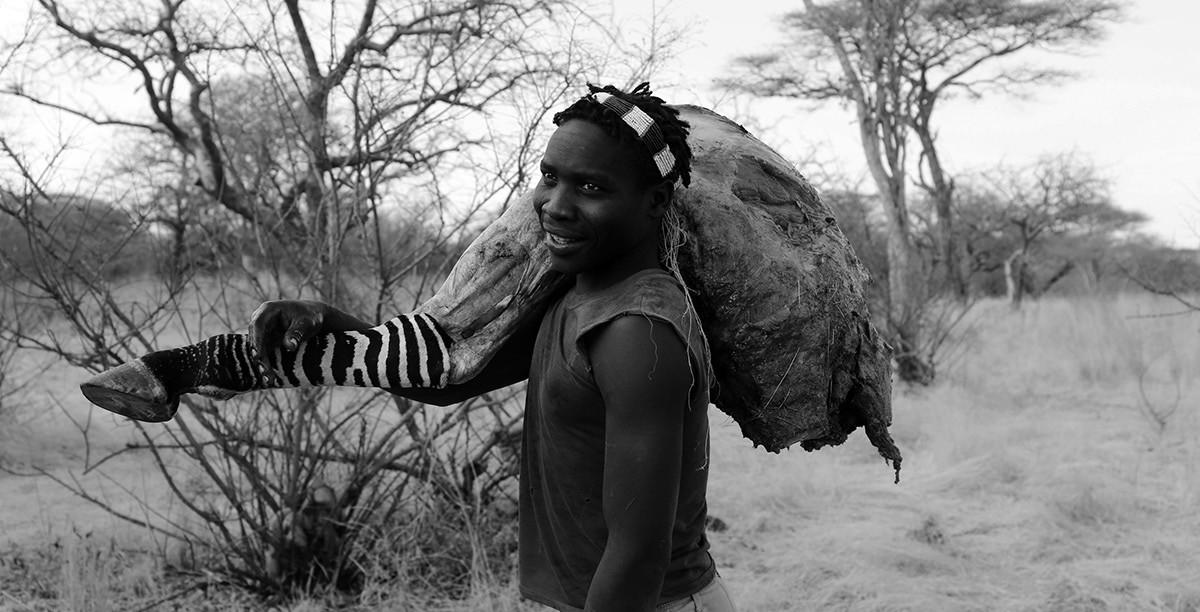
Band life, in nearly all non-state societies, consists as much of joking around as it does singing and dancing. Communities elicit joy and comfort; otherwise they wouldn’t exist at all. This is an aspect that is easy to miss when revolutionary perspectives become so dogmatic about what the ideal society might be and how it might deal with unpleasant circumstances that it strips the life from situations which may potentially arise. The tension of the struggle often overshadows the coercive aspects demanded of many intentional communities: again, based in the liberal notions that we can all get along and the agrarian squalor of sedentary life.
Removed from those constraints, it’s easy to see more about the organic nature of life without the state, freed from the tension and presence of its infrastructures. As anarchist and anthropologist Pierre Clastres observed amongst the Yanomami, they enjoyed a good dickjoke or waking the lulled sleepers with a sneaky fart in the face.[72]
Having spent over two decades attending anarchist conferences and gatherings, it’s obvious that people living in anarchy, less preoccupied than anarchists, seem like a lot more fun to be around.
Jokes aside, ridicule is often seen as a means of social leveling. To an extent it’s true, certainly as societies become more stratified, but there have been arguments made that the presence of such mechanisms is an indication of the fragility of egalitarianism.[73] However, the idea of keeping individuals from getting a big head about what they’ve done is a far cry from a big head resulting in non-egalitarian situations and the presence of social power. Without property, being capable of packing up and leaving while being fully self-sufficient, it’s hard to imagine the ability to create a structure for power being that simple.
In other words, “social leveling” in this case is really just about checking, habitually and hilariously, any time someone thinks their contributions to the group are greater than any others. It is a testament to the degree to which egalitarian societies value the contributions of everyone. Early ethnographers sought out the “big hunter” as they presumed, with patriarchal zeal, that in a hunter-gatherer society, the hunter rules the roost. Among complex hunter-gatherers, those who were sedentary or had domesticated animals to store or carry a surplus (respectively), they were able to find a semblance of that.
Among nomadic, immediate-return hunter-gatherers, however, not so much.
To the extent that ridicule is used to check the potential narcissist, it quite often seems to go to young men as they become successful at hunting larger game. For the Orang Asli, “it appears that ‘leveling mechanisms’ designed to challenge self-aggrandizers, such as joking, shunning, meddling, demanding, and mocking, only apply when the perceived ‘self-aggrandizer’ is a younger man.”[74] Outside of this, heckling is just a way of airing out irritations as jokes instead of attacks.
And it becomes habitual.
A famous case for habitual heckling as a means of reducing potential areas of tension or, simply, socially irritating people has been made by Richard Lee, who learned about it first hand amongst the Ju/ Hoansi. At the end of a lengthy stay among them, Lee wanted to share his gratitude from their generosity and hospitality, choosing Christmas as a time to celebrate them: to give back to the community that had hosted and tolerated his presence.
He ended up purchasing a large cattle from a neighboring Herero pastoralist. An “ox of astonishing size and mass,” for a feast at the /ai/ ai camp for roughly 150 !Kung. He had hoped telling his hosts about his purchase and plans would be graciously received.
It didn’t play out as he had anticipated it. The following conversation occurs right after he confirms his plans and which ox he had chosen:
“I have purchased Yebave’s black ox, and I am going to slaughter and cook it.”
“That’s what we were told at the well but refused to believe it until we heard it from yourself.”
“Well, it’s the black one.” I replied expansively, although wondering what she was driving at.
“Oh, no!” Ben!a groaned, turning to her group. “They were right.” Turning back to me she asked, “Do you expect us to eat that bag of bones?”
“Bag of bones! It’s the biggest ox at /ailai.”
“Big, yes, but old. And thin. Everybody knows there’s no meat on that old ox. What did you expect us to eat off it, the horns?”[75]
Having spent years studying the social life of the !Kung, Lee still missed an essential feature: the degree to which egalitarianism was innate within their society. He hadn’t been prepared for it even though he was effectively seeing it in action daily.
Unprepared for this kind of response, he was devastated. Coming from the apex of civilized society within America, the structure of power along with the tyranny of the gift is so ingrained that it can be an unshakeable core of how someone relates with the world. Like the problem of thinking we can always get along, the nomadic foragers, those living in a state of primal anarchy, thought of that too. Upon discovering the core of meat insults from those at /ai/ai, Lee asked one of its residents, Tomazo, to clarify its universality:
“We refuse one who boasts, for someday his pride will make him kill somebody. So we always speak of his meat as worthless. This way we cool his heart and make him gentle.”
“But why didn’t you tell me this before?” I asked Tomazo with some heat.
“Because you never asked me,” said Tomazo, echoing the refrain that has come to haunt every field ethnographer.[76]
For nomadic foragers, heckling, like joking, is as latent as it is lacking in our society where hierarchy is constantly reinforced.
Along with heckling the hunter are intentional complexities around meat “ownership,” built to obscure the relationship between the hunted animal and the hunter who fired the arrow which itself may “belong” to someone else.
As the Inuit saying goes, “Gifts make slaves like whips make dogs.”[77] Gifts are refused because sharing is expected. “Ownership” is, by and large, a façade. Paired with the lack of stored or storable meats, it’s equally impractical. Children’s demands for meat are respected which feeds the ongoing and self-perpetuating role of sharing: the essence of the communality within communities.[78]
This is the aspect of the society without strangers that Tim Ingold reiterates is the “central attribute” of “face-to-face relationships”: Far from being an index of the submission of the particular man or woman to the authority of the social collectivity, sharing underwrites the autonomy of the person, who thus remains wholly accountable for his or her actions. In short it is not in spite of their mutual involvement, but because of it, that people in hunting and gathering societies enjoy a fundamental autonomy of intention and action.[79]
Just as egalitarianism centers on equal access to a subsistence base and society, egalitarian societies are “underwritten by a principle of collective access”: “The band is conceived as one big household, whose members enjoy unrestricted use of the resources of its country and who labor in common to draw a subsistence from them.”[80] It is property that complicates this ecology of social relationships, not the tendencies of self-aggrandizing young men.
Without property, they have nothing to harvest but an ego. As Tomazo reminds us, the fostering of egos is exactly the kind of circumstance that can lead to the violence that nomadic foragers uphold avoiding.
Society Against the State and Mitigating Tensions
Faithless, lawless, and kingless: these terms used by the sixteenth-century West to describe the Indians can easily be extended to cover all primitive societies. They can serve as the distinguishing criteria: a society is primitive if it is without a king, as the legitimate source of the law, that is, the State machine.
— Pierre Clastres, Society Against the State[81]
Property, namely in the form of stored foods or domesticated plants and animals, among non-state societies does in fact create tension. But this isn’t an on/off switch. The changes, in many ways, are subtle. Sedentary life further creates a more malicious form of property: territory.
It is the very functionality of conflict resolution: the ability to move, to laugh, to splinter after a fight and cool down, that keeps nomadic forager life fluid and flowing. Horticultural societies, that is, typically speaking, gardener-hunters rather than small-scale farmers, don’t completely break with these methods, but they are forced to adopt them to new circumstances. As they lose the ecological benefits of nomadic life, they start to feel the pressure of an increasing population.
As anthropologist Marvin Harris noted:
Were it not for the severe costs involved in controlling reproduction, our species might have remained forever organized into small, relatively peaceful, egalitarian bands of hunter-collectors. But the lack of effective and benign methods of population control rendered this mode of life unstable.[82]
The problem is that the ecological balance of the nomadic forager band is no coincidence. This is the lifeway that has been written into us going back, potentially, millions of years. This primal anarchy is etched into our mind, body and spirit.
It is no surprise that this is the society where we thrive the best and are defined by egalitarianism.
That primal anarchy isn’t easily shaken. The domestication process, the ongoing attempt to subjugate our innate egalitarian, nomadic spirit, is a constant reiteration of a totality. It is a retelling of the world as it is through the mouths of specialists and segmented into the mirrored world of production and division of labor.
But none of this comes quickly or universally.
Martin Fried identifies four levels of what becomes “political society.” The primary level is the “simple egalitarian society” of nomadic foragers. Then there are “rank societies” noted by limited “positions of prestige without affecting the access of its entire membership to the basic resources upon which life depends.” Notably these are largely slash-and-burn horticultural societies.
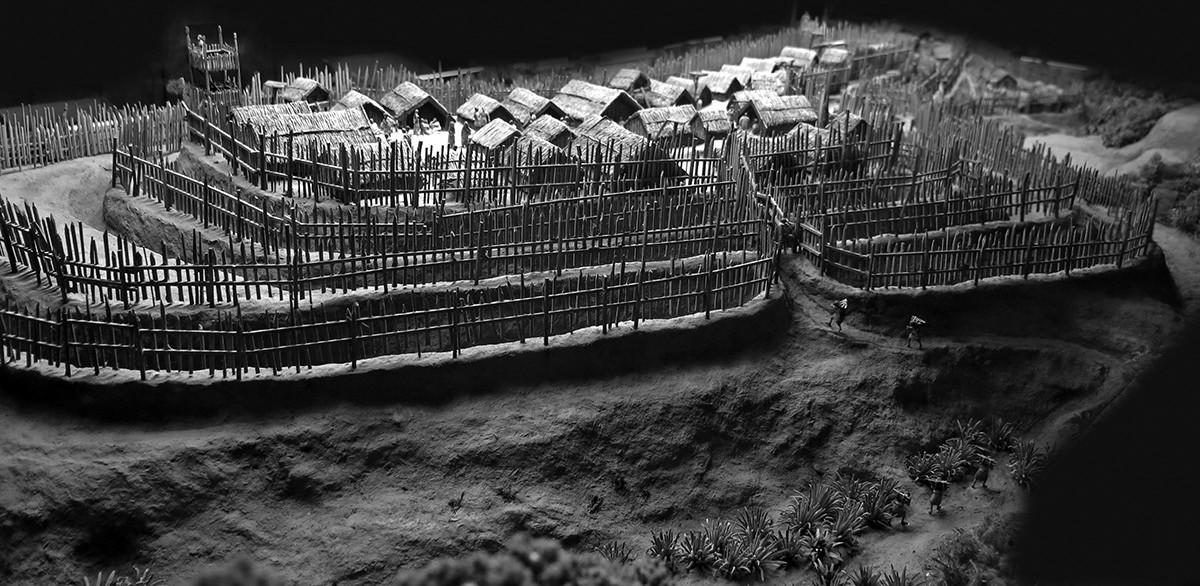
There are “stratified societies” where members of the same sex and equivalent age status do not have equal access to the basic resources that sustain life. By and large, this type of society is harder to pin down, though it seemingly exists in the build up among sedentary hunter-collector, mounted hunter-gatherer, or early agrarian societies.
They become hard to pin down because these are societies in flux, typically towards the next type of society, “the state”. In Fried’s words: “Once stratification exists, the cause of stateship is implicit and the actual formation of the state is begun, its formal appearance occurring within a relatively brief time.” Rarely in human history is the notion of “Progress” or “social evolution” a given nor does it follow the prescribed paths offered by early historians and social thinkers, but in terms of John Bodley’s politics of scale, the state is itself a response to Harris’s dilemma of population expansion and its required intensification. The state is “better viewed as the complex of institutions by means of which the power of the society is organized on a basis superior to kinship.”[83]
The path from egalitarian nomadic foragers to hyper-modernized consumers is hardly a straight one, but there are clear distinctions in the rise and nature of political society here. Simple egalitarian societies deal with conflict on the band-level because it’s realistically the only “level” of society that exists. Rank societies, and some stratified ones, typically have both property and territory. These are tribal societies and chiefdoms that we’re speaking of.
Through the production of surplus, either in the form of stored grains and proteins or in the form of domesticated plants and animals, the flux of group identity and residence is largely losing out to affiliation based on kinship, place, and locality.
Or, as Harris puts it, “Permanent houses, food-processing equipment, and crops growing in the field sharpened the sense of territorial identity.”[84]
This leads to increasing social and ecological pressure on the group and the primary means of conflict resolution succumb to the need for reliability upon static groups. If fights break out, splitting up the camp or group is increasingly less of an option. It becomes the role of individuals to mitigate conflict and to offset its rise.
In practice, this looks like the rise of Big Men or Headmen, individuals who wield influence, but lack the leverage of the state. In Marshall Sahlin’s assessment, “A big-man is one who can create and use social relations which give him leverage on other’s production and the ability to siphon off an excess product.”[85]
Unlike chiefs or kings, the Big Man is a position of respect, not power. They are a leader without authority and without permanence.
As Fried states: “In rank society leaders can lead, but followers may not follow. Commands are given, but sometimes they may not be obeyed.”[86]
This is where egalitarianism is hard to shake loose.
The Big Man, and to some degrees, a Chief, are still rooted in a society where the essential power of the state: the ability to organize and coerce individuals to work or to war does not exist. These roles of leadership exist because the position offers a talker, someone who is willing to insert themselves into disputes and areas of contention because the society, as a whole, needs to find resolution to tense situations otherwise it would dissolve into roaming bands again.
It is in that laughter, the heckling implicit in egalitarian societies, once used against self-aggrandizing young hunters that could be used to put a leader back in their place. In Pierre Clastres’ words, this is the essence of the “society against the state”, one that refuses an economy, refuses political power and the power of coercion:
This mode of constituting the political sphere can be understood, therefore, as a veritable defense mechanism for Indian societies. The culture asserts the predominance of what it is based on – exchange – precisely by treating power as the negation of that foundation.[87]
While the social mechanisms of egalitarianism may remain intact to some degree, the ecological consequences of settled life remain. The Big Man and Chief may not be able to coerce individuals to work, but in their influence, through their giving back to society and mitigation of disputes, they become the instigators of war.
Like all sedentary and domesticated societies that follow, the inability to mitigate tension through movement, laughter, dancing, and even outbursts of internal violence, means that the source of tension must be externalized.
Removed from the ecological contraceptives and diverse food stores that come with nomadic life, societies grow and intensify. It becomes inevitable that other societies, whether they are nomadic foragers, slash-and-burn horticulturalists, totemic kingdoms of hunter-collectors, or the technologically infused drive of twenty-first century corporate-colonizers, the others become an intrusion.
It is arguable that the tribal identity is only created as “a consequence of external force,” perceived or real.[88] In a stateless rank society, warfare becomes the way to bring the group back together: there is no greater unifier than a common enemy. In Harris’s words, “Having external enemies creates a sense of group identity and enhances espirt de corps. The group that fights together stays together.”[89]
And as we are emerged into an era of rampant nationalism and xenophobia in response to economic and political turmoil, this is a concept that we ought to be familiar with.
It is the nature of domesticated societies to externalize, to otherize, the sources of our tension.
This process might only be seen in minutiae within slash-andburn horticultural societies, but the innate loss of the means of primal conflict resolution is central to the function of all societies. Relatively egalitarian though many of these societies may be, their palatability is another issue.
I don’t say any of this to judge the supposed morality or lack thereof in stateless societies, but my own preference to avoid war comes from living in a society where constant war is a prerequisite. The scale is greatly different, but in all regards, warfare is a long shot from the way disputes are handled and resolved within nomadic forager societies.
The insurmountable feeling of tension felt within the society of strangers is a historical creation.
It is one that we have been born into, but it has a beginning and it will have an end.
The society without strangers is not a sudden or immediate loss, but, as we are sadly all too aware, situations arose that allowed it to continue growing. Through the organization of violence, the externalization of aggressions, empires can become created and boundaries pushed. Left unchecked, we enter a social and ecological downfall into the political economy: the State.
We lose sight of each other and, in turn, lose sight of who we are. Of where we belong.
We lose each other at the moment that we desperately need each other the most. Entering into untold new places and roles that we were never adapted for. We cling to created identities. We create Others.
And we lose sight of our own causation. We no longer assume the responsibilities of our own actions. Community succumbs to tribe.
Tribe falls to country.
We kill, but we no longer are held to our own actions.
All of this is most prevalent in the organization of violence through the origins of war.
The Organization of Violence and the Origins of War
War does not go forever backwards in time. It had a beginning. We are not hard-wired for war. We learn it.
-R. Brian Ferguson, ‘Pinker’s List’[90]
Arguments among nomadic foragers, with or without violent outcomes, center on individuals, not groups.
These are personal grievances, “not fighting over land, for political power, or material wealth, and they are not raiding to abduct women from other groups or attempting to kill cultural outsiders should opportune situations for killing present themselves.”[91] Furthermore,
The targets of homicide attempts are rarely randomly chosen members of other groups. They are offenders who have committed specific misdeeds or acts of abuse.[92]
Lacking property and territory, group identity is a complicated notion. “Due to the cultural flexibility and contextual identity,” Orang Asli foragers do “not perceive any more commonality with Orang Asli than within members of majority groups.”[93] When societies settle down, this changes drastically. Among the sedentary hunter-collector Tlingit, there “was no such thing as a crime against the individual, only against his clan.”[94]
It becomes the job of the Big Man and the Chief to foster that sense of group identity.
As populations grow, as gardens expand and shift, as fish and mammals become scarcer, a new ecological reality creates the need for a new social order. And so we get tribes. We get a firmer sense of group identity.
And in response to these mounting pressures, we get warfare. War, as stated by anthropologist R Brian Ferguson, “by any definition, is a social activity, carried out by groups of people.”
Beyond combat, war is about group mobilization. It is “organized, purposeful group action, directed against another group that may or may not be organized for similar action, involving the actual or potential application of lethal force.”[95] As societies intensify socially and economically, “the deflection of aggressive behavior onto neighboring bands or villages would certainly be preferable to letting it fester within the community.”[96]
In social and ecological terms, warfare serves as a means to spread out human populations, through deaths, slavery, or forced relocation which can ease pressure on the land. It leads to the redistribution of territories. It can be “preventative” to punish transgressions from the moral code of a tribe. And it can be cathartic in the sense of giving the release of anxiety, tension, and hostility that arise from sedentary life so that “domestic frustrations and other in-group tensions can be kept within tolerable limits.”[97]
War requires a cohesive tribal entity and circumstances that permit the “internalization of a group identity.” It requires planning, division of labor, and the sustained collective will to attack.[98] This is a far cry from the potentially, though not typically, fatal arguments that can break out amongst nomadic foragers.
Anthropologist Andrew Vayda has pointed out that it’s best to understand warfare as a process: there are stages, phases, and varying levels of intensity.[99] Without the coercive power of the State and using the volunteer army of kin, warfare amongst horticulturalists can easily disintegrate if social and ecological tensions fade. Among the Yanomami, members of raiding groups have been known to simply drop off the raiding party complaining of sore feet or stomachaches. Easy enough to do when there is no system for reprimand.
As Douglas Fry put it: “Command structure and authority are very weakly developed within tribal society.”[100]
Conversely, they don’t exist among egalitarian bands of nomadic foragers.
To get a closer look at what warfare looks like among horticulturalists, let’s look at the Maring of eastern New Guinea. Upon contact in the 1960s and 70s, there were roughly 7,000 Maring spread over roughly 190 square miles. The Maring had gardens and, most notably, they had pigs.
And they had lots of them.
The pigs and gardens go hand-in-hand. Aside from being a source of food, the pigs left in fallow gardens would dig out the scraps their human counterparts missed or didn’t find worth it to dig up, their rooting kept the ground soft for replanting, eliminated weeds and seedlings, but the pigs also ate the human refuse that piles up from sedentary life.[101]
Self-contained though this may seem, the population of both the people and, even more so, the pigs created a perpetual socio-ecological conflict: they would run out of room and the efforts to maintain the hogs became too much work. The result: a perpetual cycle of warfare that centered on the ritual slaughtering and feasting of pigs. In Marvin Harris’s words:
Every part of this cycle is integrated within a complex, self-regulating ecosystem, that effectively adjusts the size and distribution of the Tsembaga’s human and animal population to conform to available resources and production opportunities.[102]
The Maring follow a very common form of horticultural warfare: there is a period of truce and as escalations arise internally, they expand externally, resulting in less intensive battlefield warfare with low mortality rates and intensive battlefield warfare with high mortality rates. The underlying cause of warfare is population pressure, but it is the social consequences of that population pressure that lead to warfare.
Materialist and ecological analysis tells us a lot about why we do the things that we do, across all cultures. But rarely, if ever, do we speak in these crude terms. As social animals, we create a mythos to justify what it is we do and what we don’t do. Just as the Mbuti archers and net hunters have varying ideas about the ecological bounty of hunting during honey season based on their camp compositions, the circumstances for war amongst horticulturalists are typically the same, but the social justification may vary.
For the Maring, the initiation of war can be set off by any of the following; taking women, rape, shooting pigs that have invaded gardens, stealing crops, poaching game or stealing wild resources, and sorcery accusations.[103]
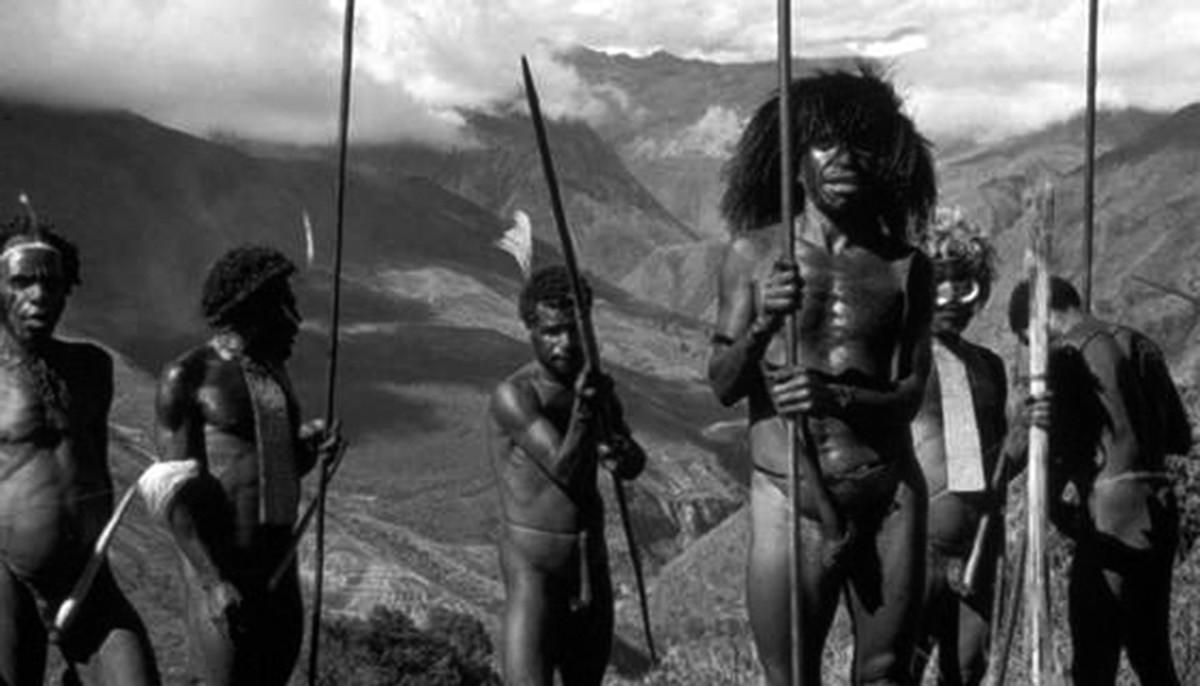
The last cause is an essential one in non-state sedentary societies, chiefly states and kingdoms: witchcraft and sorcery. Effectively speaking, the witch or the sorcerer is the ultimate means of externalizing internal drama and tragedy. It’s a harsh form of internal conflict resolution. And while those of us in the First World might shrug at these notions as antiquated and primeval, it’s just because we’ve substituted witches and sorcerers with terrorists, immigrants and rogue states as Others.
“Witchcraft,” writes Peter Wilson, “especially welds these elusive and diffuse effects people have on one another with the dramatic and tangible effects the natural world has on them in the form of illness, death, and misfortune.”[104] The witch and sorcerer are the ultimate scapegoat; they are also the most typical cause of war and raiding cycles.
Not surprisingly, there is an intimate link between disease and warfare. Anthropologist Alexander Alland notes, “Disease may be linked to transgression of the moral code, to social enmity, or to super-natural power, with consequent treatment of these “causes” rather than of the disease-producing organism.” This is something that is verifiable throughout our entire recorded history.[105]
Most of Maring life is lived during periods of prolonged truces.
The follow up to the battle cycle is a truce ritual, carried out by each tribe amongst itself, where rumbim, a small tree, is ritualistically planted at the borders of the territory. Part of the ritual is that all adult men of the group grasp the rumbim as it is planted, “symbolizing both his connection to the land and his membership in the group that claims the land.”[106] This is the material representation of the tie that binds the sedentary together. It’s how focus is kept on externalizing internal disputes and tensions.
It is the externalization of conflict resolution through killing as a group.
Maring warfare takes two forms: nothing fights and true fights. Nothing fights have gotten a larger reputation. Fatalities do happen, but they are rare. Men from two groups will get within range of each other, bringing a bow-and-arrow and large wooden shield. Close enough that they can hear each other voices, but far enough that the arrows are largely ineffective.
More than launching arrows, they are throwing insults. The opponents are not complete strangers, but they are also not kin. They are neighbors with just enough distance to be Others, but also the kind of neighbors capable of maintaining decade long truces.
At this stage of battle, which can last days or months, it is possible to deescalate the disputes: to talk them out, to use mediators to settle arguments, or that a fatality might lead to an end of hostilities without revenge killings. The men go home at nights and come back in the morning until the fight ends or it grows into a true fight.
The true fight is close combat. The bows-and-arrows return alongside spears and axes. When the nothing fight escalates, the men retreat from the battlefield for days to prepare for the axe fight. The rumbim, planted to signal a truce and now grown, is symbolically uprooted. Pigs are slaughtered and roasted, the salted bellies consumed prior to going out to war. When fatalities occur the individual is mourned and more pigs are slaughtered for a funeral feast.
This too can last for weeks or months: a warrior is killed and pigs are slaughtered. Until the population of people and pigs have waned to sustainable levels. It lasts until the rumbim is once again planted.[107] Brute though warfare may be, this is what non-state societies engage in to keep their numbers low enough to support otherwise relatively egalitarian situations. This isn’t the primal anarchy lived by nomadic foragers, but it’s also not the ordered hierarchy of the state: a place where this level of warfare can easily become an everyday reality rather than a ritualistic necessity.
Regardless, this kind of warfare is a cultural establishment. It changes the relationships within the bands and their relationship to the world at large. The dynamic tension of the wild and of life becomes something to fear and to fight.
And this is reflected in their social relationships.
Power Goes to the Head(Man)
Violence can never be understood solely in terms of its physicality – force, assault, or the infliction of pain – alone. Violence also includes assaults on the personhood, dignity, sense of worth or value of the victim. The social and cultural dimensions of violence are what gives violence its power and meaning.
— Nancy Scheper-Hughes and Philippe Bourgois[108]
The Jívaro are horticulturalists that live in the Amazonian basin of Ecuador. At roughly 100,000 people, they’re solidly fitting in the chiefdom category that Bodley offers.
And the Jívaro are also notably violent.
Their reputation as headhunters put them on the global stage early in the colonization of South America for all the wrong reasons. In some regards, their warring nature nearly worked for them. By 1589, the Jívaro had been nearly wiped out by the smallpox and measles that the Spanish colonizers had brought with them. But ten years later, in 1599, the remaining Jívaro banded together and successfully threw the Spanish out.[109]
Unfortunately, they would come back, but this is a rare moment of decisive victory in a history of colonization far more deadly than the warfare the Jívaro practiced.
The Jívaro are a warrior culture of raiding parties. Being sedentary horticulturalists with such a high population leaves far less room for times of peace when compared with the Maring. And like the Maring, the social and ecological build up for warfare is never the stated reason for war. It is again the fear of malicious spirits and the want for social and political power that drives the men to war.
And they are out for trophies: the nefarious shrunken heads.
In this society, the chiefs and the shamans are intrinsically tied. Most men vie for both positions and they are allotted to the most outstanding killers.[110] And outstanding killers they are. Warfare is so pervasive and effective at curbing population here that the Jívaro practice polygyny, where men have multiple wives. Because so many men die in raids, the adult population is 2:1, female to male.[111]
That number is high, but not necessarily beyond characteristic of horticultural warfare:
29 percent of Dani men die as a result of injuries sustained during raids and ambushes. Among the Yanomamo village horticulturalists along the Brazil-Venezuela border, raids and ambushes account for 33 percent of adult male deaths from all causes.[112]
So who is the target of Jívaro warfare? They are after arutam souls.
Men are not born with them, but they possess them by killing other arutam men, who gain them both through hallucinogenic vision quests and killing. There are only so many arutam in existence, but “The Jívaro believe that the possessor of a single arutam soul cannot be killed by any form of physical violence, poison, or by sorcery.” Perhaps a nod back to the unfortunate reality of 1589 however, “he is not immune to death from contagious diseases such as measles and small pox.”[113]
An individual can possess no more than two arutam souls at one time, but they have a work around on this. The spirits will cycle out, the newest taking over for the older ones. But the warriors are capable of continually compounding the accumulated power from their bounty.[114]
Effectively speaking, in a society this large and entrenched in the warrior ethos, there is no need or reason to cap the amount of murder. This is the sheer externalization of the need for the kind of conflict resolution that nomadic societies are capable of.
When an arutam man is killed, the muisak, or “avenging soul” is unleashed. The muisak is thwarted only by the process of properly creating tsantsa by removing the head and hair from the skull, shrinking them through boiling, sealing the eyes and mouth to create a shrunken head trophy. This is all done within the tsantsa ritual ceremony. And if not done timely, the muisak will come for the head taker.[115]
Brute though it may be, the trophy carries its own powers. It is “believed to make it possible for them to work harder and to be more successful in crop production and in the raising of domesticated animals, both of which are primarily the responsibilities of women in Jívaro society.”[116]
In contrast to the crude materialist or ecological reasons for why a sedentary chiefdom might seek outside assistance for “successful crop production” and the “raising of domesticated animals,” we have a mythical one. As social animals, we prefer the better story. The tsantsa heads aren’t unlike the flags of nations: a physical source of symbolic pride for their cultural values.
It becomes easy to judge this, as early colonizers surely had, as a form of savagery, a primeval act. We say that to feel better about our own forms of decimation. But as Modernity continues to turn the world into a singular, global culture it is important to remember that the beheadings of ISIS, made for social media, represent the same technological imperatives of the military drones.
We can excuse ourselves from the ecological consequences of lives lived out of the balance achieved by our nomadic forager cousins, ancestors and relatives because we can distance ourselves from the violence and tension our society is capable of externalizing. We ignore the causation of mounting tension and then watch the aftermath on TV or online in disgust.
I don’t uphold the warring life of the Jívaro as an ideal, but I don’t doubt for a single second that the Jívaro warrior and his victim, even though they may likely be strangers, both know exactly what they are responsible for at the moment when they meet in battle.
The same most definitely can’t be said for us.
One problem that we run into when trying to understand, from a social and ecological perspective, about why societies do what they do, is that none of these societies exist within a vacuum.
I don’t point out the warfare of horticulturalists to judge them, but to emphasize that these are the stakes that come with yearning for a non-state society, but denying the primal anarchy implicit in nomadic forager lifeways. As we have seen, they have violence and they have created and fostered means of conflict resolution to generally avoid it.
We see amongst warring horticulturalists, or among settled hunter-collector societies and agrarian kingdoms, an attempt to slow the scaling of society through curbing growth. While violence was once the result of options breaking down, we see the situation shift to where violence, namely homicide, becomes necessary for the future of society.
It is this situation that becomes the hallmark of domestication.
It has been argued that the basis for arising patriarchy is the social power granted to man the hunter. But this is a complete fabrication, one granted by a patriarchal society that sought to find a glimpse of itself in less complex societies.
That basis is found in man the warrior. The scale may vary greatly, but we know this is a historically created and self-reinforcing feedback loop that arises with sedentism and surplus. In some regards, these responses may work. Compared with the hyper-technological, fossil fuel dependent civilization we are a part of, these even appear relatively sustainable. We’ll have to leave aside for now whether or not individuals would find them desirable.
The question of their sustainability faces an external threat. And in this regard warring societies have not fared well: if the infrastructure for externalizing the cause of social tensions is in place, what happens when new intruders come?
In this case, those intruders are a whole other level of strangers: militarized colonizers and their technology. As I have argued is the case amongst the Ju/’Hoansi, their uncharacteristically high levels of homicide coincide with the intrusion of colonizers, both directly and indirectly. Alcohol, steel tools and guns create the perfect trifecta of toxic social substances.
History is a living example of this.
In the case of the Ju/’Hoansi, their influx caused the override of potential conflict resolution through traditional means. But without a social infrastructure in place for warfare, they still largely did not escalate beyond personal grievances. Just as they always had. In the case of the Jívaro, that warring and warrior culture did exist. And just as it always had, the influx of civilized tools and vices led to catastrophic escalation of what was meant to be a curbing mechanism and safety valve for social tension and ecological balances.
The ability to accumulate power from arutam while not retaining the spirits likely goes back to the demand upon intrigued Westerners for the tsantsa heads. Going back to 1870, the heads became a source of currency with Ecuadorians. The trade began of giving heads for steel tools, but by the early 1900s, they were trading heads for guns.[117] Similar patterns of outside trade escalating hostilities resulted in genocidal loss among the Yanomami[118] and the complete annihilation of societies, as it had when the Haudenosaunee expanded their territory and networks for the European fur trade.[119]
For the Jívaro, chiefs and shamans became trade partners. Feeding into the role of the chief as one of social stature created a “trend to the desire of individuals to acquire ‘white men’s valuables,’ especially machetes and firearms, and to distribute these goods in order to win friendship.”[120] The role of the shaman was available for purchase; their services could be compensated for in trade goods.[121]
The outlawing of the head trade was paired with missionary intervention to pacify the Jívaro.
True to form, the old trade heads can still be found for sale on the internet.[122]
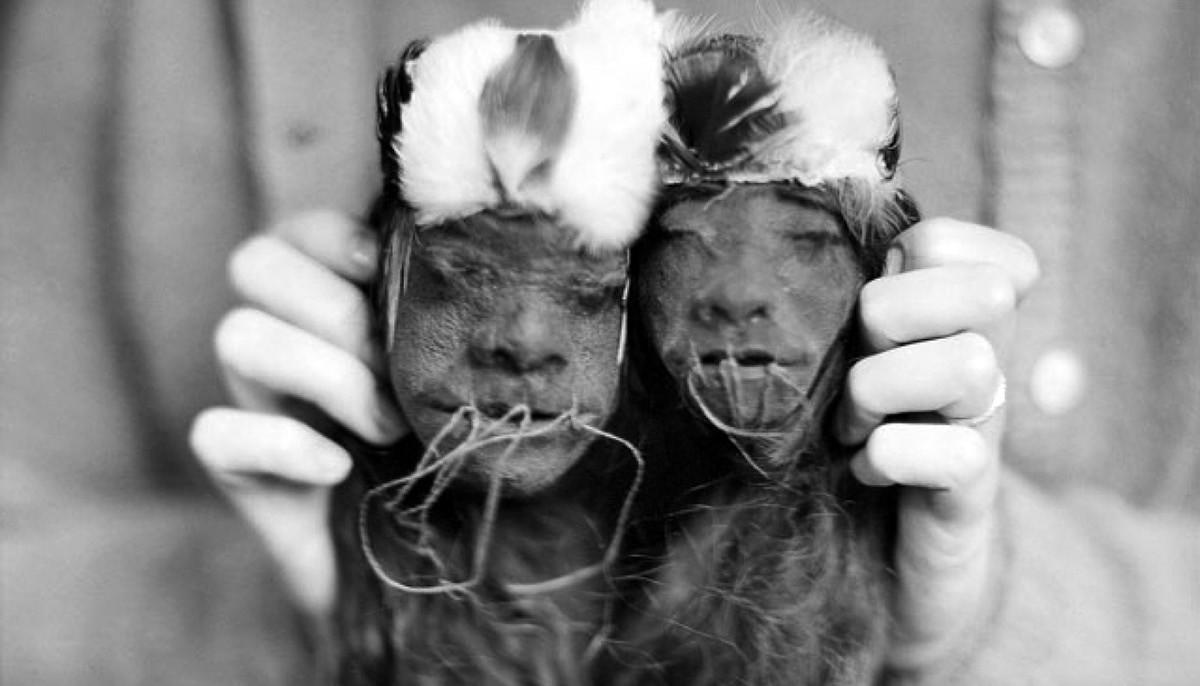
This is tragic and toxic history, but it is important to point out that warfare as a mechanism scales with freakish ease. Once the social and cultural norms are established, they don’t typically scale down. The spread of these cultures looks like a distorted reflection of the way children are raised in nomadic forager societies. Jívaro childhood is almost the exact opposite of the bopi that the Mbuti child inhabits. Children are discouraged from play as “such behavior leads to a disinclination to work.” Embracing the fears implicit in sedentary life, children do not interact with the children of other households. Which adds “to the child’s sense of insecurity vis-à-vis the rest of the population” as “the frequent attribution of illness within the household to the bewitching activities of hostile shamans.”[123]
Both mothers and fathers regularly strike children. Wrestling among boys is encouraged and approved of. Young boys may even begin to follow their fathers on raids as early as the age of six, but typically no later than when the sons are nine. And if the boys disrespect the authority of their fathers, they will make them drink the “the juice of the maikua,” otherwise known as the powerful hallucinogen Datura.
If a child is being particularly bad, the parents may indulge a particularly harsh form of punishment: “This consists of dropping a large quantity of hot peppers into a small fire and forcing the child to remain over the fire under a large cloth until he becomes unconscious.”[124]
There is no question that this is the domestication process.
Children are broken much like domesticated pack animals, but they are inversely instilled with the identity of the group and drawn into the allure of social power that is created. From a distance, it may be hard to see the correlation, but this is how we are raised in domesticated societies: refused the rite to self-subsistence, we are fed subservience and find our merit in the ideology of the tribe or the nation as our case may be.
The purpose of this upbringing is to uphold social power. It allows us to remain disconnected from ecology, even if we are reluctantly shaped by it. The will to power is the will to control the sustained stagnancy of sedentary life. And it is an uphill battle.
Warfare confirms this.
Fearing Others is the ultimate introduction to the world of strangers. It is the necessary step to assure that responsibility for your actions can be shouldered by the culturally constructed sense of justice and necessity.
Like the Jívaro, the Mundurucú are headhunting horticulturalists living in Brazil. Despite their equally perpetual state of war, it has been observed that:
The seemingly tranquil life of the Mundurucú is fraught with fears of the unseen and unknown. There is little violence, or even aggressiveness, among them, but violence and aggression are indeed present in repressed and residual form.[125]
This insulating relationship with the world and the ability to push all internal conflict onto others made it possible for the Mundurucú to consider all other tribes as enemies while being seemingly peaceful with each other. That externalized sense of us-versus-them just kept pushing them farther and more mercilessly out into the forest: After perhaps months of travel through the forests, they would surround an enemy village by night and launch an attack at dawn. Burning arrows were shot into thatched roofs, driving the bewildered occupants outside—to the lances and arrows of the Mundurucú warriors. Enemy men and women alike were slaughtered and decapitated, and the trophy heads thrown into carrying baskets.[126]
Once the cultural infrastructure is there, these societies scale in one direction: growth, expansion; conquest. That is until they can no longer sustain themselves and they fragment. Or they collapse.
The same happens among sedentary hunter-collector societies, where “we see, as a pattern, an increase in the severity of fighting.” Along the Pacific Northwest of North America, the Haida were considered the “Vikings of the coast,” warring relentlessly with all neighboring tribes. To the south of them, the Klamath “warred for revenge, booty, and slaves.”[127]
It is the nature of settled societies that their surplus makes them as likely to war with neighbors as they are to become targets themselves: “When food is stockpiled, it inevitably becomes a key military objective of raiding parties.”[128]
It is the direct immersion in these acts that keep the communities intact. We are social animals. We are drawn towards each other. As we have all seen, we’re willing to endure pretty horrible things to stay closer to other people, even if our relationships are just a fragment of what it is we are looking for.
We yearn for the fluid sense of belonging that comes with nomadic forager life. And we will grasp onto anything that bares it semblance.
So perhaps the question left to ask is: why?
The Society of Strangers: the Trauma of Isolation
The play goes on, more or less imperfectly. The person, so deprived, bears the consequences as unregenerate elements of immaturity, glossed by repression and compensation, distorted by unconscious yearnings for overdue fulfillment and resentments against the nurturers.
— Paul Shepard, Nature and Madness[129]
So why are we drawn to community? What pulls us closer to each other?
There are many possible answers to these kinds of questions. We tend to focus on biological ones: stripping away the emotion and wants of our social animality. There are truths to the biological explanations, but those approaches don’t really get at the heart of the matter.
I believe we enjoy the solace that we offer each other. We find joy in the company, care and companionship that we have to offer each other. In healthy communities, we can air our frustrations, we can sing and dance them away: we can ritualize the conflicts that arise from the reality of life and death.
We can rely on each other to help cope with the difficulties that can come with living.
And there are many things about living that can be complicated. There are many reasons why we might end up snapping, much like the aardvark burrow dwelling !Kung man. Or like the 18.2% of Americans who suffer from mental disorders.[130]
One of those reasons is a high rate of infant mortality among nomadic forager societies.
Stillbirths, miscarriages, and other sources of infant loss are suffered silently within Modernized societies. In terms of industrialized, First World nations, the United States is actually fairly high with an average of 6.1 infant deaths per 1,000. No doubt, the advancements of technology in terms of prolonging life play a huge role in this, but, like all things civilized, the U.S. stands out in terms of a massive gap in access to that kind of technological health care. Children of poor families are nearly five times more likely to lose a child within the first year compared to wealthy families.[131]
This is stark in contrast to the Batek where about 25% of infants died within their first two years. It is worth noting that during that same period, malaria was the prime killer and one that arose from contact with civilization.[132]
This kind of number is one that is hard to hear.
That is due, in large part, to the fact that within civilized societies, we don’t speak about things like infant mortality. Statistically it is far less significant than in nomadic forager societies under active colonization, but 6.1 deaths per 1,000 births are not none. We carry these losses personally and, as a culture, refuse to acknowledge them.
In refusing to acknowledge tragedy, we create trauma.
It becomes easy to look at the society without strangers through the same kind of potential for punishment that we have been instilled with. Living without strangers shouldn’t be seen that way. Losing anonymity means that mourning and loss become communally understood, felt and accepted. We care for each other, empathize with each other, and help deal with bad things that can happen.
We help with the bad things that do happen.
And within nomadic forager societies, infant mortality is one of those things.
As mentioned earlier, toddlers become children when they begin to have signs of autonomy: when they begin to interact with others within the community on their own. This is a coping mechanism. Once a nomadic forager child passes the test of the first couple years, their chances of living to old age increase greatly. “Young babies are,” within nomadic forager societies, “an extension of the mothers’ self, until they start to communicate and interact with others, independently.”
There are cultural acknowledgements and beliefs to contextualize the potential for loss. The “Aka believe that dead young babies come back again reborn as other babies.” Seen as an extension of the mother, the loss of infants “registers with the community as a failed birth, rather than as the death of a person.”[133]
This recognition and acknowledgement of a potentially demolishing experience of losing a child doesn’t take away how infants and toddlers are treated. As stated earlier, they are loved, coddled, held close, and engaged with passionately by the community at large. The interests of the child to be are always upheld. It is part of the ecological awareness that comes with mobility that nomadic foragers will make decisions based on ensuring that children within the group are loved and never neglected. Infanticide, when it does occur amongst the !Kung, occurs “with the stated goal of enhancing the quality of care and survival of existing children and to avoid caring for seriously defective children, almost certain to fail.”[134] Among the Batek, infanticide only occurred in cases of babies born with severe physical deformities.[135]
It is equally unfair to talk about the rates of infant mortality within nomadic forager societies, which seemingly are far greater than those within countries like the United States, without acknowledging some caveats: of the recorded instances of pregnancy in the US in 2012, 15% ended in abortions.[136] A fate that is arguably far less sufferable than being born unwanted by uncaring parents who feel the moral and social obligation to maintain the pregnancy.
If you include those statistics and consider the rate of unwanted children within civilized societies, it’s hard to believe that we really have it better off.
From the perspective of the nomadic forager, there is an acceptance that not all children who are born will live and they have adapted for it. It may be impossible to say how much the realities of contact and colonization have increased rates of infant mortality, but considering scum like Pinker have included the killing of children among foragers by colonizing agents such as loggers and miners, it’s impossible to think that both the direct killing and stress it carries haven’t increased that number.
But the point remains, it is the understanding of what can happen and the readiness of the community to help heal, foster and move on, ushered with a cultural acceptance that the spirit of the child will likely return, that it wasn’t ready, all turn a potentially traumatizing situation, one that I think every living being wishes to avoid, into something that isn’t emotionally endemic.
The processes of mourning and healing are made public. These losses, unthinkable as they may be, are not settled in isolation.
The care of children is tantamount to the survival of the group.
Alongside adultery, the primary cause of arguments among the Agta is “careless or irresponsible use of a bush knife or bow and arrow within a campsite where onlookers, particularly children might be injured.”[137] Mothers have been known to even go to blows with other women for verbally reprimanding their children.[138]
Everything is out in the open. There are no personal problems that escape the empathy of the group. The community exists to nurture each other.
In our own society, we bury that pain, that conflict. We ironically live in fear of what may happen to us as a result of external forces while we blind ourselves to the things that are likely to happen. Within the United States, the top ten leading causes of death have almost no reflection in the fear mongering politics of control. Almost all of those causes of death are preventable illness (cardiovascular, certain cancers, and diet related). “Accidents” are the fourth leading cause of death, which includes drug overdose, medical mistakes, and automotive collisions. But while suicide is barely trailing influenza and pneumonia, homicide (including terrorism) doesn’t make the list.[139]
We return to the Others.
We focus on the common enemy so we can foster an artificial sense of group identity as we stumble through the motions of a social animal living in a sore replacement for community. We suffer, alone. Together.

This is the society of strangers. Individuals, wound up, lost, and hurting, who are willing to externalize their own inner turmoil. A place where once healthy individuals seeking comfort through fluid movement and affiliation are left without recourse for a shattered process of personal growth and cognitive development.
This is the scourge of domestication.
Neoteny, as Paul Shepard explains, is the process of stunting our development into fully aware and active beings. That is into individuals capable of maintaining communities. This process of severing the competency of a capable adult is no accident; this is a need for agrarian societies:
Politically, agriculture required a society composed of members with the acumen of children. Empirically, it set about amputating and replacing certain signals and experiences central to early epigenesis. Agriculture not only infantilized animals by domestication, but exploited the infantile human traits of the normal individual neoteny.[140]
Post Traumatic Stress Disorder, PTSD, is said to impact 7.8% of adults in the United States. It is two times more prevalent among women than men.[141] Because of technology, we can suffer historically unique forms of brutality. As we suffer alone, without a cultural preemption or recognition of that probability, it is not surprising that one of the wealthiest nations has such a high rate of PTSD. Considering our refusal to acknowledge the possibility of infant mortality and the silencing of women’s voices through patriarchy, the disparity between men and women having PTSD should also not be surprising. Surely as nomadic foragers our brains are built to withstand stressful situations.
Life in the wild may not be “nasty, brutish, and short,” but that doesn’t make it stress-free either. Infant mortality is a looming tragedy, but it’s not alone. There are a lot of harsh ways to die living in the wild outside of homicide; falling from trees while collecting honey, being bitten by snakes, being attacked by predators, facing periods of hunger, and weather extremes. Most of the situations are not necessarily lethal, but, by and large, nomadic foragers aren’t suffering from PTSD even though they may likely have dealt with a number of those situations.
I believe the difference comes down to the acceptance and acknowledgement of things that can happen. If the community is aware and capable of mitigating those tensions and possible sources of stress, then they need not become traumatic. No one suffers alone.
But the civilized do.
We become lost in our trials and tribulations, left to reiterate them or to refuse to cope with them in a dance of neoteny. We become strangers, mere neighbors: a concept that, prior to domestication “had no significance, no social meaning.”[142]
And this permits us to both perpetuate and permit systemic violence. This allows us to remove our sense of responsibility from the world and each other. It keeps us from giving children the space to explore boundaries and find themselves among friends.
It keeps us from seeing and believing the violence of the state. With 7.5 billion people, we have created 7.5 billion variations of how the domestication process has fucked with our minds. We all create our uniqueness through how we have endured as individuals. Dependent upon the law to control and mitigate our unresolved conflicts, we give away our ability to become self-sufficient, both physically and cognitively.
As Stanley Diamond stated, “schizophrenia is the process through which the inadequacy of the culture is concretized in the consciousness of individuals.”[143] We become fractured. Our punishment becomes self-propagating. Diamond continues, the “development of the early civilizations as instruments of oppression was the result, not of some environmental or technical imperative, but of the new possibilities of power which men in certain positions found it necessary to cultivate and legitimate.”[144]
Domestication is about dependency. And that is what we are: dependents of the custodial State.
Each of us is born to be a child of the forest and becomes a child of the machine through indoctrination. Our own pain becomes a justification for pushing further and further into the depths of the mechanisms of the State.
And as the power to respond and resolve is taken from our hands, it is given directly to the State.
The unresolved, unreconciled tension of existence tightens the shackles.
The Violence of the State
The hallmarks of civilization may be as much the conquering warrior, the armed guard, the city wall, the whipping post, the prison, and the gallows as they are the high arts, religious monuments, and writing.
— Timothy Earle, How Chiefs Come to Power[145]
I can’t breathe. I can’t breathe. I can’t breathe. I can’t breathe. I can’t breathe. I can’t breathe. I can’t breathe. I can’t breathe. I can’t breathe. I can’t breathe. I can’t breathe.
— Eric Garner, as he was suffocated by a NYPD cop on July 17, 2014[146]
Till this point, my focus has been on non-state societies. I’ve made it my goal to focus on violence, particularly violence within a society, because neither egalitarian nomadic foragers nor warring horticulturalists see violence as an ideal way to deal with kin, with family, with anyone where a personal relationship exists.
Nomadic foragers are not shaken by acts of violence, but they have instilled numerous coping mechanisms to try to stem off tension before it is overflowing.
Horticulturalists, by and large, uphold violence as an institution. Their means of internal conflict resolution are to ritualistically and habitually externalize the sources of social and ecological pressures.
And they do this so that they don’t turn on each other because they need to all get along; to tend gardens, to keep their domesticated animals, and to fill raiding parties.
Though these societies may be polar opposites in many ways, they are tied by a refusal of social power. The members of these societies are willing participants in their cultures. They celebrate them without the cognitive dissonance afforded to state-dwelling nationalists who may never see the inside of a mine or have to stand armed on a battlefield.
As populations grow unchecked, as societies grow in number, as territory must continue to expand: the effective function of mobility or influential, yet powerless, leaders crumble. As the scale expands, “the number of decisions required by any node increases until it exceeds an individual’s personal capacity to make decisions and requires an expansion in the hierarchy of decision makers.”[147]
As horticultural societies grow, they take on the infrastructure of sedentary hunter-collectors and the technology of agrarian society. The role of the Chief becomes a specialization. And as the position grows into an occupation with subordinates, the growth “creates certain dynamics of competition, management, and control that underlie the eventual evolution of the state.”[148]
War in societies without a state is waged for revenge, defense, land, plunder, and/or prestige. Within states, war is waged for political control, economic gain, social status, and defense.[149] War becomes an essential part of the ideology of the state: a self-justifying conquest of the world. “The form of political organization which we call the state,” explains Marvin Harris, “came into existence precisely because it was able to carry out wars of territorial conquest and economic plunder.”[150]
It is worth noting that there is nothing inevitable about this entire situation.
Our lineage is evidence of this. The hundreds of thousands, if not millions, of years of our combined ancestry is virtually all the lived primal anarchy of nomadic foragers. The problem is that when societies do settle, when they do domesticate plants and animals, they must grow. The speed and path may vary, but the results, left to their own devices, in time may all look the same.
And when the state does arise; it doesn’t exist quietly.
The state arises when the coevolution of war and society merge. The segmentation of the world into an ordered hierarchy is the necessary precondition for the cornerstone of states: the law.[151]
The law stands in defiance of the conflict resolution implicit in nomadic forager life. Not content to merely externalize tension into warfare, as stateless horticulturalists do, the state absorbs the function of the war machine while it refuses the legitimacy of internal group tension. The group is given an outlet for aggression to build identity, but it is a lesson in subservience: a lesson in absolute domestication. “The latent purpose of the law,” as seen by Stanley Diamond, “was punishment in the service and profit of the state, not prevention or the protection of persons, not the healing of the breach.”[152] The ambiguous influence of Headmen and Chiefs is now increasingly ineffective: power becomes absolute.
Hierarchy is cemented into the foundation of bureaucracy and production. The religious sanctions granted by shamans and priests lay the groundwork for the legal sanctions of kings. Within the stratification of the state are the roles and duties of its officiators. To take matters into your own hands is now a crime and a punishable one. The goal of the law is to punish and to make an example of the perpetrators.
The judge replaces the mediator.[153]
The law is the social construct of the society without strangers. It exists solely in the place where all other forms of conflict resolution fall into the pit of anonymity. True to the schizophrenic nature of civilized life as it seeks to dissociate circumstance and action, action and consequence. We continue to externalize our aggressions, but we are forced to fear our internal tensions. The law is order. And a violation of the law is personal failure.
And we are accountable only to the law.
This is where the true terror of the state becomes apparent: in the absolute refusal to grant us our own means of resolving and reconciling tensions, we become statistics. We become a broken record of violations of the stagnant and impersonal nature of legislated morality. Our subservience upon the state grants it the ability to exist by bending the moral code as it declares the justice of its own necessary evils. Witihin this realm, homicide becomes the crème-de-la-crème of crime. To kill another person, to violate the sanctity of “thou shall not kill.” We take this for granted, but it’s because we deny all the circumstances where killing another person just may be the most peaceful form of conflict resolution.
Rare though those cases may be, they do exist.
The !Kung, for example, have no need for moral or legal codes because they have no distance between action and consequence. They mostly avoid violence, but if they were to impose anything resembling legal or religious sanctions against murder, then what would they have done with /Twi after he violated it? The society without strangers doesn’t need law because if the law is to be enforced, the people who kept /Twi from killing more would be seen the same as / Twi: murderers.
The law is black and white to all who can’t afford to bend it: the very people who governments pretend to protect and serve. The state is the gold-bearer of double standards. Above all else, “the state and government are organizations for war.” As anthropologist and anarchist Harold Barclay puts it, “No more efficient organization for war has been developed.”[154] That double standard works because of our dissociation: first in production, then in warfare. “War,” writes Paul Shepard, “is the state’s expression of social pathology.”[155]
We simply follow orders. We don’t connect the dots.
Resolved to refuse the rite of resolution, absolved from the flux of circumstances; we become the consumers of nationalized ideologies spread from pulpits and talking heads. We become the audience for programmers like Steven Pinker applauding our civility and restraint against our “savage” impulses.
And so we end up in a nation where the president evokes the notion of “a just war” while he receives a Nobel Peace Prize, simultaneously carrying out indiscriminate drone strikes and military operations globally.[156] We are absolved of our responsibility, our consequence.
This is how we become monsters, when we are so removed from the reality of our world that we can look at it with indifference. It is when we become the efficient cogs of the globalized machine that we can compare homicide rates, without circumstance or attentiveness, to feel good about our own notions of social progress.
As Stanley Diamond points out, it is here that we become the threat:
Dissociated, not good, persons can do impersonal evil. Persons who have become personae, masks; persons who have permitted themselves to be reduced to social functions, alienated, bureaucratized; persons who can kill out of abstract strategy, but who are out of touch with their own capacities to express and transcend hostility, persons who obey orders in societies where the civilizing process has become hyper-rationalized. … It is dissociated persons doing impersonal, and therefore potentially boundless, evil who are the threat in modern civilization—they are the irresponsible.[157]
The violence of our society includes the breakdown of our universalized schizophrenic reality. It includes the mass murderers, the killing sprees, gang violence, workplace shootings, domestic violence, racist and xenophobic attacks, parents killing their children, cops killing unarmed individuals, and acts of “homegrown” terrorism. It includes crimes that spread from endemic poverty and as an outcome of addictions. It includes those who kill to reclaim their social power and those who must kill in self-defense.
To compare the murder rate of Detroit and nomadic foragers in the Kalahari, our programmers will readily pat themselves on the back for achieving stasis, so any improvement on the numbers looks good.
There is no replication; there is no equation for the weight of egalitarianism within this. There is no weight put on circumstance, no need for further reflection beyond the sheer numbers of dead bodies. There is no thought put into the prospects for resolution and reconciliation, for the ability to have a dispute end in ritualistic celebration rather than funerals.
There is no responsibility in any of this.
But there is deception.
The state creates an entire form of violence that has no precedent in a society without strangers: structuralized, systemic violence. A life mired in unending, and often unseen, war.
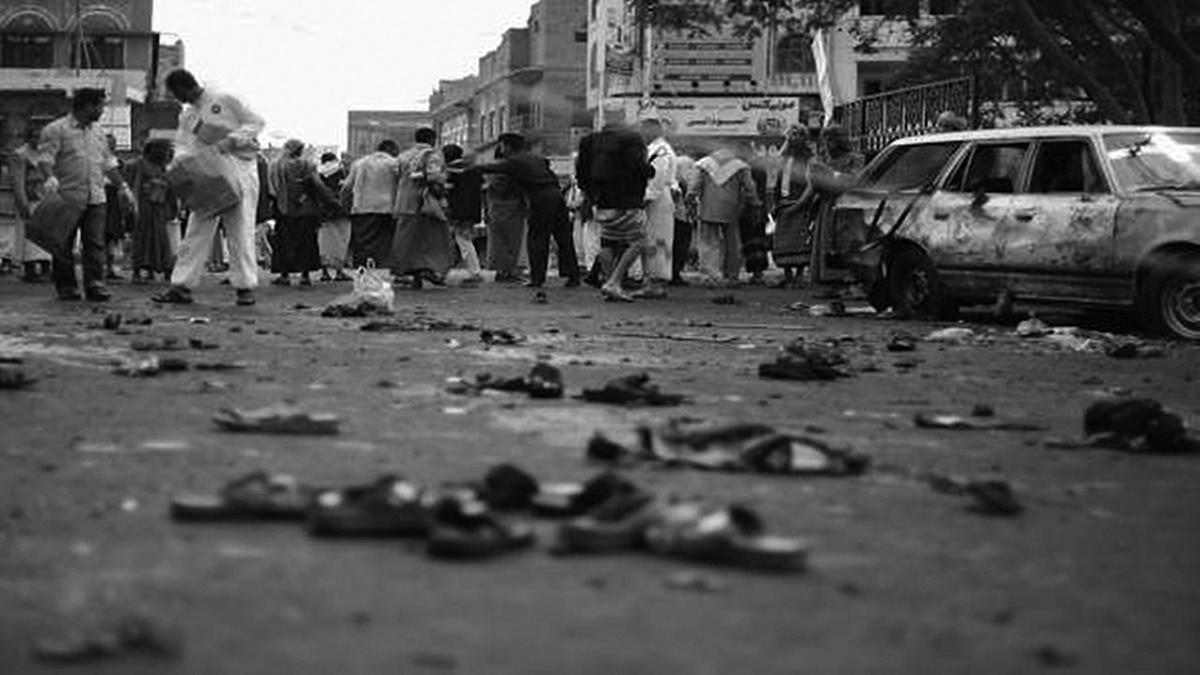
Economic power, a historical creation upon which all social power is built, “is based on the ability to restrict access to key productive resources or consumptive goods.”[158] This is the production that begins when gardens or fields are planted, when animals are bred in captivity, and when storehouses are filled.
The economy originates when the self-reliant nomadic forager is forced into social dependence rather than choosing social life. Like all change, things happen slowly. Perhaps even imperceptibly.
Yet by the time the state appears, there is no question: social hierarchy and stratification are implicit. The side effect of authority is poverty. And “the world’s poor are the chief victims of structural violence – a violence which has thus far defied the analysis of many seeking to understand the nature and distribution of extreme suffering.”[159] The supposed benefits of civilization, the triumphs of Progress, have never been even handed. Not even close.
And despite the stories spun by domesticators, priests and programmers, it can’t be. If domestication requires conquest, civilization is the epitome of it. Literally everything that we touch within civilization is soaked in blood. Down to the finest details; the sugar in your cup, the rare earth metals in your cellphone battery, your “sustainably sourced” organic palm shortening; everything that we touch in the civilized world is produced on a global scale and distributed through the technological infrastructure that consumes resources at an unprecedented rate.
The reason that nomadic foragers and horticulturalists are being imposed upon is because of us. Because of our civilization and its unrelenting need for perpetual growth. Nothing is sacred. Nothing is left untouched.
So when we begin to proselytize about the supposed virtues of our “improving conditions,” it is a continued act of colonization to disregard that the rising homicide rates that accompany contact with stateless societies are a part of our own homicide rates. At this point, we are no longer disconnected, we just perceive ourselves to be because that is the lie that we are told.
It is the definition of irony that this globalized civilization is the most violent force in the history of this planet, one that if left unchecked could result in the extinction of humanity itself in less than a hundred years,[160] while promoting itself as the bastion of peace and prosperity.
This bravado is the malicious internalization of the Otherization that arises with sedentism and domestication: we remove ourselves from responsibility and consequence. We raise flags over the mass graves of the conquered and massacred. There is no shortage of examples of the level of brutality implicit in the building of Modernity. We can dissociate from the death tolls, the destroyed forests, the displaced populations, the slavery, the power of coercion and domination, the diseased and polluted habitats, dead rivers, dying oceans, and, everywhere, the crude spills, the toxic leaching, the carcinogenic spraying, and the looming unknown present of abrupt climate change with increasingly violent weather patterns.
As our social and ecological circumstances worsen, we too turn towards our own variations of witchcraft and sorcery accusations. The refugees of war-torn Syria, a result of the intersection of climate change and fragile geo-politics, become targets themselves as they are suspected of perpetuating the very terrorism that they are risking their lives to flee. One murdering religion turns on the others. We have caliphates and drone strikes. We have the pathologically fragmented perpetuators of military occupations emboldened with the power of a badge in increasingly militarized police forces.
As the semblance of climate stability withers, we turn further and further inwards. We get lost within the narcissistic sea of the Self, enshrined in social media and technology. We increasingly fragment our world, looking for outcasts to blame for our worsening condition so that we don’t have to face the insurmountable whole of our condition: so that we don’t have to face the reality of a globalized civilization that has far surpassed its peak.
We are harvesting our diminishing returns at the cost of each other’s lives, our own future, and any sense of ecological sanity or hope. Technology allows us to get hyper-focused on singular events long enough to feed the overwhelming sense of mutually assured destruction.
But the thoughts don’t stay. Eyes on our devices, we refresh daily with a new tragedy.
As the Jívaro can only retain two arutam souls, but can accumulate their power infinitely, we become cumulative rage.
As cell phones increase the ability to quickly record and disperse videos documenting the way that police systemically target black men, we become the filters for seeing the reality of brute force in real time. In true form, the reaction to these increasingly visible displays of brute force is met with a further raising of flags, restating allegiance to the ideology of the state: they must have done something wrong. Force, meted out by the state, is always justified. For those buying the merits of civilization, they can be presented with counter-evidence to the false confidence eschewed by Pinker and his kind, but they can’t recognize it.
This comes back to the domestication process: that internalization of both the group identity and the need to counter the ecological imbalance of sedentary life. Headmen can call upon the group to band together to fight an externalized source of tension. Chiefs can pull together an army.
But kings, like presidents, can coerce them.
And with the Law at their hands, they can use them against anyone who tries to stand in their way.
Perhaps those who seek authority are not unlike /Twi. The ability to kill on mass scale, to order the death of thousands, if not millions, from afar takes a certain kind of psychotic personality. The very person that most likely was never checked by parents and other children in a bopi kind of environment.
Perhaps those individuals would kill in any society, regardless of their upbringing and any attempt to resolve or dissolve conflicts before they mounted. It’s nearly impossible for us to say, as nearly every person alive, even within recent memory, has not been a stranger to civilization and its systemic violence in one form or another. But we have unquestionable evidence that even if those personalities had existed, a society without strangers created coping mechanisms for dealing with them when they get out of hand.
Civilization, on the other hand, has found ways to empower them.
You have this constant current throughout the history of civilization of patterns of behavior that are unusually vicious, even for societies with militaries; that is societies where there are not only specialists in killing, but specialists in strategizing mass killing and technocrats dedicating their life to increasing the ability to kill more efficiently. At the outposts of civilization, you have systemic empowerment of unhinged psychotics like King Leopold II of Belgium who built an empire of terror in the Congo on the fortunes of rubber.[161] A man who took hands and feet of slaves for not meeting his imposed rubber quotas and killed with absolute indifference to foster his own power. He became the influence for the character of Kurtz, an ivory trader, in Joseph Conrad’s Hearts of Darkness. His source of power became interchangeable because this bloodthirsty king of the frontier story arises again and again throughout the history of civilization.
We have child sacrificing Mayan kings and the decapitating soldiers of the Caliphate, like the Old World crusaders or New World colonials. And they are all a part of the ongoing expansion of the civilization that we inhabit.
Technology scales carnage. Though some acts might be more brutal than others, it is only because they can be. Warfare, within Modernity, can “be waged by technicians.” While politicians are quick to rile up public support for their killing, the needs of civilization are of a more rational sort: to protect resources, to maintain order, to advance territory, and to eliminate potential threats.
As Stanley Diamond points out, this kind of violence may be even more frightening by its inhuman and methodical nature:
absolutely modern, up-to-date war, lacking in ritual, lead by technicians, in a kind of rationalized madness, does not require hate, or rather, I should say, the open and direct expression of hostility. Such a war between antagonists at more or less equivalent levels of civilized development, would be, of course, obliterating, but if there were survivors, it would leave, I believe a heritage of hate at the commission of dissociated evil that staggers the emotional imagination.[162]
Drone strikes may typify this kind of behavior, but warfare, as purely the realm of technicians, has not come. Soldiers are embedded within the pride of nationalism and tasked with its defense. But like the rest of us, they are stuck within the consequences of insurmountable tensions and the feeling of subjugation implicit in the state. All of us, as we have clearly all seen, are equally capable of breaking. “Caged creatures show much aberrant behavior,” Paul Shepard writes, “including psychopathic fits of bloody carnage, and many of the same psychotic symptoms as humans in our developed nations.”[163] And with the technology of civilization, the death count increases. Exponentially.
So while the kind of psychotic murderer that we’ve empowered with technology and given authority through politics may have existed at any point in our nomadic forager past, there were social mechanisms to cope with them. They risked being shunned or exiled. They had to know their potential victims and face their kin.
They weren’t given more authority.
They weren’t given justifications.
They weren’t rewarded with more efficient killing technology. And if all else failed, they faced the unrelenting spears and arrows of an egalitarian society capable of handling them.
Cultures of Resistance
All the movements of the left and right are functionally the same inasmuch as they all participate in a larger, more general movement toward the destruction of the human species. Whether people stay confined within certain obsolete strategies and forms, or whether they submit to the mechanisms of technology—either way the result is the same.
— Jacques Camatte, This World We Must Leave[164]
So what do we do about this? How do we respond to a globalized civilization and its implicit violence?
This is no simple question and there are no simple answers. But we have plenty to work with.
For me, the question of conflict resolution is both empowering in terms of how societies can function without the law and in exposing the fragility of domestication. The state is built upon technology, and that is neither a small feat nor a minor footnote in the history of civilization and systemic violence. As we see every day, when people stand up to power, they face the blunt force of its physical brutality. The law serves it well to lock away potential threats.
But it is fragile in the sense that it works because we are trained to ignore even the potential to deal with each other without the inclusion of state infrastructures; that is, without prisons and without police.
The state is strong if we continue to see resistance only on civilization’s terms: limited by the law and by the ownership of violence. If you focus on the source of that power, technology, or to be more specific for our current world, electricity, then things look very different. In order to understand and undermine civilization on that level, we have to go back to the beginning: why do primal anarchistic societies function? The answer is community. Namely egalitarian communities built on the foundation of flux and fluidity.
For us, I’m talking about building communities of resistance. As I have argued elsewhere and repeatedly, the success of indigenous resistance, in contrast to revolutionary movements, lie within the strength of communities.[165] Revolutions are fought for ideologies; they are fought to correct the wrongs of the State and the want to reshape the enlightened future society upon the failures of the existing empires.
Needless to say, even when they are successful, it’s hard to argue that they’re more appealing.
Radicals and extremists, in many ways, simply mimic the form of religious death cults, most notably, in our times, ISIS. The vision of the Caliphate and the righteousness of the martyr need no real world actualization. In offering the promise of life after living, the martyr is the ultimate ideologue. By the time they are able to be disappointed about the future that wasn’t awaiting them, it’s too late to matter.
Being untethered by the existing world, the relentless nihilism of indiscriminate murder sadly draws a new kind of allure. Terrorism grants an escape from the consequences of being dispossessed by the domestication process. It gives vindication to ending an unfulfilling life. A justification that serves as the only difference between the two technologically infused archetypes of Modernity: the suicide bomber and the mass shooter.
We get to this point because we believe the domesticator’s innate lie: authority lies within the law and the power of authority lies in its monopolization of violence. So long as violence remains reified, so long as violence becomes and remains a thing, it has allure. It becomes the tool of liberation just as much as the functional force of conquest. If the end goal of revolution, true to its innately political nature, is the conquest of authority, then time is always working against it. The Soviets who fought in the Russian Revolution might have had the numbers to take on tanks and cannons. I suspect they wouldn’t have fared quite as well against drones.
Nor would we.
But it is the demystification of violence that creates the potential to erode the sanctity of authority and to understand, much like egalitarian nomadic foragers, that there are ways to mitigate and dissolve tension without violence. In a world of billions of people, it is vital to recognize that it is not the lives of individuals that seal our fate, but the technology that grants individuals the power to wield authority and coerce systemic violence. It is the domestication process that keeps us in line and keeps us from viewing civilization as a failed attempt at creating a biological organism and acting upon it. In the words of John Bodley, “Civilizations are artificial cultural constructions, not biological organisms, and they would be poor biological performers if we insisted on considering them as organisms.”[166] Civilizations are not alive, but they are parasitic. They demand the wholesale consumption of entire ecosystems, of the devouring of their wild hosts.
Civilizations may not be biological organisms, but their existence demands that they act like one.
So they can die like them.
So they have died like biological organisms.
Like its forbearers, this civilization too will die.
The decaying infrastructure of its technological reign crosses the span of nations and oceans. The precision of its war machine and logistics both lie in the precision of satellites and cell phone towers, neither of which is impervious to destruction, intentional or not. The earth decimating ability of power stations can be undone by storms as well as sabotage. The perpetuation of its growth is dependent upon agricultural production as its primary crops continue to be threatened and tainted by climate instability. Its need for an unrelenting stream of finite resources remains undeterred.
Its bloated and overwhelmed rendition of a biological organism, unlike its ever-growing harness of militaristic force, is exceptionally fragile and vulnerable.
Humanity has survived millions of years of evolution by embracing fluidity and flexibility.
There is no reason to believe that our biology can’t outlast the synthetic one of the state.
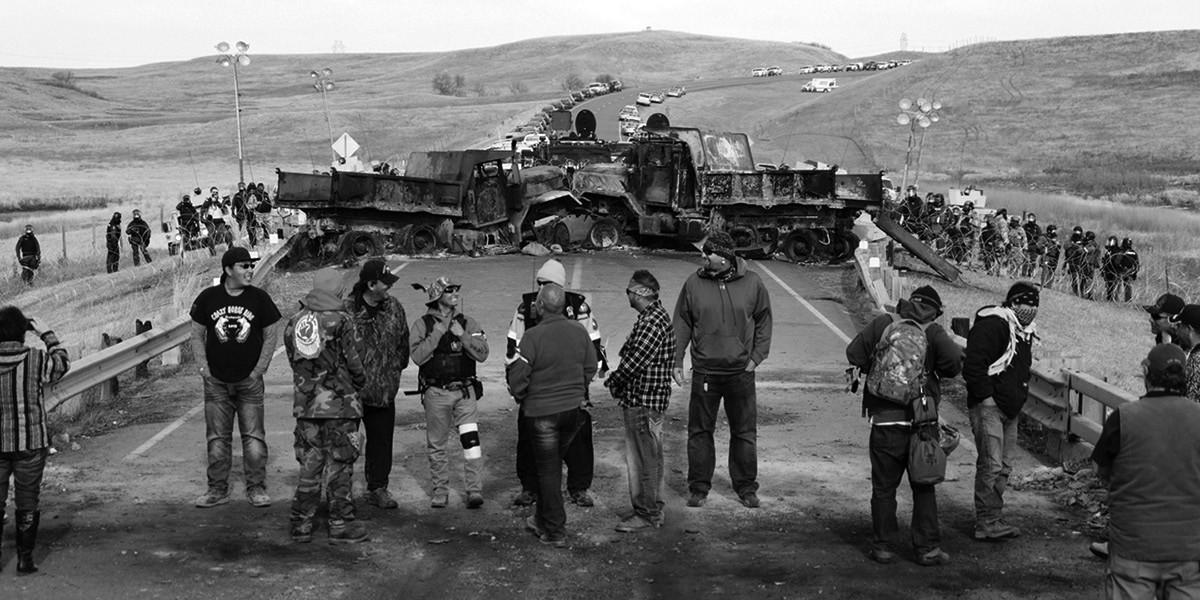
Our resistance, like our potential to survive the collapse of this civilization, lies in grounding.
It lies in reclaiming the refusal of authority that was innate in societies without a state. It lies within the heart of primal anarchy: by returning to the world of face-to-face existence. It lies in connecting with the resistance against civilization that the communities of wildness have always taken part in. It lies in viewing the world in terms of ecosystems rather than the separated and programmed world of the state.
Domestication is a process. It needs to constantly adapt to the channeling of our needs as social animals into the authority of domesticated societies, but it can never be complete. We are captives, caged animals in a cell comprised of technological gadgetry on one end and the blunt force of the police on the other.
We may be unfit to match their force, but we may not need to. When we resist authority in our own lives by handling our own conflicts without outside intrusion, we can get a glimpse of what we are capable of. In fostering self-sufficiency, we undermine the state’s hegemony of dependence upon stagnancy. In fighting against the circumstances that make inequality possible, as opposed to fighting for equality in the eyes of the law, we embolden ourselves within community.
Considering the ways that civilization has bastardized any notion of what “community” might mean, it is easy for my intents to be overlooked here. Community, as I use the term, carries no reflection of the pacifist, hippie want for communal living. Like the horticulturalists, liberals seek to create situations where “we all must get along”—only they’ve removed the internalized “safety valves” of external warfare. Such delusions can lead to the other extreme of mystified violence: ideological pacifism. The epitome of violence externalized. A false sense of security in believing that if you don’t respond to the violence of the state in kind, that your rights under the law will be respected.
This stems from the notion of community as a thing of ease: supplanting the dynamic tension of the wild with the well-massaged sense of arrogant removal implicit in a placid view of nature. That center of communal life amongst nomadic foragers revolves around singing, dancing, playing and, overall, joy, comes at the recognition and confrontation with the potential and likely unpleasant aspects of being a living creature.
As we’ve seen, this can be far from traumatic. But it requires openness, honesty, and, above all else, an ability to handle circumstances as they arise: as individuals, as a community.
That means dealing with internal tensions and external ones. That means being able to take on civilization directly.
There have been individuals and groups that have sought to co-opt the fury of indigenous resistance while refusing the connectivity implicit within them. They have sought to adopt the rage of grounded peoples without the grounding and pair it with the displaced, reified violence that we have been impregnated with.
To understand indigenous resistance, you have to understand that it is inseparable from the world of native peoples. It is when their communities are assaulted that they can respond in kind.
It is here that it is almost tragic that more indigenous societies weren’t as warring as they were made out to be. The Huaorani were able to keep Westerners at bay by spearing the first missionaries that attempted to contact them to death. Having been subjected to the attempts to raid for slaves by the Malays and Burmese, “shipwrecked mariners and the members of landing parties seeking to replenish water supplies were often killed by the Andamanese.”[167]
It is telling that most nomadic foragers lacked the experience to be openly hostile to colonizers. The result of which has been nothing short of tragic. And that tragedy is still on going.
It is possible that the act of rebuilding communities, which, much like rewilding, will take place over generations, will be able to incorporate this reality into their mythos. The resistance to and refusal of civilization may become the central stories told around the hunting campfires of our descendants.
Against all odds, this has happened before.
James Kaywaykla lived from 1877 to 1963. He was a part of the Warm Springs Apache and grew up during the most violent period of their history. In his words, “Until I was about ten years old I did not know that people died except by violence.”[168]
As horticulturalists who reintegrated with the horse to become mounted hunter-gatherers, the Apache were no strangers to warfare. They had an established pattern of raiding and warfare prior to colonization and a reputation for being particularly effective warriors.[169] However, they weren’t prepared for the wholesale onslaught of the Europeans who intentionally sought to decimate the entire ecosystem to destroy the inhabitants of this New World. This led to a familiar rise of inter-tribal warfare, but quickly escalated.
A series of back-and-forth battles between the Chiricahua Apache and the intruding whites peaked in 1863. Mangas Colorado, among the most respected of chiefs and father-in-law to Cochise, came to a colonizer’s encampment under a truce agreement that, to his surprise resulted in his arrest upon arrival. Considered an instigator of hostilities, the officers didn’t respond in kind. After torturing him alive, they shot him six times through the head and torso. His body was rifled for souvenirs, while his corpse was later scalped and dismembered, the massive head being cut off and boiled down to a skull in a big pot.
This incident shook the Chiricahua and led to a decade of war with whites.
And it didn’t fare particularly well for the whites. Between 1862 and 1871, the US Army spent $38 million on a campaign of elimination that resulted in 100 Apache men, women and children being killed. But in that time, the Apache killed 5,000 whites.[170]
Having the knowledge, skill, and grounding of a hunter-gatherer paid off. Proficiency and skill with a bow-and-arrow certainly were crucial, but ecological knowledge is helpful. The whites, they knew, never learned to dig for water in the dry desert. They would drink “a spring dry, leaving only mud for the soldiers” who would often die of thirst. Or they would poison aboveground pools of water for the soldiers to drink.[171]
Kaywaykla was born during this war. He saw all of it and his story tells about Nana, Victorio, Lozen, Juh, and Geronimo; their battles, victories and executions. But what is most inspiring about his retelling of this period of exceptional violence and forced settlement is not the warfare, but the importance of what Chiricahua life, even amidst genocidal conquest, means.
It is our dissociation that allows us to split the violence, to uphold the heroism of violence against civilization, from the essence of Apache identity and culture. It is by understanding and respecting the essential nature of that identity and community, to know its place and how it tied them to the land giving unflinching purpose to their resistance that we stand to learn the real lessons here.
Against all odds of survival, the Apache fought.
And while many died, others survived and continued that struggle.
Against all odds, this is happening now.
As I write this, the most diverse gathering of Native Americans in the history of the occupied Americas is taking place at Standing Rock where the Hunkpapa Lakota and Yanktonai Dakota stand their ground against pipelines carrying hydraulically-fractured natural gas seeking to destroy the remnants of their home.
This is the latest among a series of indigenous resistances to energy extraction in North America that includes the Unist’ot’en, the Madii Lii and Lax U’u’la among others.[172] The strength of these camps is their communal nature: the establishment of camp, the invigoration of traditional cultures, and the indisputable tie to the resistance of their parents and ancestors.
This is not about politics: in contrast to the efforts to confront the law on its own terms I have to borrow a phrase from Iyuskin American Horse of Standing Rock: “We are protectors, not protestors.”[173] Communities integrated to the wild, integrated with the vast web of ecosystems, cannot dissociate from their actions and responsibilities. The ability to become anonymous or to escape consequence is something they have the fortune of not knowing.
And in their grounding, idleness ceases to be an option. Resistance becomes reality.
Fate ceases to be an ideological or moral abstract.
Strangers fade from existence.
Trained from an early age to understand the dynamic tension of life, these communities and the individuals that they are comprised of are capable of confrontation.
In embracing the complexity and complications of life, in being prepared and ready to take on its challenges, the wild communities can also dance and sing in its joy.
They can find peace within its potential violence and not live in fear of it.
And in embracing that tension, in creating and fostering our own wildness and self-reliance, in refusing the authority of the state and the myths of domestication, we may one day dance and sing upon the rusting remains of this empire.
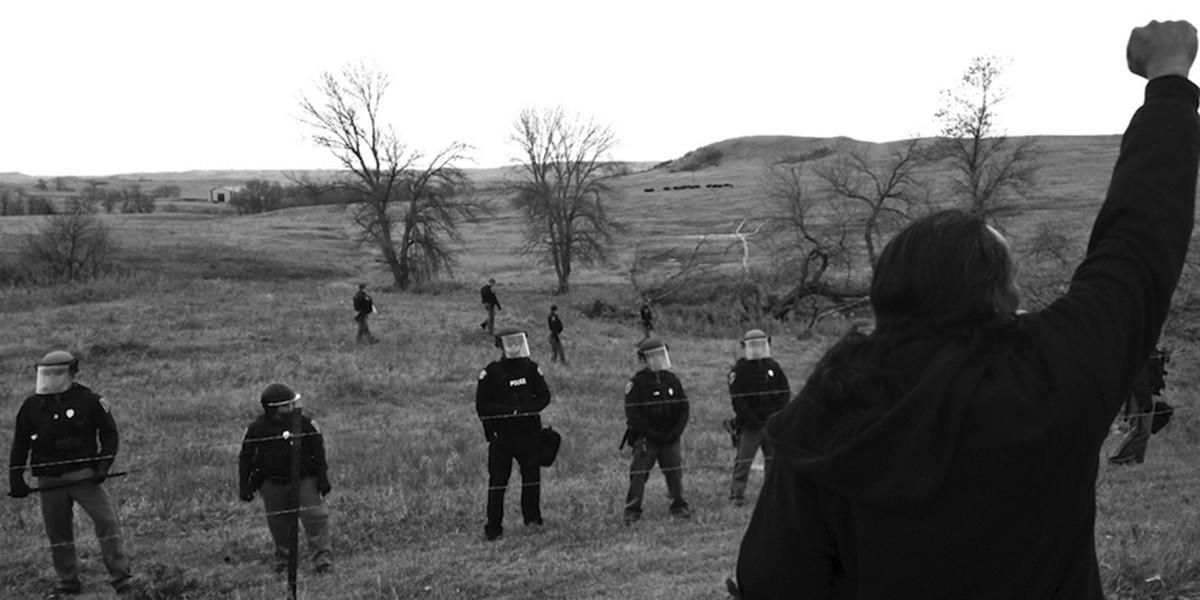
[1] Richard B Lee, The !Kung San. London: Cambridge UP, 1979. Pg 399.
[2] This story was told to Richard Lee and printed in Lee, 1979. Pgs 394–395.
[3] Nancy Scheper-Hughes and Philippe Bourgois, ‘Introduction: Making Sense of Violence’ in Scheper-Hughes & Bourgois (eds), Violence in War and Peace. Malden, MA: Blackwell, 2004. Pg 2.
[4] For more on this topic, see my essay ‘To Speak of Wildness’ in Black and Green Review no 2.
[5] Tamarack Song, Becoming Nature. Bear & Co, 2016.
[6] Steven Pinker, The Better Angels of our Nature. New York: Penguin, 2011. Pg 1.
[7] Frans de Waal, The Age of Empathy. New York: Three Rivers Press, 2009. Pg 10.
[8] Richard Dawkins, The Selfish Gene. Oxford: Oxford UP, 1979. Pg 3.
[9] Jane Goodall, The Chimpanzees at Gombe. Belknap Press, 1986.
[10] R Brian Ferguson, ‘Ten Points on War’ in Alisse Waterston, An Anthropology of War. New York: Berghahn, 2008.
[11] Frans de Waal, ‘Foreword’ in Fry (ed) War, Peace and Human Nature. Oxford: Oxford UP, 2013. Pg xi.
[12] Smithsonian Museum of Natural History, ‘Taung Child’: http://humanorigins.si.edu/evidence/human-fossils/fossils/taung-child
[13] Ibid. Pg xii.
[14] Peter Verbeek, ‘An Ethological Perspective on War and Peace’ in Fry, 2013. Pg 56.
[15] Ibid. Pg xiii. See also Marc Bekoff and Jessica Pierce, Wild Justice. Chicago: University of Chicago Press, 2009.
[16] Verbeek, 2013. Pgs 66 & 67.
[17] Joseph Birdsell, ‘Some Predictions for the Pliestocene Based on Equilibrium Systems among Recent Hunter-Gatherers’ in Lee and DeVore (eds), Man the Hunter. New York: Aldine de Gruyter, 1968. Pg 235.
[18] John Bodley, The Power of Scale. Armonk, NY: ME Sharpe, 2003. Pgs 87–91.
[19] Ibid, pg 55.
[20] Thomas Malthus, An Essay on the Principle of Population. New York: Penguin, 1983 [Orig. 1798].
[21] Bernard Sellato, Nomads of the Borneo Rainforest. Honolulu: University of Hawai’i Press, 1994. Pg 143.
[22] James Woodburn, ‘Stability and Flexibility in Hadza Residential Groupings’ in Lee and DeVore, 1968. Pg 105.
[24] Elizabeth Marshall Thomas, The Old Way. New York: Sarah Crichton Books, 2006. Pg 230
[25] Ibid, Pgs 225–227.
[26] Pinker 2011, Pg 54.
[27] Lee, 1979. Pg 401.
[28] Mark Cocker, Rivers of Blood, Rivers of Gold. New York: Grove, 1998. Pg 344.
[29] Thomas, 2006, Pg 227.
[30] Lee, 1979. Pg 389.
[31] Ibid, pg 395.
[32] Thomas, 2006. Pg 228.
[33] Ibid, pg 229.
[34] Ibid.
[35] Lee, 1979. Pg 371.
[36] Ibid, pg 372.
[37] Richard Lee, The Dobe Ju/’hoansi: third edition. St Davis, CA: Wadsworth, 2003. Pg 114.
[38] Victoria Katherine Burbank, Fighting Women. Berkeley: University of California Press, 1994.
[39] For more on this, see my essay, ‘Hooked on a Feeling’ in Black and Green Review no 3. Spring 2016.
[40] Carleton Coon, The Hunting Peoples. New York: Lyons, 1971. Pg 238.
[41] Frank Marlowe, The Hadza: Hunter-Gatherers of Tanzania. Berkeley: University of California Press, 2010. Pg 141.
[42] Kirk Endicott & Karen Endicott, The Headman was a Woman: The Gender Egalitarian Batek of Malaysia. Long Grove, IL: Waveland, 2008. Pg 66.
[43] Csilla Dallos, From Equality to Inequality. Toronto: University of Toronto Press, 2011. Pg 132.
[44] Brian Morris, Forest Traders: A Socio-Economic Study of the Hill Pandaram. New Jersey: Athlone Press, 1982. Pgs 160–161.
[45] Jana Fortier, Kings of the Forest. Honolulu: University of Hawai’i Press, 2009. Pg 97.
[46] Coon, 1971. Pg 240.
[47] Marlowe, 2010. Pg 141.
[48] Thomas, 2006. Pg 230. For more of this, see ‘Hooked on a Feeling’.
[49] Dallos, 2011. Pg 135.
[50] Fry, 2013. Pg 11.
[51] Ibid.
[52] Douglas Fry, The Human Potential for Peace. New York: Oxford University Press, 2006, Pg 22.
[53] David Dye, ‘Trends in Cooperation and Conflict in Native Eastern North America’ in Fry, 2013. Pgs 133–134.
[54] Ibid, pg 136.
[55] Turnbull, ‘ The Importance of Flux in Two Hunting Societies’ in Lee and Devore, 1968. Pg 135.
[56] Woodburn, 1968. Pg 105.
[57] Tim Ingold, ‘Notes on the Foraging Mode of Production’ in Ingold, Riches and Woodburn (eds), Hunters and Gatherers: Volume 1. Oxford: Berg, 1988. Pg 278.
[58] Nurit Bird-David, ‘Studying Children in “Hunter-Gatherer” Societies” in Hewlett & Lamb (eds), Hunter-Gatherer Childhoods. New Brunswick, NJ: Transaction, 2005. Pg 96.
[59] This is a huge topic that I will be following up in later works. For more see Hewlett & Lamb, 2005, Barry Hewlett, Intimate Fathers: The Nature and Context of Aka Pygmy Paternal Infant Care. Ann Arbor, MI: University of Michigan Press, 1993, Barry Hewlett (ed), Father-Child Relations. New Brunswick, NJ: Transaction, 1992, and Jean Liedloff, The Continuum Concept. Cambridge, MA: Perseus, 1985.
[60] Bird-David, 2005. Pg 97.
[61] Paul Shepard, Nature and Madness. San Francisco: Sierra Club, 1982.
[62] Bird-David, 2005. Pg 101.
[63] Melvin Konner, ‘Hunter-Gatherer Infancy and Childhood: The !Kung and Others’ in Hewlett & Lamb, 2005. Pg 29.
[64] Jean Peterson, The Ecology of Social Boundaries: Agta Foragers of the Philippines. Urbana, IL: University of Illinois Press, 1978. Pg 16.
[65] Morris, 1982. Pg 147.
[66] Colin Turnbull, The Human Cycle. Simon and Schuster: New York, 1983. Pgs 42–45.
[67] Colin Turnbull, ‘The Ritualization of Potential Conflict Among the Mbuti’ in Leacock and Lee, Politics and History in Band Society. Cambridge UP: London, 1982. Pg 142.
[68] Endicott & Endicott, 2008. Pg 117.
[69] Turnbull, 1983. Pg 47.
[70] Hugh Brody, The Other Side of Eden. Pgs 57–58.
[71] Turnbull, 1983. Pgs 47 & 45.
[72] ‘What Makes Indians Laugh’ in Pierre Clastres, Society Against the State. Brooklyn: Zone, 1989.
[73] O. Yu. Artemova, ‘Monopolisation of knowledge, social inequality and egalitarianism’. Hunter Gatherer Research. Volume 2, Issue 1. 2016.
[74] Dallos, 2011. Pg 168.
[75] Richard Lee, ‘Eating Christmas in the Kalahari.’ Natural History. December 1969: 60–64.
[76] Ibid.
[77] Michele Ruth Gamburd, The Kitchen Spoon’s Handle. Ithaca: Cornell University Press, 2000. Pg 111.
[78] An example of this is Koji Sonoda, ‘Give me the Meat, the Child Said.’ Hunter Gatherer Research. Volume 2, Issue 1. 2016.
[79] Ingold, 1988. Pg 283.
[80] Tim Ingold, ‘On the Social Relations of the Hunter-Gatherer Band’ in Lee and Daly, The Cambridge Encyclopedia of Hunters and Gatherers. Cambridge UP: Cambridge, 1999. Pg 401.
[81] Clastres, 1989. Pg 205.
[82] Marvin Harris, Cannibals and Kings. New York: Vintage, 1977. Pg 7.
[83] Martin Fried, Evolution of Political Society. New York: McGraw-Hill, 1967. Pgs 109, 186, 185, & 229.
[84] Harris, 1977. Pg 50.
[85] Marshall Sahlins, Culture in Practice. New York: Zone Books, 2000. Pg 78.
[86] Fried, 1967. Pg 133.
[87] Clastres, 1989. Pg 46
[88] Neil Whitehead, ‘Tribes Make States and States Make Tribes’ in R. Brian Ferguson and Neil Whitehead, War in the Tribal Zone. Santa Fe: School of American Research Press, 1992. Pg. 129.
[89] Harris, 1977. Pg 51.
[90] R Brian Ferguson, ‘Pinker’s List: Exaggerating Prehistoric War Mortality’ in Douglas Fry (ed), War, Peace, and Human Nature. Oxford: Oxford UP, 2013. Pg 126.
[91] Fry, 2013. Pg 7.
[92] Ibid. Pg 11.
[93] Dallos, 2011. Pg 97.
[94] Coon, 1971. Pg 262.
[95] R Brian Ferguson, ‘Introduction: Studying War’ in Ferguson (ed), Warfare, Culture, and Environment. Orlando: Academic Press, Inc, 1984. Pg 5.
[96] Harris, 1977. Pgs 51–52.
[97] Andrew Vayda, ‘Hypotheses About Functions of War’ in Fried, Harris and Murphy (eds), War: The Anthropology of Armed Conflict and Aggression. Garden City, NY: The Natural History Press, 1968. Pgs 88–89.
[98] Raymond Kelly, Warless Societies and the Origins of War. Ann Arbor, MI: University of Michigan Press, 2000. Pgs 3–6.
[99] Andrew Vayda, Warfare in Ecological Perspective. New York: Plenum Press, 1976. Pg 2.
[100] Douglas Fry, Beyond War: The Human Potential for Peace. New York: Oxford University Press, 2007. Pg 73.
[101] Roy Rappaport, Pigs for the Ancestors: Ritual in the Ecology of a New Guinea People. Prospect Heights, IL: Waveland, 2000 [1984]. Pgs 57–58.
[102] Marvin Harris, Cows, Pigs, Wars, and Witches. New York: Vintage, 1989 [1974]. Pg 48.
[103] Rappaport, 2000. Pg 110.
[104] Peter Wilson, The Domestication of the Human Species. New Haven, CT: Yale University Press, 1988. Pg 146.
[105] Alexander Alland, ‘War and Disease: An Anthropological Perspective’ in Fried, Harris and Murphy, 1968. Pg 65.
[106] Rappaport, 2000. Pg 19.
[107] This process is detailed in Rappaport, 2000 and Vayda, 1976.
[108] Scheper-Hughes and Bourgois, 2004, Pg 1.
[109] Sylvia Fisher Carrasco, Peru: A Chronicle of Deception. Copenhagen: IWGIA, 2010. Pg 15.
[110] Michael Harner, The Jívaro: People of the Sacred Waterfalls. Garden City, NY: Anchor Books, 1973. Pg 111.
[111] Ibid. Pg 80.
[112] Harris, 1977. Pgs 50–51.
[113] Harner, 1973. Pg 135.
[114] Ibid. Pg 141.
[115] Ibid. Pgs 143–147.
[116] Ibid. Pg 147.
[117] Daniel Steel, ‘Trade Goods and Jívaro Warfare: The Shuar 1850–1957, and the Achuar, 1940–1978.’ Ethnohistory, Volume 46, Number 4. Fall 1999 and Jane Bennett Ross, ‘Effects of Contact on Revenge Hostilities among the Achuarä Jívaro’ in Ferguson, 1984.
[118] See R Brian Ferguson, ‘A Savage Encounter: Western Contact and the Yanomami War Complex’ in Ferguson and Whitehead, 1992; R Brian Ferguson, Yanomami Warfare. Santa Fe: SAR Press, 1995; and Patrick Tierney, Darkness in El Dorado. New York: WW Norton, 2000.
[119] See Eric Wolf, Europe and the People Without History. University of California Press, 1997 and Francis Jennings, The Ambiguous Iroquois Empire. New York: WW Norton, 1990.
[120] Harner, 1973. Pg 201.
[121] Ibid. Pg 118.
[122] Sadly, I’m not kidding: http://www.realshrunkenheads.com/
[123] Harner, 1973. Pg 88.
[124] Ibid. Pgs 89–93.
[125] Yolanda Murphy and Robert Murphy, Women of the Forest. New York: Columbia University Press, 2004 [1984]. Pg 111.
[126] Ibid. Pg 106.
[127] Fry, 2007. Pg 80.
[128] Kelly, 2000. Pg 68.
[129] Shepard, 1982. Pg 113.
[130] Victoria Bekiempis, ‘Nearly 1 in 5 Americans Suffer Mental Illness’. Newsweek. 2/28/14. Accessed on September 26, 2016: www.newsweek.com
[131] Christopher Ingraham, ‘Our Infant Mortality Rate is a National Embarrassment’. Washington Post, 9/29/14. Accessed on September 26, 2016: www.washingtonpost.com news/wonk/wp/2014/09/29/our-infant-mortality-rate-is-a-national-embarrassment/
[132] Endicott and Endicott, 2008. Pg 114.
[133] Bird-David, 2005. Pg 97.
[134] Konner, 2005. Pg 20.
[135] Endicott and Endicott, 2008. Pg 114.
[136] Percentage figured using the following data: ‘A Visual Guide: Abortion in America’ CNN www.cnn.com 2012 Abortions: 699,202 and ‘Births: Final Data for 2012’ National Vital Statistics Report www.cdc.gov. A total of 3,952,841 births were registered in the United States in 2012. 15.03% of total pregnancies (births plus abortions).
[137] Peterson, 1978. Pg 10.
[138] Kelly, 2000. Pg 37.
[139] Center for Disease Control, ‘Leading Causes of Death’. 2015. Accessed on September 26, 2016: http://www.cdc.gov/nchs/fastats/leading-causes-of-death.htm
[140] Shepard, 1982. Pg 113.
[141] ‘Facts about PTSD’ Accessed on September 26, 2016: psychcentral.com
[142] Peter Wilson, 1988. Pg 183.
[143] Stanley Diamond, In Search of the Primitive. New Brunswick,NJ: Transaction, 1987. Pg 229.
[144] Ibid. Pg 17.
[145] Timothy Earle, How Chiefs Come to Power. Stanford, CA: Stanford University Press, 1997. Pg 106.
[146] ‘I can’t breathe’: Eric Garner put in Chokehold by NYPD officer – video, The Guardian. www.theguardian.com
[147] Timothy Earle, Bronze Age Economics. Boulder, CO: Westview Press, 2002. Pg 55.
[148] Ibid. Pgs 43–44.
[149] Kelly, 2000. Pg 101.
[150] Harris, 1977. Pg 55.
[151] Kelly, 2000. Pgs 7, 44–45.
[152] Diamond, 1974. Pg 270.
[153] Harold Barclay, People Without Government: An Anthropology of Anarchy. London: Kahn & Averill, 1990. Pgs 24–25.
[154] Ibid. Pg 32.
[155] Paul Shepard, The Tender Carnivore and the Sacred Game. Athens, GA: University of Georgia Press, 1998. Pg 123.
[156] Jeff Zeleny, ‘Accepting Peace Prize, Obama Offers ‘Hard Truth’. New York Times, 12/10/2009. www.nytimes.com
[157] Stanley Diamond, ‘War and the Dissociated Personality’ in Harris, Fried and Murphy, 1968. Pgs 187–188.
[158] Earle, 1997. Pg 7.
[159] Paul Farmer, ‘On Suffering and Structural Violence’ in Scheper-Hughes and Bourgois, 2004. Pg 288.
[160] Jonathan O’Callaghan, ‘Will Your Child Witness the End of Humanity?’ Daily Mail, June 19, 2015: http://www.dailymail.co.uk/sciencetech/article-3131160/Will-child-witness-end-humanity-Mankind-extinct-100-years-climate-change-warns-expert.html
[161] See Adam Hochschild, King Leopold’s Ghost. Boston: Mariner, 1999 and Sven Lindqvist, Exterminate all the Brutes. New Society, 1996.
[162] Diamond, 1968. Pg 187.
[163] Shepard, 1998. Pgs 215–216.
[164] Jacques Camatte, This World We Must Leave and Other Essays. Brooklyn: Autonomedia, 1995. Pg 95.
[165] See ‘Revolt of the Savages’ and ‘The Failure of Revolution’ in Tucker, 2010.
[166] Bodley, 2003. Pg 65.
[167] Kelly, 2000. Pg 81.
[168] Eve Ball, In the Days of Victorio. Tucson: University of Arizona Press, 2003 [1970]. Pg xiii.
[169] Keith Basso, Western Apache Raiding & Warfare. Tucson: University of Arizona Press, 1998 [1971].
[170] Cocker, 1998. Pg 216.
[171] David Roberts, Once They Moved Like the Wind. New York: Touchstone, 1994. Pg 180.
[172] See ‘Wild Resistance, Insurgent Subsistence’ in Black and Green Review no 3.
[173] Iyuskin American Horse, ‘We are Protectors, Not Protestors.’ The Guardian. 8/18/2016. Accessed at www.theguardian.com