
Mark Edmundson
American Gothic
From Poe to Oprah to O.J., dark thoughts suffuse our culture—in fiction, film and TV
POE IS BACK. THE SPIRIT of Edgar Allan Poe, America’s preeminent Gothic writer, who died nearly 150 years ago, is enjoying a remarkable run here in premillennial America. Our national prophet of death’s inevitable victory over life (we know almost from the beginning that the black cat will return to wreak vengeance; that Fortunato will be walled up in the catacomb) seems to have risen like a specter in one of his own tales to haunt the fin de siècle. A Gothic spirit much like Poe’s now infuses a great deal of our film and popular fiction — and other, less predictable zones of the culture as well.
We might think of Gothic as the art of haunting—and in two senses. Gothic shows that life, even at its most ostensibly innocent, is possessed, that the present is in thrall to the past. All are guilty; all will, in time, pay the price. And Gothic should also possess the reader, scare him, so he can think of nothing else. He has to read it—or see it—again and again to achieve some peace. (Repetition, Freud claimed, is the way we master a trauma.) For a work to be Gothic, says Chris Baldick, author of a splendid book on the Frankenstein myth, it “should combine a fearful sense of inheritance in time with a claustrophobic sense of enclosure in space, these two dimensions reinforcing one another to produce an impression of sickening descent into disintegration.” The pendulum sweeps lower in the pit; the telltale heart drums in the murderer’s ears; Fortunato hears the last brick mortared into place: Baldick clearly has Poe in mind.
Gothic shows the dark side, the world of cruelty, lust, perversion and crime that many of us at least half-believe is hidden beneath established conventions. Unsentimental, enraged by gentility and high-mindedness, skeptical about progress in any form, the Gothic mind is antithetical to all smiling American faiths. A nation of ideals, America has also been, not surprisingly, a nation of hard disillusionment, with a fiercely reactive Gothic imagination. Our culture teems with works of Gothic terror and also with their antidotes, works that summon up, then cavalierly deny, Gothic fears.
Cultural historians of the future, looking to mark the moment when America’s fin de siècle fixation with Gothic began, may point to the glittering evening when the Academy of Motion Picture Arts and Sciences declared that the best picture of 1991 was a slasher movie, The Silence of the Lambs. Silence, you’ll perhaps recall, featured not one but two serial killers: the twisted genius Hannibal Lecter and simian Buffalo Bill, who murders women with the improbable motive of stitching himself up a female skin. Jodie Foster, playing an FBI trainee, represents the law; with the help of Hannibal (and her own dark side), she tracks Buffalo Bill to his lair and blows him away. For his part, Lecter escapes to a remote island, there to continue his pursuit of high culture — he reads Poetry magazine — and cannibalism.
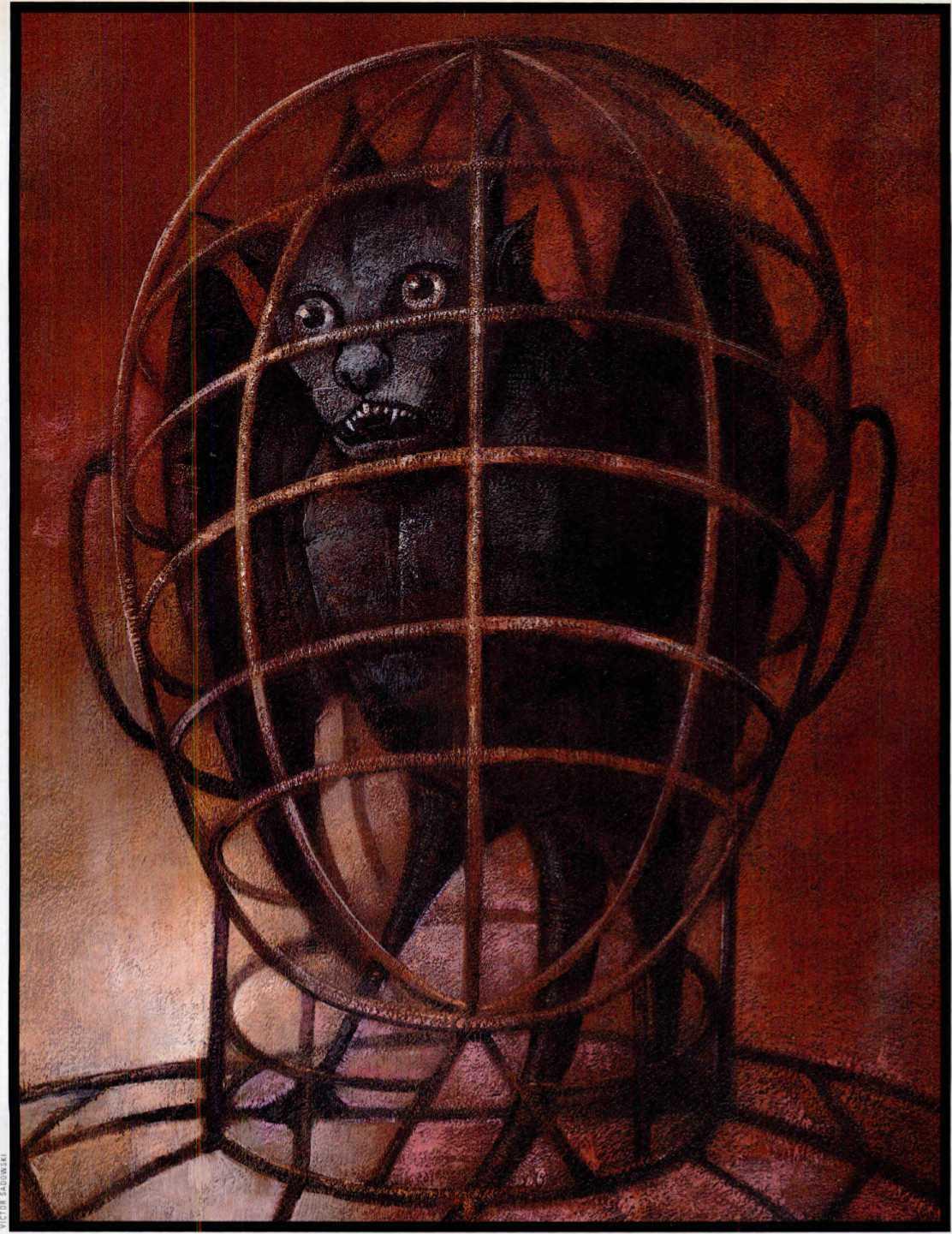
The last decade has seen a boom in Gothic fiction and film. After Silence of the Lambs swept the Academy Awards, Francis Ford Coppola directed Bram Stoker’s Dracula; Kenneth Branagh ran pell-mell through Mary Shelley’s Frankenstein; Jack Nicholson became the wolfman. Anne Rice has been enthralling readers with her sadomasochistic vampire duo, Louis and Lestat. Stephen King (“I’ll try to terrify you first, and if that doesn’t work, I’ll try to horrify you, and if I can’t make it there, I’ll try to gross you out. I’m not proud.”) has trumped all previous Gothic writers, with nearly 150 million books in circulation. At present his commercial supremacy is being challenged by only one American writer, a self-effacing man named R.L. Stine, author of fright novels for adolescents: The Scarecrow Walks at Midnight, Dead End, Haunted and my own favorite, Cheerleaders: The First Evil. Terror has probably never been so hot, surely never so lucrative.
Most of these productions, whether their creators know it or not, are descendants of the Gothic novel, the terror fiction that took off in England while the French Revolution was burning away across the Channel. Like the 18th-century Gothic bestsellers The Mysteries of Udolpho, by Ann Radcliffe, and The Monk, by Matthew Gregory Lewis (or Monk Lewis, as he came to be known), much of our current horror fare depicts a maiden in distress (sometimes we substitute a child), usually trapped in a horrible ruin. And of course there’s the pursuing villain — in fact, usually a hero-villain, a split personality with noble qualities as well as base — who embodies the audience’s pressing desires and fears.
It is noteworthy, to be sure, that now, at century’s end, fear has become one of our most common forms of entertainment. But what’s more arresting is how the conventions of Gothic horror are now making their way into, and decisively shaping, many apparently nonfictional forms. Not only do our newspapers, broadcast news programs and nonfiction bestsellers seem to seek out Gothic tales to bring to the center of cultural consciousness, they also sometimes rework events until they assume the proper Gothic shape.

AS I WRITE, ALL OF AMERICA IS FILING OUT of—or perhaps we’re simply taking an intermission from—a Gothic slasher production made, it often seemed, for TV. I mean, of course, the O.J. Simpson case. Simpson was habitually cast by the media as an archetypal Gothic hero-villain. He is, we were often told, a man with a divided nature, possessed, in Gothic fashion, by a demon within.
Newsweek put it this way: “Simpson lived a double life. The corporate spokesman who drank an occasional beer with Hertz executives was also a hard partyer... who cruised bars and indulged in drugs and random sex. His wife believed he was a cocaine addict; his friends, who saw him on the prowl at wild parties in Los Angeles, thought his real addiction was white women. The smooth talker took lessons to make his diction more ‘white.’ The family man was seldom home.”
Simpson purportedly was haunted by the needs of his demonic self. Newsweek speaks of addiction, but addiction is just our contemporary word for haunting, the Gothic state proper, just as obsession was one of Freud’s; to be addicted is to be possessed by some raging appetite that reason can’t quell. This motif of the double, of two persons in one, is essential to the Gothic vision. You can find it in Lewis, who depicts his monk Ambrosio as a superficial saint nurturing Satan deep within; in Poe, who makes use of the double theme in most of his tales; in Robert Louis Stevenson’s Dr. Jekyll and Mr. Hyde; and in Oscar Wilde’s The Picture of Dorian Gray. For its own part, Time altered a photo of Simpson for its cover, making him look darker — and more thuggish — than we generally envisioned him: Mr. Hyde had emerged.
The Gothic theory of the double is both reductive and powerful: It assumes that we are all playing a role in life, that a raving beast waits within for the chains to loosen or snap. Doubles stories seem to proliferate when people sense an unnegotiable divide between the true self and society, between nature and culture. From the charisma of Radcliffe’s aristocratic Montoni, which invites some measure of reader identification, to the camera technique that takes the serial killer’s perspective in films like Silence of the Lambs, Gothic works have invited audiences to acquaint themselves with, and to fear, the shadow (or the id, as Freud, the 20th century’s greatest Gothic writer, called the unconscious) that dwells within. The central premise of Gothic double psychology’ is that we ought to fear nothing so much as ourselves.
No Gothic narrative can work unless the villain is in some way an admirable figure. “He is the animus regarded as forgivable victim of passion and circumstance, as admirable sufferer,” wrote Leslie Fiedler, by far the best critic of Gothic literature. “His brow furrowed, his face frozen in the grimace of pain, his eyes burning with repressed fury, his mind tormented with unspeakable blasphemies,” the hero-villain archetype is, Fiedler observes, made manifest as Byron’s Giaour, as Ahab, Heathcliff, Rochester, and as a thousand other “ungodly, godlike” men. So too, we might add, is the Gothic hero-villain incarnated as OJ. Simpson and many other purportedly newsworthy contemporaries.
Simpson, as conceived in his terror-Gothic role, pursues a woman who, again in the words of Fiedler, “escapes her terrible persecutors, who seek her out of lust and greed, but is caught; escapes again and is caught; escapes once more and is caught.” But Simpson’s story is no Ann Radcliffe novel. The unfortunate heroine doesn’t finally break free and marry’ the earnest, honest hero: Simpson’s is a terror-Gothic tale with a brutal climax.
True to the form of Mrs. Radcliffe, the tale was, and remains, a mystery. But unlike the mysteries of Castle Udolpho, whose every detail Mrs. Radcliffe assiduously clears up (that bloody corpse was just a waxwork), the mystery of Nicole Brown Simpson’s murder remains unsolved. It is mystery, suspense, that keeps you fixed on the Gothic—and that will, I suspect, keep America fixed on Simpson until well into the future. One function of Gothic is to convert free-floating anxiety (perhaps the characteristic fin de siècle emotion) into suspense. That is, Gothic takes our inchoate fear about what will happen to us in the future and attaches it to a coherent, suspenseful narrative that will probably achieve some resolution. With that resolution, anxiety is discharged —at least for a while.
As to locale, surely there were Radcliffean mansions enough for the horrors of the Simpson case to transpire in; and one might wager that Los Angeles is, to current channel-scanning America, as weirdly foreign a place, as pagan and elemental, as Roman Catholic Italy and Spain were to British readers of the 1790s.
Even had simpson not been available, there are many other candidates in the news who might have taken on his central Gothic role—and may still. One thinks of the Unabomber, who kills for an obscure political program, or of Timothy McVeigh, accused in the bombing of the Oklahoma City Federal Building and depicted as a fanatical, right-wing extremist fired by ideals, though ideals of the worst sort. Right now these figures lack the aura of the true terror-Gothic villain — they aren’t mysterious enough, complex enough; they don’t embody enough ostensibly elevated values for their corruption to be of consequence. But all of that could be a quick fix, as communications executives like to say: It would be possible for the media to modify their profiles and make them work.
More ready to hand is the image of Michael Jackson luring young boys into his preadolescent pleasure dome for friendship and play. Jackson — the male-female, the childadult, black-white, waif-mogul, and most importantly the pre-sexual sexual predator—is easily depicted in terms of the Gothic double. What he lacks is O.J.’s élan and his menace; it’s hard to make an aristocratic hero-villain out of a gorgeously lit lounge act.
Also abiding in the wings is the specter of the serial killer, like Jeffrey Dahmer or Ted Bundy, whom such writers as Norman Mailer and Joyce Carol Oates encourage us to see as emblematic of our cultural moment. They are the just reward for our alienating social arrangements, both writers suggest. We move around too much, sacrificing community and belonging for new, lucrative jobs in faraway places. With all the migration, we tend not to know our neighbors, or care much about them. Serial killers—society’s dark avenging angels—can slip in and out undetected.
For those who would have taken some satisfaction in reading Lewis’s The Monk, there has been an endless run of stories about priests molesting children, most often boys. There have come the Menendez brothers, whose defense against the charge of killing their parents pushed the 18th-century’ terror-Gothic plot a step further. (A mansion figures in this one, too.) The pair, it’s said, were victimized; fighting back in the manner of Gothic heroines, they purportedly dispatched their specters, their molesters (their parents). There was Susan Smith, who claimed that a black man had driven off with her children, then, finally, confessed to their drowning: For weeks America was riveted, first in sympathy, then rage. There are the Bobbitts, once America’s first Gothic family (she a hero-villain to some feminists), now just a sporadically visible sideshow.
In a less bizarre register, there was the Nancy-Tonya episode, which TV and newspapers somewhat ingeniously worked into a Gothic tale of doubles, opposing twins. One was a heroine-villainess (in 18th-century Gothic, this role was often taken by debauched, sadistic mother superiors). Tonya was quirky, libidinal, spooked, a trailer-park bitch; Nancy, an American princess. The fact that the two young women, both working-class, both ambitious and talented, neither oppressively bright, had more in common than not was erased by the need for a certain sort of story, another Gothic doubles tale.
Like ghost stories that cause nightmares, Gothic fantasies can engender more Gothic fantasies. Young people all over America have begun to “recover” memories of being molested by their fathers, the Gothic villain in the house, memories that had been repressed for years. The recovered-memory scenario is an instance of what we might call internalized Gothic, the form that Freud invented, at its most intense. The hero-villain, the father-molester, haunts the inner life of the child, who cannot remember the trauma. (Freud described the psyche in terms apt enough for a haunted house.) What cues the victim—or the helpful therapist — to the truth are a certain array of symptoms: eating disorders, insomnia, depression, anxiety. The therapist plays the role of rescuer, making the repressed memories manifest and freeing the patient, purportedly, from the burdens of the past.
Child abuse is not uncommon in America. But many researchers, contesting the evidence of the recovered-memory movement, argue quite convincingly that it is exceedingly rare (though not unheard of) for anyone to recover an accurate memory of molestation in therapy. (When something horrible happens to us, we tend to be unable to forget it.) This does not mean that the therapeutic encounters lack significance for the patients: Using a Gothic plot is, I suspect, a way for them to express strong feelings about their lives, to express the depth of their grief and rage. But the therapists—conditioned in part by Gothic newspapers, Gothic TV and the rest—are unable to see the memories as imaginative intensifications of a genuine plight. They take their patients literally. The recovered-memory phenomenon has shredded families and sent people to jail.
Gothic delusion on a massive scale recently gripped Olympia, Washington, a town previously known mainly for brewing a good light beer. There Paul Ingram, a sheriffs deputy, a born-again Christian and an active member of his county’s Republican committee, assumed the role of local monster fallen from virtue. He came to admit sexually abusing his children and conducting satanic rites in the woods on the outskirts of town. As Frederick Crews summarized matters in The New York Review of Books, Ingram was “eventually thought to have raped both of his daughters as well as one of his sons innumerable times, to have passed the daughters around sexually as poker nights at home turned into gang rapes, to have hideously tortured the girls and forced them and his wife to have sex with goats and dogs, and to have murdered and cannibalized many babies at huge gatherings of his Satanic cult— where, be it noted, long gowns, pitchforks, and ‘Viking hats’ were de rigueur.” Though the authorities dug and dug in the woods, none of the bodies of the supposedly sacrificed children ever materialized. (Shortly before Ingram’s daughters recovered their memories of abuse and got the ball rolling, the family had sat companionably down together to watch Geraldo Rivera’s prime-time special, “Devil Worship: Exposing Satan’s Underground.”)
Ingram showed an extraordinary ability to “recover” repressed memories of his supposed crimes. He had somehow comprehended his role as latter-day Gothic villain, and he played the script out just as dutifully as he had served in his capacity as sheriffs deputy and community stalwart.
In the Olympia case, an epidemic of recovered memories, of internalized Gothic, burst into the public domain and created a terror-Gothic scenario comparable to the Salem witch scare. The fact that in the entire town of Olympia no one had the combination of authority and sanity necessary to tell everybody concerned to calm down and go home suggests more than a little about the strength of premillennial Gothic culture. Ingram is now serving a 20-year prison term.
A DECADE OR SO AGO THESE STORIES —O.J., Michael Jackson, John and Lorena, Susan Smith, satanic possession in Olympia, and the rest—would have been relegated to the back pages of all but the sleaziest newspapers. But now the Gothic melodramas are up front, presented as objects of cultural haruspicy, hot entrails that, mainstream media tell us, we need to puzzle over to divine where society has gone and why.
In fact, the most influential Gothic media production in current culture is nothing else but the evening news, with the anchorman as our well-groomed, reserved guide to the terrors of the day. It’s on the news that we learn to fear the serial killer, the molester, the abuser, the psychopath, the mad bomber, nuclear disaster, environmental catastrophe—all to a degree that seems to exceed the actual dangers. T he result of ongoing exposure to such stuff is to hard-wire more anxiety into the populace. TV news is low-grade shock fare, but its cumulative effect places it at the center of the contemporary culture of Gothic.
The cameras go anywhere around the globe where something terrifying is happening, whether it is New York, or Lebanon, or Somalia. Local TV news now spends more than 50 percent of its air time, on average, covering crime and disaster, according to the Rocky Mountain News Watch. As John Perry Barlow recently said in Harper’s, “The alienating engine that I perceive in society is broadcast media, particularly television.... The reason people are hermetically sealed in their homes is that they are worshiping the glass tit of fear, which is telling them that the world is too scary to go out in.” If the news doesn’t give you enough, you can catch the panoply of news-horror features that follow it: true police stories, true rescue tales, documentaries about every crime, tragedy, sorrow, disease, mistreatment and humiliation under the postmodern sun.
The culture of Gothic is inconceivable without the culture of current TV. Marshall McLuhan famously claimed that TV was a cool medium: It was lulling, low-key, and it allowed spectators to immerse themselves in the viewing experience, to get mellow and lost But now TV is hot. With 140 channels and a remote control, you can fly through the images, creating your own montage effect, turning the former sedative into an amphetamine run. One disaster succeeds another on Gothic TV. We need, it seems, to be frightened, haunted, scared out of our wits. The ratings prove as much.
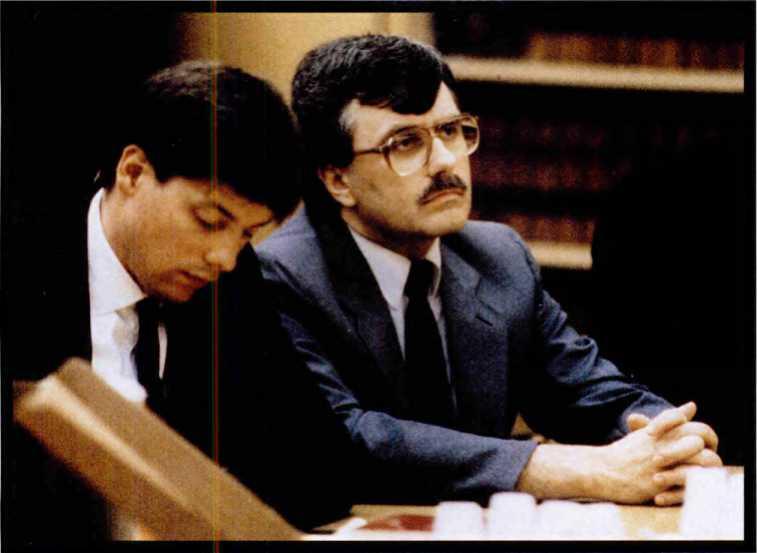
The instances of true-life Gothic don’t usually rest on rank falsifications. Events like the Simpson case have a relation to reality: Something happened. But in a country of 250 million, many things happen — most things you can imagine probably have or will. (It’s instructive to recall that three of America’s most influential horror films, Psycho, The Texas Chainsaw Massacre and Silence of the Lambs, were all based on the life of the same serial killer, a Wisconsin farmer named Ed Gein.) What matters is the way these media spectacles are cast, with more or less distortion involved, into a terror-Gothic idiom, and then — this point matters most—perceived to be at the center of our culture. They are taken to be omens, the keys to some deeper reality, if only we could interpret them accurately.
We have scared ourselves so thoroughly with true-life Gothic that our culture has generated Gothic’s glib antidote. The last film to sweep the Academy Awards was anything but a slasher film. Forrest Gump is a movie about a sweet, dim young man who lives through seemingly every’ American trauma of the latter half of the 20th century, emerging from them all unscathed—emerging, in fact, rich. He’s there when George Wallace tries to stop black students from entering the University of Alabama; he fights in Vietnam; he’s up close to major assassinations. Mayhem and grief follow his steps but make no mark. Forrest cannot be traumatized. He’s unhauntable, the star of a thoroughly anti-Gothic film.
It’s not just that the spirit of Forrest Gump is the complete inverse of the spirit that drives Poe’s tales and Silence of the Lambs, it’s that the film teems with potential traumas, teems with events conducive to lifelong terror. But of course they have no effect. Gump isn’t just escapism; it contains within it— but denies the power of-—everything that it would let us escape from. (We might begin to explain the recent popularity of Jane Austen by recalling that Austen’s first novel, Northanger Abbey, is a brilliant anti-Gothic satire, and that thereafter Austen’s novels contain no trace of ghosts, and also no trace of the wilder passions that fuel the Gothic. Sense and sensibility’, pride and prejudice, yes, but no hauntings, no possessions, nothing uncanny. Austen offers a refined British holiday away from the spirit of Poe.)
Forrest Gump is by no means an isolated phenomenon. All around us we see images of facile transcendence, images that would convince us, however fleetingly, that we can attain some higher state of self with virtually no exertion. Think of the recent angel craze, during which more than half the population was willing to assert that angels were real and might post at our bidding over land and ocean — if only we believed. (And of course the situations where angels come to the rescue tend to be Gothic traumas — strange, undiagnosable diseases; mysterious, sudden dangers; persecution and pursuit.) Think, too, of the various New Age panaceas that promise quick self-transformation: channeling, drawing on the right side of the brain, consulting the right holy man.
These forms of easy self-remaking are so feeble that not even their adherents fully believe in them: The engaged channeler is always peering off from his promontory to the wider fields of biofeedback. The reader who once modeled himself on Iron John flies promiscuously off in a few months into the pages of Thomas Moore’s book on soul care. But there is no chance that these idealizing images of the self will ever flood the news the way horror prototypes have. The American imagination, at late century, is far more the domain of Gothic.
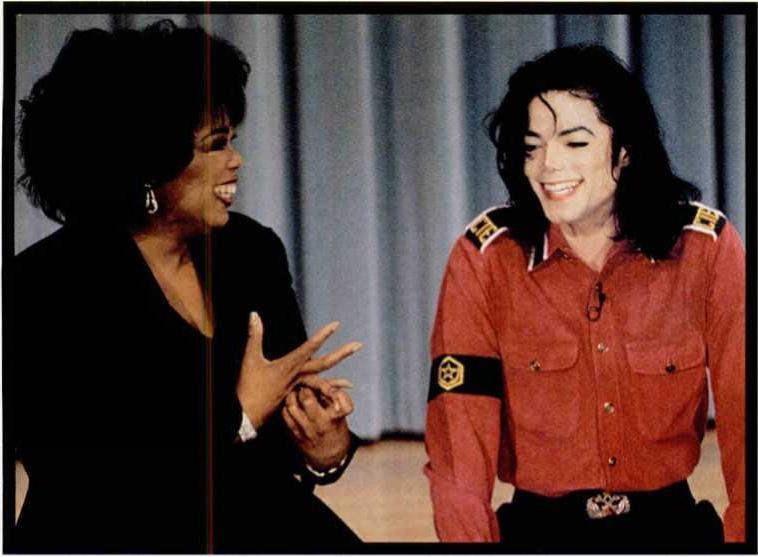
ONE MIGHT SAY THAT THE GENIUS OF THE daytime talk show is that it has the immediacy of fiction or film — they’re all so intimate, these stories of suffering and abuse — and the prestige of fact. And, very often, the stories they tell have a Gothic plot. Consider the victimizer, who makes regular appearances on the shows. This is the husband or son who has persecuted the family. He has done unspeakable things. Now he sits hangdog under the hot lights, wagging his head in doleful assent as his victims recite the litany of his crimes. And in true modern (that is, internalized) Gothic fashion, it is not only the harm done by the event itself that matters, but also the trauma that continues to haunt the victims. Its memory stays within, a cancer of the psyche.
But then it’s the perpetrator’s turn, and something odd happens. Generally the victimizer is himself haunted/addicted/obsessed. He is addicted to drinking, to drugs, to sex, to cruelty. (Oprah has called herself a food addict.) He confesses and then he disavows responsibility. As the novelist Charles Baxter puts it: “Afternoon talk shows have only apparent antagonists. Their sparring partners are not real antagonists because the bad guys usually confess and then immediately disavow.... The story is trying to find a source of meaning, but in the story, everyone is disclaiming responsibility. Things have just happened.” Everyone acts as though he or she were, in some fashion, possessed, including the villain.
Himself haunted, the victimizer haunts others, making them dependent on him for something to fight back against, or someone to rescue. They become addicted to the pain and emotional expression he provokes, become addicted to catharsis. Then, too, the victimizer functions as a source of meaning. All of one’s unhappiness can be traced back to one simple source. You’re delivered from the burden of telling a complex story about yourself, a story that might entail reflections on economic injustice and sexism, or on your own laziness, selfishness or brutality. Instead, everyone disavows. No one is to blame. We might call the phenomenon no-fault Gothic.
Most of our current Gothic productions are of the nofault variety. The recovered-memory movement has led to wrongful convictions and to dramatic squalor, but not to clear-eyed examinations of what is actually causing the profound misery that sends young people, especially women, into anorexia, self-mutilation and then the hands of often-opportunistic therapists. The Simpson case, commentators tell us, has dramatized the divisions between blacks and whites, but it hasn’t produced sweeping plans for racial reconciliation. Almost no one has used publicized cases of adultery and pedophilia by the clergy as a reason to examine organized religion’s attitudes toward sex. No one wants to reform sports because of the corrupt truth that the Nancy-Tonya episode supposedly revealed.
Current Gothic plots never go the way that Poe’s Gothic, as reconceived by writers of genius like Melville and Hawthorne, eventually did: toward tragedy. In figures like Ahab and Hester Prynne, one encountered the limits of human striving and hope; one saw extraordinary powers defeated by experience, but only barely, and so felt human possibility widen. Nothing is further from our current culture of Gothic than this tragic impulse.
Yet if current Gothic is often banal (unlike in tragedy, the main characters are inevitably worse than ourselves) and ends in hopelessness, it can also be genuinely disturbing. That’s because what’s recounted on talk shows and written up in the news could also happen to you. You could be — perhaps somewhere in the repressed past you have been—a victim of comparable abuse. And because the victimizer is himself possessed, haunted, a similar addiction could take you over. We all lead a double life, according to the Gothic wisdom; and our other, our id, could choose any moment to reassert itself. Thus the recent films about a character who is normality itself on the outside but has a demon within: The Hand That Rocks the Cradle, Wolf, Fatal Attraction, Single White Female. Be afraid, very afraid, and of nothing so much as yourself.
OUR CURRENT GOTHIC MODE INVITES US TO be scared, but not, in general, to fight back. It suggests that we’re our own worst enemy and proposes no cogent defense. It counsels us to forget about political change and social reform. We might call it dead-end Gothic.
Gothic, from its origins, has been a reductive form; at its best, it uses hyperbole and melodrama to awaken the audience from dogmatic slumber. In the hands of Monk Lew is and Ann Radcliffe, Gothic reduction was a way to intensify experience, to articulate readers’ complex sentiments about church and state, clerics and counts, and all they represented.
But in its commitment to ultimate despair, our current Gothic is far more beholden to the genius of American terror, Edgar Allan Poe. Harold Bloom observes that “self-reliance, the Emersonian answer to Original Sin, does not exist in the Poe cosmos, where you necessarily start out damned, doomed and dismal.” In Poe, the past always rises up to devour any attempt to begin anew: “No one in a Poe story,” Bloom says, “ever was young.”
From its Puritan beginnings, American culture has been prone to extremes: One is damned or one is saved; one is dead in life or running full speed ahead; one embraces Poe or his opposite number, the prophet of freedom and self-reliance, Ralph Waldo Emerson. (Think of productions like Forrest Gump as weakly Emersonian, visions of self-renewal without a full sense of the odds against meaningful change.) In our premillennial culture, at least in its popular guises, Poe is lord.
For we now find ourselves in a culture where the Gothic idiom has slipped over from fiction and begun to shape and regulate our perception of reality, thrusting us into a world in which serial killers, bizarre molesters and the like constitute actuality: They are—to more and more of us—what’s out there. Seeking clarity with too much persistence, we are creating a world of tabloid villains in cartoon colors.
Indeed, contemporary Gothic is often an exercise in what we might call the reductive fallacy: the conviction that the worst truth you can come up with about any person or event is the most consequential truth. The benefit that comes from having the worst-case truth on hand is that you’ll never be surprised. You’ll never be written off as naive (one of the worst things to be in our culture). The downside of Gothic reductionism, though, is timidity, cynicism, fear of life. Like a modern-day Pascal, the neo-Gothicist comes to think that all troubles could be avoided if we would just stay locked tight in our rooms.
But if I were pressed to submit one major reason for the contemporary proliferation of Gothic, that reason would in a certain sense be religious. Though most Americans say they believe in God, they do not in general perceive him shaping the events of day-to-day life in accord with a perceptibly benevolent plan. Whatever God is up to, he is not busying himself unduly with worldly events.
There are, I think, palpable attractions to turning from religious faith to fascination with Gothic. There is something to gain in accepting the harsh belief that the world is infested with evils, that all power is corrupt, all humans debased, and that there is nothing we can do about it. For with the turn to contemporary Gothic—no-fault, dead-end, politically impotent—we preserve a horizon of ultimate meaning. We can tell ourselves that we live in the worst and most barbaric time, that all is broken and never to be mended, that things are bad and fated to be, that significant hope is a sorry joke, the prerogative of suckers. Gothic despair is a pseudosophisticated way of defending ourselves against the complexity of our problems and the weight of our responsibilities. Some of us would rather have the Gothic void for life’s meaning than be forced to make meanings of our ow n.
Perhaps in time there will come along creators who can look hard-eyed at our worst Gothic fears and not retreat from them into glib fantasies of renew al like Forrest Gump. Maybe they will take Gothic pessimism as a starting point and come up with visions that, while affirmative, never forget the authentic darkness that Gothic art discloses. One would like to go further in describing such works of art and intellectual imagination — but it is at this point that the critic is compelled to step aside and the artist to take over.