
Sarah Hrdy
How Mothers & Others Made Us Human
Sarah Blaffer Hrdy is the leading Darwinian feminist of her generation.
Her latest book, Mothers and Others, delves into the evolutionary origins of human hypersociality. Here she talks to Radical Anthropology editor Camilla Power.
Camilla Power: I remember talking with you maybe 15 years ago when you seemed pretty convinced by the model of patrilocal and male kin- bonded evolutionary origins, similar to other great apes. What really caused the shift in your thinking towards female kin-bonding as a more likely default in the evolution of Homo?
Sarah Blaffer Hrdy: Oh yes. Back in 1995, when I delivered the Spencer Lectures at Oxford, I took for granted that patrilocality represented the ancestral residence patterns for hominins. My paper on the prehominid origins of patriarchy that came out of that lecture was built around that same assumption. Two lines of evidence — both of which I was subsequently forced to reassess — shaped my thinking.
First, there was the evidence coming in from field studies of chimpanzees indicating that males were philopatric. That is, unlike most species of Old World monkeys, chimpanzee females around the time they matured left their natal communities to join other groups. Evidence for gorillas suggested that they followed a similar pattern, sons remaining with their father, daughters moving. Secondly, there were the classic cross-cultural reviews from George Murdock[1] and others, making it look like patrilocality was the predominant residence pattern across human societies as well. Assuming patrilocal tendencies among our ancestors seemed like the most parsimonious integration of these two lines of evidence.
By the time I wrote Mother Nature in 1999, however, we had more, longer- term demographic information for chimpanzees and gorillas, and the picture was becoming more nuanced. At sites like Gombe, dominant females with the option to stay in a particularly productive, or unusually safe home range, were opting to do so. Jane Goodall’s famous “old Flo” was a case in point.[2] Sometimes, some of their daughters and even granddaughters managed to remain in their natal place as well. Furthermore, significant benefits could attach to remaining in one’s natal place. Flo’s daughter Fifi, and later one of Fill’s own daughters, attained the highest lifetime reproductive success ever reported among wild chimpanzees. Meanwhile, Alexander Harcourt studying mountain gorillas in Rwanda, was also reporting that either sex might move, sometimes more than once.[3] Clearly, great apes were more flexible and opportunistic than presumed. Furthermore, females could garner notable benefits from remaining with their kin.
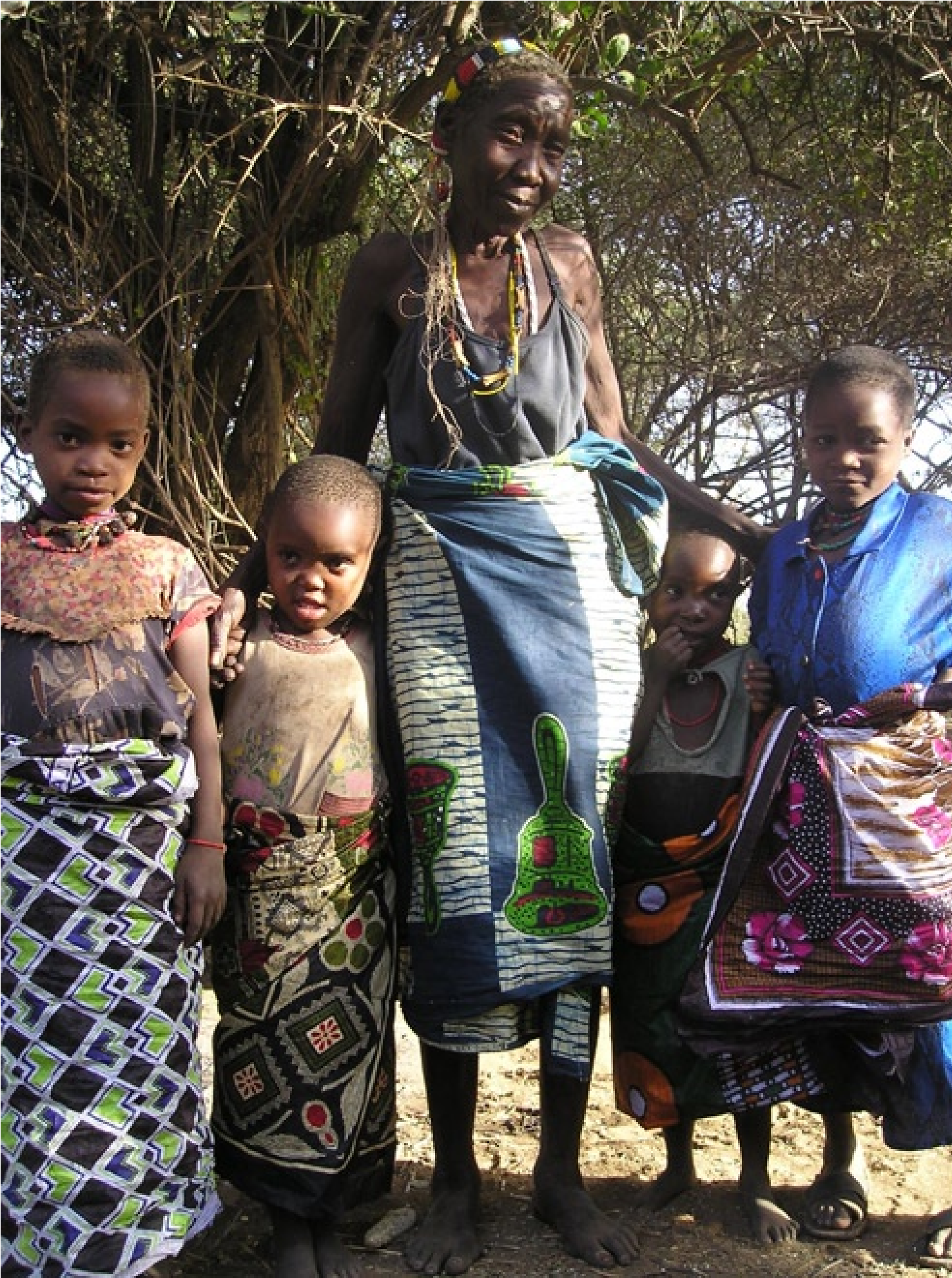
Photo: C. Power
By this time as well you and Chris Knight[4] were drawing on African rock art, myth and ritual to call attention to the deep legacy and significance of matrilineal ties, and leading a fairly direct charge against conventional wisdom on this score. I read these challenges with interest. My own first incarnation as an anthropologist was as a folklorist, engaged in structural analysis of myths. Your suggestion that anthropologists had too glibly dismissed the old ‘Mother Right’ literature echoed some long latent doubts of my own, reminding me of how puzzled I had been by rich folk traditions — especially from South America — detailing sexual tensions and matrilineal overthrows. Where there was so much smoke, why not some fire some place? I was also impressed by new cross-cultural surveys by the Embers,[5] indicating that foraging peoples — especially those living in the most traditional way, without horses or boats — were more often bilocal or matrilocal than in human societies generally. My mind was being prepared to rethink the human evidence in the wake of this series of challenges to Murdockian wisdom.
The more ethnography I read, the more I was struck by how flexible and opportunistic foraging peoples were, moving not just through space but between groups over time. Again and again, I encountered ethnographic reports from African, North American and Aboriginal Australian foraging societies of men moving to be near wives, hunting on behalf of their ‘in-laws’ till after one or two children were born, which clearly put women near kin at the time they first gave birth, which primate-wide is an especially vulnerable time for both mothers and especially infants. Also women moved throughout the life course so that some older women were moving to be near daughters — particularly daughters who needed them.
All this time, for years really, I had been arguing with my friend and close colleague, the anthropologist Kristen Hawkes. Every time we got together, the subject would come up. I questioned her very bold proposal about the special provisioning role of maternal grandmothers in early hominin life because I still accepted conventional wisdom about hominoid patiilocality by which females would not have had matrilineal kin nearby. Then Kristen would patiently walk me through her own lines of evidence. But the real tipping point was when Kristen sent me an advance copy of Helen Alvarez’s very detailed re-examination of the case studies Murdock had used.[6] Like many sociobiologists, I admired Murdock for the empirical criteria for classifying societies that he set up. However, Alvarez discovered that in fact, the data needed to satisfy his criteria were rarely present in the ethnographies classified. Obviously, a lot of guesswork had gone on, with Murdock just following his hunches, hunches informed by patrilocal presumptions.
Thus, with Mother Nature and then in great detail in Mothers and Others, I refracted my earlier position to acknowledge that forager residence patterns were much more flexible than I had initially assumed. Not only were band level hunter-gatherer residence patterns often bilocal or matrilocal, but there also would be many phases in a woman’s life when a mother would have access to support from matrilineal kin, both because her mate moved to live with her people, because couples returned for a time to live with them, or because mother’s kin (perhaps especially including her own mother) moved opportunistically to live with her group, attracted by her need, or perhaps by food prospects in her community.
By this point too, I had no doubt that having access to kin would alter patterns of child rearing. In particular, it would make mothers more tolerant of other individuals having post-partum access to her new infant, a tolerance typical of humans but virtually never observed in other apes under natural conditions. I was stunned when I first saw Naka Nakamichi’s amazing photograph of the older gorilla mother at the San Diego zoo modeling maternal behavior for her inexperienced young daughter.[7] I immediately realized how important this rare, definitely atypical, observation was. Not long after, Emily Wroblewski published her report on ‘An unusual incident of adoption’ among Gombe chimpanzees,[8] and sent me photographs of this female with her grandson. Under the right circumstances, with a trusted female (like her mother) nearby, a great ape mother would occasionally tolerate someone else helping her with her newborn. Change the residence patterns, and situations leading to selection favoring greater postpartum tolerance in new mothers might indeed be quite plausible.
Then, not long after Mothers and Others appeared (early in 2009), I read Kit Opie’s and your 2008 chapter on ‘Grandmothering and female coalitions’[9] and was shuck by the way you used Destro-Bisol and others’ reconshuctions of molecular genetics to suggest “an ancestral tendency of female kin to stick together” which was particularly apparent among hunter-gatherer populations from sub-Saharan Africa. For the question I was most interested in, the residence patterns among hominins when humankind’s peculiarly prosocial impulses first emerged, it made a lot of sense to focus on African contexts and to emphasize these venerable populations.
CP: Monkeys are good babysitters. The other great apes don’t dare let go their babies. We became the great ape that passed the baby round to others to hold. Why was this so critical to the development of our human psychology?
SBH: What made shared care possible among early hominins, was circumstances that increased a new mother’s confidence in her suiToundings, as we discussed above. What made this maternal tolerance of others so critical for child survival was the combination of infant-sharing with extensive allomaternal provisioning of young. This set the stage for important life history changes because immatures could take longer to grow up since provisioning around the age of weaning and thereafter buffered them from starvation at a very vulnerable developmental stage. But the shared care and provisioning also led to the development of novel phenotypes in infants, who had to monitor both their mothers, and also monitor others, becoming what I term “connoisseurs” both of mothers, and of others, their intentions and feelings. Infants would become adept at perspective taking, and at integrating multiple perspectives (just as we know human children with multiple allomothers do). Importantly, shared care and provisioning also set the stage for novel selection pressures: the youngsters best at reading the intentions of others and eliciting their help would be best fed and most likely to survive. New selection pressures on mothers to solicit help from others and also to calibrate maternal commitment in line with such social support were also set up. At the same time, natural selection had new opportunities to favor allomothers most interested in and able to nurture young born to kin. This is the point where I invoke Kristen Hawkes and her colleagues’ 1998 grandmother hypothesis[10] to explain selection favoring longer post-menopausal lifespans. I knew of other primate species where older females at or approaching the ends of their reproductive careers seemed more willing to sacrifice themselves to help offspring of kin, but Hawkes was envisioning a setting in which older females could provision as well as protect the youngsters they helped.
CP: Looking now at the flexible strategies of human mothers, you talk of how “mothers from Africa to the Caribbean to the banlieues of Europe and US inner cities routinely enter into polyandrous relationships to make do, hedge bets and improve their lot... their behavior is more accurately described as ‘assiduously maternal’ rather than ‘promiscuous ’...”[11]. This evolutionary perspective makes sense of a whole range of women’s sexual strategies as viable ways and means for looking after their kids, but have you had much flack from feminists angry that you seem to be validating sex as work or means for investment?
SBH: So far as I know feminists have not objected to the idea that ‘assiduously maternal’ women are responding to unpredictable or scarce resources or perilous conditions by lining up extra ‘paternal’ investment or protection. But why should they? I simply called attention to maternal strategizing and female agency in response to difficult constraints. Still, as you imply, my history with academic feminism has been a mixed one. Back in the late 1970 and early 1980s, my allegiance to sociobiology made me suspect among feminists. At the same time that my female-focused perspective stimulated biologists’ inherent aversion to the F-word. Instead of viewing Feminism as a source of ideas to help us all critique longstanding biases within Darwinian theorizing, and (as I saw it), expanding our understanding of selection pressures to include both sexes, biologists viewed Feminism as a source of ideological bias. They forgot what a double-edged sword bias usually is — Darwinians had their own share — and that in helping us understand and correct past biases, feminist critiques could actually help us all do better science.
By now of course, self-correcting processes inherent in science have gotten underway within sociobiology, and many in Women’s Studies (now more often called Gender Studies) are undergoing their own transformations. To me, Michele Pridmore-Brown’s review of Mothers and Others in the May 22, 2009 TLS (Times Literary Supplement), was symptomatic of this transformation. Pridmore-Brown was partially Pained in a department of Women’s Studies at Stanford yet instead of the more hostile queries I had been accustomed to (i.e. why do you evolutionists ‘privilege’ heterosexuality so, etc.) what she wrote revealed a deep curiosity about what our biological legacy as mammals and primates, as well as our intertwined biological and historical legacies as humans, might mean for who we are.
CP: You ask of paternal strategies, “how can something so important be so variable?” How much do men make a difference for children? Are they integral to cooperative breeding in our species? Has the failure to recognise this variability and flexibility of strategies led to wooden models of the ‘real Pleistocene family’ informed more by ideology than science?
SBH: Stereotypes about ‘the Pleistocene family’ ignore the inherent flexibility of human family systems, and yes, I am now convinced that that flexibility has a great deal to do with humankind’s long legacy of cooperative breeding. Given how important male provisioning and protection of young can be under some conditions, and given just how slow maturing and needy human youngsters are, we really do have to ask why human fathers are not obligately paternal the way, say, titi monkey males are. Yet looking across the Order primates as a whole, humans are absolutely amazing in terms of just how much variability in paternal care is observed in just this one species. Nurture so freely given and so extensive in some contexts, is totally absent in others. There are men — even those with reasons to be certain of their paternity — who invest nothing at all, while other men put top priority on remaining near and caring for their young. It’s a real paradox, and the best solution I can come up with is to propose that throughout our evolutionary history alloparents sometimes filled in for fathers who defected or fell short, doing so sufficiently often so as to keep such propensities in play. Several lovely field studies — for example Karen Bales’ with tamarins,[12] Courtney Meehan’s with Aka foragers[13] (reviewed in Mothers and Others) — document just this sort of compensatory care going on among cooperative breeders. When mothers have more alloparental assistance, some fathers can afford to caretake and provision less, and they do. There is little doubt that sexual selection and longstanding tensions between maternal and paternal interests arc also part of the story here. But by focusing so exclusively on topics like competition for mates and mate choice, we left out this other angle having to do with nurture and who provides it.
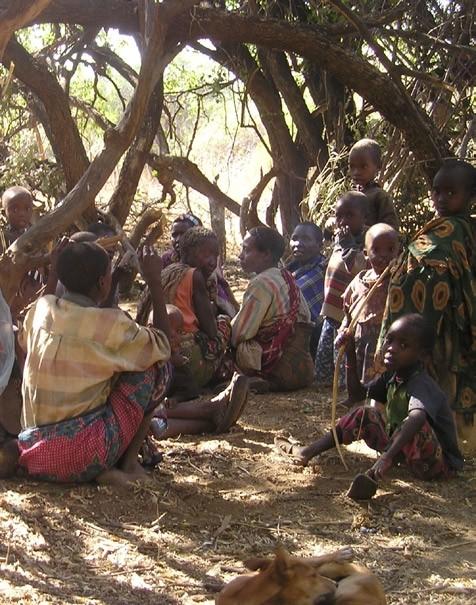
Photo: C. Power
CP: I like the way you put it that logically language comes later, after evolving psychologies for connection and empathy. You argue for ‘emotional’ modernity arising with cooperative breeding in Homo erectus, already by 1.5 million year’s ago. So what leads to the difference between us modern humans, with sapient brains, and them? Have you any views on the human symbolic revolution?
SBH: There is an increasingly well- documented literature describing mental differences between humans and other apes. Marc Hauser’s essay on ‘The Mind’ in the September 2009 issue of Scientific American provides a particularly thoughtful summary of traits that evolved within the last 200,000 years having to do with the evolution of 1350 cc brains, sapient- caliber intellects and language in particular — a massively important transformation. As Hauser and others acknowledge, we know little about the Darwinian selective pressures behind this ‘symbolic revolution’, and some of the main researchers in this area like Hauser and Michael Tomasello (perhaps wisely) steer clear of speculating about causation. Nevertheless, I have been impressed by Sally McBrearty and Alison Brook’s arguments about the importance of density and frequency of contacts between people and groups for the gradual development of symbolic culture.[14]
So much depends on population density and residence patterns, but unfortunately the archaeological record for the Pleistocene remains very spotty, even though the record improves somewhat by the Late Pleistocene. This paucity of data about topics such as early population densities is pretty humbling.
What we can assume with some confidence though, projecting backwards from modern humans, is that once symbolic thinking comes aboard, it takes on a life of its own, spiraling in many, sometimes quite bizarre, directions with all sorts of repercussions that are not necessarily amenable to materialist interpretations. I am reminded of a much earlier phase of my career when I was engaged in the structural analysis of myths — this is wild and wonderful stuff. Please keep in mind, though, that in Mothers and Others, I am focused on the prequel — the initial origins of our hypersocial tendencies, not this main human feature film.
CP: The end of your book sent some chills down my spine. Have we come to an evolutionary crossroads, where a crisis of childcare, under pressure of turbocapitalism, is producing a crisis of human empathy? Having been relatively happy and egalitarian hunter-gatherers for several hundred thousand years, where are we heading?
SBH: Well you are taking me into the realm of purely personal opinions. But yes, I do believe that since the Neolithic, and increasingly in the post-industrial and this increasingly individualistic and hypercapitalist era we have jettisoned values critical for rearing human children with fully developed empathic potential. Worse, since remarkably few ‘fixed action patterns’ are observed in human parents, and since so many features of child-rearing are largely transmitted generation to generation, we risk losing what I think of as the traditional human art of nurture. And yes, because I happen to value this facet of human nature, I do think that it bodes ill both in the near-term for individual lives, and in the long term for our species, to have so many youngsters growing up — and going on to become parents themselves — without fully developing human potentials for social living. Just because a higher proportion than ever of children born in developed countries survive, does not mean that their emotional needs have been met.
CP: Can you tell us anything about what you are doing next?
SBH: The original plan — to the extent that I ever plan — was a trilogy of books, the one on mothers, mothers and others, and then an examination of what this deep history means for women (whether they choose to be mothers or not) today. What does it mean for my children’s generation and for their children, to live in a world with lapsed patriarchy in some quarters, resurgent patriarchy in others, and with the needs of children fairly constant but with extended family often far away and negotiations between their parents in greater flux than ever, and furthermore with the spectre of over-population and its consequences increasingly widely recognized and better understood. However I don’t know that I will actually write it, or what form it will take. I leave in a few weeks for, among other things, the Darwin celebration at Darwin University, in Darwin, Australia and I was not planning to decide until after I got back.

Sarah Blaffer Hrdy is Professor Emerita of Anthropology, University of California at Davis.
She is author of The Woman that Never Evolved (1981) and Mother Nature (1999). Her latest book is Mothers and Others: The Evolutionary Origins of Mutual Understanding published by Harvard University Press, 2009.
[1] Murdock, G. P. 1967. Ethnographic Atlas. Pittsburgh: University of Pittsburgh Press.
[2] Goodall, J. 1986. The Chimpanzees of Gombe: Patterns of behavior. Cambridge, MA and London: Belknap Press of Harvard University Press.
[3] Harcourt A. H. and K. J Stewart 2007. Gorilla Society: Conflict, compromise and cooperation. Chicago: University of Chicago Press.
[4] Knight, C.. C. Power and I Watts 1995. The human symbolic revolution: a Darwinian account. Cambridge Archaeological Journal 5,75–114.
[5] Ember, C. R. 1975. Residential variation among hunter-gatherers. Behavior Science Research 10,199–227.
[6] Alvarez, H. P. 2004. Residence groups among hunter-gatherers: a view of the claims and evidence for patrilocal bonds. In Kinship and Behavior in Primates, B. Chapais and C. M. Berman (eds), Oxford: Oxford University Press, pp.420–442.
[7] Nakamichi, M., A. Silldorff, C. Bringham and P. Sexton 2004. Baby-transfer and other interactions between its mother and grandmother in a captive social group of lowland gorillas. Primates 45, 73–77.
[8] Wroblewski, E. E. 2008. An unusual incident of adoption in a wild chimpanzee (Pan troglodytes) population at Gombe National Park. American Journal of Primatology 70, 1–4.
[9] Opie, K. and C. Power 2008. Grandmothering and female coalitions: a basis for matrilineal priority? In Early Human Kinship, N. J. Allen, H. Callan, R. Dunbar and W. James (eds), Oxford: Blackwell, pp. 168–186.
[10] Hawkes, K., J. F. O’Connell, N. G. Blurton Jones, H. P. Alvarez and E. L Charnov 1998. Grandmothering, menopause and the evolution of human life histories. Proceedings of the National Academy of Sciences 95,1336–1339.
[11] Hrdy, S. B. 2009. Mothers and Others: The evolutionary origins of mutual understanding. Cambridge, MA: Harvard University Press, pp.153–154.
[12] Bales, K., J. Dietz, A. Baker, K. Miller and S. Tardif 2000. Effects of allocare-givers on fitness of infants and parents in Callitrichid primates. Folia Primatologica 71,27–38.
[13] Meehan, C. 2005. The effects of residential locality on parental and alloparental investment among Aka foragers of the Cental African Republic. Human Nature 16, 58–80.
[14] McBrearty, S. and A. Brooks 2000. The revolution that wasn’t: a new interpretation of the origin of modern human behavior. Journal of Human Evolution 39,453–563.