Wendell Beaver
The Other Face of Conservation
Former Director. Oklahoma Department of Wildlife Conservation
I AM AN ANGRY MAN! I’ve had 25 years to build a full head of steam. I detest the word “compromise” with a passion. We’ve used the word as a vehicle to sell wildlife down the river.
Tell me, how do we compromise pure water, clean air and wild creatures?
I am impatient! Impatient with conservation lip service, impatient with the attitude, “Let’s wait till next year,” and impatient with laws that provide the authority but no teeth or funds.
I am irritated. Irritated with just plain people who stand to gain or lose the most.
We got a problem, friend. Take a long, hard look!
Oklahoma is losing 100.000-plus bobwhite quail each year and South Dakota is trying desperately to shore up a sagging pheasant population. In Saskatchewan and the north-central states, the ability of the prairie marshes to produce ducks decreases about 80.000 birds each year.
IN WYOMING AND MONTANA, antelope show a precarious trend and may be living on borrowed time. South Dakota’s pheasant population once numbered a whopping thirteen million birds and today, about three million.
Pesticides, herbicides, bulldozers, plowshares, drainage ditches, reservoirs and even such things as woven wire fences are playing havoc upon our wild environments.
Some of the best saltwater ecologists in the country tell us the Mississippi River drains the chemically polluted waters of thousands of tributaries into the gulf. Here many of the more stable chemical compounds threaten to break the basic food chain necessary to maintain the gulf as one of the world’s great natural fish traps.
Some say it’s already beginning to happen. North America’s largest cesspool, Lake Erie, is well known to all of us. Why not the gulf?
Most of us are acutely aware of the dangers of a poison when consumed by living creatures, but how many of us have ever stopped to consider t h e even greater threat—the changing of whole environments. A poisoned critter can get well but destroy his home and nothing will save him—except a zoo!
We farm the land clean. We no longer tolerate the sunflower, the thistle or pigeon grass. With clean farming we create a new environment of hundreds of thousands of acres of single kinds of crops— perhaps wheat, corn, soybean or cotton. We create an ideal situation for that particular insect that specializes on certain types of crops.
BECAUSE THE THREAT of damage is increased so profoundly we flood our fields with chemical sprays—sometimes once, sometimes eight to ten times a year. We keep the detrimental insect problem in hand, but along with him we destroy the beneficial insects also.
The young of bobwhite quail, or pheasants or grouse, simply cannot survive without the supercharged protein foods that insects alone can provide. T h u s, even though we find only minute traces of an insecticide in the young bobwhite, he may ultimately die.
Insecticides and herbicides accomplish two things—they eliminate insect life at a critical time of year and they transform a habitat made up of many parts into a habitat made up of a single part.
Wildlife cannot survive in a single purpose environment anymore than it can survive in your living room.
In Wyoming and other western states, chemical sprays are being used to convert hundreds of thousands of acres of sagebrush to prairie grasses—the death knell for antelope, sage grouse and even the mule deer.
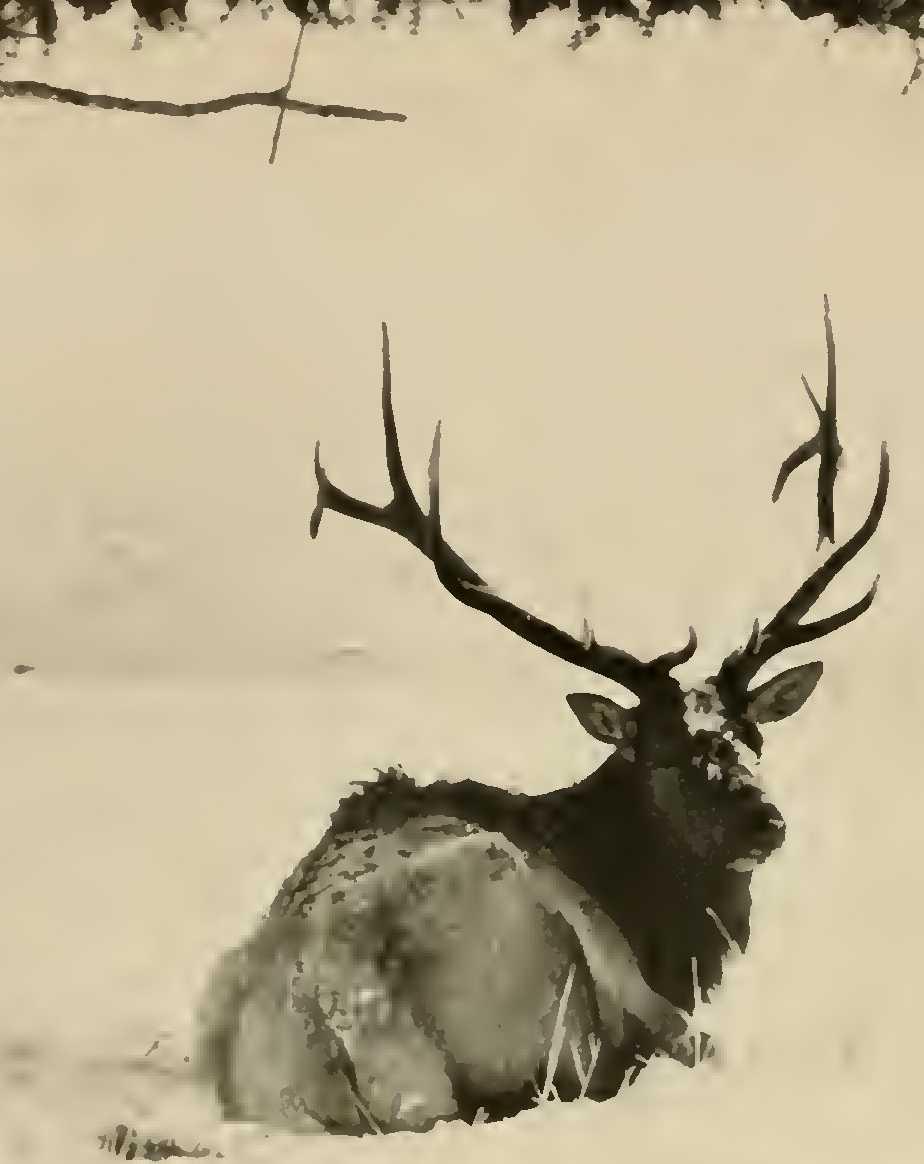
IN THE ROCKY MOUNTAINS a subtle change is in the making. From New Mexico to Canada, mule deer and elk are being subjected to the old squeeze play In one mountain range after another, populations are beginning to level off. and some ecologists are disturbed by the marked decline in ability of some former great game ranges to carry even a static population.
In the Rocky Mountains we plant productive o 1 d burns to pine, skipping the natural brushlands which normally follow. And we wind up with sawdust and 2 by 4’s—but no game. Oklahoma annually plants 200,000 acres of native rangelands to bermuda grass—the perfect formula for eliminating about 100,000 bobs each year.
Even the wily trout has a problem. In the Black Hills of Wyoming and South Dakota, 2,600 miles of trout stream have declined to less than 200. And in other states, dwindling stream flows give evidence of future problems.
As long as we raise more people, we work the lands harder— always trying to close the food gap—and we never will. In the meantime. Mister Bobwhite and his wild companions dwindle and dwindle until one day it's, “Do you remember the good old days when . . .?”
Mister Sportsman, we are in trouble.
DO YOU KNOW THE CULPRIT? The problem rides under the guise of “good conservation,” the dollar sign and a booming population of people.
Don't hit the panic button! Not yet.
Don’t pressure your game department to restrict hunting and fishing seasons. This doesn’t help. It actually compounds the problem by creating an illusion that by saving wildlife we have found a solution. This kind of misconception just clouds the issue.
Look at the facts!
All of those wild birds, animals and fish are declining because of free use of pesticides, environmental pollution, clean farming, drainage and going hog-wild on the manipulation of water. Even such things as forest management and the control of fire have in many instances created more wildlife problems than they help to solve.
Have we got problems? You can’t imagine.
Hunters take a harvestable surplus which has almost no effect, other than beneficial, upon wildlife. It is true that some big game seasons are designed to reduce populations and this is necessary.
But, remember, most range and forest management plans are designed to grow trees and grass - not wildlife. A hundred animals or a hundred fish, there is still a surplus to be harvested. Sportsmen should stop fighting ghosts and learn who the real enemies are.
STUDY THE PRAIRIE STATE of South Dakota. Look at a good example of the problem.
Just a few years ago this state carried 300 pheasants per square mile within the better range. The population skid started in the 1940's and plunged to a low of about two million birds by 1966— the lowest level in 30 years. The decline was classed as a public disaster.
What happened?
Upheaval in the game department. Accusations and counter- accusations. Irate citizens, irate legislators. You name it, everything that could happen did happen.
You can’t drop from thirteen million birds to two million without blaming somebody, even if it’s the wrong man or animal. It just “ain't” done in our great society. But who to blame?
Since the game department was the handiest, they were raked over the coals just on general principals. Because the little red fox eats a pheasant once in a while, he got a good going over too. And. of course, the old standard—the cotton-picking hunting seasons were just too liberal.
FINALLY, AFTER A LONG drawnout hassle, we came to the real culprit. And a feeble voice of the minority out of hundreds of thousands of sportsmen, tourist promoters and landowners suggested that, perhaps, clean farming with its multitude of chemical sprays just “might” be the problem.
Might be? Hell, it was the problem! It always has been! There are enough data and facts floating around to sink a battleship!
As Director of a game department, it isn’t easy to keep my composure when confronted with people who contaminate or change the environment with one hand and yell bloody murder about limits being too liberal or seasons too long on the other.
It's time we recognized that, all over the United States, with all kinds of wildlife, the clean, antiseptic manicured and single-purpose environments—all under the guise of good wildlife conservation—is destroying wildlife ten times more efficiently than rifles or shotguns ever did.
In the U.S. we spent 20 years poisoning every prairie dog in sight. Then we scratched our collective heads wondering what happened to the Black-Footed ferret—a beautiful, lithe, little animal that depends almost wholly on the prairie dog as its basic food source.
Can you live without food?
THROUGHOUT MUCH OF TEXAS and north through the Dakotas to the Canadian line, programs are being designed by federal as well as private interests to change a varied habitat of shrubs, trees, forbs and grasses to pure waving stands of introduced and domestic grasses It is a beautiful sight to a whiteface cow but the death knell for antelope, deer and sage grouse.
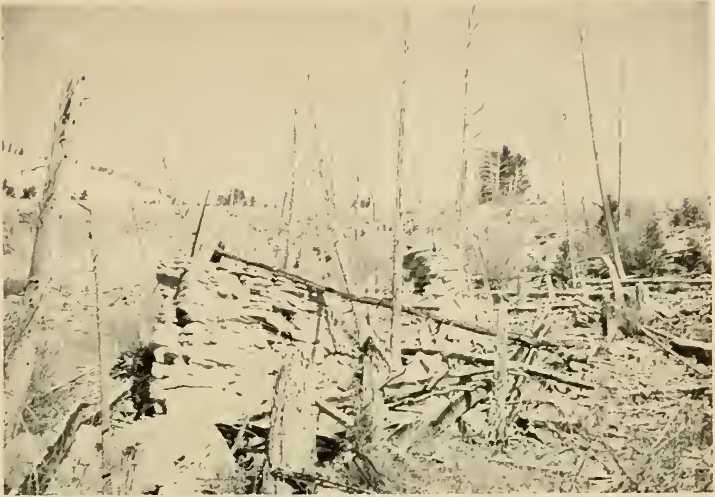
Further west, in our Rocky Mountains, old forest fire burns with their unsightly dead snags, nothing but grasses, chokecherry, kinnikinnick and aspen glades offend the eyes of forest managers.
So what do we do?
We bulldoze the dead trees littering the ground into neat windrows and we plant evergreens to speed up nature's processes. At the end of a few years a beautiful stand of pine develops—the chokecherry and aspen can no longer compete and they fade out of the picture.
From game range to pulpwood in a decade. Was it a good trade?
It is a simple function of economics. It's a sight easier to place a price on a board foot of pine than a cubic foot of water or a ruffed grouse.
We no longer manage “wild” forests, we farm them. In time, perhaps, we may even farm most game birds and animals. Perhaps the word “wildlife” will have little meaning in that future decade.
It's a well-documented fact that modern and scientific wildlife management, paid f o r by the hunters, has restored more wildlife than has even been lost, but only in those areas where the habitat is suitable. Unfortunately, we are losing habitat a whale of a lot faster than we can adjust or find solutions.
WILDLIFE HAS ALWAYS NEEDED crusaders—people willing to stand up and be counted. It’s so easy to say “a little bit of pollution or habitat destruction won't hurt.” But remember, tens of thousands of “little bits” can add up to a catastrophe.
Few’ people realize the tremendous effect upon the environment that man is intentionally causing. We no longer manage timber stands in our national forests. We literally farm them with tremendously efficient and sophisticated tools that can treat thousands of acres in a day. The true wild environment is fast disappearing and I dread to see its going.
The United States contains some two-thirds billion acres of public lands for the recreational use of its citizens. I’ve got a saddle horse and a pack mare and each year I see a little bit of these 770 million acres. A couple of years ago it was the Gila Wilderness area in southern New Mexico. and last year the Popo Agie River in the Wind River Range, and each year I find the land a little less wild.
Only in the most distant muskeg or lonely mountain ranges of northern Canada do we find the stillness and loveliness of the true untrammeled wilderness. The wild country is a symbol of man’s earliest ancestry when he stepped from the pages of the past. What sportsman really wants to let go of this heritage?
We face a problem, friend. We can’t afford to argue economic values and exchange a bobwhite with an acre of berrnuda grass. We simply cannot continue to compromise wildlife—again and again.
The list of species in trouble grows annually and the problem compounds itself. Is it because wildlife is not worth saving? If we accept the idea that we can’t favorably equate a bobwhite with a pound of beef or a pheasant with a bushel of corn, then perhaps we are lost.
The cure concerns a universal problem. Il is not local but national in scope. It is deeply involved with a sky-rocketing human population, abroad as well as at home. As the world of people grows, the more we try to feed them and this means more intensive land-use at home.
If we are successful in keeping more people alive, then we must place greater demands upon our basic resources to feed more people in the future. And this means less wildlife. We are fitting people into cities like sardines in a can and the general agreement is that expansionism is good for us.
ARE WE REALLY INTERESTED in quality existence? Are we on a run-away course of more and more people crammed into great compartmentalized colonies within artificial playgrounds?
Is wildlife becoming old-fashioned?
I don’t know the answers but I do know this. All state game departments have competent people that know the problem and some of the answers. Give them your support. Don’t be afraid to speak out. Honor yourself as an individual and give your identity a chance to be recognized.
You don’t have to be a hunter or a fisherman. If you thrill to the song of a bird, exult in the beauty of the high and wild country or walk with God in the fields and forests, it’s your battle, too.
If wildlife means anything to you, get off your fanny. Join a state and national conservation organization. Work with your legislature and congressmen. Ask your Department what you can do to help.
And WORK at it. Make it your crusade.
Don’t be a spectator! Get down on the field and join the team.